
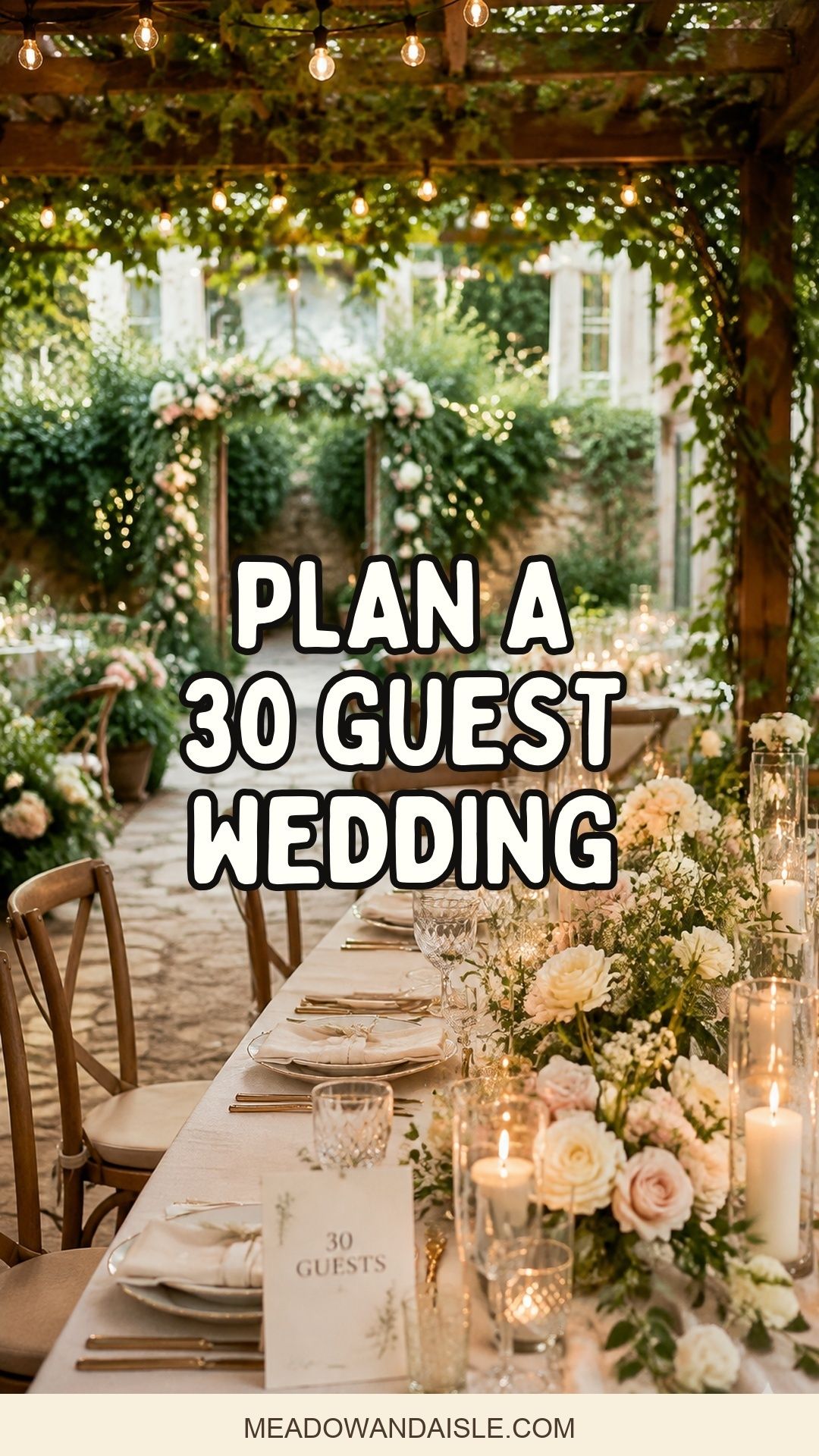
The easiest way to approach how to plan a wedding with 30 guests is to build the day around the room, the meal, and the people who truly belong there. Choose a firm guest circle, book a space that feels full at that number, budget for both per-person costs and fixed vendors, plan seating so conversations feel natural, and keep the timeline simple enough that the day never feels over-managed.
A 30-person wedding can feel beautifully intimate without becoming silent or too tiny. There are enough people for a meaningful aisle moment, a little cocktail-hour buzz, a few speeches, and more than one conversation cluster. The risk is that couples either overbuild the day with big-wedding habits or under-plan it because the number feels small.
Use this as your 30-guest wedding plan: protect the list, choose the format, budget honestly, book the support the day actually needs, seat people with care, and give the reception a gentle shape. That is what makes 30 guests feel intentional instead of improvised.
Recommended Wedding Products


You Might Also Like These Blog Posts
- Small Wedding Venues For 30 Guests That Feel Naturally Full
- How To Plan A Wedding With 50 Guests Without Losing The Intimate Feeling
- How To Plan A Wedding With 20 Guests Without Losing The Wedding Feeling
- How To Plan A Small Wedding That Still Feels Big-Hearted
- How To Plan A Wedding From Scratch When You Have No Idea Where To Start
- How To Plan A Wedding Under 20000 Without Making It Feel Bare
How to plan a wedding with 30 guests while keeping the day unmistakably yours
Thirty guests sits in a useful middle place. It is bigger than an elopement dinner, smaller than a standard small wedding, and often just right for couples who want their closest people in the room without turning the day into a production. The goal is not to make every wedding tradition fit. The goal is to decide which traditions help 30 people feel welcomed, witnessed, fed, and included.
Set The 30-Guest Circle Before You Look At Venues
The first decision is not the venue, the color palette, or even the budget. It is the guest circle. A wedding with 30 guests can feel close and generous, but only if the list has a clear reason. If the number is loose, 30 becomes 36, then 42, then suddenly the whole plan needs a different room, more tables, more food, and firmer logistics.
Close Family And Friends
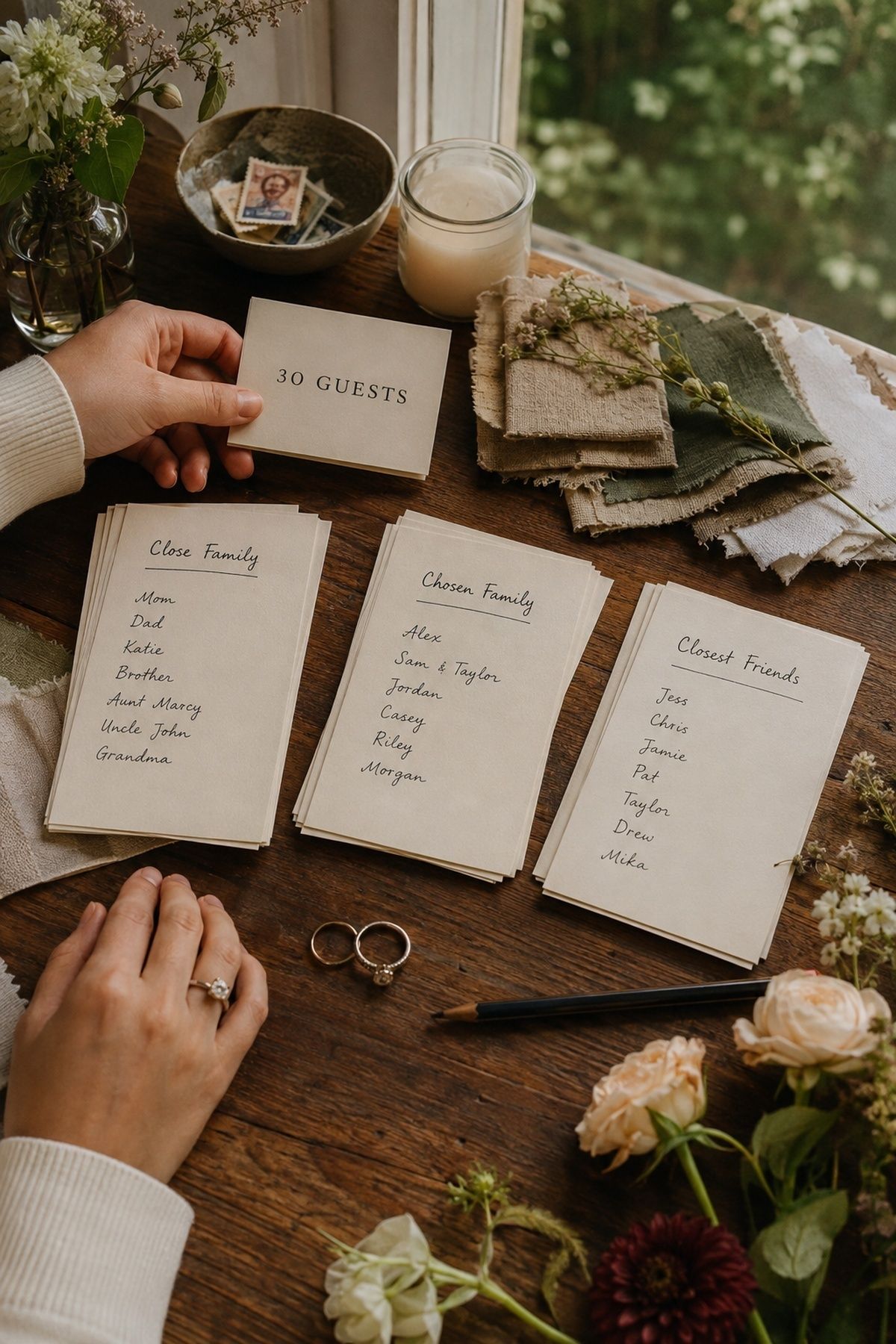
Start with the people whose presence would genuinely change the day: immediate family, chosen family, the friends who have been part of your relationship, children if they are central to your life, and a very small number of people you cannot imagine celebrating without. Write these names before anyone argues for courtesy invitations.
For an intimate wedding for 30 guests, each seat has emotional weight. That does not mean every guest has to know everyone else. It does mean every guest should understand why they are there. If you would not make time for a real conversation with them during the wedding weekend, they may not belong in this particular version of the day.
Invite Rules And Boundaries
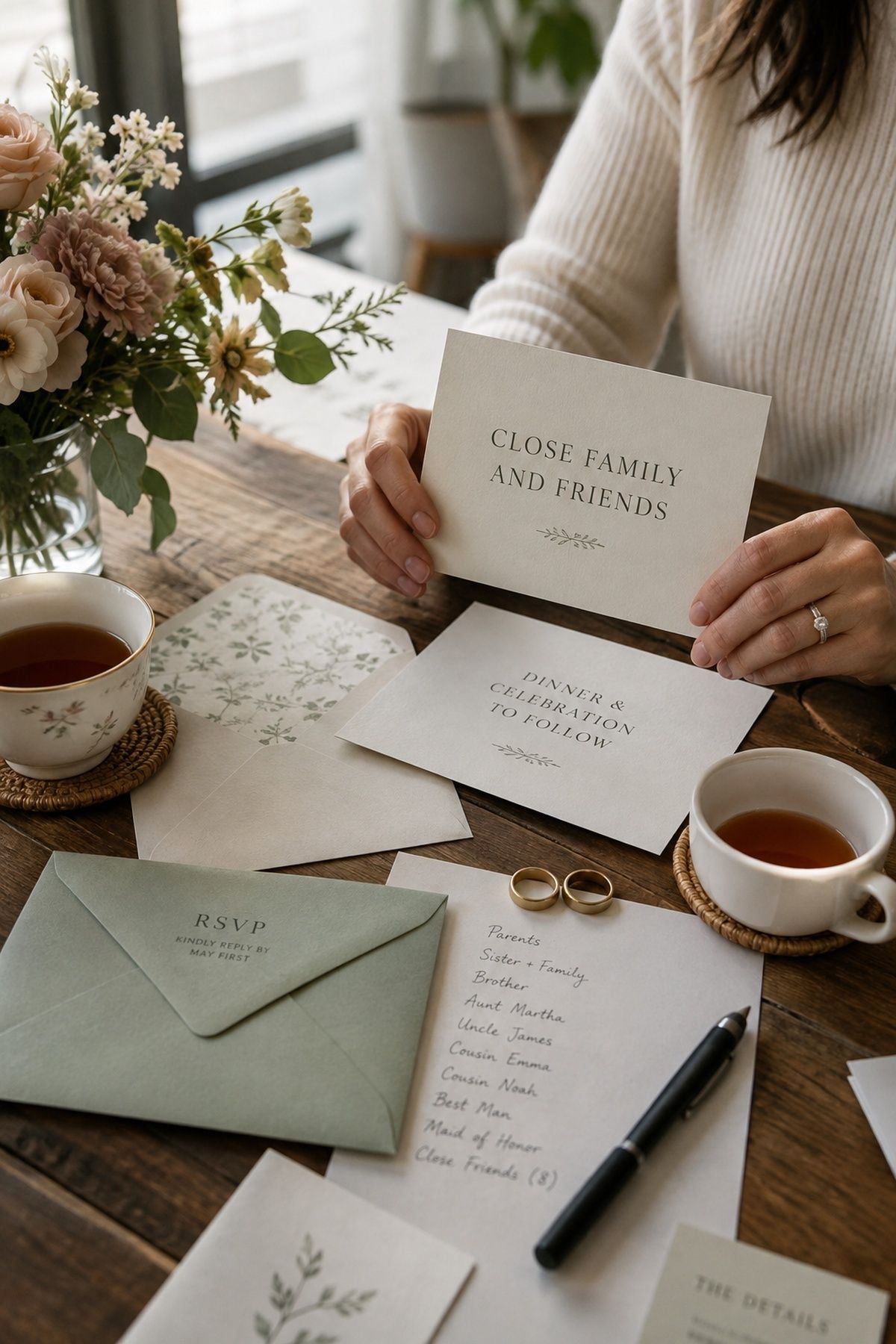
Choose your invitation rules early, while the list is still private. Decide whether you are inviting partners by name, allowing plus-ones, including children, inviting whole family branches, or keeping the day to people both of you know well. The kindest rule is the one you can apply consistently.
A no-kids or limited plus-one decision can be completely reasonable at 30 guests, but it needs clear wording and an early explanation. Avoid blaming the venue if the real reason is intimacy. A simple, honest line such as, “We are keeping the day to immediate family and our closest friends,” is often easier to maintain than a complicated exception.
When 30 Starts Becoming 40
The moment your list reaches the mid-30s, pause before adding more names. Ten extra guests may require a larger private room, another table, more service time, a different bar package, additional rentals, or a formal seating chart. If the wedding is meant to feel like a dinner party, protect the number that supports that feeling.
Pick A Format That Makes 30 Guests Feel Natural
The format should make the guest count feel intentional. A 30-person wedding often works best when the ceremony and meal feel connected, the venue is not too large, and the celebration has a clear center. You can absolutely have music, flowers, photography, and a beautiful outfit. You just do not need every big-wedding layer.
Private Room Dinner

A private dining wedding for 30 guests is one of the strongest formats because the room, food, service, tables, chairs, and cleanup may already be built into the experience. Look for a restaurant room that feels full at 28 to 34 people, not a banquet space that simply allows 30 people to sit inside it.
Ask about privacy, menu choices, dietary needs, cake fees, audio for toasts, where a brief ceremony could happen, and whether the restaurant can pace the meal around speeches or photos. A restaurant wedding can feel effortless to guests, but only if the couple confirms the details that usually happen behind the scenes.
Garden Or Backyard Ceremony
A garden, backyard, or family-property ceremony can be lovely with 30 people because the scale still feels personal. The planning question is whether the property can host people comfortably, not just whether it looks pretty. Count bathrooms, parking spaces, chairs, shade, heat, rain cover, power, kitchen access, and neighborhood noise limits.
If the ceremony is at home and dinner is elsewhere, make the transition easy. Give guests one clear destination, enough travel time, and a hosted reason to move, such as drinks, appetizers, or a short welcome at the dinner space.
Small Venue Reception
A small venue can work beautifully when the room is sized for the guest list. Galleries, boutique inns, tasting rooms, conservatories, libraries, studios, and small event spaces can give a 30-person reception its own identity. The danger is paying for capacity you will not use, then needing extra decor just to make the room feel held.
Weekend-House Or Inn Celebration
A weekend house, lodge, or inn can make a micro wedding with 30 people feel like a shared retreat. This format works best when lodging, meals, transportation, and downtime are planned with guest comfort in mind. It is not automatically simpler, but it can feel deeply personal if the logistics are clear.
Budget Around 30 Guests Instead Of Guessing
A 30-guest wedding budget behaves differently from a big wedding budget. The total can stay smaller because you are feeding fewer people, but the per-person number may feel higher because fixed costs are spread across a smaller group. This is normal. It does not mean you are doing anything wrong.
Per-Person Costs
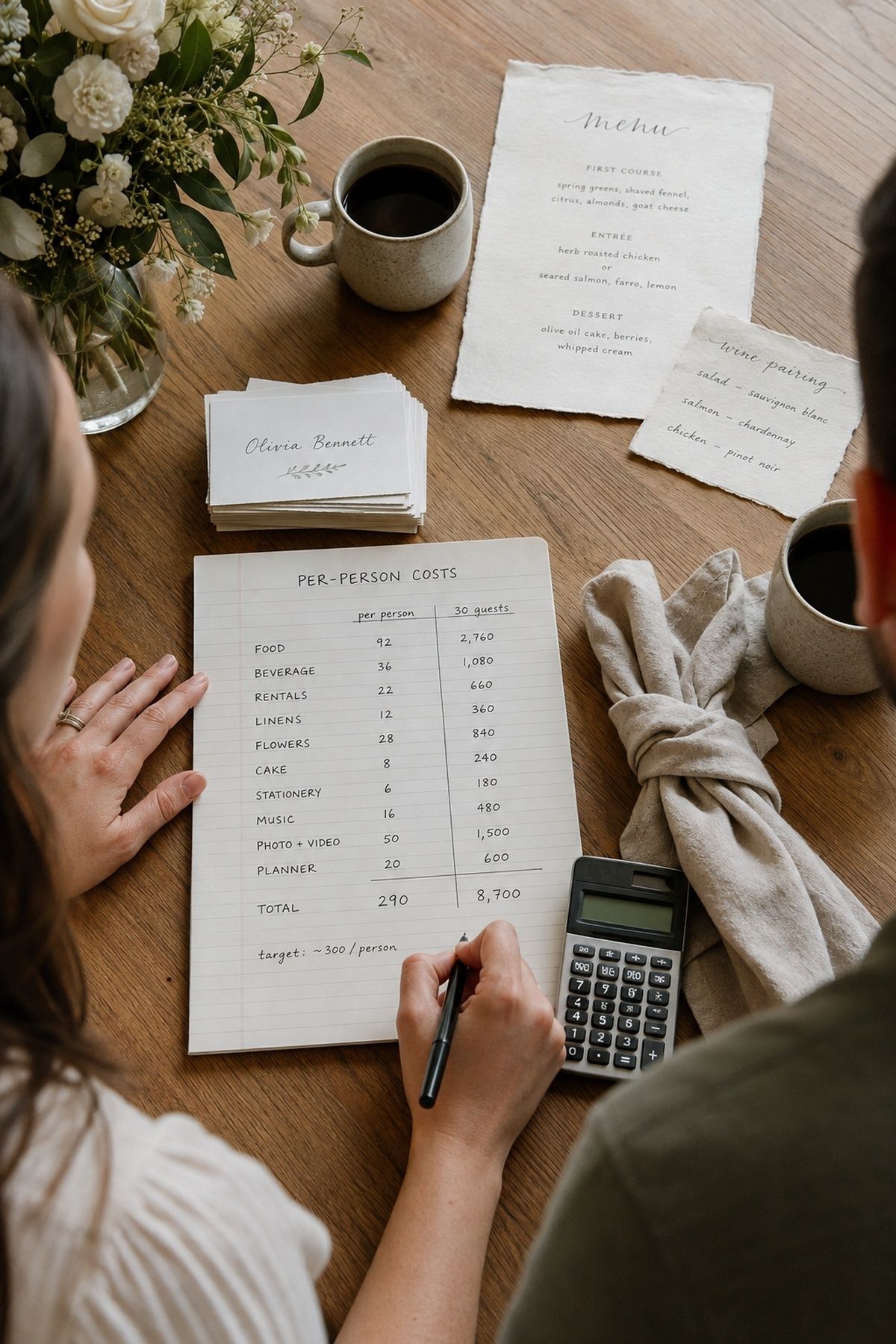
Food, drinks, place settings, printed pieces, favors, shuttle seats, welcome bags, dessert portions, and some rentals rise with each guest. At 30 people, upgrades are easier to understand. A nicer dinner, a better wine pairing, or a more personal dessert may be worth it because the increase is multiplied by 30, not 150.
Write a rough per-person estimate before adding optional names. Even a small increase matters when you are trying to keep the day intimate. If each extra guest adds meal, beverage, rental, tax, service, and gratuity costs, a casual “just five more people” decision may change the plan quickly.
Fixed Vendors
Some costs do not shrink much at 30 guests. Photography, officiant fees, attire, planning help, hair and makeup, ceremony music, insurance, permits, delivery, and sometimes venue rental may cost nearly the same whether you invite 30 or 80. That is why small does not always mean cheap.
Before you commit to upgrades, map fixed fees and per-guest costs inside a small wedding budget breakdown so the tradeoffs are easier to see. With the numbers in view, you can decide where the smaller guest count should create comfort, such as better food, extra photography time, guest transportation, or a beautiful backup plan.
Minimums And Package Sizes
Venue minimums can shape the entire plan. A private dining room may have a food-and-beverage minimum that works well for 30 guests. A traditional venue may have a Saturday minimum that makes the same guest count feel expensive. Ask venues what package actually fits 30 people, not just whether they allow it.
If a vendor only offers a full-day or large-event package, ask whether they have a weekday, short-notice, micro, or intimate wedding option. Keep the tone respectful. You are not asking them to do the same work for less; you are asking whether they offer a scope that matches the day.
Choose Vendors And Support For The Day You Are Actually Hosting
Thirty guests still need support. The difference is that you can often book leaner, more intentional coverage. Instead of asking, “What do weddings usually have?” ask, “What would make this specific room, meal, ceremony, and guest list feel cared for?”
Food And Service
Food is central at this guest count. If the celebration is built around dinner, the meal is not a side detail. Decide whether you want plated service, family-style dishes, a tasting-menu feeling, a buffet, or a restaurant menu. Then make sure service pacing supports conversation instead of interrupting every toast and photo.
For a private dining wedding for 30 guests, ask who manages timing between ceremony, drinks, dinner, speeches, and dessert. For a backyard wedding, ask how food will be cooked, held, served, cleared, and cleaned up. Guests should feel hosted, not like they wandered into a meal plan still being assembled.
Photographer And Officiant
A photographer is still valuable because small weddings have quiet moments that deserve to be remembered: the first look, family hugs, table laughter, a parent toast, a ceremony held close. You may not need a twelve-hour package, but you do need enough coverage for getting ready, ceremony, portraits, room details, and the beginning of dinner.
An officiant also matters. With 30 people gathered close, the ceremony can feel especially personal. Choose someone who can hold the room, explain the meaning of the moment, and keep the ceremony from feeling like a formality before dinner.
Rentals, Florals, Sound, And A Point Person
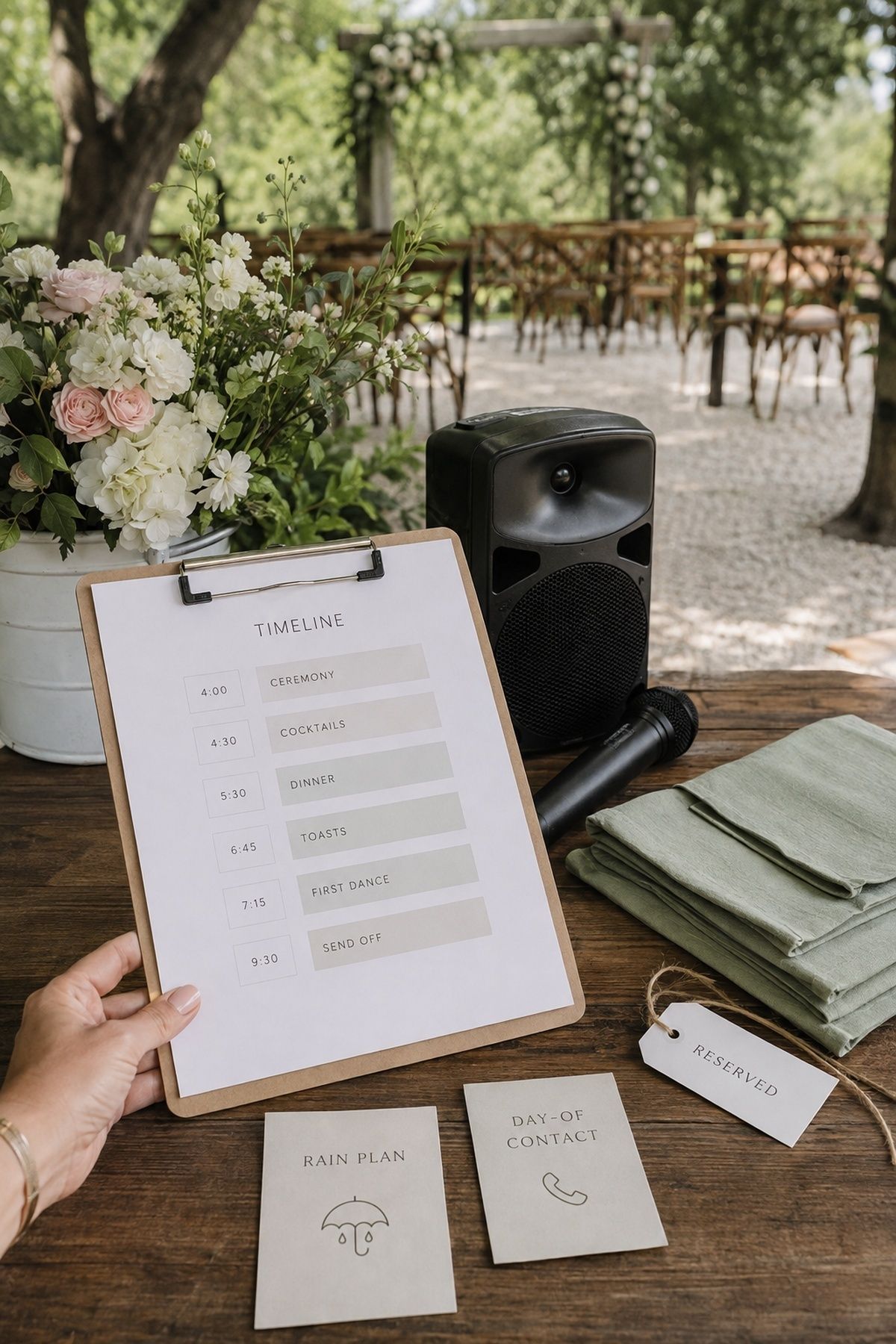
Rentals and florals should support scale. You might need fewer centerpieces, but the table pieces guests see up close should feel finished. You might not need a dance-floor lighting package, but you may need a small speaker and microphone so vows and speeches can be heard without strain.
Most important, name a day-of point person. That could be a planner, coordinator, venue manager, trusted friend, or family member who is not emotionally overloaded. Someone needs to know the timeline, vendor arrivals, final payments, room changes, and what happens if it rains.
Plan Seating And Conversation With Intention
Small-wedding seating for 30 guests is not about controlling every interaction. It is about making people comfortable enough to relax. Because the group is small, guests will notice who they are near, whether they can hear speeches, and whether the table arrangement invites conversation.
One Long Table
One long table can be beautiful for 30 guests if the room supports it. It creates a shared-dinner feeling and keeps the couple visually connected to everyone. The tradeoff is that people mostly talk to the guests beside and across from them, so place quieter guests where they will feel included.
Leave enough room for service, chairs, and movement. A long table that looks romantic in photos can become awkward if servers cannot pass behind chairs or if guests have to squeeze out every time someone stands for a toast.
A Few Smaller Tables

Three tables of ten, five tables of six, or a mix of family and friend tables may fit some rooms better than one long table. Smaller tables can help with family dynamics, accessibility, and conversation volume. They also make it easier to seat guests with people they know without isolating anyone.
You do not need a complicated chart, but you probably do need assigned tables or seats. At this size, sketch names into a simple seating chart before the reception opens, so guests are not left wondering whether they are taking someone else’s place.
Family Dynamics And Accessibility
At 30 guests, the couple may be able to greet every person, but they cannot manage every conversation all night. Good seating does some of that emotional hosting for you.
Build A Simple 30-Person Wedding Timeline
A 30-person wedding timeline should feel relaxed but not vague. Guests do better when they understand where to be and what is happening next. The timeline can be shorter than a traditional wedding day, especially if the ceremony and reception are in the same place or close together.
Ceremony
Give the ceremony a real beginning. Music, a short processional, a welcome, vows, rings, a reading, and a closing moment can make the day feel complete without stretching it. Because guests are close, sound matters. If anyone might struggle to hear, use a small microphone.
Photos And Drinks
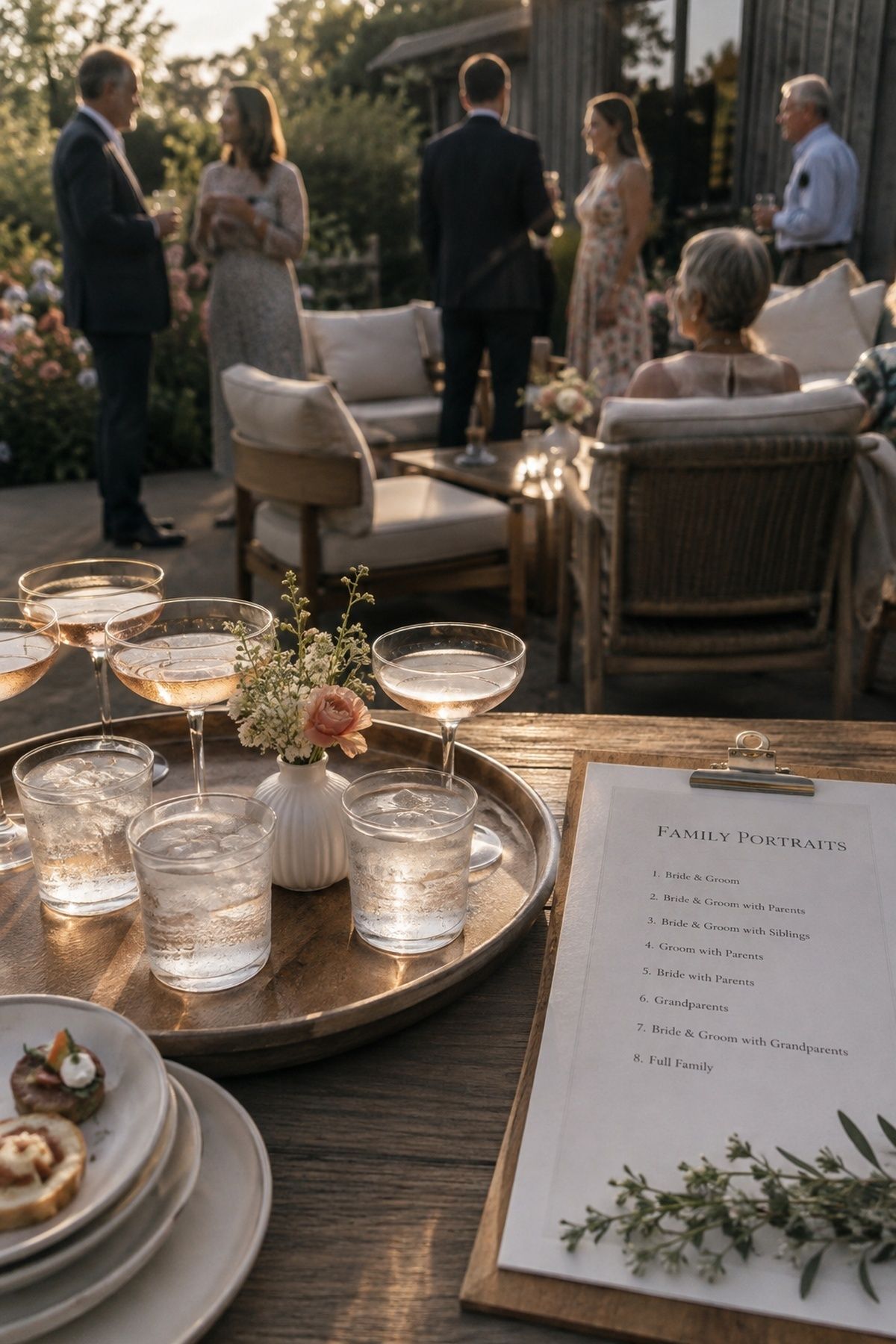
Plan photos so guests are not left waiting without direction. If you want family portraits, make a short list and assign someone who knows both families to gather people. Offer drinks, water, and a small bite if the meal is not immediate.
A short cocktail hour can work well, but it does not need to imitate a large reception. Thirty to forty-five minutes may be plenty if the ceremony and dinner are close together. If portraits are longer, give guests a clear hosted activity or comfortable place to sit.
Meal, Speeches, Dessert, And Close
For 30-guest reception ideas, start with the meal. A welcome toast before dinner, two or three short speeches between courses, dessert, and a relaxed final drink can feel more natural than trying to force a dance-floor schedule into a private room.
Most 30-guest receptions work well in three to five hours, depending on the format. A brunch may be shorter. A private dinner with speeches and dessert may sit around four hours. A weekend-house celebration may spread the energy across the whole stay. Build the final flow around the ceremony location, meal style, and photo needs before placing it into a small wedding day timeline.
Simplify What Does Not Serve 30 Guests
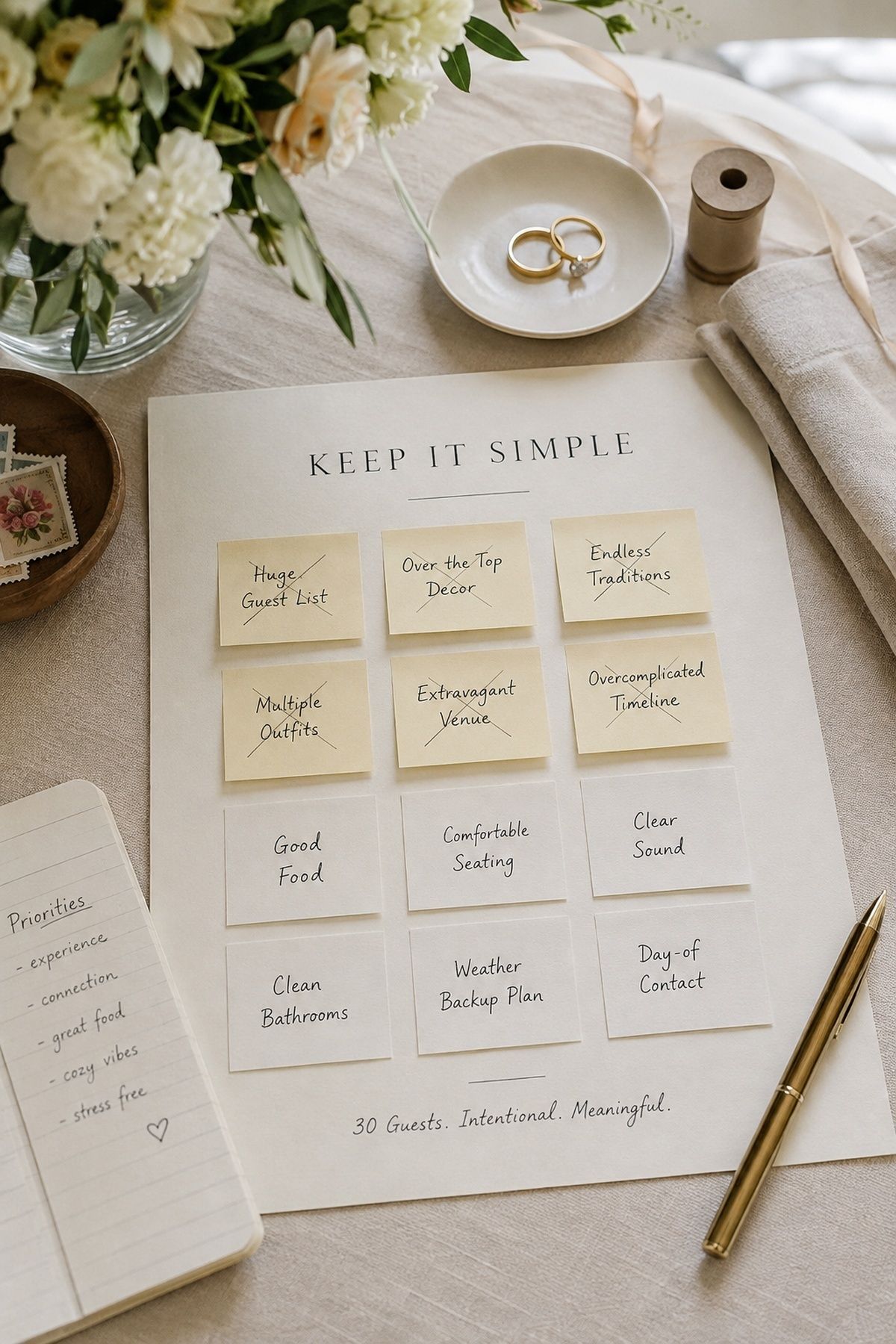
One of the best parts of a 30-guest wedding is that you can skip pieces that only exist because large weddings need them. You may not need a full bridal party entrance, a giant seating display, a multi-hour dance set, favors at every seat, an elaborate transportation plan, or a long photo-shot list with distant relatives.
Do keep the pieces guests will feel: clear invitations, easy arrival, comfortable seating, enough food, accessible bathrooms, weather backup, audible ceremony, thoughtful pacing, and someone besides the couple answering questions. A small wedding can be simple, but it should never make guests feel unsure of what is happening.
If family pressure is making the number wobble, compare 30 with nearby guest counts before you add names, so the conversation feels less like deciding seat by seat under pressure.
FAQ
How Do You Plan A Wedding With 30 Guests?
Start with a firm guest list, then choose a format that fits 30 people naturally, such as a private dining room, garden ceremony, small venue, or inn celebration. Build the budget around food, fixed vendors, seating, and timeline support. Keep the day focused on ceremony, meal, conversation, photos, and a clear day-of point person.
Is 30 Guests Considered A Small Or Micro Wedding?
Thirty guests is usually considered a small or intimate wedding, and some couples also describe it as a micro wedding. The label matters less than the planning needs. With 30 people, you still need real hosting, seating decisions, food service, and timeline support, but the day can stay very personal.
What Kind Of Venue Works Best For A 30-Person Wedding?
The best venue is one that feels full, private, and comfortable with 30 guests. Strong options include restaurant private rooms, gardens, small inns, boutique event spaces, family properties, galleries, and tasting rooms. Avoid rooms built for much larger crowds unless the venue can create a smaller, warmer layout.
How Much Should You Budget For A Wedding With 30 Guests?
The budget depends on your region, venue, meal style, attire, photography, and vendor scope. For 30 guests, separate fixed costs from per-person costs so the number makes sense. A restaurant dinner may simplify rentals and service, while a private property can still require bathrooms, catering, rentals, and cleanup.
Do You Need A Seating Chart For 30 Wedding Guests?
Yes, at least a simple seating plan is helpful. Thirty people is small enough to feel personal, but large enough for guests to wonder where they belong. Assigned tables or seats can support family dynamics, accessibility, conversation, and service timing without making the reception feel overly formal.
What Vendors Do You Still Need For A 30-Guest Wedding?
Most 30-guest weddings still need food and service, an officiant, photography, florals or decor, basic sound, and someone managing the timeline. Depending on the venue, you may also need rentals, hair and makeup, transportation, a bartender, or a planner. Book vendors by function, not by big-wedding tradition.
How Long Should A 30-Guest Wedding Reception Last?
Most 30-guest receptions work well in three to five hours. A brunch or simple restaurant meal may be shorter, while a dinner with speeches, dessert, and relaxed drinks may last closer to four or five hours. The key is a clear flow, not a long schedule packed with formal events.
Final Thoughts
The final 30-guest test is simple: can you name why each person is invited, picture the room feeling full, feed everyone well, seat them comfortably, keep the timeline clear, and hand the wedding-day questions to someone else? If yes, you have a plan that fits the people instead of forcing the people into a plan. As you choose between a private room, an at-home dinner, or a small venue, let the guest count shape a celebration that feels generous, grounded, and fully yours, down to the 30-guest wedding budget.
Last update on 2026-10-03 / Affiliate links / Images from Amazon Product Advertising API