

Summer wedding flowers work best when the design starts with heat, hydration, and timing. Choose sturdy in-season blooms like dahlias, zinnias, sunflowers, orchids, calla lilies, lisianthus, garden roses, cosmos, celosia, protea, and well-managed hydrangeas, then keep delicate flowers shaded, watered, and placed where they will still look fresh by dinner.
Summer flowers ask couples to balance two different dreams: the lush, sunlit abundance of the season and the very real pressure of heat, humidity, transport, and outdoor setup. A flower that looks effortless in a studio photo still has to survive the ceremony, portraits, dinner, and the warmest hours of the day.
For an intimate wedding, the answer is not more flowers everywhere. It is a smarter floral plan: resilient focal blooms, water-friendly vessels, shaded ceremony timing, and a few romantic moments that stay close enough for guests to notice without forcing fragile stems to perform all day.
Recommended Wedding Products


You Might Also Like These Blog Posts
- July Wedding Flowers That Can Handle the Heat
- June Wedding Flowers Before Summer Turns Up the Heat
- August Wedding Flowers for the Last Golden Bloom of Summer
- September Wedding Flowers for the First Hint of Fall
- Fall Wedding Flowers That Make Autumn Do the Work
- Summer Wedding Bouquet Ideas for Sun, Heat, and Holding Close
Summer Wedding Flowers For Heat, Color, And Real Celebration
The right summer flower plan begins with the venue conditions before the palette. Notice where the sun lands, how long the ceremony lasts, whether the reception moves indoors, and which arrangements will sit in water. Once those details are honest, the flowers can feel lush without becoming fragile.
Dahlias For Late-Summer Drama
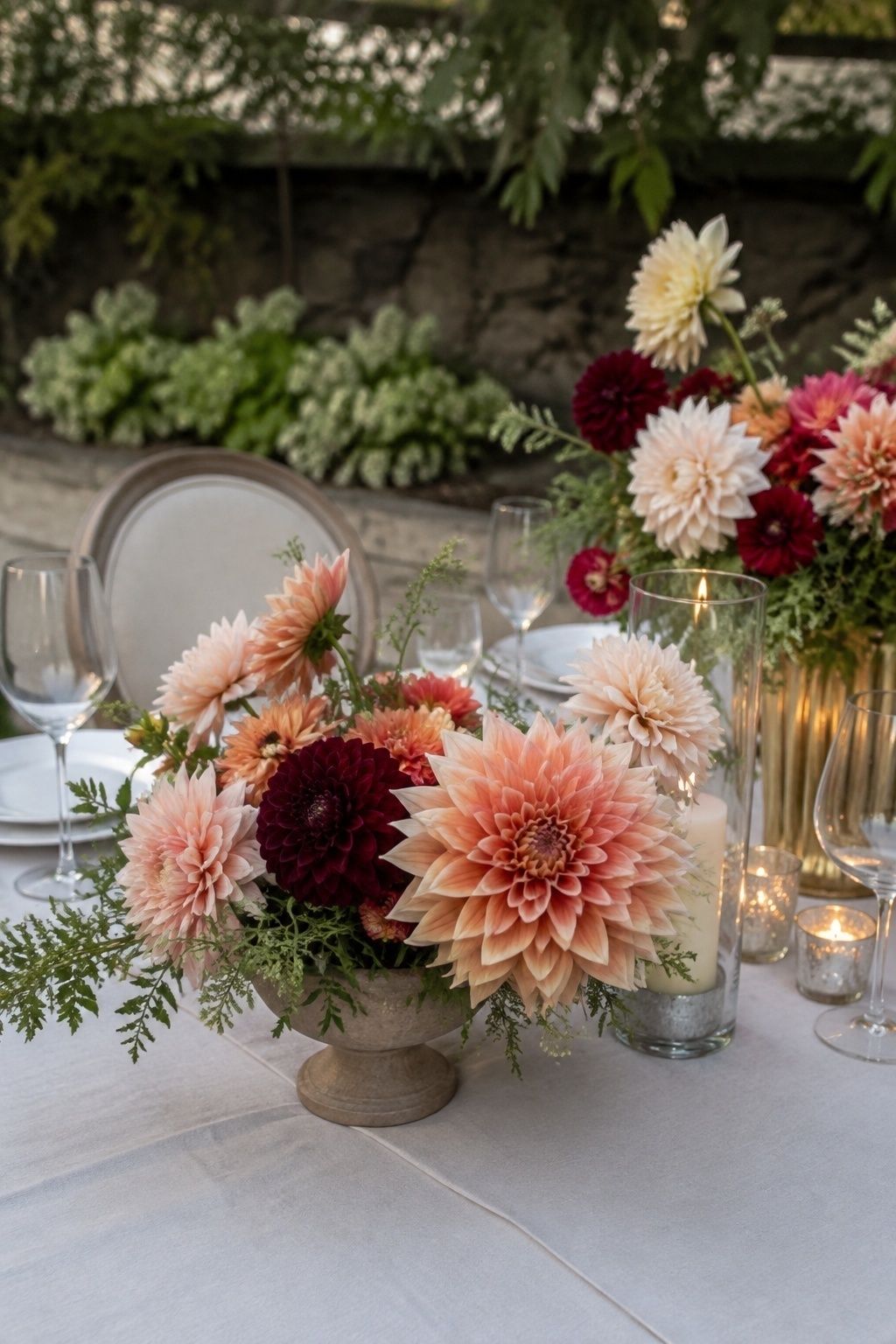
Dahlias bring sculptural shape, rich color, and a generous petal count to late-summer floral design. They look beautiful in bridal bouquets, low compote centerpieces, bar arrangements, and a few statement vessels where one bloom can carry real visual weight.
Treat them as July wedding flowers and August wedding flowers with a care plan, not as indestructible stems. Keep them hydrated, shaded before photos, and supported in arrangements so their large heads do not slump during the warmest part of the celebration.
Zinnias For Cheerful Color That Holds Its Shape
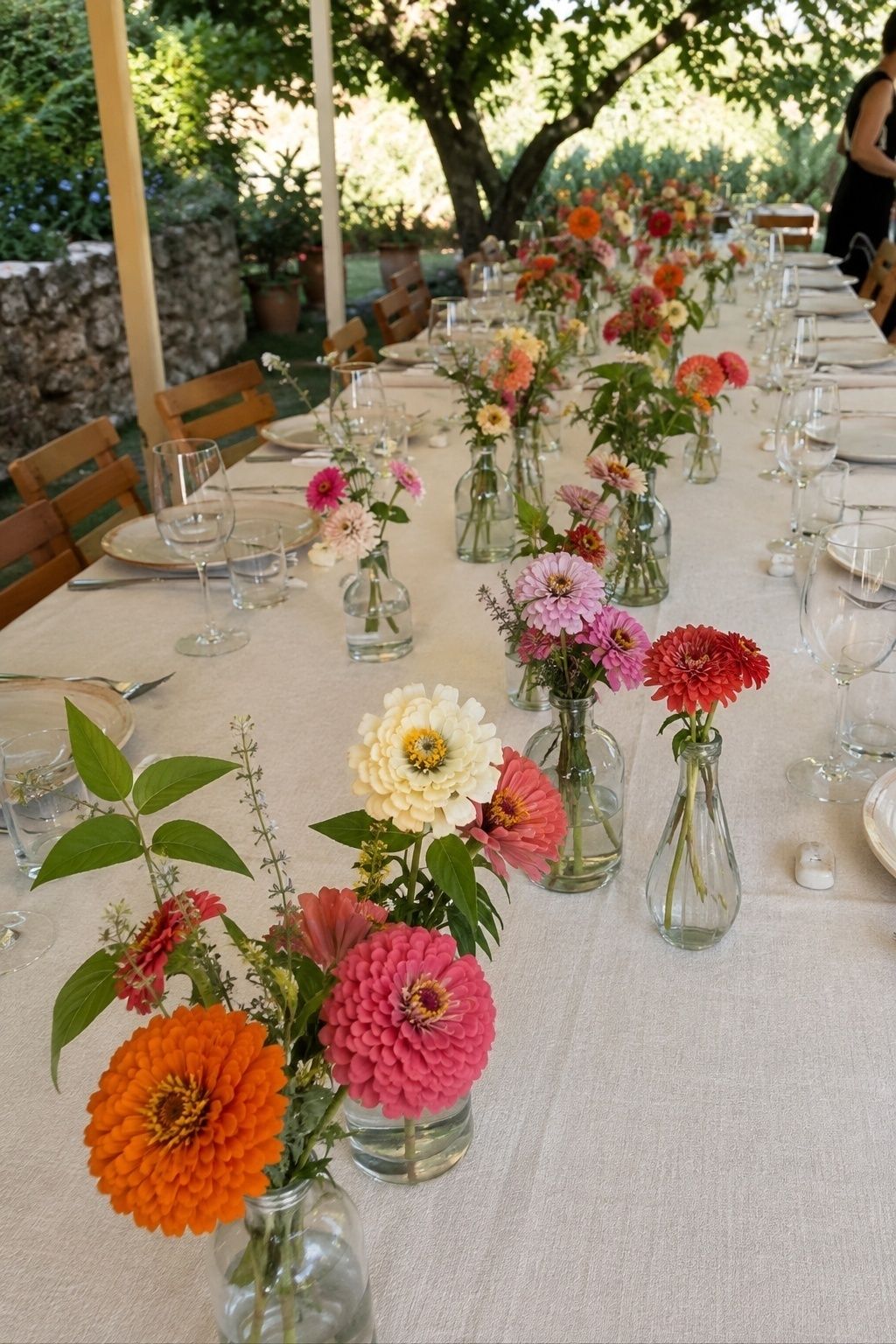
Zinnias are some of the happiest heat resistant wedding flowers for a summer wedding. Their clear colors, sturdy faces, and garden feeling make them ideal for casual bouquets, bud vases, cocktail tables, and relaxed outdoor summer wedding flowers.
Use zinnias when the palette needs coral, pink, orange, raspberry, cream, or yellow without becoming too formal. They work especially well for small weddings because a few stems in clear bud vases can make a long table feel sunny and intentional.
Sunflowers Without The Rustic Cliche
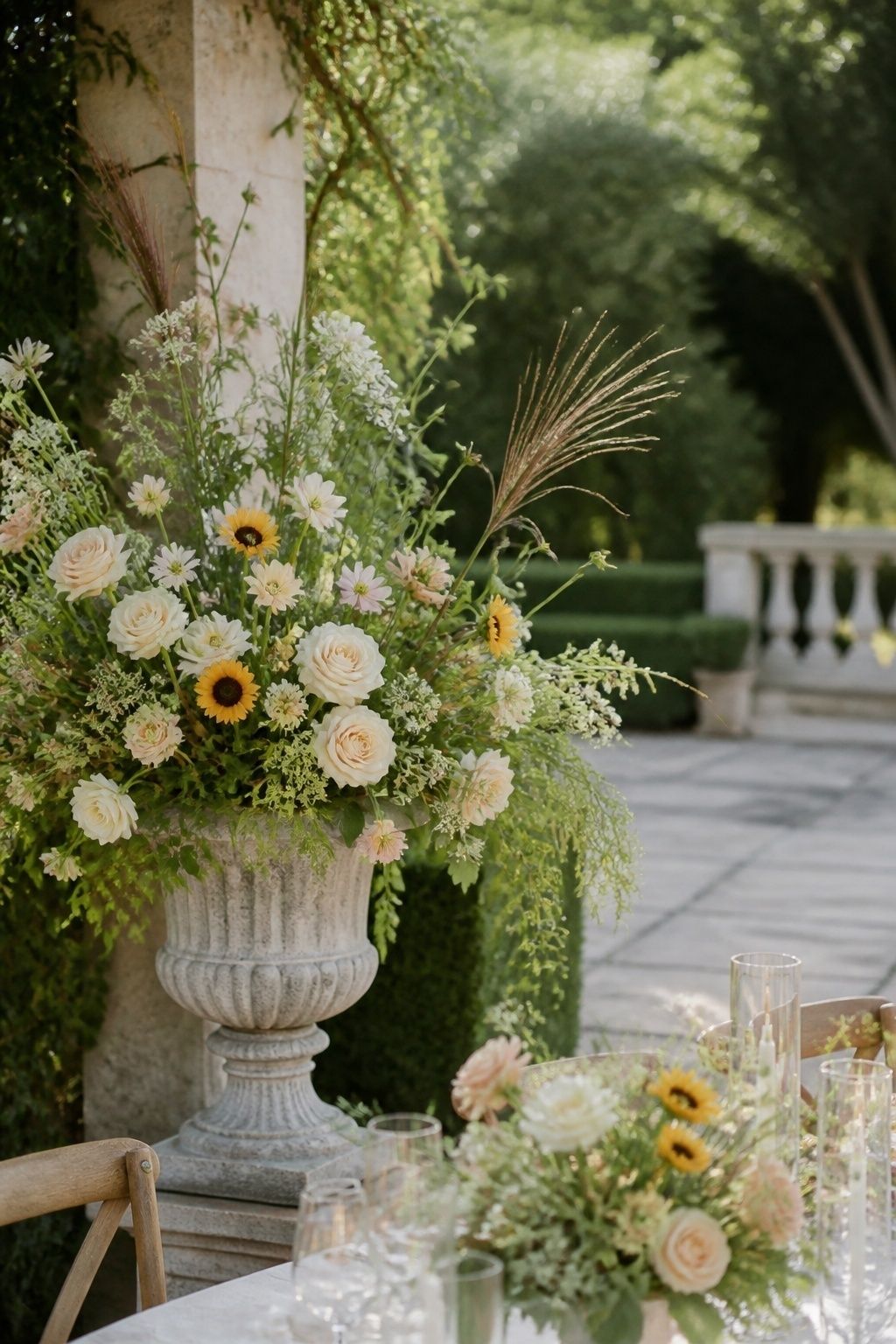
Sunflowers can feel refined when the design uses restraint. Smaller varieties, pale yellow petals, green centers, or a few single stems mixed with garden roses, cosmos, herbs, and grasses give the flower a fresher summer feeling.
Avoid making every arrangement sunflower-heavy unless that is truly the wedding mood. One bouquet accent, a ceremony urn, or a line of low table arrangements can honor the season without turning the reception into a theme.
Orchids For Heat-Tolerant Elegance

Orchids are a polished choice for summer wedding flowers because many varieties handle warm conditions better than more delicate cottage blooms. Cymbidium, dendrobium, and phalaenopsis orchids can look modern, tropical, romantic, or quietly minimal depending on the palette.
They are especially useful for bouquets, boutonniere alternatives, cake tables, bar flowers, and installations that need to look fresh late into the evening. Pair them with simple greenery or calla lilies when the overall style needs elegance more than volume.
Calla Lilies For Clean Lines In Warm Weather
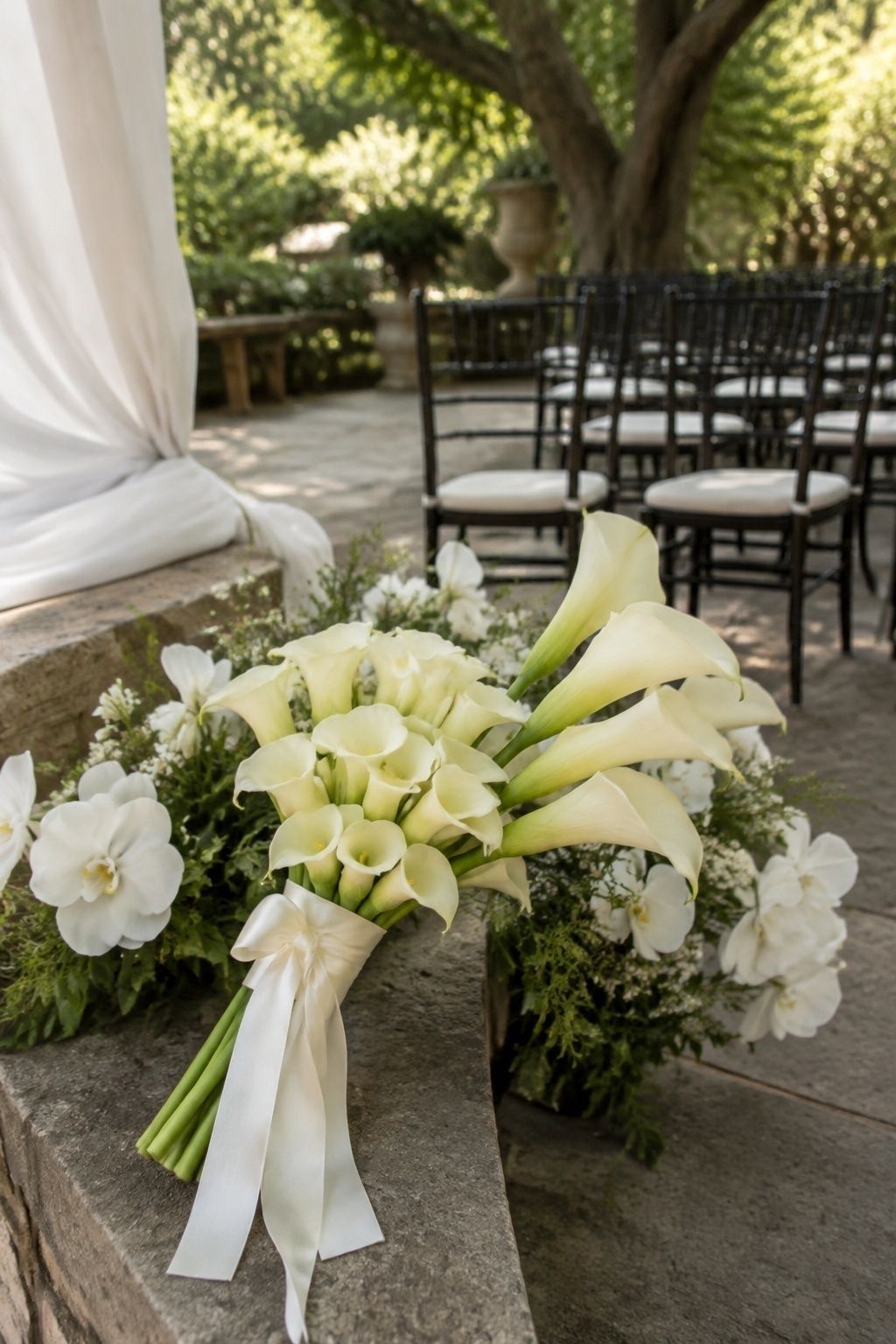
Calla lilies give summer floral design a clean, sculptural line. They suit modern bouquets, black-tie outdoor ceremonies, minimalist centerpieces, and small weddings where a few shaped stems feel more intentional than a cloud of delicate flowers.
Mini calla lilies are especially helpful in boutonnieres and low centerpieces because they stay neat and do not shed petals across the table. Use them with orchids, roses, tropical leaves, or simple greenery for a heat-aware look that still feels bridal.
Lisianthus For Softness Without Fragility
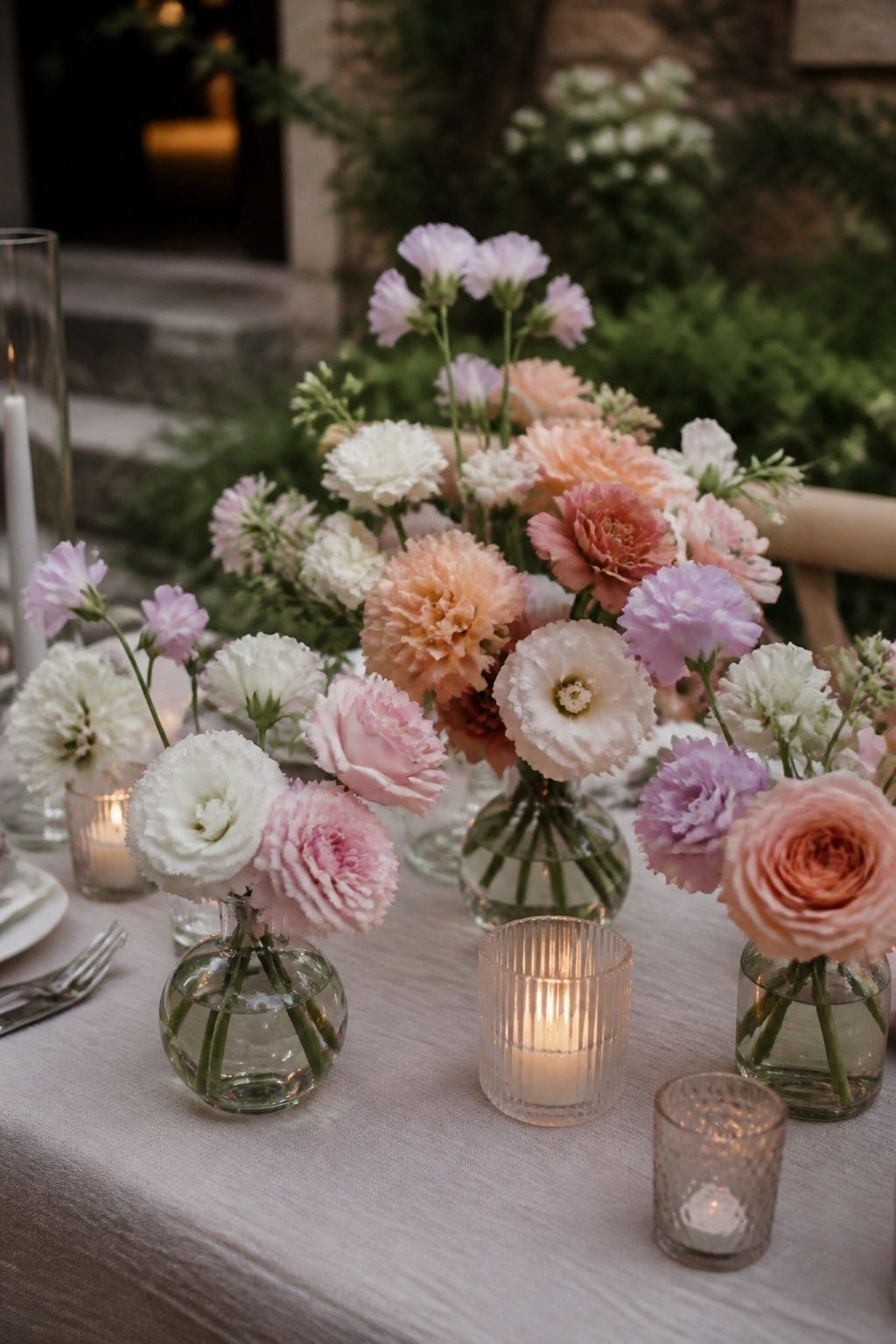
Lisianthus is one of the best summer wedding flower ideas for couples who want soft, ruffled romance but need a practical alternative to more fragile blooms. It brings movement to bouquets, bud vases, ceremony flowers, and low reception arrangements.
White, blush, lavender, apricot, mauve, and green lisianthus all blend easily with summer palettes. It can soften dahlias, zinnias, roses, and orchids without making the arrangement feel too delicate for warm outdoor conditions.
Garden Roses As The Romantic Anchor
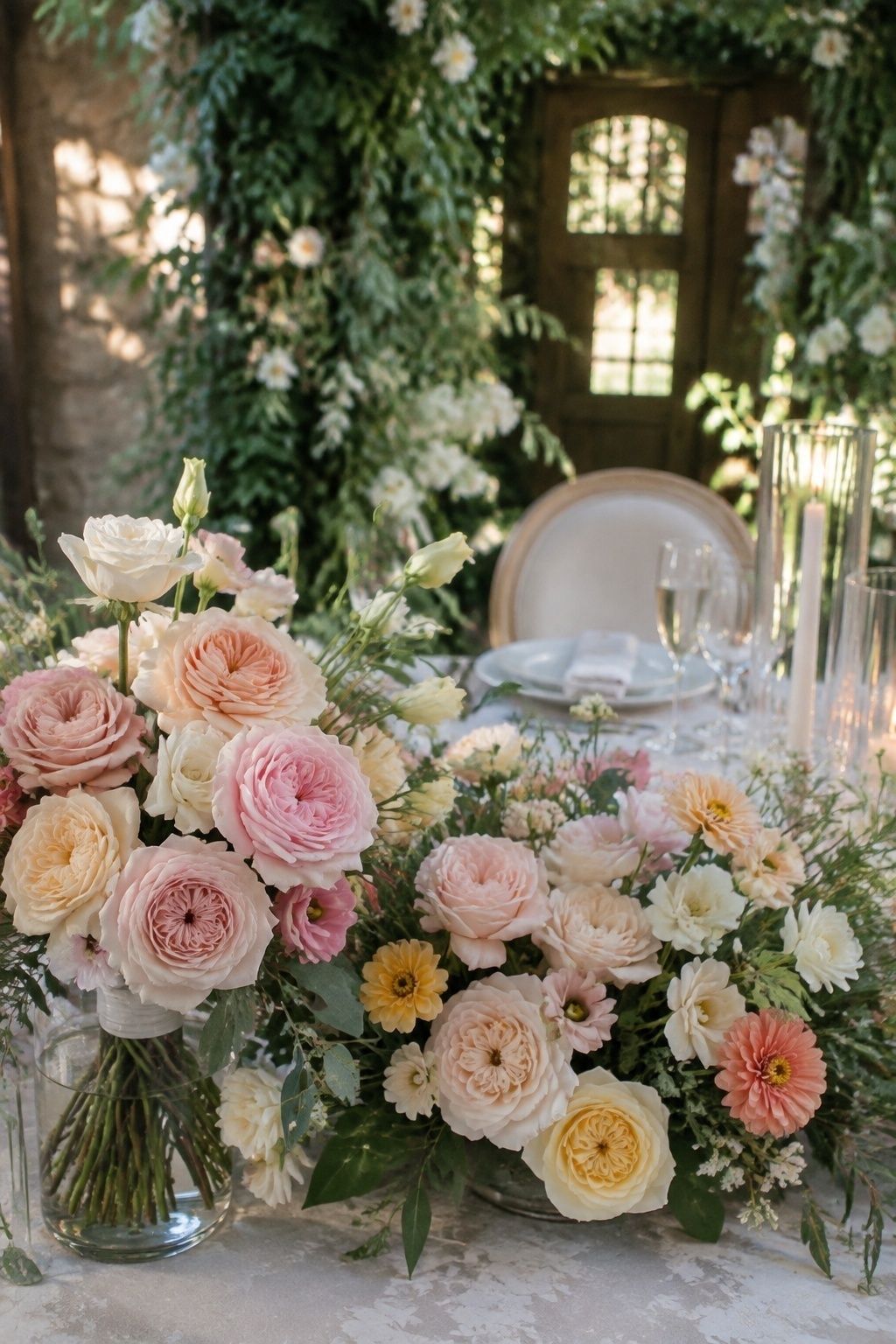
Garden roses give summer wedding flowers a lush, classic center. They are not magic in extreme heat, but with proper hydration and shade they offer the romantic fullness many couples want from peonies after peony season has passed.
Use garden roses where guests will see them close up: the bouquet, sweetheart table, ceremony entrance, or a few low centerpieces. Let sturdier supporting flowers and greenery do the harder outdoor work around them.
Hydrangeas With A Real Water Plan

Hydrangeas can look breathtaking in summer, but they are thirsty flowers. Use them only when the florist can keep them hydrated before setup, place them in water-rich designs, and protect them from direct sun during the hottest hours.
They are better for shaded entrances, indoor-outdoor receptions, large vessels, or arrangements that stay in water than for exposed bouquets in full heat. If the wedding is fully outdoors in July or August, ask for a backup bloom with a similar volume.
Cosmos For Airy Garden Movement
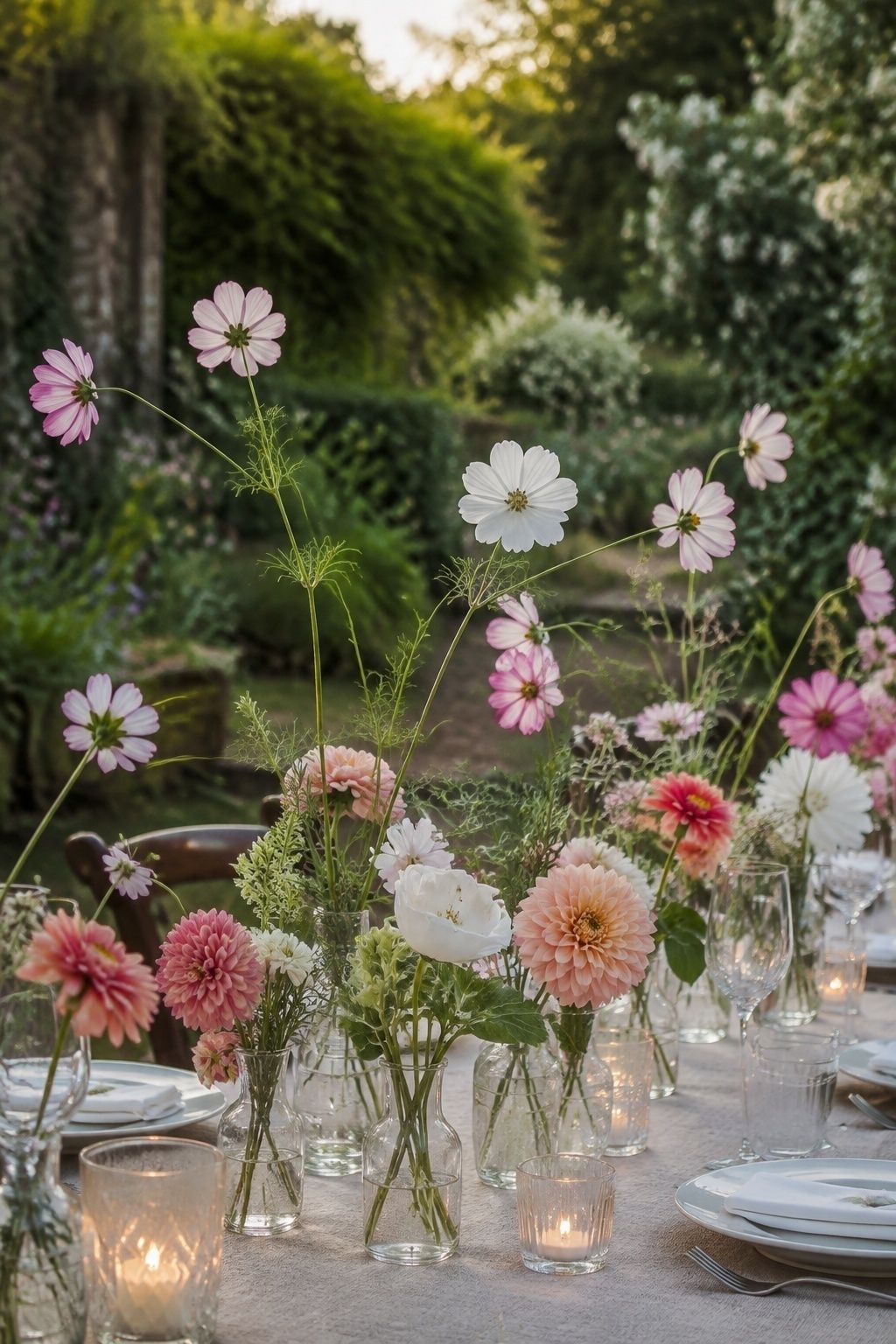
Cosmos bring lightness to summer wedding flowers in season. Their fluttery petals, slim stems, and garden personality are beautiful in bouquets, bud vases, small centerpieces, and meadow-style arrangements that need movement rather than heavy structure.
Because cosmos can be delicate, give them gentle placements. They shine in shaded tables, detail arrangements, and late-day garden weddings, especially beside zinnias, dahlias, herbs, lisianthus, and airy greenery.
Celosia For Texture And Saturated Color
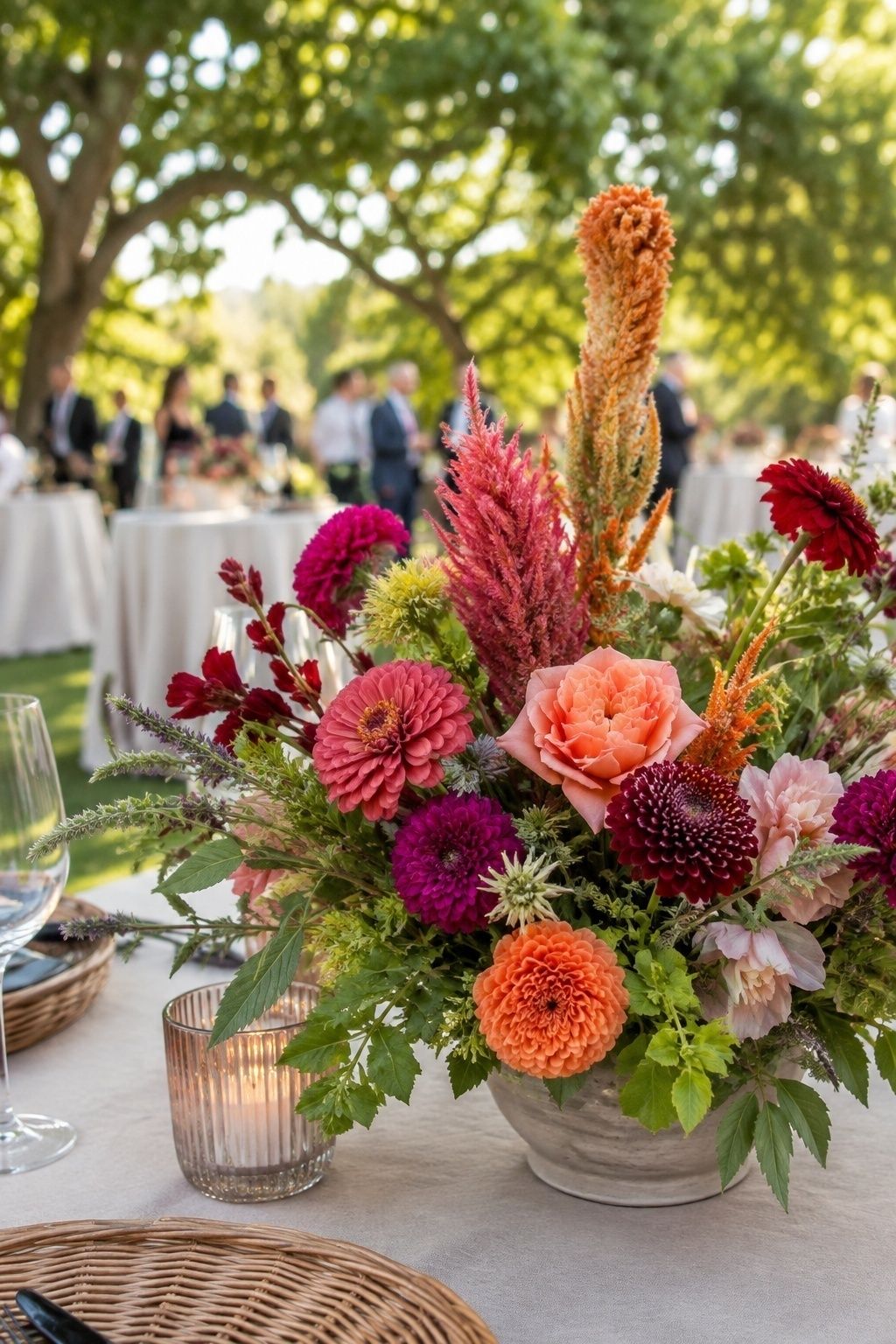
Celosia adds texture, color, and summer confidence to arrangements. Its flame-like, feathery, or crested shapes make bouquets and centerpieces feel lively, especially in coral, magenta, orange, burgundy, chartreuse, or soft blush.
Use celosia when the flowers need to stand up visually in bright sunlight. It pairs beautifully with zinnias, dahlias, garden roses, herbs, and grasses, and it keeps a small floral plan from feeling too polite.
Protea And Tropical Leaves For Outdoor Heat
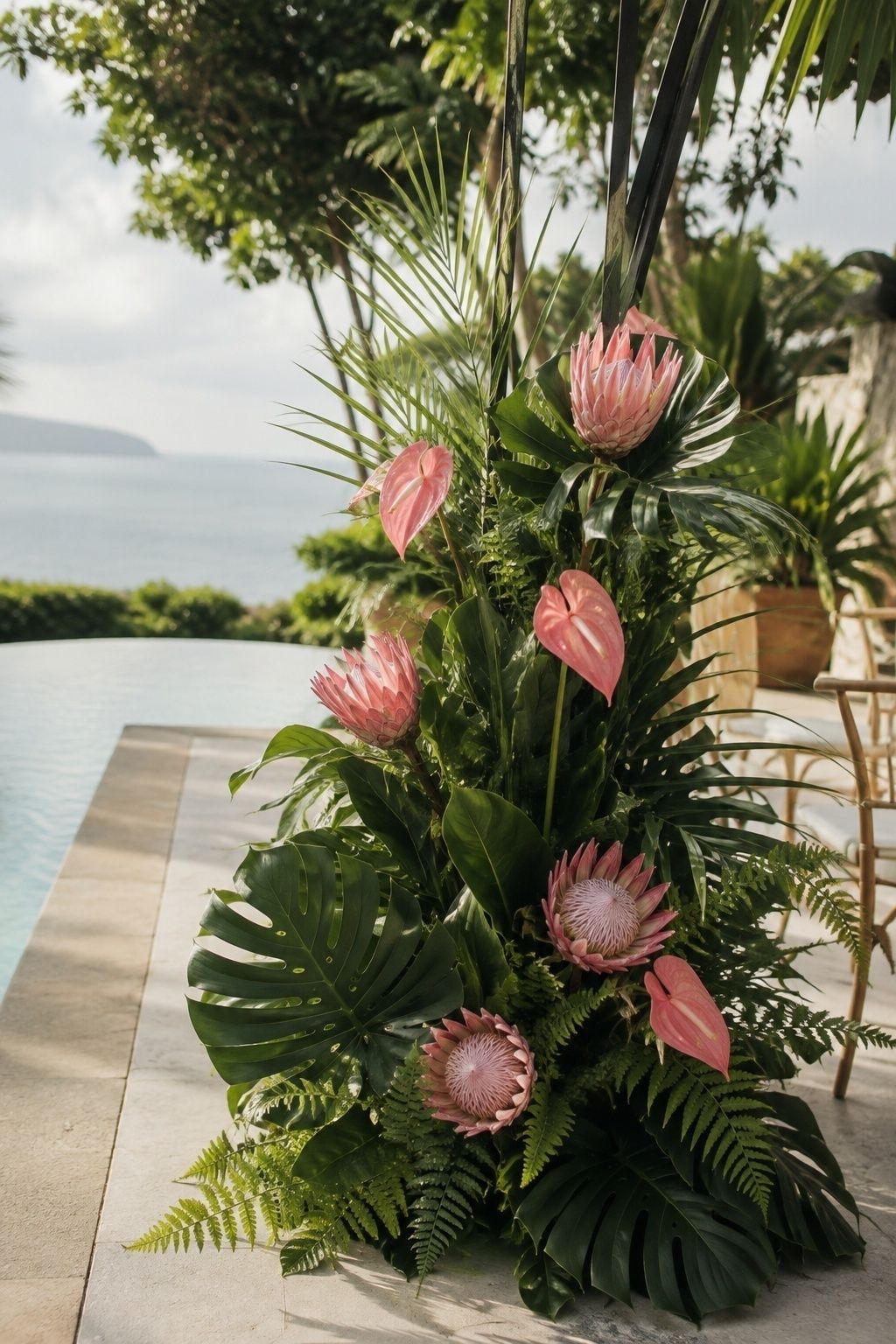
Protea, anthurium, monstera, palm, fern, and other tropical leaves can give outdoor summer wedding flowers strength and structure. They are excellent for hot climates, destination-style venues, poolside receptions, beach settings, and modern garden parties.
The key is editing. A few tropical stems can make a bouquet or ceremony arrangement feel confident, while too many competing shapes can overwhelm a small wedding. Repeat one leaf or one protea variety so the design feels intentional.
Lavender And Herbs For Scented Summer Detail
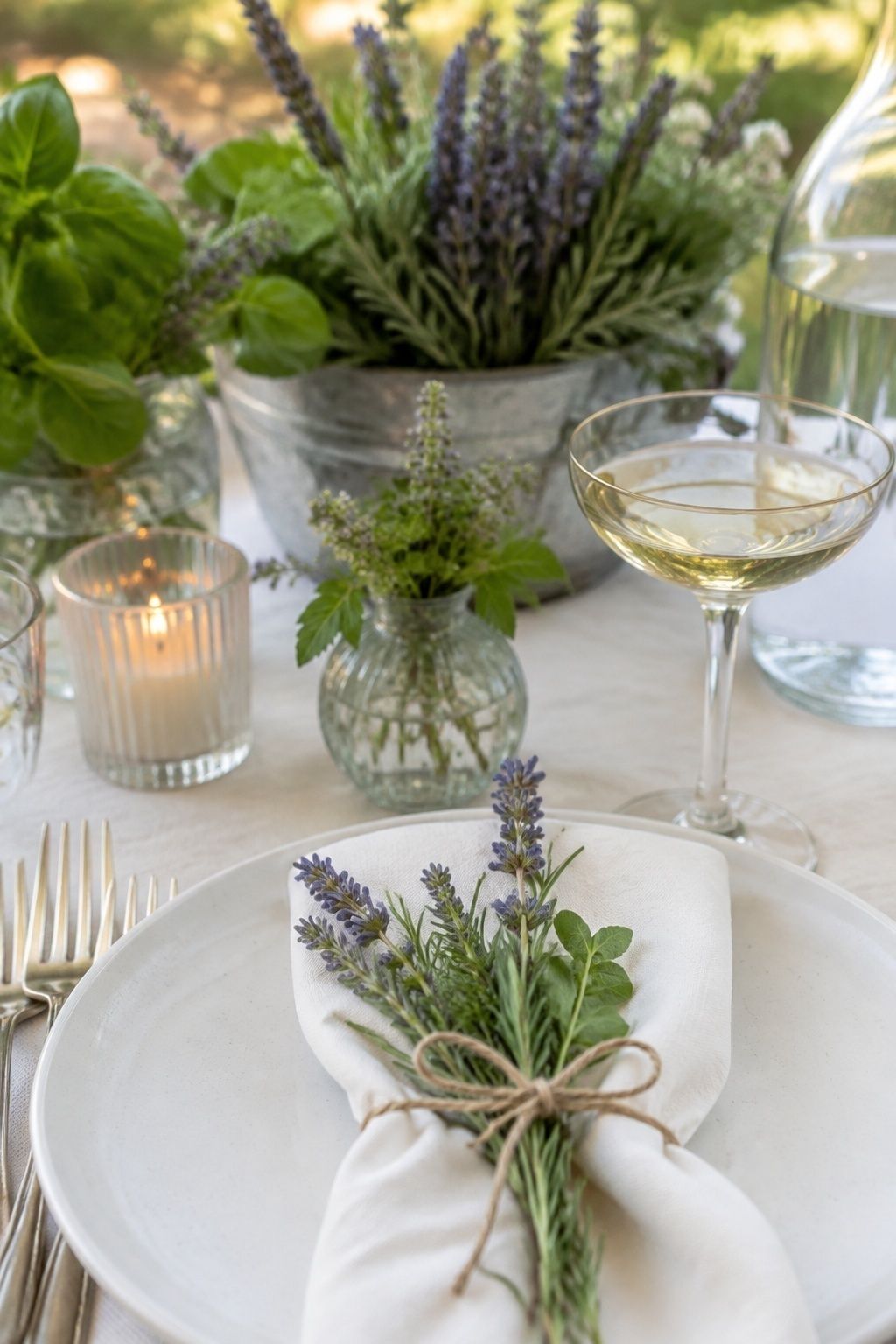
Lavender, rosemary, mint, basil, thyme, and oregano can make summer flowers feel seasonal without adding heavy floral volume. They work well in boutonnieres, napkin details, bar arrangements, welcome tables, and small bud vases.
Keep scent in balance around food. Herbs feel lovely when guests brush past them or notice them in small doses, but strong fragrance at every dinner place setting can compete with the meal.
Early-June Peonies With A Backup Plan
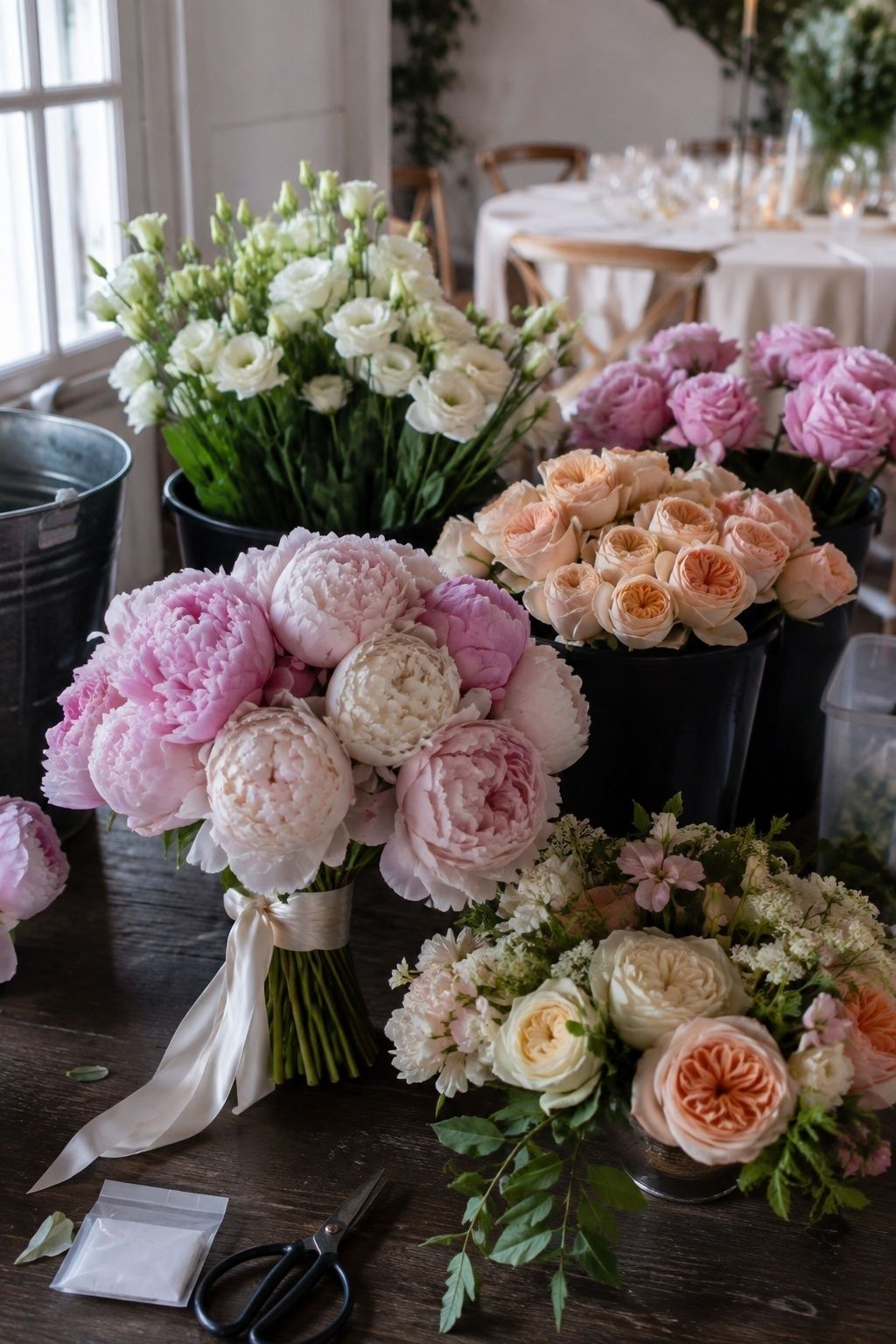
June wedding flowers can still include peonies, especially in cooler regions or early in the month. They create soft, generous bouquets and romantic centerpieces, but they should be treated as a seasonal privilege rather than the whole plan.
Ask the florist what will replace peonies if the week runs hot or supply shifts. Garden roses, lisianthus, ranunculus in cooler climates, and ruffled roses can keep the feeling without making the entire design depend on one short-window bloom.
Clear Bud Vases For Small Wedding Tables

Clear bud vases are one of the easiest ways to stretch summer wedding flowers across a small reception. A few stems of zinnia, cosmos, lisianthus, herb, dahlia, or rose can bring color to the table without blocking conversation.
They also keep stems in water, which matters in summer. Repeat the same vessel shape down the table and vary the flowers slightly so the design feels collected, fresh, and easy for dinner service.
Ceremony Flowers Kept Out Of Direct Sun
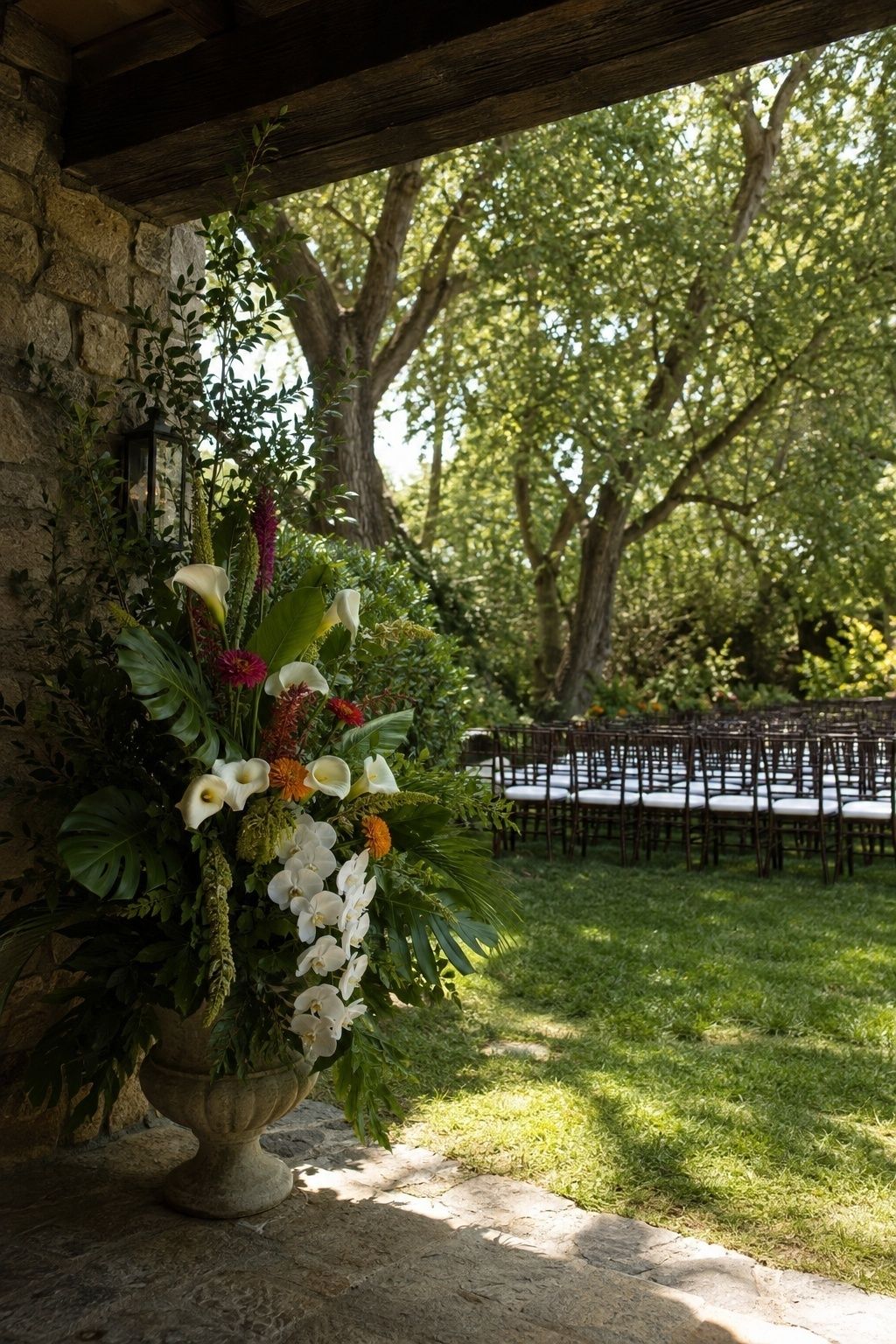
Ceremony flowers often suffer because they are installed too early in the hottest spot. Place arches, urns, aisle flowers, and welcome arrangements where shade protects them, or schedule setup as close to guest arrival as the venue allows.
If the ceremony site has no shade, choose fewer and sturdier blooms. Orchids, calla lilies, tropical leaves, zinnias, celosia, and hardy greenery will behave better than delicate flowers that wilt before the processional begins.
A Budget Focus On The Flowers Guests Notice Most
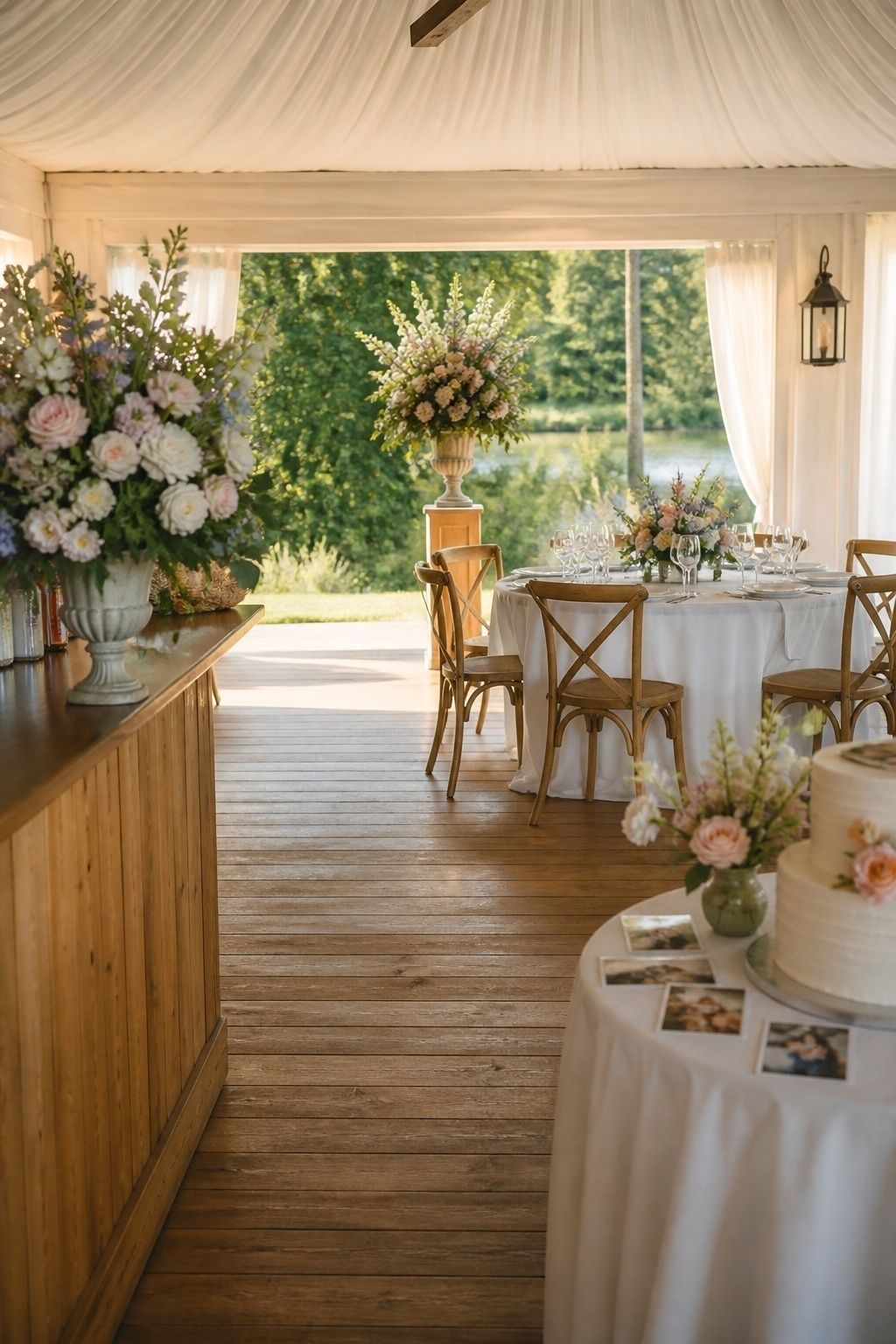
A small summer wedding does not need flowers in every corner. Spend first on the bouquet, ceremony focal point, dining table, bar, and any photo-heavy moment. These are the places guests see closely and where the flowers shape the story of the day.
Skip filler arrangements in spaces guests pass quickly. Concentrated summer flowers often look more luxurious than many scattered stems, especially when the table, candlelight, linens, and drinks already carry seasonal texture.
A Wedding-Day Freshness Plan
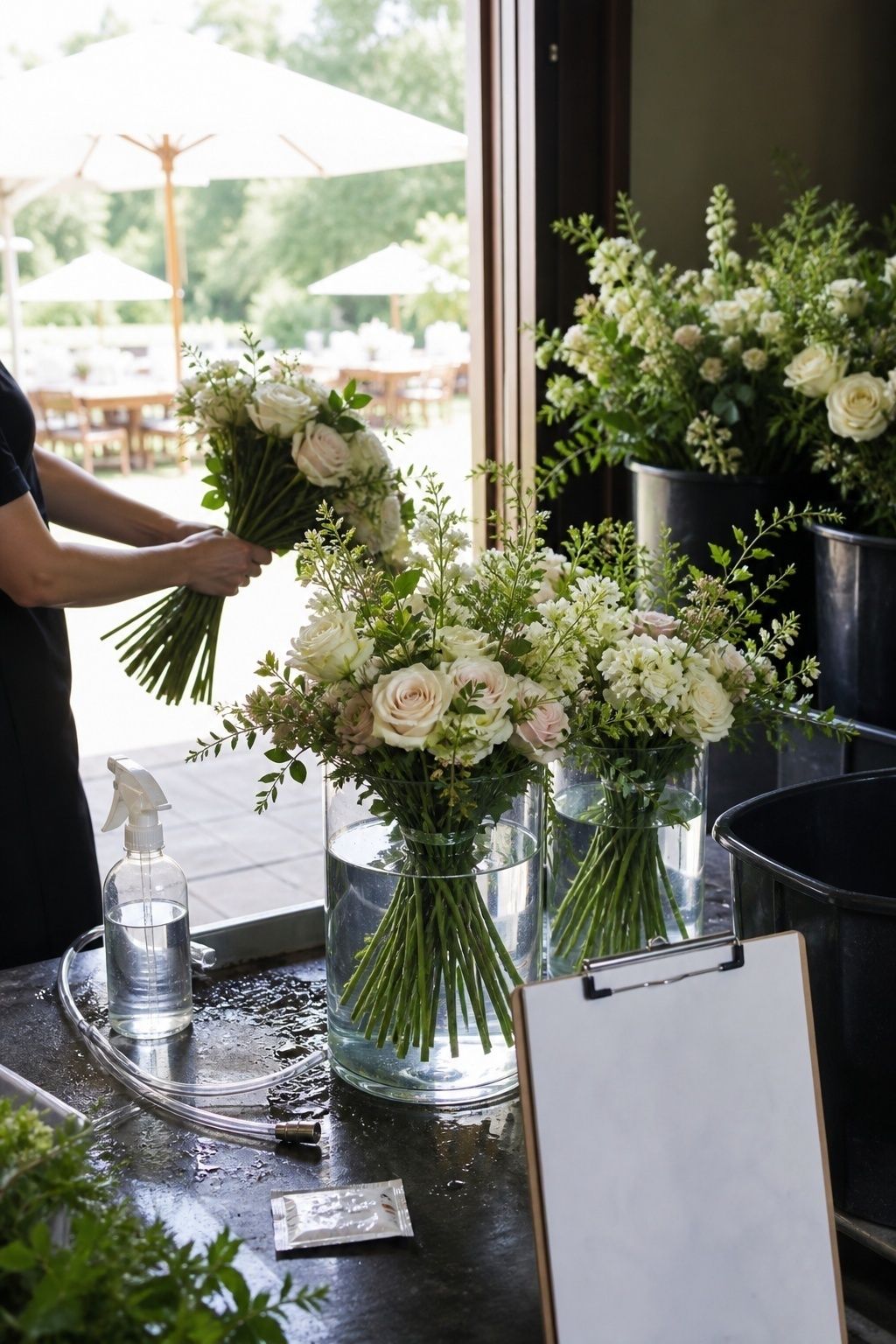
The best floral choice still needs a wedding-day freshness plan. Confirm delivery timing, storage temperature, water access, misting, bouquet water tubes, emergency flower food, setup sequence, and who moves arrangements from ceremony to reception.
Build the plan around the hottest hour, not the prettiest hour. Flowers should stay in shade before portraits, return to water whenever possible, and move indoors or under cover when dinner begins.
FAQ
What are the best summer wedding flowers?
The best summer wedding flowers are sturdy, seasonal, and chosen for the exact setting. Dahlias, zinnias, sunflowers, orchids, calla lilies, lisianthus, garden roses, cosmos, celosia, protea, tropical leaves, herbs, and carefully hydrated hydrangeas all work beautifully when placement and timing are planned.
What flowers are in season for a summer wedding?
Summer wedding flowers in season often include dahlias, zinnias, cosmos, sunflowers, garden roses, lisianthus, celosia, lavender, herbs, orchids, calla lilies, and tropical greenery. Early June may still offer peonies in some regions, while July and August usually call for stronger heat-aware substitutes.
Which wedding flowers hold up best in summer heat?
The wedding flowers that hold up best in summer heat are usually orchids, calla lilies, zinnias, celosia, protea, tropical leaves, hardy greenery, and well-conditioned roses or lisianthus. Exact performance depends on humidity, sun exposure, delivery timing, water access, and whether the flowers sit outdoors for hours.
What flowers should you avoid for an outdoor summer wedding?
Avoid fragile flowers in direct sun, especially if they will be out of water for a long time. Sweet peas, lily of the valley, delicate ranunculus, some tulips, and poorly hydrated hydrangeas can struggle outdoors. Use them only in shaded, short-duration, or water-supported placements.
How do you choose flowers for a small summer wedding?
Choose flowers for a small summer wedding by focusing on the places guests notice most: the bouquet, ceremony focal point, dining table, bar, and cake or welcome table. Use resilient blooms for exposed areas, delicate flowers in protected spots, and bud vases to make fewer stems feel abundant.
How do you keep summer wedding flowers fresh?
Keep summer wedding flowers fresh by scheduling late setup, storing flowers cool, keeping bouquets in water until photos, using water tubes where helpful, misting only when the florist approves, avoiding direct sun, refreshing vase water, and moving ceremony arrangements into shaded reception spaces quickly.
Final Thoughts
Summer wedding flowers are most beautiful when they are allowed to be seasonal and realistic at the same time. Let the heat shape the choices, then let color, scent, vessel shape, and a few generous focal moments bring the romance back in.
When the date is warm and the guest list is close, let the flower plan earn its romance through shade near the ceremony, fresh water within reach, and setup saved for the last reasonable moment. Give delicate favorites a protected role, let sturdy blooms handle the sunny stretches, and choose exposed pieces from flowers that can take summer heat. Keep the palette flexible enough for local substitutions, so the room still feels full of flowers that bloom in summer.
Last update on 2026-10-04 / Affiliate links / Images from Amazon Product Advertising API