
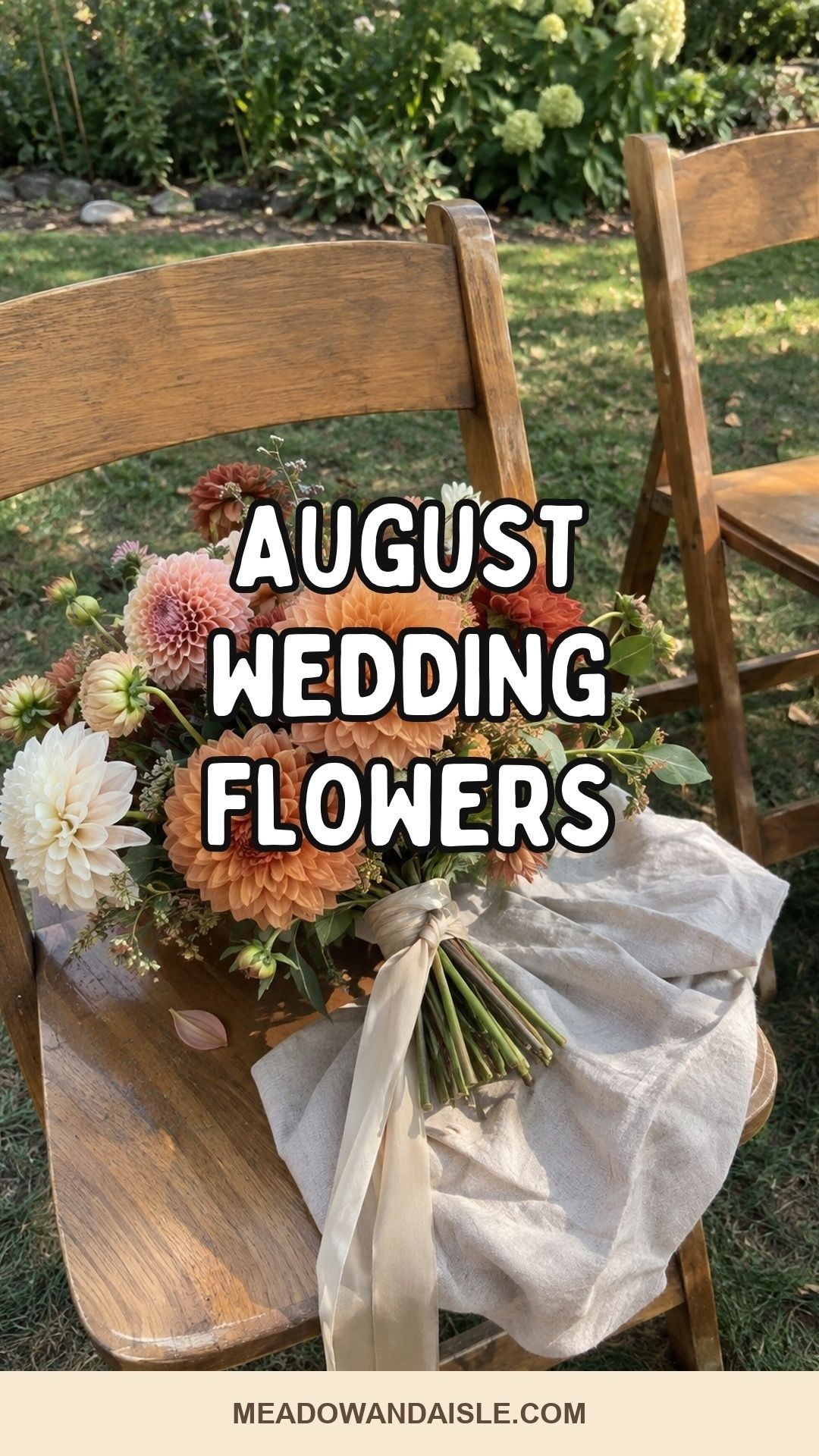
The most reliable August wedding flowers are dahlias, zinnias, celosia, marigolds, carnations, lisianthus and sunflowers, backed by sturdy greenery. Keep hydrangeas, garden roses and cosmos in shade or reserve them for the bouquet. For 30 guests, a bouquet, a few personal flowers, one ceremony piece and four or five low centerpieces is usually enough.
If you have your heart set on peonies for an August wedding, I’d gently talk you out of it. They’re a spring flower, and in most places they’re either unavailable or flown in at a premium by late summer, then asked to sit in 85-degree air. August has its own flowers, and they’re better suited to the job.
Late summer is one of the richest months for local blooms. Dahlias are coming in, zinnias and cosmos are everywhere, and the colors run from butter yellow and coral to wine and copper. The trick at a small wedding is choosing flowers that hold up in heat and look good from two feet away, because that’s how close your guests will be.
Tools that keep flowers alive
Bud vases, low compotes and a few cooling and watering supplies make a modest flower order go much further. Here are the ones worth a look.


Which August wedding flowers handle the heat?
Hardy, field-grown flowers handle August best: zinnias, celosia, marigolds, carnations and dahlias. Thirsty or delicate flowers like hydrangeas and garden roses need shade and water to look good past the first hour.
| Flower | Role | Heat tolerance | Best use |
|---|---|---|---|
| Dahlias | Focal | Medium | Bouquets, low centerpieces |
| Zinnias | Color | High | Bud vases, bar, welcome table |
| Cosmos | Movement | Low to medium | Bouquet, shaded tables |
| Sunflowers | Focal | High | One repeated accent |
| Lisianthus | Soft focal | Medium to high | Bouquets, compotes |
| Garden roses | Focal | Low to medium | Bouquet, indoor tables |
| Hydrangeas | Volume | Low | Indoor or evening pieces |
| Celosia | Texture | High | Centerpieces, bouquets |
| Marigolds | Color | High | Casual garden tables |
| Carnations | Support | High | Compotes, ceremony pieces |
“Medium” here means fine for a few hours with water and shade. Ask your florist how each one behaves in your region, because a coastal August and an inland August are different animals.
The focal flowers
Focal flowers give an arrangement its shape. You need fewer of them than you think, especially on small tables.
Dahlias
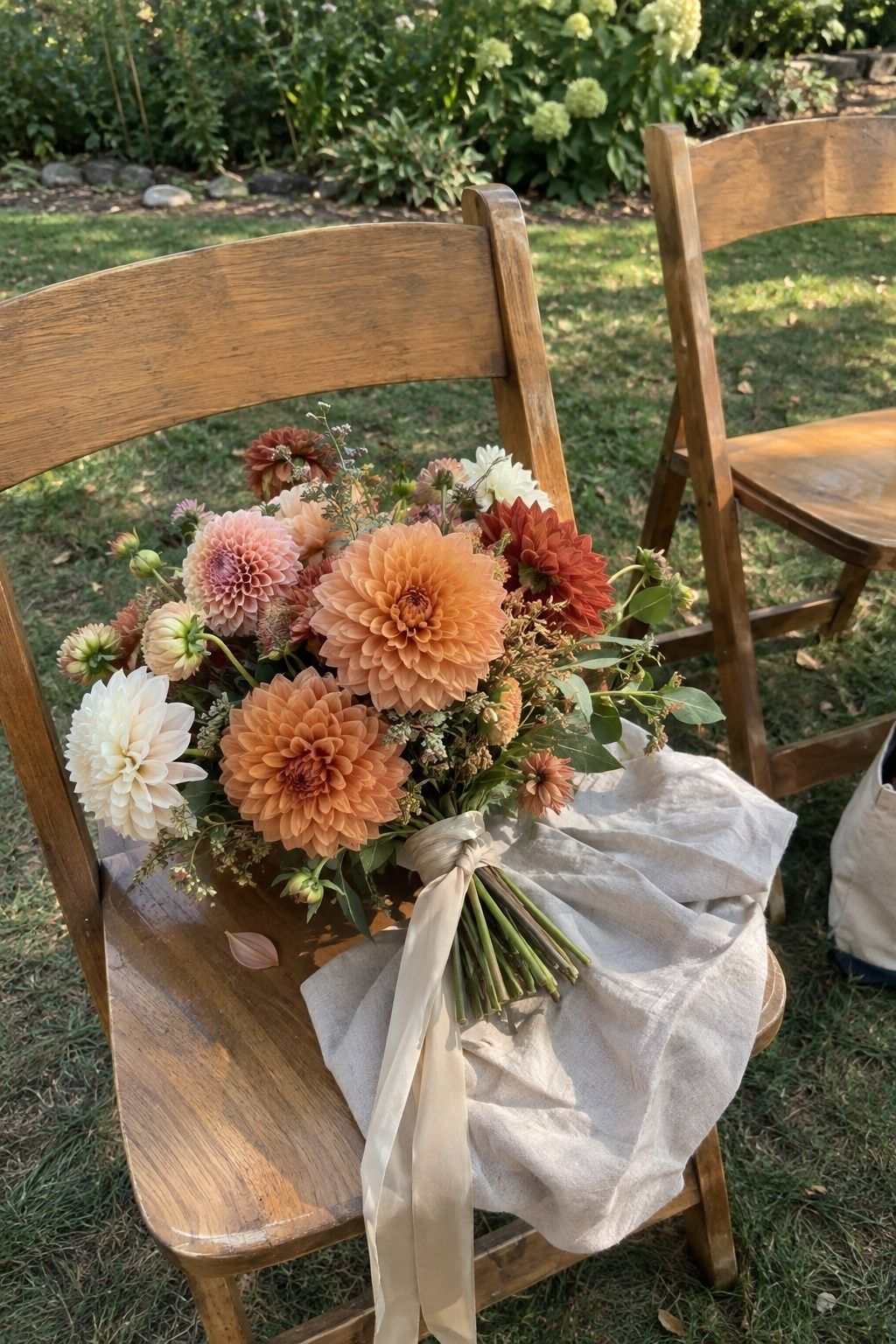
Dahlias are the flower most couples picture for August, and for good reason. They’re sculptural, they come in every color from blush to deep plum, and a handful makes a small bouquet look designed. Timing varies by region and they often peak later in the month, so ask for a color range rather than one exact variety.
Sunflowers, edited
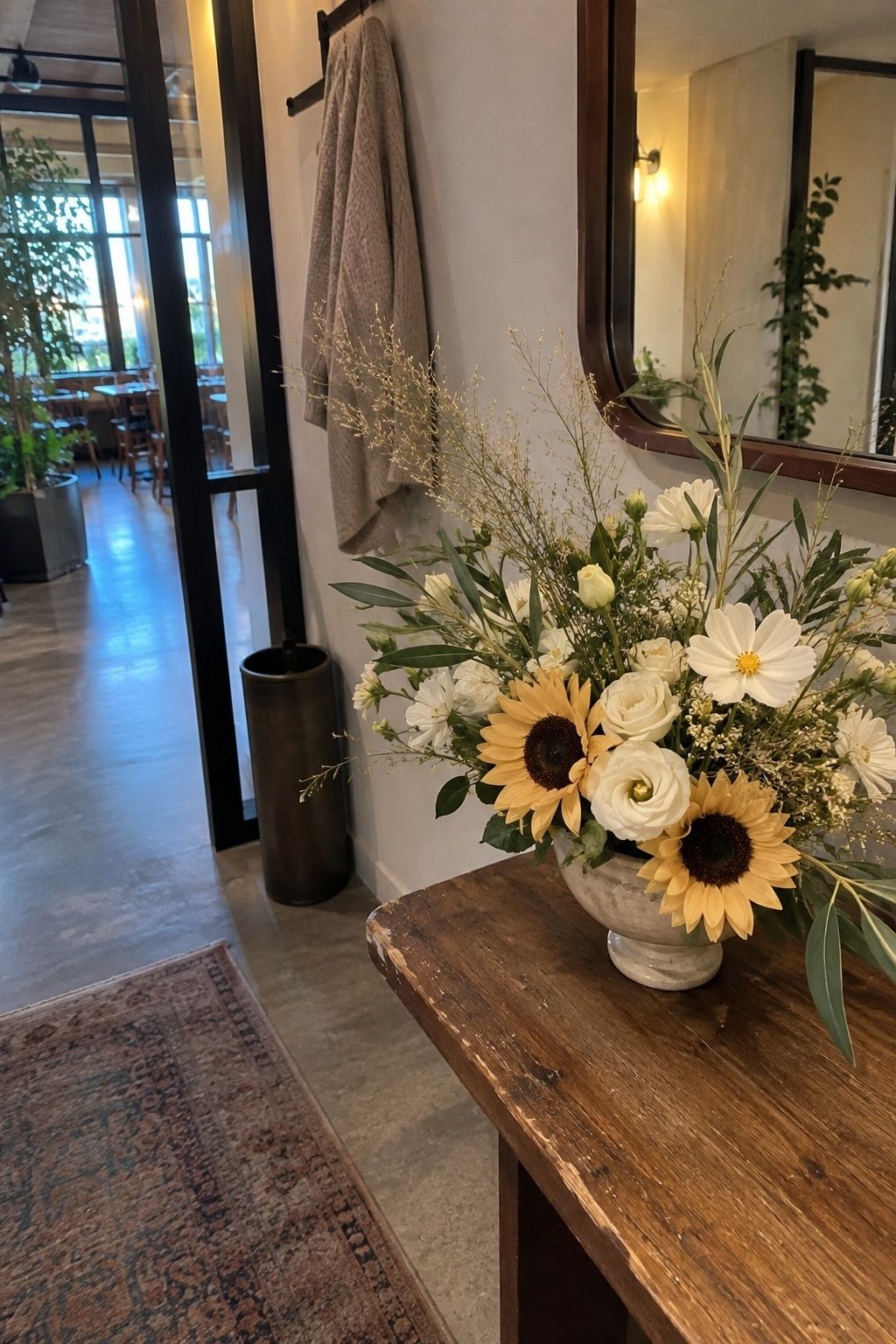
Sunflowers work when you use fewer of them. Pick smaller heads or pale lemon varieties and repeat them in one or two places. Pair them with lisianthus, olive branches or grasses and they lose the barn-party feel. Too many will overpower a table for eight.
Garden roses
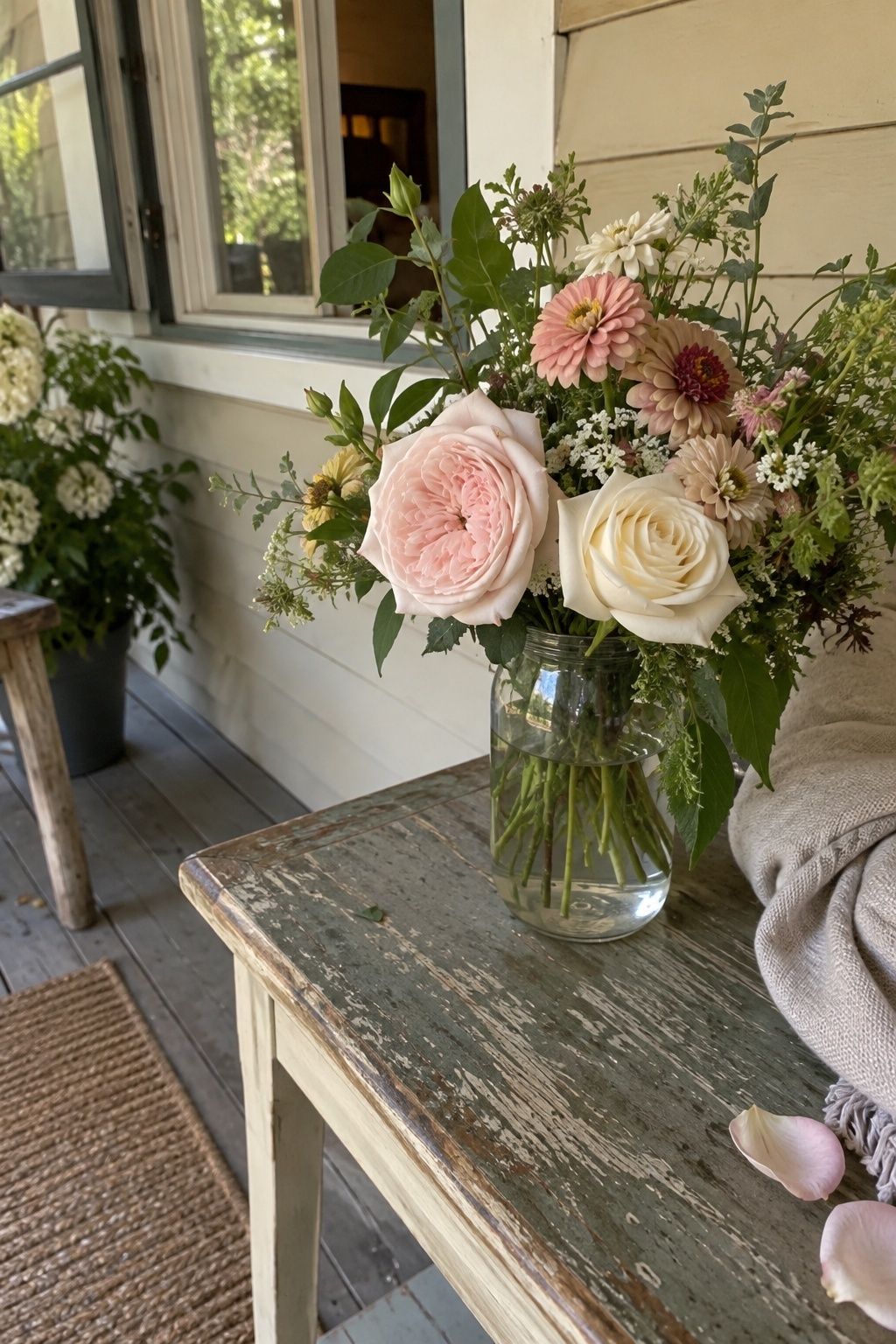
Garden roses add fullness and scent, but they wilt in direct sun. Keep them for the bouquet and indoor tables, store them cool until portraits, and let sturdier flowers handle anything that sits outside all afternoon.
Hydrangeas, only where it’s cool
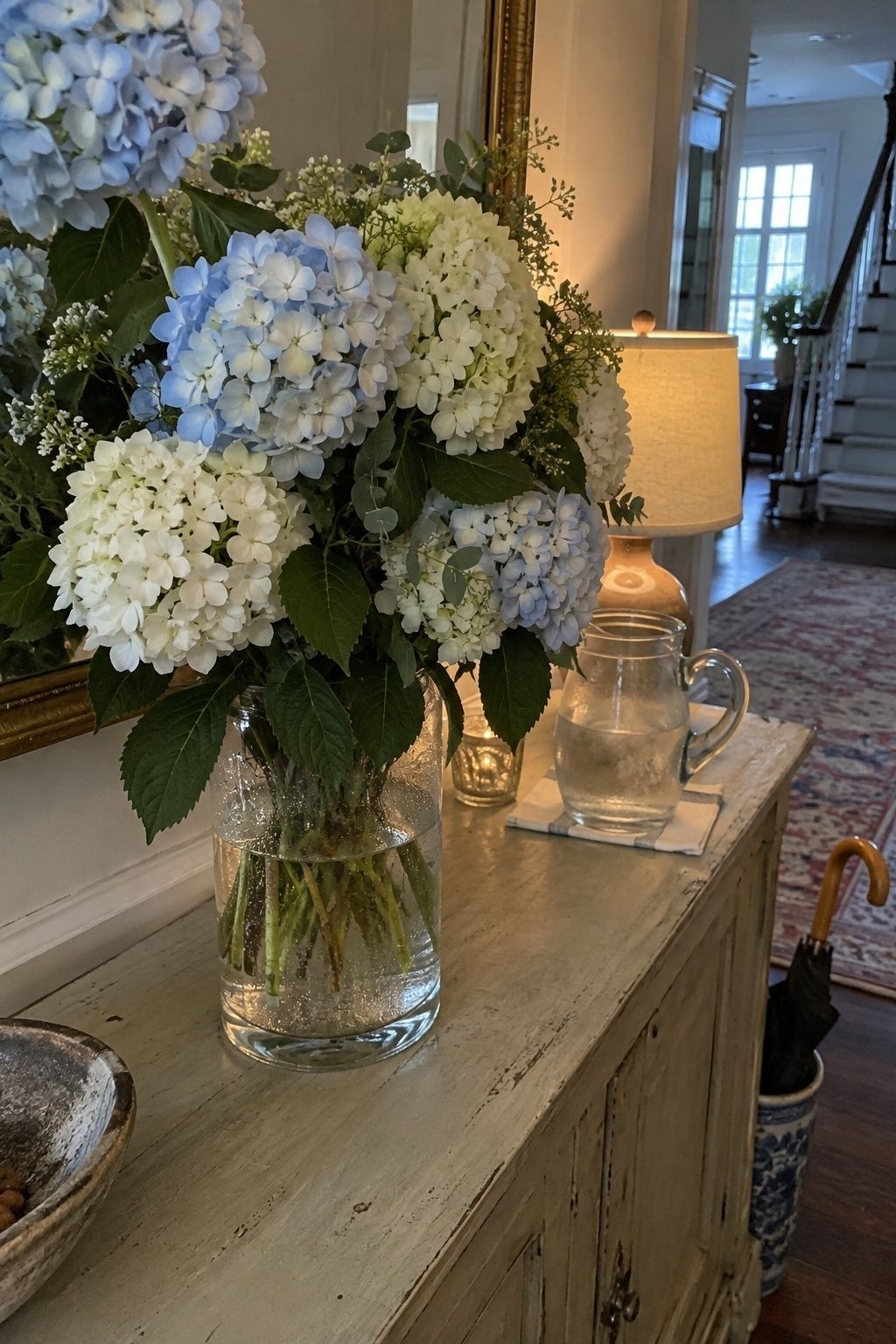
Hydrangeas give a lot of volume per stem and look lovely at coastal, indoor or evening weddings. They’re also very thirsty. If your ceremony is outdoors at 2 p.m., ask for a backup flower or keep hydrangeas to shaded, watered spots.
Flowers that bring color and movement
These are the flowers that keep an August arrangement from looking stiff. Most of them are also cheap and plentiful in late summer.
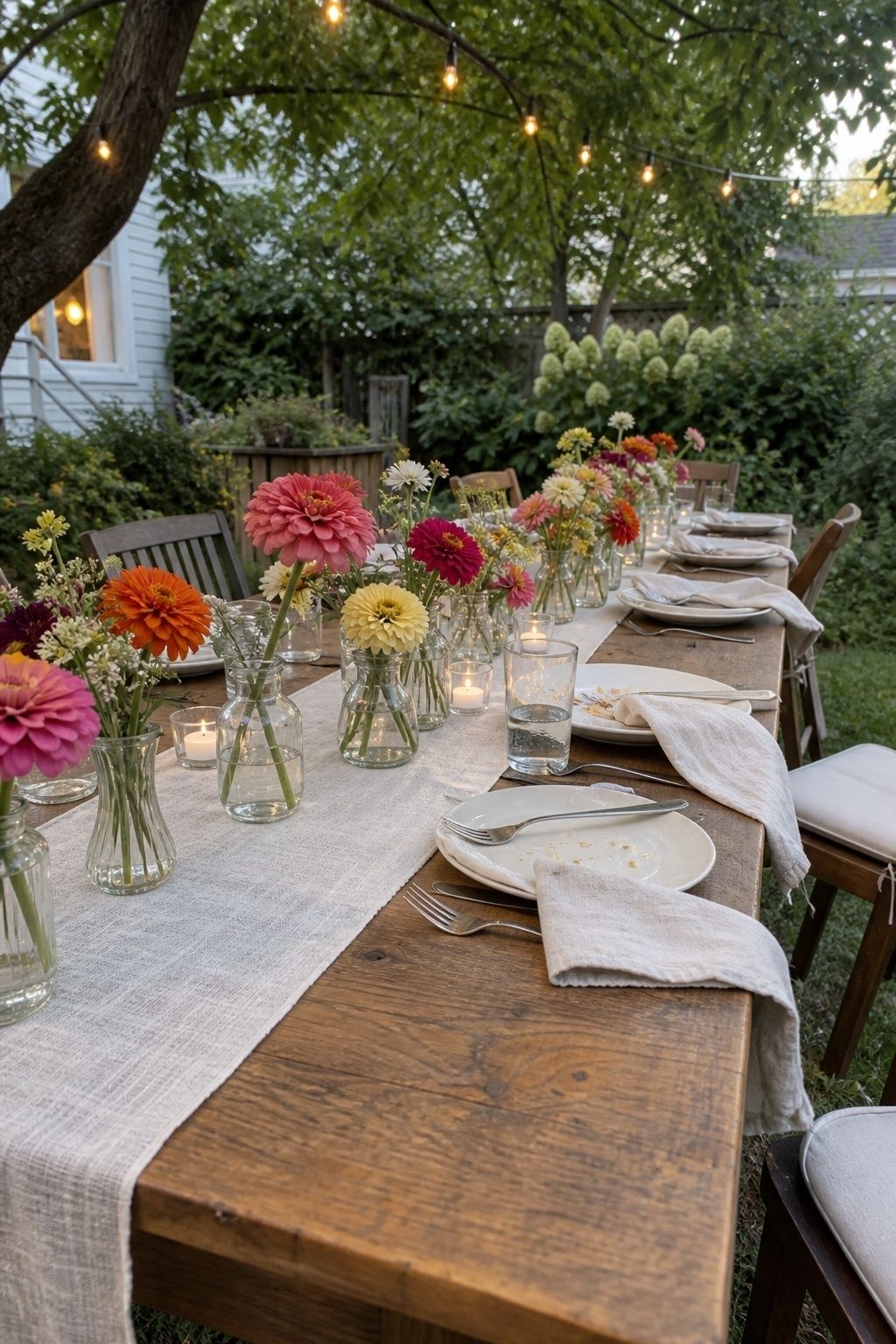
Zinnias are my favorite August workhorse. They hold up in heat, come in coral, raspberry, butter and ivory, and look right in bud vases on a backyard dinner table.
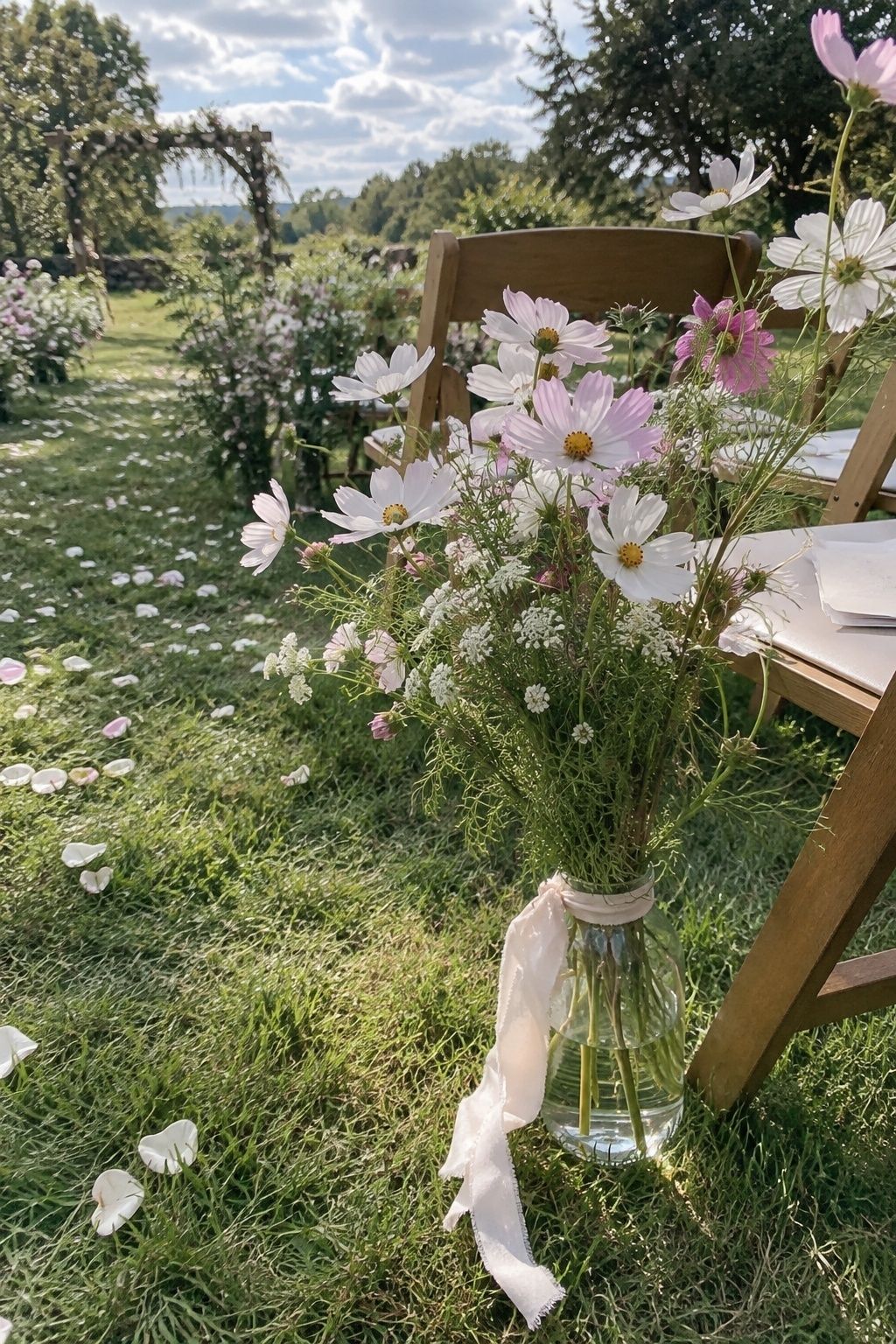
Cosmos have long stems that move in a breeze, so they give a bouquet a garden-grown look. Use them where movement shows: the bouquet, a meadow-style ceremony piece, a few loose stems on the table. Keep them out of full sun.
Marigolds add saturated orange and gold. Mix them with lisianthus or roses so the arrangement doesn’t look too casual, and they suit garden parties and colorful courthouse dinners well.
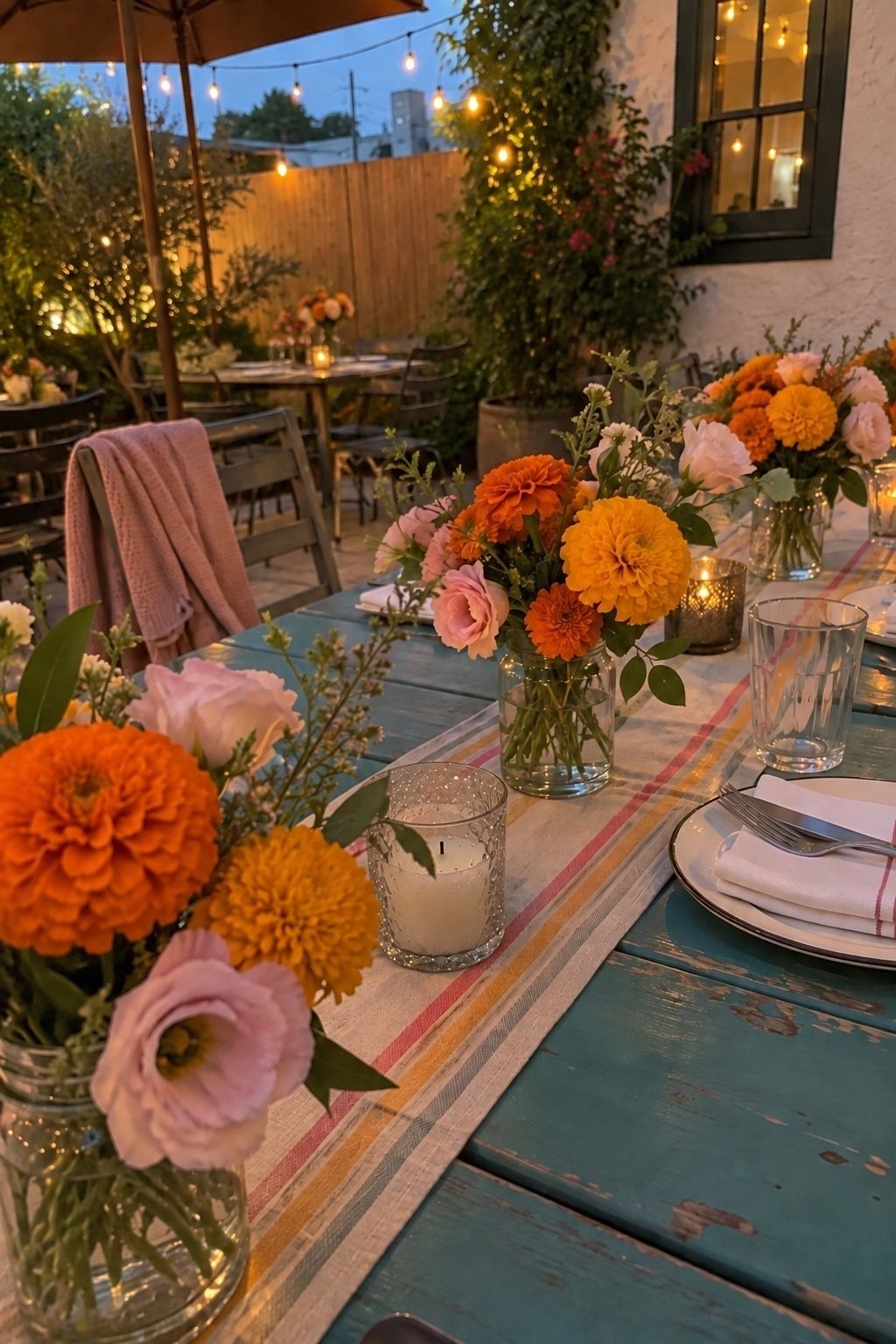
Celosia brings a velvet texture in rust, raspberry, coral or gold. A few stems add depth to a small centerpiece without taking up table space.
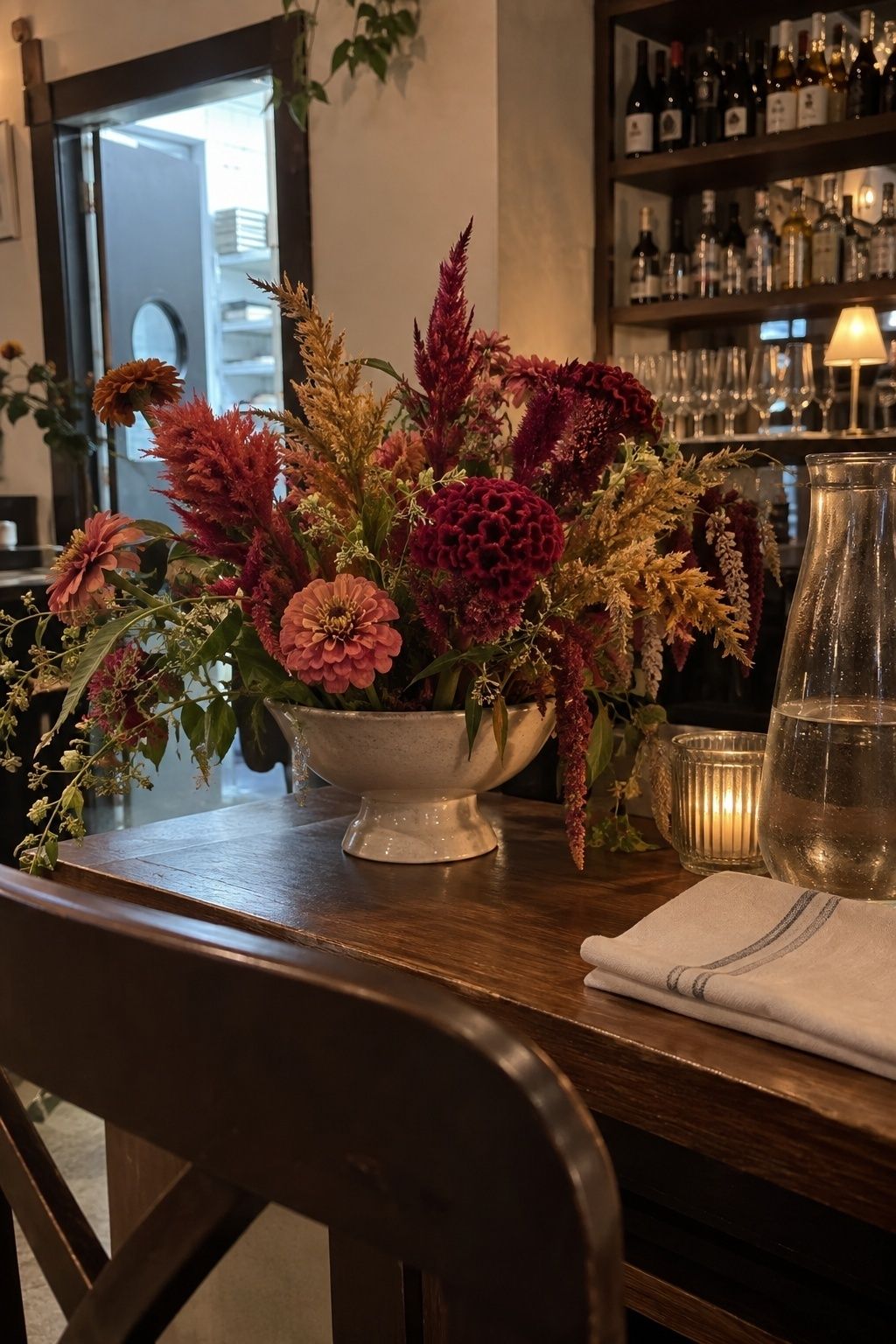
Amaranth trails over the edge of a bouquet or urn. A few strands are enough in a small room; a lot of it starts to look theatrical.

The supporting cast
Support flowers fill gaps, stretch the palette and keep costs down. Good ones make the focal flowers look better.
Lisianthus and spray roses
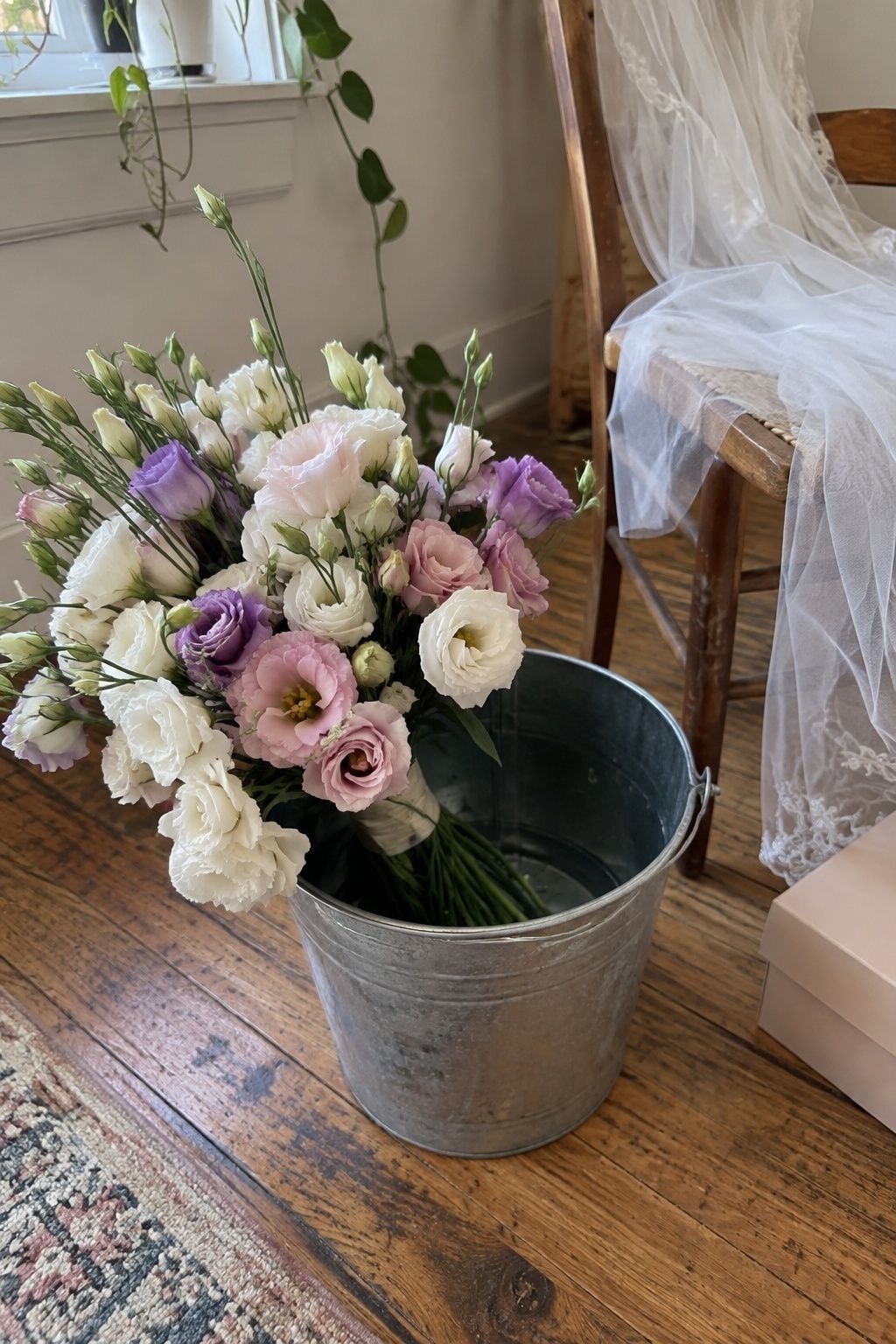
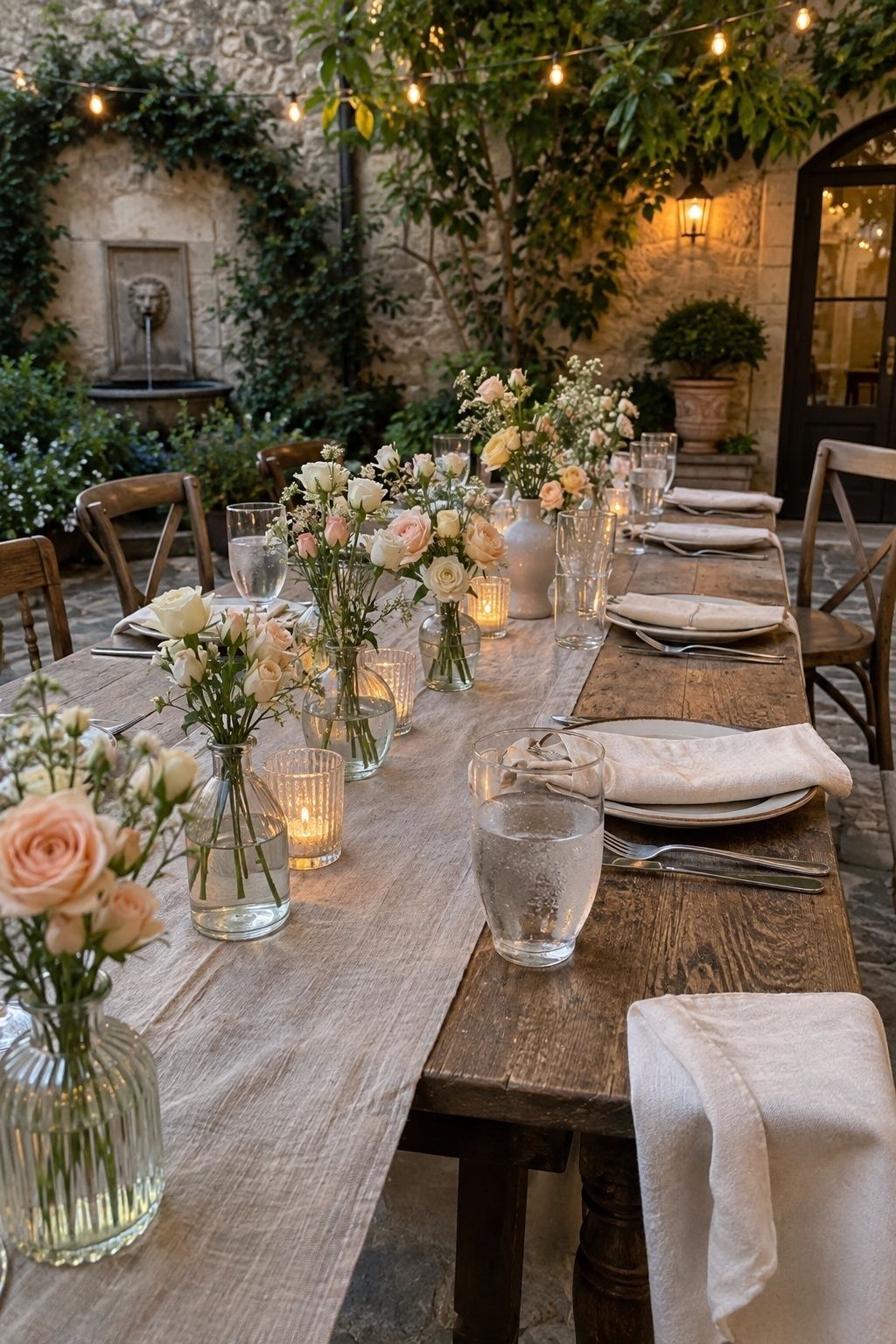
Lisianthus has a ruffled, rose-like look and handles warmth far better than most romantic flowers. Use it in bouquets, boutonnieres and compotes. Spray roses carry several small blooms per stem, which makes them ideal for bud vases and cake flowers.
Carnations
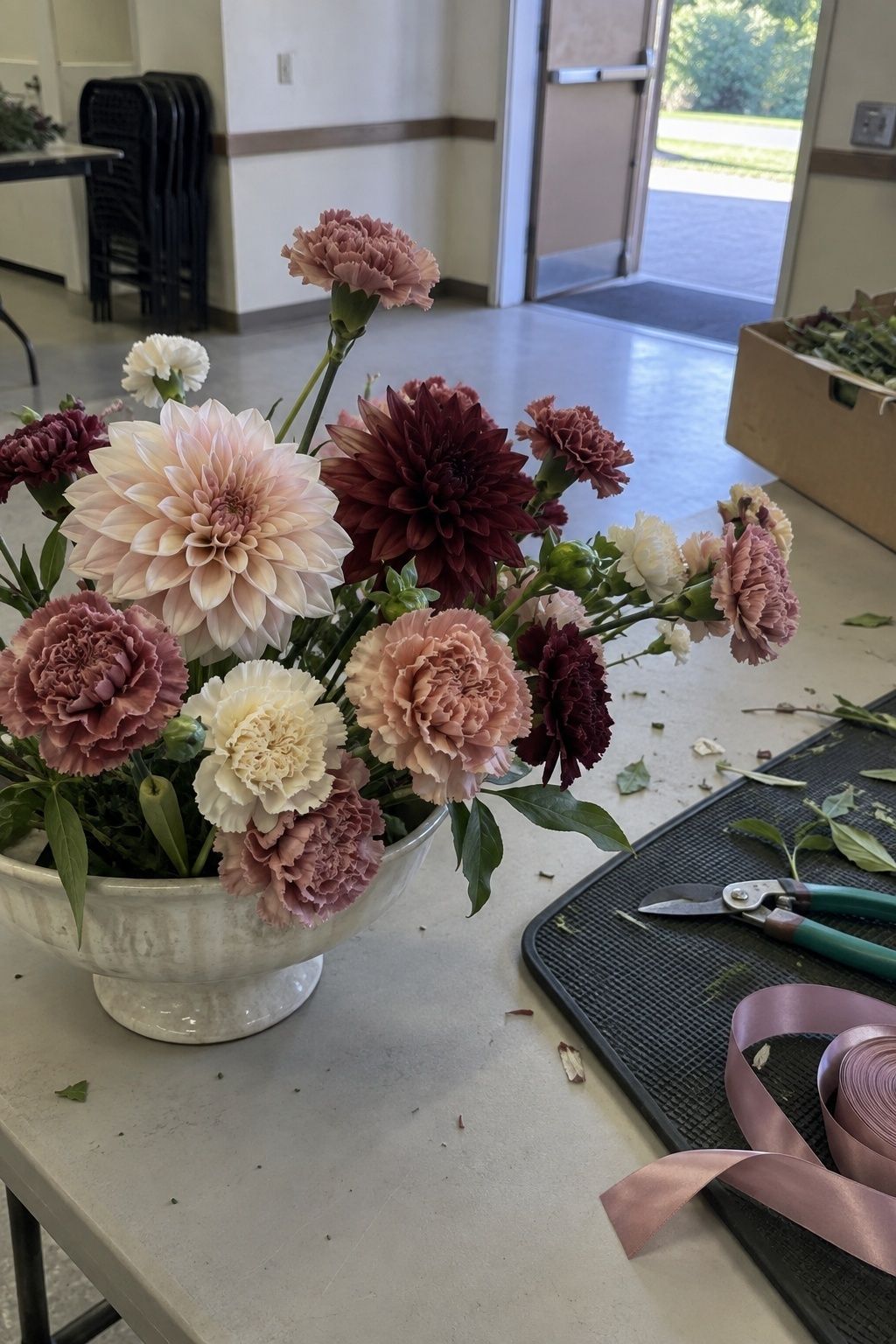
Carnations deserve a better reputation. They last for days, come in antique tones like coffee and dusty mauve, and cost little. Grouped as texture in a compote, they look nothing like the grocery store version.
Greenery and dried grasses
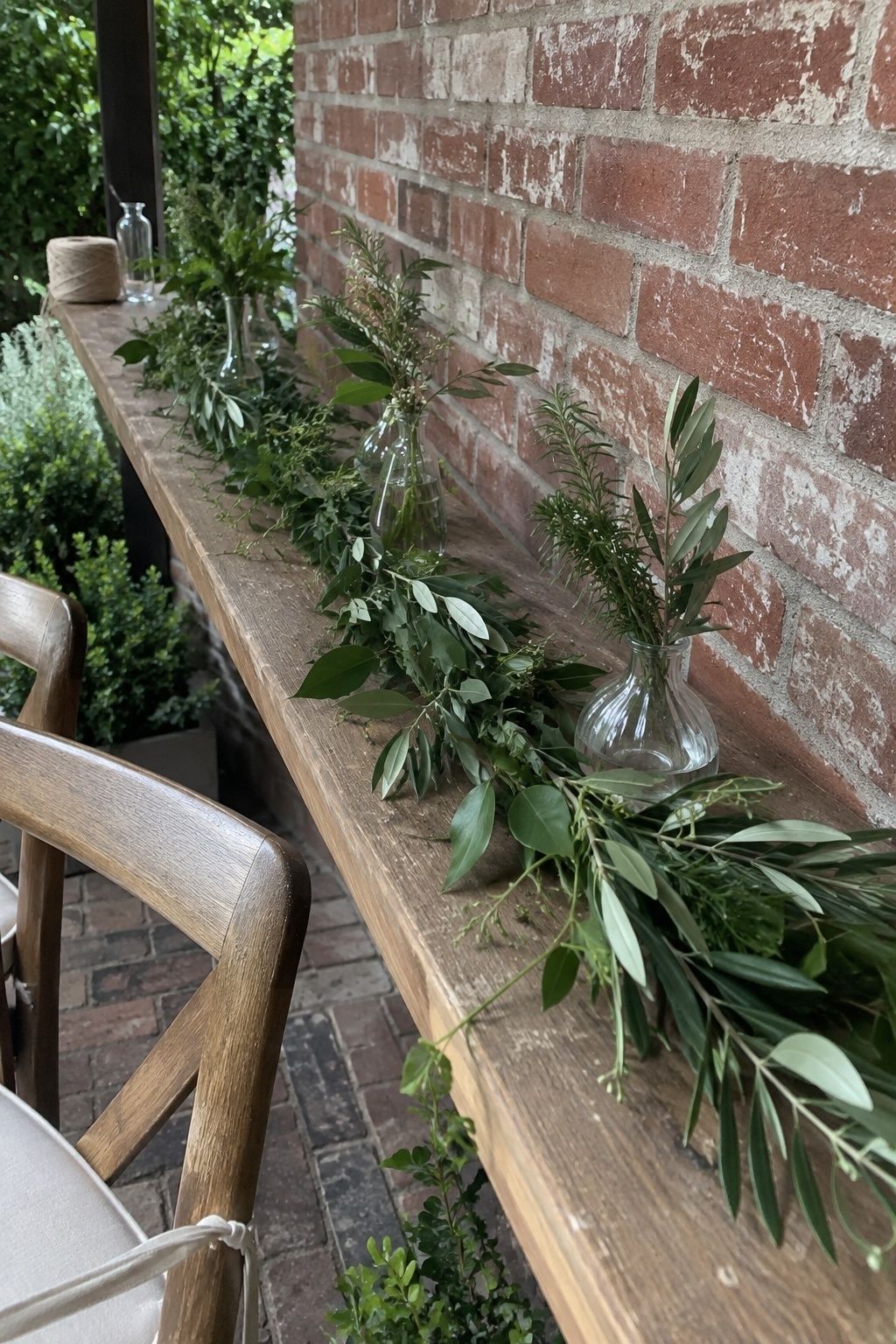
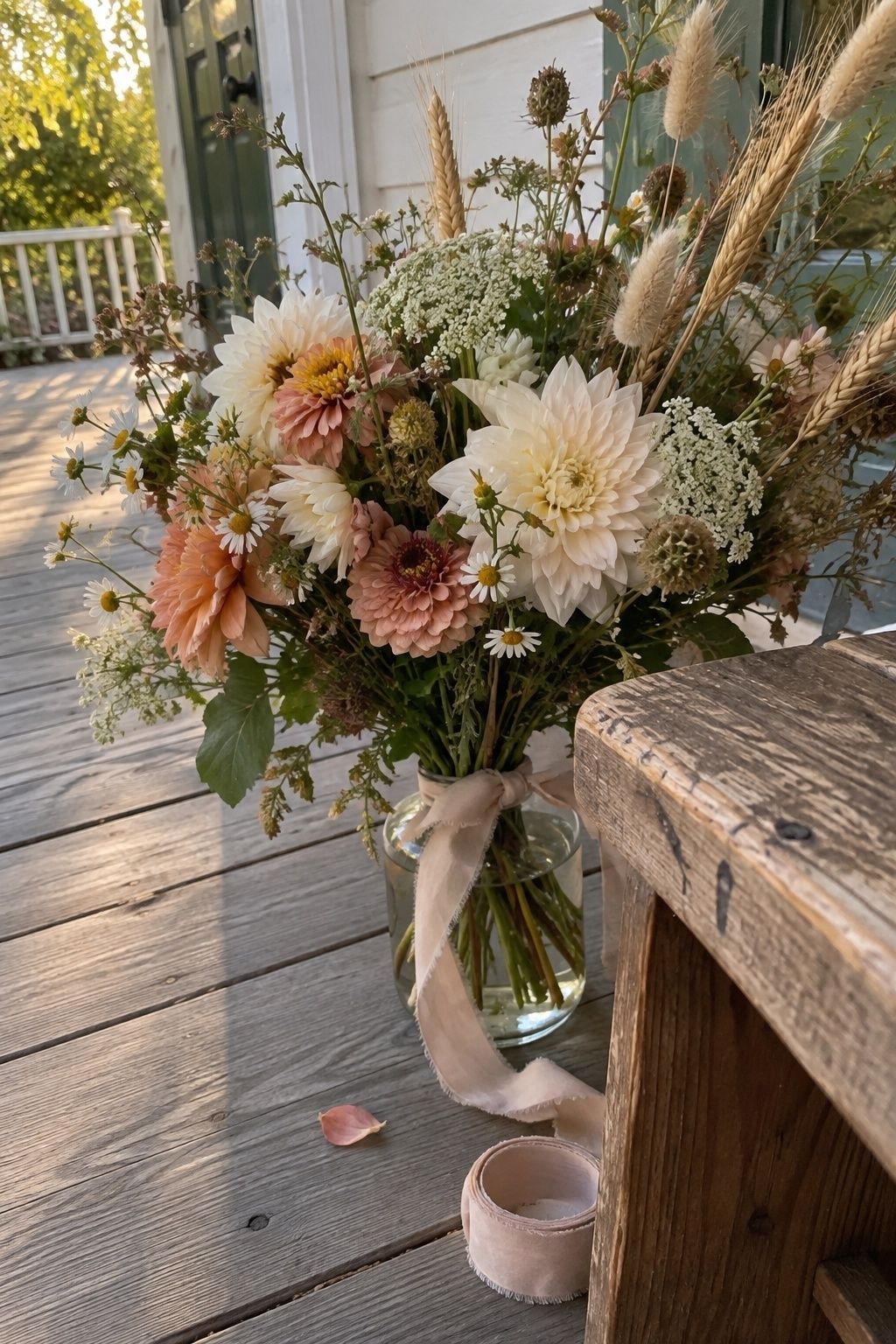
Olive, ruscus, eucalyptus, herbs and local foliage give warm palettes room to breathe. Dried grasses and seed heads hint at fall and can’t wilt, so a few in a bouquet keep it looking full late into the evening.
Tuberose, carefully
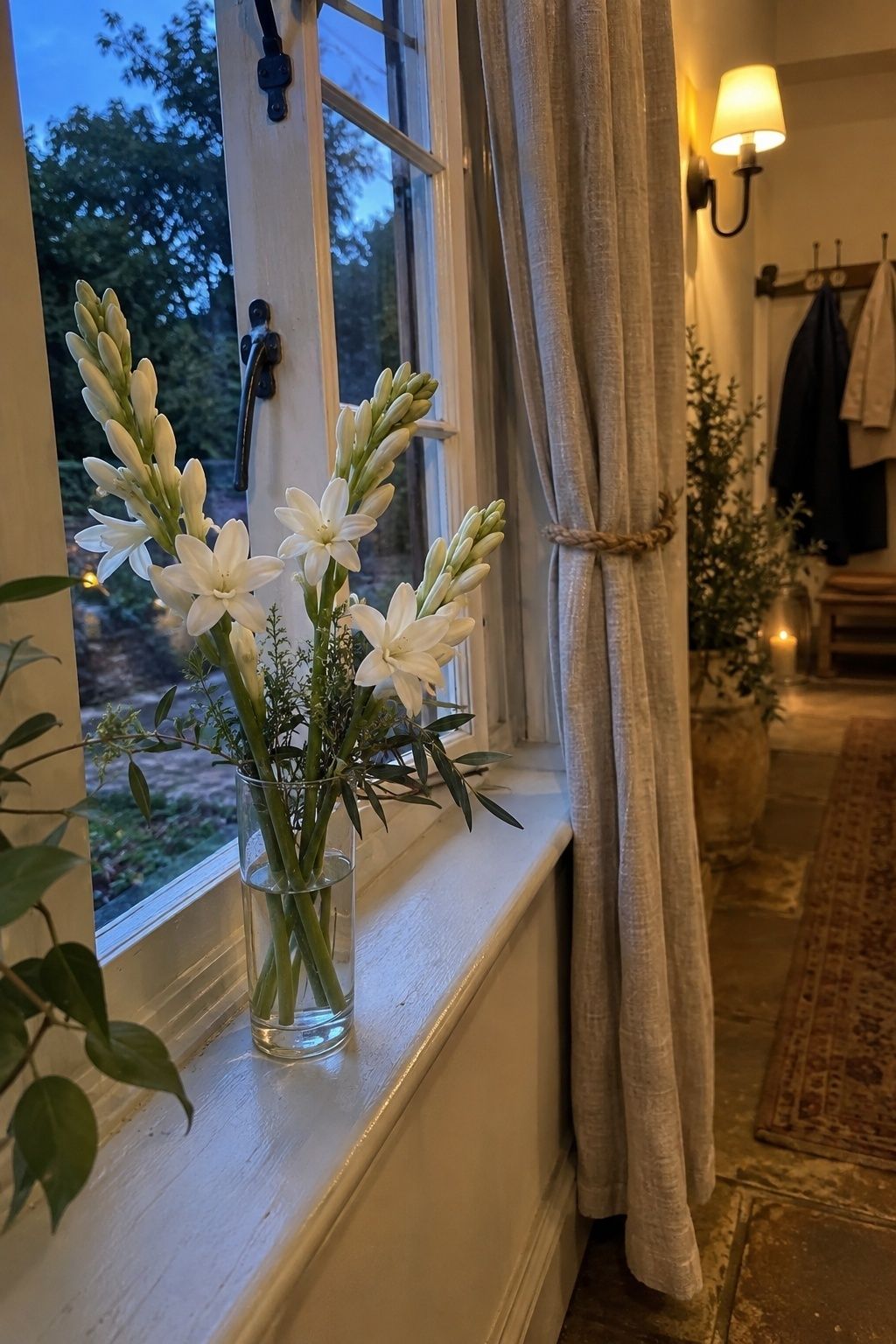
Tuberose smells wonderful and strong. Put a few stems in the bouquet or one arrangement by the entrance, and keep it off dinner tables where it competes with food.
Picking a color story for August flowers
Choose one warm anchor color, one soft neutral, one deeper note and greenery that suits the venue. August flowers span almost every color, so the edit matters more than the options.
Cream, butter yellow, apricot, coral, dusty pink, terracotta, tomato red, wine and plum can all sit together if you limit yourself to four or so. A few combinations that work well:
- Butter yellow, cream and olive for a light garden lunch.
- Coral, apricot and blush for a sunset ceremony.
- Wine, terracotta and cream for an evening dinner that leans toward fall.
Late August weddings can borrow a little from September with rust celosia or plum dahlias. If your date is close to Labor Day, our September wedding flowers guide shows what arrives next. And if photos matter most, check how your palette reads in golden light with these August wedding photo ideas.
Why local farm flowers suit small weddings
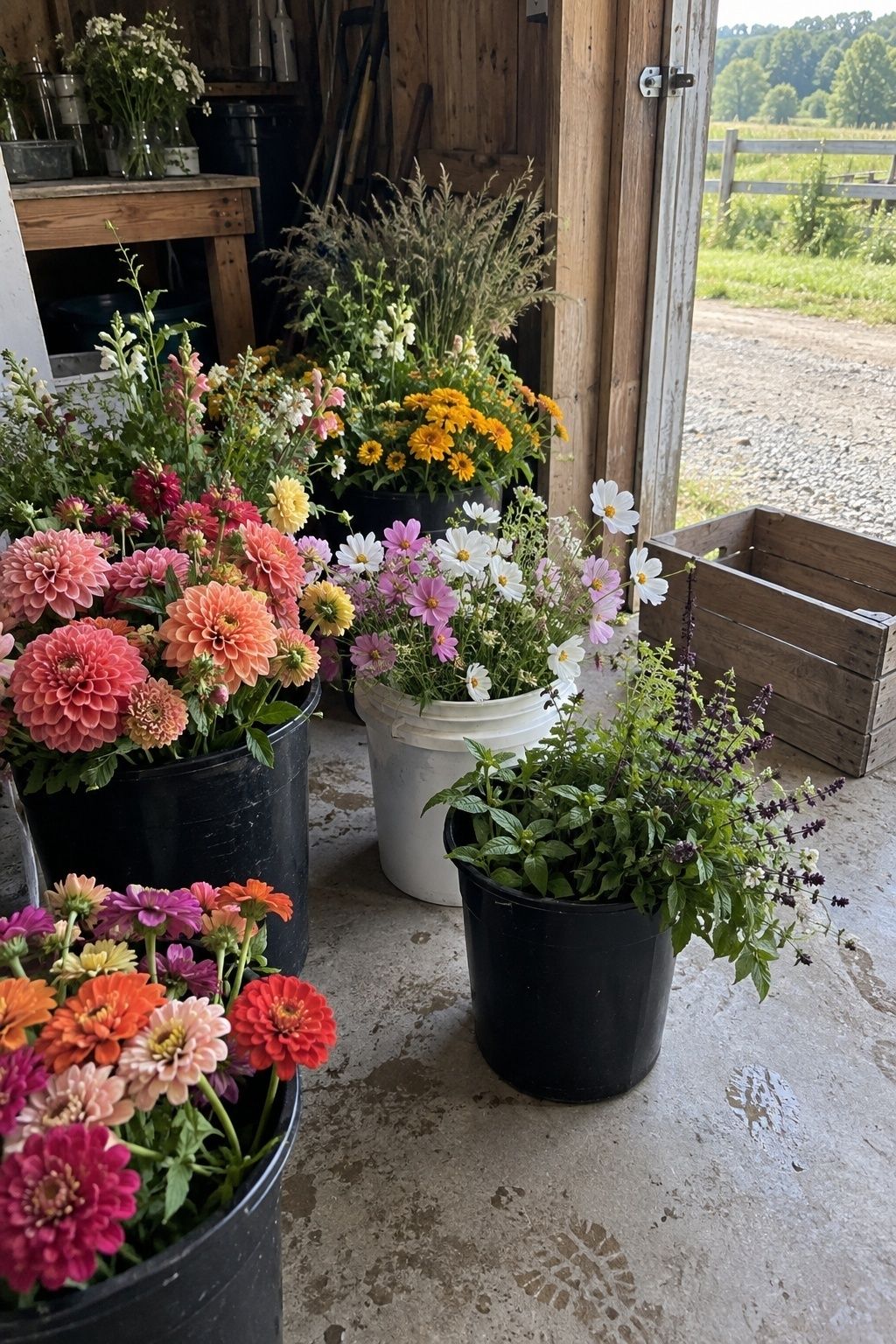
Small weddings need small quantities, which is exactly what local growers do well. A flower farm can supply a few buckets of what’s blooming that week, including stems you won’t find on a wholesale list.
You give up a little control over exact varieties and gain flowers that were cut a day or two before the wedding. For a guest list of 10 to 50, that tradeoff is usually worth it. Our August wedding ideas post has more on working with what the season offers.
How many flowers does a small August wedding need?
Fewer than you’d expect. Most of the impact at a small wedding comes from the bouquet and the dinner tables, so put the budget there.
| Guests | Bouquets and personals | Ceremony | Dinner tables |
|---|---|---|---|
| 10 to 15 | 1 bouquet, 2 to 4 personals | 1 small piece | 1 long table runner or 6 to 8 bud vases |
| 20 to 30 | 1 to 3 bouquets, 4 to 8 personals | 1 to 2 pieces | 3 to 5 low centerpieces |
| 40 to 50 | 1 to 4 bouquets, 6 to 12 personals | 2 pieces | 5 to 7 centerpieces |
For context, The Knot’s 2026 Real Weddings Study puts the average florist spend at $2,800 for weddings averaging 117 guests. A small wedding with local, in-season August flowers can often come in well under that, especially if ceremony pieces move to the reception.
Keep centerpieces under about 14 inches so guests can talk across the table. For layout ideas, see our August wedding tablescape ideas.
How do you keep August wedding flowers fresh?
Keep them cool, watered and out of direct sun until the moment they’re needed. Here’s the order I’d plan for:
- Ask the florist to deliver as late as the timeline allows.
- Store bouquets in water in the coolest room, away from windows.
- Set outdoor arrangements last, ideally in the shade.
- Take bouquets out only for portraits and the ceremony, then back into water.
- Top up vases before dinner.
Ask for heat backups too. If the dahlia crop is late or the forecast jumps, a good substitute keeps the same role: one sturdy focal bloom for another, one airy stem for another. Our guide to summer wedding flowers that handle heat lists more swaps, and the August outdoor wedding planning guide covers shade and timing for guests as well as flowers.
Give every arrangement a second job
Repurposing works when it’s planned before the day. A ground arrangement can frame the sweetheart table, aisle flowers can move to the bar, and a ceremony urn can greet guests at dinner. Decide where each piece goes, and who carries it, ahead of time. At a 30-guest wedding, two aisle pieces and one ceremony urn can cover the bar, the welcome table and the sweetheart table, which is three arrangements you only pay for once. Size them for both spots so nothing looks like leftovers.
Key takeaways
- Build around heat-tolerant flowers: dahlias, zinnias, celosia, marigolds, carnations.
- Keep hydrangeas, garden roses and cosmos in shade or in the bouquet.
- For 30 guests, plan about 3 to 5 low centerpieces and one ceremony piece.
- Ask local growers what’s blooming the week of your wedding.
- Agree on backup flowers with your florist before the wedding.
Frequently asked questions
What flowers are in season for an August wedding?
Dahlias, zinnias, cosmos, sunflowers, lisianthus, celosia, amaranth, marigolds, tuberose and garden roses are widely in season in August. Local availability varies, so ask your florist what is strongest in your area that week.
Are dahlias available for an August wedding?
Yes, dahlias are usually available in August, often at their best later in the month. Ask for a range of colors and sizes rather than one exact variety, since crops shift with the weather.
What wedding flowers hold up best in heat?
Zinnias, celosia, marigolds, carnations, sunflowers and sturdy greenery hold up best in August heat. Even these need water and shade, so plan where each arrangement will sit and for how long.
What flowers should you avoid for an August wedding?
Avoid relying on peonies, tulips, sweet peas and other spring flowers, which are scarce or expensive in August. Use hydrangeas only where they can stay cool and watered.
How many centerpieces does a 30-guest wedding need?
A 30-guest wedding usually needs three to five low centerpieces, depending on table shape. One long table can use a continuous runner of bud vases and greenery instead.
Last word on August blooms
Start with what grows near you, choose a few flowers that can take the heat, and spend most of the budget on the bouquet and the table. That’s the whole formula for August wedding flowers at a small wedding. If you’re still choosing, The Knot’s guide to wedding flowers by month is a handy cross-check before your florist meeting.
Last update on 2026-10-03 / Affiliate links / Images from Amazon Product Advertising API