
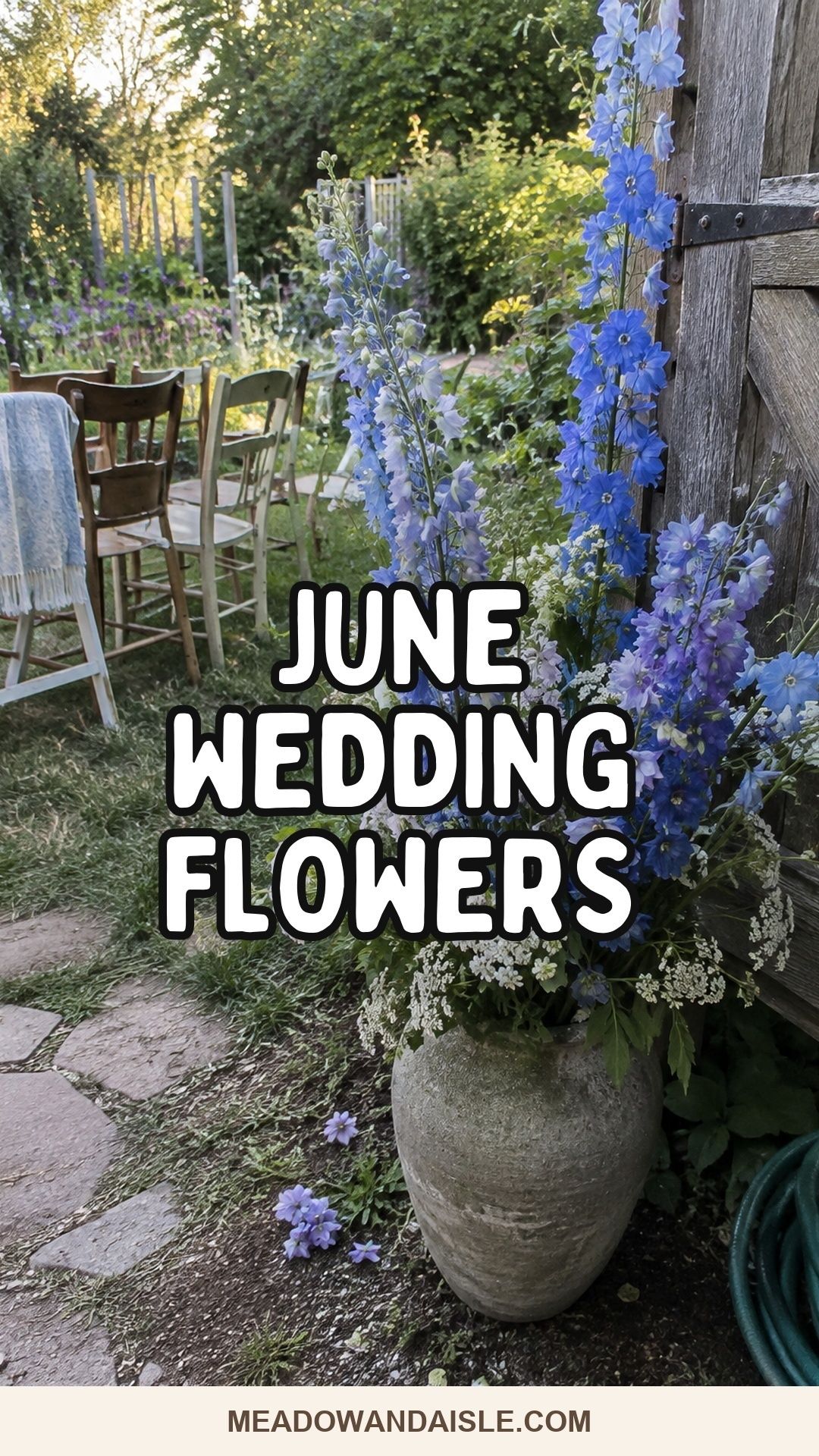
The most reliable June wedding flowers are garden roses, lisianthus, delphinium, larkspur, stock, phlox, calla lilies, orchids and summer greenery. Peonies and sweet peas are still possible in the first week or two of June, but treat them as a bonus and have a backup ready. For a 20 to 40 guest wedding, plan on roughly 100 to 200 stems total once you count the bouquet, the ceremony and low table flowers.
Here’s the mistake I see most with June wedding flowers: couples plan for “June” as if it were one season. It isn’t. A June 2 wedding and a June 28 wedding can need completely different bloom lists, because the first still catches the tail of spring and the second is already living in summer heat.
So this guide is sorted by what each flower actually does on the day, not by how pretty it looks on a mood board. Some blooms belong in your hands, some can stand in the sun for three hours, and a few should only come out of the cooler when someone is about to photograph them.
Small tools that keep June stems alive
A few inexpensive supplies make a bigger difference in June than an extra dozen roses. Floral tape, a spray bottle, bud vases and a cooler bag cover most of the rescue jobs on a warm afternoon.


Which June wedding flowers are actually in season?
In-season June wedding flowers fall into two groups: the late-spring holdovers that fade by mid-month, and the summer flowers that get stronger as the month goes on. Your exact date decides which list you lean on.
| Flower | Early June | Late June | Heat tolerance |
|---|---|---|---|
| Peonies | Often available | Rare, regional | Low |
| Sweet peas | Possible | Unlikely | Low |
| Garden roses | Yes | Yes | Medium, with water |
| Lisianthus | Yes | Yes | Medium to high |
| Delphinium and larkspur | Yes | Yes | Medium |
| Hydrangeas | Yes | Yes | Low out of water |
| Stock and phlox | Yes | Yes | Medium |
| Early dahlias | Rare | Some regions | Medium |
| Calla lilies and orchids | Yes | Yes | High |
| Lavender and herbs | Yes | Yes | High |
Availability shifts by region and by whether your florist buys local or imported stems, so use this as a starting point for the conversation. Paperlust has a useful month-by-month seasonal flower guide if you’re comparing June with the months around it, and I’ve covered the spring side of things in May wedding flowers.
Bring your exact date to the first florist meeting and ask one direct question: what changes between the first and last week of June where you source?
The best June flowers for bouquets
Garden roses and lisianthus are the two flowers I’d build a June bouquet around. Both give you that soft, layered look people want from peonies, and both are far more dependable once the weather warms up.
Garden roses
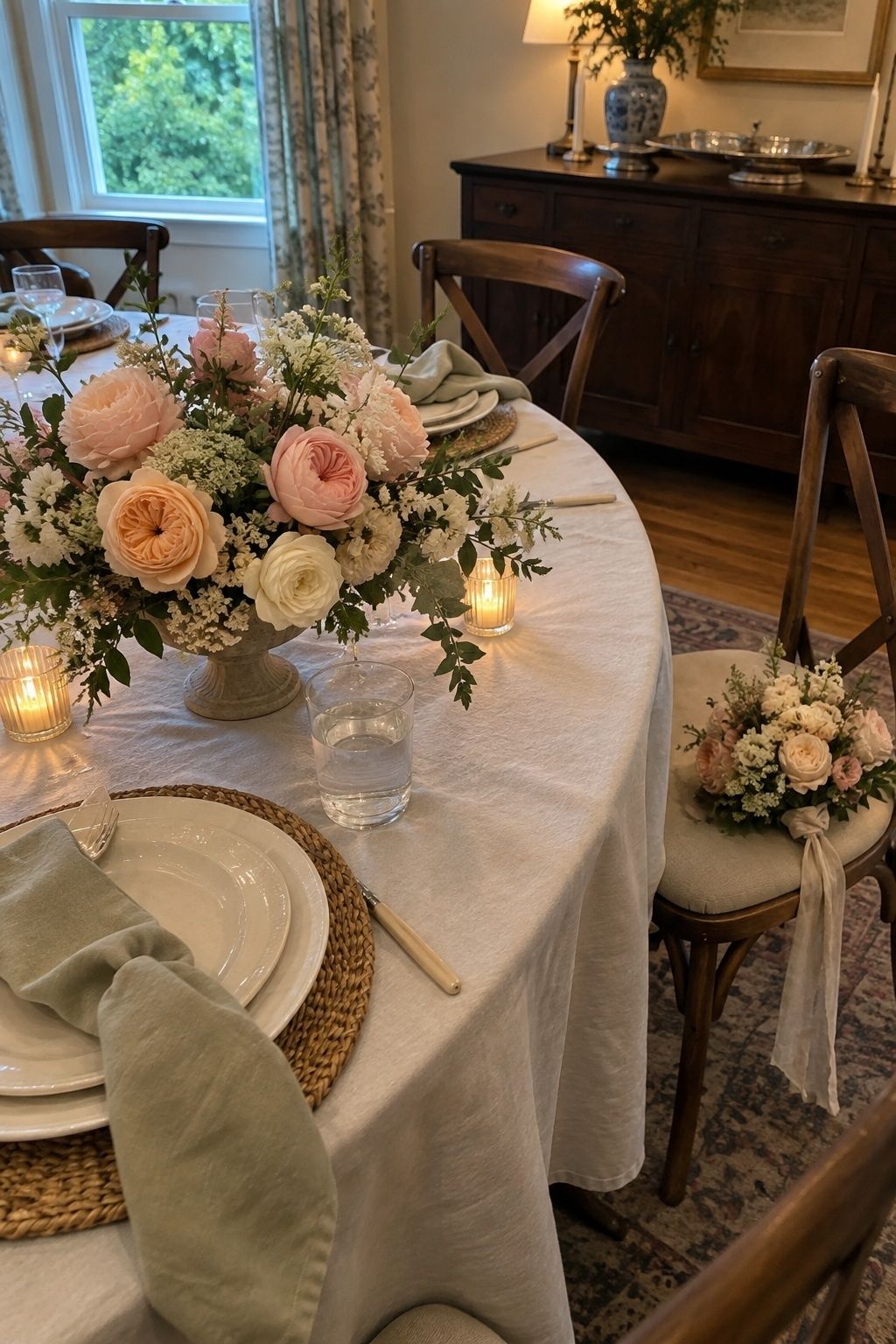
Garden roses have the ruffled, cupped shape of a peony with a longer season and a wider color range. Put them where softness is noticed most: the bouquet, the cake and a pair of low compotes on the dinner table.
For a small wedding they also repeat well. One variety in the bouquet, three or four in each centerpiece and a single stem on the bar is enough to make the whole day look connected.
Lisianthus

Lisianthus looks fragile and isn’t. It reads as rose-like from a few feet away, comes in white, blush, lavender and soft green, and holds up better in warm rooms than most spring flowers.
My rule is to treat it as the stabilizer. If the peonies don’t show up or a delicate flower wilts early, lisianthus keeps the bouquet looking full and romantic anyway.
Scabiosa and calla lilies
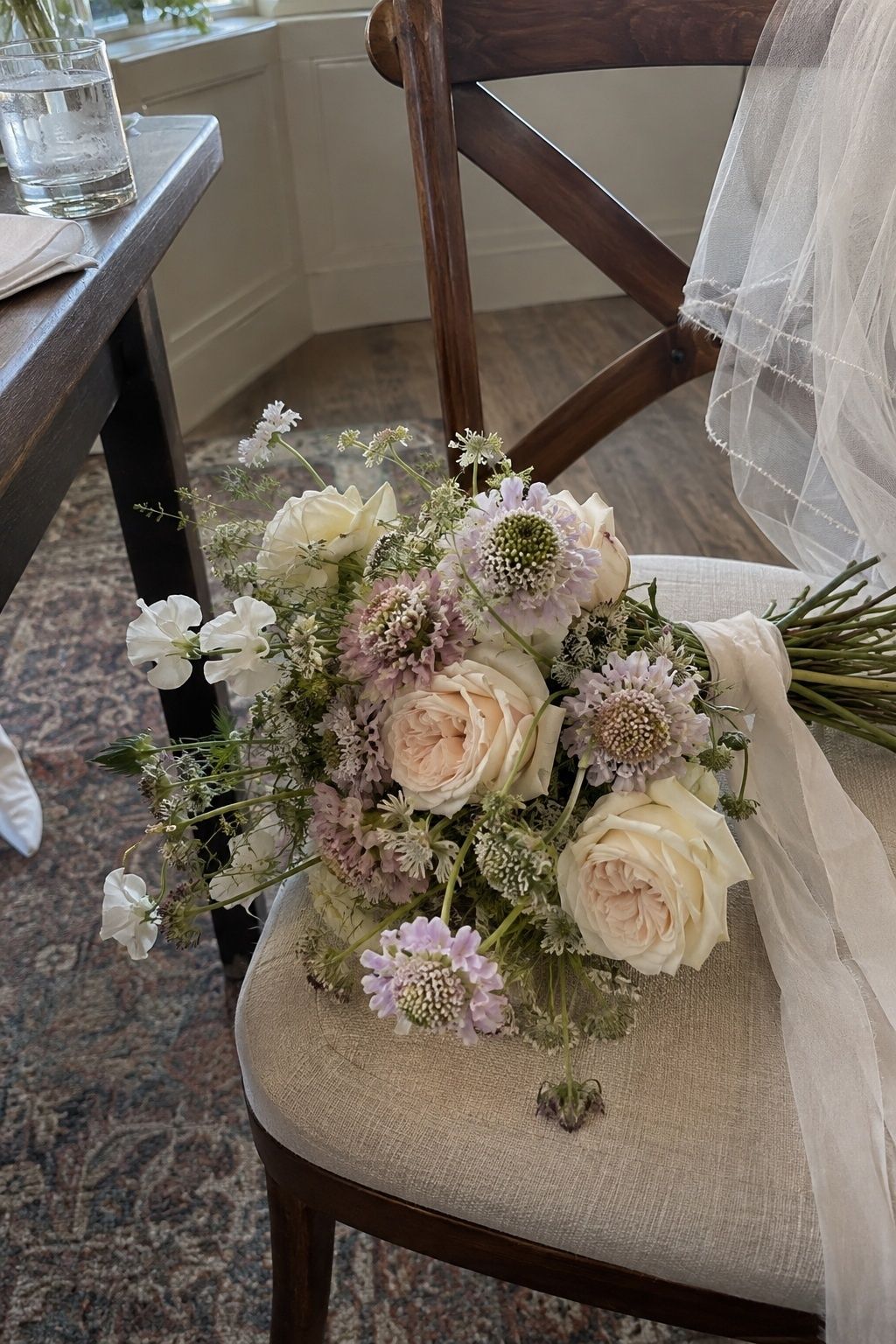
Scabiosa adds the loose, wild edge that stops a bouquet from looking like a ball. A few stems around the rim give it movement, and the detailed centers photograph well up close.
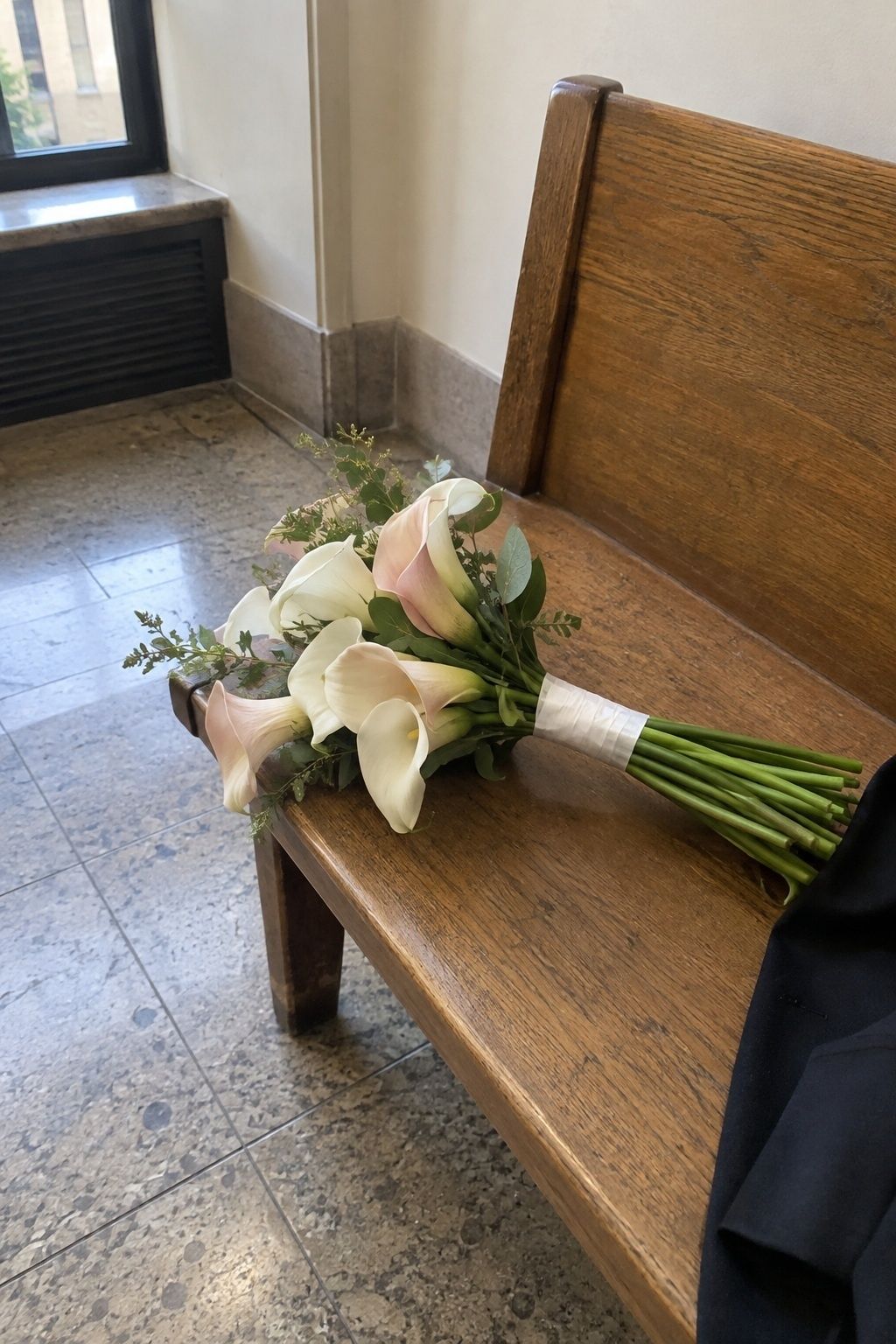
Calla lilies go the other direction. If your style is cleaner and more architectural, a slim bouquet of callas looks modern and handles warmth better than most garden flowers. Five to seven stems tied with ribbon is a complete bouquet on its own.
If you want more bouquet shapes for warm months, my summer wedding bouquet ideas go into sizing and how long each style can stay out of water.
Flowers for height, blue tones and movement
Delphinium and larkspur are your tall flowers in June. They give the ceremony height from a distance so the dinner tables can stay low enough to talk across.
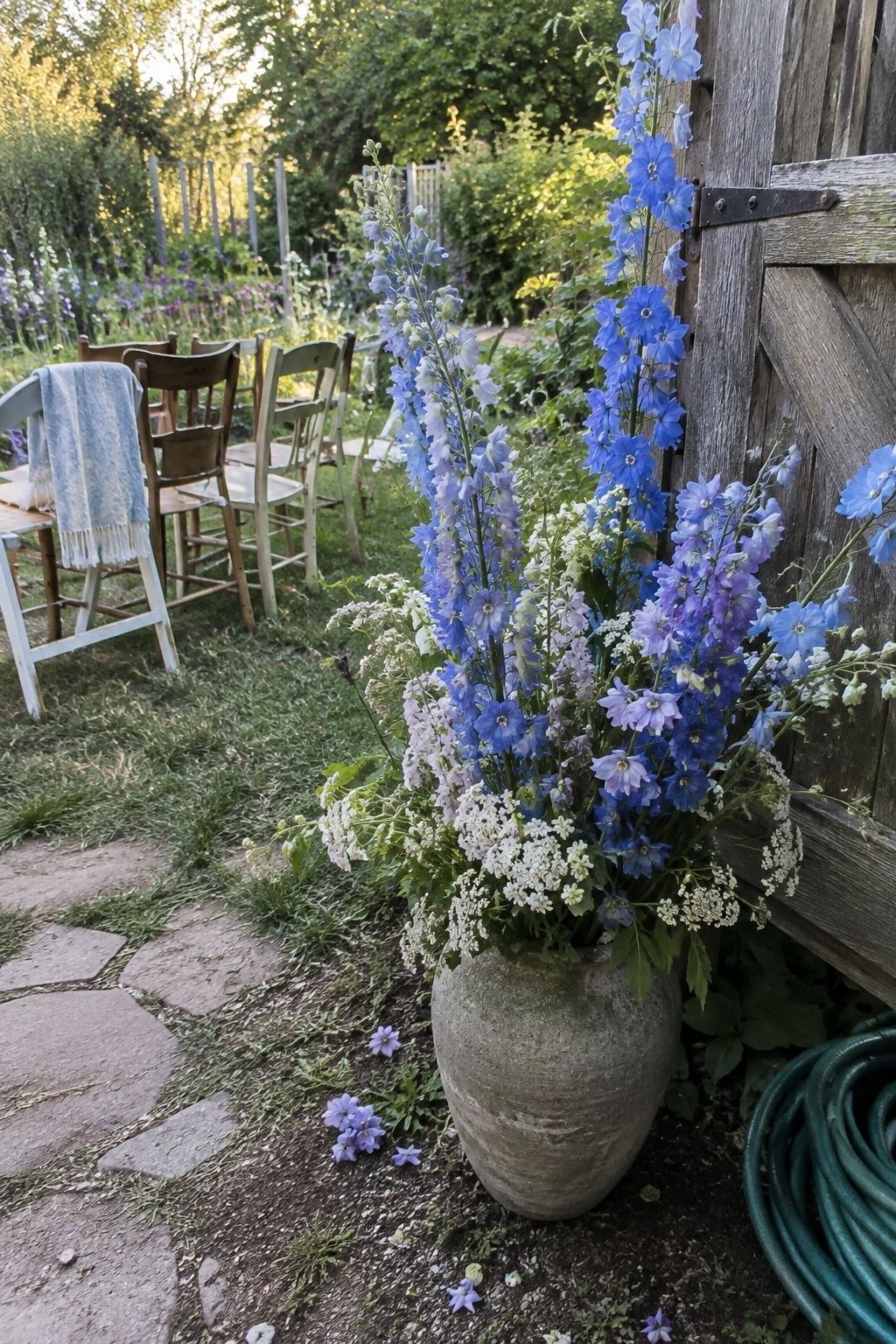
Delphinium is one of the few natural-looking blue flowers you can get in summer. Use it in ceremony urns, an entry arrangement or one statement piece on the bar. It reads from across a garden, which means you can save the more detailed flowers for places guests see at arm’s length.

Larkspur is the looser cousin. It has a meadow feel that suits tented dinners and backyard ceremonies, and it looks best when the stems are allowed to lean a little instead of being forced into a tight shape.
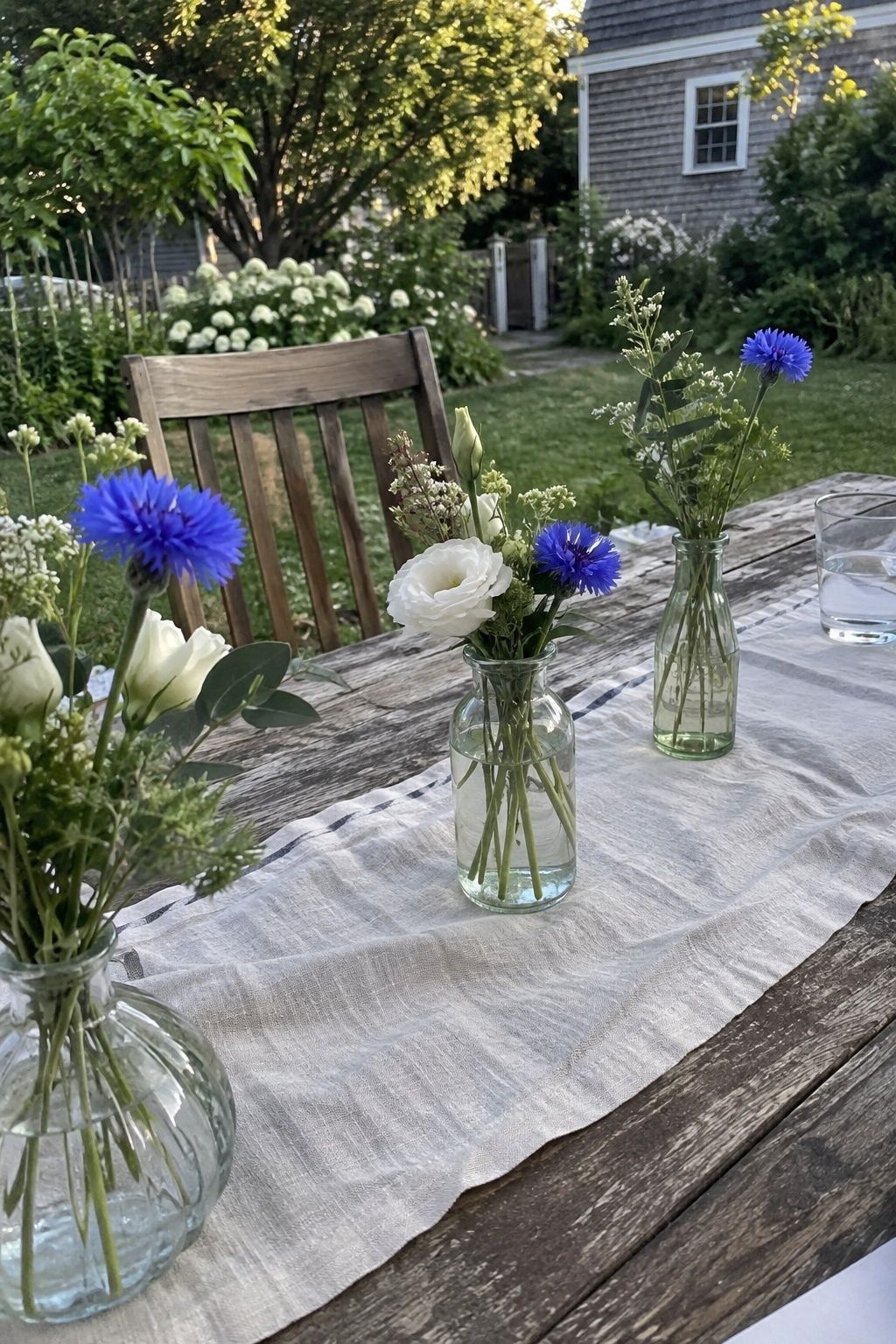
Cornflower is the casual blue. I’d keep it for bud vases, cocktail tables and a few stems tucked into the bouquet. On its own it can look a bit like a roadside bunch; next to garden roses it looks charming.
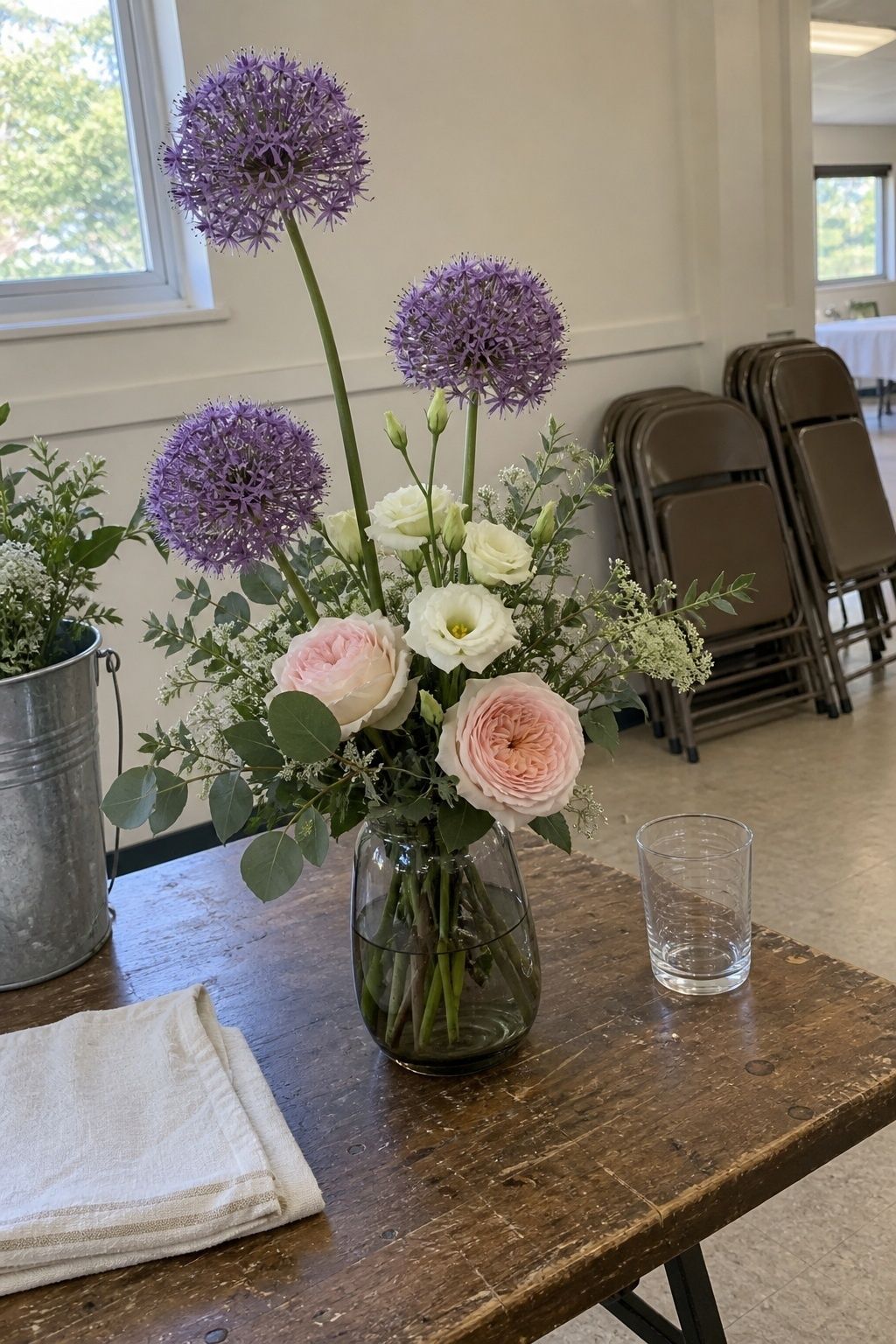
Allium is the outlier in this group. The round purple or white heads add a sculptural note, and two or three stems in an otherwise soft arrangement keep the whole thing from looking too sweet. Use it sparingly.
If you’re still settling on a palette, June wedding colors has combinations that work with these blues.
Where to get volume for tables without overspending
Hydrangeas, stock, phlox and summer greenery are the June flowers that make a table look full with fewer stems. They are the reason a small reception can look generous on a modest flower budget.
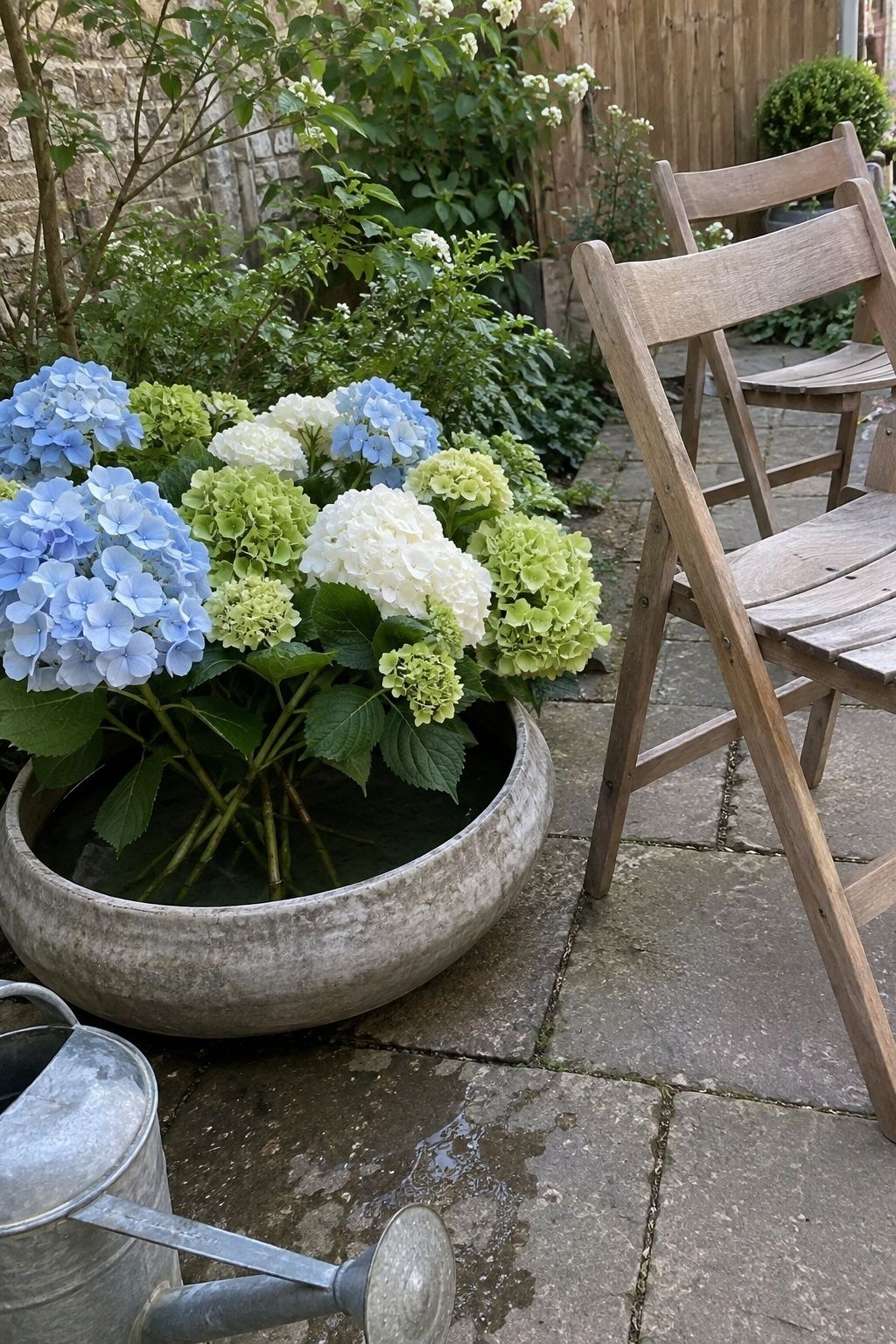
Hydrangeas fill space fast. One large head can do the work of five or six roses in a low arrangement. The catch is that they are extremely thirsty, so they belong in water-based centerpieces indoors or under shade, never in an exposed arch that sits in afternoon sun.

Stock gives you fullness and a strong, spicy scent. I like it at the ceremony entrance or by the bar, but go lighter on the dinner tables in a small room where fragrance competes with food.

Phlox has soft clusters that make arrangements look gathered from a garden. It’s a good middle layer between big focal flowers and greenery, and it helps low centerpieces look abundant without getting heavy.
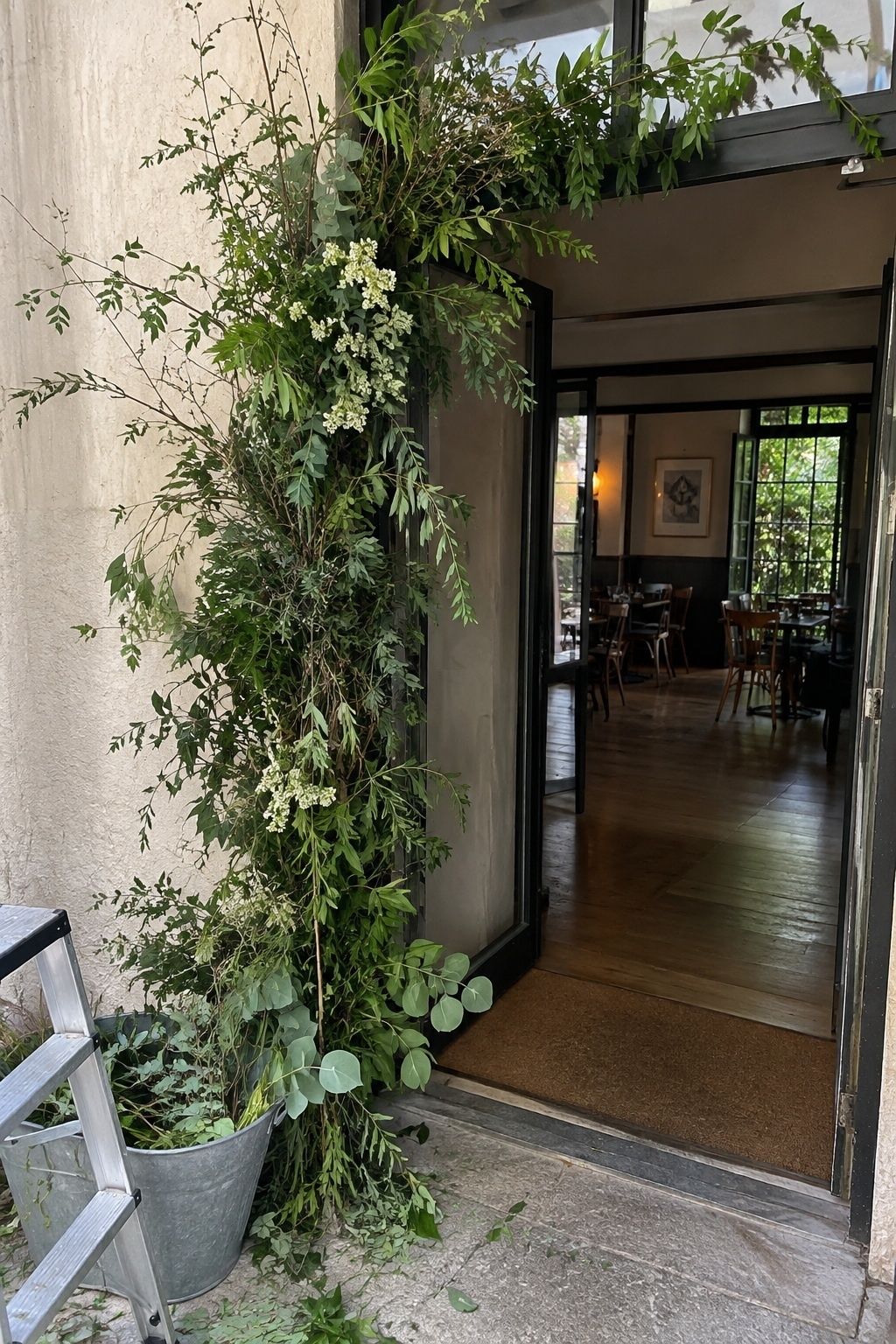
Summer greenery is where the budget stretches. Local foliage, herbaceous greens and a few branches can dress a doorway, cover a bar front or run down a long table for a fraction of what the same area would cost in blooms. Ask your florist which greens are fresh locally that week and how they behave in heat. The June wedding reception ideas post has more on long-table layouts that use greenery this way.
Peonies, sweet peas and early dahlias: the short-window flowers
These three are possible for a June wedding but not guaranteed, so plan them as upgrades rather than the backbone of your design. If any of them is essential to you, book an early June date.
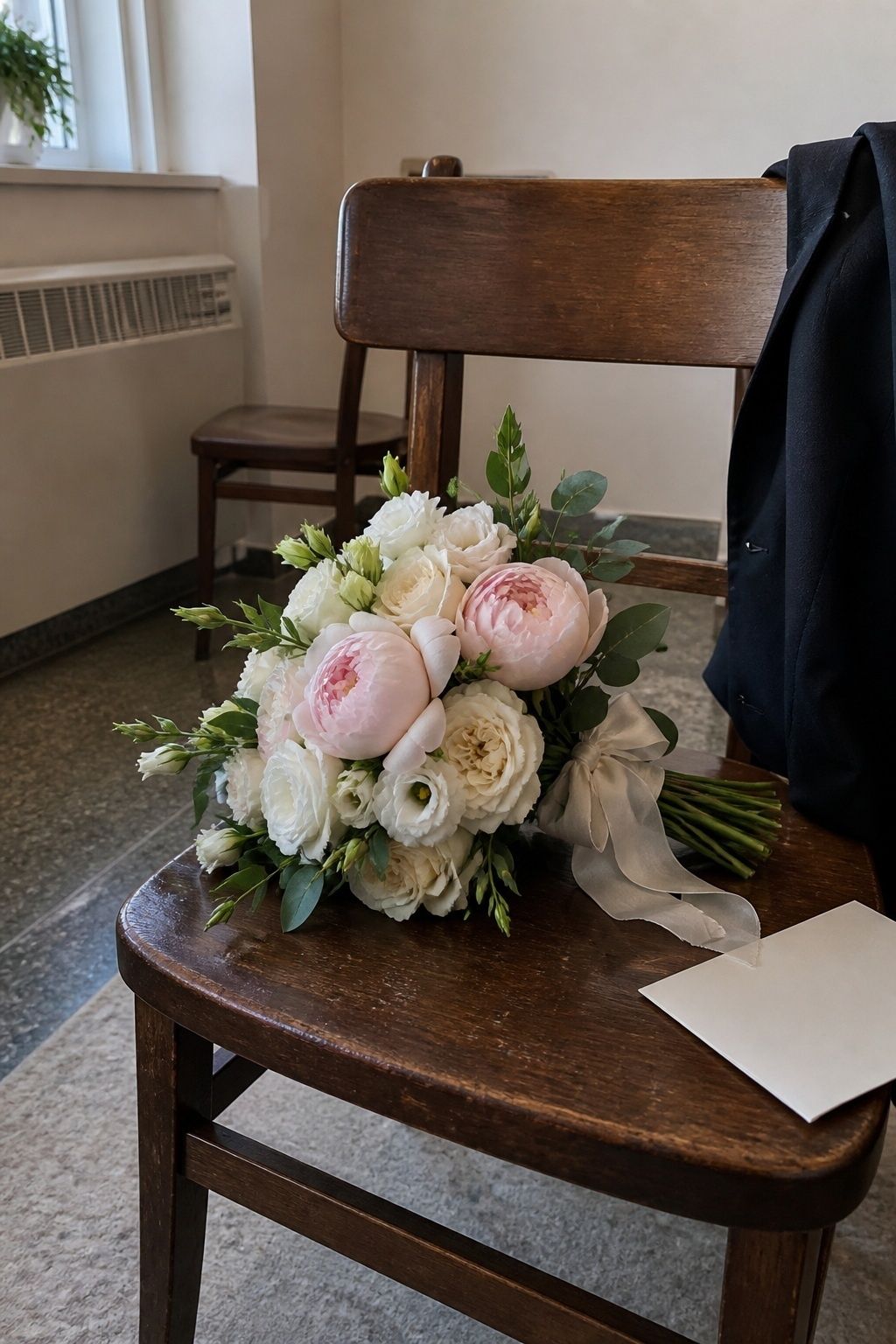
Peonies are the flower most couples ask about, and the honest answer is “maybe.” Early in the month or in cooler regions, you have a good chance. By late June, many local growers are done. Agree on a backup with your florist in writing: garden roses or full lisianthus in the same color give you the same feeling in photos.
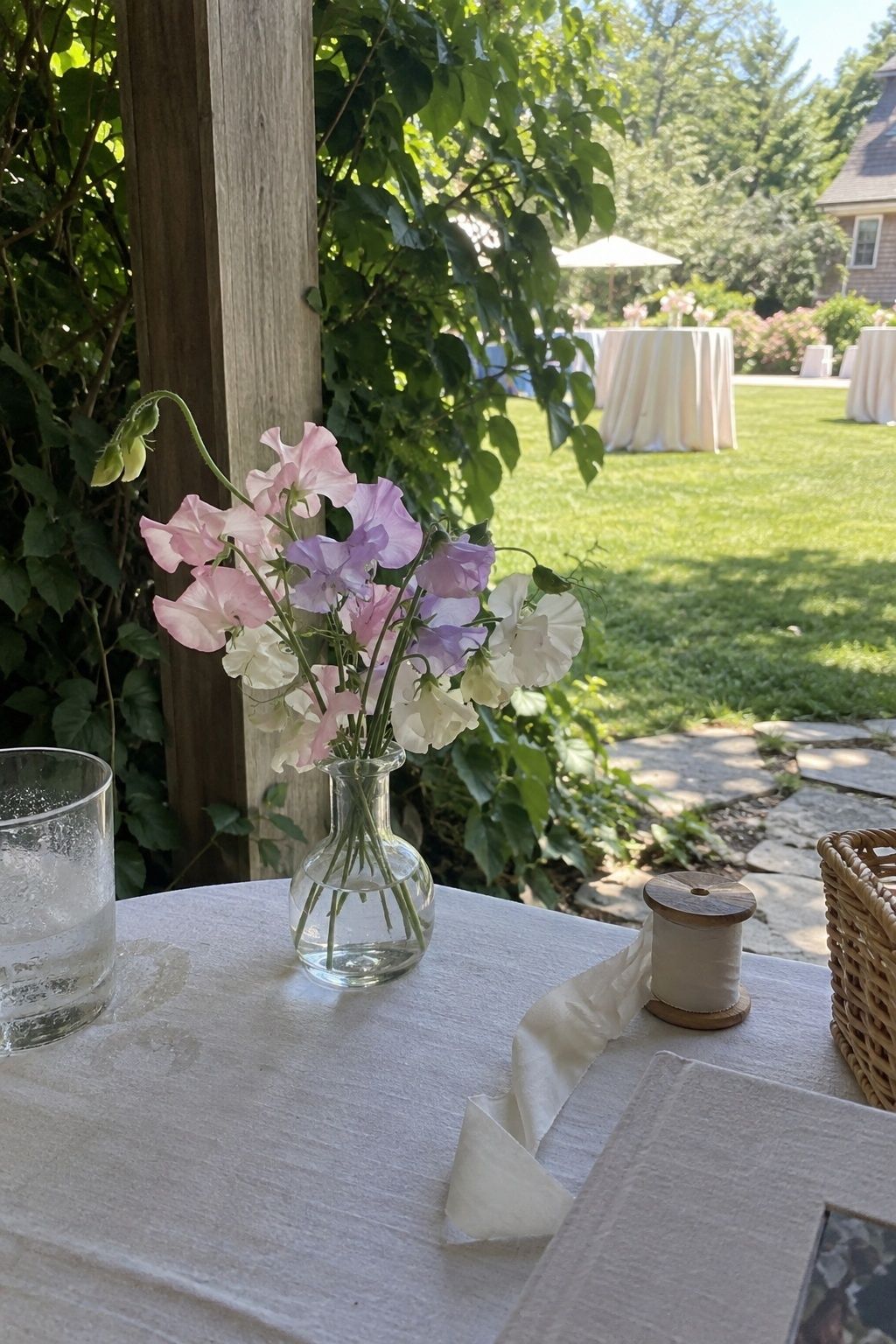
Sweet peas are all scent and flutter, and they collapse in heat. Keep them to small gestures: a few stems in the bouquet, a bud vase by the guest book, a shaded cocktail table. Guests at a small wedding are close enough to actually notice the fragrance, which is the whole point of them.
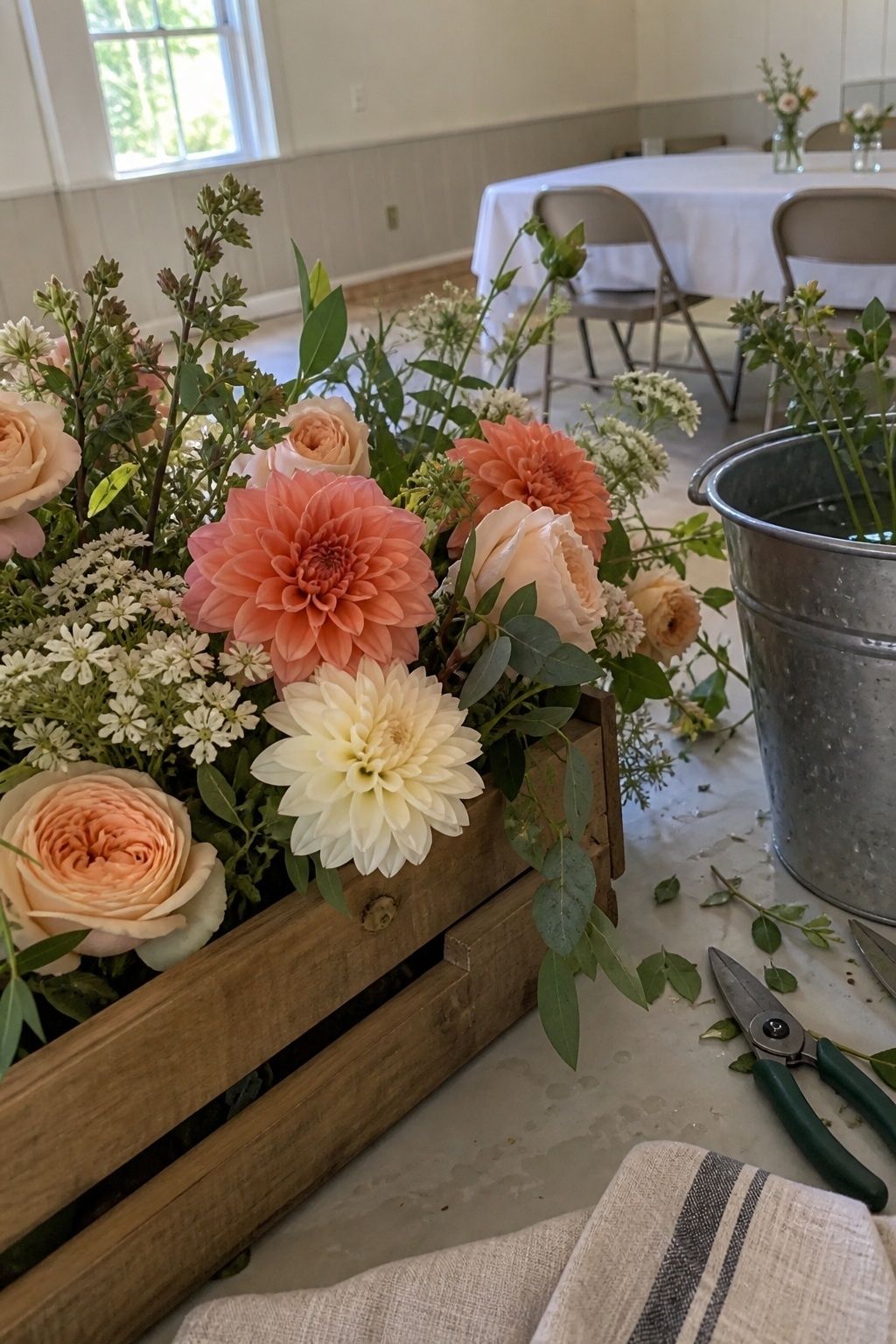
Early dahlias show up in late June in some regions, depending on the grower. When they’re available, put them where the petal detail can be seen, like the bouquet center or the cake. Don’t build the plan around them unless your florist confirms timing.
Which June flowers handle heat and sun best?
Orchids, calla lilies, lavender and woody herbs are the June flowers that hold up best in heat. Put them anywhere that will be in direct sun or out of water for a long time.
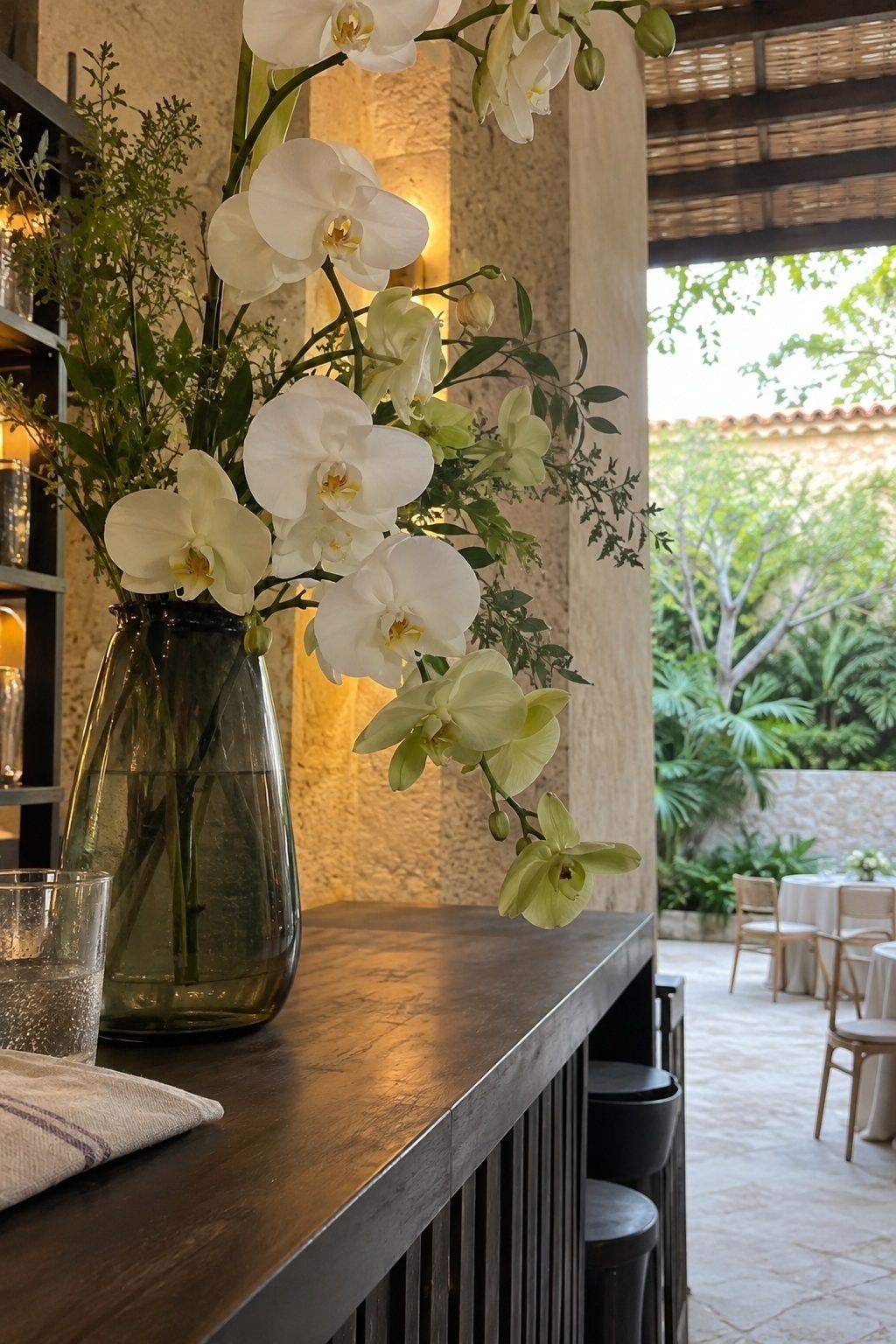
Orchids are the safest choice for beach venues, greenhouses and humid afternoons. White or soft green orchids don’t have to look tropical. They work in bouquets, on the cake and in bar arrangements, and they still look fresh at 10 p.m.
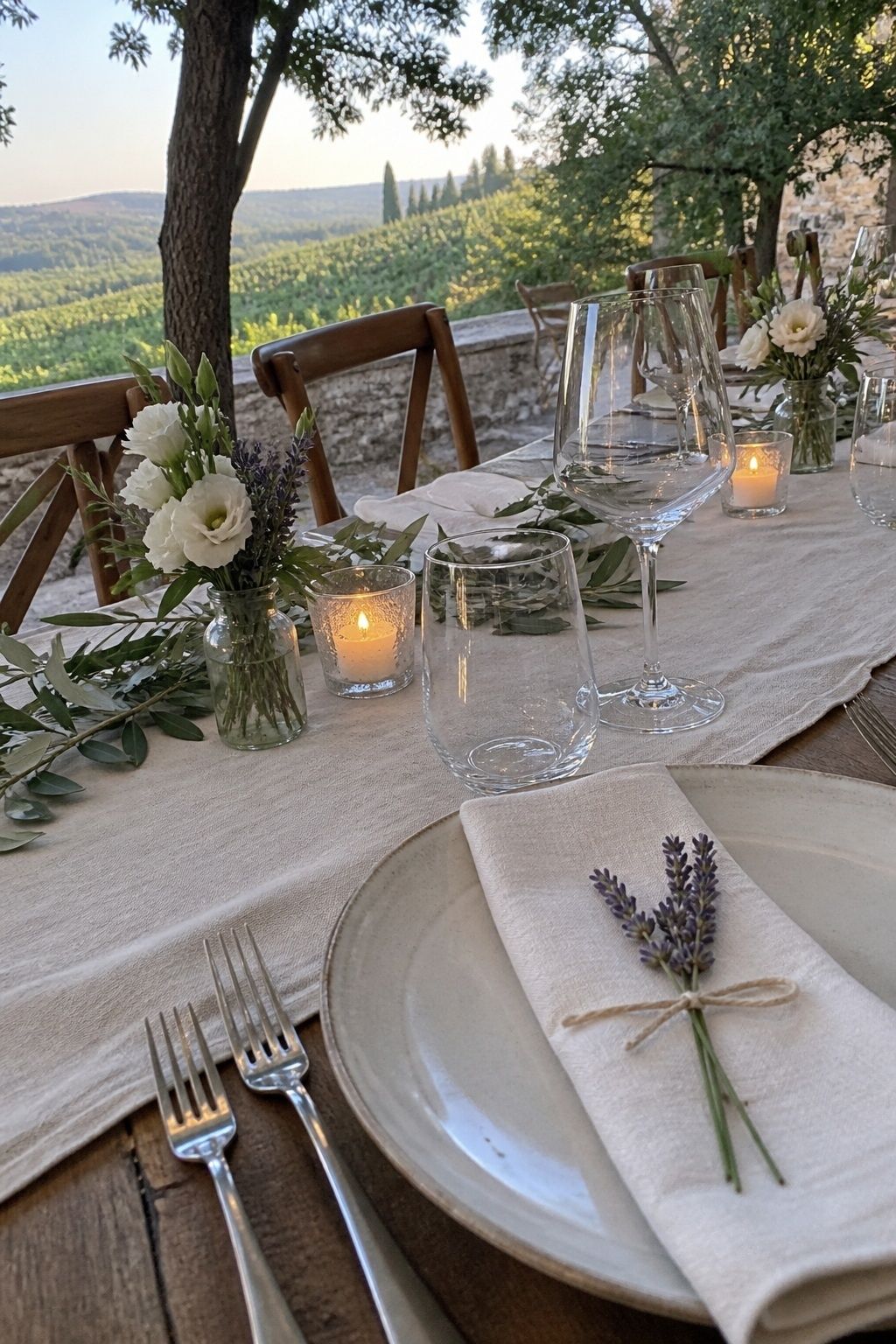
Lavender gives you scent and texture without much risk. A sprig at each place setting or tucked into boutonnieres is plenty. A full lavender theme gets heavy quickly, so I’d keep it as a background note.
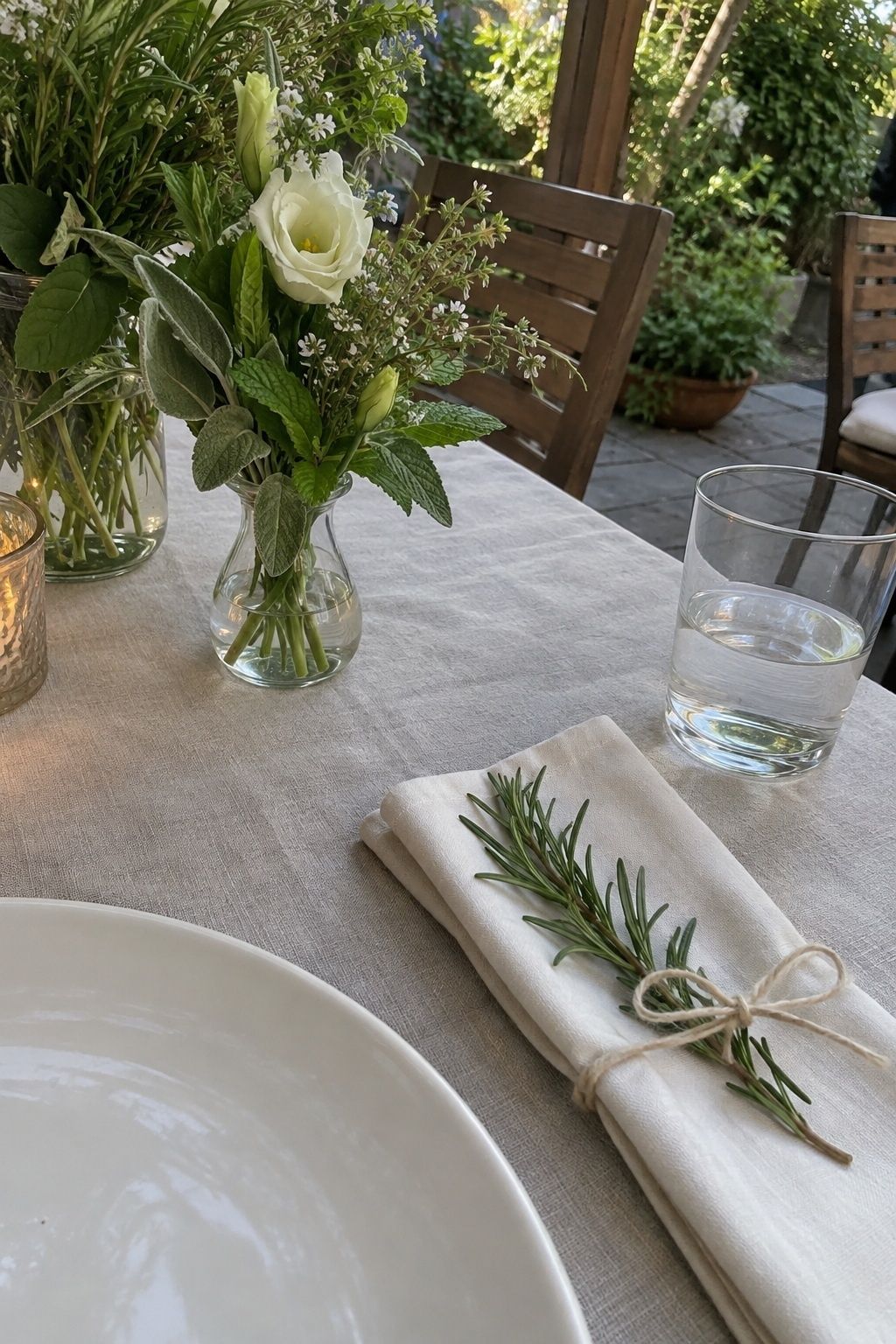
Herbs like rosemary, thyme, mint and sage work the same way. Tie a sprig to each menu, add a few stems to the bouquet, or put a small bunch on the bar. They survive heat and smell good when guests pick them up.
For the bigger picture on keeping guests and flowers comfortable, read my summer wedding weather plan and these outdoor shade ideas.
How many flowers does a small June wedding need?
A 20 to 40 guest wedding usually needs about 100 to 200 stems, plus greenery. Most of that goes to the bouquet and the dinner tables, and you can scale the tables up or down with your guest count.
These are my working estimates for planning a conversation with your florist, not fixed rules:
| Piece | Rough stems | Notes |
|---|---|---|
| Bridal bouquet | 25 to 35 | Fewer for a slim calla bouquet |
| Boutonniere | 2 to 3 each | Lavender or herbs work well |
| Ceremony urn or arrangement | 20 to 30 each | One or two is enough for under 40 guests |
| Bud vases | 3 per vase | 3 vases per table of 8 |
| Low centerpiece | 15 to 20 | Hydrangea cuts this number |
| Cake | 5 to 8 | Garden roses or orchids |
Here’s the math for 32 guests at four tables of eight: three bud vases per table at three stems each is 36 stems. Add a 30 stem bouquet, two ceremony pieces at 25 stems and a few boutonnieres, and you land around 125 stems before greenery.
For budget context, The Knot’s 2026 Real Weddings Study puts the average florist spend at $2,800, based on weddings with an average of 117 guests. A small wedding using in-season June flowers can come in well under that, mostly because you’re filling four tables instead of fifteen.
How to plan June flowers around heat
Plan your June florals in three steps: decide which flowers are essential, place delicate blooms in shade or water, and write substitutions into the order from the start.
- Pick one or two flowers that define the look for you, and accept that everything else can change.
- Walk the venue at your ceremony time and note where the sun hits. Delicate flowers go in the shade, sturdy ones go in the light.
- Ask for water-based mechanics for any hydrangeas or garden roses in an exposed spot.
- Write substitutions into the contract by shape and color, so a hot week changes the stem mix but not the overall look.
- Keep bouquets in a cool room until about 15 minutes before they’re needed.
If you’re comparing with later dates, July wedding flowers and summer wedding flowers cover the full high-summer list.
Key takeaways
- Early and late June need different bloom lists, so plan by your exact week.
- Garden roses and lisianthus are the safest June bouquet flowers.
- Peonies and sweet peas are early-June bonuses, never the whole plan.
- Orchids, calla lilies, lavender and herbs are your heat-proof choices.
- A 20 to 40 guest wedding needs roughly 100 to 200 stems plus greenery.
- Write substitutions by shape and color into your florist order.
FAQ
What flowers are in season for a June wedding?
Garden roses, lisianthus, delphinium, larkspur, stock, phlox, hydrangeas, allium, cornflower, scabiosa, calla lilies, lavender and summer greenery are all in season for June weddings. Peonies and sweet peas are often available in early June, and early dahlias appear in some regions by the end of the month.
Can you still get peonies for a June wedding?
Yes, often in early June or in cooler climates, but they are not guaranteed for late June dates. Ask your florist about local timing and agree on a backup such as garden roses or lisianthus in the same color.
What are the best June wedding flowers for a bouquet?
Garden roses and lisianthus are the best base for a June bouquet, with scabiosa, larkspur or herbs for movement. For a modern look, calla lilies or orchids hold up better in heat than softer garden flowers.
Which June flowers wilt fastest in the heat?
Sweet peas, peonies and hydrangeas wilt fastest in June heat, especially in direct sun or out of water. Use them in shaded spots, water-based arrangements or the bouquet, and give exposed areas to sturdier flowers.
How many flowers do I need for a 30 person June wedding?
Plan on roughly 110 to 150 stems for a 30 person wedding, plus greenery. That covers a 25 to 35 stem bouquet, one or two ceremony pieces, a few boutonnieres and three small bud vases on each of four tables.
Before you call the florist
Write down your date, your ceremony time and the one flower you would genuinely miss. That short note will get you a better June wedding flowers quote than any Pinterest board, because it tells the florist what to protect and where they’re free to swap. Everything else on the list above can flex with the weather, and in June it probably will.
Last update on 2026-10-03 / Affiliate links / Images from Amazon Product Advertising API