

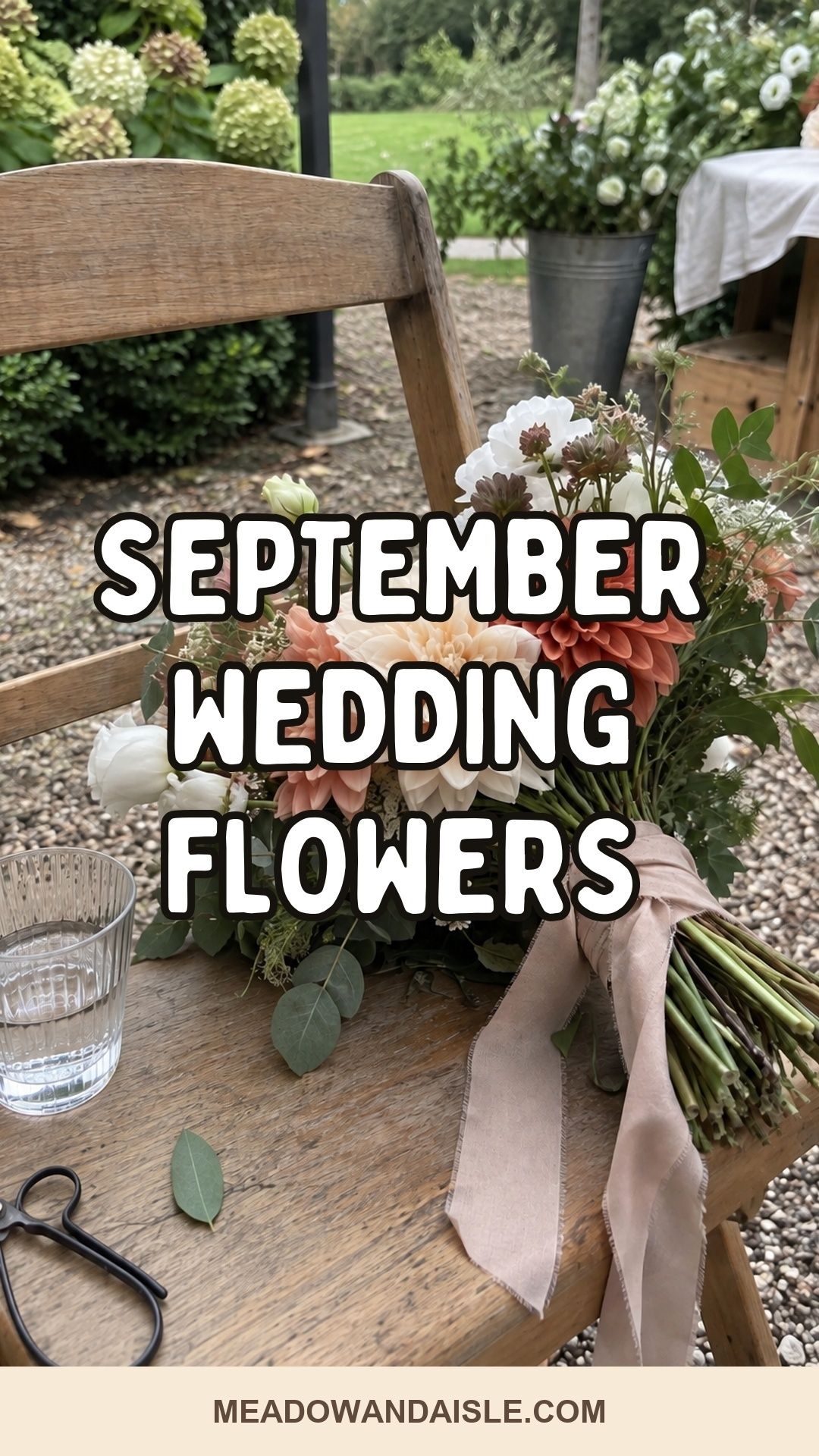
The strongest September wedding flowers are dahlias, garden roses, zinnias, asters, chrysanthemums, celosia, amaranth and lisianthus, with berries, rose hips and grasses for texture. Build around one focal bloom and two supporting textures: for a 30-guest wedding that’s roughly 300 to 400 stems across the bouquet, a ceremony piece, low centerpieces and a few bud vases.
Is September still summer or already fall? For flowers, it’s both, and that’s the fun of it. Zinnias and garden roses are still going, dahlias are at their best, and the first berries, rose hips and dried grasses start showing up. You get late-summer color with an early-fall edge.
The catch is that availability shifts week by week and region by region, and early September afternoons can still be hot enough to wilt delicate stems. Below are the September wedding flowers worth asking your florist about, grouped by the job they do, plus stem counts for a small wedding of 10 to 50 guests and a plan for heat.
Supplies that help flowers last all day
If you’re doing any arrangements yourself, or want to keep bud vases fresh through a warm afternoon, these are the basics.


What flowers are in season for a September wedding?
Dahlias, zinnias, asters, garden and spray roses, chrysanthemums, celosia, amaranth, sunflowers, lisianthus, marigolds and many greens are commonly available in September. Hydrangeas work in cooler conditions. Exact timing depends on your growers and weather, so treat this as a list to bring to your florist.
| Flower | Best role | Color range | Heat tolerance |
|---|---|---|---|
| Dahlia | Focal | Cream to near-black | Medium, needs water |
| Garden rose | Focal | Cream, blush, toffee, wine | Medium |
| Zinnia | Support, color | Coral, apricot, raspberry | High |
| Aster | Support, filler | White, lavender, pink | Medium |
| Chrysanthemum | Volume | Cream, bronze, wine | High |
| Celosia | Texture | Rust, gold, raspberry | High |
| Amaranth | Movement | Burgundy, green, rust | Medium |
| Lisianthus | Softness | Cream, mauve, lavender | Medium |
| Hydrangea | Volume | White, blue, antique green | Low, drinks a lot |
The Knot’s guide to wedding flowers is a handy companion if you want to learn the names before your consultation.
Focal flowers for September bouquets
A focal flower is the one people remember. Pick one, maybe two, and let everything else support it.
Dahlias

Dahlias are the September flower. Their layered petals look romantic up close, and the colors run from cream and peach to terracotta, plum and almost chocolate. Let two or three blooms set the palette and soften them with roses, lisianthus or grasses. At a small wedding, guests see every petal, so a few dahlias go a long way: the bouquet, a few low compotes and one ceremony piece that moves to the reception.
Garden roses

Garden roses give you a familiar rose shape with a fuller, softer head. Cream, blush, toffee, honey and wine tones all sit well beside dahlias and berries. Use them in the bouquet and the most photographed spots, like the sweetheart table or cake.
Hydrangeas
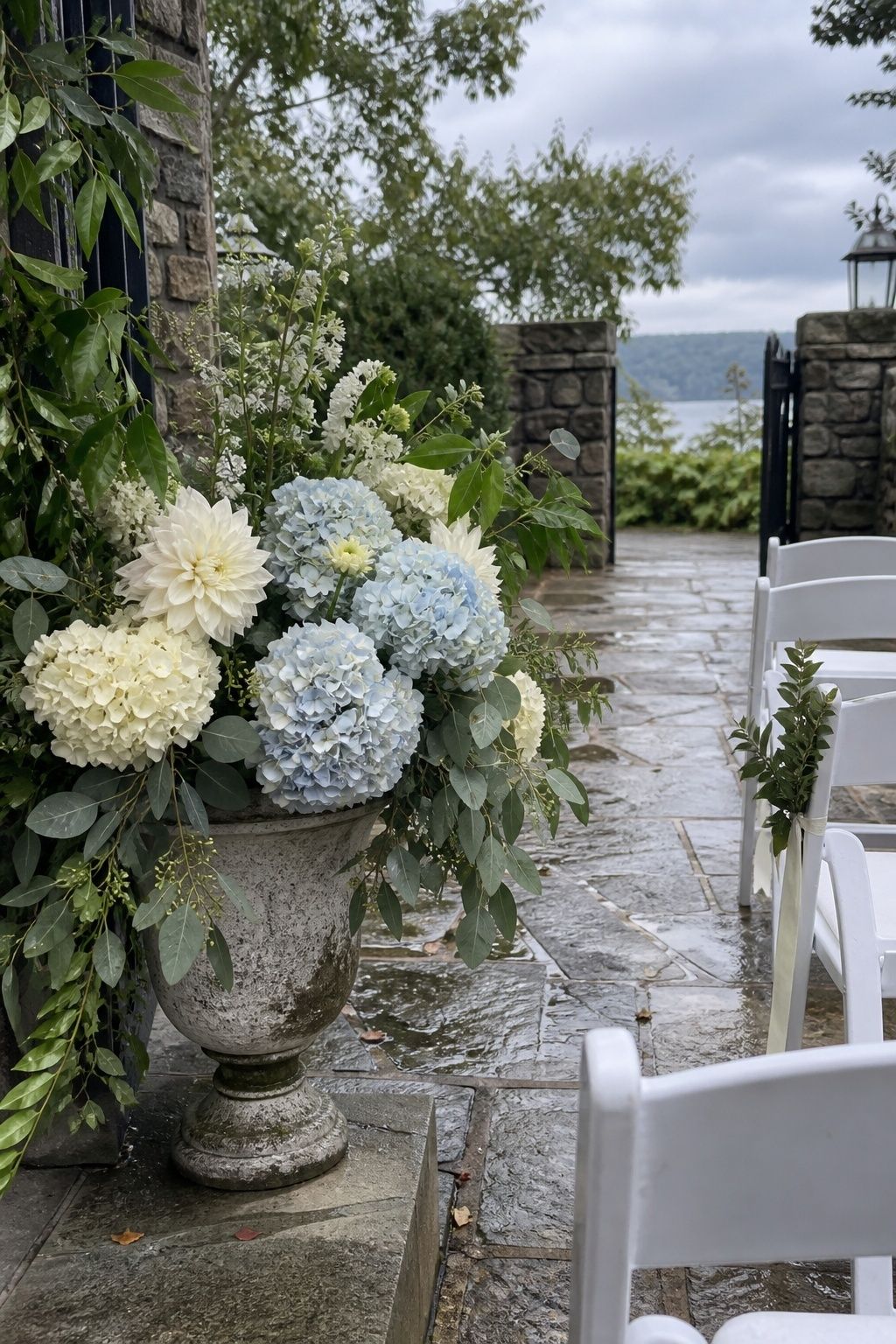
Hydrangeas give big volume for fewer stems, which helps a budget. They need a lot of water and shade, so they suit cooler venues and urns or compotes rather than out-of-water installs. Pair them with dahlias or roses so they’re a base, not the whole design.
Chrysanthemums
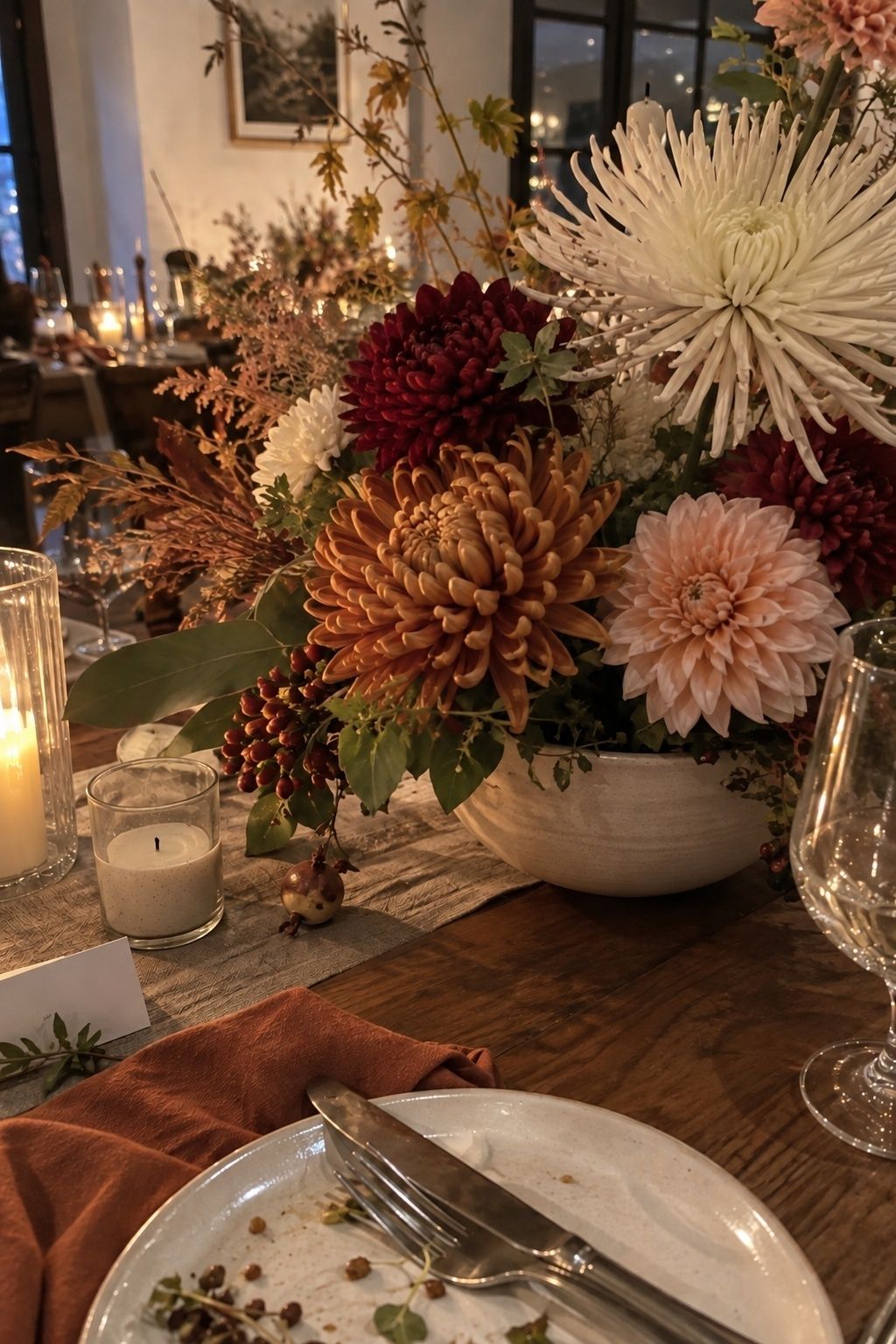
Skip the stiff grocery-store mums and ask for spider, reflexed or cushion varieties in cream, bronze, wine or soft gold. They’re tough in heat and add volume to centerpieces. Mixed with dahlias and amaranth, they look florist-designed rather than filler.
Sunflowers, edited
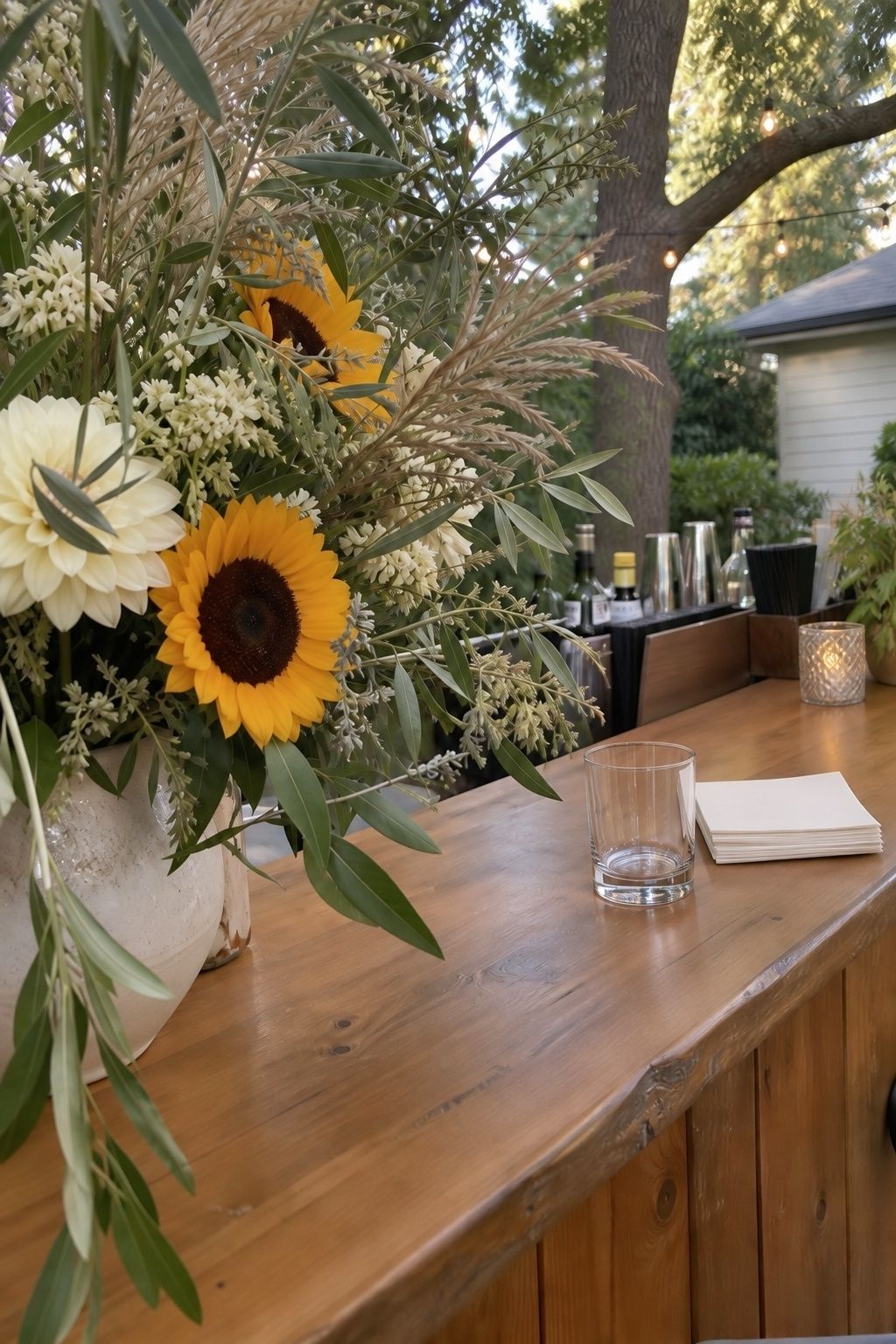
Sunflowers fit garden, farm and backyard weddings, but use smaller varieties or just a few stems with rust, olive and cream. In a restaurant or estate, one or two in the welcome flowers is enough. Mixed with zinnias and dried grasses, they read seasonal without turning into a harvest display.
Supporting blooms that fill out arrangements
Supporting flowers soften the focal bloom and stretch your stem count. This is where September is generous.
Zinnias
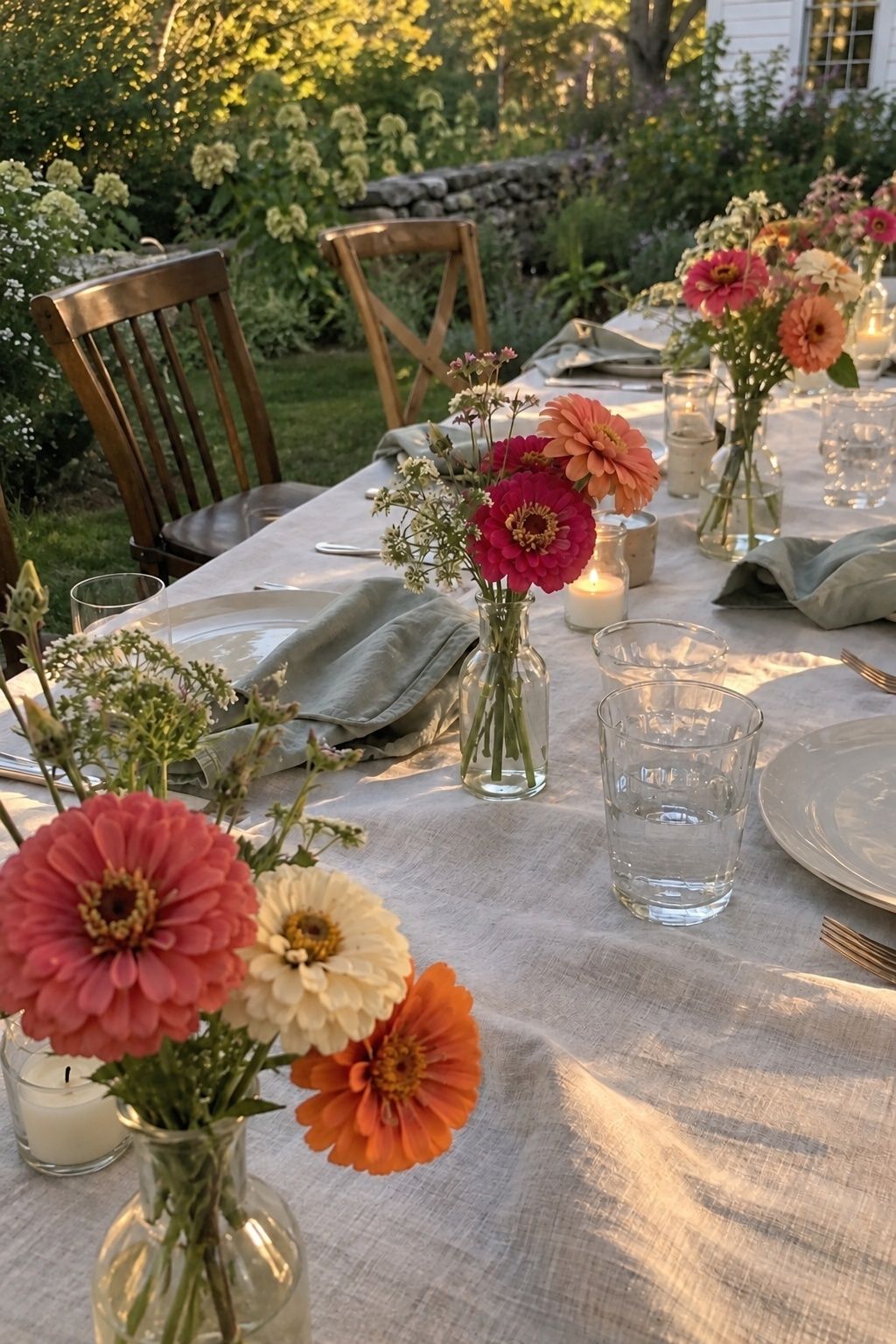
Zinnias carry late-summer color into early September. Keep the palette edited (coral with rust, apricot with cream, raspberry with olive) and they look chic, not childish. They’re sturdy in heat and lovely in bud vases.
Asters
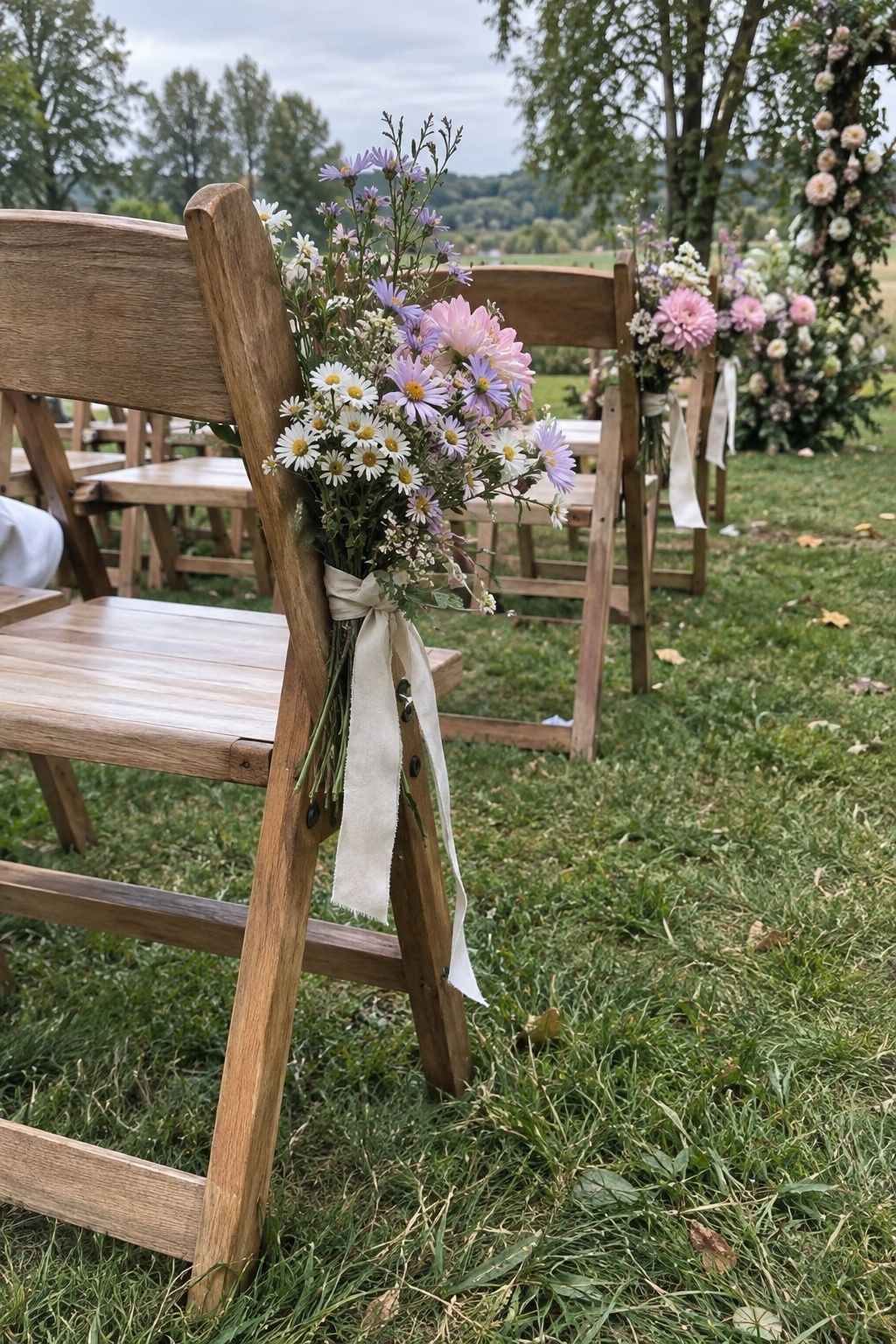
Small, starry asters add a wildflower softness in white, lavender or pink. They work around bigger blooms in bouquets, aisle markers and cocktail-table flowers and keep rich arrangements from getting heavy.
Spray roses
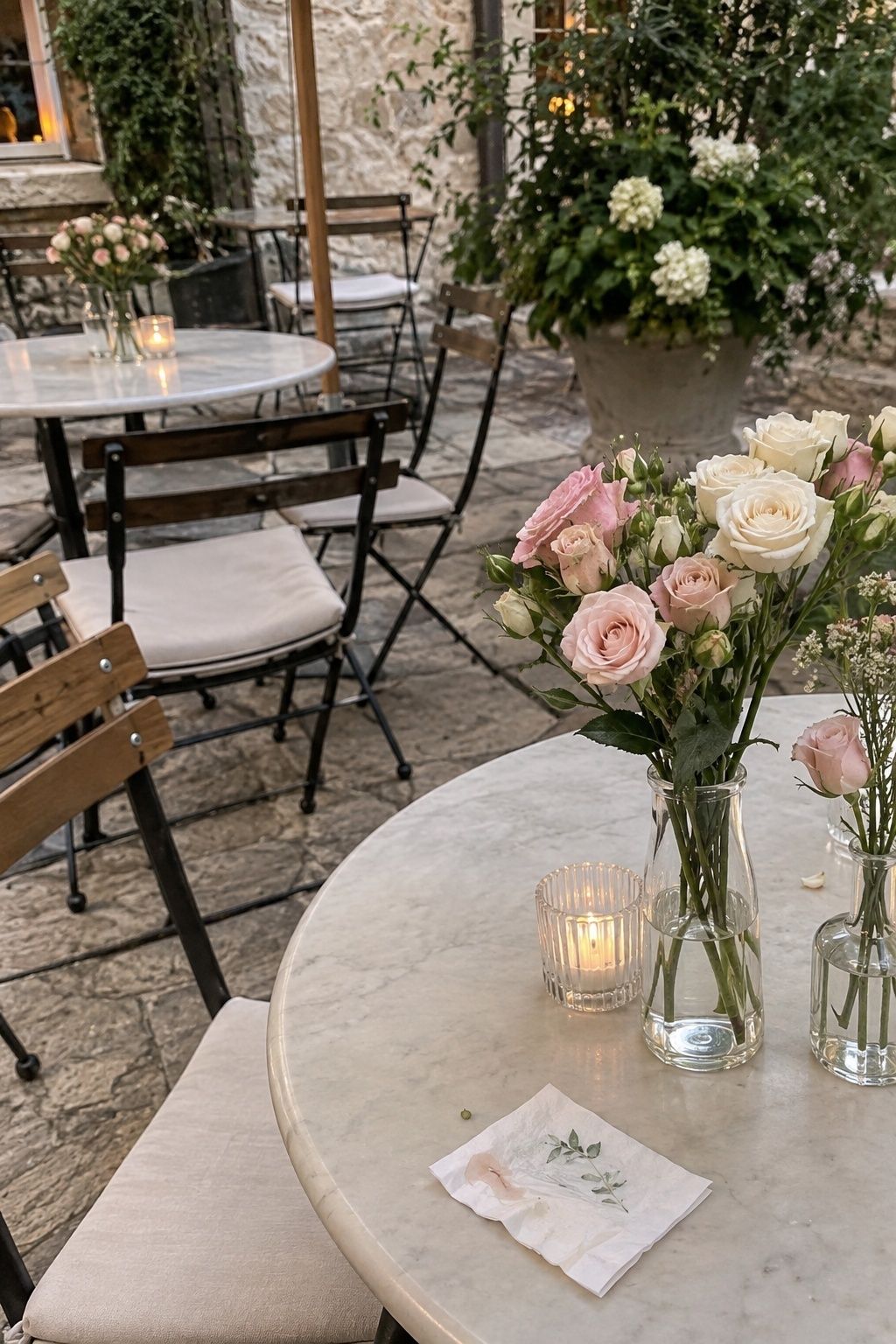
One spray rose stem carries several small blooms, which makes them great for bud vases, bar flowers and boutonnieres. They stretch a budget and keep the rose theme going on small tables.
Lisianthus

Lisianthus gives softness and flutter without peony prices. Cream, blush, mauve and lavender tones soften stronger shapes like dahlias and celosia. It won’t look exactly like a peony, and it doesn’t need to.
Marigolds
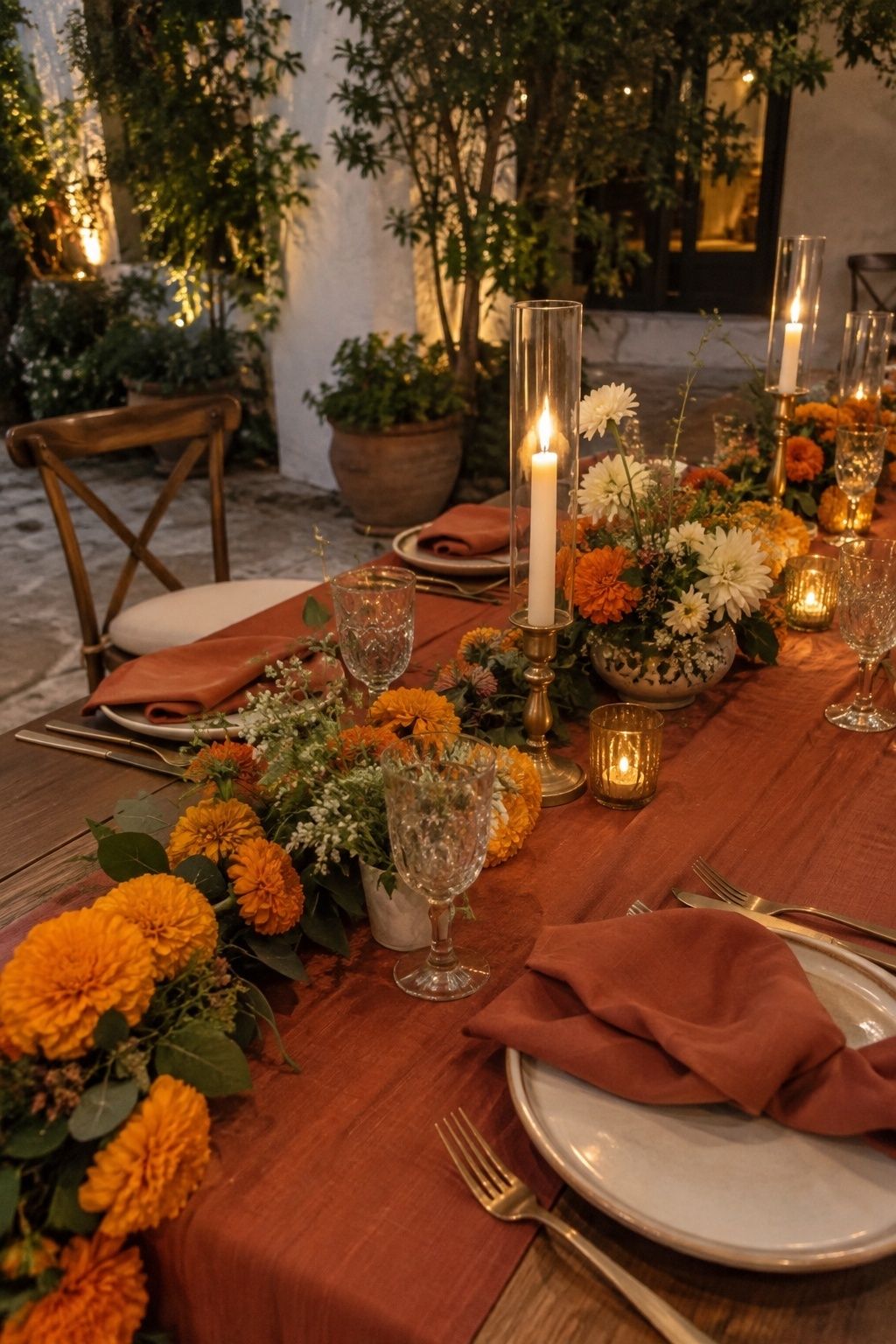
Marigolds bring saturated gold and orange, and for many families they carry cultural meaning. Use them because you love them: in low arrangements, garlands or place settings. They read clearly at close range, so a few stems go far at a small dinner.
Alstroemeria

Durable and available in many colors, alstroemeria fills in bouquets and holds up in places that sit out for hours, like the bar or entry table. Mix it with seasonal blooms so it looks chosen.
Astilbe
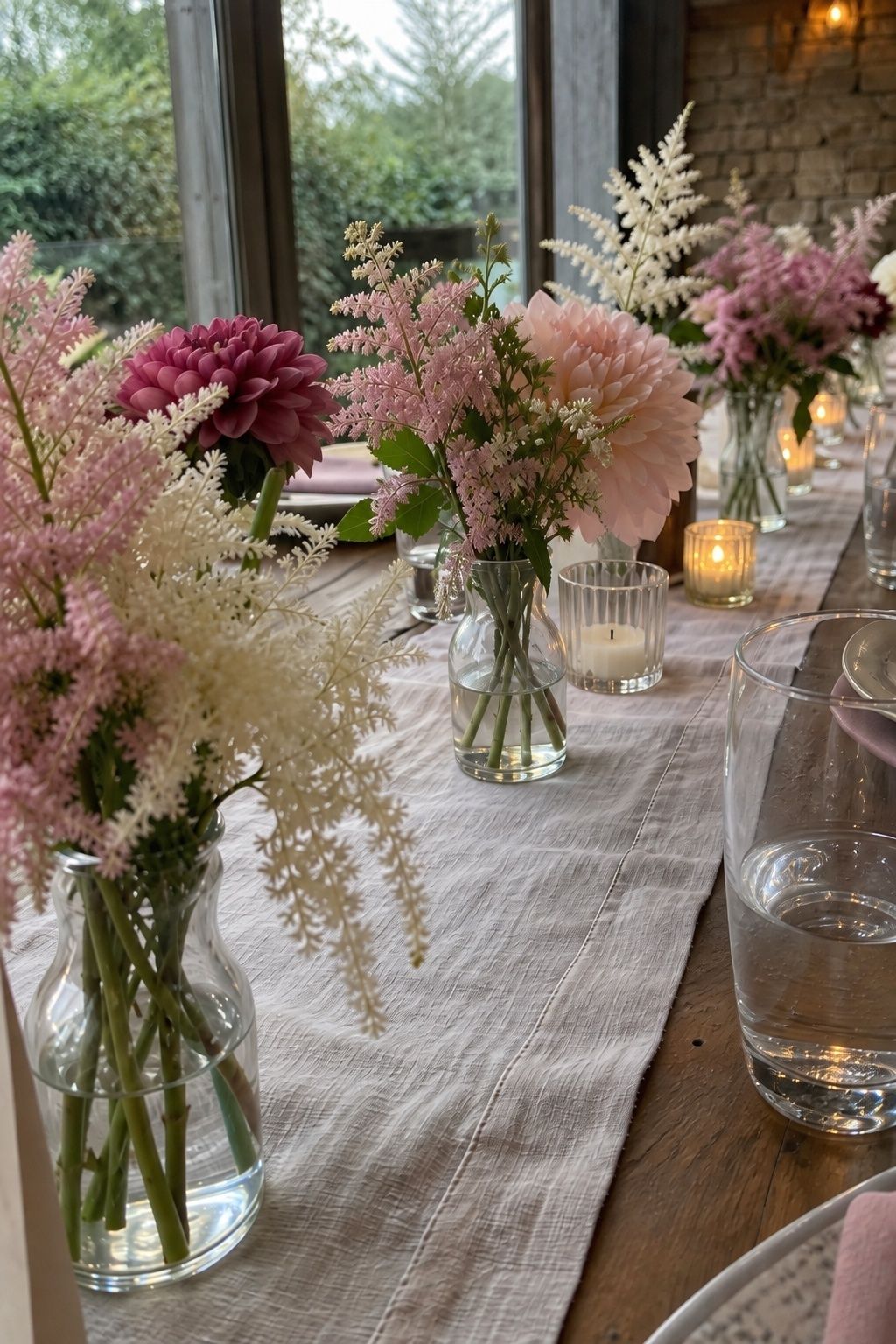
Feathery astilbe in white, blush or burgundy adds movement without the drama of amaranth. It’s delicate-looking, so keep it in bouquets and protected table arrangements.
Texture that says early fall
Texture is how September flowers start to look like fall without going full October. A few stems per arrangement is usually enough.
Amaranth

Trailing amaranth softens bouquet edges and spills from compotes. Burgundy, green or rust strands make an arrangement feel seasonal fast, so use a little. The bouquet and cake table are the best places for it.
Celosia
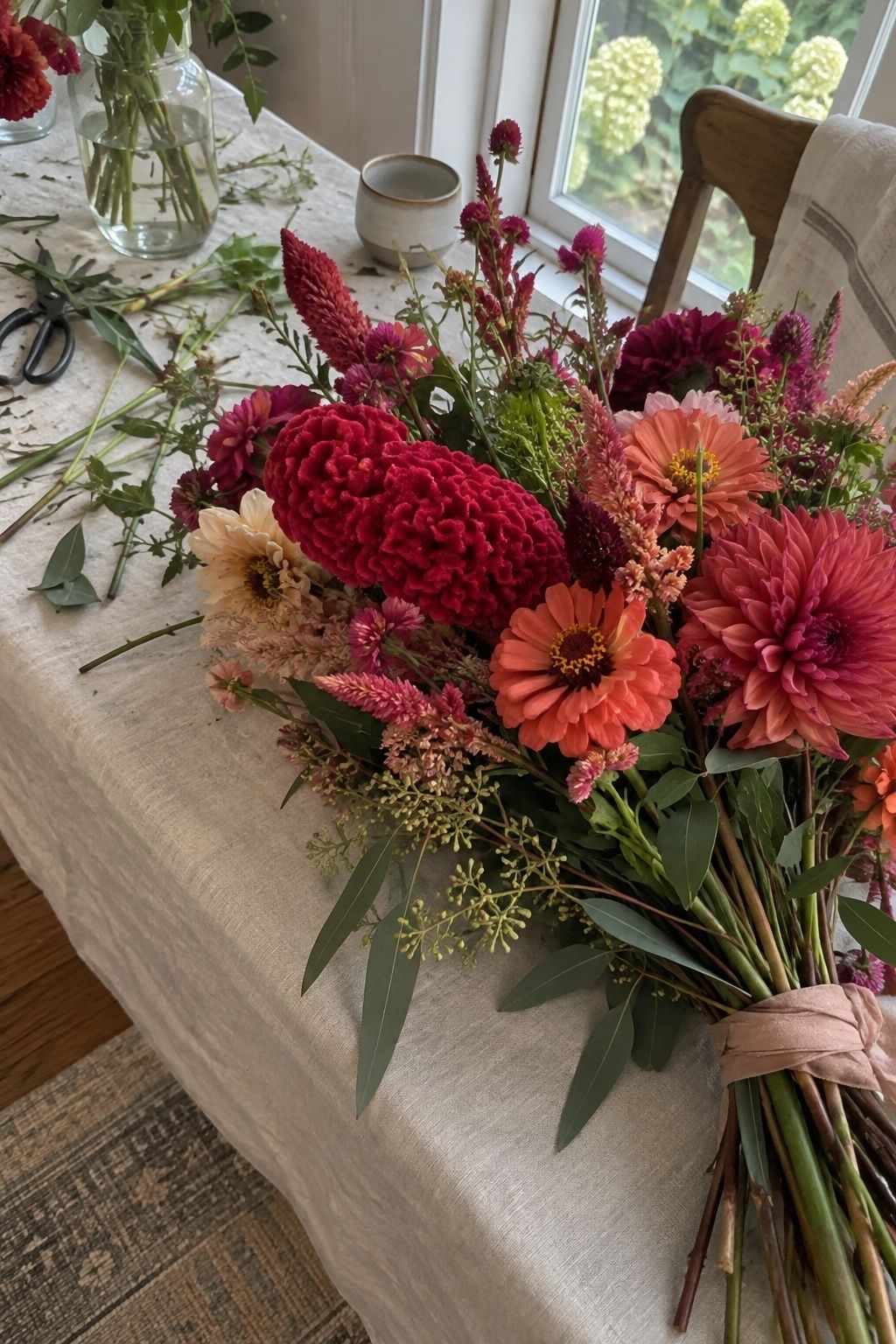
Velvety celosia in rust, coral, gold or raspberry adds richness. The shape is distinctive, so one or two stems per arrangement is plenty.
Sea holly

Sea holly brings steely blue texture when the palette needs something cooler than rust and cream. It pairs well with dusty blue, olive, mauve or fig and suits boutonnieres.
Berries and rose hips
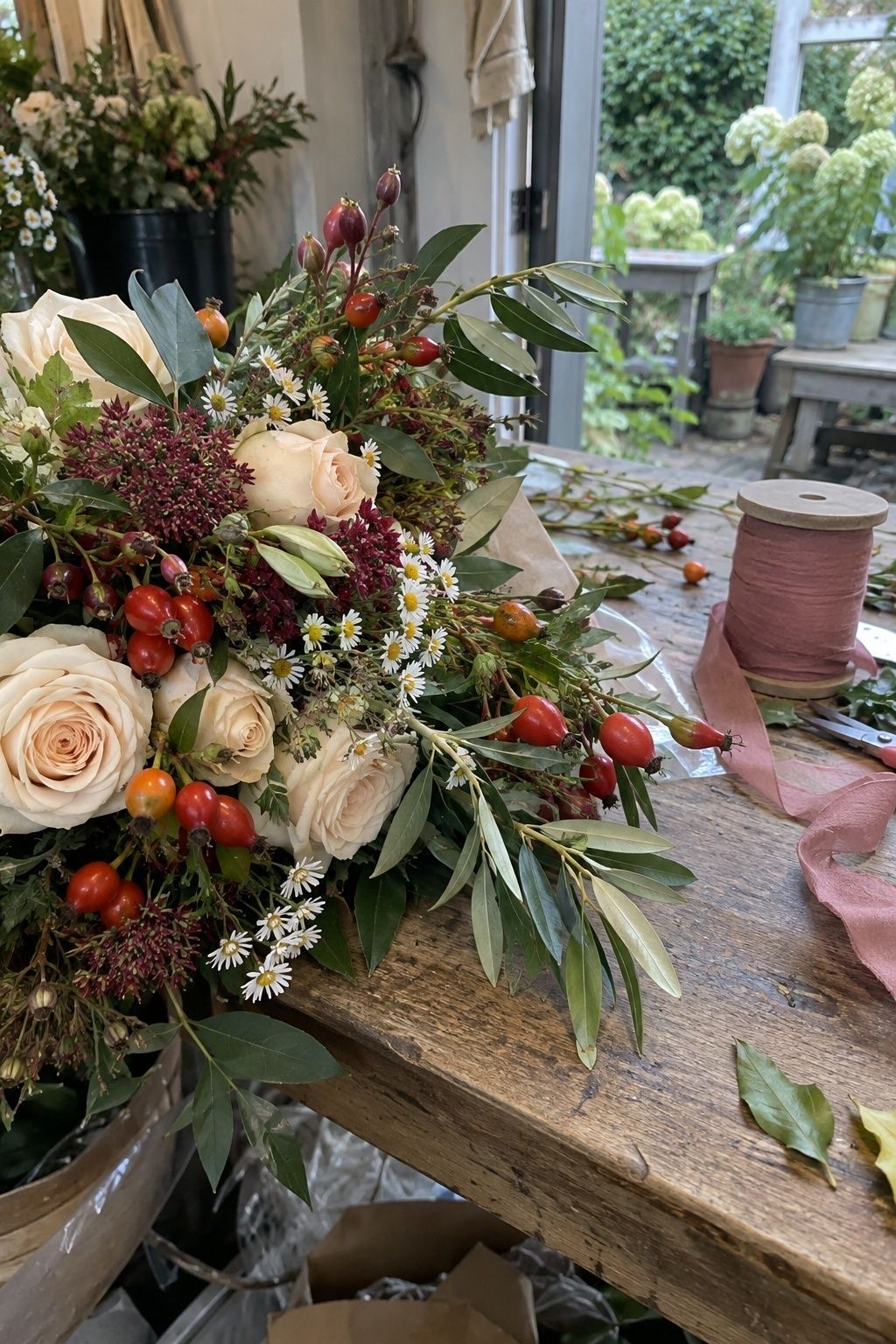
Not flowers, but they make September arrangements feel properly timed to the season. Use them in bouquets, boutonnieres and low centerpieces in red, orange or wine tones.
Dried grasses

A few stems of wheat, bunny tails or fine grasses bring a sun-faded warmth. Keep them as a transition note next to fresh blooms. A whole table of dried material looks like late October.
Eucalyptus, olive or ruscus

Greenery gives arrangements shape and connects pieces across the day. Ask your florist which greens are fresh, which shed and which hold up outdoors. Some eucalyptus has a strong scent that’s better kept off dinner tables.
How many flowers does a small September wedding need?
Most small weddings need a bridal bouquet, one ceremony focal piece, low centerpieces and a handful of bud vases. Ceremony flowers that move to the reception cut the order further.
These are typical ranges florists work with. Your florist’s own recipes may differ.
| Item | Typical stems | Notes |
|---|---|---|
| Bridal bouquet | 25 to 40 | One focal bloom plus two textures |
| Attendant bouquet | 10 to 15 | Smaller version of the bridal mix |
| Boutonniere | 1 to 3 | Spray rose, berry, sea holly |
| Low centerpiece | 15 to 25 | One per 6 to 8 guests |
| Bud vase | 1 to 3 | Zinnias, spray roses, asters |
| Ceremony piece | 40 to 80 | Plan to move it to the bar |
For 30 guests with four low centerpieces, a bouquet, two attendants, a ceremony piece and ten bud vases, that adds up to roughly 300 to 400 stems. For comparison, the average couple spent $2,800 on their florist in The Knot 2026 Real Weddings Study with an average of 117 guests, so a focused small-wedding order can come in well under that. The biggest saving is reuse: if the ceremony arch flowers become the bar arrangement and bridesmaid bouquets rest in vases on the dinner tables, you can drop one or two centerpieces entirely. My September wedding reception ideas show where those moved pieces look best.
Quick recap
- Build around one focal flower (dahlias, garden roses or hydrangeas) and two supporting textures.
- Zinnias, mums and celosia handle heat best; hydrangeas and astilbe need shade and water.
- Use berries, rose hips and grasses in small doses to hint at fall.
- A 30-guest wedding typically needs about 300 to 400 stems.
- Move ceremony flowers to the reception instead of ordering twice.
Early September vs late September flowers
Early September flowers can stay bright and summery, while late September flowers can lean deeper and more textured. Adjust the supporting stems, not the whole plan.
In the first two weeks, zinnias, garden roses, sunflowers and brighter dahlias keep things fresh. By the last week, swap in wine-toned roses, amaranth, celosia, berries and grasses. The focal flower can stay the same. If your date is on the cusp, compare this with my October wedding flowers guide, or look back at August wedding flowers for the brighter end of the range.
Keeping September flowers fresh in the heat
Keep delicate flowers in water and out of direct afternoon sun, and put sturdier stems where arrangements sit exposed. Early September can still hit summer temperatures, especially at outdoor ceremonies.
- Ask your florist to deliver ceremony pieces as late as practical.
- Put zinnias, mums, celosia and greenery in sunny, exposed spots.
- Keep hydrangeas, lisianthus and astilbe in shaded, water-filled vessels.
- Rest the bouquet in a vase of cool water between portraits and the ceremony.
For table settings that work around the flowers, my September wedding tablescape ideas cover low layouts and candle placement.
September wedding flowers FAQ
What flowers are best for a September wedding?
The best September wedding flowers are dahlias, garden roses, zinnias, asters, chrysanthemums, celosia, amaranth and lisianthus, supported by berries, grasses and greenery. Your region and exact date decide which are strongest, so confirm with your florist.
Are dahlias in season in September?
Yes, dahlias are usually at or near their peak in September. Ask your florist about a backup with a similar shape, such as garden roses or mums, in case weather affects the crop.
What flowers should you avoid for a September wedding?
Avoid planning around spring flowers like peonies, tulips, sweet peas and ranunculus unless your florist confirms good availability. Also avoid delicate stems that will sit out of water in direct sun.
Can September wedding flowers still feel summery?
Yes, September flowers can feel summery, especially early in the month. Zinnias, garden roses, lisianthus and bright dahlias keep things fresh; add berries and grasses later in the month for a fall look.
How can a small wedding save money on September flowers?
Focus the budget on the bouquet, one ceremony piece and low centerpieces, then move ceremony flowers to the reception. Seasonal blooms like dahlias and zinnias cost less than imported out-of-season flowers.
Choosing your September wedding flowers
Start with the one flower you’d be sad to lose, usually a dahlia, then let your florist fill in around it with whatever looks best that week. September wedding flowers reward a little flexibility. For the rest of the plan, my September wedding ideas and broader fall wedding flowers guide pick up where this one leaves off.
Last update on 2026-10-03 / Affiliate links / Images from Amazon Product Advertising API