

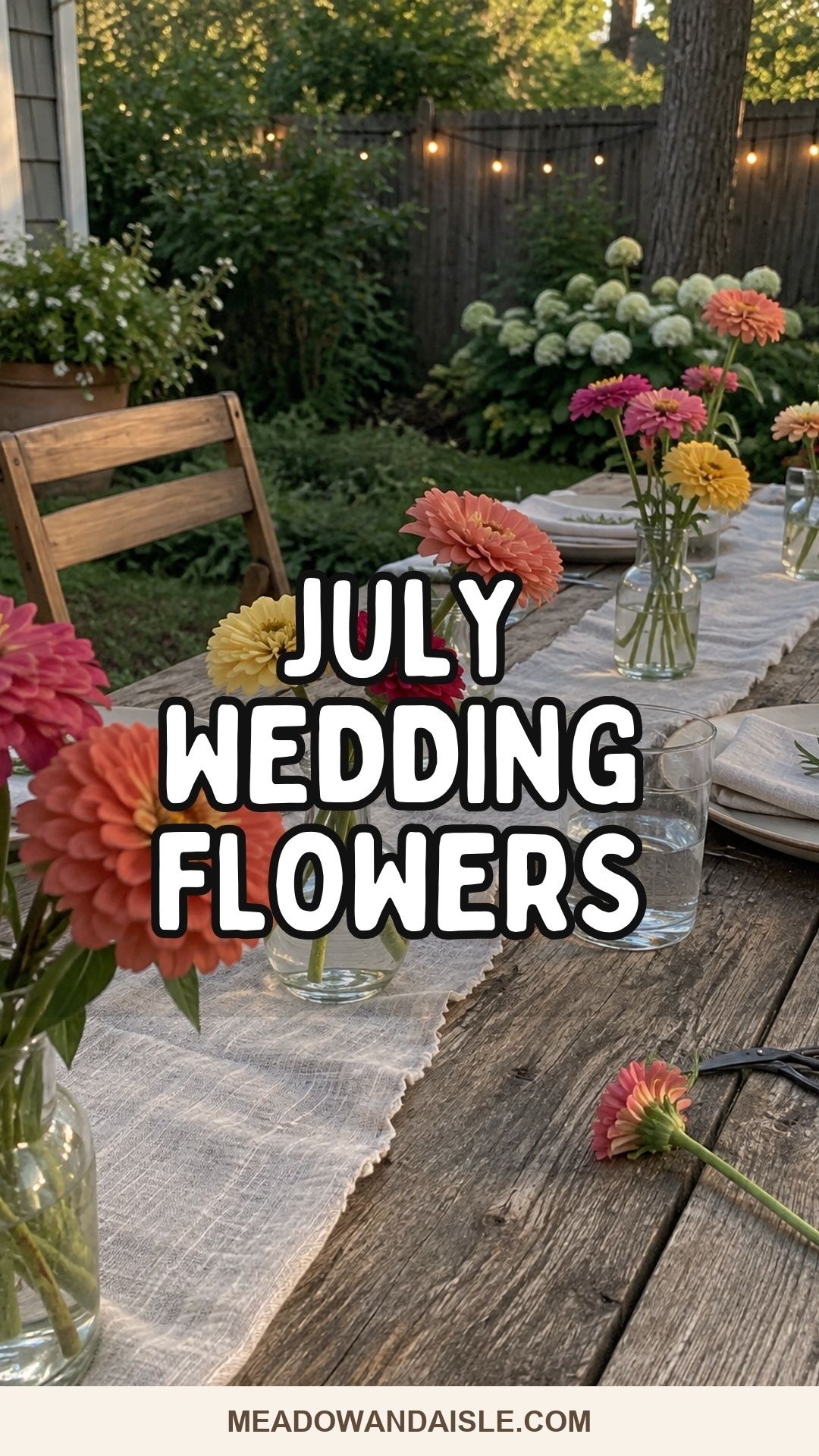
The July wedding flowers that hold up best in heat are zinnias, sunflowers, celosia, marigolds, black-eyed Susans, orchids, protea and sturdy greenery like eucalyptus. Lisianthus, garden roses, cosmos and dahlias work too if they stay in water and shade until they’re needed. Keep hydrangeas, delphinium, stock and anything spring-blooming (peonies, sweet peas, tulips) indoors or skip them.
Which of your dream flowers will still look good at 9 p.m. on a July night after six hours out of the cooler? That’s the question to ask before you fall for a bouquet photo, because July wedding flowers get tested harder than any other month’s. Transport, portraits, a sunny ceremony, warm tables: every stage takes a little out of them.
The good news is that high summer has plenty of flowers built for it. And at a small wedding, you need fewer arrangements, which means you can spend on the ones guests see up close and protect them properly. Below is how each common July flower behaves in heat, how to place it, and how to plan the whole order for 10 to 50 guests.
Flower-care basics worth having
A few low-cost supplies make a real difference in July: vessels that hold plenty of water, something to keep bouquets cool, and a way to refresh arrangements quickly.


Which July wedding flowers handle heat best?
Zinnias, sunflowers, celosia, marigolds, orchids and protea are the safest bets. The Knot’s list of heat-resistant wedding flowers lines up with most of these. Here’s a quick comparison to bring to your florist:
| Flower | Heat tolerance | Best use |
|---|---|---|
| Zinnia | High | Bud vases, bar, casual bouquets |
| Sunflower | High | Accents, aisle markers, family-style tables |
| Celosia | High | Texture in bouquets and compote bowls |
| Marigold | High | Garlands, accents, golden palettes |
| Orchid | High | Bouquets, cake, sculptural pieces |
| Protea | High | One focal bouquet or bar piece |
| Lisianthus | Medium | Bouquets, soft centerpieces |
| Garden rose | Medium, needs water | Bouquets, shaded tables |
| Cosmos | Medium-low | Shaded bud vases, meadow-style pieces |
| Hydrangea | Low | Indoor or shaded pieces with lots of water |
The toughest July flowers
These five can sit out through cocktail hour without much drama. They’re also some of the least expensive stems of the season.
Zinnias
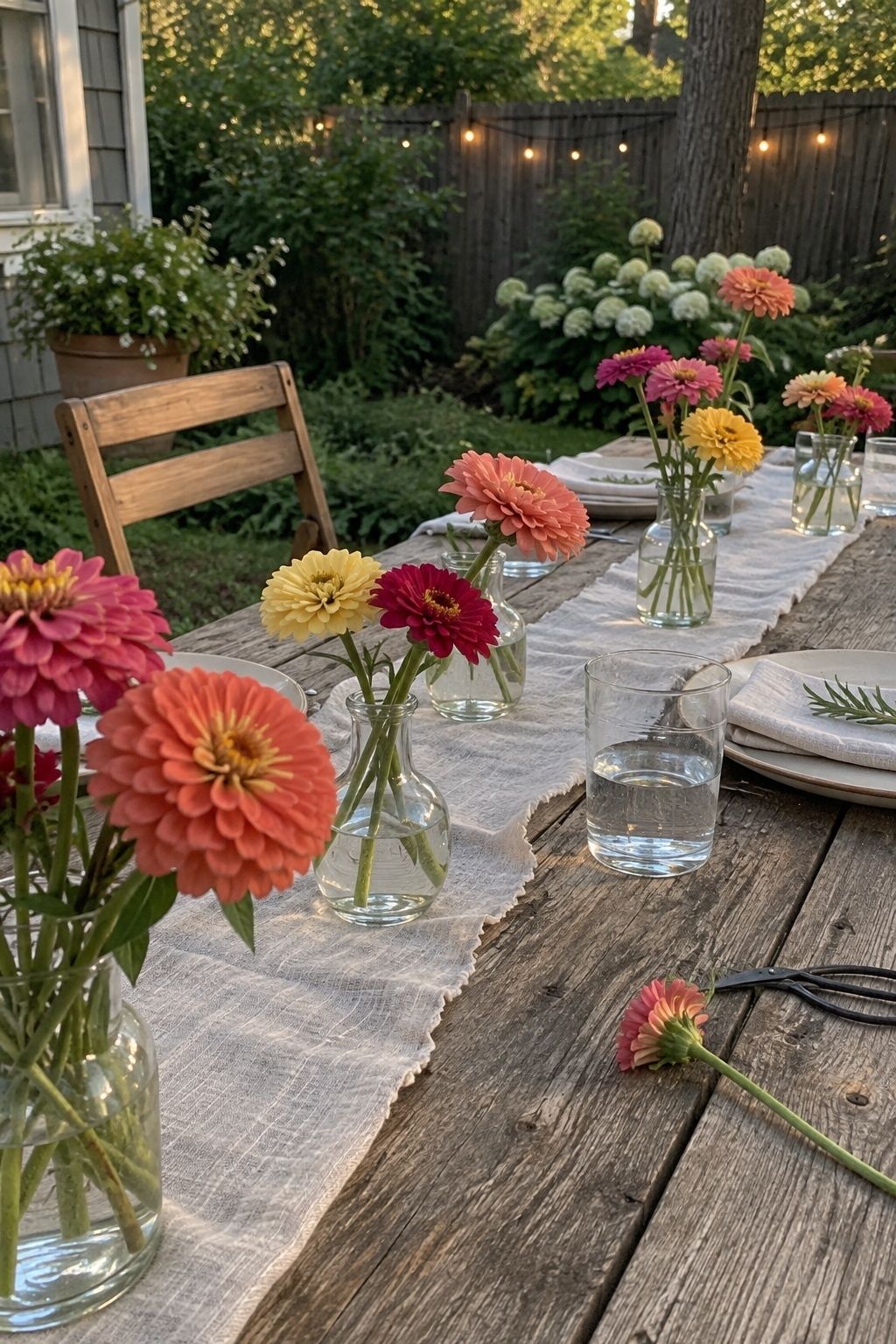
Zinnias are my first pick for July. Their layered heads keep their shape through a warm setup, they come in almost every color, and they look relaxed in bud vases, bar flowers and low centerpieces. Use them where flowers will sit out longest.
Sunflowers, in moderation
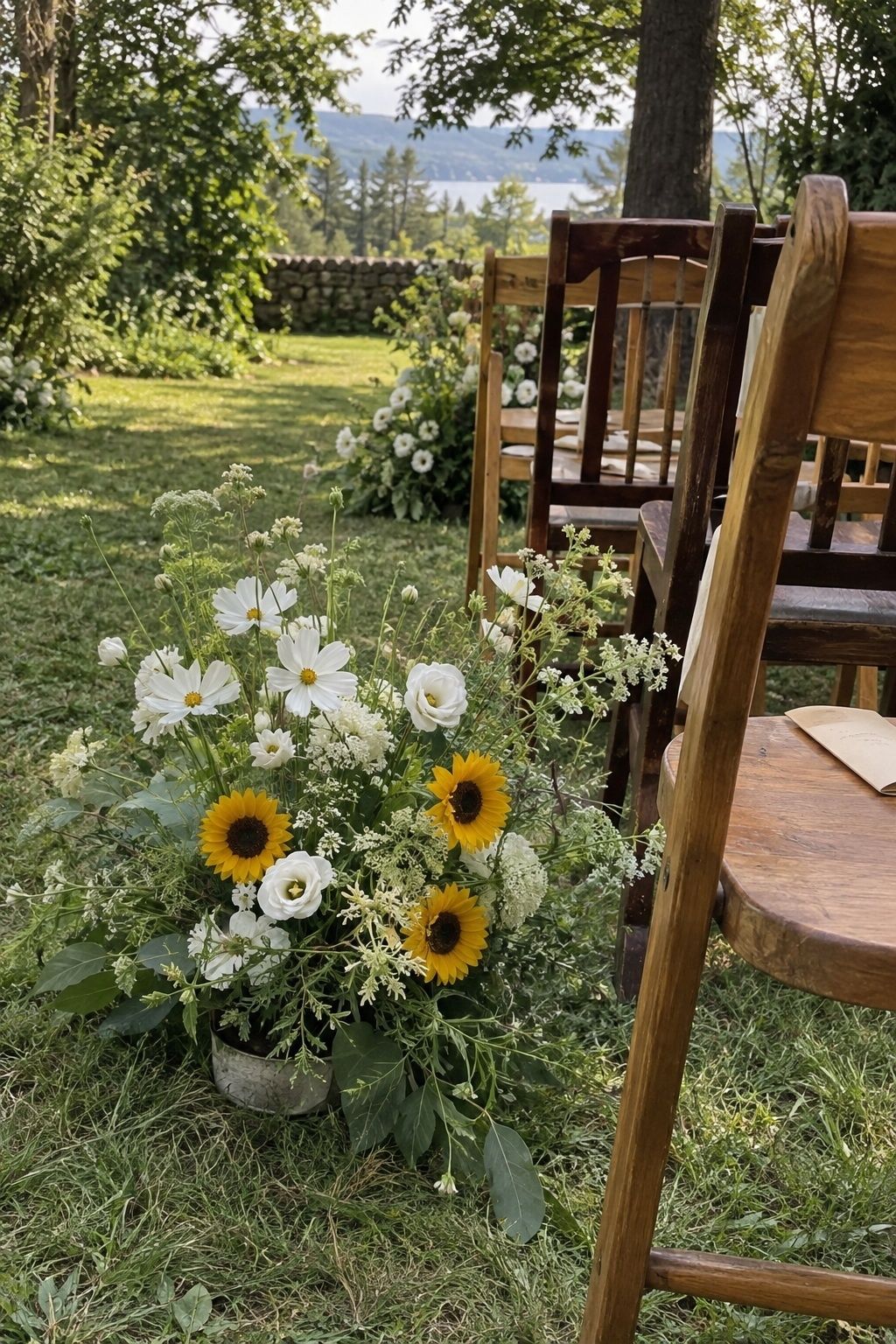
Sunflowers are tough, but they can tip a wedding into theme territory fast. Use a few smaller-headed stems with cosmos, lisianthus or greenery, and repeat them once or twice rather than filling the room.
Black-eyed Susans
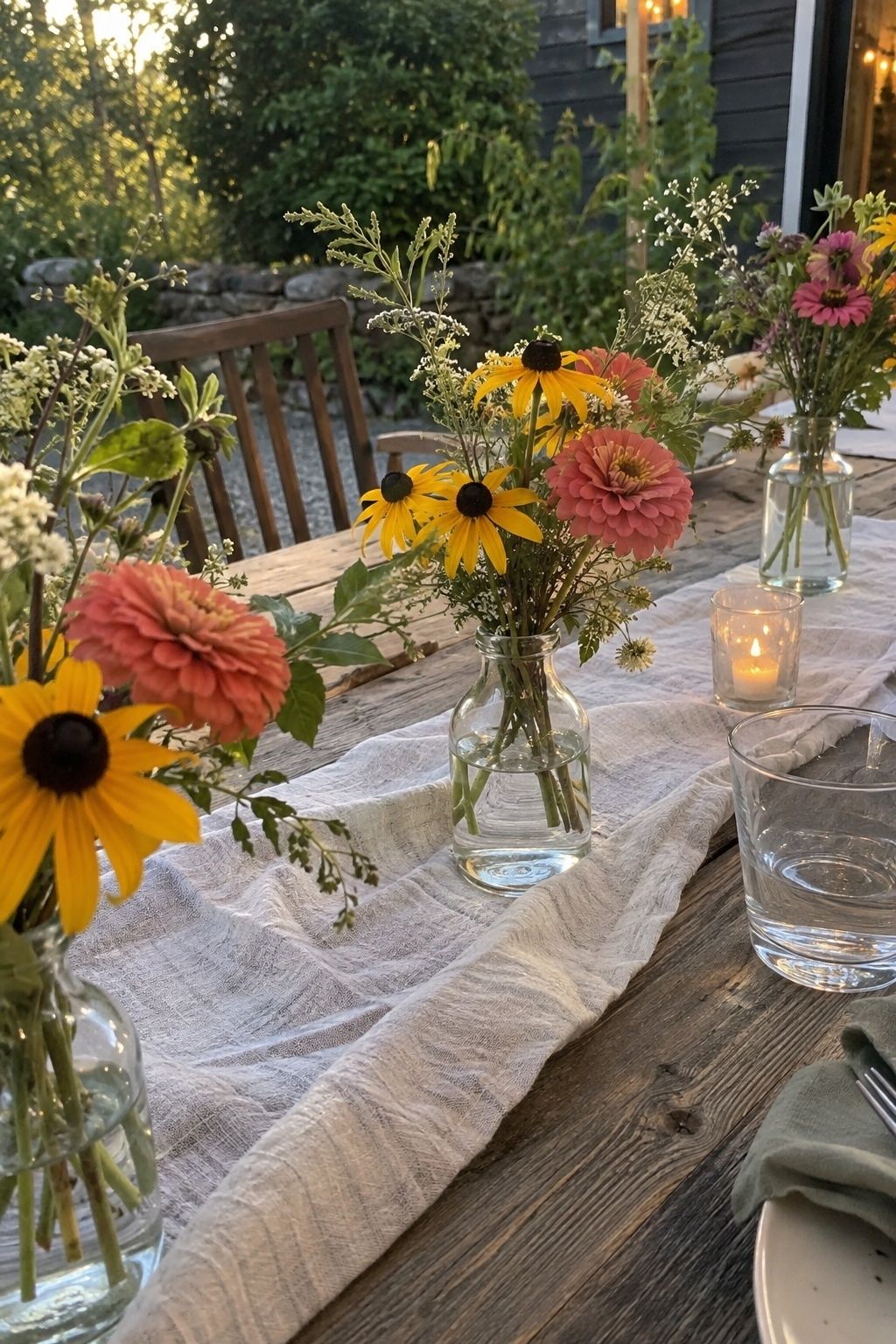
Golden petals, dark centers, very little fuss. They suit garden-party and countryside weddings and cost far less than imported blooms. Mix them with zinnias and greenery so the look stays garden-led and not rustic.
Celosia
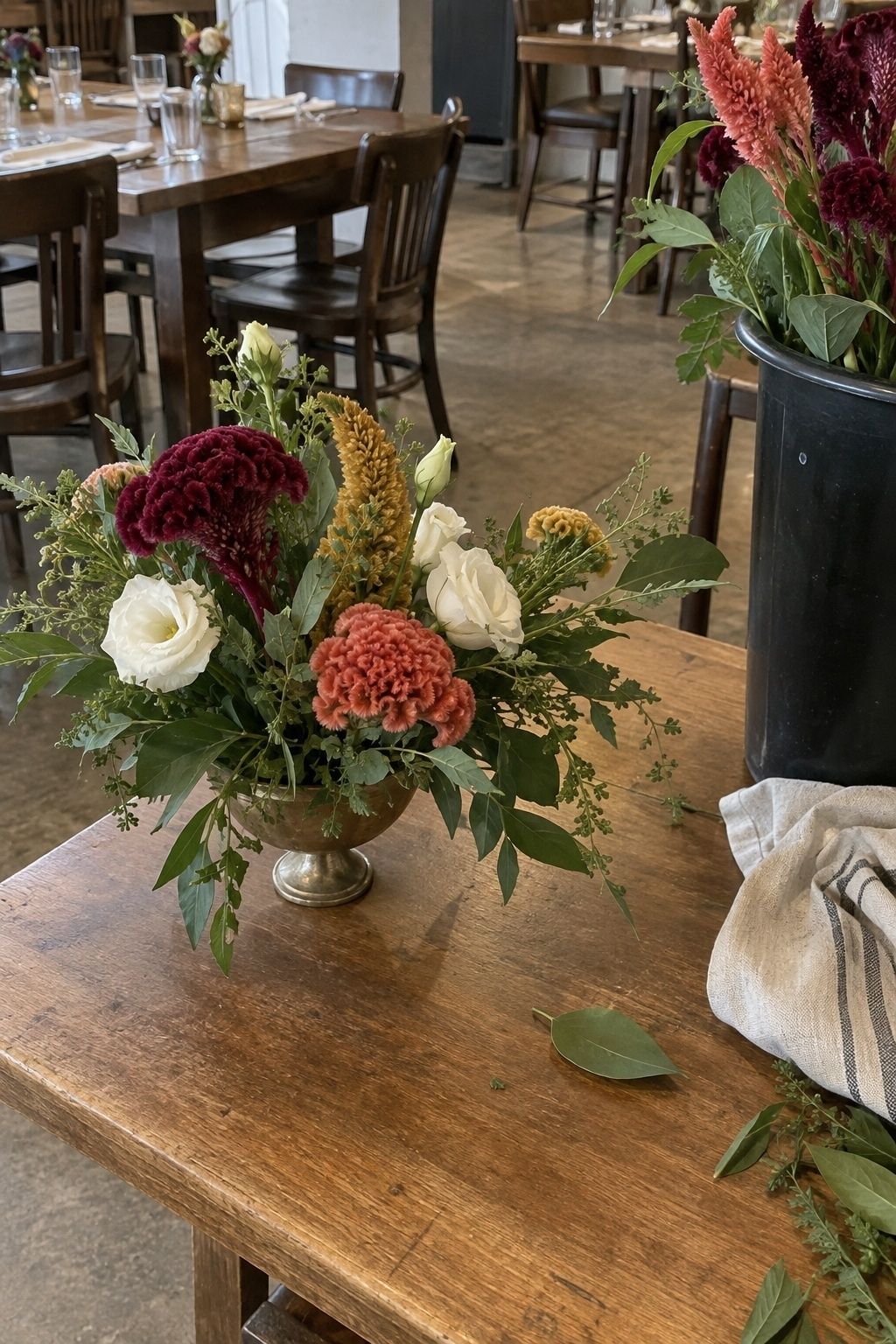
Celosia brings velvety texture in coral, burgundy, gold and rose. A little goes a long way, so tuck a few stems into a bouquet or compote bowl rather than building a whole piece around it.
Marigolds
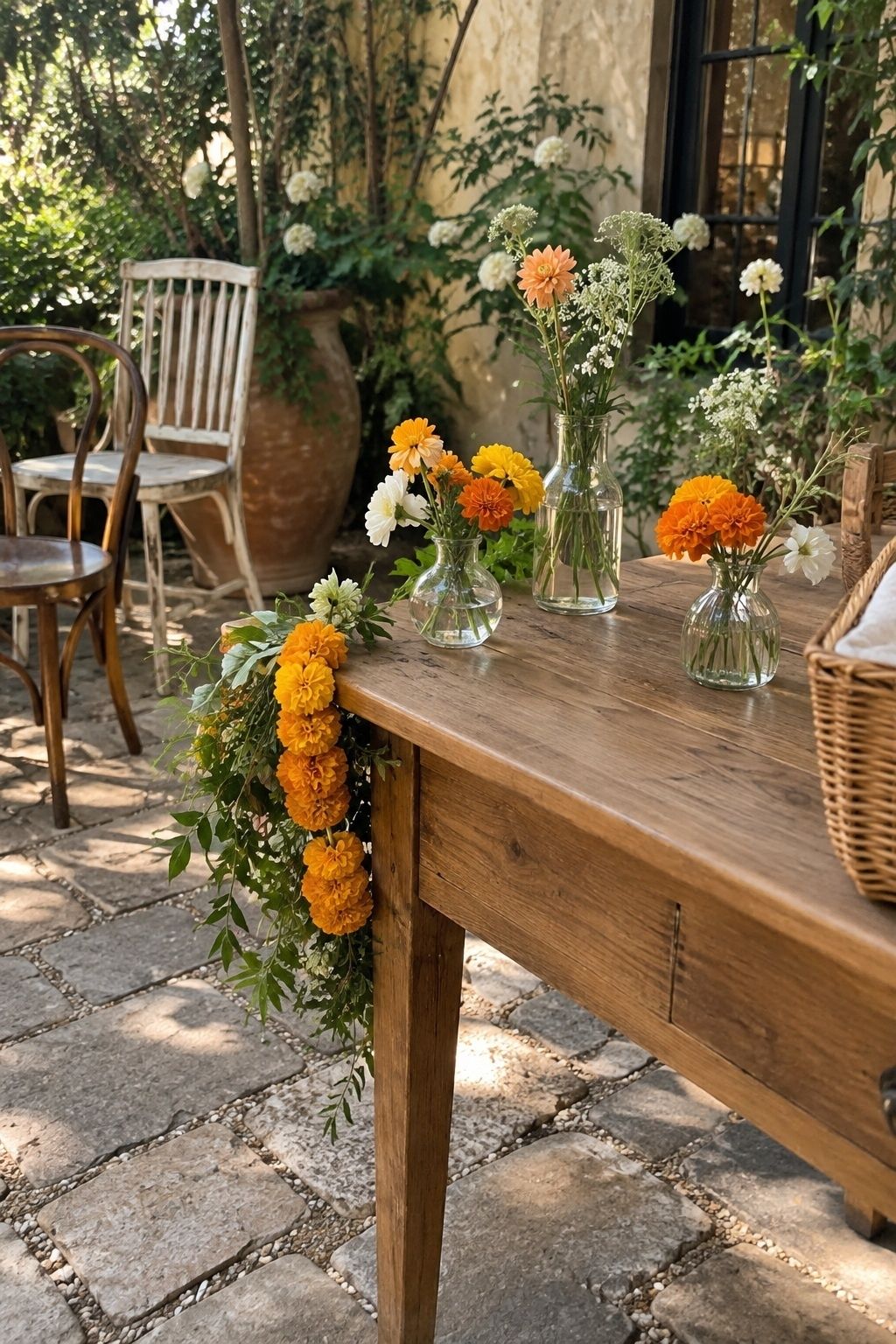
Marigolds work when your palette welcomes saffron, apricot or deep gold, and they’re traditional in many cultural celebrations. Use them for garlands and accents next to white flowers or greenery so the color has room.
Soft, romantic flowers that cope with care
These give you the romance of spring without spring’s fragility, as long as they stay in water and out of direct sun until they’re needed.
Lisianthus
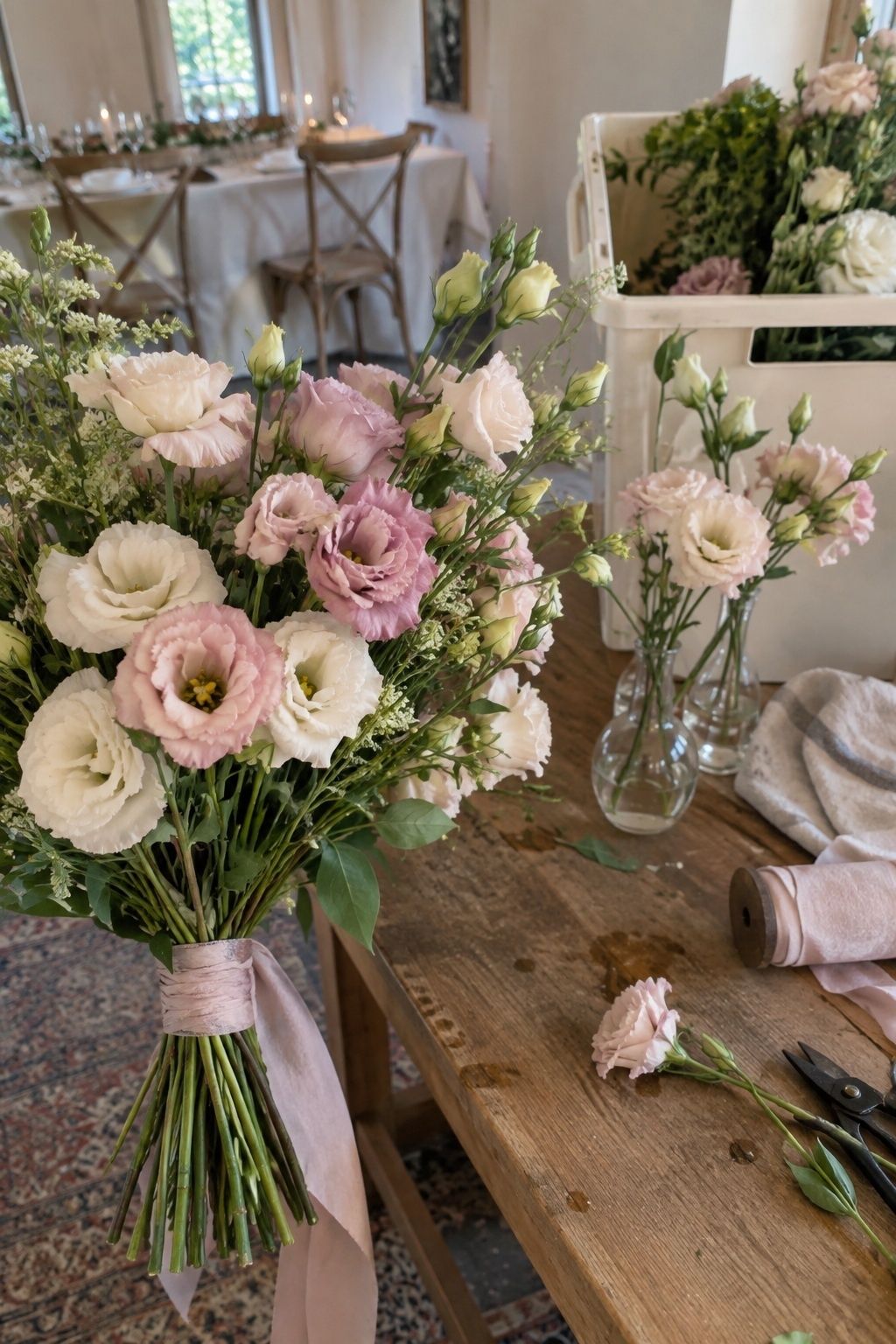
Lisianthus is the most useful soft flower in July. The ruffled heads look like roses but hold up better in warm weather. Use it in bouquets, boutonnieres and compote bowls, and pair it with zinnias, garden roses or eucalyptus.
Garden roses

The best stand-in for peonies on a July date: fragrant, full and layered. Keep rose-heavy bouquets cool until portraits and keep arrangements away from hot stone and full sun.
Scabiosa
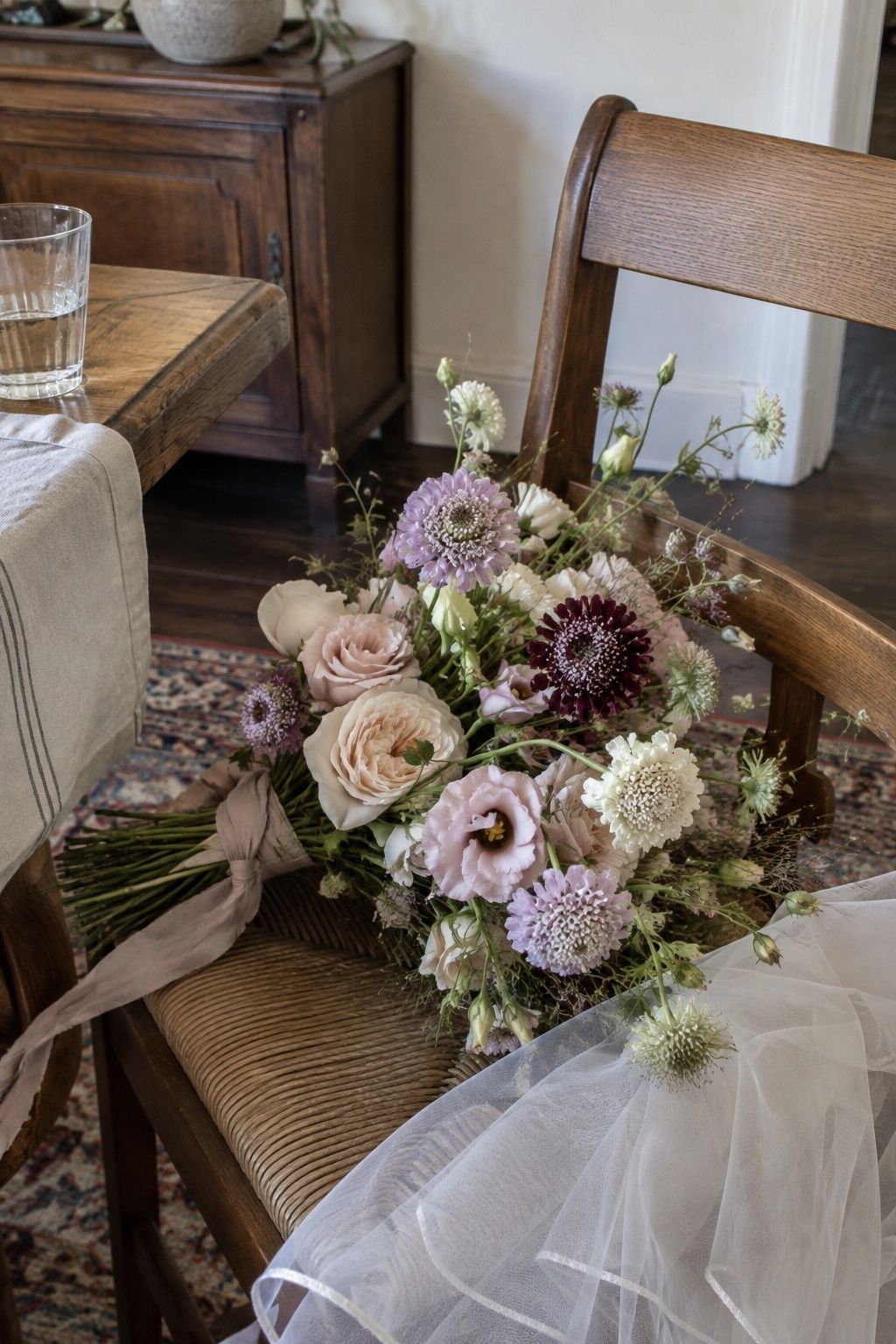
Scabiosa adds a light, fluttering texture to bouquets and close-up table pieces. It’s small, so put it where guests will see it, not in a big installation where it disappears.
Cosmos
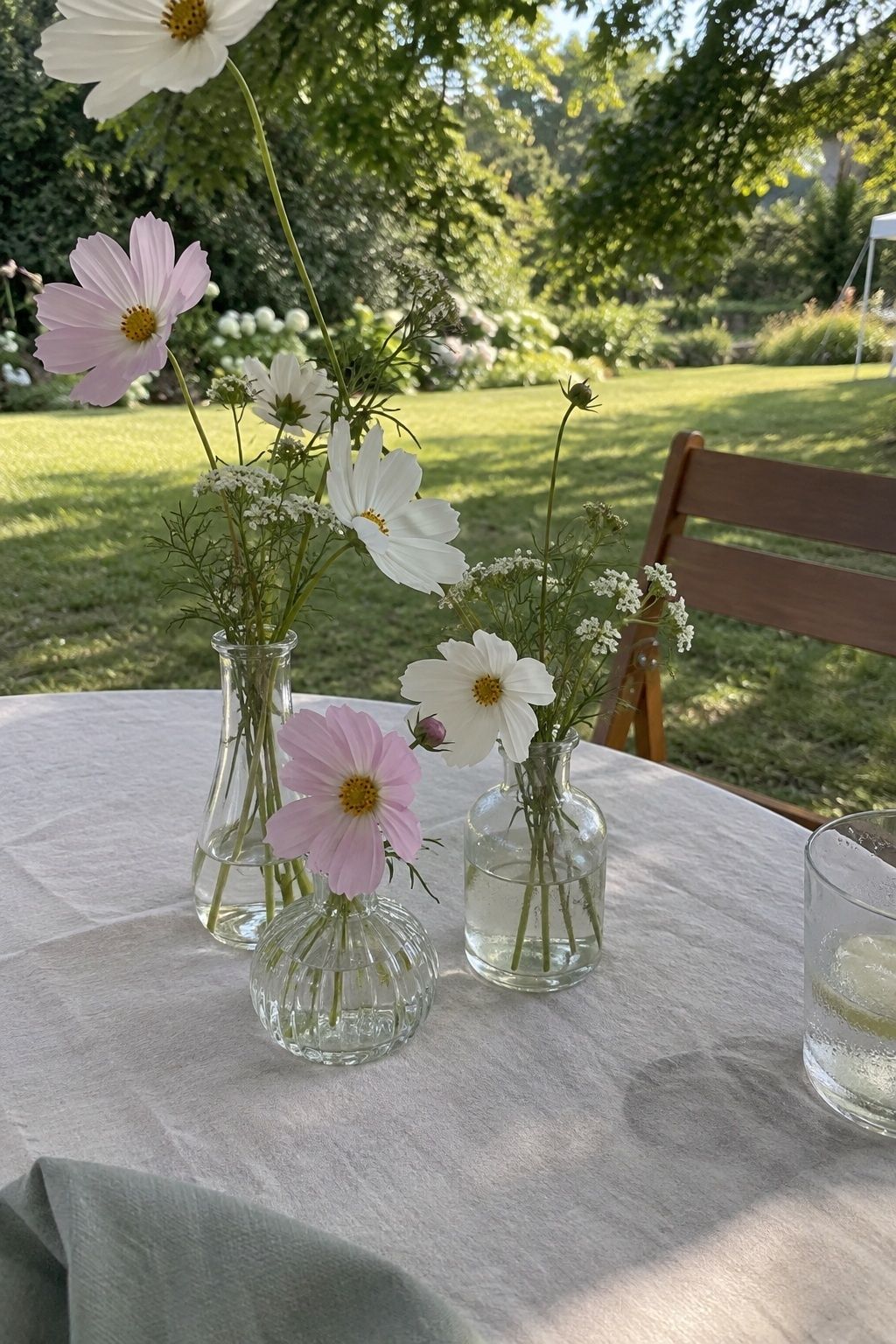
Cosmos give arrangements movement and air. They’re more fragile than they look, so use them on shaded tables and indoor pieces rather than the ceremony arch.
Dahlias, depending on where you live
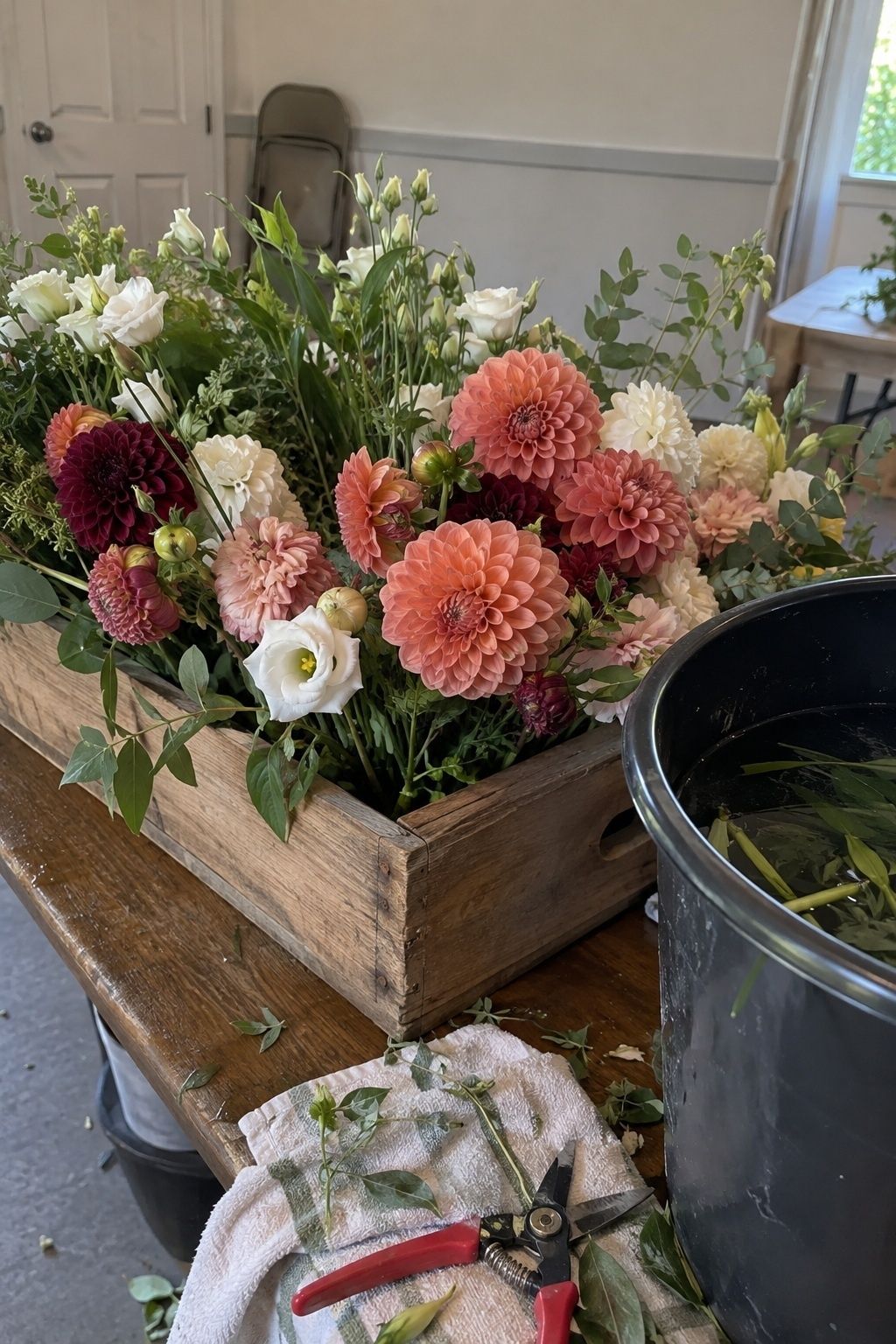
In some regions July is the start of dahlia season; in others the big varieties don’t arrive until August. Ask your florist before designing around dinner-plate dahlias. Smaller ball dahlias often show up earlier and still give sculptural texture. If your date slides later, August wedding flowers is where dahlias really take over.
Sculptural options for hot climates
Orchids and protea are built for heat and look modern. They’re especially good for coastal, tropical or desert venues.
Orchids

Orchids hold their shape well in warm weather. A few stems in a bouquet, on the cake or in one sculptural table piece add polish without turning the wedding into an orchid theme.
Protea

Protea is a statement flower. One focal bouquet or one bar arrangement is usually enough. Surround it with greenery or smaller textural flowers so it reads as wedding flowers and not a hotel lobby display.
Greenery does more work than you’d expect
In July, sturdy foliage gives arrangements volume without asking delicate blooms to do it all. It also stretches the budget.

Eucalyptus, olive, ruscus, smilax and herbs like rosemary hold up well in heat. Use greenery to connect bud vases down a long table, soften a ceremony corner or dress the bar, and save delicate flowers for bouquets and close-up details.
Which flowers should stay out of the July sun?
Hydrangeas, delphinium, stock, peonies, tulips, sweet peas and ranunculus all struggle in exposed heat. You can still use some of them, just give them easier jobs.
Hydrangeas
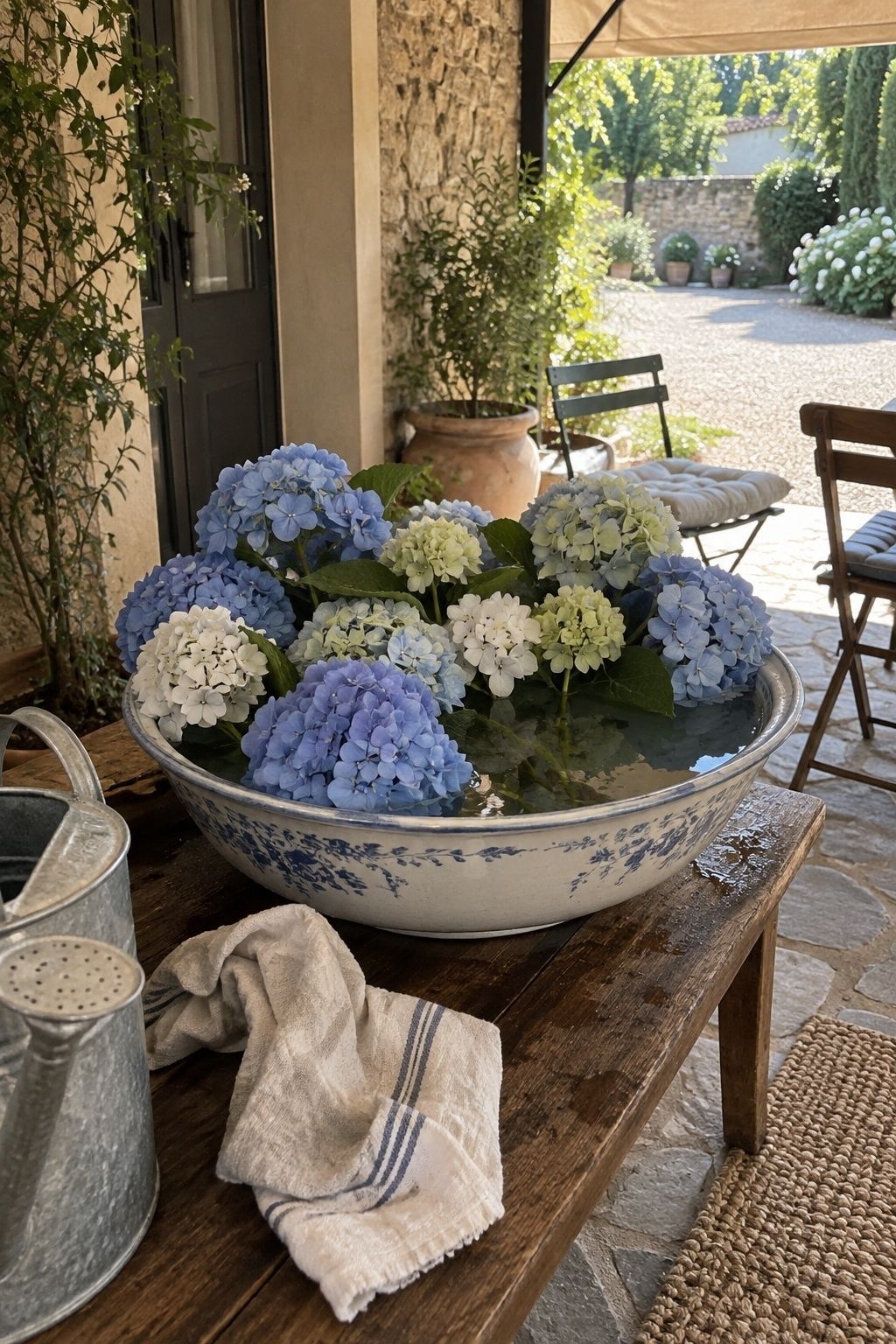
Hydrangeas wilt fast when thirsty. If you love them, put them indoors, on a shaded welcome table, or in reception centerpieces with deep water, and install them close to guest arrival. Never on a full-sun arch.
Delphinium
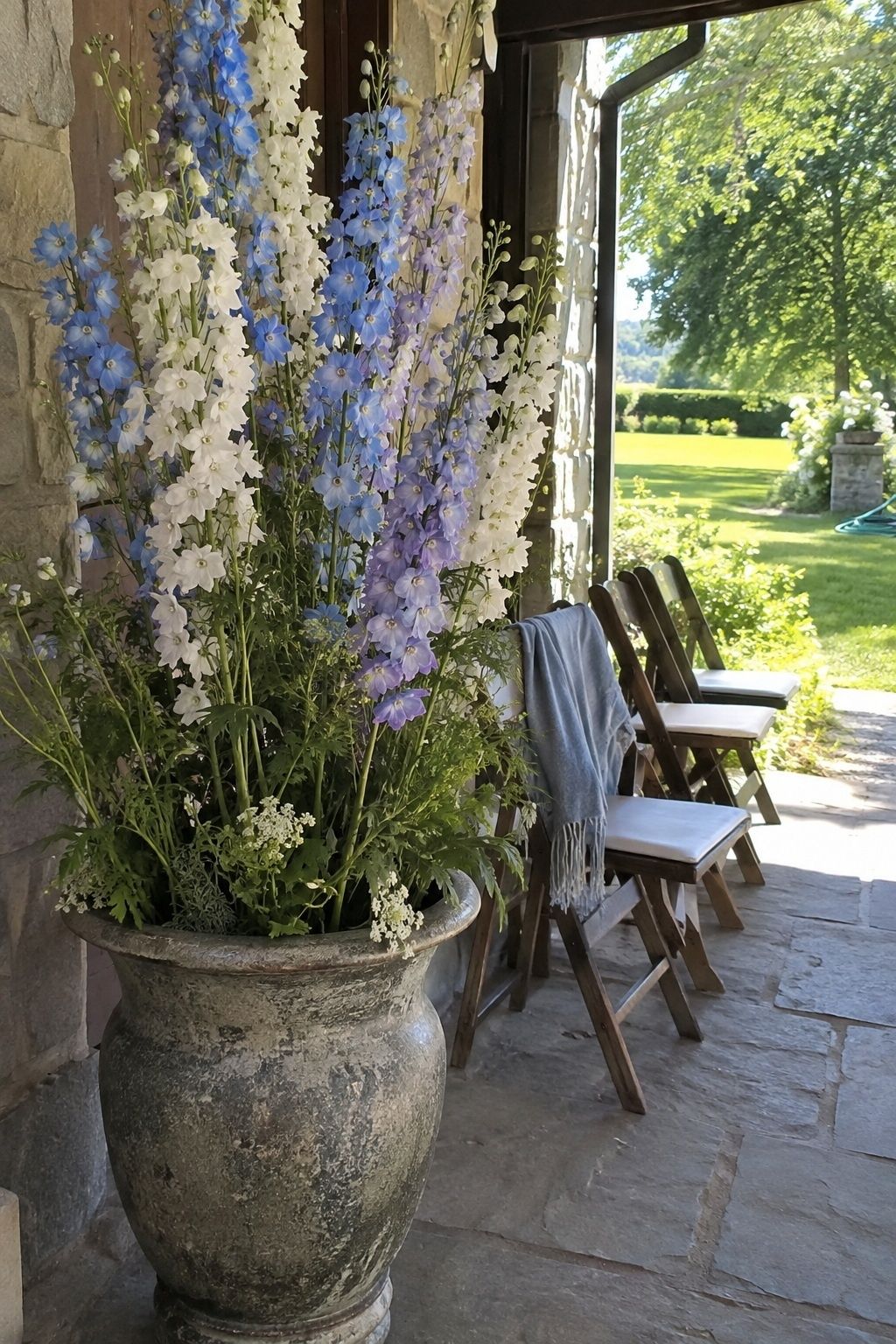
Delphinium gives height and blue-to-lavender color that makes a hot palette look cooler. Use it in ceremony urns or entry pieces that sit in shade, and let tougher stems handle the exposed spots.
Stock
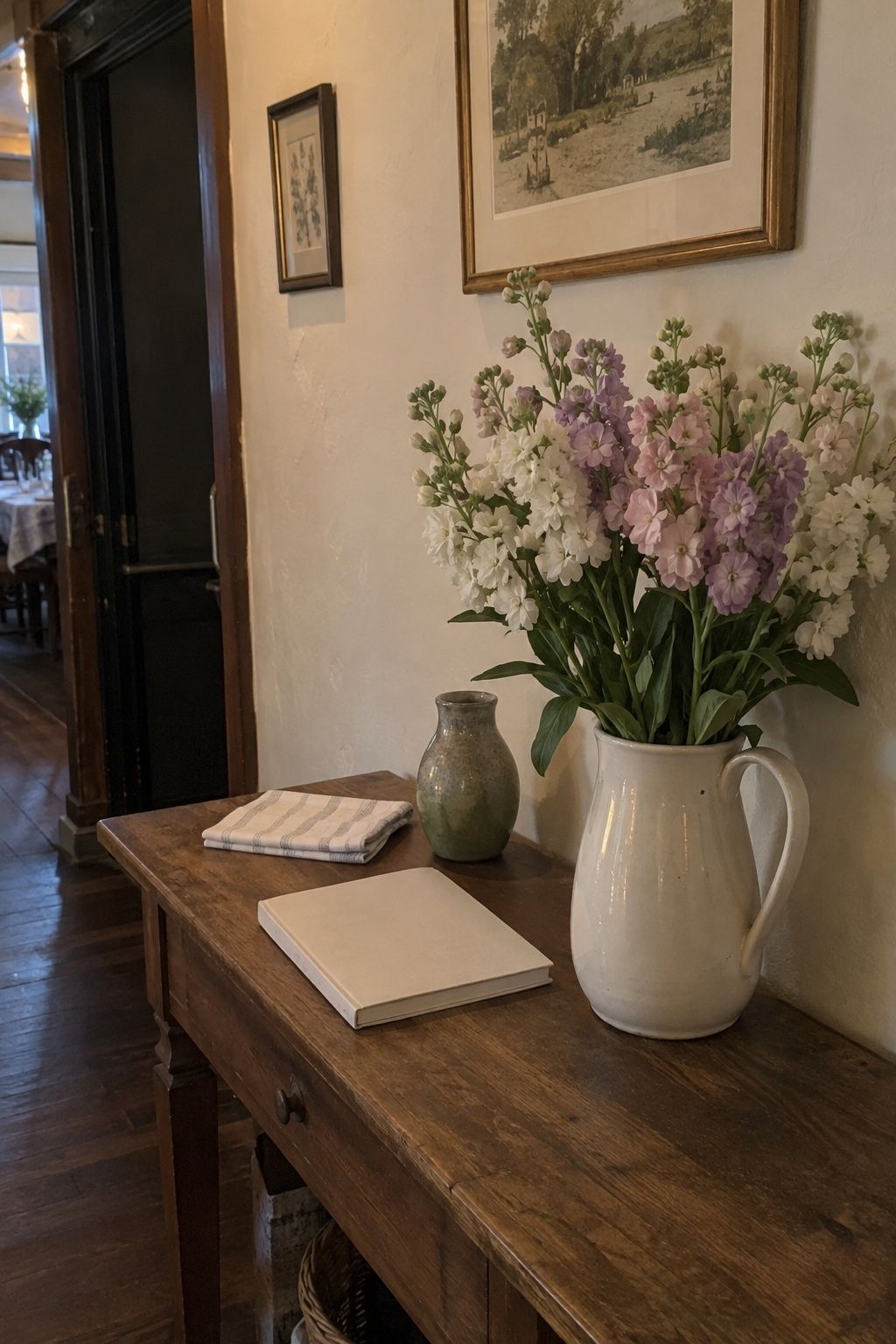
Stock adds fragrance, and scent carries at close range in a small room. Put it near the guest book, bar or cake table, somewhere protected. Don’t leave it in a hot car.
Delicate spring flowers
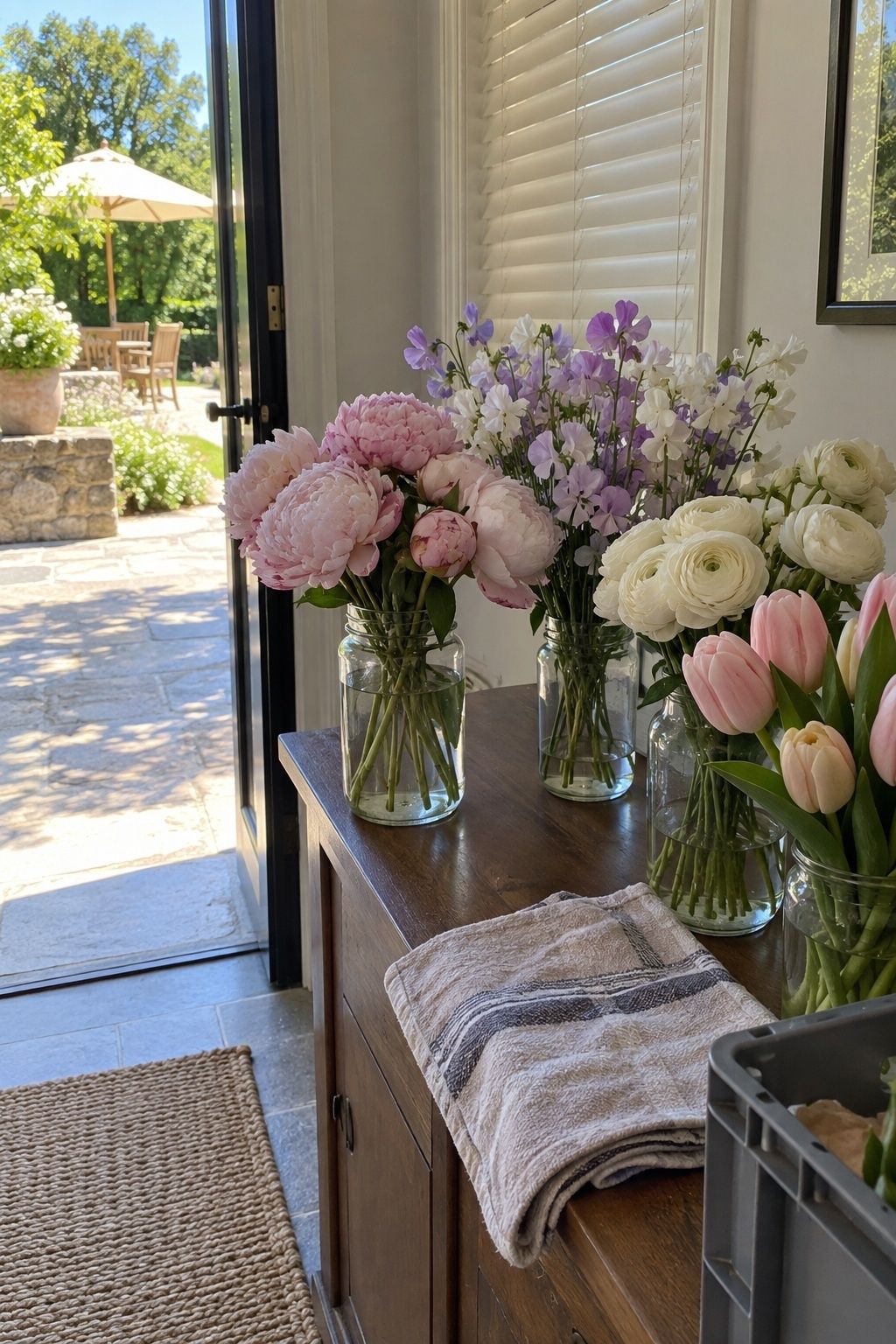
Peonies, tulips, sweet peas, lily of the valley and ranunculus are risky in July, especially if imported. If you must have one, use it in an indoor bouquet reveal or a flat-lay, not anywhere it has to sit outside.
Peony substitutes

Peonies are finished by July in most regions. For that full, soft shape, ask for garden roses, lisianthus, double zinnias, available dahlias or full rose varieties instead. You get the look without fighting the calendar. If you’re dead set on peonies, my June wedding flowers guide covers their actual season.
How to plan July wedding flowers for a small wedding
Choose fewer arrangements, put them where guests will be close, and keep each one in water. That’s the whole strategy.
For reference, The Knot’s 2026 Real Weddings Study puts the average florist spend at $2,800 for weddings averaging 117 guests. A 30-person wedding needs far fewer pieces, so you can often afford better stems for the ones you keep. A typical small-wedding order might look like:
- 1 bridal bouquet and 1 to 3 smaller bouquets
- 2 to 6 boutonnieres or corsages
- 2 ceremony arrangements that move to the reception afterward
- 15 to 28 bud vases for 3 or 4 tables
- 1 bar arrangement and 1 welcome or guest-book piece
Then plan the timing:
- Personal flowers stay in water in a cool room until portraits.
- Name one person to collect bouquets and return them to water between photos.
- Bud vases and centerpieces go out 60 minutes or less before guests arrive.
- Sturdier stems go in the spots that sit out longest; delicate ones go indoors or in shade.
- Ceremony pieces get carried to the reception after the vows.
Transport matters more than people expect. A car parked in July sun can cook a bouquet before you’ve finished unloading the chairs, so flowers should travel in an air-conditioned car, in water or in boxes with water tubes, and go straight into shade on arrival. If a friend is doing the flowers rather than a florist, buy a few spare stems of whatever is sturdiest and keep a bucket of water behind the bar for swaps.
Last, ask your florist what they’d swap if the week turns hotter or a crop comes in late. A good florist will have an answer ready. My broader guide to summer wedding flowers covers June through August if you’re comparing months. For the bigger picture on handling heat across the day, see July outdoor wedding planning, and for how to style these flowers on tables, July wedding tablescape ideas.
Key takeaways
- Zinnias, sunflowers, celosia, marigolds, orchids and protea are the heat champions.
- Lisianthus and garden roses give spring romance if kept in water and shade.
- Use hydrangeas, delphinium and stock only indoors or in shaded spots.
- Swap peonies for garden roses, lisianthus or double zinnias.
- Bud vases with their own water outlast one big thirsty centerpiece.
FAQ
What flowers are in season for a July wedding?
Zinnias, sunflowers, lisianthus, cosmos, black-eyed Susans, celosia, marigolds and, in some regions, dahlias are in season for July weddings. Ask your florist what’s strongest locally for your exact week.
What July wedding flowers hold up best in heat?
Zinnias, sunflowers, celosia, marigolds, orchids, protea and sturdy greenery hold up best in July heat. Even these need fresh water and shade during setup.
Can I have peonies at a July wedding?
Peonies usually aren’t available in July in most regions, and imports struggle in heat. Garden roses, lisianthus and double zinnias give a similar full, soft look.
What are the best flowers for a July bouquet?
Lisianthus, garden roses, zinnias, scabiosa, orchids and eucalyptus make a July bouquet that stays fresh. Keep it in water in a cool room until portraits.
How do you keep July wedding flowers from wilting?
Choose sturdy seasonal flowers, keep every arrangement in water, store personal flowers somewhere cool and install table flowers as late as possible. Bud vases make it easy to refresh any stem that tires.
One last thing before you order
Bring this list to your florist and ask them to sort it into “outdoors all day,” “shade only,” and “indoors.” That one conversation shapes your July wedding flowers more than any mood board. If you’re still settling colors, my July wedding colors guide pairs palettes with the blooms above.
Last update on 2026-10-03 / Affiliate links / Images from Amazon Product Advertising API