
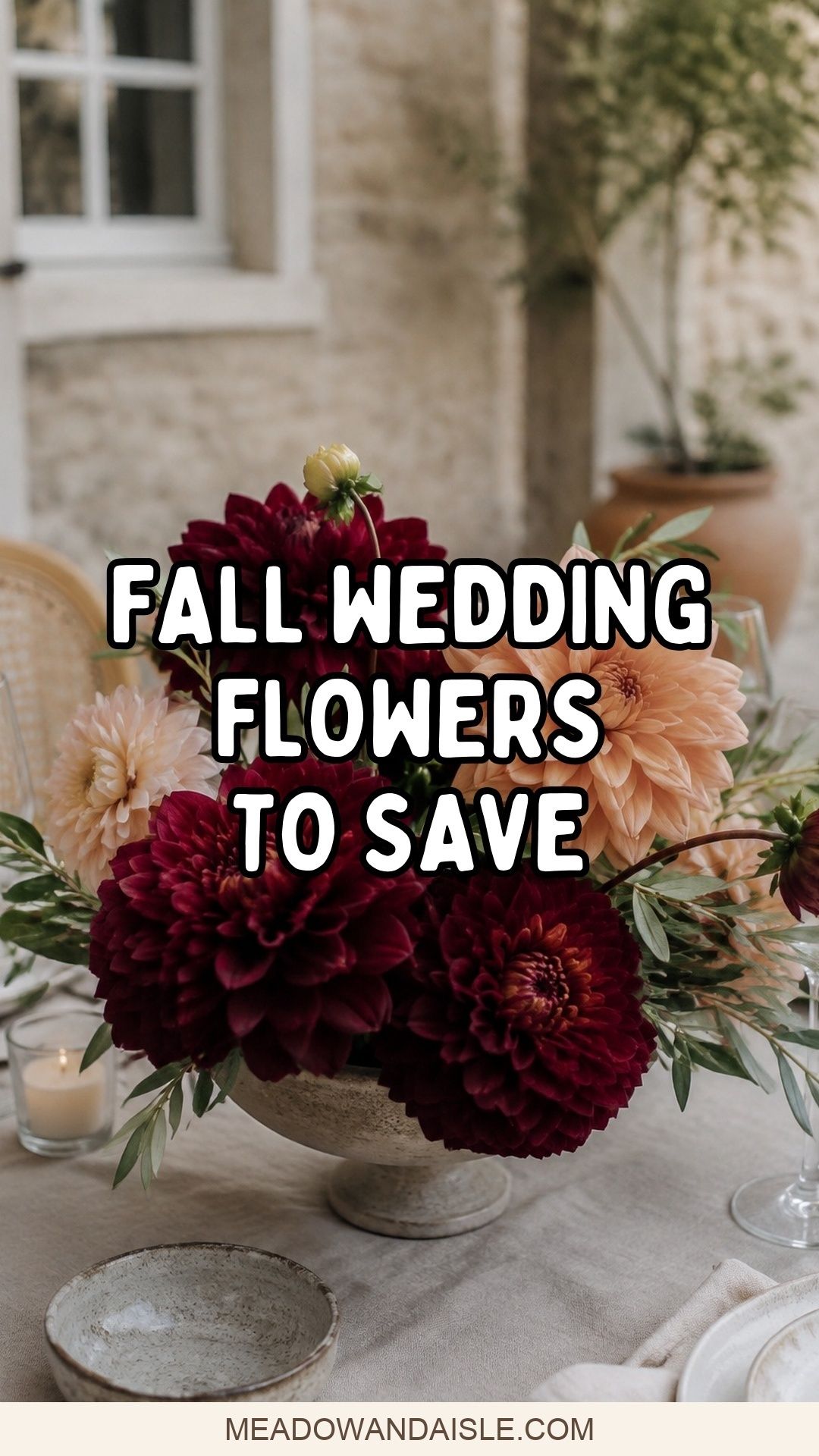
Fall wedding flowers are dahlias, chrysanthemums, marigolds, celosia, amaranthus, roses, zinnias, cosmos, scabiosa, calla lilies, anthuriums, sunflowers, rose hips, berries, seeded eucalyptus, olive branches, dried grasses, branches, and autumn foliage. The smartest choices change by month, because September still has garden flowers while November usually favors sturdier blooms, greenery, texture, and substitutions. For a small wedding, a few seasonal stems in bud vases, small compotes, bouquets, and repurposed ceremony arrangements create a lush feeling without buying expensive off-season spring flowers.
Autumn flowers solve a very practical wedding problem: the prettiest inspiration photo does not always match what is fresh, affordable, or durable on your actual date. Peonies, sweet peas, and delicate spring flowers often become expensive requests in fall, while dahlias, mums, berries, grasses, foliage, and rich-toned roses usually look more natural with the season.
Treat this as a florist conversation starter, not a rigid shopping list. Choose fall wedding flowers by month, role, palette, and scale so the bouquet, ceremony flowers, and tables feel full in the places guests notice most.
Recommended Wedding Products


You Might Also Like These Blog Posts
- October Wedding Flowers With Texture, Drama, and Staying Power
- November Wedding Flowers for Late-Fall Texture and Candlelight
- September Wedding Flowers for the First Hint of Fall
- August Wedding Flowers for the Last Golden Bloom of Summer
- July Wedding Flowers That Can Handle the Heat
- June Wedding Flowers Before Summer Turns Up the Heat
Fall Wedding Flowers To Consider For September, October, And November
September wedding flowers still lean garden-like, with dahlias, zinnias, cosmos, roses, scabiosa, early sunflowers, and soft greenery. October wedding flowers usually look strongest with dahlias where available, chrysanthemums, marigolds, celosia, amaranthus, rose hips, berries, toffee roses, olive branches, and seeded eucalyptus. November wedding flowers ask for more structure: chrysanthemums, roses, calla lilies, anthuriums, berries, dried grasses, branches, evergreen touches, and autumn foliage hold the mood when delicate local flowers are fading.
Think in floral roles before picking colors. Focal blooms are the main flowers guests notice first. Filler blooms add volume. Greenery creates movement and scale. Texture stems make a small arrangement feel layered. Accents, such as berries or grasses, give the season its personality without requiring many stems.
For an intimate wedding, the strongest floral plan is concentrated. Choose one bouquet language, one ceremony focal moment, and one table style. A few low compotes, a line of bud vases, and ceremony flowers moved to dinner make 25 guests feel surrounded by flowers without building an oversized installation.
| Month | Best floral direction | Small-wedding use |
|---|---|---|
| September | Dahlias, zinnias, cosmos, roses, scabiosa, early sunflowers | Garden bouquets, loose bud vases, small compotes |
| October | Dahlias, mums, marigolds, celosia, amaranthus, berries, foliage | Textured centerpieces, ceremony ground flowers, warm bouquets |
| November | Mums, roses, calla lilies, anthuriums, branches, dried grasses, greenery | Sturdier tables, moody bouquets, branch-forward arrangements |
Dahlias For Early Fall Drama
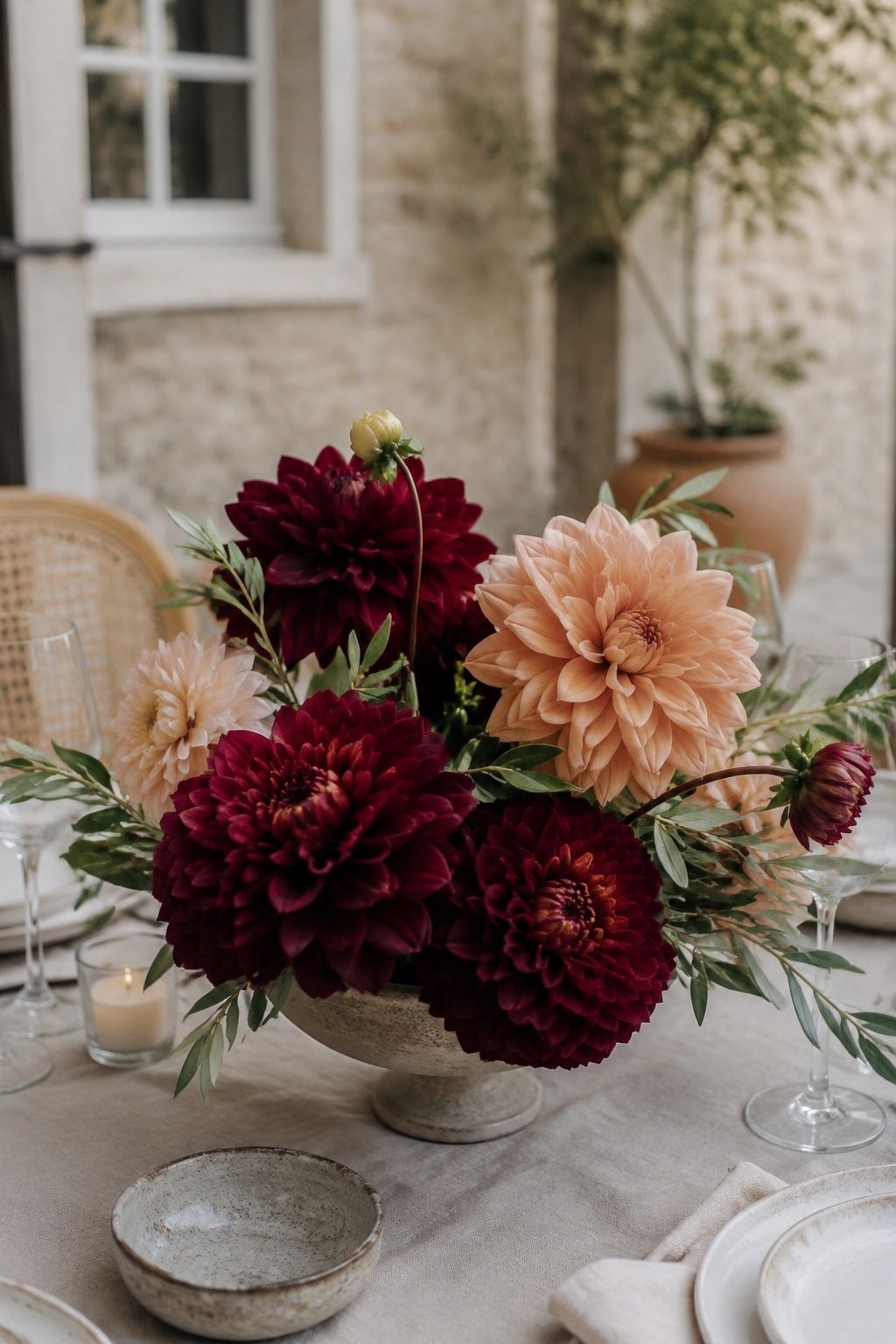
Dahlias are the obvious star of early fall wedding flowers because they bring size, petal movement, and rich color without looking like a borrowed spring bloom. They shine in September and often into October, depending on local growing conditions and frost timing.
Place dahlias as focal flowers in bouquets, low compotes, and ceremony arrangements. They are gorgeous but not invincible, so ask your florist about hydration, transport, heat, and backup varieties. For a small wedding, five or six excellent dahlias often do more than dozens of anonymous filler stems.
Chrysanthemums For October And November Volume
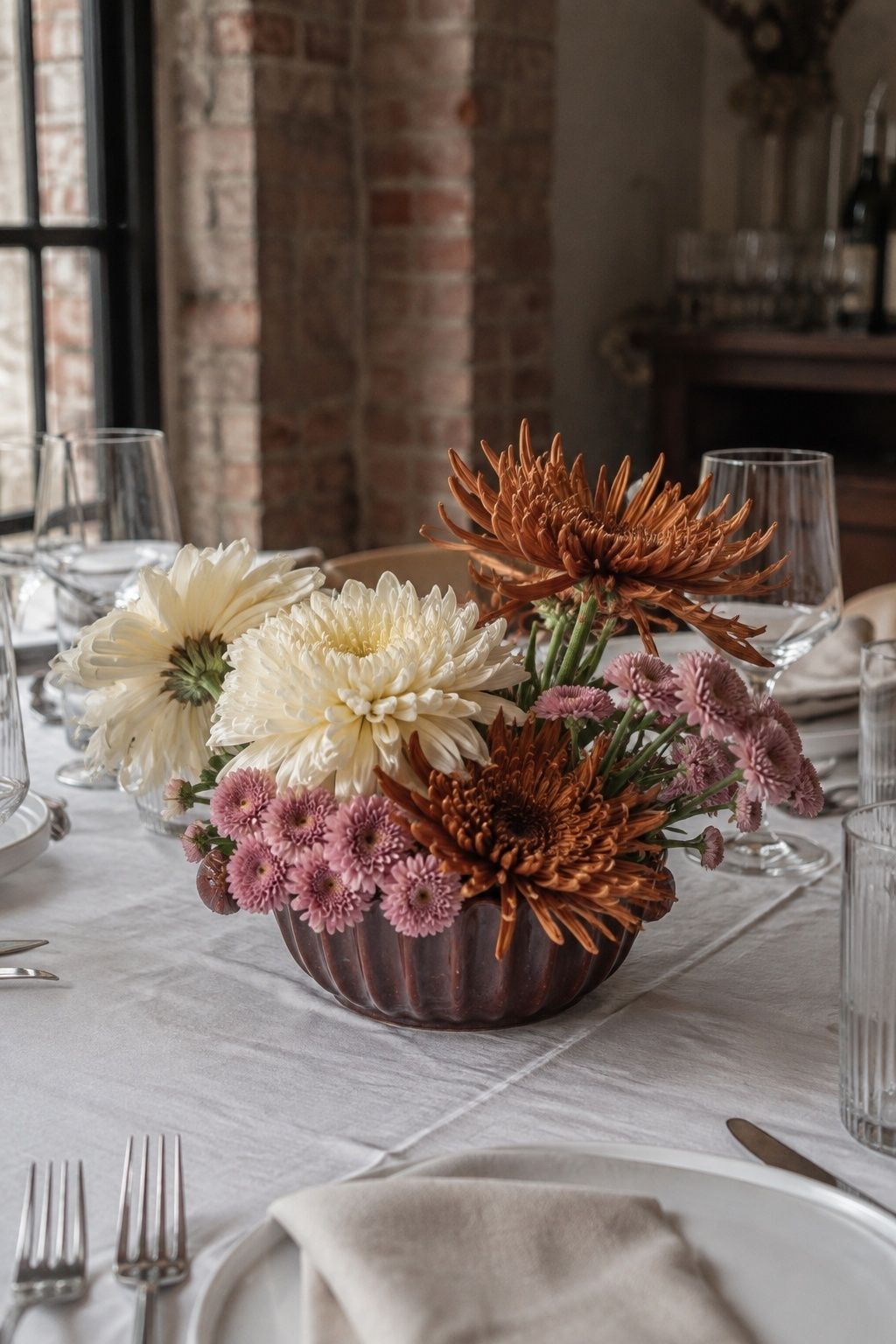
Chrysanthemums earn a place among autumn wedding flowers because they bring volume, durability, and a huge range of shapes. Football mums, spider mums, cushion mums, and spray mums look lush, sculptural, or garden-like depending on the variety.
They are especially strong for October and November weddings when arrangements feel full without relying only on premium focal blooms. Ask for specific mum varieties and colors so the look feels intentional rather than grocery-store seasonal.
Marigolds For Warm Color And Texture
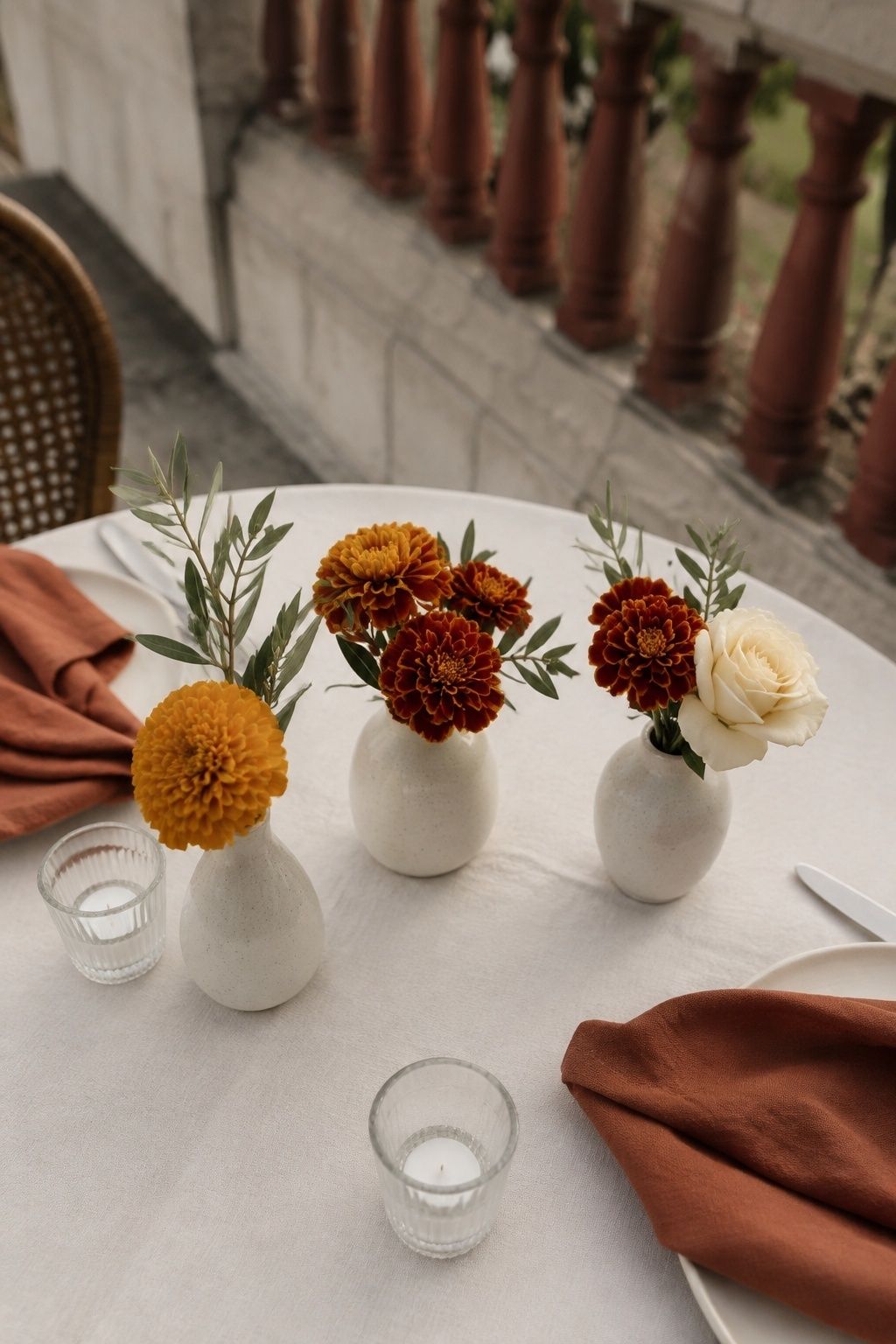
Marigolds bring saturated orange, gold, rust, and saffron tones that instantly signal fall. They are best with restraint: tucked into centerpieces, grouped in bud vases, or woven into a small garland rather than spread everywhere.
Because marigolds have a distinct look, pair them with calmer materials such as cream roses, olive branches, brown foliage, or simple ceramic vessels. In a small reception, a few marigold moments warm the room without turning every table into a theme.
Celosia For Velvet-Like Detail
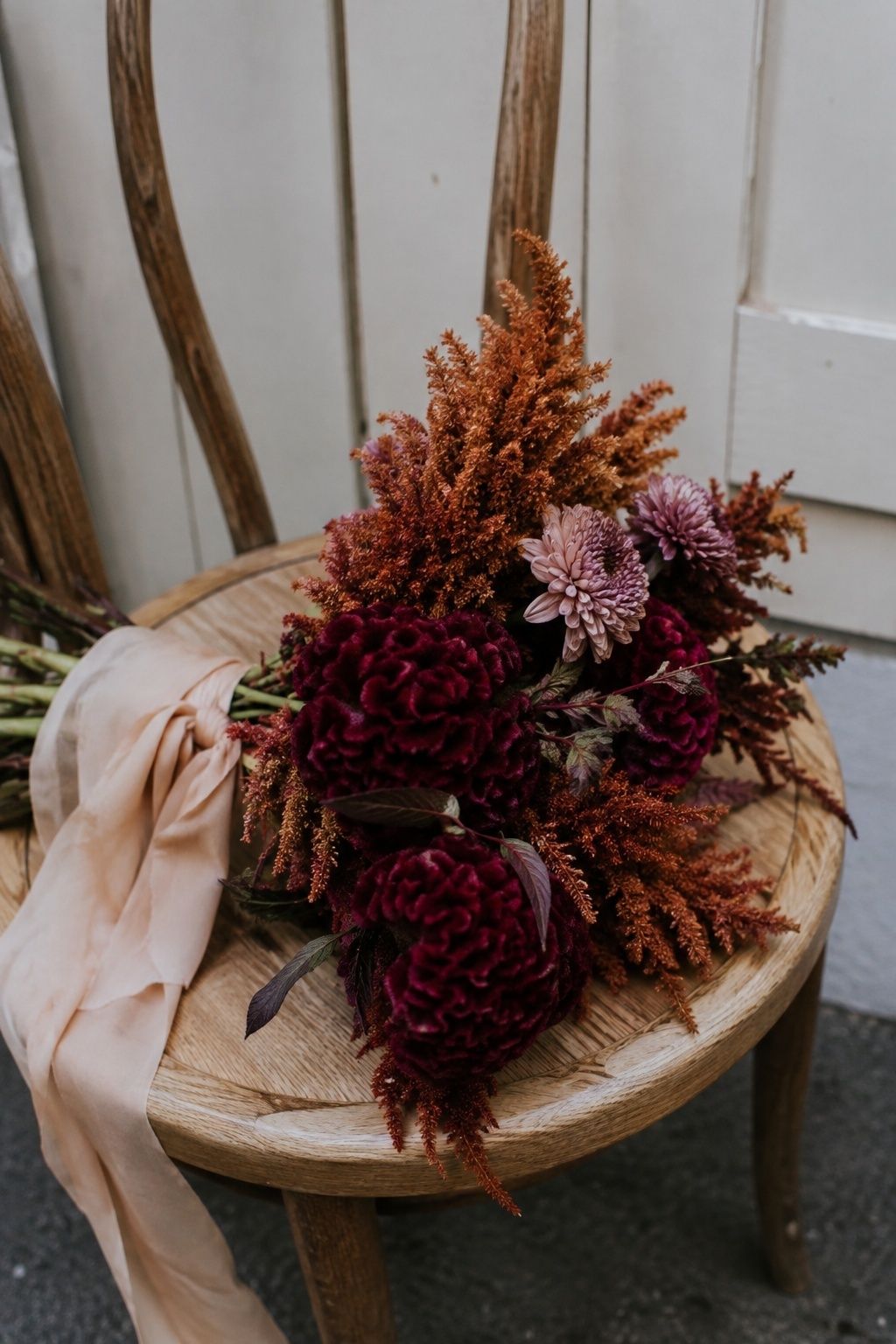
Celosia adds velvet texture, saturated color, and unusual shape to fall wedding floral ideas. It appears plume-like, crested, or feathery, which makes it ideal when the arrangement wants texture more than another round flower.
Place celosia in bouquets and low arrangements where guests see the detail up close. Burgundy, copper, coral, and muted rose varieties pair well with dahlias, mums, amaranthus, and dried grasses for a layered fall palette.
Amaranthus For Movement And Cascading Shape
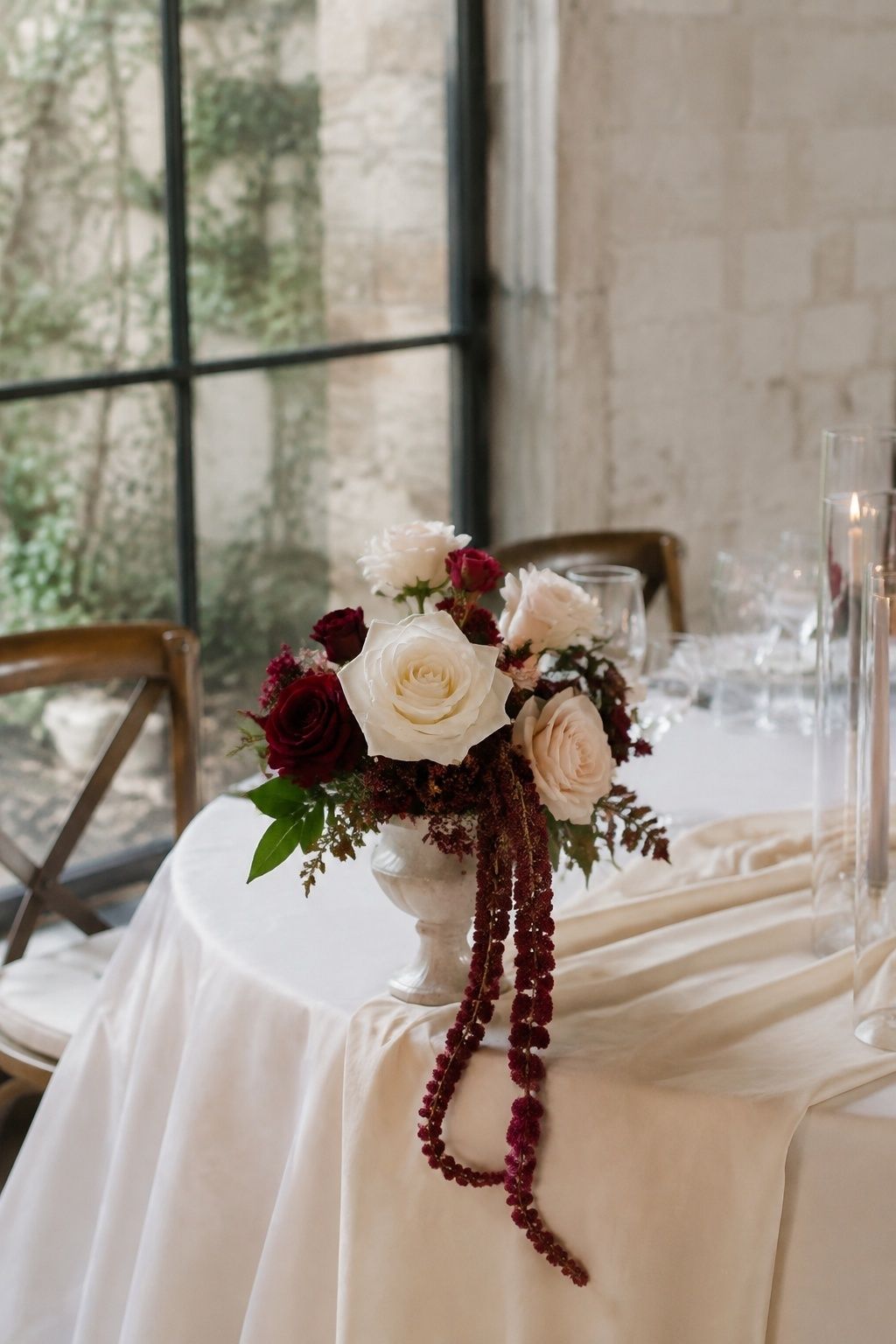
Amaranthus is a texture stem, not just filler. Hanging amaranthus creates a soft cascade from a bouquet, compote, or ceremony arrangement, while upright varieties add height and grain-like texture.
Preserved amaranthus suits late fall weddings, destination plans, and arrangements built to hold their shape. In a small wedding, one or two trailing stems make a simple bouquet feel designed instead of overstuffed.
Roses In Toffee, Cream, Burgundy, Or Blush
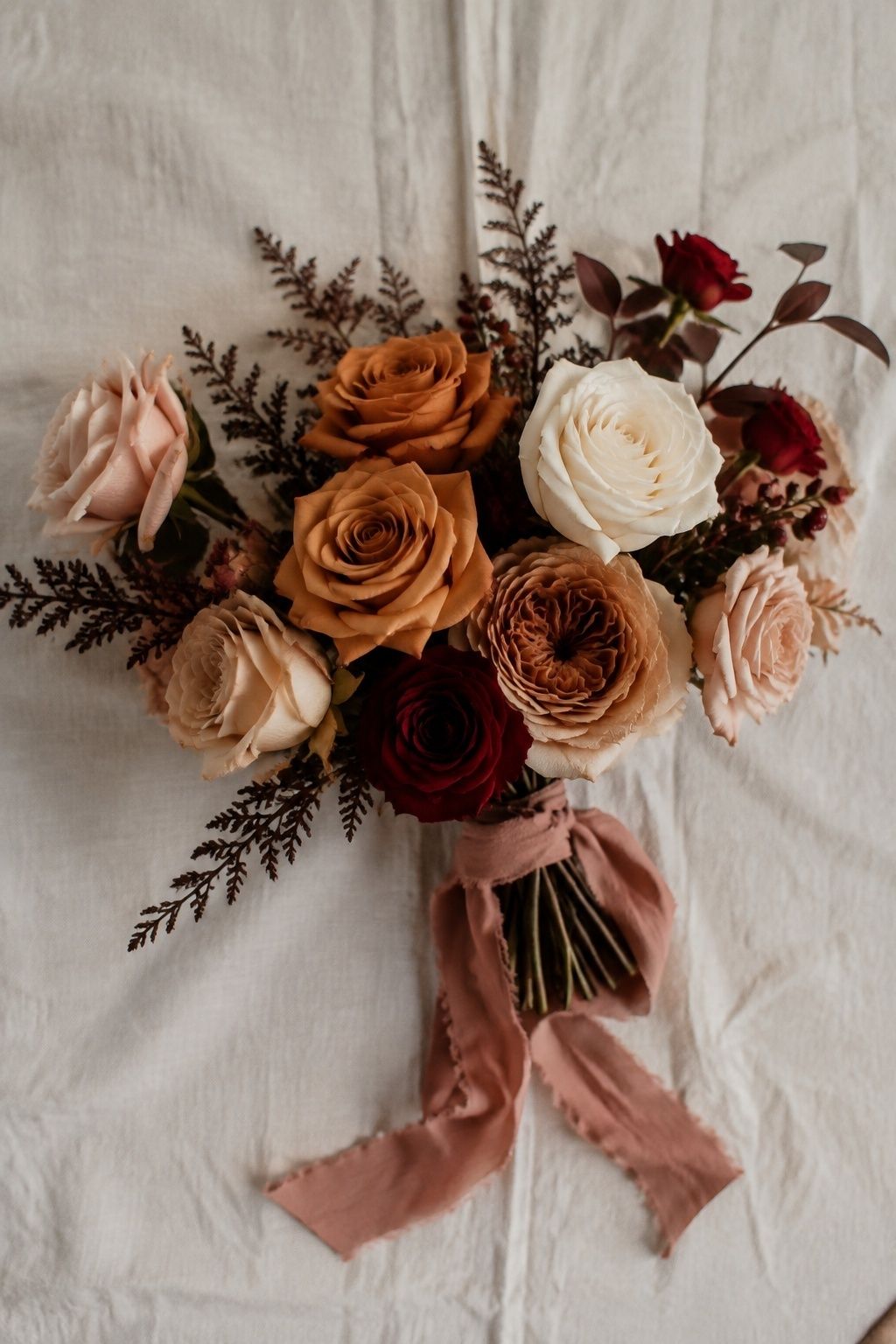
Roses are available year-round, but fall roses look best when the color earns its place. Toffee, cappuccino, cream, caramel, burgundy, blush, mauve, and dusty peach roses bridge the gap between seasonal texture and wedding softness.
Treat roses as reliable focal or secondary flowers when dahlias are too fragile, unavailable, or expensive. They are especially strong for November wedding flowers because they bring romance while branches, grasses, berries, and greenery bring the season.
Zinnias For Garden-Style Early Fall Weddings
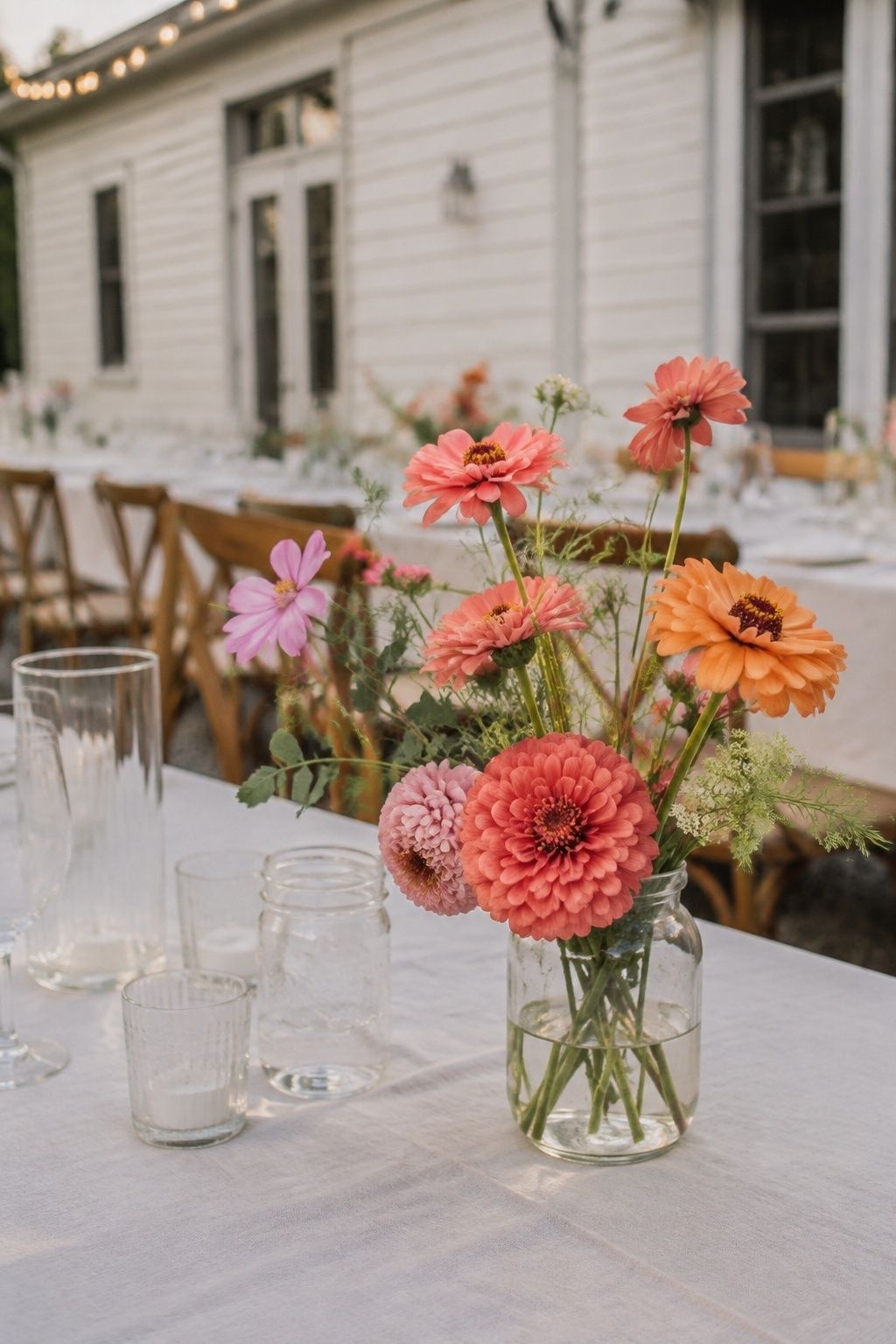
Zinnias suit September weddings and warm early October dates when you want a relaxed garden mood. They bring cheerful color, flat faces, and a handmade feeling that suits backyard dinners, farms, gardens, and casual restaurant celebrations.
They are strongest in small vases, loose centerpieces, and mixed bouquets rather than formal arrangements. Pair zinnias with cosmos, dahlias, scabiosa, and herbs for a local, just-picked look that still feels polished enough for vows.
Cosmos For Airy September Arrangements
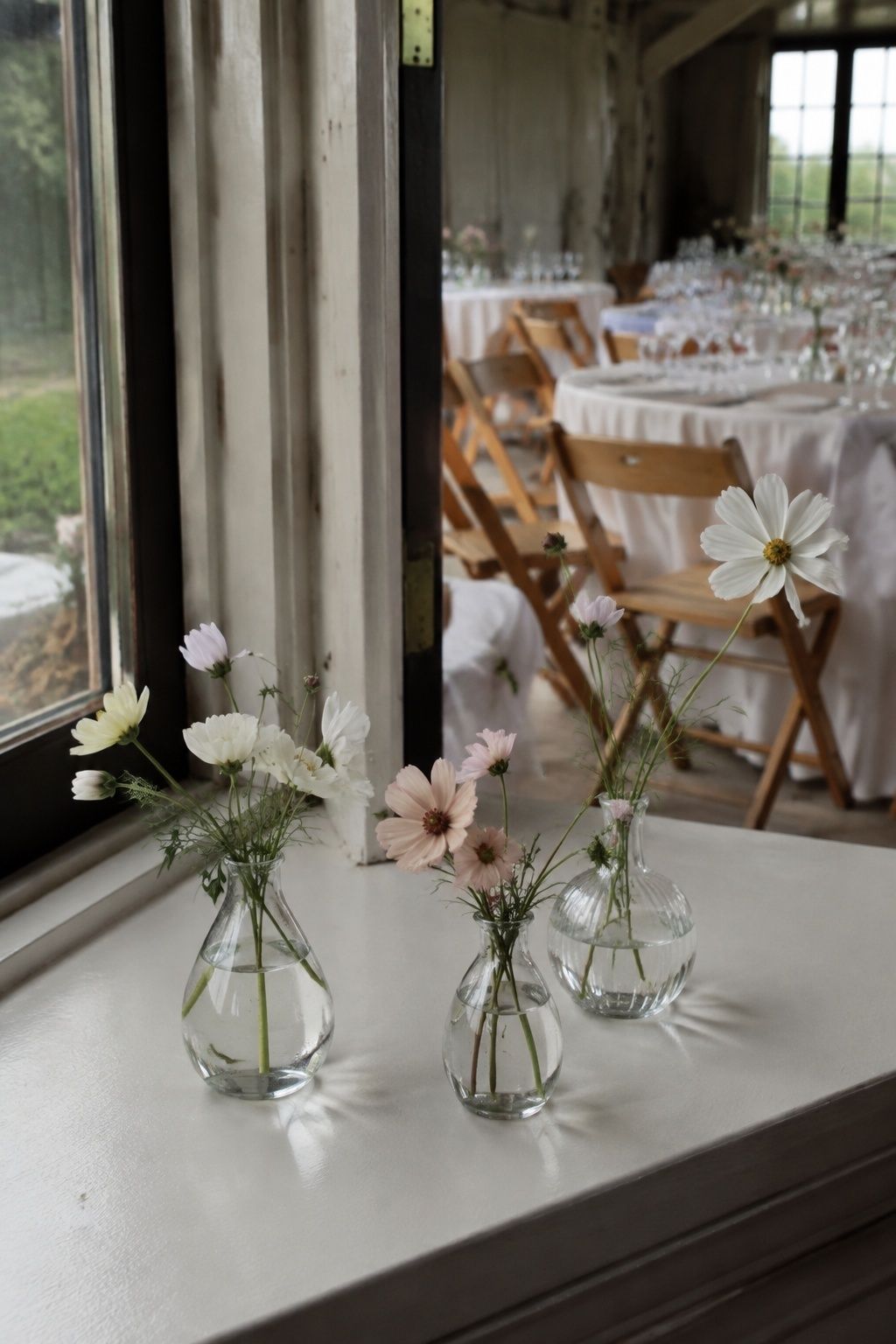
Cosmos are light, fluttery, and romantic, making them lovely for September wedding flowers. Their delicate stems add air between fuller blooms, which keeps small arrangements loose instead of dense.
Place cosmos where movement matters: bouquets, bud vases, and relaxed compotes. They are not the flower for a windy outdoor ceremony or a long unshaded day, so ask your florist where they fit your exact venue.
Scabiosa For Soft Texture
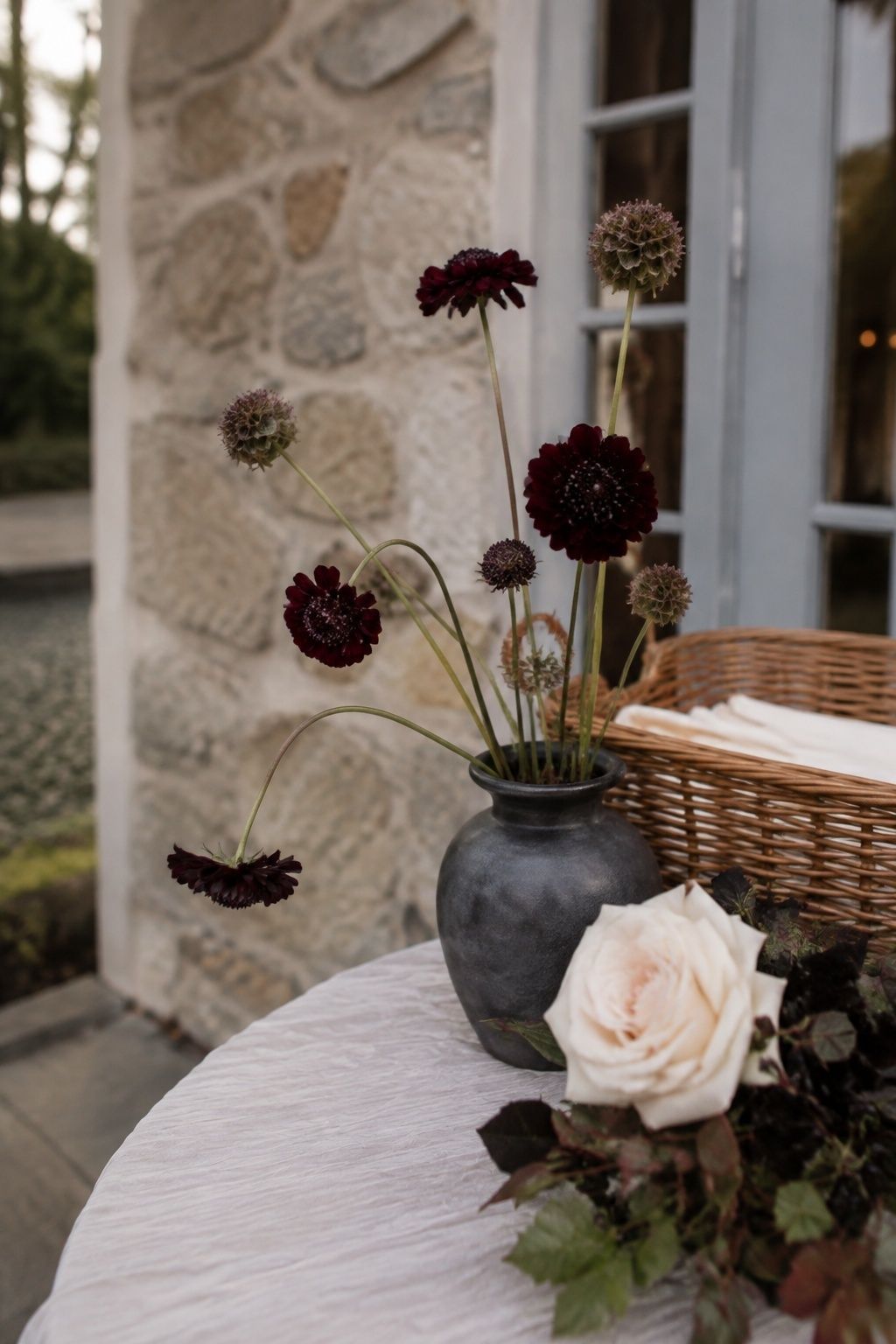
Scabiosa gives fall wedding bouquet flowers a soft, slightly wild texture. The blooms feel delicate without looking too springy, and the seed pods add a sculptural detail that looks beautiful in autumn palettes.
Place scabiosa as a secondary flower around dahlias, roses, mums, or calla lilies. It is especially graceful in small arrangements because its shape creates negative space, so a vase feels airy without requiring many stems.
Calla Lilies For A Modern Fall Look

Calla lilies are a strong choice when you want fall wedding flowers to feel modern instead of rustic. Their clean shape suits cream, plum, burgundy, mustard, brown, blush, or almost black tones.
They are excellent for minimal bouquets, sculptural boutonnieres, and elegant table arrangements. For an intimate city wedding, a few calla lilies in a low compote or single-stem vases feel more refined than a large mixed centerpiece.
Anthuriums For Sculptural, Moody Florals
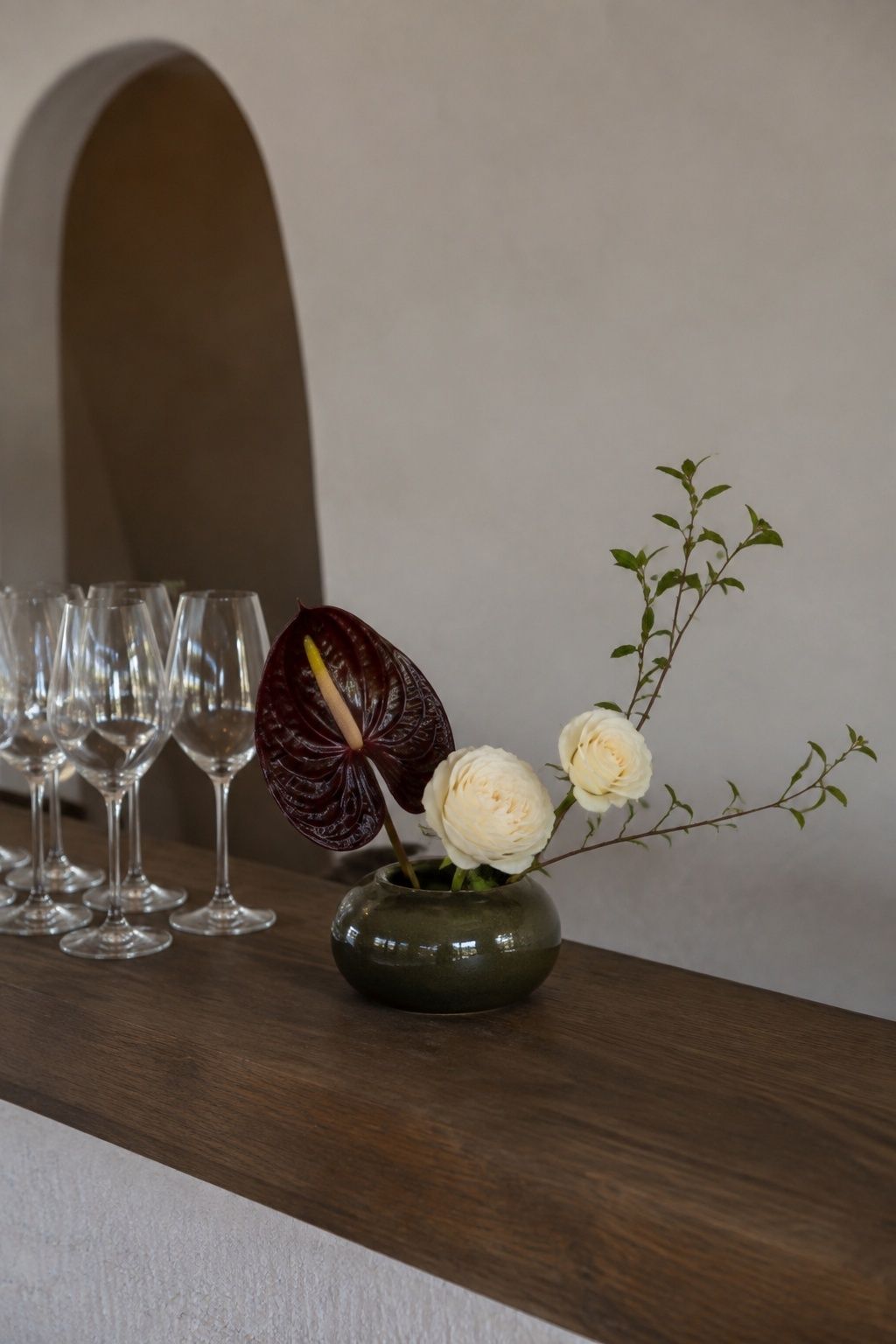
Anthuriums bring shine, shape, and a moody editorial feeling to fall florals. They shine when the wedding palette is modern: chocolate, wine, cream, black, olive, terracotta, or deep blush.
Place them sparingly as sculptural accents in bouquets, bar flowers, or dinner arrangements. In a small wedding, one well-placed anthurium becomes the detail everyone notices, especially with calla lilies, roses, branches, or grasses.
Sunflowers Used Carefully In Early Fall
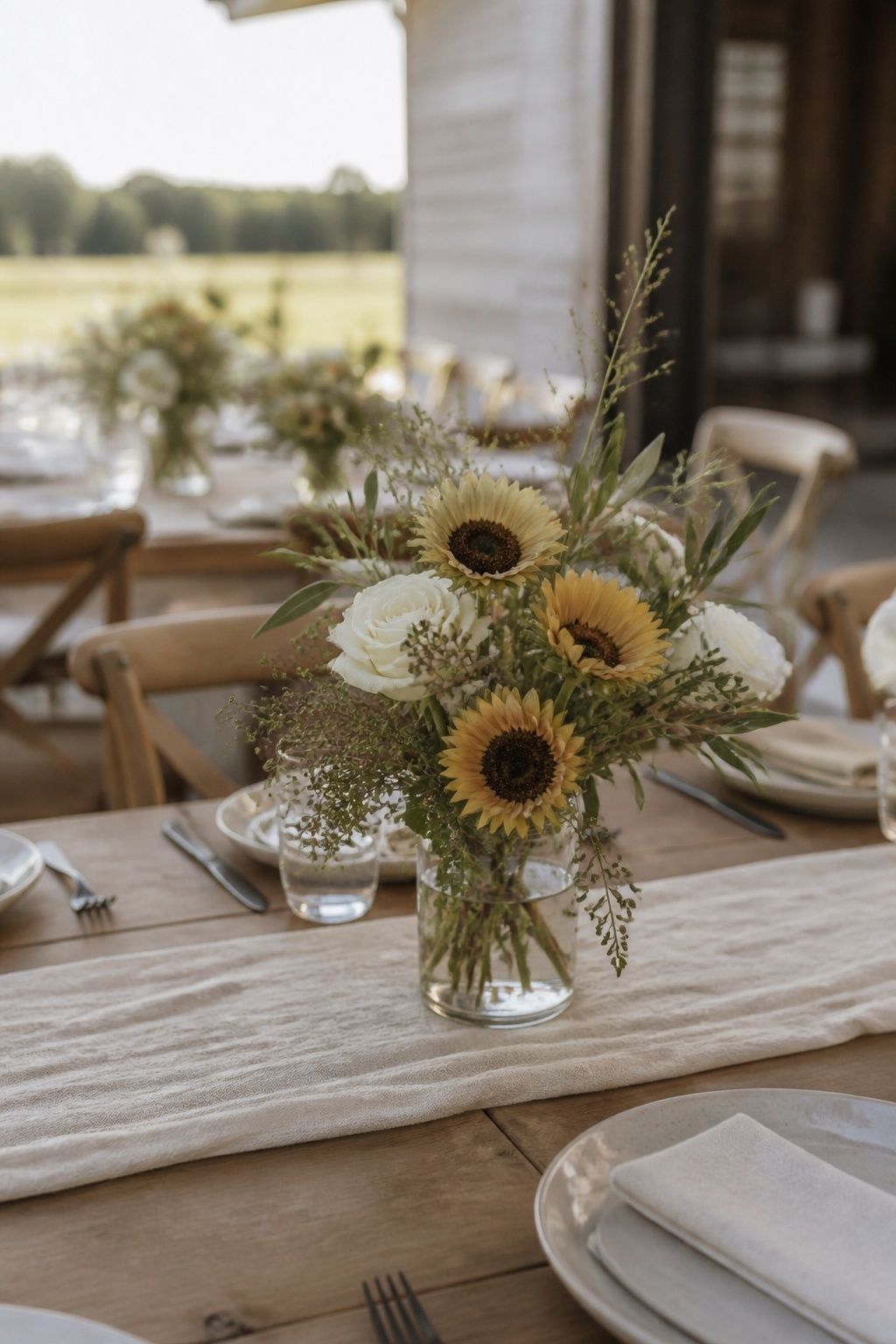
Sunflowers are beautiful for early fall weddings, but they deserve a careful hand. Large yellow sunflowers quickly dominate the whole palette, so choose smaller varieties, muted tones, or just a few stems for a softer wedding look.
They are best for September celebrations, casual venues, and arrangements that already include garden textures. Pair them with grasses, zinnias, olive branches, cream roses, or brown foliage so they feel seasonal rather than oversized.
Rose Hips And Berries For Seasonal Detail

Rose hips and berries are small accents with a lot of seasonal presence. They add color, texture, and a gathered autumn feeling without requiring big blooms.
Place rose hip stems in bouquets, boutonnieres, bud vases, and centerpieces. Ask your florist which berry varieties are safe, sturdy, and appropriate for table arrangements, especially if food will be served family-style or children will be close to the flowers.
Seeded Eucalyptus For Greenery And Movement
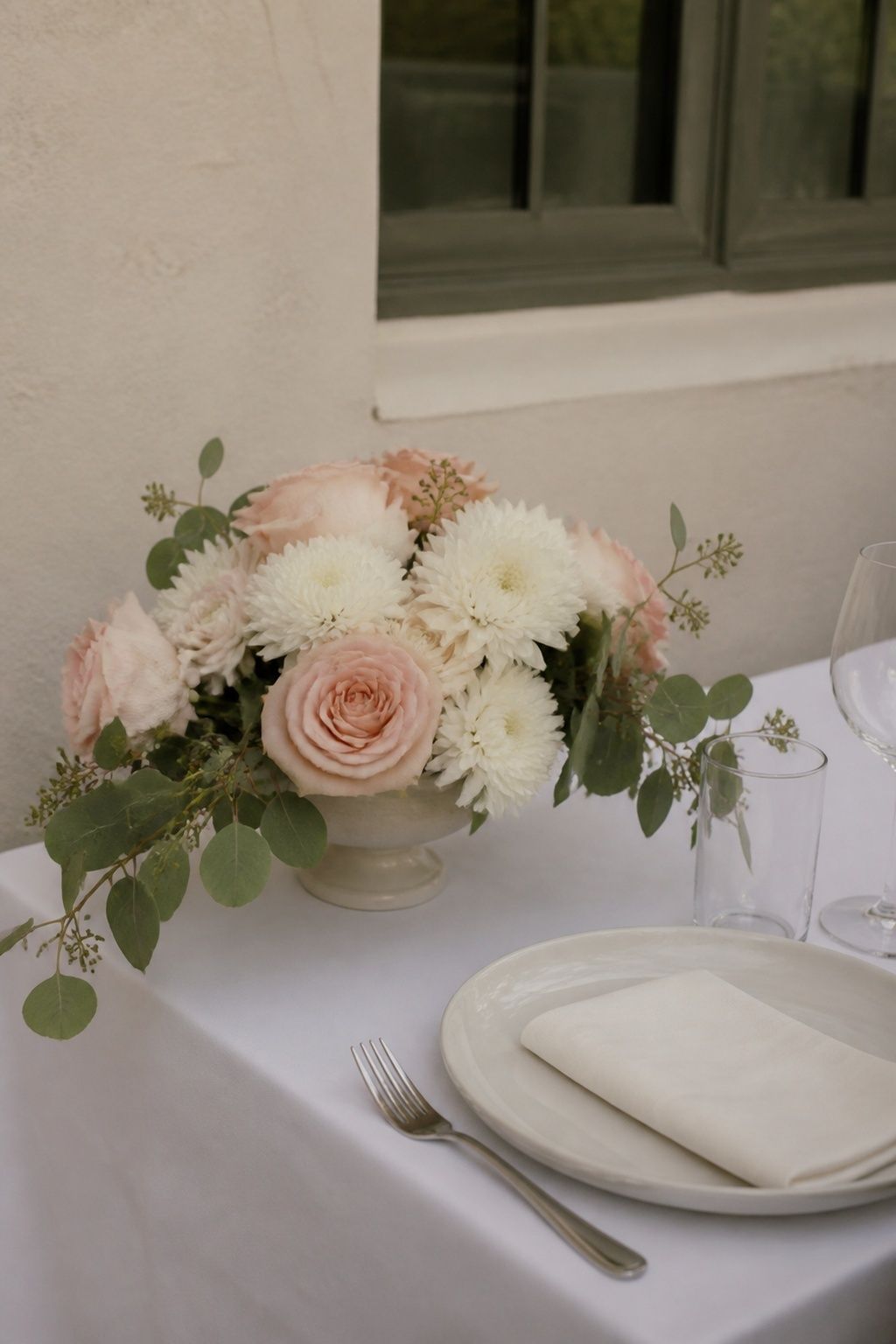
Seeded eucalyptus acts as greenery and texture at the same time. The soft green-gray color bridges blush, cream, rust, burgundy, and brown palettes while the seed clusters make arrangements feel fuller.
It suits bouquets, compotes, bud vases, and ceremony flowers, but it does not deserve to become the whole design by default. Mix it with olive branches, autumn foliage, roses, mums, or grasses so the arrangements feel dimensional.
Olive Branches For A Natural, Grounded Palette
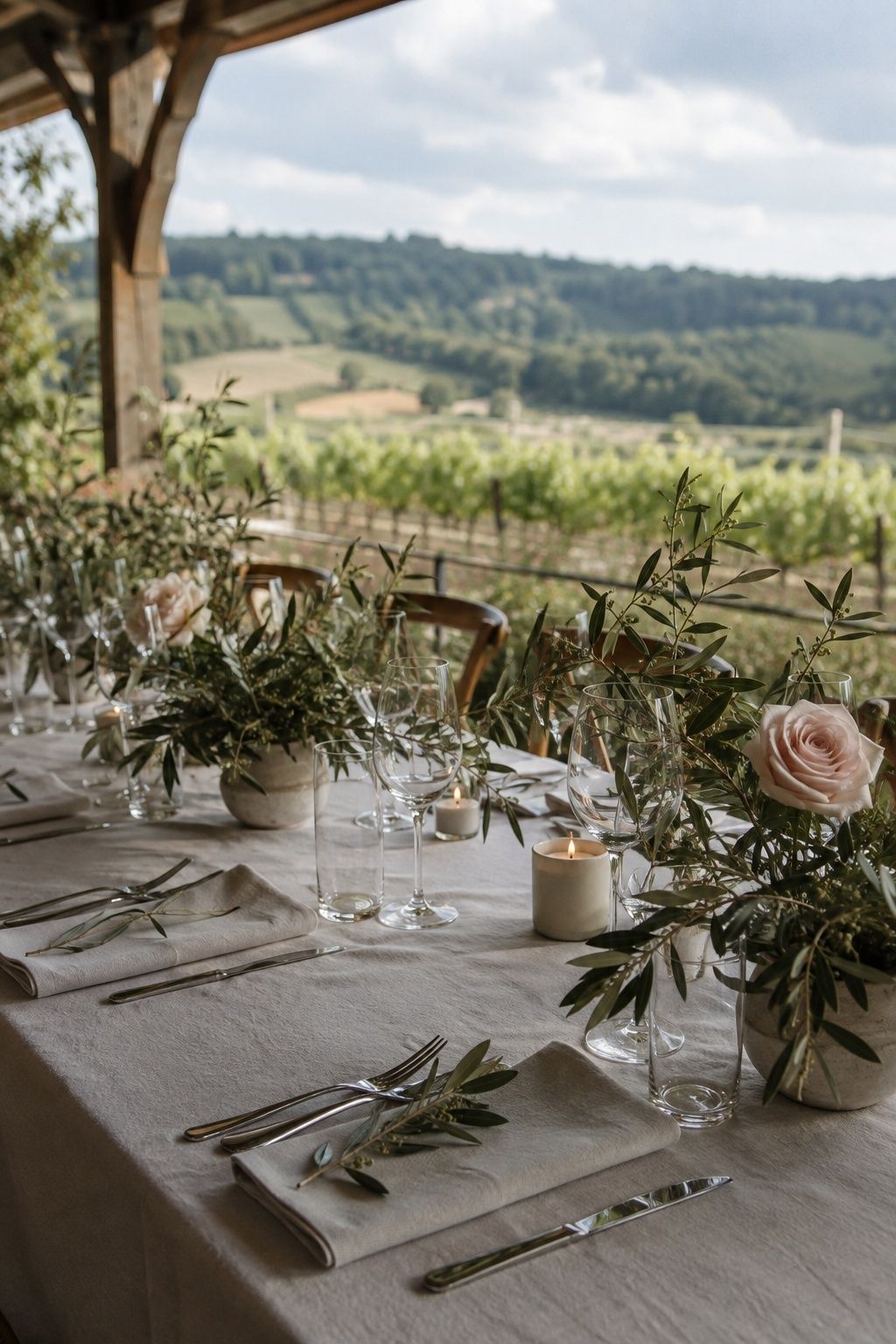
Olive branches bring a grounded, Mediterranean softness to fall wedding flowers. They are especially good for outdoor dinners, restaurant weddings, winery celebrations, and neutral palettes that want greenery without a forest feeling.
Place olive branches in low compotes, bud vases, napkin details, and bouquet edges. Their muted color keeps orange, burgundy, and blush flowers from feeling too sweet, a quiet advantage for intimate tables seen up close.
Dried Grasses For Texture That Holds Up
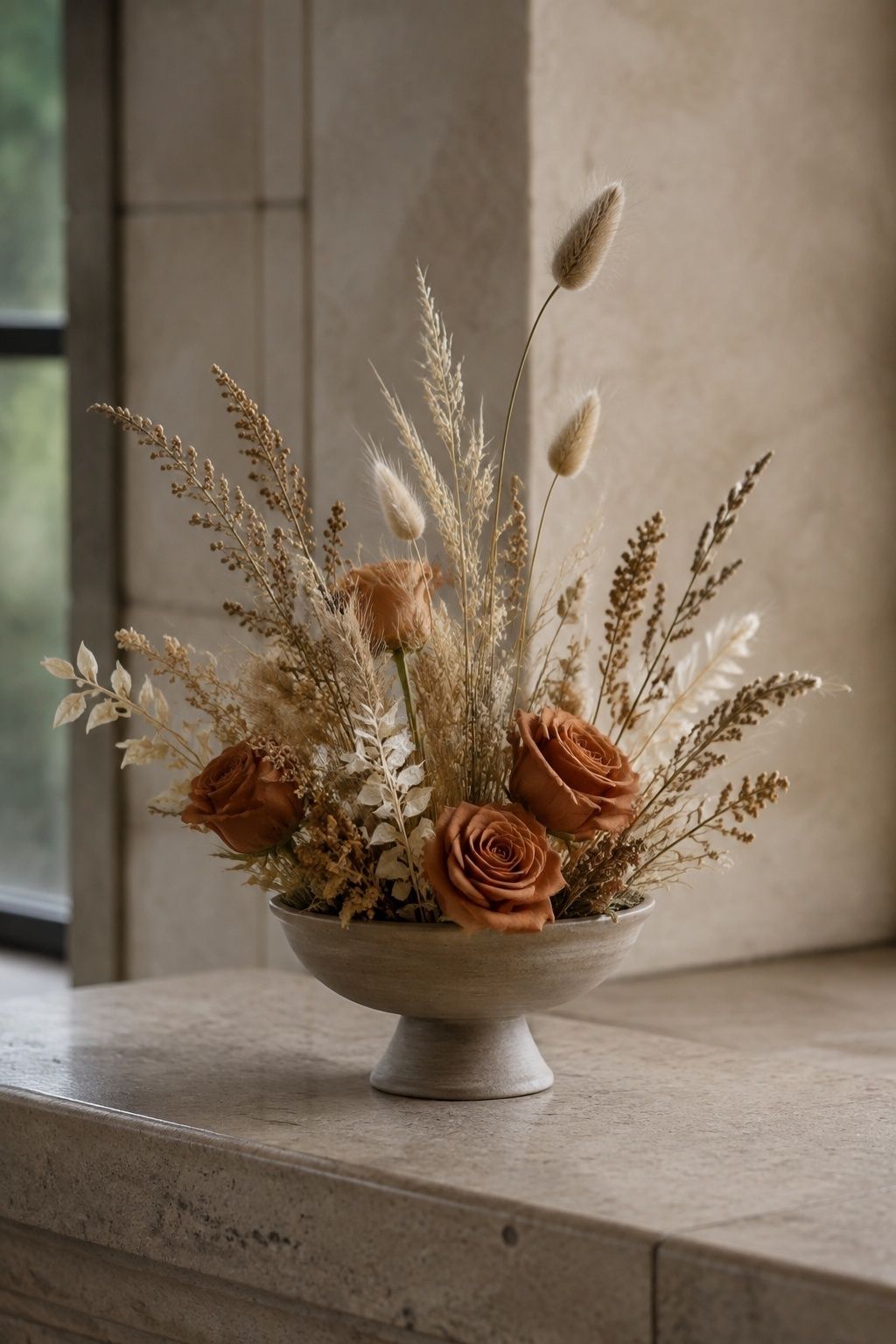
Dried grasses are a practical fall texture because they do not wilt, travel well, and add movement. Bunny tails, wheat, pampas used lightly, millet, and other dried stems warm up arrangements without extra fresh flowers.
Keep the scale controlled for a small wedding. A few grasses in a bouquet or compote look textural; too much sheds, blocks conversation, or makes tables feel dusty. Ask about venue rules if dried materials will be close to candles.
Branches And Autumn Foliage For Venue Connection
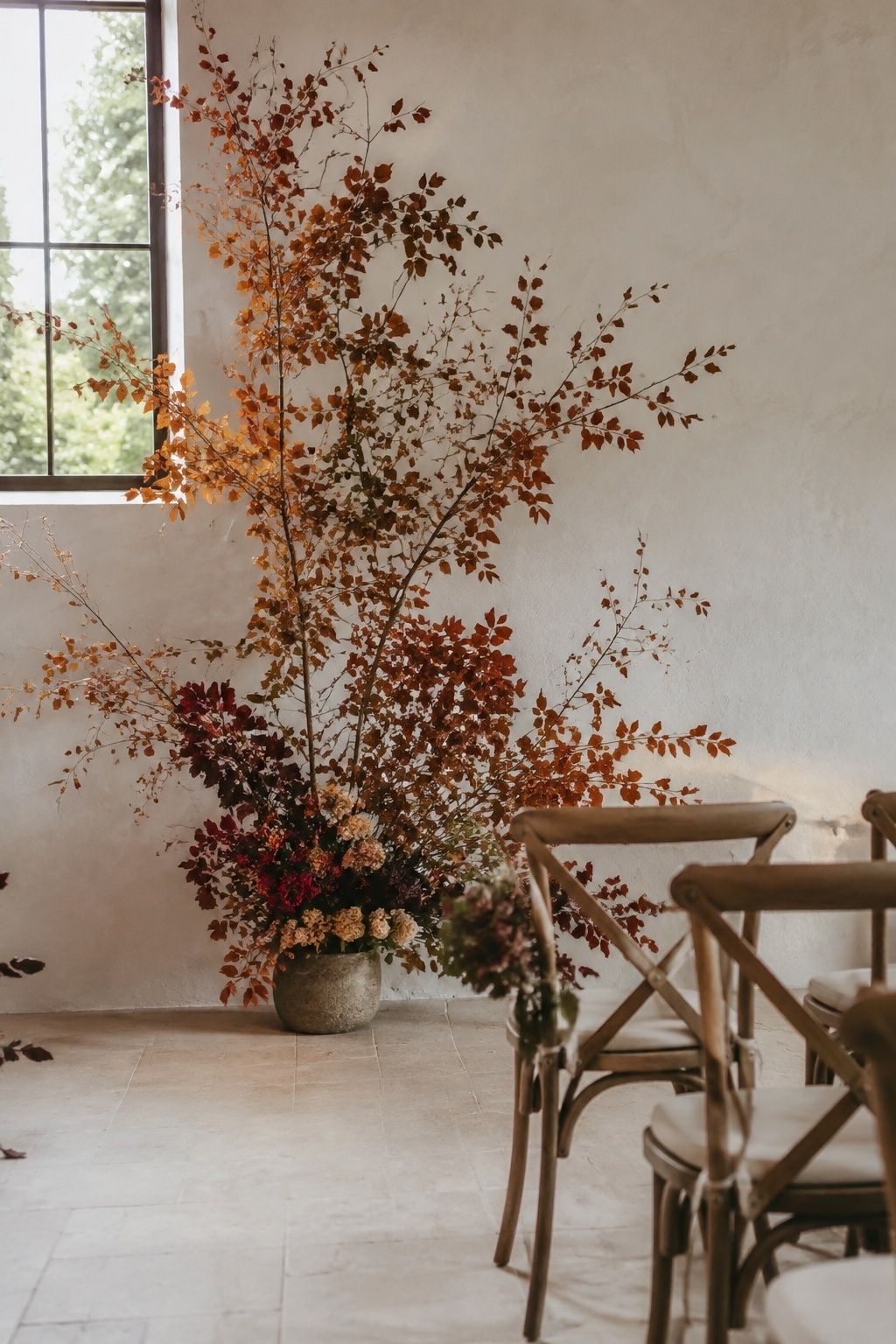
Branches and autumn foliage are the fastest way to make flowers feel connected to the venue. Maple, oak, beech, smoke bush, copper foliage, and seasonal branches create height and shape without a wall of flowers.
They are especially strong in ceremony spaces, entry arrangements, bars, fireplaces, and long tables. For a small wedding, one branch-forward arrangement makes the room feel autumnal while the dinner table stays low and comfortable.
Flower Substitutions To Ask Your Florist About
Substitutions are part of good fall flower planning. Instead of asking for peonies in October, ask for dahlias, garden roses, ranunculus if available, chrysanthemums, lisianthus, or roses in a similar color family. Instead of delicate spring filler, ask for scabiosa, cosmos in early fall, berries, grasses, foliage, or seed pods.
Give your florist the mood, palette, and must-have roles rather than a locked flower list. Say you want a burgundy focal bloom, a soft cream secondary flower, a warm texture stem, and greenery with movement. That gives the florist room to protect the look if weather, farms, shipping, or frost changes the exact stems.
How To Use Fall Wedding Flowers In Bouquets And Centerpieces
Fall wedding bouquet flowers balance focal blooms, shape, and texture. A September bouquet mixes dahlias, zinnias, cosmos, scabiosa, and soft greenery. An October bouquet layers dahlias, mums, marigolds, roses, amaranthus, and berries. A November bouquet pairs roses, calla lilies, anthuriums, mums, grasses, branches, and seeded eucalyptus.
Centerpieces look better with lower, steadier choices. Dahlias and roses are lovely in compotes, mums add volume, berries and grasses add seasonal detail, and foliage connects the table to the venue. Bud vases are perfect for intimate weddings because each table feels floral without blocking faces, plates, or shared dishes.
If the wedding is small, reuse matters. A bouquet rests in a vase on the sweetheart table. Ceremony ground arrangements move to the dinner entrance or bar. Extra boutonniere flowers become cake-table accents. Repurposing succeeds when someone is assigned to move arrangements and the mechanics are built for it.
Budget-Friendly Fall Wedding Flower Ideas
The most budget-friendly fall wedding flowers are usually seasonal, sturdy, and locally available. Chrysanthemums, marigolds, zinnias in early fall, roses, greenery, berries, dried grasses, and autumn foliage create a full look without relying on imported off-season blooms.
Save money by narrowing the palette and repeating materials. Five small compotes using the same roses, mums, foliage, and berries look more polished than five unrelated arrangements. Bud vases also stretch premium flowers because each vase asks for only one to three strong stems.
Avoid the expensive trap of asking fall flowers to imitate spring. Peonies in fall, delicate sweet peas out of season, and very specific rare blooms raise the cost while looking less natural than autumn materials. Ask for the seasonal version of the feeling instead: soft, romantic, moody, warm, modern, wild, or garden-like.
FAQ
What flowers are in season for a fall wedding?
Common fall wedding flowers include dahlias, chrysanthemums, marigolds, celosia, amaranthus, roses, zinnias in early fall, cosmos in September, scabiosa, calla lilies, anthuriums, sunflowers in early fall, rose hips, berries, seeded eucalyptus, olive branches, dried grasses, branches, and autumn foliage. Exact availability depends on your region, frost timing, and florist suppliers.
What are the best flowers for an October wedding?
The best October wedding flowers are usually dahlias if still available, chrysanthemums, marigolds, celosia, amaranthus, roses, rose hips, berries, seeded eucalyptus, olive branches, grasses, and autumn foliage. October is a great month for warm color, texture, and low centerpieces because the season already carries rich floral palettes.
Are dahlias good for fall weddings?
Yes, dahlias are excellent for fall weddings, especially in September and early to mid October in many regions. They make beautiful focal blooms for bouquets, compotes, and ceremony arrangements. Because they are fragile, ask your florist about hydration, transport, heat, frost, and substitutions in case local availability changes.
What fall wedding flowers are budget-friendly?
Budget-friendly fall wedding flowers often include chrysanthemums, marigolds, zinnias in early fall, seasonal roses, local greenery, berries, dried grasses, and autumn foliage. The best savings usually come from using in-season flowers, repeating a simple recipe, choosing bud vases, and avoiding expensive off-season spring blooms such as peonies.
How do you choose fall flowers for a small wedding?
Choose fall flowers for a small wedding by focusing on the bouquet, ceremony focal point, and dinner tables first. Use seasonal focal blooms, bud vases, small compotes, local foliage, berries, branches, and bouquet-to-vase reuse. Keep arrangements low, textured, and scaled to conversation so the flowers feel abundant without crowding the room.
Final Thoughts
Fall wedding flowers look best when they stop fighting the season. Let September be loose and garden-like, let October be textured and colorful, and let November become sturdier, moodier, and more branch-driven. For a small wedding, that kind of month-aware plan makes each stem matter.
The strongest floral plan is usually simple: one beautiful bouquet, one ceremony moment, low dinner flowers, and seasonal accents that carry the palette. When your florist substitutes by role instead of copying a fixed flower list, the wedding feels more natural, durable, and calm.
Choose flowers your month already wants to give you, then let your florist adjust color, shape, and stem count around the weather instead of forcing fragile spring blooms into an autumn wedding.
Last update on 2026-10-03 / Affiliate links / Images from Amazon Product Advertising API