

If you are wondering how to talk to parents about wedding money, speak with your partner first, choose a private time, bring a rough budget and guest-count idea, and ask whether they feel comfortable contributing in any way. Keep the conversation grateful, clear, and open enough for a yes, a no, or a different kind of help.
Wedding money conversations are rarely only about numbers. They carry love, pride, fear, family habits, old expectations, and sometimes the quiet hope that a contribution will also come with a voice in the day. That is why the first conversation matters so much. It sets the tone before deposits, assumptions, and guest-list opinions start moving faster than the couple is ready for.
Start with honesty before anyone books around a guess. A thoughtful money conversation helps you ask with care, understand each parent’s answer, and protect the small wedding you are trying to plan. Extra money should bring clarity, not surprise seats, surprise traditions, or surprise pressure.

Recommended Wedding Products


No products found.


You Might Also Like These Blog Posts
- Who Pays For Weddings Now When Tradition No Longer Fits
- Is A Wedding Worth The Money When You Want Meaning More Than Pressure
- How To Split Wedding Costs Between Families Without Keeping Score
- How To Seat Divorced Parents At A Small Wedding Without Making Chairs Feel Loaded
- How To Cut A Wedding Guest List To Save Money And Stay Kind
- How To Plan A Wedding Without Pleasing Everyone And Still Feel Kind
How To Talk To Parents About Wedding Money

The calmest way to start is to ask for a conversation, not a cheque. Tell your parents you are beginning the wedding budget, share the kind of celebration you are imagining, and ask whether they would like to contribute financially, help with a specific piece, or stay out of the money side completely. The wording should leave dignity on every answer.
Go into the conversation with a real plan, even if it is still early. A couple who says, “We are thinking about a small dinner for about forty guests, and we are trying to keep the full wedding around this amount,” gives parents something concrete to respond to. A couple who opens with “How much are you giving us?” places everyone in a corner before anyone has had time to think.
The goal is not to convince parents to pay. The goal is to remove hidden expectations before planning becomes expensive. If they are excited to contribute, you need clarity. If they are unsure, you need patience. If they say no, you need a plan that still protects the marriage, the relationships, and the version of the wedding within reach.
Before You Talk To Parents, Talk To Each Other

Start with a private conversation as a couple. Decide what you are prepared to pay yourselves, what kind of wedding you actually want, and what kind of parent contribution would feel helpful rather than complicated. This is especially important for small weddings because money often arrives with loving opinions about who should be invited, what traditions should stay, and what will make the family feel included.
Ask each other what you would accept. A flat gift with no planning control could feel easy. A specific offer to cover the meal could feel generous but affect the guest count. A parent paying a vendor directly could feel organized, or it could make the vendor relationship harder to manage. None of these options is automatically wrong. They just need to be named before emotions enter the room.
Also decide what you would decline. You could agree that you will not accept money that requires adding twenty guests, changing the ceremony, moving the venue, inviting people you do not know well, or taking on debt to match someone else’s vision. Clear wedding money boundaries sound less harsh when you decide them before the conversation rather than after a parent has already offered something generous.
Finally, build the no-contribution version of the plan. If no one gives money, what happens? You could extend the engagement, shrink the guest list, choose a restaurant private room, elope with dinner after, cut florals, skip formal entertainment, or self-fund a smaller celebration. Knowing that you have a path makes the ask softer because your parents are not being handed responsibility for the wedding’s existence.
What To Bring To The Conversation
You do not need a final spreadsheet before the first family wedding budget talk. You do need enough detail to show that you have thought beyond the romance of the day. Parents often respond better when they understand the shape of the celebration, the real cost categories, and the decisions that need answers soon.
A Rough Wedding Budget
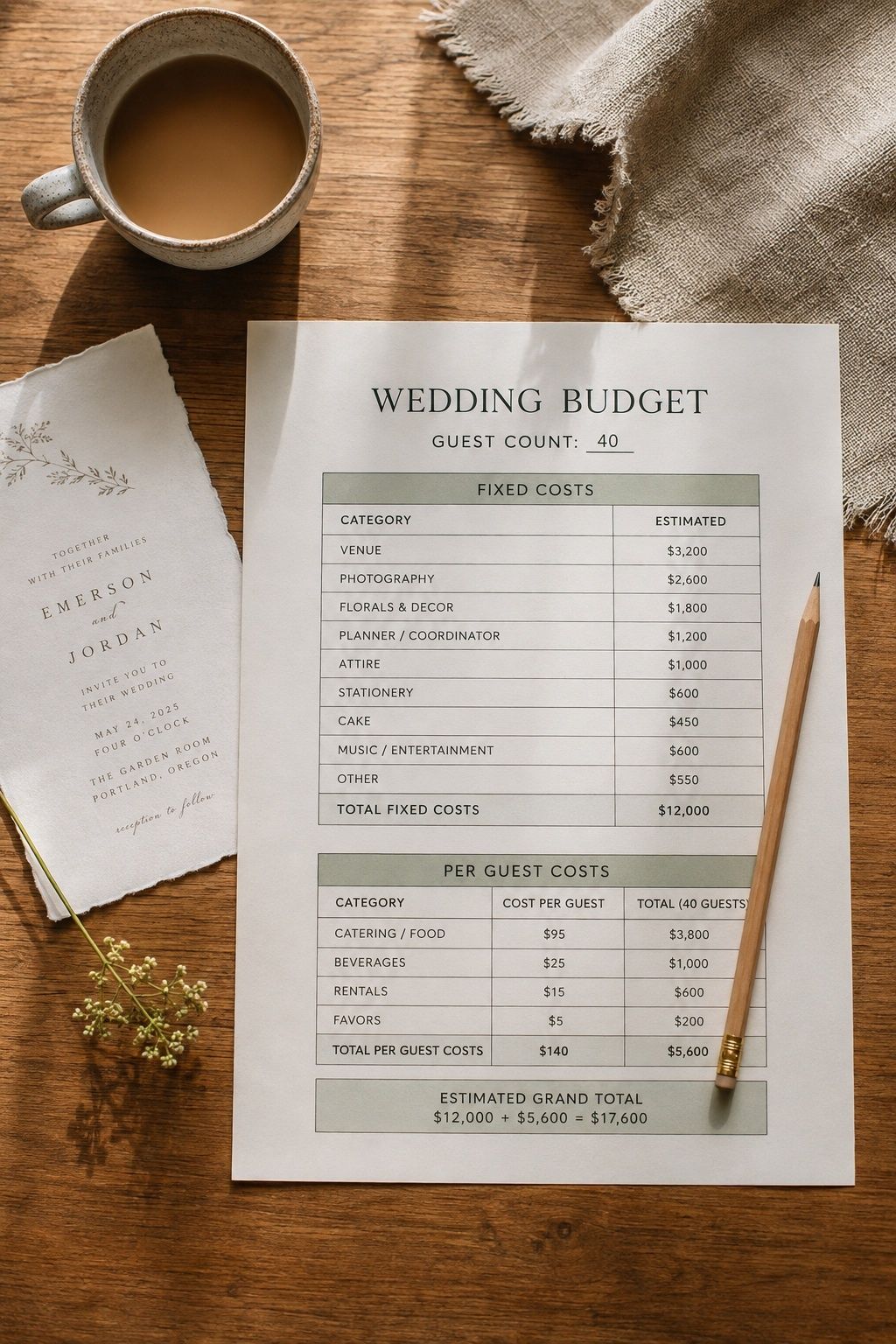
Bring a simple estimate for the main categories: venue or reservation, food and drink, photography, attire, flowers, music, coordination, ceremony needs, invitations, taxes, tips, and a buffer. The numbers do not have to be perfect. They should be honest enough to explain what you are planning and why vague promises create stress once deposits are due.
For an intimate wedding, it helps to separate fixed costs from guest-based costs. A photographer, officiant, license, dress, suit, or bouquet could cost the same whether you invite twenty people or eighty. Food, drinks, rentals, favours, transportation, and extra tables usually grow with the guest list. This distinction makes parent money conversations more grounded because everyone sees where a contribution would actually help.
A Guest Count Range
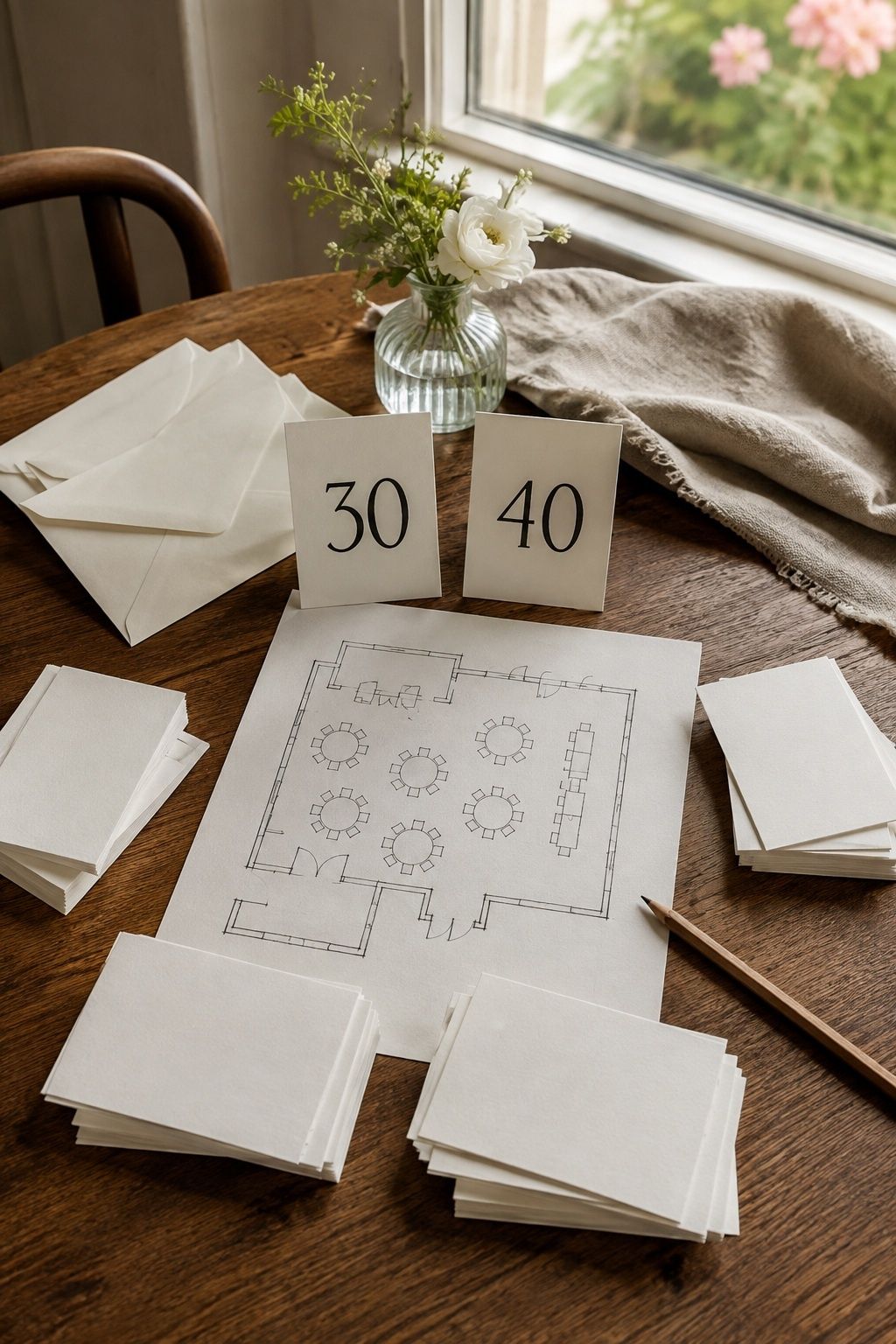
Guest count is not a side detail. It is the budget’s heartbeat. Tell parents whether you are imagining a twenty-person ceremony dinner, a fifty-person garden reception, or a larger family celebration. If the wedding is intentionally small, say that early and kindly. Parents who hear “we are still deciding” sometimes hear room for every cousin, neighbour, and family friend who has known you since childhood.
Use a range if the number is not final. You could say, “We are planning for about thirty to forty people, and we are trying to keep it that intimate.” That gives parents a picture of the day without inviting a full negotiation before you have even discussed money.
Your Own Contribution
Parents deserve to know that the couple has looked at their own finances first. You do not have to reveal every account balance. Simply say what you are prepared to cover and where the gap exists. This keeps the wedding money conversation from sounding like a demand and reminds everyone that the couple is taking responsibility for the day.
This also protects your life after the wedding. If a parent asks why you are not spending more yourselves, explain that you are balancing the wedding with rent, savings, debt payoff, a house fund, travel, or ordinary life. A wedding should not require the couple to prove devotion by draining their future.
A Few Possible Ways To Help
Not every parent contribution has to be one large transfer. Some families prefer a flat gift. Others prefer to cover a specific piece, such as flowers, attire, photography, the rehearsal dinner, a welcome meal, or part of the venue deposit. Some parents would rather offer practical help: hosting a casual dinner, assembling invitations, driving relatives, or keeping family communication steady.
Offer options without making any one option sound mandatory. Try, “If you were hoping to help, would it feel better to give a set amount, cover one specific part, or help in a nonfinancial way?” That gives parents a real choice and keeps the discussion from turning into a test of generosity.
A Clear Timeline For Decisions
Money that arrives after major bookings has less planning value. Be honest about timing. If the venue deposit is due in two weeks, say so. If you need a final answer before sending invitations, explain why. This is not pressure when it is spoken gently. It is information parents need in order to decide whether their help fits the real schedule.
Give them space to think. A parent who is surprised at Sunday lunch should not have to answer before dessert. End the first conversation with a date to revisit it, especially if divorced parents, remarried parents, or multiple households need time to talk privately.
What To Actually Say
Choose language that sounds like your family: appreciative, specific, curious, and spacious enough for an honest answer. You are not presenting an invoice. You are opening a respectful wedding money conversation before everyone starts assuming what the other people mean.
You could begin with: “We are starting to build the wedding budget, and we wanted to talk with you before we make plans based on assumptions. We are planning a small wedding, and we are trying to understand whether you would like to contribute financially in any way.”
If you already know the wedding will stay intimate, say that in the same conversation: “We want to be clear that our guest count is intentionally limited. If you do decide to help, we would be grateful, but we do not want anyone to feel surprised later that the wedding is still small.”
If you need a number, ask directly but gently: “Would you prefer to give a flat amount, cover one specific item, or sit this one out financially? Any answer is okay. We just want to plan honestly.”
If they need time, leave the door open: “Please do not feel that you have to answer tonight. If you want to think about it, let’s talk again next week. We would rather have a clear answer later than a rushed answer now.”
If you are speaking with divorced or separate parents, avoid turning one conversation into a comparison. Use the same calm language with each household. One parent could offer money, another could offer none, and another could offer help with a specific tradition. Equal gratitude does not require equal numbers.
Questions To Ask Before Accepting Money

An unclear gift often becomes a family misunderstanding later. Before you accept, ask kind questions that turn the offer into something usable. Is this a gift or a loan? Is there a specific dollar amount? When would the money be available? Would you prefer to pay us, pay a vendor directly, or cover one line item?
Then ask about expectations. Is the contribution tied to a guest list, venue, tradition, outfit, menu, religious element, or vendor choice? Would they like to be included in a certain decision? Is there anything that would make them feel hurt if it were skipped? These questions are not suspicious. They are generous because they give parents a chance to say the quiet part before it becomes resentment.
For small weddings, ask one question very clearly: “If you contribute, are you expecting the guest list to change?” This is where many couples get tangled. A parent offers a kind amount, then later expects extra family seats because they helped. If that is acceptable to you, plan for it. If it is not, explain before accepting the money.
Write down what everyone agrees to, even if it is only in a follow-up text. Keep the tone warm: “Thank you again for offering to cover the flowers up to this amount. We are so grateful, and we will keep the guest list at our original number.” Clarity does not make the gift colder. It makes it easier to receive.
How To Handle Strings Attached
Conditions are not always bad. A parent who pays for the rehearsal dinner could want to invite a few relatives. A parent who covers flowers could care about honouring a family tradition. The issue is not that a contribution has meaning. The issue is whether the condition fits the wedding you are building.
If the condition feels reasonable, name the boundary around it. “We would be happy for you to invite these two people, but we are not expanding past forty guests.” Or, “We would love your help with flowers, and we will choose the overall style so it fits the venue.” Warmth and limits work best together.
If the condition does not fit, you have three choices. Accept a smaller version of the help, decline the money, or suggest another role. You could say, “We are so touched that you want to contribute. We are not able to add that many guests, so we should not accept the money if that is the expectation. We would still love your help choosing a song for the dinner.”
Do not wait until after the money is spent to push back. Boundaries are kinder when they arrive before anyone feels trapped. They also protect your parents from giving under one assumption while the couple receives under another.
How To Talk About A Small Wedding With Parents
Parents do not always hear “small wedding” as a practical choice. They could hear exclusion, embarrassment, rejection, or a fear that the family will look ungenerous. That reaction does not mean you need to abandon your plan. It means you need language that explains the wedding as intentional, not diminished.
Try grounding the decision in values: “We want a wedding where we spend real time with the people there.” Or, “We are choosing a smaller guest list because we want the day to feel calm and financially responsible.” Or, “This is not about leaving people out casually. It is about creating the size of celebration we are able to host well.”
If parents offer money to expand the guest list, slow the conversation down. More money does not always solve the emotional cost of a larger wedding. More guests mean more invitations, seating decisions, meal choices, travel questions, family dynamics, and attention pulled away from the intimate feeling you chose. If the whole point is closeness, the guest count is not just a budget line.
Parents still deserve meaningful inclusion. Invite them to share family priorities before you finalize the list. Ask which relatives would be most hurt, which traditions matter deeply, and where they would love to help. Then make the final decision as a couple. Listening is not the same as handing over control.
How To Handle Unequal Family Contributions
Some wedding money stress comes from comparison. One side gives more. One parent gives early. One household pays a vendor directly. One parent offers emotional support instead of cash. A sibling’s wedding received a different amount. None of that is easy, but it is also not proof that the wedding has to become a public accounting exercise.
Try to separate gratitude from control. Deep thankfulness for a larger parent contribution does not have to give that parent every decision. Honour a parent who gives less by making sure they still feel included in ways that are not tied to money. Unequal funds should not turn into unequal love, unequal access, or unequal respect.
For blended families or divorced parents, speak with each household privately unless everyone already communicates comfortably. A group conversation often makes people feel compared in real time. A private conversation gives each parent space to answer according to their own finances, remarriage dynamics, retirement plans, or comfort level.
If one parent asks what another parent is giving, keep the answer general unless everyone has agreed to share details. Try, “We are having separate conversations with each household so no one feels compared. We are keeping track of the full budget ourselves and will make sure every contribution is used clearly.” That protects privacy while still sounding organized.
This is also where how to talk to parents about wedding money becomes less about perfect wording and more about emotional steadiness. You are allowed to hold two truths: the money is helpful, and the marriage is not a family contest. The wedding will feel calmer if the couple carries the central budget picture instead of asking parents to negotiate it between themselves.
How To Follow Up After The Money Conversation

The follow-up is where a good conversation becomes a usable plan. Send a warm message after the talk, even if the answer was not final. Thank them for listening, repeat the basic wedding shape, and confirm any next step. This keeps the discussion from living only in memory, where people often remember the same conversation differently.
If they offered a set amount, write it plainly: “Thank you again for offering this amount toward the wedding. We are planning to use it for the venue deposit and part of the meal.” If they offered to cover a category, include the limit: “We are grateful that you want to help with photography up to this amount.” Specific language prevents awkwardness later when quotes change.
If they need time, set a gentle check-in date. “We will wait until next Friday before making the venue decision, so let us know by then if you feel ready.” Without a date, a hopeful maybe quietly becomes the foundation for a budget that does not exist yet. With a date, everyone knows when the couple will plan from confirmed information.
If the conversation was tense, do not keep pushing for the clean ending you wanted. Pause, thank them for hearing you, and return later with fewer moving pieces. Sometimes parents need time to grieve the wedding they pictured before they support the wedding you are choosing. That pause is not failure. It often lets the next conversation become kinder.
What If Parents Are Not Able To Contribute
If parents are not contributing to the wedding, thank them for being honest and move the plan toward the amount you are prepared to spend. A no is not a rejection of the marriage. It could reflect retirement, health costs, debt, job changes, other children, or private financial stress they do not want to explain fully.
Give them dignity in the moment. “Thank you for telling us. We did not want to assume, and we love you regardless.” That sentence helps keep disappointment from hardening into shame. If they offer nonfinancial help, accept what is actually helpful: hosting a family meal, making calls, lending heirloom pieces, helping with transport, or simply being emotionally steady.
Then adjust the wedding without punishing anyone. Reduce the guest count, choose a less expensive venue, simplify food, move to an off-peak date, extend the planning window, skip upgrades, or choose a ceremony-and-dinner format. The smaller version should still feel chosen. A beautiful wedding does not become less real because it is funded honestly.
FAQ
How Do You Talk To Parents About Wedding Money?
Talk to parents about wedding money early, privately, and with your partner already aligned. Share the kind of wedding you are planning, the rough budget, and the guest-count range. Then ask whether they would like to contribute financially, help with a specific item, or step back from the money side.
How Do You Ask Parents If They Are Contributing To The Wedding?
Ask with gratitude and room for any answer. Try, “We are starting the budget and wanted to ask whether you were hoping or able to contribute in any way.” Avoid asking for a number first. Once they say they want to help, clarify amount, timing, payment method, and expectations.
What Should You Ask Before Accepting Wedding Money?
Ask whether the money is a gift or loan, the exact amount, when it will be available, and whether it is tied to any guest-list, venue, tradition, vendor, or family expectation. For an intimate wedding, also ask whether the contribution changes how many people they expect to invite.
How Do You Handle Strings Attached To Wedding Money?
Handle conditions by naming them before accepting the money. If the expectation fits your wedding, agree clearly. If it does not, accept a smaller version, offer another role, or decline the contribution kindly. It is easier to protect relationships before the money is spent than after disappointment appears.
How Do You Talk About A Small Wedding With Parents Who Want More Guests?
Explain the small wedding as an intentional choice, not a rejection of family. Say that you want a guest list you are able to host well, afford honestly, and experience with real presence. Listen to their concerns, ask which relationships matter most, then be clear that money does not automatically expand the list.
What If Parents Cannot Contribute To The Wedding?
If parents are not contributing, thank them for being direct and build the wedding around your own budget. Consider a smaller guest list, a longer engagement, a restaurant dinner, a courthouse ceremony, fewer vendors, or nonfinancial family help. A self-funded wedding still deserves to feel warm, complete, and deeply cared for.
Final Thoughts
When you know how to talk to parents about wedding money, planning begins with fewer hidden expectations. The best conversation is honest enough to protect your budget, warm enough to protect the relationship, and specific enough to keep a small wedding from quietly becoming someone else’s larger event.
You are not trying to win the money conversation. You are trying to understand what is available, what it means, and whether it fits the life you are building together. Start with gratitude, keep the guest count and boundaries clear, and remember that early clarity is one of the kindest planning gifts a family gives each other.
Last update on 2026-10-04 / Affiliate links / Images from Amazon Product Advertising API