

How to seat divorced parents at a small wedding starts with the relationship they have now, not the picture you wish looked easiest. Give each parent visible honor, avoid forcing tense people together, use named reserved seats, and place steady relatives or close friends close by so every important chair feels intentional rather than loaded.
Parent seating feels bigger at a small wedding because there is nowhere for the decision to disappear. A front row, a dinner table, or one empty chair next to a new partner becomes visible to everyone.
The goal is not to solve the whole family history with a floor plan. The goal is to create a ceremony and reception layout where your parents feel respected, your stepparents or partners are handled honestly, and old tension stays away from the aisle. Start with small wedding guest list etiquette if you’re planning the whole day.

Recommended Wedding Products


You Might Also Like These Blog Posts
- How To Talk To Parents About Wedding Money Without Losing The Room
- Small Wedding Adults Only Website Wording Lines Parents Won’t Miss
- Wedding Seating Chart Mistakes That Make Dinner Feel Awkward
- How To Have A Small Wedding Without Offending People Or Overexplaining
- Small Wedding Guest List Etiquette For A Guest List That Feels Fair
- How To Tell People You’re Having A Small Wedding With Kind, Clear Scripts
How To Seat Divorced Parents At A Small Wedding With Calm, Equal Honor
The best divorced parents wedding seating plan begins with emotional truth. Friendly parents often sit close together and enjoy the day with ease. Polite but fragile parents need structure. Parents who do not get along need distance. None of those choices makes the wedding less loving.
Small wedding divorced parents etiquette is less about old formulas and more about equal visible respect. The parent who sits one table farther away should not feel demoted. The parent with a new spouse should not be treated as if that relationship is invisible. The parent who creates tension should not be given control of the room simply because everyone fears a reaction.
Start With The Current Parent Relationship
Before you draw a seating chart, name the relationship your parents actually have now. Are they warm enough to chat before the ceremony? Civil for short stretches? Fine in public but cold up close? Unable to share space without making other people brace themselves?
That answer should shape both divorced parents ceremony seating and divorced parents reception seating. A wedding is emotional enough without testing whether old patterns have healed. Choose the plan that matches current behavior, not the most photogenic version of the family tree.
Decide Whether Shared Space Works
Seating divorced parents at wedding events together works only when both parents have shown they handle shared space well. One calm holiday dinner, relaxed graduation, or easy family meal gives real evidence. A vague promise to behave is not the same thing.
If sharing a row or table would feel strained, do not force it for appearances. Guests remember a warm, steady ceremony more than whether two people sat side by side for tradition. Your wedding seating chart divorced parents plan should protect the vows first.
Give Each Parent Equal Visible Honor
Equal honor does not always mean identical seats. It means each parent gets a place that clearly says, “You matter.” In a ceremony, both parents sit in the first two rows with clear sightlines. At dinner, both parent tables sit close to your sweetheart table or central reception area.
Avoid one parent in the front row and the other lost behind distant cousins unless there is a serious safety or conduct reason. Family seating small wedding choices are easy to interpret, so balance visibility, comfort, and relationship reality with care.
Use Named Reserved Seats Instead Of Guesswork

Reserved seating wedding ceremony plans work best when the important seats are named. Use small cards, reserved signs, or an usher list that says exactly who sits where. “Reserved for family” is too vague when divorced parents, stepparents, new partners, siblings, and grandparents are all arriving in the same window.
Named seats remove tiny awkward decisions. A parent does not have to wonder whether the empty aisle seat is meant for them. A stepparent does not have to hover. An usher does not have to invent etiquette while music is already playing.
Ceremony Seating Options For Divorced Parents
Where do divorced parents sit at wedding ceremonies? Usually toward the front, with placement shaped by how well they get along and who should share each parent row. Choose a layout that feels calm from the aisle and kind from each seat.
Seat Friendly Divorced Parents Together
If your parents are genuinely friendly, let them share the front row or the same small parent section. Their spouses or partners, if included, should sit with them in a way that reflects real family closeness and comfort. This is the simplest plan when everyone has already shown they enjoy being together.
Keep the row from becoming crowded. In a tiny ceremony, one parent row often holds each parent and current spouse, while siblings or grandparents sit directly behind. The point is to make the first seats feel peaceful.
Separate Tense Parents Without Making It Look Punitive

For tense parents, separate the seats while keeping both positions honorable. One parent group sits in the first row on one side, and the other parent group sits in the first row on the other side. If that feels too direct, place one group in the first row and the other in the second row with an equally good aisle view.
The language matters when you explain it: “We are giving each of you your own reserved seats with a clear view” lands better than “We decided to keep you apart.” Keep the focus on comfort, not blame.
Use Buffer Relatives With A Steady Presence
Buffer guests are not there to babysit adults. They are there to soften proximity. A grandparent, sibling, aunt, uncle, or longtime family friend who stays calm under pressure often fits between parent groups, behind them, or with the person who needs grounding.
Choose buffers who understand the assignment privately and will not turn the seating plan into gossip. They should arrive early, sit where asked, and keep the room feeling ordinary.
Handle Stepparents And New Partners By Real Closeness
Stepparent wedding seating etiquette should reflect the actual relationship, not only the legal label. A stepparent who raised you deserves visible care. A newer partner your parent is serious about should usually sit with that parent, especially if separating them would draw more attention than including them.
If a new partner is tied to real pain or recent conflict, give the parent a respectful seat and talk privately about whether the partner attends, sits close by, or joins only the reception. The decision should protect your emotional steadiness, not reward whoever pushes hardest.
Avoid Ranking People Through Table Numbers Or Rows
Small weddings turn distance into meaning. Row three, table six, or a chair by the kitchen easily looks like an unspoken ranking. If one parent sits farther back, balance it with a strong sightline, a named reserved card, or a trusted family member close by.
At the reception, consider table names instead of table numbers if numbers will create anxiety. Garden names, city names, family places, or neutral words remove the feeling that table one is most loved and table five is an afterthought.
Reception Seating Options For Divorced Parents
Reception seating has more flexibility than ceremony seating because guests mingle, eat, toast, and move around. Divorced parents reception seating should still be intentional, especially when the room is small and parent tables sit close to the couple.
Seat Them At One Table Only If It Feels Easy
Should divorced parents sit together at the reception? Yes, when they are friendly, their current partners are comfortable, and the table will not make anyone perform happiness. A shared wedding reception parent tables plan works beautifully for families who have already practiced being blended in public.
If the table requires everyone to tense up for two hours, choose separate tables. A reception is long enough for small discomforts to grow. The better plan is the one that lets people eat, toast, laugh, and stay out of the couple’s emotional weather.
Place Reception Tables With Calming People
For parents who need separate tables, surround each table with people who bring out their best. Seat one parent with siblings, lifelong friends, grandparents, or cousins who keep conversation warm. Seat the other with their own steady group rather than random guests who will sense tension without knowing what to do with it.
Do not use the reception table as a punishment or a containment zone. The table should feel like a good dinner party, not a holding area for complicated feelings. A calm table lowers the emotional temperature for everyone close by.
Create Equally Close Parent Tables
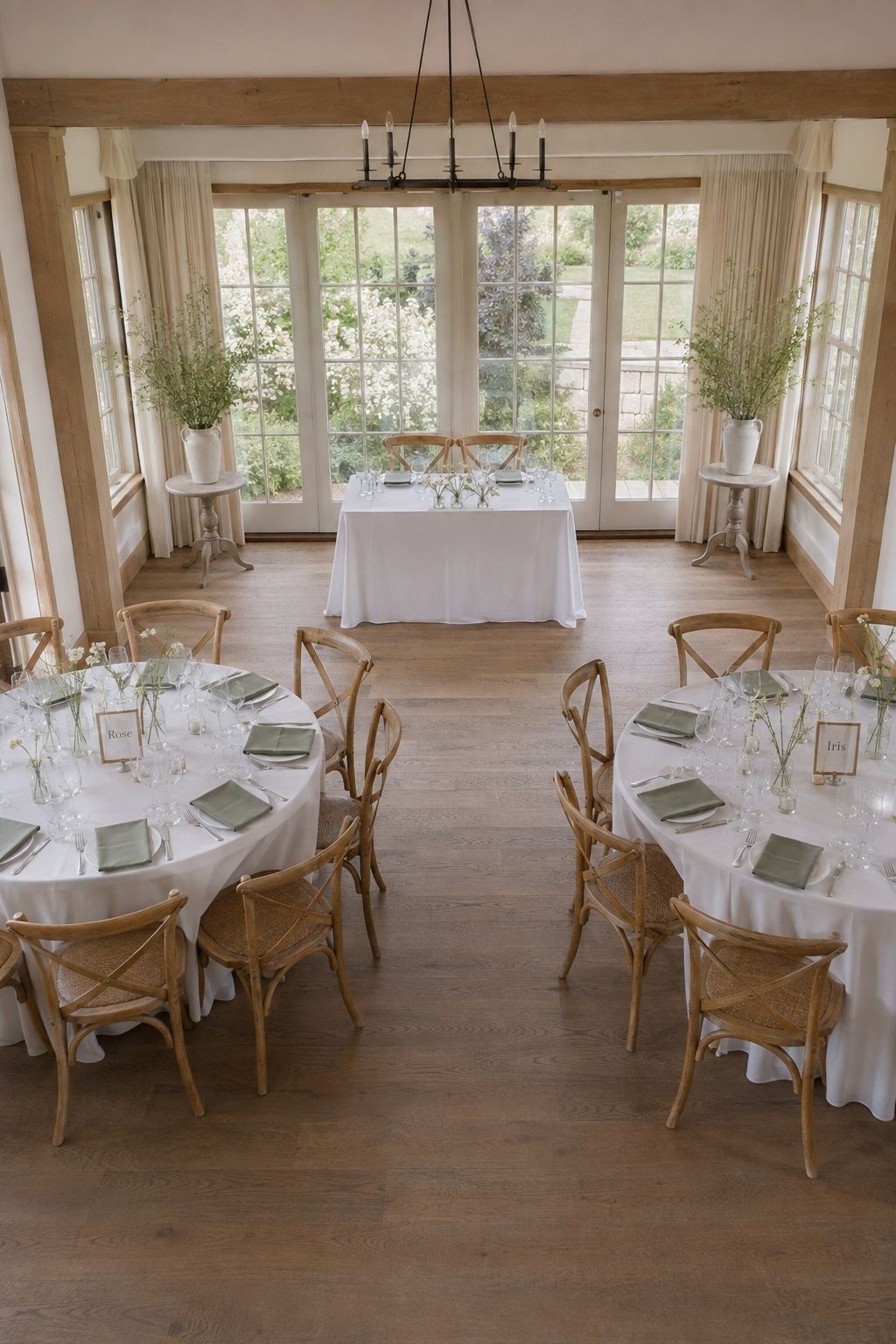
If both parents have an equally close relationship with you, seat both tables in equally important places. They do not need to mirror each other perfectly, but neither should feel hidden. Think of two good sightlines, two easy paths to greet you, and two tables that feel connected to the center of the celebration.
This matters most in intimate rooms where everyone sees the floor plan at once. Equivalent placement keeps the message simple: you are honoring both parent households, even though they are not sitting together.
Consider A Sweetheart Table To Reduce Pressure
A sweetheart table gives the couple a little breathing room and removes the need to choose which parents sit closest at a head table. It also makes separate parent tables feel normal because the couple is not publicly choosing one side for the meal.
For a small wedding, the sweetheart table does not have to feel distant. Keep it close to the parent tables and guest tables, then move around between courses.
Use Escort Cards And Place Cards For Clarity
Wedding escort cards direct guests to the right table; wedding place cards direct them to the right chair. Use both if parent seating is sensitive. This prevents a parent from moving next to someone they should not sit with, and it keeps well-meaning relatives from rearranging the plan.
If the reception is very small, a printed table plan template or a simple table name card at each table is often enough. Guests should know where to go without asking you. Keeping it small? There’s a full guide on how to plan a small wedding.
How To Keep The Seating Plan From Becoming A Family Referendum
Divorced parents wedding seating becomes harder when every choice is treated as proof of loyalty. Design the plan for the wedding day you are actually hosting. Honor parents without handing them authorship over the event.
Brief Ushers, Coordinators, And Seating Contacts Before Guests Arrive
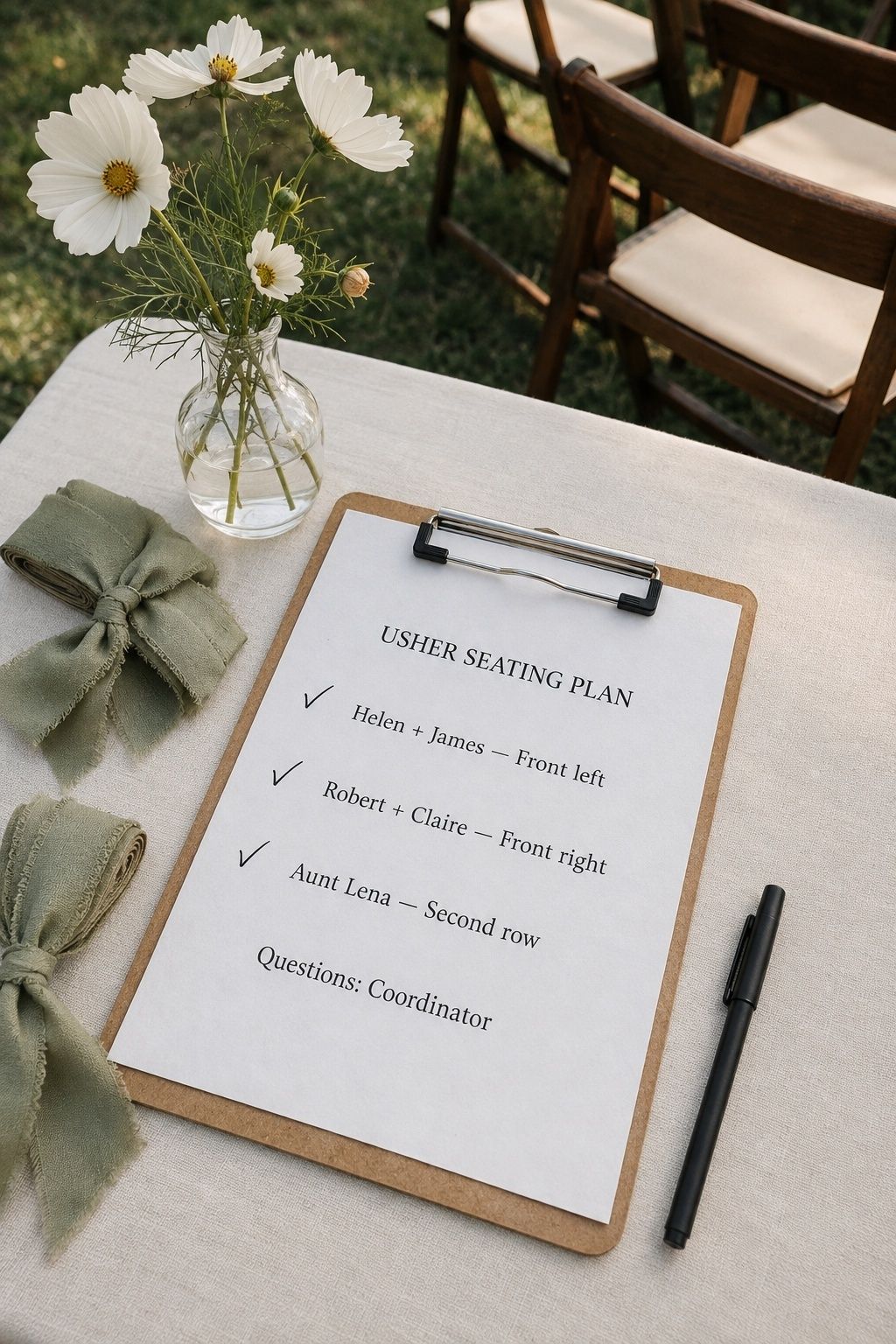
Give ushers and coordinators a written list with parent names, partners, reserved rows, table numbers or names, and any people who should not be seated together. Do this before the rehearsal or final walk-through, not five minutes before the ceremony.
Tell the seating contact exactly what to say if someone resists: “These are the seats the couple reserved for you.” That short sentence keeps family history and doorway negotiation out of the moment.
Have Private Pre-Wedding Communication
Tell each parent the plan privately before the wedding day. Keep the message brief, kind, and confident: “We have reserved a front ceremony seat for you with a clear view, and your dinner table is close to us with Aunt Lena and Uncle Mark.” Specifics reduce imagination.
Do not ask for open-ended approval if the decision is already made. Invite practical concerns, not a vote on the family hierarchy. If a parent raises a real accessibility, safety, or comfort issue, adjust. If the concern is only status, return to equal honor and calm logistics.
Protect The Couple From Day-Of Negotiation
On the wedding day, all seating questions should go to a planner, coordinator, sibling, or trusted friend. The couple should not be deciding where a stepparent sits while getting dressed or preparing to walk into the ceremony.
Give your seating contact permission to hold the boundary. A small wedding has fewer moving parts, but every part is closer to you. Protecting your attention is part of hosting well.
Choose Comfort Over A Perfect Family Picture
The cleanest seating chart on paper is not always the kindest one in the room. If two parents sitting together would make everyone stiff, separate them. If a stepparent deserves a close seat because they raised you, honor that. If a newer partner needs a gentler placement, handle it directly and privately.
Your guests are there to witness a marriage, not audit a family seating philosophy. When the plan feels calm, most people simply follow it and move on to the joy of the day. For more ideas in this vein, browse Wedding Guests & Etiquette.
FAQ
How Do You Seat Divorced Parents At A Small Wedding?
Seat divorced parents at a small wedding by matching the plan to their current relationship, giving each parent visible honor, and using named reserved seats. Friendly parents often sit together. Tense parents should have separate but equivalent seats with calming relatives close by.
Where Do Divorced Parents Sit During The Ceremony?
Divorced parents usually sit toward the front during the ceremony. If they get along, they often share a front row or parent section. If the relationship is strained, seat each parent household in separate front or second-row positions with clear views and clear reserved labels.
Should Divorced Parents Sit Together At The Reception?
Divorced parents should sit together at the reception only if the relationship is comfortable for them, their partners, and the couple. If conversation would feel tense or performative, separate parent tables close by usually feel warmer and more respectful.
Where Do Stepparents Sit At A Wedding?
Stepparents usually sit with their spouse or partner, especially when they are an active part of the couple’s family life. A stepparent who raised the couple should receive visible honor. Newer partners should be seated with care, depending on family comfort and recent history.
How Do You Seat Divorced Parents Who Do Not Get Along?
Seat divorced parents who do not get along in separate areas with equal visibility and steady buffer guests close by. Give ushers or coordinators exact instructions, use place cards or reserved signs, and tell each parent the plan privately before the wedding day.
How Do You Avoid Hurt Feelings With Parent Seating At A Small Wedding?
Avoid hurt feelings by making the plan feel balanced, specific, and private. Do not rank parents through table numbers, poor sightlines, or vague reserved areas. Explain that each parent has been given an honored place designed for comfort and a clear view of the day.
Final Thoughts
How to seat divorced parents at a small wedding is really a question about dignity. You are not trying to pretend every relationship is simple. You are giving each important person a place that steadies the ceremony, the meal, and the emotional tone you want to remember.
Start with current behavior, keep honor visible, use buffers where they lower tension, and put the plan in the hands of prepared seating contacts before guests arrive. For ceremony seating, clear reserved family seats make the whole room easier to settle.
Last update on 2026-11-29 / Affiliate links / Images from Amazon Product Advertising API