

How to cut a wedding guest list to save money starts with choosing the paid headcount before choosing names. Set a clear number, price the real cost of each guest, remove whole categories before individuals, use the same rules on both sides, and explain the smaller wedding with one calm sentence.
Most couples do not want to hurt anyone. They simply look at the catering estimate, the room capacity, the bar service, the rental quote, and the number of chairs, then realize the guest list is quietly deciding the whole wedding budget. That is why how to cut a wedding guest list to save money needs more than a red pen. It needs a process that feels fair enough to stand behind.
A guest list is emotional because every name carries a little story: family history, friendship, work politics, parental hopes, old invitations, and the fear of looking unkind. The money piece is real, but so is the relational piece. A good cut plan respects both.
For a small wedding, the aim is not to make the room feel smaller for the sake of saving money. The aim is to host the people who make the day feel whole, then release the extra pressure that turns an intimate celebration into an event the couple strains to afford. The guest list should support that promise.

Recommended Wedding Products


You Might Also Like These Blog Posts
- Micro Wedding Guest List: Who Makes The Tiny Cut?
- How To Keep Your Wedding Guest List Small Before It Spirals
- Wedding Guest List Family Pressure: How To Set Boundaries Kindly
- Small Wedding Guest List Wording That Keeps Boundaries Kind
- Why Are Weddings So Expensive And What Can You Actually Control
- Small Wedding Guest List Etiquette For A Guest List That Feels Fair
How To Cut A Wedding Guest List To Save Money Without Losing The Heart Of The Day
The strongest way to ease guest-list pressure is to stop treating names as the first decision. Names bring emotion into the room before the budget has had a chance to speak. Begin with the size of wedding your money, venue, and energy actually support, then build the list around that shape.
This is where the conversation shifts from who deserves an invitation to what kind of celebration you are able to host well. Your guest-list budget is not a judgment of affection. It is the practical limit that protects the food, seating, pace, atmosphere, and financial calm of the day.
If you have already built a dream list, pause before trimming it. Make a clean second version based on rules, not guilt. The old list holds every possible person. The new list holds the wedding you are truly planning.
This also gives both partners a steadier way to talk. Instead of circling around one difficult name, you are deciding which circles match the scale of the wedding. The conversation still requires tenderness, but it no longer asks you to measure love one invitation at a time. That steadiness matters when family questions start arriving.
Start With The Number Your Budget Can Actually Host

Choose the maximum paid headcount first. Use the catering estimate, bar plan, rental plan, room capacity, ceremony seating, and emergency cushion to find the number that leaves the wedding financially breathable. If the budget only works at seventy guests, seventy becomes the starting line.
This protects couples from the slow slide that happens when every discussion begins with another name. Ten extra guests rarely feel dramatic one by one, but they create more meals, drinks, chairs, place settings, invitations, favors, shuttle seats, and staff needs.
Write the target number somewhere visible before opening the list. When the list grows, the number gives you something neutral to return to. You are not rejecting people in the moment; you are returning to the wedding size you already agreed to host.
If the target number feels too severe, test two versions. Price the comfortable number and the stretched number side by side. The difference often reveals what the extra guests would cost in real tradeoffs: less savings, fewer flowers, a simpler meal, shorter coverage, or a final invoice that follows you after the honeymoon.
Calculate What Each Guest Really Adds

The per-person cost is not just the dinner plate. Each guest touches the bar, rentals, stationery, welcome items, ceremony seating, reception tables, linens, favors, dessert, transportation, and sometimes the venue itself. A larger list often pushes couples into a different room, a higher food minimum, or more service staff.
To see what fewer guests actually save, build a simple per-guest estimate with two numbers. The first is the direct food and drink cost. The second is the ripple cost: rentals, paper, favors, service charges, tax, and any size-based upgrades. The combined number makes the savings easier to see.
Then price cuts in groups of ten. Ten fewer guests often protect the photography timeline, keep you from borrowing, or preserve a better dinner for everyone who attends. That framing turns guest-list cuts into a hosting decision, not a punishment.
Do the math before the family conversation if possible. It is much easier to explain a boundary when you know what the extra table really requires. A number on paper steadies the tone and keeps the discussion from becoming a debate about whether one particular person is worth it.
Make An A List Before Anything Else

Create the must-invite list with only the people whose absence would genuinely change the feeling of the wedding. This usually includes immediate family, closest friends, chosen family, and the people actively present in your shared life.
An A list should feel almost boringly clear. If one partner has to explain for several minutes why someone must be there, that name probably fits a later review group. The first list is for the people you would instinctively look for before the ceremony begins.
Keep this list private between the couple at first. Too many outside opinions early on will turn the A list into a diplomacy project before it has done its practical job.
Look for shared life, not just shared history. A childhood friend you still call every week often matters more than a relative you have not seen in years. A mentor, sibling, grandparent, or friend who has walked through real life with you deserves a different weight than someone included only because the family tree says so.
Put Everyone Else Into Clear Tiers
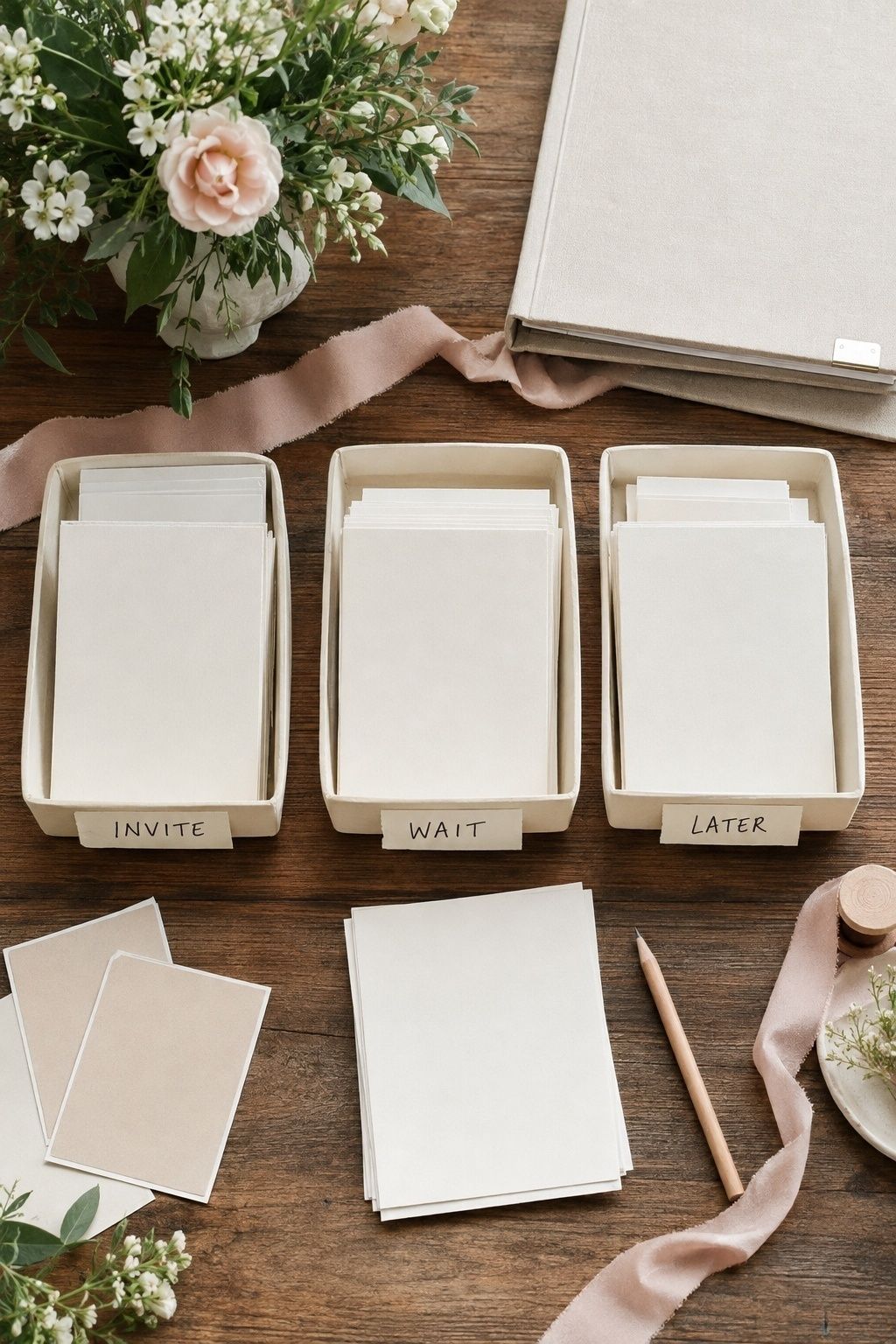
After the A list, group people by relationship type rather than by personal worth. Close extended family, active friends, childhood friends, coworkers, family friends, neighbors, parents’ friends, distant relatives, and old social circles each become a category.
This is the cleaner way to think about A-list and B-list wedding guests. The purpose is not to make anyone feel second-class. The purpose is to see which circles fit after the must-invite list and which circles push the wedding past the budget.
A tiered view also helps couples avoid random exceptions. If coworkers are outside the final circle, all coworkers stay outside it. If only close extended family fits, distant relatives wait. The decision becomes explainable without turning one person into the problem.
Once the tiers are visible, mark each group as invite, wait, or release. The wait group should be small and realistic, not a secret second wedding. If enough declines arrive before final counts, the couple already knows which group receives the next invitations.
Cut By Rules Before Cutting By Names
Guest-list rules are kinder when they come before names. Try rules such as no coworkers unless there is a real friendship outside work, no distant relatives neither partner has seen recently, no parents’ friends unless both partners know them, and no reciprocal invites from weddings years ago.
The rule-first method gives each cut a reason beyond personal preference. It also lowers the chance that one side feels targeted. Instead of saying a particular cousin is not invited, the couple is saying the wedding only includes relatives they actively see.
Use rules in layers. Remove unknown dates first, then distant social circles, then old obligations, then parent-added lists. Each layer reveals how close you are to the target headcount before more sensitive decisions appear.
Write the rules in plain language before anyone starts negotiating. A rule that sounds harsh on paper will sound worse in conversation. A rule that feels clear, kind, and connected to the wedding size is usually strong enough to repeat when pressure arrives.
Apply The Same Rule On Both Sides
Fairness matters more than perfect symmetry. One partner often has a larger family, the other often has more close friends, and the final list does not have to split exactly in half. Still, the same logic should apply across both sides.
If distant relatives are outside the plan, that rule should not quietly disappear for one family branch. If only named long-term partners are invited, casual dates should not slip in for a favorite guest. Consistency makes the smaller guest list easier to defend.
When a rule creates an unfair result, adjust the rule openly as a couple. Hidden exceptions create the very resentment a smaller wedding guest list is supposed to avoid.
This is also where family culture matters. One side often treats every cousin as close family while the other side thinks of cousins as occasional holiday company. Talk about the closeness behind the label, then build a rule that respects the relationship instead of relying only on the word cousin, aunt, or family friend.
Set Parent Guest Limits Early

Parent guest list limits need to arrive before parents start mentioning the wedding to friends. Give each family a number, explain the total venue and budget limit, and ask for names inside that number rather than an open-ended wish list.
If parents are contributing money, talk about what that contribution covers. Extra guests are not just extra plates; they also affect space, rentals, invitations, transportation, and the tone of the room. A financial gift does not automatically mean unlimited invitation authority.
A calm script helps: We are keeping the wedding very intimate and have room for a small number of family guests beyond our core list. Please send the names that matter most to you by Friday, and we will confirm what fits before invitations go out.
If a parent pushes back, return to the number instead of relitigating every name. The wedding has a fixed size, and the family portion has a fixed size inside it. That boundary leaves room for parent input without handing over the entire list.
Decide Plus-One Rules Before Invitations
Plus-one budget decisions become painful when they are made one request at a time. Decide the rule before envelopes, websites, and RSVP forms exist. Many couples invite spouses, engaged partners, live-in partners, and long-term named partners, then skip unknown dates.
There are thoughtful exceptions. A guest traveling alone to a destination, someone who knows almost no one, or a member of the wedding party deserves a comfort check. Name those exceptions early so they do not become a chain reaction.
The rule should also appear in the mechanics. Address invitations clearly, keep RSVP forms limited to named guests, and use one direct answer when someone asks. A clear system saves the couple from negotiating the same budget decision for weeks.
Think about social comfort as well as money. A guest inside a close friend group is often perfectly happy solo. A guest traveling far with almost no familiar faces deserves a named-partner review. The point is to decide deliberately, not automatically.
Decide Whether Children Are Included
Adults-only wedding decisions are often about money, space, bedtime, travel, and atmosphere at the same time. The cleanest options are adults-only, children in immediate family only, wedding-party children only, or children above a certain age.
Choose the rule that fits the event you are hosting, then apply it steadily. A formal evening dinner, restaurant buyout, tiny ceremony room, or venue with limited seating often needs a different child policy than a backyard afternoon celebration.
Avoid making the decision sound like a judgment on children. Frame it around the size and style of the wedding. We are keeping the celebration adults-only because of space and budget is clearer than a long defense of every planning reason.
Make the child policy visible early enough for travel planning. Guests with children need time to arrange care, especially for an evening wedding or a destination weekend. Clear timing is part of kindness, even when the answer itself disappoints someone.
Remove Obligation Invites Gently
Obligation invites often hide in plain sight. They are the people you feel you should invite because they invited you years ago, work with a parent, live on the same street, share a wider friend group, or would notice the wedding online.
Those names deserve kindness, but they do not automatically deserve seats at a wedding the couple is struggling to afford. A smaller celebration asks a different question: who is actively part of your life now and part of the room you want to host?
Cut obligation invites in categories rather than one dramatic sweep. No neighbors. No clients. No old school friends outside active friendships. No reciprocal invitations that exist only because another wedding happened in a different season of life.
If you feel guilty, ask whether you would host that person for a long dinner next month. If the honest answer is no, the wedding invitation is probably carrying social anxiety rather than real connection. That does not make the person unimportant; it simply means the wedding is not the place to solve that old pressure.
Stop Adding People After The Venue Is Chosen
Late additions often break the guest-list budget. Once the venue, room layout, catering count, and rental plan are chosen, every new guest changes more than a chair. A small room especially loses its shape quickly.
Set a list close date with your partner and treat it like any other booking deadline. After that date, new names go onto a wait list only if someone declines before final numbers are due.
This also protects emotional energy. Without a close date, every conversation becomes a possible invitation debate. With a close date, the couple has an answer: the guest list is set because the room, budget, and meal count are set.
Share the close date with anyone helping manage invitations. Parents, planners, and family members should know when the list becomes final. Otherwise, kind relatives keep opening doors you have already paid to close. A firm date also keeps stationery, seating, and meal counts from turning into moving targets. It gives every helper the same boundary.
Use A Consistent Small-Wedding Explanation
A consistent explanation keeps the couple from overexplaining. Try this: We are keeping the wedding very small because of budget and space, so we are only inviting immediate family and closest friends. It is brief, true, and does not blame one side.
The sentence works because it connects the decision to the event, not to the person asking. It also avoids ranking language. You do not need to say someone missed the A list or was almost invited.
Use the same wording in conversations, on the wedding website, and through parents if they are fielding questions. Consistency keeps an intimate guest list from sounding like a series of improvised excuses.
If someone asks for more detail, you are allowed to stay brief. We wish we could celebrate with everyone, but the space and budget are very limited is enough. The more you explain, the more openings people see for negotiation.
Plan A Lower-Cost Way To Include Others Later
Some couples like a softer landing for people outside the wedding. Options include sharing photos afterward, hosting casual drinks months later, planning a family meal, or sending a warm announcement. This is optional, not a debt.
Only choose an after-plan if it fits your budget and emotional bandwidth. A second event that creates more spending pressure defeats the purpose. Sometimes the kindest plan is simply a gracious message after the wedding and no extra gathering.
If you do include others later, keep the language simple. We had a very small ceremony and would love to celebrate with you over dinner soon feels warmer than explaining the entire guest-list process again.
Do not promise a later gathering to soften every no. Promises made from guilt become another obligation list. Choose one realistic way to include others, or choose none and let the wedding remain the wedding.
Who To Cut First When The Budget Is Tight
When the budget is already tight, start with the lowest-impact circles. Unknown plus-ones usually come first, followed by children outside the closest family circle, coworkers, parents’ friends, distant relatives, people neither partner has seen recently, and guests invited only because of past reciprocity.
That order protects the emotional center of the day. It keeps immediate family, closest friends, and active relationships in the room while reducing the invitations most likely to be expensive rather than essential. The list keeps its clear purpose and emotional shape.
If the list is still too large, return to the target number and review by category again. Do not let guilt refill the list after every cut. A smaller wedding list only works when the couple allows the math and the meaning to stay in the same conversation.
For couples who need to cut deeply, make the first pass privately and take a day before sending anything. Fresh cuts feel sharper in the moment. A short pause helps you see whether the remaining list still feels loving, balanced, and financially honest.
How To Explain The Guest List To Family
Family conversations go better when the couple leads with the shared limit, not with individual names. The room holds this many. The budget supports this many. We are choosing a small wedding so we are able to host everyone well.
Give parents practical choices inside the boundary. Offer each side a fixed number of extended-family or family-friend seats, then ask them to prioritize. If they want more seats and are contributing funds, decide together whether the event itself still supports a larger count.
Avoid blaming one partner, one parent, or one side of the family. The guest-list decision should come from the couple as a united choice. That unity is what keeps pressure from turning into negotiation.
If relatives offer to pay for extra seats, slow down before saying yes. More money solves only part of the issue. More guests also change the room, the feeling, the timeline, the seating plan, and the amount of time you have with each person.
What Not To Do When Cutting The Guest List
Do not discuss tiers publicly. No one needs to hear that they were on a B list, almost invited, or replaced by a decline. Keep the mechanics private and share only the final explanation.
Do not invite people to showers, engagement parties, or bachelor or bachelorette events if they are not invited to the wedding, unless the social circle already understands the wedding is extremely small. Pre-wedding invitations often feel like signals of a wedding invitation.
Do not make casual exceptions after giving a firm answer. One extra coworker, one extra cousin, and one extra parent friend turn the rule into a suggestion. If an exception is truly necessary, make it as a couple and understand what it replaces.
Finally, do not apologize as though your smaller wedding is a failure. A reduced list is still generous when the people invited are fed, seated, welcomed, and present with you in a celebration you are able to afford.
Also avoid using social media as a pressure valve before the wedding. Public countdowns, venue clues, and excited comments from invited guests create confusion for people outside the room. Keep details modest until after the celebration if privacy will make the guest-list boundary easier.
FAQ
How do you cut a wedding guest list to save money?
Start with the amount you are truly able to host, then turn that number into fair invite rules. Remove whole categories before individual names: unknown dates, distant coworkers, far relatives, children outside the closest circle, and old obligation invites. A shared rule feels kinder than a personal ranking.
How much money can cutting wedding guests save?
Cutting guests often saves far more than the dinner price alone. Each name also affects bar service, rentals, chairs, linens, stationery, favors, transportation, staff, and venue size. Price ten fewer guests as a full event change, then decide whether that savings protects food quality, photography, cash reserves, or debt avoidance.
Who should you cut from a wedding guest list first?
Begin with people who are least tied to the life you share now: unknown plus-ones, coworkers outside real friendship, distant relatives you rarely see, parents’ friends who do not know both partners, and anyone included only because of old reciprocity. Keep the people whose absence would change the emotional shape of the day.
How do you reduce a wedding guest list without hurting feelings?
Use one calm explanation and repeat it consistently. Say the wedding is intentionally small because of budget and space, then avoid debating individual exceptions. Hurt feelings lessen when the rule applies across both sides, parents hear the limit early, and no one discovers later that flexible exceptions were made casually.
Should you cut plus-ones or kids to save money?
Plus-ones and children are reasonable places to review when the budget is tight, as long as the rule is clear before invitations go out. Invite named partners, consider travel comfort for solo guests, and choose either adults-only, immediate-family children only, or a specific age line. Consistency matters more than popularity.
How do you explain a smaller guest list to family?
Connect the smaller list to the wedding you are actually hosting: the budget, the room, and the desire for an intimate celebration. Give parents a number before they begin making promises. If they contribute money, discuss whether extra guests come with extra funding, but keep final invitation authority with the couple.
Final Thoughts
A guest list is one of the few wedding decisions that changes almost every other number. That is why the process deserves care. When you set the headcount first, price the ripple cost of each guest, and cut by shared rules, how to cut a wedding guest list to save money becomes less like rejection and more like stewardship.
The smaller room is not automatically less loving. It often gives you more time at dinner, fewer rushed conversations, a ceremony that feels present, and a budget that does not follow you into married life. Let the final list reflect the wedding you are able to host beautifully, honestly, and kindly.
If you need one last reality check, price the food, drink, rentals, stationery, and favors together before final names are locked.
Last update on 2026-10-03 / Affiliate links / Images from Amazon Product Advertising API