

Gen Z wedding spending is split between two truths: wedding costs are climbing in 2026, and many younger couples are trying to keep budgets below the national average. The healthiest question is not whether your number matches a headline average. It is whether your guest count, priorities, and debt risk match your real life.
It is easy to feel as if everyone else has a bigger wedding budget, a better venue, a longer weekend, and a camera-ready plan that somehow appeared without financial consequences. Gen Z couples are entering wedding planning in a strange moment: costs are high, social feeds are loud, family expectations still exist, and many people are also thinking about rent, student loans, home savings, work instability, and everyday prices.
So the real conversation is more nuanced than “Gen Z spends less” or “Gen Z wants an expensive wedding.” Plenty of younger couples still care deeply about photography, fashion, food, florals, guest experience, and tradition. They are simply more likely to question which parts deserve the money, which parts are inherited pressure, and which parts would leave them paying for one day long after the day is over. If you’re working through how much should a small wedding cost as a whole, the main guide covers it.
Recommended Wedding Products


You Might Also Like These Blog Posts
- Gen Z Wedding Budget Tips For A Celebration That Still Feels Like You
- Why Are Weddings So Expensive And What Can You Actually Control
- What Wedding Details Are Worth Splurging On For A Small, Personal Celebration
- How To Avoid Wedding Debt And Still Celebrate Beautifully
- Is A Wedding Worth The Money When You Want Meaning More Than Pressure
- Gen Z 1990s Wedding Dress Ideas With Cool-Girl Ease
What Gen Z Is Really Spending On Weddings
What Gen Z is really spending on weddings depends less on age alone and more on location, guest count, family help, venue type, and the kind of celebration a couple is trying to host. A city wedding with 140 guests and a full vendor team lives in a different financial world than a 35-person restaurant wedding, a backyard dinner with rented basics, or a courthouse ceremony followed by a private room meal.
The broader wedding market still matters because it shapes the pressure couples feel before they book anything. Wedding spending is rising in 2026, and mid-five-figure averages keep showing up around planning conversations. At the same time, Gen Z couples are showing up with more budget caution than older cohorts. Many are aiming below that national average, especially when they are paying with their own income or trying to protect savings goals.
That combination creates the tension many engaged couples feel. The market tells you weddings are expensive. Social media tells you every moment should look intentional. Your bank account tells you a very different story. A realistic Gen Z wedding budget has to listen to all three without letting the loudest one run the entire plan.
Wedding Spending Is Rising Overall

Wedding costs are not rising because couples suddenly forgot how to be reasonable. Venues, catering, staffing, rentals, apparel, florals, photography, travel, service fees, and imported goods have all felt pressure from broader economic conditions. Even couples planning modest weddings often notice that the basic version of an event costs more than expected once taxes, gratuities, delivery, setup, cleanup, and minimum spends appear.
For Gen Z, that means the first quote often lands with a thud. A couple imagines a simple dinner, then learns that food and beverage minimums, private-room fees, staffing charges, cake cutting, bar options, and rental upgrades quickly push the number higher. The wedding is not extravagant. It is simply an event in a more expensive event market.
This is why averages work only as weather signs. They show the climate, not what you personally should spend. If the average wedding cost feels unreachable, that does not mean you are behind. It means your plan needs to be built from your own guest count, city, priorities, income, savings, and boundaries rather than from a number designed to summarize thousands of very different weddings.
Gen Z Is Entering The Market At A Hard Time
The oldest Gen Z couples are now fully in the marrying years, but they are not entering the wedding market with the same financial backdrop as couples from earlier seasons. Many are planning while rent remains high, entry-level salaries vary widely, debt still shapes monthly choices, and long-term goals such as home buying or family planning feel expensive before a wedding is even added.
That does not make Gen Z anti-wedding. It makes them more alert to tradeoffs. They want the day to feel beautiful, personal, and worth gathering for, but they are also wary of spending money just because a traditional checklist says so. They are more likely to ask whether an expense adds comfort, memory, meaning, or a clearer guest experience before treating it as automatic.
Family help also changes the picture. Some Gen Z couples receive meaningful support from parents or relatives, while others self-fund the entire wedding or receive money with expectations attached. The same $25,000 wedding feels different when it comes from years of personal savings, a no-strings family gift, or credit card balances that follow the couple into married life.
Many Gen Z Couples Budget Below The National Average
One of the clearest 2026 planning patterns is that Gen Z couples are often aiming lower than the national average. That does not mean every Gen Z wedding is tiny or inexpensive. It means a large share of younger couples are beginning with smaller targets, tighter category limits, or a stronger desire to avoid spending more than they comfortably absorb.
This matters because “average” gets mistaken for “normal.” A $36,000 average does not mean a $12,000, $18,000, or $25,000 wedding is unserious. It means you are choosing a different structure: fewer guests, a simpler venue, shorter coverage, a restaurant meal, a weekday date, fewer events, borrowed decor, or one strong focal detail instead of many small upgrades.
The useful question is whether your budget and your wedding shape agree with each other. A lower budget paired with 175 guests, a peak Saturday, premium bar, elaborate florals, full-service planner, and three events creates friction. A lower budget paired with 35 guests, a meaningful ceremony, a generous meal, and careful priorities often feels abundant because the money is serving a smaller, clearer plan.
They Are Spending Differently, Not Just Less
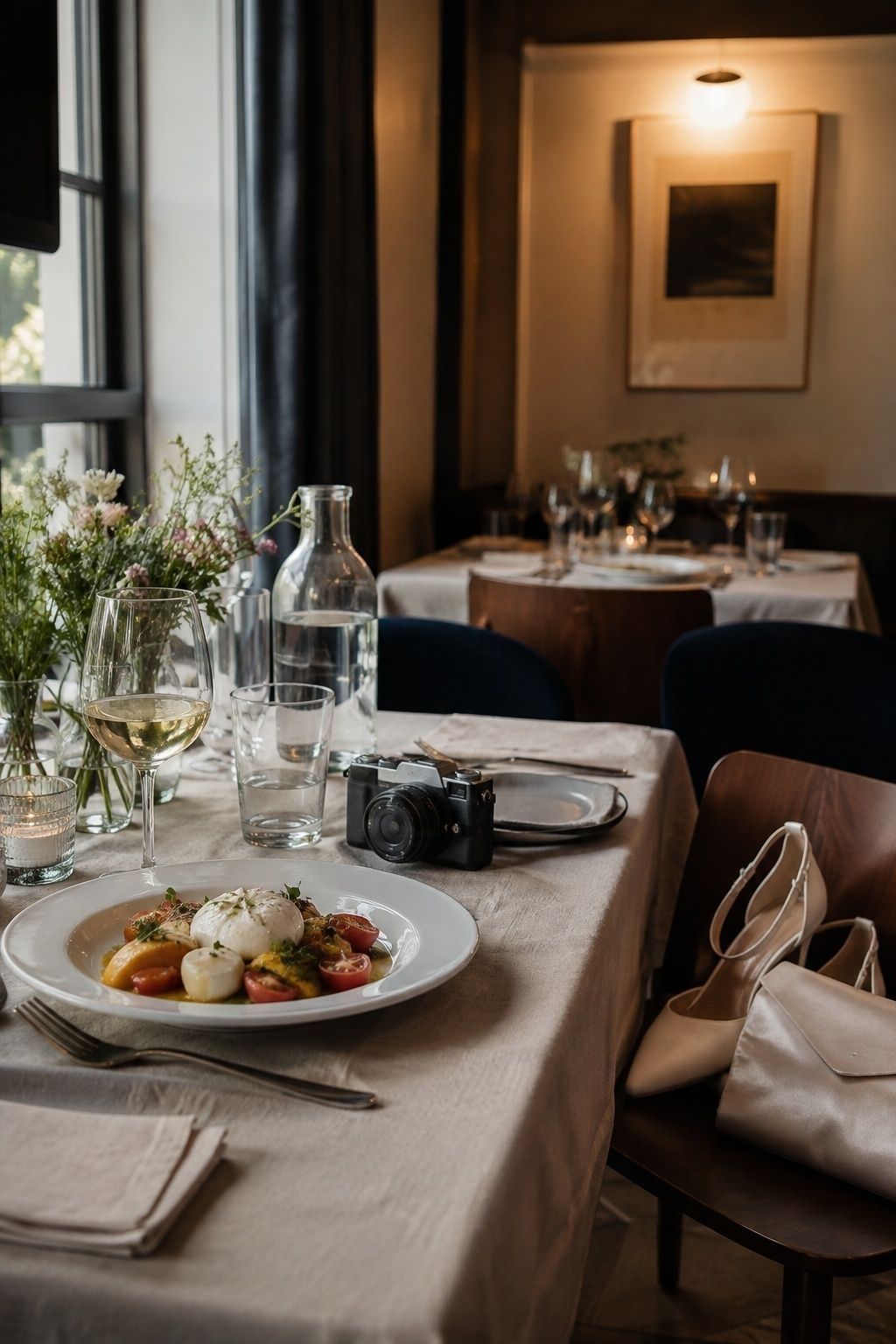
The most interesting Gen Z budget shift is not pure minimalism. It is selective spending. Couples are skipping some inherited traditions while spending more intentionally on the parts that feel visible, emotional, or genuinely useful. Photography, video, food, fashion, ceremony personalization, guest comfort, and a few design moments often outrank generic favors, large invitation suites, or decor that exists only to fill space.
That selective approach is practical, but it is also emotional. Gen Z grew up online, so visual memory carries real value. One couple happily skips a formal cake cutting but protects documentary photos. Another avoids a huge floral budget but spends on a dress that feels like personal style. A smaller guest list often leaves the meal, music, and conversations feeling more considered.
Spending differently also means questioning category defaults. Do you need a full wedding party, or would close friends still feel loved without matching outfits? Do you need favors, or would late-night snacks feel kinder? Do you need an entire weekend, or would one excellent evening leave everyone with a better memory? The money starts behaving better when every category has to explain its purpose.
Social Media Pressure Is Real
Social media gives couples wonderful ideas and terrible math. A single feed often shows a destination welcome party, a custom dress, editorial florals, vintage film portraits, a champagne tower, handwritten menus, guest outfit coordination, and a private last dance without showing the actual budget, location, vendor team, sponsorship, family funding, or guest count behind it.
Gen Z couples are especially fluent in visual culture, which makes inspiration both easier and more stressful. It is not shallow to care how the day looks. Beauty helps memories stick. The problem begins when an image becomes a mandate instead of a possibility. A wedding that feels “social media worthy” at the expense of rent, savings, sleep, or peace is asking too much from the couple.
A healthier filter is to translate every online idea into a real-life job. Does it improve guest comfort? Does it make the ceremony feel more personal? Does it capture a memory you will truly want? Does it replace something else rather than add to the bill? If the idea has no job beyond looking like someone else’s wedding, admiration is enough. You do not have to buy it.
Guest Count Is The Biggest Budget Lever
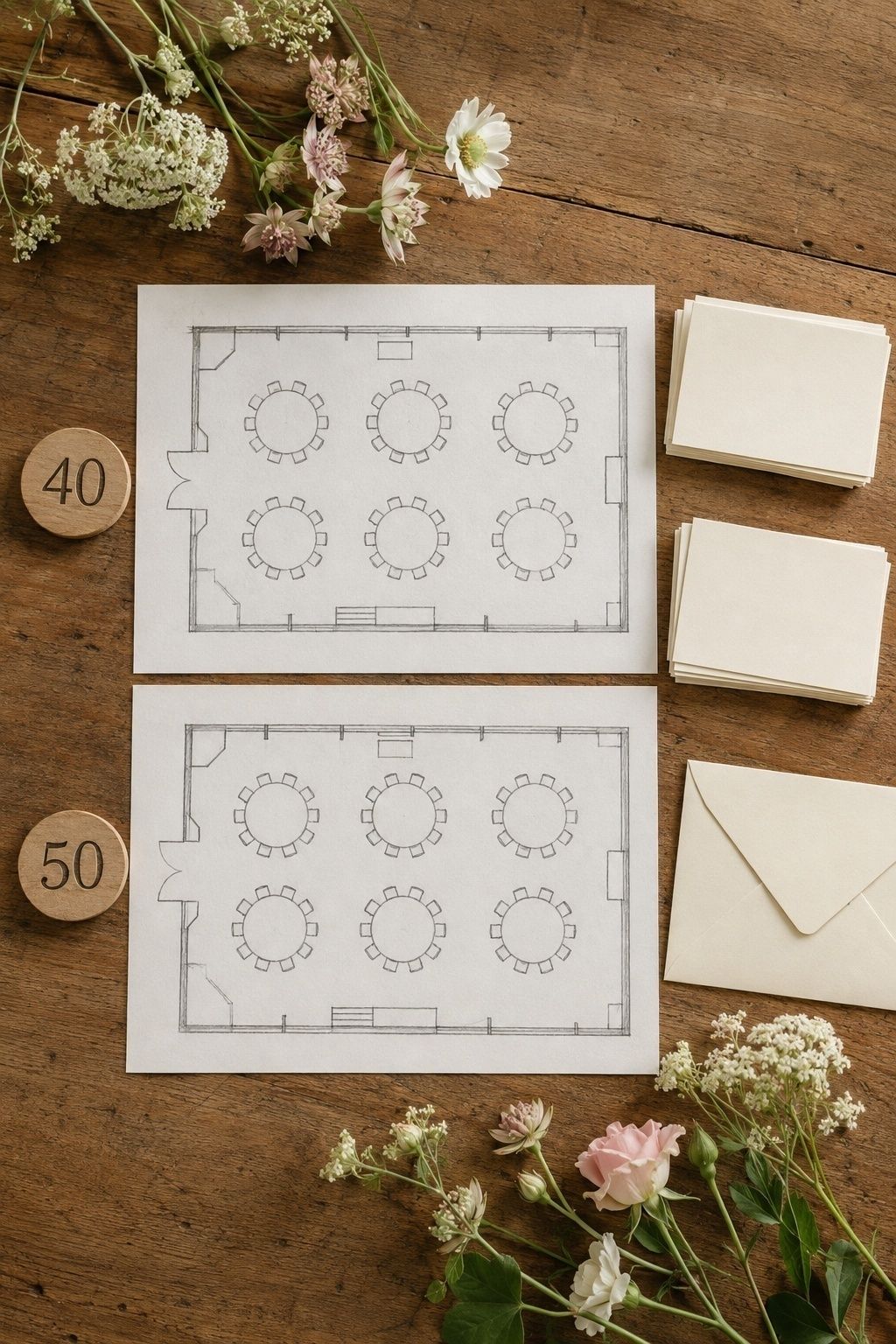
The guest list is where a Gen Z wedding budget usually becomes real. Each additional guest affects food, drinks, rentals, staffing, stationery, favors, cake, transportation, venue size, and sometimes security or coordination. A few extra tables rarely mean only a few extra chairs. They change the entire category structure of the wedding.
This is why a couple trying to stay under a careful budget should start with headcount before arguing about napkins. A 60-person wedding and a 140-person wedding are not the same event with different attendance. They require different rooms, different service, different sound, different timelines, and different emotional energy. Your guest count is not just a social decision. It is the skeleton of the budget.
If you are paying for the wedding yourselves, try pricing the guest list in groups of ten. What happens when you move from 40 to 50, 80 to 90, or 120 to 130? Seeing the cost of ten more people often clarifies whether the addition feels loving or automatic. It also makes family conversations more concrete because you are discussing actual hosting capacity, not abstract generosity.
Small Weddings Are A Realistic Fit For Many Gen Z Budgets

A smaller wedding is not a consolation prize. For many Gen Z couples, it is the format that makes the celebration financially and emotionally possible. Fewer guests create room for better food, calmer conversation, a venue that feels intimate, shorter planning, fewer rentals, and more money left for life after the wedding.
Small does not have to mean bare. A 25-person ceremony and dinner feels deeply generous when the meal is thoughtful, the timeline is humane, and the people invited truly matter. A 50-person wedding still has room for beautiful flowers, dancing, speeches, portraits, and style. The difference is that the budget is concentrated instead of stretched across a room full of people you felt pressured to include.
The hard part is not always logistics. It is permission. Couples often know a smaller wedding would fit their money and personalities, but they worry about disappointing relatives, friend groups, coworkers, or parents. That is real. Still, a wedding budget built to avoid every uncomfortable conversation often becomes far more expensive than the conversation itself.
Decide These Categories First
Before spending on details, decide the categories that shape the whole wedding: guest count, venue, food and drink, ceremony, photography or video, attire, music, florals or decor, planning help, and contingency. These categories reveal whether the wedding is financially coherent. They also show where your priorities are competing with each other.
Start by naming three non-negotiables and three flexible categories. Maybe the non-negotiables are a private ceremony, excellent dinner, and film-style photos. Maybe they are a large family guest list, live music, and religious tradition. Once those are named, the flexible categories become easier to simplify because they are no longer secretly expected to carry the whole emotional weight of the day.
Then leave money unassigned. A wedding budget with no buffer is not a budget. It is a wish list. Service charges, postage, steaming, alterations, tips, transportation, guest count changes, and last-minute supplies all appear somewhere. A realistic Gen Z wedding plan protects a contingency so every surprise does not become a small financial emergency.
Cuts That Do Not Have To Cost Meaning

The best budget cuts remove low-emotion spending before they remove the parts that make the day feel like yours. Favors, elaborate signage, extra stationery cards, matching robes, wedding party gifts no one asked for, premium chair upgrades, late-night add-ons, multiple outfit changes, and oversized floral installations are all optional when they are not central to your actual joy.
Reduce cost by changing format rather than quality. Choose brunch instead of dinner, a restaurant instead of a blank venue, shorter photography coverage instead of no photographer, seasonal flowers instead of imported blooms, a single signature drink instead of a full premium bar, or a ceremony-and-dinner plan instead of a weekend of events.
Meaning usually lives in presence, hospitality, vows, music, food, memory, and the people in the room. If a cut protects those things, it is probably wise. If a cut removes the one detail you would remember for years, look somewhere else first. A budget should not punish you for caring. It should help you care in the right order.
When Spending More Feels Worth It
Sometimes the more expensive choice is the calmer choice. A venue that includes tables, chairs, staff, food, cleanup, and weather backup often costs more upfront but saves money and stress compared with a cheaper blank space. A coordinator feels optional until you realize your relatives would otherwise be answering vendor questions during the ceremony.
Spending more also makes sense when it protects memory or comfort. Photography matters if you know you will care about the images for decades. Good food matters if the wedding is built around hosting. Accessibility matters because guests should not have to struggle through the celebration. Weather backup matters because optimism is not a tent.
The key is to distinguish value from upgrade momentum. Value solves a problem, deepens meaning, or protects the experience. Upgrade momentum happens when every choice nudges one tier higher because the higher tier photographs better or sounds more legitimate. Gen Z couples do not need to reject spending. They need to spend with a reason they would still respect after the wedding is over.
A Practical Budget Reset
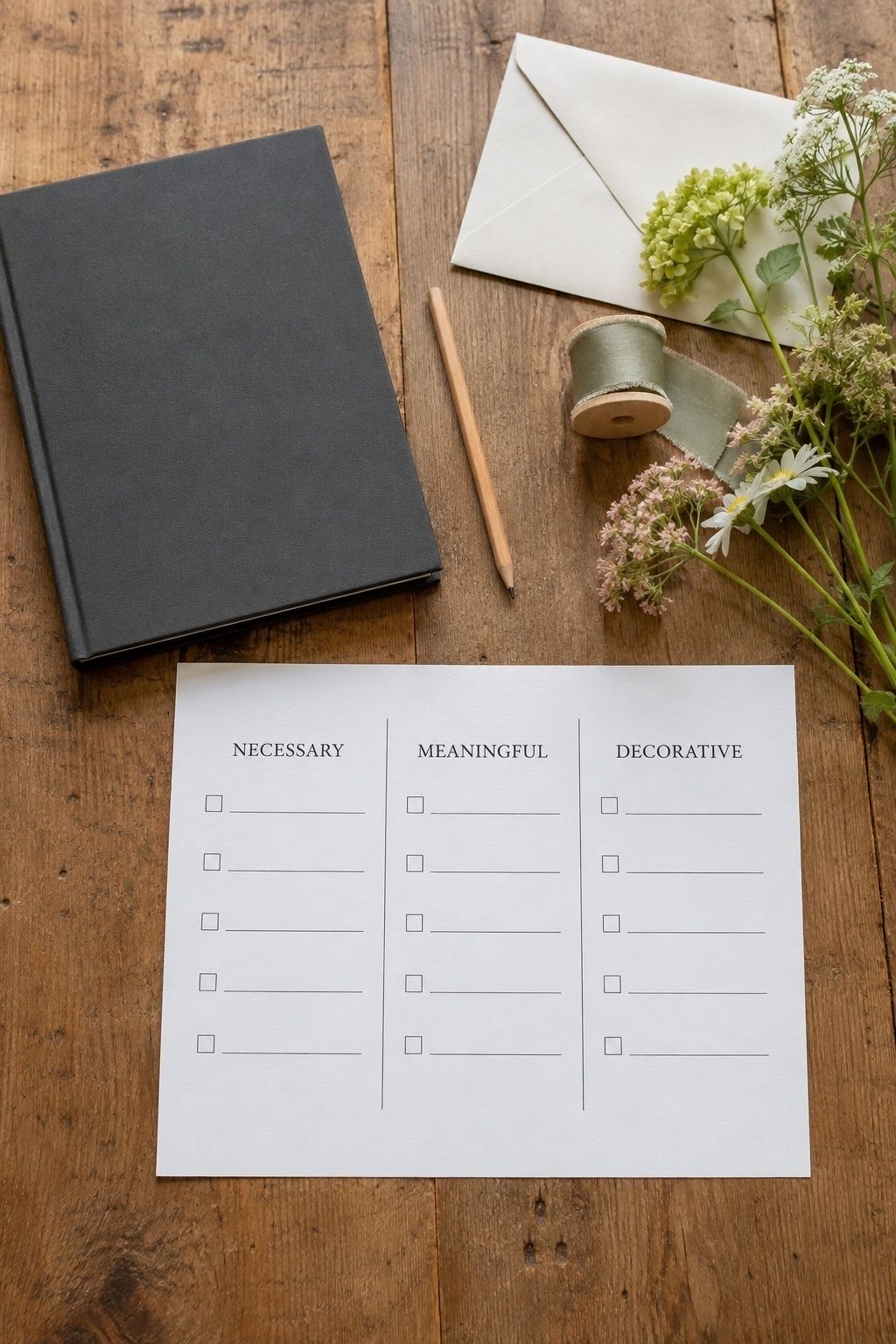
If your wedding budget already feels swollen, do a reset before signing another contract. Write the current total, the true maximum, the amount already paid, what is refundable, what is fixed, and what remains flexible. Then sort every unpaid item into three groups: necessary, meaningful, and decorative.
Necessary items keep the wedding functioning: ceremony, meal, seating, restrooms, basic sound, accessibility, contracts, timing, legal paperwork, and guest communication. Meaningful items carry emotional weight: photos, flowers, music, attire, cultural traditions, a favorite meal, or a special family moment. Decorative items are not bad. They just should not outrank the first two groups when money is tight.
Next, reduce guest count or format before trimming tiny amounts from every category. Many couples try to solve a $10,000 mismatch with $80 cuts, which creates weeks of stress and very little relief. Bigger structural choices, such as guest count, venue style, meal format, event count, or date, usually do more honest work.
What This Means For Small Wedding Planning
Small wedding planning works best when the budget is treated as a design tool, not a shameful limitation. A smaller guest list changes the kind of celebration available to you. It opens private dining rooms, garden lunches, courthouse-plus-dinner formats, family homes, boutique venues, and shorter timelines that would feel strange or impossible with a very large crowd.
It also makes priorities more visible. If there are 30 guests, everyone notices the meal, the ceremony words, the seating, the music, and the way the couple moves through the room. You do not need to fill empty space with decor if the room is already full of people who know you well. Intimacy does some of the design work.
For Gen Z couples, this is often the sweet spot: not a wedding stripped of personality, but a wedding built around fewer automatic expenses. The day still feels stylish, romantic, and memorable. It just does not have to carry the cost structure of a much larger event.
Budget Conversations Without Shame
Money conversations get easier when they are specific. Instead of saying, “That is impossible for us,” try saying, “We are keeping the wedding under this number because we also want to protect savings after the wedding.” That frames the decision as shared care, not failure. It also reminds everyone that the marriage has a life after the reception.
Use the same clarity with family. If loved ones offer money, ask what amount they are comfortable contributing, when it would be available, and whether they have hopes attached to it. If they request guests, traditions, or upgrades, translate the request into cost. Warmth and math should sit in the same conversation when other people are shaping the budget. There’s more in our Budget Weddings collection.
Most importantly, talk to each other without turning the wedding into a test of devotion. Wanting a beautiful day is not irresponsible. Wanting to avoid debt is not unromantic. A good wedding budget gives both partners room to say what matters, what scares them, and what they are willing to trade for peace. Keeping it small? There’s a full guide on planning a small wedding.
FAQ
What is Gen Z really spending on weddings?
Gen Z wedding spending varies widely, but the pattern in 2026 is mixed: overall wedding costs are high, while many Gen Z couples are aiming below the national average. Their final number depends on guest count, location, family help, venue style, food and drink, photography, fashion, and how much they choose to trim from traditional wedding categories. More on why are weddings so expensive is in its own guide.
Are Gen Z couples spending less on weddings?
Many Gen Z couples are budgeting less than the national average, but that does not mean they care less about weddings. They are often spending selectively: protecting categories that feel meaningful or visible, while questioning guest count, favors, extra events, large wedding parties, and details that feel more expected than personal. For the next step, see what wedding details are worth splurging on.
Why are weddings getting more expensive for Gen Z?
Weddings are getting more expensive for Gen Z because venues, catering, staffing, rentals, flowers, apparel, travel, and service costs have all been affected by broader price pressure. Younger couples are entering the market just as the basic cost of hosting a formal event has become harder to absorb.
What wedding costs are Gen Z couples prioritizing?
Gen Z couples often prioritize photography, video, food, fashion, ceremony meaning, guest experience, and details that feel personal or visually memorable. Many are less attached to default extras such as favors, oversized invitation suites, unnecessary rentals, or decor that exists only because other weddings included it.
How can Gen Z plan a wedding without debt?
Gen Z couples plan without debt by setting a true spending ceiling, writing the guest list before booking, avoiding contracts based on hoped-for contributions, tracking every deposit, leaving a contingency, and cutting structure before relying on tiny category trims. The most powerful choices are usually guest count, venue type, meal format, event count, and date.
Are small weddings a good fit for Gen Z budgets?
Small weddings are often a strong fit for Gen Z budgets because they reduce the biggest cost driver: headcount. A smaller guest list creates room for better food, calmer planning, meaningful photography, and a celebration that feels generous without requiring the financial structure of a much larger wedding.
Final Thoughts
What Gen Z is really spending on weddings is not one neat number. It is a negotiation between rising costs, online inspiration, family support, personal values, guest count, and the very real desire to start married life without dragging a wedding bill behind you. Your budget does not have to impress a national average. It has to protect the life you are building.
Build the wedding around the money you would still feel peaceful about six months later, then let every upgrade prove it deserves space.
Last update on 2026-11-29 / Affiliate links / Images from Amazon Product Advertising API