

What to do when wedding planning feels overwhelming starts with one pause, one clean list, and one next decision. Stop planning for the day, get every spinning thought out of your head, mark only the choices that are truly urgent, and give yourself permission to shrink the wedding until it fits your real life again.
There is a specific kind of tired that arrives when wedding planning stops feeling like a celebration and starts feeling like another occupation with flowers attached. You open your inbox and see vendor replies. You check your phone and see opinions. You look at your budget and wonder when one party became this many tabs, deposits, texts, fittings, tastings, timelines, and tiny decisions about napkin folds.
If your brain is quietly threatening to elope, that does not mean you are ungrateful, dramatic, or bad at planning. It means the wedding has outgrown the space you have for it right now. The goal is not to push harder. The goal is to lower the noise, separate urgent choices from emotional clutter, and return to the kind of wedding you are able to actually look forward to.
This conversation is for the couple staring at too many open loops: the venue question, the guest list, the budget, the dress appointment, the color palette, relatives’ expectations, and the saved images that once felt dreamy and now feel accusatory. We are going to bring the whole thing back down to earth, one humane decision at a time.
Recommended Wedding Products


You Might Also Like These Blog Posts
- How To Avoid Wedding Decision Fatigue When Every Choice Feels Too Loud
- How To Keep Wedding Planning Romantic When Your To-Do List Has Other Plans
- How TikTok Affects Wedding Planning When Every Idea Feels Urgent
- How To Simplify Wedding Planning Without Making The Day Feel Smaller
- How To Stop Second Guessing Wedding Decisions After The Deposit Is Paid
- How To Make A Wedding Less Stressful Without Checking Out Of The Joy
What To Do When Wedding Planning Feels Overwhelming
When wedding planning feels overwhelming, the kindest first move is to stop treating every thought as a decision. A flooded brain does not sort priorities well. It turns linen colors, parent comments, hotel blocks, hair trials, vendor contracts, playlists, and cake flavors into one giant emergency. The work is to slow the pile down until the real next priority becomes visible.
Start by naming the state you are in. You are not behind on every part of the wedding. You are carrying too many open questions at once. That difference matters. A behind couple needs a calendar. An overloaded couple needs relief before the calendar begins to make sense.
For small and intimate weddings, overwhelm often comes from planning as if you are hosting a large traditional event while trying to preserve the emotional ease of something personal. You do not need the entire wedding industry menu. You need the essentials that hold your ceremony, your guests, your meal, your legal requirements, your budget, and the feeling you want in the room.
That is why what to do when wedding planning feels overwhelming is really a question about fit. The plan should fit your lives before it fits anyone else’s idea of a proper wedding celebration. Once it fits, these ideas on how to keep wedding planning romantic help protect it.
Think of this as a reset, not a rescue. The wedding is not ruined because you are tired. Your plan is asking to be simplified. The next sections offer a same-day way to calm the immediate spiral, then a deeper way to reduce decision fatigue, release pressure, and ask for backup before the whole season becomes one long clenched jaw.
The most clarifying question is not, “How do we get everything done?” It is, “What is the next honest version of this wedding?” That version often stays almost exactly the plan you already have, with firmer boundaries around planning time. It keeps the same venue with fewer decor projects, fewer guests, fewer events, fewer handmade details, or fewer people weighing in. Relief starts when the wedding stops pretending to be limitless.
One steadying reframe is to separate the wedding into essentials, anchors, and flourishes. Essentials are the elements required for the marriage and the guests you have invited: ceremony, license, food, seating, timing, basic communication, and any booked vendor commitments. Anchors make those essentials work better, such as transportation, weather plans, relative photo lists, and clear setup roles. Flourishes are the beautiful extras. They deserve a place only after the essentials feel steady.
Do A Same-Day Reset
A same-day reset is for the evening when you feel torn between booking the florist, canceling the wedding, crying in the car, or ordering more samples. It does not solve every planning issue. It creates enough quiet for your next choice to become visible.
Stop Planning For One Evening
Close the laptop. Put the vendor tabs away. Step out of the planning conversation for one evening, even if part of you insists that stopping is impossible. Exhausted planning creates false urgency. It also makes ordinary decisions feel permanent and terrifying.
Choose a clear stop time and protect it. Eat dinner without talking about the wedding. Take a walk. Watch something soft. Fold laundry if that feels oddly grounding. The point is not to perform perfect self-care. The point is to remind your nervous system that your whole life has not been swallowed by table counts and payment schedules.
If you are planning with a partner, say the pause out loud: We are not solving the wedding tonight. We are resting so our decisions feel clearer tomorrow. That sentence sounds almost embarrassingly simple, but it draws a line around the spiral.
Write Down Everything Spinning In Your Head

After the first breath of space, write every wedding thought in one place. Do not organize it yet. Do not judge whether it is rational. Empty the mental room. Venue balance, rain plan, aunt’s comment, song choice, guest transportation, vows, shoes, signature drink, rehearsal timing, makeup trial, budget guilt, seating tension, and the fear that everyone else is doing this more gracefully all go on the same page.
This is not a pretty checklist. It is a pressure release. Wedding stress grows when the brain keeps trying to hold errands, emotions, and unfinished conversations in working memory. A messy page gives those thoughts somewhere to sit outside your head.
Use plain labels if they settle the page: money, people, vendors, clothes, ceremony, food, timeline, feelings. If a thought is not actionable, write it anyway. “I am scared the wedding is too much” is not an errand, but it is important information. It points toward the size and pace your wedding plan truly needs.
Circle The Decisions That Are Actually Urgent
Now look at the page and circle only the items with real consequences in the next week. Real urgency usually has a deadline, a contract, a payment, a guest communication need, or a vendor hold attached to it. A florist quote expiring Friday is urgent. Whether the cocktail napkins should be ivory or sage is probably not.
Be almost stern with the word urgent. Wedding planning pressure often disguises preference as emergency. Inspiration boards make every aesthetic choice feel immediate. Relatives’ questions make every boundary feel as if it needs a full explanation tonight. Most choices are fine after one or two days of space.
If everything looks urgent, mark only the decisions that affect other people first. Guests need dates, locations, dress codes, travel clarity, and RSVP information. Vendors need signed agreements, deposits, timelines, and final counts. Your future self needs a budget that still works after the pretty extras have had their say.
Choose One Next Action
Pick one action small enough to finish in under thirty minutes. Send the planner the question. Confirm the tasting time. Choose between two invitation samples. Put the guest list in one shared spreadsheet. Email the venue about ceremony chair options. One complete action calms the mind better than five half-started ones.
The action should be concrete. “Figure out food” is too large. “Ask the caterer whether shared-table service changes the rental count” is clear. “Fix the budget” is too heavy. “Add the photographer’s second payment date to the calendar” has edges.
When the action is done, stop. Do not reward one finished errand with three more. The goal of the same-day reset is to prove that the wedding moves forward without requiring you to sprint through the entire plan in one night.
Put The Rest In A Later List
Everything not urgent goes into a later list. That list is not a junk drawer. It is a holding place for decisions that deserve attention at a better time. Give it a name that feels calmer than “things I am failing at.” Try “later this month,” “after venue,” or “small details.”
Future errands become less threatening when they have a home. You do not need to solve guest favors while finalizing the ceremony location. You do not need to choose getting-ready robes before you know the morning timeline. You do not need to compare three seating-chart displays before the RSVP deadline has passed.
Once the later list exists, schedule one planning block to revisit it. That protects you from the fear that anything not solved tonight will disappear. It also teaches your brain that postponing is not avoidance when the timing is intentional.
Before you close the reset, leave tomorrow-you a kind instruction. Write the first planning block, the first errand, and the stopping point. For example: Thursday, 7:00 to 7:30, compare the two caterer menus and choose which one to ask follow-up questions about. That is enough. A reset works best when it ends with a small doorway back in, not a demand to rebuild the whole wedding before bedtime.
Reduce The Decision Load
Wedding decision fatigue builds when every choice opens into ten more choices. A couple starts by choosing a venue, then suddenly has to choose ceremony direction, rain backup, table layout, menu style, guest count, floral scale, shuttle timing, dress formality, and whether the welcome sign needs a stand. The solution is not to become endlessly decisive. It is to design fewer decision points.
Use Shortlists Instead Of Endless Research
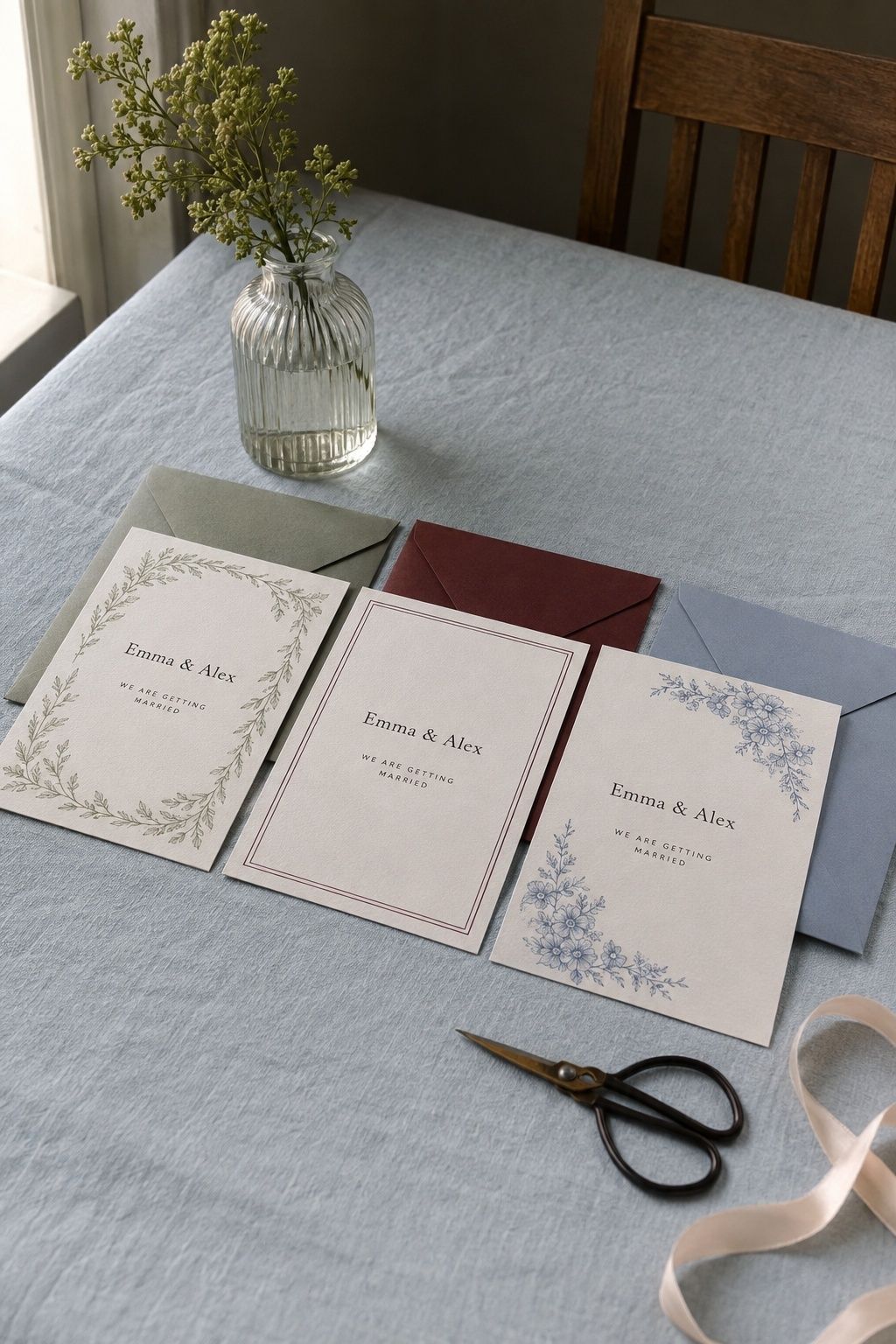
Endless research feels responsible until it becomes a trap. Give yourself a limit before you start: three photographers, three invitation suites, three rehearsal dinner restaurants, three ceremony readings. If none of the three work, then choose three more. Do not keep forty options open because one of them promises secret perfection.
Shortlists are especially steadying for small weddings because the right fit is usually more important than maximum variety. You need the photographer who understands intimate rooms, the caterer who knows how to serve your guest count beautifully, the florist who makes a few arrangements feel intentional, and the venue that does not make a small group feel swallowed by space.
When you compare options, choose two or three criteria before looking. For a photographer, use warm indoor galleries, calm direction, and a package that fits your hours. For a restaurant reception, use private-room feel, menu flexibility, and distance from the ceremony. Criteria turn scrolling into choosing.
Shortlists also make vendor communication less draining. Instead of sending ten inquiry forms and managing ten different reply threads, choose the few that already fit your guest count, location, budget range, and tone. A vendor who is clearly wrong for the wedding does not deserve a place in your inbox just because their gallery looked pretty for three minutes.
Use the same limit for shopping details. Three shoe options, three veil options, three candle styles, three readings, three dessert ideas. The number is less important than the boundary. A boundary turns research into a doorway with an exit, rather than a hallway that keeps adding rooms.
When the shortlist feels complete, choose during daylight hours whenever possible. Clearer timing gives the decision a steadier shape and keeps ordinary wedding details from gathering midnight-sized shadows.
Set Decision Deadlines
A decision without a deadline stays open for weeks and quietly drains you every day. Give each active choice a date. The date does not need to be dramatic. It only needs to tell your brain when the choice will be finished.
Use soft deadlines for style choices and firm deadlines for vendor or guest choices. The ceremony music deserves a soft deadline before the program is printed. The final guest count needs a firm deadline before the caterer requires numbers. The difference keeps you from treating every choice with the same emotional weight.
For partner decisions, choose the date together and decide who prepares what. One person gathers three options. The other reviews them during a planned block. Then you choose. This keeps the decision from becoming a nightly ambush when both of you are tired.
Batch Similar Decisions
Batching means making similar decisions in one sitting so you do not keep switching mental gears. Handle paper details together: save the dates, invitation wording, envelope addresses, RSVP format, and website copy. Handle guest comfort together: transportation, lodging, dress code, ceremony shade, bathroom access, and the meal timing.
This is gentler than bouncing from flowers to budget to shoes to music to hotel blocks in one evening. Each switch requires a new kind of attention. Batching lets your mind stay in one lane long enough to finish something.
It also reveals connections. If you are planning a private dining reception, the menu, seating, speeches, and guest arrival time deserve the same conversation. If you are planning a backyard ceremony, rentals, weather, lighting, sound, and guest movement deserve one focused look together. The wedding becomes a set of connected rooms instead of scattered errands.
Stop Reopening Finished Decisions
One of the fastest ways to exhaust yourself is to revisit choices that were already good enough. You choose the menu, then see a prettier grazing table. You choose the dress, then save another neckline. You choose bud vases, then wonder if compotes would be richer. Every reopened decision charges you twice.
Create a closed list. Once a decision is made, write the choice, the date, and the reason. “We chose the garden room because it fits our guest count, has weather backup, and lets dinner feel intimate.” That reason becomes your anchor when fresh inspiration tries to make you doubt yourself.
Finished does not mean perfect forever. It means the choice fits the wedding you are planning. You are free to admire another idea without inviting it into your budget, timeline, or inbox.
This is especially important after deposits are paid. Once a vendor is booked, shift from shopping mode into collaboration mode. Ask how to make the choice work beautifully. Give them clear priorities. Share the guest count, mood, constraints, and anything you want to avoid. Continuing to shop after hiring someone steals energy from the relationship that shapes the day.
Delete Inspiration That Makes You Feel Worse
Inspiration should make the wedding clearer. If it makes you feel behind, underfunded, unfashionable, or pressured to turn a small celebration into a production, it has stopped serving the plan. Curate your inputs with the same care you use for the guest list.
Image feeds offer plenty of visual language, but they also flatten weddings into performances of abundance. A short clip rarely shows the cost, setup labor, cleanup, weather risk, or emotional tradeoff behind the look. Save what genuinely reflects your day. Release the rest.
Try keeping one board called “actual wedding” and one private folder called “pretty, not ours.” The second folder lets you enjoy beauty without turning every image into homework. Not every good idea deserves a role in your ceremony or reception.
If deleting saved ideas feels too final, archive them instead. Give yourself one week without looking at them. The ideas you miss or remember clearly are probably connected to the wedding you want. The ideas you forget were likely visual noise. This small test softens the fear that you are losing possibilities when you are really gaining peace.
Return To The Wedding You Actually Want
After the immediate overwhelm settles, ask the braver question: is the wedding you are planning still the wedding you want? Sometimes stress comes from ordinary logistics. Sometimes it comes from a celebration that has grown beyond your values, your money, your energy, or your appetite for managing other people’s expectations.
Name The Three Things That Matter Most
Choose three priorities as a couple. Not ten. Three. These priorities are often emotional, practical, or sensory: a meaningful ceremony, a beautiful dinner, great photography, a calm morning, a tiny guest list, staying out of debt, having grandparents comfortable, or ending the night still happy with each other.
These priorities become the spine of the wedding. When a new idea appears, ask whether it serves one of the three. If it does, consider it. If it does not, it needs to earn its place. This is how a couple protects the heart of the day from being crowded by attractive extras.
Write the three priorities in plain language. “We want a ceremony that feels emotionally present.” “We want guests fed well without a formal ballroom feeling.” “We want to leave the weekend financially steady.” Clear language makes later tradeoffs less personal.
Identify What You Are Doing Only From Pressure
Pressure is sneaky because it often wears a nice outfit. It sounds like inherited tradition, hospitality, etiquette, aesthetics, reciprocity, or “everyone does this.” Some of those things matter. Some are simply old expectations still looking for a place to sit.
Make a pressure list. Include anything you would cut if no one had an opinion: the huge wedding party, the favors, the formal exit, the extra relatives, the upgraded chairs, the elaborate welcome bags, the late-night snack, the second dress, the full weekend schedule, the custom signage. Then ask which items genuinely serve your guests or your relationship.
For each pressure item, choose one of three paths: keep it with intention, simplify it, or let it go. Keeping something is fine when it matters to you. The relief comes from knowing it was chosen, not inherited by anxiety.
Couples often discover that pressure items are clustered around visibility. The things guests photograph or comment on start to feel more important than the choices that make the day humane. Bring the quieter priorities back into the conversation: enough time to eat, a private minute after the ceremony, a comfortable chair for an older guest, a morning that does not start in panic. These are not small things. They are the texture of the day.
Shrink The Scope If Needed

There is no prize for planning a wedding that is technically impressive and emotionally unbearable. If the guest count, budget, venue plan, timeline, or weekend schedule has become too much, shrink the scope before resentment becomes the loudest feeling in the room.
Shrinking the scope looks different for every couple. Cut the welcome party. Choose a restaurant reception instead of a blank-space venue. Drop the favors. Reduce the wedding party. Shorten the photography hours. Keep the ceremony and dinner, then release the extras around them. A smaller wedding still feels complete when the remaining choices are cared for well.
If contracts are already signed, look for the flexible edges. Simplify decor inside the venue you booked. Reduce DIY projects. Choose fewer printed items. Stop adding events. Assign fewer moving parts to the wedding morning. Relief often comes from removing the next layer, not undoing everything.
Scope also shrinks emotionally. Stop trying to make the wedding explain every part of your taste. Stop proving that a small wedding is still special. Stop making every guest moment highly designed. A candlelit dinner, a thoughtful ceremony, and a room full of people who understand why they are there often carry more feeling than a packed schedule.
Delegate With Clear Ownership

Delegating is not the same as vaguely hoping people will step in. Clear ownership means one person owns one outcome. Your partner handles hotel block follow-up. Your sister collects photo combinations for relatives. Your friend returns rental candles. Your coordinator owns the final timeline. Your parent gathers addresses inside the guest limit.
Give each person the result, deadline, budget, and decision authority. Without those four details, a delegated errand often returns to you as more questions. With them, the extra hands actually lighten the load.
Keep emotionally sensitive choices close to the couple. Guest list boundaries, budget priorities, ceremony tone, vows, and tension with relatives should not be handed to whoever is loudest. Delegate logistics. Keep values together.
Protect Wedding-Free Time
A wedding takes over every meal, car ride, date night, and quiet Sunday unless you give it boundaries. Choose planning blocks instead of letting planning leak everywhere. Two focused sessions each week usually beat nightly half-planning with a phone in hand and one eye on a spreadsheet.
Protect at least one wedding-free ritual: Friday dinner, morning coffee, a walk, a show, a friend night, a gym class, a slow breakfast. This is not laziness. It is relationship care. You are not only preparing for an event. You are living through an engagement, and that season deserves oxygen.
Tell relatives when you are available for wedding questions. A kind boundary stays simple: We are doing wedding admin on Sunday afternoons, so send anything by then and we will look at it together. You do not have to be on call for your own wedding every hour of the week.
Wedding-free time also protects the tone between partners. If every conversation becomes a planning meeting, it is easy to forget that the two of you are on the same side. Save room for ordinary affection: the grocery run, the inside joke, the lazy morning, the dinner where nobody mentions centerpieces. The wedding should grow out of the relationship, not crowd it out.
When To Get Help
Bring in backup when the wedding is affecting your sleep, appetite, relationship, work focus, or ability to enjoy ordinary days. Backup comes in practical, emotional, professional, or blended forms. The point is not to prove you are able to carry everything alone. The point is to protect the people inside the plan.
Practical backup comes from a planner, month-of coordinator, venue manager, caterer, stationer, spreadsheet-loving friend, or relative with a specific assignment. If you are planning a small wedding, a coordinator is still often worthwhile because intimate events rely on fewer people to do more things. Someone needs to confirm arrivals, cue music, welcome guests, handle setup, protect the timeline, and answer questions that should not land on the couple.
Emotional steadiness comes from your partner, a trusted friend, a relative who listens well, or a therapist. If anxiety feels intense, persistent, physically overwhelming, or hard to come down from, professional mental health care is a wise and caring step. This is not a substitute for therapy or other mental health care. You deserve care that fits the size of what you are carrying.
Bring in backup quickly if wedding planning has become a daily dread rather than an occasional stressor. A steady person does not simply add opinions. They reduce friction, clarify choices, hold deadlines, and remind you that the wedding exists to mark a marriage, not to test your capacity for endurance.
If money is tight, backup does not have to mean full-service planning. A one-time consultation, timeline audit, month-of coordination, or relative meeting with a neutral professional shifts the temperature of the entire plan. Sometimes the best investment is not another visual upgrade. It is having a competent person take the spinning details and put them in order.
When asking loved ones to step in, choose people by temperament, not just closeness. The best person is not always the most excited person. It is the person who follows a budget, respects your answer, communicates calmly, and finishes an errand without turning it into a referendum on the whole wedding. Excitement is lovely. Reliability is what lowers your pulse.
Mistakes To Avoid
The first mistake is pushing through overwhelm as if more effort will fix it. Sometimes more effort only digs the same rut deeper. If every planning session ends in tears, silence, snapping, or numb scrolling, pause and change the structure of the work.
The second mistake is asking for too many opinions when you are already unsure. More voices make a shaky decision feel impossible. Choose one or two trusted people for specific questions, then close the circle.
The third mistake is confusing guest care with overproduction. Guests need clear information, enough food, a comfortable place to sit, a thoughtful timeline, and a sense that they are welcome. They do not need every decorative idea the internet has ever adored.
The fourth mistake is keeping a wedding plan that only works for an imaginary version of your life. If your schedule, budget, relative dynamics, health, or relationship needs have changed, update the wedding. A beautiful plan that feels harsh to live through is not actually serving you.
The fifth mistake is waiting until the final month to admit you need backup. By then, decisions are tighter and emotions are louder. Bring in extra hands while there is still room for a calmer plan.
Another mistake is making major decisions late at night. Tired brains are dramatic editors. They cut nuance, magnify risk, and turn one unanswered email into proof that the whole wedding is collapsing. Save contracts, guest-list boundaries, budget changes, and replies to relatives for a clearer hour whenever possible.
Finally, avoid using comparison as a planning tool. Another couple’s wedding gives you language for what you like, but it does not tell you what your money, relationships, venue, season, and energy hold. Your wedding does not need to win against the internet. It needs to feel honest when you stand in it.
FAQ
What Do You Do When Wedding Planning Feels Overwhelming?
When wedding planning feels overwhelming, stop planning for a short window, write down every open thought, circle only the decisions with real deadlines, and choose one small next action. After that, ask whether the wedding scope is too large for your time, money, or emotional bandwidth. Relief usually comes from fewer open loops, not from trying to solve the whole wedding at once.
Is It Normal To Feel Overwhelmed While Planning A Wedding?
Yes. Wedding planning combines money, relatives’ expectations, logistics, aesthetics, hosting, contracts, and personal meaning. Feeling overwhelmed is common, especially when many decisions are open at the same time. What matters is whether the stress eases with rest and structure or continues to feel intense and disruptive. If it stays heavy, bring in practical backup or professional care.
How Do You Reduce Wedding Planning Stress Quickly?
Reduce wedding planning stress quickly by taking one evening off, moving every open errand onto paper, separating urgent decisions from later details, and finishing one concrete action. A short planning reset gives your brain fewer loose ends to hold. It also stops small choices from pretending to be emergencies.
How Do You Stop Wedding Decision Fatigue?
Stop wedding decision fatigue by using shortlists, setting deadlines, batching similar choices, and closing decisions once they are made. Limit research before you begin. Choose the criteria that matter, compare fewer options, and write down why each finished choice works for your wedding. The goal is not endless certainty. The goal is a plan you trust.
Should You Simplify The Wedding If Planning Feels Too Stressful?
Yes, simplifying the wedding is a reasonable choice if the current plan is straining your budget, relationship, health, or daily life. Start by protecting the ceremony, guest care, food, legal requirements, and the three priorities that matter most. Then reduce extras such as side events, favors, decor layers, DIY projects, or guest count where possible.
When Should You Get Help With Wedding Planning Overwhelm?
Bring in backup when planning stress affects sleep, appetite, work, your relationship, or your ability to enjoy normal life. A planner or coordinator reduces logistics. A trusted loved one owns a clear errand. A therapist or mental health professional is the right care when anxiety feels intense, persistent, physical, or difficult to calm.
Final Thoughts
What to do when wedding planning feels overwhelming is not a test of how much strain you tolerate before the wedding day arrives. It is an invitation to pause, simplify, and return to the part of the celebration that still feels true. You are allowed to choose a smaller plan. You are allowed to disappoint an expectation that was never yours. You are allowed to protect your relationship, your budget, your health, and your ordinary days.
A wedding should ask for care, not self-erasure. If the plan has become too loud, make it quieter. Keep the vows, the people who steady you, the meal within reach, the music that feels like home, and the choices that make the day feel honest. Let the rest become lighter, simpler, or gone. Other couples feel this tension.
Last update on 2026-10-03 / Affiliate links / Images from Amazon Product Advertising API