

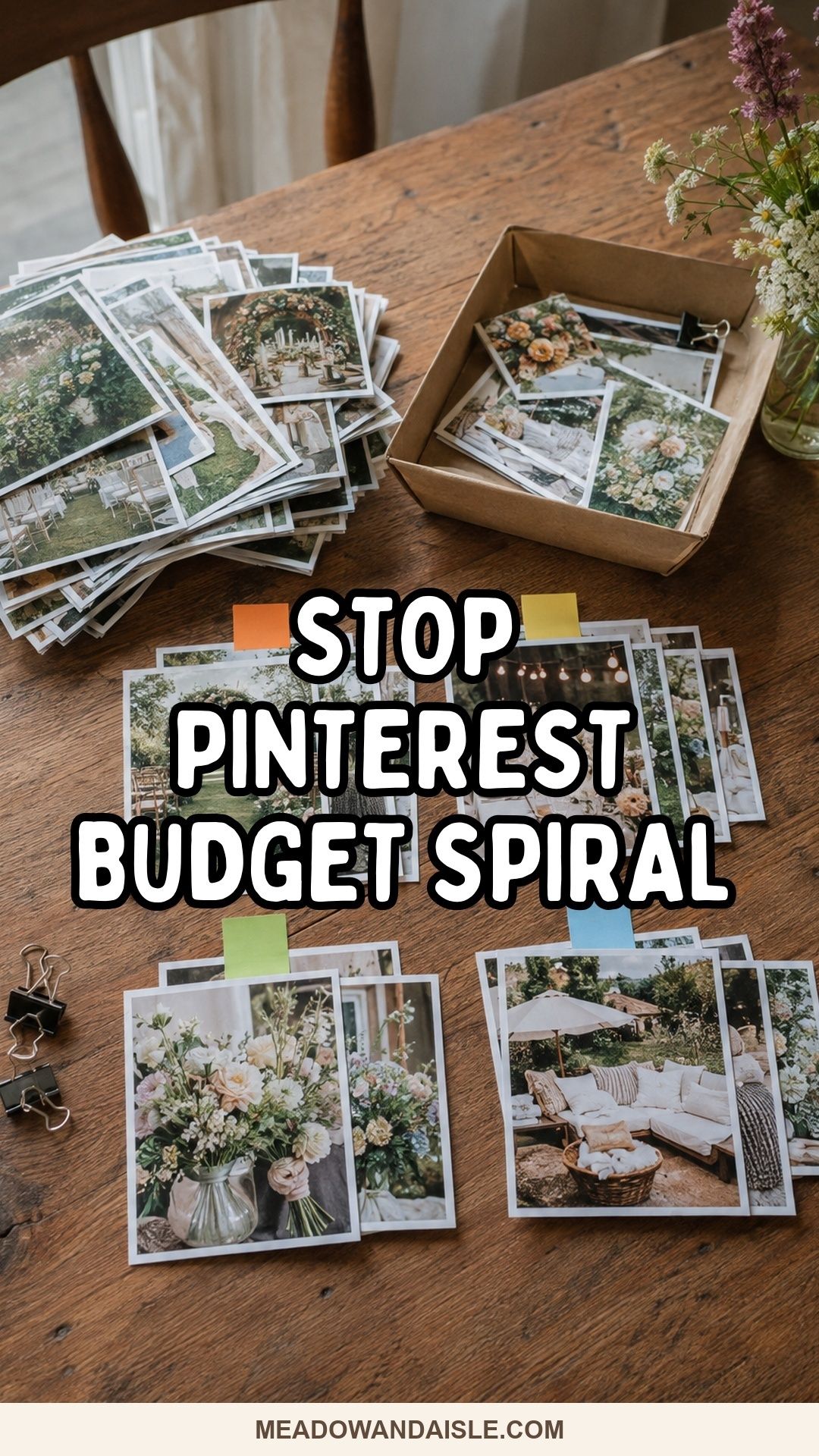
How Pinterest affects wedding planning budgets is simple: beautiful images leave out price, labor, guest count, venue, season, and the production work behind them, so expensive ideas start feeling normal before couples know what they cost. Treat Pinterest as a mood finder, then translate every saved idea into a real priority, vendor question, and budget choice.
A full wedding board often feels like a love story in pictures: candlelit tables, soft flowers, a dress in perfect motion, stationery tied with silk, a cake surrounded by fruit, and one impossible ceremony arch that seems to explain the whole day. The trouble is not the inspiration. The trouble begins when a board meant to shape the feeling of the wedding quietly becomes the standard the budget is expected to obey.
Pinterest is still useful for small and intimate weddings. It shows the colors you keep saving, the dinner mood you return to, the floral scale that makes you pause, and the kind of guest experience that feels like you. But a board is not a budget plan. A board does not show who set up the flowers, how many guests were served, whether the image came from a styled shoot, what rentals were upgraded, or what the venue already provided. Start by turning Pinterest wedding inspiration into a calmer planning filter, so your wedding mood board budget supports the real celebration instead of chasing every perfect image. The goal is edited confidence, not a smaller dream.
Recommended Wedding Products


You Might Also Like These Blog Posts
- How Social Media Affects Wedding Budgets Before You Even Notice
- How TikTok Affects Wedding Planning When Every Idea Feels Urgent
- How To Plan A Wedding That Feels Like Us Instead Of A Beautiful Stranger’s Pinterest Board
- How To Choose A Wedding Vibe That Feels Like You Before Pinterest Takes Over
- Wedding Planning Order Of Tasks That Keeps You From Backtracking
- Wedding Planning Mistakes That Quietly Make Everything Harder
How Pinterest Affects Wedding Planning Budgets Before The First Quote Arrives
How Pinterest affects wedding planning budgets is less about one lavish pin and more about accumulation. One image asks for a floral arch. Another asks for specialty linens. Another asks for a bar sign, a champagne tower, a lounge, a custom cake, and hand-torn paper goods. Each image is beautiful alone. Together, they turn a clear small wedding into a production list before anyone has priced the room, the meal, or the people needed to make those details appear.
The better approach is translation. Instead of asking, “How do we recreate this?” ask, “What feeling are we trying to protect?” A candlelit tablescape could mean warm light and close seating, not imported taper holders on every surface. A garden ceremony could mean seasonal greenery and an outdoor aisle, not a custom flower wall. A minimalist editorial table could mean restraint, good spacing, and thoughtful photography, not the exact chair, linen, charger, and flatware from the image.
It Makes Styled Shoots Look Like Real Weddings
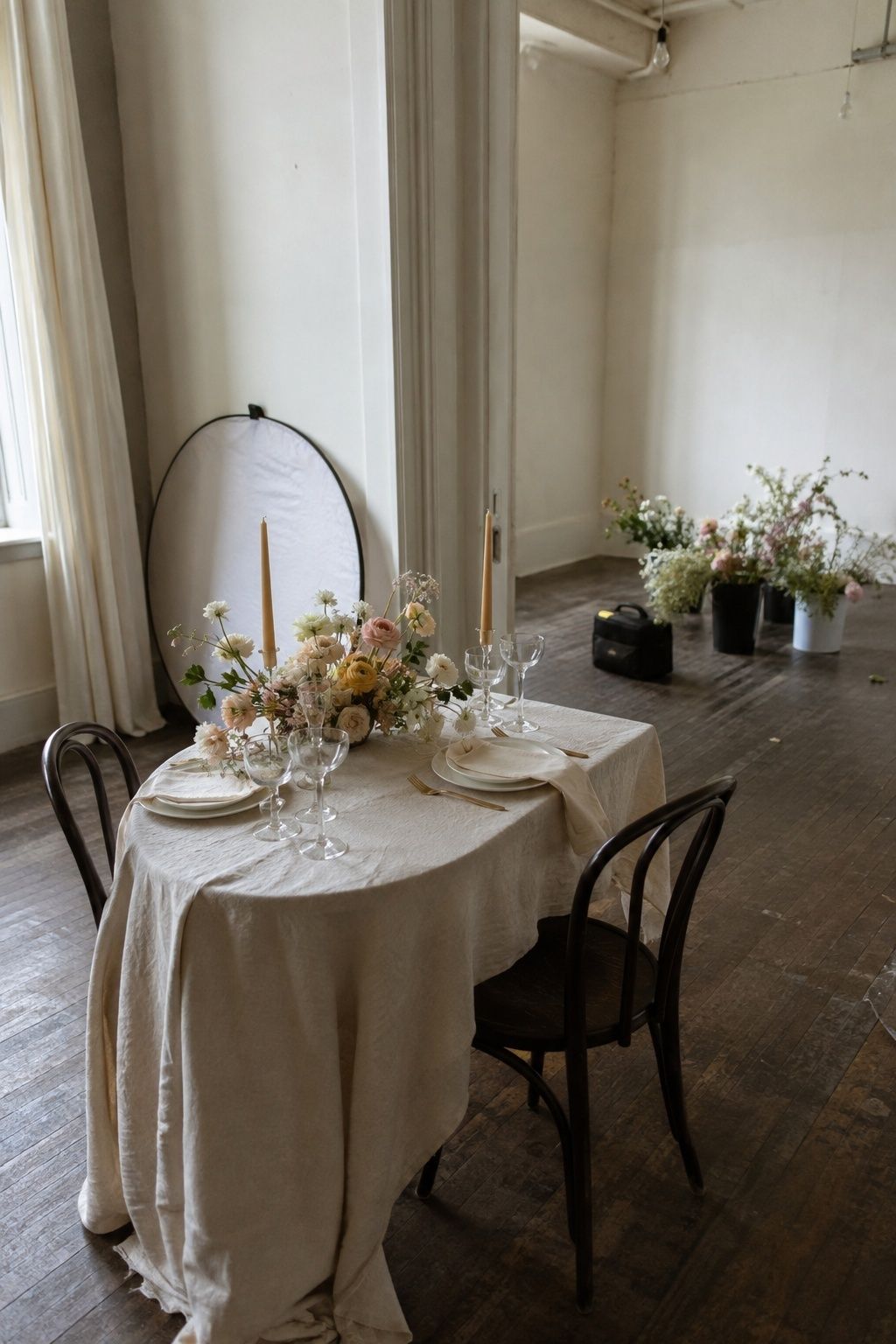
Some of the most saved wedding images are not full guest weddings at all. They are editorial shoots, vendor collaborations, portfolio sessions, or luxury weddings photographed with publication in mind. That matters because the image often shows one perfect corner, one model couple, one table, or one bouquet without the everyday logistics of feeding guests, seating families, moving people between spaces, or cleaning up afterward.
Styled shoot wedding inspiration is not dishonest; it simply has a different job. Its job is to create a concentrated visual idea. Your wedding has to hold vows, weather, chairs, timing, transportation, relatives, dinner, sound, bathrooms, and tired feet. Before saving an image as a must-have, ask whether it shows a real event condition or a beautiful controlled moment. That one question softens Pinterest wedding overwhelm almost immediately.
It Hides The Price Of Florals, Rentals, And Labor

A pin rarely tells you that the ceremony flowers required a rental structure, delivery crew, flower processing, mechanics, setup time, teardown time, transportation, and a designer who knew how to keep everything secure. It rarely lists premium linens, custom stationery, upgraded china, specialty glassware, candles, lounge furniture, draping, ladders, overtime, or the person styling the details before photos.
That missing labor is one reason a Pinterest wedding budget feels confusing. Couples are not only reacting to flowers or decor. They are reacting to the invisible hands behind the picture. When you love a detail, price the whole detail: materials, rentals, setup, delivery, staff, breakdown, and whether the venue already owns any part of the look.
This is also where a vendor conversation becomes more generous and more precise. Instead of saying, “We want this arch, but cheaper,” describe the role the arch plays. Maybe it frames the vows, softens a plain ceremony wall, or gives family photos a focal point. A florist often creates that role with a different structure, fewer premium blooms, aisle clusters that move to dinner, or greenery that works with the season. The budget improves because the goal becomes clear, not because the beauty disappears.
It Makes One Table Look Like The Whole Wedding

A single tablescape image feels seductive because it is complete: plates layered just so, menus tucked under ribbon, flowers at the perfect height, candles lit, glassware glowing. But one photographed table is not the same as ten tables, a head table, a bar, a ceremony setup, a cake area, guest bathrooms, signage, and the rental order behind all of it.
Scaling is where the budget changes. A $35-per-place detail is charming for twelve guests and heavy for ninety. A floral runner that looks generous on one table could become the largest decor line in the whole plan. When you save a close-up, multiply it by guest count before calling it a priority. Pinterest wedding reality usually appears in the multiplication, not the image itself.
For small weddings, this calculation works in your favor when you are honest early. Twenty-four guests make one long table, upgraded napkins, and a beautiful family-style dinner feel more possible. Sixty guests often need a simpler place setting and a stronger focus on food and flow. Neither version is less romantic. They are different scales, and the board should be edited to match the scale you are actually hosting.
It Turns Optional Details Into Emotional Requirements
Signage, chargers, favors, welcome bags, printed cocktail napkins, ceremony fans, seating charts, lounge corners, specialty bars, custom dance floors, second outfits, and elaborate backdrops are all lovely in the right plan. None of them becomes required because it looked polished on a board. The budget problem begins when optional details start feeling like proof that the wedding is thoughtful enough.
Give every optional detail a job. It should direct guests, feed guests, comfort guests, preserve a memory, or express something personal enough to matter. If its only purpose is to make the wedding look more like the board, place it on a later list. Pinterest wedding planning gets steadier when beauty has to serve the day instead of simply decorate the fear that something is missing.
It Encourages Copying Instead Of Translating
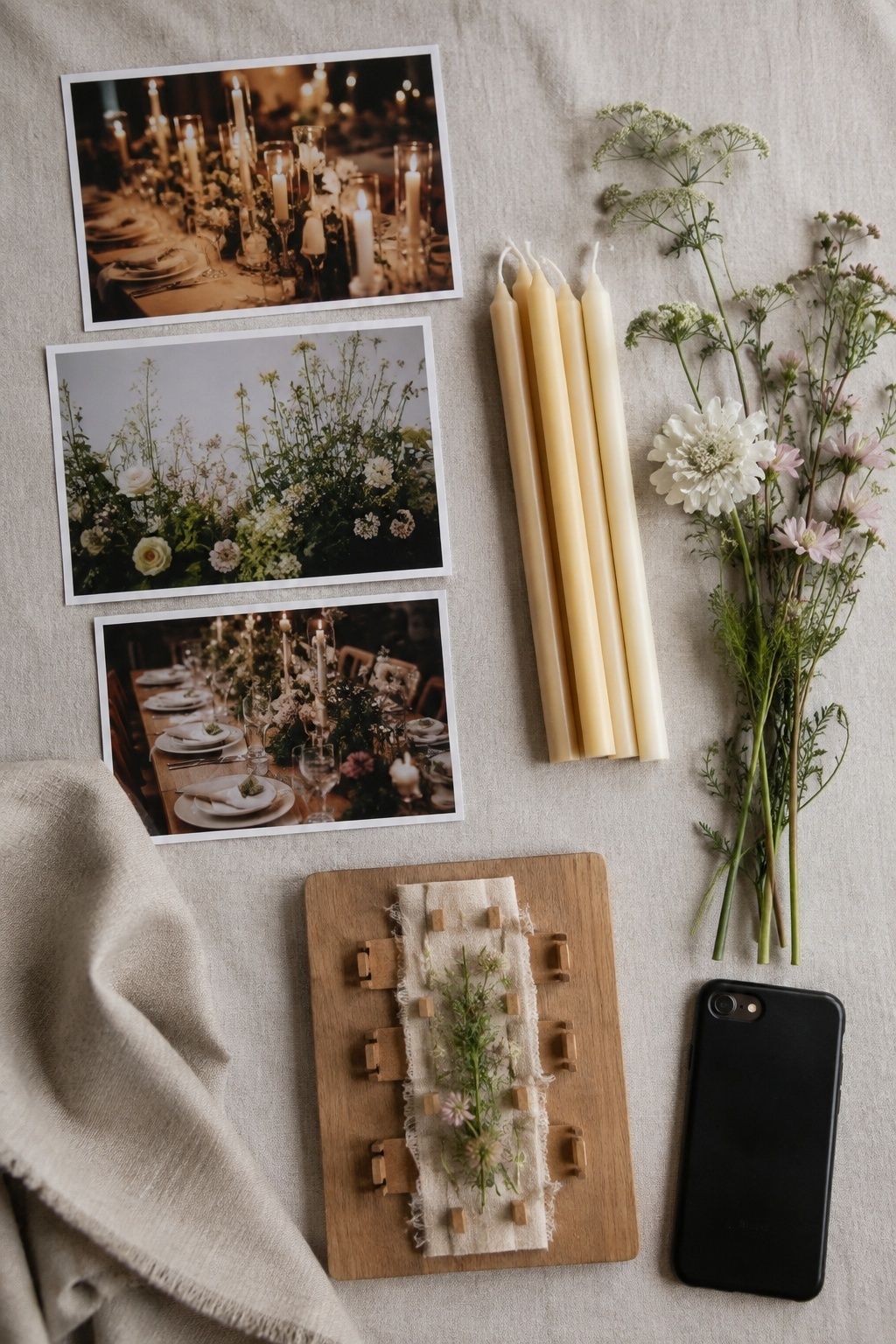
Copying asks for the same flowers, same chairs, same linens, same stationery, same venue feeling, and same photo result. Translating asks what the image is really giving you. Is it softness? Candlelight? Quiet luxury? Garden texture? Clean lines? Family-table warmth? Once you name the feeling, the budget has more room to breathe.
A romantic garden pin translates into seasonal flowers at the ceremony and greenery on dinner tables. A dramatic black-tie image translates into black taper candles, a cleaner dress code, and late-evening portraits. A Tuscan dinner board translates into shared platters and warm lighting. The image stays useful, but it stops dictating every object.
It Multiplies Ideas Across Too Many Categories
A board often grows in every direction at once. Ceremony ideas sit next to dress ideas, food ideas, floral ideas, stationery ideas, cake ideas, bridal party ideas, tablescape ideas, guest favors, and honeymoon send-off images. The couple loves each saved idea, but the wedding no longer has a center. It becomes ten moods competing for the same money.
Build categories before building expectations. Ceremony, dinner, attire, flowers, paper, photography, guest comfort, and personal details should each have a small number of leading images. If one category has thirty pins and another has none, the board is showing excitement, not necessarily priority. A focused wedding design budget starts when every category gets a limit.
Limits also reveal repetition. If five ceremony pins all show loose greenery, you do not need five separate ceremony ideas; you need one greenery direction. If seven dinner pins all show candlelight, you do not need seven rental upgrades; you need a lighting plan. When repeated ideas are collapsed into one decision, the board stops multiplying the budget and starts simplifying it.
It Keeps The Board Changing After Decisions Should Close
Late scrolling is expensive because it reopens choices you already made. A new palette appears after flowers are booked. A different table style appears after rentals are ordered. A fresh ceremony trend appears after the florist has built the proposal. Each change asks vendors to revise, price, recalculate, or rush, and those changes add cost even when the new idea seems small.
Give your board a closing date. After that date, keep one private maybe board for future ideas, but do not send new inspiration into active vendor conversations unless it solves a real problem. This protects your budget and your attention. It also lets the wedding you chose become more satisfying because you are not constantly measuring it against a newer image.
A closing date also protects the emotional rhythm of planning. Once the main look is chosen, couples need fewer fresh images and more steady decisions: signed proposals, clear counts, paid deposits, and a room that feels settled.
How A Small Wedding Over-Invests In One Photo Moment
Small wedding Pinterest ideas feel especially tempting because the guest count is lower. A couple often thinks there is more room for one statement arch, oversized tablescape, luxury floral moment, or editorial installation. Sometimes there is. Sometimes that single photo moment takes money away from food, shade, seating, ceremony sound, transportation, or photography coverage that would shape the guest experience more deeply.
For an intimate wedding, one beautiful visual hero is usually enough. Let it be the ceremony backdrop, the dinner table, the cake moment, or the bouquet. Then give equal respect to one guest-comfort hero and one memory hero. The wedding will feel more complete when guests are cared for and the day is documented well, not when every saved corner becomes a separate display.
Vendors Need A Budget Translation, Not Just A Collage

A collage tells vendors what you like. A budget translation tells them what to price. Send the guest count, venue, season, date, ceremony location, dinner style, must-haves, hard no choices, color direction, budget range, and what you are willing to simplify. Then mark the three images that matter most and explain the feeling behind them.
This approach respects vendor creativity. Instead of asking a florist to copy a luxury installation, you are inviting them to create a scaled version that fits the room and budget. Instead of asking a planner to make the whole board happen, you are giving them priorities. The result is more honest pricing and fewer proposals that look dreamy but land far beyond reach.
A useful vendor message sounds specific but flexible: “We love the warm candlelight, loose garden texture, and intimate dinner feeling in these three images. Our guest count is forty-two, the venue already includes wood tables, and our floral priority is the ceremony. Please simplify the rest so food, lighting, and photography stay protected.” That kind of message gives the vendor enough style to respond and enough reality to keep the proposal grounded.
Pinterest Still Clarifies Your True Style
Pinterest is not the villain. Used well, it helps couples notice their own taste before money gets committed. Maybe every saved image has low light, long tables, loose flowers, handwritten paper, family-style food, and a neutral dress code. Maybe the pattern is outdoor vows, playful color, short dresses, and a relaxed meal. Those patterns are useful.
The healthiest board does not ask you to buy every image. It helps you choose the words your wedding should hold: intimate, candlelit, botanical, clean, nostalgic, playful, formal, relaxed, coastal, rustic, or modern. Those words steer vendor conversations, trim decisions, and keep the budget from drifting toward details that look beautiful but do not match the wedding you actually want to host.
A Realistic Board Keeps Spending More Focused
A realistic board is smaller, calmer, and more useful than a dream board. It includes venue-appropriate images, seasonal flowers, guest-count-aware table ideas, clothing that fits the formality of the day, and decor that respects setup time. It also includes a few images for feeling, not replication, so the wedding still has imagination.
Once the board is realistic, the budget becomes easier to defend. Say yes to the visual choices that carry the wedding and no to details that only repeat the same mood. That is the quiet power of editing. The celebration starts to feel more personal, not less, because every chosen detail has earned its place.
How To Audit Your Pinterest Board
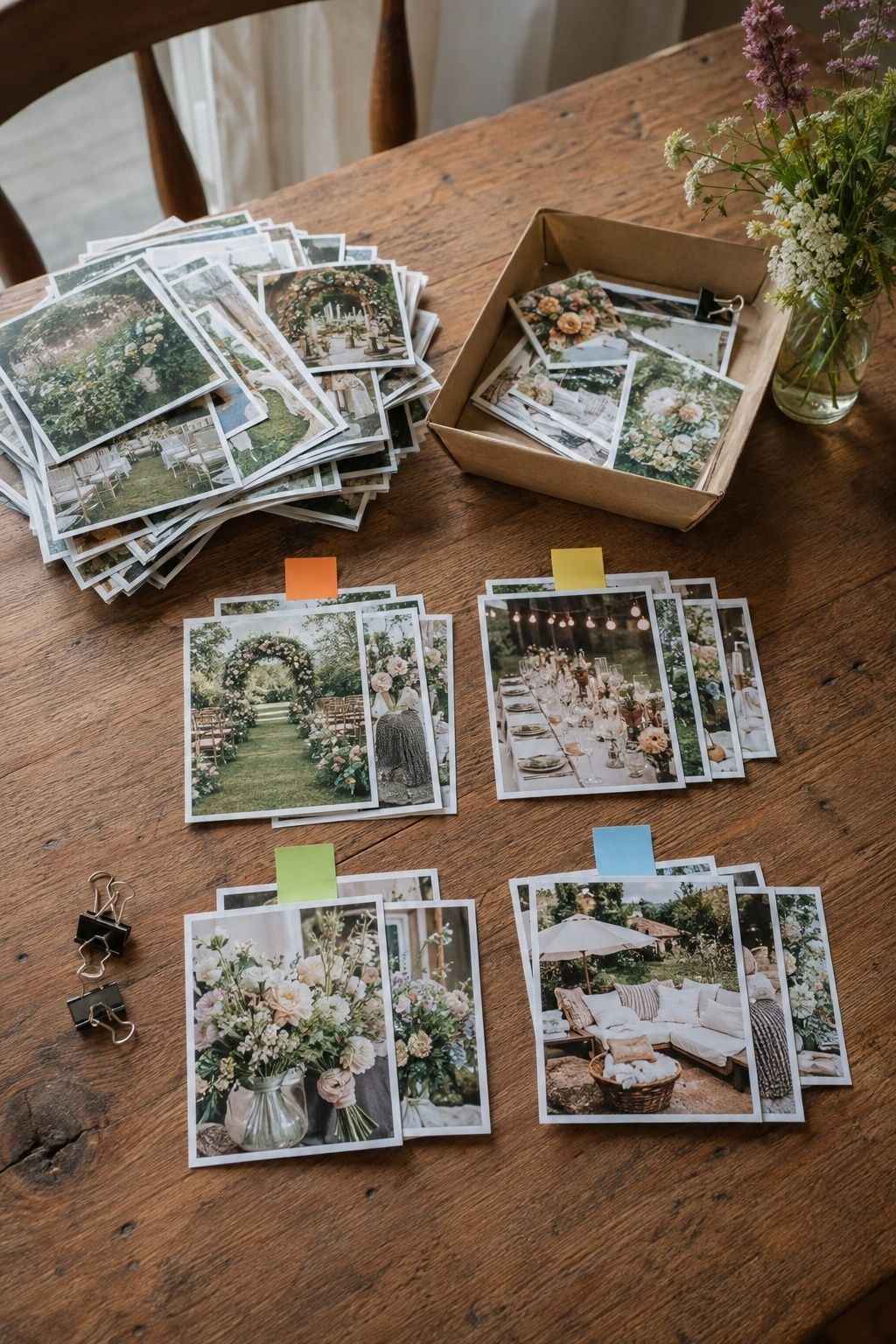
Start by sorting every pin into categories: ceremony, reception, flowers, attire, paper, food, photography, guest comfort, and personal details. Delete duplicates and anything saved only because it was popular. Then choose the twenty images you would be disappointed to lose. Do not choose the most expensive-looking images; choose the ones that best explain the wedding you want to remember.
Next, name three repeated feelings. Maybe the board keeps saying warm, garden, and unhurried. Maybe it says editorial, candlelit, and intimate. Maybe it says colorful, family-centered, and relaxed. After that, mark every idea as must-have, nice-to-have, hard no, or maybe later. A must-have should affect the ceremony, meal, guest comfort, photos, or personal meaning. A nice-to-have is welcome only after the core plan is funded.
Finally, compare the board with the actual venue, guest count, season, and spending limit. Remove images that demand a different space, climate, staffing level, or guest count. Keep one dream image per category if it helps vendors understand mood, but separate dream images from the final buying list. Your final board should feel a little smaller and much more useful.
Then add a plain-language caption to each final image. Write what you mean by the pin: “warm dinner light,” “loose seasonal bouquet,” “simple ceremony focal point,” “unhurried family table,” or “clean black-and-white portraits.” Captions prevent accidental overspending because they separate the emotional instruction from the literal objects in the photo. A vendor works with warmth, looseness, simplicity, family-table intimacy, and portrait style at many price points.
One more filter helps when both partners or families have been saving ideas. Each person chooses five images that feel essential and five that are only nice. Put the essential images together and look for overlap. The overlap is your shared style. The nice images stay in reserve, but they should not outrank the shared style when the budget gets tight.
How To Keep The Feeling Without Copying The Cost
For candlelit romance, spend on good timing, warm bulbs, simple taper candles, and a dinner layout that lets people see one another. You do not need every table covered in custom vessels. For garden romance, choose seasonal bouquet ingredients, a soft ceremony marker, and greenery where guests will actually notice it. You do not need flowers on every ledge.
For editorial minimalism, reduce visual clutter, choose clean paper, keep the tables intentional, and protect time for portraits. The expensive part of minimalism is often precision, so let fewer decisions look deliberate. For old-world abundance, use fruit, candlelight, shared food, and textured linens in the places guests gather longest. Abundance feels best when it is concentrated around hospitality.
This is where the wedding mood board budget becomes a creative tool instead of a restriction. You are not deleting beauty. You are choosing the version of beauty that works in your room, with your people, inside your budget. A wedding feels rich when it is coherent, warm, and well-hosted, not because every image was recreated at full scale.
If you are afraid the wedding will look too simple, put more care into repetition than quantity. Repeat one flower family, one paper color, one candle style, one metal finish, or one fabric texture in the places guests see most. Repetition makes a modest plan feel intentional. Random upgrades make even a larger budget feel restless.
The same idea applies to photography. A clear, restrained design often photographs better than a crowded one. Good light, a tidy getting-ready room, enough time for portraits, and a table that is not fighting itself make the day look polished without adding five more decor categories. Pinterest teaches you what your eye likes; your budget decides how calmly that eye gets edited.
A Small-Wedding Pinterest Rule
Choose one visual hero, one guest-comfort hero, and one memory hero. The visual hero could be the ceremony flowers, dinner table, cake, attire, or portrait setting. The guest-comfort hero could be excellent food, shade, clear sound, transportation, warm lighting, or enough time to talk. The memory hero could be photography coverage, private vows, a family toast, handwritten cards, or a song that anchors the night.
If a pin does not support one of those three heroes, move it out of the active plan. This rule is especially useful for intimate weddings because the day has less room for performative spending. Guests will remember being welcomed, fed, included, comfortable, and close to the couple. They will not remember whether every saved trend made it into the room.
For a thirty-person wedding, the visual hero could be one candlelit table. The comfort hero could be a generous meal with wine already poured. The memory hero could be an extra hour of photography around dinner and speeches. For a fifty-person wedding, the visual hero could shift to ceremony flowers because more guests will see them at once. The point is not to follow a formula perfectly. The point is to make sure the board funds the experience, not only the image.
FAQ
How does Pinterest affect wedding planning budgets?
Pinterest affects budgets by making expensive ideas feel normal without showing their price, labor, scale, or production work. A saved image could include custom rentals, premium flowers, styled stationery, or a luxury venue. Choose your top few ideas, then ask vendors what each one would cost in your real space and guest count.
Why do Pinterest weddings look so expensive?
Pinterest weddings often look expensive because many images come from styled shoots, luxury weddings, or highly edited photo moments. They show the most polished angle, not the full rental order, staffing plan, or guest experience. Treat those images as mood examples, then ask what simpler choices would create the same atmosphere.
How do you use Pinterest without overspending?
Use Pinterest without overspending by narrowing the board before requesting quotes. Keep only the images that match your venue, season, guest count, and budget priorities. Choose one visual hero, one comfort hero, and one memory hero. Move everything else to a later list until the essential wedding is funded.
Are Pinterest wedding ideas realistic?
Some Pinterest wedding ideas are realistic, and some are scaled for editorial impact, luxury budgets, or a very different venue. The idea becomes realistic when it survives three checks: your space holds it, your vendors price it clearly, and your budget supports it without weakening food, comfort, or photography.
How do you turn a Pinterest board into a real wedding plan?
Turn a board into a plan by sorting pins by category, deleting duplicates, naming the repeated feelings, and choosing must-haves before nice-to-haves. Then send vendors a short brief with guest count, venue, season, budget range, priorities, and what should be simplified. A clear brief prices better than a giant collage.
How can small weddings use Pinterest wisely?
Small weddings use Pinterest wisely by focusing on mood, guest experience, and a few high-impact details. Because the guest list is smaller, one beautiful table, ceremony marker, or dinner atmosphere carries more meaning. Avoid spending the whole design budget on one photo moment while practical comfort goes thin.
Final Thoughts
The most grounded answer to how Pinterest affects wedding planning budgets is not to stop saving ideas. It is to stop treating every saved image as a bill waiting to happen. Let the board reveal the feeling, then let your guest count, venue, season, vendors, and spending limit shape the final version beautifully.
A smaller, clearer board makes the whole wedding feel more romantic because the choices stop competing. Spend on the details that move the day forward, release the ones that only perform for the camera, and build a celebration that feels honest in person.
Last update on 2026-10-03 / Affiliate links / Images from Amazon Product Advertising API