
Wedding content creator ideas should give you fast, casual memories from the wedding weekend: behind-the-scenes clips, candid guest moments, detail footage, and short next-day videos that support your photo and video team without turning the celebration into a performance.
A wedding content creator is usually hired to capture phone-first memories that arrive quickly. Think vertical clips, short reels, raw snippets, room details, guest reactions, and little transitions that might be perfect for texting to family the morning after the wedding.
For a small wedding, the best content creator is quiet, guest-aware, and clear about boundaries. Their job is not to pull the couple away from the room; it is to preserve the feeling of being inside it.

Recommended Wedding Products


![The Knot Ultimate Wedding Planner [Revised Edition]: Worksheets, Checklists, Etiquette, Timelines, and...](https://meadowandaisle.com/wp-content/plugins/aawp/public/image.php?url=YUhSMGNITTZMeTl0TG0xbFpHbGhMV0Z0WVhwdmJpNWpiMjB2YVcxaFoyVnpMMGt2TlRGRmVVRnBablp0Tmt3dVgxTk1NVFl3WHk1cWNHYz18MTc5MTMyMDc1Mw=)


You Might Also Like These Blog Posts
- Wedding Projector Ideas for Memories That Fill the Room
- How To Choose Between Wedding Photographer And Videographer Without Regret
- How Social Media Affects Wedding Budgets Before You Even Notice
- Video Guestbook Wedding Ideas for Voices You Can Keep
- Flower Animation Wedding Video Ideas for a Soft Moving Memory
- Snowy Wedding Photo Ideas for Beautiful Winter Memories
Wedding Content Creator Ideas For Memories That Arrive While The Flowers Are Still Fresh
The best wedding content creator plan feels almost invisible. It catches the laugh before portraits, the voice memo from a friend, the bouquet being set on a chair, the room before guests sit down, and the couple seeing a few sweet clips before the full gallery or wedding film is ready.
This role works best when the couple, planner, photographer, videographer, and content creator agree on the same priority: people first, phones second. A good brief protects privacy, limits repeated takes, and gives the creator enough structure to capture meaningful moments without directing the whole day.
| Content priority | What to ask for | Why it works for small weddings |
|---|---|---|
| Fast memories | Raw clips, short reels, and simple next-day edits | The couple can relive close moments before the formal gallery arrives |
| Guest comfort | Quiet filming, clear no-film boundaries, and no surprise interviews | Fewer guests make consent and discretion feel more personal |
| Vendor harmony | Shared timeline, ceremony rules, and photographer-first positioning | Small rooms need careful movement so no one blocks the key moments |
| Real atmosphere | Details, sound, movement, food, music, and in-between moments | Intimate celebrations often carry feeling in the small pieces |
| Simple delivery | A defined clip folder, edit count, delivery window, and usage permissions | The couple knows what arrives quickly and what stays private |
Capture The Getting-Ready Room Before It Looks Too Finished
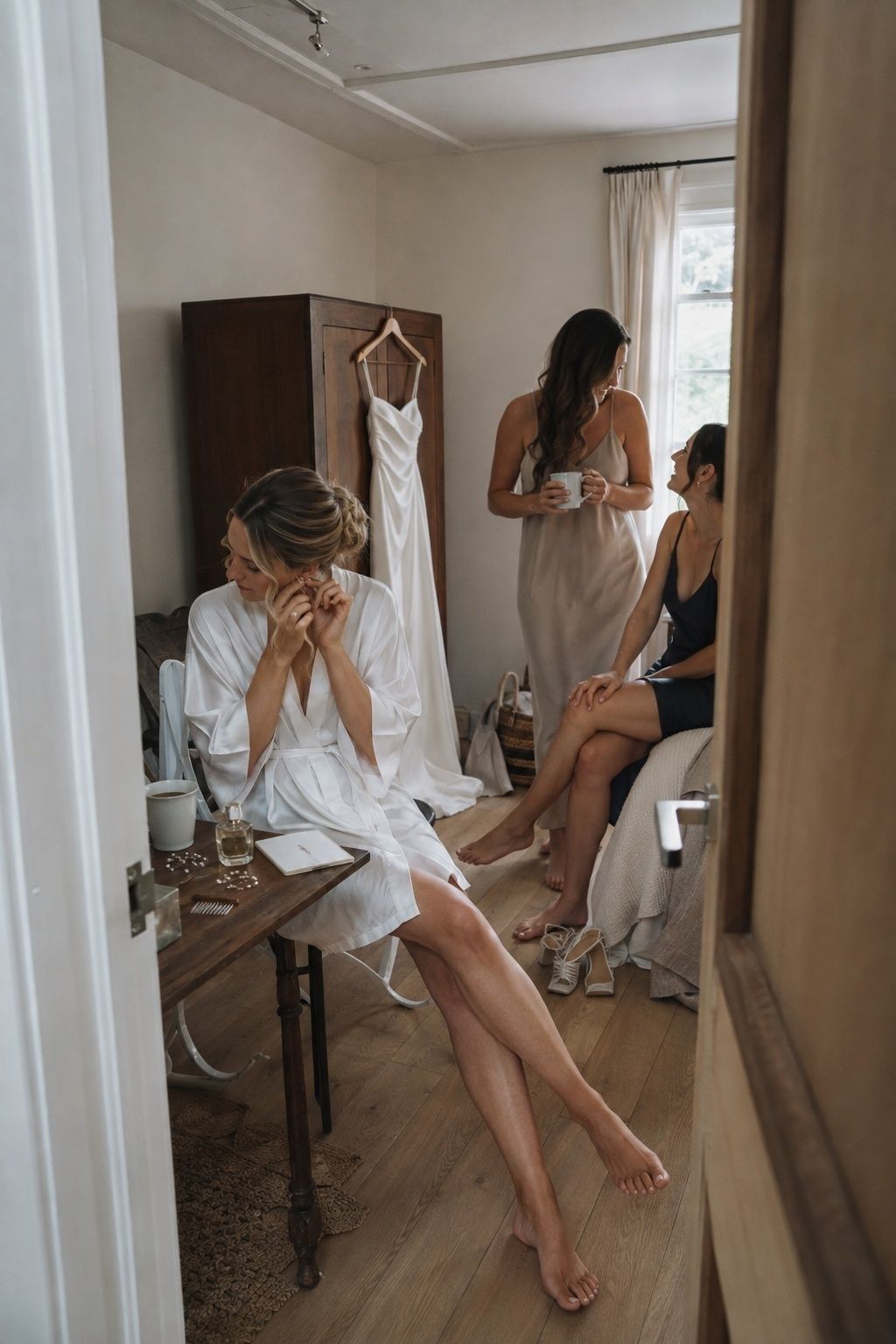
Ask for short vertical clips of dresses, suits, perfume, handwritten vows, hair pins, coffee cups, music playing, and friends moving around the room. These scenes do not need to be perfect; they need to feel like the real beginning of the day.
The content creator films these pieces quietly while the photographer handles still details and portraits. In a small wedding morning, the room often holds only the closest people, so a gentle filming style matters more than a busy production setup.
Make A Detail Box Easy To Film
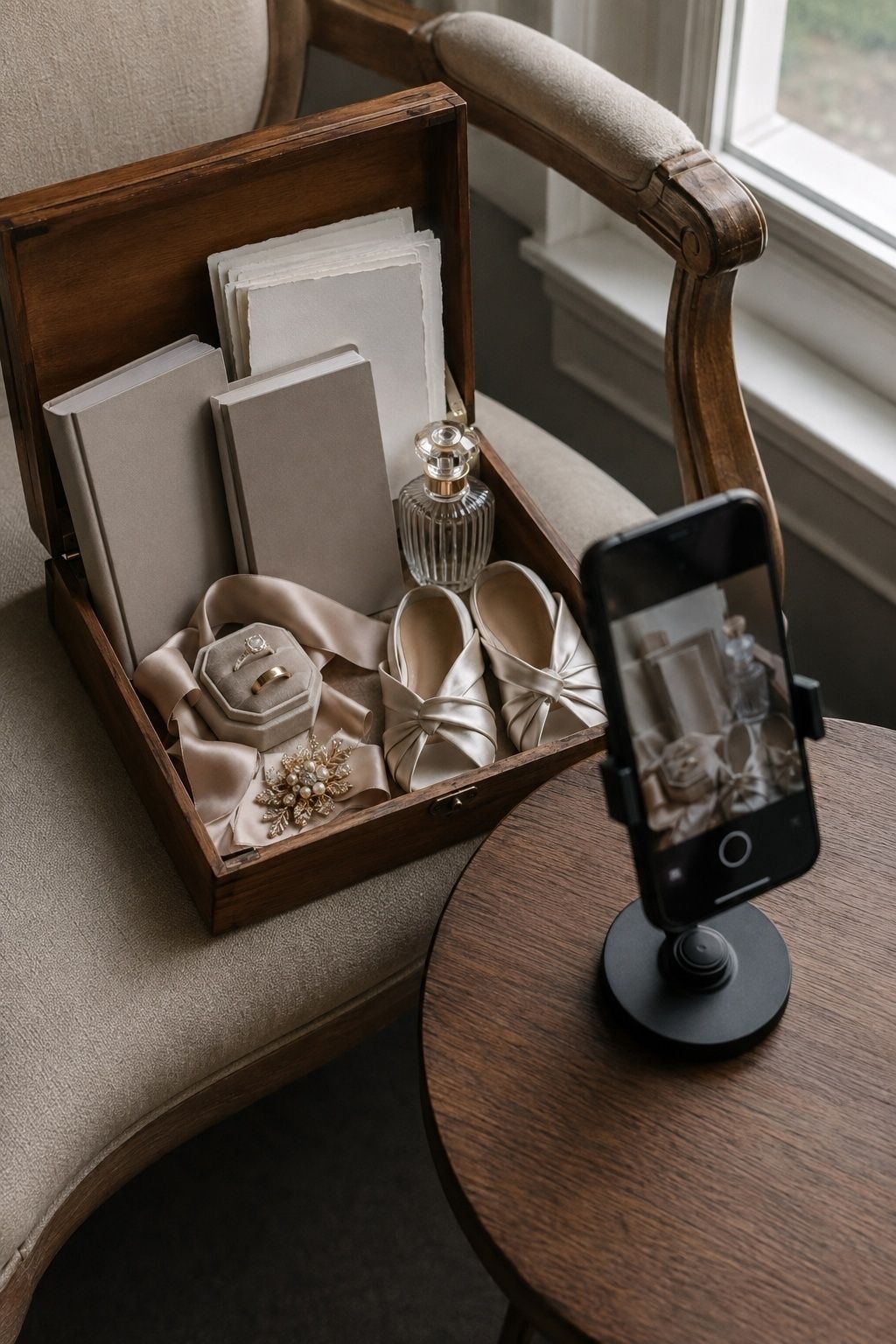
Place invitations, vow books, rings, perfume, heirloom jewelry, ribbon, shoes, and any small keepsakes in one box before the day begins. This gives the content creator quick access to personal details without asking the couple to search for them mid-morning.
Keep the footage simple: a hand opening the box, rings beside paper, shoes being carried to a window, or a vow book resting on a chair. The details should feel handled and loved, not arranged like a catalog scene.
Film Private Vows As Tiny Story Clips
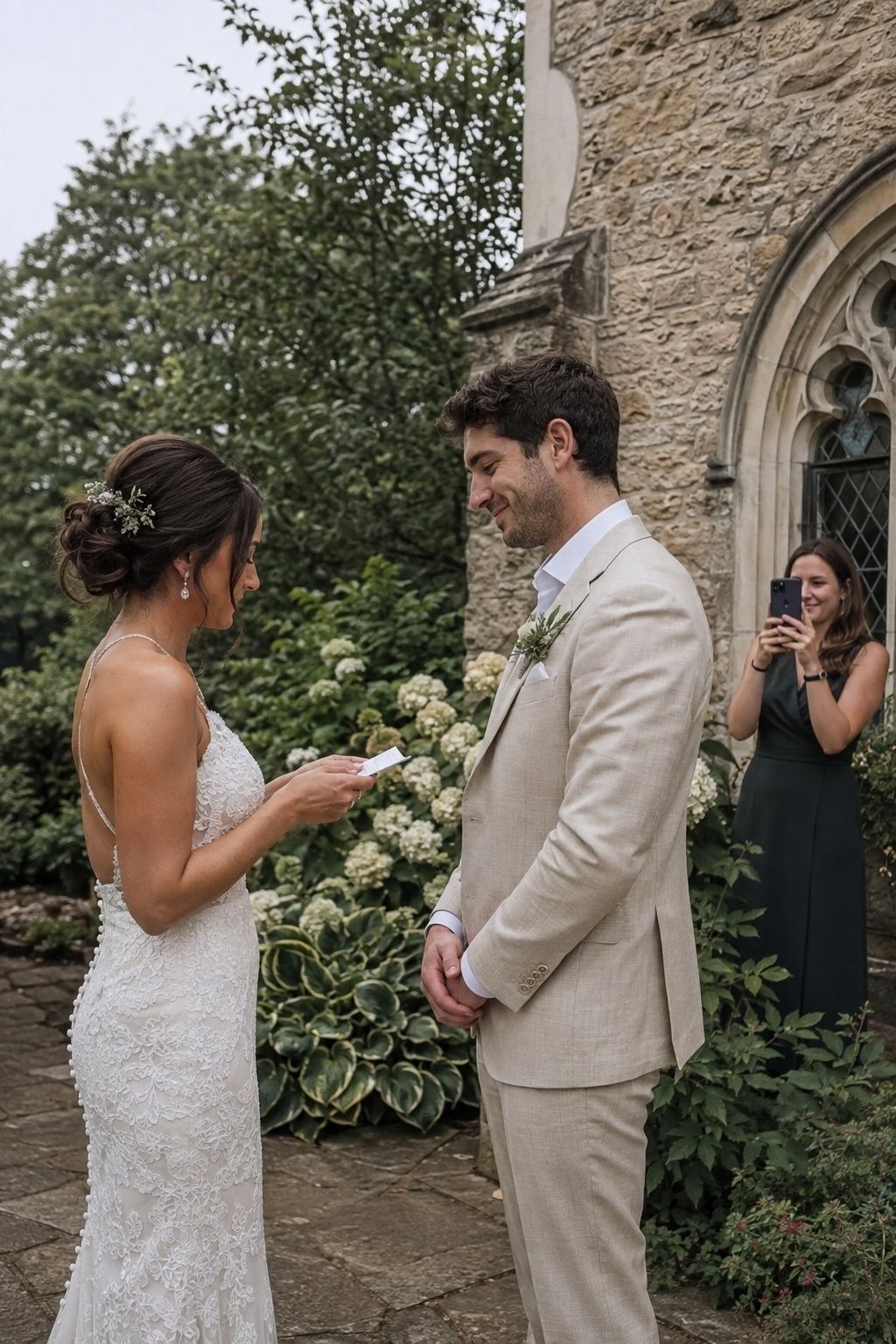
If the couple is comfortable, private vows work as a few quiet clips rather than a full public performance. Ask for close footage of hands holding paper, a partner listening, a nervous laugh, and the walk back to the ceremony space.
Decide ahead of time whether audio is allowed. Some couples want the actual words kept private and only want ambient footage, while others love having one or two lines saved for a personal reel.
Get Guest Arrival Reactions Without Ambushing Anyone
Guest arrival clips often feel lovely: a grandparent stepping out of the car, friends hugging at the entrance, siblings fixing boutonnieres, or guests seeing the ceremony setup for the first time. These are quick memories the couple rarely gets to witness in person.
Ask the content creator to film from the edge of the action and skip anyone who seems uncomfortable. At an intimate wedding, guests should feel welcomed into the room, not inspected by a phone the moment they arrive.
Save The First Look In One Clean Sequence

A first look does not need multiple retakes for content. One clean sequence is enough: the approach, the turn, the first reaction, the hug, and a few seconds after the emotion settles.
Let the photographer choose the primary angle, then have the content creator stay slightly behind or to the side. This keeps the moment calm and prevents the couple from feeling watched by a wall of cameras.
Record The Ceremony Atmosphere Before Guests Sit

Before the ceremony begins, ask for slow clips of chairs, flowers, programs, aisle details, light through windows, and the sound of guests gathering. These short pieces give future reels a sense of place instead of only showing faces.
This is especially useful for restaurant weddings, gardens, courthouses, chapels, private homes, and small venues where the atmosphere is part of why the couple chose the space.
Keep Ceremony Filming Discreet And Photographer-Aware
Ceremony content should be planned carefully. The content creator captures the walk down the aisle, vows, rings, a wide room view, guest reactions, and the recessional from a position that does not step into the photographer’s frame or distract from the ceremony itself.
Set rules before the wedding: where they can stand, whether audio is allowed, whether phones are visible, and which moments should be left untouched. The ceremony should still feel sacred to the people in the seats.
Ask For The Just-Married Walkaway
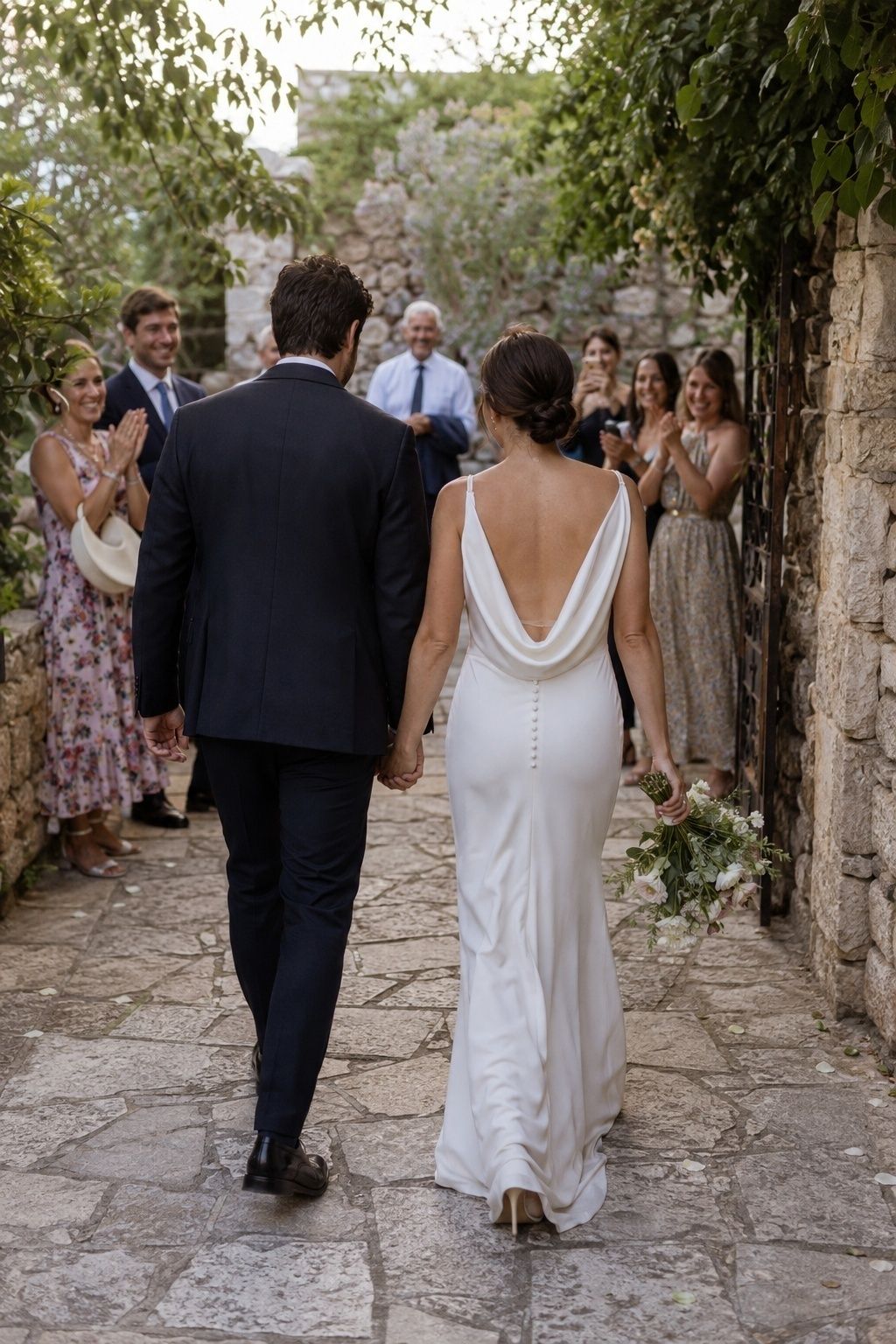
The first walk after the ceremony is often perfect for content. The couple is relieved, guests are cheering, and the emotion is fresh. Ask for a short clip from behind, one from the side if possible, and a few seconds after the couple reaches a quiet corner.
Do not over-direct it. A natural walk, a squeezed hand, a laugh, or someone saying “we did it” will usually feel better than a repeated exit created only for social video.
Collect Candid Guest Messages In A Gentle Way
Guest messages can be sweet when they are optional and low pressure. Ask the content creator to invite a few close people to share one sentence, a funny memory, or a quick wish for the couple.
Keep this away from dinner speeches unless the couple specifically wants it. A quiet corner during cocktail hour usually feels more comfortable than asking guests to perform in front of the whole room.
Film The Reception Room Before It Fills
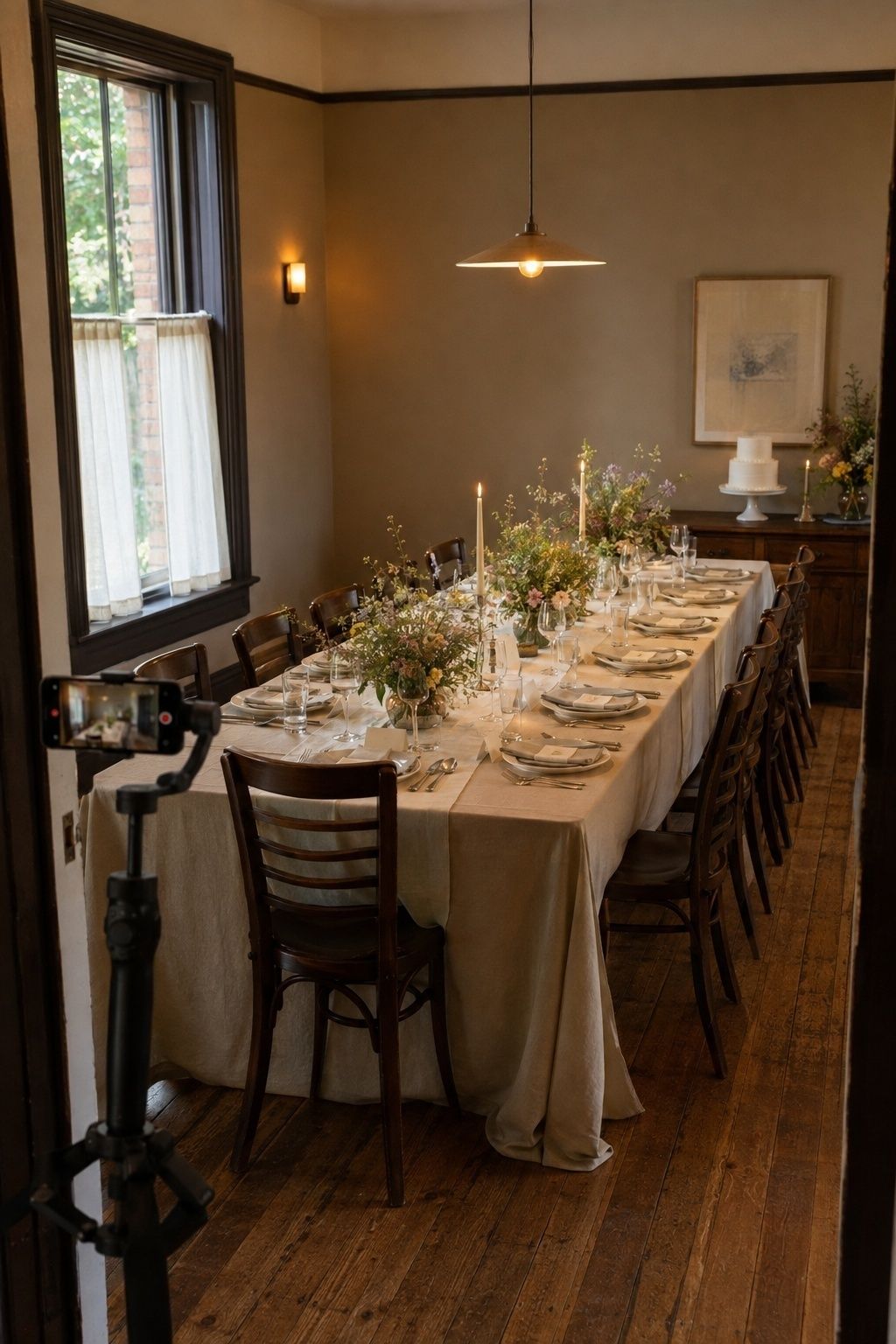
Reception room footage is one of the easiest wins. Ask for clips of place cards, candles, menus, flowers, glassware, signage, the cake, table numbers, and the room from the couple’s entrance path.
For small weddings, the tables often feel personal: handwritten menus, family-style food, one long table, or flowers arranged by someone close. Short content clips preserve that intimacy before jackets, bags, and half-empty glasses change the room.
Create A Dinner Table Memory Reel
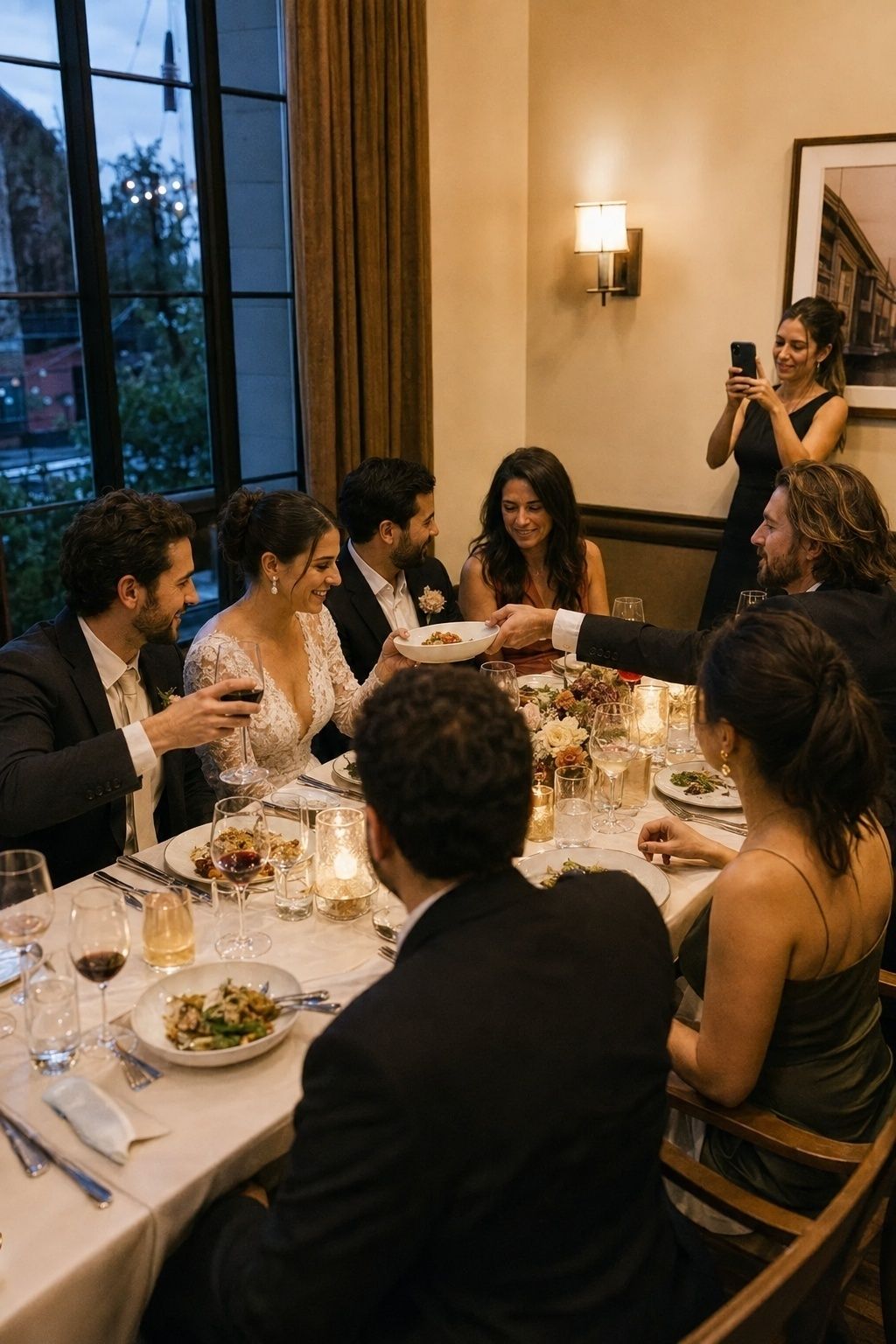
Dinner is where intimate weddings often feel most alive. Ask for slow clips of guests leaning in to talk, glasses being raised, food being served, candles flickering, and the couple looking across the table at the people they chose.
The content creator should move lightly here. A phone held too close may leave a tiny dinner feeling self-conscious, so the best footage often comes from edges, pauses, and passing moments.
Capture Audio Texture, Not Only Video
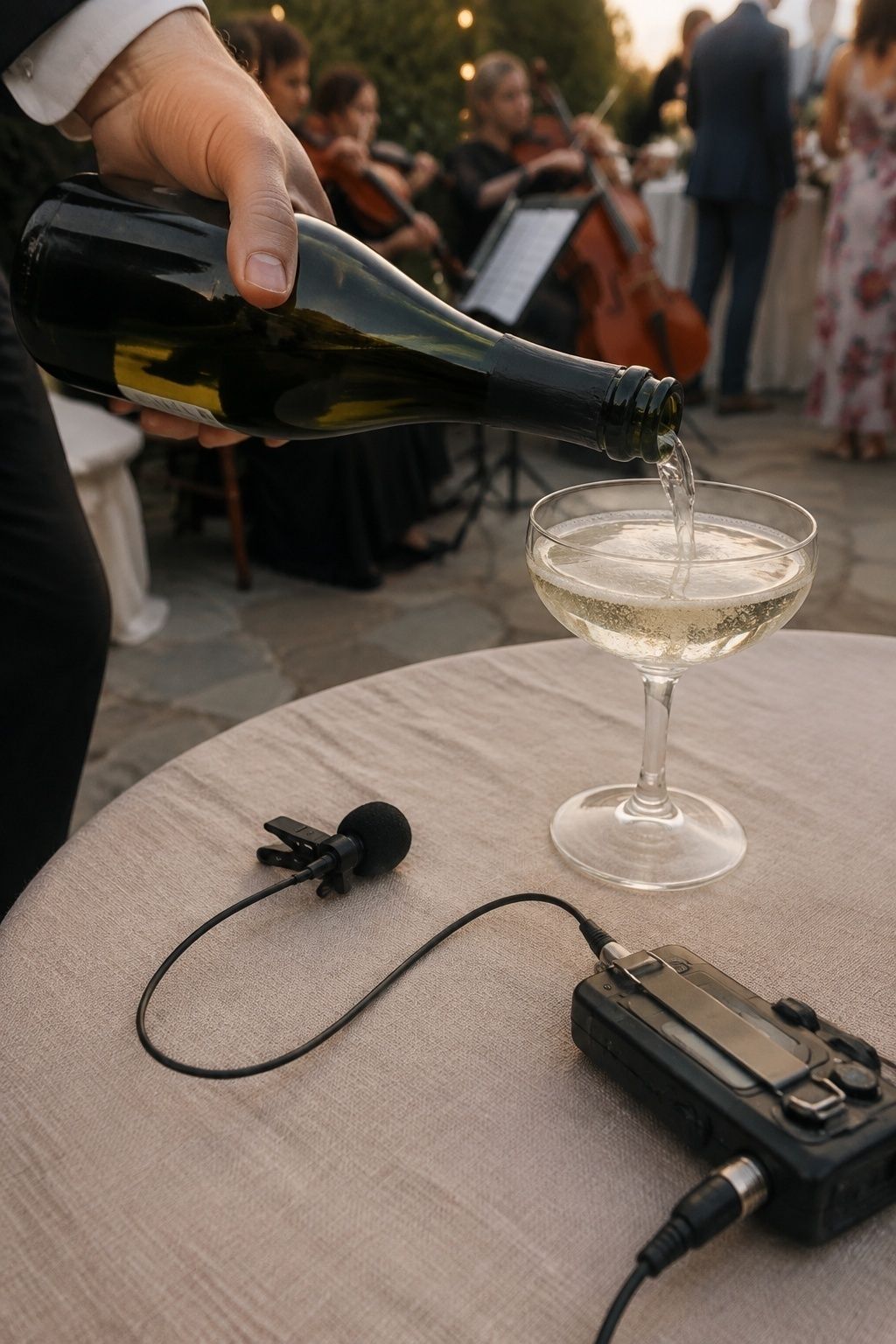
Short audio gives a reel personality: room chatter, ceremony music, champagne pouring, footsteps on gravel, laughter during portraits, or one line from a toast. A portable microphone works best only when it does not intrude.
Ask what audio will be recorded, who must approve it, and whether private vows or speeches stay off social edits. Audio boundaries protect the emotional life of the day.
Plan A Next-Morning Memory Drop

One of the main reasons couples hire a content creator is speed. Ask for a next-morning folder with raw clips and a few simple edited videos so the couple wakes up to memories while the day still feels close.
Define the delivery clearly: number of raw clips, number of edits, file format, where they will be shared, and whether the creator posts only after the couple does. A shared cloud folder keeps everything easy to find.
Build A Privacy List Before The Wedding
Privacy planning is part of the content brief. Write down guests who should not be filmed, children whose faces should stay private, ceremony moments that should remain offline, and any rooms or conversations the creator should avoid.
A small sign at the guest book or a quiet planner mention gives guests the plan. The goal is not to make the wedding feel restricted; it is to make filming feel respectful.
Let The Dance Floor Stay Loose

Dance floor content should feel joyful, not like a camera test. Ask for quick clips of the first dance, parents dancing, friends singing, guests circling the couple, and the room shifting from dinner to celebration.
Give the creator permission to stop filming when people need privacy. The best party content keeps the energy without turning every guest into background material for an edit.
End With A Quiet Closing Clip
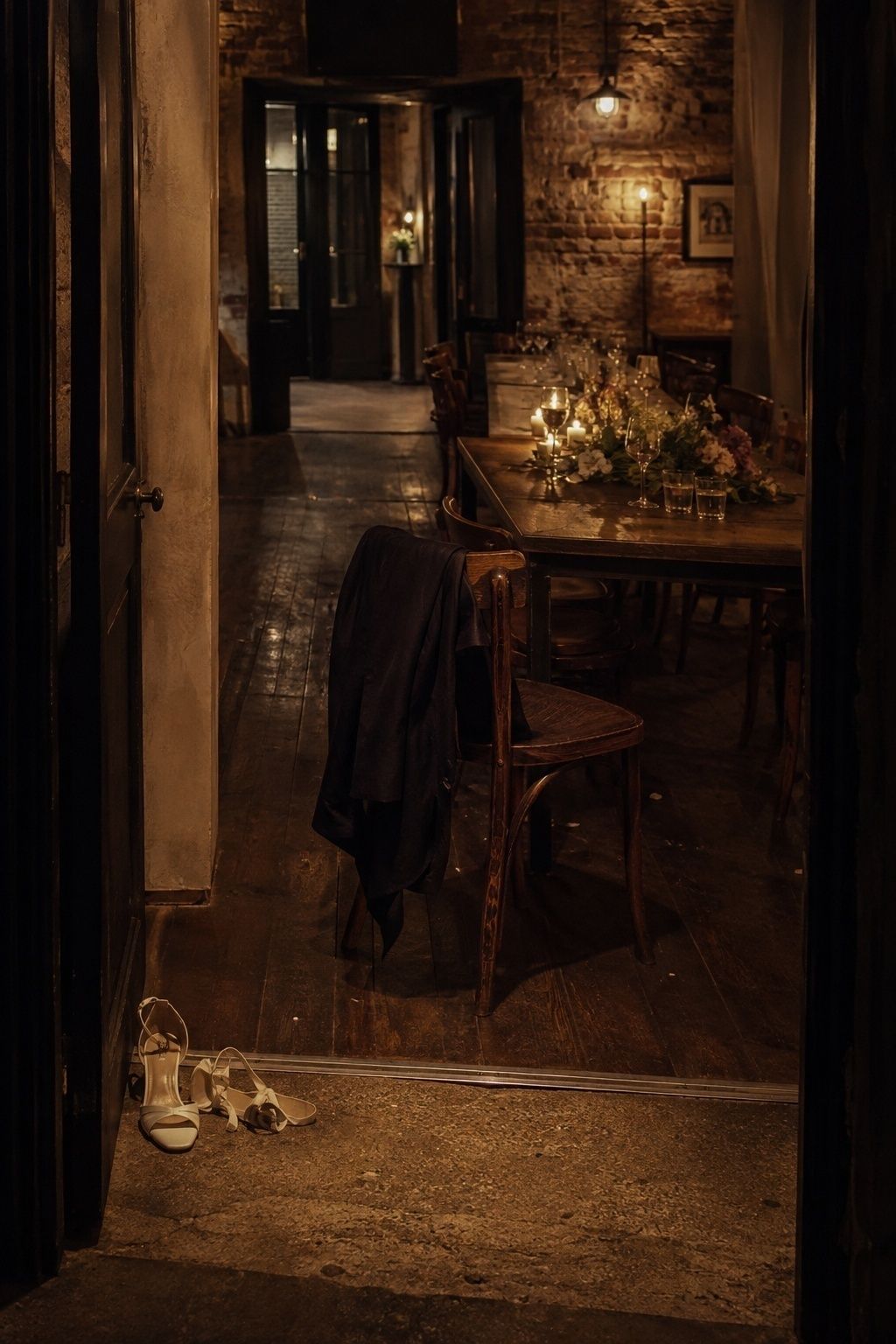
The last clip can be soft: flowers left on a table, the couple walking back to their room, shoes by the door, a final hug, candlelight after dinner, or the venue emptying out.
This kind of ending keeps the content from feeling like a highlight reel that simply stops. It gives the day a small emotional landing place.
How To Hire A Wedding Content Creator Without Making The Day Performative
Start by asking for full wedding examples, not only polished social posts. You want to see how the creator moves through a ceremony, how they treat guests, whether their edits feel calm or pushy, and whether they preserve emotion without asking people to redo it.
Then ask about deliverables. A clear package might list raw vertical clips, three short edits, a next-day recap, audio snippets, and a private cloud folder. Make sure the contract says who owns the footage, when it arrives, and whether the creator shares it on their own channels.
How To Coordinate A Content Creator With Photo And Video
Your photographer and videographer should know a content creator is coming before the wedding day. Share the timeline, ceremony rules, first look plan, portrait windows, reception entrances, speeches, and any no-film boundaries.
Ask the content creator to defer to the photo and video team during once-only moments. That means staying out of the aisle, avoiding blocked angles, skipping repeated direction, and capturing side moments when the main team is already working.
What To Put On A Wedding Content Creator Shot List
A strong shot list should be short enough to use quickly. Cover getting-ready details, outfit reveals, private vows, guest arrivals, ceremony atmosphere, processional, vows, rings, recessional, just-married reactions, reception room details, dinner atmosphere, guest messages, speeches, dancing, and the final quiet clip.
Add the emotional boundaries too: who should not be filmed, which audio is private, whether children can appear, whether the couple wants social posting paused, and which guests might love or dislike being interviewed.
FAQ
What does a wedding content creator do?
A wedding content creator captures phone-first wedding memories such as vertical clips, behind-the-scenes moments, candid guest reactions, detail footage, audio snippets, and short edited videos. They usually deliver much faster than a formal photo gallery or wedding film.
Is a wedding content creator different from a videographer?
Yes. A videographer creates a more polished wedding film with professional cameras, sound, editing, and storytelling. A content creator usually captures casual phone-style clips and short social-ready edits. The roles work well together, but one should not be treated as a full replacement for the other unless the couple is comfortable with that tradeoff.
Is a wedding content creator worth it for a small wedding?
A wedding content creator is worth it for a small wedding when the couple wants quick memories, candid guest clips, and next-day footage without asking friends to film. The key is hiring someone discreet who understands that an intimate room needs a lighter presence.
What should you ask before hiring a wedding content creator?
Ask to see full examples, delivery timelines, raw clip counts, edited video counts, audio policy, privacy rules, social posting permissions, backup phone or battery plans, and how they coordinate with photographers, videographers, planners, and venue staff.
How much does a wedding content creator cost?
Wedding content creator pricing varies by location, coverage hours, editing, travel, and delivery speed. Smaller packages may cover only a few hours and raw clips, while larger packages may offer full-day coverage, several short edits, audio, and next-day delivery. Ask for the full deliverables list before comparing prices.
What should be on a wedding content creator shot list?
A wedding content creator shot list should cover getting ready, details, private vows, guest arrivals, ceremony moments, just-married reactions, reception room footage, dinner atmosphere, guest messages, speeches, dancing, and a final closing clip. It should also name privacy boundaries and any people who should not be filmed.
Final Thoughts
A content creator should make the wedding feel more remembered, not more watched. The strongest plan is simple: hire someone kind and discreet, protect the ceremony, give guests room to be themselves, and choose deliverables that help the couple relive the day without handing the whole celebration over to a phone.
When the final timeline comes together, keep the content plan secondary to the people in the room so private vows, guest laughter, dinner movement, and next-day memories stay easy to receive. Fast informal footage works beautifully when the extra phone layer stays quiet and reaches the couple tomorrow morning without replacing the main wedding-day experience.
Last update on 2026-10-05 / Affiliate links / Images from Amazon Product Advertising API