
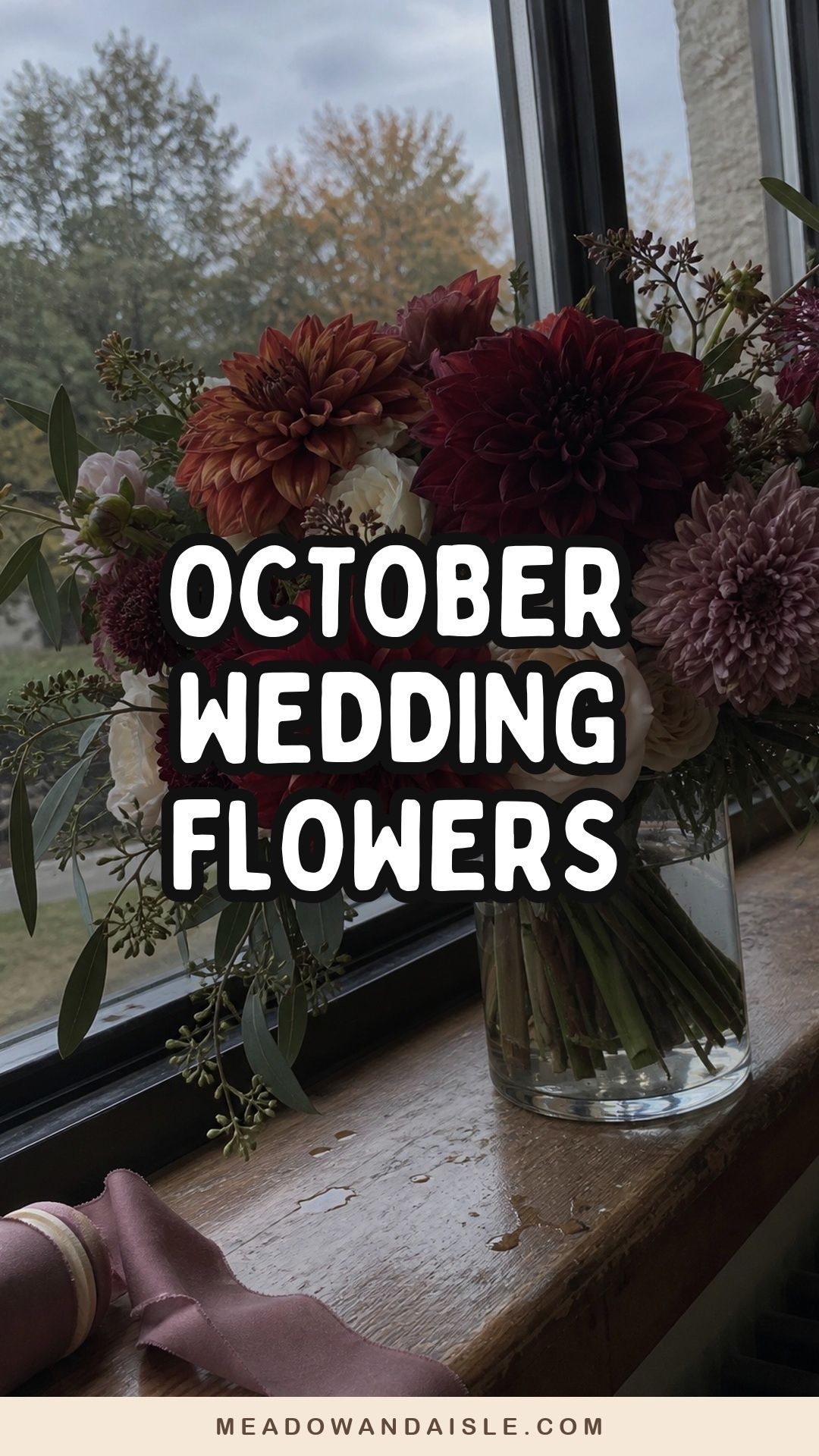
Reliable October wedding flowers include chrysanthemums, garden roses, celosia, amaranth, calla lilies, orchids and lisianthus, with dahlias as a lead flower only if you have a backup. Texture like smoke bush, rose hips, berries and autumn branches lets a small wedding use fewer stems and still look full.
Every October, someone builds their whole bouquet around dahlias and then the first frost arrives a week early.
Dahlias are the flower most couples picture for fall, and they deserve it. But in many regions, local dahlias wind down as nights turn cold, sometimes by mid-October. So the smartest October wedding flowers plan has two layers: the flowers you dream about, and the sturdier ones that can step in without changing the look.
October is a demanding month for flowers in general. A day can start crisp and bright, turn damp by cocktail hour, then end in a warm, candlelit dining room. Below I’ve sorted 18 October flowers and materials by the job they do, with notes on which ones handle the weather.
Handy for fall arrangements
If you’re doing bud vases or table flowers yourself, these vessels and tools make the job easier.


Which October wedding flowers hold up best?
Mums, celosia, berries, calla lilies, orchids, olive and branches are the toughest. Dahlias and hydrangea are the most fragile, so give them shade and water, and keep a substitute ready.
| Flower | Best job | Outdoor hardiness | Frost or weather risk |
|---|---|---|---|
| Chrysanthemums | Centerpieces, bouquets | High | Low |
| Dahlias | Bouquet focal | Low to medium | High |
| Garden roses | Bouquet, centerpieces | Medium | Low (often imported) |
| Celosia | Texture, bud vases | High | Low |
| Calla lilies | Modern bouquets | High | Low |
| Orchids | Indoor focal | Medium to high | Low |
| Hydrangea | Volume in urns | Low | Medium |
| Smoke bush, branches | Height, mood | High | Low |
A note on cost: The Knot’s 2026 Real Weddings Study found couples spend an average of $2,800 on their florist, for weddings averaging 117 guests. A 30 person wedding needs far fewer arrangements, so the question becomes where to spend. My post on what wedding flowers cost and whether they’re worth it breaks that down.
Focal October wedding flowers for bouquets
Focal flowers are the ones people notice from across the room. You need one or two kinds, not six.
Dahlias, with a plan B

Burgundy, rust, apricot, plum and cafe au lait dahlias give an October bouquet depth and that big, layered petal shape. They’re worth having if your date is early in the month and your region is still frost-free. Ask your florist directly: if local dahlias are gone by my date, what do we use instead? Garden roses, chrysanthemums or lisianthus in the same colors are the usual answers.
Chrysanthemums that don’t look like a grocery store
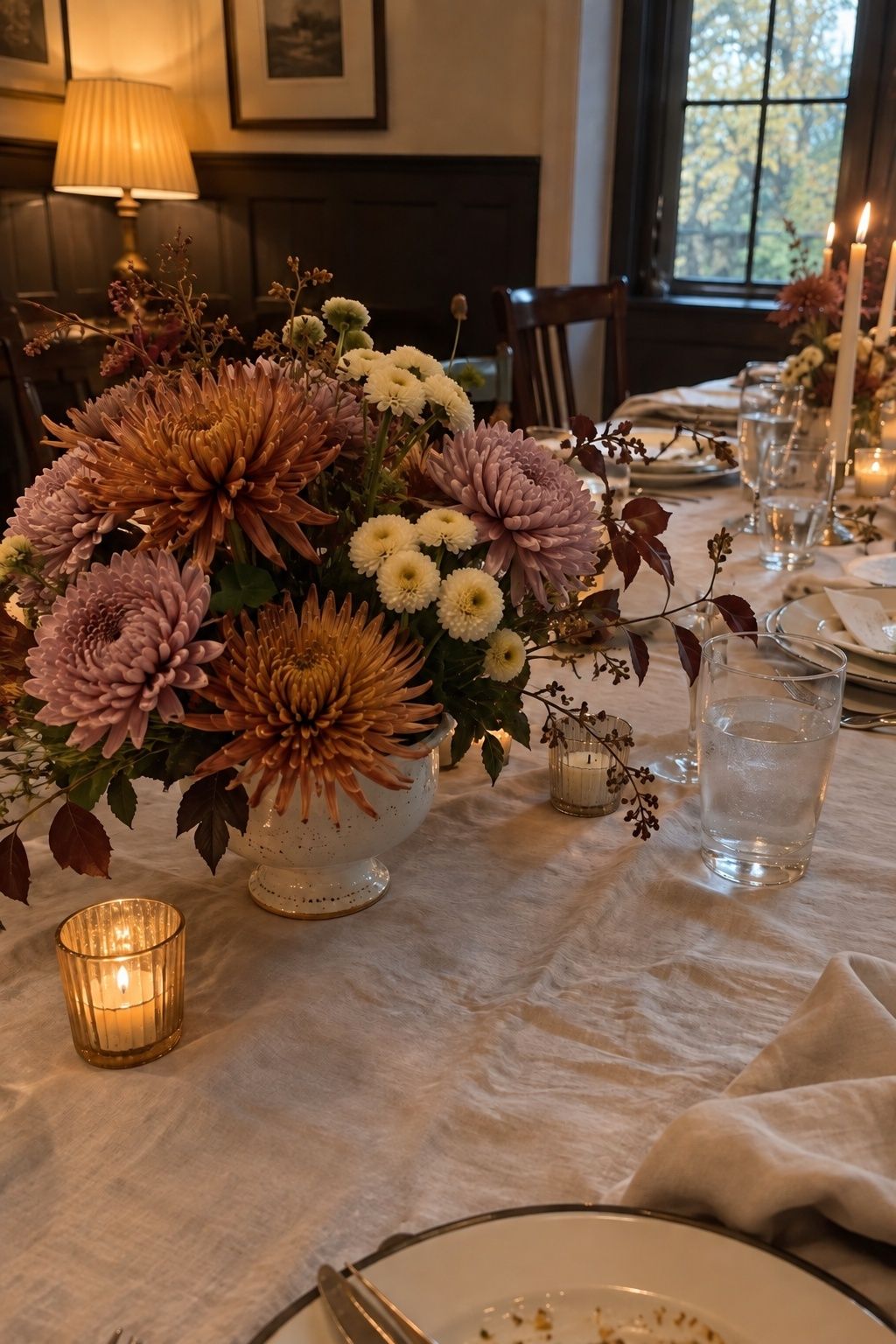
Mums get a bad reputation from the potted ones on porches, but the right varieties look sculptural. Spider mums, disbuds and button mums in bronze, buttercream, copper, burgundy or antique blush hold their shape for hours outdoors. Skip the loud mixed bunch and stick to two tones. A few dramatic mums in a low compote can carry a dinner table on their own.
Garden roses
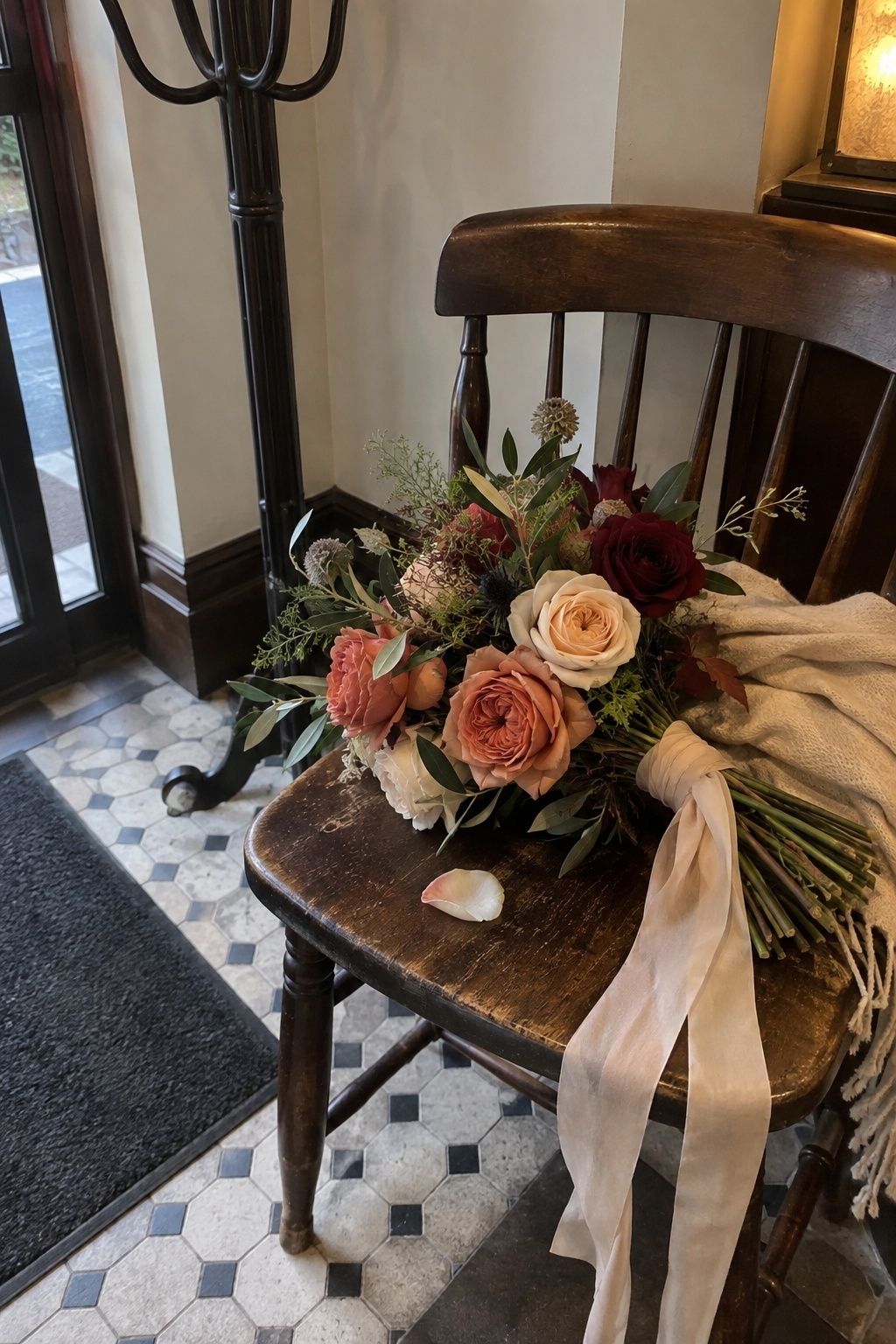
Garden roses are the safety net. They come in the colors fall palettes need, like honey, terracotta, cinnamon and burgundy, and they soften arrangements when dahlias are scarce. Pair them with mums, berries and a little dried grass so the result stays polished.
Calla lilies and orchids for modern rooms
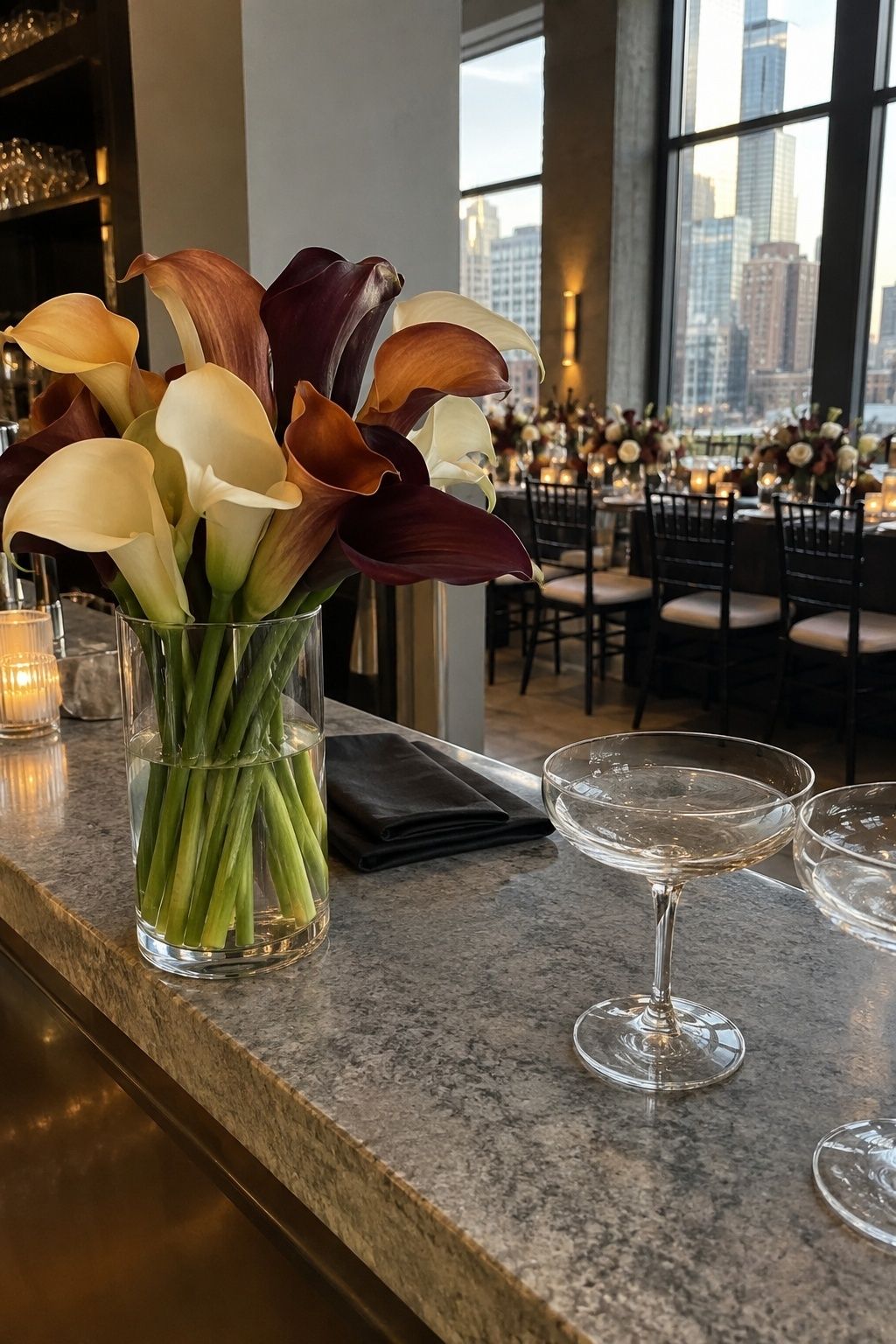
Mini callas in aubergine, caramel or cream give a bouquet a clean, sculptural line. They also repeat well in boutonnieres and near the bar.

Orchids aren’t the obvious fall pick, which is the point. Cymbidium and phalaenopsis hold up well indoors and look striking next to smoke bush and dark foliage. If your venue is a restaurant, gallery or hotel, they’ll suit it better than anything rustic.
Late hydrangea in antique tones
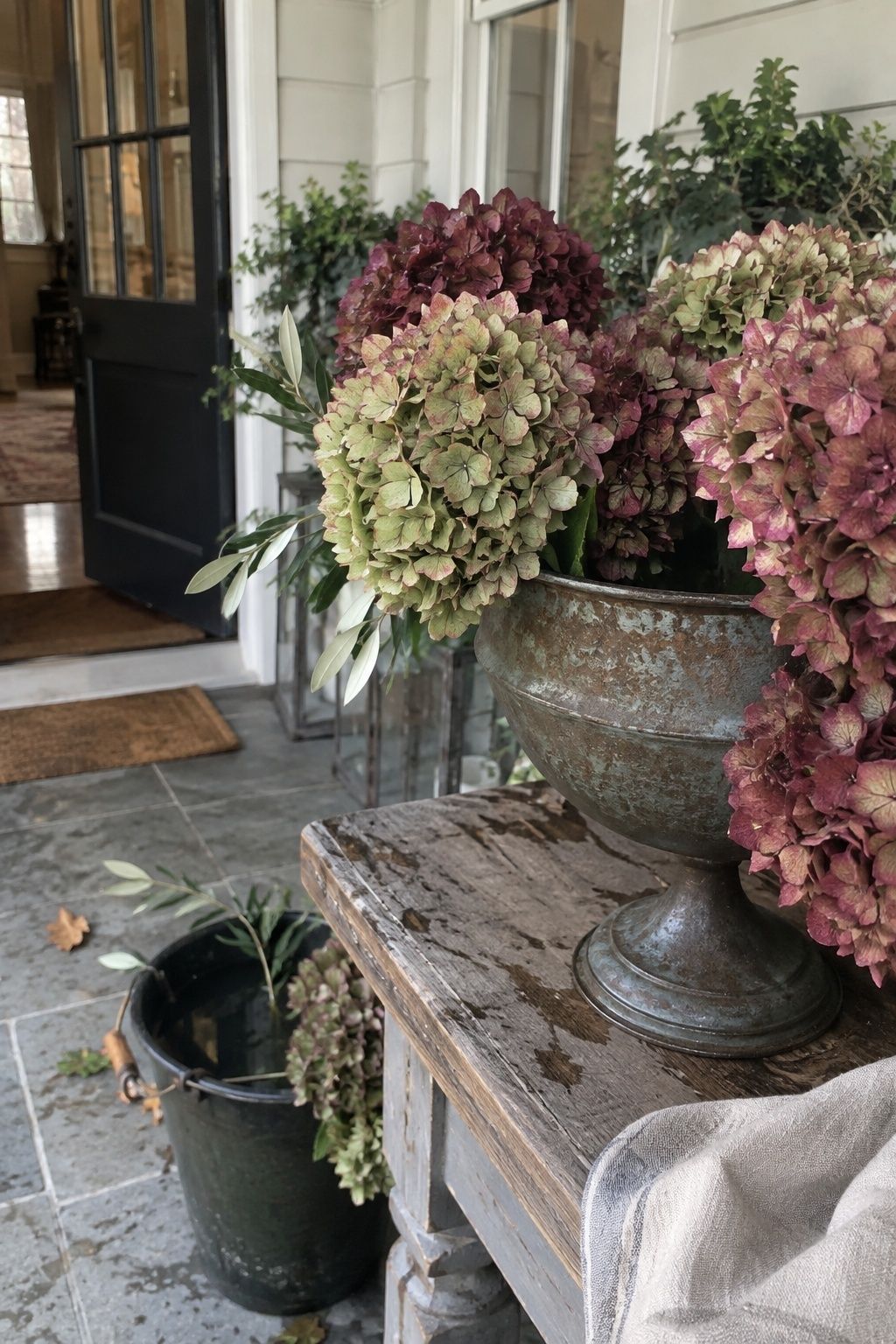
By October, hydrangea often shifts into antique green, mauve and tea-stained pink, which is lovely. It adds volume fast to urns and big compotes. It’s also thirsty, so keep it out of direct sun and let sturdier flowers carry the outdoor pieces.
Texture flowers that make fewer stems look full
Texture is how a small wedding gets a lush look without a big stem count. A low arrangement with three strong textures looks richer than a dense dome of roses.
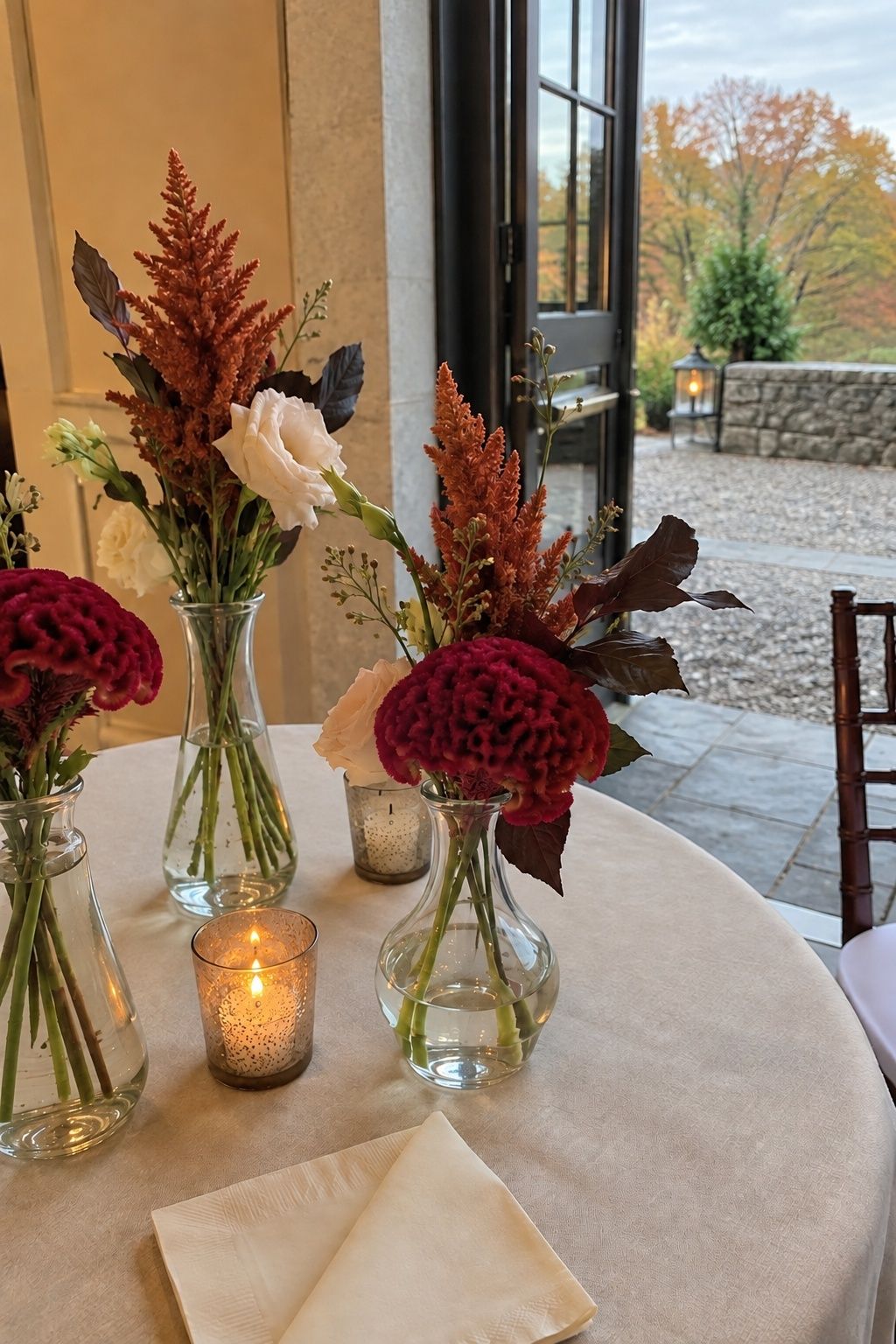
Celosia has a velvety, almost fabric-like surface. Coxcomb gives deep folds; plume celosia adds feathery height in wine, rust, gold and coral. Use it as an accent in the bouquet and repeat it in bud vases.
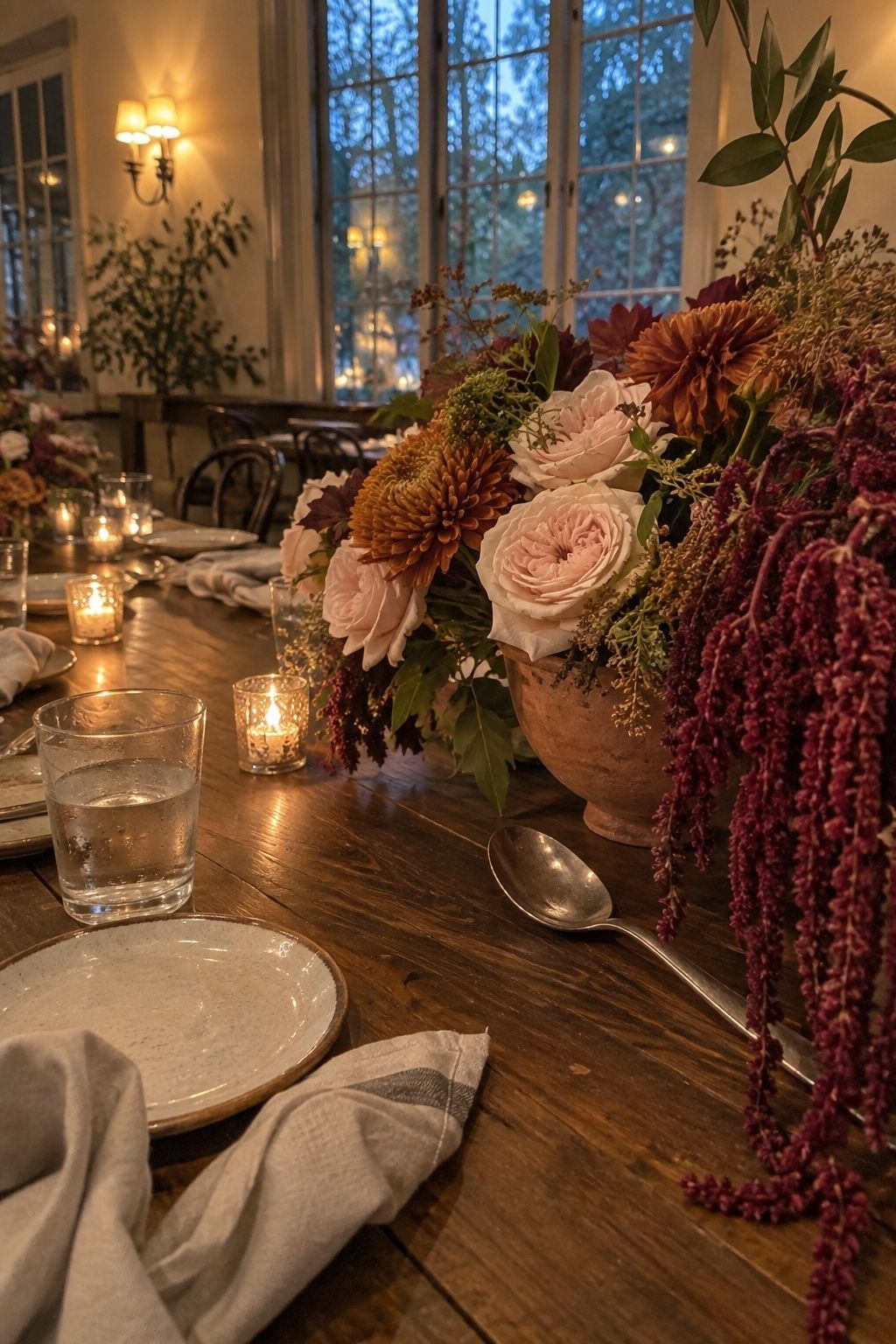
Amaranth brings movement. Hanging amaranth spills out of a bouquet or urn; upright varieties add vertical lines. One or two stems change the whole shape of an arrangement, which is useful when you only have a few.
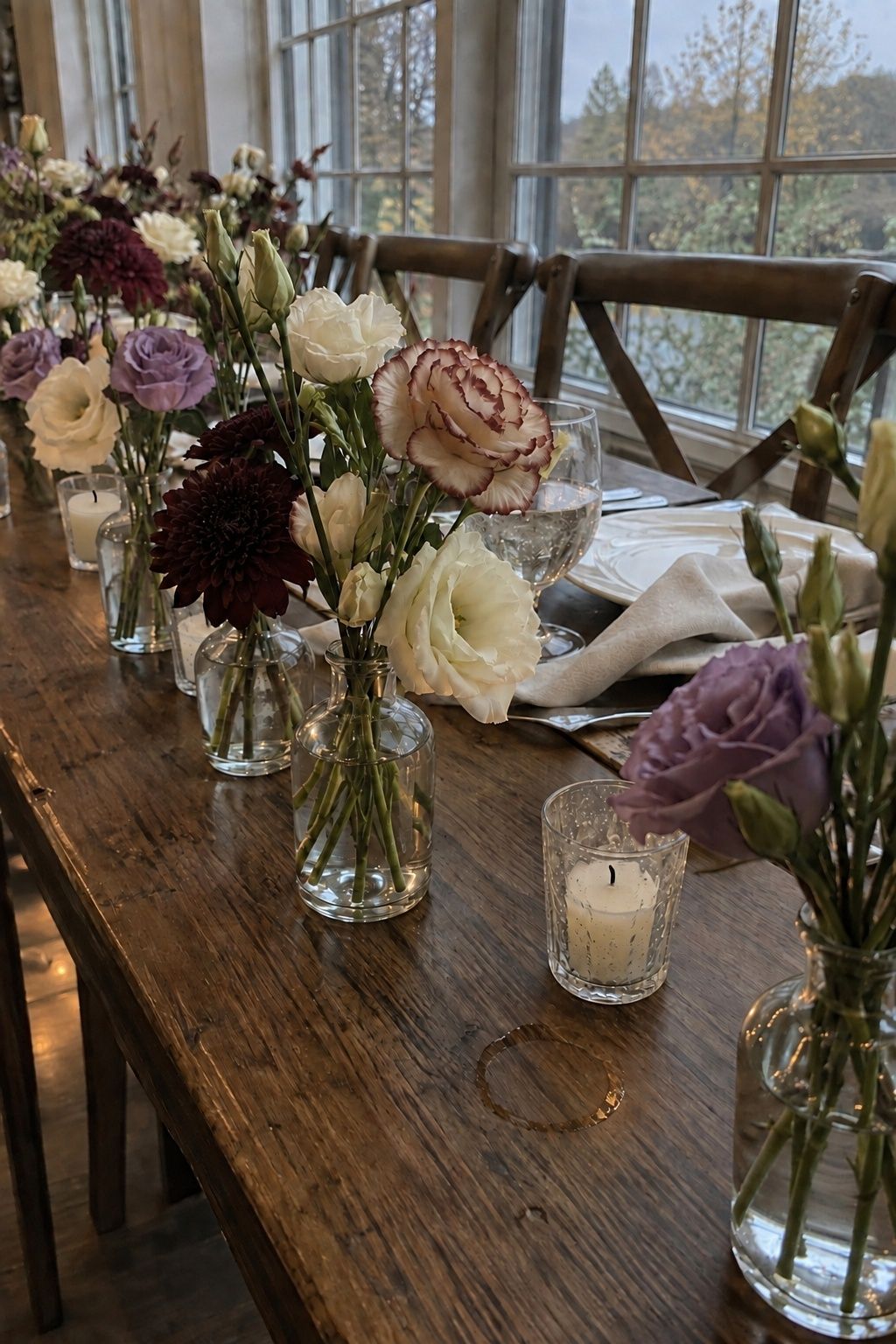
Lisianthus is the quiet workhorse. It looks like a small, ruffled rose and comes in cream, lavender, blush and deep purple. Tuck it around dahlias or mums to add air between the heavier blooms.
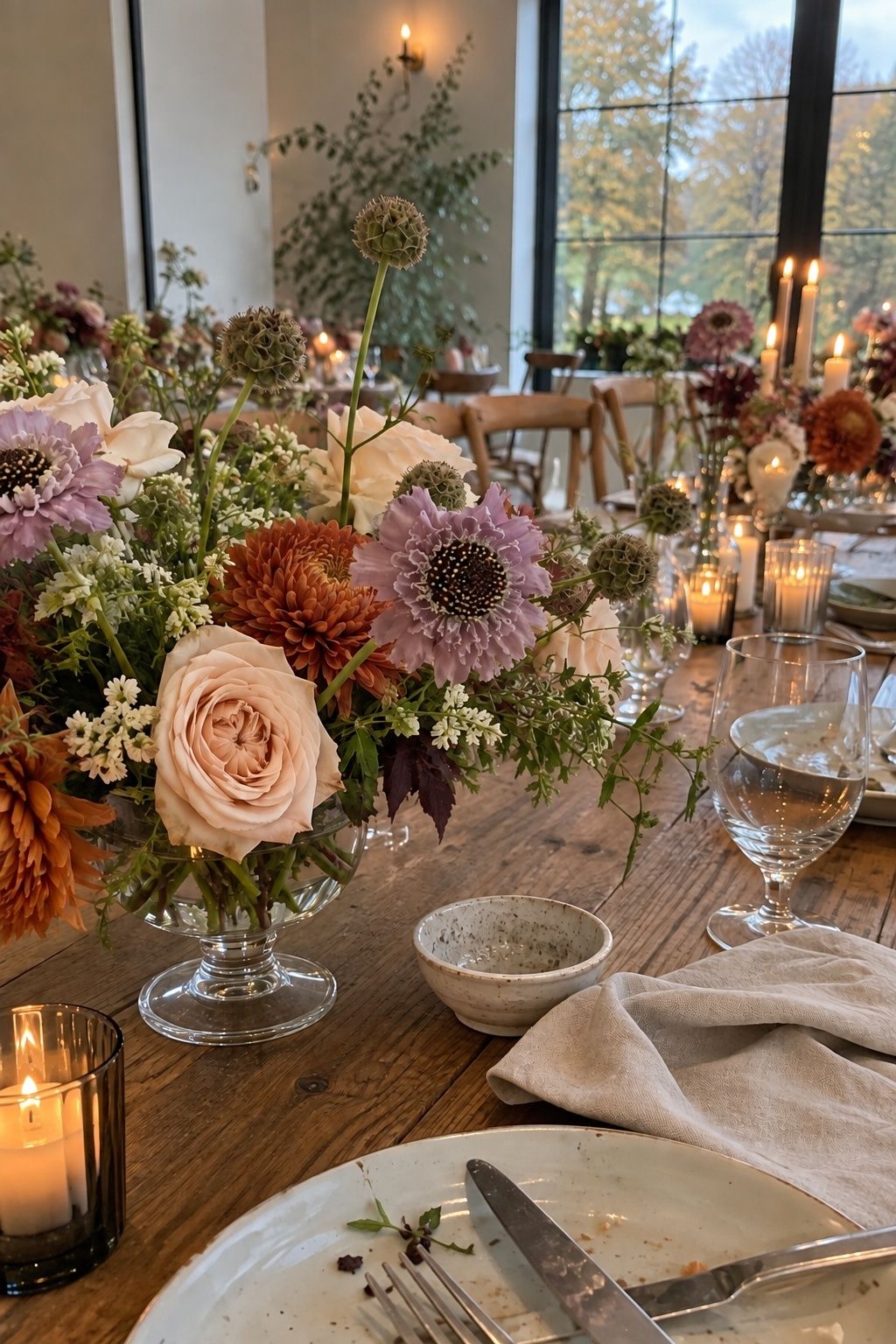
Scabiosa flowers and pods are the details guests notice up close. The pods add a dotted texture that breaks up round blooms in boutonnieres and low table pieces.

Marigolds bring gold and saffron. Their color is strong, so pair them with cream, terracotta, olive or burgundy rather than more orange. For some couples marigolds carry real cultural meaning, and if that’s you, design them with that in mind rather than as generic fall decor.
Berries, foliage and branches
The supporting materials do most of the seasonal work in October. They’re also cheaper than flowers and usually tougher.
Berries and rose hips
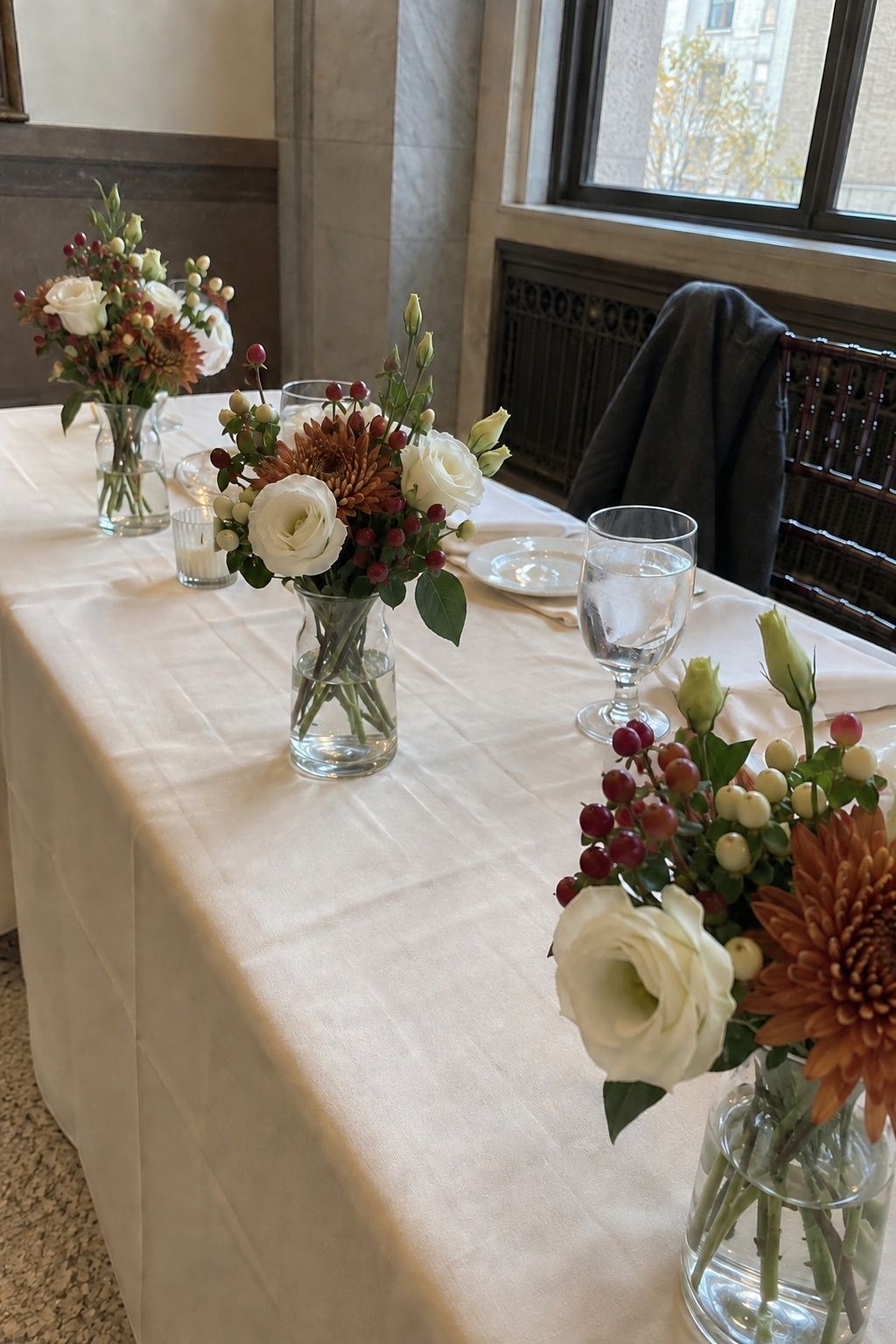
Hypericum berries come in cream, peach, red, burgundy and brown. They hold their shape all day and are a simple way to run one color thread from bouquet to boutonnieres to centerpieces.
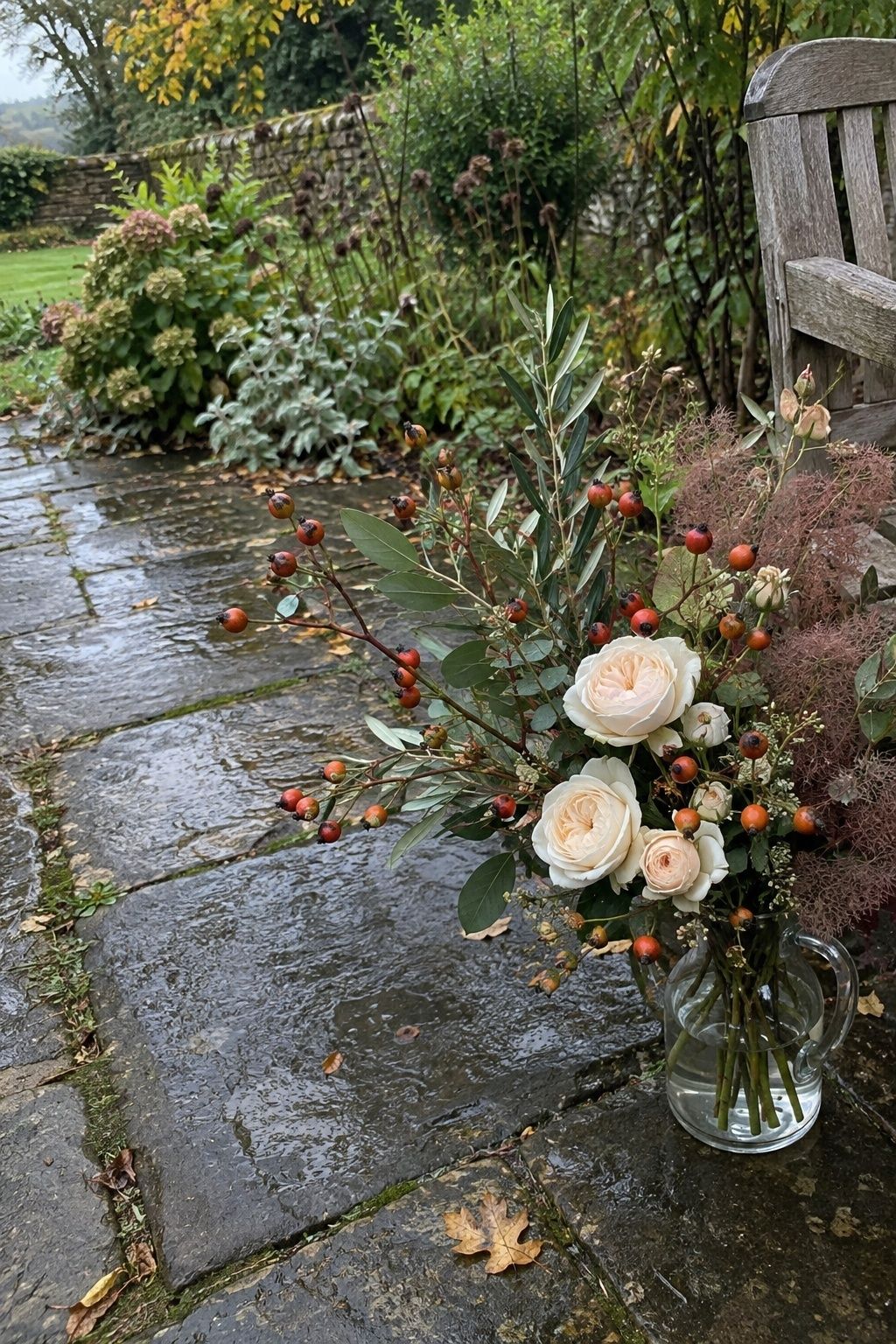
Rose hips are wilder and more irregular, which gives bud vases and ceremony urns a gathered, end-of-season look without any pumpkins.
Smoke bush, eucalyptus and olive
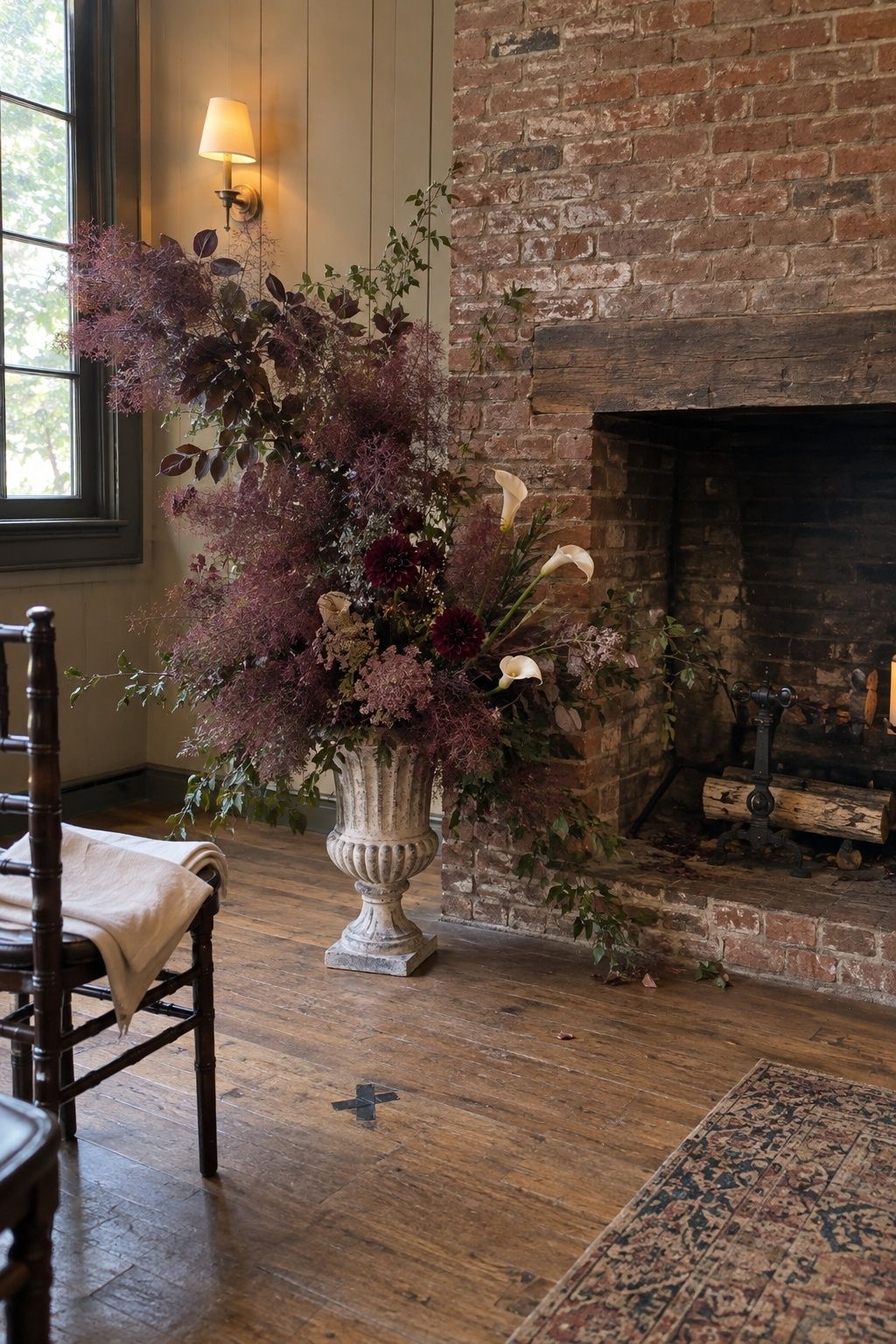
Smoke bush isn’t a flower, but it may be the most useful thing on this list. The hazy plumes in burgundy, mauve or bronze frame dahlias and make one ceremony arrangement look twice as big.

Eucalyptus needs a light hand in October. A few stems frame a bouquet; a lot of it flattens the seasonal character.
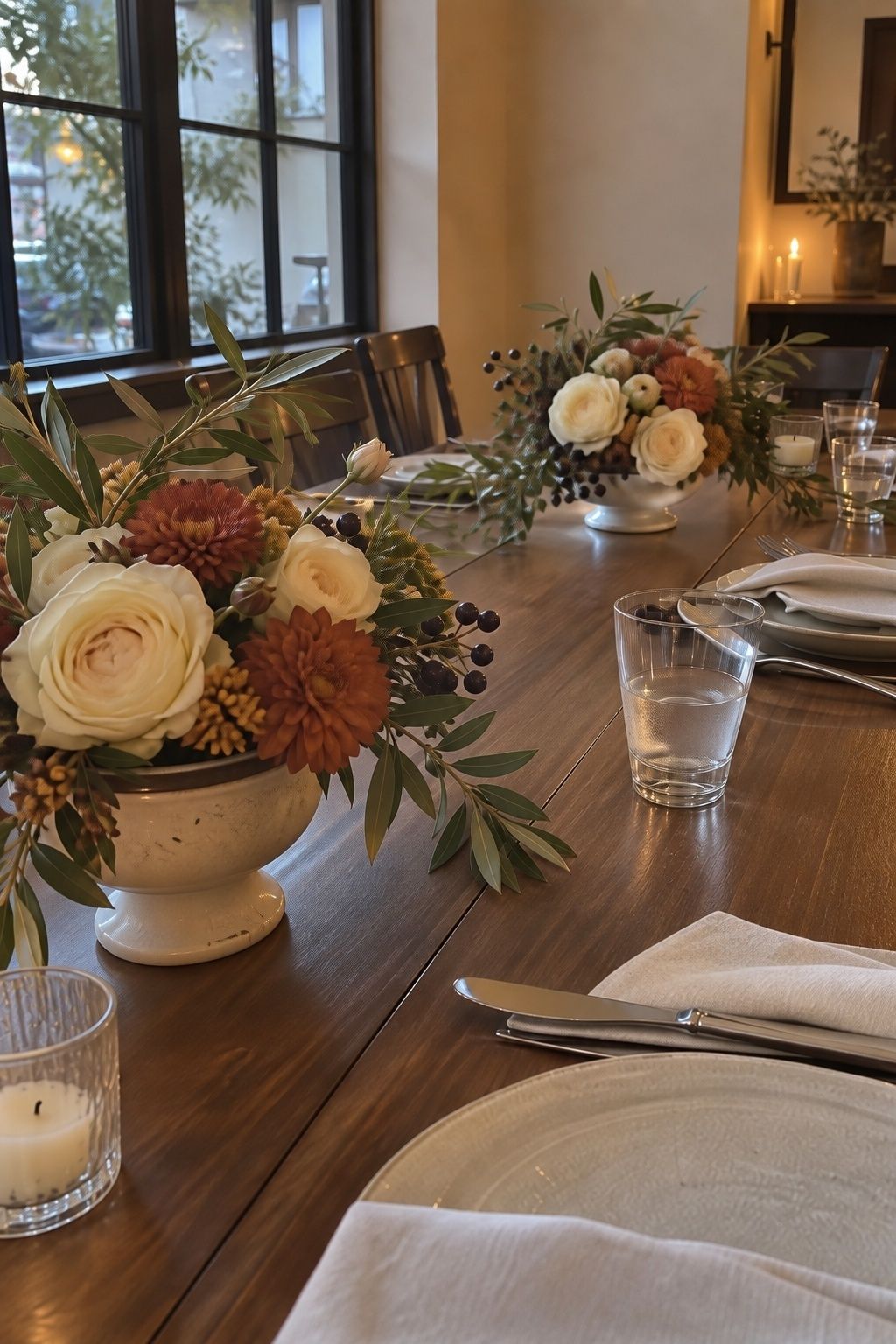
Olive is my preferred greenery for dinner tables. Its narrow leaves trail without crowding place settings, and the muted color sits well with cream roses, rust mums and dark berries.
Dried grasses and autumn branches
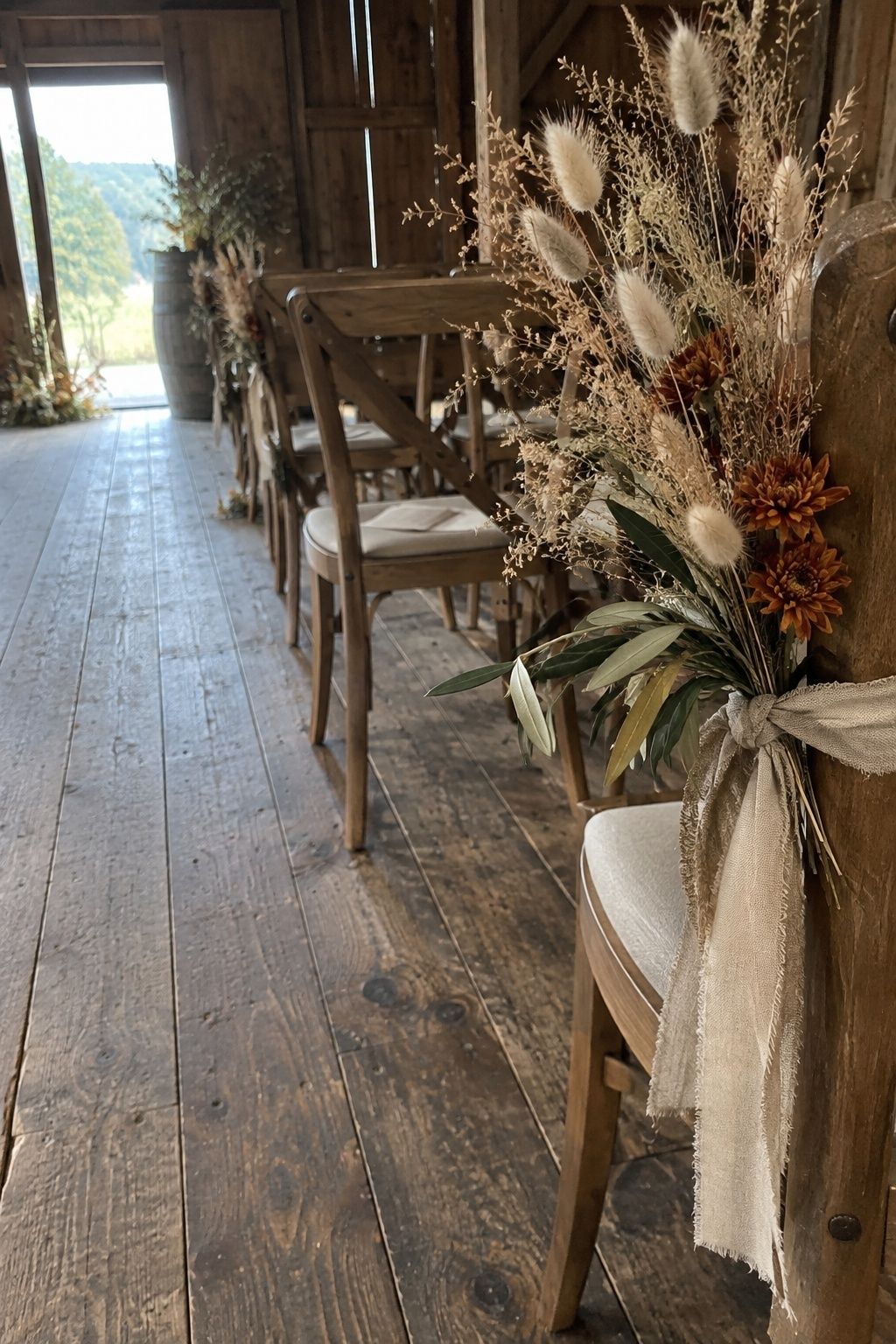
Bunny tails, preserved grasses and airy seed heads add tawny color and height. Keep shed-prone grasses away from food.
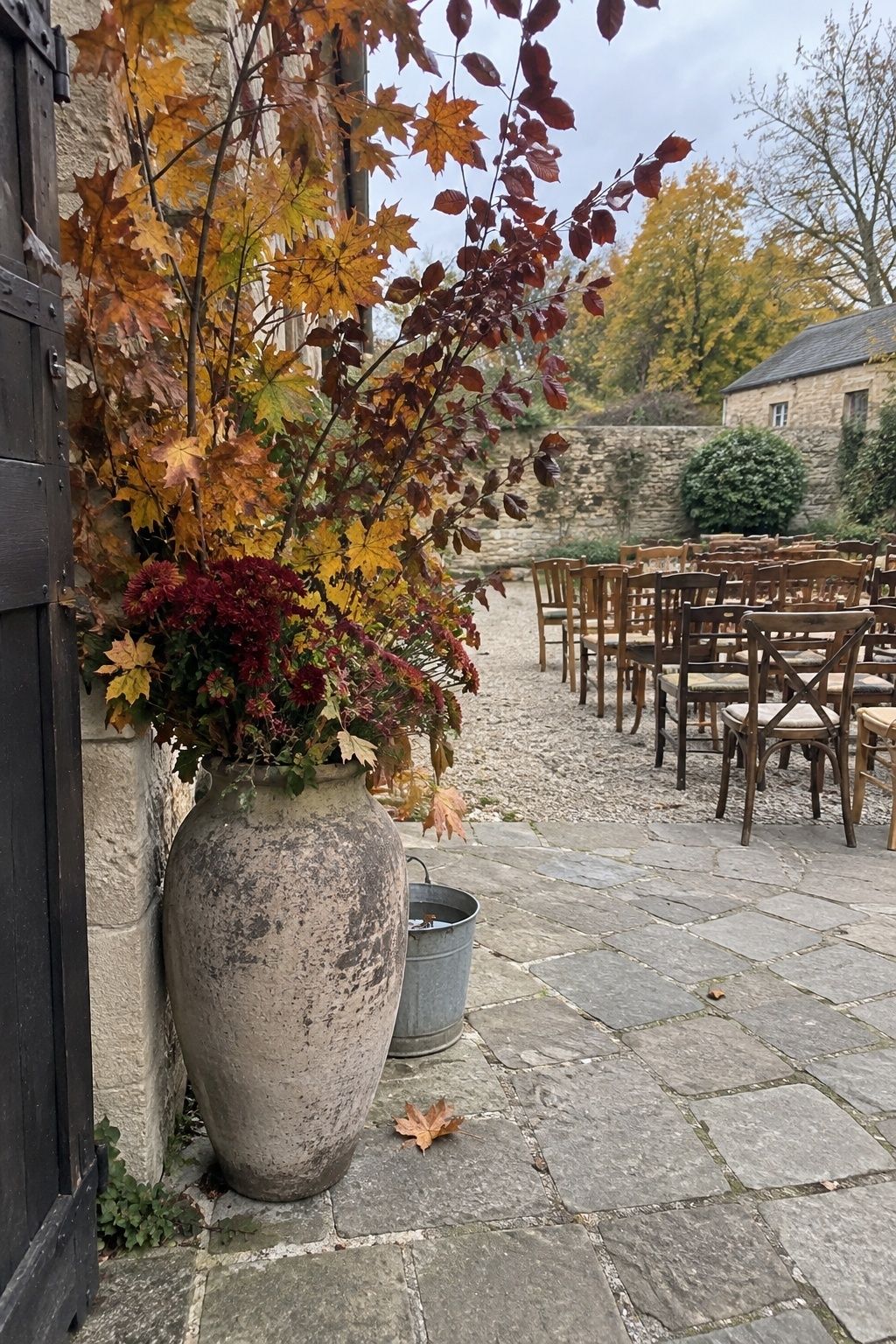
Autumn branches are the cheapest way to add scale. Maple, beech, oak or crabapple in a ceremony urn creates height and movement that would take dozens of flowers otherwise. Put the drama where guests look first, then keep dinner flowers low.
How should a small wedding use October flowers?
Concentrate them where guests are close: the bouquet, the ceremony spot, the dinner tables and the bar. Corners nobody stands in don’t need flowers.
- Let the bouquet carry the best stems, like dahlias, roses or orchids, then echo its colors with mums, berries and foliage at dinner.
- Design the ceremony arrangement to move. Urns can frame the bar, and aisle pieces can sit at the dinner entrance. Ask who moves them and whether they need trays or liners.
- Agree on substitutions in writing before the date, by color and shape, so a frost changes the stems but not the look.
- If the ceremony is outdoors, ask which stems can be installed last and hydrated well. My October outdoor wedding planning guide covers wind and cold for guests too.
For color pairings, see my October wedding colors, and for how flowers sit on the table, my October tablescape ideas. If your date slides later, November wedding flowers picks up where October leaves off.
Three October flower recipes for a 30 guest wedding
If you’d like a starting point to take to a florist, here are three combinations that work for about 30 guests on four tables. Each assumes one bouquet, one ceremony piece and a low arrangement plus a few bud vases per table.
- Moody and rich: burgundy dahlias or garden roses, plum smoke bush, wine celosia, dark hypericum and olive. Backup lead flower: burgundy disbud mums.
- Warm and golden: apricot garden roses, bronze spider mums, rust celosia, marigolds, dried grasses and a few beech branches at the ceremony.
- Modern and clean: cream calla lilies, white cymbidium orchids, cream lisianthus, scabiosa pods and olive. Almost no frost risk, which makes it the easy pick for a late October date.
Whichever you choose, ask the florist to quote the ceremony piece as something that moves to the bar afterward. That one decision often saves the cost of a whole extra arrangement.
Key takeaways
- The toughest October wedding flowers are chrysanthemums, celosia, berries, calla lilies, orchids and branches.
- Dahlias are worth having early in the month, but agree on a same-color backup in case of frost.
- Texture like smoke bush, amaranth, scabiosa and rose hips lets a small wedding use fewer stems.
- Keep hydrangea and dahlias out of direct sun and wind.
- Put the best flowers in the bouquet and design the ceremony piece to move to dinner.
FAQ
What flowers are best for an October wedding?
Chrysanthemums, garden roses, dahlias, celosia, amaranth, calla lilies, orchids and lisianthus are the best October wedding flowers, supported by berries, smoke bush, olive and autumn branches. Choose the final mix by region, frost risk and whether the flowers need to last outdoors.
Are dahlias in season in October?
Dahlias are often available in early October, but frost can end local supply quickly in colder regions. Use them as the lead flower only with a backup plan, such as garden roses or chrysanthemums in the same colors.
What October flowers hold up well outdoors?
Chrysanthemums, celosia, hypericum berries, scabiosa pods, calla lilies, olive, dried grasses and autumn branches hold up well outdoors. Dahlias and hydrangea need shade, water and protection from wind.
How do you make chrysanthemums look elegant for a wedding?
Choose shapely varieties like spider mums, disbuds or button mums, and keep to one or two muted colors such as bronze, cream or burgundy. Pair them with garden roses and smoke bush in simple vessels.
Which flowers should you avoid for an October wedding?
Avoid relying on spring flowers like peonies, tulips, lilac and sweet peas unless your florist confirms availability and price. Designs that depend entirely on late dahlias or hydrangea in direct sun are also risky.
Questions to bring to your florist
Before you sign, ask three things. Which of my flowers are local and which are imported? What happens if frost hits a week before the wedding? Which arrangements can move from ceremony to dinner? The Knot’s guide to wedding flowers is a useful reference for the conversation. Get clear answers and your October wedding flowers will look the way you planned, whatever the weather does.
Last update on 2026-10-03 / Affiliate links / Images from Amazon Product Advertising API