

Wedding priorities work when each of you writes a private list first, then you agree on three to five shared must-haves and decide, out loud, what you’ll spend less on to pay for them. A priority with no trade attached is only a wish, so name the trade before you book anything.
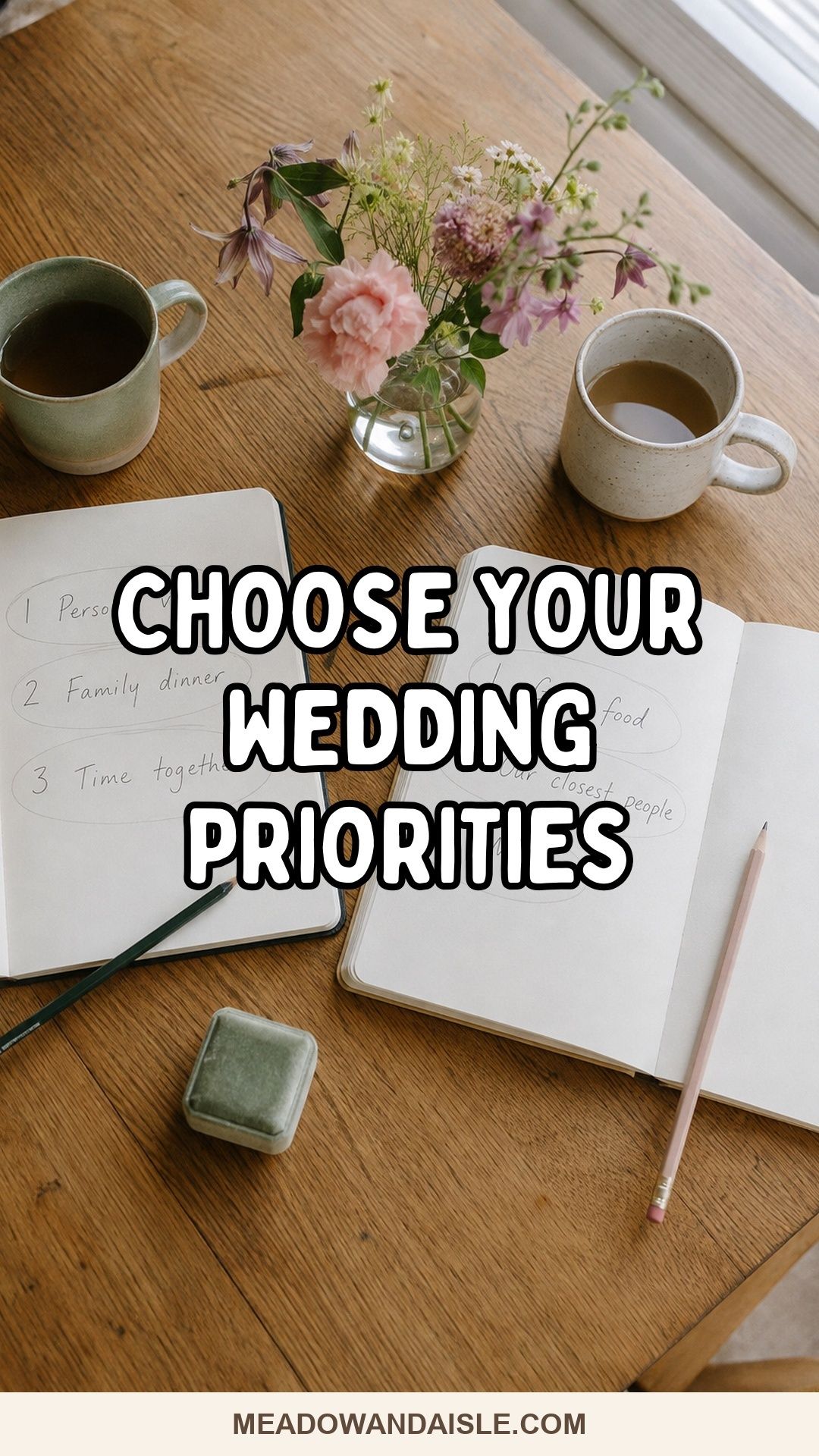
Two notebooks on the kitchen table, two coffees going cold, and one of you has written “good food” at number one while the other wrote “personal vows.” Nobody’s wrong, and that’s exactly where learning how to choose wedding priorities as a couple starts, because every wedding has more good ideas than money, time or free weekends to pay for them.
Below you’ll find the one-hour conversation that gets you to a shared list, the questions worth asking each other, and how those answers turn into real decisions about the budget, the guests, the venue and the day itself. If you’re working through how to know what kind of wedding you want as a whole, the main guide covers it.
Recommended Wedding Priority Planning Essentials
Paper works better than an app for this conversation, since you can both write at the same time and nobody wanders off into their email.


Recommended blogs to read:
- How To Choose Between Wedding Photographer And Videographer Without Regret
- How To Choose A Wedding Vibe That Feels Like You Before Pinterest Takes Over
- How To Plan A Wedding When Families Disagree And Still Feel Like A Team
- January Outdoor Wedding Planning for a Beautiful Day That Knows Weather Gets a Vote
- What To Do First When Planning A Wedding So The Rest Feels Clear
Why Should You Set Wedding Priorities Before Anything Else?
Because once a deposit is paid, the plan starts bending around it, and priorities chosen first are what stop you from planning a wedding by default.
I spent years costing menus as a chef, and the rule in any kitchen is simple: you decide where the expensive ingredient goes, and everything around it gets cheaper on purpose. A wedding budget works the same way. Three or four things get the good stuff and the rest are allowed to be simple, which feels a lot better than spreading the money thin over thirty categories and loving none of them.
When Should You Have the Priority Conversation?
Before you tour venues or sign anything, in one quiet hour with your phones in another room and the family group chat on mute.
1. Answer Separately First

Start alone, each with your own notebook, and write without peeking. The more confident talker tends to set the agenda, and the quieter partner ends up nodding along to a list they never would have written. On the two pages here, one list says personal vows, family dinner and time together, and the other says good food, our closest people and music, and both are useful because neither got edited for the other person.
If the blank page stalls you, finish a few sentences: “I’d be sad if we skipped…”, “I’d be relieved if we didn’t have to…” and “When I picture the day, I see…” Write up to ten answers, circle your top three, and only then swap notebooks.
2. Compare Similarities
Begin with what overlaps, because agreement builds momentum and the overlap is usually bigger than it looks at first. Read past the exact words to what’s underneath them: “family dinner” and “our closest people” are pretty much the same priority (both of you want the people you love around one table), and “personal vows” and “time together” often point at the same wish, a day where you’re present instead of performing. Sort your answers into a few rough piles, like people, food, ceremony and calm, and you’ll often find you already agree on two of your three before anyone has argued about anything.
3. Notice The Differences Without Scoring Them
Different answers aren’t a problem to fix. They’re information about what each of you is hoping to feel on the day.
If one of you cares a lot about photos and the other shrugs, ask what the photos give them. Maybe it’s grandparents who won’t be around forever, or a family that never had good pictures of everyone together, and once you hear that, the priority stops looking like a line item.
Try “tell me what that gives you” instead of “why do you even care about that?” The first question gets you a reason, the second gets you a defense. And don’t let volume decide anything, since the partner who argues louder isn’t automatically the one who cares more.
4. Choose A Few Shared Must-Haves
Now pick three to five must-haves you both stand behind, and write each one as a full sentence instead of a single word, because “food” can mean a taco truck or a five-course dinner. Some examples of how that looks:
- We want a guest list small enough to talk to everyone.
- We want dinner to be the best part of the day.
- We want a ceremony that sounds like us, with vows we wrote ourselves.
- We want a slow morning with no rushing.
Then give each sentence one action, like booking an officiant who lets you write your own ceremony, so the priority lands on the calendar and doesn’t stay in the notebook.
5. Name The Things You Both Do Not Care About
This is the list nobody makes, and it saves the most money. Write down everything neither of you would miss, things like favors, programs, a late-night snack, a grand exit or chair covers. Seeing it on paper is weirdly freeing (who knew you both secretly hated chair covers?).
It also protects you later. Vendors are good at upselling and every upgrade sounds reasonable on its own, but if fancy napkin folds are already on the don’t-care list, saying no takes about two seconds. Keep this list right next to your must-haves and glance at both before every booking.
What Questions Help You Find Your Wedding Priorities?
Ask about feelings, people, memories and regret before you ask about colors or venues, since those answers point straight at where your money and time should go.
6. How Do We Want The Day To Feel?
Feelings make a better starting point than design, because a word like calm or lively tells you how to plan, while a color only tells you what to buy. Pick two or three words each, compare them, and turn them into something you can book: calm might mean one location and a later start, lively might mean a long dinner with toasts and a dance floor that fills up early. If your words clash, give them to different parts of the day, since a quiet ceremony followed by a loud dinner is a very normal combination and nobody has to give anything up.
7. Who Do We Most Want To Be Present With?
Think about the ceremony, then dinner, then the last song, and notice who’s in the room each time. The faces that keep showing up are your real guest list, and they tell you if you’re planning a dinner for 25 or a party for 120. Write those names down while they’re fresh, before anybody else’s list gets anywhere near yours.
Answering this doesn’t automatically mean small. Some couples want a big, loud crowd, and that’s a fine priority too. What matters is choosing the size on purpose, because the guest count drives the venue, the catering bill and how many minutes you’ll get with each person.
8. What Do We Want Guests To Remember?
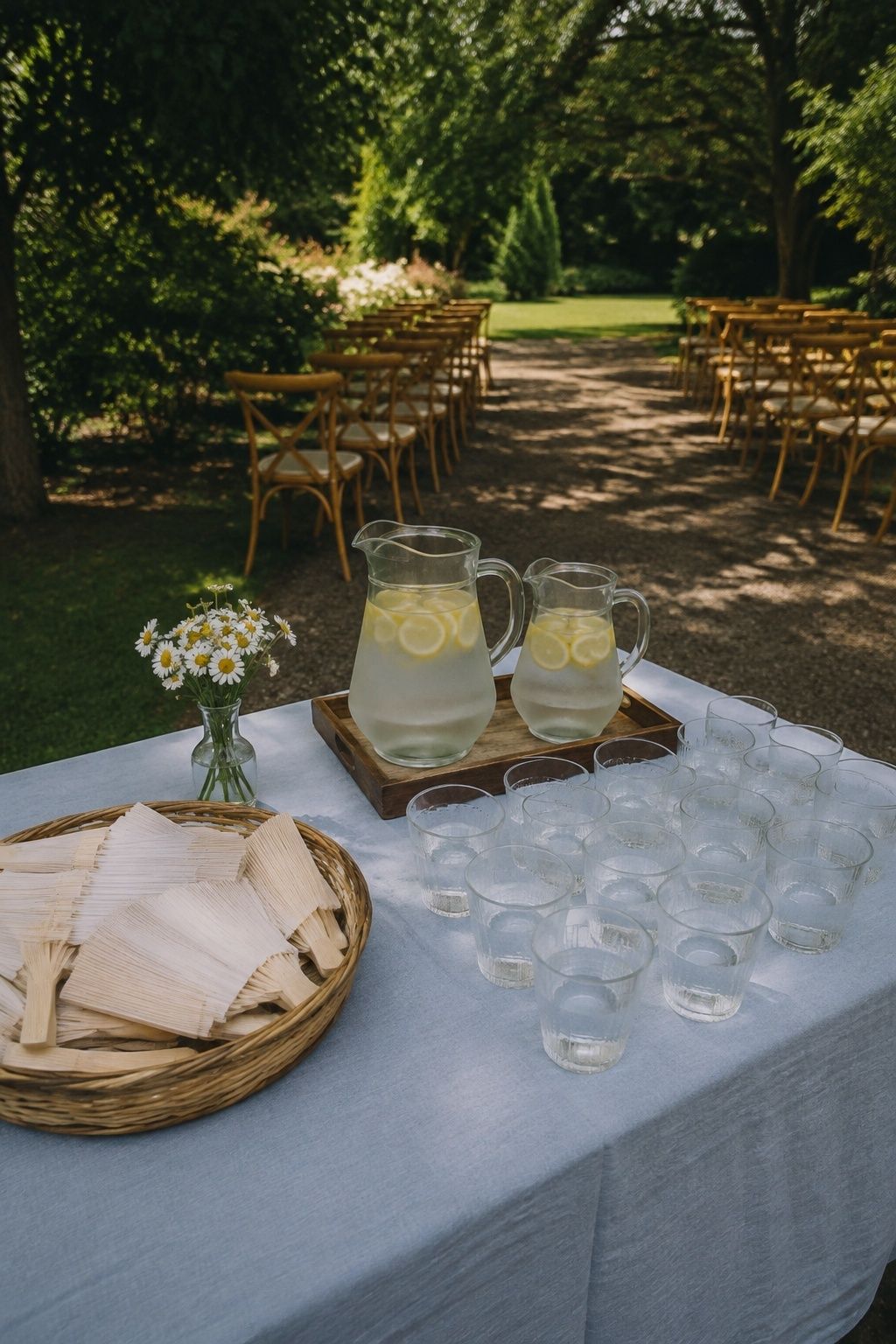
Guests rarely remember the linen color. They remember whether they were hot, hungry or bored, and whether the two of you looked happy.
That’s why guest comfort often deserves a spot ahead of one more decor upgrade. Pitchers of lemon water and a basket of paper fans next to a shaded ceremony cost very little and get used by everyone sitting there in July, while a fancier welcome sign gets one glance on the way in.
Ask yourselves what you’d want a friend to say about your wedding a year from now. Maybe it’s the food, maybe it’s that nobody stood around waiting, maybe it’s the vows. Whatever you land on deserves real money and time, and the stuff nobody will remember can stay simple.
9. What Would We Regret Spending Too Much On?
Regret usually comes from a mismatch, not from the size of the bill. Spending a lot on great food you both care about rarely stings, while a premium invitation suite neither of you looked at twice is the kind of thing couples grumble about for years. Go through the usual suspects, such as stationery upgrades, favors, transportation, a second dress and extra decor, and ask which ones would feel silly on the credit card statement. Do it before you sign anything, since a vendor’s first quote often includes upgrades that start to feel like the baseline just because you saw them first.
10. What Would We Regret Skipping?
Now flip it. Which things would you still think about in ten years if they didn’t happen? A photo with your grandmother, a few quiet minutes alone after the ceremony, a live band because music is how your family celebrates. Those regrets tend to be small and very specific.
Watch out for borrowed regret, the fear of skipping something only because another couple loved it or a video said you’d be sorry. If it isn’t on either of your lists, it probably isn’t yours. And when you’re torn between two looks or two moods, choosing a wedding vibe first makes the rest of these calls much easier.
How Do Your Priorities Turn Into Planning Choices?
Put them on every planning document, from the budget and the guest list to the venue checklist and the timeline, so each decision gets checked against them instead of against the latest idea.
11. Budget
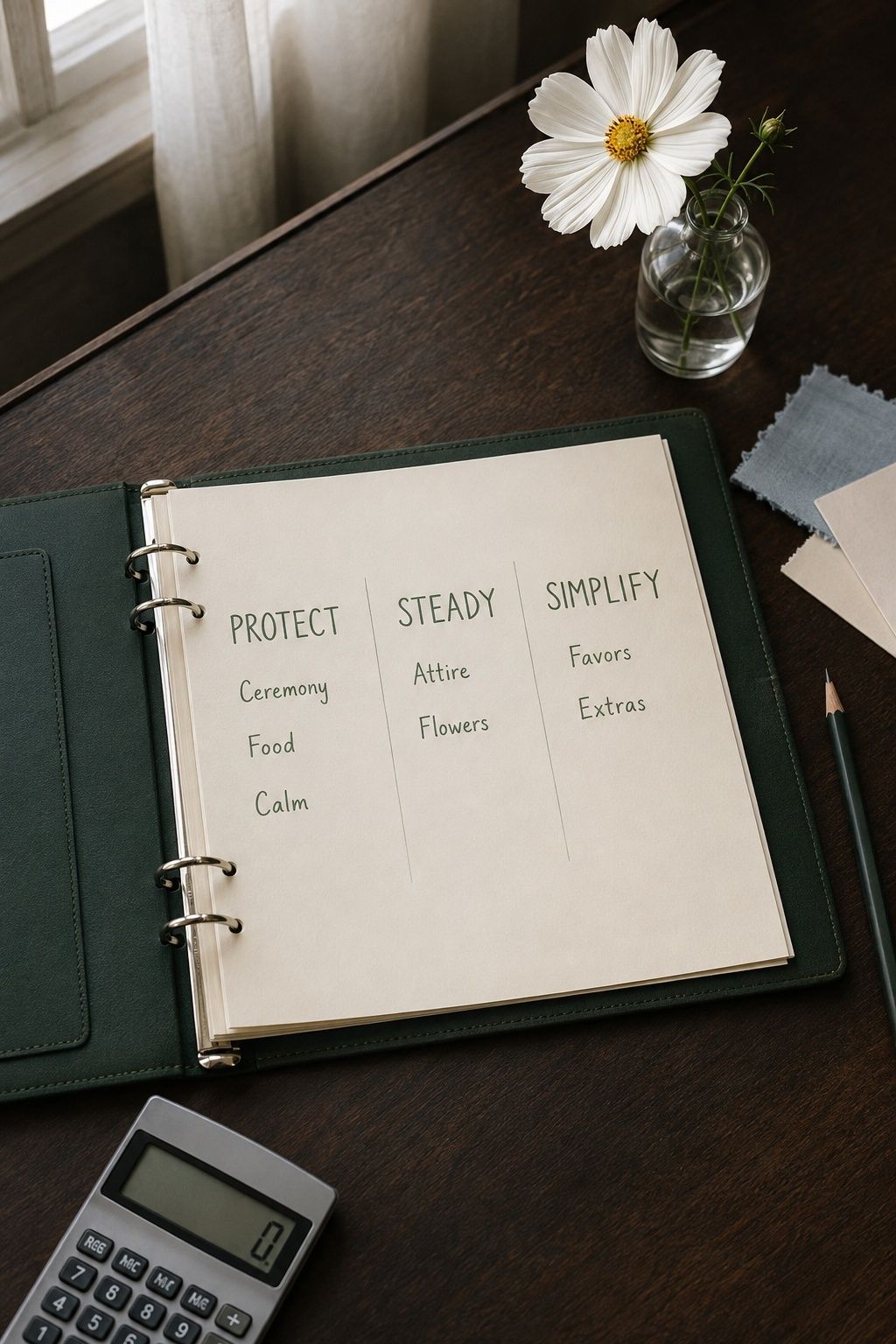
A priority-led budget is uneven on purpose, and the binder page here splits it into three columns that work well for couples who hate spreadsheets:
- Protect: the categories tied to your must-haves, like the ceremony, the food and a calm day, which get money first.
- Steady: things that matter but don’t need upgrades, like attire and flowers, each with a fixed amount.
- Simplify: everything on your don’t-care list, like favors and extras, at the lowest cost or skipped.
When a quote comes in high, take the money from Simplify first and Steady second, and leave Protect alone. Put tax and service charges in the Protect column too, since they sit on top of the categories you care about most.
12. Guest List
Your guest list is your priorities in their most visible form, and it reaches into almost every other line of the budget, because each extra guest brings another chair, plate, drink and invitation, plus a little less of your time on the day.
If being present with people is a must-have, the list has to stay small enough to talk to everyone, and that sentence is a handy one to read out loud when a relative suggests six more names. If a big celebration with everyone you know is the priority, accept that you’ll trade other things for it, maybe a simpler venue or a buffet instead of a plated dinner. Either answer works. Trying to have both rarely does.
13. Venue
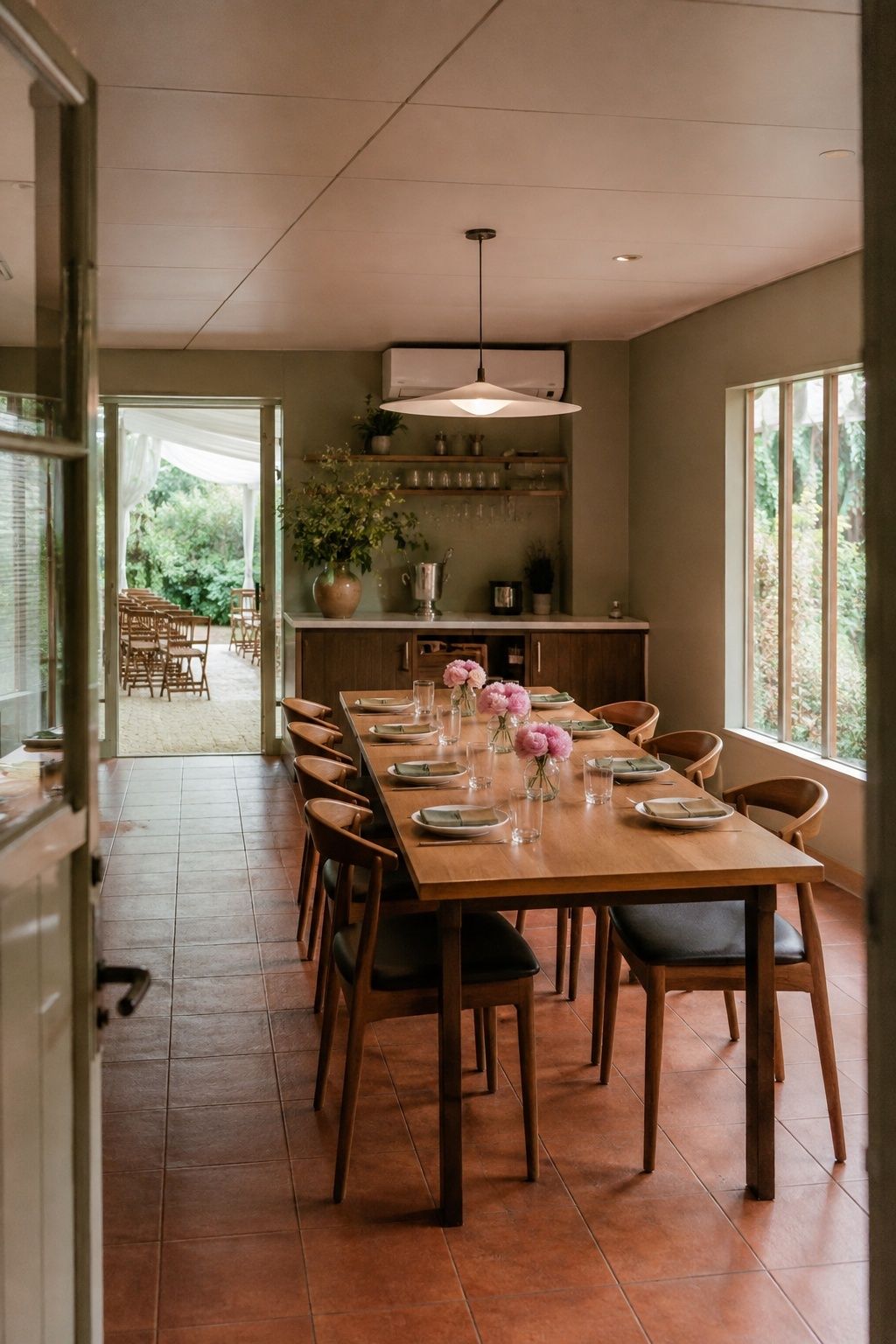
The prettiest venue isn’t always the right one, and your priorities are what tell the two apart. A small restaurant room with a long wooden table, a terracotta floor and a door open to the garden already comes with chairs, a kitchen and staff, which suits couples whose priorities are food and an easy day.
Take your priority sentences on every tour and ask how the space handles them: can guests hear the vows, how far is the kitchen from the tables, where does everyone go if it rains, and what happens at 10 pm when the room has to be empty. A blank-slate barn might win on looks and lose on all four, which is worth knowing before the deposit.
14. Vendors
Vendors get easier to choose once you know which job each one does for your priorities. A photographer matters most to couples protecting memories, a caterer to couples protecting dinner, and a coordinator to couples protecting calm, so rank your vendors the same way the binder ranks the budget. Then ask questions tied to the priority instead of the package, like “how do you keep a 30-guest dinner relaxed?” or “how fast can you do family photos so we get back to our guests?” The answers tell you far more than a price list does, and a vendor who’s brilliant for someone else’s wedding can still be wrong for yours. Ask to see a full wedding gallery or a sample menu from an event your size, too, since highlight reels and tasting plates are built to impress and the full day is where your priorities either show up or get lost.
15. Traditions
Every tradition gets one of three answers, and you decide them together:
- Yes: you both love it, so it stays as it is.
- Adapted: you keep the meaning and change the form, like a welcome toast instead of a receiving line, or two honor attendants instead of a big wedding party.
- No: it doesn’t fit your priorities, and you’re allowed to let it go.
When a tradition matters to someone you love but not to you, ask what it would cost to include it. If the answer is ten minutes and a happy photo for your dad, that’s usually worth it. If it means a second ceremony and a bigger budget, a smaller version tends to be the kinder compromise.
16. Timeline

The timeline is where priorities either get room to breathe or get squeezed out. That clipboard blocks out 3:30 as quiet time, half an hour between the ceremony and drinks, and that single line is a priority written in minutes.
Build the day around the moments you named first and give each one actual time: a ceremony that doesn’t feel rushed, a dinner long enough for toasts, family photos that don’t swallow the whole cocktail hour. Leave buffers between events too, because a schedule where everything technically fits but nothing can run five minutes late is how a calm day turns into a stressful one.
What If You Disagree on Wedding Priorities?
Find the need under each position, then look for a version that gives both of you something you care about, instead of splitting everything down the middle.
A bigger guest list often comes from family loyalty, while a smaller one usually comes from wanting to be present, and once you say those needs out loud, a middle path tends to show up, like a small ceremony followed by a bigger, casual party. A simple trade rule helps as well: if one of you gets a strong yes on a priority, the other gets the next one, and you keep score loosely, not like a court case.
If the disagreement is really about family pressure, separate what the two of you want from what others expect. You can be kind to your parents and still decide together, and it’s much easier when you agree as a couple first and talk to family with one answer.
How Do You Use Your Priorities Later On?
Keep the list wherever you plan and run every new idea through four quick questions:
- Does this support one of our priorities?
- What would we give up to pay for it?
- Would we miss it if nobody had suggested it?
- Are we adding it because of pressure?
Look at the list again after each big booking, since a signed venue or a confirmed headcount can shift what matters. And when you scroll past a wedding that looks amazing, the list is a good reminder that it was built around somebody else’s priorities.
Which Wedding Priority Mistakes Should You Avoid?
Most of them happen early, before couples notice they’re planning on autopilot:
- Choosing priorities after the deposits are paid, when the big money is already committed.
- Writing categories like “venue, food, photos” without saying what you want from them.
- Assuming every priority has to be expensive, when calm or presence often costs nothing.
- Treating the less visible priority as less important, like a slow morning compared with flowers.
- Using the list to win arguments instead of making decisions.
- Copying another couple’s priorities because their wedding looked good online.
Skipping the don’t-care list is the other big one, since that’s where most of your savings are hiding. For the step-by-step side, browse Wedding Planning Basics or read how to plan a small wedding.
What Are the Top 3 Priorities for Most Couples?
For most couples, the top three are the venue, the photographer and the food, which matches what couples book: in The Knot’s 2026 Real Weddings Study, 89% booked a venue, 88% hired a photographer and 85% had a caterer.
That’s a useful place to start and a bad place to stop. Your three should come out of your own notebooks, and if yours turn out to be music, grandparents and a slow morning, those deserve the money just as much.
What Should You Splurge On and Save On?
Splurge on whatever sits in your Protect column and save on everything on your don’t-care list, which for many couples means spending on food and photos and saving on favors, printed extras and decor nobody touches. If you’re still unsure, compare what guests live with for hours, like dinner and their chair, with what they glance at once on the way past. The first group usually earns the money.
Frequently Asked Questions
How Do You Choose Wedding Priorities as a Couple?
Write separate lists first, compare them for overlap, and agree on three to five shared must-haves written as full sentences. Then decide what gets cheaper so you can afford them, and check every booking against the list.
How Many Wedding Priorities Should You Have?
Three to five. Three is easiest to remember, and more than five usually means nothing is really a priority.
What If You and Your Partner Have Different Wedding Priorities?
Ask what each priority gives the other person and look for a version that meets both needs. If you’re still stuck, trade: one of you gets a strong yes now, and the other gets the next one.
What Should You Not Prioritize for a Wedding?
Anything neither of you would miss, which for many couples includes favors, programs, chair covers, a grand exit and elaborate signage. Those are the easiest places to save without guests noticing.
Key Takeaways
- Write your priority lists separately before you compare them.
- Three to five shared must-haves, written as sentences, beat a long wish list.
- Every priority needs a trade, so name what gets cheaper to pay for it.
- The don’t-care list saves more money than any discount code.
- Sort the budget into protect, steady and simplify.
- Check new ideas against the list, especially after each big booking.
Next Up: Put a Number Next to Each Priority
Once your notebooks agree, the next step is putting a dollar amount beside each priority, and the small wedding planning guide linked above walks through that part in order. Fill the Protect column first, let everything else share what’s left, and you’ll have a budget that already knows what it’s for.
Last update on 2026-11-29 / Affiliate links / Images from Amazon Product Advertising API