

How to skip wedding traditions politely starts with separating meaning from pressure. Keep the rituals that honor your marriage, culture, faith, families, and guests, then release the performance-only customs with calm wording, thoughtful alternatives, and hospitality that still makes people feel considered.
Wedding traditions have a way of arriving with luggage. Some feel tender and rooted: a parent walking with you, a blessing spoken in your family’s language, a song that carries generations. Others feel strangely mandatory even when neither of you wants them: a bouquet toss, a garter removal, a long receiving line, a cake-cutting announcement, a formal wedding party entrance that makes your shoulders climb.
The hard part is rarely the tradition itself. It is the fear that changing it will sound like rejection. You love your people deeply and still do not have to keep every custom they expected. You respect your heritage and still deserve a quieter version. A modern wedding does not have to become a statement against everyone else’s wedding.
This is the delicate middle: making choices that feel personal, graceful, and clear without handing your wedding over to guilt.
Recommended Wedding Products


You Might Also Like These Blog Posts
- What Wedding Traditions Can You Skip Without Losing The Magic
- What Wedding Details Can You Skip Without Regret
- What To Skip For A Small Wedding Without Missing The Good Stuff
- How To Say No Kids At A Wedding Politely Without Making It Awkward
- How To Say No Plus Ones Politely Without Sounding Cold
- Is A Wedding Worth The Money When You Want Meaning More Than Pressure
How To Skip Wedding Traditions Politely Without Making The Day Feel Cold
The most respectful way to skip wedding traditions politely is to treat each tradition as a question, not a command. What does this ritual mean? Who would be affected if it disappeared? Does it orient guests to the day, honor someone important, reflect your values, or create a moment you genuinely want to remember?
Once you ask those questions, the path gets softer. You stop trying to reject tradition as a category and start choosing with care. That tone matters. Family often reacts less to the missing ritual than to the story they imagine behind it. If they hear, “We think this is outdated and silly,” hurt rises fast. If they hear, “We are keeping the rituals that feel meaningful and making the rest simpler,” most people have an easier place to land.
Non traditional wedding etiquette is not about doing whatever you want while pretending no one else has feelings. It is about building a wedding that reflects the couple while still treating family history, guest comfort, and sacred meaning with respect.
Decide What Has Meaning And What Is Only Pressure
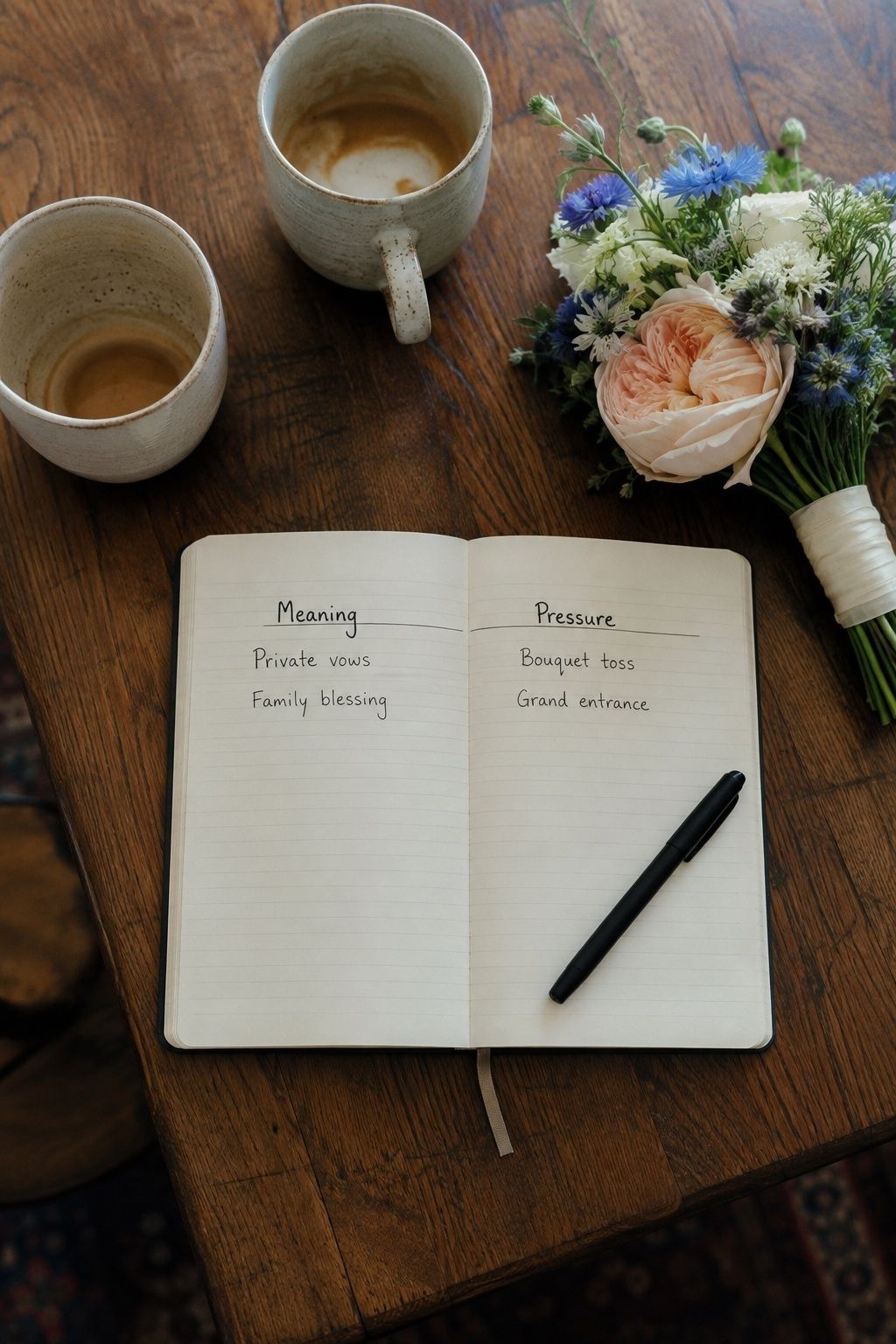
Before you say yes or no to any ritual, write two columns: meaning and pressure. Put a tradition in the meaning column when it connects to your faith, family history, cultural identity, grief, joy, or the promise you are making. Put it in the pressure column when the only reason to do it is that people expect to see it.
This simple exercise protects you from making choices out of irritation. A father-daughter dance feels meaningful for one couple and painful for another. A first look feels intimate for one pair and unnecessary for another. Personal wedding traditions should earn their place through significance, not through volume.
If both partners feel neutral or resistant, that is information. Neutral does not always mean no, especially when a tradition matters deeply to a parent or elder. But neutral means the tradition needs a better reason than “everyone does it.”
Separate Cultural And Religious Meaning From Performance
Cultural and religious rituals deserve a slower conversation than reception customs. A blessing, tea ceremony, chuppah, crowning, veil ceremony, unity ritual, henna night, lasso, jumping the broom, or family prayer often holds more than visual tradition. It carries lineage, memory, faith, and respect for elders.
That does not mean every inherited ritual must appear exactly as relatives expect. It means the decision should be informed. Ask what the ritual signifies, who usually participates, which parts are essential, and which parts have become more social than sacred. Sometimes the respectful choice is a smaller version, a private version, or a clearer explanation in the program.
Modern wedding traditions etiquette works best when it protects meaning from empty performance. If a ritual would be included only for photographs while the meaning is ignored, adapting it with care is often more respectful than staging it badly.
Skip Quiet Traditions Without Announcing Every Omission
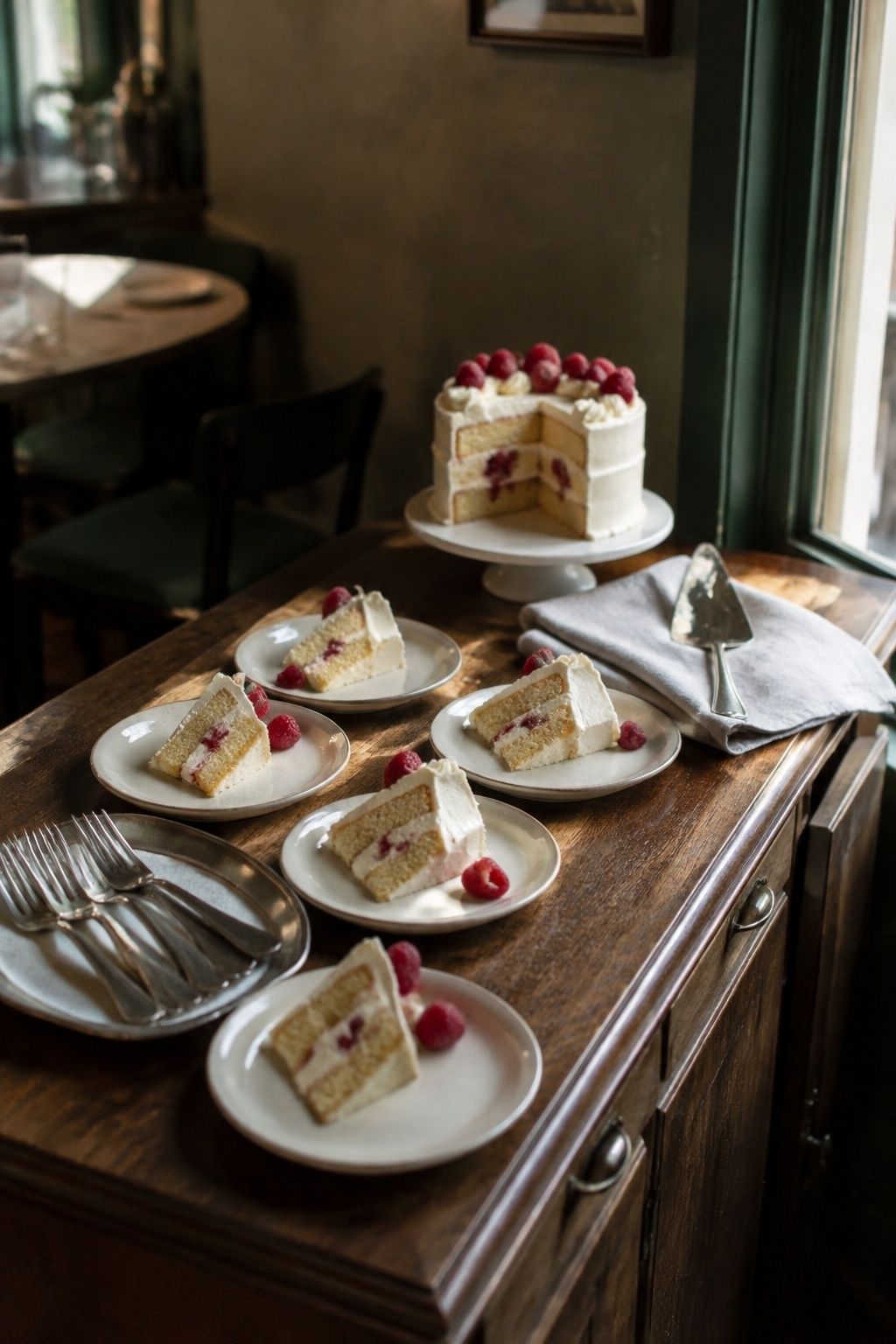
Not every skipped tradition needs a speech. Guests rarely need to be told that there will be no bouquet toss, no garter toss, no grand exit, no favors, no formal cake cutting, no champagne tower, or no wedding party introductions. If the omission does not affect comfort, timing, food, seating, travel, dress, or family roles, let it quietly disappear.
Couples sometimes over-explain because they want to seem considerate. The result feels heavier than the missing ritual ever would have felt. Most guests follow the event in front of them. If dinner is served, music begins, and the room feels cared for, they are not taking attendance on small wedding traditions to skip.
A quiet omission works especially well for traditions tied to gender roles or public attention. If you do not want a garter moment, skip it. If you dislike the bouquet toss, skip it. If you would rather mingle than cut cake under a spotlight, have the catering team serve dessert without an announcement.
Talk Through Visible Family Traditions Before The Day
Some traditions are visible enough that silence creates more tension than a kind conversation. Parent dances, processional roles, wedding party choices, faith passages, family photos, memorial moments, ceremony rituals, and attire expectations often sit close to family identity. If you are changing one of those, speak before the wedding week.
The best timing is after you and your partner have decided, but before relatives hear the plan from invitations, programs, social media, or other guests. That order matters. Family should not be invited to vote on the marriage ceremony, but they should not be startled in public by a missing role they believed was theirs.
This is where how to tell family you are skipping wedding traditions becomes practical. Keep the wording warm, brief, and settled: “We wanted to tell you ourselves that we are keeping the ceremony very simple and will not have a formal parent processional. We love you and are planning a private family photo moment instead.”
Choose A Smaller Version When The Meaning Still Matters
You do not have to keep or drop a tradition in its full public form. Many alternative wedding traditions are really gentler versions of older ones. A receiving line becomes a table visit during dinner. A parent dance becomes half a song. A unity ceremony becomes a short private blessing before the ceremony. A large wedding party becomes two witnesses. A long family photo list becomes a few essential groupings.
Smaller versions work well when a tradition has emotional value but the original format feels too exposed, too long, too formal, or too mismatched for your wedding. They let you honor the root without performing the whole branch.
Tell the people affected what you are keeping, not only what you are cutting. “We are not doing speeches from every parent, but we would love for you to give a short blessing at rehearsal dinner” lands more gently than a flat refusal.
Replace Performance With Something Personal
If a tradition feels hollow, ask what emotional purpose it was supposed to serve. The bouquet toss often signals good wishes for single friends. Replace it with a flower dedication, a thank-you toast, or a small bouquet given to someone who has stood by you. A cake cutting signals celebration. Replace it with a dessert table opening, private cake bite, or late-night treat pass.
The goal is not novelty for novelty’s sake. A replacement works when it creates a feeling the old tradition promised but no longer delivers for you. If a first dance makes you anxious, a private last dance or a shared first song while guests join halfway through preserves romance without making you feel displayed.
Personal replacements also reassure relatives that the wedding still has heart. You are not stripping the day bare. You are choosing moments that sound like you.
Keep The Hospitality Traditions That Orient Guests
Some traditions are less about symbolism and more about guest care. Clear invitations, accurate timing, enough food, accessible seating, transportation details, a ceremony people understand, weather planning, thank-you messages, and a gracious welcome still matter at a modern wedding.
Skipping a tradition politely should not mean making guests guess what is happening. If there is no formal meal, tell them. If there is no dancing, set the evening tone through the invitation or wedding website. If the ceremony is very short, make the rest of the gathering feel intentional so guests do not travel for ten confusing minutes and a vague reception.
Hospitality is the line that keeps nontraditional choices from feeling careless. Guests do not need every expected ritual. They do need to feel welcomed, fed, informed, and included in the celebration they were invited to witness.
Choose Kind Language That Does Not Invite A Vote
Polite wedding tradition wording should sound warm and final at the same time. Avoid opening with apology if you are not actually doing anything wrong. Avoid long defenses that give relatives new places to argue. Avoid dismissive phrases like “we hate that tradition” or “that feels old-fashioned” when the tradition matters to someone else.
Try language built around gratitude and decision. “We have decided to keep the reception simple and skip the bouquet toss, but we are excited for a relaxed dance floor after dinner.” Or, “We are not having a formal wedding party, though we would love for our siblings to get ready with us that morning.”
When someone pushes, repeat the decision with affection: “I understand why you pictured that. We have chosen a simpler version that feels right for us, and we are grateful you care so much.”
Do Not Mock The Tradition You Are Skipping
A tradition that feels wrong for you is still beloved by someone else. The bouquet toss was your sister’s favorite photo. A garter toss was harmless fun at a cousin’s reception. A church ceremony is the setting your grandmother still understands as sacred. You do not need to insult those memories to choose differently.
This is one of the quiet arts of how to say no to wedding traditions. Say no to the fit, not to the people who value it. “That tradition does not feel like us” is cleaner than “that tradition is embarrassing.” “We are keeping the ceremony very intimate” is kinder than “we do not want all that formal stuff.”
Respectful language keeps the conversation from turning into a trial of taste. Your wedding choices do not need to prove anyone else’s wedding was wrong.
Make The Ceremony Understandable Even If It Is Untraditional
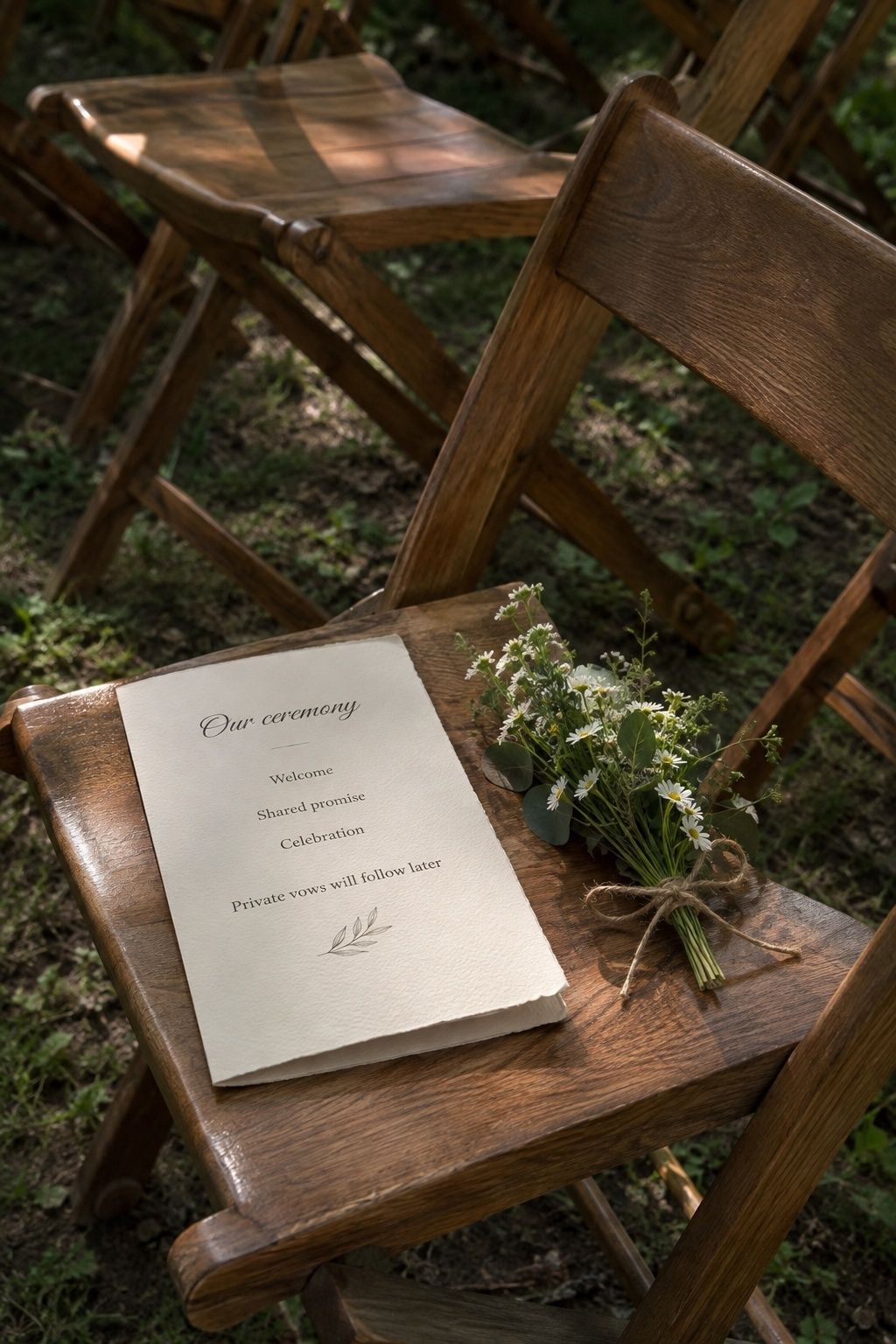
The ceremony is where guests most need orientation. If you are skipping a processional, wedding party, faith passage, ring exchange, unity ritual, or familiar order of events, build a ceremony that still has a clear beginning, emotional center, and closing moment. People do not need a standard script, but they do need to understand when the marriage happens.
A program, officiant welcome, wedding website line, or short sentence in the ceremony gives guests their bearings. “Today they are exchanging private vows later, so this ceremony will focus on a shared promise before their families” tells guests why a familiar ritual is absent without over-explaining.
If you are blending cultural, secular, or spiritual elements, clarity becomes part of the hospitality. Let guests witness the meaning instead of wondering whether something went missing.
Skip Forced Reception Moments That Do Not Fit The Room
Reception traditions often create the most pressure because they happen in public. Couples often feel expected to do a grand entrance, choreographed first dance, parent dances, speeches, bouquet toss, garter toss, cake cutting, anniversary dance, dollar dance, shoe game, sparkler exit, or late-night sendoff. Some of these are joyful in the right room. Some feel painfully staged in the wrong one.
The reception should match the social atmosphere you are actually hosting. A small dinner wedding needs good conversation, candlelight, beautiful music, and generous pacing more than formal announcements. A lively dance reception keeps the first dance and skips the seated speeches. A brunch wedding replaces a cake cutting with pastries and coffee.
Wedding traditions you can skip often include the ones guests passively watch rather than personally need. If the moment exists mostly so everyone stops and looks at you, ask whether that attention feels celebratory or performative.
Tell Vendors What Is Missing From The Timeline
Vendors are accustomed to standard wedding rhythms. If you are skipping common customs, tell the planner, photographer, videographer, DJ, band, caterer, officiant, venue manager, and hair and makeup team where relevant. Otherwise someone could build the timeline around traditions you never wanted.
Be specific. “No bouquet toss, no garter toss, no formal cake cutting, no grand entrance, and no open mic speeches” gives clearer direction than “we want things relaxed.” Ask the DJ not to announce missing rituals. Ask the photographer not to pull you into staged moments you removed. Ask the caterer how dessert will be served without a public cake cue.
A vendor-facing list keeps the day from drifting back toward default. It also protects you from having to refuse a tradition in front of guests because someone assumed it was happening.
Stop Over-Explaining Once The Decision Is Clear
Over-explaining often starts as kindness and ends as permission for debate. Once you have explained a choice to the people it affects, you do not need to keep defending it every time someone asks. A wedding is not a public committee meeting.
Choose a short repeatable line: “We are keeping that part simple.” “We have chosen a quieter version.” “That tradition was not the right fit for our ceremony.” “We are focusing on the rituals that feel most meaningful to us.” These phrases leave less room for argument because they do not insult, blame, or invite problem-solving.
If the same person keeps pushing, move from explanation to boundary: “I know you see it differently. We have made the decision, and I do not want this to become the focus of our time together.”
Treat A Small Wedding As Intentional, Not Incomplete
Small weddings often make tradition pressure louder because every absent ritual is easier to notice. Without a large wedding party, big dance floor, full parent table, formal entrance, or packed ceremony rows, some relatives assume the wedding has been reduced. The couple needs to hold a different truth: smaller does not mean unfinished.
A small wedding has its own etiquette. It benefits from fewer roles, cleaner timing, warmer hosting, and rituals chosen for closeness rather than spectacle. Which wedding traditions can you skip at a small wedding? Usually the ones created for crowd energy, stage management, or large-family visibility. Keep the ones that clarify the ceremony and care for the guests who made the trip.
When you treat the smaller format as intentional, your language changes. You stop saying, “We are not doing much.” You start saying, “We are planning a smaller, more personal day.”
Traditions You Can Usually Skip Quietly
Many reception customs do not need advance explanation because they do not assign roles, change guest comfort, or affect the meaning of the ceremony. If nobody is waiting to participate, nobody needs a formal announcement that the moment is gone.
The bouquet toss is an easy example. If you dislike putting single guests on display, simply keep your bouquet, preserve it, give it to someone privately, or set it at a memory table. Guests will move into dancing, dessert, or conversation without needing a replacement.
The garter toss is another tradition many couples skip without fanfare. Because it is often more spectacle than hospitality, it disappears cleanly when the DJ does not announce it. No explanation is owed to the room.
Formal cake cutting also fits the quiet-skip category for many weddings. If you want the photo, take it privately. If you do not, let the catering team cut and serve dessert. Guests care far more about receiving dessert than watching the knife touch the cake.
Favors are similar. A well-fed, warmly hosted guest does not need a small object at the exit. If favors feel wasteful or forced, put the money toward late-night snacks, better coffee, transportation details, or handwritten thank-you cards after the wedding.
Other quiet skips include a grand entrance, bouquet preservation announcement, anniversary dance, shoe game, dollar dance, wedding party entrance, elaborate exit, guest book alternative that no one wants to manage, and printed menus when the meal is already clear. These traditions are not rude to omit when the event still flows naturally.
The key phrase is “quietly.” Do not turn every omission into a manifesto. Let the timeline move toward the moments you actually want guests to experience.
Traditions That May Need A Conversation
Some traditions touch identity, relationships, or public roles. Those deserve private conversations because the people affected have likely pictured themselves inside the moment. The goal is not permission. The goal is care.
Processional roles often need a conversation. If a parent expected to walk with you and you plan to walk alone, walk together as a couple, or enter without a formal aisle moment, speak gently before rehearsal. A calm line works: “I know this is a moment many families picture. I have decided to walk in with my partner because that feels true to us. I still want a quiet moment with you before the ceremony.”
Parent dances need similar care. A dance feels joyful, complicated, unsafe, grief-filled, or too public depending on the relationship. If you are skipping one, tell the parent privately and offer another meaningful touch if it is genuine: a first look, private letter, toast, getting-ready visit, family photo, or shared song during dinner.
Wedding party traditions also affect feelings. If friends expected to stand with you, explain the smaller format before they assume distance. “We are not having a formal wedding party, but you are still part of our inner circle and we would love to spend the morning with you” gives the relationship a place to go.
Cultural, religious, and memorial rituals need the most tender handling. If you are changing a family blessing, omitting a faith passage, adjusting attire, or choosing not to include a memorial display, speak with the people closest to that meaning. Ask what the ritual represents before deciding whether a smaller version fits.
Family photos are deceptively emotional too. A skipped grouping could look like a skipped relationship. Give the photographer a clear list, tell parents what to expect, and choose a few essential combinations. If a relationship is strained, plan the photo boundaries ahead of time instead of negotiating in formalwear.
Speeches and toasts also need early clarity. If you are not opening the microphone to parents, siblings, or the wedding party, assign one or two planned speakers or move longer remarks to the rehearsal dinner. Public surprise is what makes this feel harsh; private clarity makes it feel designed.
Polite Wording For Skipping Wedding Traditions
The right wording depends on who is asking and whether the tradition affects them. A guest who asks about the bouquet toss needs less detail than a parent who expected a dance. Start with the smallest kind sentence that tells the truth.
Wedding expectations from family often come from love, nostalgia, and a little fear. Parents and grandparents are not only picturing a schedule; they are picturing proof that their role still matters. Understanding that emotional layer makes your answer steadier. You do not need to surrender the decision, but you speak to the feeling underneath it.
That sounds like, “I know you pictured a more traditional reception because those moments were important in our family. We are choosing a quieter format, and we still want you close to us throughout the day.” The sentence gives them respect without giving them control of the timeline.
If more than one relative is likely to ask, decide the wording as a couple before the first conversation. Consistent language prevents one partner from sounding uncertain while the other sounds firm. It also keeps family members from shopping for a different answer.
For a general reception tradition, try: “We are keeping the reception relaxed and skipping that part.” It is simple, friendly, and closed.
For a family role, try: “We wanted to tell you directly that we are not doing that tradition in the usual way. We love you, and we are choosing a simpler format that feels right for the ceremony.”
For a parent dance, try: “I know people often expect that dance. I have decided not to do formal parent dances, but I would love a private photo with you and a few minutes together before dinner.”
For a cultural or religious adaptation, try: “We care about the meaning behind this tradition and want to handle it respectfully. We are planning a smaller version during the ceremony so it feels sincere rather than rushed.”
For pressure from relatives, try: “I hear that this tradition matters to you. We have talked it through and decided on a different format. We hope you will be with us in the spirit of the day.”
For guest confusion, try: “The evening will be more like an intimate dinner celebration than a traditional reception, so there will be no bouquet toss or formal dance program.”
For a vendor, try: “Please remove the bouquet toss, garter toss, cake-cutting announcement, grand entrance, and open speeches from the timeline. We would like the evening to move naturally from dinner into dancing.”
Each version answers how to say no to wedding traditions without turning the conversation into a referendum. The words are brief because the decision is already made.
How To Replace Traditions Without Making Guests Wonder What Happened
A replacement does not have to be dramatic. In fact, the smoothest replacement often feels like part of the natural flow. Guests should notice the warmth of the new moment more than the absence of the old one.
Replace a receiving line with intentional table visits. Build ten minutes into dinner for the couple to greet each table, or host a welcome drink before the ceremony so greetings happen gently. This keeps the hospitality without the bottleneck.
Replace the bouquet toss with a bouquet dedication. Give flowers to a grandparent, sibling, friend, mentor, or couple whose marriage has shaped you. If that feels too public, set the bouquet on a memory table or preserve it privately.
Replace formal vows in front of everyone with short ceremony promises and private vows before or after. This keeps the ceremony understandable while protecting words that feel too intimate for a crowd.
Replace a wedding party with named witnesses, getting-ready invitations, a friends’ toast, or reserved front-row seats. People who love you often need reassurance that the relationship still matters more than they need matching attire.
Replace a big sendoff with a final song, last private dance, late-night espresso, or simple goodbye as guests leave. A beautiful ending does not require sparklers, confetti, or a staged exit if those do not fit your venue or energy.
The best replacement has three traits: it honors the feeling, fits the scale of the wedding, and does not require a long explanation. If you need a paragraph to justify it to every guest, simplify the moment until it speaks for itself.
Think about pacing as well as symbolism. A replacement should not interrupt the evening simply to prove that something creative happened. If guests are eating, talking, laughing, and moving easily from one part of the celebration to the next, the new tradition is working. Smoothness is often more elegant than surprise.
For couples with mixed family expectations, a private replacement is sometimes the loveliest compromise. Share a parent letter before the ceremony, invite grandparents to sign the marriage license as witnesses where allowed, include a family recipe in dessert, or wear a small heirloom without turning it into a public announcement. These gestures say, “This matters,” without making the whole room watch the negotiation.
FAQ
How do you skip wedding traditions politely?
Skip wedding traditions politely by deciding what has meaning, quietly omitting low-impact customs, and speaking privately about traditions that affect family roles, culture, religion, ceremony clarity, or guest comfort. Use short wording that sounds grateful and settled rather than apologetic or dismissive.
Is it rude to skip wedding traditions?
It is not rude to skip wedding traditions when the wedding remains thoughtful, clear, and hospitable. It becomes hurtful when a couple mocks meaningful customs, surprises family members who expected important roles, or removes guest-care basics such as food, timing, seating, and clear information.
How do you tell family you are not doing a wedding tradition?
Tell family directly, privately, and before the wedding week. A good line is: “We wanted you to hear this from us. We are not doing that tradition in the usual way, but we love you and are choosing a simpler format that feels right for our ceremony.”
Which wedding traditions can you skip at a small wedding?
At a small wedding, couples often skip a large wedding party, grand entrance, bouquet toss, garter toss, formal cake cutting, receiving line, long speech list, elaborate sendoff, favors, and staged reception games. Keep the traditions that carry ceremony meaning, guest comfort, and family care.
What wedding traditions should you keep for guests?
Keep the traditions or structures that orient guests and make them feel cared for: clear invitations, accurate timing, enough food and drink, comfortable seating, weather planning, accessible details, ceremony clarity, a warm welcome, and sincere thanks. Hospitality matters more than a full checklist of rituals.
How do you replace a tradition without making it awkward?
Replace a tradition by preserving its emotional purpose in a format that fits your wedding. Turn a bouquet toss into a flower dedication, a parent dance into a private moment, a receiving line into table visits, or public vows into private vows with a short ceremony promise.
Final Thoughts
Knowing how to skip wedding traditions politely is really knowing how to choose with care. You are allowed to build a wedding that sounds like your relationship. You are allowed to release rituals that feel staged, awkward, expensive, gendered, or emotionally wrong. You are also allowed to keep one tradition simply because it would make someone you love feel honored and it does not cost you your peace.
The most graceful weddings rarely follow every rule. They feel coherent. The ceremony makes sense. The guests feel welcomed. The family moments that matter are handled with tenderness. The absent rituals do not feel like rebellion because the chosen rituals carry enough warmth.
That is the heart of polite change: not rejecting your people, not performing for them either, but making a day that honors the marriage first and treats everyone around it with gentleness.
Last update on 2026-10-04 / Affiliate links / Images from Amazon Product Advertising API