

Learning how to say no kids at wedding politely starts with clear, early, warm communication: address invitations to the named adults, add a short note on the details card or wedding website, and repeat the same adults-only policy privately if guests ask.
Choosing a child-free wedding can feel tender because the decision is practical and emotional at the same time. You may be planning an intimate dinner, a late-night reception, a small venue, or a celebration where the guest count is already tight. Parents need time to arrange care, and some guests may assume the invitation includes the whole household.
The kindest approach is not to soften the policy until it becomes confusing. It is to make the boundary easy to understand, give parents enough notice to plan, and stay gracious if the answer changes whether someone can attend. Clear no-children wedding wording does not have to sound cold. It just has to tell people exactly what has been invited.
Recommended Wedding Products


You Might Also Like These Blog Posts
- No Kids Wedding Wording Lines That Sound Kind
- How To Say No Plus Ones Politely Without Sounding Cold
- Adults Only Wedding Wording That Sounds Warm And Clear
- Small Wedding Adults Only Website Wording Lines Parents Won’t Miss
- How To Say No To Wedding Guest List Requests Without Starting A War
- How To Skip Wedding Traditions Politely When You Still Love Your People
How To Say No Kids At A Wedding Politely Without Confusing Guests
The heart of polite no-kids wedding wording is consistency. Guests should see the same message on the envelope, the details card, the wedding website FAQ, and the RSVP form. If those pieces disagree, even slightly, parents may wonder whether their children were simply left off by mistake.
Start With The Actual Boundary
Before you write anything, decide what the boundary actually is. Is the whole wedding adults-only? Is the reception adults-only but the ceremony open to children? Are only children in the wedding party invited? Are nieces and nephews included, but friends’ children are not? You need that answer before you choose the words.
A polished note cannot fix an unclear policy. If some children are invited, make the category objective: “children in the wedding party,” “immediate family children,” or “children named on the invitation.” The goal is to keep parents from feeling personally singled out.
Use Clear Words Instead Of Hints
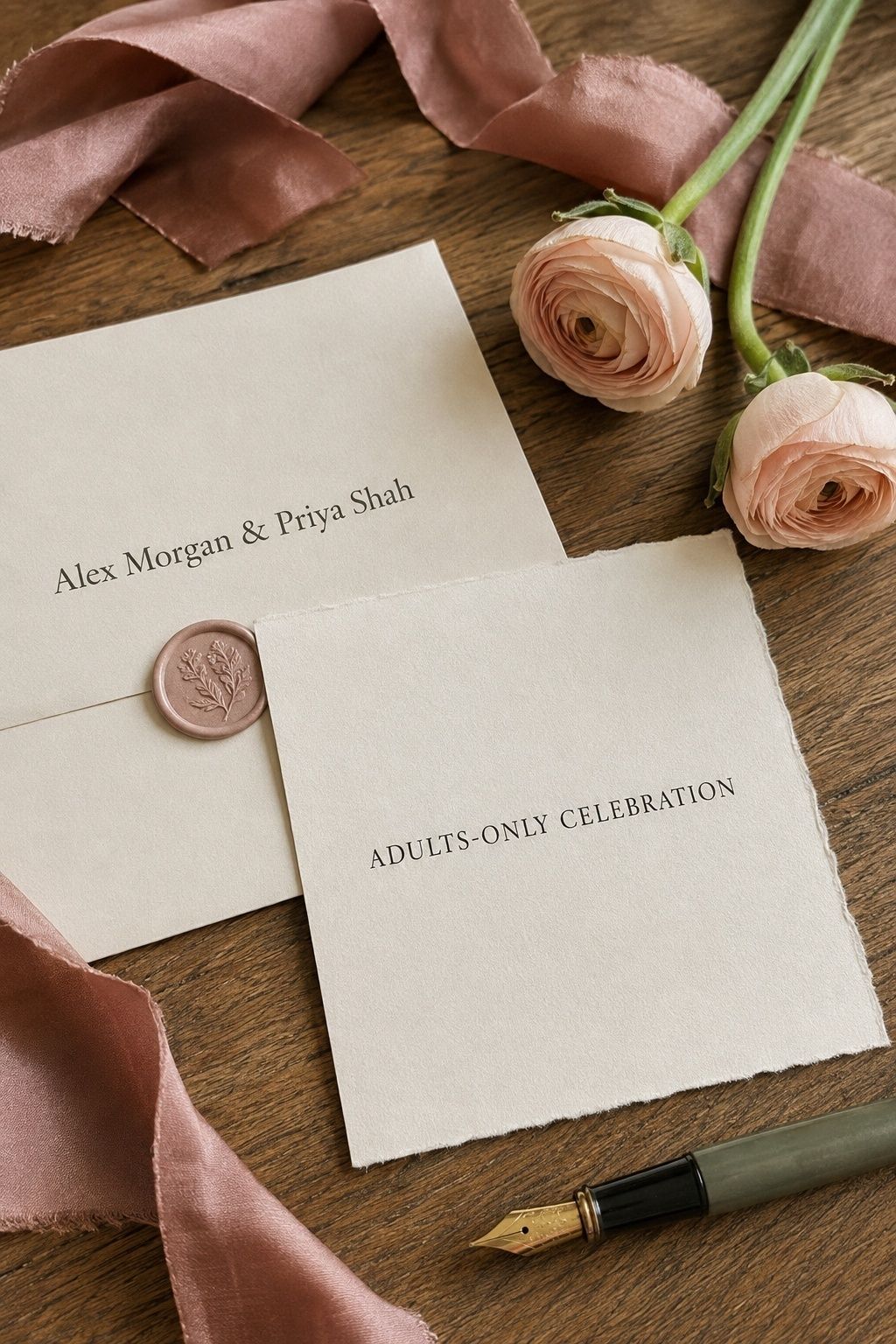
Hints create more awkwardness than direct wording. Phrases like “date night” or “parents’ night out” can be cute in the right place, but they may not be clear enough on their own. If the policy matters, use words like adults-only, adult reception, or children named on the invitation.
For example, you might write, “We are planning an adults-only celebration and can only accommodate the guests named on the invitation.” That sentence is short, kind, and specific. It also supports the envelope and RSVP card instead of asking guests to interpret the tone.
Keep The Tone Kind But Firm
Warmth belongs in the delivery, not in an apology that reopens the decision. You can say you hope they can still join you, that you understand if childcare makes attendance difficult, and that you are grateful for their effort. You do not need to prove that your choice is valid.
Try this: “We love your family and hope you can celebrate with us, but the wedding will be adults-only. We completely understand if that makes travel or attendance difficult.” This lets guests feel respected while keeping the answer steady.
Where To Communicate The No-Kids Decision
The best no-children wedding wording is usually layered. You do not need a dramatic announcement in every place, but the invitation pieces should reinforce one another so parents are not left guessing.
Invitation Envelopes
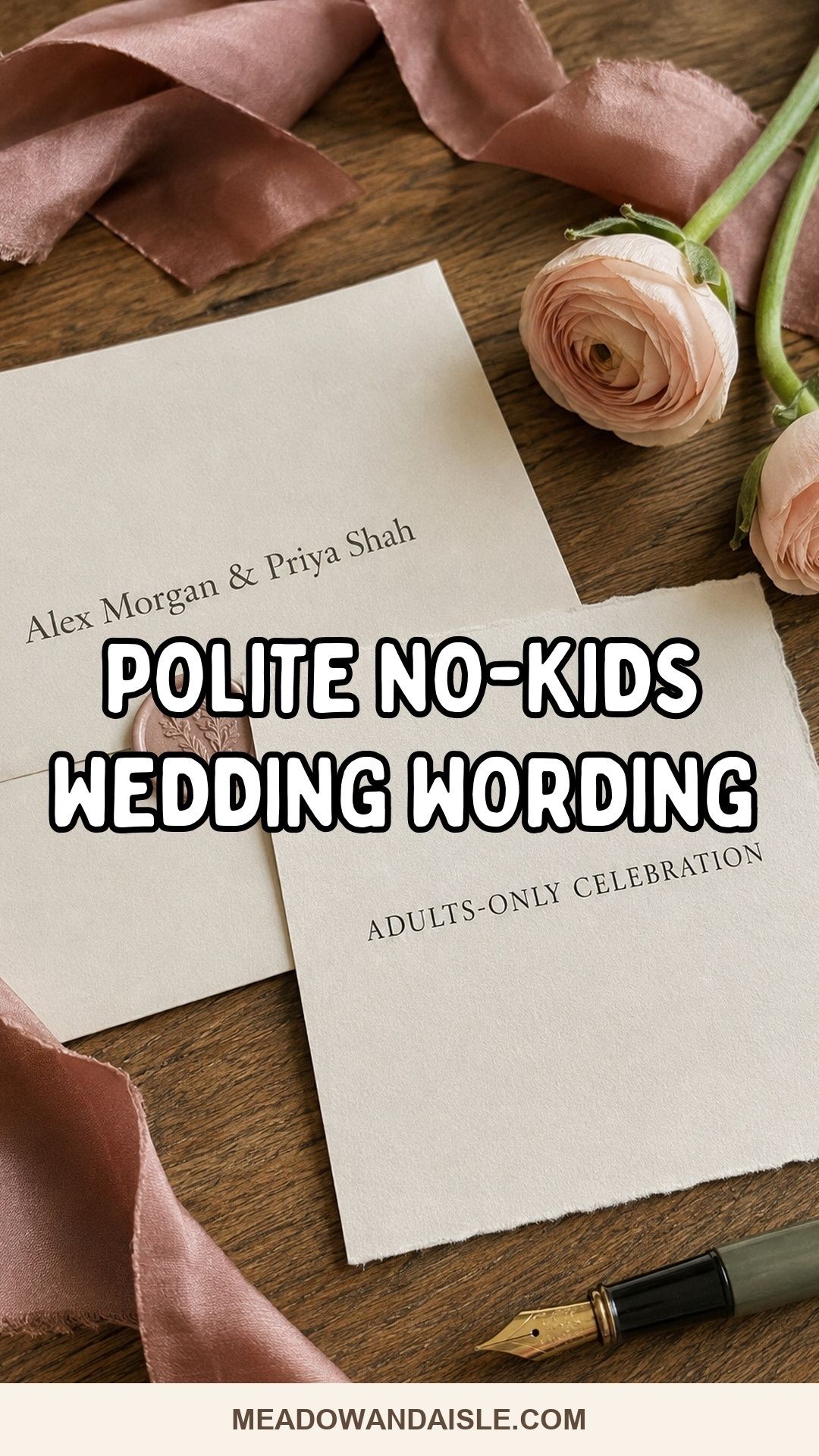
The envelope is your first signal. Address it only to the adults who are invited: “Mr. and Mrs. Daniel Rivera,” “Alex Morgan and Priya Shah,” or “Jordan Lee and Guest” if a plus-one is included. Avoid “The Rivera Family” unless the children are invited too.
If you are using an inner envelope, list the invited names there as well. This small detail matters because many guests look to the envelope before they ever read the website FAQ. It is one of the simplest ways to show that the invitation is for named guests, not the household by default.
Details Card
A details card is the cleanest place for adults-only wedding wording if you want the information included with the invitation suite. Keep it short: “We are hosting an adults-only celebration and can only accommodate guests named on the invitation.”
The details card should not sound defensive. You are giving guests practical information, the same way you would mention attire, parking, or shuttle timing. A single clear sentence is usually enough.
Wedding Website FAQ
Your wedding website FAQ gives you more room for warmth. A good answer might say, “We love the children in our lives, but our wedding will be an adults-only celebration. We hope this gives parents time to plan, and we understand if childcare affects your RSVP.”
If you want more options for a small guest list, adults-only website wording can keep the note specific without making it sound bigger or more formal than your wedding actually is.
RSVP Form
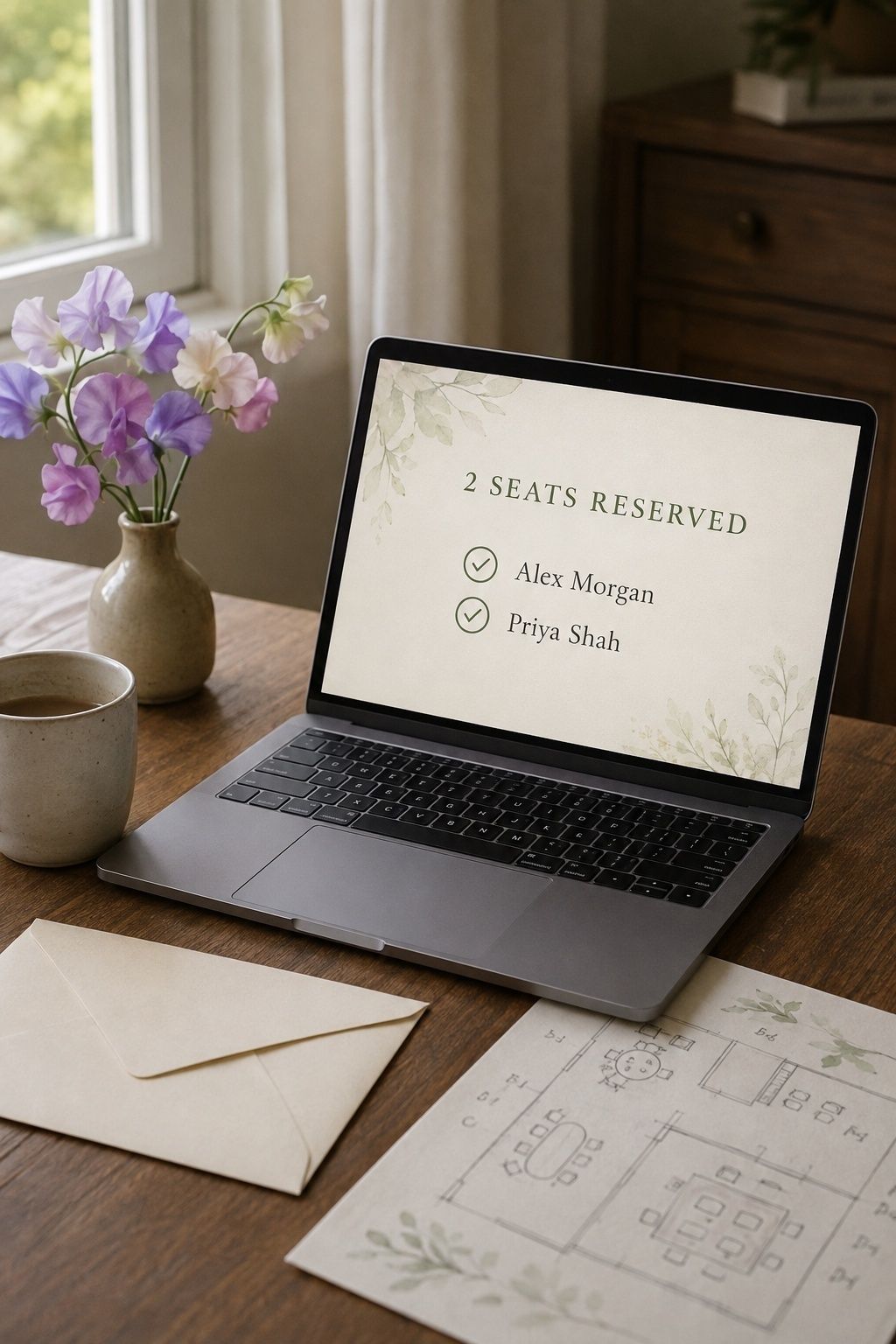
Your RSVP should make the number of reserved seats unmistakable. Use a line such as, “We have reserved ___ seat(s) in your honor,” or pre-fill each named guest on the digital RSVP. This is especially helpful when guests might otherwise type in extra names.
For paper replies, small wedding RSVP wording should match the adults-only policy. If two adults are invited, the RSVP should not leave room for four names. The form should gently prevent the mistake before anyone has to correct it.
Family Word Of Mouth
Some parents will ask a sibling, parent, or close relative before asking you. Give your immediate family the same short sentence to repeat: “They are keeping the wedding adults-only because of the guest count and evening format.” That keeps well-meaning relatives from improvising a softer version.
Word of mouth should support the invitation, not replace it. Guests still need to see the policy in writing so nobody feels that the message arrived as gossip or last-minute correction.
What To Say In Different Situations
The right child-free wedding wording depends on why the boundary exists. You do not have to share every private reason, but matching the sentence to the situation makes it easier to sound natural.
When The Venue Or Space Is Limited
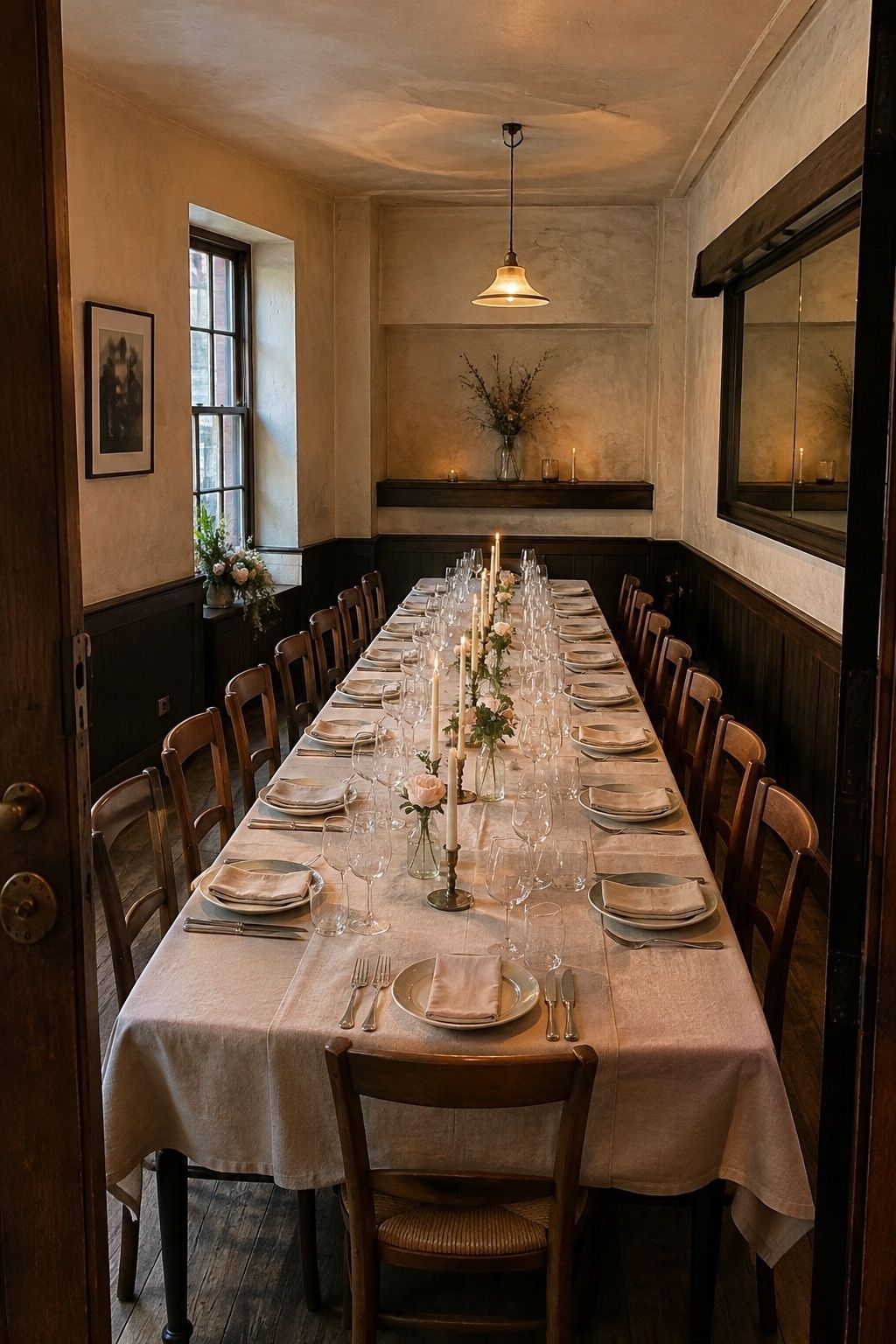
Use a practical explanation: “Due to limited venue space, we are only able to accommodate the adults named on each invitation.” This works for small weddings, private dining rooms, restaurants, historic houses, and backyard celebrations with a fixed layout.
Do not imply that children are the problem. Keep the focus on space, capacity, and the guest count. A clear venue-based note helps parents understand that you are not judging their family; you are working within a limit.
When The Evening Is Designed For Adults
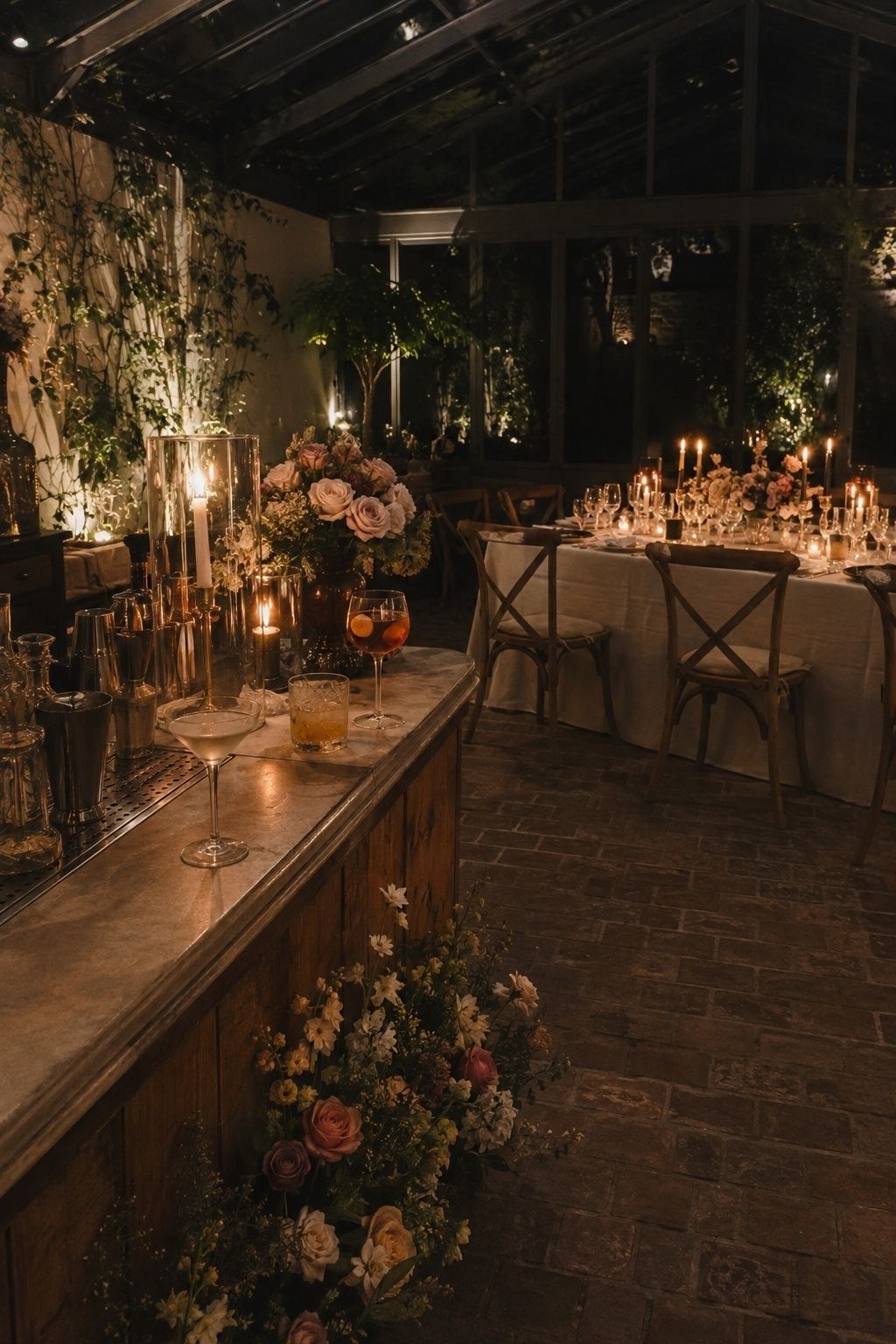
If the reception includes a late dinner, open bar, loud music, formal meal, or long speeches, say so briefly. “Our reception will be an adults-only evening, and we hope you can enjoy a night out with us.” This sounds warmer than focusing on what children cannot do.
For a more formal version, write, “We respectfully ask that our wedding be an adults-only celebration.” For a softer version, write, “We are planning a grown-up evening and hope you can join us for dinner and dancing.”
When Some Children Are Invited
This situation needs the most precision. If you invite some children but not others, choose a clear rule and avoid explaining it differently to each household. “We are only able to include children in the wedding party” is stronger than “We had to make a few hard choices.”
If a parent asks why another child is there, stay factual: “They are part of the wedding party, but we are not able to include children beyond that group.” You can be kind without making every family compare closeness, travel distance, or age.
When Parents Ask For An Exception
When you are deciding how to tell guests your wedding is adults-only, prepare one private response before questions arrive. Try: “We completely understand why you asked, but we are keeping the adults-only policy the same for everyone. We would love to celebrate with you if you are able to make it.”
If the guest cannot attend without their child, accept that answer graciously. The boundary is yours, but the RSVP is theirs. Pushing them to solve childcare at any cost will make the policy feel less considerate.
How To Make The Message Easier For Parents
No kids wedding etiquette is not only about the words on the invitation. It is also about giving parents enough notice, avoiding surprises, and recognizing that attendance may be harder for them than for guests without children.
Tell Them Early

Tell parents as early as you can, especially if they will need to travel. Save-the-date timing, website wording, and early private conversations all matter. A parent who has six months to plan has a very different experience from a parent who learns three weeks before the RSVP deadline.
If your guest list includes many out-of-town families, consider mentioning the adults-only policy on the wedding website as soon as travel details are shared. That gives parents a chance to compare childcare, flights, hotel needs, and whether the trip works for their household.
Share Helpful Logistics Without Taking Over
You can share practical information without becoming responsible for every family’s childcare. You might list hotel rooms with space for a caregiver, note whether the hotel has concierge recommendations, or mention that guests are welcome to arrange local care independently.
Be careful with offering babysitter names unless you are comfortable with the responsibility. It is usually better to provide general logistics than to personally coordinate care for children who will not attend the wedding.
Accept Declines Gracefully
The most gracious adults-only policy leaves room for a no. Some guests may have nursing babies, limited childcare, tight travel budgets, or family routines that make the wedding difficult. Their decline is not necessarily a protest.
Say, “We completely understand, and we will miss you.” That one sentence protects the relationship. It shows that the invitation was sincere, the boundary is still real, and you are not asking parents to choose between your wedding and their children.
Mistakes To Avoid
Most no-kids tension comes from mixed messages, late timing, or wording that sounds harsher than the couple intended. A few small edits can prevent a lot of uncomfortable follow-up.
Writing No Kids Allowed
“No kids allowed” may be clear, but it can sound scolding. Use “adults-only celebration,” “adult reception,” or “children named on the invitation” instead. Those phrases give the same information with less bite.
Strong no-kids wedding wording states the boundary plainly. Good adults-only wording stays consistent anywhere guests compare details. Clear small wedding invitation wording matches the names on the envelope and reply form.
Waiting Until The RSVP Deadline
Late notice puts parents in a corner. They may have already booked flights, assumed their children were included, or made travel plans around the whole family. Even if your wording is polite, the timing can make the message feel careless.
As soon as the policy is final, make sure it appears wherever guests are likely to look: envelopes, website, details card, and RSVP. Early clarity is one of the most generous things you can offer.
Making Casual Exceptions
One casual exception can become the reason several other guests feel hurt. If you make exceptions, make them by category, not by pressure. Children in the wedding party is a category. Immediate family children is a category. “They asked twice” is not.
Write the exception clearly in your planning notes, even if you do not announce every detail publicly. That way you and your partner can answer questions with the same language.
Overexplaining The Decision
Long explanations often create openings for debate. If you say it is about budget, someone may offer to pay. If you say it is about bedtime, someone may promise their child will behave. If you say it is about space, someone may ask about declines.
Give enough context to be humane, then stop. “We are keeping the celebration adults-only because of our space and event style” is enough. You do not owe every guest the full planning spreadsheet.
FAQ
How Do You Say No Kids At A Wedding Politely?
Say it with clear, warm wording and repeat the same policy everywhere. Address invitations only to named adults, add a details card or website note that says the wedding is adults-only, and privately tell guests who ask that you cannot accommodate children beyond the named invitees.
Where Should You Put No-Kids Wording For A Wedding?
Put the signal on the envelope by naming only invited adults, then add a short note on the details card, wedding website FAQ, and RSVP form. The invitation itself can stay elegant while the supporting pieces make the guest count clear.
Is It Rude To Have A No-Kids Wedding?
No, it is not rude to have a no-kids wedding if you communicate early, apply the policy consistently, and understand that some parents may decline. It becomes rude only when guests are surprised late, treated unevenly, or pressured after they explain they cannot attend.
How Do You Handle Guests Who Ask To Bring Children?
Thank them for asking and give a steady answer: “We understand, but we are keeping the wedding adults-only and can only accommodate the guests named on the invitation.” If they cannot come because of childcare, accept their decline kindly.
Can You Invite Some Children But Not Others?
Yes, but the cleanest etiquette is to use a clear category, such as children in the wedding party, immediate family children, or children specifically named on the invitation. Avoid making exceptions based on who asks most forcefully, because that can feel personal to other parents.
How Early Should You Tell Parents The Wedding Is Adults-Only?
Tell parents as soon as the policy is final, ideally before they make travel plans. If you send save-the-dates or launch a wedding website months ahead, include the adults-only note there so families have time to arrange childcare or decide whether they can attend.
Final Thoughts
The most polite no-kids wedding message is steady, not elaborate. Name the invited adults, put one clear sentence where guests will see it, and answer questions with the same warmth every time. You are allowed to host the wedding you can hold, and parents are allowed to decide whether that works for their family.
As you choose adult-only wording for different guest situations, let your sentence sound like the rest of your wedding: honest, gracious, and clear about who has been invited.
Last update on 2026-10-03 / Affiliate links / Images from Amazon Product Advertising API