

Wedding budget vs buying a house is not a simple choice between being romantic and being responsible. It is a cash-flow, debt, timing, and values decision, and many couples do best with a smaller wedding that protects the ceremony while keeping home savings intact.
The hardest part of this decision is that both dreams are emotionally loaded. A wedding is not just a party; it becomes the room where your closest people witness the beginning of your marriage. A home is not just an asset; it represents stability, privacy, a future nursery, a garden, a better commute, or the first place that truly feels like yours together.
So the question is not whether weddings are frivolous or houses are automatically wiser. The better question is what each choice will cost your next chapter. Before you sign deposits or pause the celebration completely, compare the wedding against the whole home-buying picture: down payment, closing costs, moving, repairs, emergency savings, monthly mortgage comfort, and the quiet emotional value of gathering your people. That full view makes the decision gentler and much more honest. The bigger plan, including how much should a small wedding cost, is in the main guide.
Recommended Wedding Products


You Might Also Like These Blog Posts
- Gen Z Wedding Budget Tips For A Celebration That Still Feels Like You
- Micro Wedding Vs Elopement: Choose The Intimate Wedding That Fits Your Heart
- Wedding Budget Mistakes That Make Small Weddings Feel Expensive
- Micro Wedding Budget Breakdown Without The Guesswork
- Micro Wedding Budget: Spend Small Without Feeling Sparse
- Small Wedding Budget Breakdown Without The Guesswork
Wedding Budget Vs Buying A House
The wedding budget vs buying a house conversation should begin with cash, not opinions. How much money is actually available after taxes, fixed bills, debt payments, emergency savings, and the cost of living? How much of that money is already needed for home costs that are not as visible as the down payment? How much wedding spending would still feel joyful after the invoices arrive?
A wedding buys ritual, memory, hospitality, photographs, family connection, and a shared starting point. A down payment buys access to a home purchase, and it changes the size of the loan, monthly payment, mortgage insurance, and cash left for the first year of ownership. Neither value is imaginary. The mistake is comparing the most sentimental version of the wedding to the most simplified version of buying a home.
For intimate weddings, there is often a graceful middle path. A twenty- to fifty-guest celebration, courthouse ceremony with dinner, restaurant reception, backyard supper, brunch wedding, or private vow exchange with a later party preserves the parts that matter while freeing money for a stronger home position. The couple still gets a beginning. The home fund still gets oxygen.
Compare The Wedding To The Whole Home-Buying Cost
When couples ask whether to spend on wedding or house down payment, they often picture one number against another. That is too narrow. A home purchase usually needs upfront cash, a workable monthly payment, and enough savings left over for life after closing. A wedding also has deposits, final balances, tips, attire, travel, family expectations, and guest hospitality. Put both dreams on the same page before deciding which one should shrink.
Down Payment
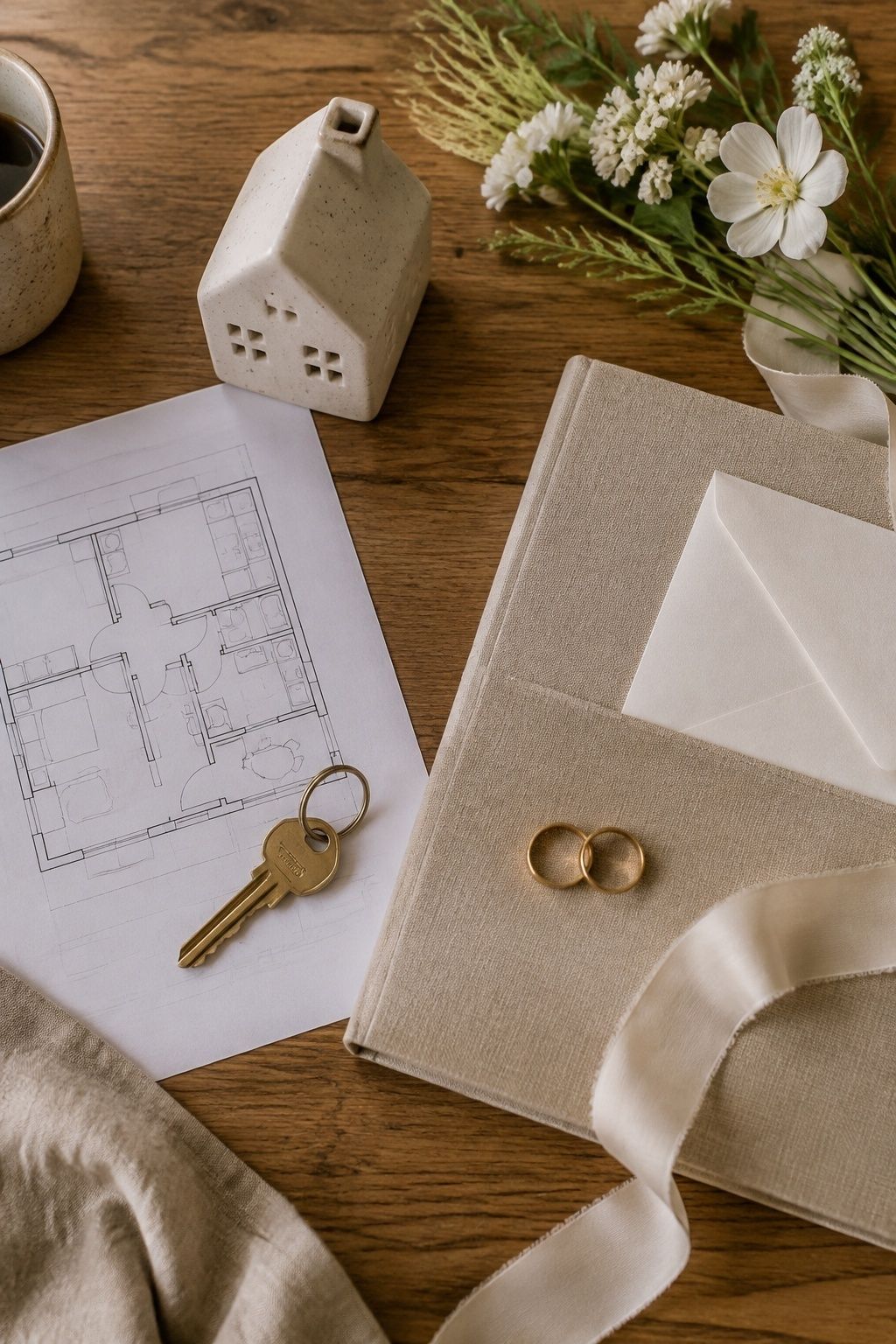
Start with the down payment range for the kind of home, loan, and local market you are considering. Do not assume that every buyer needs exactly 20 percent down, and do not assume a low down payment means the purchase is automatically easy. Loan type, lender requirements, credit profile, home price, and whether private mortgage insurance applies all affect the picture.
This is where wedding opportunity cost becomes concrete. If a $25,000 wedding would delay your down payment by eighteen months, that delay has a different meaning than if it only trims a surplus cushion. Ask a lender or housing counselor for real numbers before treating the wedding budget as harmless or impossible.
Closing Costs
Closing costs are the quiet line item that makes the wedding or house down payment comparison feel different. The down payment is not the only cash needed at closing. Lender fees, title charges, appraisal, taxes, prepaid insurance, and other costs often add thousands of dollars before the keys are yours.
If your home plan is close, compare the wedding budget to down payment plus estimated closing costs, not the down payment alone. A small wedding house savings plan often means choosing a lower-cost reception so the closing-cost money stays untouched. That choice is not unromantic. It is simply a way of letting the wedding and the house both exist in real life.
Emergency Cushion
Neither a wedding nor a house should drain every safe dollar. An emergency cushion matters because marriage begins in ordinary life, not just in a beautiful room. Job changes, medical costs, car repairs, pet emergencies, family needs, and delayed paychecks do not pause because you just got married or bought property.
Decide on an untouchable savings floor before you price flowers, bar service, or a higher down payment. If paying for the wedding erases that floor, the wedding is too large for the current season. If buying the house erases that floor, the home plan needs more time, a less expensive property, or clearer lender guidance.
Moving, Furniture, Repairs, And Setup
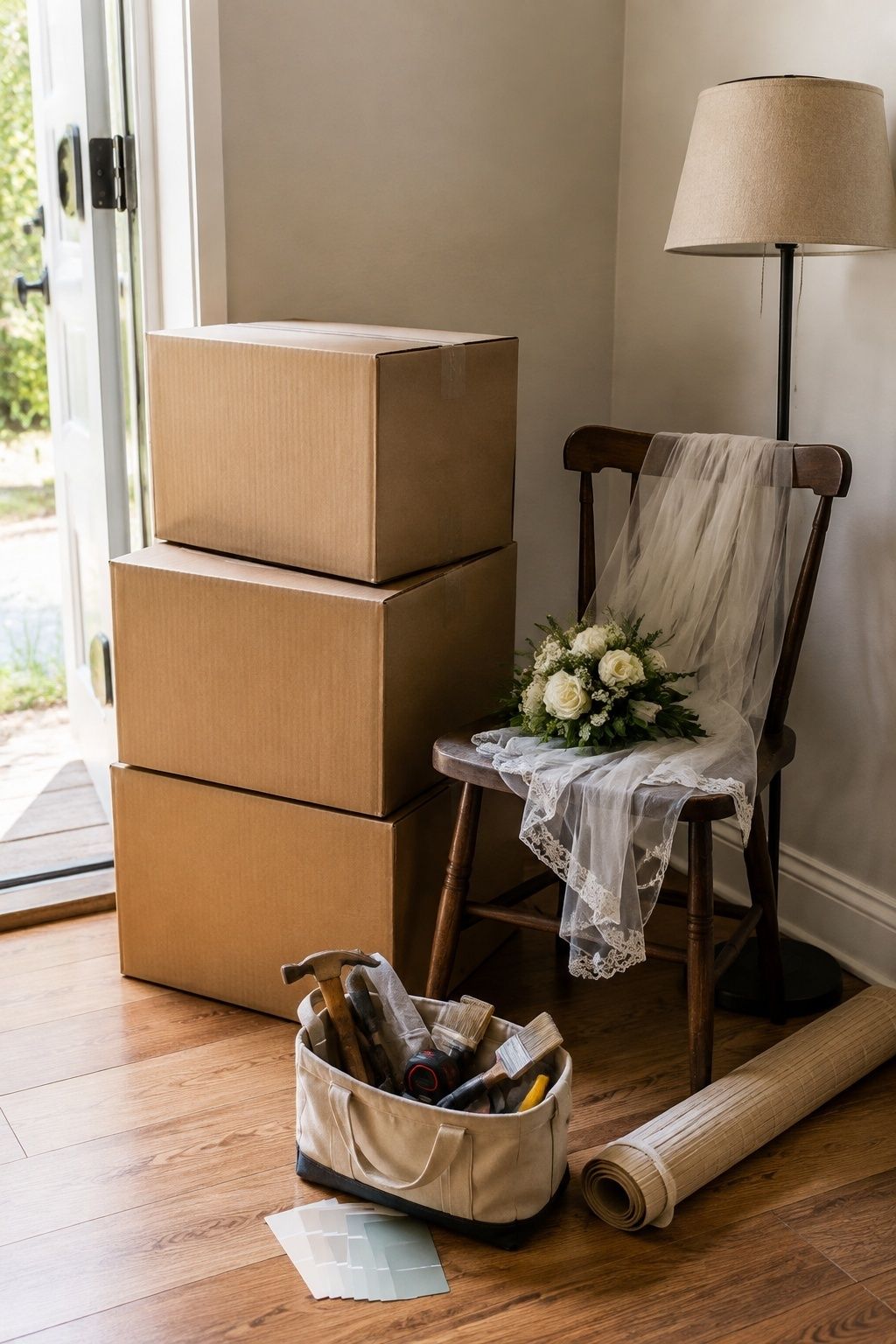
A first home often arrives with immediate costs that are easy to romanticize away. Movers, paint, locks, window coverings, basic furniture, lawn tools, utility deposits, repairs, appliances, and pantry restocks make the first few months feel tight when they are left out of the plan. If every spare dollar went into the wedding, the new home feels less like a fresh beginning and more like a financial squeeze.
Build a move-in line into the comparison. Then ask what wedding choices would protect it. That could mean fewer guests, a brunch reception, no extra wedding-week events, a borrowed veil, a restaurant private room, or shorter photography coverage. Small cuts are easier when they are attached to a home you will actually live in.
Monthly Mortgage Comfort
The wedding vs mortgage question is not finished when the closing table is cleared. The monthly payment has to fit after the wedding, after the honeymoon, and after the first electric bill in a larger place. Mortgage principal and interest are only part of the rhythm. Taxes, insurance, PMI if required, utilities, maintenance, and repairs all need room.
If a bigger wedding forces a smaller down payment and a monthly payment that feels brittle, the celebration carries a shadow afterward. If a modest wedding lets the mortgage feel calm, that calm becomes part of the marriage too. The goal is not to punish joy. It is to keep joy from becoming pressure.
Bring this question to the people with actual numbers, not just reassurance. A lender is able to explain how new debt, cash reserves, credit, and down payment size affect your loan options. A housing counselor helps you think through readiness without trying to sell you a venue or a mortgage. Their answers could show that the wedding needs to shrink, or that the house timeline has more flexibility than you feared.
What The Wedding Money Actually Buys
Financial comparisons often flatten a wedding into “one day.” That phrase misses why couples struggle with the decision. A wedding gathers grandparents, blesses a new family shape, creates photographs that outlive the reception, and gives the marriage a public threshold. Before you cut the wedding to nothing, name what the money is buying emotionally.
A Family Gathering

For some couples, the wedding is the rare room where old friends, siblings, divorced parents, new in-laws, grandparents, and chosen family all gather for one tender reason. If older relatives are fragile or families live far apart, that gathering feels more urgent than a perfect reception design.
That does not require a ballroom. A family gathering works beautifully as a ceremony followed by lunch, a rented room with candlelight, a backyard supper, or a long restaurant table. Spend where people will feel welcomed, fed, seated, included, and able to hear the vows. Let the guest list stay honest instead of performative.
A Ceremony Memory
The ceremony is the center of the wedding, even when the budget conversation tries to pull attention toward everything else. Vows, witnesses, music, a favorite reading, a meaningful place, and a few quiet minutes after the ceremony carry more memory than upgraded chairs or another hour of open bar.
If home savings are the priority, protect the ceremony before protecting the production. Choose a courthouse, garden, chapel, living room, restaurant terrace, or simple venue plan. What matters is that the commitment feels witnessed, not that the room proves a certain price point.
Guest Experience
Guest experience is not the same as luxury. It means people know where to go, when to arrive, what to wear, what they will eat, how long they will be standing, and whether they are considered. A small wedding often feels especially generous because fewer guests allow more personal hospitality.
When money is tight, choose guest comfort over visual extras. Enough food, clear invitations, accessible timing, shade or warmth, restrooms, seating, and gracious hosting will matter more than favors, elaborate signage, or an expensive send-off. This is one of the easiest ways to keep a smaller wedding from feeling like a lesser wedding.
Photos And Keepsakes
Photography is where wedding spending often becomes both valuable and slippery. Documentation of the ceremony, family, portraits, and a few reception moments becomes deeply meaningful over time. Spending for online comparison, endless styling details, or a full-day coverage plan that does not fit the event quietly pulls money away from the home fund.
For a small wedding, consider shorter coverage with a strong photographer, a clear portrait list, and the parts of the day you most want to remember. That approach protects memory without turning the wedding into a photo shoot. Keepsakes should serve your future selves, not strangers scrolling past.
A Shared Starting Point
A wedding becomes a shared starting point for the marriage: a day where people speak love over you, where families begin to understand each other, where you practice making decisions together. That has value, but it should not leave the first year of marriage feeling financially bruised.
When you compare wedding budget tradeoffs, ask which version of the day you would remember with tenderness. Some couples would regret skipping the wedding entirely. Others would regret spending money that made homeownership feel further away. The right answer is the one both partners are able to carry without resentment.
Three Scenarios To Run Together
Wedding budget vs buying a house becomes clearer when you stop debating in theory and run three versions of the future. Put real estimated numbers under each scenario. Include wedding cost, home cash preserved, down payment timeline, closing-cost cushion, debt changes, family support, and what the celebration would actually feel like.
House First With A Tiny Wedding
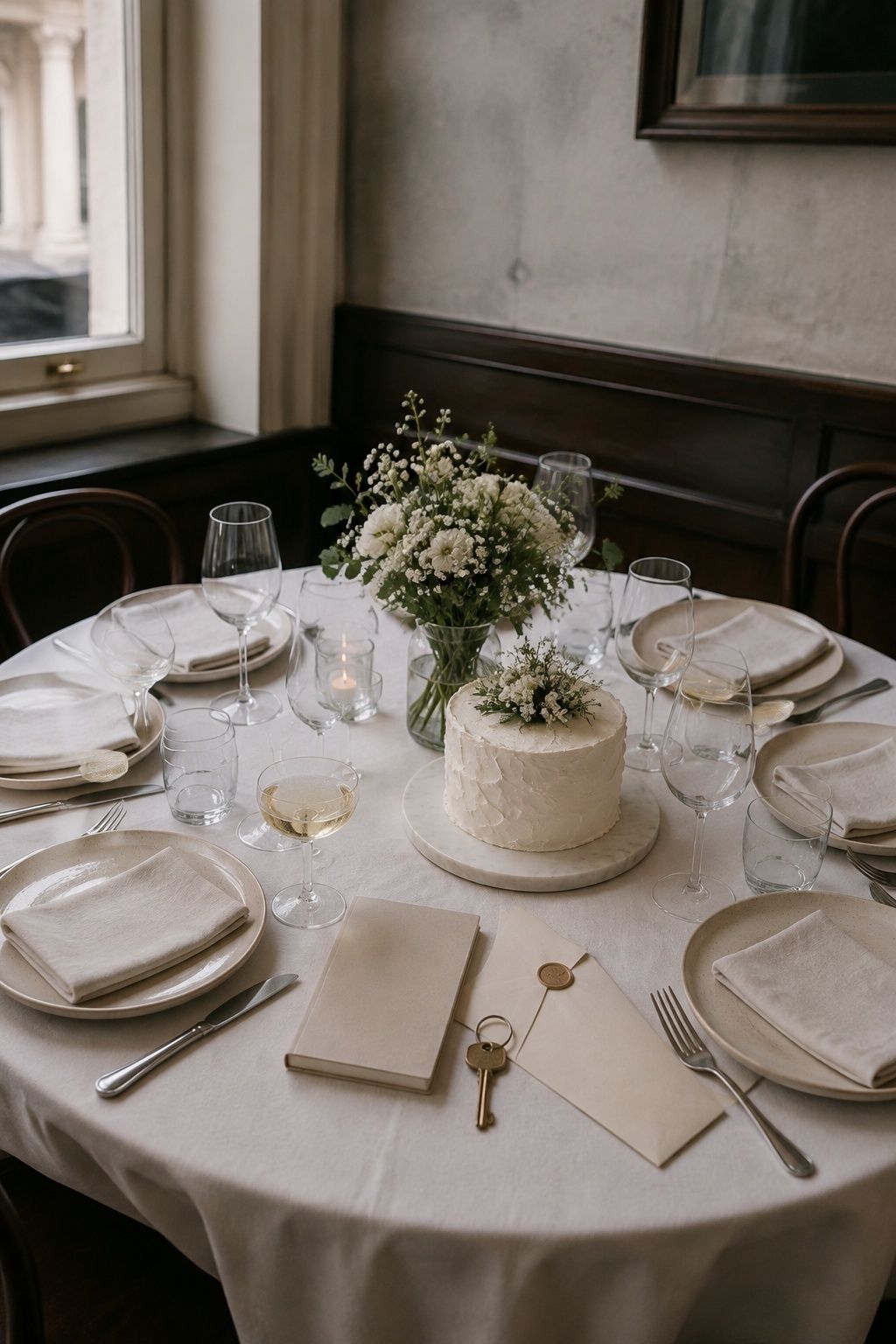
This scenario protects the home timeline first. The wedding becomes tiny but still intentional: courthouse vows, a private ceremony, a family dinner, a backyard meal, or an elopement with a photographer for two hours. Most savings stay pointed toward closing, moving, repairs, and the emergency cushion.
This works best when the couple feels more excited than deprived. If a tiny wedding would make one partner feel unseen, do not pretend the math solved the whole problem. Add one or two meaningful elements: a real bouquet, a beautiful meal, a few family portraits, handwritten vows, or a later anniversary party at home.
Small Wedding And Slower Down Payment

This is the balanced path. You choose a defined wedding cap, keep the guest list close, protect the home savings floor, and accept a slightly slower down payment timeline. The wedding could include twenty-five to fifty guests, a ceremony, dinner, modest flowers, photography, and a reception that feels complete without becoming open-ended.
The key is a hard ceiling. Decide which money remains untouched for the house, then design the wedding around what is left. Restaurant receptions, brunches, weekday dates, home celebrations, simple attire, and fewer pre-wedding events often make this scenario feel warm rather than bare.
This path needs a shared tracking habit. Keep wedding invoices, home savings, and monthly cash flow visible in one place so neither partner has to hold the anxiety alone. If parents or relatives contribute, record whether the money is for the wedding only, for the home only, or flexible. Clarity around gifts prevents the budget from turning into a quiet tug-of-war.
Wedding First And Delayed Home Purchase
This scenario puts the wedding first and delays buying. It is reasonable when there is no high-interest wedding debt, emergency savings stay intact, both partners freely choose the delay, and the home timeline is not urgent. It also makes sense when the couple expects income changes, a move, better credit, or a clearer idea of where to settle.
Name the delay honestly. If the wedding moves homeownership by six months, one year, or several years, write that down. A wedding first plan should feel like a chosen tradeoff, not a dreamy fog. If the delay makes either partner tense, shrink the wedding before resentment takes root. If you’re planning for under 50 guests, see the guide on planning a small wedding.
When A Small Wedding Is The Middle Path
A small wedding is often the most emotionally intelligent answer to wedding versus financial goals. It does not ask you to erase the marriage celebration. It asks you to stop funding expectations that do not fit your future. You keep the vows, closest people, meal, photos, and atmosphere, then release the parts that mostly exist because other weddings had them.
For a house-focused couple, the guest list is the strongest lever. Every added person affects venue size, food, drink, rentals, stationery, transportation, staffing, favors, and sometimes rehearsal events. A smaller guest count does not only reduce catering. It changes the entire format of the day.
Consider formats that naturally protect small wedding house savings: a courthouse ceremony with dinner for twelve, a private vow exchange followed by brunch, a restaurant buyout for thirty, a backyard supper with hired cleanup, a chapel ceremony with cake and champagne, or a weekday micro wedding plan. These formats have edges. Edges keep the budget from spilling everywhere.
The tradeoff is clarity. Fewer guests often mean difficult conversations. Fewer extras sometimes mean disappointing someone who imagined a larger party. More house savings often means letting go of a venue or design idea you once loved. But clarity also feels peaceful. A wedding that fits the life you are building has its own beauty.
Think about what guests will actually remember. They will remember whether the ceremony felt sincere, whether they were welcomed, whether the meal was pleasant, whether the couple seemed present, and whether the day made sense. They are less likely to remember the missing favors, the smaller floral count, or the fact that the reception ended after dinner. A small wedding and home savings plan works best when it trims details guests barely feel and protects the details that hold the room together.
What Wedding Choices Hurt Future Home Savings Most
The choices that hurt future home savings most are usually the ones that create debt, remove flexibility, or expand without a clear ceiling. Credit-card wedding debt, personal loans, draining emergency savings, and signing major venue deposits before the budget is real all make the next goal harder.
Open-ended guest lists are another major risk. “Just a few more people” changes the room, meal, bar, rentals, and staff. Extra events also add pressure: engagement party, showers, welcome drinks, farewell brunch, bachelor and bachelorette weekends, and travel-heavy weekends. Some are meaningful. Many are inherited.
Family-pressure upgrades deserve special care. If someone offers money, clarify whether it is a gift, a request, or a way to expand the guest list. Help is lovely when it is cleanly given, but hidden strings make both the wedding and the home plan feel less like yours. A contribution that forces a larger event does not automatically save money.
Finally, watch the deposits. Before paying nonrefundable amounts, know the total contract cost, service charges, taxes, gratuities, minimums, cancellation terms, and what is not included. A beautiful venue that requires outside rentals, valet, security, lighting, transportation, and a high food minimum often costs far more than the first number suggests.
Also watch emotional spending after hard conversations. If you cut the guest list, it is tempting to soothe the discomfort with upgrades somewhere else. If a parent is disappointed, it is tempting to add a second event. If you feel guilty about a tiny ceremony, it is tempting to overspend on clothes, flowers, or travel. Pause before every comfort purchase and ask whether it supports the marriage, the guests, or the home plan.
What To Decide Before Paying Deposits

Before any major wedding deposit, sit down together with the least romantic spreadsheet you are willing to open and the most honest conversation you are willing to have. This is not about making the wedding cold. It is about making sure the day does not quietly take money from a future you both want.
- What is our realistic home timeline?
- What cash must stay untouched for emergency savings?
- What down payment range are we targeting?
- What closing costs, moving costs, repairs, and setup costs should we plan for?
- What monthly mortgage payment would still let us breathe?
- What wedding would still feel meaningful if it were smaller?
- What family pressure are we willing to disappoint?
- What spending would make us feel resentful later?
Then assign each wedding category a purpose. Ceremony protects meaning. Food protects hospitality. Photography protects memory. Coordination protects peace. Attire protects confidence. Decor protects atmosphere only after the essentials are steady. When a category does not have a real purpose, it is easier to trim.
If you want a house fund registry, choose wording that feels grateful rather than transactional. Guests should understand that gifts support your shared home, not that they are being asked to rescue an overextended wedding. Cash funds work best when the wedding budget is already responsible and the couple is clear about what the money will make possible.
Finally, decide how you will talk about the choice publicly. You do not owe everyone your full financial picture. A simple line such as “We are keeping the wedding intimate while we save for our first home” is enough. The more united and calm you sound, the less room there is for other people to turn your budget into a referendum on how much you value the marriage. There’s more in our Budget Weddings collection.
FAQ
Should you spend money on a wedding or buying a house?
You should spend based on cash flow, debt, home timeline, and emotional value, not guilt. If a wedding would create debt or erase your home cushion, scale it down. If a small wedding preserves the ceremony and keeps home savings alive, that is often the wiser middle path. Also worth a look: wedding budget mistakes.
How do you compare a wedding budget vs buying a house?
Compare the wedding budget vs buying a house by listing the wedding total with down payment, closing costs, moving, repairs, emergency savings, and monthly mortgage comfort. Then run three scenarios: house first, small wedding with slower savings, and wedding first with a delayed home timeline.
Can you have a wedding and still save for a house?
Yes, if the wedding is sized around the savings plan instead of the other way around. Set an untouched house fund, keep emergency savings intact, avoid wedding debt, and design the celebration with fewer guests, simpler food, fewer events, and clear priorities.
How much down payment do you need for a house?
The down payment depends on loan type, lender, home price, credit profile, and whether mortgage insurance applies. Some buyers put down less than 20 percent, but a lower down payment changes monthly costs in many loan scenarios. Ask a lender or housing counselor for numbers before reshaping the wedding budget.
Is a small wedding better if you want to buy a home?
A small wedding is often better when homeownership is the next major goal because it protects the ceremony without expanding every cost category. Fewer guests reduce venue, food, bar, rental, stationery, and staffing needs, leaving more cash for closing, moving, repairs, or a stronger cushion.
What wedding budget choices hurt future home savings?
The biggest risks are credit-card wedding debt, personal loans, draining emergency savings, vague guest limits, extra events, high minimum venues, and family-pressure upgrades. Before paying deposits, decide what money must stay protected for the house and what wedding details are optional.
Final Thoughts
The best choice is the one that lets you remember the wedding with tenderness and enter home planning without panic. Some couples need the gathering, the vows, the dinner, the photographs, and the feeling of being witnessed. Some need the home timeline to stay protected more than they need a traditional reception. Many need a version of both.
A smaller wedding is a generous, mature choice when it protects both meaning and momentum. Keep the people who make the day feel real. Feed them well. Say the words. Take the photos you will want later. Then let the rest of the money keep building the life that starts after the last toast.
Before you finalize the wedding budget, compare it with the full home cash picture so the celebration feels beautiful in the moment and kind to the life you are trying to build.
Last update on 2026-11-29 / Affiliate links / Images from Amazon Product Advertising API