

Most couples should start planning 12 to 15 months before the wedding month, but what month should you start planning a wedding depends on your season, guest count, venue flexibility, and how quickly you want to marry. For a smaller wedding, starting 6 to 9 months ahead can still work beautifully when the plan stays focused.
There is a particular kind of pressure that arrives after the engagement glow settles. People ask whether you have a date, venues ask for a month, and suddenly the calendar feels like it is judging you from across the room.
If you are wondering what month should you start planning a wedding, the better question is not only how far away the wedding is. It is which month gives you enough room to choose a date, book the pieces that truly matter, and still enjoy the life you are planning around the wedding.
For intimate weddings, the answer is often kinder than a big traditional timeline suggests. A smaller guest list can make venue searches, food counts, invitation timing, and day-of flow simpler. The month you begin still matters, but it should serve your wedding shape instead of forcing you into someone else’s full-scale planning calendar.
Recommended Wedding Products


You Might Also Like These Blog Posts
- How Long Does It Take To Plan A Wedding Without Losing Your Mind
- What To Do First When Planning A Wedding So The Rest Feels Clear
- Date Planning Wedding Engagement Ideas That Make The Season Feel Like You
- Small Wedding Planning Timeline By Month For Couples Keeping It Simple
- Can You Plan A Wedding In 6 Months Without Making It Feel Rushed
- 3-Month Small Wedding Planning Checklist For A Short, Sane Timeline
What Month Should You Start Planning A Wedding If You Want A Calm Engagement?
For a wedding with a fixed season, a Saturday date, a popular venue, or several professional vendors, begin planning about 12 to 15 months before the month you want to marry. That does not mean every favor, flower, and seating choice needs attention on day one. It means the early month protects the decisions that control everything else.
If you want a June wedding, January of the year before can be a gentle starting point. If you want an October wedding, the previous summer or early fall gives you time to compare venues before peak autumn dates disappear. If you want a winter restaurant wedding, a six-to-nine-month planning window may be perfectly reasonable, especially with a shorter guest list.
The right start month is the month when you can name a budget range, a guest ceiling, a location, and a season without rushing through the emotional part of getting engaged. A calendar only works when the couple behind it has made a few honest decisions first.
Start With Your Wedding Month, Then Count Backward
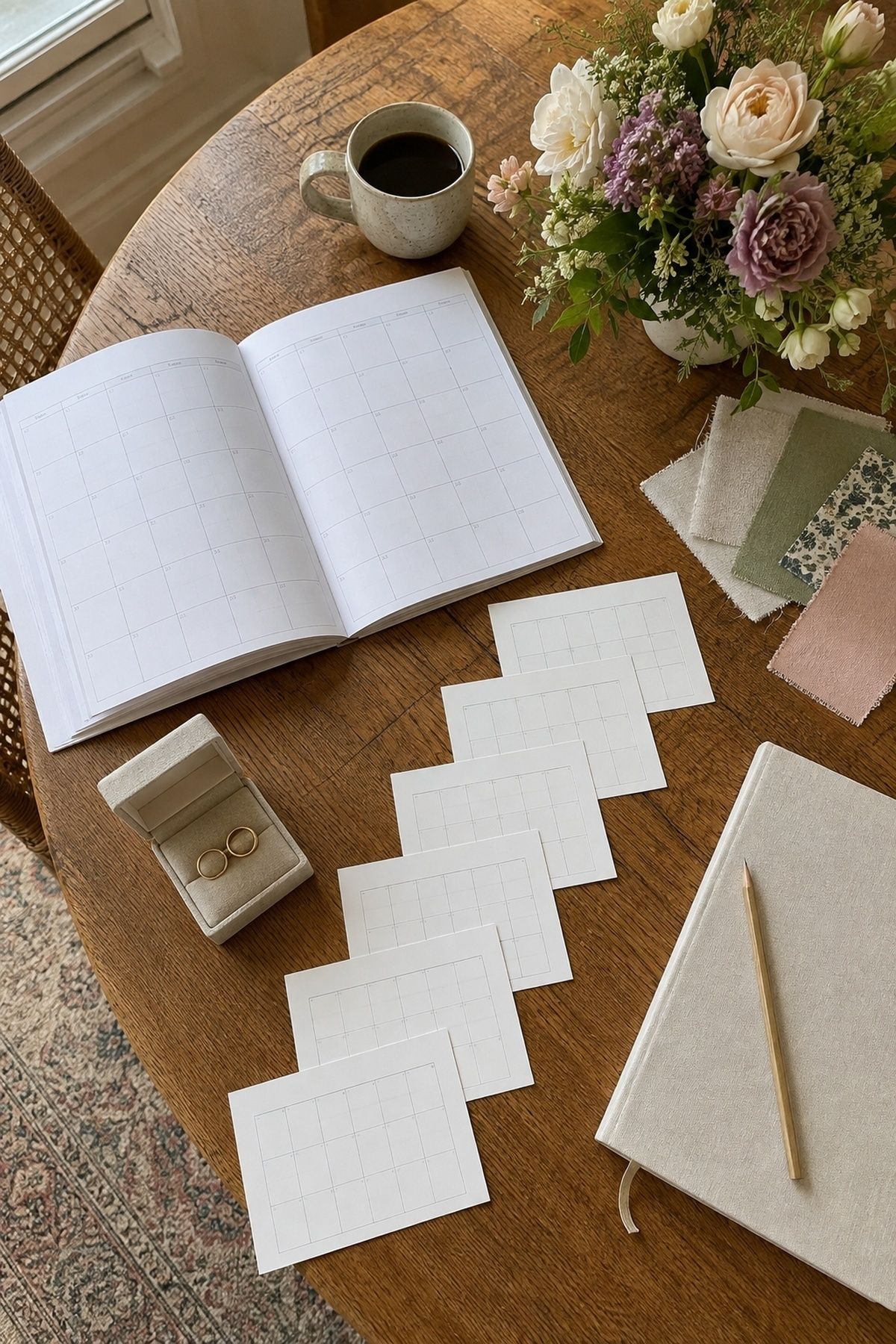
Choose the wedding month you are hoping for, then count backward from the kind of celebration you want. A larger wedding usually needs 12 to 15 months. A smaller wedding with a flexible venue often needs 6 to 9 months. A courthouse ceremony with dinner may need only 2 to 4 months if your legal paperwork, guest notice, and food plan are simple.
This backward planning method keeps the month from feeling random. A May garden wedding asks for a different runway than a January private dining room. A destination weekend asks for earlier guest communication than a family-only dinner ten minutes from home. A custom dress asks for more time than a ready-to-wear suit or a locally altered gown.
Once you count backward, mark the first month for foundation decisions only: budget, guest count, location, date range, venue style, and who gets a voice in the plan. That first month should create clarity, not a hundred tiny assignments.
Choose An Earlier Start Month For Peak Seasons

Spring and fall tend to create the tightest planning calendars in many places because couples want comfortable weather, garden settings, outdoor portraits, and guest-friendly travel. If you are aiming for May, June, September, or October, starting 12 to 15 months ahead gives you more choice and a calmer booking pace.
Peak-season planning also depends on the day of the week. A Saturday in September at a beloved venue may need a much earlier start than a Friday brunch, Sunday supper, or weekday ceremony. The month you begin should reflect how attached you are to a specific date and setting.
For intimate weddings, flexibility is a quiet advantage. A smaller guest list may fit a private dining room, inn, garden, studio, or family property that would not work for a large reception. If you are open to those formats, your start month can be later without making the wedding feel improvised.
Where Small Weddings Can Move Faster
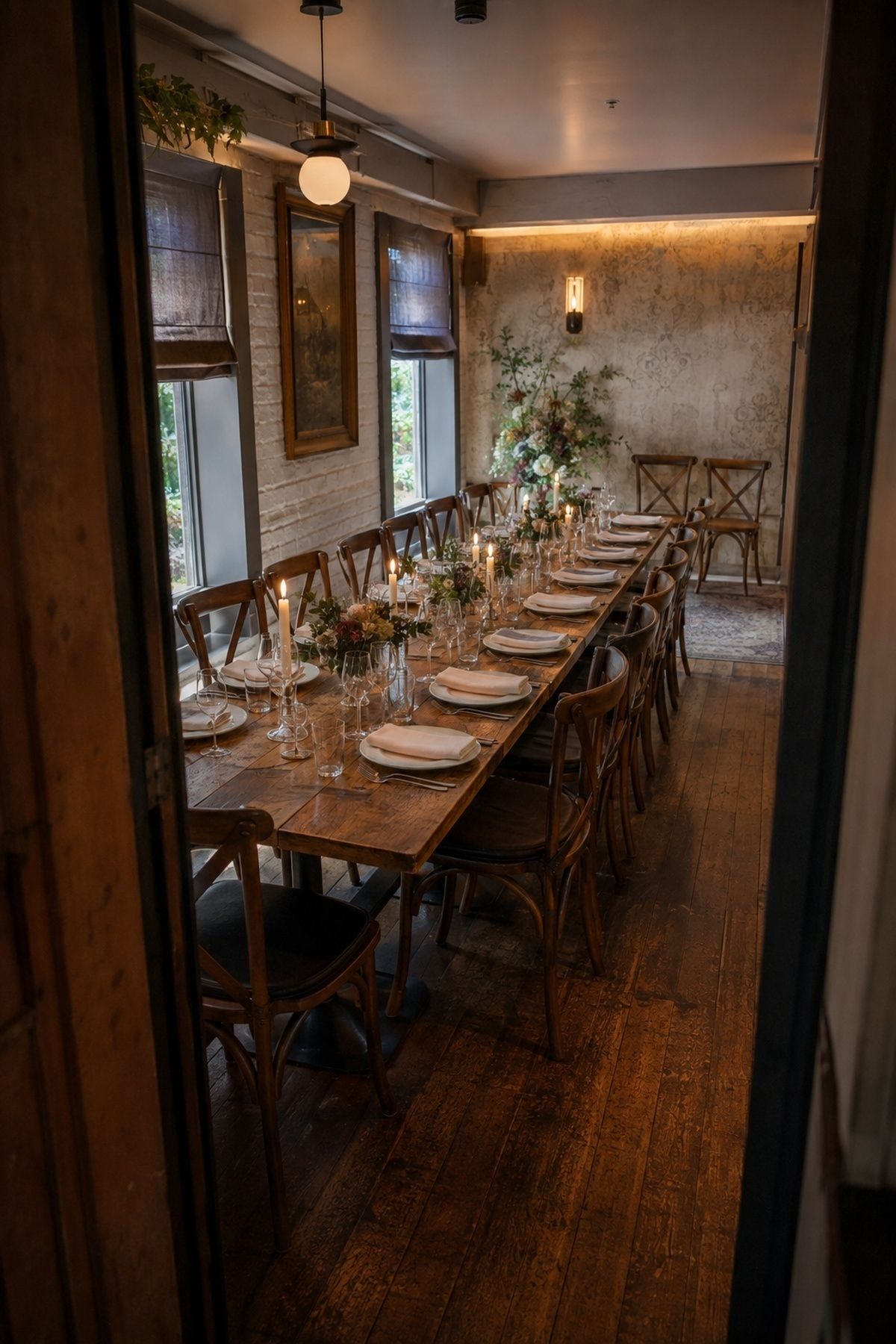
Small weddings can move faster because the plan has fewer dependencies. Fewer guests usually means simpler invitations, easier seating, smaller food counts, fewer rentals, and less transportation. It may also mean you can choose a restaurant, courthouse, garden, vacation rental, or private room instead of competing for a full-service wedding venue.
A six-month start can work well when the guest list is already narrow, the couple is decisive, and the wedding format is clear. It becomes harder when a small wedding carries the same expectations as a large one: custom stationery, multiple vendor bids, elaborate rentals, a wedding party, welcome events, and a long approval loop.
If the wedding will be intimate, spend the first planning month reducing moving parts. Choose the meal format, ceremony setting, photographer, attire path, and guest communication plan before you drift into decorative details. That order keeps the short timeline graceful.
Where Not To Rush
Even a tiny wedding has a few pieces that deserve early attention. Legal requirements, venue or ceremony permissions, food, photography, attire ordering or alterations, accessibility, weather plans, and family expectations can all become stressful when they stay vague too long.
Do not rush the guest list either. The month you start planning should give you enough time to decide who is truly invited, who needs a careful conversation, and how much guest comfort you can afford. A small guest list can be deeply peaceful, but only when the boundaries are settled before invitations begin moving.
Vendor booking is another place to move early. Photographers, officiants, florists, hair and makeup artists, musicians, and coordinators may have very different lead times. If you care about a specific person, reach out earlier. If you care more about a simple format than a particular team, the calendar may stretch more easily.
A Simple Month-By-Month Starting Rule

Use this as a starting point, then adjust for your actual wedding. For a May or June wedding, begin the previous January to June if you want a traditional venue and vendor team. For a September or October wedding, begin the previous summer or early fall. For a winter wedding, begin 6 to 12 months ahead depending on holidays, travel, and venue demand.
For a smaller wedding, the rule can soften. Begin 9 to 12 months ahead for a polished small wedding with several vendors. Begin 6 to 9 months ahead for a restaurant, garden, or micro wedding with a clear guest list. Begin 3 to 6 months ahead only when your date is flexible, the guest count is low, and you are willing to simplify quickly.
The most useful wedding planning start month is not the earliest possible month. It is the month that gives you enough time to make the foundational choices without turning the engagement into a second job. Pairing each choice with one of these engagement date planning ideas can help.
What To Book First Once You Start
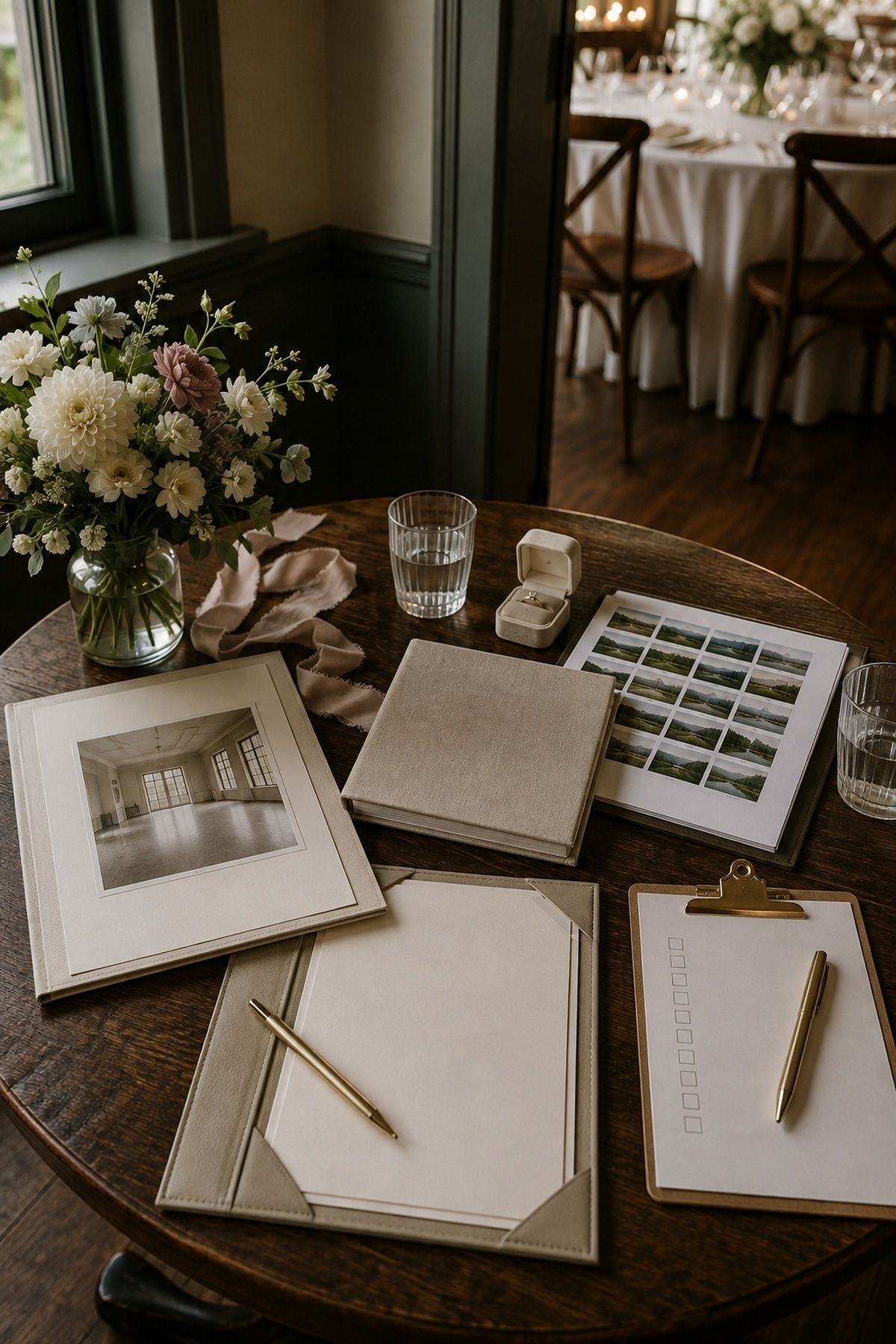
Once your planning month arrives, start with decisions that hold the date in place. Set the budget range, draft the guest ceiling, choose the general location, and decide whether the wedding is a full reception, micro wedding, courthouse celebration, restaurant dinner, destination trip, or family-only gathering.
Then book the venue or ceremony location, food plan, photographer, officiant or legal route, and any planner or coordinator. These choices affect the rest of the wedding, so they deserve the first real planning energy. After that, move into attire, invitations, lodging, rentals, flowers, music, and timeline details.
If you begin planning later than the ideal window, the order matters more than the month. A focused first two weeks can do more for the wedding than three months of scattered browsing.
How To Tell If You Started Too Late
You may have started too late for your original vision if your preferred venue is unavailable, your date is immovable, key vendors are booked, attire cannot arrive in time, or guests need travel notice you can no longer give. That does not mean the wedding is in trouble. It means the version of the wedding may need to become more focused.
Shorter timelines reward clean decisions. Shift from a Saturday to a Friday, from a blank-space venue to a restaurant, from custom decor to thoughtful tables, from a large guest list to a closer one, or from complex florals to a few beautiful arrangements. A wedding can still feel abundant when the scope is honest.
The goal is not to prove you started early enough. The goal is to protect the ceremony, the meal, the people, and the feeling of the day. Those are the pieces guests remember most.
FAQ
What Month Should You Start Planning A Wedding?
You should usually start planning 12 to 15 months before your wedding month if you want a popular season, Saturday date, traditional venue, or full vendor team. For a smaller wedding with a flexible format, 6 to 9 months can be enough.
Is 12 Months Enough Time To Plan A Wedding?
Yes, 12 months is enough time for many weddings when you make the major decisions early. It works best when the couple sets a budget, guest count, venue direction, and vendor priorities during the first month instead of saving the hardest choices for later.
Can You Start Planning A Wedding 6 Months Before?
Yes, you can start planning a wedding 6 months before, especially for an intimate wedding, restaurant reception, courthouse ceremony, or flexible date. The tradeoff is choice. You may need simpler attire, faster invitations, fewer custom details, and a clear booking order.
What Should You Do In The First Month Of Wedding Planning?
In the first month, decide your budget range, guest ceiling, season, location, wedding format, and decision roles. Then start venue, food, photography, officiant, and planner or coordinator conversations, because those choices shape the date and guest experience.
What Month Is Hardest To Book For A Wedding?
The hardest months often depend on your region, but late spring and early fall can be competitive because the weather is comfortable and outdoor settings are popular. If you want a peak month, begin earlier or consider Friday, Sunday, brunch, or off-peak options.
Should Small Weddings Start Planning Later Than Big Weddings?
Small weddings can often start later because there are fewer guests, rentals, seating decisions, and communication layers. Still, begin early enough to secure the ceremony location, food, photographer, legal paperwork, attire, and any family conversations that need care.
Final Thoughts
The best answer to what month should you start planning a wedding is the month that gives your specific celebration enough room to breathe. Start 12 to 15 months ahead for peak dates and fuller weddings, 6 to 9 months ahead for many small weddings, and 3 to 6 months ahead only when you are ready to simplify with confidence.
A thoughtful start month does not have to make planning feel heavy. It simply gives you a clean first chapter: decide the guest list, choose the season, protect the meaningful parts, and let the rest of the wedding become smaller, clearer, and more personal as you go.
Choose the start month that protects your guest list, season, meaningful priorities, and the small or flexible timeline you actually want. Keep only the longer-calendar pieces that genuinely matter, and begin early.
Last update on 2026-10-04 / Affiliate links / Images from Amazon Product Advertising API