

Learning how to keep your wedding guest list small starts before names are debated: choose a real headcount, build your must-have circle privately, set whole-category rules, and stop treating every request as a fresh decision. A small list stays kindest when the boundaries are clear before anyone asks for an exception.
A small wedding can feel beautifully simple until the guest list starts expanding by one harmless name at a time. A parent’s friend, a cousin you have not seen in years, a coworker who heard about the date, a plus-one request, a child you did not account for, and suddenly the intimate dinner you pictured has turned into a room you can barely afford or host well.
The solution is not to become cold or secretive. It is to make decisions in an order that protects the wedding you are actually planning. When your count, criteria, and explanations all match, the guest list stops being a group negotiation and becomes part of the design of the day.

Recommended Wedding Products


You Might Also Like These Blog Posts
- Small Wedding Guest List Etiquette For A Guest List That Feels Fair
- Small Wedding Guest List Wording That Keeps Boundaries Kind
- Micro Wedding Guest List: Who Makes The Tiny Cut?
- Small Wedding Website Wording For A Small Guest List
- Wedding Guest List Mistakes That Make the Room Feel Wrong
- Small Wedding Plus One Etiquette For A Gracious Guest List
How To Keep Your Wedding Guest List Small Without Letting Exceptions Take Over
The most reliable way to keep a guest list small is to separate the system from the emotions. First decide what the wedding can hold. Then decide who truly belongs in that size of room. Only after that should you talk about special cases, family requests, plus-ones, children, and people who might expect an invitation.
If you start with individual names, every decision can feel like a personal judgment. If you start with the guest count and the kind of gathering you want, the conversation becomes clearer. You are not ranking everyone you know. You are choosing the circle you can host with real attention.
Set A Real Capacity Number, Not A Wishful One
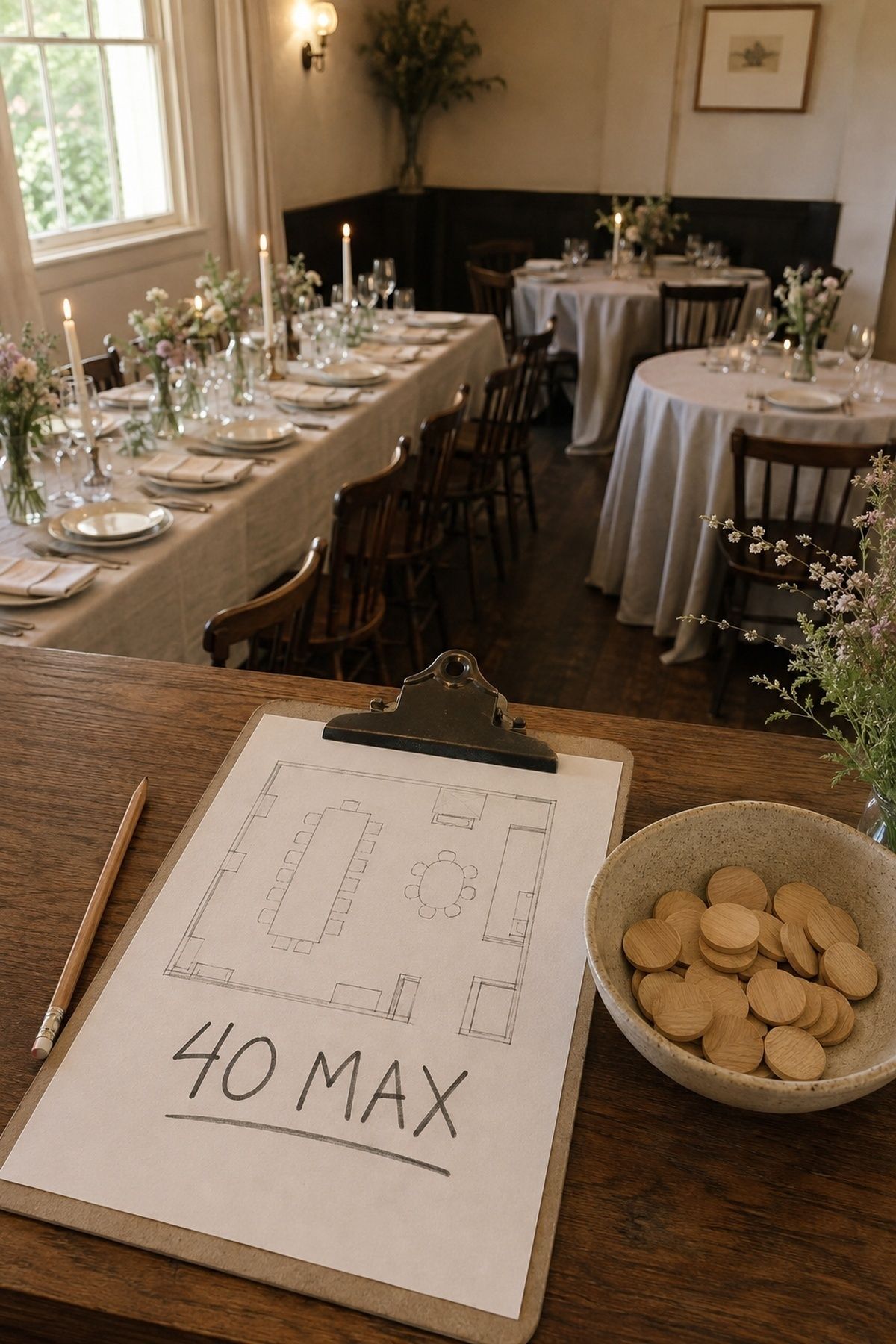
Before you open a spreadsheet, choose the maximum number of people your wedding can comfortably hold. Include the venue limit, table layout, catering minimums, ceremony seating, restrooms, transportation, photography timing, and the amount of money you can spend without resentment. A small-venue wedding especially needs a real number, not a hopeful range.
Then decide whether that number includes you, vendors, children, and any partner seats. Couples often say they want 40 guests, then realize they meant 40 invitations plus children, plus partners, plus a few parent names. That is how a small guest list spirals while still feeling technically “small.”
Write the number down and treat it as a planning boundary. If the budget or venue changes later, you can revisit it together. Until then, every added guest should require a swap, not a quiet increase.
Build The Must-Have List Privately First

Each partner should make a private must-have list before parents, siblings, or friends are invited into the conversation. These are the people whose absence would change the emotional shape of the day: the family who raised you, the chosen family who shows up for you, the closest friends who know your relationship, and the people you cannot imagine celebrating without.
This first list is not the final guest list. It is the center. If you start with the center, you can protect the relationships that matter most before obligation fills the room. Deciding who to invite becomes clearer when the must-have names are tested against the count before anyone adds extras.
A helpful test is whether you would still want a private dinner with this person if there were no wedding involved. For an intimate wedding guest list, that kind of present-day closeness matters more than social debt, old invitations, or distant family-tree logic.
Choose Whole Categories Instead Of One-Off Cuts
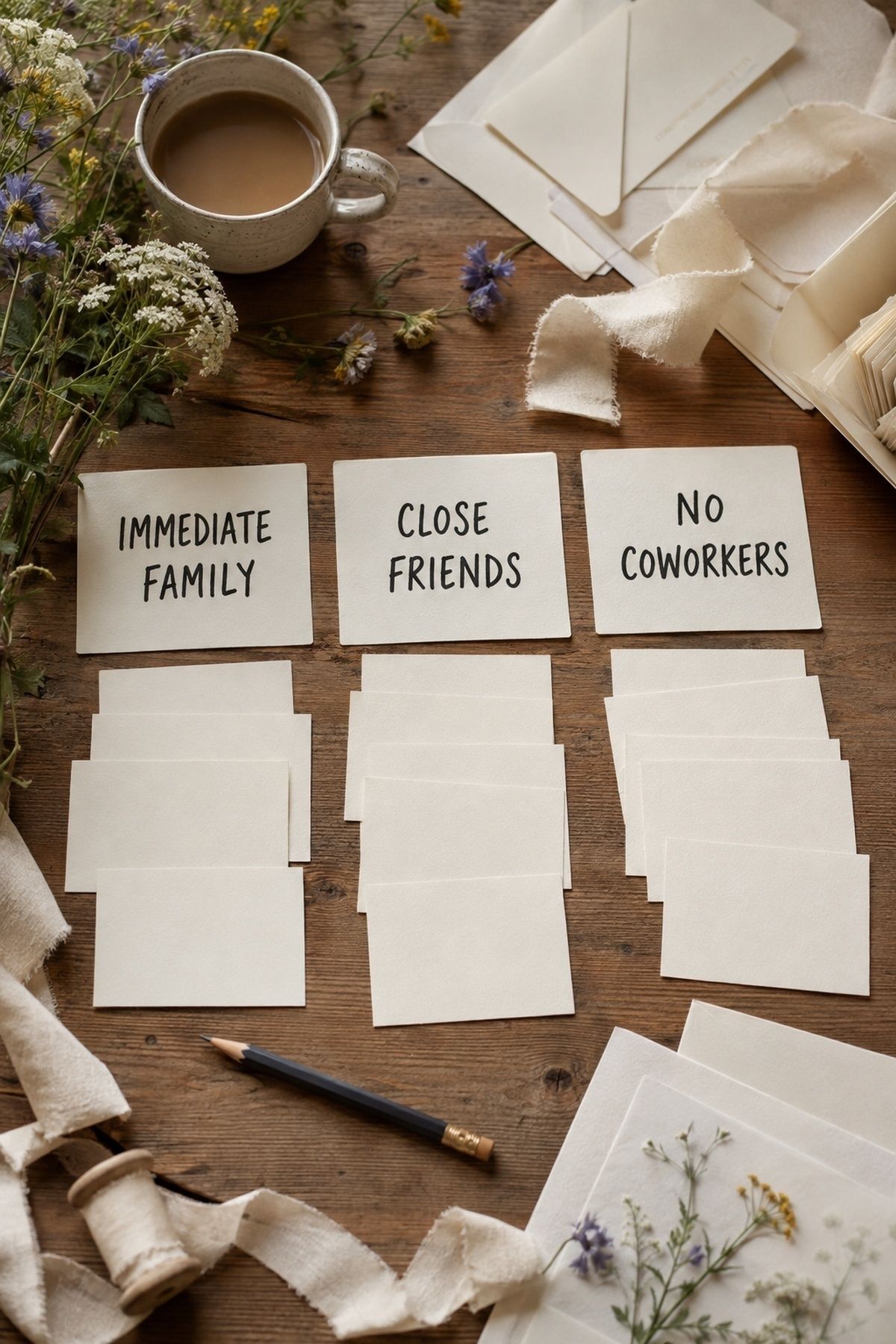
One-off cuts are where feelings get messy. If you invite one cousin but not another, one coworker but not the rest, or one family friend but not a similar family friend, the decision can look more personal than it was meant to be. Whole-category rules are usually easier to apply and easier to explain. This guide on how to invite some family but not all shows how to turn those cuts into one clear rule.
Your small wedding guest list rules might be immediate family only, no coworkers, no distant cousins, current close friends only, no parents’ friends, or no relatives you have not spoken with in the past year. Good small wedding guest list etiquette depends less on one perfect rule and more on treating similar relationships similarly.
Whole categories also help when someone argues for just one more person. You can return to the rule instead of defending why a specific name is outside the list. That keeps the conversation from becoming a trial about one person’s importance.
Make Partner, Plus-One, And Children Rules Early
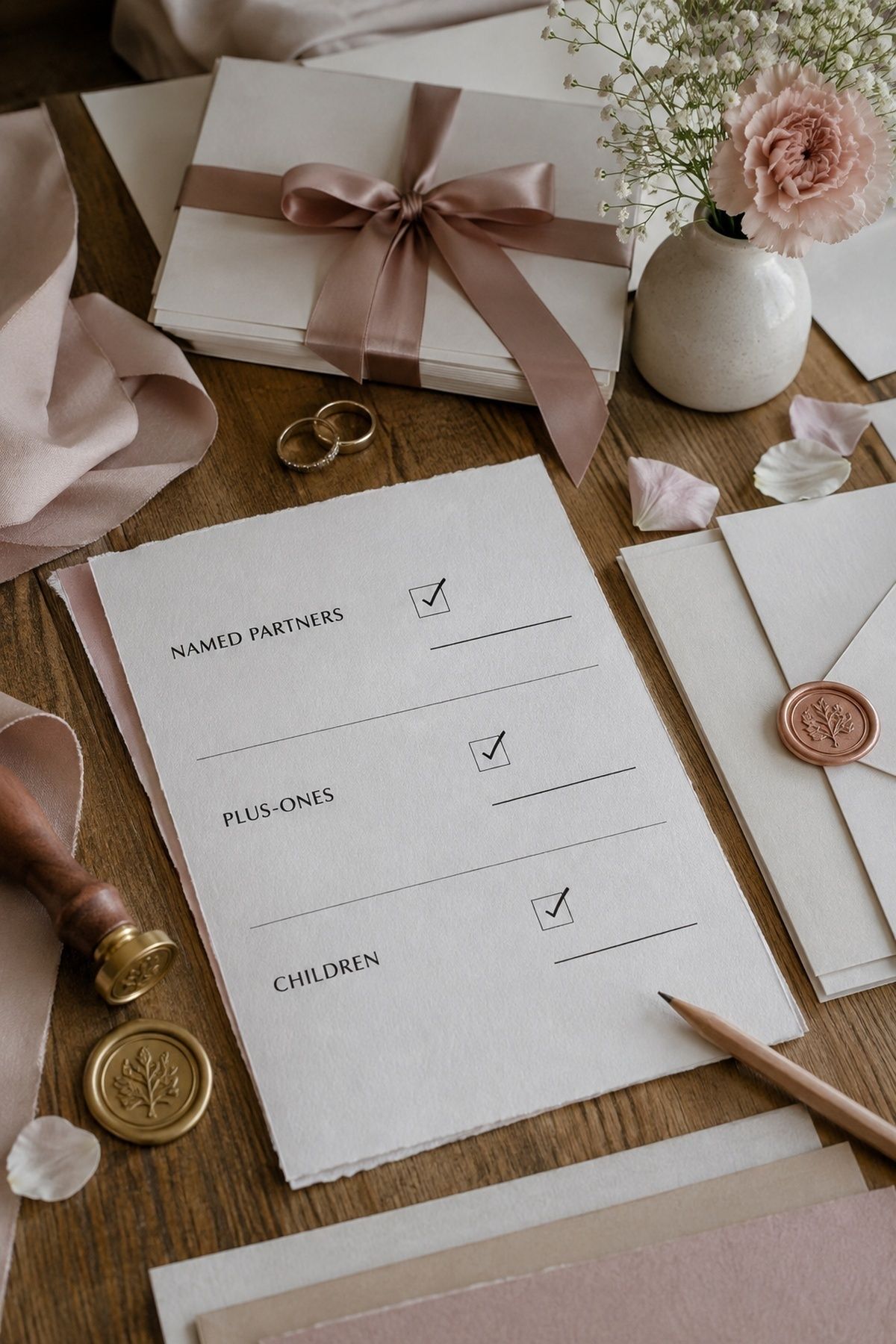
Plus-one and children decisions can double a guest list faster than almost anything else. Decide early whether you are inviting spouses, fiances, live-in partners, long-term partners, named partners you know, or open plus-ones. A named partner is different from a blank guest, especially when the room is small.
Clear small wedding plus-one etiquette helps guests understand the pattern before they ask for exceptions. You might include long-term partners but not casual dates, offer plus-ones only to guests traveling alone, or skip open plus-ones entirely because every seat is needed for close relationships. Whatever you choose, make invitations and RSVP forms specific.
Children need the same clarity. A no-kids wedding guest list can be completely fair when the rule is stated kindly and applied consistently. Thoughtful no-kids wedding wording prevents guests from guessing whether their children are included. You might invite no children, only immediate-family children, or only named children in the wedding party.
Give Parents A Number Instead Of A Blank Page
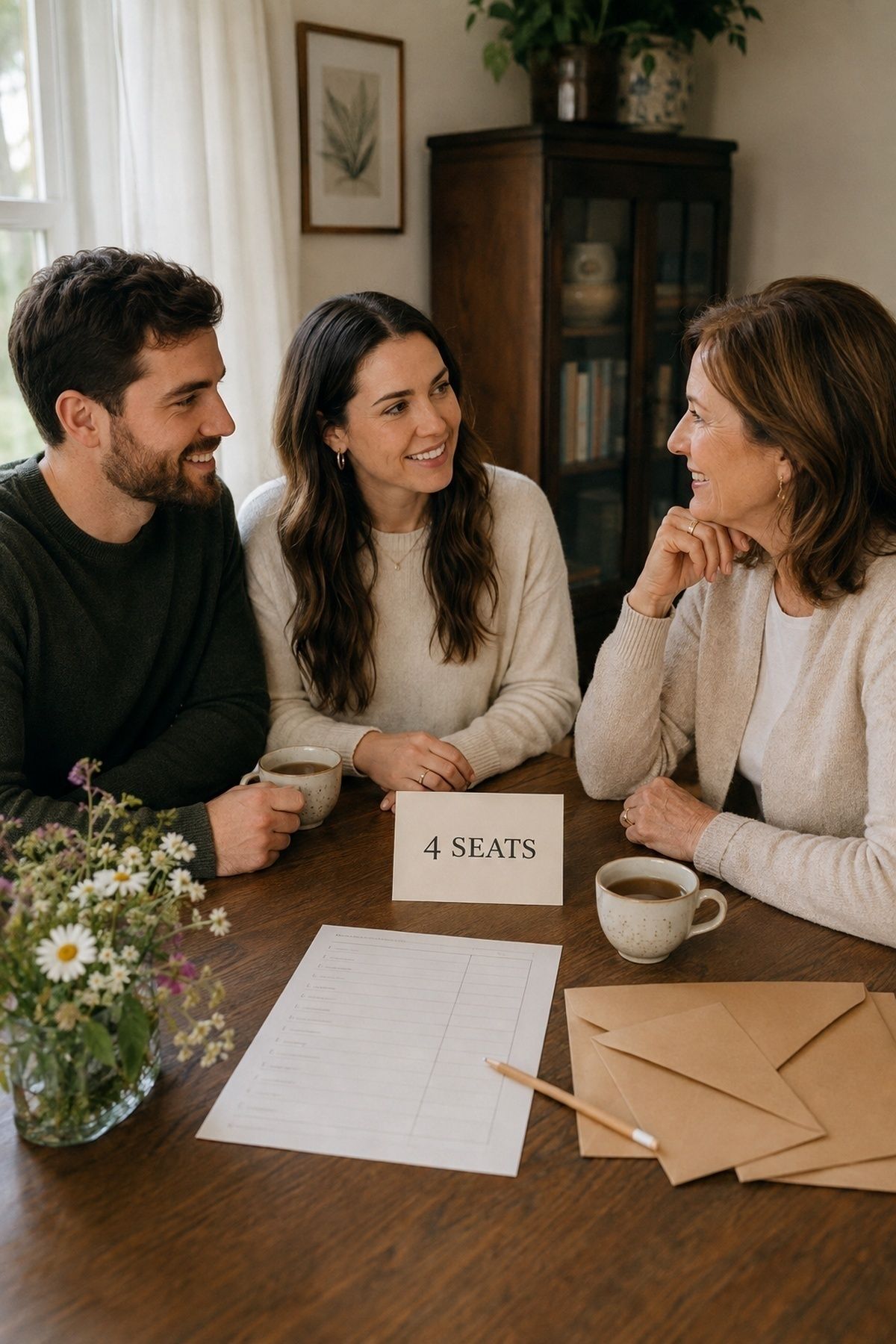
A small wedding family guest list can become tense when parents see the wedding as a wider family event. They may think of relatives, neighbors, old friends, or people who invited them years ago. Sometimes that comes from love and pride. Sometimes it comes from etiquette anxiety. Either way, an open-ended request for names can become a second guest list.
If parents are contributing money or feel emotionally invested, give them a clear role before the list is public. That may mean a fixed number of seats, a chance to flag important family context, or a short review of the names you already plan to invite. It should not mean a blank page where every suggestion becomes your problem to remove.
When wedding guest list family pressure continues, use swaps instead of additions. “We can include that person if someone else from your allotment moves off the list” is much clearer than debating whether the person deserves to come. The number stays steady, and parents still have a meaningful role.
Keep The Final List Mostly Private
The more people see the full list, the more people will notice missing names. Sharing every draft can turn a finished decision into a group project. It also gives relatives and friends room to ask what about this person, what about that couple, and what if someone declines.
You do not need to be mysterious. You can tell close family the wedding is intentionally small and that invitations are limited. You can share practical information with people who need it. But the full list does not need to circulate for approval, especially if the wedding is small because you want a private, connected atmosphere.
Privacy protects people, too. It reduces comparison, avoids awkward ranking conversations, and helps you communicate the final decision without accidentally inviting negotiation.
Do Not Count On People Declining
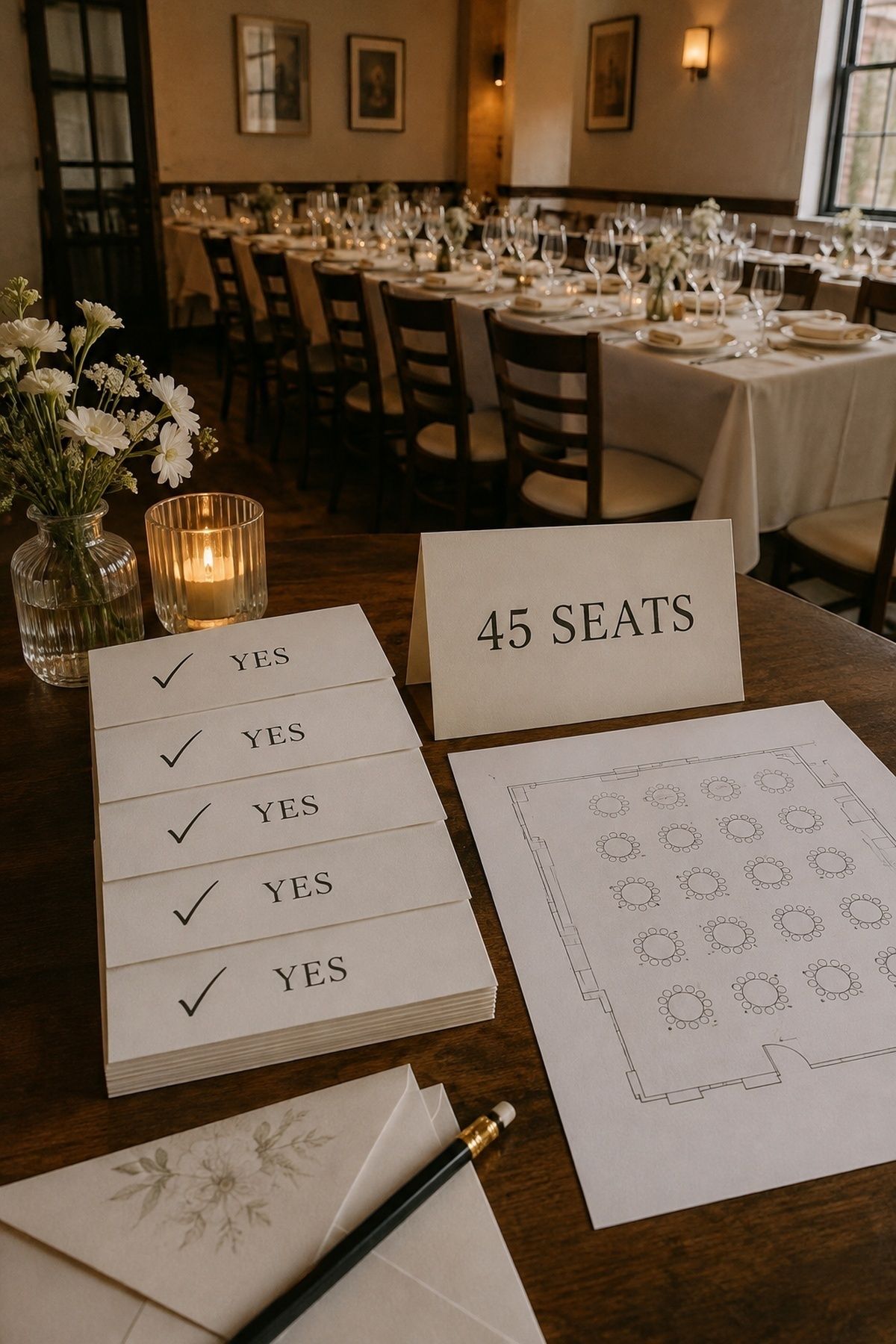
Over-inviting is risky for any wedding, but it can be especially hard on a small one. If every guest says yes, you may not have enough seats, room, budget, or emotional space for the wedding you planned. Assumed declines are not a strategy; they are a gamble.
It can be tempting to invite extra people because they live far away, seem busy, recently had a baby, or once mentioned they might not travel. Those guesses may be wrong. People make surprising efforts for weddings, and then the couple is left trying to solve a problem they created.
If you truly have room for 45, invite 45. If someone declines and you have a carefully handled second-round invitation plan, use it only when timing will still feel respectful. Otherwise, let the smaller number stand.
Keep A Tiny Buffer For True Corrections
A small buffer can save you from panic, but it should not become a guilt fund. Reserve a few seats for true corrections: a must-have person accidentally missed, a new serious partner within your stated rules, or a family situation that genuinely changes. Do not use the buffer for every uncomfortable conversation.
Decide the buffer size before requests begin. Two to four seats may be enough for many intimate weddings. If you keep ten “just in case” seats, you may simply have an unspoken larger wedding. Naming the buffer keeps it from becoming another path for over-inviting.
Once the buffer is used, it is used. After that, additions need swaps. This may feel strict, but it is often the thing that keeps the final list from growing past the wedding’s real capacity.
Hold One Explanation Once The List Is Final
You do not need a custom explanation for every person who asks. Too much detail can make people feel compared. A short, consistent answer is kinder: the wedding is intentionally intimate, the guest count is fixed, and you are keeping the celebration to the closest circle you can host well.
Avoid saying someone did not make the cut, blaming your partner, or offering long reasons that invite a counterargument. If the person is close enough to need a direct conversation, be warm and brief. You can care about someone and still not have a seat available at a small wedding.
The final explanation should match the rules you actually used. When your answer is honest, steady, and not overly apologetic, it becomes easier to repeat without reopening the list.
FAQ
How Do You Keep A Wedding Guest List Small?
Keep a wedding guest list small by setting a firm capacity number first, building your must-have circle privately, and using consistent category rules for family, friends, coworkers, partners, plus-ones, and children. Do not over-invite based on assumed declines, and require swaps instead of additions once the list is full.
Who Should Make The Cut For A Small Wedding?
The people who should make the cut are the ones whose presence feels central to the day: immediate family, chosen family, closest friends, and essential support people. For a small wedding, current closeness usually matters more than distant obligation, old social debt, or inviting people only to avoid a hard conversation.
How Do You Say No To Extra Guest List Requests?
Use one warm, steady explanation: the wedding is intentionally intimate, the guest count is fixed, and you are keeping the celebration to the closest circle you can host well. Avoid debating a specific person’s worth. If someone has an allotted number of seats, ask for a swap rather than adding to the total.
Should Parents Get Guest-List Spots At A Small Wedding?
Parents can get guest-list spots if that fits your family, budget, and contribution conversations, but the number should be clear. A fixed allotment works better than an open invitation for suggestions. Parents can share important context without controlling the whole list or expanding the wedding beyond what you can host.
How Do Plus-Ones And Children Affect A Small Guest List?
Plus-ones and children can change the count quickly because each invitation may become a household invitation. Decide early whether you are including named partners, open plus-ones, all children, immediate-family children only, or no children. Put the rule on invitations and RSVP forms so guests are not left guessing.
What Mistakes Make A Small Guest List Grow Too Fast?
The biggest mistakes are starting with names before setting a count, inviting whole households without realizing it, giving parents a blank page, making one-off exceptions, sharing the full list too widely, and assuming people will decline. Each mistake feels small alone, but together they can change the wedding’s size and feeling.
Final Thoughts
A small guest list is not a statement that other people matter less. It is a choice to host one circle with care, presence, and enough space for the wedding to feel like yours. When you choose the count first, protect the must-have people, set clean rules, and stop adding exceptions by guilt, the list can stay small without turning harsh.
Last update on 2026-10-04 / Affiliate links / Images from Amazon Product Advertising API