

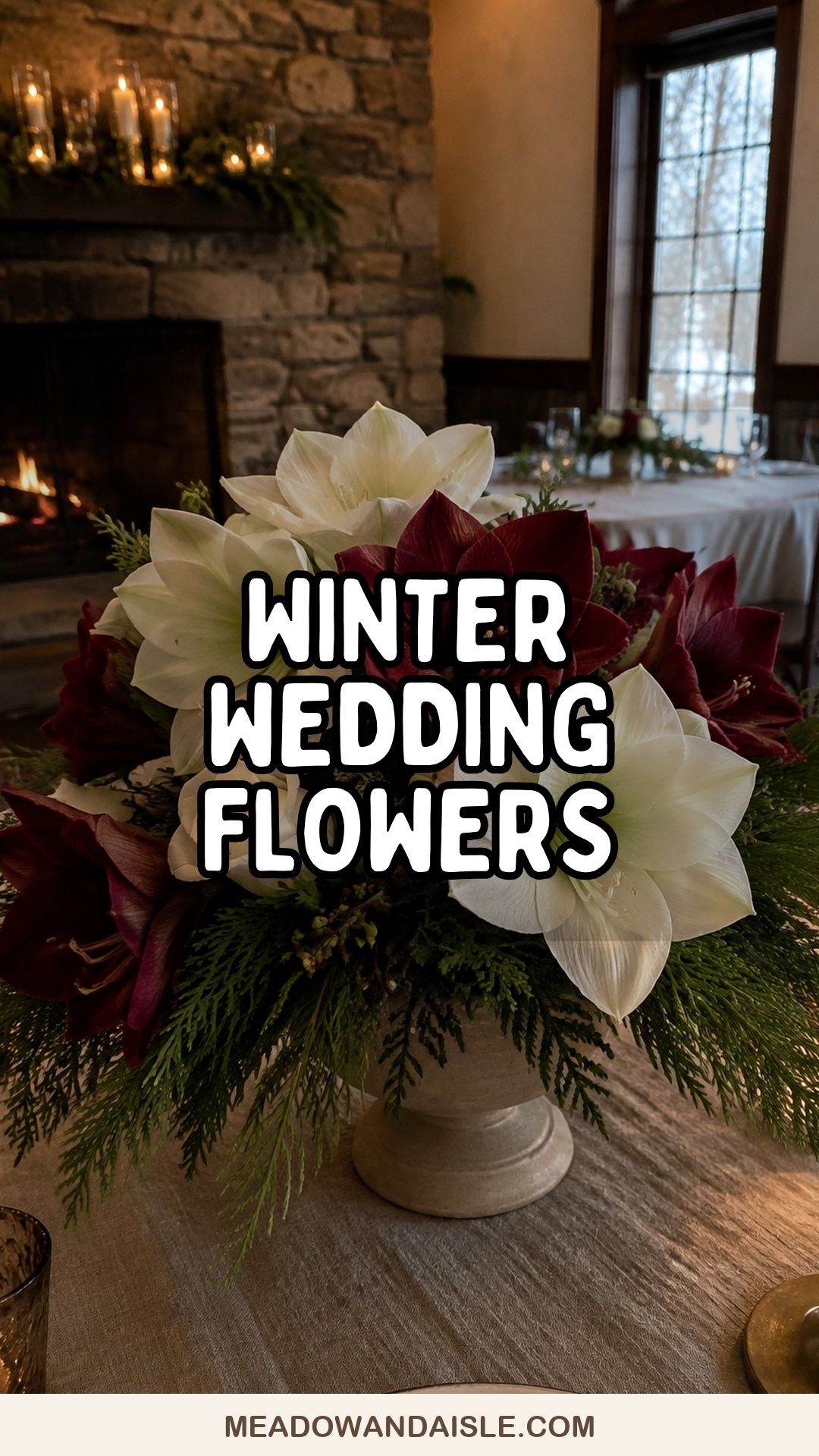
Winter wedding flowers feel strongest when seasonal blooms, year-round staples, and textured greenery suit candlelight, indoor warmth, and the exact places guests will notice. Amaryllis, anemones, ranunculus, hellebores, roses, orchids, evergreens, berries, branches, and bud vases turn a cold-weather room softer and warmer.
Winter floral planning feels oddly emotional. Couples often picture lush flowers, then run into shorter daylight, heated rooms, holiday color traps, and favorite blooms that rarely arrive easily in January. The good news is that winter is not a lesser flower season. It simply rewards more texture, smarter placement, and early florist conversations about substitutions before anything is ordered.
For a small winter wedding, flowers do not have to cover every surface. One expressive bouquet, low dinner-table compotes, a mantel arrangement, greenery at the bar, or a cake-table moment carries the whole room when the colors, vessels, and candlelight feel connected.
Recommended Wedding Products


You Might Also Like These Blog Posts
- January Wedding Flowers That Prove Winter Blooms Are Not a Compromise
- December Wedding Flowers With Main-Character Energy and Zero Holiday Lobby Vibes
- February Wedding Flowers for Romantic Winter Blooms Beyond the Obvious Roses
- Winter Wedding Decor Ideas For A Cozy Celebration
- Spring Wedding Flowers That Make the Season Feel Effortless
- Fall Wedding Flowers That Make Autumn Do the Work
Winter Wedding Flowers That Bring Texture, Warmth, And Shape
The strongest winter floral plans begin with real availability, then build beauty from shape, color, fragrance, and placement. A florist often blends seasonal winter wedding flowers with reliable year-round stems, but the design still has to survive heated rooms, long photo timelines, candlelit tables, and guests sitting close to the arrangements.
Amaryllis For A Dramatic Winter Statement
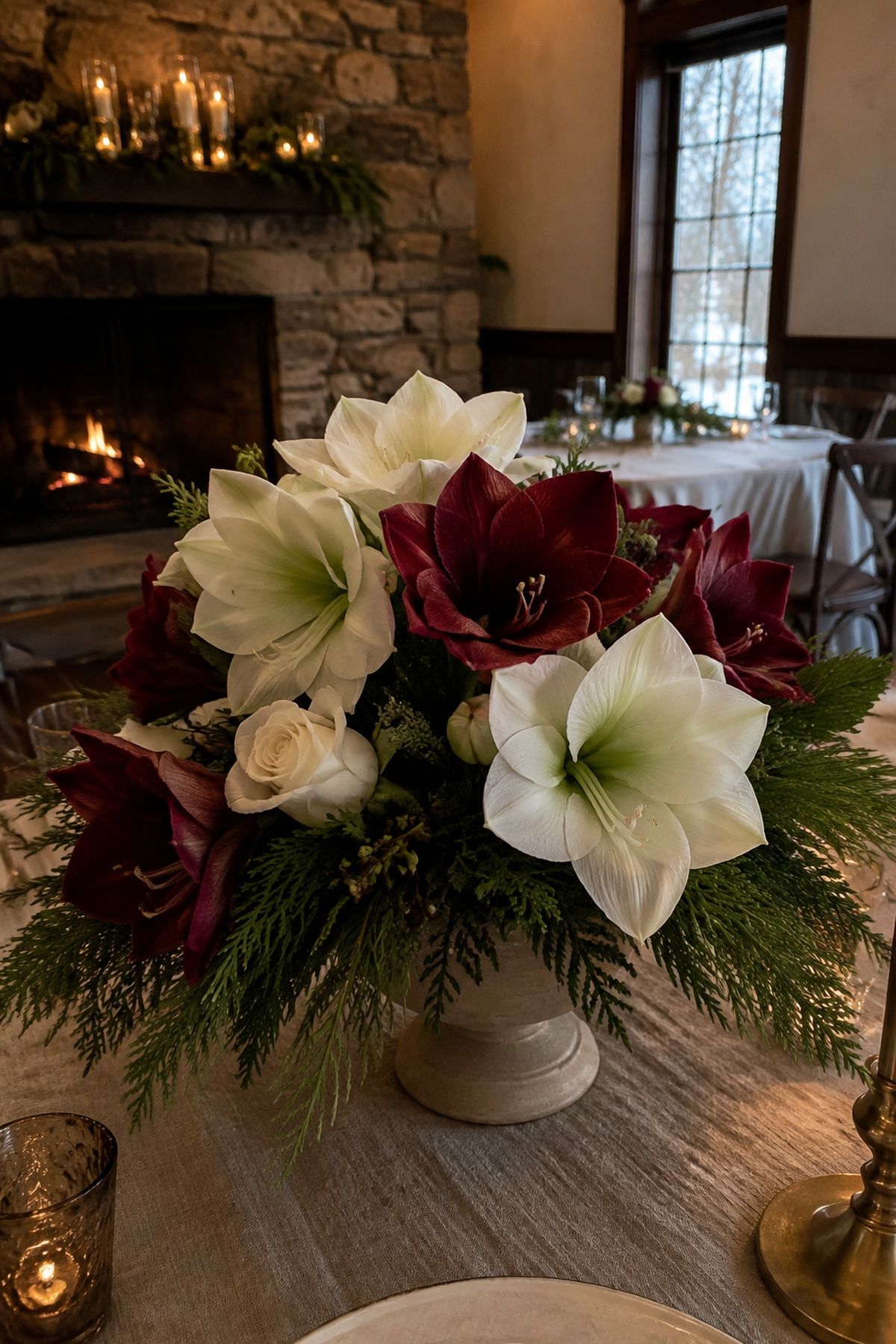
Amaryllis brings height, clean lines, and a sense of occasion without requiring dozens of stems. White, red, burgundy, or blush amaryllis gives winter wedding bouquets an architectural feeling or gives an altar arrangement enough presence for a bare winter room.
Because the blooms are large, place them where scale matters: ceremony urns, a fireplace arrangement, or one statement centerpiece. In a small reception, one amaryllis moment often feels more elegant than scattering many smaller arrangements across every ledge.
Anemones For Graphic Contrast
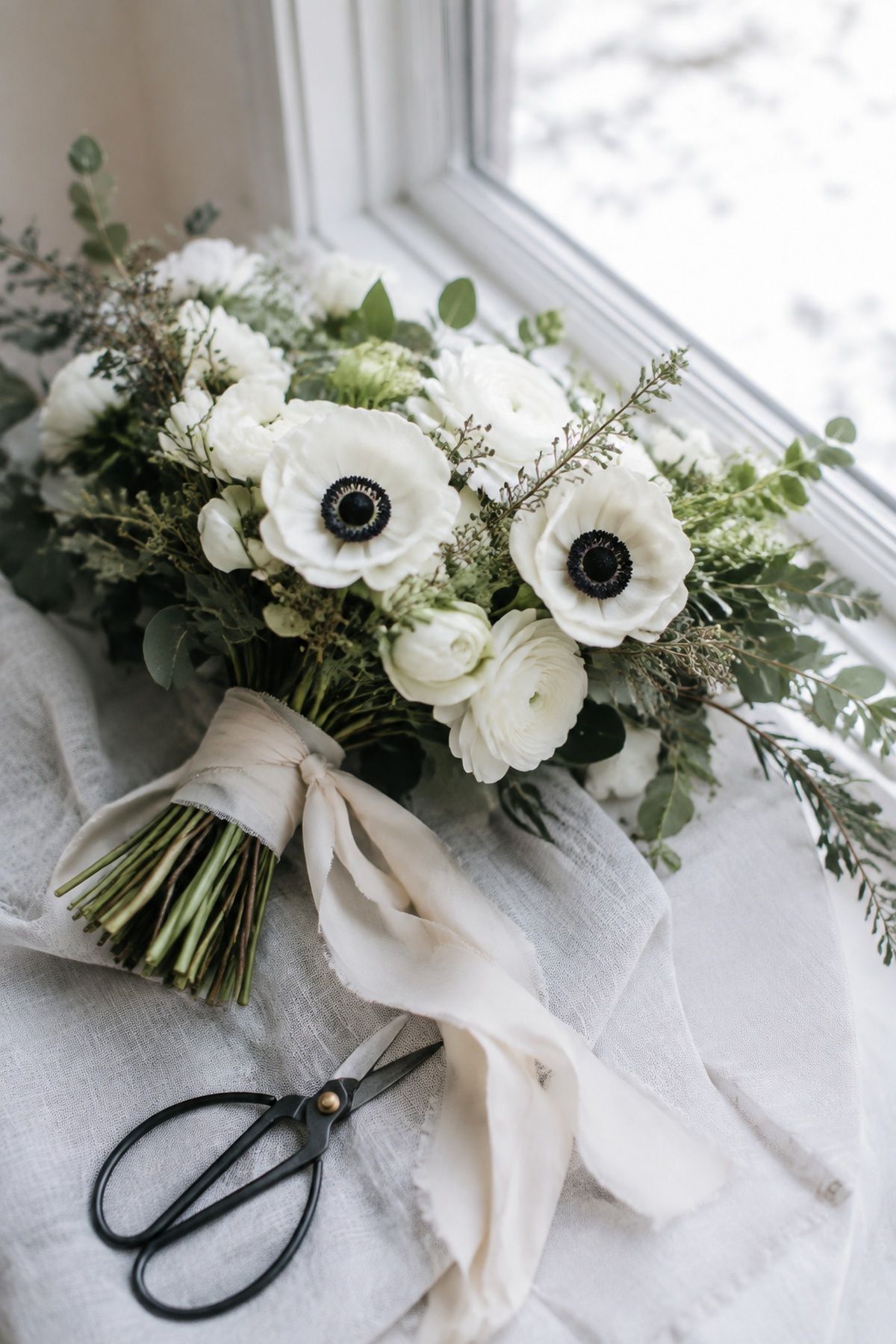
Anemones are winter favorites because their dark centers create instant contrast against ivory petals, deep greenery, velvet ribbon, and candlelight. They suit couples who want floral detail that feels romantic but not overly sweet.
Place them in bouquets, boutonnieres, low compotes, or bud vases where guests notice the center detail up close. They look especially polished with black, navy, burgundy, or winter-white palettes.
Ranunculus For Soft Romance
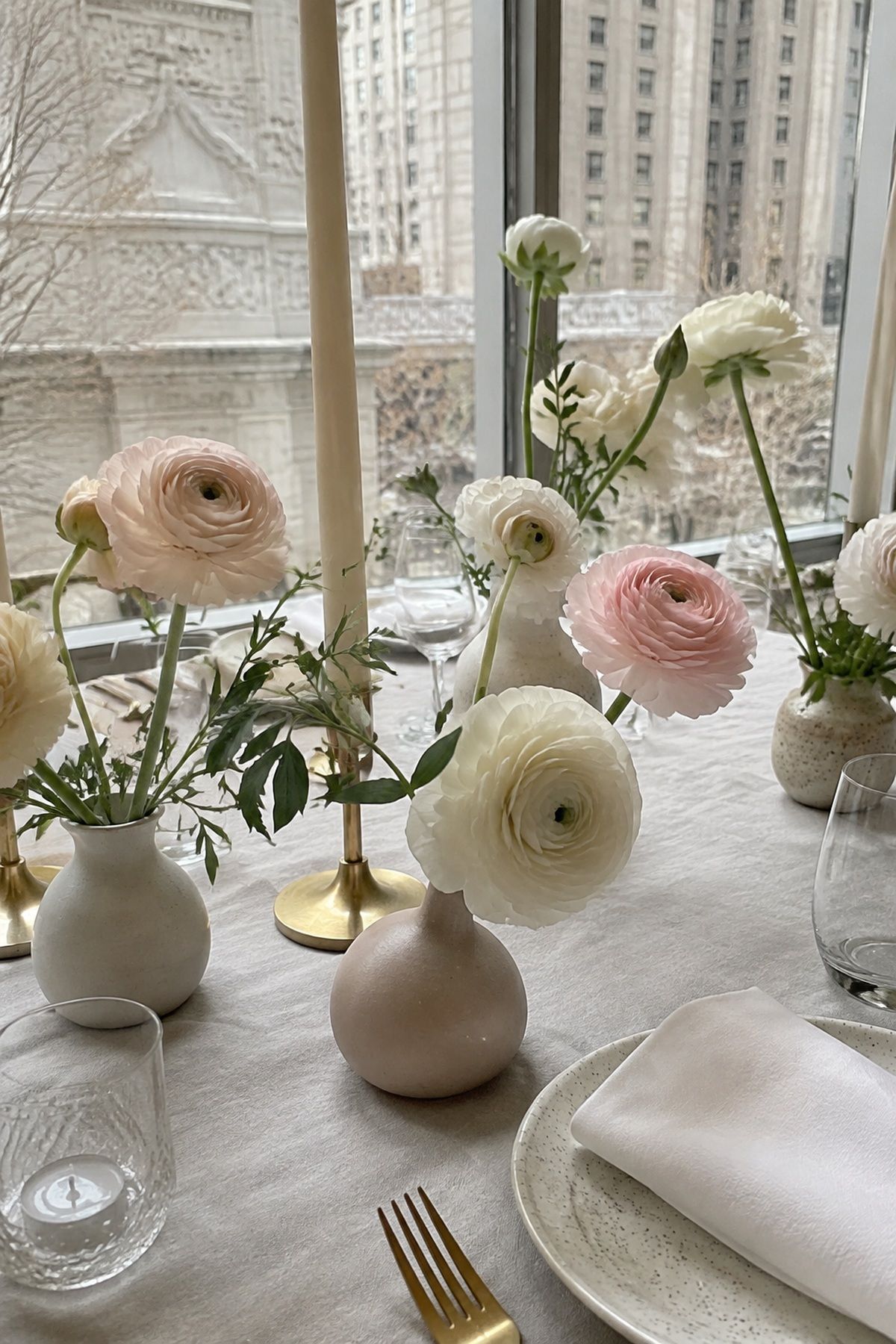
Ranunculus gives a winter arrangement that layered, petal-heavy softness many couples want from peonies. The difference is that ranunculus often feels more realistic for cold-weather floral planning in many regions and florist markets.
Ask your florist about cream, blush, butter, wine, or coppery tones. Ranunculus looks beautiful in bridal bouquets, small centerpieces, and personal flowers because it adds tenderness without overwhelming the arrangement.
Hellebores For A Moody Garden Feel
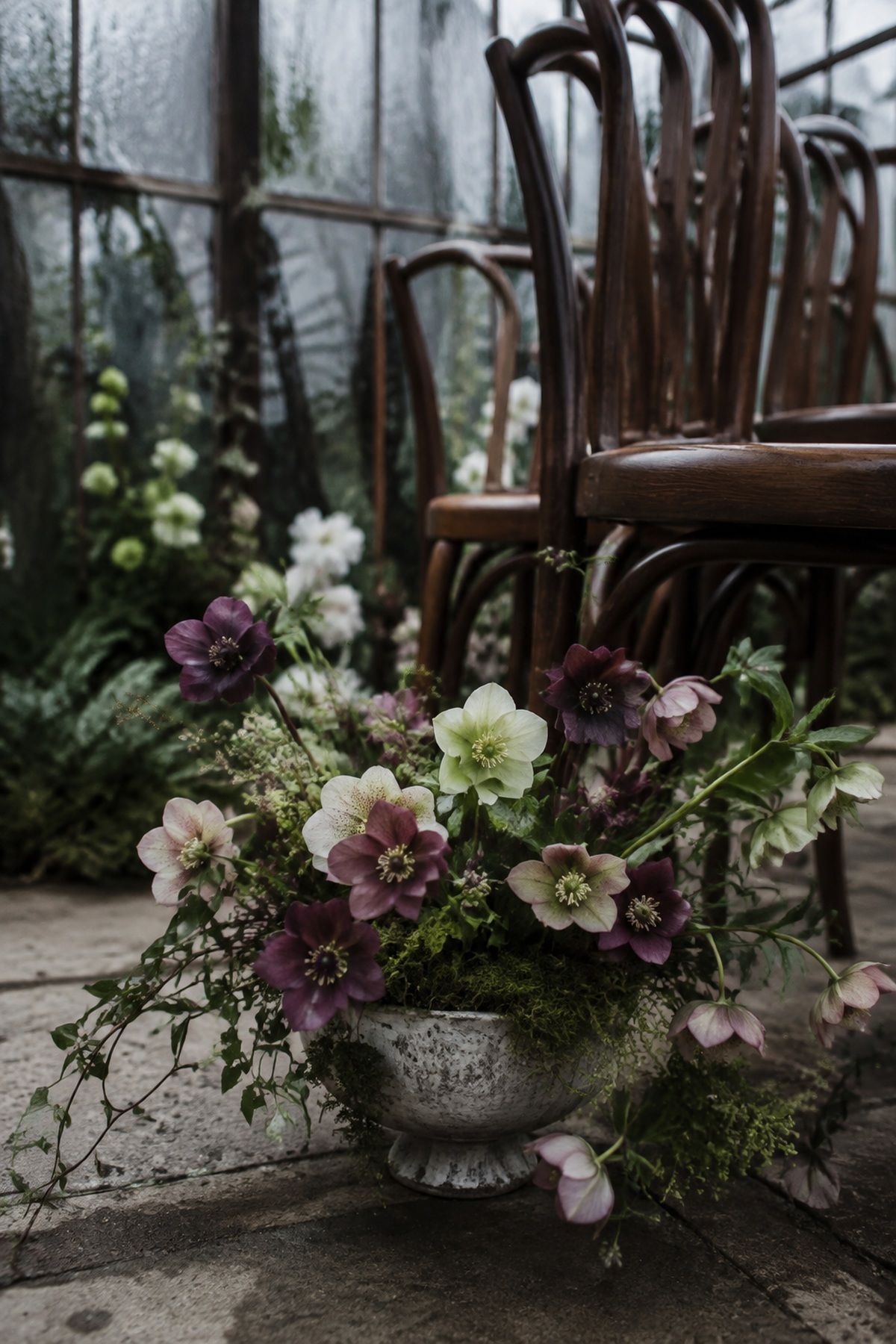
Hellebores bring muted color and a slightly wild garden mood to winter flowers. Their mauve, plum, green, cream, and smoky tones keep arrangements from feeling too polished or holiday-coded.
They are lovely in bouquets, small vases, and intimate centerpieces where guests notice the delicate shape. Since stems are sensitive, discuss hydration and timing with the florist instead of assuming they will behave like sturdier greenery.
Roses In Winter Palettes
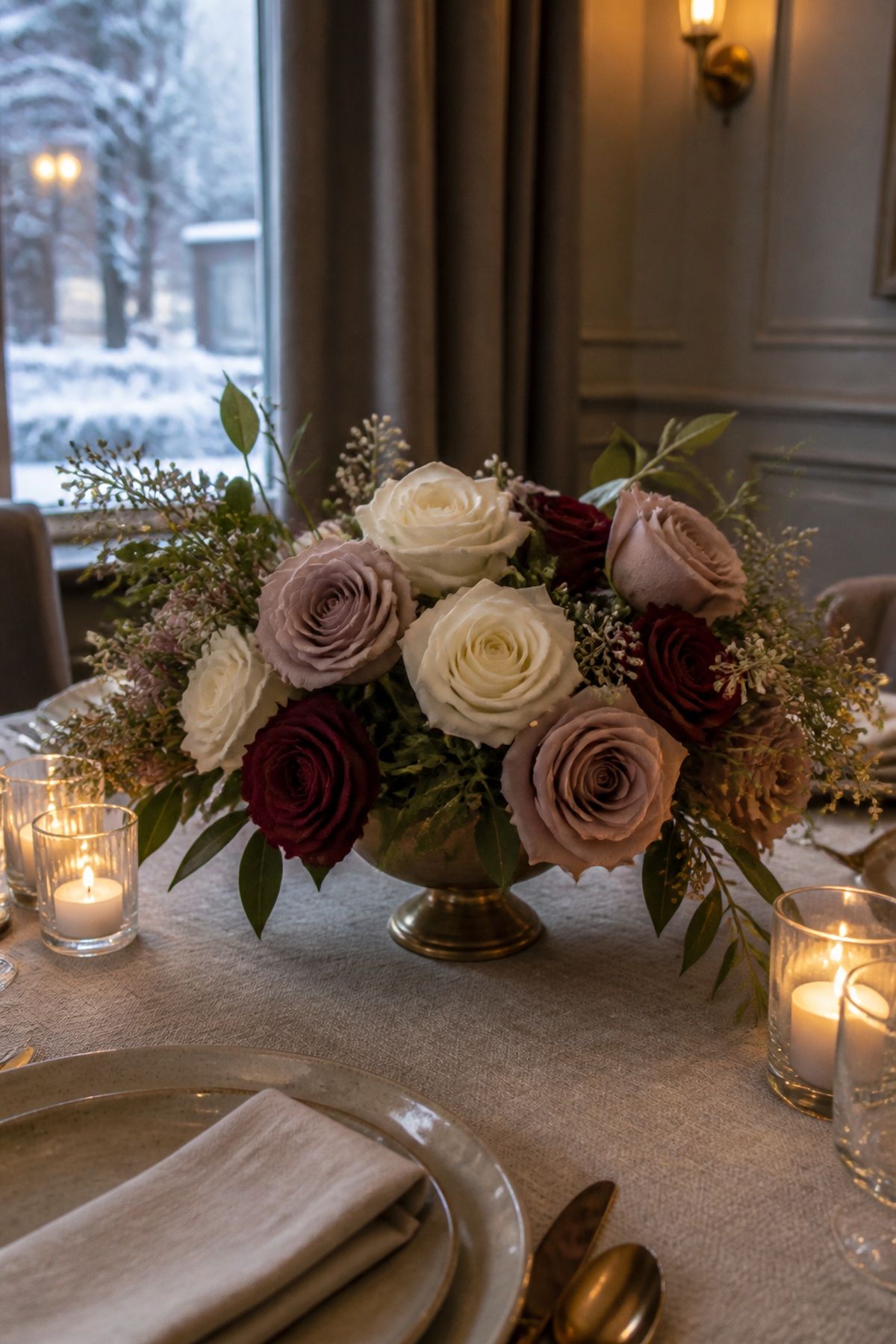
Roses are a practical winter staple because they come in so many colors and anchor a palette when seasonal choices are limited. Ivory, blush, cappuccino, burgundy, cream, and soft peach roses all shift beautifully under warm light.
Garden roses feel lush in bouquets and compotes, while standard roses fill arrangements more economically. Pair them with evergreens, eucalyptus, magnolia leaves, or berries so the design stays winter-specific rather than generic romance.
Orchids For Modern Winter Elegance
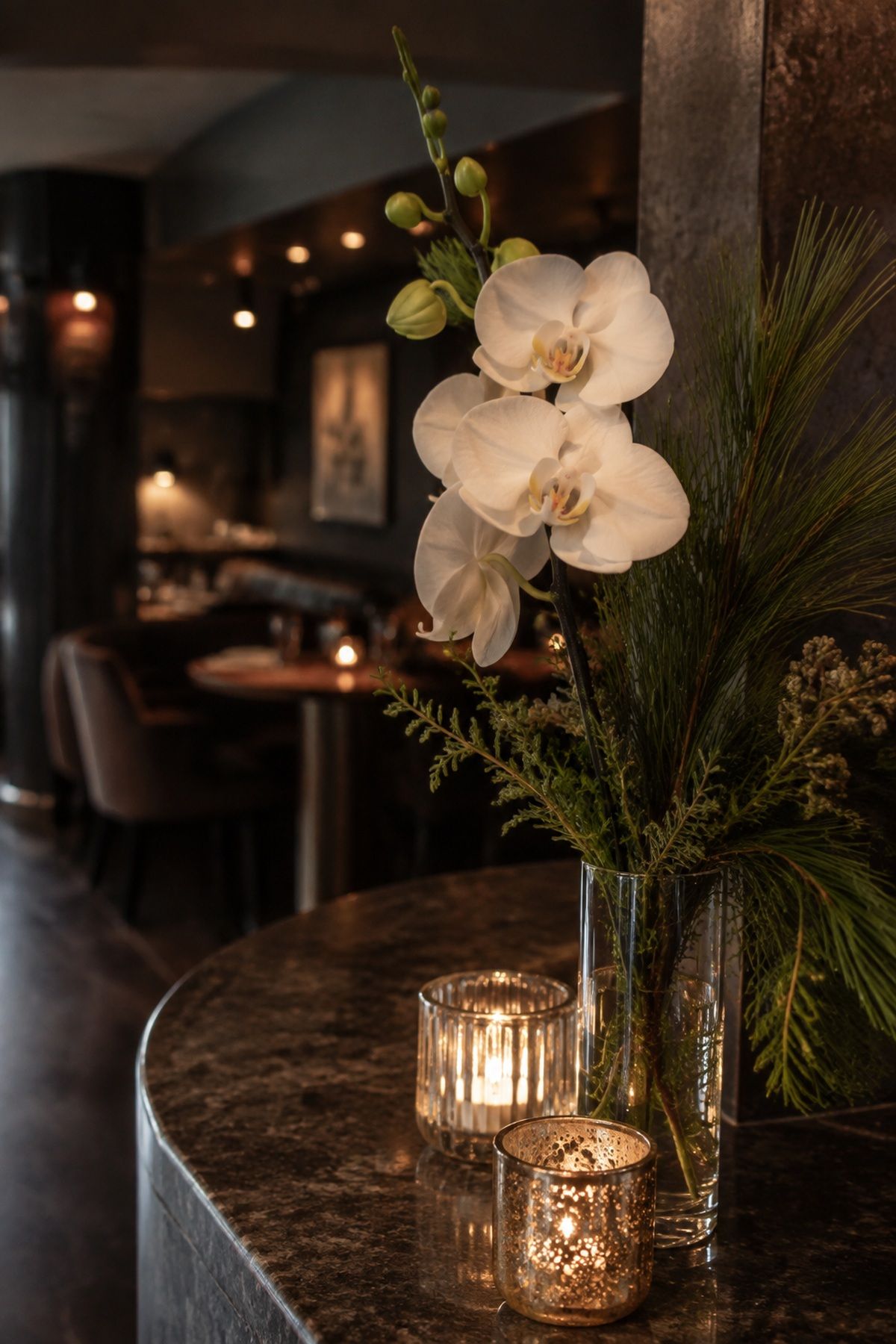
Orchids give winter wedding flower ideas a modern, sculptural edge. White, cream, green, or burgundy orchids feel clean and dramatic without relying on heavy greenery or seasonal props.
Place orchids in a minimalist bouquet, a cake floral accent, or a few asymmetrical arrangements for a city wedding or restaurant reception. They look best when the surrounding design is edited, with strong vessels and enough breathing room.
Paperwhites Or Narcissus For Fragrance

Paperwhites and narcissus add a distinctly winter feeling, especially in small clusters. Their fragrance is part of the charm, but that same scent turns too strong in a tucked-away dining room or compact ceremony space.
Place them sparingly on welcome tables, mantels, or airy arrangements rather than crowding them at dinner. If scent sensitivity matters, keep fragrant flowers away from place settings and food displays.
Tulips For Late Winter Softness

Tulips are graceful for late winter weddings because they soften a palette without feeling springy too soon. French tulips, parrot tulips, or simple white tulips look elegant in bouquets and low arrangements.
They continue to move after arranging, a beautiful trait in the right design and an awkward trait in the wrong one. Ask whether the florist plans to embrace that curve or control it with tighter structure.
Gardenias For A Fragrant Detail
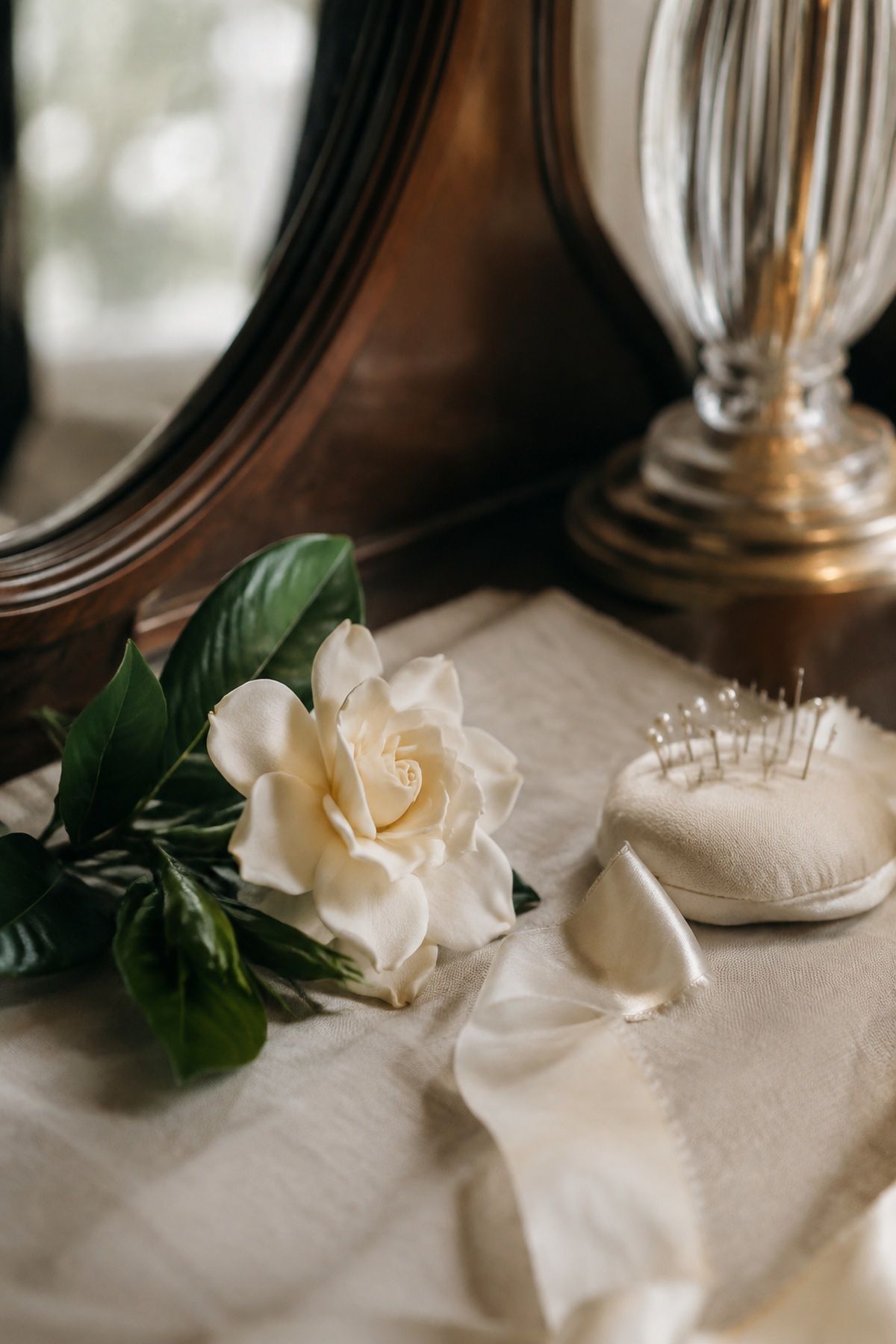
Gardenias feel intimate, polished, and nostalgic, which makes them lovely for a winter wedding that leans classic. Their creamy petals and deep green leaves warm up a bouquet, hair detail, or boutonniere.
They are delicate and fragrant, so treat them as accents rather than the backbone of the design. A gardenia tucked into a bouquet or worn in the hair feels more special than forcing it into every centerpiece.
Evergreens As The Winter Base
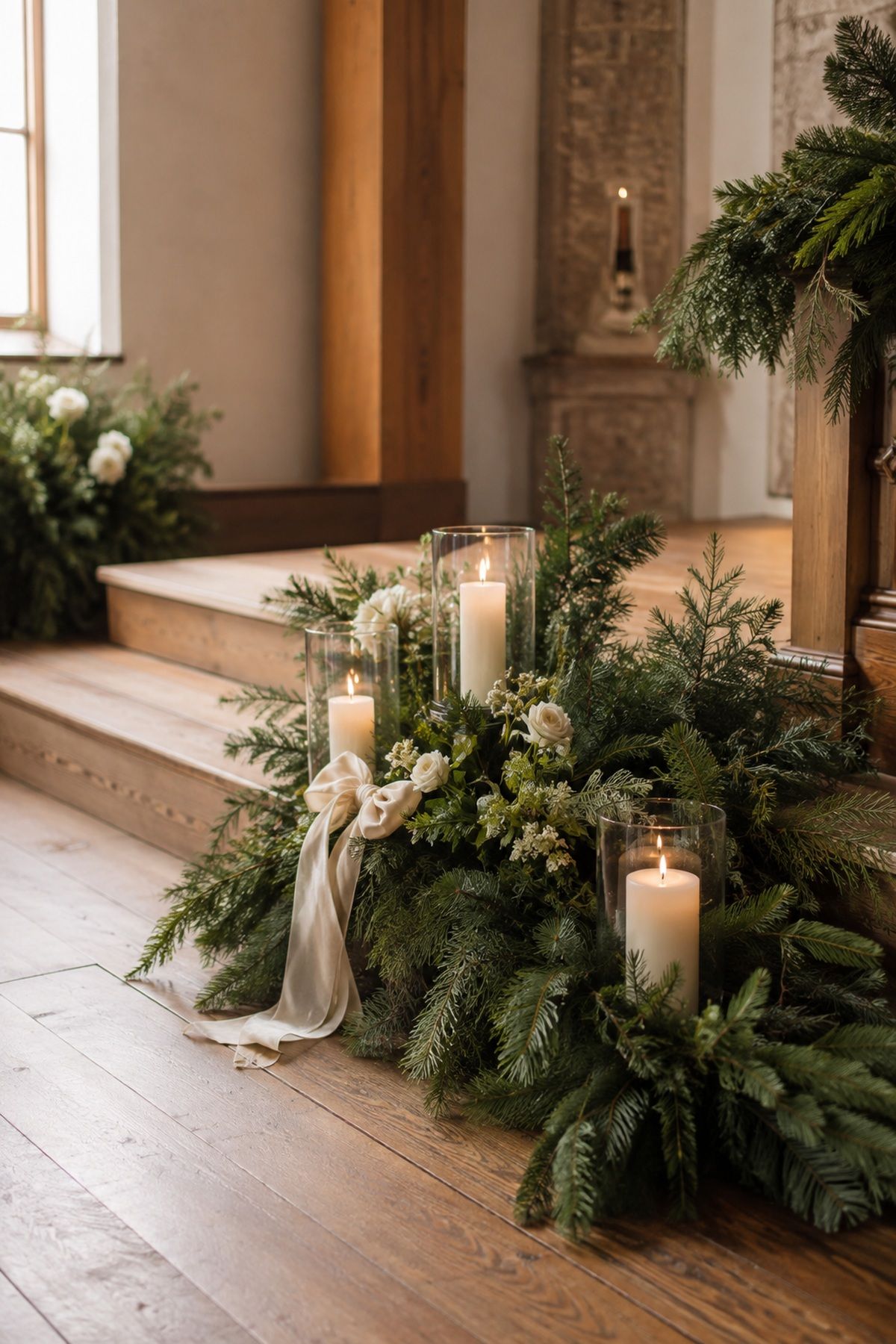
Pine, cedar, fir, and spruce give winter floral arrangements structure, scent, and seasonal grounding. The key is restraint. Too much evergreen, especially with red flowers, turns wedding flowers into holiday decor before anyone means for that to happen.
Place evergreens as a base for ceremony arrangements, fireplace flowers, bar decor, or long table garlands. Mix textures so the greenery feels layered: soft cedar, sturdier pine, glossy magnolia, and airy eucalyptus each fills a different role.
Eucalyptus For Soft Greenery

Eucalyptus is practical when evergreens feel too dense or too fragrant. Silver-dollar, seeded, baby blue, or mixed eucalyptus softens winter bouquets and gives centerpieces a cooler, misted texture.
It pairs especially well with roses, ranunculus, anemones, and white florals. For a warmer winter look, balance eucalyptus with cream blooms, brass vessels, candlelight, or brown-backed magnolia leaves so the design does not feel icy.
Dusty Miller And Lamb’s Ear For Silver Texture
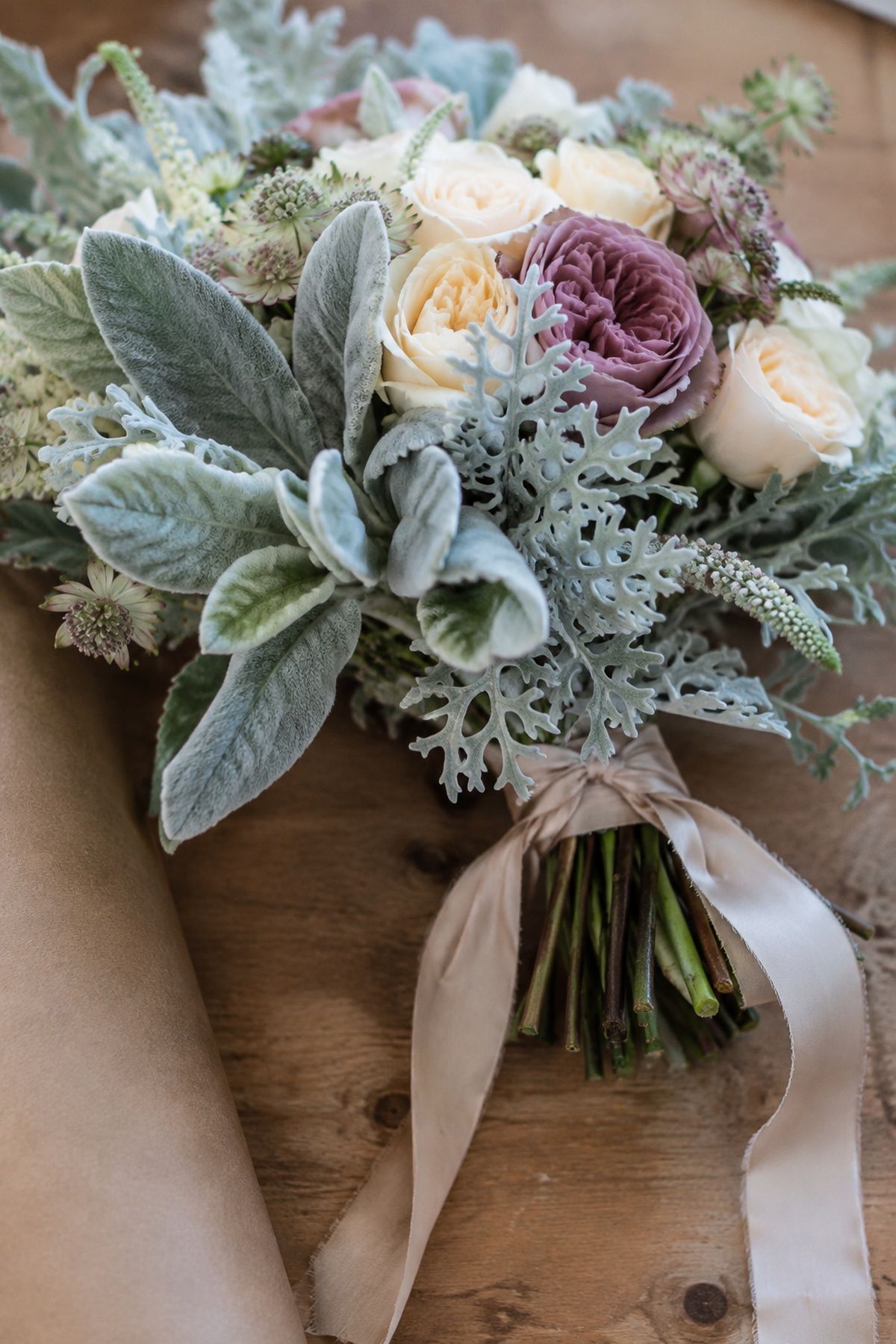
Dusty miller and lamb’s ear bring velvety silver texture without fake snow, glitter, or cold-looking props. They suit winter wedding flowers when the palette includes ivory, dove grey, dusty blue, mauve, sage, or champagne.
Place them as accent foliage in bouquets, boutonniere details, or low arrangements. Their tactile quality makes small designs feel more considered, especially when guests are seated close enough to notice every stem.
Magnolia Leaves For Warm Contrast

Magnolia leaves are a quietly luxurious winter choice because they bring glossy green on one side and warm brown on the other. That contrast gives white flowers, green garlands, and candlelit tables a richer feeling.
They are especially graceful in arrangements that risk looking too cool. Tuck magnolia into staircase greenery, mantel designs, bar arrangements, or low compotes for warmth that does not rely on bright color.
Hypericum Or Winter Berries For Small Color Points
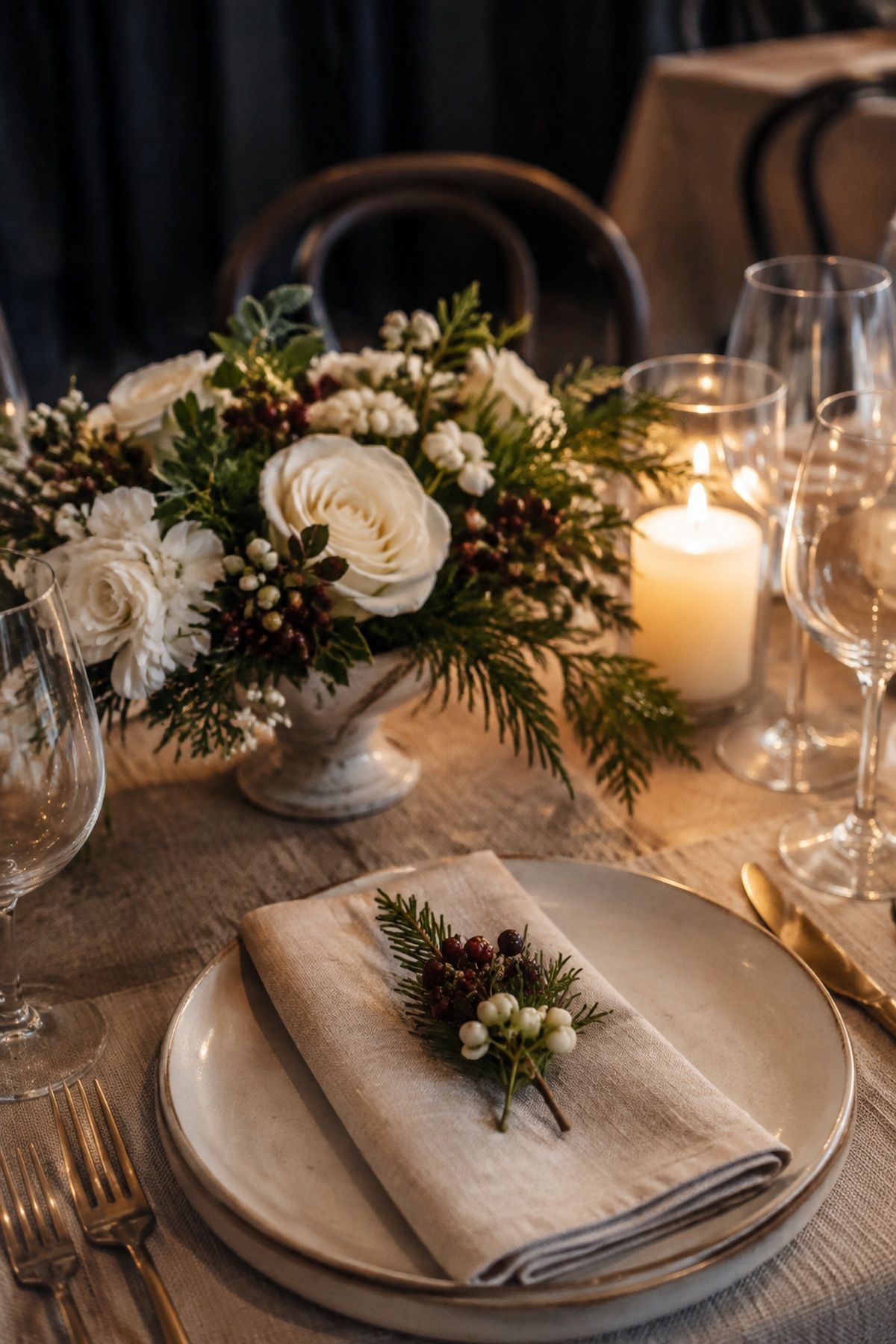
Hypericum berries and winter berry accents add small dots of color and texture. Burgundy, white, peach, or green berries give bouquets and centerpieces life without making the whole wedding look like a holiday display.
Treat berries as punctuation, not the entire sentence. They are strongest in boutonnieres, napkin details, compotes, and greenery arrangements where a few color points keep the eye moving.
Branches For Height And Shape
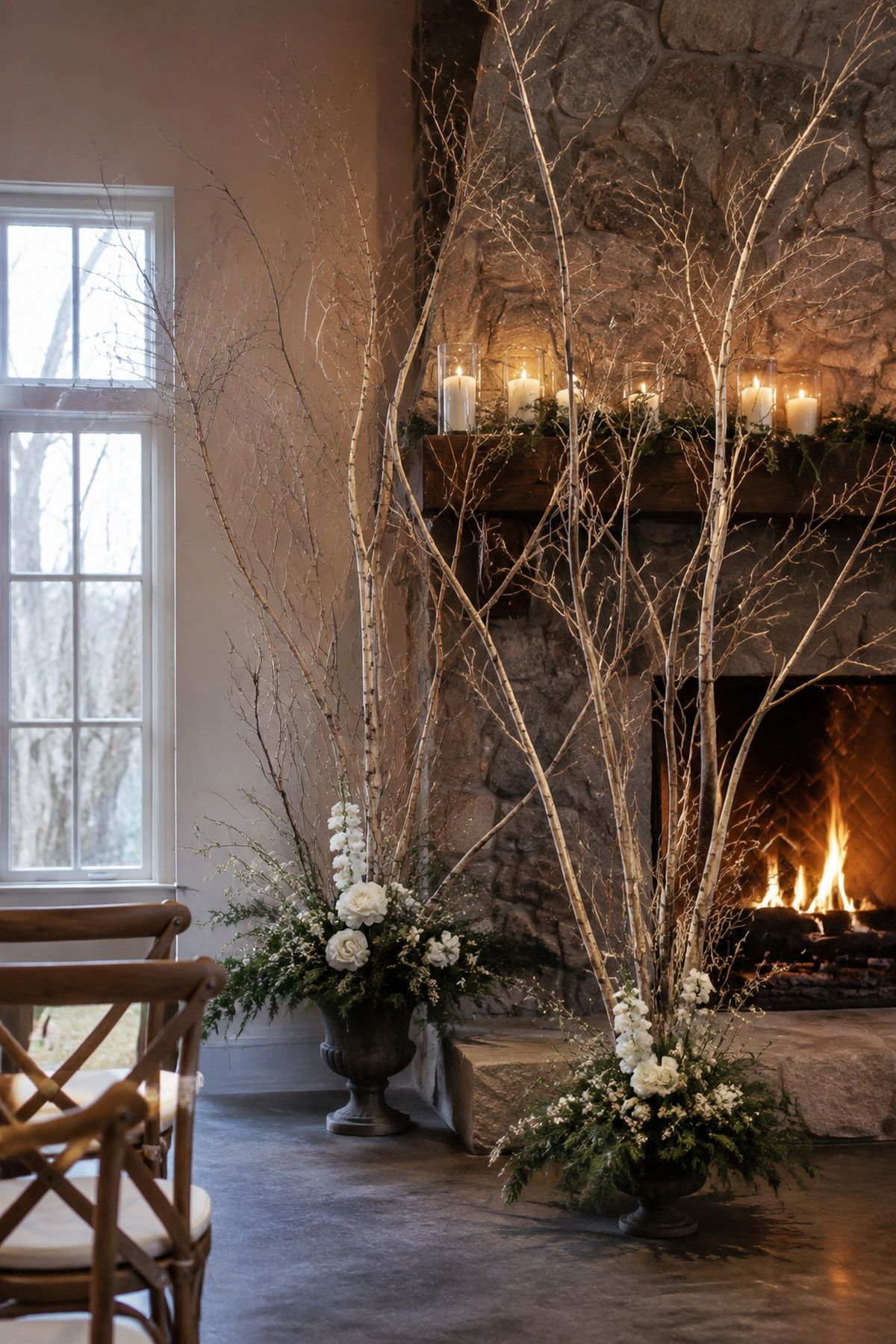
Birch, willow, manzanita, and other branches create height when flowers alone would become expensive or too soft. They also echo the season in a more natural way than winter props.
Place branches in ceremony urns, escort-table arrangements, tall centerpieces, or installations around a fireplace. Keep sightlines in mind at dinner; tall branches look best when they rise above conversation or sit away from guest faces.
Greenery Garlands For Long Tables

Greenery garlands anchor winter wedding centerpieces flowers with fewer blooms, especially at long reception tables. Mixed evergreen, eucalyptus, magnolia, and a handful of floral accents give a dinner table a lush feeling without tall arrangements.
Plan the table space carefully. Garlands, candles, glassware, bread plates, menus, and shared dishes all compete for the center line. For a small reception, a narrower garland with low candles often feels more comfortable than an overflowing one.
Bud Vases For A Small Winter Wedding
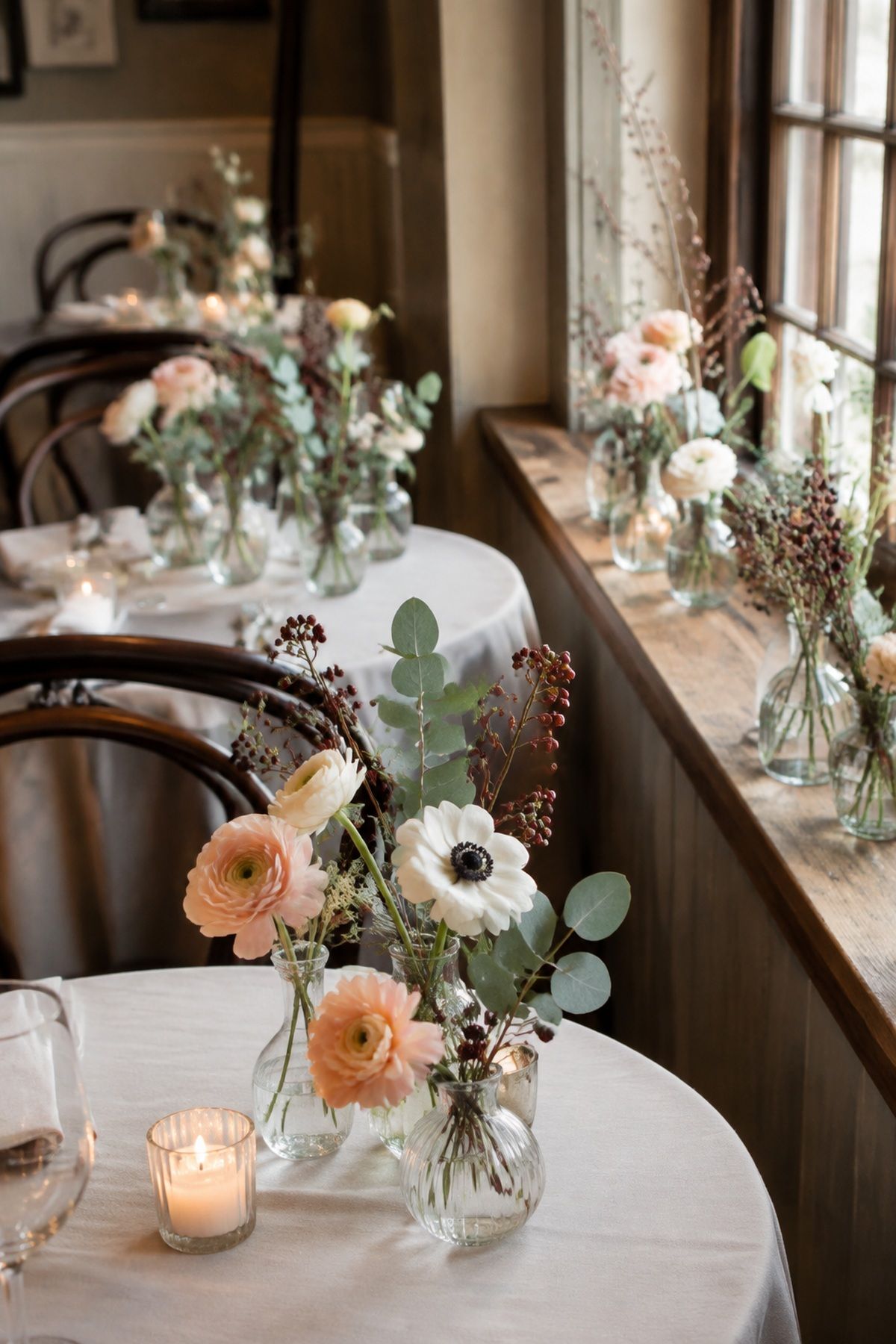
Bud vases are one of the easiest ways to make small winter wedding flowers feel intentional. A few stems on restaurant tables, mantels, windowsills, the bar, or the cake table create rhythm across the room.
Choose stronger stems and vary height so the vases do not look sparse. Anemones, ranunculus, hellebores, roses, tulips, greenery clippings, berries, and small branches all suit an edited palette.
A Winter Flower Availability Checklist
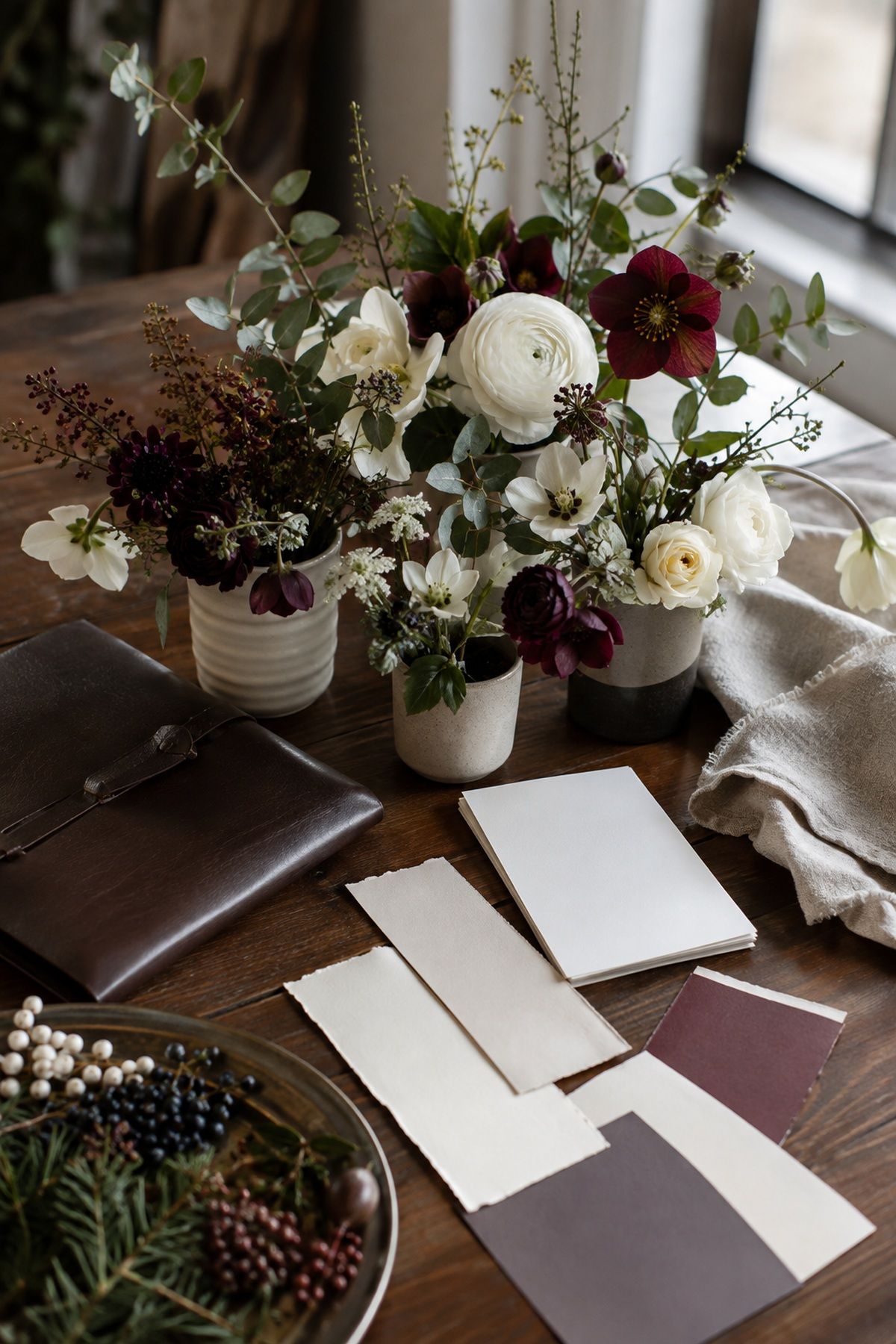
Before approving the floral proposal, ask what is local, what is imported, what is seasonal, and which substitutions the florist recommends if weather or supply shifts. Winter floral planning deserves lead time, delivery timing, hydration, indoor heat, fragrance, candle placement, and reuse from ceremony to reception.
Peonies deserve a separate conversation. Imports occasionally bring them into certain markets, but they are often expensive and not the most realistic winter choice. If you love the softness, ask about ranunculus, garden roses, tulips, or layered arrangements that create the feeling without hinging on one difficult bloom.
FAQ
What flowers are best for a winter wedding?
The best flowers for a winter wedding include amaryllis, anemones, ranunculus, hellebores, roses, orchids, paperwhites, tulips, gardenias, and sturdy greenery. The right mix comes from florist sourcing, venue temperature, color palette, and whether the flowers are for bouquets, tables, ceremony arrangements, or small accents.
What flowers are in season for winter weddings?
Winter wedding flowers often include seasonal or winter-friendly choices such as amaryllis, anemones, hellebores, paperwhites, narcissus, tulips, evergreens, berries, and branches, along with year-round staples such as roses and orchids. Availability changes by location, so confirm exact stems with a florist before building the whole design around one bloom.
What greenery works well for winter wedding flowers?
Pine, cedar, fir, spruce, eucalyptus, magnolia leaves, dusty miller, and lamb’s ear all suit winter wedding flowers. Evergreens add structure and scent, eucalyptus softens arrangements, magnolia adds warm brown contrast, and silver foliage gives a frosted texture without making the flowers feel artificial.
How do you choose winter wedding flowers for a small wedding?
For a small wedding, choose winter flowers by focusing on the highest-impact placements first: the bouquet, ceremony backdrop, dinner tables, bar, mantel, cake table, or entry arrangement. Fewer arrangements feel generous with good vessels, layered greenery, candlelight, and flowers placed where guests spend time.
Are peonies available for winter weddings?
Peonies are not a reliable winter wedding flower in many places. Imports occasionally bring them in at certain times, but pricing, supply, and guarantees are often difficult. If you want a similar romantic feeling, ask about ranunculus, garden roses, tulips, or layered cream and blush arrangements.
How do you make winter wedding flowers feel warm and romantic?
Make winter wedding flowers feel warm and romantic by pairing soft blooms with candlelight, brass or ceramic vessels, silk ribbon, magnolia leaves, evergreens, berries, and low arrangements guests enjoy at dinner. Ivory, cream, blush, burgundy, plum, champagne, mocha, and warm greenery usually feel more inviting than icy white alone.
Final Thoughts
Winter wedding flowers feel most beautiful when they honor the season instead of apologizing for it. Choose resilient stems, layered greenery, warm vessels, and floral moments for the places guests gather. Shape the floral brief around winter flower timing and cold-weather bloom choices.
Last update on 2026-10-03 / Affiliate links / Images from Amazon Product Advertising API