

The best February wedding flowers are ranunculus, anemones, forced tulips, hellebores, orchids and lisianthus, with carnations and greenery like eucalyptus or ruscus doing the filling. If your date is near February 14, ask your florist for rose pricing early and use roses only in the bouquet and one or two focal pieces.
Here is the awkward thing about a February wedding: the month practically begs for roses, and so does everyone else buying flowers that week. Valentine’s demand can push rose quotes up and availability down, and a design built entirely on red roses can end up looking like a holiday window display anyway.
The good news is that February wedding flowers are better than people expect. Ranunculus, anemones, tulips and hellebores are all at home in winter, and they photograph beautifully in candlelight. Below is how I would pick and place them for a small wedding.
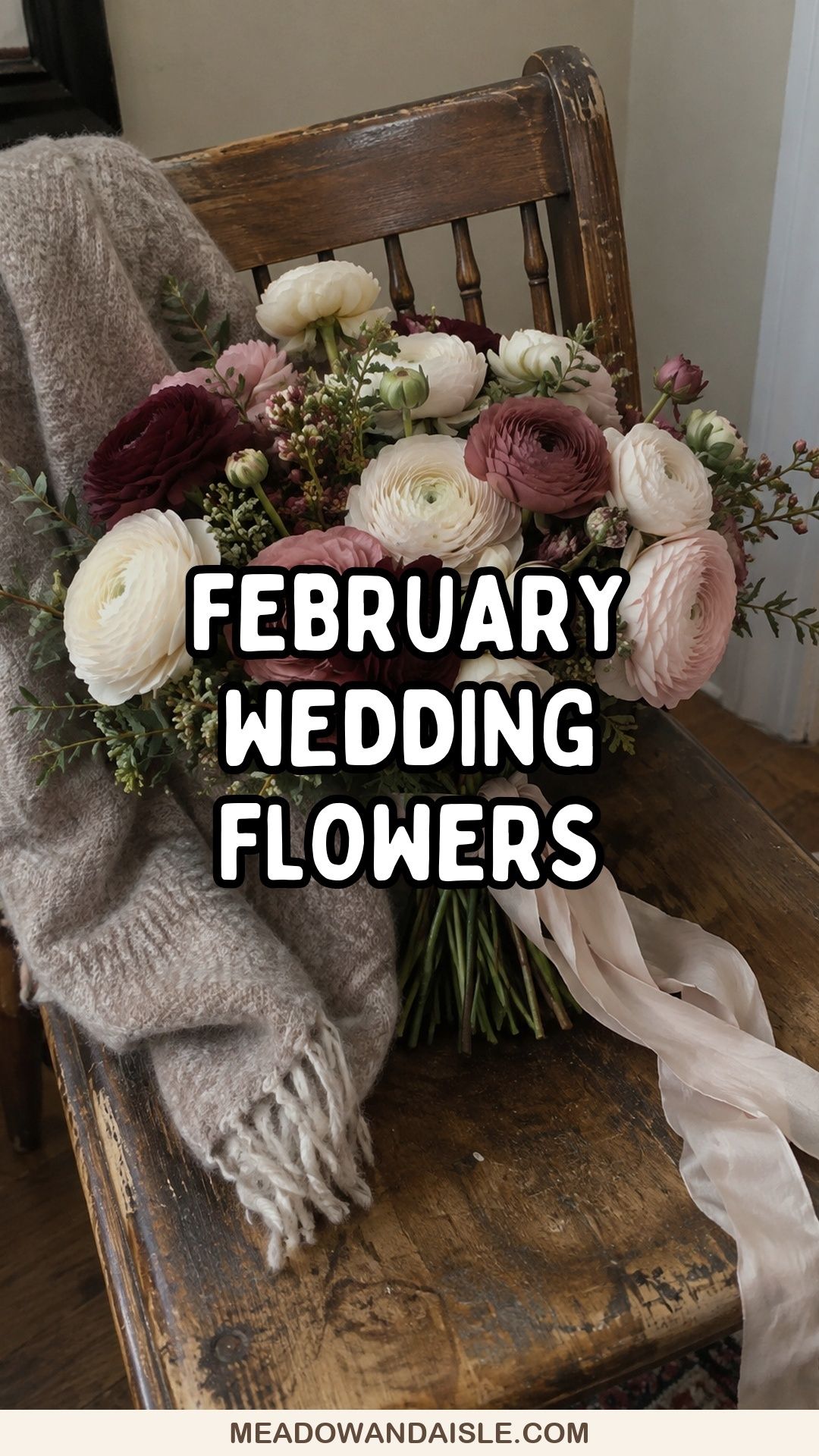
A few supplies for winter florals
If you are arranging any of the flowers yourself, or just want vessels and ribbon on hand, these are useful to have:


Which flowers are in season for a February wedding?
February wedding flowers come mostly from greenhouses and southern growers, so “in season” is looser than it is in June. Florists commonly work with these in winter:
| Flower | Role | Where it shines |
|---|---|---|
| Ranunculus | Soft focal bloom | Bouquet, compotes, cake |
| Anemones | Graphic accent | Bouquet, ceremony, low centerpieces |
| Forced tulips | Movement | Bud vases, loose bouquets |
| Hellebores | Moody texture | Bouquet, boutonnieres, welcome table |
| Orchids | Sleek line | Restaurant and city weddings, bar |
| Lisianthus | Airy filler | Bouquets, centerpieces |
| Carnations | Budget fullness | Low table arrangements |
| Spray and garden roses | Accent | Bouquet, focal pieces |
Availability changes by region and date, so treat that list as a starting point and ask your florist which stems they can actually source for your week. Paperlust keeps a useful month-by-month guide to in-season wedding flowers if you want to compare.
Focal flowers: ranunculus, anemones and roses
These are the blooms people notice first, so put them where cameras and hands will be.
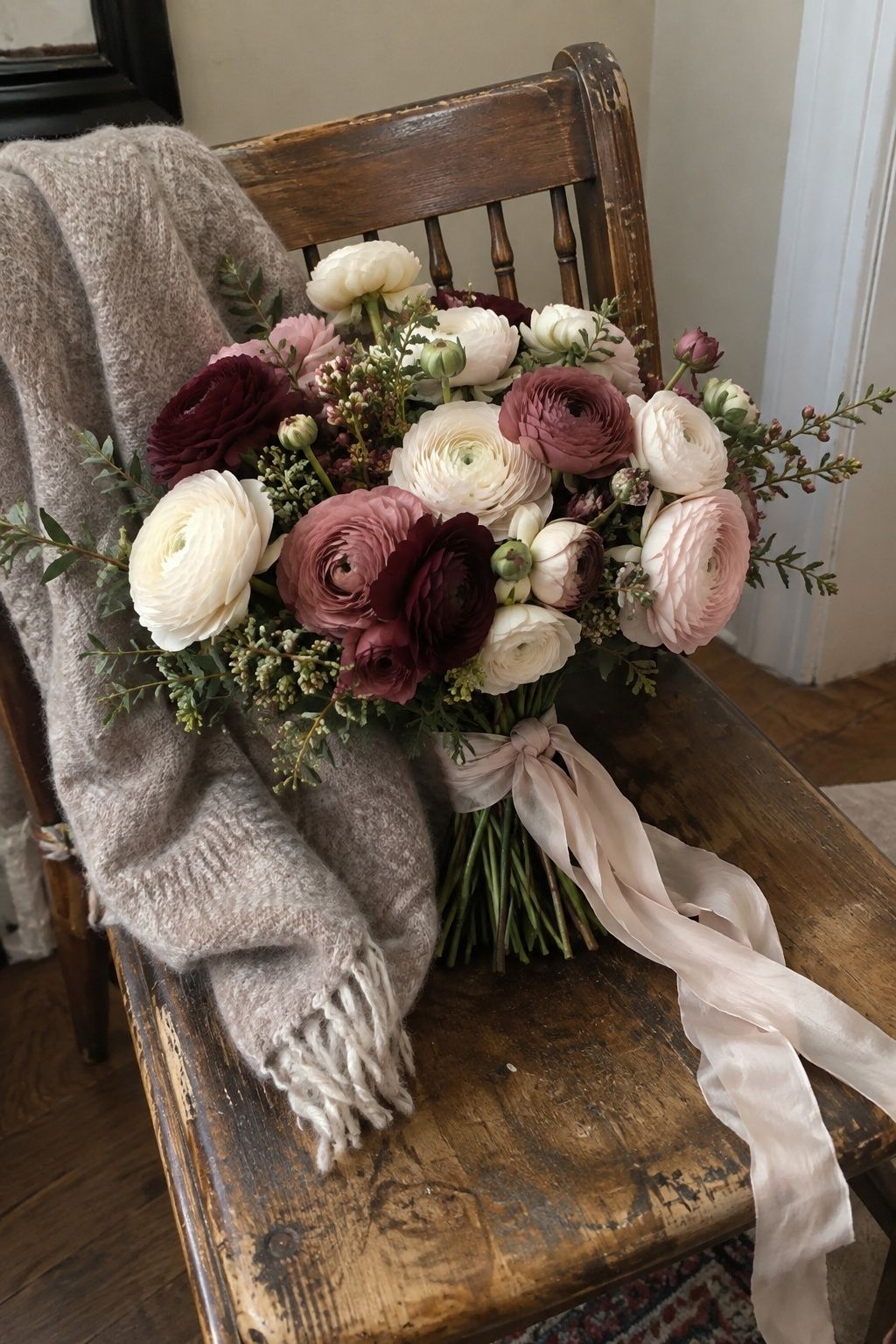
Ranunculus is my favorite February focal flower. The layered petals come in cream, blush, mauve, wine and butter yellow, and they hold up in portraits and flat lays. Let ranunculus lead the bouquet and use it in boutonnieres and cake flowers, where its size looks right without huge stems.
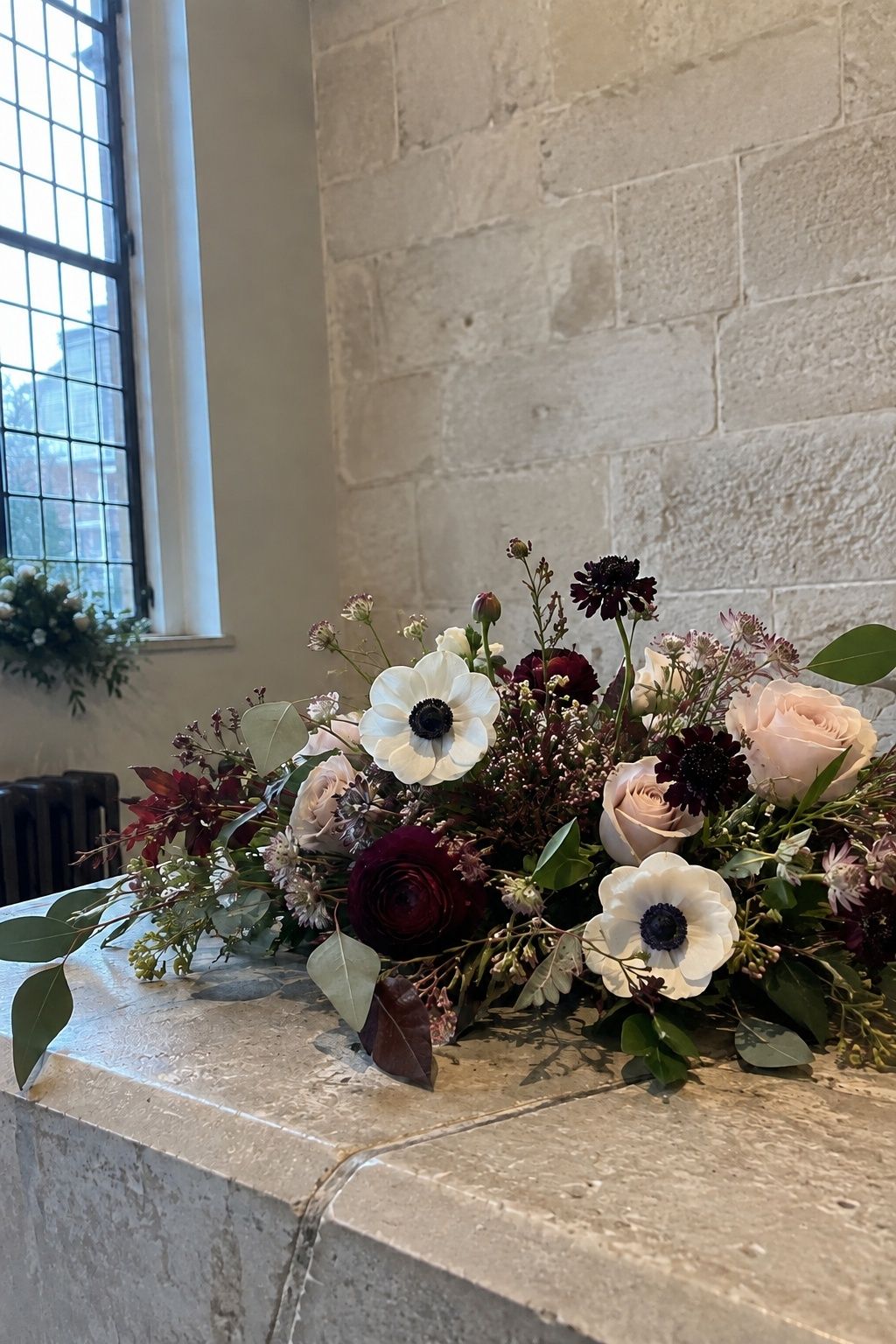
Anemones are the punctuation. Their dark centers anchor pale arrangements and give a camera something to focus on. A few in the bouquet, a few in the ceremony piece and one or two per low centerpiece is plenty. Paired with ranunculus and hellebores, they give a soft design some definition.
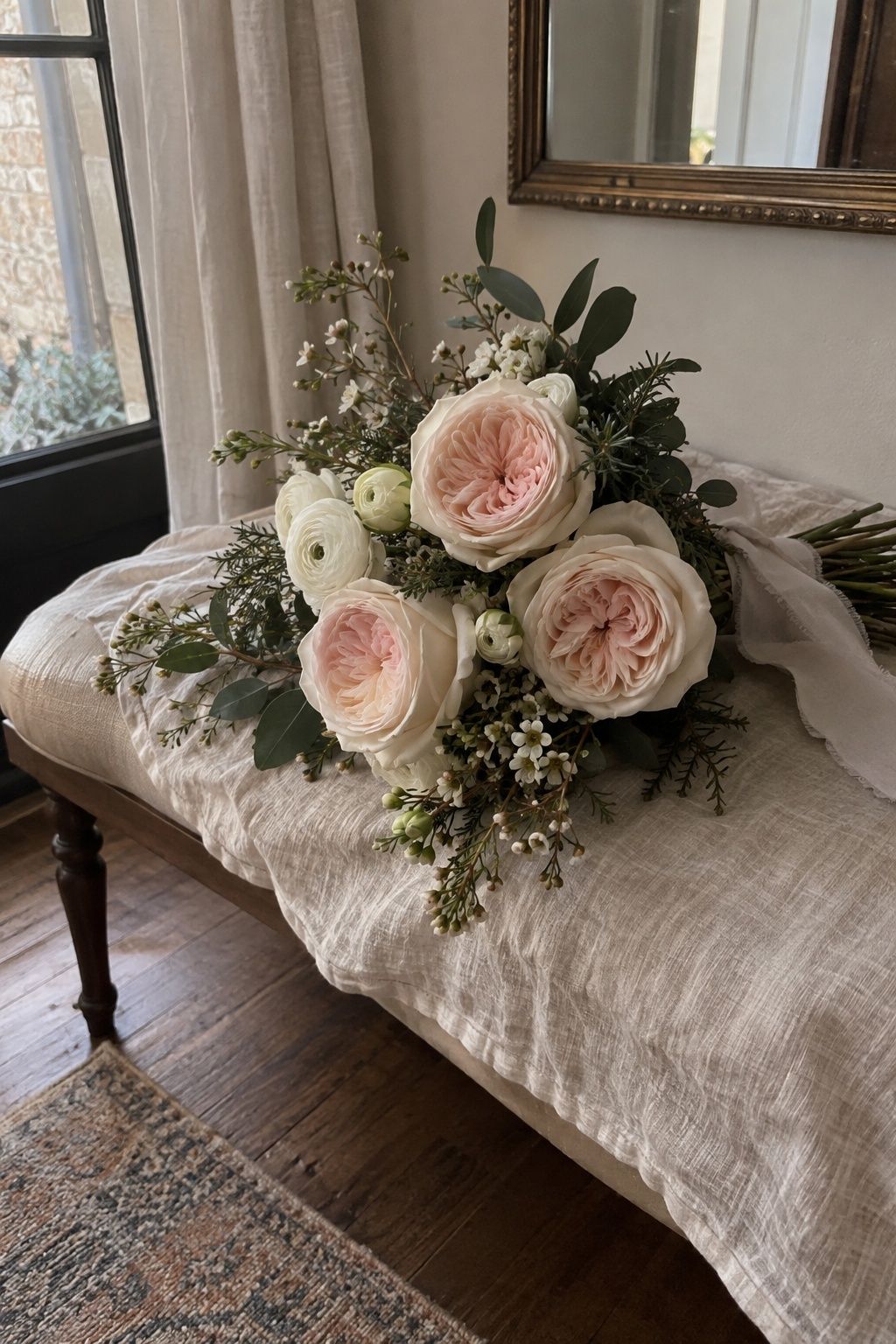
Garden roses can absolutely be part of February wedding flowers, with a plan. Decide where roses matter most (usually the bouquet, the ceremony arrangement or a sweetheart table) and put them there. Guests will read the day as romantic without a rose in every vase.
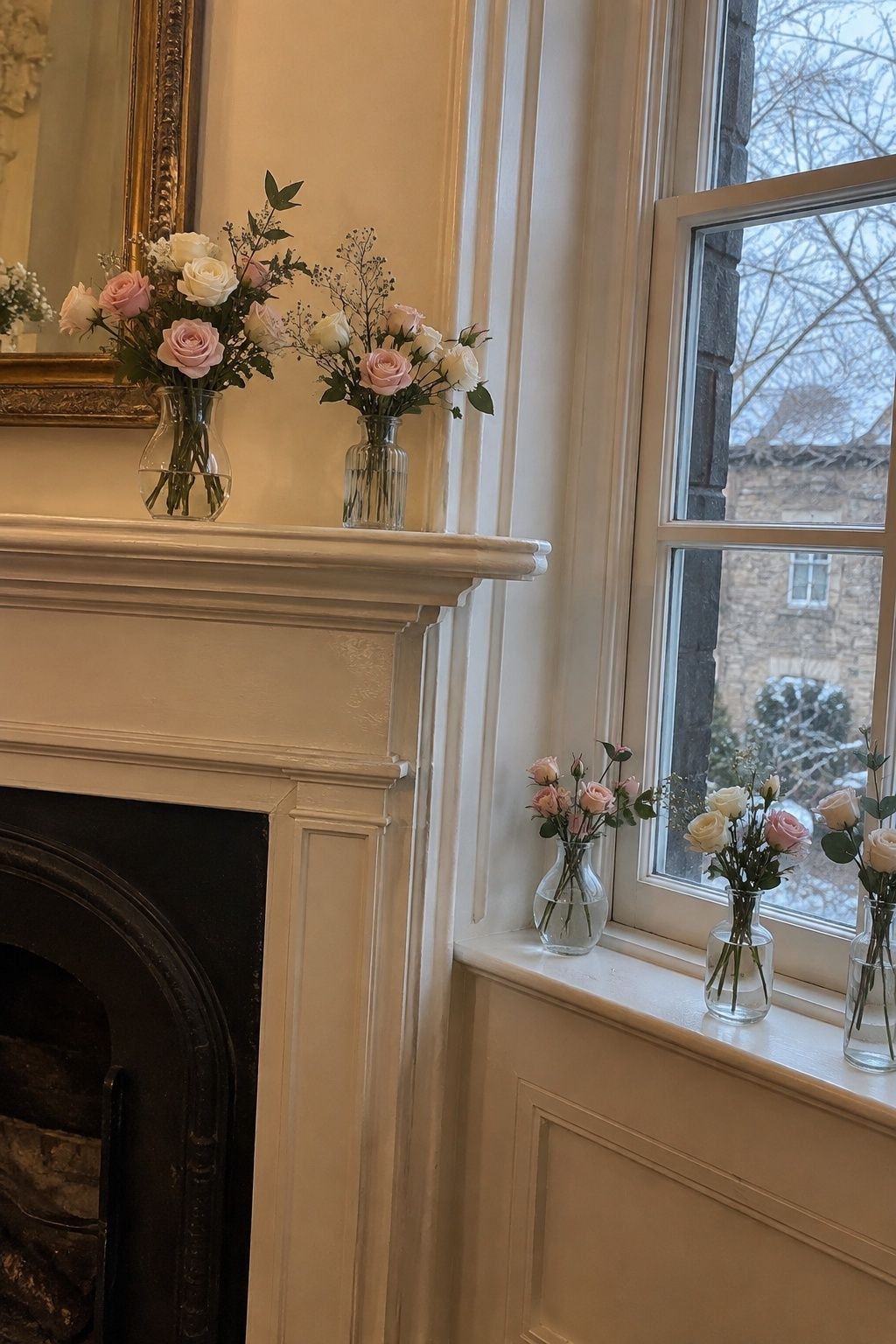
Spray roses are the small-scale version, and they suit boutonnieres, bud vases, escort cards and cake. A single spray rose stem on a small table looks more charming than a big rose arrangement crowding the glasses.
How do you handle Valentine’s rose pricing?
Ask your florist for rose pricing before you settle on a rose-heavy design. Prices vary by region, supplier and variety, but anywhere near February 14 you should expect the question to matter.
If the quote comes back high, you have three easy moves:
- Keep garden roses in the bouquet and ceremony piece only.
- Swap spray roses in for small accents.
- Let ranunculus, lisianthus and carnations carry the centerpieces.
For context, The Knot’s 2026 Real Weddings Study puts the average florist spend at $2,800 for a wedding of 117 guests. A small wedding needs far fewer arrangements, so a few premium roses in the right spots are usually affordable once you stop trying to put them everywhere.
Movement and line: tulips and orchids
Not every flower should be round and ruffled. Tulips and orchids add shape.
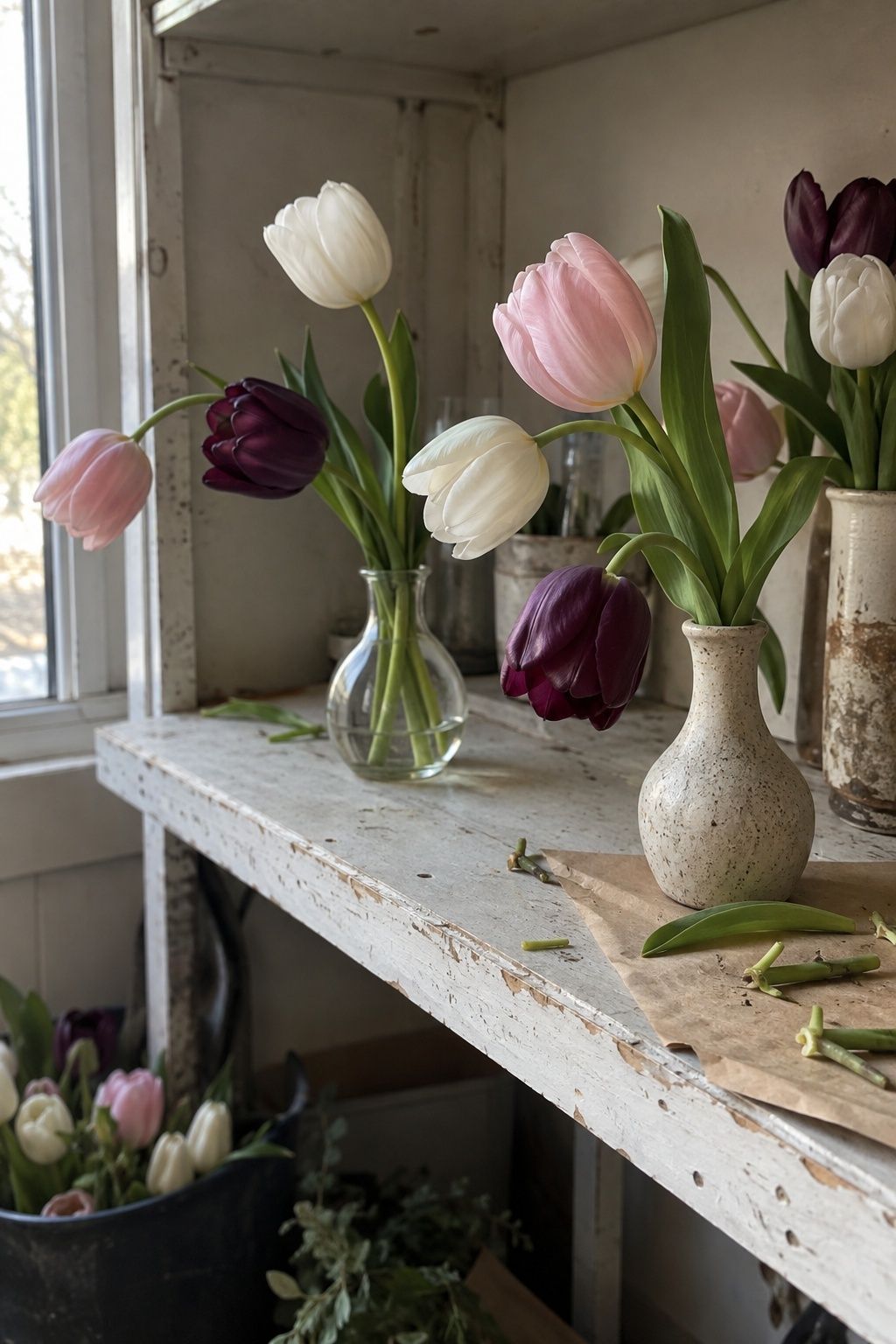
Forced tulips keep moving after they are arranged, curving and stretching toward the light. Fight that and they look messy; plan for it and they look alive. Let them spill from a loose bouquet or lean out of bud vases. White reads minimal, blush reads soft, and deep plum adds drama without anything looking like a holiday theme.

Orchids suit restaurant weddings, city elopements and hotel receptions. One sculptural stem in a bouquet or a small cluster on the bar goes a long way. White, champagne or deep wine orchids say romance in a sleeker way than hearts and red.
The supporting cast that saves your budget
These flowers fill the space between focal blooms, and they are where a February floral budget stretches furthest.
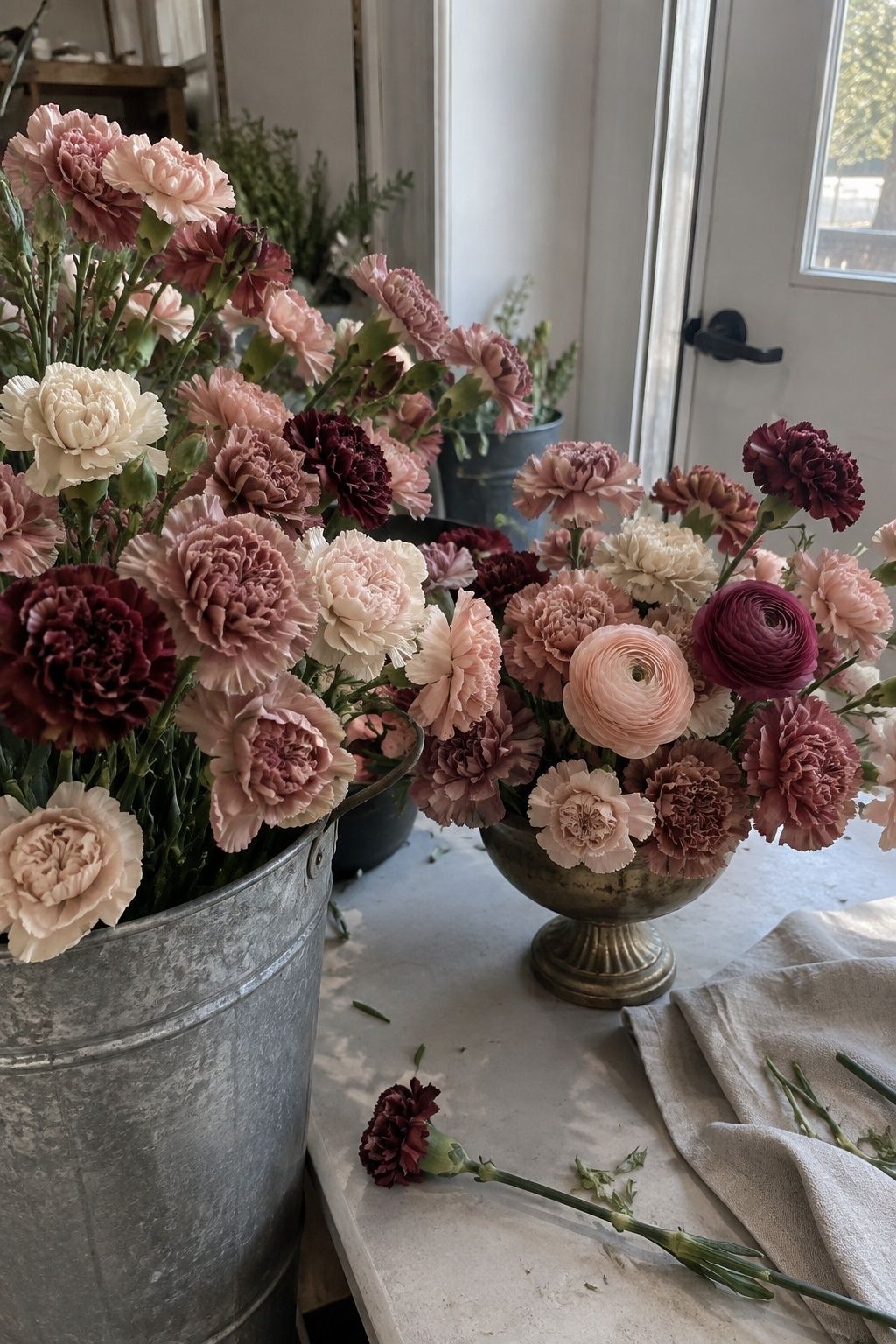
Carnations deserve better than their reputation. Modern varieties in antique blush, clove, cream and soft peach make ruffled, full arrangements. I’d use them for volume on dinner tables and save the pricier flowers for the bouquet. Avoid hard red-and-white unless that really is your palette.
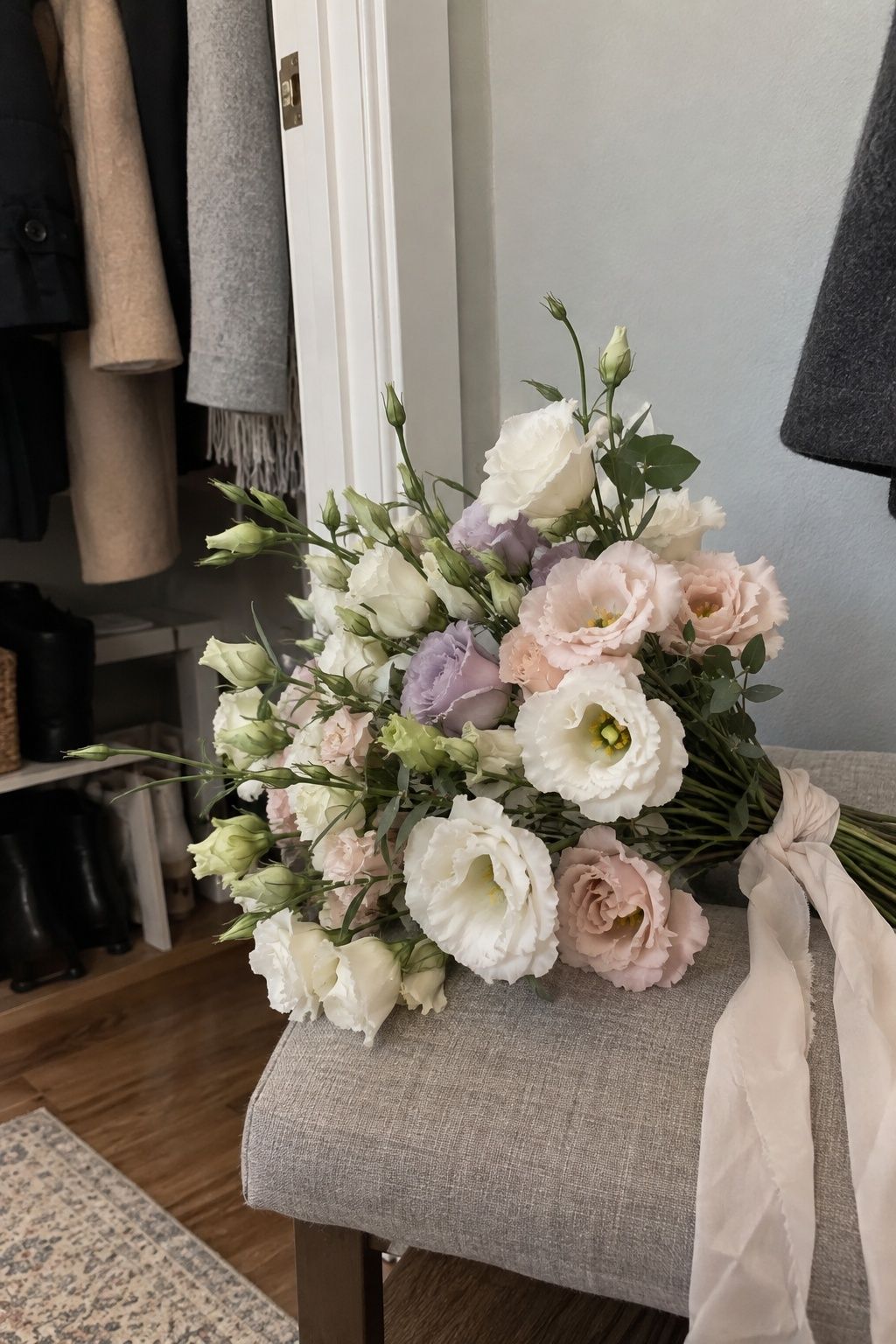
Lisianthus has a rose-like shape with a lighter feel. It loosens a bouquet and adds air between denser blooms in a centerpiece. It is also a good backup: if a fragile stem is unavailable, lisianthus can usually hold the palette together.

Hellebores have a nodding, slightly antique look that suits winter. They disappear in big installations, so keep them where people see them up close: bouquet, boutonniere, low compote, welcome table.

Astrantia has small starry heads that add a lace-like texture. Guests may not know its name, but they will notice that the bouquet has more depth than roses and greenery alone.
February flower palettes that avoid the Valentine cliché
The simplest way to make February wedding flowers look romantic without looking themed is to skip literal red and pink.
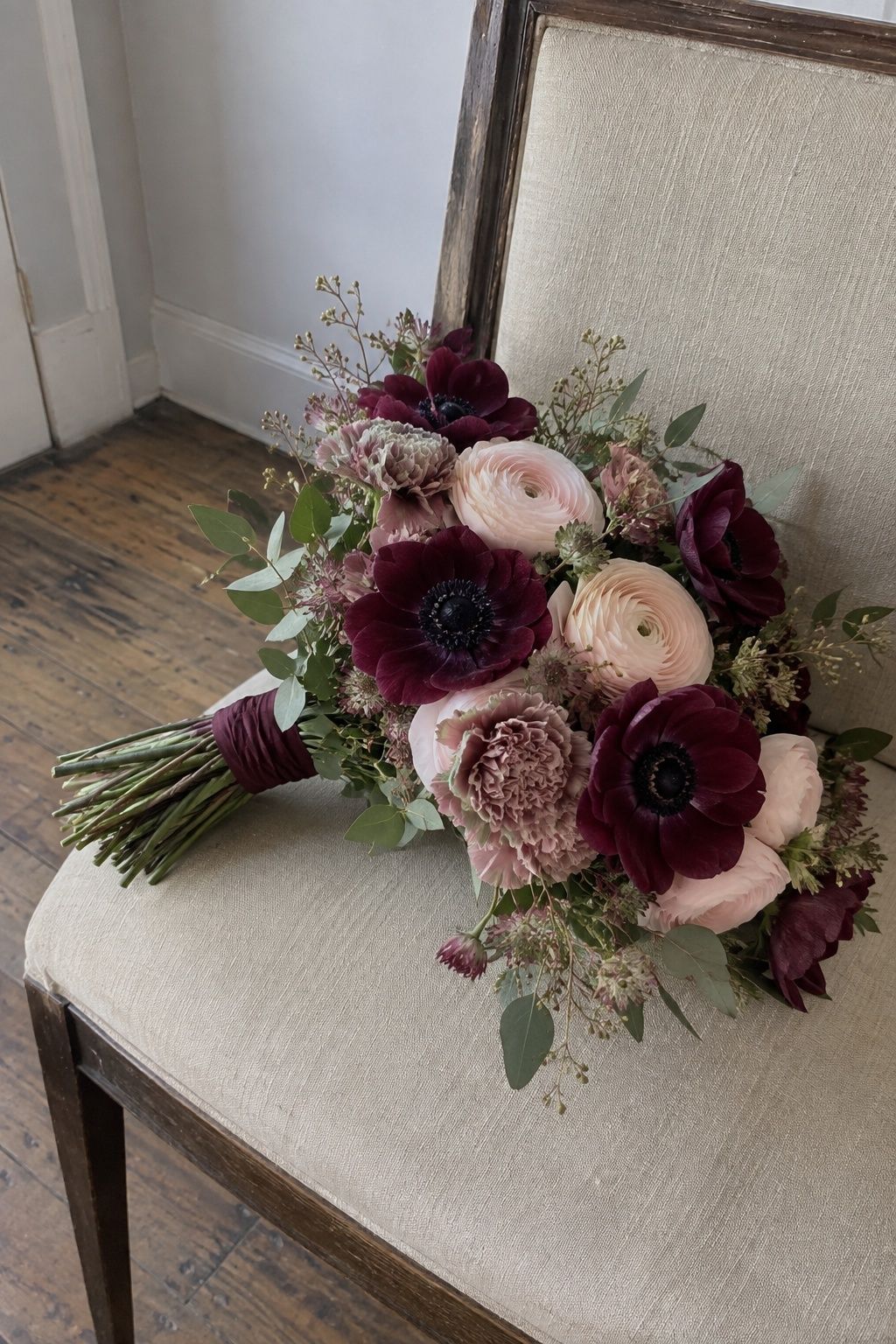
Burgundy and blush is the natural pairing. Burgundy gives depth; blush keeps it soft for vows and candlelight. Mix textures so it does not look two-toned: deep ranunculus with blush lisianthus, cream carnations, anemones and hellebores. If you are still choosing colors, these February wedding colors and this Valentine’s Day wedding color palette guide go further.
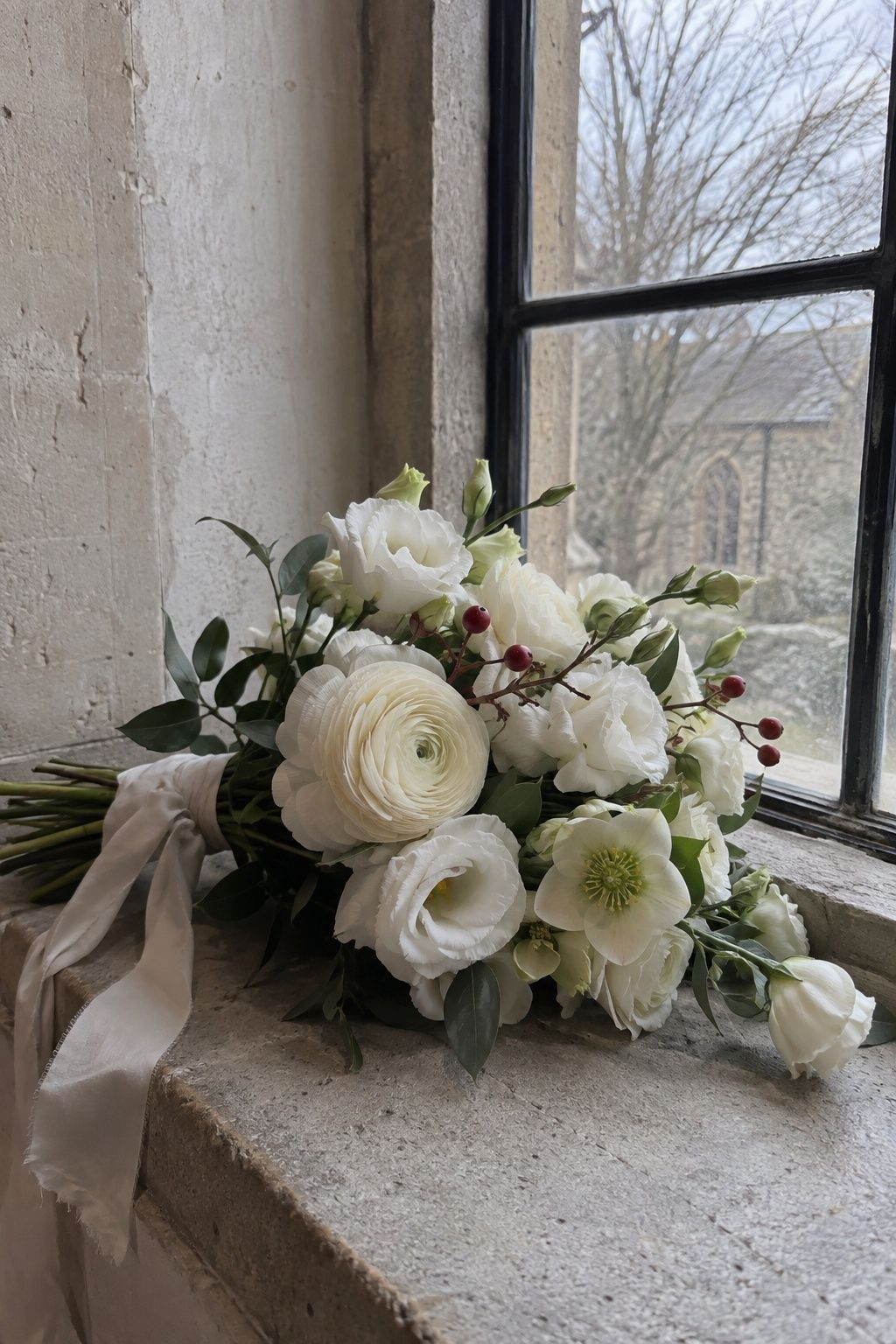
All-white works too, as long as there is texture. Ivory ranunculus, tulips and lisianthus with a few berries or seed heads look wintry rather than flat. Keep berries away from dinner plates if they shed or stain.

Berries are the quiet nod to Valentine’s. A few burgundy or plum berries in the bouquet, bar flowers and ceremony piece carry the seasonal note while the main flowers stay neutral.
Winter greenery: eucalyptus, ruscus, rosemary and more
Greenery decides whether February arrangements look lush or sparse. Pick one or two and repeat them.
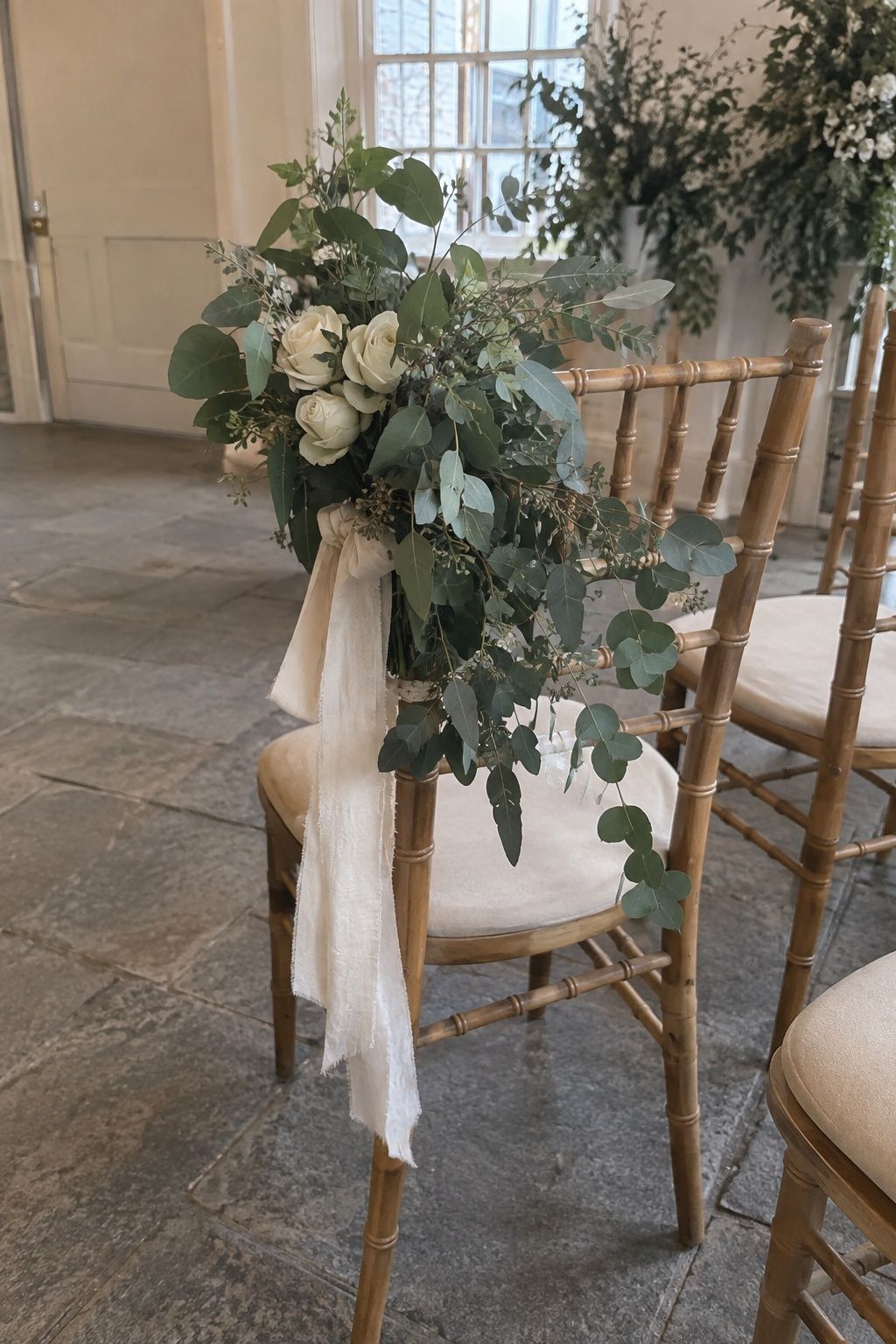
Eucalyptus has a blue-green tone that suits winter light. It is fragrant, so use it in bouquets, ceremony pieces and welcome arrangements, and lightly on dinner tables.

Ruscus is the cleaner choice when eucalyptus feels too scented or soft. It is durable, low and crisp, which suits narrow restaurant tables.
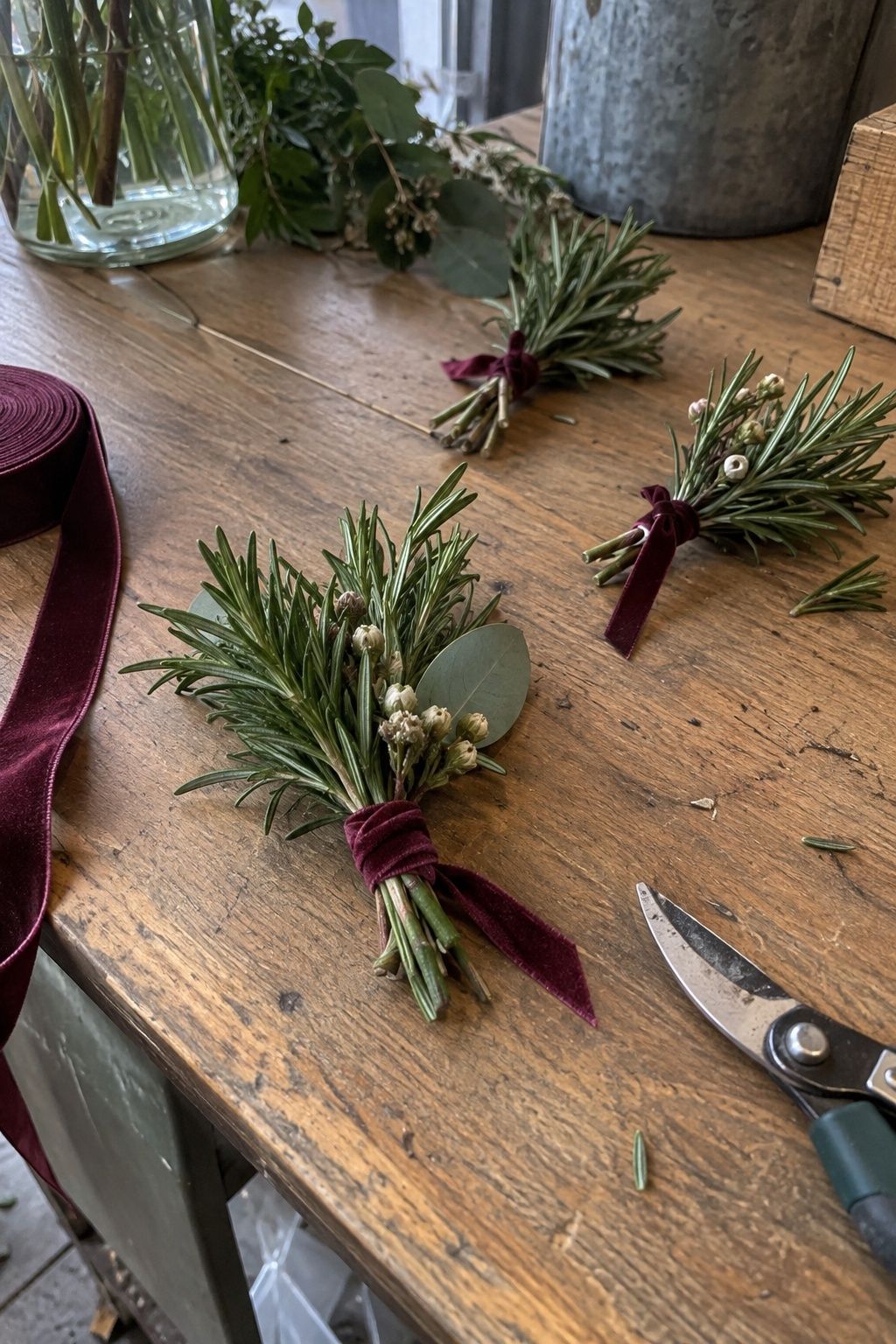
Rosemary gives a faint winter scent and works in boutonnieres and napkin ties. One sprig beside a place card is plenty. If you like the idea, my guide to herb wedding decor covers where scent belongs at dinner.
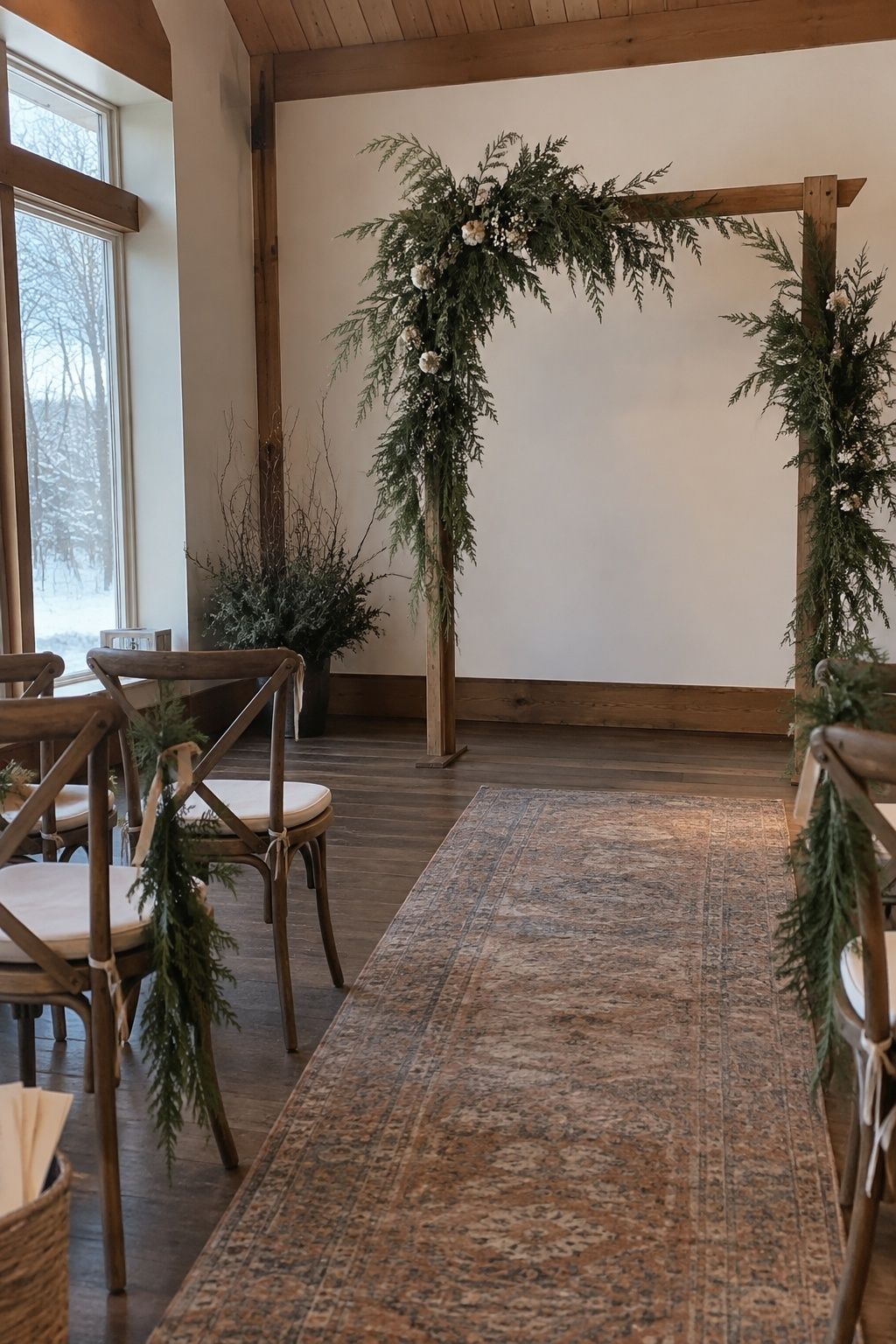
Cedar and pine add structure to a ceremony corner or mantel. Use a measured amount; too much evergreen and the wedding starts to look like December.

Thistle in blue or silver sharpens soft flowers and keeps the palette from getting sugary. A few stems in the bouquet and boutonnieres are enough.
How to place February flowers at a small wedding
At a wedding of 20 to 50 guests, concentrate flowers where people gather, touch and photograph, and skip the rest.
- Bouquet and boutonnieres: your best stems, including any roses
- Ceremony: one strong arrangement rather than aisle flowers every row
- Dinner tables: low compotes or 3 to 5 bud vases per table, below eye level
- Bar, cake and guest book: small repeats of the bouquet palette
Keep centerpieces low so people can talk across the table, and keep strong scents like eucalyptus or lilies at the entrance, bar or ceremony rather than at each plate.
Then make the ceremony flowers work twice. Ask the florist which pieces can move to the bar, dessert table or guest book after the vows, and who will carry them. Plan the containers for both spots from the start. For the rest of the table design, these February wedding tablescape ideas pair well with everything above.
Quick recap
- Ranunculus, anemones, tulips, hellebores and orchids all suit a February wedding.
- Ask about rose pricing early if your date is near Valentine’s Day.
- Put roses in the bouquet and focal pieces; let carnations and lisianthus fill tables.
- Skip literal red and pink; burgundy with blush or ivory with berries looks seasonal.
- Repeat one or two greens, and move ceremony flowers to the reception.
FAQ
What flowers are in season for a February wedding?
Ranunculus, anemones, forced tulips, hellebores, orchids, lisianthus, carnations and roses are commonly available for February weddings, along with greenery like eucalyptus, ruscus and cedar. Exact availability depends on your region, so confirm the stem list with your florist.
Are roses more expensive for a February wedding?
Roses can cost more for February weddings, especially close to Valentine’s Day when demand peaks. Ask your florist for a quote early and keep roses for the bouquet and one or two focal arrangements if the price is high.
What flowers can replace roses in a February wedding?
Ranunculus is the closest replacement for roses in a February wedding, thanks to its layered petals. Lisianthus and modern carnations also give a rose-like shape at a lower cost.
How do you keep February wedding flowers from looking like Valentine’s Day?
Avoid bright red and pink, and choose burgundy, blush, mauve, plum or ivory with winter greenery instead. Use berries or one deep accent color as the seasonal nod, and skip heart motifs.
What are good centerpiece flowers for a small February wedding?
Low compotes or bud vases with ranunculus, anemones, spray roses, tulips, carnations or lisianthus make good small February centerpieces. Keep them below eye level and avoid strongly scented greenery right beside the plates.
One last note on February
Pick one focal flower you love, one or two supporting flowers and one green, and repeat them from bouquet to table. That edit does more for February wedding flowers than any number of roses, and it leaves room in the budget for the stems that matter. If you want to compare the month before, see my January wedding flowers guide.
Last update on 2026-10-04 / Affiliate links / Images from Amazon Product Advertising API