

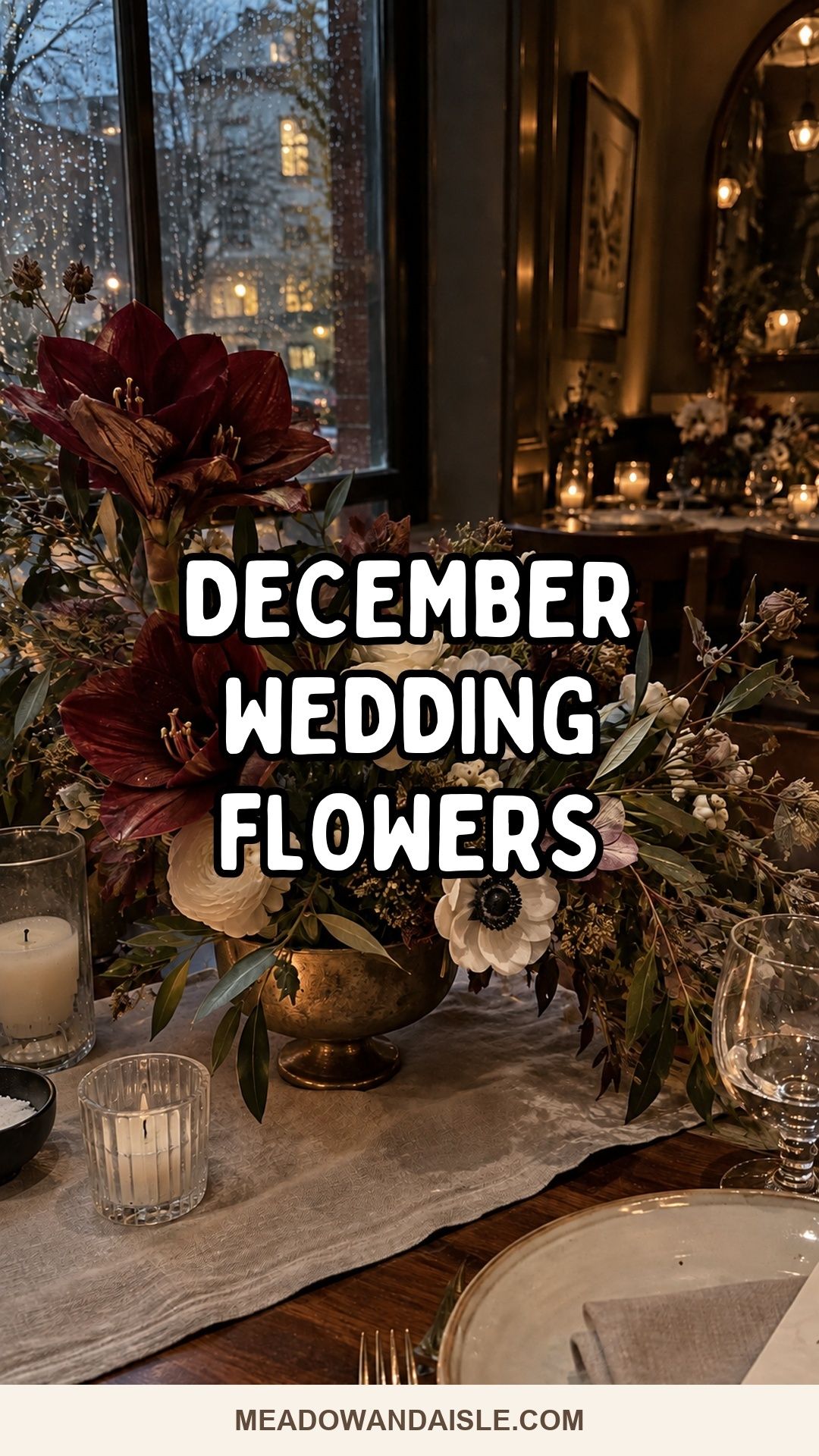
The most reliable December wedding flowers are amaryllis, hellebores, ranunculus, anemones, garden roses, orchids and paperwhites, backed by cedar, olive, eucalyptus and winter branches. For a small wedding of 10 to 50 guests, a strong bouquet, one ceremony piece that moves to dinner, and low table flowers is usually enough.
The mistake I see most with December flowers is buying for the season instead of the room. Couples order red roses, holly and pine because it’s December, and the reception ends up looking like a hotel lobby the week before Christmas.
Start with the room instead. December weddings happen in heated spaces, by candlelight, with quick dashes outside for photos. The flowers need to hold up in warm air, survive five minutes of wind, and look good in low light. Plenty of winter blooms do all three, and most of them have nothing to do with holly.
Below are 18 December wedding flowers and materials, grouped by what they do best, plus a simple count of how many arrangements you actually need.
Useful pieces for winter florals
If you’re doing some flowers yourself, or just want vessels and ribbon that suit a December palette, these are the pieces I’d look at.


How many arrangements does a small December wedding need?
Fewer than you’d think. A small wedding needs one great bouquet, one ceremony focal piece, low flowers for each dinner table and maybe one bar or mantel arrangement.
| Guest count | Bouquets and buttonholes | Ceremony piece | Dinner tables | Extras |
|---|---|---|---|---|
| 10 to 15 | 1 bouquet, 1 to 2 boutonnieres | 1 small urn or mantel piece | 1 long table, 5 to 7 bud vases | None |
| 20 to 30 | 1 to 2 bouquets, 2 to 4 boutonnieres | 1 urn that moves to dinner | 3 to 4 tables, 1 low piece plus 3 bud vases each | Bar or cake flowers |
| 40 to 50 | 2 to 3 bouquets, 4 to 6 boutonnieres | 1 to 2 pieces | 5 to 6 tables, same formula | Bar, cake and welcome table |
For context, The Knot’s 2026 Real Weddings Study puts the average florist spend at $2,800 for weddings with an average of 117 guests. With a third of the guests, you can spend far less, or put the same money into fewer, better pieces. My rule: spend most on the bouquet, since it shows up in nearly every photo, and simplify the tables.
December wedding flowers that can hold a room
These are the blooms with enough presence to carry a bouquet or the one ceremony piece guests will remember.
Amaryllis

Amaryllis is the December flower with the most drama. The big trumpet shape reads from across a candlelit room, which makes it ideal for a mantel or a ceremony urn. In a bouquet, ask your florist to pair it with softer stems and leave space around it so it doesn’t look heavy. One or two amaryllis moments look expensive. Ten start to look staged.
Garden roses
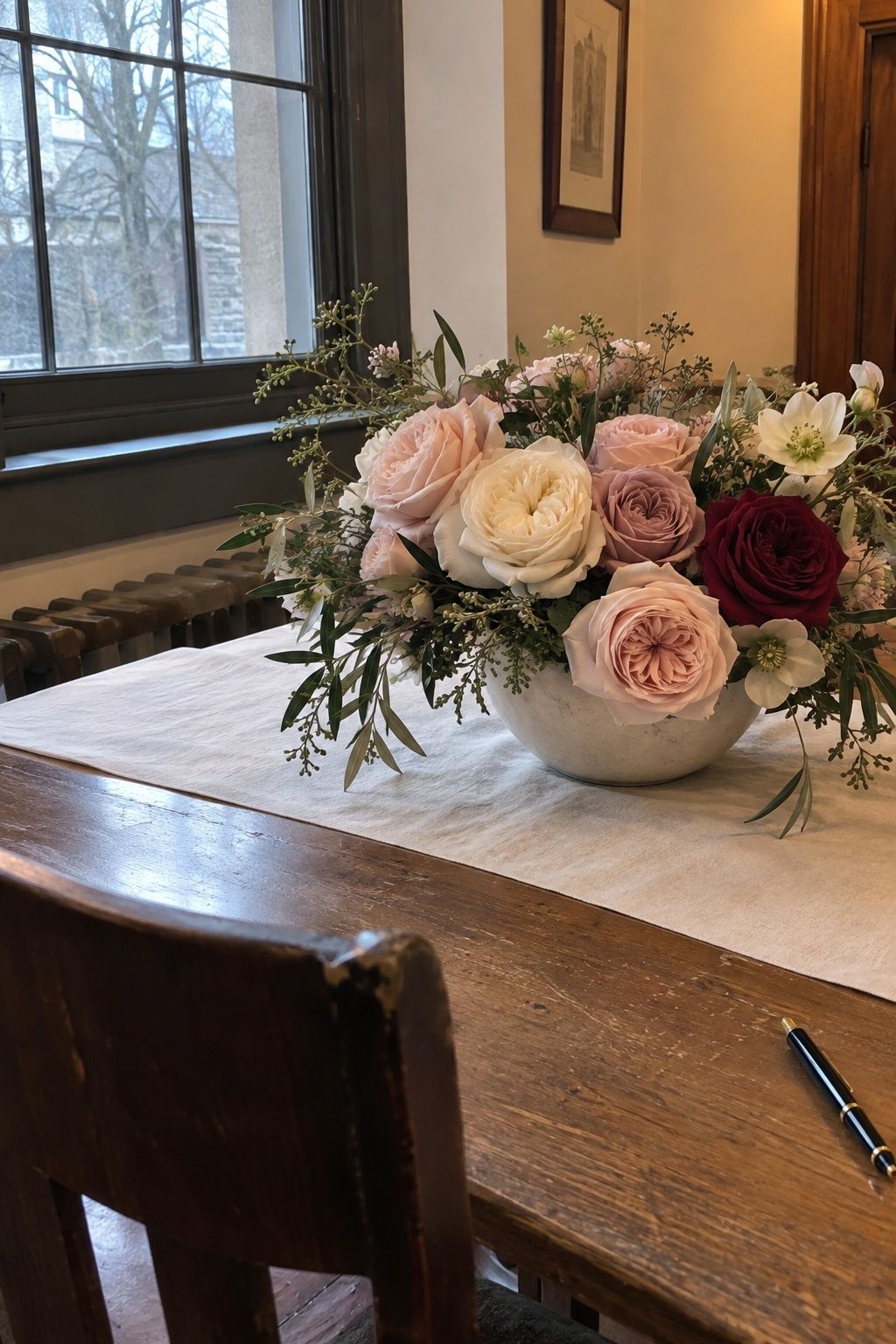
Garden roses add fullness without making a winter wedding look like spring. Creamy ivory, blush, mauve or wine tones soften amaryllis, balance graphic anemones and keep a burgundy palette from turning severe. They’re especially useful in rooms with dark wood or velvet, where the flowers need to bring their own glow.
Orchids
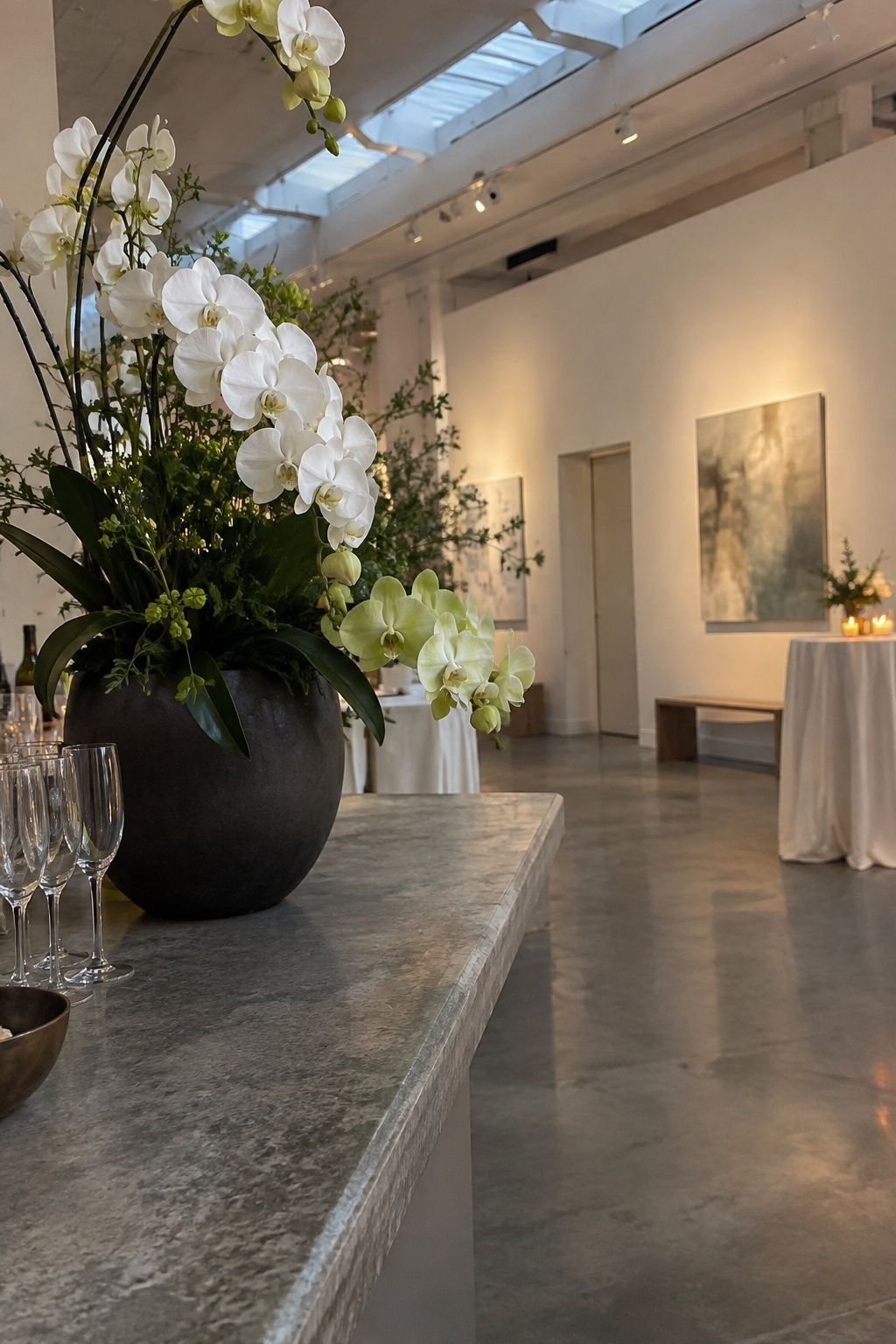
Orchids suit indoor December weddings in restaurants, galleries and hotels, where the setting already looks polished. White and pale green orchids look clean and architectural with no holiday color at all. Ask your florist which varieties handle heated rooms and candle warmth, so they still look fresh after dinner.
Plum and merlot blooms
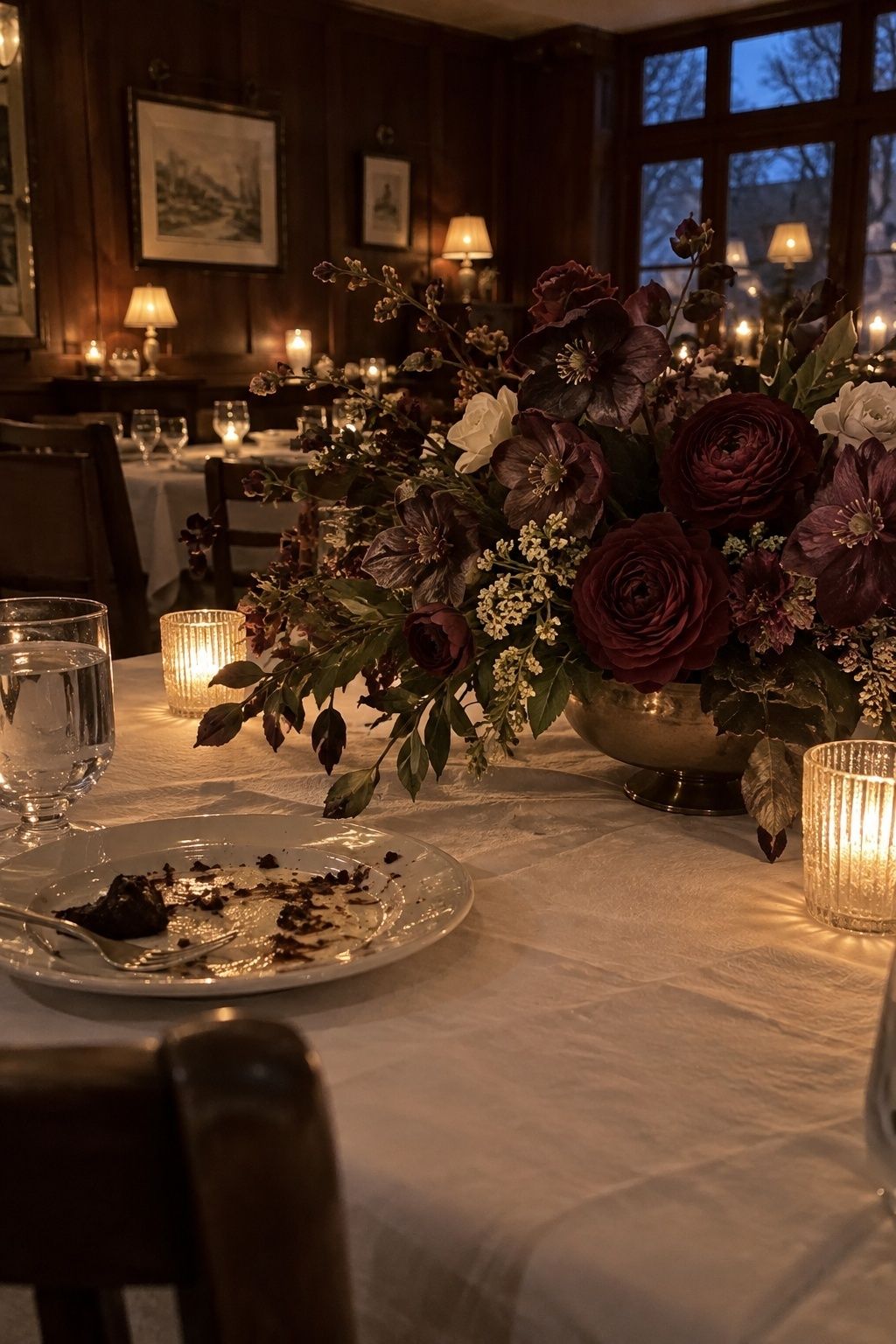
For drama without leaning on red, choose plum and merlot: dark hellebores, wine roses, deep ranunculus. Use them in the bouquet, the ceremony piece and a few dinner arrangements, not everywhere. Next to ivory flowers and aged brass, they read as winter rather than Christmas. See my December wedding colors guide for palettes built around these shades.
Soft flowers for bouquets and tables
These are the detail flowers. They look best up close, which is exactly where guests at a small wedding see them.
Hellebores
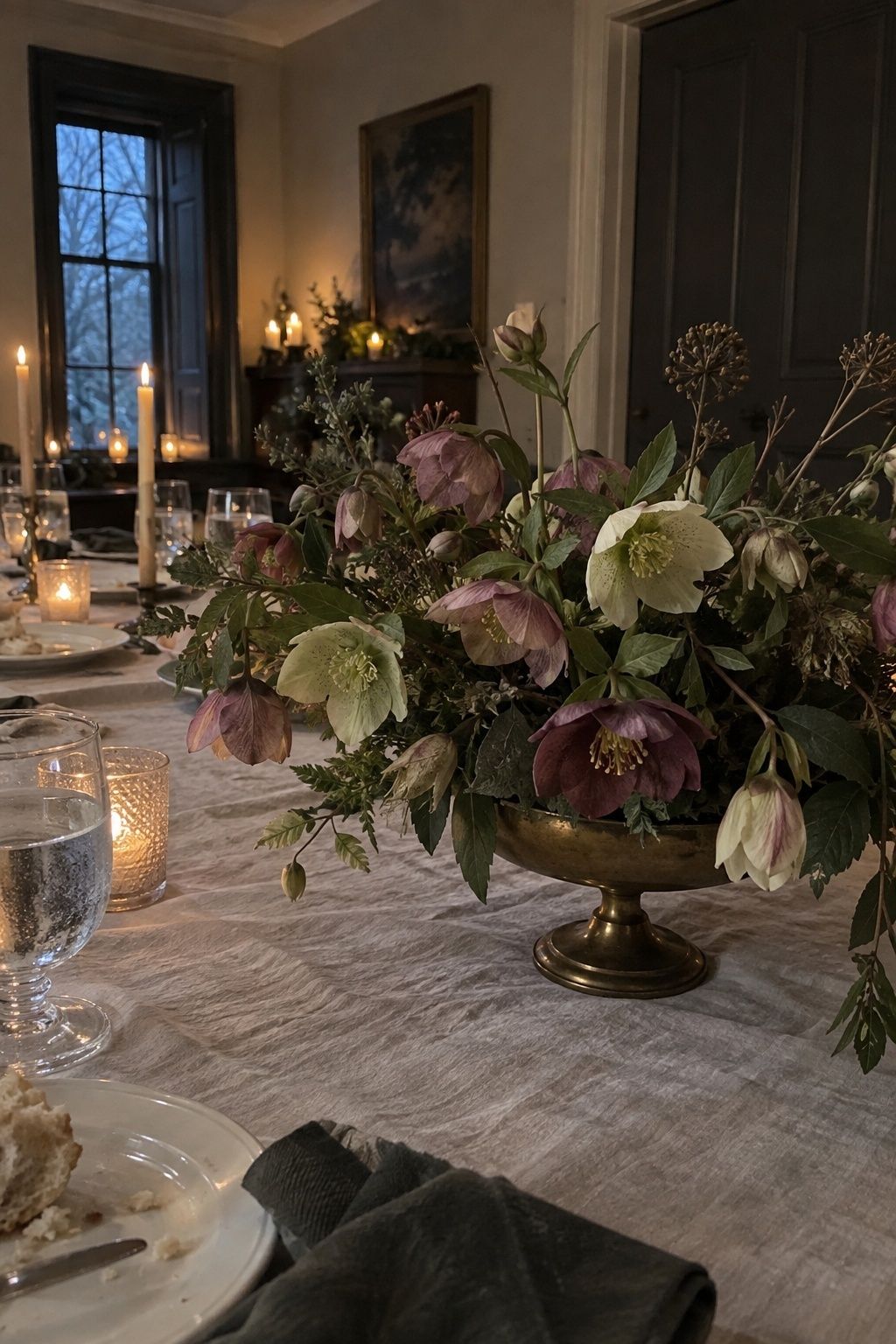
Hellebores have a downward-facing, slightly moody charm in mauve, plum, ivory and pale green. They’re too delicate to carry a big installation, but they’re lovely in bouquets and low centerpieces where guests can look straight into them. Pair them with ranunculus, garden roses and olive.
Ranunculus

When peonies aren’t available, ranunculus gives you that soft, layered petal look. Winter shades run from ivory and blush to caramel and wine. They’re light enough for a bouquet and small enough for bud vases and cake flowers, so a few repeated stems can link the bouquet, the tables and the ceremony.
Anemones
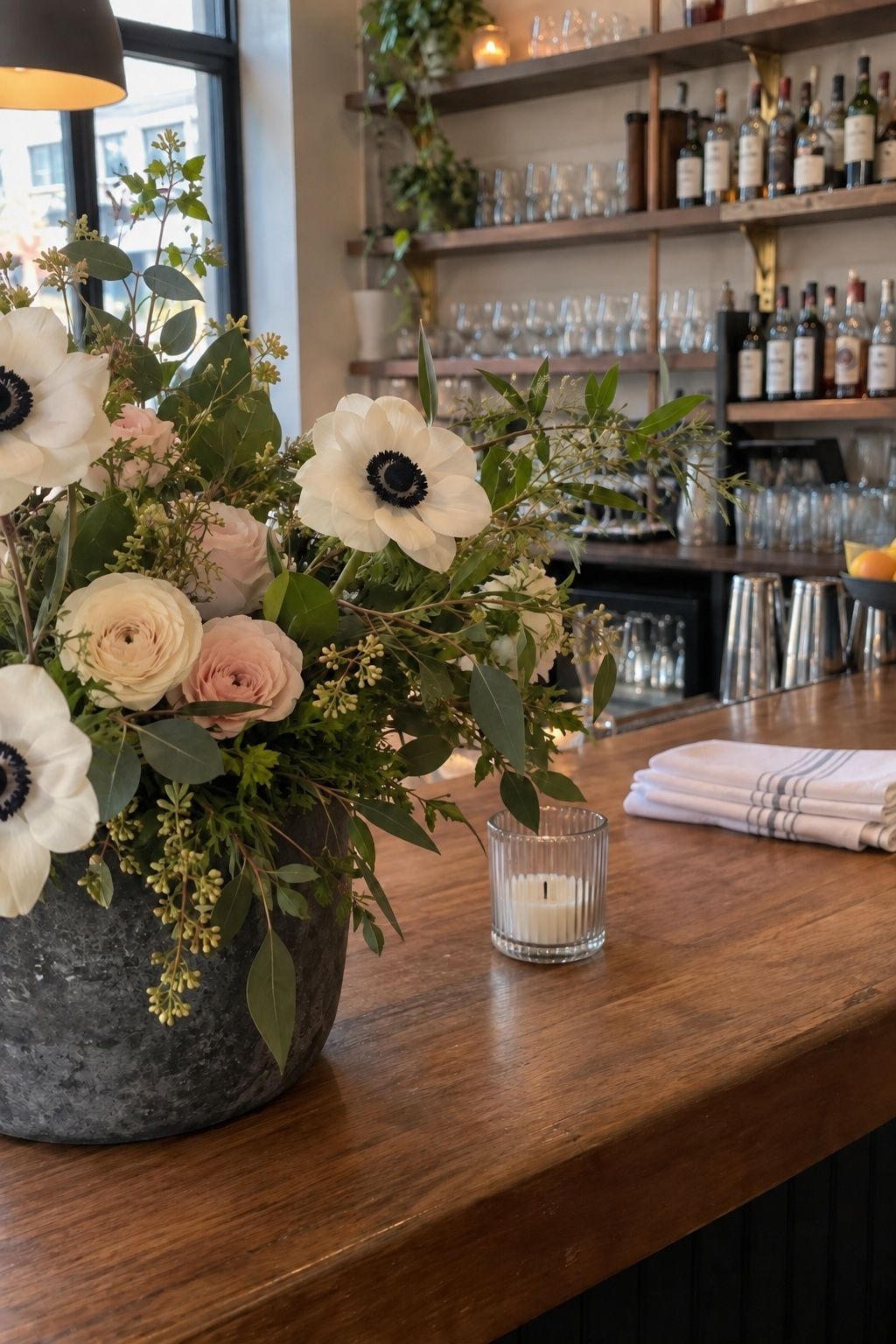
Black-centered anemones bring a crisp, graphic note to a soft white and blush palette. Use them where contrast helps: the bouquet, the bar, the escort card table. Keep the rest of the arrangement simple so the dark centers stand out.
White roses
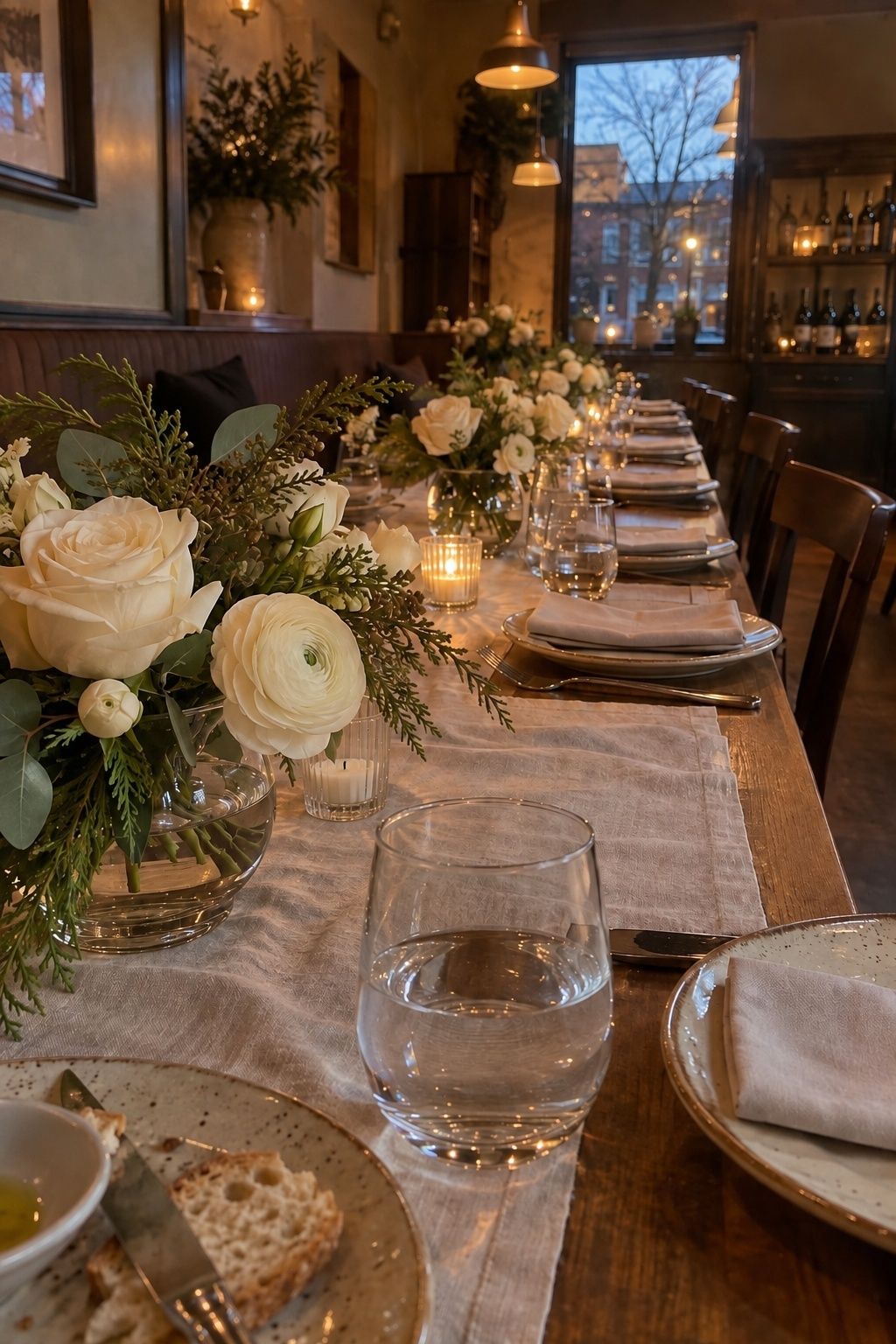
White roses are the reliable base, but they need help. A plan made only of tight, round white roses looks formal and flat. Ask for varied bloom sizes and seasonal greenery, and arrange them low and loose on dinner tables so there’s room for candles and glasses.
Fragrant flowers, in small doses
Scent has nowhere to go in a small heated room, so fragrant flowers belong at the entrance, the bar or the bouquet, not beside dinner plates.
Paperwhites
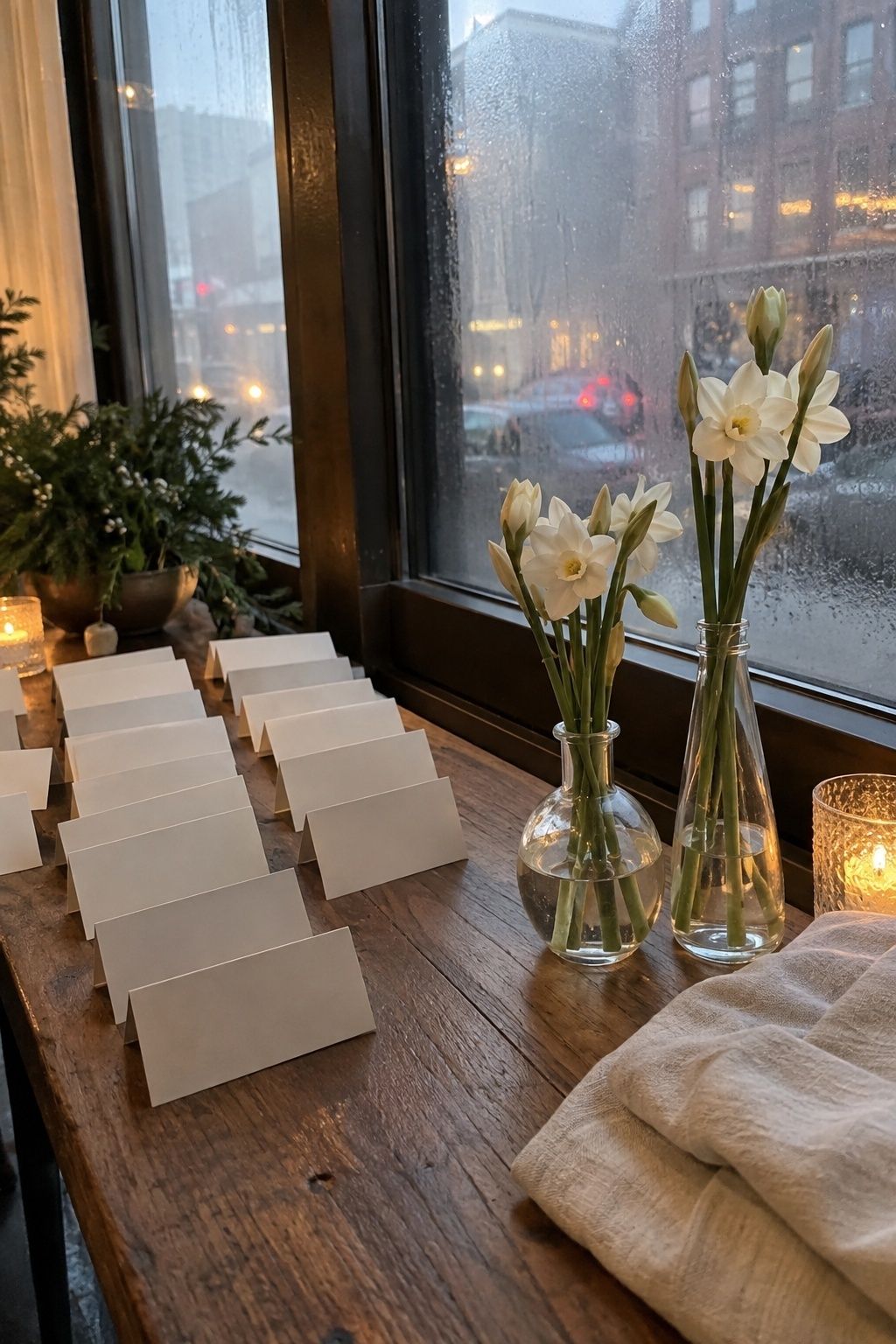
Paperwhites are delicate, pale and strongly scented. A few stems in bud vases on the welcome table or bar are plenty. They suit minimal white palettes and simple glass, and they look seasonal without looking festive.
Gardenias
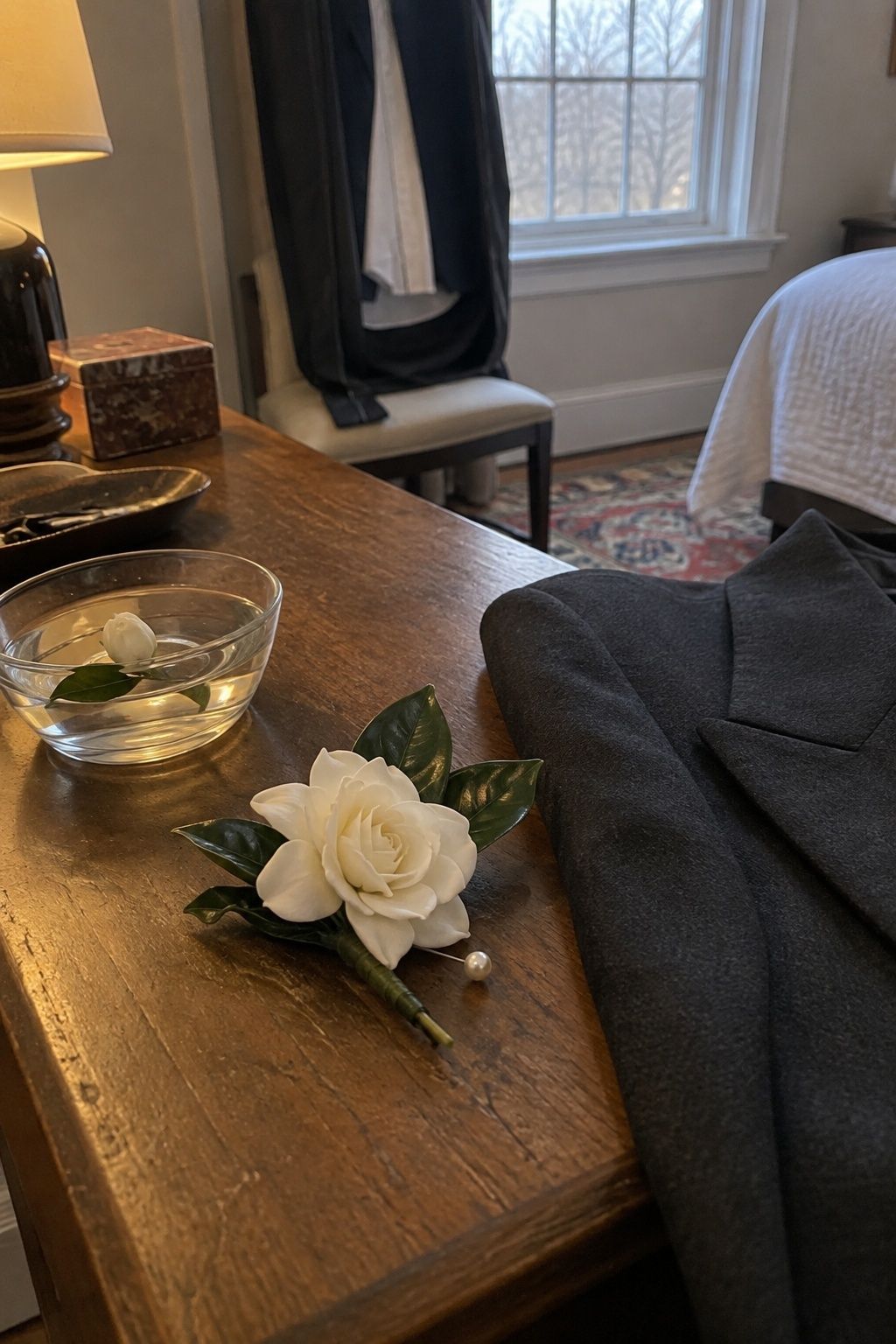
Gardenias are creamy and intensely fragrant, so keep them to one small moment: a boutonniere, a hair flower or a tiny arrangement by the guest book. Guests sit close to the flowers for hours at a small reception, and gardenias next to the food would be too much.
Greenery, branches and structure
Greenery gives the flowers shape and fills space for much less money than blooms. December is when you have to pick it most carefully.
Forced branches
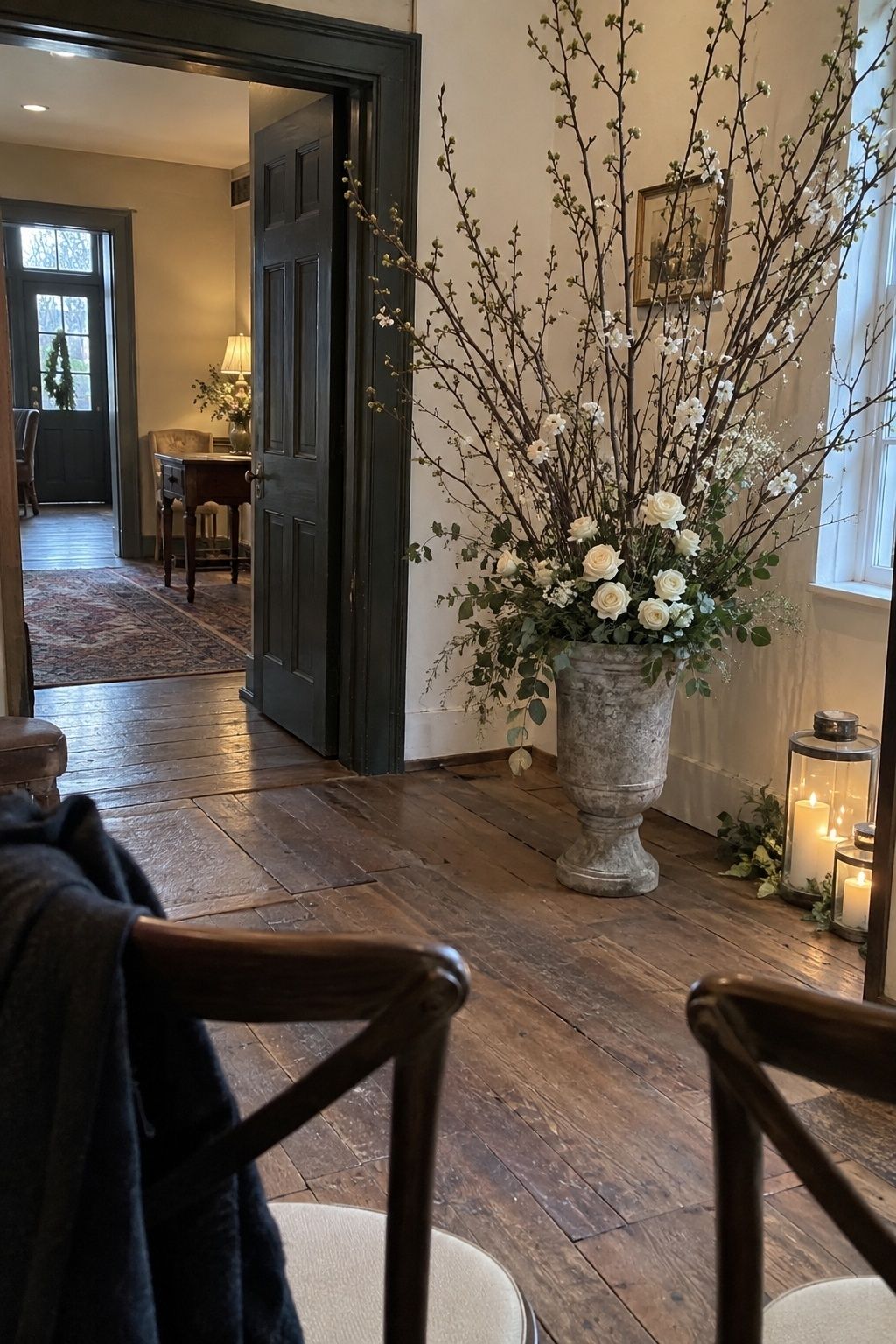
Budded quince or other forced branches add height and line without bulk. One tall branch arrangement can define a small room on its own, especially at the ceremony or the entry. Ask your florist what’s realistic for your region and date, since availability varies a lot.
Cedar and pine
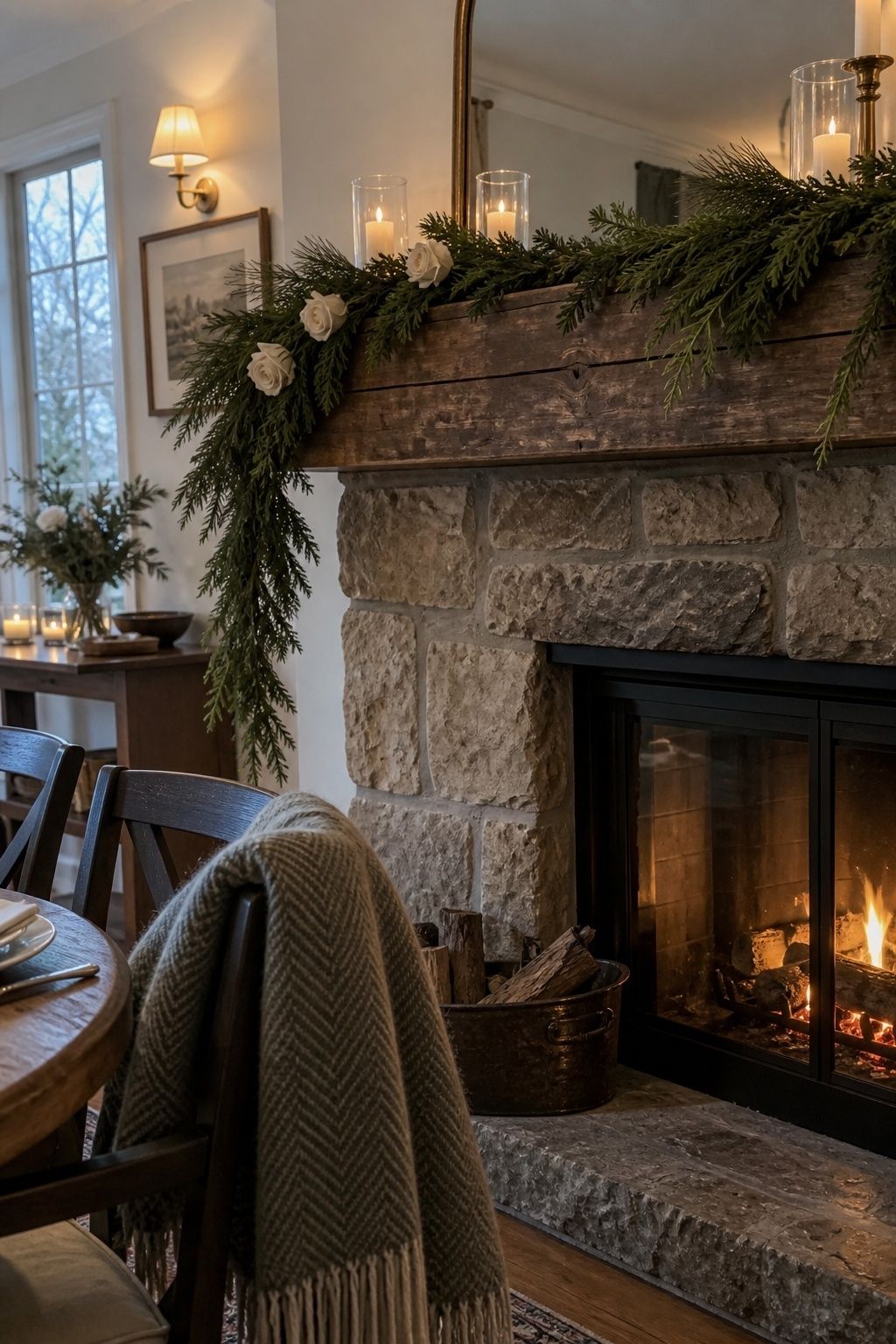
Cedar and pine bring scent and real seasonal character, and they’re the fastest way to make a room look like a holiday storefront. Keep them loose and mixed with soft flowers. Drape cedar along a mantel or table edge, and skip the red berries and shiny ornaments next to it. My December wedding decor guide has more on using evergreen without the Christmas look.
Eucalyptus

Eucalyptus adds movement and a muted green that works with white, burgundy, plum and taupe. Watch the scale on small tables, though. A huge eucalyptus spray crowds plates and glasses quickly. Use it to soften the edges of an arrangement rather than as the main event.
Olive branches
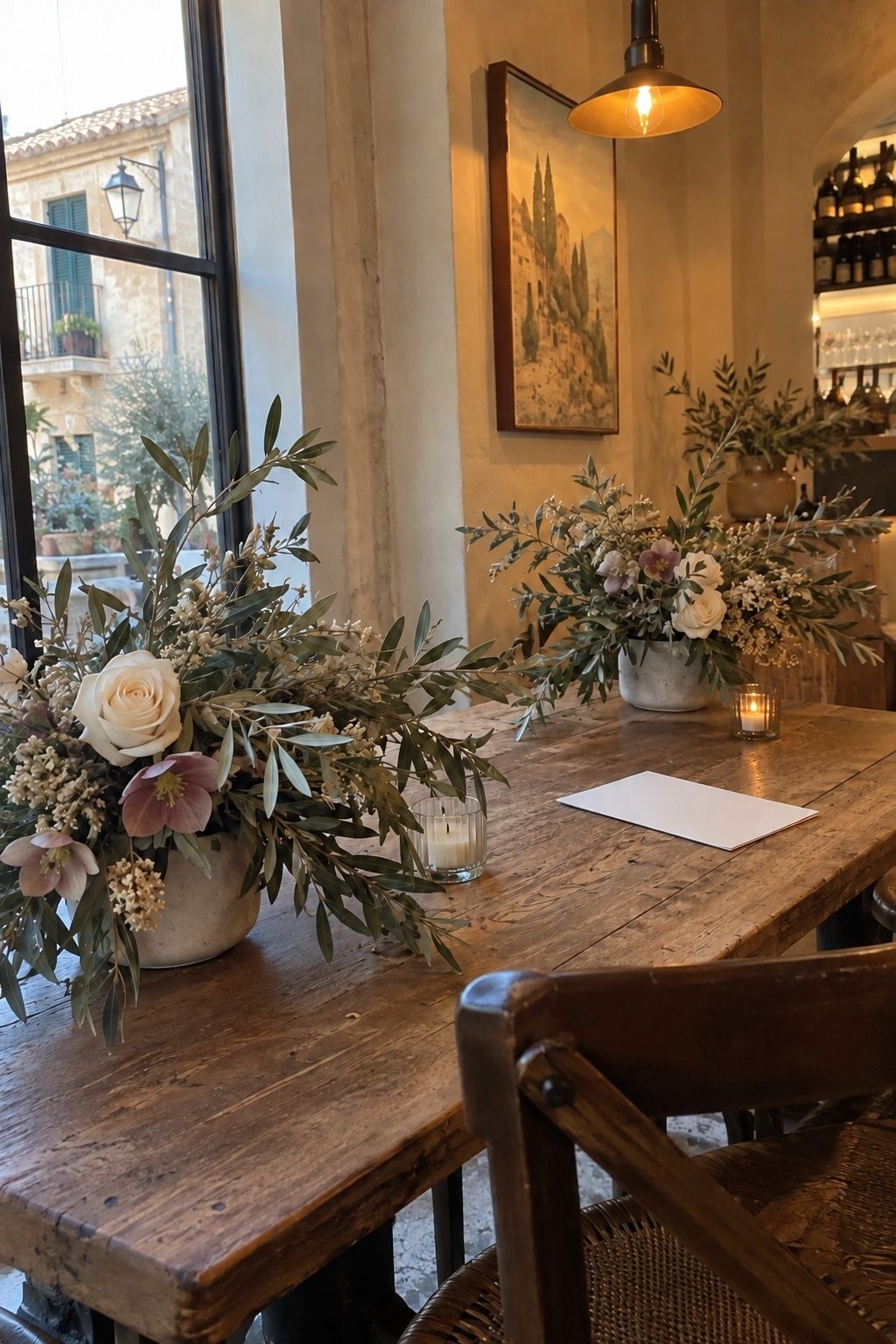
Olive is my pick when pine looks too literal and eucalyptus feels overused. Its soft gray-green suits ivory, champagne, plum and antique gold, and it reads natural rather than festive. It’s lovely in low centerpieces and simple groups of bud vases.
Texture and small accents
These are the supporting materials that make a modest arrangement look layered without adding more flowers.
Dusty miller
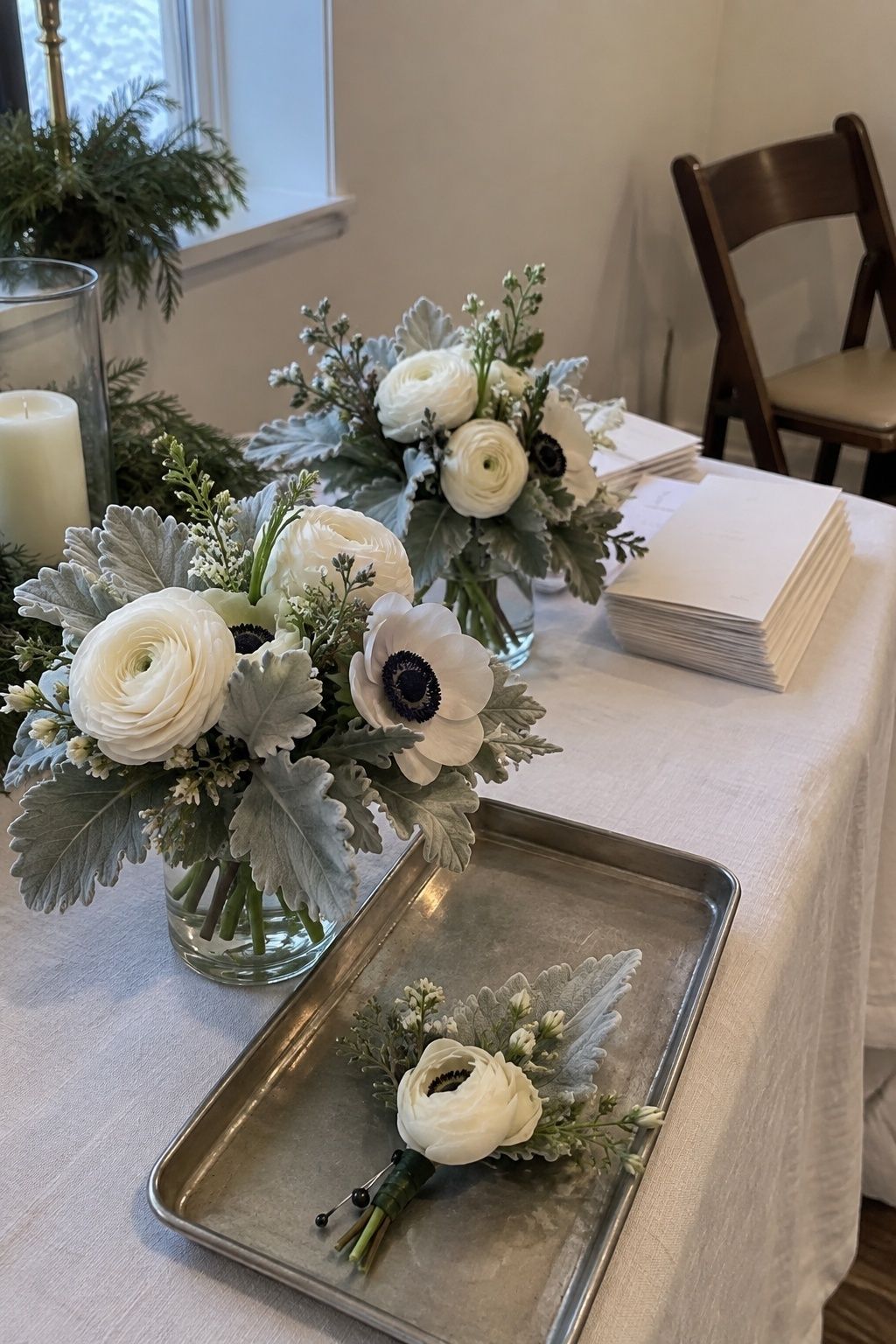
Dusty miller has a silvery, frosted texture that looks wintery without any snowflake imagery. Use it in bouquets and boutonnieres where guests can see the velvety leaves, and keep it to one texture among several so it doesn’t dull the arrangement.
Berries
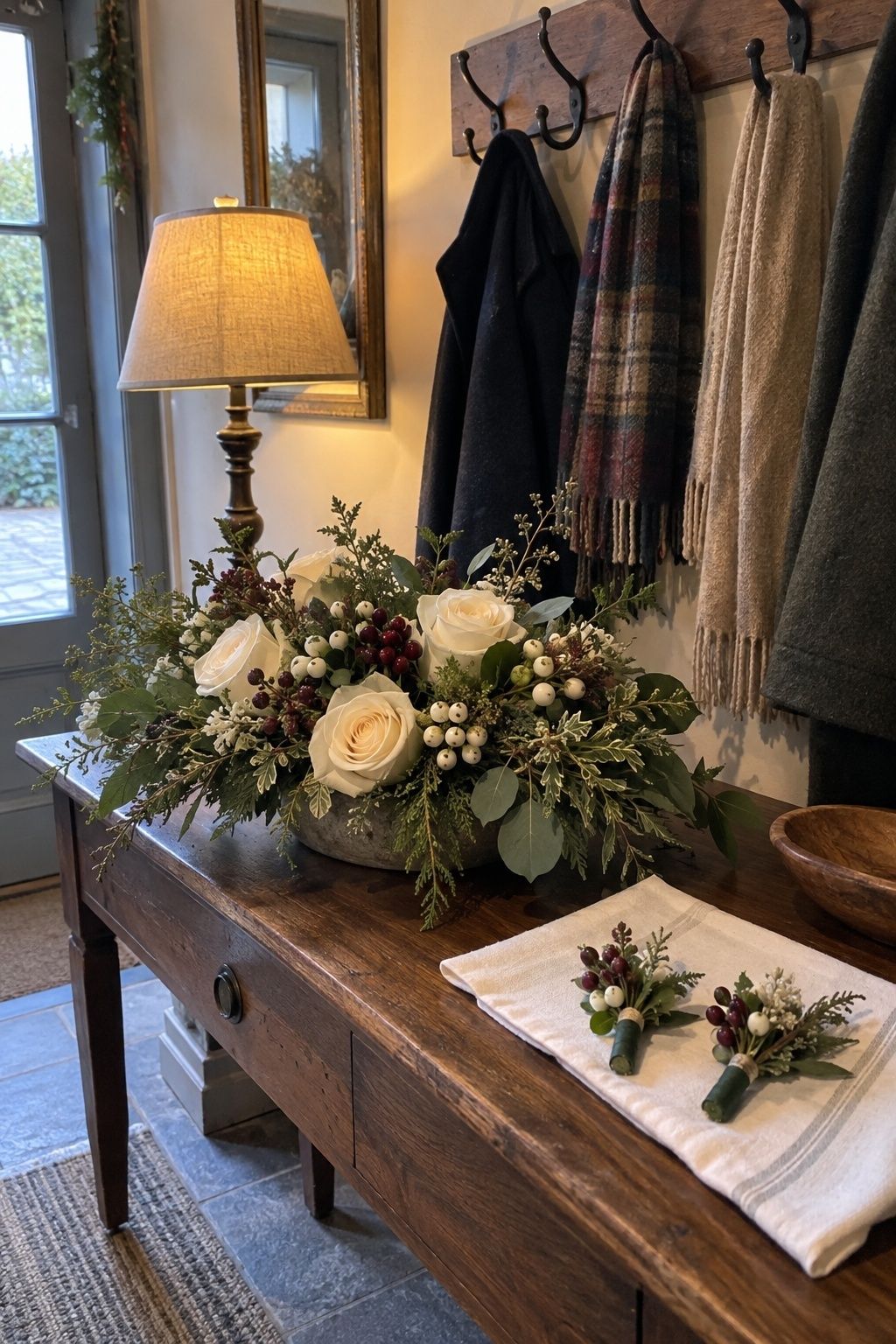
Berries add a festive touch without turning the whole wedding into a theme. Burgundy, plum, white or blue-gray clusters work well in boutonnieres and low arrangements. If your palette is already strong, a few stems are more elegant than red in every vase.
Seed pods
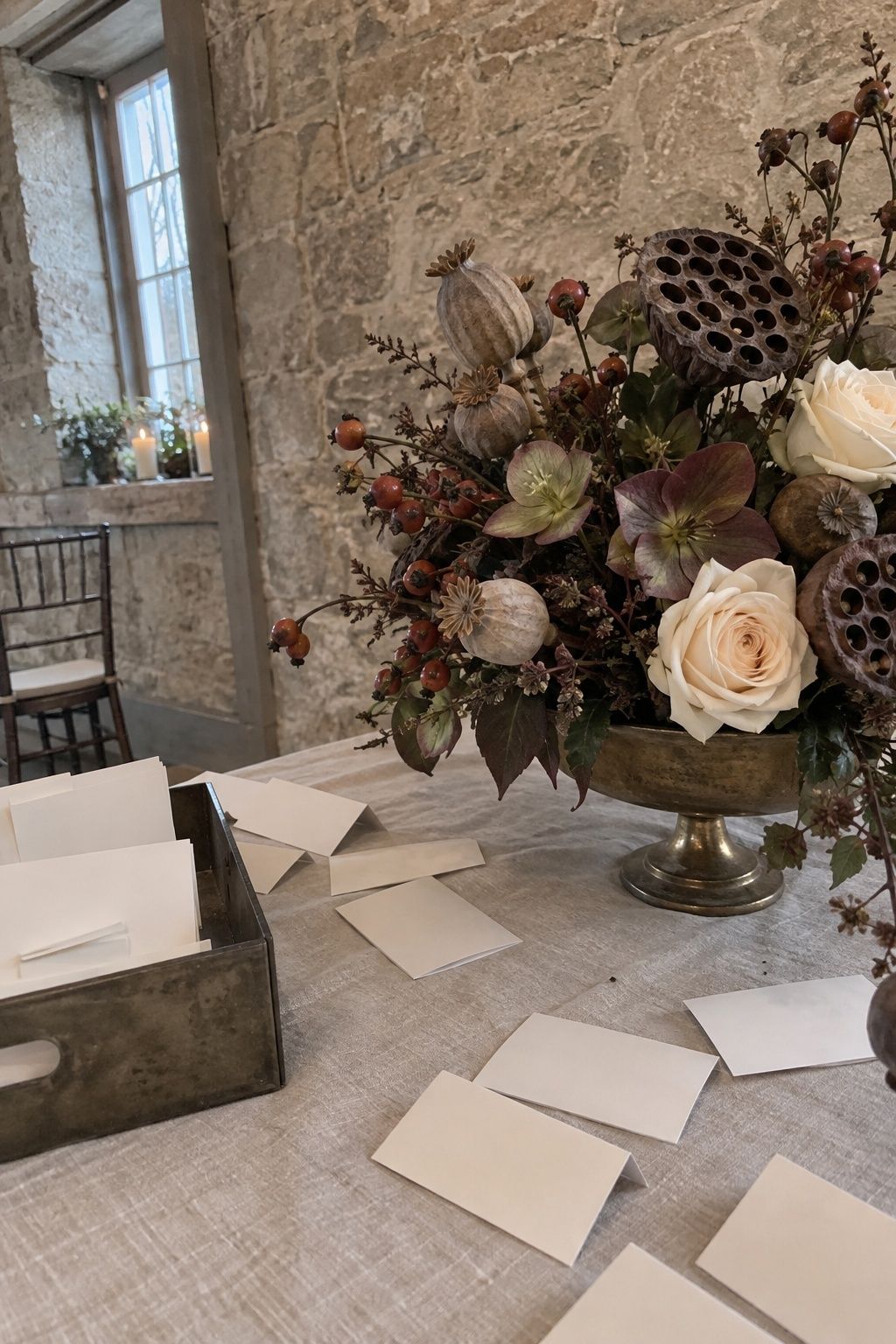
Lotus and poppy pods add an earthy, slightly undone look. They pair well with hellebores, garden roses, dusty miller and olive, and they make simple flowers look layered without raising the stem count.
Can an all-white December palette work?
Yes, if the textures vary. White and green flowers look expensive in December when you mix round blooms with line flowers, glossy leaves with matte ones, and small details with one or two larger focal flowers.

Try white roses, paperwhites, orchids, hellebores and ranunculus with cedar, olive and dusty miller. It’s one of the easiest ways to keep a December bouquet elegant rather than holiday-coded. For more cold-weather options, my winter wedding flowers guide and January wedding flowers cover what comes after the holidays.
Practical rules for December wedding flowers
A few habits keep December flowers fresh and make the budget go further:
- Design one ceremony piece that can move to the bar, the sweetheart table or the fireplace after the vows.
- Keep strongly scented flowers away from dinner plates and wine glasses.
- Protect the bouquet during outdoor photos. Keep it indoors until the photographer is ready, have a vase or towel nearby, and bring it back in between setups.
- Ask your florist to confirm availability. Teleflora’s guide to winter wedding flowers is a good starting list to bring to that conversation.
If you’ll be outside for portraits, my December outdoor wedding planning guide covers timing and keeping everyone warm.
Key takeaways
- The best December wedding flowers for focal pieces are amaryllis, garden roses, orchids and deep plum or merlot blooms.
- Hellebores, ranunculus, anemones and white roses work best up close in bouquets and low centerpieces.
- Keep paperwhites and gardenias away from dinner tables because the scent builds up in warm rooms.
- Use cedar and pine loosely and without ornaments; olive is a softer alternative.
- A small wedding needs a bouquet, one movable ceremony piece and low table flowers.
FAQ
What flowers are best for a December wedding?
Amaryllis, hellebores, ranunculus, anemones, garden roses, orchids and paperwhites are the best December wedding flowers, with cedar, olive, eucalyptus and branches as greenery. The right mix depends on your venue temperature, palette and how festive you want the day to look.
Are December wedding flowers expensive?
December flowers get expensive when you order out-of-season spring blooms or large holiday-week installations. They stay manageable when you choose winter-available flowers, spend on the bouquet and one ceremony piece, and let greenery and candles fill the rest.
What flowers are available in December?
Amaryllis, paperwhites, hellebores, ranunculus, anemones, roses, orchids, evergreens, eucalyptus, berries and seed pods are commonly available for December weddings. Availability still depends on your region and your florist’s suppliers, so confirm early.
How do you keep December wedding flowers from looking too Christmassy?
Avoid the red and green formula. Choose one festive material, such as cedar or berries, and balance it with ivory flowers, olive greenery, brass or ceramic vessels and velvet ribbon.
Which bouquet flowers hold up best for winter photos?
Roses, ranunculus, anemones, amaryllis, orchids and hellebores hold up well for winter photos. Keep the bouquet out of wind, sleet and hard cold between shots so it still looks fresh at the reception.
The short version
Pick December wedding flowers for the room you’re in: warm air, low light, a few minutes outside. Give the bouquet your best stems, make one ceremony arrangement work twice, and keep the tables low. The season will do the rest without a single sprig of holly.
Last update on 2026-10-03 / Affiliate links / Images from Amazon Product Advertising API