

Spring wedding flowers are best chosen by wedding month, venue conditions, scent, and each bloom’s exact placement. For an intimate spring wedding, tulips, ranunculus, peonies, sweet peas, lilac, daffodils, anemones, garden roses, branches, and fresh greenery create seasonal beauty without forcing a huge floral installation.
Spring flower planning begins with the wedding month, not just the prettiest saved image. A March ceremony, a cool April garden dinner, and a late-spring tented reception all open different doors, especially when couples are weighing in season spring wedding flowers against delicate blooms with short windows.
For smaller celebrations, every stem has a purpose: one standout bouquet, a few bud vases, petite spring ceremony flowers, and table arrangements that stay low enough for conversation. The flower ideas below sort spring wedding blooms by availability, cost, scent, vase life, pairing, and the exact place each bloom earns its space.
Recommended Wedding Products


You Might Also Like These Blog Posts
- April Wedding Flowers for a Garden That Just Woke Up
- May Wedding Flowers at Their Most Romantic
- Spring Wedding Centerpieces That Feel Picked at Sunrise
- March Wedding Flowers That Aren’t Pretending It’s May
- Spring Wedding Bouquet Ideas With That Just-Gathered Feeling
- Winter Wedding Flowers That Make the Room Feel Warmer
Spring Wedding Flowers That Make The Season Feel Effortless
The easiest spring wedding floral arrangements start with restraint. Instead of asking every flower to appear everywhere, give each bloom a role: movement in the bouquet, fragrance at the ceremony, a pop of color in bud vases, or height at the altar. That approach keeps a small wedding feeling intentional rather than underdecorated.
Tulips For Affordable Color And Movement
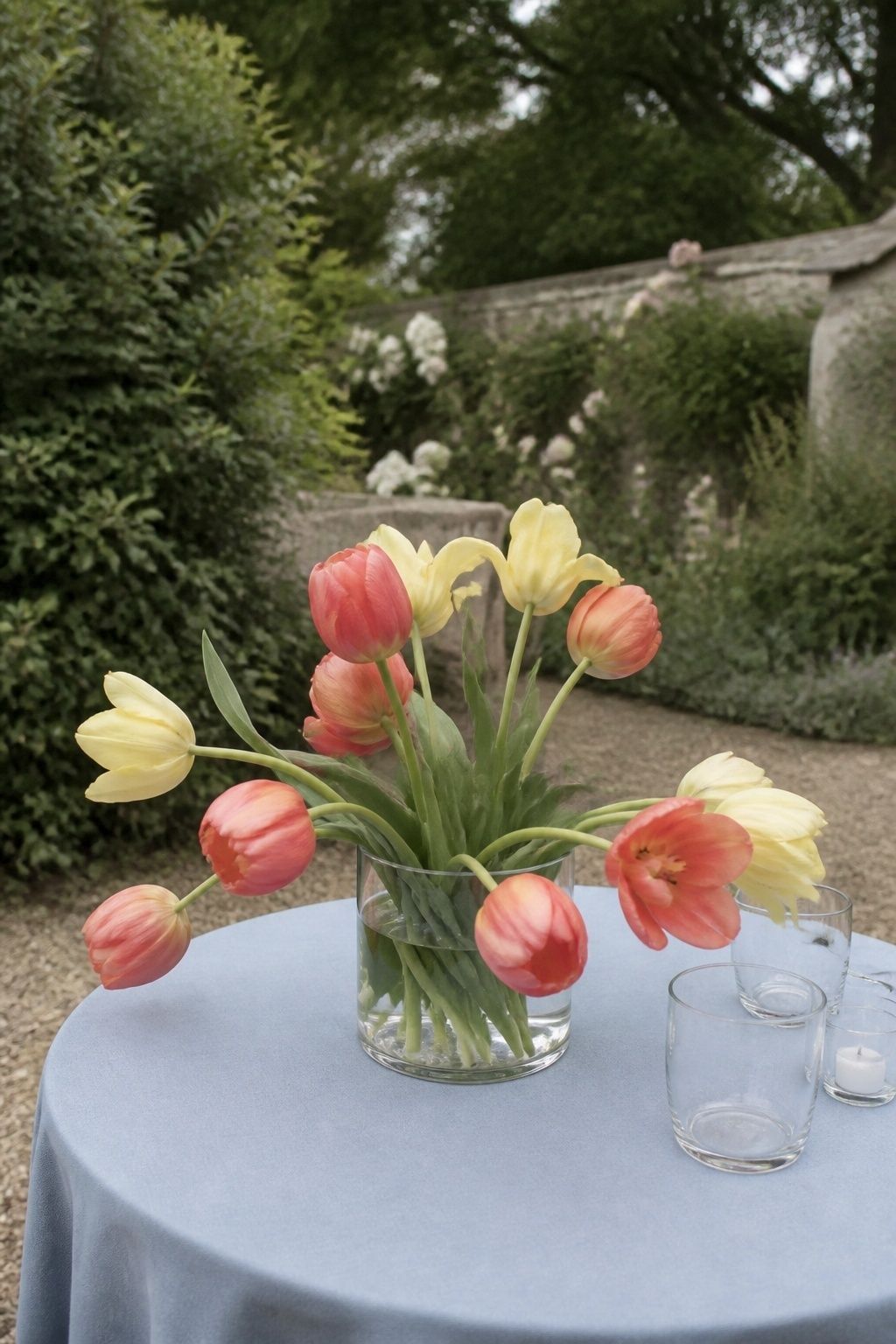
Tulips are one of the most versatile spring wedding flowers because they bring color, softness, and graceful movement at a friendlier price than many luxury blooms. They look especially lovely in bridal bouquets, bridesmaid posies, low centerpieces, aisle bud vases, and casual cocktail table arrangements.
The practical detail is movement: tulips continue to grow and bend after arranging, so a perfectly tight design often relaxes by the wedding day. Ask the florist for strong-stem varieties, and keep tall tulips out of hot direct sun in outdoor settings.
Ranunculus For Soft, Layered Petals
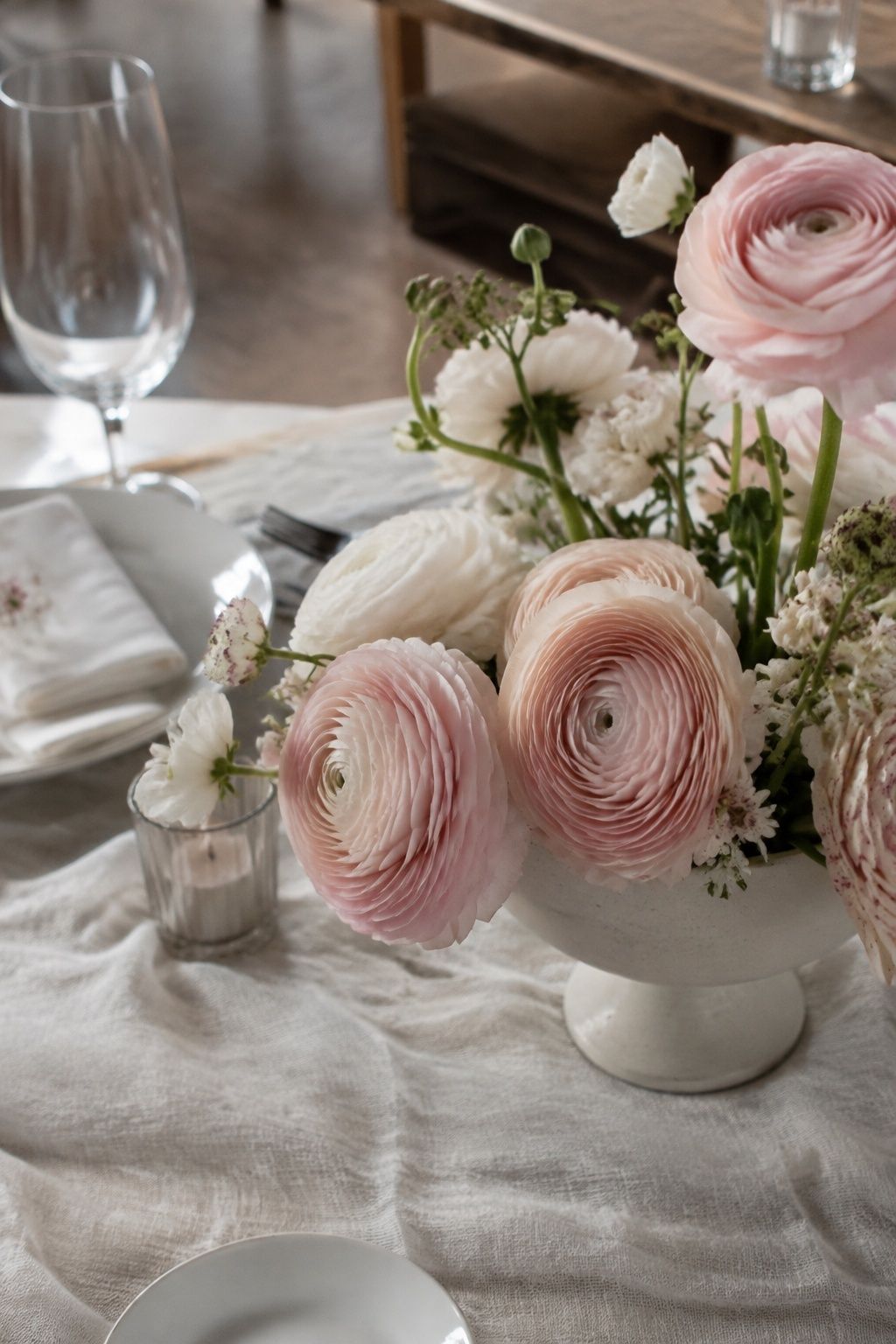
Ranunculus wedding flowers give a bouquet the delicate, layered look couples often want from peonies, but in a smaller scale. They shine in bouquets, boutonnieres, corsages, bud vases, cake flowers, and petite compote centerpieces.
They are usually strongest in cooler spring weather, which makes them a smart early-to-mid-season choice. Pair ranunculus with tulips, sweet peas, anemones, garden roses, or hellebores when you want soft texture without one oversized flower taking over the arrangement.
Peonies For Late-Spring Romance

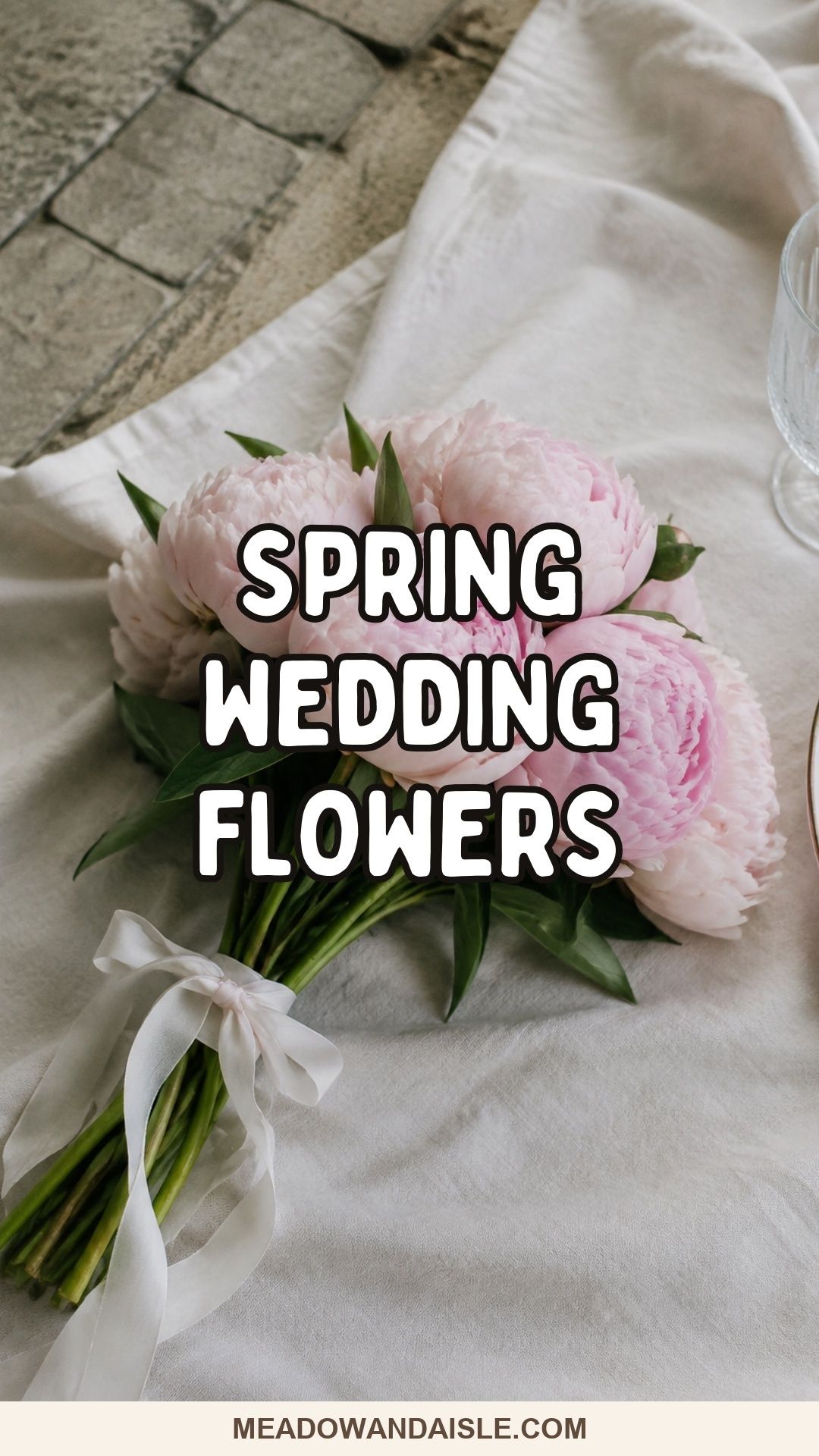
Peonies are the romantic headline bloom of late spring, especially for a peony wedding bouquet, sweetheart table arrangement, or a few lush ceremony arrangements. Their size means even a small number of stems often makes the floral design feel abundant.
The timing matters. Peonies are not equally reliable across the whole spring season, and forcing a peony-only plan for an early wedding often becomes expensive or disappointing. If your date sits outside the best window, let peonies be a bonus and build the design around garden roses, ranunculus, lisianthus, or tulips instead.
Sweet Peas For Fragrance In Small Doses
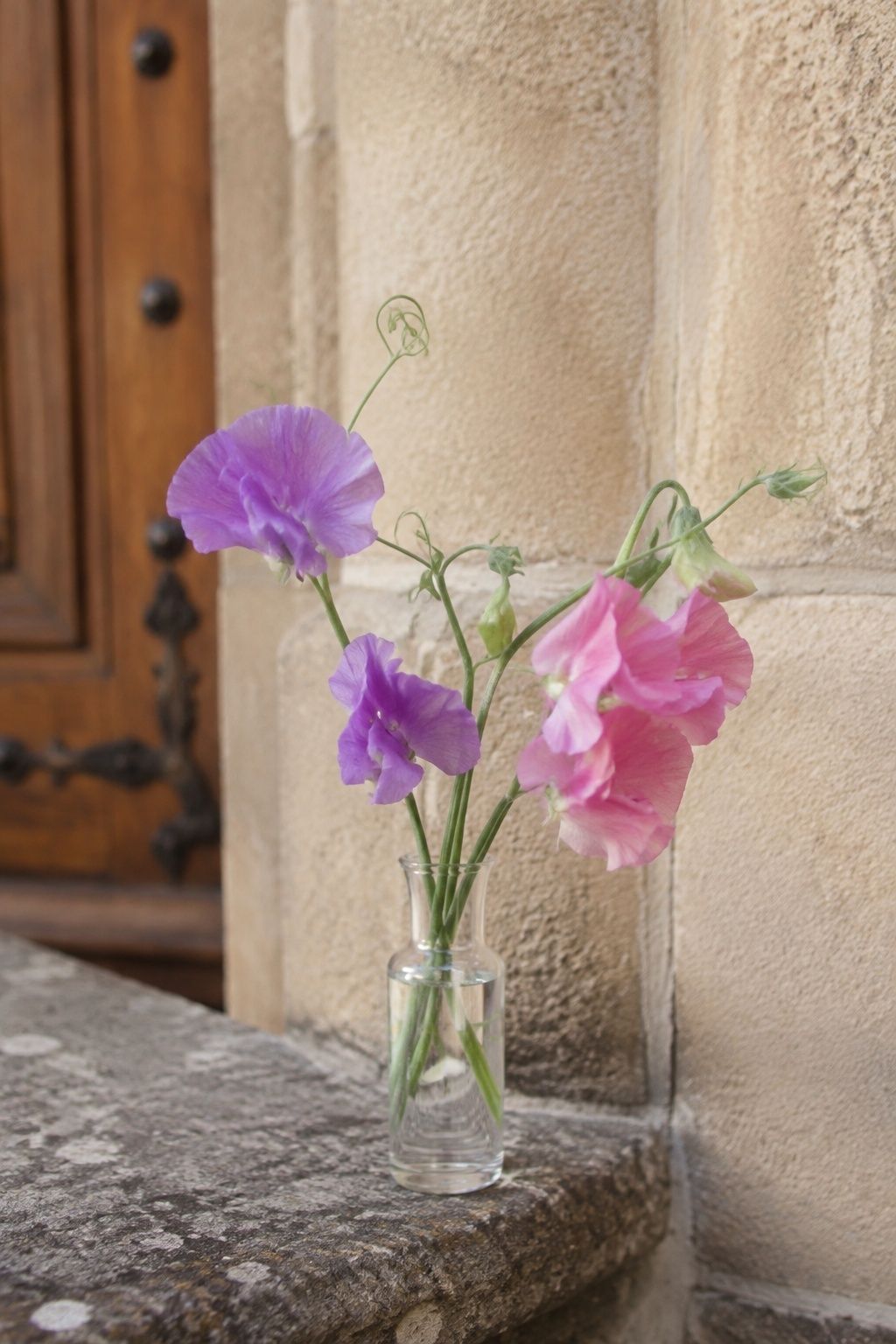
Sweet pea wedding flowers are delicate, ruffled, and lightly trailing, which makes them beautiful in bridal bouquets, detail flat lays, bud vases, and small arrangements at the ceremony entrance. Their fragrance is part of the charm, but restraint keeps it elegant.
For dinner tables, keep sweet peas in small accents rather than dense clusters in front of every guest. They pair well with ranunculus, tulips, hellebores, and airy greenery, and their shorter vase life makes them better for personal flowers or carefully hydrated small vessels.
Lilac For Ceremony Moments, Not Crowded Tables
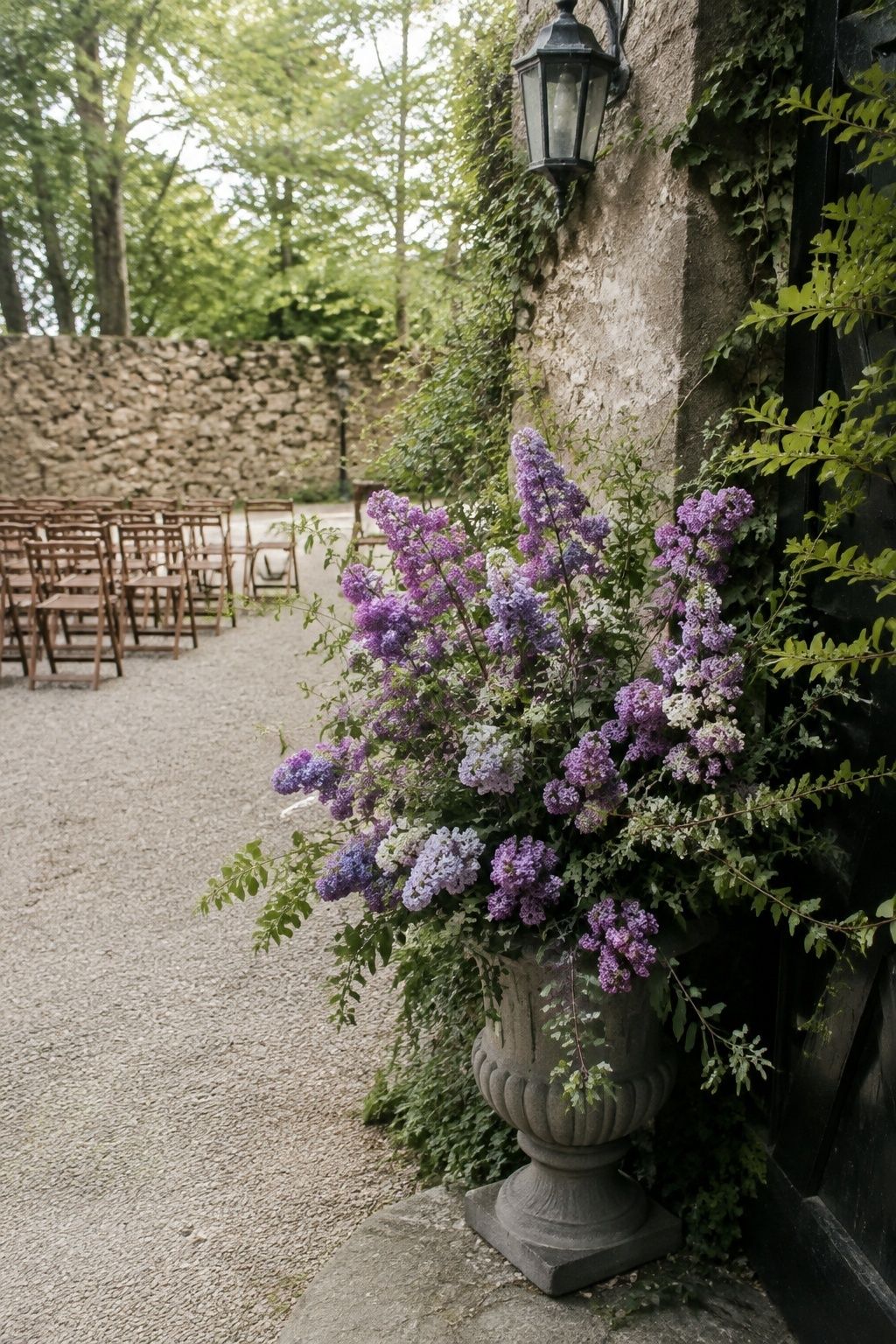
Lilac wedding flowers bring unmistakable spring fragrance and soft clustered texture. They are gorgeous in ceremony urns, aisle entrance arrangements, welcome table florals, bar arrangements, and a few loose bouquet accents.
At a small dinner, lilac often feels too fragrant and too bulky if it sits close to plates and wine glasses. Place it where guests pass by or gather briefly, then choose gentler table flowers for the meal. Hydration is essential, since cut lilac wilts quickly in warm rooms.
Daffodils For Early Spring Brightness
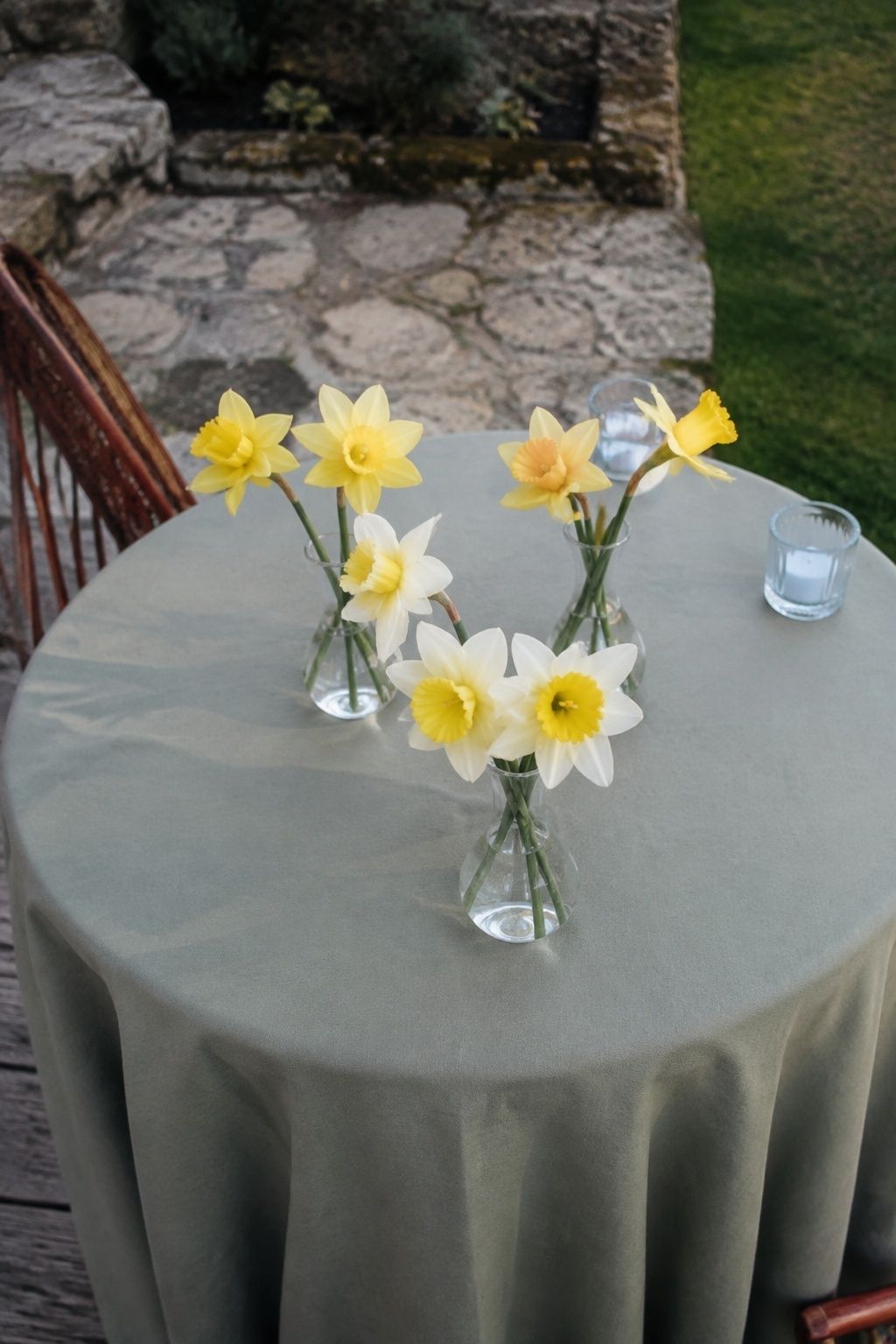
Daffodils bring happy early-spring color to aisle bud vases, welcome arrangements, cocktail tables, and relaxed garden-style centerpieces. Their yellow, white, cream, and peach varieties make a spring wedding feel fresh without leaning overly sweet.
The caution is conditioning. Freshly cut daffodils release sap that shortens the life of other flowers, so condition them separately before mixing. They are wonderful for early spring wedding flower ideas, with a florist who understands how to prep them.
Anemones For Graphic Contrast
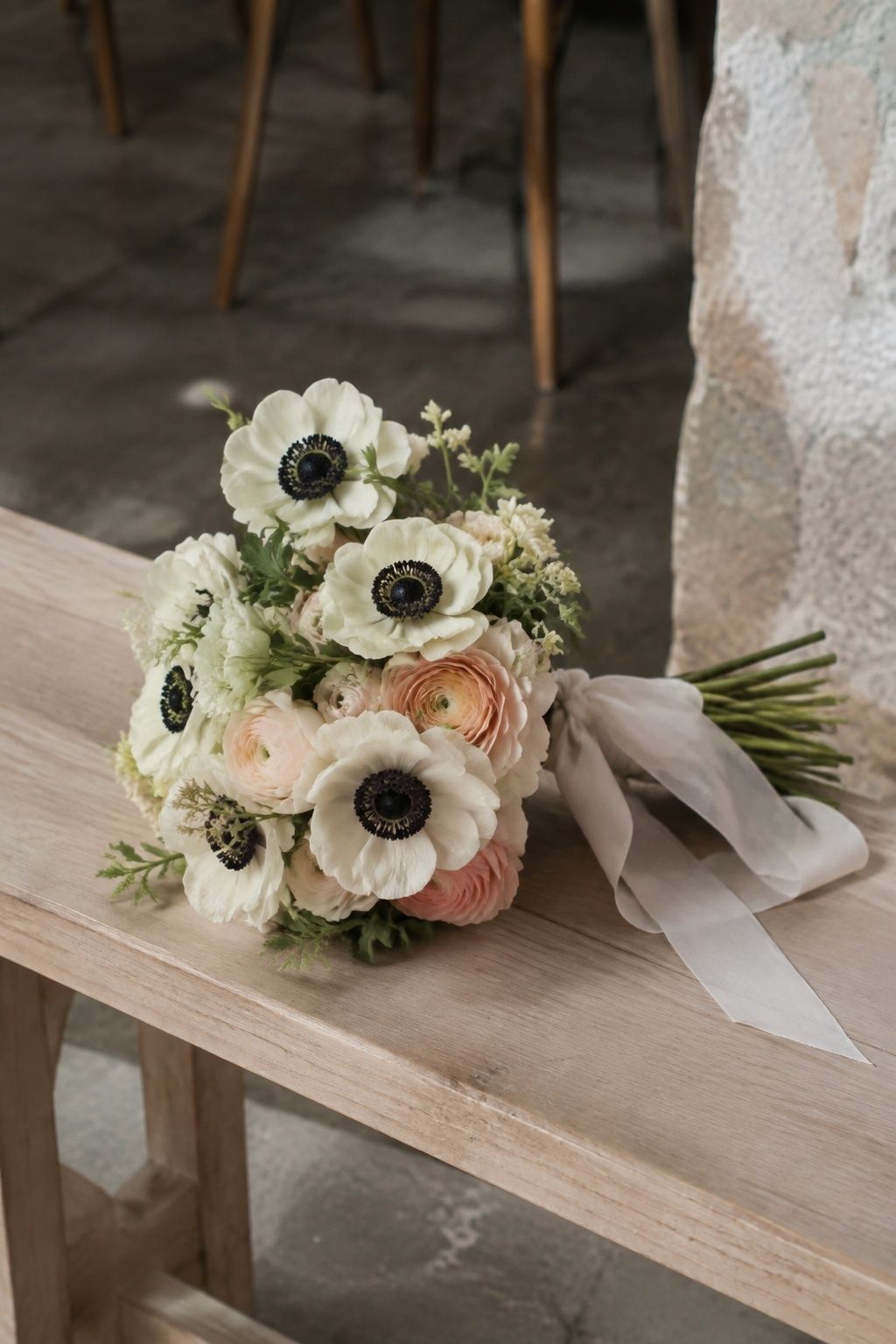
Anemones add crisp contrast when spring palettes feel too soft. Their dark centers shine in bouquets, boutonnieres, cake flowers, bud vases, and small centerpieces, especially with white, blush, lavender, butter yellow, or pale blue blooms.
An anemone wedding bouquet feels modern without losing romance. Keep them away from harsh heat and pair them with softer shapes like ranunculus, sweet peas, tulips, or garden roses so the contrast feels intentional instead of stark.
Hyacinth For Petite Fragrant Accents

Hyacinth brings dense little bells and a clear spring fragrance. It suits small accents in boutonnieres, petite bud vases, ceremony details, or a restrained bar arrangement, where guests enjoy the scent without overwhelming dinner.
A hyacinth boutonniere feels seasonal and polished, but the bloom is strongly scented and not always the best table choice. If guests will sit close to the flowers for hours, use just a few stems or move hyacinth to entrances and personal flowers.
Garden Roses For A Reliable Romantic Base
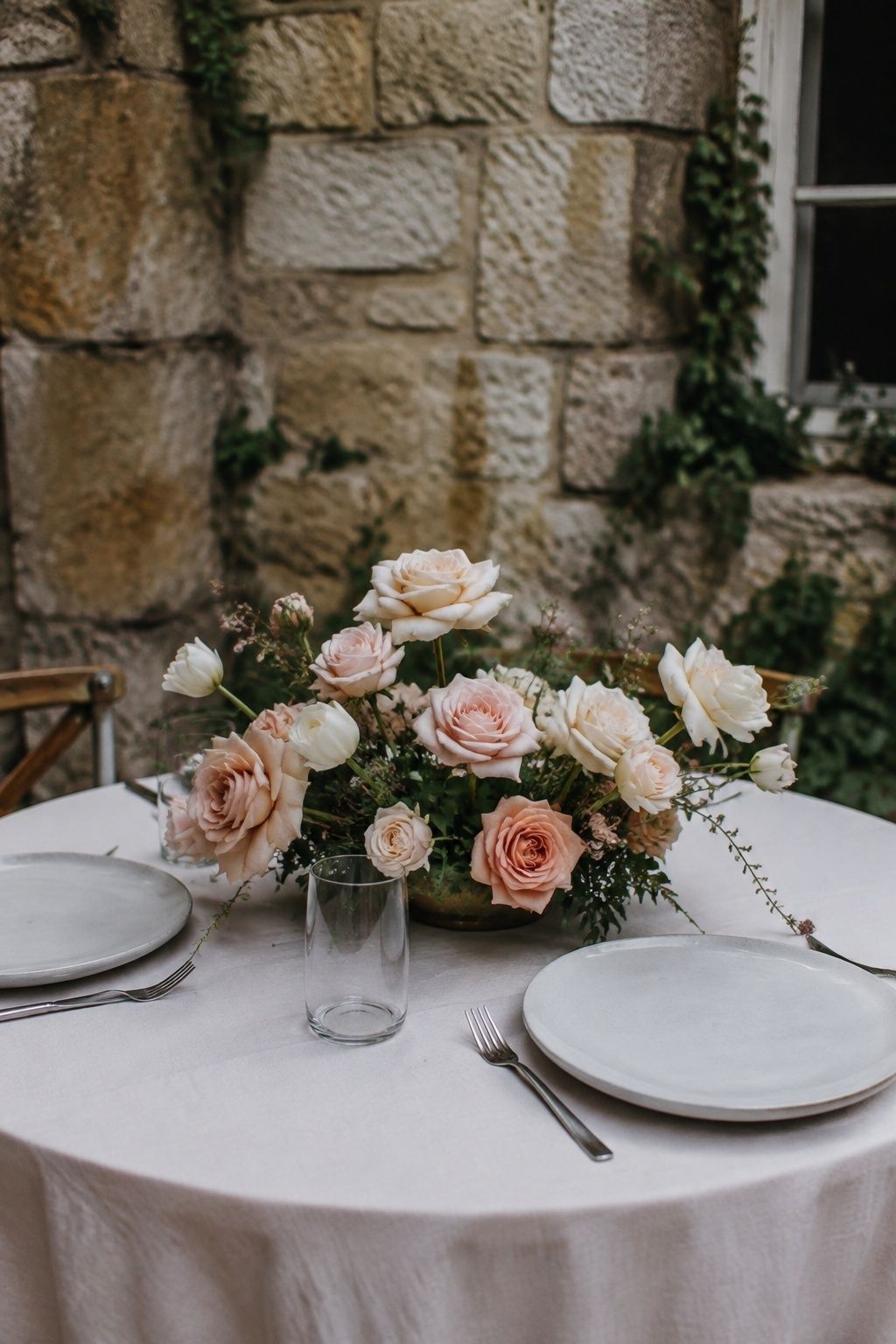
Garden roses are a dependable foundation for spring wedding bouquets and centerpieces because they offer the lush romance many couples love in peonies with broader availability. They suit bouquets, ceremony arrangements, cake flowers, sweetheart table florals, and low reception designs.
They are especially valuable when the wedding month falls between flower seasons. Pair garden roses with tulips for movement, ranunculus for layers, sweet peas for softness, or fresh greenery for a more relaxed meadow feeling.
Cherry Blossom Branches For Height And Air
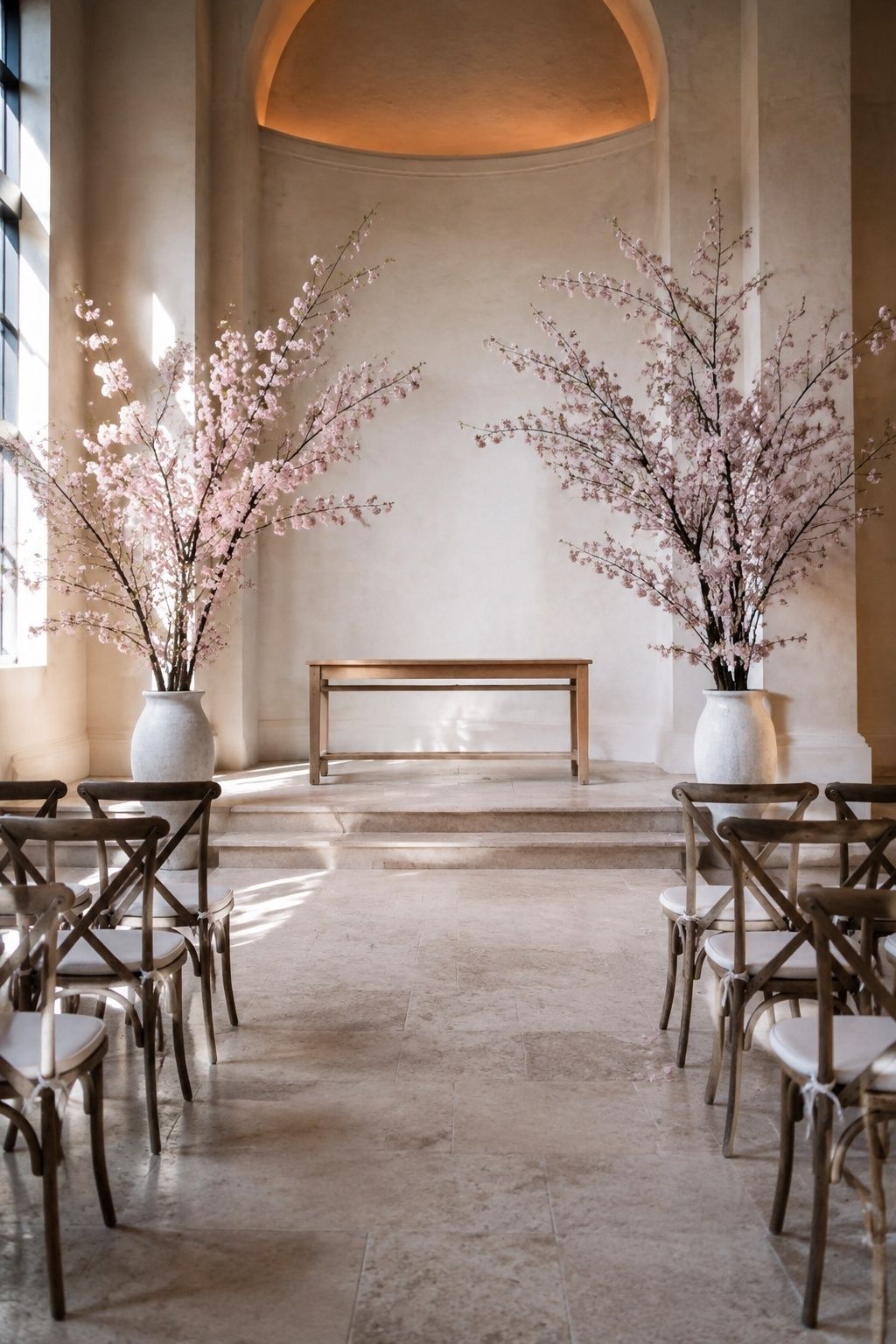
Cherry blossom branches wedding arrangements bring height, air, and a true spring silhouette. They are best for ceremony urns, an altar backdrop, escort table arrangements, entrance florals, or a dramatic bar moment, not crowded guest tables.
Branches are fragile and weather-sensitive, so place them where wind, heat, and constant guest movement stay controlled. In a small wedding space, one pair of blossom arrangements often feels more elegant than scattering branches across every surface.
Forsythia Branches For A Yellow Spring Statement
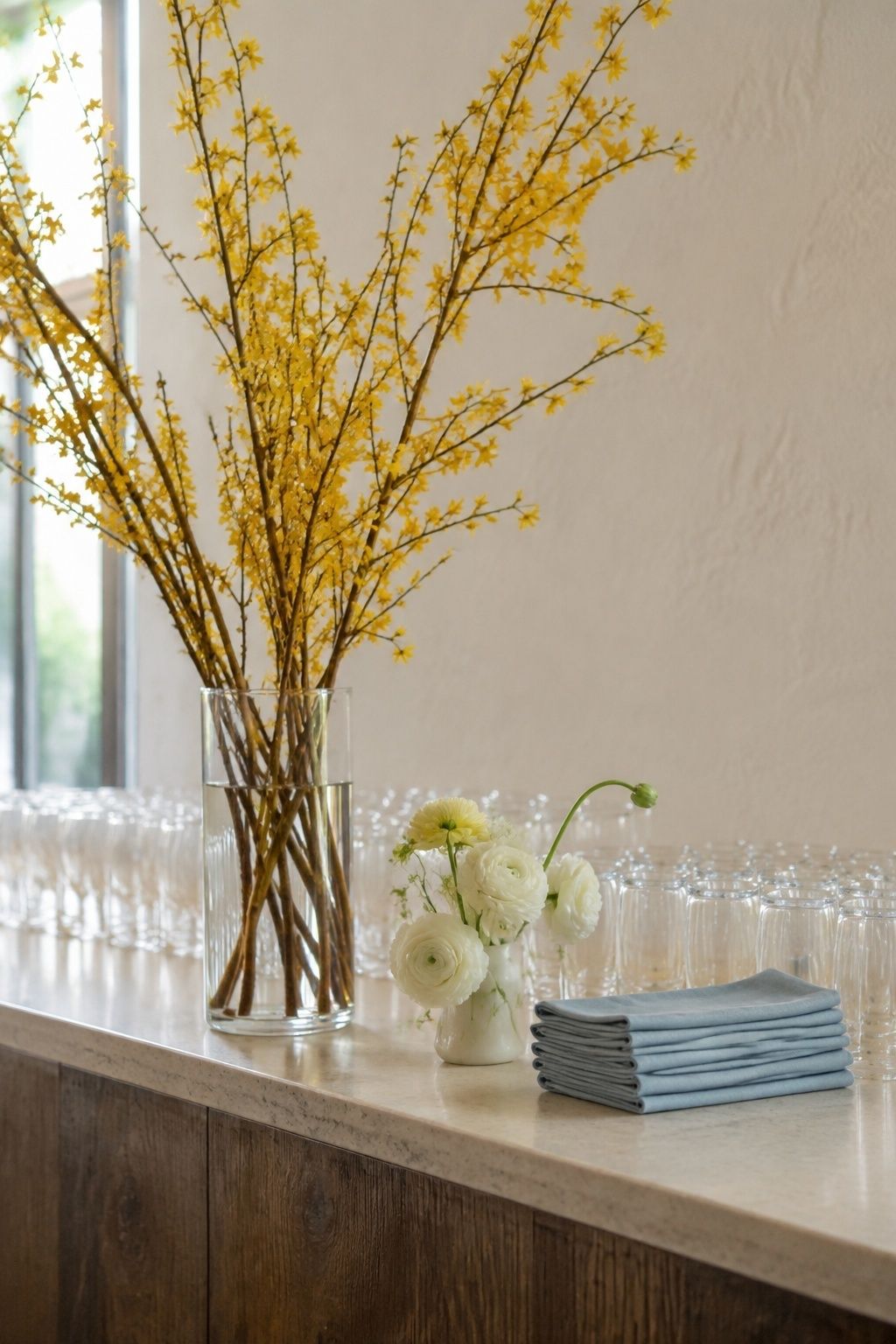
Forsythia offers bright yellow branches that feel sunny, architectural, and unmistakably seasonal. Place it in ceremony urns, a welcome arrangement, an escort display, or a single dramatic floral moment at the bar.
Because forsythia has a strong color story, it looks best with a restrained palette around it. Cream tulips, white ranunculus, greenery, pale blue accents, or simple glass vessels keep the look fresh instead of busy.
Hellebores For Moody Early-Spring Texture
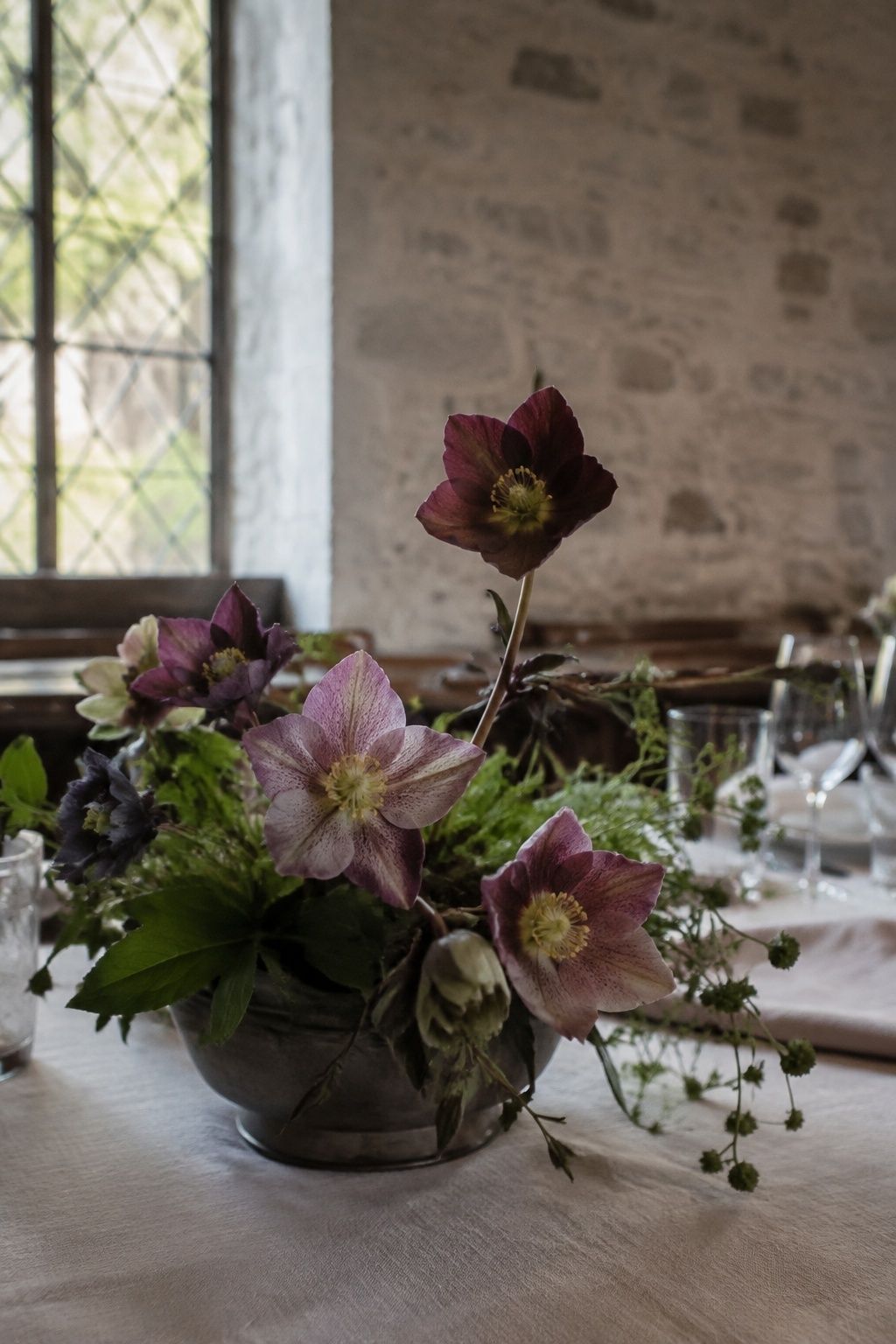
Hellebores bring moody softness to early spring arrangements, especially in mauve, plum, green, cream, and dusty rose tones. They are beautiful in bouquets, boutonnieres, bud vases, and small centerpieces where guests notice their unusual faces up close.
They suit couples who want spring flowers without a candy-colored palette. Hellebores pair beautifully with ranunculus, tulips, garden roses, and trailing clematis, but they require careful hydration and a florist who knows how to condition them for celebrations.
Lisianthus As A Practical Peony Backup
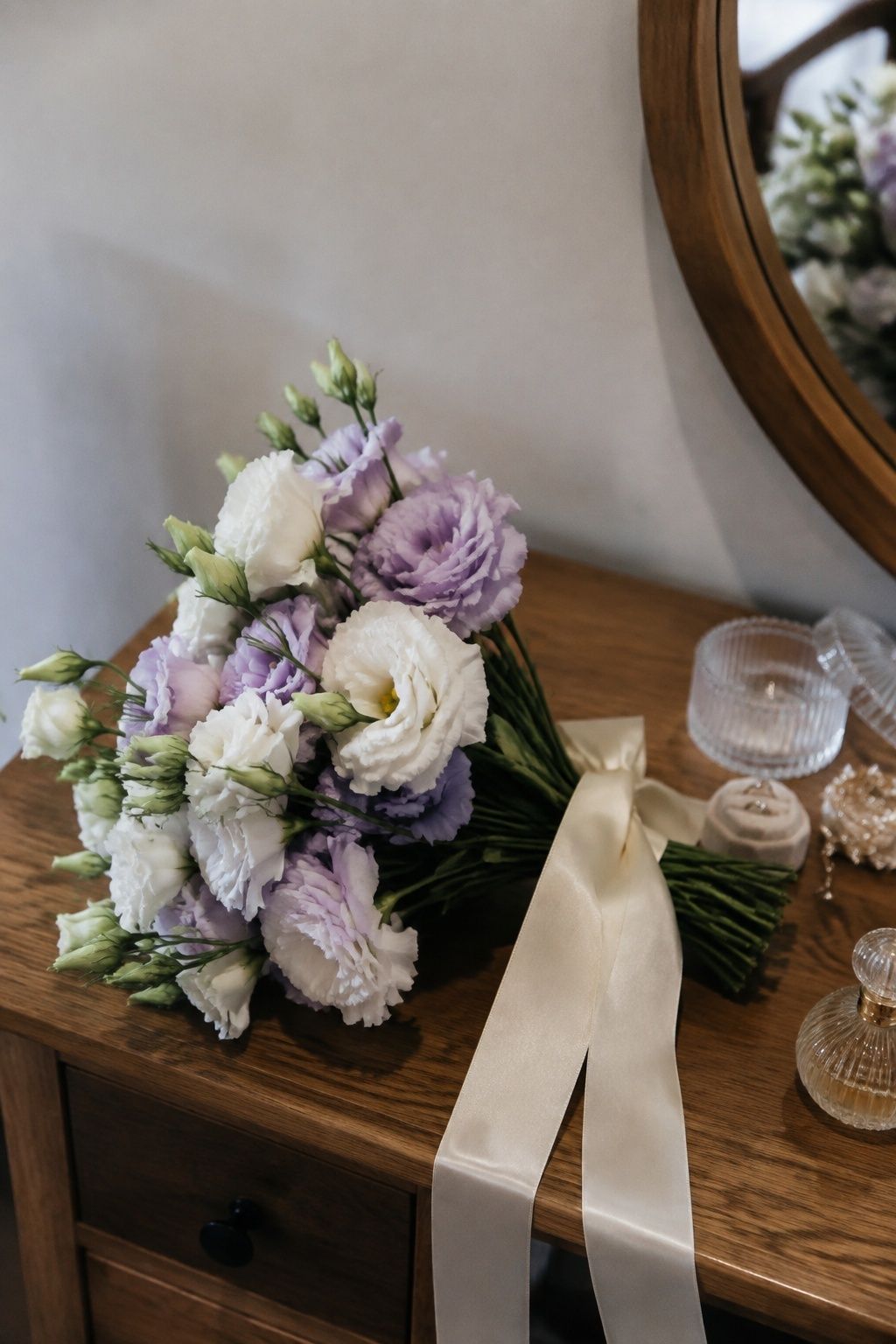
Lisianthus wedding flowers are elegant, flexible, and often more practical than a strict peony plan. They have soft ruffled petals, lighter stems, and a romantic shape that suits bouquets, boutonnieres, centerpieces, cake flowers, and bud vases.
They are not identical to peonies, but they create the same soft emotional effect at a more forgiving scale. Choose lisianthus when you want a reliable bloom that anchors the design rather than stealing all the attention.
Delphinium Or Larkspur For Ceremony Height
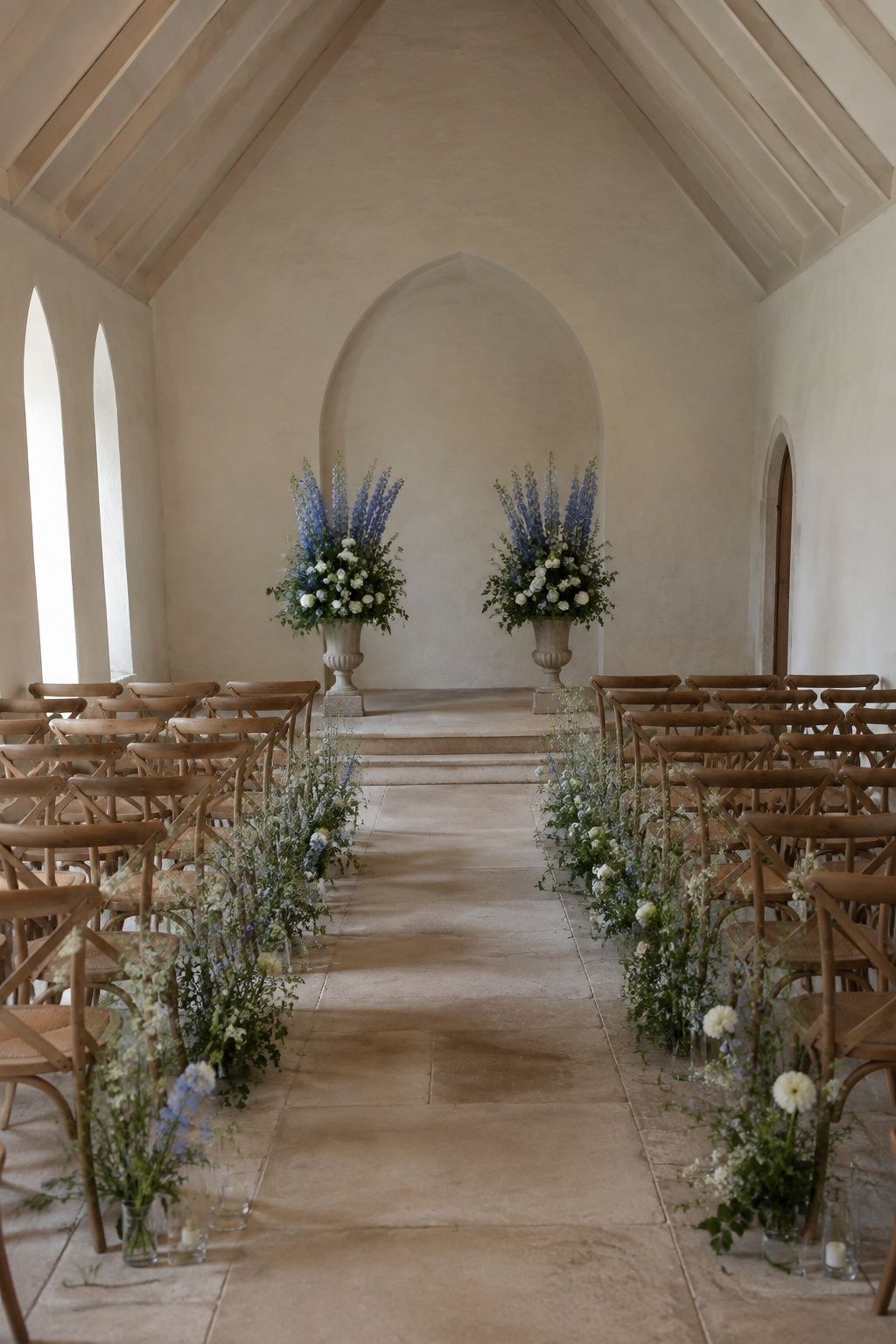
Delphinium and larkspur add vertical color to spring ceremony flowers without relying on heavy installations. They are lovely in aisle arrangements, altar urns, chapel entrances, fireplace arrangements, and a few tall reception accents.
Choose them when you want height in white, blue, lavender, or soft pink. Their stems often feel too tall for dinner tables, so keep them in places where guests view them from a little distance and select lower flowers for seated conversation.
Pansies And Violets For Tiny Detail Work
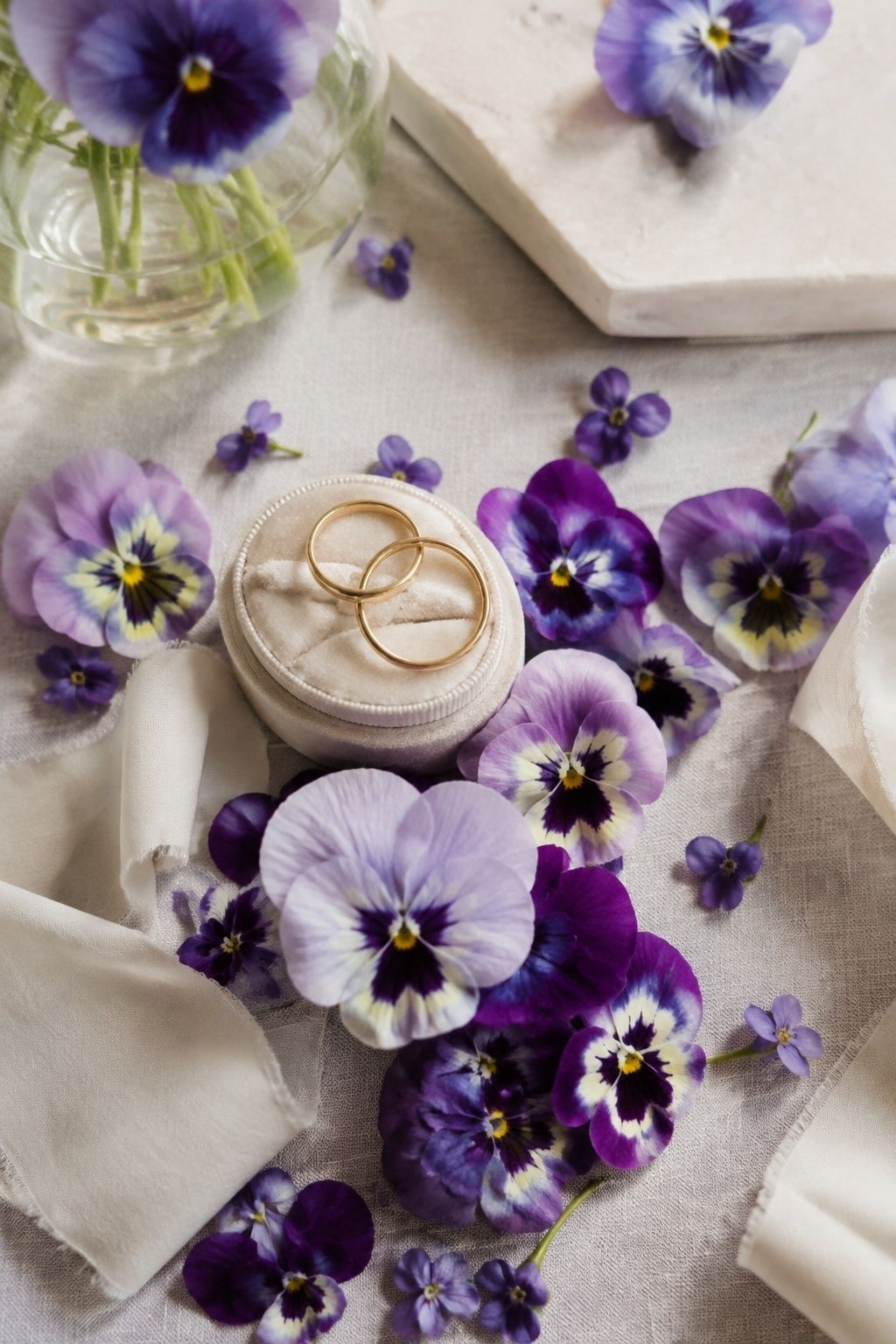
Pansies and violets are tiny spring blooms that shine in detail moments: pressed-flower place cards, cake decoration, cocktail garnishes when food-safe, ring flat lays, petite bud vases, or a few whimsical boutonniere accents.
They are not the backbone of a floral plan, and that is exactly their appeal. At a small wedding, these little details feel personal because guests are close enough to notice them. Confirm edible use separately if they will touch food or drinks.
Freesia For Light Fragrance In Personal Flowers
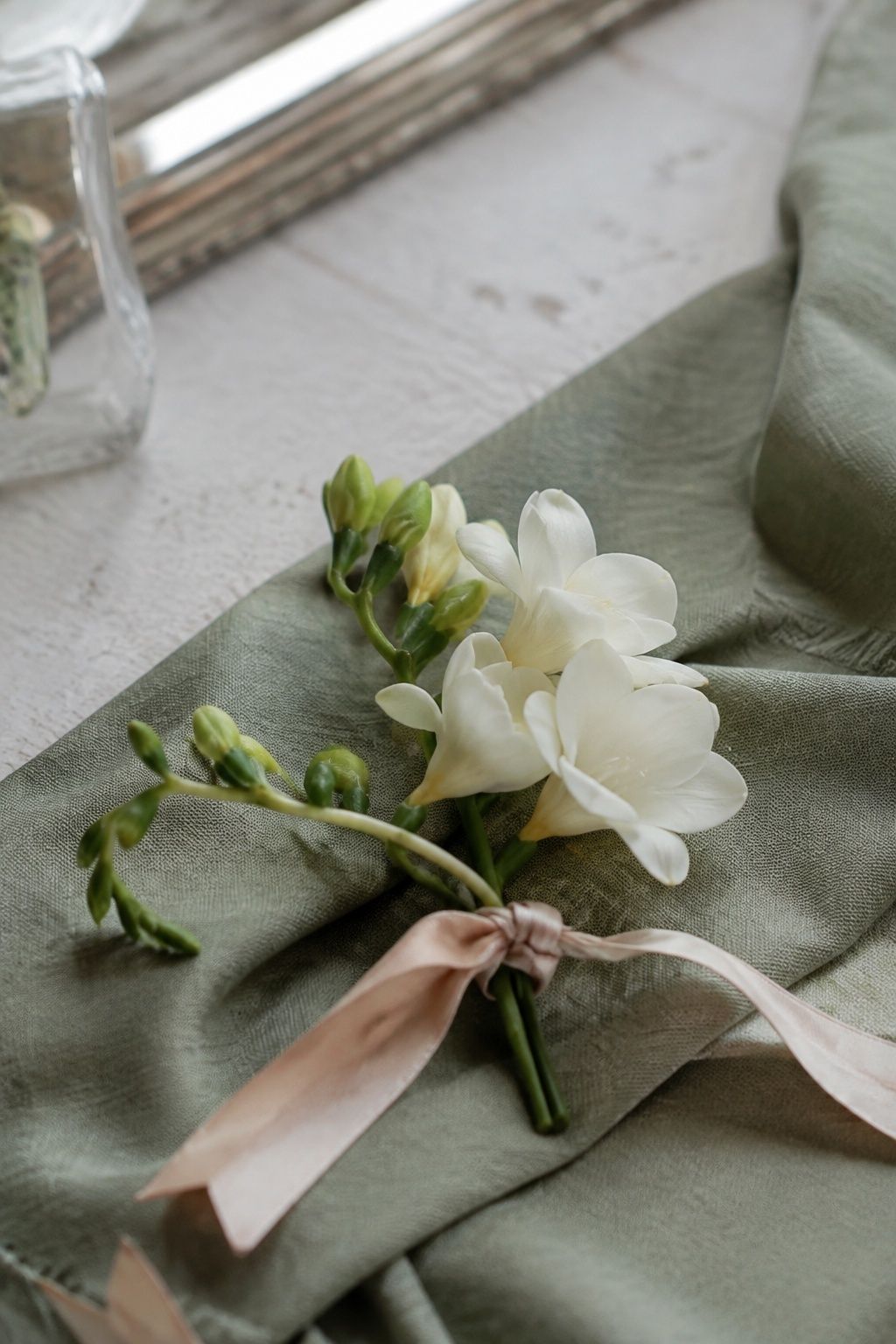
Freesia has a clean, pretty scent and a graceful curved shape, making it lovely in bouquets, boutonnieres, corsages, and small ceremony details. It gives spring wedding bouquets a delicate fragrance without the weight of larger scented blooms.
Use freesia close to the couple or wedding party rather than packing it into every reception centerpiece. A little goes a long way, and the lighter scale pairs beautifully with ranunculus, tulips, sweet peas, and garden roses.
Clematis For A Trailing Bouquet Shape
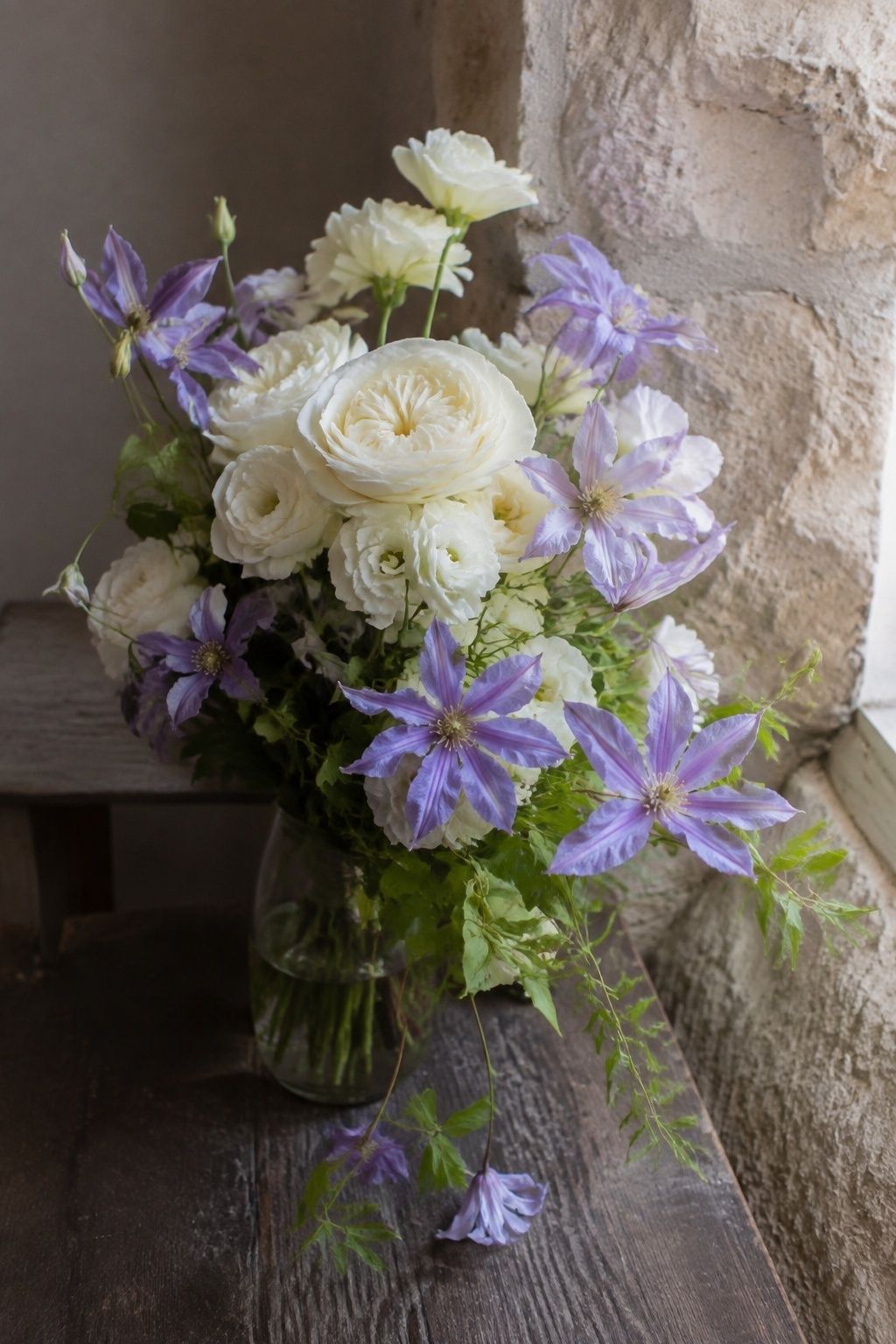
Clematis adds looseness, trailing lines, and a garden-grown feeling to bouquets and small arrangements. It shines in bridal bouquets, bud vases, sweetheart table florals, cake flowers, and airy ceremony accents.
Because clematis is delicate, treat it as a finishing stem rather than a hardworking filler. Pair it with sturdier flowers like garden roses, lisianthus, tulips, or ranunculus so the bouquet has structure under the movement.
Fresh Greenery To Keep Spring Flowers From Feeling Too Sweet

Fresh greenery gives spring wedding floral arrangements space to breathe. Ferns, spirea, jasmine vine, Italian ruscus, lightly placed eucalyptus, and seasonal leafy branches soften bright blooms and keep pastel palettes from feeling sugary.
For an intimate wedding, greenery is also a budget-smart way to connect the bouquet, ceremony, dinner tables, and cake table without buying premium blooms for every corner. Keep it loose and seasonal so it frames the flowers instead of swallowing them.
FAQ
What flowers are best for a spring wedding?
The best spring wedding flowers include tulips, ranunculus, peonies in late spring, sweet peas, lilac, daffodils, anemones, hyacinth, garden roses, cherry blossoms, hellebores, lisianthus, delphinium, larkspur, freesia, clematis, pansies, violets, and fresh greenery. The best mix depends on your wedding month, venue temperature, table size, fragrance sensitivity, and whether the flowers are for bouquets, ceremony arrangements, centerpieces, or tiny detail moments.
What wedding flowers are in season in spring?
In season spring wedding flowers often include tulips, daffodils, ranunculus, sweet peas, hyacinth, hellebores, lilac, cherry blossoms, anemones, freesia, and many flowering branches, with peonies becoming more available in late spring. Availability still varies by region, weather, grower, and exact wedding date, so ask your florist to build a flexible seasonal palette rather than promising one exact bloom months ahead.
Are peonies available for spring weddings?
Peonies reach their strongest wedding window in late spring, but they are not equally easy to secure for every spring wedding date. They often become expensive or less predictable for early spring weddings, so treat them as a seasonal luxury bloom and have backups such as garden roses, ranunculus, or lisianthus ready.
What are affordable spring wedding flowers?
Affordable spring wedding flowers often include tulips, daffodils, lisianthus, greenery, seasonal branches, and some varieties of ranunculus, depending on region and timing. For a small wedding, affordability also comes from using fewer focal points: a beautiful bouquet, low bud vases, petite ceremony arrangements, and flowers that move from ceremony to reception.
Which spring wedding flowers are too fragrant for tables?
Lilac, hyacinth, sweet peas, and freesia often become too fragrant for crowded dinner tables if arranged heavily. They are often better in bouquets, boutonnieres, ceremony arrangements, welcome arrangements, bars, or small accents where guests are not seated with the scent for a full meal.
Final Thoughts
Spring wedding flowers feel effortless when the plan starts with the month, then moves through fragrance, scale, vase life, cost, and placement. A small wedding feels finished through the right flowers in the places guests actually see, touch, smell, and remember.
Keep the final flower plan anchored to your date, your room, and the moments that matter most, whether the mood is spring garden romance or seasonal spring color.
Last update on 2026-10-03 / Affiliate links / Images from Amazon Product Advertising API