

Small wedding no plus one wording works best when it is handled as a whole communication system: named invitations, a clear RSVP count, a short wedding website FAQ, and one warm private reply for anyone who asks. The wording should protect the guest count without making single guests feel singled out.
When your wedding is small, an open plus-one policy can change the whole room. Ten extra guests may not feel like a detail when the reception is built around one long table, a private dining room, or a ceremony space where every chair was counted by name. Still, the way you say no matters just as much as the decision itself.
The kindest approach is not to print a cold rule across the invitation. Instead, make it obvious who is invited, give guests a response form that matches those names, and save the brief explanation for the website or a personal conversation. Clear boundaries feel more gracious when they are calm, consistent, and not overexplained.
Recommended Wedding Products


You Might Also Like These Blog Posts
- Small Wedding No Plus-One Website Wording For Named Guests
- No Plus One Wedding Boundaries That Still Feel Warm
- Small Wedding Plus One Etiquette For A Gracious Guest List
- Small Wedding Guest List Wording That Keeps Boundaries Kind
- Small Wedding Website Wording Ideas For A Tiny Guest List
- Small Wedding Adults Only Website Wording Lines Parents Won’t Miss
Small Wedding No Plus One Wording That Keeps The Boundary Kind
The best small wedding no plus one wording is usually quiet, not dramatic. Guests should understand that the invitation is for the named people only, but they do not need a long explanation of your venue capacity, budget, family politics, or seating math. The goal is clarity without making the boundary the emotional center of the invitation suite.
Think of the wording in layers. The envelope or digital invite names the guest. The RSVP confirms the number of seats reserved. The website FAQ gives a short reason if guests look for one. A private message handles the rare person who asks directly. When all four pieces agree, you do not have to sound stern anywhere.
Decide Who Is Invited Before You Write Anything
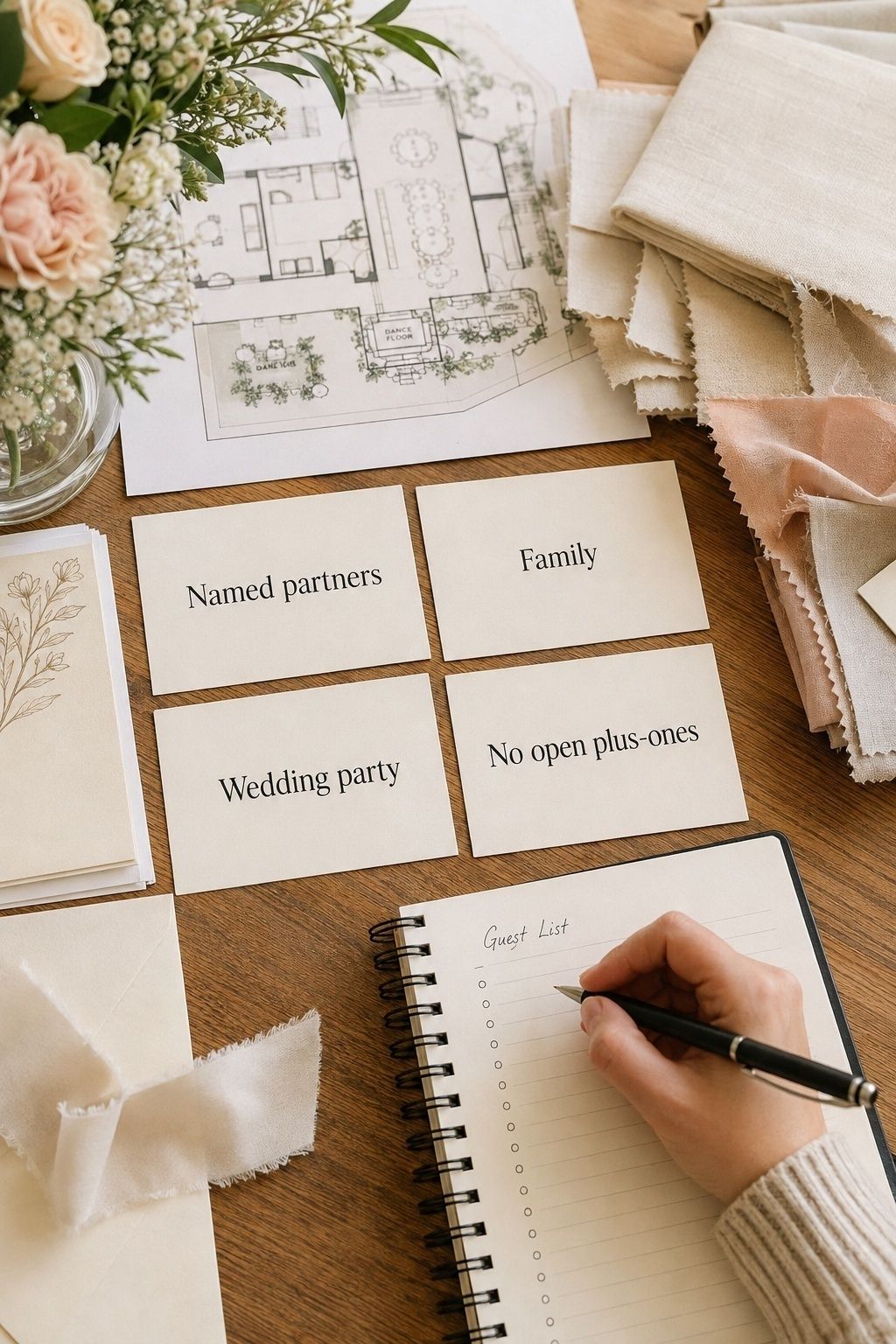
Before you write a line of no plus one wedding wording, decide the actual rule. Are spouses invited? Fiancees? Live-in partners? Long-term partners you know by name? Wedding-party partners? Out-of-town guests who would know no one else? A small wedding makes inconsistency easier to notice, and thoughtful guest list etiquette for a small wedding starts before the stationery does the talking.
A useful distinction is between named partners and open plus-ones. A named partner is a specific person connected to a guest’s life and often to your wider circle. An open plus-one is an unnamed guest your invitee chooses later. You may decide to invite named partners while still declining open guests, especially if your small wedding plus-one etiquette standard is clear from the beginning.
Write the rule in plain language for yourselves first: “We are inviting named spouses, fiancees, live-in partners, and long-term partners, but we are not offering open plus-ones.” That sentence does not have to appear publicly. It gives you a consistent standard so every later line sounds calm instead of improvised.
Let The Invitation Addressing Carry The First Signal
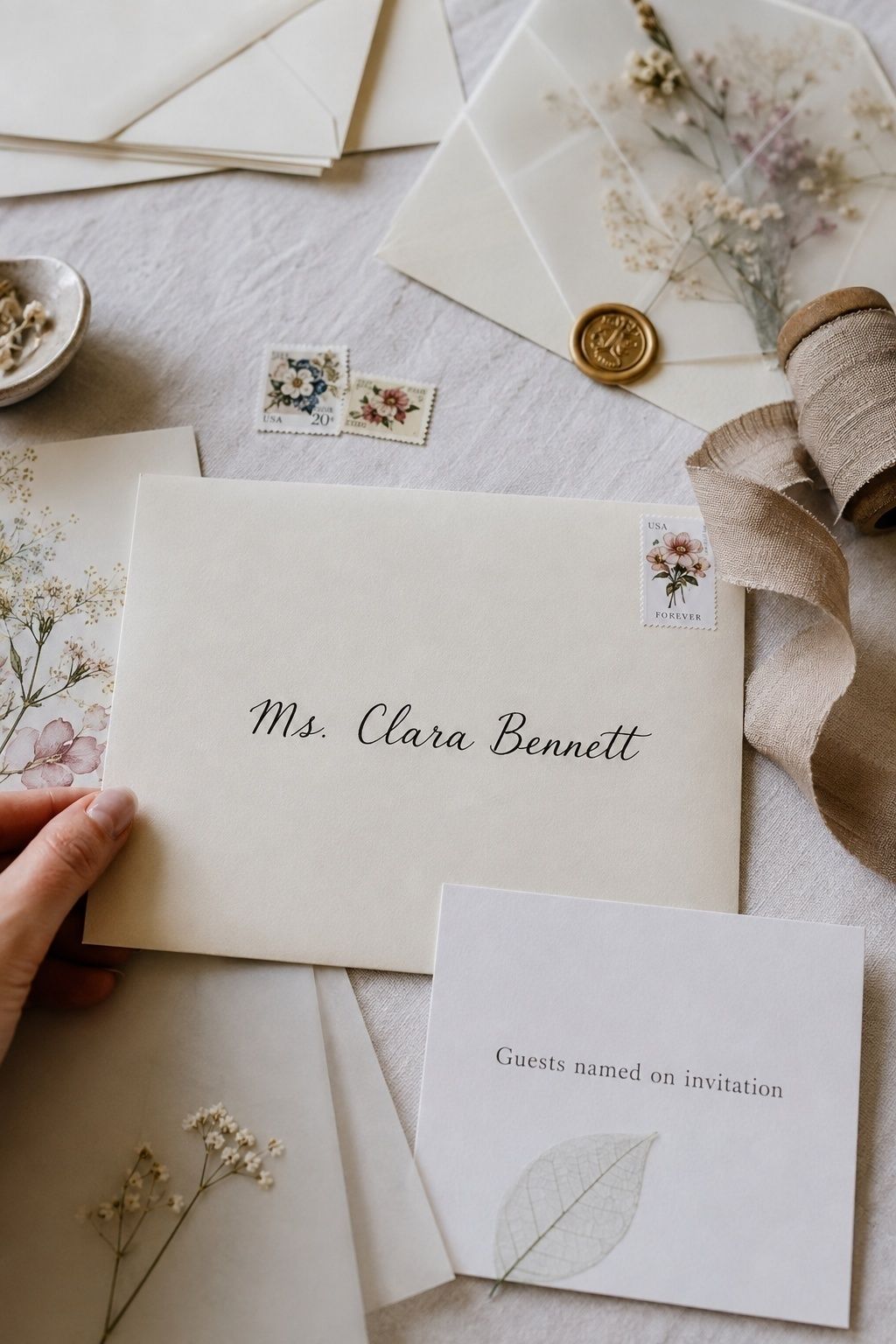
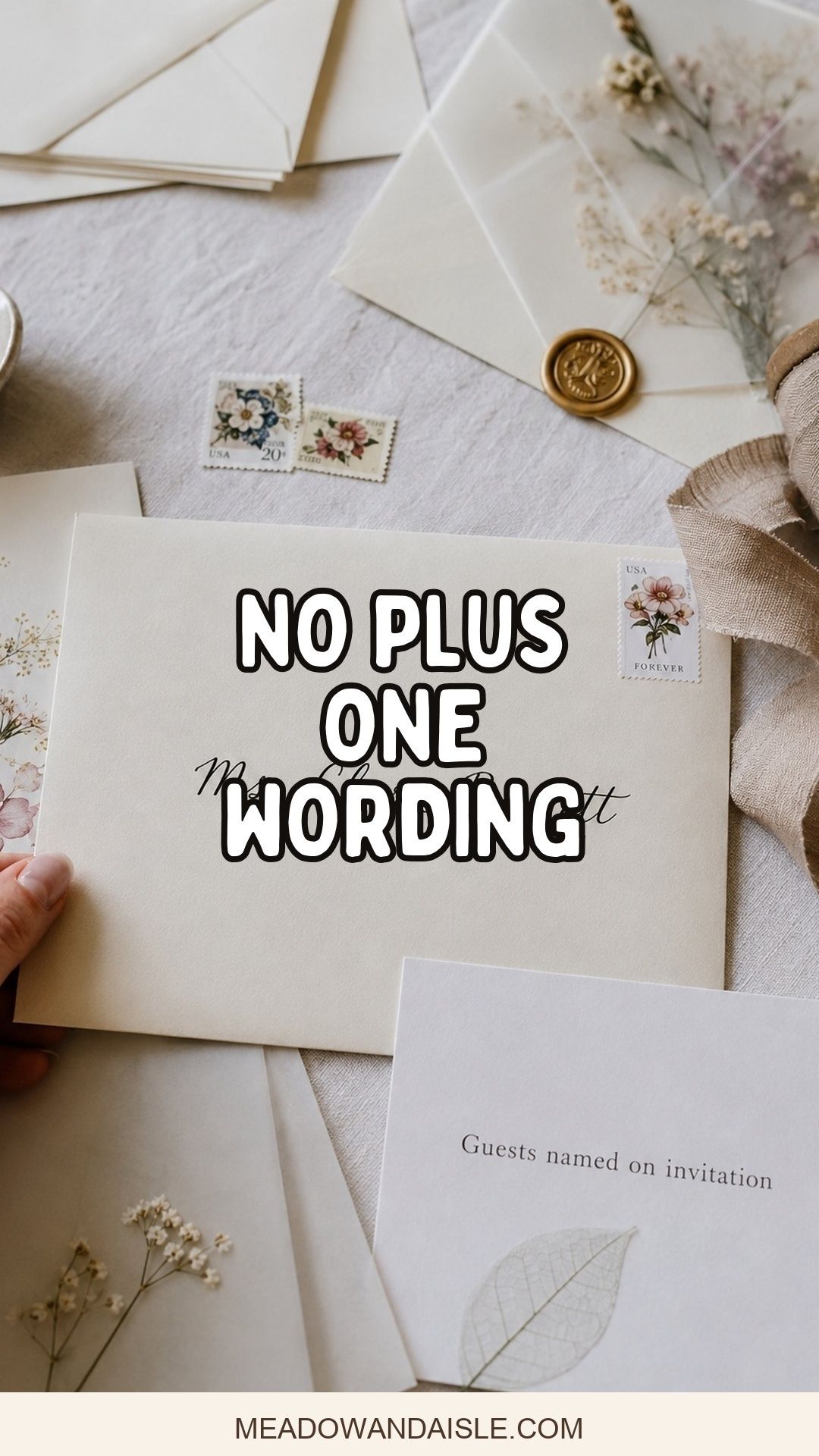
Named guest wording starts before the RSVP card. If the envelope, inner envelope, or digital invitation names only one person, that is the first clear signal. For a paper invitation, address the guest by name rather than using household language that could imply someone else is included. For a digital invitation, make the invited guest list visible only as the names you have chosen, especially when your invitation list is intentionally narrow.
This is usually more graceful than printing “no plus-ones” on the main invitation. The main card should feel like a welcome, not a warning. It can still be precise: use the invited person’s name, avoid vague lines like “bring someone special,” and make sure the reply card does not invite guests to add an extra name.
If you need a details-card note, keep it soft and short. Original no plus one invitation wording could be: “We have reserved this celebration for the guests named on the invitation.” Another option is: “Because our wedding is very small, we are able to host only the guests listed here.” Both give the boundary without making the guest feel scolded.
Use RSVP Wording To Confirm The Seat Count
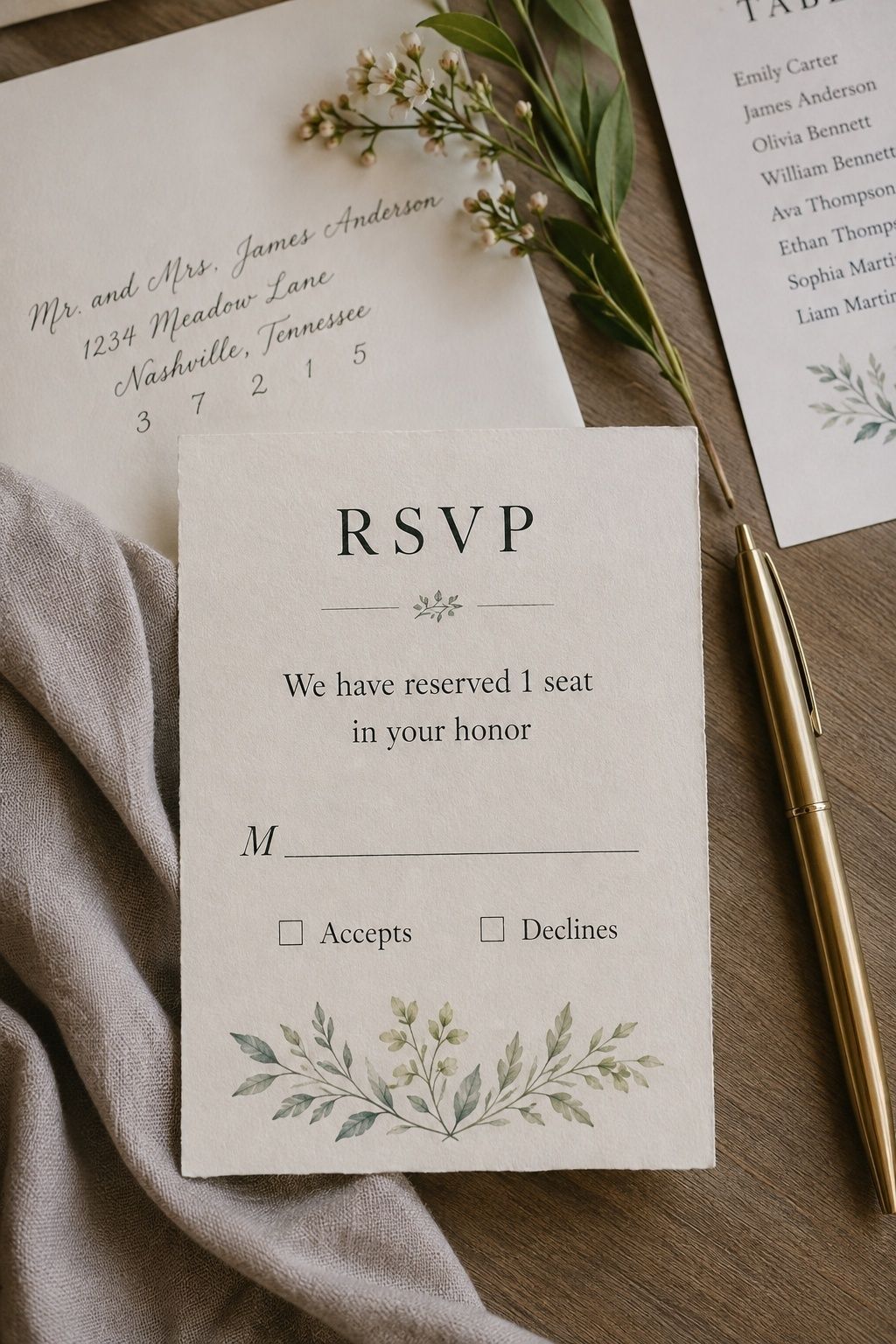
RSVP wording no plus one clarity is about reducing guesswork. If the response card asks for “number attending” with a blank line, some guests may assume they can write two. A small wedding reply card should connect the answer to the actual seats reserved.
Try a line such as: “We have reserved 1 seat in your honor.” If two named guests are invited, use: “We have reserved 2 seats for you.” For a website RSVP, choose settings that prevent guests from adding names manually unless you approve the change yourself. The same steady approach works for small wedding RSVP wording because the form confirms the plan instead of asking guests to interpret it.
You can also make the meal-choice section name-specific. Instead of one open meal count, list the invited guest or invited guests and collect responses under those names. This keeps the form practical and avoids turning the no-plus-one boundary into a lecture.
Put The Policy In The Website FAQ
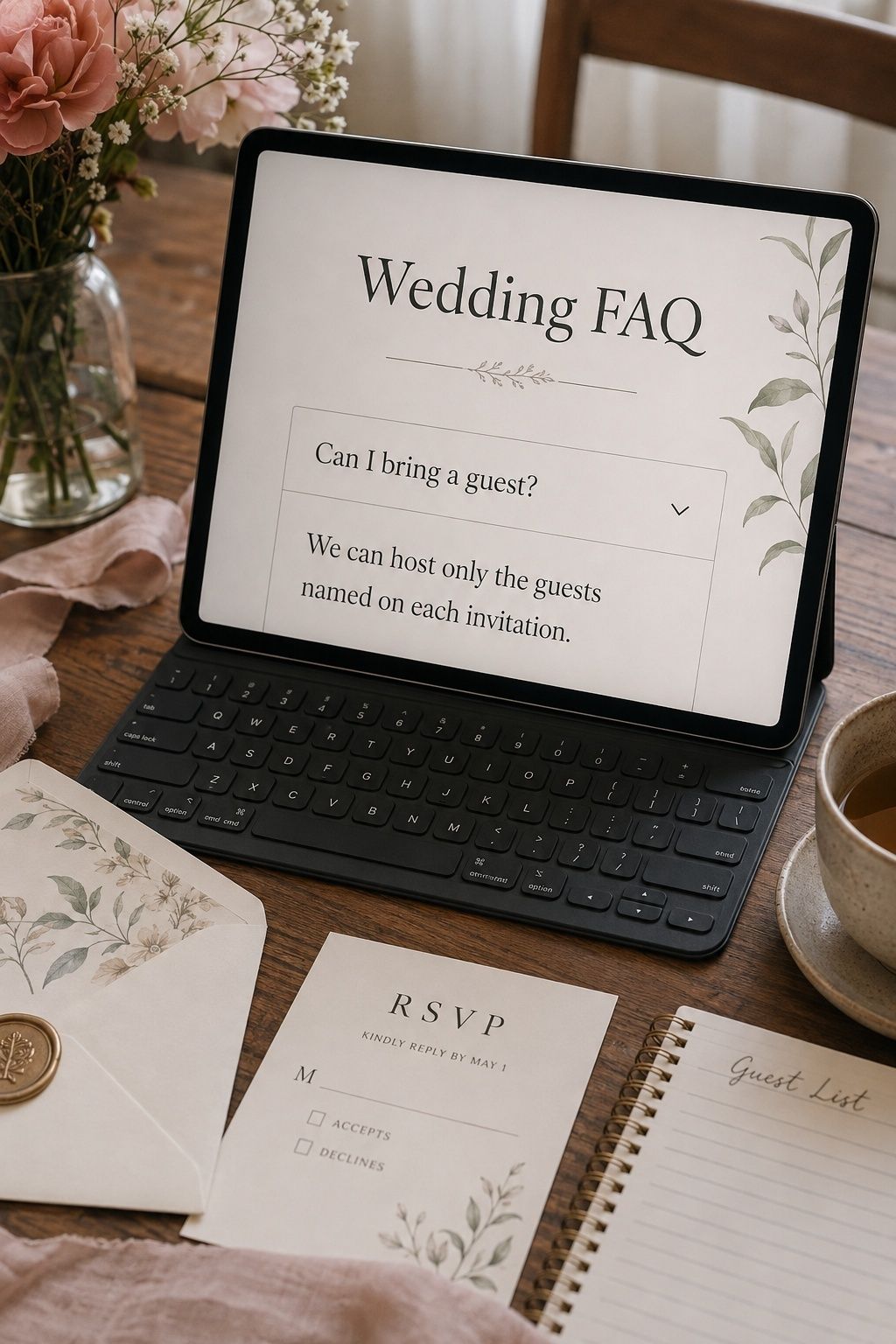
No plus one wedding website wording can be slightly more explanatory because guests are already looking for details. Keep it brief, warm, and closed-ended. If your site carries other invitation details, small wedding website wording should answer the question without inviting a case-by-case negotiation in the same paragraph.
For example: “Because we are celebrating with a very small guest list, we are only able to accommodate the guests named on each invitation. Thank you for understanding as we keep the day intimate.” Another option is: “Our venue has limited seating, so our guest list is invitation-only. If your invitation includes a named guest, their name will appear with yours.”
Notice what those lines do not include. They do not apologize repeatedly, blame one side of the family, mention cost per plate, or imply that exceptions might be available for a persuasive enough request. Polite no plus one wording is warm, but it still ends the question.
Prepare A Private Reply For Guests Who Ask
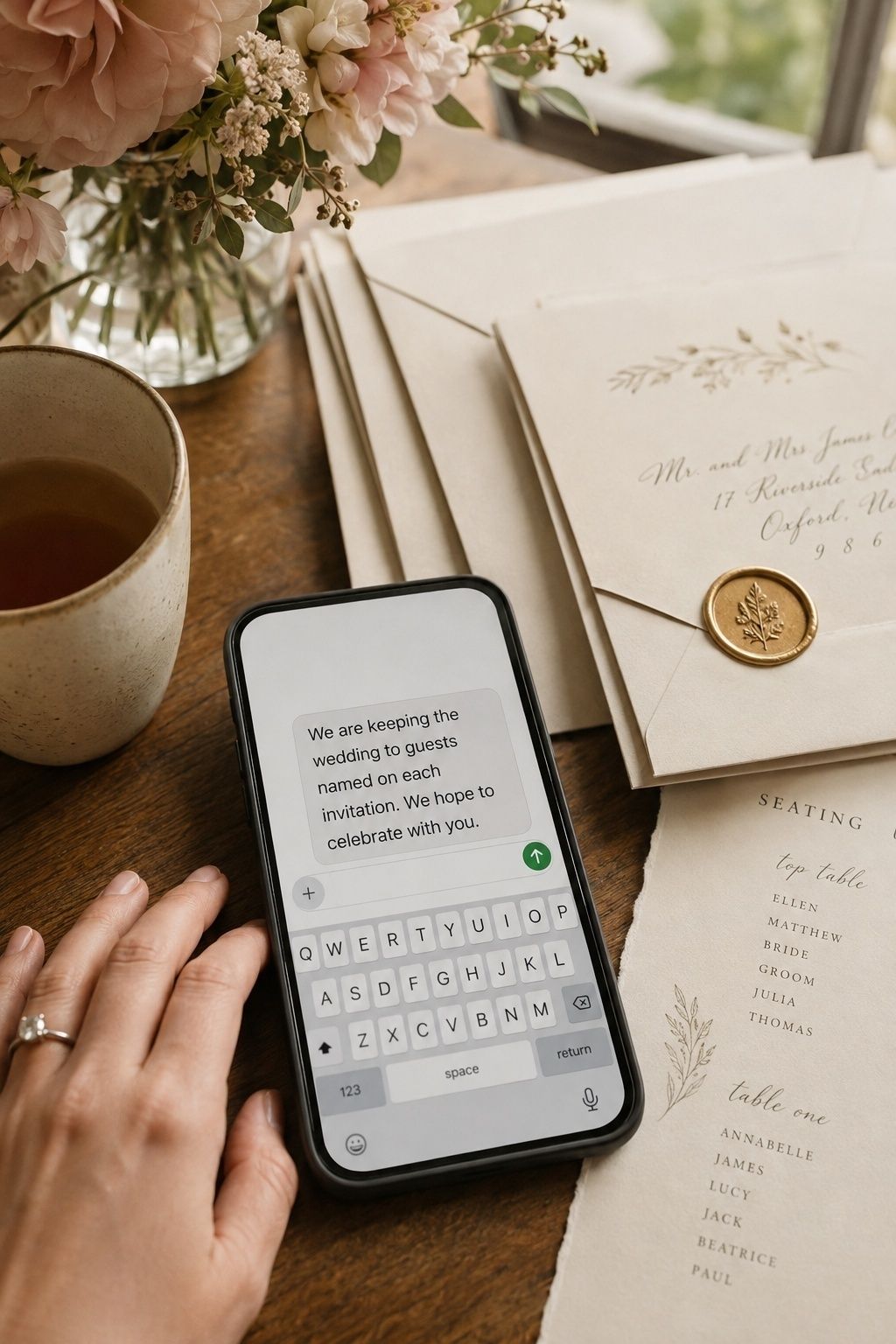
Even with clear invitations, someone may ask whether they can bring a date. Decide your answer in advance so you are not trying to protect the boundary while surprised, guilty, or distracted. The reply should be personal enough to feel kind and firm enough to avoid a second round.
You might say: “I wish we had room to include everyone, but we are keeping the wedding to the named guests on each invitation. We are really looking forward to celebrating with you.” Or: “Our guest count is very tight, so we cannot add additional guests. I completely understand if that affects your plans, and I hope we still get to see you there.”
Avoid giving a long reason that invites problem-solving. If you say the venue is small, a guest may ask whether one more chair could fit. If you say the budget is tight, they may offer to pay. If you say you do not know their date, they may introduce them. A short boundary is easier for everyone to respect.
Do Not Treat Established Partners Like Random Dates
Small wedding plus-one etiquette gets sensitive when couples use “no plus-ones” to mean several different things. If a guest has a spouse, fiance, live-in partner, or long-term partner, that person may not feel like an optional date to them. You can still have a limited guest list, but it is worth deciding intentionally rather than hiding behind a blanket phrase.
For a very tiny ceremony, you may invite only immediate family and the closest friends with no partners outside that circle. For a larger intimate reception, you may include named partners while declining open guests. Either choice can be reasonable if the rule is applied consistently and communicated through the invitation names.
If you exclude an established partner of someone very close to you, consider whether a direct conversation is needed. Not every decision needs a speech, but the closer the relationship, the more a brief personal note can prevent the guest from feeling dismissed.
Help Solo Guests Feel Comfortable

A no-plus-one boundary should come with thoughtful hosting. If you ask guests to attend alone, think about how the day will feel from their side. Seat solo guests with people they know or with warm conversational guests, not at the end of a table where everyone else arrived as a couple.
Make introductions easy. A welcome drink, family-style dinner, short cocktail hour, or seating chart built around real connections often eases the first few minutes. If someone is traveling alone, share transportation notes, nearby lodging, and the schedule clearly so they are not managing logistics and social uncertainty at the same time.
This is where limited guest list wedding wording and good hospitality meet. The message is not “come alone and figure it out.” It is “we have planned a small celebration carefully, and we want you to feel included once you arrive.”
Avoid Wording That Creates More Awkwardness
Some wording feels clear to the couple but sharp to guests. Avoid jokes about stranger dates, dramatic lines about impossible budgets, legal-sounding policies, public scolding, or anything that makes single guests feel like the problem. A wedding invitation is not the place to vent about guest-list pressure.
Also be careful with apology-heavy language. “We are so, so sorry, but unfortunately we cannot possibly let anyone bring a guest” can sound more negotiable than kind. One sincere sentence is enough. The boundary is easier to accept when it does not sound like you are asking guests to comfort you for making it.
Before sending anything, read the line as a guest who likes you and wants to understand the plan. Does it tell them who is invited? Does it protect their dignity? Does it match the RSVP form and website? If yes, the wording is doing its job.
FAQ
How Do You Politely Say No Plus Ones At A Small Wedding?
Use named invitations first, then add a short note where details belong: “Because our celebration is very small, we are only able to host the guests named on each invitation.” Keep it warm, brief, and consistent. Avoid jokes, repeated apologies, or wording that sounds open to negotiation.
Where Should No Plus One Wording Go?
The clearest places are the invitation addressing, RSVP card or form, and wedding website FAQ. Let the main invitation stay welcoming. Use the RSVP to confirm the number of reserved seats, and use the website for one short explanation about named guests or limited seating.
Should You Write No Plus Ones On The Invitation?
Usually, no. A blunt “no plus-ones” line on the main invitation can feel colder than necessary. It is often better to address the invitation to the named guest, make the RSVP count specific, and place any limited-guest-list explanation on the website or details card.
How Do You Handle A Guest Who Asks To Bring Someone?
Reply privately, kindly, and without reopening the decision. Try: “We would love to include more people, but our guest count is limited to the names on each invitation. We hope you understand, and we would still be so happy to celebrate with you.”
Who Should Still Be Invited With A Named Partner?
Many couples include spouses, fiancees, live-in partners, and long-term partners by name, even when they do not offer open plus-ones. For a very tiny wedding, you may set a narrower rule. The key is deciding before invitations go out and applying the same standard across similar guests.
What RSVP Wording Makes The Guest Count Clear?
Use wording tied to reserved seats, such as “We have reserved 1 seat in your honor” or “We have reserved 2 seats for you.” Online RSVP forms should show only invited names when possible, so guests are not prompted to add an extra person by mistake.
Final Thoughts
Kind no-plus-one wording does not weaken the boundary. It makes the boundary easier to understand. When the invitation names the guest, the RSVP confirms the seat count, the website gives one brief explanation, and your private reply stays steady, guests are less likely to feel confused or personally judged.
A small wedding can be generous without being open-ended. Keep the wording focused on the intimate guest list you can host well, then put just as much care into seating, introductions, and guest comfort. When the names, RSVP count, and no-plus-one invitation wording all point to the same boundary, guests can understand the plan and still feel warmly included.
Last update on 2026-10-04 / Affiliate links / Images from Amazon Product Advertising API