

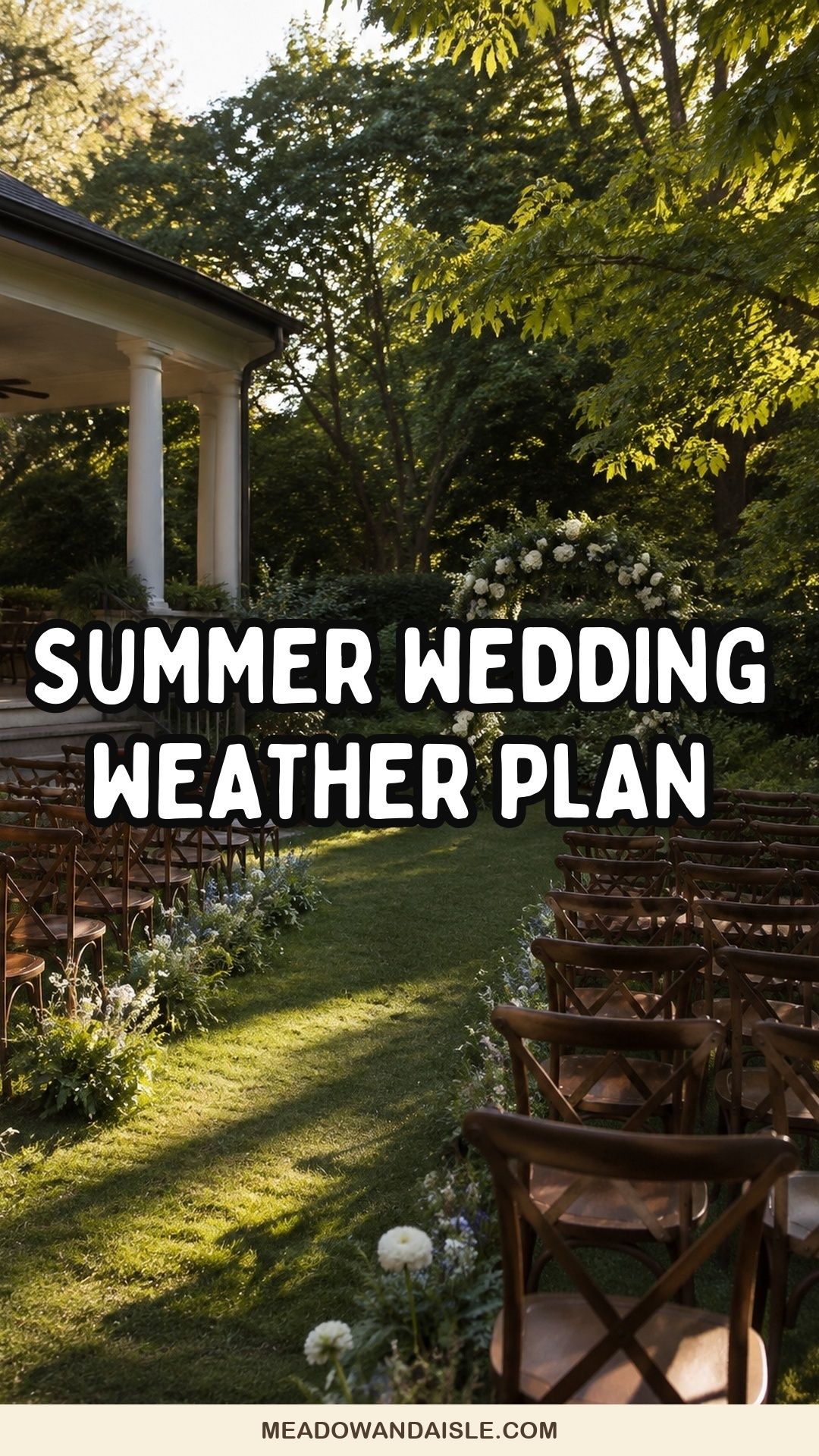
A summer wedding weather plan is one page that lists every part of the day, where it moves if the weather turns and who moves it. Plan heat first with a later ceremony, shade and water, treat lightning and strong wind as stop-everything calls, and make the big layout decision 48 to 72 hours out.
Here in Finland, summer weddings cluster around Midsummer, when it barely gets dark and the forecast can go from hot sunshine to a thunderstorm in one afternoon. That’s summer pretty much everywhere, and it’s why a summer wedding weather plan matters more than the color of your napkins. The heat is almost guaranteed, the storms are a coin toss, and both are easier to handle when the decisions are made before the day. If you’re still at the dreaming stage, start with these summer wedding ideas.
A small wedding makes this a lot easier, because with 20 or 40 guests you know who needs shade, who’s driving and which room everyone fits in if the sky opens. So this plan goes in the order the risks show up: heat first, then rain, then the safety calls, then who decides and how guests hear about it.
Recommended Summer Wedding Weather Essentials
Water dispensers, fans, cooling towels and tent sidewalls are the things you’ll be glad to have in a box by June instead of on a delivery truck.


What Goes in a Summer Wedding Weather Plan?
Every moment of the day, its good-weather spot, its bad-weather spot, who moves it and how long that takes. Keep it to one page, because on the day nobody reads page two.
| Moment | Outdoor plan | Backup location | Who moves it | Setup time needed |
|---|---|---|---|---|
| Ceremony | Garden lawn | Covered terrace or main hall | Venue coordinator | 45 to 60 min |
| Cocktail hour | Patio | Porch or bar room | Caterer | 30 min |
| Portraits | Tree line, open field | Window light indoors, covered porch | Photographer | 10 min |
| Dinner | Tented lawn | Main hall | Rental team and caterer | 2 to 3 hours |
| Dancing and exit | Lawn | Main hall, covered entry | DJ and coordinator | 30 min |
Treat those setup times as rough guesses. Ask each vendor for their real numbers and write them in, because that last column tells you the latest moment a decision can be made, which is the part most plans forget. A dinner that needs three hours to move indoors can’t wait for a storm that shows up at four.
Add the phone numbers of every vendor, the power limits of each space (bands and caterers both need outlets) and the decision deadlines from further down this page. That’s the whole document, and it fits on one sheet of paper.
Start Your Summer Wedding Weather Plan With Heat
Heat is the summer problem you can count on, so it gets planned first and in the most detail. Ceremony time, water and shade solve most of it.
Move the Ceremony Later

A 2 pm ceremony in July is asking for trouble, because that’s when the sun is highest and the ground has had all morning to heat up. Push it to late afternoon or early evening and you get cooler air, softer light and longer shadows that put half the chairs in shade. Walk the venue a few weeks before, at the exact hour of the ceremony, and look at where the sun lands and where the shade holds. A lawn that looks perfect at 11 am can be fully exposed by four. If your time is fixed, shorten the outdoor part, seat guests close to the start time and keep the service to 20 minutes.
Water, From Arrival Onward
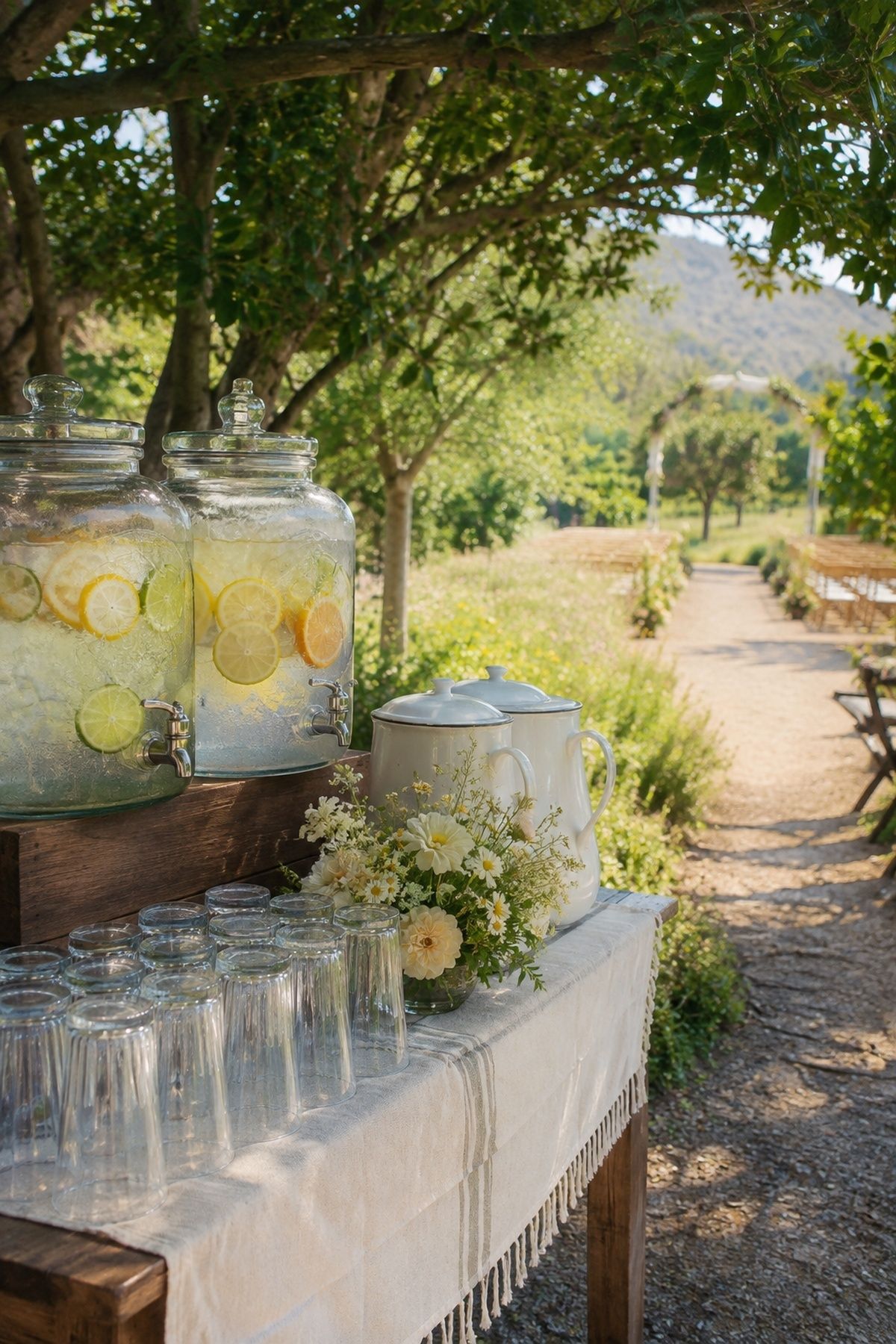
Guests should never have to look for water at a summer wedding. Put it at arrival, at the ceremony seats, at cocktail hour, at the bar and anywhere people walk more than a couple of minutes. Big glass dispensers with lemon or lime slices look pretty enough to sit out in the open, and a stack of glasses next to them means nobody has to ask.
In banquet service, water is usually the first thing to run out on a hot day, long before the wine does, so give one person the job of refilling the dispensers. The National Weather Service heat safety page explains how heat affects people, and it’s a quick read for whoever runs your day.
Shade Where People Wait, Not Only Where They Sit
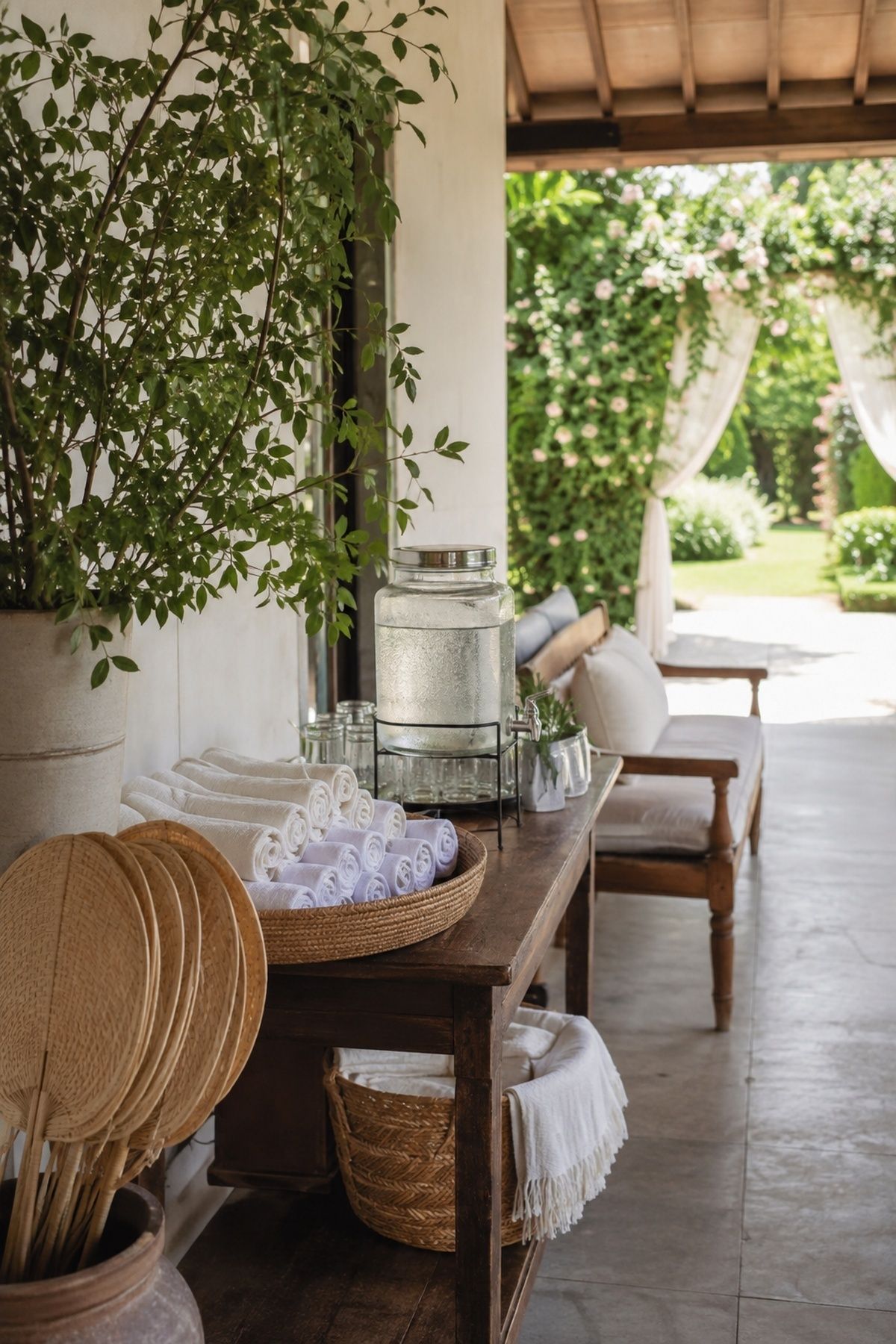
Guests spend more time standing around than you’d think: by the cars, at the bar, during family photos and in the line for the restroom. Those are the spots that need shade, not only the ceremony chairs. A covered porch, a tent edge, a few big umbrellas or a row of trees all count.
Small comfort stations help a lot, and they don’t need to be fancy. A shady corner with fans, a basket of cool rolled towels, sunscreen and bug spray covers most of what people need, and it gives overheated guests somewhere obvious to go.
Our outdoor summer wedding shade ideas have more setups.
Seat Vulnerable Guests Closest to Comfort
Older relatives, pregnant guests, small children and anyone with a health condition or mobility issue feel the heat first and fastest. With a small guest list you know exactly who they are, so plan their spot instead of hoping they find one.
Reserve the seats closest to shade, water, restrooms and a smooth path, and tell those guests (or the person bringing them) where to go before the day. A quick text the week before, something like “Grandma, your seat is in the front row on the porch side, under the trees,” saves a lot of wandering. Ask someone to check on them during cocktail hour, and have one indoor or air-conditioned room they can step into whenever they want.
A Rain Backup for Every Part of the Day

“We’ll move inside if it rains” isn’t a plan. Each part of the day needs a named indoor or covered spot, and someone needs to know what goes with it: chairs, flowers, lights, the band’s power.
Walk the backup spaces with your coordinator and settle the details now. Where do the ceremony chairs go, does dinner still fit with the same table layout, where does the music plug in and where do wet umbrellas end up? A covered terrace that connects a garden to an indoor room is ideal, because guests stay dry on the way and the floral aisle can simply continue inside.
Make the Backup Look Like Part of the Wedding
The backup room should look planned before anyone sees it. If the indoor version only gets decorated once the rain starts, it’ll look like a storage room you had to settle for, and guests will feel it. Ask your florist to make a few arrangements that can move, and agree on which ones get carried inside first. Candles, a couple of good linens and warm lighting do most of the work, and they’re easy to set up early in the day. Some couples even decorate the backup room fully either way and use it for dinner or dessert, so the effort is never wasted. Think of the indoor plan as a second version of your wedding, smaller and cozier, not a downgrade.
Shorten Instead of Cancelling
Sometimes the better answer is less time outside, not none. A passing shower or a sticky afternoon rarely means the whole outdoor plan is lost, it just means doing a shorter version of it.
A few ways to keep the outdoor parts you love:
- A five-minute first look under the trees before the rain arrives
- A shorter ceremony outside, with the reception moving in
- Cocktail hour under a covered porch instead of on the open lawn
- Portraits in two quick rounds, before and after the shower
Your photographer and coordinator can usually make this call on the spot, as long as they know your priorities in advance.
Lightning and High Wind Are Safety Calls
Lightning and strong wind aren’t decor problems. When either shows up, guests go into a solid building, vendors stop exposed work and the event waits.
Tents, trees, open pavilions and metal-framed structures don’t protect anyone from lightning. The National Weather Service rule is simple: when thunder roars, go indoors, and wait 30 minutes after the last thunder before heading back out. Your plan should name the building everyone goes to, how guests find out and who watches official alerts during the event. For wind, ask the rental company what speed their tent is rated for and at what point they take down sidewalls or clear it, and write that number into the plan.
Wind-Proof the Tables and Signs
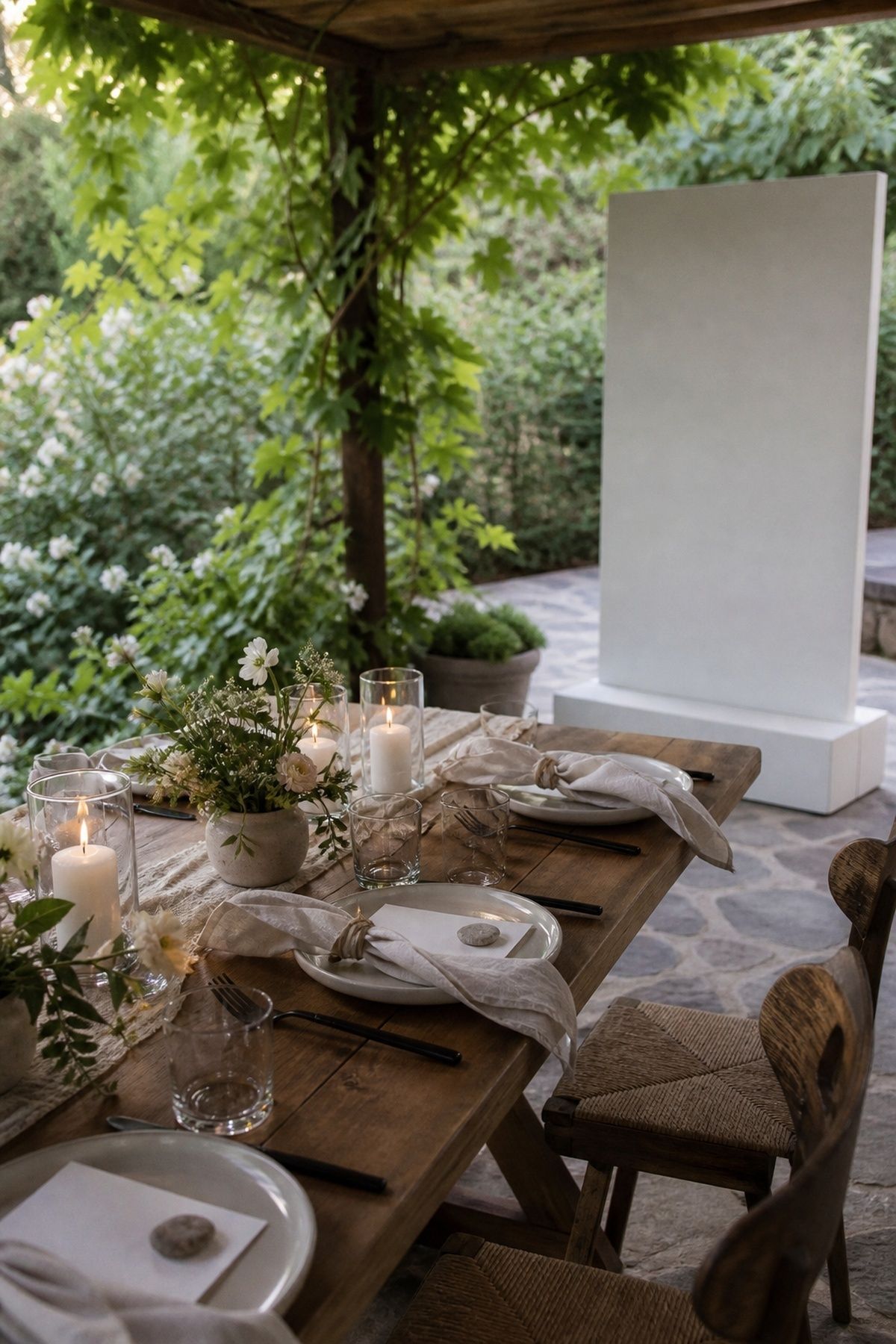
Lighter wind is a styling problem, and it’s easy to solve before anyone sits down. Anything tall, light or loose will move, usually during the speeches, when everyone is watching.
So set the tables for wind from the start. Candles go in glass hurricanes, flowers stay low and heavy, napkins get folded under the plates or tied, and table numbers sit in weighted holders. A long wooden table under a pergola with low arrangements and hurricane candles can take a breeze without anything tipping over.
Signs need a wide base or sandbags, and paper menus are better tucked into napkins than left loose. If the wind picks up a lot, take the tallest pieces off the tables altogether.
Flowers, Food and Cake in the Heat
Each vendor sees a different part of the heat, so ask each one directly. The florist worries about wilting, the caterer about food safety, the baker about frosting and the band about their gear in the sun.
For flowers, ask which blooms handle heat well and where arrangements wait before they’re placed. Our summer wedding flowers guide has seasonal picks, and bouquets should rest somewhere cool between photos.
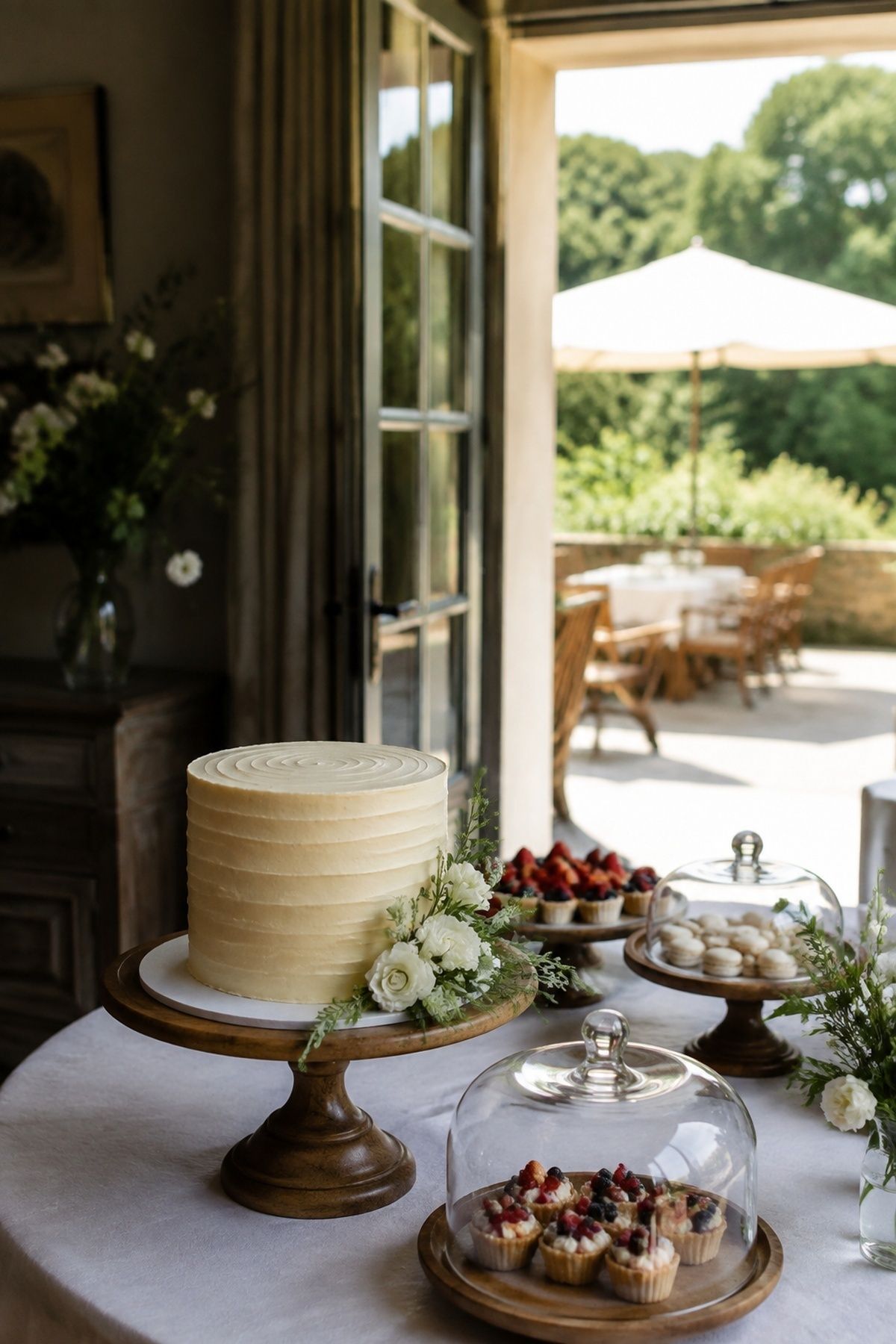
Food is where my chef brain switches on. Cold dishes need to stay cold, hot dishes need shade, and anything with cream, mayo or eggs shouldn’t sit out for long. Keep the cake indoors until dessert, the way that buttercream cake waits inside by the open doors, and ask your baker if the frosting holds up at your expected temperature. For decor that survives a warm day, see our decor for a romantic summer wedding.
Who Makes the Weather Call, and When?
One person decides, and the big decision happens 48 to 72 hours before the wedding. Everyone else, including the couple, sets priorities ahead of time and then lets that person do the job.
Usually it’s the planner, the venue coordinator or, at a very small wedding, one calm relative. A timeline that works:
- 7 days out: share the plan with every vendor and confirm their weather limits.
- 72 hours out: check the official forecast, heat index and storm timing with the decision-maker.
- 48 hours out: make the layout call for rentals, tents and dinner.
- Morning of: decide portrait timing and whether cocktails go under cover.
- During the event: the decision-maker watches radar and alerts, so the couple doesn’t have to.
Tell your decision-maker your priorities in plain words, like “we’d rather have the ceremony outside and dinner inside than the other way round.” For more guest-count planning, see how to plan a wedding with 30 guests.
How Do You Tell Guests Without Alarming Them?
Give them only what they need: where to arrive, what to wear, which shoes suit the ground, how much of the day is outside and where updates will appear.
Prepare three messages before the wedding week: one line on the website, one text or email a few days out, and one short update for the day itself if plans change. If you want the backup on the invitation, keep it to one calm line, like “In case of rain, the ceremony moves to the main hall.” More seasonal ideas live in our Summer Weddings collection. Getting married later in the year? The fall wedding weather plan uses the same setup for rain, wind, cold and early sunsets, and our winter wedding weather plan guide covers snow and ice.
Is 90 Degrees Too Hot for an Outdoor Wedding?
You can hold an outdoor wedding at 90°F, but you’ll need a real heat plan with a lot more than a few fans. The National Weather Service puts a heat index of 90 to 103°F in its “extreme caution” range, and humidity can push the feels-like temperature well past the thermometer.
At that point, keep the outdoor part short, move the ceremony as late as you can, have shade and water at every stop and give guests an air-conditioned place to cool off. Tell guests about the heat in advance so they dress for it. Above about 100°F, seriously consider moving the ceremony indoors or to the evening.
Do You Need a Tent for a Summer Wedding?
Not always, but if you don’t have a covered indoor space close enough for everyone, a tent is the backup. Book it early, because summer weekends sell out, and ask for sidewalls you can roll up or drop depending on the weather. A tent helps with sun and light rain, but it’s still not lightning shelter, so you need a solid building nearby either way. Ask the rental company about fans or cooling for very hot days, since a closed tent in July can get hotter than the lawn outside it.
Frequently Asked Questions
What should a summer wedding weather plan include?
A backup spot for every part of the day, a heat plan with shade and water, rules for lightning and strong wind, vendor weather limits, decision deadlines, one named decision-maker and a short guest message. It should fit on one page.
When should you decide to move a summer wedding indoors?
Make the big layout call 48 to 72 hours before, because rentals, flowers and catering need time to adjust. Smaller changes can wait until the day.
Is a tent safe during a summer thunderstorm?
No. A tent doesn’t protect anyone from lightning, so move guests into a solid building and wait 30 minutes after the last thunder.
How do you keep guests cool at an outdoor summer wedding?
Hold the ceremony late in the day, keep it short and put shade and water everywhere guests wait. Fans, cooling towels and an air-conditioned room help on very hot days.
What time is best for a summer wedding ceremony?
Late afternoon or early evening, when the air is cooler and the light is softer.
Who should make the weather decision on the wedding day?
One person, usually the planner, coordinator or venue manager. The couple sets the priorities in advance and then lets them decide.
Key Takeaways
- Write one page: each moment, its backup, who moves it and how long it takes.
- Plan heat first: later ceremony, water at every stop and shade where guests wait.
- Lightning and strong wind mean everyone goes into a solid building, tents included.
- One person makes the layout call 48 to 72 hours out.
Last Thing Before You Print It
If you only do one thing, hand the one-page plan to your coordinator, your venue contact and one level-headed relative, and ask each of them to explain it back to you in two sentences. If they can’t, simplify it, because a plan only works if the people running your day can follow it while you’re getting dressed. Once that’s done, the fun part is in our intimate summer wedding ideas. Planning a cooler date instead? The spring wedding weather plan handles changeable spring days, and our list of outdoor wedding mistakes is worth a look before any outdoor date.
Last update on 2026-11-29 / Affiliate links / Images from Amazon Product Advertising API