

Four things can go wrong at a fall wedding: rain, wind, cold and early darkness. A good fall wedding weather plan writes down a trigger, a backup layout and a guest message for each one, names a single person who makes the call, and sets that call for about 24 hours before the ceremony.
“What happens if it rains?” is the question everyone planning an outdoor fall wedding asks, usually at 2 am with the forecast app open. The thing nobody mentions is that rain is only one of four problems autumn can hand you, and the wind, the cold and the 5 pm darkness cause just as many wobbles on the day.
So this fall wedding weather plan splits the day into those four problems and gives each one a trigger, a person and a layout, with the photos showing what each step looks like when a real team does it. Do this a few weeks out and the wedding week becomes a lot less about refreshing the forecast. Start with fall wedding ideas if you’re planning the whole day.

Recommended Fall Wedding Weather Essentials
Clear umbrellas, wraps, blankets, hand warmers and a heater or two cover most of what autumn throws at a small wedding.


Recommended blogs to read:
- Summer Wedding Weather Plan: Heat, Storms and Who Makes the Call
- Winter Wedding Weather Plan for Cold, Wind, Snow, and Calm Guests
- Outdoor Fall Wedding Ceremony Ideas: Light, Warmth and a Rain Plan
- November Wedding Guest Comfort Ideas for Cold, Dark Evenings
- Fall Wedding Photo Ideas That Catch the Good Light
- Spring Wedding Rain Plan: Build the Backup You’d Happily Use
What should a fall wedding weather plan include?
Four written versions of the day, one for each kind of weather trouble, plus one decision-maker and one document that every vendor gets.

This entry hall is the plan in physical form: a bin of clear umbrellas, baskets of folded blankets and pashminas and a crate of plaid throws, all sorted before a single guest walks in. Each weather problem changes a different part of the day, so each one gets its own row:
| Scenario | What changes | Who needs to know |
|---|---|---|
| Rain | Ceremony location, guest route, portrait spots | Venue, officiant, photographer, rentals, florist |
| Wind | Signs, programs, candles, tall florals, sidewalls | Florist, rentals, decor crew |
| Cold | Cocktail hour length, heaters, blankets, hot drinks | Venue, caterer, rentals |
| Early dark | Ceremony time, path lighting, shuttle pickup | Photographer, venue, transportation |
For every row, write the layout, the timing change, what guests are told, where portraits happen and who phones whom. It sounds like a lot and still fits on one page. The same four-row idea works in hot months too, as you can see in my summer wedding weather plan.
Sort your notes into two piles while you are at it, the pretty things (flowers, linens, candles, portrait spots) and the safety things (slippery paths, temperature, power, tent access, shuttle times), and decide the safety pile first.
Set triggers and a decision-maker before wedding week
Give one calm person the weather call, a list of number-based triggers and a deadline, and agree ahead of time that their decision stands.

In this photo one woman in a black coat is pointing, and the server holding the food pans, the musician with his case and the guy in the rain jacket are all looking at her. That is what a rainy wedding day needs, one voice. It can be your planner, the venue manager or the least flappable person in your family, as long as it is not either of you in your wedding clothes staring at a radar map.
Write triggers with numbers
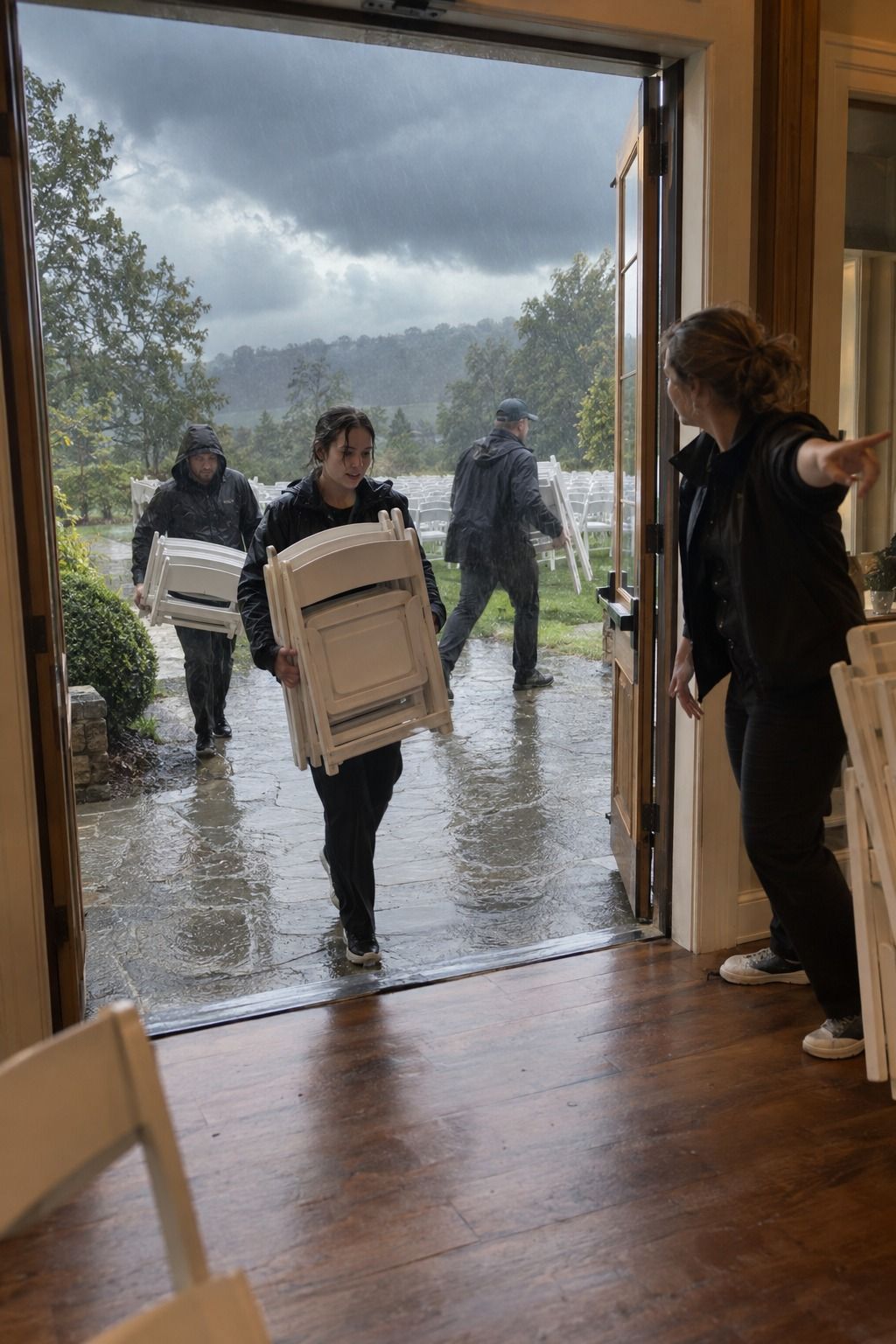
Staff carrying chairs inside through a rainy doorway, like this, should be the result of a rule you wrote weeks earlier and never a debate at 2 pm. Here is a starting set, adjust it to your venue and climate:
- Rain forecast for the ceremony hour: the vows move under cover.
- Thunder or lightning nearby: everybody inside, no discussion.
- Wind strong enough to tip a test sign: switch to low flowers and weighted stands.
- Below about 50°F (10°C) at ceremony time: the outdoor part shrinks to the vows.
- Sunset before the last guest move: start earlier or light the route.
A decision timeline that works
Two weeks out, check the long-range forecast and confirm the tent is still on hold. Three days out, warn the rental company. Two days out, decide on the tent and walls. The day before, make the final call and send it.
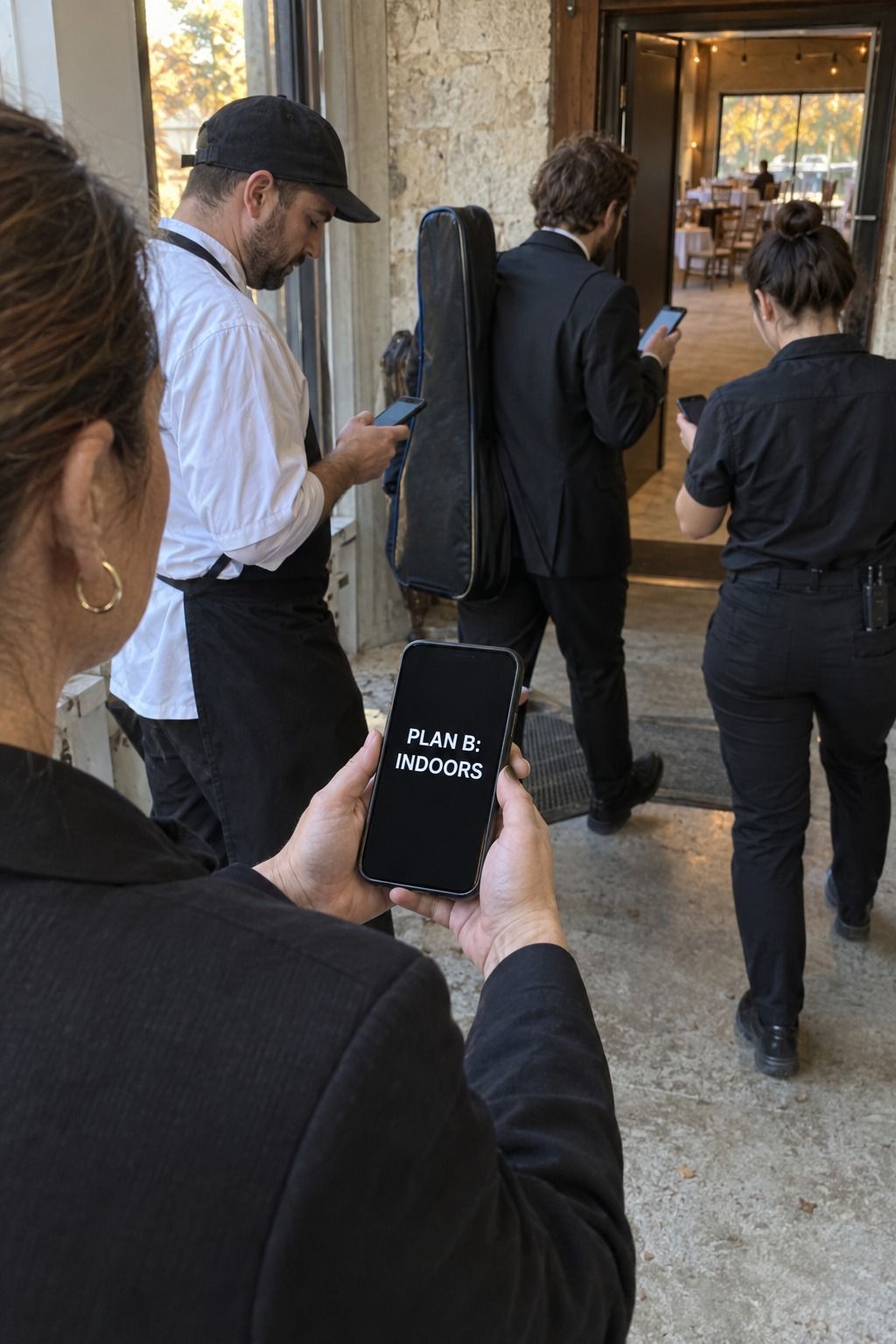
That phone screen saying “PLAN B: INDOORS” is the message everyone should get at the same moment, in writing: venue, photographer, florist, caterer, rentals, officiant, musicians, transport and hair and makeup. One text with times, rooms and load-in changes, and nobody has to call you.
How do you plan a fall wedding around early sunset?
Look up the sunset for your exact date and town, then build the day backward from it. In much of the US, late October sunsets sit close to 6 pm, and once the clocks go back on November 1 they jump to around 5 pm or earlier. NOAA’s solar calculator gives you the exact minute for any location.

This couple is checking where the sun will really sit while their coordinator angles the chairs, which is exactly what to do on a venue visit at the same time of day as your ceremony. Then add ten minutes to arrivals, because coats, umbrellas and grandparents on uneven grass all slow people down. (Here in Helsinki the sun is gone before 3:30 in late November, so believe me, darkness shows up faster than you think.)
Book golden hour like a vendor

Those three cards on the table, 4:30 ceremony, 5:15 portraits and 5:45 dinner, are a fall timeline built backward from the light. Decide what gets the soft light, the two of you or the family groups, and block those minutes like a vendor arrival. More shot ideas for short days are in these fall wedding photo ideas.
Pick a portrait spot for every scenario

Choose three spots before the day, one for sun, one for rain and one for after dark. This couple and their photographer are using a covered stone porch on a wet afternoon, which keeps the dress dry and still looks lovely. Porches, big windows, staircases and hotel lobbies all work, and at a small wedding nobody should stand in the cold while someone hunts for a dry corner. Keeping it small? See intimate fall wedding ideas.
Choose a backup space you actually like
Pick an indoor or tented backup you would be happy to get married in, because in fall there is a decent chance you will.
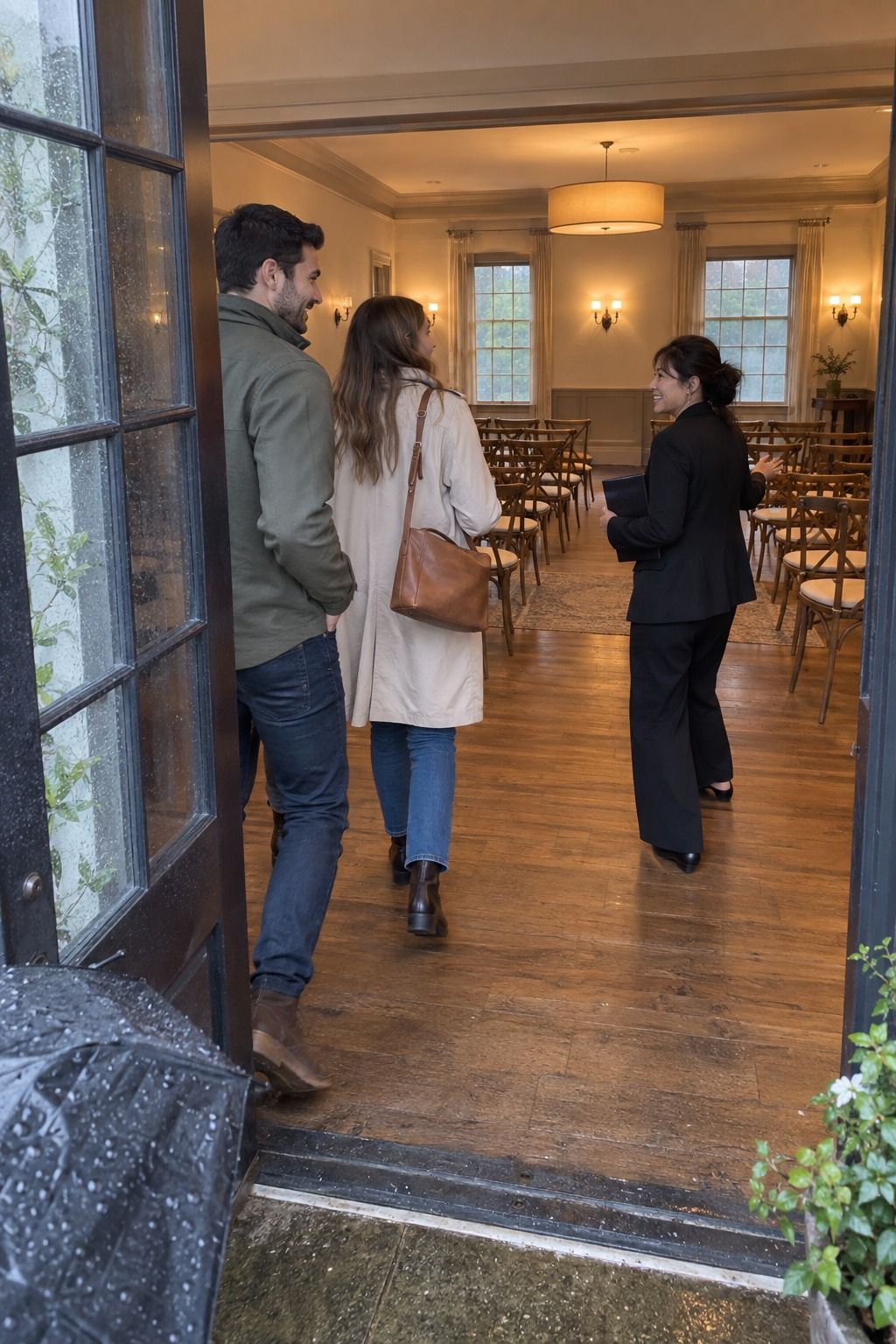
This room, with its tall windows, chandelier and rows of cross-back chairs, is the kind of backup that feels like a second first choice. On your tour, take photos from the aisle, the front row and the doorway, so you can plan chairs and flowers for it later without guessing.
Reserve tent options early
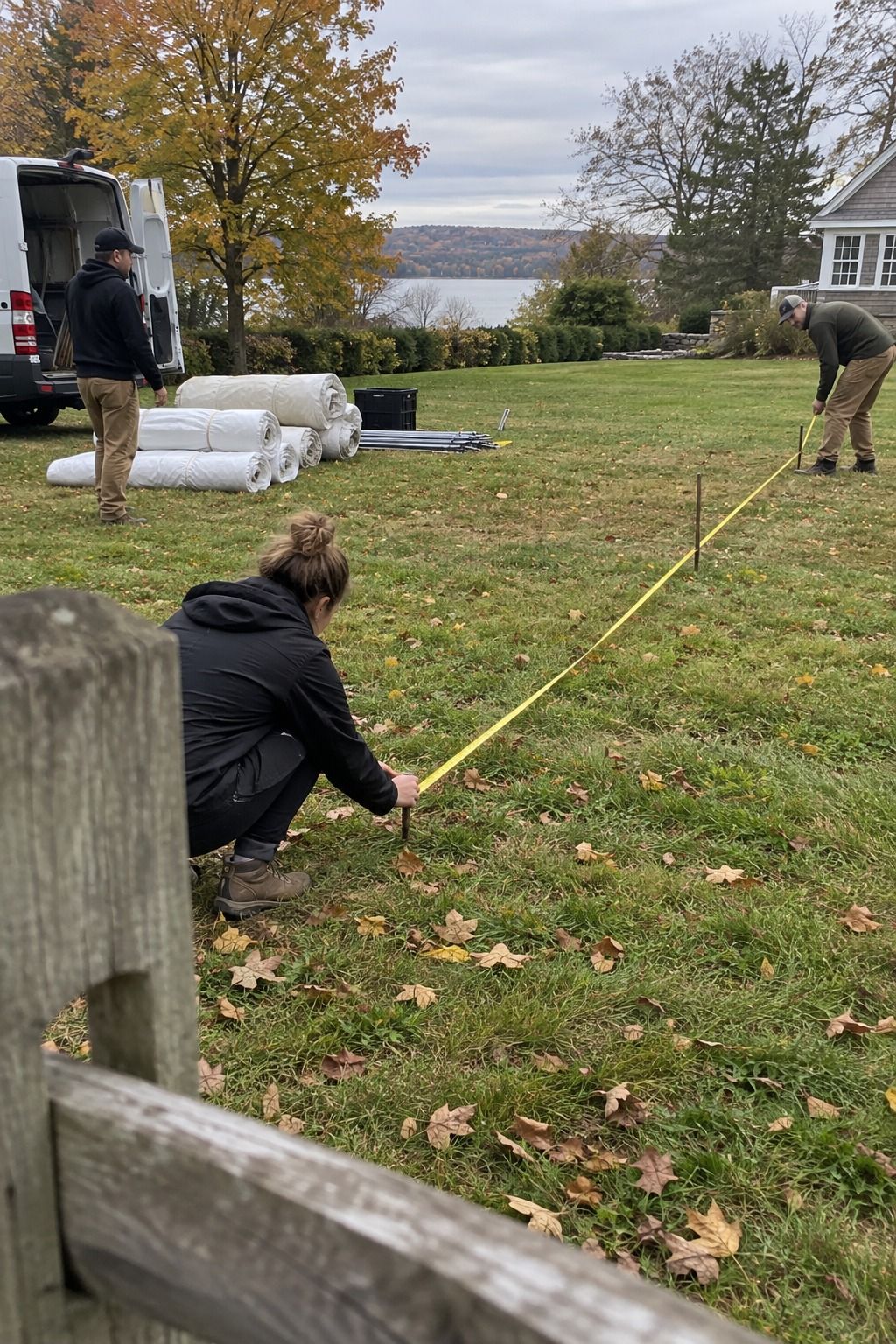
Tents disappear the moment everyone in town sees the same rainy forecast. A crew measuring the lawn weeks ahead, like this one with the yellow tape and the rolled canvas, means size, flooring, lighting, heaters and the decision deadline are agreed in writing. Ask where water runs off and how the caterers get to the kitchen. These wedding rental mistakes are the ones that bite most often.
Sidewalls for wind and cold
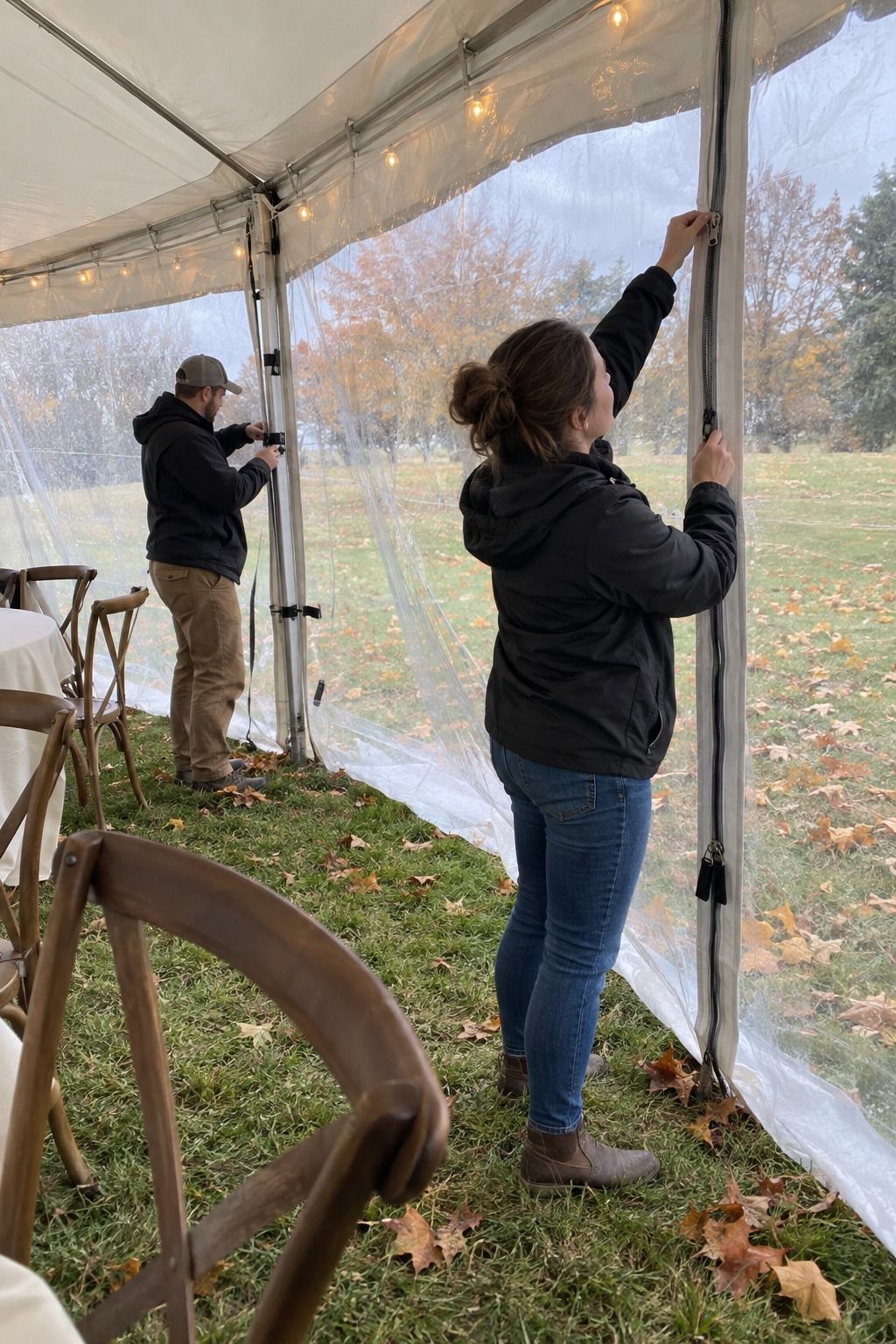
One or two walls on the windy side usually calm the whole tent, so you rarely need all four. Clear walls like the one these helpers are fastening keep the view, and solid ones hide the catering corner. From the kitchen side, chafing dishes lose heat fast in an open tent on a windy night, so if dinner is a buffet, put it behind a wall.
Keeping guests warm after dark
Plan warmth for the coldest hour on your timeline, usually dessert and the walk to the cars, and not for the afternoon high.
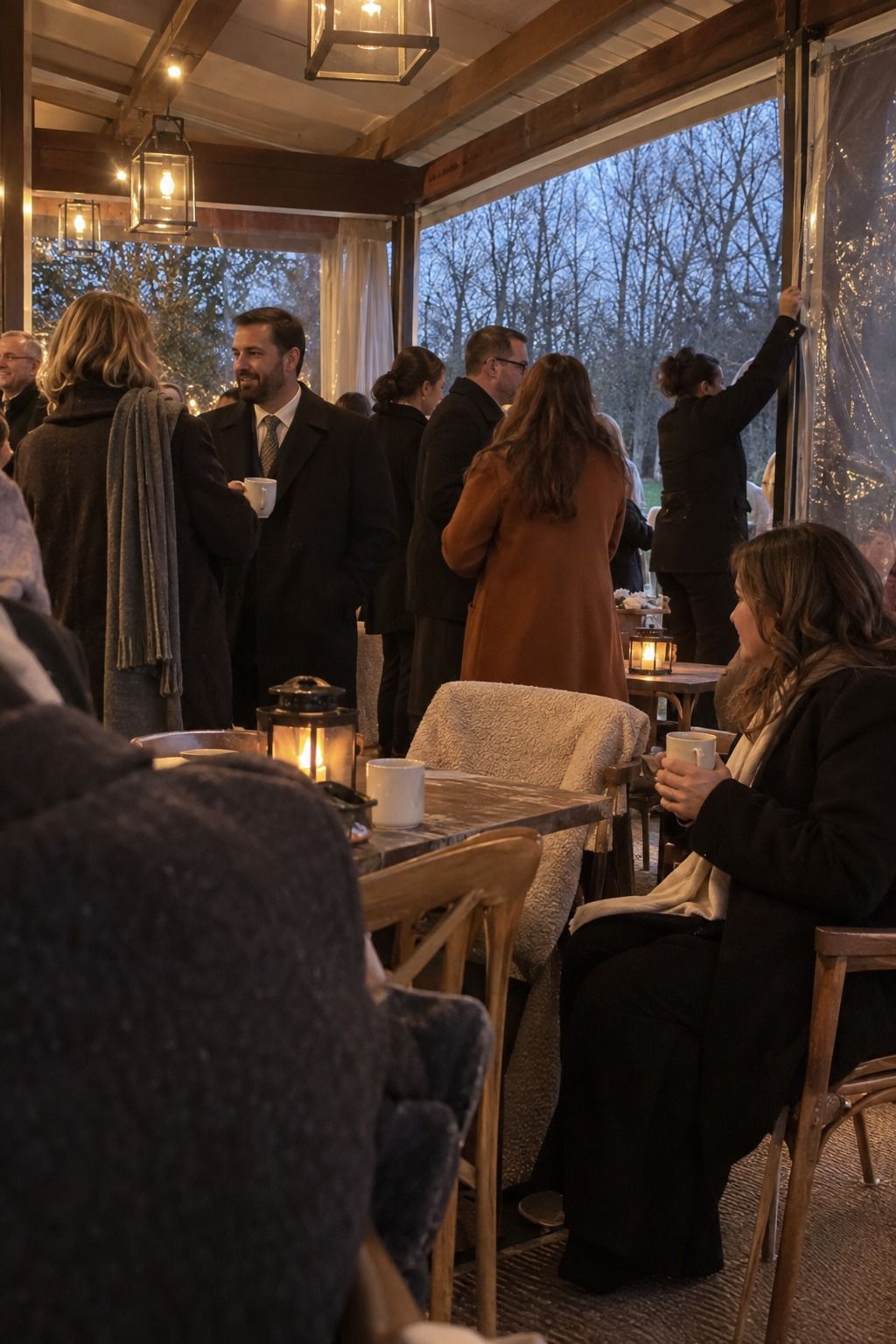
Fall days can drop 15 to 20 degrees Fahrenheit between the ceremony and dessert, and this enclosed porch at dusk is set up for exactly that, with blankets folded on the chairs, warm mugs, lanterns and clear curtains holding the heat in. Map heaters by zone (ceremony seats, cocktail tables, dinner, restrooms, coat check, pickup point) and confirm who switches them on and what the venue’s fire rules allow.
Blankets and wraps

Hand blankets out before anyone asks, like the woman here passing rolled cream fleeces down the rows. Count them by zone instead of by head, since front-row family and older guests always reach for them first.
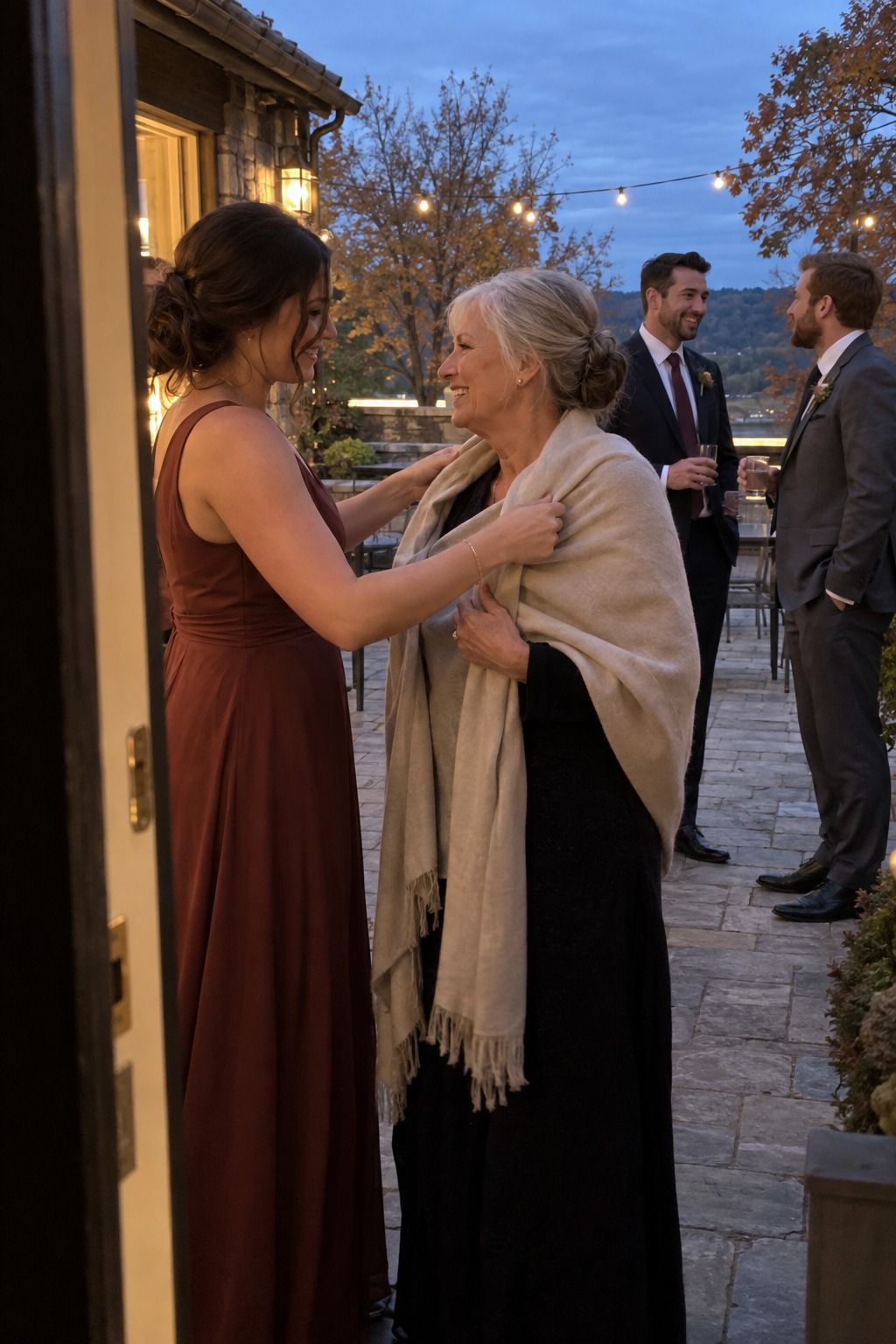
Pashminas sit better over formal clothes than coats do, and they look nicer in photos. If you only buy a few, give them to the wedding party, grandparents and anyone in short sleeves, which is what this bridesmaid in terracotta is doing.
Hot drinks at the transition
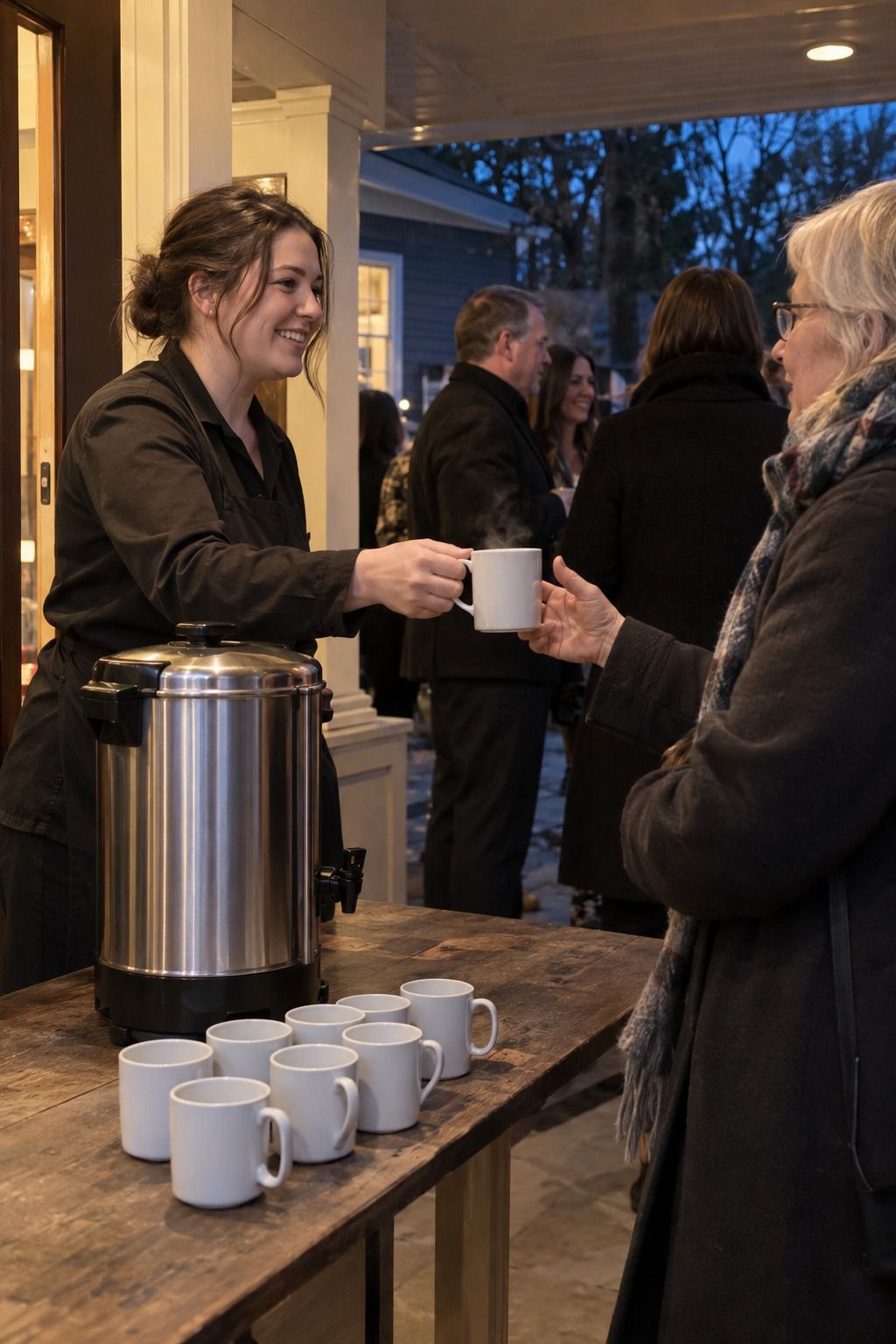
A hot drink at the moment guests walk from outdoor vows to indoor dinner makes the cold feel planned. One urn, a row of white mugs and a server, like here, is enough for a small wedding. A tip from my banquet years: count two cups per guest, because people put one down and grab a fresh one, and label the spiked cider very clearly. My November wedding guest comfort ideas go further on late-season hosting.
Rain, mud and wet leaves
Keep umbrellas where guests stop, test the ground before chairs go out, and lay mats wherever the surface changes.
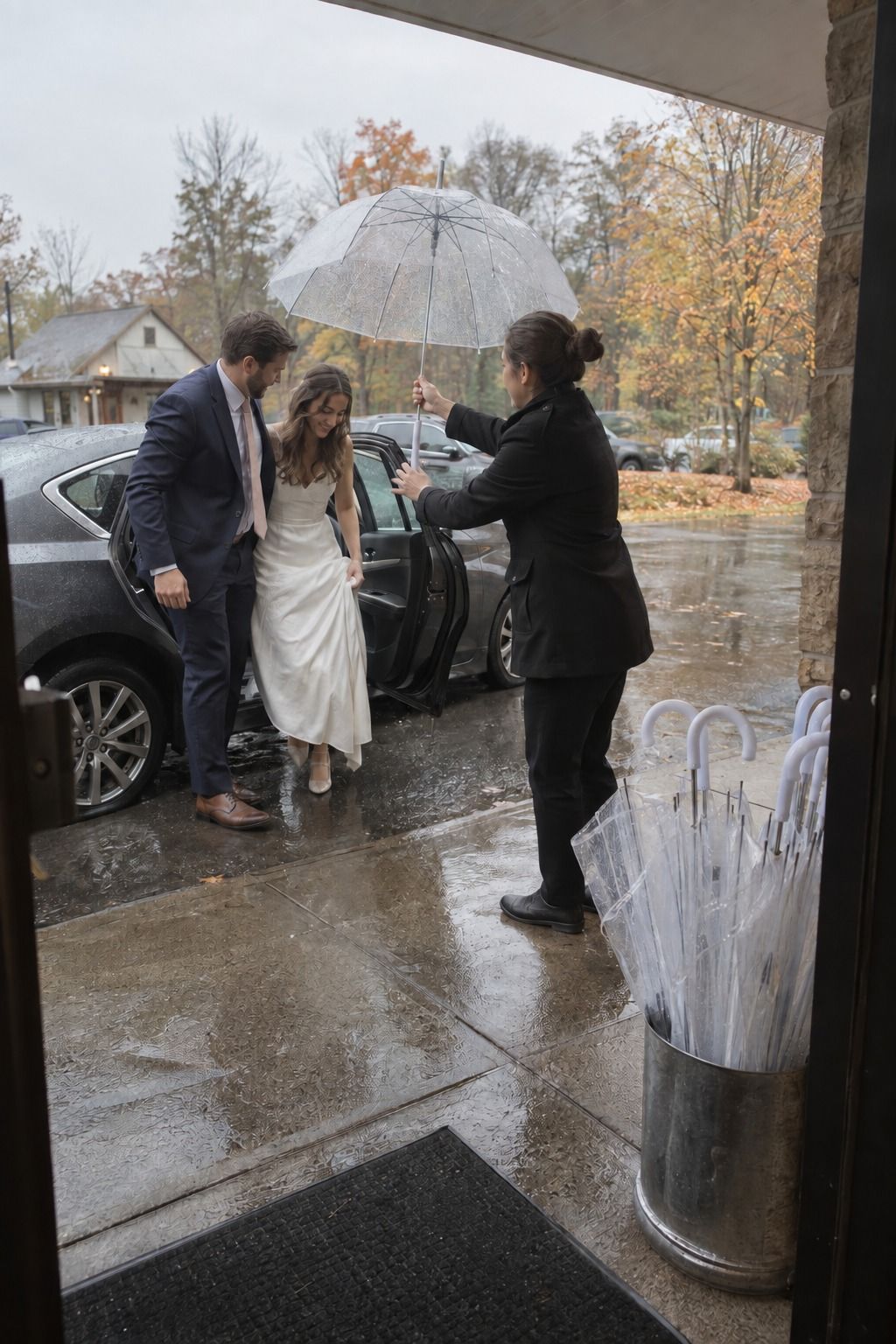
Clear umbrellas keep faces visible in photos, and a bucket by the door, like this one, means nobody hunts for them. Put sets at arrival, the ceremony path, the pickup point and your portrait spot, plus one person whose only job is collecting wet ones before they pile up in the doorway.

Grass can look fine and still swallow chair legs and heels. She is checking how deep that puddle sits before the chairs go down, and that ten-minute check is worth doing on the morning of any rainy-week wedding.
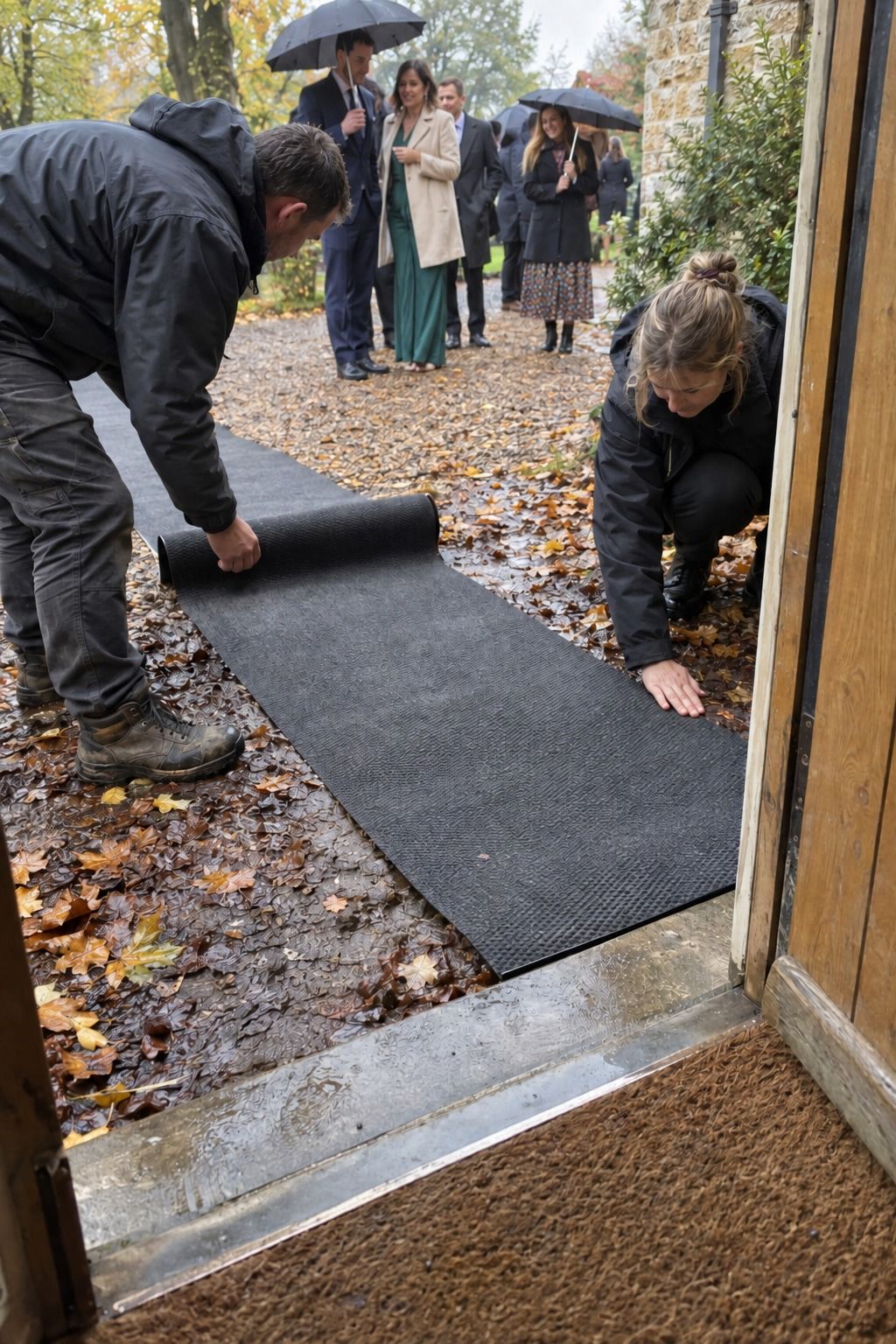
Wet leaves on stone or wood are slippery as anything. A flat runner like the black one these two are unrolling at the entrance fixes it, and the same goes for restroom doors, tent openings and shuttle stops.
Wind and early darkness
Weigh down anything light and put lights along every path guests walk after sunset.
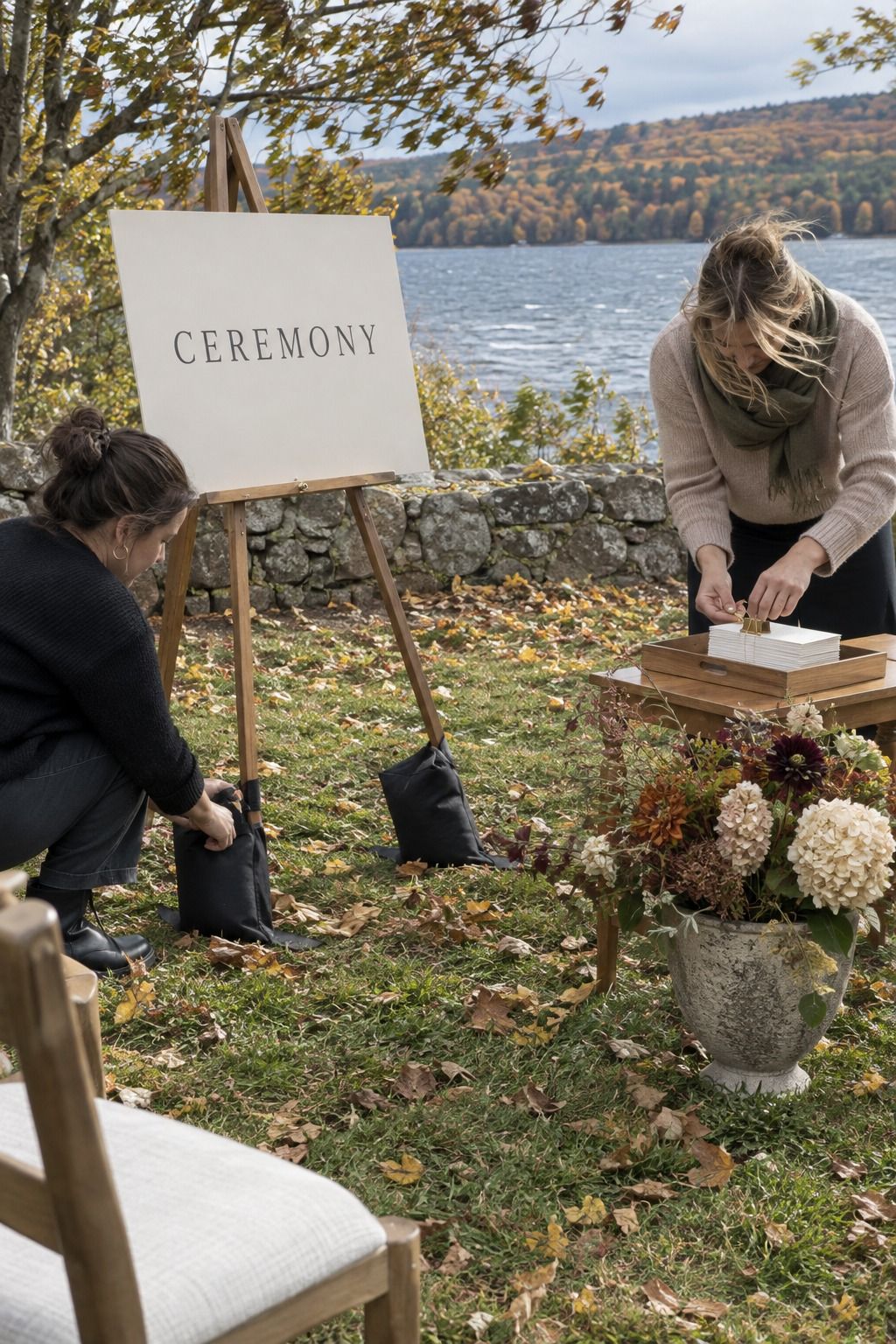
Wind goes after paper and tall flowers first. Here the ceremony easel has sandbags on its legs, the programs sit in a weighted box and the flowers are in a heavy stone urn, with a choppy lake right behind. On a gusty day, fewer loose paper pieces is the classiest fix you have.

Walk the route from ceremony to dinner to parking at dusk, before the wedding. These guests can see the next lamp from each one, which is all path lighting has to do, and farm and vineyard venues get much darker than you expect once the sun goes.
What should guests know about fall wedding weather?
How long they will be outside, what they will walk on and how you will tell them if the plan changes.
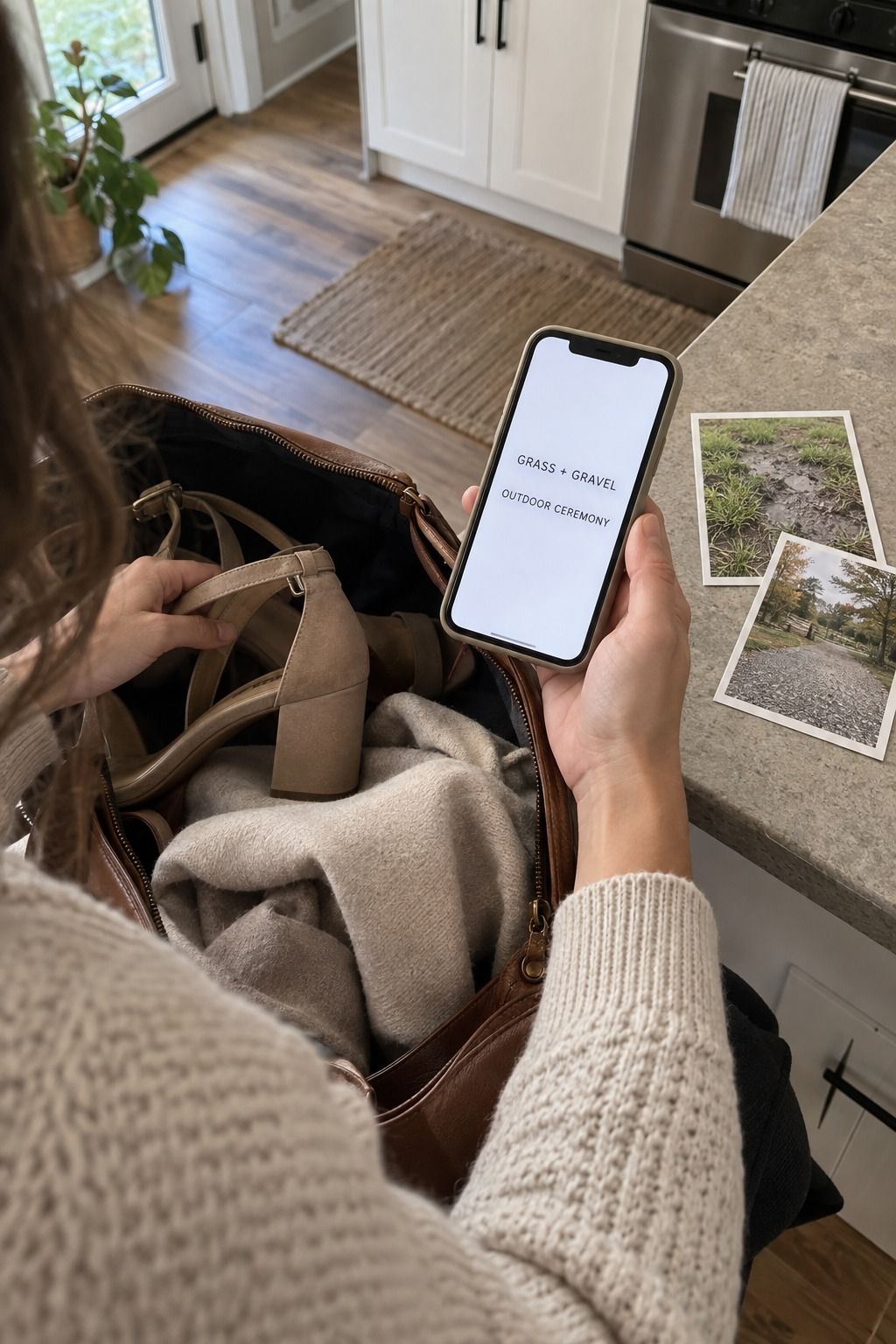
The guest in this photo is packing flats and a sweater after reading the message on her phone, which is the reason to tell people early. Something like: “The ceremony is outside on grass for about 30 minutes and it gets chilly after sunset, so bring a layer. If the weather changes the plan, we will text you by noon the day before.”
Put supplies where people stop
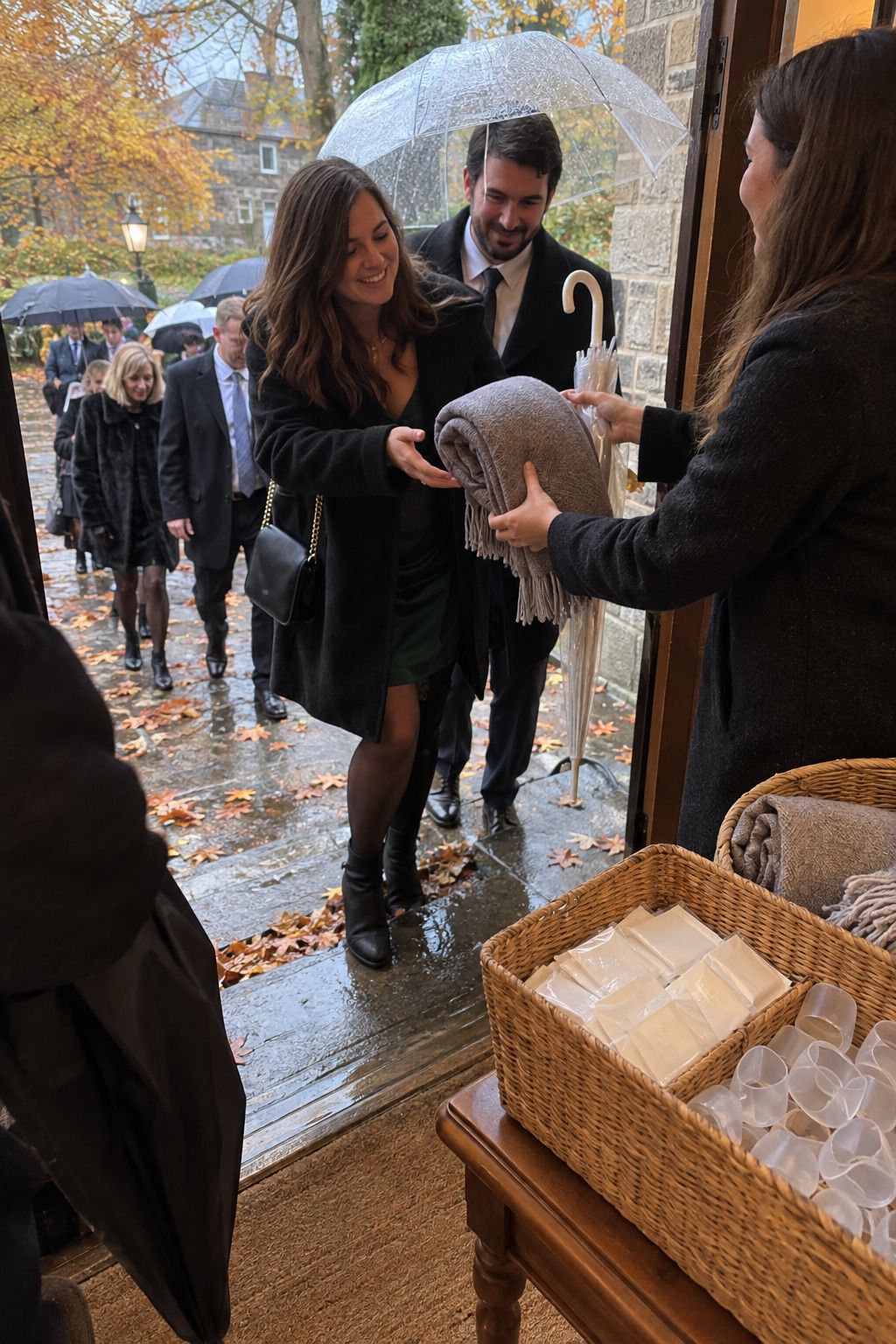
At a small venue, where supplies sit matters more than how many you buy. This doorway table with clear umbrellas, baskets of hand warmers and heel protectors and an attendant handing out blankets sits right where guests pause to shake off the rain.

Pack one emergency tote for the season, with labeled pouches like the ALLERGY and MASKS ones in this bag: tissues, eye drops, masks for smoky days, stain wipes, hand warmers and a basic first-aid kit. You will probably use half of it.
What Does A Fall Wedding Rain Plan Need?
A covered ceremony space you like, a dry route for guests, clear umbrellas, a rain portrait spot and a cutoff time for the decision. If the backup is a tent, add flooring and sidewalls to the order, because fall rain tends to arrive with wind and blow in from the side.
How Cold Is Too Cold For An Outdoor Fall Wedding?
Around 50°F (10°C) is a sensible line, since guests in formal clothes get uncomfortable within half an hour below that. At that point, keep the outdoor part to the vows and move cocktails and dinner inside or under heaters. Wind makes everything feel colder, so check the “feels like” number in the forecast too. Beyond this month, browse outdoor wedding mistakes.
FAQ
What should a fall wedding weather plan include?
Separate plans for rain, wind, cold and early darkness, each with a trigger, a layout and a guest message. Add one decision-maker, a decision deadline and a single written plan that every vendor receives.
When should you make the final weather call for a fall wedding?
About 24 hours before the ceremony, with the tent and sidewall decision around 48 hours out. Rental companies and caterers need that lead time to change the setup calmly.
How do you keep guests warm at a fall wedding?
Place heaters by zone, set blankets out before the ceremony, keep wraps for older guests and serve a hot drink when everyone moves inside. Plan for the evening temperature, which can be 15 to 20 degrees colder than the afternoon.
What time should a fall wedding ceremony start?
Early enough to finish the vows, family photos and couple portraits before sunset. Check your exact sunset time and count backward with your photographer, which in November often means a ceremony between 2 and 3:30 pm.
How do you plan for wind at an outdoor fall wedding?
Weigh down signs and programs, keep flowers low or in heavy vessels, use enclosed candles and add tent sidewalls on the windy side. Fewer loose paper details is the easiest fix.
Before the forecast gets loud
- Write four versions of the day: rain, wind, cold and early dark.
- Give one person the call, with number triggers and a 24-hour deadline.
- Build the timeline backward from your exact sunset.
- Put blankets, umbrellas and mats where guests stop, before they need them.
- Send the final plan once, in writing, to every vendor.
One page, four versions
If your wedding is this fall, this is the week to do the dusk walk, put the tent on hold and print your one-page plan, because sunset moves a little earlier every evening and the clocks go back on November 1. Hand the page to your decision-maker and let them watch the forecast for you. Planning for later in the year? The winter wedding weather plan uses the same four-version setup for snow and ice. There’s more in our Fall Weddings collection.
Last update on 2026-11-29 / Affiliate links / Images from Amazon Product Advertising API