

A good spring wedding rain plan is a complete second version of the day: a backup space you like, a named decision maker, a deadline (48 to 72 hours out if tents or flooring are involved), a rain floor plan, covered photo spots and a short note for guests. For 30 guests with a covered ceremony, 12 to 15 clear umbrellas usually cover every outdoor transition.
Here is the question I would ask on every venue tour: would you be happy getting married in the rain option? Not tolerate it. Actually like it. If the answer is no, the rest of this post is going to be hard work.
Spring is a gamble with rain almost everywhere, and the showers tend to come in quick waves rather than all-day downpours. That is good news for a small wedding. With 10 to 50 guests, the backup room is smaller, the move takes minutes, and the comfort details cost less. You just have to set it all up before anyone is staring at the radar.

The rain kit
These are the things that keep people dry and the day moving if the sky opens.


Start with a backup space you actually like
Your spring wedding rain plan begins on the venue tour. Walk the indoor room, porch, conservatory, barn or tent lawn that would become the backup and picture your guests in it, with your flowers, your music and your lighting.
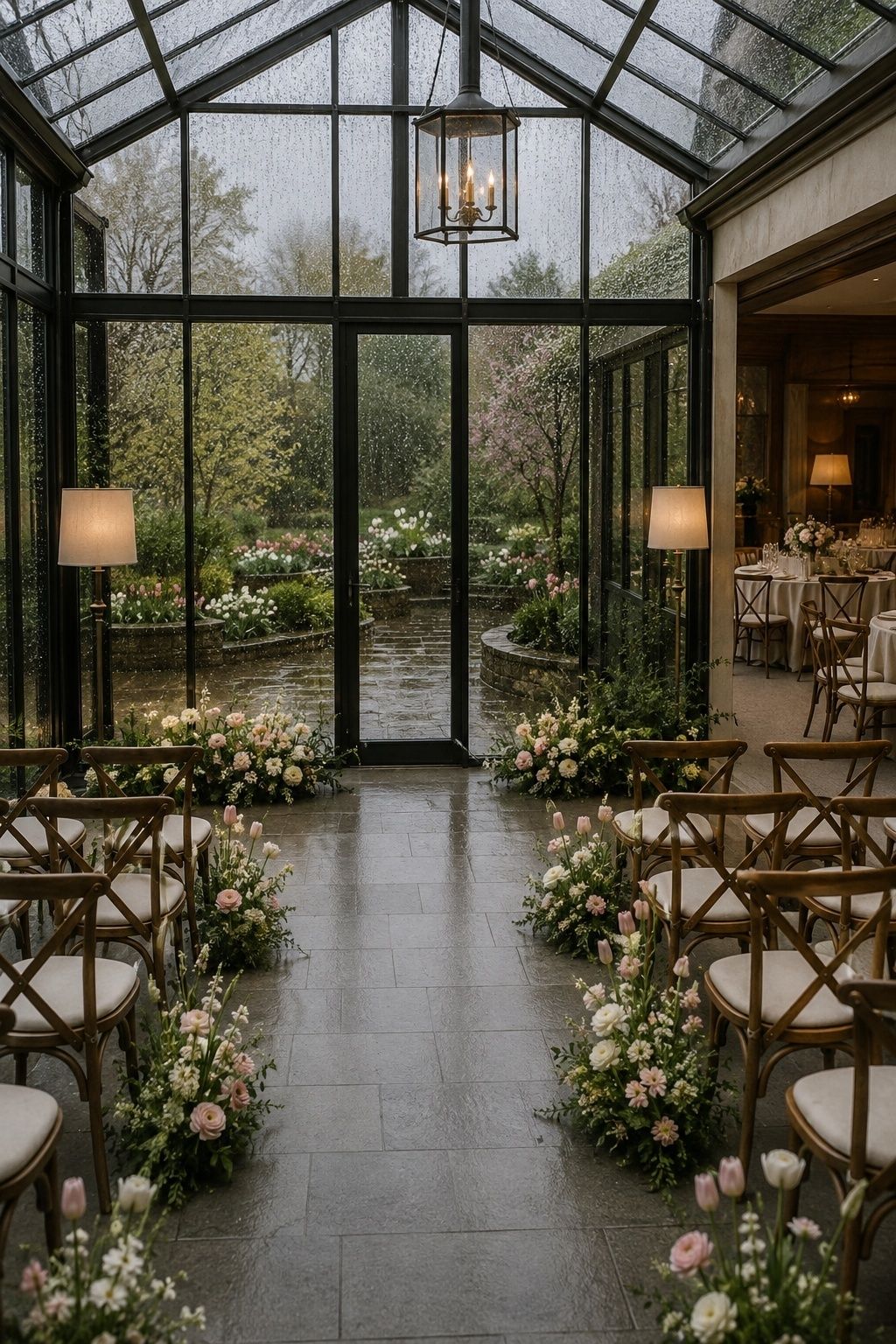
If the backup is cramped, dark or awkward for your guest count, either keep looking or set money aside to make it warmer. A glass conservatory or a covered terrace can look better in rain than the lawn did in sun. A bare function room with fluorescent lights rarely does.
Ask the venue how often they have used the rain option in spring, where they put the bar, and what the room looks like with your guest count, not their maximum. There is a helpful rundown of choosing outdoor venues with an indoor backup if you are still comparing places. If you are planning around a specific number, the guide to planning a wedding with 30 guests has layout help that applies here too.
Which parts of the day need cover?
All of them, at least on paper. Rain rarely ruins just one moment, so give every part of the day a named covered location.
| Part of the day | Covered option to name | Who moves things |
|---|---|---|
| Guest arrival | Covered entrance, umbrella stand, mats | Venue staff |
| Ceremony | Indoor room, porch or tent | Planner and florist |
| Portraits | Porch, staircase, window, conservatory | Photographer |
| Cocktail hour | Covered terrace or lounge corner | Caterer |
| Dinner | Main room or tent | Caterer and venue |
| Exit | Doorway or covered path to cars | Planner |
Some weddings only move the ceremony. Others move everything from the first look to the last song. Either is fine, as long as the plan says which.
What a tent plan really needs
A tent is a roof, not a plan. If your backup depends on one, sort out the details early, because many venues have approved rental companies, staking rules, permit requirements and their own deadlines.
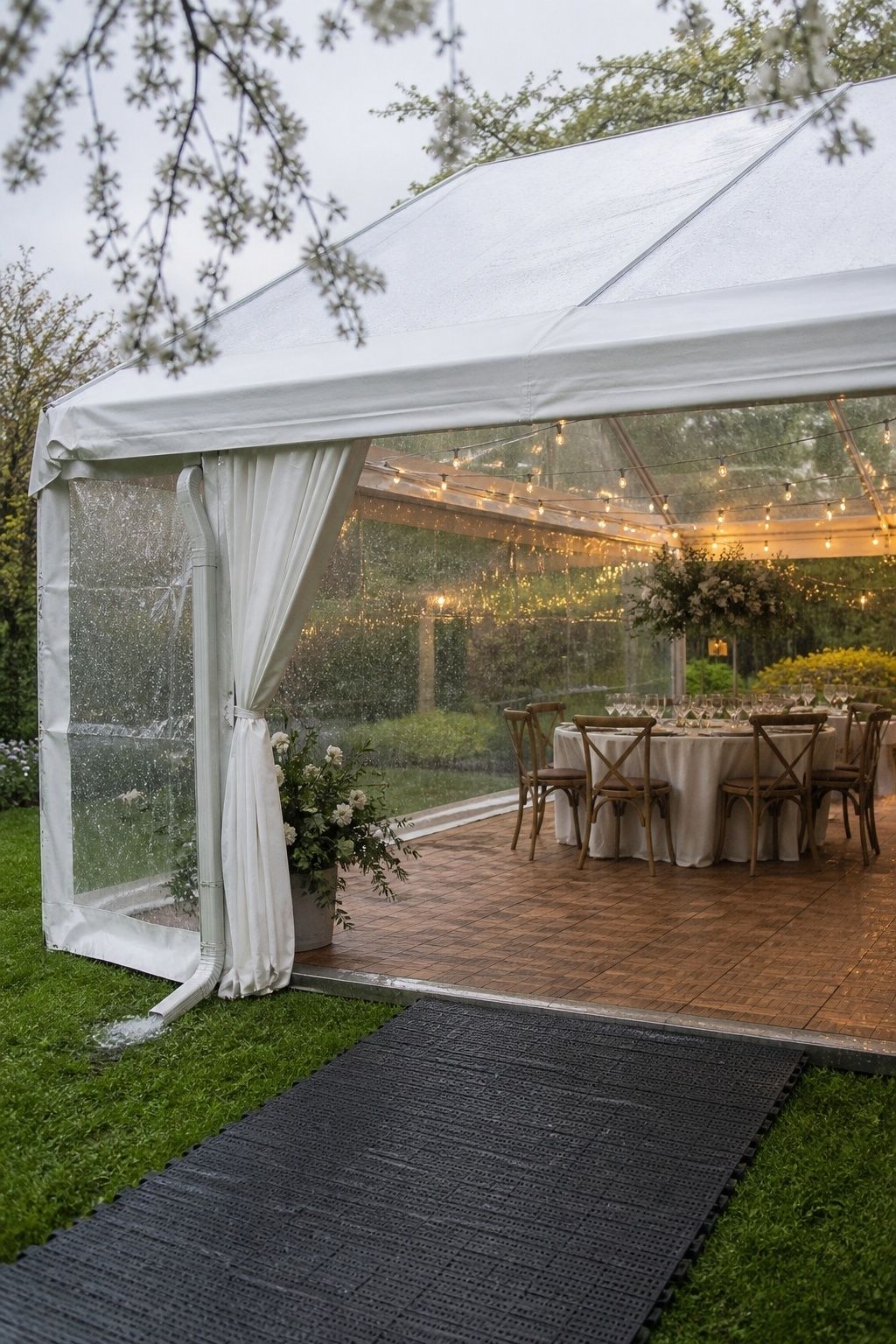
Ask about each of these before you sign:
- Sidewalls, ideally clear, so the room does not feel closed in
- Flooring, because spring grass under a tent turns to mud underfoot
- Guttering where tents join, and drainage away from the entrance
- Heaters, since rainy spring evenings get cold quickly
- Lighting and power, with a generator if the site has no outlets
- A dry, matted path from the tent to restrooms
- The wind rating, since spring rain often arrives with gusts
Budget your spring wedding rain plan for the unromantic pieces first
Put flooring, sidewalls, heaters, mats, coat racks, towels and covered vendor prep in the budget before you upgrade any decor. Guests will not remember the extra centerpiece. They will remember wet shoes.
Extra staff time is the other line people forget. Flipping a room or carrying chairs indoors takes people, and venues often charge for it. Ask what a rain flip costs and get it in writing. Also ask how long it takes. A crew turning a lawn ceremony into an indoor one for 40 guests needs time, and if the call is made at noon for a 4pm ceremony, that time has to come from somewhere, usually from your cocktail hour setup.
Who decides, and by when?
One person makes the call by a set deadline. For tents, flooring, sidewalls, heaters or a full room reset, that deadline is usually 48 to 72 hours before the wedding. For a light passing shower, a final call on the morning, or an hour before the ceremony, is fine.
Pick a planner, venue manager or calm friend who is not getting married that day. Give them the rental deadlines, vendor contacts, your preferences and any safety limits (lightning, high wind). Then keep the decision out of the family group chat. Splitting early rental decisions from day-of tweaks is also the best way to avoid panic spending on Thursday afternoon.
For the wider forecast picture beyond rain, including wind, sun and cold evenings, see the spring wedding weather plan.
Draw the rain floor plan now
Sketch where chairs, tables, the bar, musicians, gifts and family seating go in the rain version, while everyone is relaxed. With a small wedding this is often simpler than expected: fewer tables means the ceremony fits indoors, the cocktail area turns into a lounge, and the reception stays together.

Then confirm how vendors get in. Florists, caterers, musicians and rental crews need truck parking, a dry door, a path that will not turn to mud and floor protection. A rain plan falls apart quickly if the caterer has no covered route from the kitchen.
Arrival: coats, umbrellas and shoes
Plan the guest route from car to seat, then remove every puddle from it. Decide where people park, how they reach the door, where wet umbrellas go and where coats hang.

Put an umbrella stand and nonslip mats at the entrance. If any part of the day still crosses grass or gravel, say so in one line on the wedding website so guests can pick shoes accordingly.
How many umbrellas? If the ceremony is covered and cars can pull close, you do not need one per guest. For 30 guests, 12 to 15 clear umbrellas usually cover short transitions, plus 3 or 4 kept back for the couple, parents and portraits. Add a towel basket, a few throws and a warm drink at cocktail hour if the rain comes with a chill.
Make the indoor ceremony look like the plan
If the ceremony moves inside, give it the same care as the garden version. Decide where you stand, which flowers come with you, where family sits and how the aisle runs in a smaller room.

Candles in glass sleeves, a floral piece on the ground, a few warm lamps and a window with rain on it can look lovely. Assign people to carry programs, flowers, signs and personal items so the move takes ten minutes and nobody has to discuss it. Keep the backup ceremony close to the original spot so the move is short.
Covered portraits and optional rain photos
Pick covered photo spots before the day: porches, doorways, conservatories, staircases, big windows, covered garden paths and tent entrances. Your photographer will be glad you asked.
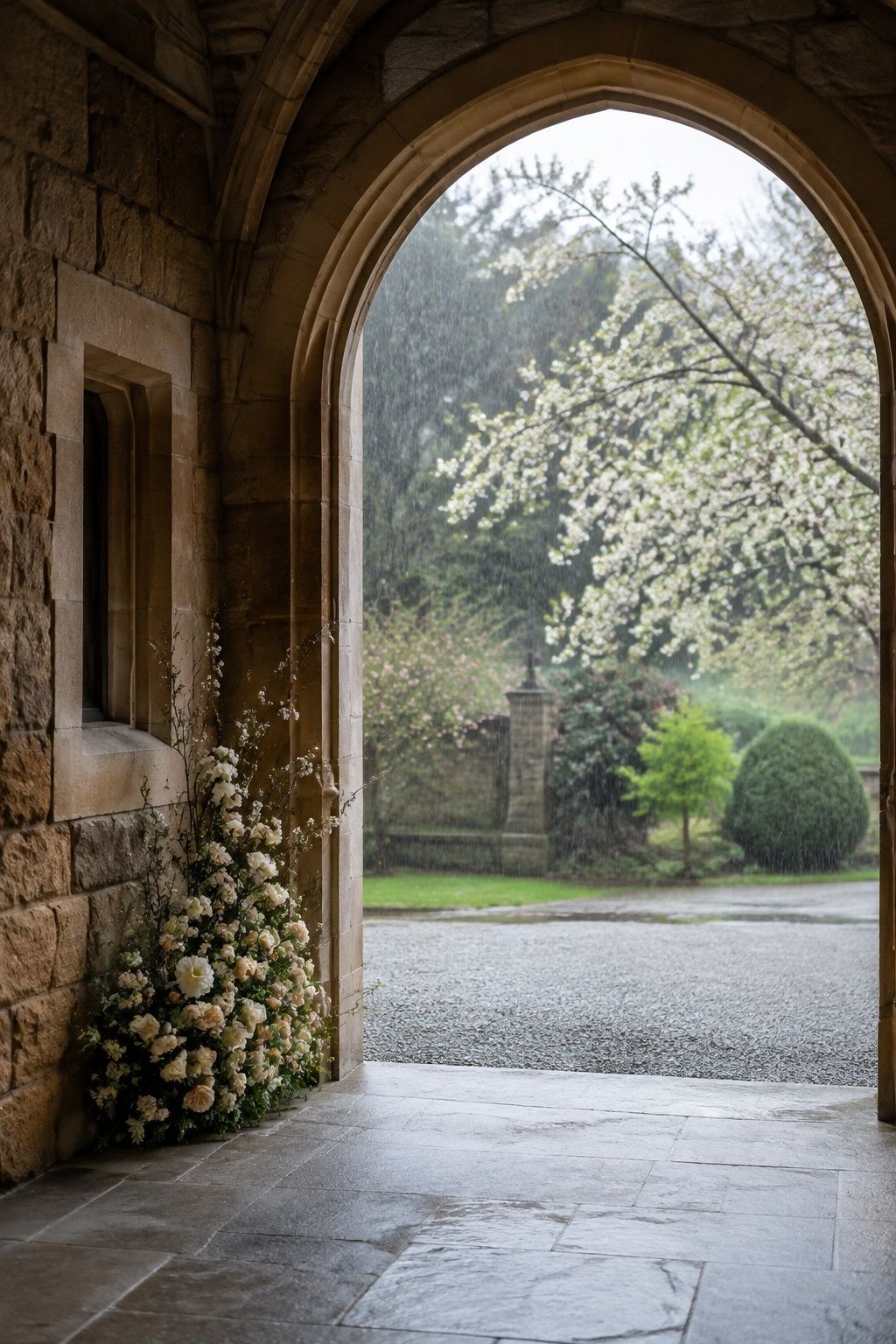
Rain portraits under a clear umbrella can be some of the best photos of the day, but they are optional. Decide in advance which ones are worth stepping out for, and give yourselves permission to stay dry if it is colder or messier than you hoped. Hair, hems and grandparents all count.
Look after the guests who feel it most
Reserve the driest, closest seats for older guests, pregnant guests and anyone with mobility concerns, near heat, restrooms and level floors. If the path from parking is wet, have someone walk them in rather than relying on signs.
Send guests one calm message: where to arrive, what shoes to wear, whether the ceremony is covered and where updates will appear. Guests mirror your tone, so keep it short and cheerful.
Leave room in the timeline for showers
Add 10 to 15 minutes of buffer around portraits, ceremony seating and the room flip. Spring showers often pass in half an hour, and a planner who can pause seating or move the bar inside early can wait one out without the whole day running late.
The rain plan in five lines
- Choose a venue whose rain option you would happily use.
- Give every part of the day a named covered location.
- One decision maker, with a 48 to 72 hour deadline for tents and flooring.
- Budget flooring, sidewalls, heaters and staff time before decor upgrades.
- Plan covered portrait spots and keep rain photos optional.
FAQ
What should a spring wedding rain plan include?
A spring wedding rain plan should include a backup ceremony space, covered spots for every part of the day, a decision maker, a deadline, a rain floor plan and vendor load-in instructions. It should also cover guest arrival, comfort items and covered photo locations.
When do you decide to use the rain plan?
Decide 48 to 72 hours ahead if tents, flooring, sidewalls or a full room reset are involved. For smaller changes, like moving a short ceremony under a porch, the call can wait until the morning.
Do you need a tent for a spring wedding?
You only need a tent if the venue has no indoor or covered space you like. If you do rent one, budget for sidewalls, flooring, heaters, lighting and drainage as well.
How many umbrellas do you need for a small wedding?
For 30 guests with a covered ceremony, 12 to 15 clear umbrellas plus 3 or 4 for the couple, parents and photos is usually enough. If guests have to walk outdoors between spaces, plan closer to one per two guests.
How do you tell guests about a wedding rain plan?
Send one short message with the arrival location, parking, shoe advice, whether the ceremony is covered and where updates will appear. Keep the operational details for vendors.
Can a rainy spring wedding still look good?
Yes, a rainy spring wedding can look as good as a sunny one if the backup space is designed in advance. Move the flowers, candles and personal details inside, and pick covered photo spots with good window light.
If it rains anyway
You will probably feel a pang the morning the call is made. Then you walk into a warm room with your flowers, your people and rain on the windows, and it can feel closer and cozier than the lawn ever would have. A spring wedding rain plan is what lets that happen. If your date shifts seasons, the summer wedding rain plan and fall wedding rain plan follow the same logic, and The Knot has a useful outdoor wedding backup plan checklist to bring to vendor meetings.
Last update on 2026-10-04 / Affiliate links / Images from Amazon Product Advertising API