

Spring wedding bouquet ideas feel best when the flowers look freshly gathered, seasonally timed, and scaled to the person carrying them. For an intimate wedding, the bouquet is often the most personal and photographed floral choice, so tulips, ranunculus, peonies, sweet peas, lilac, anemones, and soft greenery deserve a plan that fits the month, dress, palette, and preservation goal.
The spring planning challenge is choosing flowers that feel abundant without pretending every bloom is available all season. Early spring favors tulips, muscari, narcissus, hellebores, and branches; mid spring opens the door to ranunculus, sweet peas, lilac, and garden greenery; late spring brings peonies, clematis, and softer garden roses in many regions.
Treat these spring wedding bouquet ideas as a comparison point for bouquet style, flower choice, color, size, scent, and season timing before finalizing ceremony flowers. In a small celebration, one memorable bridal bouquet, a few echoing bridesmaid posies, and simple bud vases carry the whole seasonal story with more grace than oversized installations.
Recommended Wedding Products


You Might Also Like These Blog Posts
- Spring Wedding Centerpieces That Feel Picked at Sunrise
- Hibiscus Wedding Bouquet Ideas That Feel Tropical Without Going Overboard
- Dahlia Wedding Bouquet Ideas With Shape, Drama, and Just Enough Restraint
- Summer Wedding Bouquet Ideas for Sun, Heat, and Holding Close
- Winter Wedding Bouquet Ideas That Hold the Whole Season in Your Hands
- Spring Wedding Flowers That Make the Season Feel Effortless
Spring Wedding Bouquet Ideas With That Just-Gathered Feeling
A beautiful spring bridal bouquet starts with timing. Tulips look most natural in early spring, ranunculus and sweet peas are strongest through cooler spring stretches, lilac has a brief fragrant window, and peonies usually peak toward late spring. Rather than chasing one fixed recipe, ask the florist for the feeling first: airy garden posy, loose spring hand tied bouquet, pastel spring wedding bouquet, tiny courthouse bundle, or sculptural branch-and-vine shape.
Scale matters as much as flower choice. A small wedding does not require a small bouquet, but it rewards proportion. The bouquet sits comfortably against the dress, leaves the waistline visible in portraits, and repeats the wedding color palette without dragging every ceremony and reception flower into one handful.
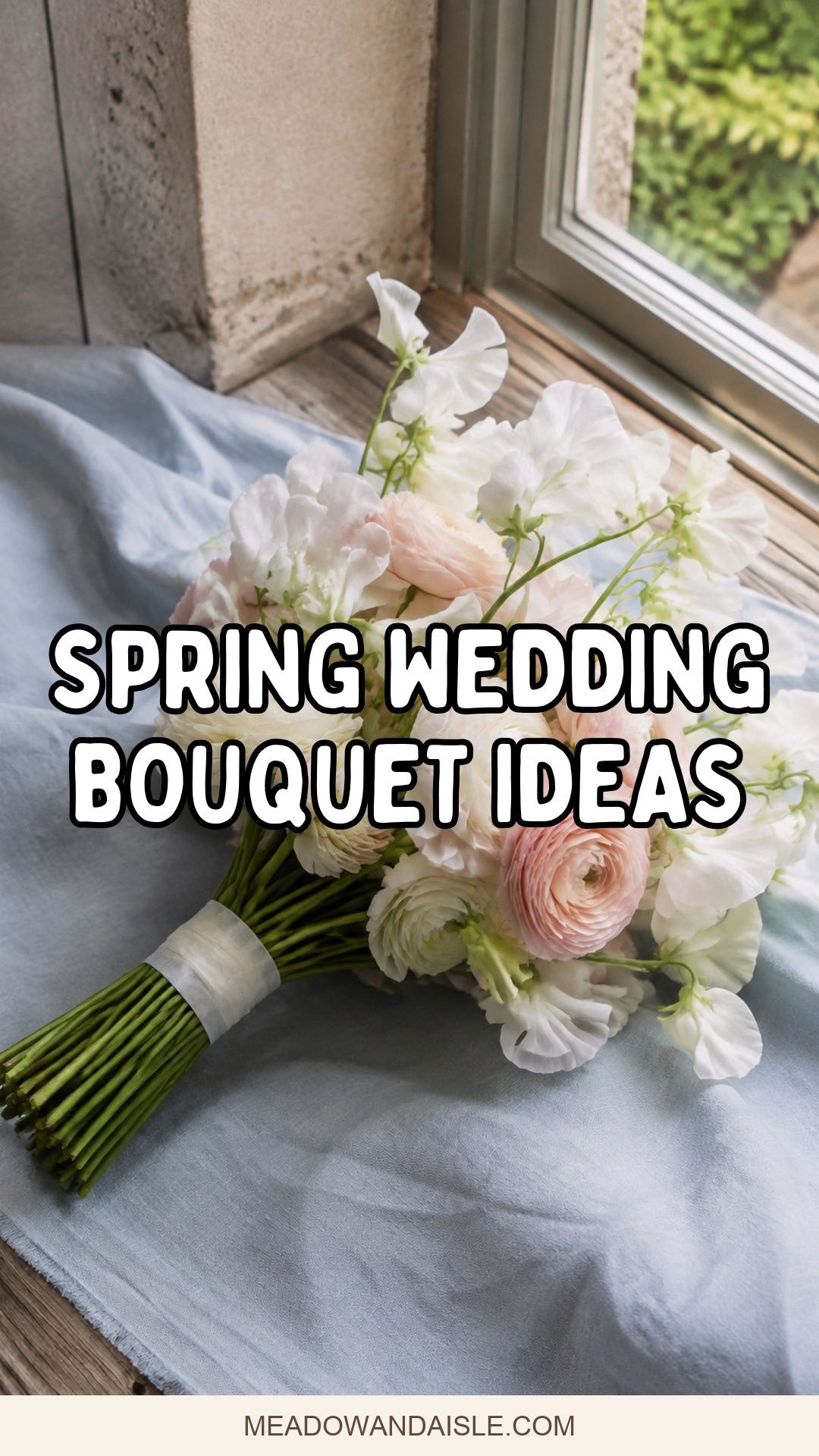
Loose Garden Posy With Ranunculus And Sweet Peas

A loose garden posy with ranunculus and sweet peas gives the classic spring garden bouquet a soft, layered shape. Ranunculus brings petal density, sweet peas bring flutter and fragrance, and a few fine stems of greenery keep the bouquet from becoming a tight ball. This direction suits garden ceremonies, chapel weddings, and intimate restaurant dinners where the flowers sit close to guests.
Ask for a rounded but airy outline with the blooms turned at slightly different angles. Sweet peas are delicate and fragrant, so place them where the scent feels lovely rather than overwhelming. If the dress has lace, sleeves, or a lot of movement, keep the stems tidy and the ribbon soft so the bouquet does not snag fabric.
All-Tulip Bouquet For Early Spring Simplicity
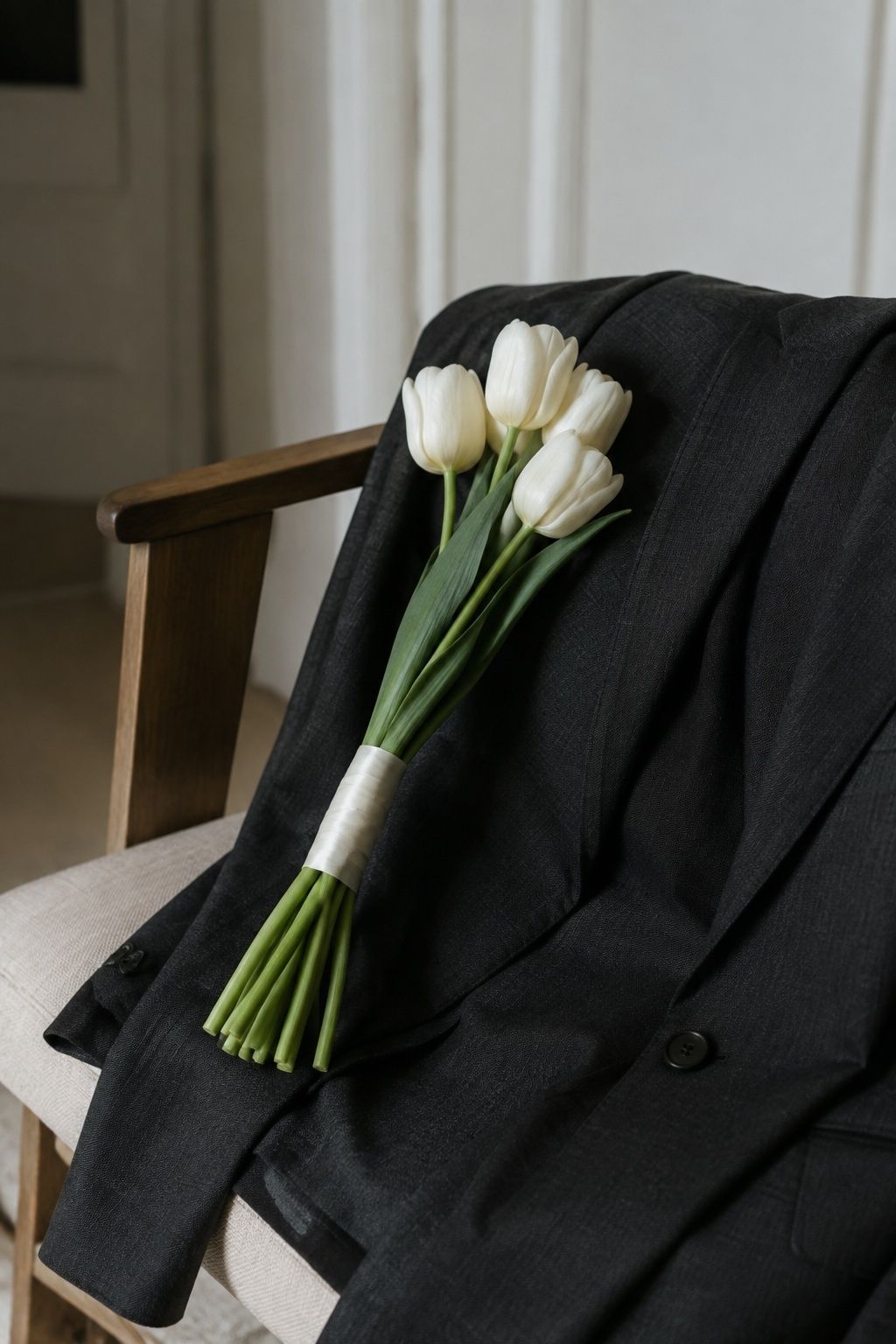
An all-tulip bouquet is one of the cleanest spring wedding bouquet ideas for March, April, and early spring climates. Tulips have a natural curve that keeps the bundle from feeling stiff, and the single-flower choice looks intentional for courthouse vows, city hall portraits, and small chapel aisles.
Choose one color family, such as ivory, blush, butter yellow, coral, or soft apricot, rather than a mixed grocery-bunch palette. Tulips continue to move after arranging, so ask the florist to account for opening and bending. A slim silk ribbon and a cool storage plan keep the bouquet elegant through photos.
Late-Spring Peony Bouquet With Soft Greenery
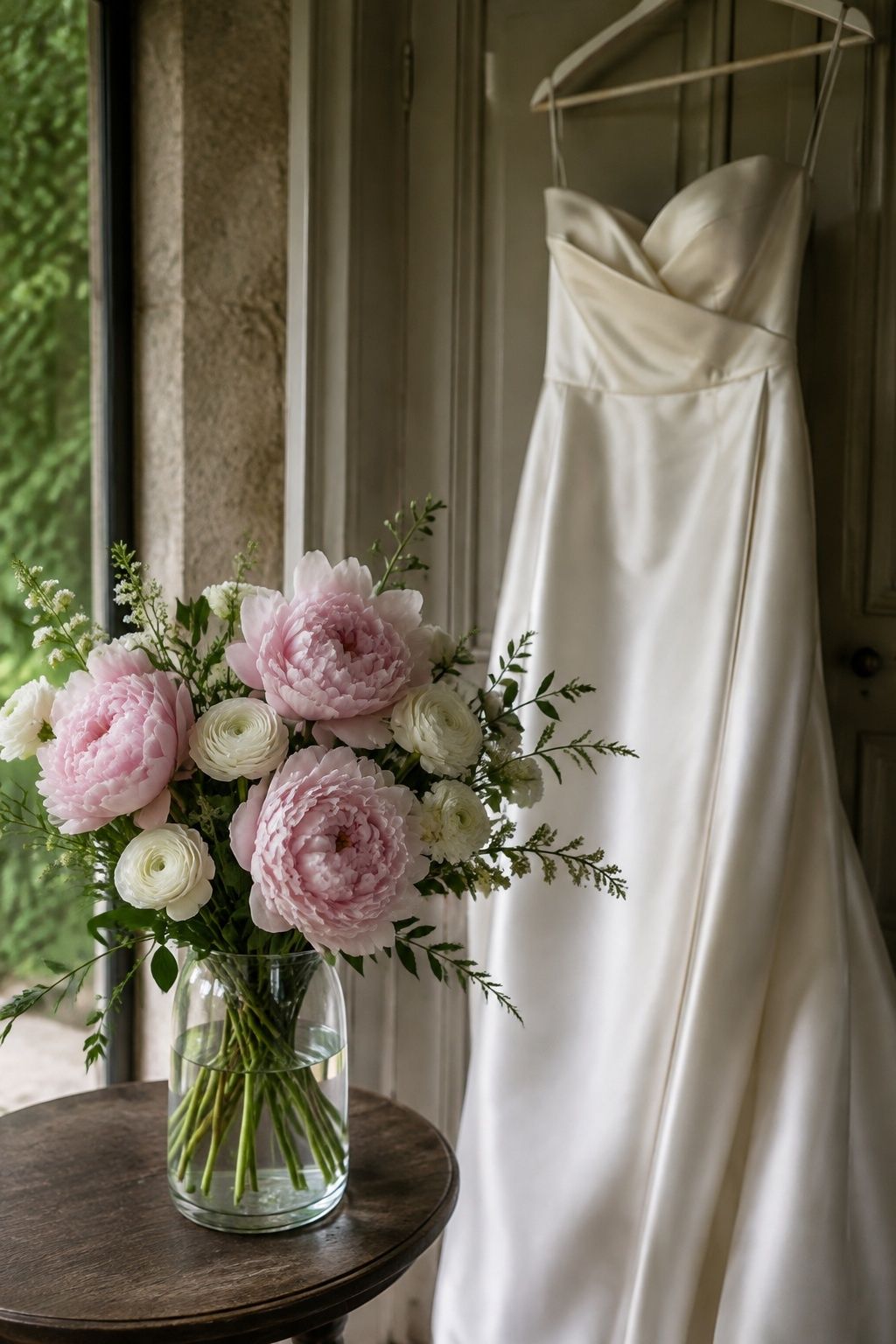
A late-spring peony bridal bouquet feels lush with only a few stems. Peonies bring volume, softness, and romance, especially in blush, white, coral, raspberry, or pale pink. They are best treated as a late-spring feature rather than forced into an early date where substitutions become expensive or unpredictable.
Pair peonies with soft greenery, small ranunculus, or a few delicate filler stems so the bouquet has movement around the large blooms. This bouquet suits simple satin gowns, tulle skirts, garden venues, and portraits where the bride wants one floral item to feel abundant.
Butter Yellow And White Bouquet For A Morning Wedding
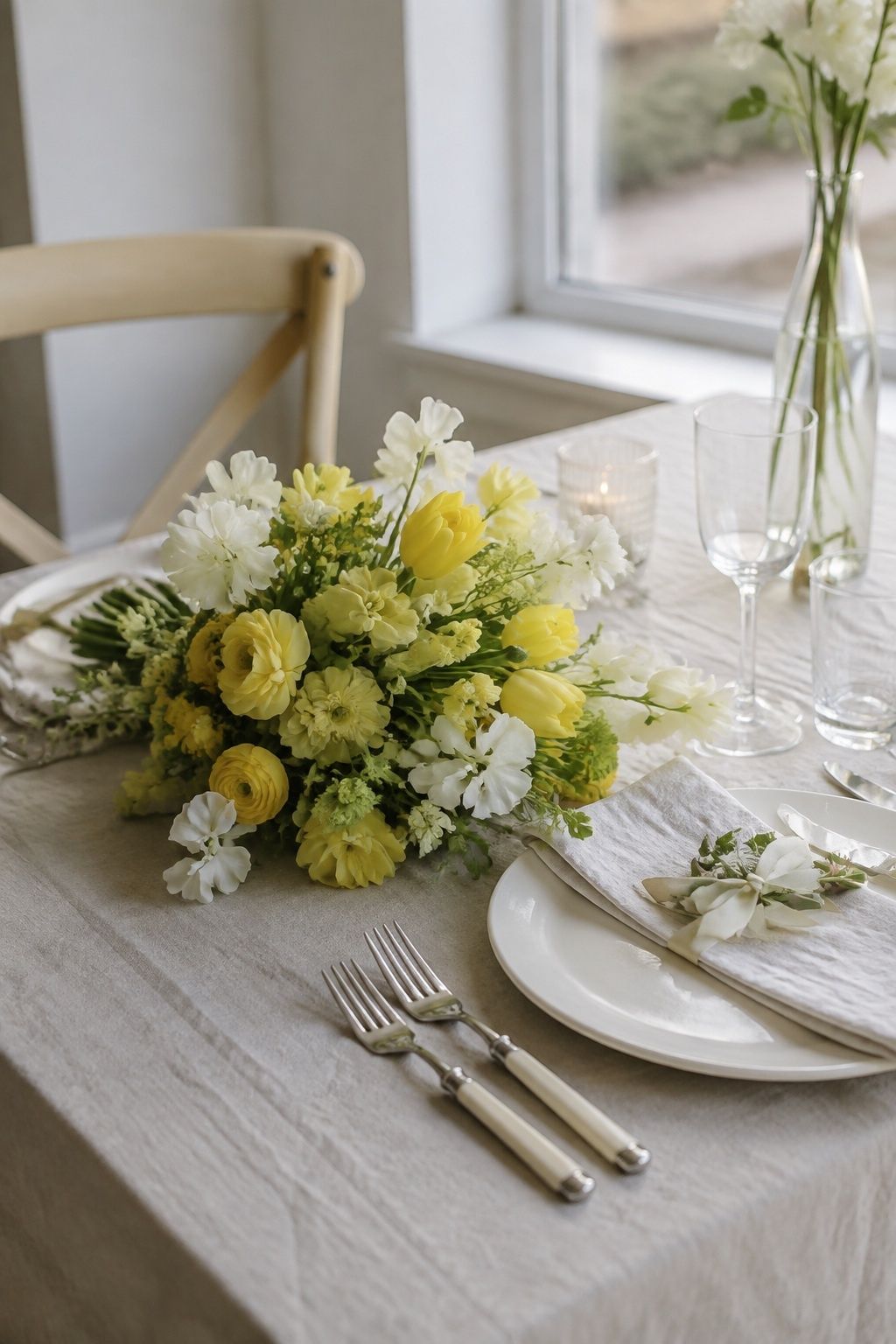
Butter yellow and white feels fresh for morning ceremonies, brunch receptions, and spring weddings with pale sunshine rather than dramatic evening light. Pair yellow tulips, ranunculus, narcissus, or small roses with white sweet peas, hellebores, or seasonal greenery for a bright but gentle spring flower bouquet wedding look.
Keep the yellow soft instead of lemon-bright if the wedding palette includes ivory, champagne, sage, or pale blue. This color mix photographs beautifully against simple white dresses because the yellow adds separation without pulling attention away from the couple.
Lavender And Cream Bouquet With Lilac Accents

Lilac accents make a lavender and cream bouquet feel unmistakably spring. The color is romantic, the scent is memorable, and the tiny clustered blossoms add texture next to ranunculus, tulips, sweet peas, anemones, or garden roses. Because lilac season is short, treat it as a special timing choice rather than a guaranteed ingredient.
This bouquet suits garden ceremonies, vintage dresses, heirloom jewelry, and soft gray or dusty blue bridesmaid dresses. Keep the lilac as an accent if scent sensitivity is a concern, and ask for sturdy hydration between the ceremony and portraits.
Blush And Sage Hand-Tied Bouquet
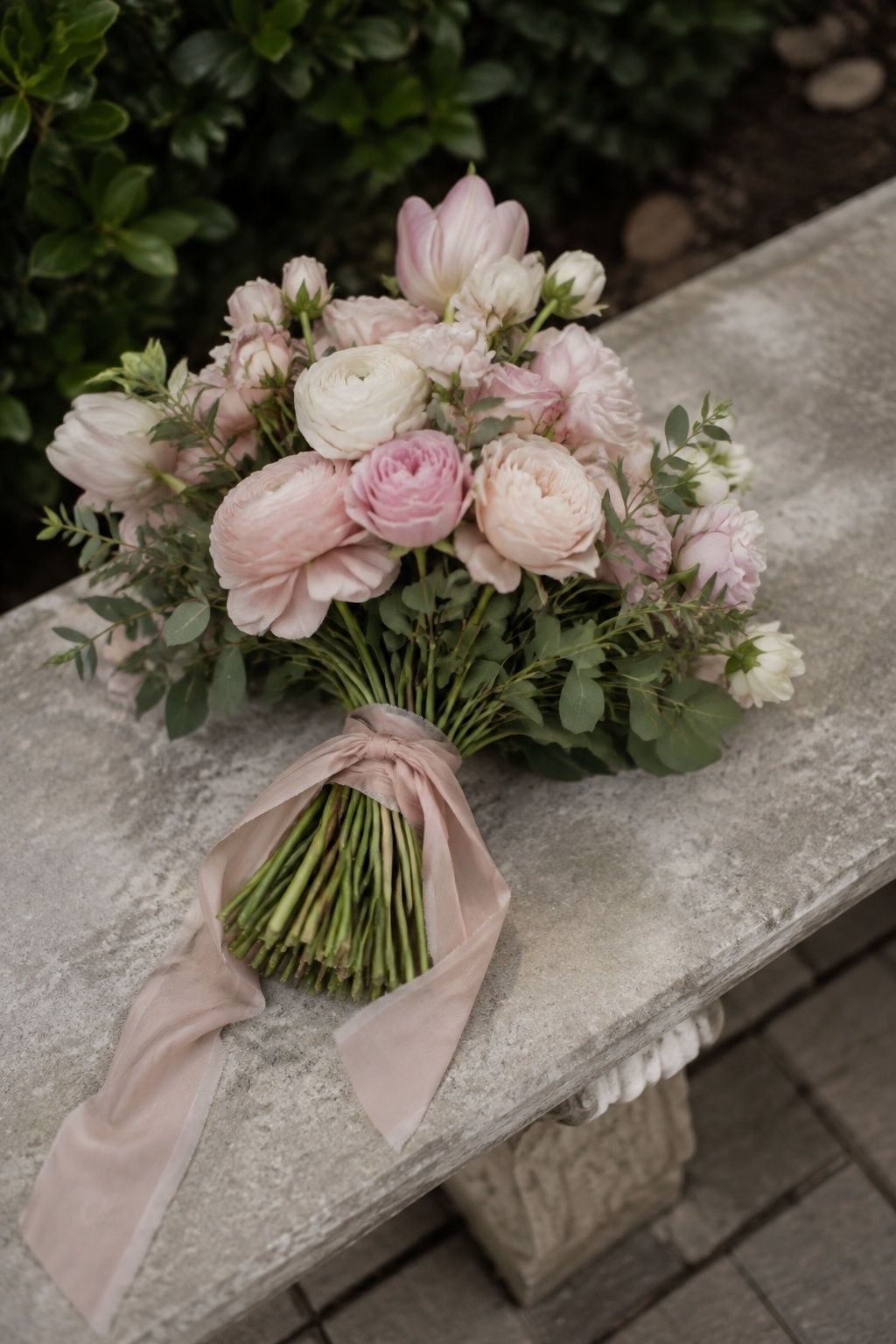
A blush and sage spring hand tied bouquet gives a familiar palette a relaxed, modern shape. Blush ranunculus, pale tulips, sweet peas, garden roses, and soft sage-toned greenery create a bouquet that feels romantic without turning sugary. The hand-tied shape also looks right with outdoor vows and smaller wedding parties.
Let sage act as a quiet grounding color, not a heavy gray-green mass. The bouquet deserves air between stems, a visible handle, and a ribbon that complements the dress rather than matching every linen or napkin in the reception.
Wildflower Meadow Bouquet For A Backyard Ceremony

A wildflower meadow bouquet is ideal for backyard ceremonies, garden elopements, family-home weddings, and outdoor vows where the flowers look gathered rather than arranged. Choose spring-friendly stems such as chamomile, feverfew, muscari, scabiosa, sweet peas, ranunculus, hellebores, and airy grasses instead of relying on late-summer blooms.
The trick is editing. A wildflower look still deserves a color story, stem length plan, and a clear focal bloom. Keep the bouquet loose at the edges and calmer at the center so it appears meadow-inspired in photos instead of messy.
Monochrome Pastel Bouquet With Mixed Petal Shapes

A monochrome pastel spring wedding bouquet feels sophisticated when the flowers share one color family but vary in texture. Think all blush, all lavender, all buttercream, or all pale peach, then combine tulips, ranunculus, sweet peas, anemones, and a few tiny filler stems for movement.
This direction suits couples who want color cohesion without a flat bouquet. It is especially pretty with bridesmaid dresses in mismatched shades of the same pastel family, because the bridal bouquet becomes the soft bridge between everyone’s outfits.
Anemone Bouquet With Graphic Centers
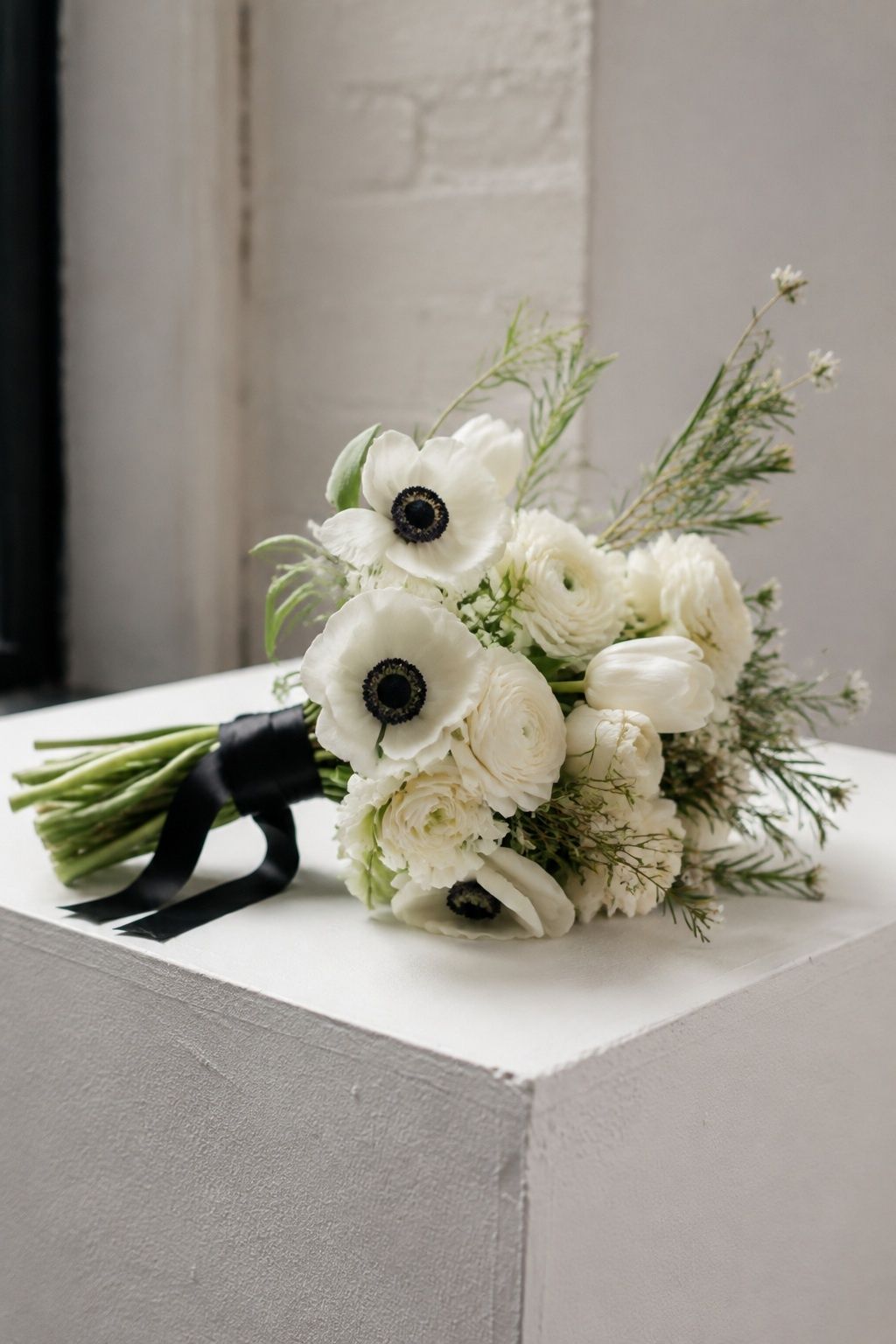
Anemones bring a crisp, graphic center to spring wedding bouquets. White anemones with dark centers look striking against clean gowns, black ribbon, pearl details, or modern stationery. They also give a pale bouquet clearer definition in photos, especially when the rest of the palette is ivory, blush, or soft green.
Treat anemones as punctuation rather than the entire bouquet unless the wedding style is very minimal. Pair them with ranunculus, tulips, sweet peas, or small roses so the bouquet feels romantic from a distance and detailed in close portraits.
Coral And Peach Bouquet For Warmer Spring Light
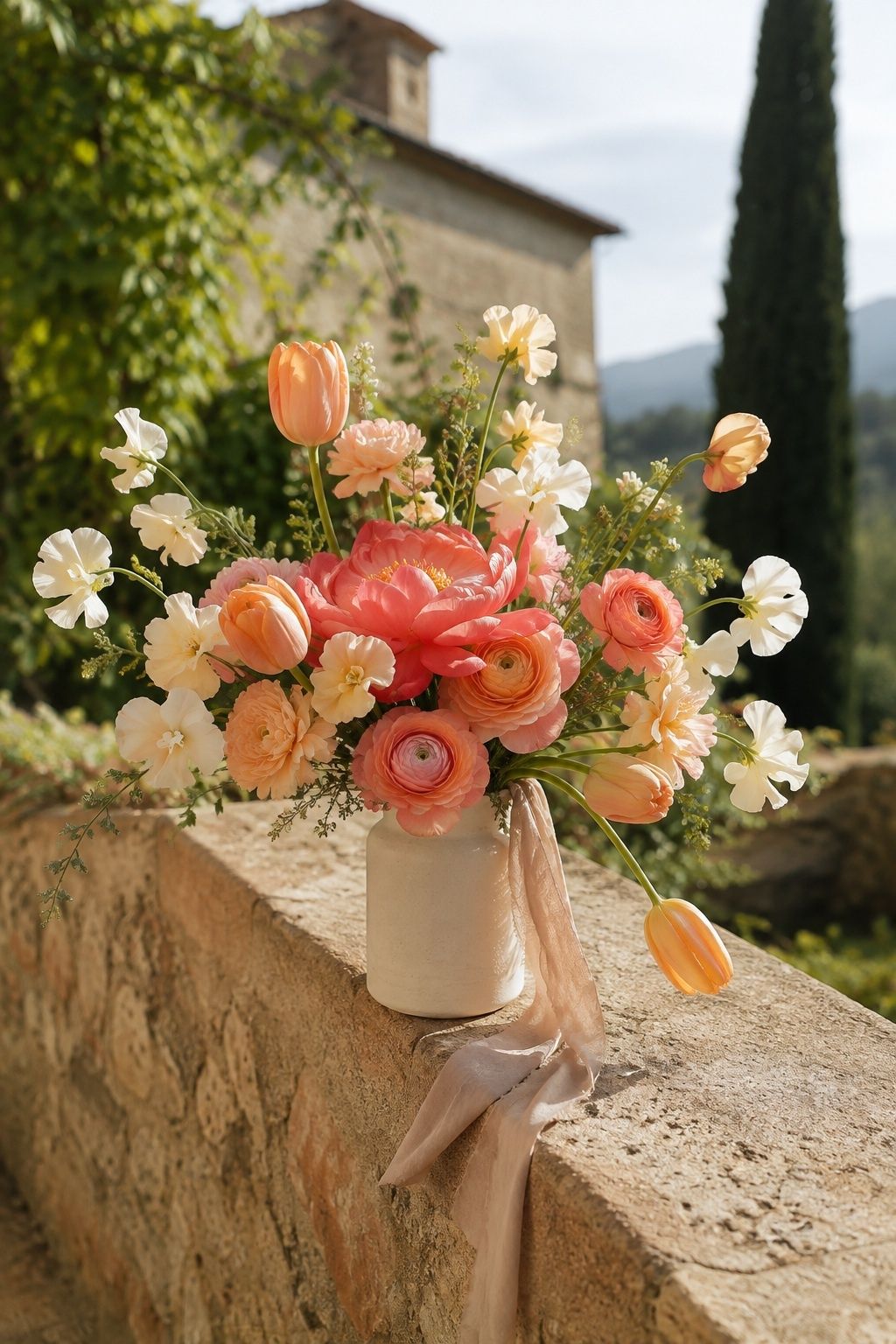
Coral and peach bouquets suit late afternoon ceremonies, warm stone venues, terracotta details, and spring weddings that lean sunny rather than misty. Coral charm peonies, peach ranunculus, apricot tulips, and creamy sweet peas create warmth while still feeling seasonal.
Balance the warmer blooms with ivory, pale green, or champagne ribbon so the bouquet does not drift into summer. This palette is flattering with off-white dresses, champagne satin, gold jewelry, and reception tables with fruit, taper candles, or warm-toned glassware.
Tiny Bridal Posy For A Courthouse Or Micro Wedding

A tiny bridal posy fits courthouse vows, quiet garden ceremonies, restaurant weddings, and micro weddings where the bouquet feels personal rather than performative. A small cluster of tulips, ranunculus, lily of the valley, sweet peas, or muscari looks charming with a short dress, tailored suit, slip dress, or simple veil.
Keep the handle neat and the proportions close to the body. A tiny posy deserves more intention than leftover bridesmaid flowers: a deliberate focal bloom, a beautiful ribbon, and enough shape to register in close-up portraits.
Sculptural Bouquet With Branches Or Clematis

A sculptural spring bouquet with branches or clematis feels editorial without relying on out-of-season volume. Flowering branches, spirea, dogwood, or clematis vines add line and reach, which suits modern gowns, architectural venues, gallery ceremonies, and couples who want movement more than fullness.
Ask for asymmetry that still feels controlled. The longest stem angles away from the face and dress details, and the bouquet remains comfortable to hold during vows. This is a smart choice when ceremony flowers are minimal and the bouquet carries the visual drama.
Fragrant Sweet Pea Bouquet Used With Restraint

A sweet pea bouquet is romantic because of its fluttery petals and unmistakable fragrance. For spring bridal bouquet ideas, sweet peas are strongest in restraint: enough to scent the bouquet and soften the outline, but not so many that the bundle becomes fragile or overpowering.
Pair sweet peas with ranunculus, tulips, or small garden roses, and ask the florist about hydration for portraits and warm rooms. This bouquet suits intimate weddings where the couple will notice the scent during vows, first look photos, and dinner arrivals.
White Garden Bouquet That Won’t Disappear In Photos
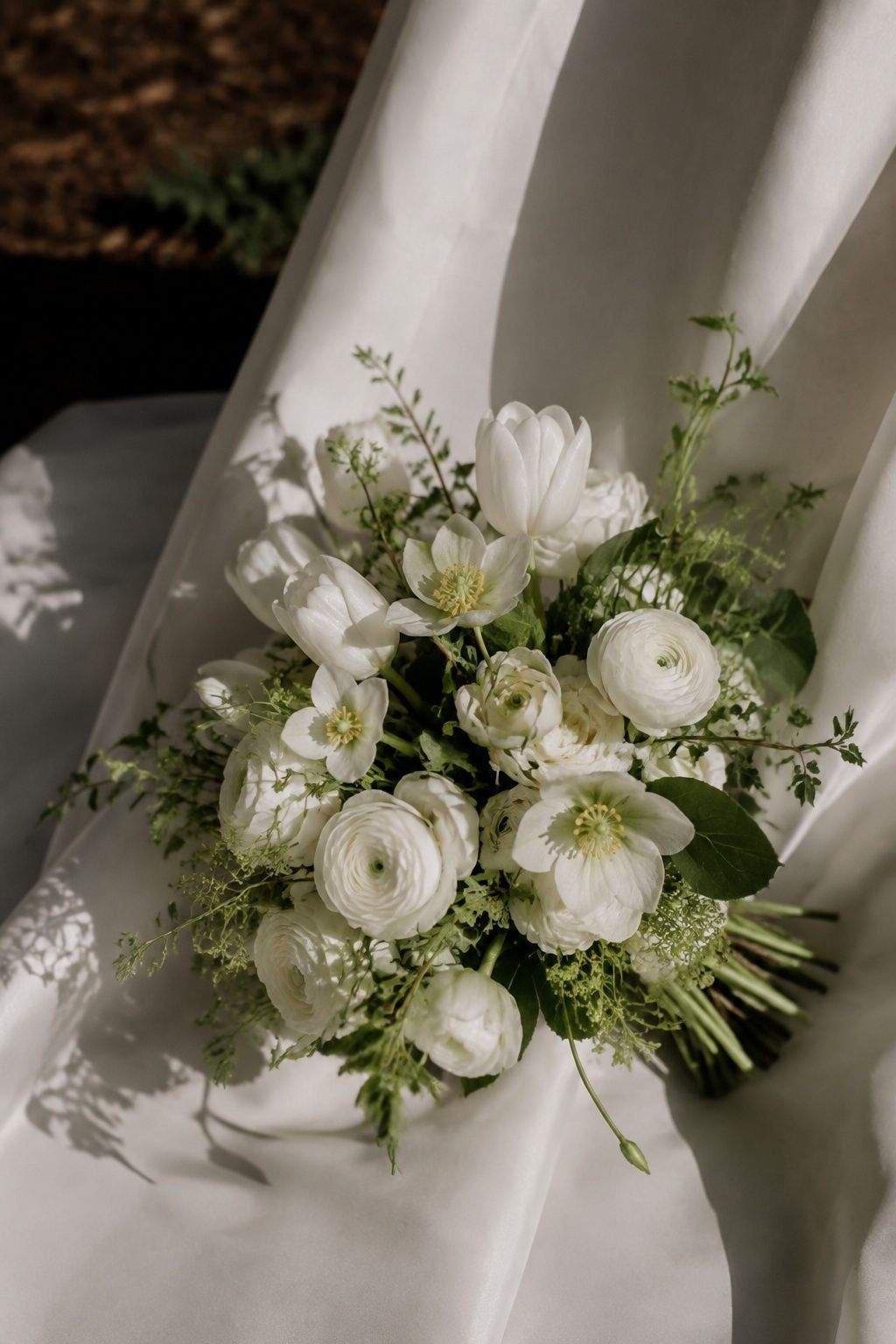
A white spring garden bouquet looks luminous with enough contrast to stay visible against a white dress. Mix ivory tulips, white ranunculus, sweet peas, hellebores, anemones, or late-spring peonies with pale green, soft gray-green, or tiny darker centers.
Texture is the safeguard. Combine cup-shaped blooms, ruffled petals, slender stems, and airy greenery so the bouquet has depth in photos. If the dress is heavily textured lace, keep the bouquet slightly simpler; if the dress is sleek satin, allow more petal variation.
Bridesmaid Mini Posies That Echo The Bridal Bouquet
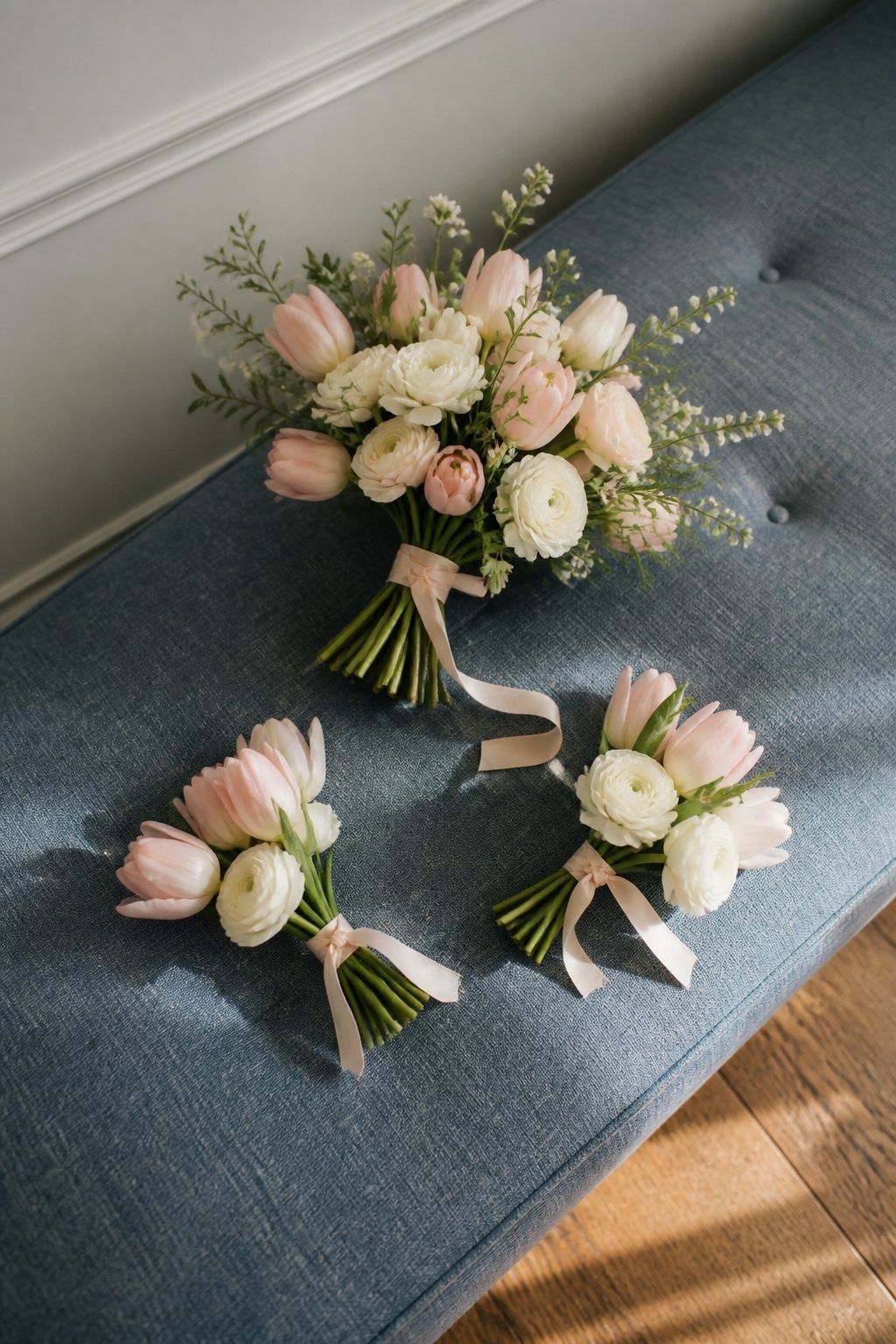
Bridesmaid mini posies are a graceful choice for small weddings because they repeat the floral story without building a full matching set. Select one or two flowers from the bridal bouquet, such as tulips and ranunculus, then simplify the color and scale for attendants.
For mismatched dresses, mini posies bring the group together in portraits. Keep each bouquet lighter than the bride’s, with shorter stems and fewer focal blooms. The result feels coordinated, personal, and easy to carry through an intimate ceremony.
Bouquet Ribbon Details That Match The Season
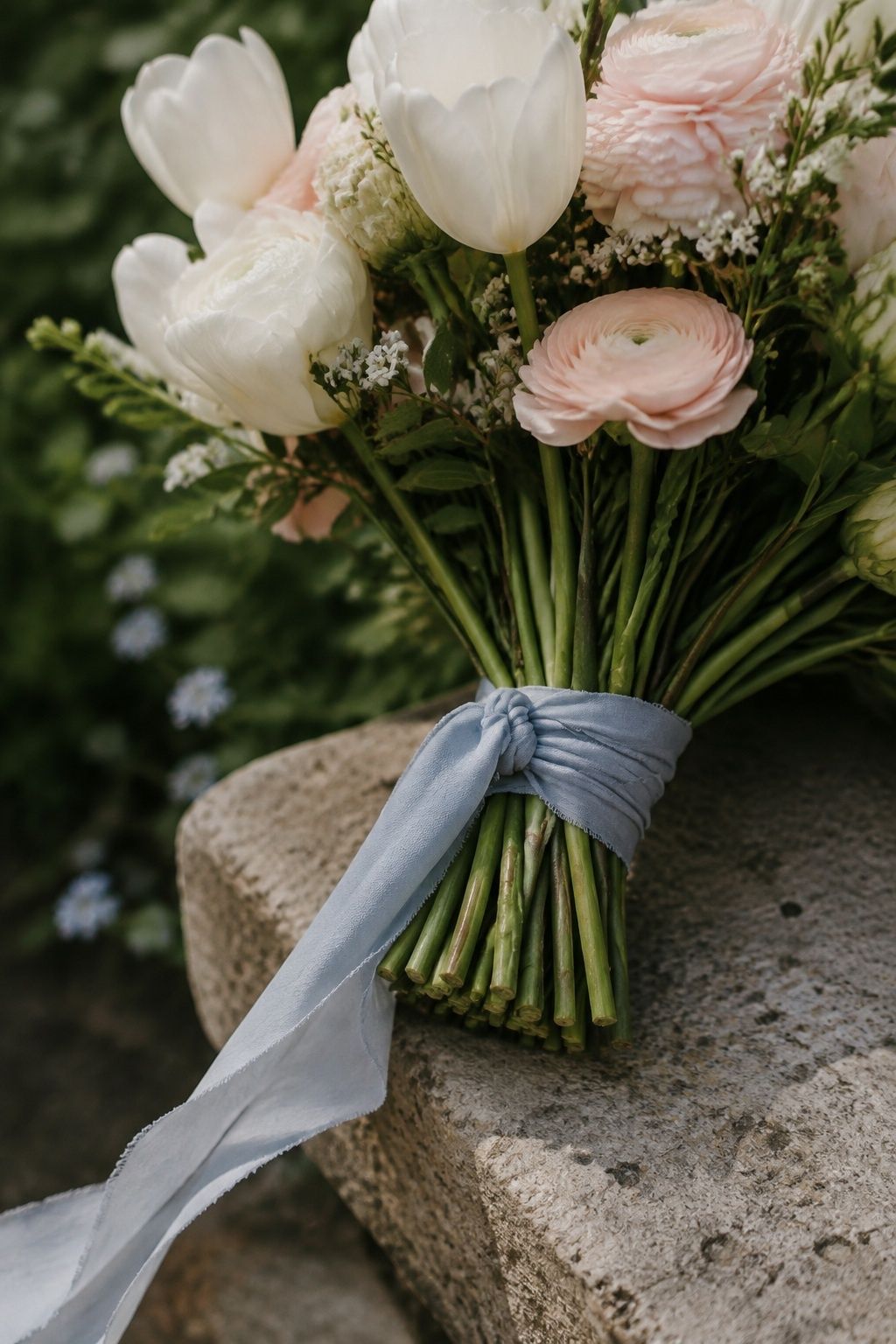
Ribbon changes the mood of a spring bouquet more than many couples expect. Silk, chiffon, or satin ribbon in ivory, buttercream, blush, dove blue, pale sage, lavender, or soft peach turns a simple bouquet into a finished floral detail without adding more flowers.
Choose ribbon length by dress and venue. Long trailing ribbon looks romantic in garden portraits but feels distracting with a short courthouse dress or windy outdoor ceremony. Shorter ribbon gives a cleaner handle for restaurant weddings and tight aisle spaces.
Bouquet Preservation Plans To Make Before The Wedding
Plan bouquet preservation before the wedding, not the morning after. Pressing, drying, resin blocks, framed petals, and professional preservation all require different flower handling, delivery timing, and bloom choices. Peonies, tulips, sweet peas, lilac, and ranunculus each behave differently once removed from water.
If preservation matters, ask the florist which spring wedding bouquet flowers hold shape or color best after the event. Assign someone to place the bouquet in water, keep it cool, and deliver or ship it with the preservation studio’s timing details before petals bruise or brown.
FAQ
What are the best spring wedding bouquet ideas?
The best spring wedding bouquet ideas combine seasonal flowers, airy shapes, and a clear color story. Loose garden posies, tulip bouquets, ranunculus and sweet pea hand-ties, late-spring peony bouquets, lilac accents, wildflower meadow bouquets, anemone bouquets, tiny courthouse posies, and preservation-focused bouquets all suit spring weddings beautifully.
What flowers work in a spring bridal bouquet?
Spring bridal bouquet flowers include tulips, ranunculus, sweet peas, lilac, anemones, hellebores, muscari, narcissus, lily of the valley, spirea, clematis, flowering branches, garden roses, and late-spring peonies. Availability shifts by region and month, so ask the florist for seasonal substitutions that keep the same color, scent, and shape.
What bouquet style is trending for spring weddings in 2026?
For 2026 spring weddings, the strongest bouquet style is loose, garden-led, and personal rather than tightly domed. Couples are leaning toward hand-tied shapes, just-gathered textures, monochrome pastels, sweet pea fragrance, tulip simplicity, sculptural vines, and bouquet details that feel connected to the venue and dress.
Are tulips good for a spring wedding bouquet?
Yes, tulips are excellent for a spring wedding bouquet, especially in early spring. They bring clean shape, graceful movement, and many soft colors, from white and blush to butter yellow, peach, and coral. Because tulips continue opening and bending, florist timing and cool storage are important.
How do you preserve a spring wedding bouquet?
Preserve a spring wedding bouquet by choosing the method before the wedding, then protecting the flowers immediately after portraits. Options include pressing, air drying, silica drying, resin preservation, framed petals, or professional keepsake art. Keep the bouquet cool, hydrated, and away from crushing until it reaches the preservation studio.
Final Thoughts
The most beautiful spring wedding bouquets feel seasonal, personal, and easy to carry. Choose flowers by month, shape the bouquet around the dress, edit the color palette, account for scent, and decide preservation before the wedding day so the bouquet feels romantic in real life and graceful in every photograph.
Choose the bouquet that fits the wedding month, the dress line, the room size, and the way the flowers will be held, photographed, and saved after the celebration with seasonal bouquet proportions and loose spring floral styling.
Last update on 2026-10-05 / Affiliate links / Images from Amazon Product Advertising API