

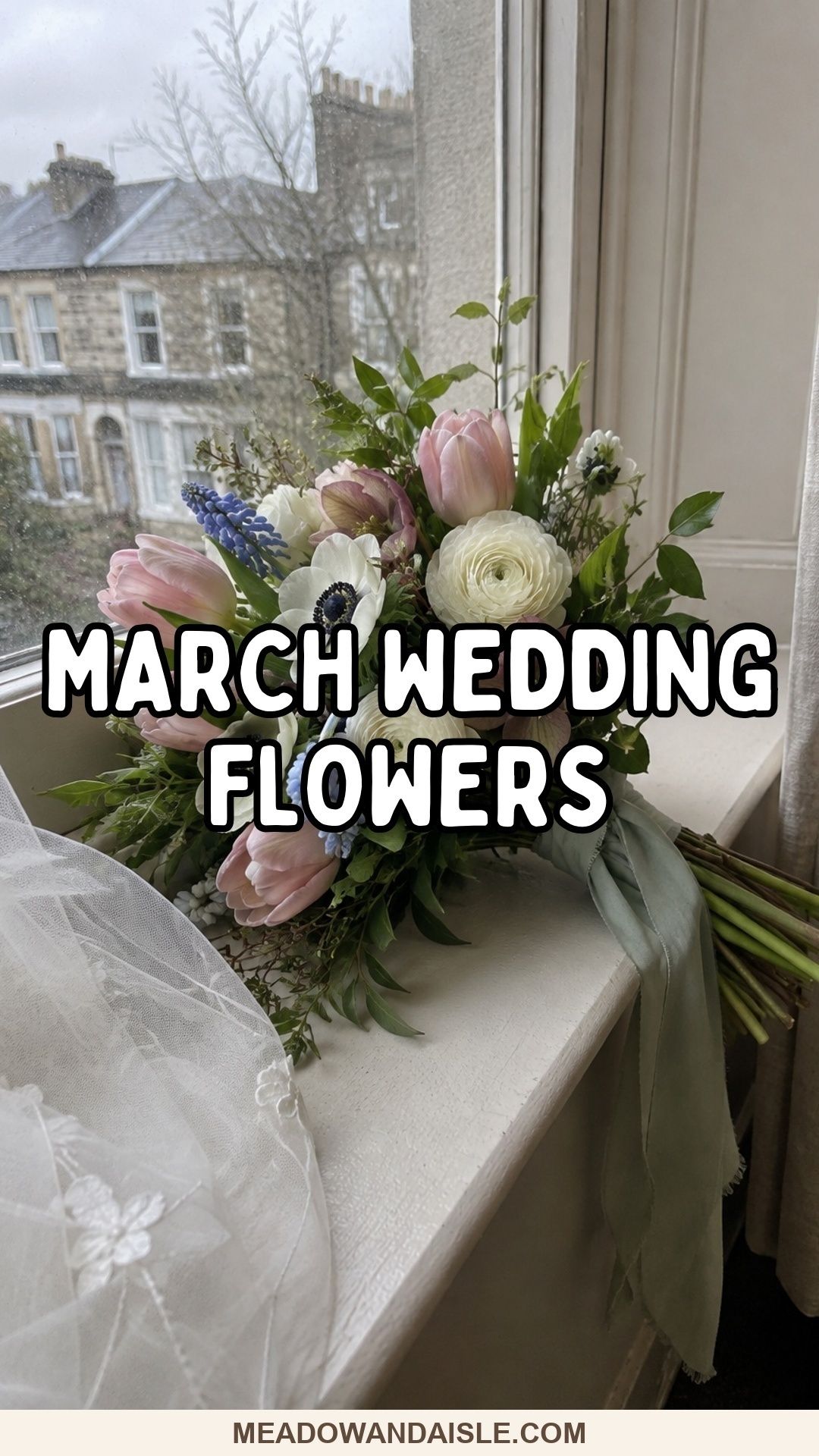
The most dependable March wedding flowers are tulips, ranunculus, anemones, daffodils, hellebores, hyacinths, muscari and lisianthus, plus flowering branches like forsythia, pussy willow and quince. Skip peonies and summer flowers in March; ranunculus and lisianthus give you the same ruffled look for less money and less risk.
The most expensive March flower mistake is asking for May. Peonies, dahlias and garden-party sunflowers can be flown in, but they cost more, arrive less reliably and look slightly lost next to bare trees and a grey sky.
March wedding flowers look best when they’re allowed to be early spring: clean tulips, dark-eyed anemones, nodding hellebores, a branch or two of forsythia. With a guest list of 10 to 50, you need surprisingly few of them to fill the room. For the wider plan, see ideas for a March wedding.
Handy for spring arrangements
Vessels, floral tools and ribbon that help a handful of March stems look finished.


What flowers are in season for a March wedding?
Tulips, daffodils, ranunculus, anemones, hyacinths, hellebores, muscari and lisianthus are the core March wedding flowers in most temperate regions. Forsythia, pussy willow, cherry and quince branches add height, and sweet peas sometimes appear late in the month.
Availability still depends on where you live and on the weather that week, so I’d go into the florist meeting with a short list of favorites and a clear sense of which ones you’d happily swap. Paperlust has a useful month-by-month seasonal flower chart if you want to compare March with the months either side.
The reliable bloom flowers
These four carry most March bouquets and centerpieces. Start here and build out.
Tulips
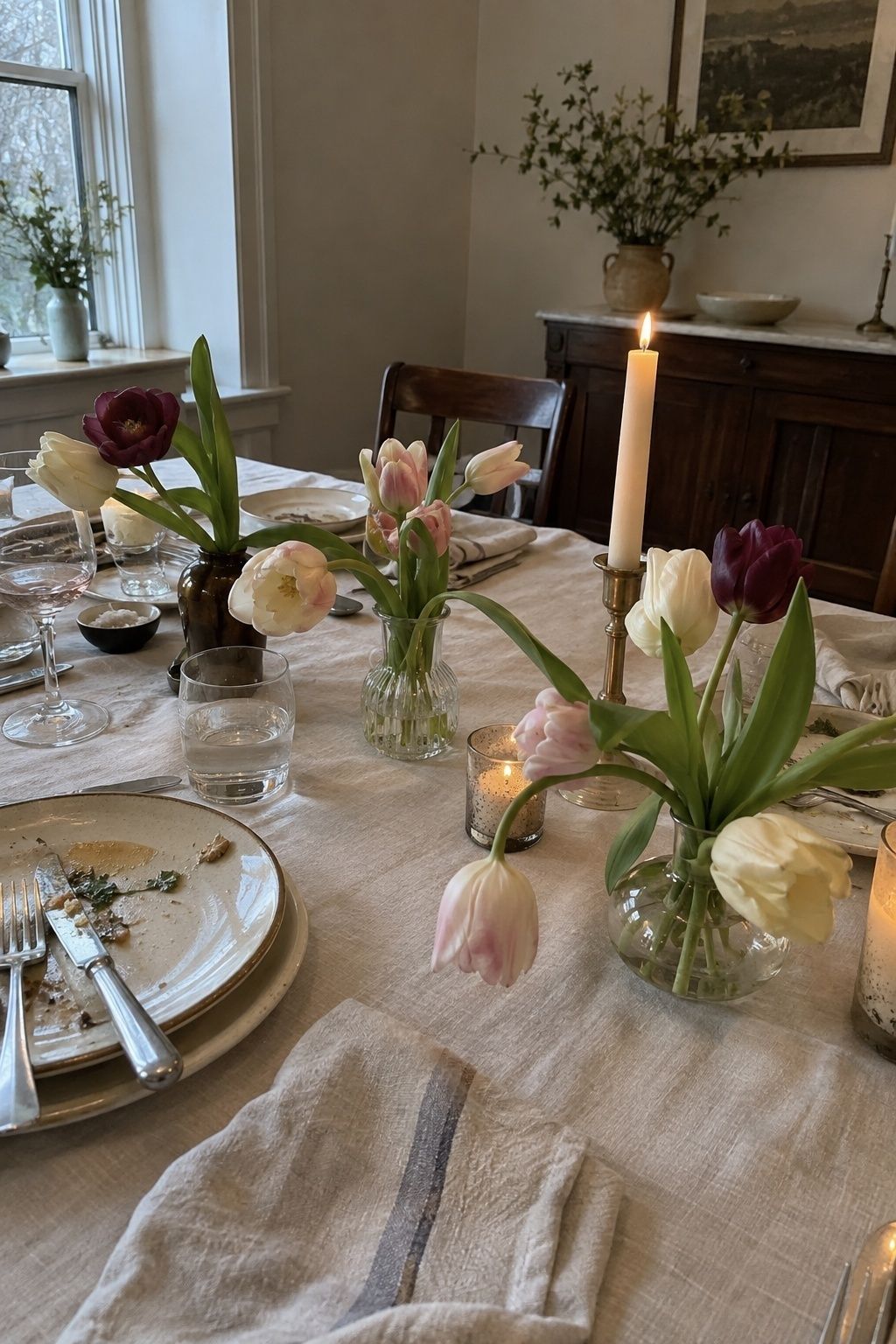
Tulips are the clearest March flower there is, and they come in nearly every color from white to deep plum. They keep growing and bending after they’re cut, so give them looser designs where a curve looks right. A bouquet of a single tulip variety is one of the simplest, best-looking choices for a small March wedding.
Ranunculus
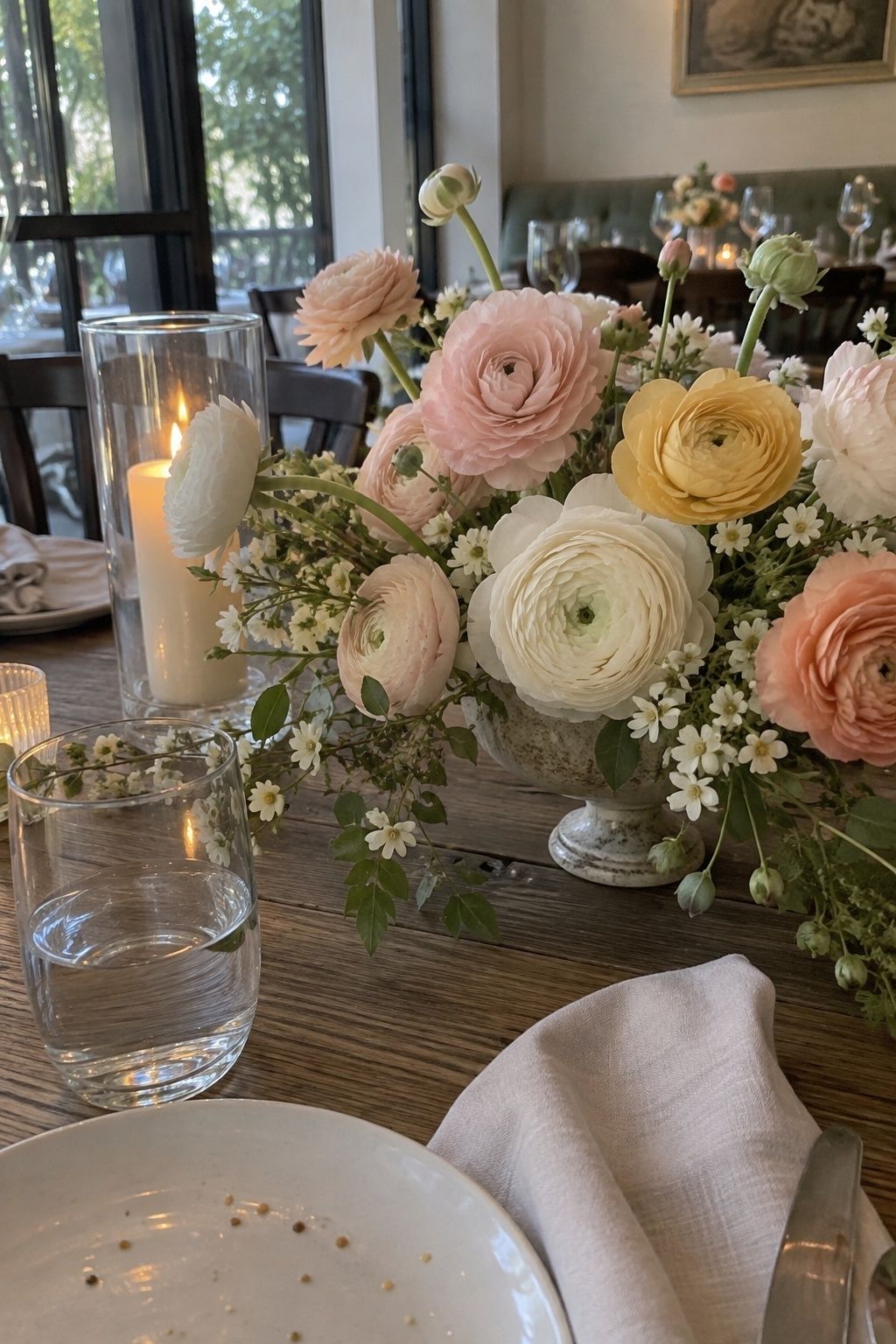
If you wanted peonies, you probably want ranunculus. The layered petals give that full, ruffled look without pretending it’s late May. Cream, blush, peach, coral, butter, burgundy and a lovely mocha tone are usually all possible. Use them where people see them up close: bouquets, boutonnieres, bud vases.
Lisianthus
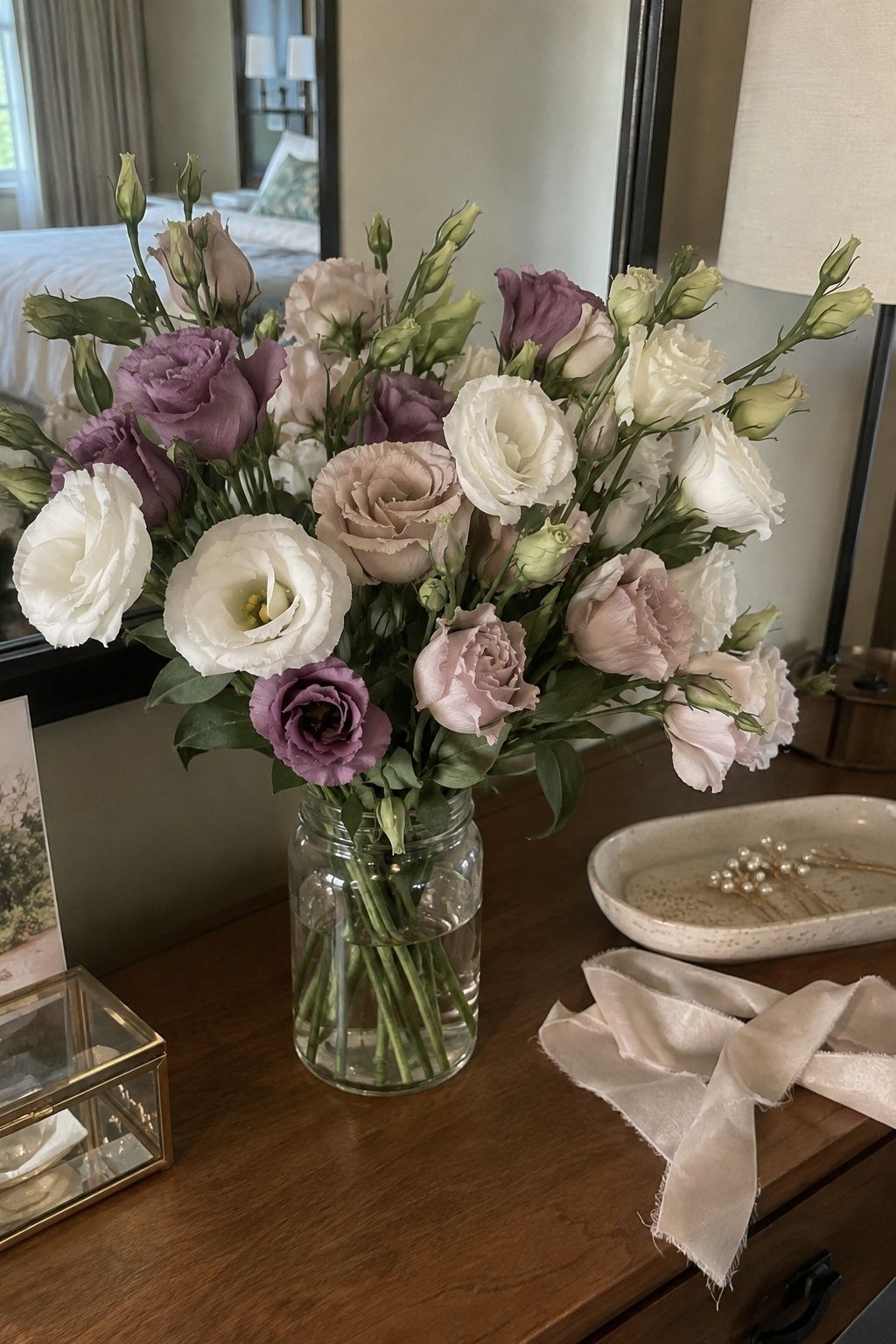
Lisianthus is the other good peony stand-in. Soft petals, plenty of colors, and it holds up well in bouquets and corsages. Ask your florist which shades look strongest the week of your wedding.
Anemones
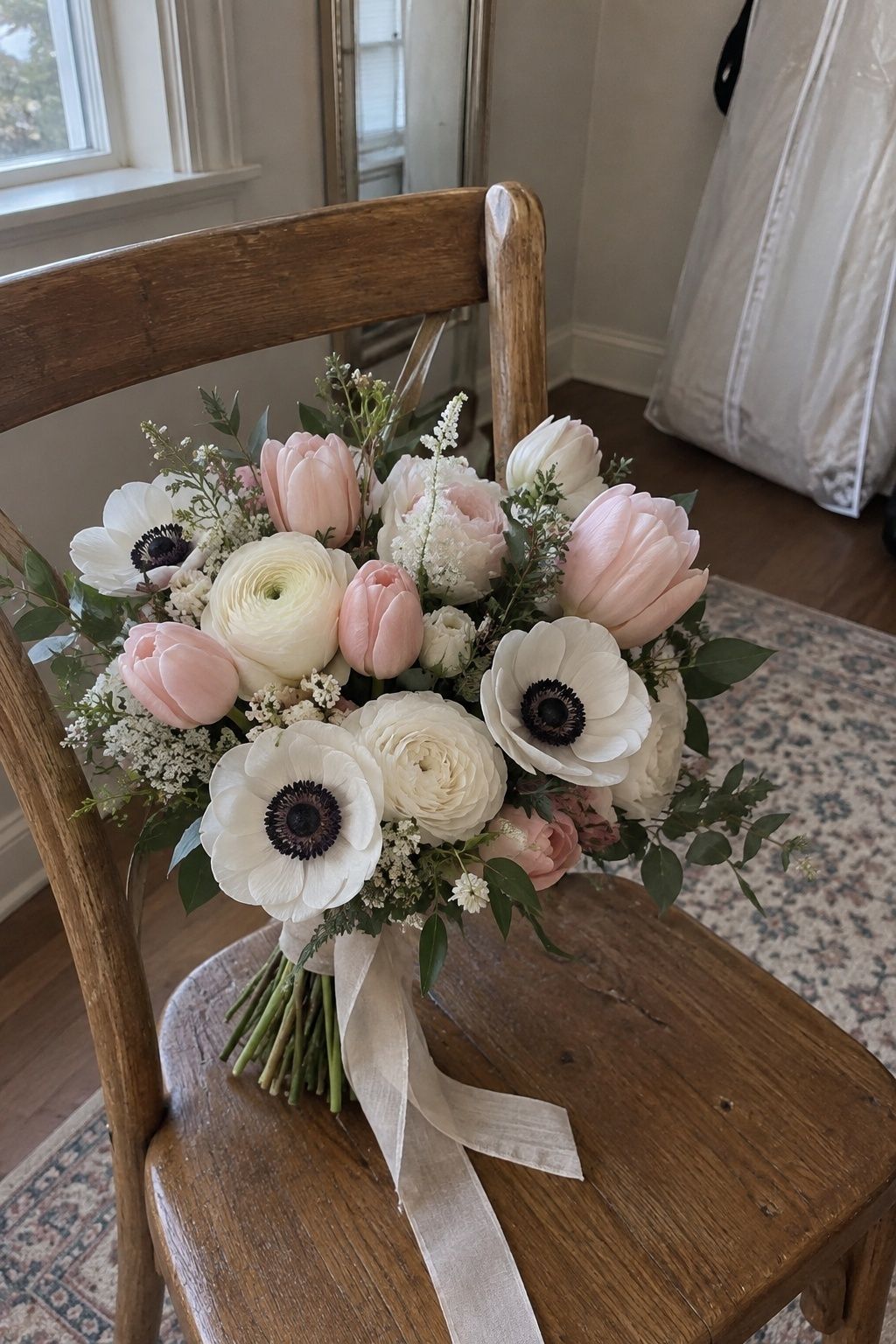
Anemones add drama. White with a black center is the classic, but red, plum, blue and pink exist too. A few of them sharpen a soft palette so the flowers don’t fade into the linens.
Winter-to-spring texture
These are what make a March arrangement look like March and not an imported May. They bring muted color and texture that suits a month still half in winter.
Hellebores
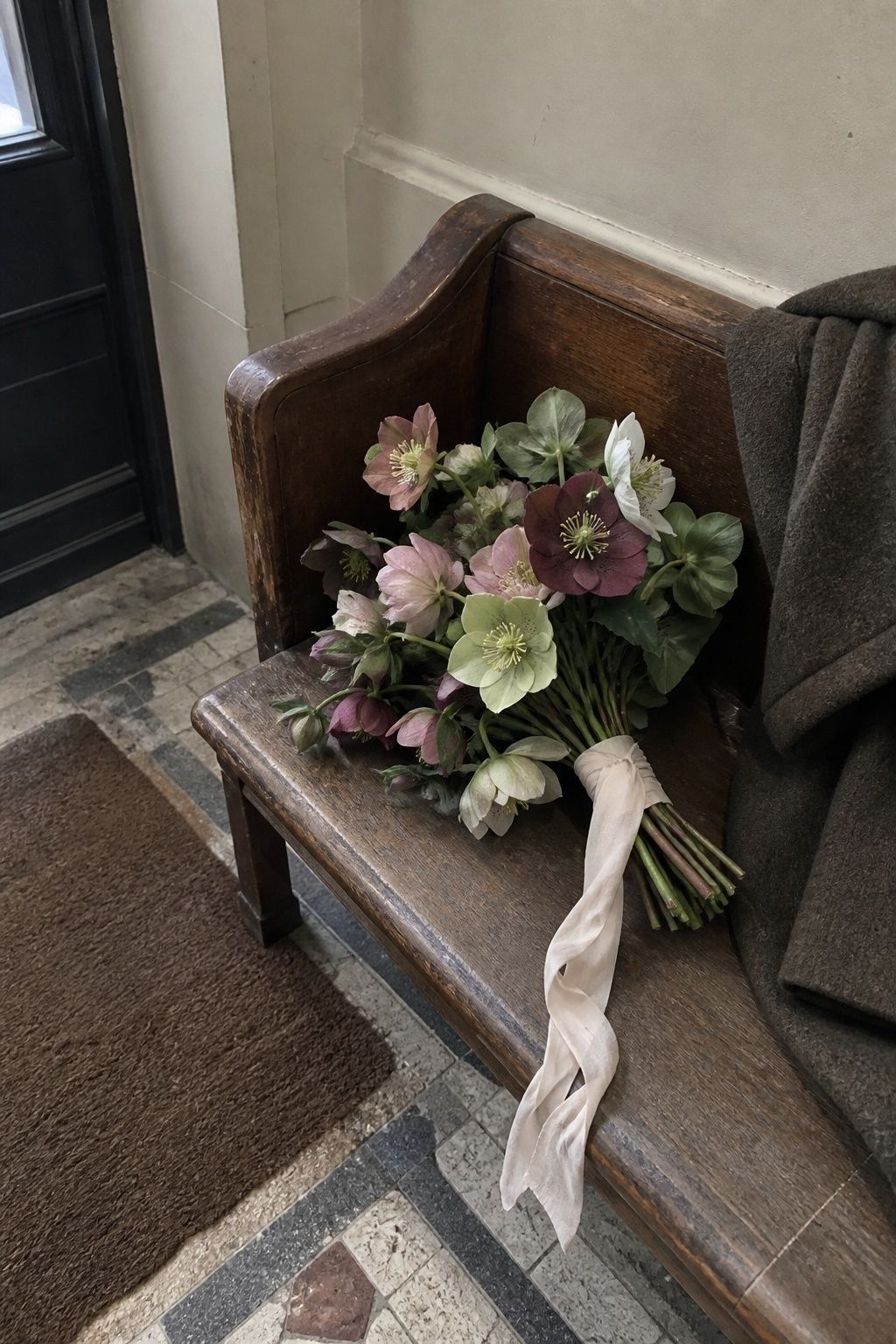
Hellebores have nodding heads and muted tones in green, plum, mauve, ivory and dusky pink. They’re delicate, so keep them where they’re protected and seen up close, like in the bouquet, on the sweetheart table or in small compotes, not in exposed outdoor pieces.
Pussy willow
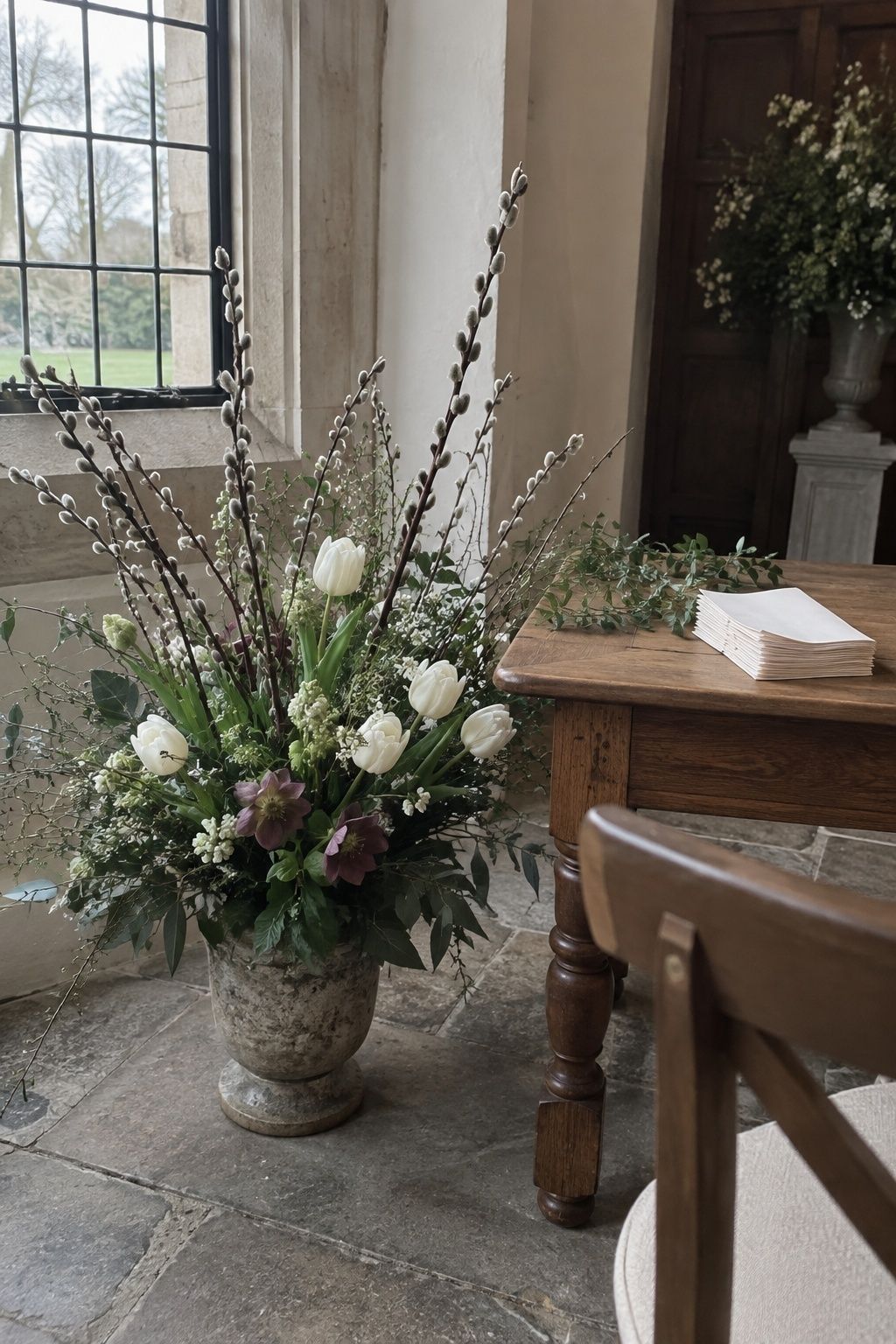
Silvery catkins sit right on the line between seasons, and they last well, which makes them useful in ceremony pieces that need to hold up all day. Pair with white ranunculus, tulips or anemones for an early spring look without a single pastel.
Eucalyptus and ruscus
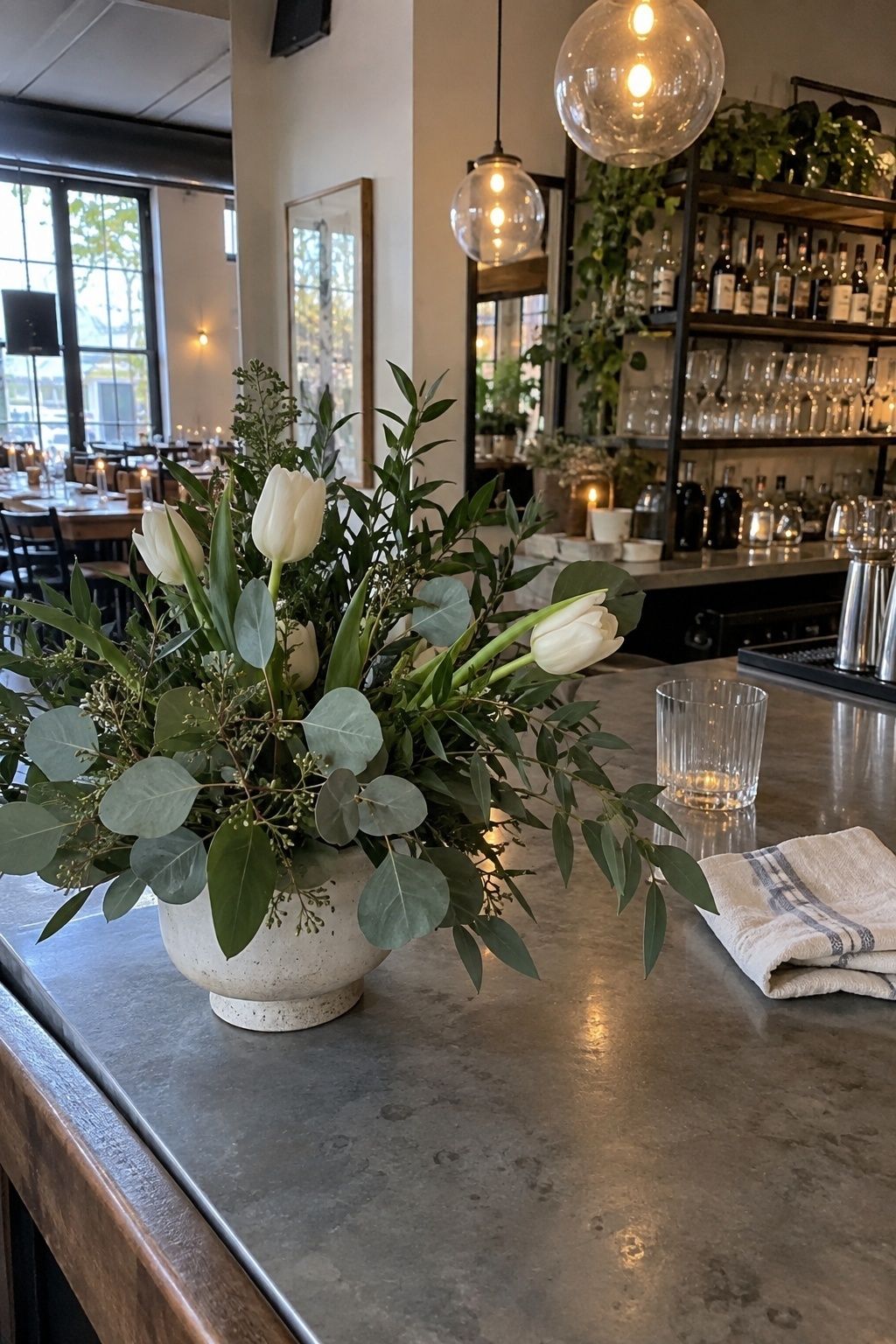
Greenery adds shape and volume without adding expensive blooms. Keep it light, though. Heavy garlands make the room feel like winter is still in charge.
Early spring color: daffodils, forsythia, muscari and hyacinths
For color in March, these four do the job without pretending to be summer. Each one needs a little handling.
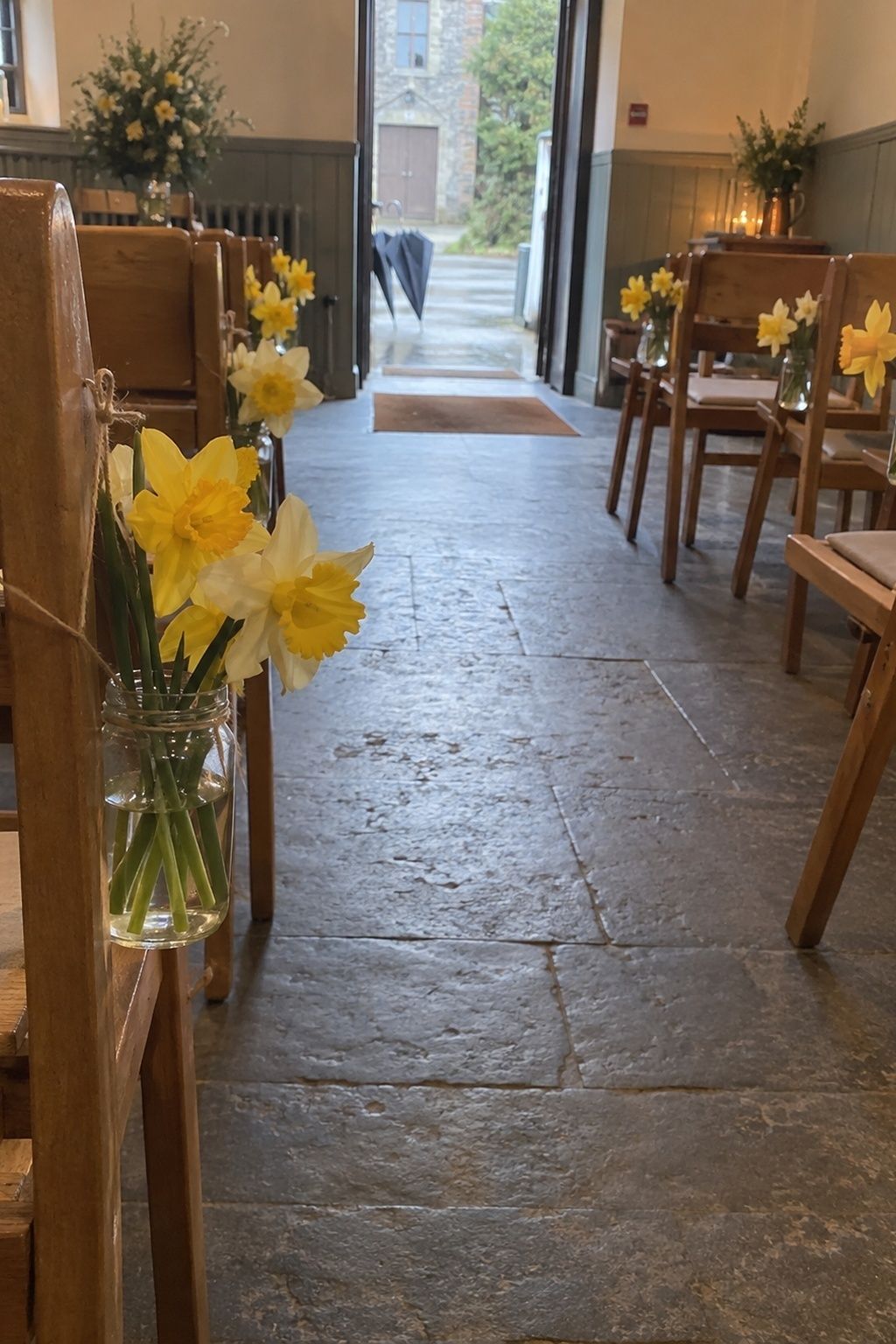
Daffodils are the cheerful yellow of March. One thing to know: fresh-cut daffodils release a sap that shortens the life of other flowers in the same water. Florists condition them separately before mixing them in, or use them on their own in jars and bud vases, which looks lovely anyway.
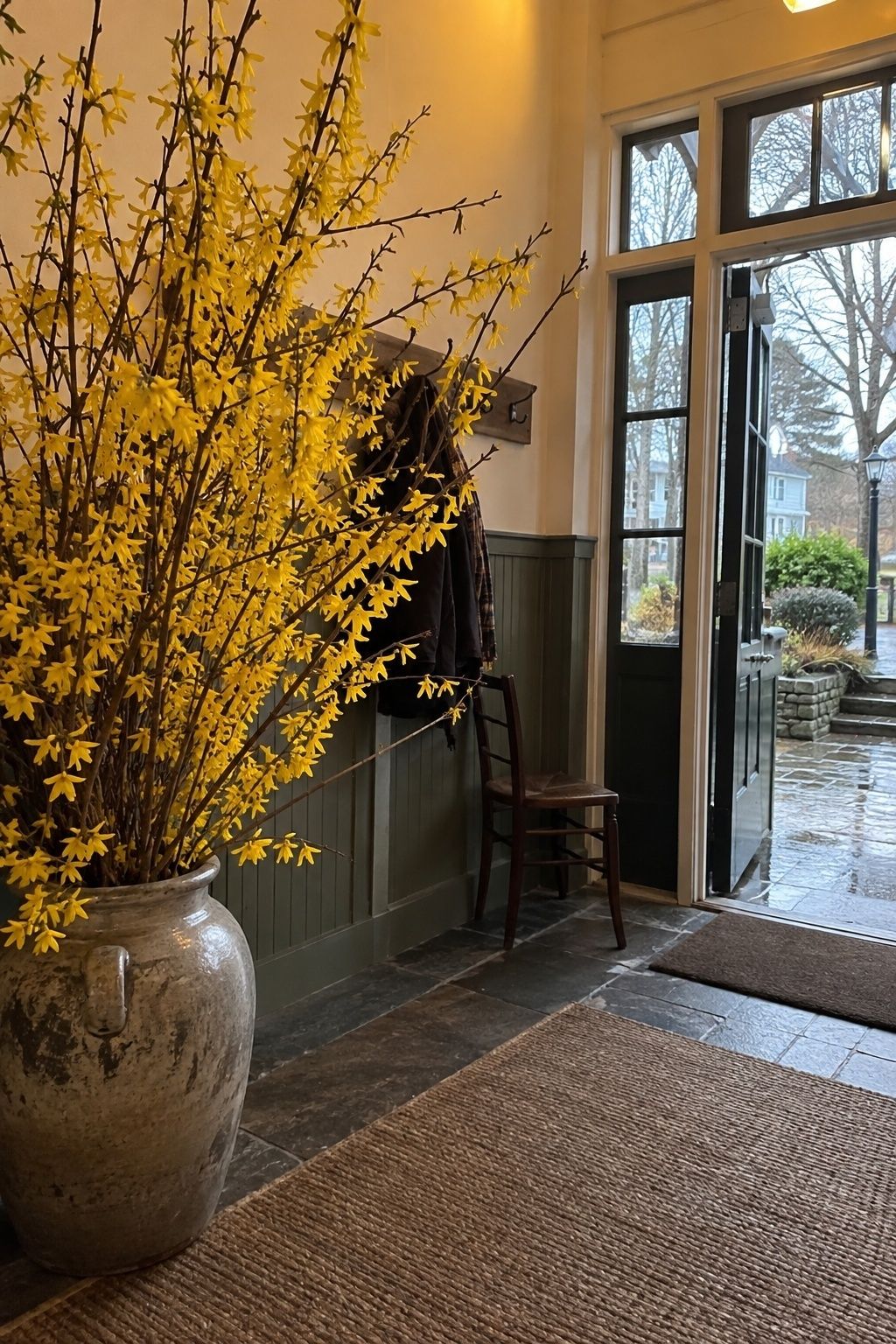
Forsythia branches give you bright yellow height. One big arrangement at the entrance or ceremony does more than several medium centerpieces, especially in a neutral venue.
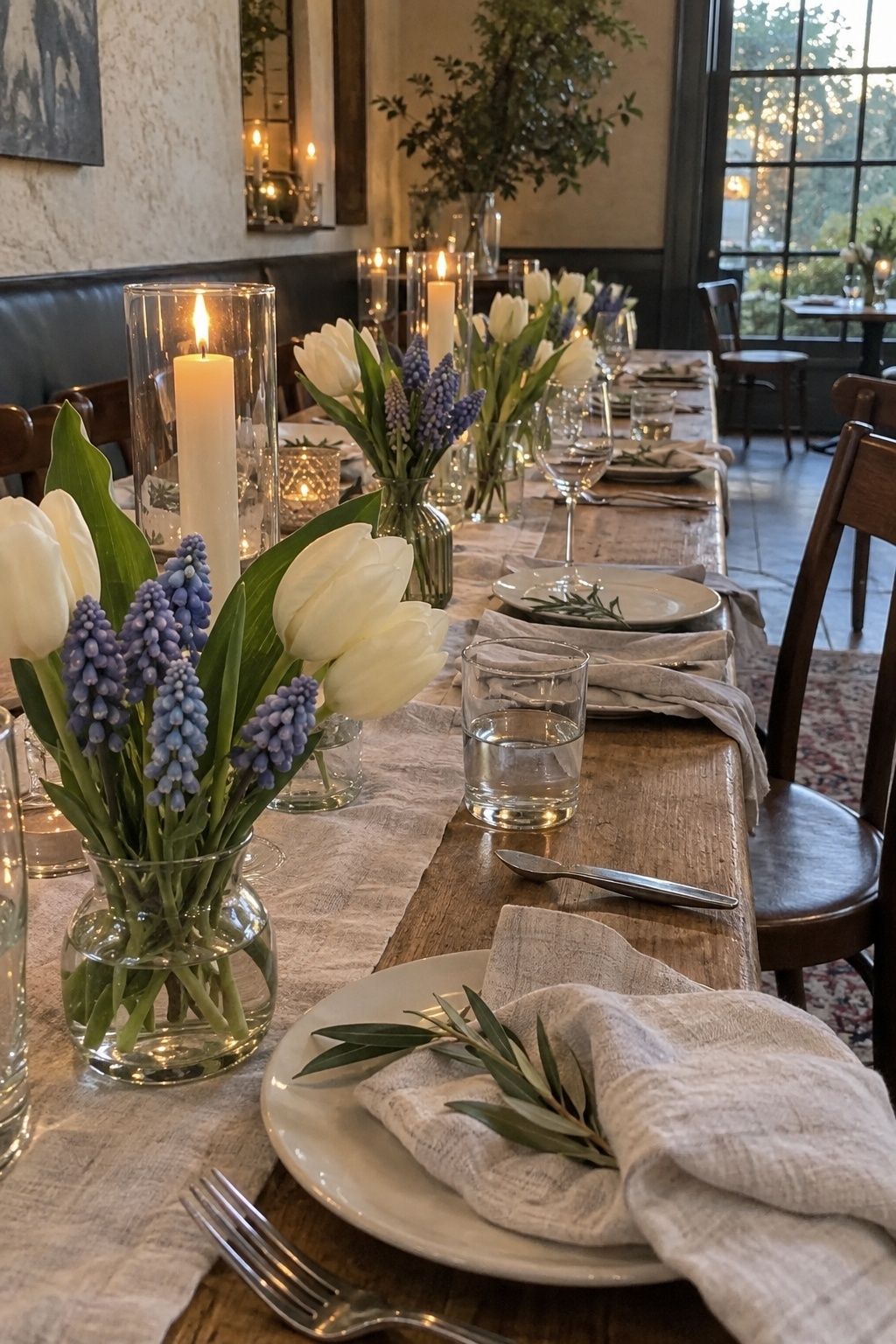
Muscari, or grape hyacinth, is tiny and vivid blue or purple. It suits boutonnieres, bud vases and bouquet accents. It won’t fill a room, but it makes cream and green designs far more interesting.
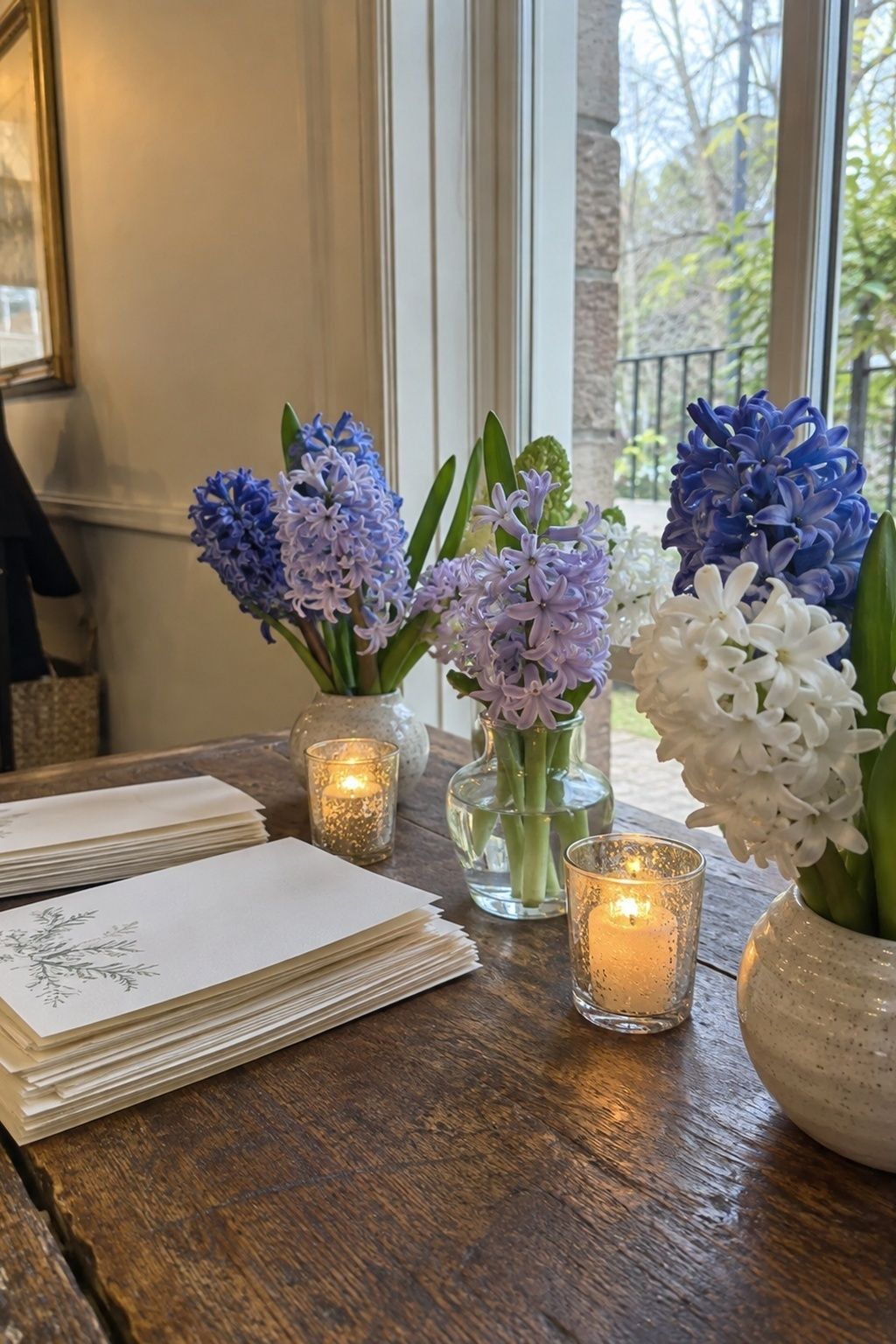
Hyacinths are strongly scented. Use them as accents or in low vessels away from dinner plates, and keep them out of the bouquet if anyone close to you is sensitive to fragrance. For the next step, see March wedding reception ideas.
Branches, potted bulbs and sweet peas
These are the extras: lovely when they work, and worth a backup plan.
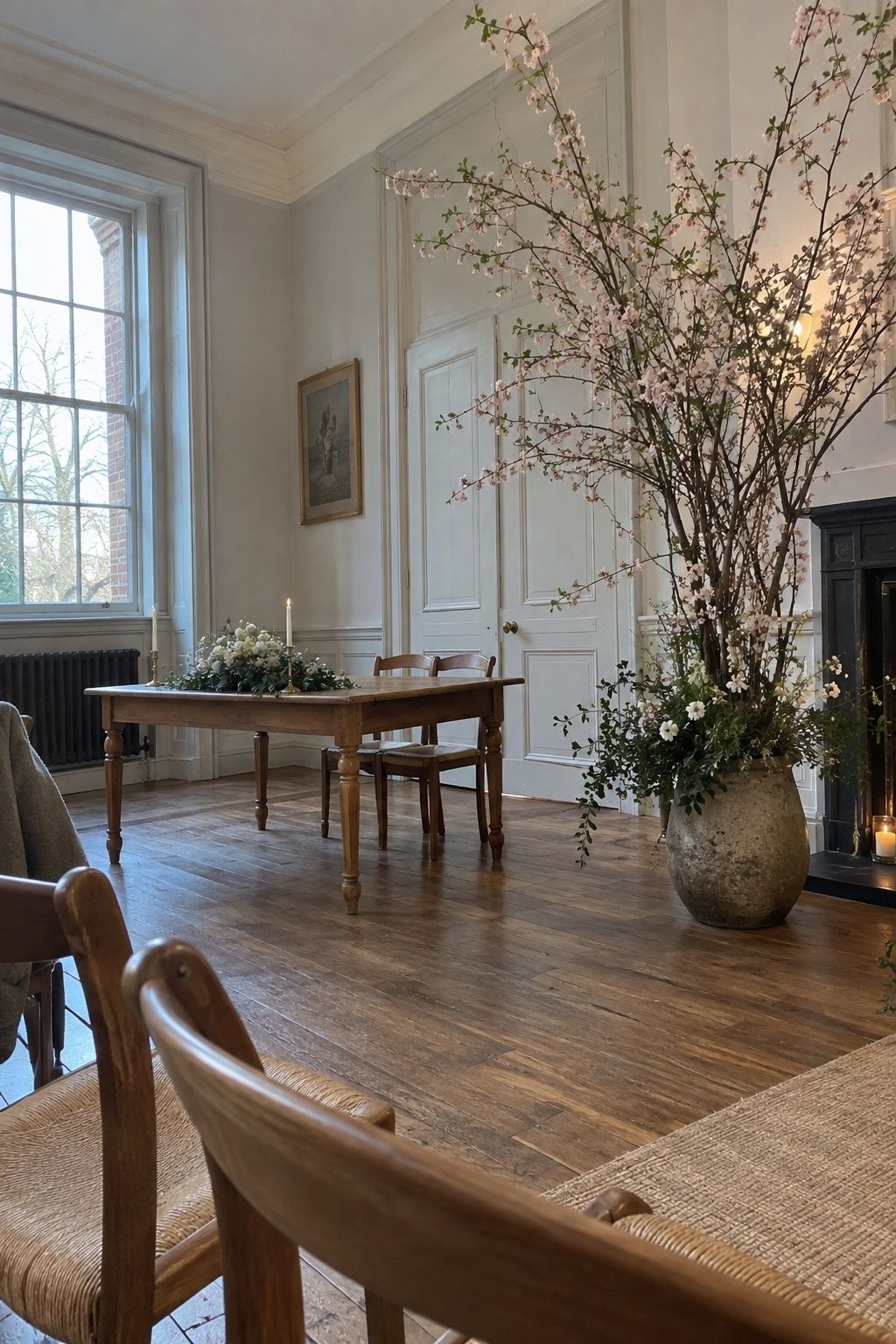
Cherry, quince and apple branches can be forced into bloom, but timing is tricky. Florists may need to bring them indoors days or weeks in advance, and they can open too early or not quite enough. Use them in tall entry vessels or behind the ceremony, and keep any table versions airy so people can see each other.
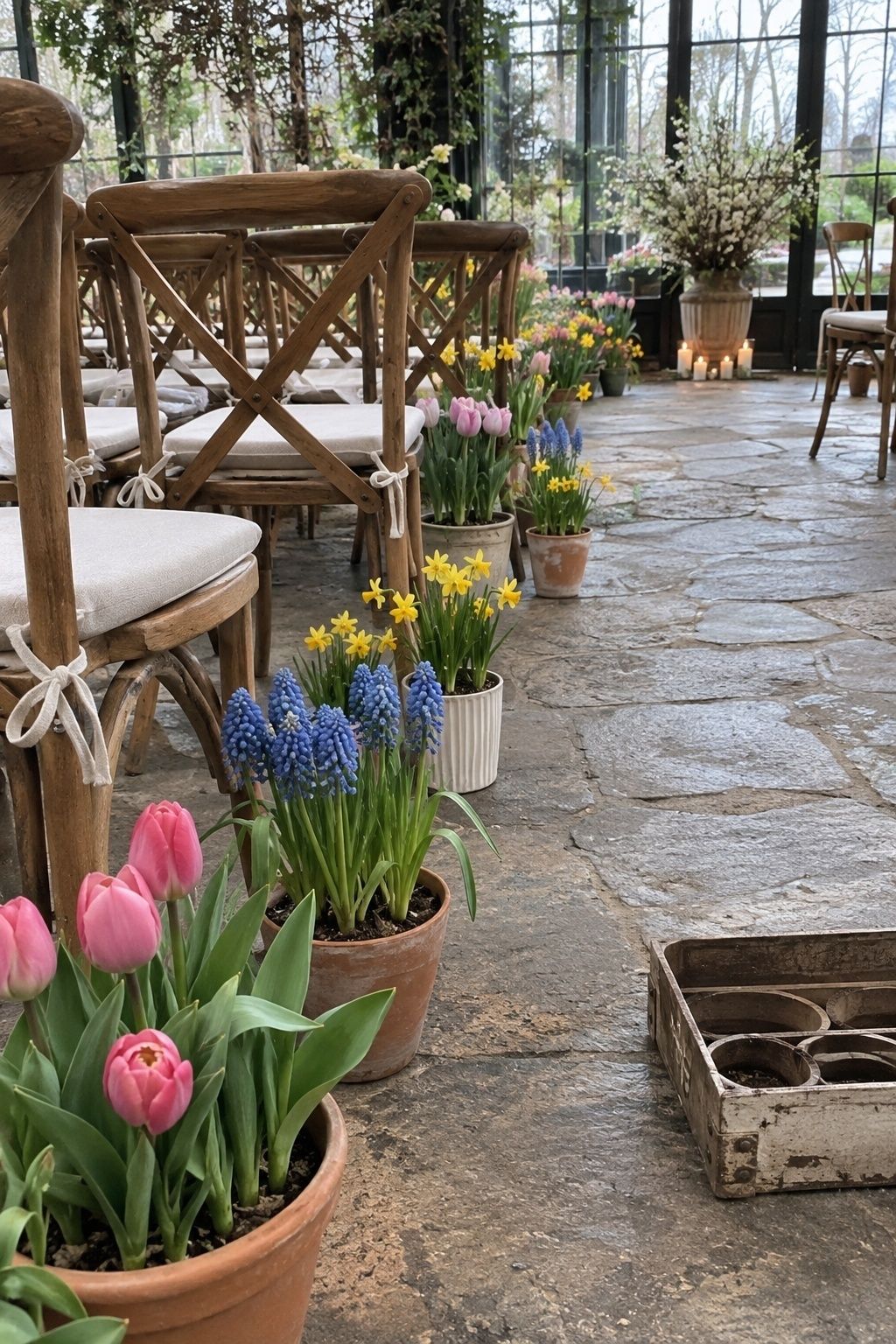
Potted bulbs are my favorite March idea for small weddings. Pots of tulips, daffodils, muscari or hyacinths make aisle markers, table accents or escort-card displays, and guests can take them home afterward. Put the plastic grow pots inside proper containers that match the wedding.

Sweet peas can show up late in March in some regions. Treat them as a confirmed luxury accent rather than the backbone of the design, with ranunculus or lisianthus ready as the backup.
How to build a small March bridal bouquet
A small March bouquet needs about 15 to 25 stems: a few focal flowers, a couple of supporting textures and one small accent. Here’s a recipe I’d hand a florist as a starting point:
| Role | Flower | Stems |
|---|---|---|
| Focal | Ranunculus | 5-7 |
| Focal | Tulips | 5 |
| Contrast | Anemones | 3 |
| Texture | Hellebores | 3 |
| Accent | Muscari or sweet peas | 3-5 |
| Shape | Eucalyptus or ruscus | 2-3 |
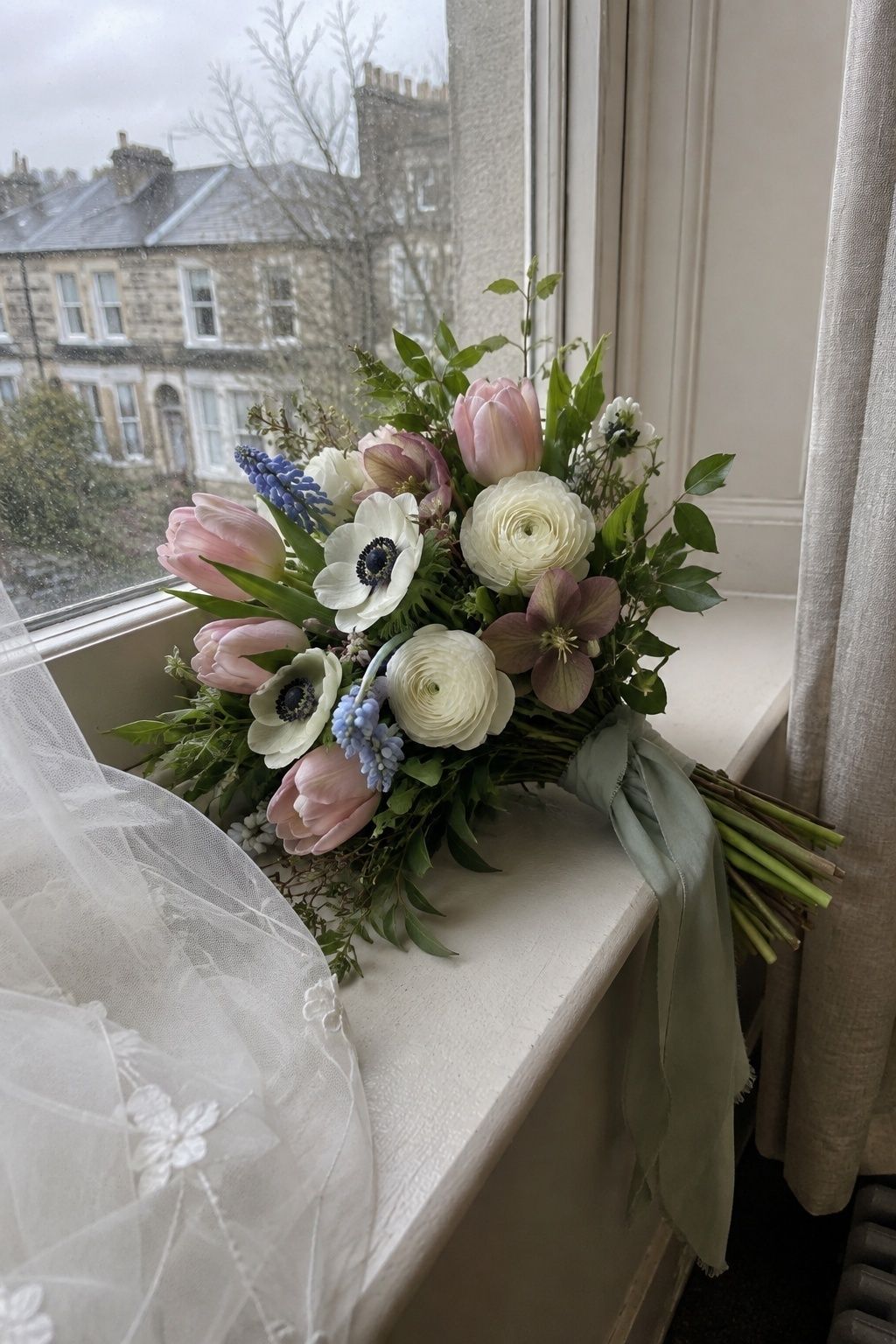
That totals 21 to 26 stems, which sits on the full side of a small bouquet. For a petite posy, halve it. Finish with ribbon in silk, satin or velvet in a shade from your March wedding colors. And if portraits or travel will keep the bouquet out of water for long, ask your florist how to keep it hydrated.
A March centerpiece formula for small tables
Plan centerpieces by table shape. Long tables suit a row of bud vases and low bowls; round tables suit one low compote each.

| Guests | Table setup | Centerpieces |
|---|---|---|
| 10-16 | One long table | 7-9 bud vases, 2 low bowls, candles between |
| 20-30 | 3 round tables of 8-10 | 3 low compotes |
| 40-50 | 5-6 round tables or 3 long tables | 5-6 compotes, or bud-vase runs on each long table |
With fewer tables, you can spend more on each one and let it look generous. Branches belong on the bar, the welcome table or the ceremony, not between guests at dinner. My March wedding tablescape ideas show how this sits with linens and candles.
Where to spend first at a small March wedding
If the budget is tight, spend in this order. Each step is something guests see closer and longer than the one after it. The rest of the set lives under Spring Weddings.
- The bouquet, because it’s in almost every photo.
- The dinner tables, where guests sit for two hours or more.
- One ceremony piece, ideally something that moves to the reception afterward.
- The welcome or bar arrangement.
- Boutonnieres and corsages, which can be a single ranunculus or a sprig of muscari.
Reuse is where March is generous. Pussy willow, forsythia and potted bulbs all travel well, so an aisle lined with bulb pots can become table accents an hour later, and a branch arrangement from the ceremony can stand behind the cake. Anything that needs ladders or heavy foam mechanics usually costs more to move than it saves, so keep moving pieces small enough for two people to carry. Cold March venues help, too: cut flowers last longer in a cool room than in a warm one, which buys your florist some setup time. For a related look, see March wedding photo ideas.
Which flowers should you skip in March?
Skip peonies, dahlias, sunflowers, zinnias and other heat-loving summer flowers. Some can be imported, but they cost more, are less reliable and look out of season. Here’s what I’d use instead:
| If you want | Use in March |
|---|---|
| Peonies | Ranunculus, lisianthus, double tulips |
| Sunflowers | Daffodils, yellow tulips, forsythia |
| Dahlias | Anemones, burgundy ranunculus |
| Garden roses everywhere | Garden roses as one accent, tulips as the base |
For budget context, The Knot’s 2026 Real Weddings Study puts average florist spend at $2,800 for weddings averaging 117 guests (The Knot). Seasonal stems and a smaller guest count are the two biggest levers you have on that number. If how much do wedding flowers cost and are they worth it is next on your list, we cover it in full.
Key takeaways
- Build March wedding flowers around tulips, ranunculus, anemones, hellebores and daffodils.
- Use ranunculus or lisianthus instead of peonies.
- Condition daffodils separately before mixing them with other flowers.
- Potted spring bulbs make good aisle markers and take-home favors.
- A small bouquet needs about 15 to 25 stems; most small tables need one low compote or a run of bud vases.
Before you confirm the order
Run through these with your florist so there are no surprises the week of the wedding:
- Which flowers are must-haves and which can be swapped?
- Are daffodils being conditioned separately?
- When will the branches be forced, and what’s the backup if they open early?
- Are sweet peas confirmed, or only hoped for?
- Which ceremony pieces move to the reception, and who moves them?
- Will the venue be warm enough to wilt delicate stems like hellebores?
If you’re planning an outdoor ceremony, March outdoor wedding planning covers the weather side, and March wedding decor picks up the rest of the room. Compare with flowers for a February wedding.
FAQ
What flowers are in season for a March wedding?
Tulips, daffodils, ranunculus, anemones, hyacinths, hellebores, muscari and lisianthus are in season for most March weddings. Forsythia, pussy willow and blossom branches add height, and exact availability depends on your region.
Are peonies available for March weddings?
Peonies are sometimes available in March as premium imports, but they are expensive and unreliable that early. Ranunculus, lisianthus and double tulips give a similar ruffled look for less.
What are the best March wedding bouquet flowers?
Ranunculus and tulips are the best focal flowers for a March bouquet, with anemones for contrast, hellebores for texture and muscari as a small accent. Fifteen to 25 stems is enough for a small bouquet.
How do you keep March wedding flowers affordable?
Keep March wedding flowers affordable by choosing seasonal stems, limiting the number of varieties and reusing ceremony pieces at the reception. Potted bulbs and one large branch arrangement also add impact for less than many medium arrangements.
Can I use daffodils in mixed wedding arrangements?
Yes, you can use daffodils in mixed arrangements once they’ve been conditioned separately. Fresh-cut daffodils release sap that shortens the life of other flowers, so they need their own water first.
Let March be March
Pick flowers that belong to the month, plan a swap for every maybe, and spend on the tables where guests sit closest. March wedding flowers don’t need to imitate May to look generous. If you want to see what changes a few weeks later, compare with April wedding flowers or the broader spring wedding flowers guide. Keeping it small? See intimate spring wedding ideas.
Last update on 2026-11-29 / Affiliate links / Images from Amazon Product Advertising API