

Spring wedding centerpieces feel strongest when seasonal flowers lead the design: tulips, ranunculus, peonies, sweet peas, lilac, bulbs, flowering branches, and low vessels that keep the table open. For an intimate reception, the prettiest spring wedding centerpieces are not the tallest ones; they are the arrangements that make guests feel gathered, photographed, and comfortable across the table.
Spring gives couples a real advantage: abundant flowers, softer light, and more affordable in-season choices than a forced off-season recipe. The challenge is editing all that beauty into arrangements that fit your tables, your venue rules, your guest count, and your actual budget.
This list focuses on spring wedding centerpiece ideas with clear flower and vessel direction, so each table feels considered rather than crowded. Treat it as a planning pass for round tables, long tables, outdoor receptions, small guest counts, fragrance limits, candle rules, and the simple question of whether conversation still flows over the flowers.
Recommended Wedding Products


You Might Also Like These Blog Posts
- Spring Wedding Flowers That Make the Season Feel Effortless
- Spring Wedding Bouquet Ideas With That Just-Gathered Feeling
- Winter Wedding Centerpieces That Let the Conversation Glow
- Summer Wedding Centerpieces That Stay Fresh Through Dinner
- Fall Wedding Centerpieces That Keep Every Toast In View
- Vegetable Centerpieces Wedding Tables for Seasonal Dinner Design
Spring Wedding Centerpieces That Feel Picked at Sunrise
The strongest spring wedding table centerpieces start with scale. A wide farm table looks better with rhythm down the length, a round table looks better with one clear center, and a tiny dinner table deserves negative space for plates, glasses, and hands. Low spring wedding centerpieces, bud vases, compotes, small bowls, potted bulbs, and candle clusters suit intimate weddings better than tall floral towers.
Before you choose flowers, decide what the table must do. Outdoor receptions deserve heavier vessels and wind-aware candles. Restaurant weddings benefit from centerpieces that move easily. Place scented flowers with restraint around food. When spring flowers are naturally plentiful, there is rarely a reason to force imported off-season blooms into every vase.
Tulip Bud Vases For An Easy Seasonal Start
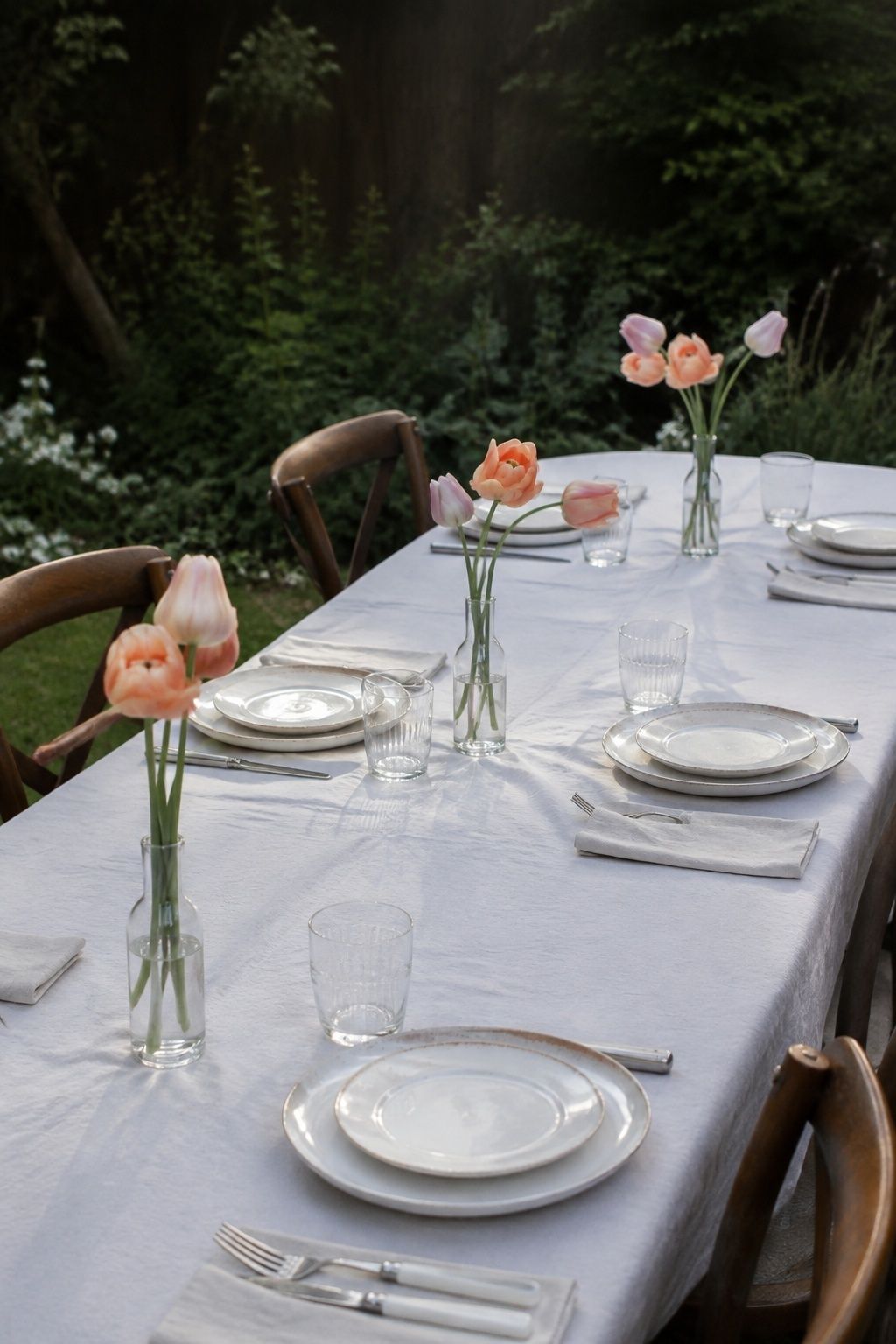
Tulip wedding centerpieces are one of the easiest ways to make a spring table feel seasonal without building a large arrangement. Place one to three tulips in narrow bud vases, then repeat the vessels down a long table or group them in odd numbers on a round table.
Tulips keep growing and bending after they are arranged, so embrace that movement instead of forcing perfect symmetry. Clear glass looks airy, ceramic bud vases feel softer, and a tight palette of white, blush, butter, or apricot keeps the table from looking random.
Ranunculus Compotes With Soft Movement

Ranunculus centerpieces bring layered petals without the heavy size of roses or peonies. A low ceramic compote vase gives ranunculus, small greenery, and a few airy stems room to spill gently while the arrangement stays below conversation height.
This is a strong choice for round tables because one compote anchors the center without blocking faces. Ask for enough open space between stems so the flowers look garden-picked, not packed into a dense florist mound.
Peony Bowls For Late-Spring Weddings
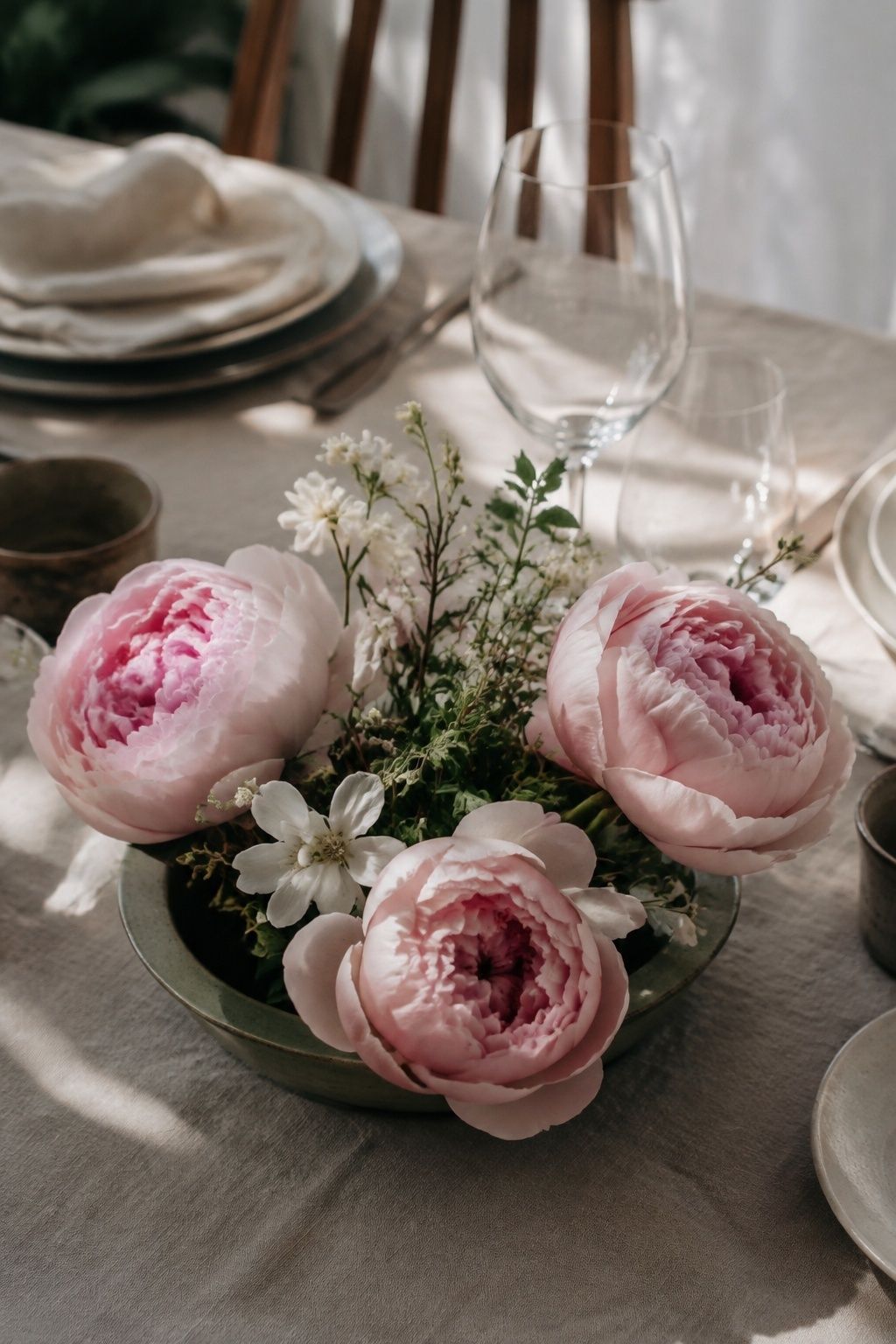
Peonies are beloved spring flower centerpieces wedding couples often request, but timing matters. They make the most sense for late-spring dates when local or regional stems are more realistic, and they look beautiful in shallow bowls where each bloom has space to open.
Because peonies are large and often expensive, choose fewer premium blooms rather than oversized quantity. Three open blooms with greenery and smaller spring flowers look generous on a small table, while a full peony-only design often strains the budget quickly.
Sweet Pea Vases Used In Small Doses
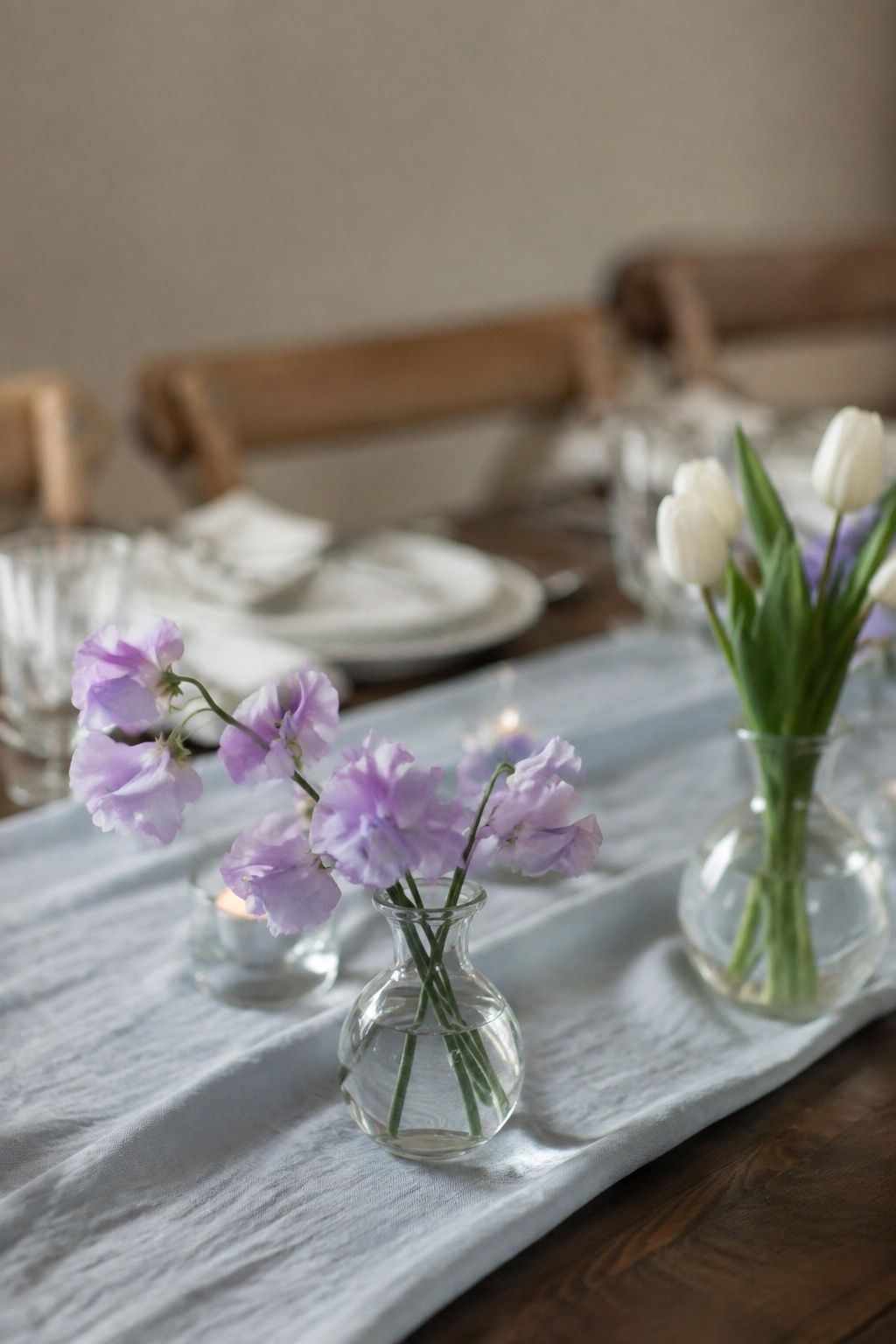
Sweet pea bud vases are delicate, romantic, and deeply springlike. Place them in small doses at the center of the table or along a runner, where their fluttery petals appear up close without demanding much volume.
Sweet peas carry a noticeable fragrance, so avoid placing heavy bunches at every seat. A few stems mixed with tulips, ranunculus, or simple greenery gives the table that fresh-picked feeling without turning dinner into a perfume cloud.
Lilac Branches Where Fragrance Will Not Overwhelm

Lilac is beautiful for spring floral centerpieces, but its scent is the planning detail. Place lilac branches on welcome tables, bars, escort card displays, or larger dinner tables with open air, rather than packing fragrant stems at every setting.
Choose a stable pitcher, stoneware vase, or weighted glass vase because lilac stems turn woody and top-heavy. If the reception is outdoors, keep the arrangement low and wide enough to handle a breeze.
Anemones For A Graphic Spring Accent
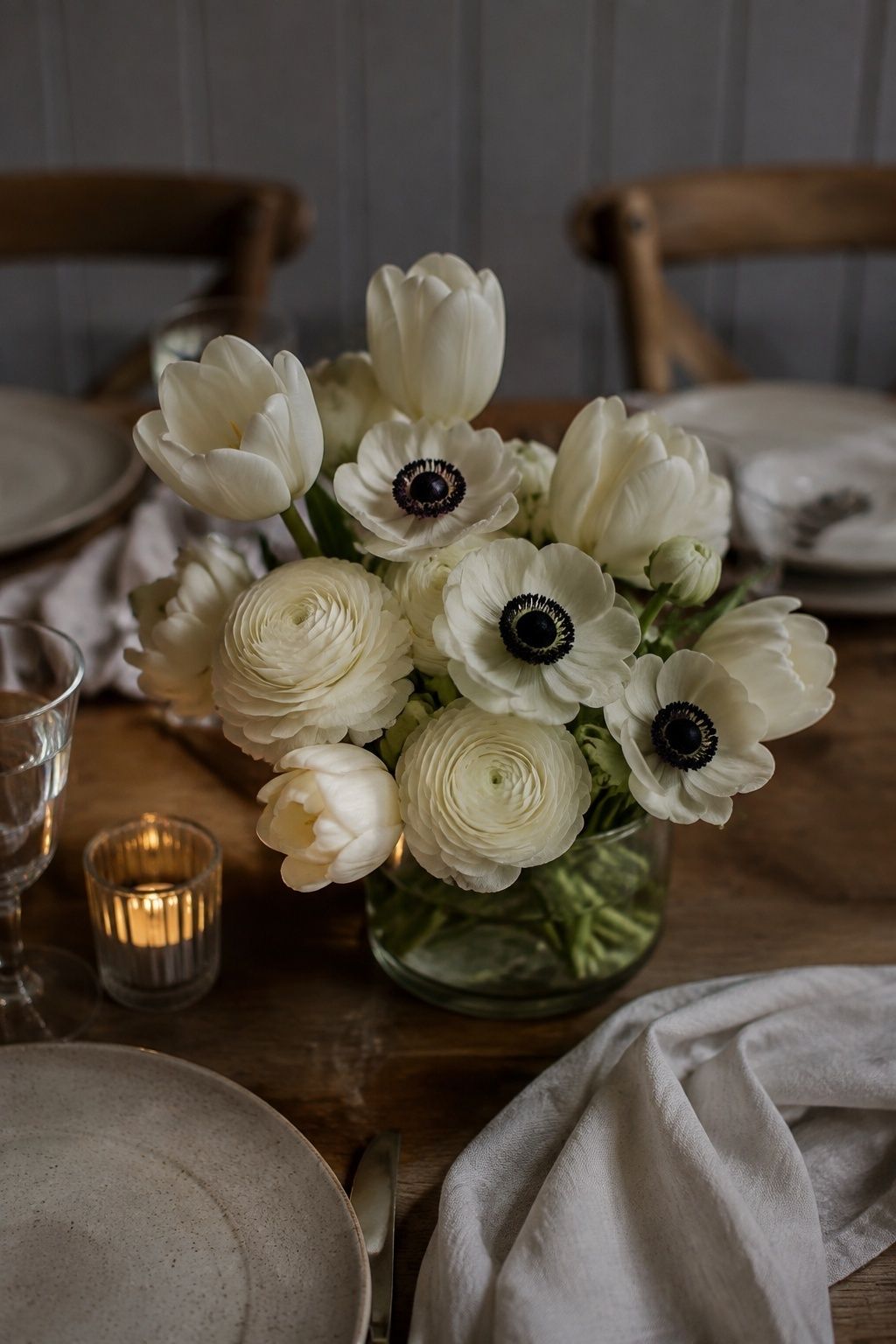
Anemones add a crisp, graphic center to spring wedding centerpieces. Their dark eyes look especially sharp with white tulips, pale ranunculus, soft greenery, and simple glass vessels, giving the table contrast without heavy color.
Treat anemones as an accent rather than the entire recipe. A few stems wake up a pale palette, but too many black-centered blooms often look busier than expected in close table photos.
Daffodil Centerpieces Conditioned Separately

Daffodils are cheerful, budget-friendly, and unmistakably spring, but they require separate conditioning before they join other flowers. Their sap shortens the vase life of companion blooms when the stems are cut and mixed too quickly.
For a simple spring wedding centerpiece, place daffodils alone in small pitchers or clear glass cylinders. If you want them mixed with tulips or ranunculus, ask your florist to condition them properly and avoid fresh stem cuts at the table.
Pansy And Violet Details For Tiny Tables

Pansies and violets are sweet details for intimate wedding centerpieces where guests sit close to the flowers. Float a few blooms in shallow dishes, tuck potted violets into small cachepots, or place edible pansies on place settings by a very low floral bowl.
These tiny flowers are best as details, not as the whole centerpiece for a large table. They shine on sweetheart tables, family-style restaurant dinners, garden brunches, and tables where every small gesture is visible.
Cherry Blossom Branches In Weighted Vessels
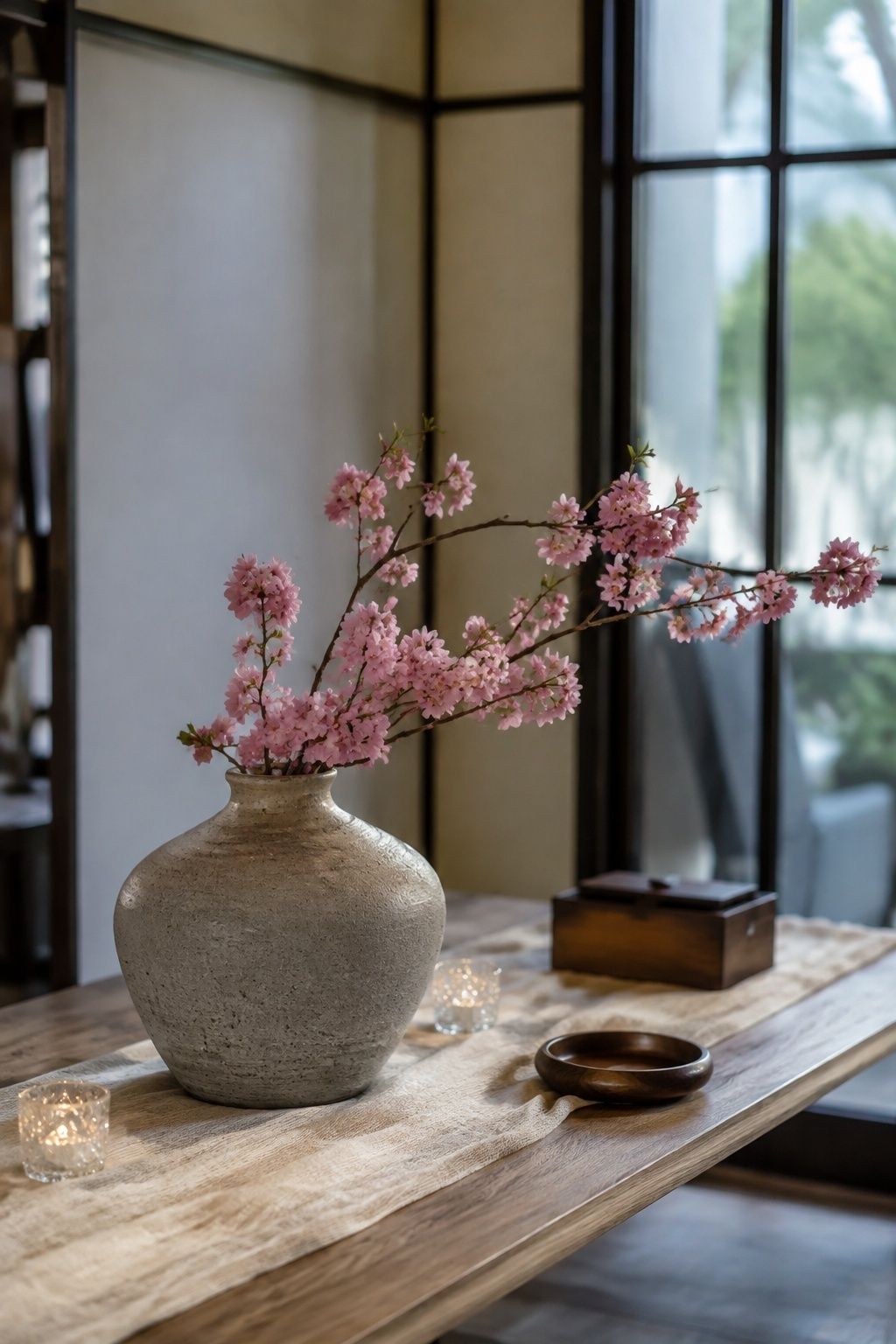
Cherry blossom branches wedding couples love look magical, but the vessel matters more than the branch count. Choose weighted glass, ceramic, or stoneware vessels so flowering branches do not tip when a guest brushes the table or wind moves through the tent.
Keep branches airy and slightly off-center for long tables, or place one low branch moment on a welcome table instead of tall stems at dinner. If conversation is the priority, trim branches so sightlines remain open across the table.
All-White Flowers With Fresh Green Texture
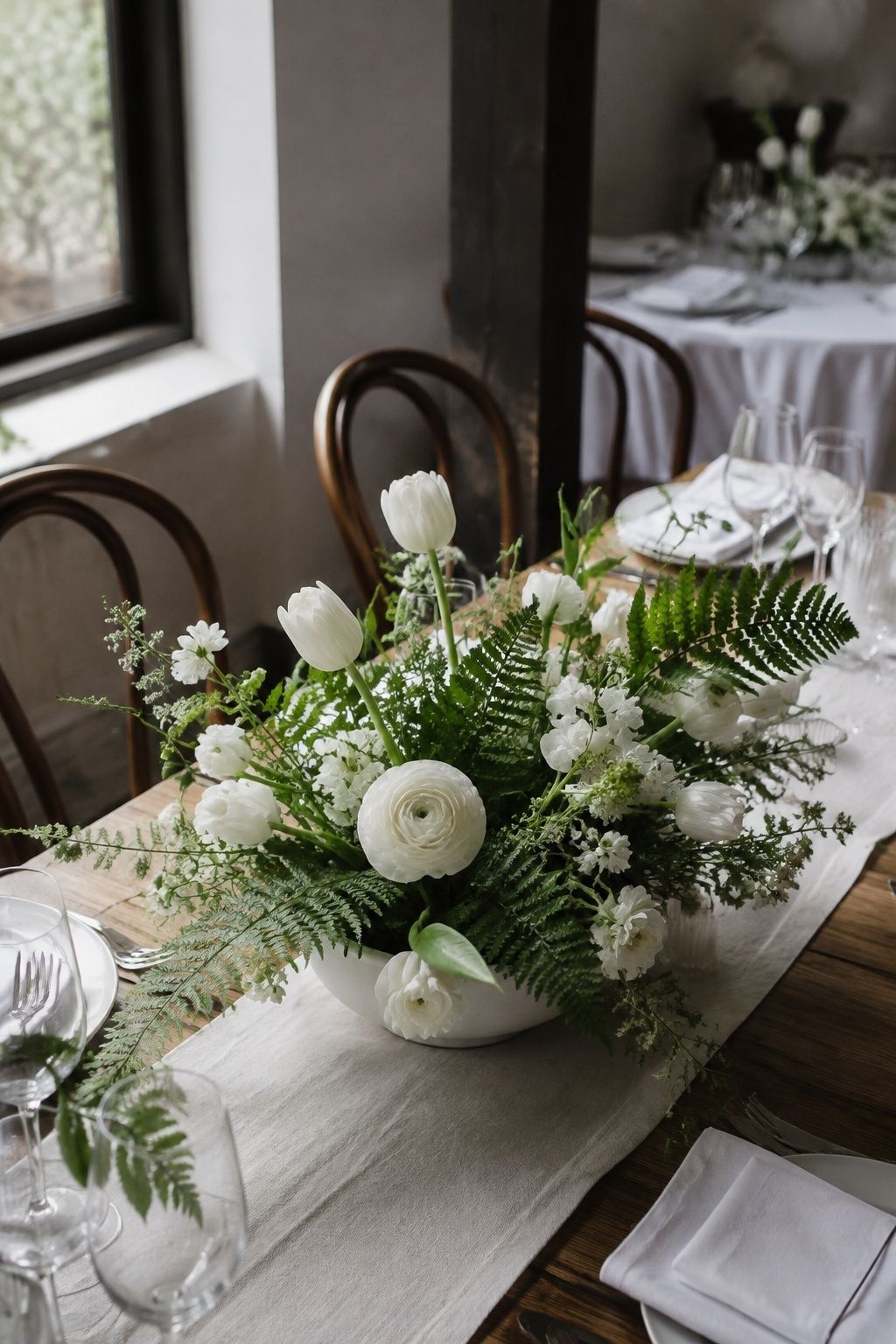
All-white spring wedding centerpieces feel crisp instead of formal when greenery brings texture. Mix white tulips, white ranunculus, white anemones, or late-spring peonies with fresh herbs, hellebore leaves, fern, or soft seasonal foliage.
The practical trick is avoiding a dense white dome. Give each bloom a little air, keep the vessel low, and choose greens that look fresh rather than dusty. This works well for bright rooms where white flowers catch the light.
Butter Yellow Blooms In Clear Glass

Butter yellow blooms feel sunny without becoming loud. Try pale yellow tulips, daffodils arranged alone, cream ranunculus, or soft yellow pansies in clear glass vessels for a spring table that feels bright and clean.
Clear glass keeps the color light, leaving small tables open. Pair butter yellow with white linens, natural wood, pale blue, fresh green, or soft blush rather than adding too many other warm colors at once.
Low Garden Bowls Guests Can Talk Over

Low spring wedding centerpieces are often the best answer for dinner tables. A shallow garden bowl with ranunculus, tulips, hellebores, greenery, and a few seasonal accents creates fullness while keeping faces visible.
Ask for the tallest point to stay below eye level when guests are seated. This matters even more at intimate receptions because every table is part of the emotional center of the celebration.
Mismatched Bud Vases With A Tight Palette
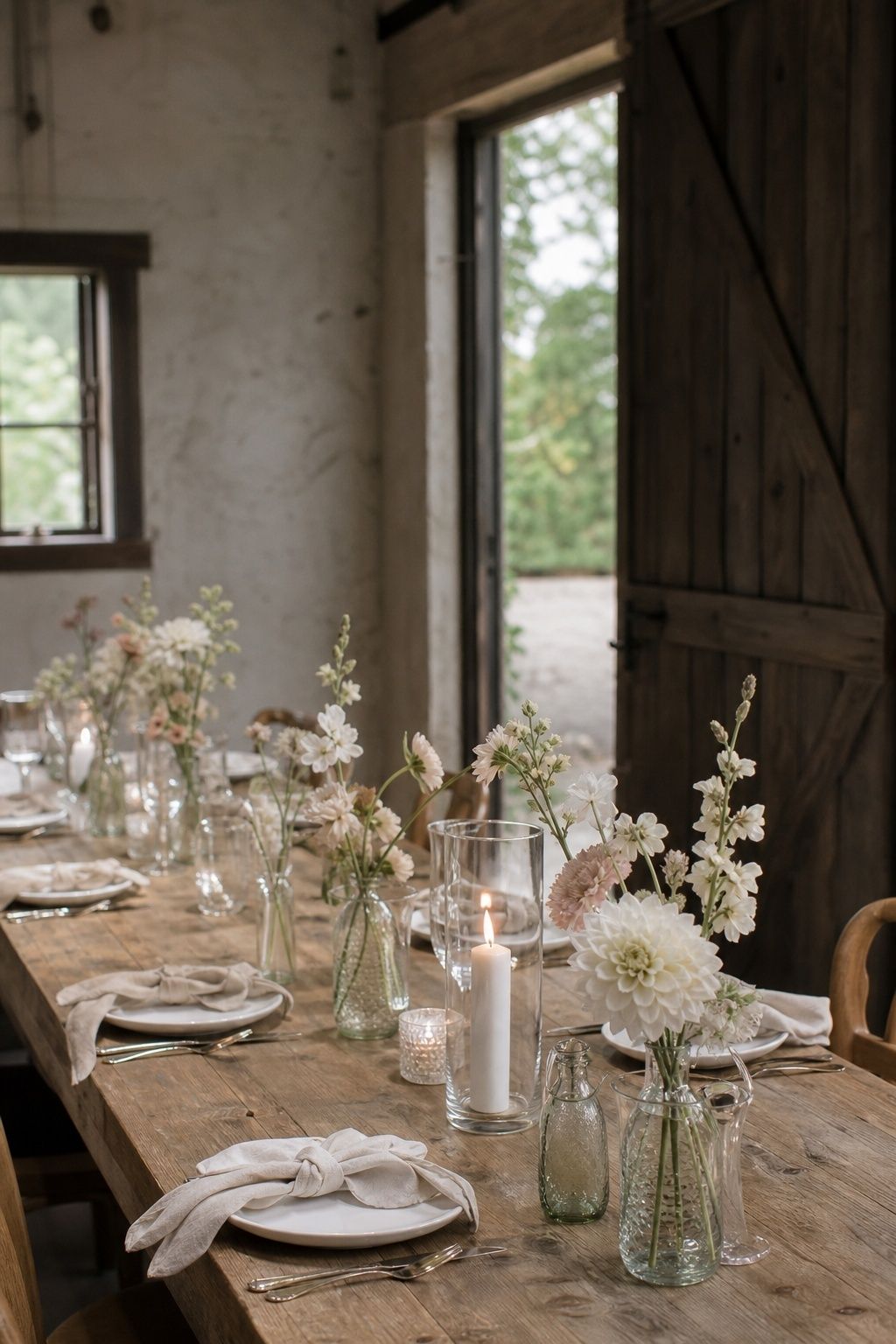
Bud vase centerpieces are budget-friendly, flexible, and easy to move during setup. The key is using mismatched vessels within a tight palette: clear glass, white ceramic, pale green glass, or soft blush vases, rather than every thrifted shape at once.
For long tables, repeat bud vases every 18 to 24 inches with room for candles and serving dishes. For round tables, cluster three to seven small vessels in the center so the arrangement feels intentional.
Mini Potted Bulbs As Living Centerpieces

Mini potted bulbs bring life to spring wedding table centerpieces and double as favors after dinner. Muscari, miniature daffodils, hyacinths, or tulips look charming in terra-cotta pots, ceramic cachepots, or low baskets lined for moisture.
Be thoughtful with scent, especially with hyacinths. Place fragrant bulbs on accent tables or mix them sparingly with unscented potted greenery so dinner never competes with heavy aroma.
Citrus And Spring Flowers In Shallow Bowls
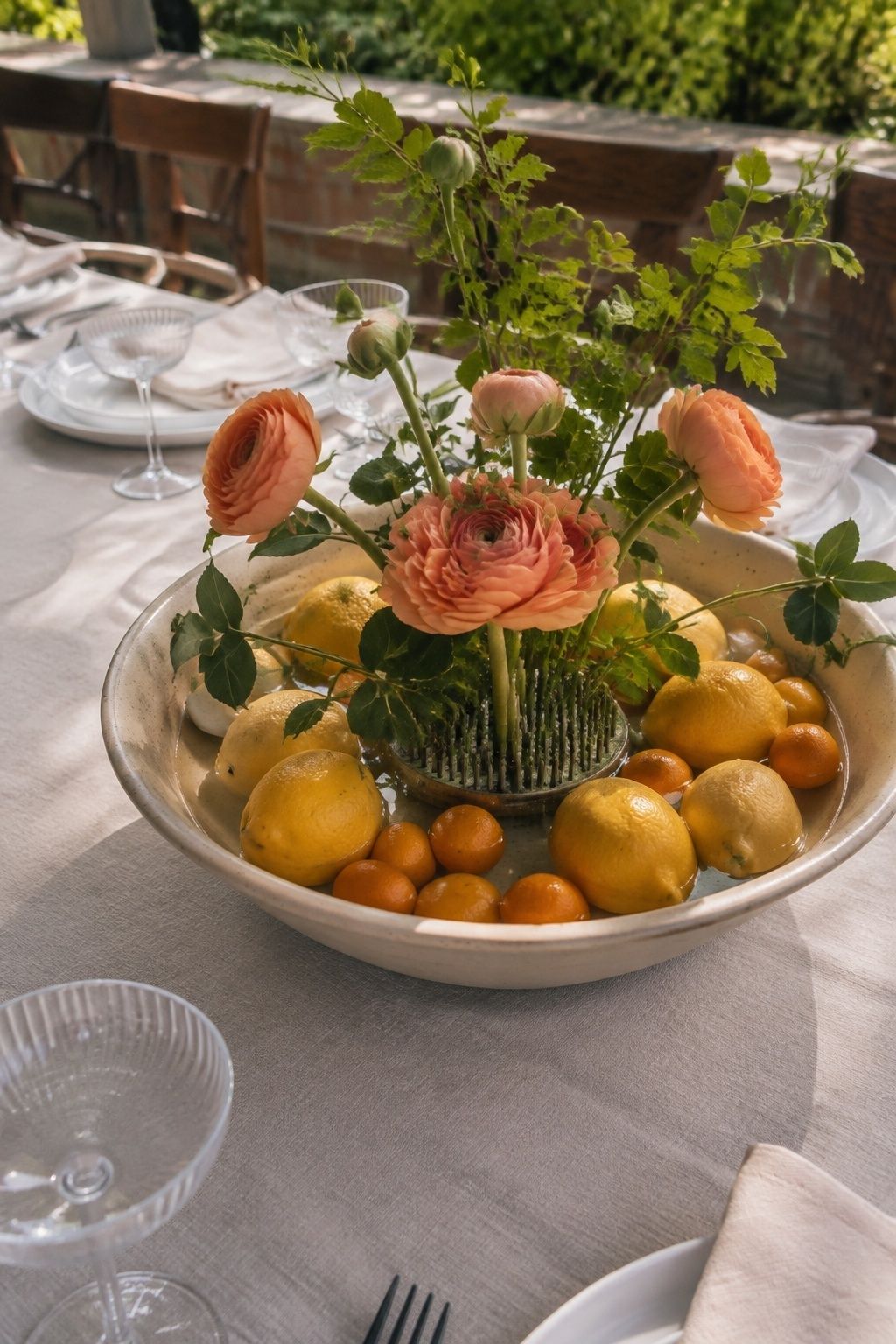
Citrus adds color and affordable volume to spring flower centerpieces wedding tables actually have room to hold. Place lemons, kumquats, or sliced citrus in shallow bowls with tulips, ranunculus, pansies, or greenery for a fresh brunch or garden-party mood.
Choose whole fruit when the table will be warm or outdoors, since cut citrus dries out. Keep the fruit low in the vessel so it props the flowers rather than becoming a separate centerpiece theme.
Candle-And-Flower Clusters With Safe Holders
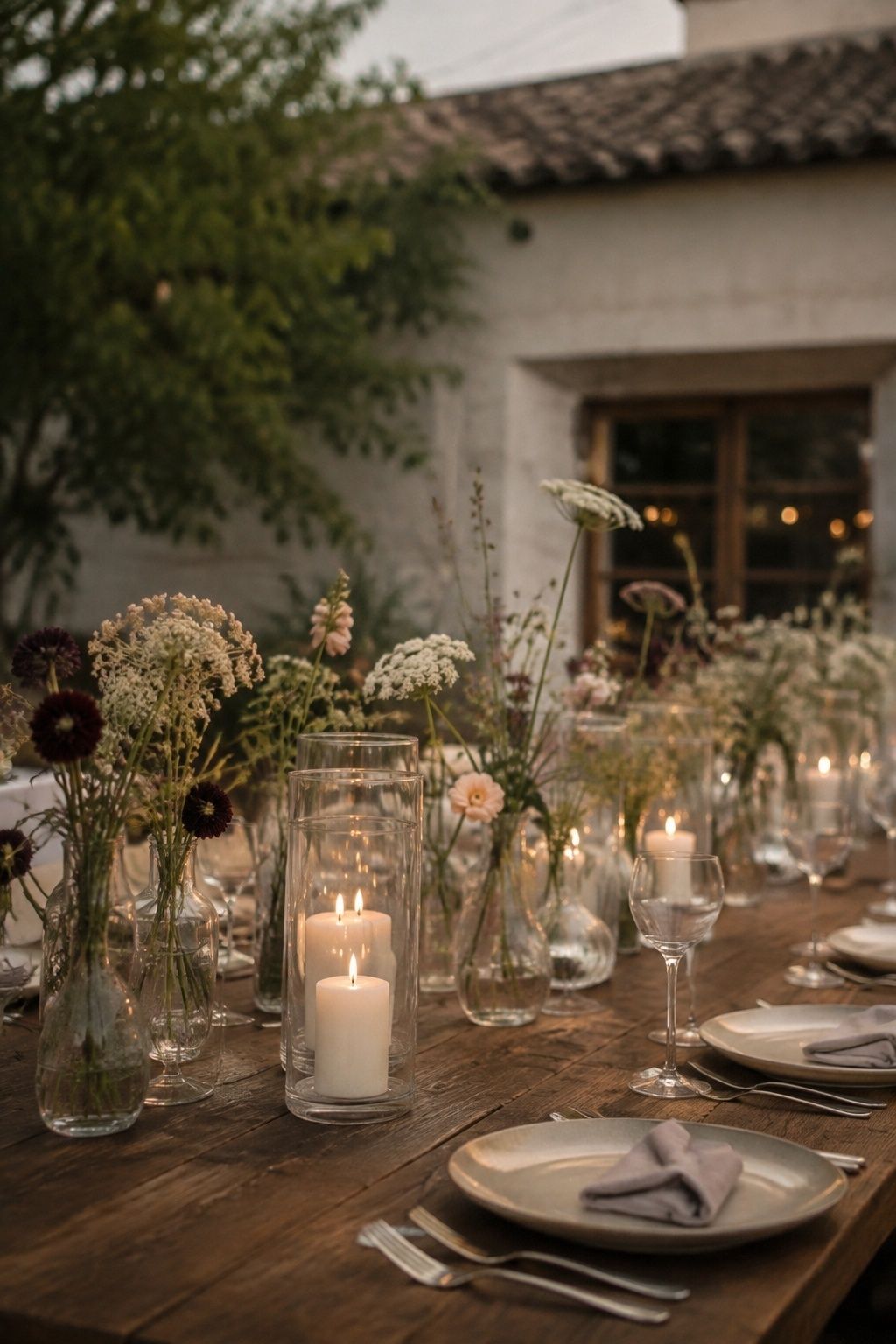
Candle-and-flower clusters are beautiful for spring evenings, but venue rules come first. Choose glass hurricanes, enclosed votives, or LED votive candles if open flames are restricted, then nest bud vases or low bowls between the candle points.
Keep petals and greenery away from flame paths. On outdoor tables, choose heavier holders and avoid tall taper candles in windy areas unless the venue has a protected setup plan.
Repurposed Ceremony Arrangements For The Dinner Table
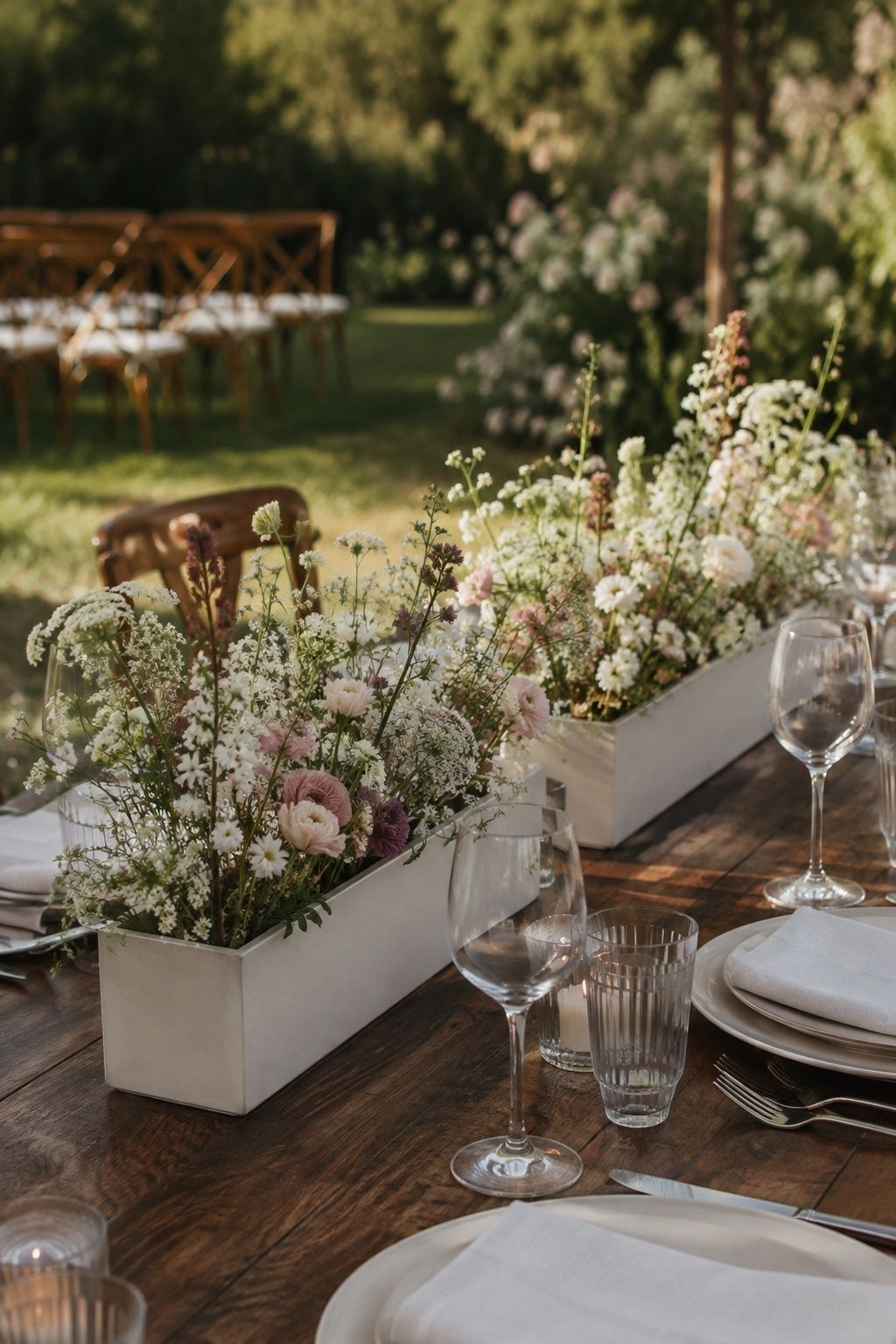
Repurposed ceremony flowers stretch the budget when the arrangements are designed for movement from the start. Low aisle arrangements, meadow boxes, or small altar bowls shift into spring wedding table centerpieces after portraits.
Plan the transfer with your florist or coordinator before the wedding day. Each arrangement requires a finished back, stable base, water access, and table dimensions that match the dinner layout, otherwise repurposing becomes stressful instead of economical.
Minimal Single-Stem Centerpieces For A Tiny Guest List
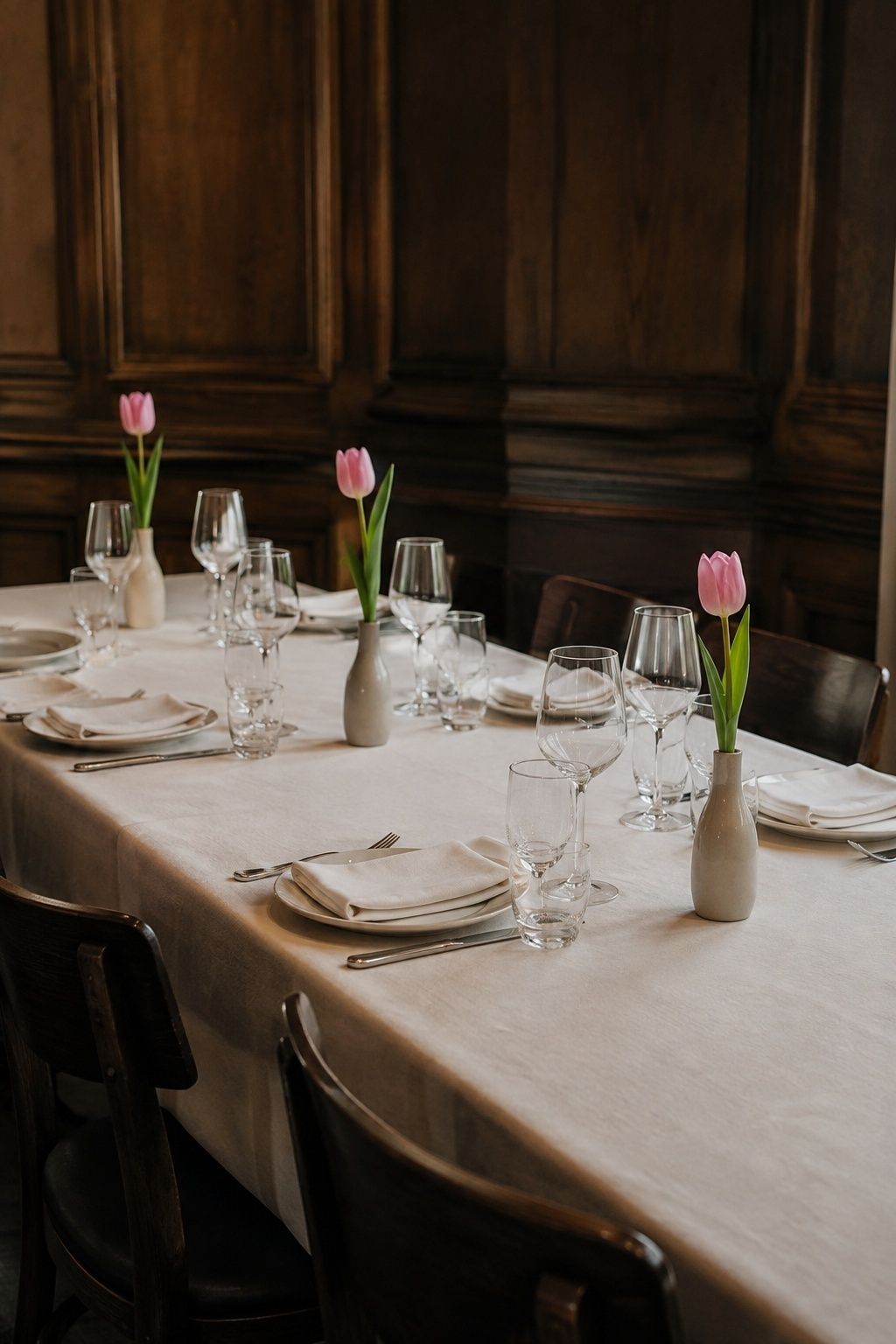
For a tiny guest list, minimal single-stem centerpieces feel more personal than large arrangements. Place one perfect tulip, ranunculus, sweet pea stem, anemone, or small branch in a slim vase at each place setting or between every two guests.
This approach shines when the vessels are beautiful and the linen, glassware, and candles are edited. Spend on better individual stems instead of filler, and let the quiet repetition make the table feel gathered.
How To Choose The Right Spring Centerpiece Scale
Round tables usually look best with one low bowl, one compote, or one central cluster of bud vases. Long tables look better with repeated small moments so the design does not disappear at the ends. Outdoor receptions deserve weight, wind protection, and containers that will not tip if the tablecloth moves. Skip tall arrangements that block conversation unless the room, table width, and guest layout truly suits the height.
Small weddings reveal every detail, so do not rely on vague floral centerpiece ideas. Name the flower family, the vessel, the height, and the placement. That simple specificity gives the florist accurate pricing details and gives the couple a clear picture of dinner.
FAQ
What are good spring wedding centerpieces?
Good spring wedding centerpieces pair seasonal flowers with practical vessels. Tulip bud vases, ranunculus compotes, late-spring peony bowls, sweet pea accents, low garden bowls, potted bulbs, and candle-and-flower clusters all feel fresh while keeping the table usable.
What flowers are best for spring wedding centerpieces?
The best flowers for spring wedding centerpieces often include tulips, ranunculus, peonies in late spring, sweet peas, lilac, anemones, daffodils, pansies, violets, hellebores, and cherry blossom branches. Availability depends on region and wedding date, so ask your florist which spring stems are strongest locally.
Are low centerpieces better for wedding tables?
Low centerpieces are often better for wedding tables because guests see, talk, and pass dishes without moving flowers out of the way. Tall arrangements suit large rooms only with enough height and structure to avoid blocking conversation.
How much do spring wedding centerpieces cost?
Spring wedding centerpiece costs vary by region, flower choice, vessel rental, labor, and table count. Bud vases and potted bulbs are usually more budget-friendly, while peony-heavy compotes, flowering branches, and large florist-built arrangements cost more because they require premium stems, mechanics, and setup time.
How do you make spring centerpieces feel fresh, not fussy?
Make spring centerpieces feel fresh by choosing in-season flowers, leaving space between stems, selecting simple vessels, limiting strong fragrance, and keeping the height comfortable for conversation. A tight color palette and a few repeated flower types usually look more modern than a crowded mix of every spring bloom.
Final Thoughts
Spring wedding centerpieces set an awake, generous, easy-to-share mood at the table. Choose flowers from the season, vessels that suit the table size, and heights that protect conversation. When the arrangement looks beautiful and still leaves room for dinner, glasses, candles, and hands, the table feels ready.
Approve the centerpiece plan after one seated-height check, one vessel-weight check, one fragrance check, one venue candle check, and one final table-friendly flower check. Keep that balance in mind for spring flower timing and seasonal spring flowers too.
Last update on 2026-10-04 / Affiliate links / Images from Amazon Product Advertising API