

For a small wedding under $5,000, plan the budget around 10 to 30 guests, a simple ceremony-and-meal format, short photography coverage, and a real buffer for tax, tips, permits, delivery, and last-minute fixes.
A $5,000 wedding can feel impossible if you picture a traditional venue, full catering team, large wedding party, Saturday-night reception, open bar, elaborate florals, rentals, favors, paper goods, and all-day photography. It becomes much more realistic when the day is designed as a small hosted gathering instead of a full-scale wedding compressed into a smaller room.
The beauty of a small budget is that it asks for clarity early. When the guest list is close and the format is honest, you can still feed people well, dress thoughtfully, take meaningful photos, and create a ceremony that feels tender rather than thin.

Recommended Wedding Products


You Might Also Like These Blog Posts
- Small Wedding Under $10,000 Without Losing The Magic
- How Much Should A Small Wedding Cost Without Feeling Like Too Much
- Small Wedding Venues For 30 Guests That Feel Naturally Full
- Small Wedding Planning On A Budget That Still Feels Generous
- How To Plan A Small Wedding That Still Feels Big-Hearted
- Small Wedding Budget Breakdown Without The Guesswork
How to plan a small wedding under $5,000 without losing the feeling
The whole plan begins with one honest question: what do you want guests to feel when they leave? If the answer is loved, fed, included, and moved by the ceremony, you can build a beautiful low-budget wedding around those priorities and keep the total near $5,000. If the answer is that you want every traditional wedding element in miniature, the budget will start to strain almost immediately.
A wedding under $5,000 with small guest list discipline usually needs a clean hierarchy. Spend first on the legal ceremony, guest comfort, food, basic drinks, short photography, and any required space fee. Then add attire, simple flowers, dessert, music, and small decor only after the core event is paid for. This order keeps the day from looking pretty on a mood board but stressful in real life.
What $5,000 can realistically cover
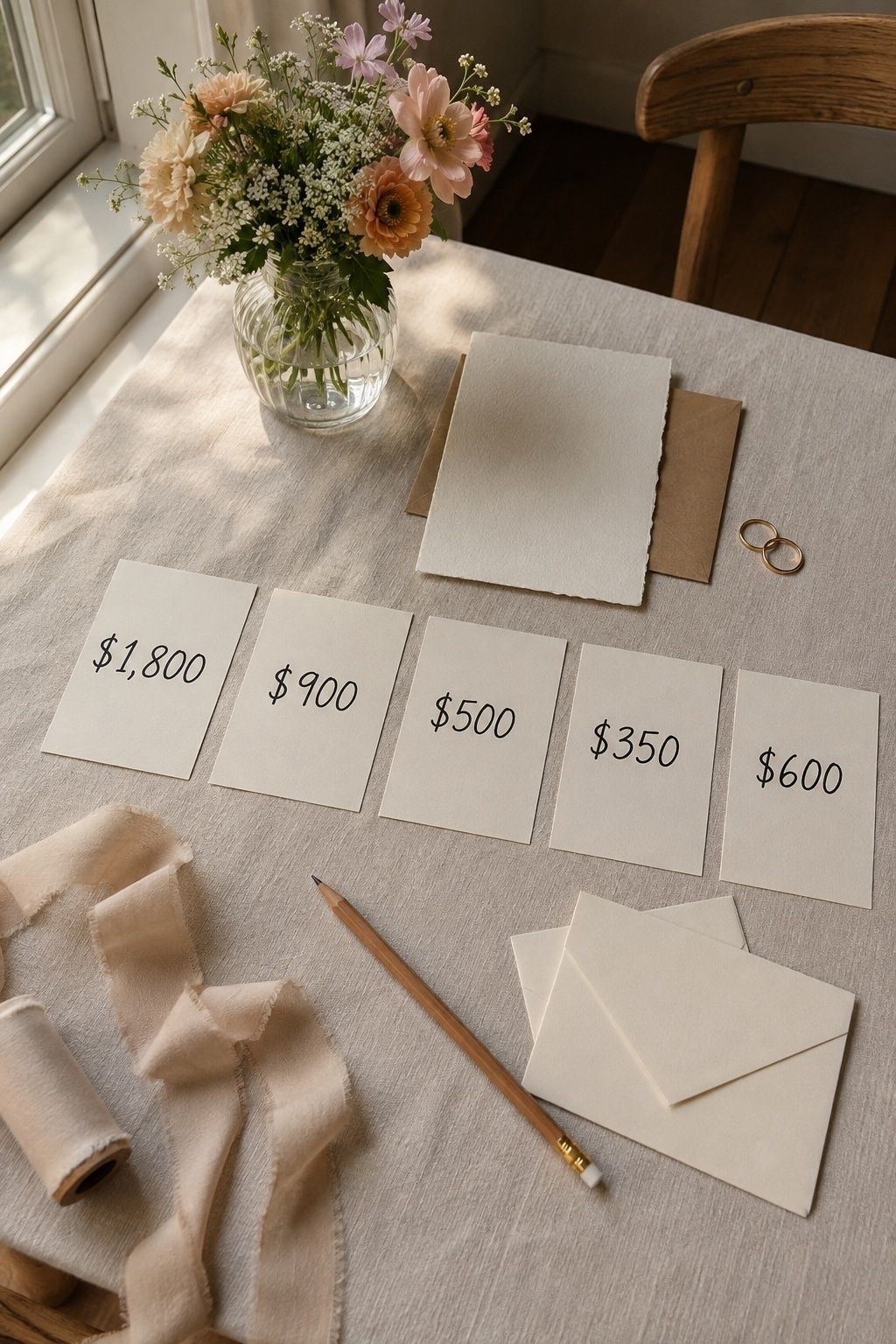
A $5,000 wedding can realistically cover a very small ceremony, a hosted meal, short photo coverage, a simple outfit plan, basic flowers, a dessert, invitations, a few decor pieces, legal fees, and a contingency buffer. It usually cannot cover a full private venue buyout, a large guest list, premium catering, an open bar, a big floral installation, a DJ, transportation, and a full wedding-day vendor team all at once.
Think of the money as a hosting fund, not a decoration fund. For 20 guests, $5,000 gives you about $250 per guest before fixed costs come out. For 30 guests, it drops to about $167 per guest before the ceremony, photography, attire, taxes, tips, and license. That is why a small wedding under $5,000 for 20 guests can feel comfortable, while a small wedding under $5,000 for 30 guests needs sharper tradeoffs.
A sample under-$5,000 small wedding budget breakdown might look like this: $1,800 for food and drinks, $900 for photography, $500 for attire and alterations, $350 for flowers and candles, $300 for ceremony costs, $250 for dessert, $150 for digital invitations or a few printed pieces, $250 for rentals or supplies, and $600 for tax, tips, permits, delivery, parking, beauty, and surprises. Your numbers will shift by location, but the structure should keep guest experience at the center.
Once you have a draft budget, separate fixed costs from per-person costs. The license, officiant, bouquet, attire, photography, and permit may cost roughly the same whether you invite 12 people or 28. Food, drinks, place settings, chairs, favors, printed pieces, and dessert usually grow with every name. This is why trimming five guests can create more relief than trimming five tiny decor details.
Also decide what number means stop. If the restaurant estimate comes back at $3,200 before photography and attire, that is not a maybe. It means you need a smaller guest count, a cheaper meal period, a shorter drink window, a different room, or a different format. Clear limits feel strict in the planning stage, but they protect the celebration from constant quiet upgrades.
Decide the guest count first
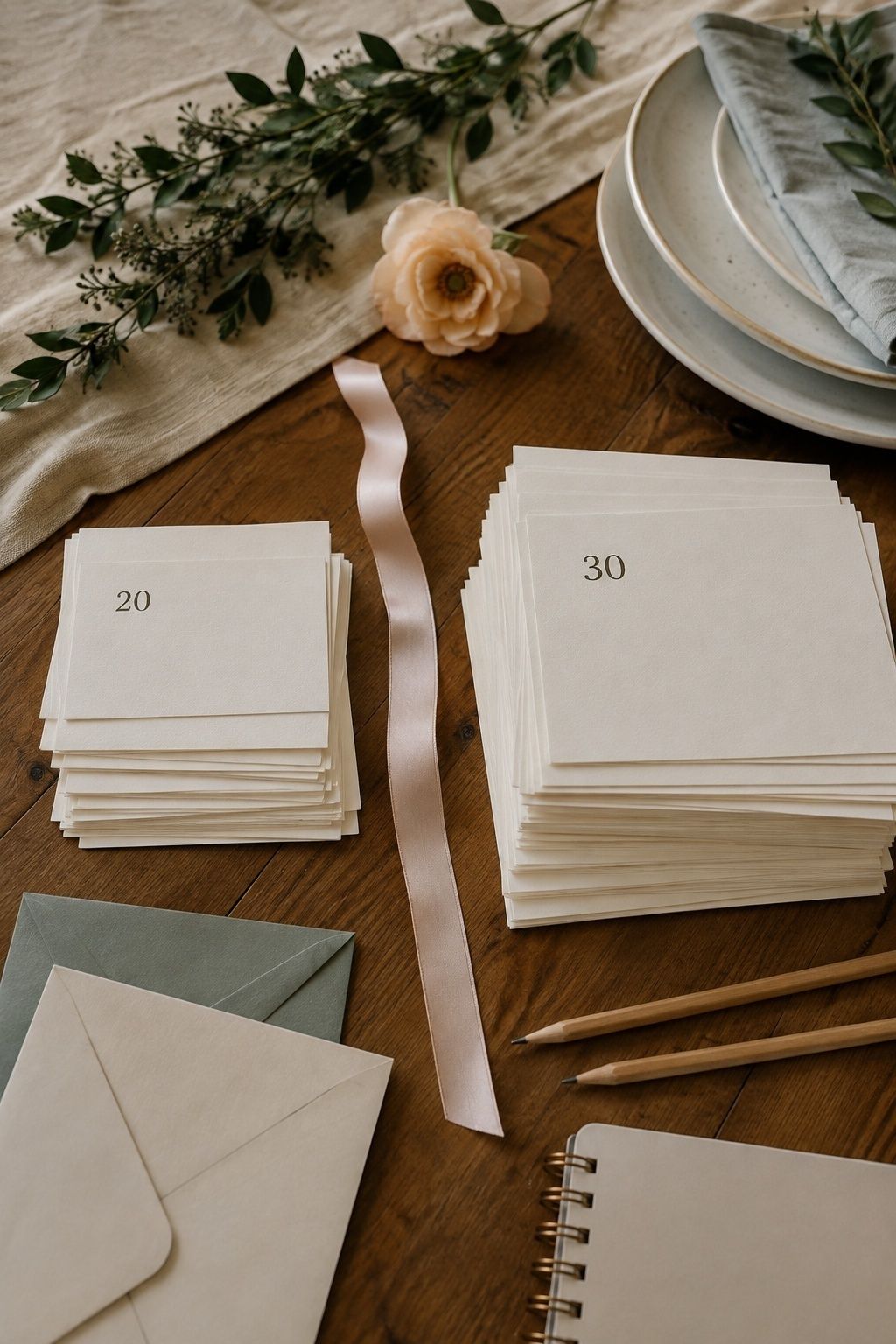
The guest list is the budget lever with the most power. Every extra guest can add food, drink, chair, place setting, invitation, favor, dessert, and service costs. Even if the venue is free, the per-person cost still matters. A 12-person dinner can feel elegant under $5,000. A 45-person reception can feel tight before you even add flowers.
Start with your nonnegotiable people, not your full social circle. Parents, siblings, closest friends, and anyone who has genuinely held your relationship may be enough. If the list grows because of guilt, obligation, coworkers, distant relatives, plus-ones, or family pressure, the budget stops being the only problem. The emotional tone of the day changes too.
If you need a stricter framework, make two lists before discussing venues: the people who would make the day feel incomplete if they were absent, and the people you can celebrate with another way. That second group can still receive warm announcements, a casual brunch later, or a thoughtful call. They do not all need to be seated at the wedding meal.
Choose the right wedding format
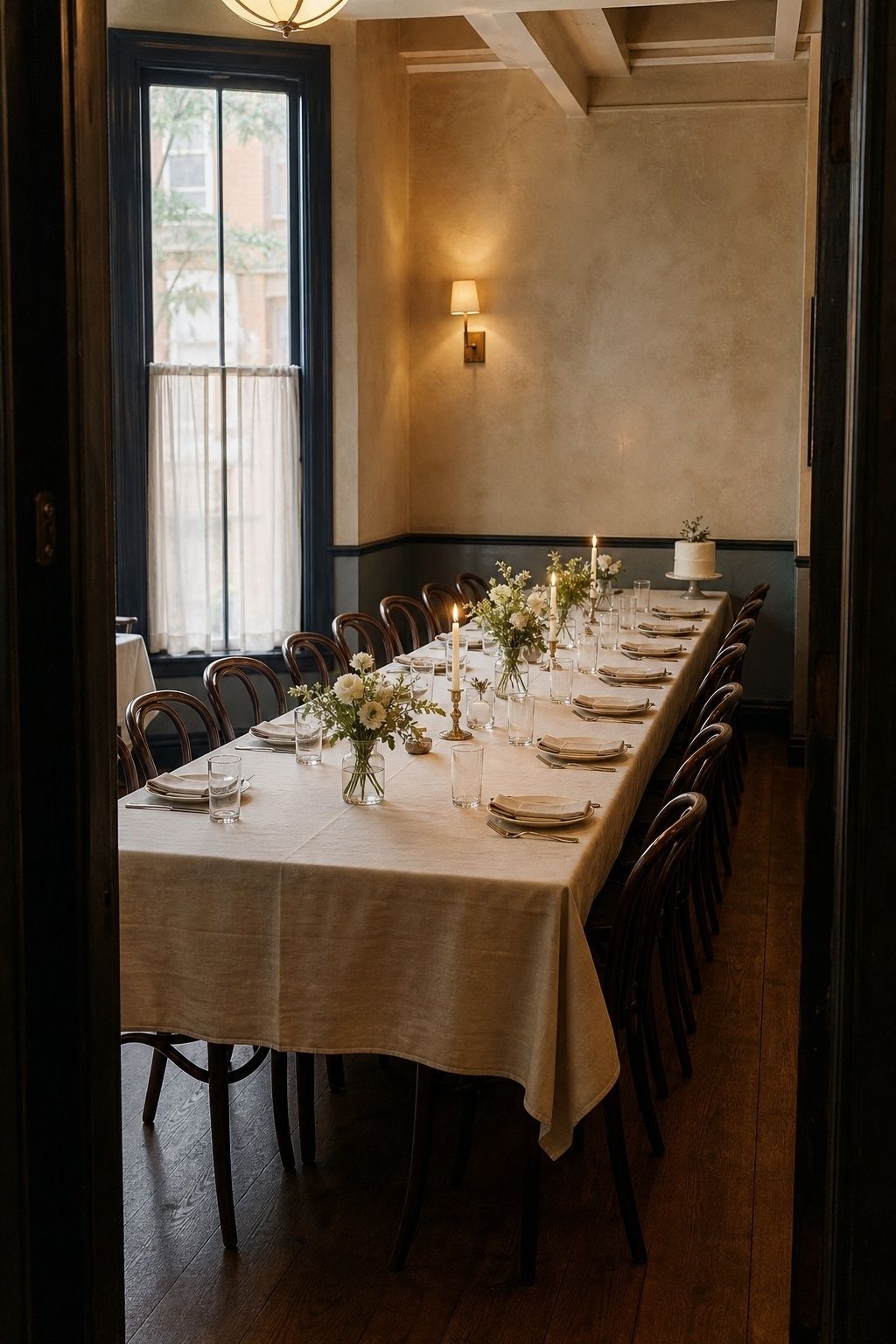
The right format matters more than almost any decor choice. An under-$5,000 courthouse wedding can feel polished if you pair the legal ceremony with lunch, dinner, portraits, and a few personal details. An under-$5,000 restaurant wedding works well when the private room has good food, warm lighting, and no large rental list. An under-$5,000 backyard wedding can be lovely if the home already has bathrooms, seating, shade, parking, and a weather plan.
For an under-$5,000 micro wedding, private dining is often the easiest path because the tables, food, staff, dishes, drinks, restrooms, and cleanup already exist. You may pay a food-and-beverage minimum instead of a separate venue fee. That can be much cleaner than renting a blank space and paying for every element piece by piece.
A courthouse ceremony followed by a restaurant meal is usually the simplest plan. A park ceremony followed by brunch can be beautiful if permits and weather are manageable. A backyard supper can feel deeply personal, but it only saves money when the home is already suited to hosting. If you have to rent tents, restrooms, tables, chairs, heaters, generators, lights, linens, dishes, and cleanup help, the backyard can stop being the bargain option.
The best format is usually the one with the fewest handoffs. If the ceremony, photos, meal, and goodbye all happen in one compact area, you save on transportation, coordination, signage, setup time, and guest confusion. If the day moves from courthouse to photo location to restaurant to after-party, each transition needs time, rides, parking, and someone paying attention.
Put food and guest comfort before decor

Guests remember whether they were comfortable. They remember being hungry, cold, overheated, confused, or left standing. They also remember a delicious meal, easy parking, clear timing, a seat with a view, a good toast, and a couple who seemed present instead of overwhelmed. With $5,000, those things deserve first claim on the budget.
Food does not have to mean a plated multi-course dinner. It can be a private-room lunch, family-style pasta, brunch, tacos and margaritas, a catered picnic, a dessert-and-champagne reception, or a favorite restaurant menu. The important part is matching the meal to the time of day and making sure guests know what to expect. A 2 p.m. cake-and-punch reception is fine when it is clear. A 6 p.m. event with too little food feels careless.
Comfort also includes sound, shade, bathrooms, chairs, water, temperature, accessibility, and pacing. Before buying signs or extra candles, ask whether older relatives can sit comfortably, whether vows will be heard, whether guests can find the ceremony, whether the meal timing makes sense, and whether anyone will be stranded without transportation.
Use short photography coverage carefully
Photography is one of the few places where an under-$5,000 small wedding may still deserve real money. You do not need eight hours of coverage if the day is short, but you may want two or three focused hours with someone who knows how to photograph real moments quickly. That can cover getting dressed details, first look or couple portraits, ceremony, family photos, table details, and the beginning of the meal.
Be honest with the photographer about the budget and timeline. Ask whether they offer weekday, courthouse, elopement, or micro-wedding coverage. Give them a short shot list, a clean family photo list, and a realistic schedule. The smaller the wedding, the less time there is for chaos. A clear plan helps short coverage feel complete instead of rushed.
If photography is not your top priority, you can still protect the essentials: ceremony, couple portraits, immediate family, and one image of the full group. Skip elaborate getting-ready coverage, long reception coverage, or a second shooter unless those are personally important. Short coverage works best when the whole event is compact, well-lit, and not spread across several locations.
Keep ceremony costs simple
The ceremony is the heart of the wedding, and it does not need much money to feel meaningful. You need the legal requirements in your area, a place to stand, someone authorized to perform the ceremony, witnesses if required, and a few words that feel like you. Everything after that is optional.
Courthouse ceremonies are popular for a reason. They simplify the legal piece, reduce setup, and leave more money for photos and a meal. The key is to add one celebratory moment afterward so the day does not feel like paperwork and errands.
If you want an outdoor ceremony, keep the setup small: a permit, a few chairs for people who need them, a bouquet, a portable speaker, and a weather backup. If you want a backyard ceremony, use a porch, tree, garden wall, fireplace, or doorway as the focal point instead of buying a large arch that has to be delivered, stabilized, decorated, and removed.
Make a tiny decor plan
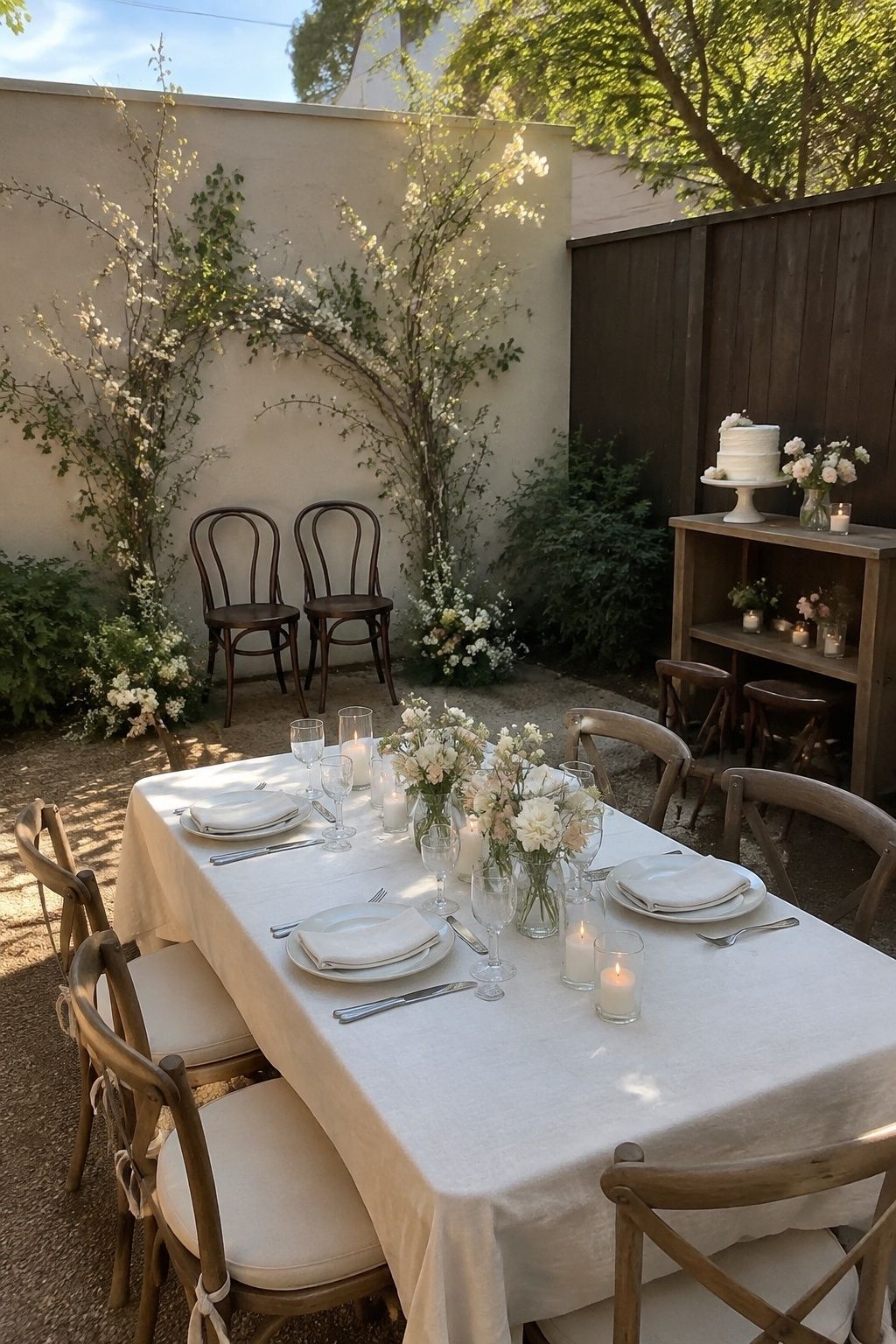
Decor should tell guests where the wedding is happening and make the table feel cared for. It does not need to transform the entire space. Choose three visual moments: the ceremony focal point, the dining table, and one welcome or dessert area. If those places look intentional, the day will feel designed even without decorating every corner.
For a restaurant or private room, use menus, place cards, candles if allowed, low flowers, and one small welcome sign. For a backyard supper, spend on lighting, clean table linens, comfortable seating, and enough serving pieces. For a park ceremony, let the scenery do the work and keep decor portable. Simple is not the same as unfinished when every visible detail has a reason.
The best affordable ideas are not just inexpensive. They reduce setup, travel, storage, and day-of decision-making while still making guests feel welcomed.
Save on attire without looking unfinished
Attire can quietly consume a tight budget, especially after alterations, shoes, accessories, steaming, undergarments, hair, makeup, and dry cleaning. Instead of starting with a dream outfit and hoping the rest works, set a total attire number for both partners. Then choose pieces that fit the location and formality of the day.
Off-the-rack dresses, sample sales, department-store gowns, white suits, cocktail dresses, vintage pieces, linen suits, and tailored separates can all look wedding-ready. Fit matters more than price. A simple outfit that is clean, pressed, and properly altered will look more polished than an expensive piece that does not move well or match the setting.
Keep accessories edited. A veil, earrings, shoes, bouquet, jacket, tie, or boutonniere can make the look feel complete, but you do not need every possible detail. For an under-$5,000 small wedding without looking cheap, cohesion does more than expense. If the outfits, flowers, meal, and location all feel like the same story, guests will read the wedding as intentional.
Hidden costs that can break the $5,000 limit
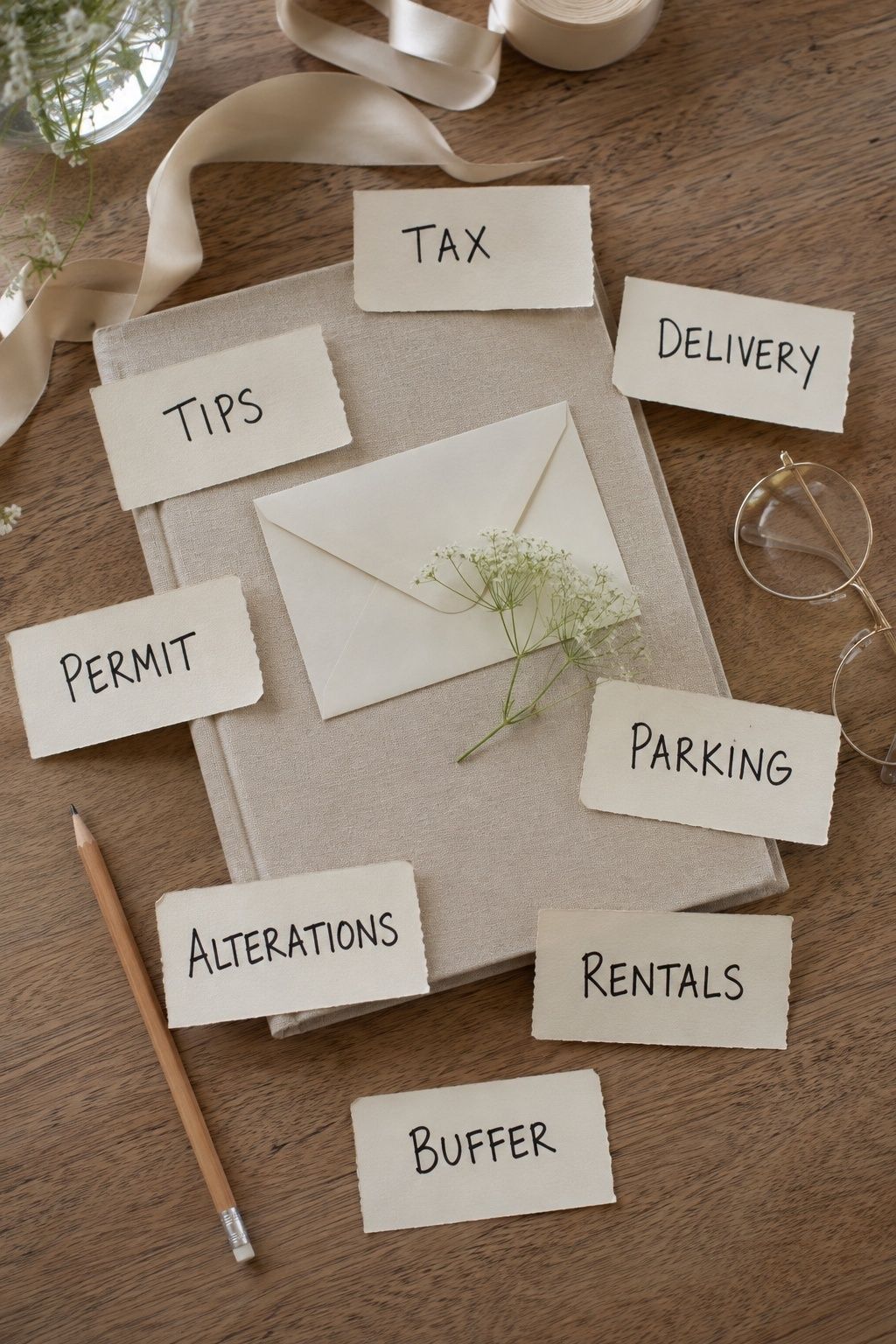
The obvious costs are rarely the whole problem. Hidden costs in an under-$5,000 small wedding often include tax, service charges, gratuity, corkage, cake cutting, delivery, parking, overtime, permits, marriage license fees, vendor meals, alterations, beauty trials, steaming, cleanup, rentals, heaters, fans, ice, trash removal, restroom supplies, and last-minute weather fixes.
Restaurant estimates can change quickly when the private room fee, minimum spend, service charge, tax, gratuity, drinks, dessert fee, and overtime are included. Backyard estimates can change when rentals and labor enter the picture. Courthouse estimates can change when you add transportation, portraits, brunch, bouquet, beauty, hotel room, and dinner for immediate family.
Protect at least 10 percent of the budget for surprises. If you spend every dollar on the first estimate, any small change becomes stressful. A wedding budget is not only a list of hopes. It is a pressure-release system for a day with real people, real weather, and real timing.
Before paying deposits, ask every vendor for the complete payment schedule and cancellation terms in writing. A low quote is less useful if half the payment is due before you have finalized the guest count, or if overtime starts the moment guests linger over dessert. Put due dates in one tracker and keep a small unpaid balance visible so the final month does not become a stack of surprises.
Three original $5,000 wedding plans
Plan one: courthouse ceremony and private dinner for 20. Spend about $150 on the license and courthouse fees, $900 on short photography, $2,200 on dinner and drinks, $500 on attire and alterations, $300 on flowers, $200 on dessert, $150 on invitations or printed menus, and $600 on tips, transportation, beauty, and cushion. This is often the cleanest intimate under-$5,000 wedding because the legal and hosting pieces stay contained.
Plan two: restaurant brunch micro reception for 30. Spend about $2,400 on brunch, coffee, and sparkling wine, $750 on photography, $500 on attire, $250 on simple flowers, $200 on dessert, $150 on paper details, $200 on ceremony or officiant costs, and $550 on tax, service charges, tips, and incidentals. Brunch gives the celebration a wedding feeling without Saturday-night dinner pricing.
Plan three: backyard supper for 25. Spend about $1,500 on catered food, $500 on drinks, $850 on photography, $500 on attire, $450 on rentals and tableware, $350 on lighting and flowers, $200 on dessert, $200 on ceremony costs, and $450 on cleanup, ice, delivery, and cushion. This plan only works if the home already has bathrooms, parking, weather backup, and enough space for the meal.
If these numbers feel too tight for your location, do not force them. A $3,000 wedding usually needs an even more minimal ceremony-and-meal plan, while a $10,000 wedding gives more breathing room for vendors, rentals, photography, and guest count. The right budget is the one that lets you host well without starting married life in panic mode.
When $5,000 is too tight
$5,000 may be too tight if you want more than 30 guests, a Saturday evening, a formal venue, full catering, an open bar, a large wedding party, extensive florals, professional hair and makeup for several people, many rentals, transportation, or a long reception. None of those wishes are wrong. They simply belong to a different budget.
It may also be too tight if your area has high food, labor, venue, or permit costs. Local pricing matters. Your actual numbers should come from local restaurants, courthouses, photographers, parks, and rental companies before you commit to a format.
If the budget keeps breaking, reduce the guest count before removing every meaningful part of the day. A warm 18-person dinner is usually better than a strained 40-person event with too little food, no help, and a couple trying to manage every task. You can always add personality. It is much harder to add comfort once the guest list has outgrown the money.
FAQ
Can you have a small wedding under $5,000?
Yes, you can have a small wedding under $5,000 if the guest list is very small and the format is simple. The most realistic versions are courthouse ceremonies with dinner, restaurant micro receptions, backyard suppers where the home is already host-ready, park ceremonies with brunch, or intimate weekday celebrations.
How do you plan a small wedding under $5,000?
Choose the format first, set the guest count second, and assign money to food, comfort, legal costs, photography, attire, and a buffer before buying decor. An under-$5,000 small wedding checklist should include guest list limits, venue or ceremony fees, meal estimate, drinks, tax, tips, photography timing, attire, permits, rentals, weather plan, and final payments.
How many guests can you invite for a $5,000 wedding?
Most couples should aim for 10 to 30 guests for a $5,000 wedding. Twenty guests gives the budget more room for a quality meal and photos. Thirty guests can work with brunch, a restaurant room, or a very simple reception. More than 30 guests usually requires major tradeoffs unless you have a free venue and very affordable food.
What should you spend money on for a wedding under $5,000?
Spend first on the ceremony requirements, food, guest comfort, short photography coverage, attire that fits well, and a contingency buffer. After that, add flowers, dessert, simple paper details, and modest decor. The best under-$5,000 small wedding ideas usually make the meal, vows, photos, and table feel intentional before adding extras.
What should couples skip for a $5,000 wedding?
Couples can usually skip favors, printed programs, a large wedding party, elaborate signage, a photo booth, premium rentals, full bar service, major floral installations, and a long reception timeline. Skip anything guests will barely notice if it means protecting food, comfort, ceremony, photos, and a calm plan.
Is a courthouse wedding the best way to stay under $5,000?
A courthouse wedding is often one of the easiest ways to stay under $5,000 because it keeps the legal ceremony simple and leaves more money for portraits and a meal. It is not the only option, though. A restaurant ceremony, park ceremony, family-home ceremony, or brunch micro wedding can also work if the guest count and setup stay small.
Can a backyard wedding stay under $5,000?
A backyard wedding can stay under $5,000 when the home already has enough space, bathrooms, parking, lighting, seating, and a weather plan. It becomes expensive when you need tents, tables, chairs, linens, dishes, generators, heaters, restrooms, staff, and professional cleanup. Price the hidden rentals before assuming the backyard is cheaper.
How do you make a $5,000 small wedding feel special?
Make a $5,000 small wedding feel special by focusing on the parts guests experience up close: warm vows, a comfortable meal, a clear timeline, thoughtful seating, good lighting, short but strong photography, and a few personal details. A tiny guest list can feel luxurious when every person is truly hosted.
Final Thoughts
A small wedding under $5,000 works best when it is planned with honesty instead of apology. You are not trying to fake a large wedding with less money. You are choosing a smaller, warmer celebration where the people present matter deeply and the budget is spent where it can actually be felt.
Start with the guest list, choose a format that already includes some of the hosting infrastructure, and keep the day centered on vows, food, comfort, and memory. When the budget gets tight, remove complexity before you remove care. For couples shaping a micro wedding under $5,000, micro-wedding costs and logistics come back to the same practical truth: a smaller guest count gives the meal, setting, and simple ceremony room to matter.
Last update on 2026-10-04 / Affiliate links / Images from Amazon Product Advertising API