

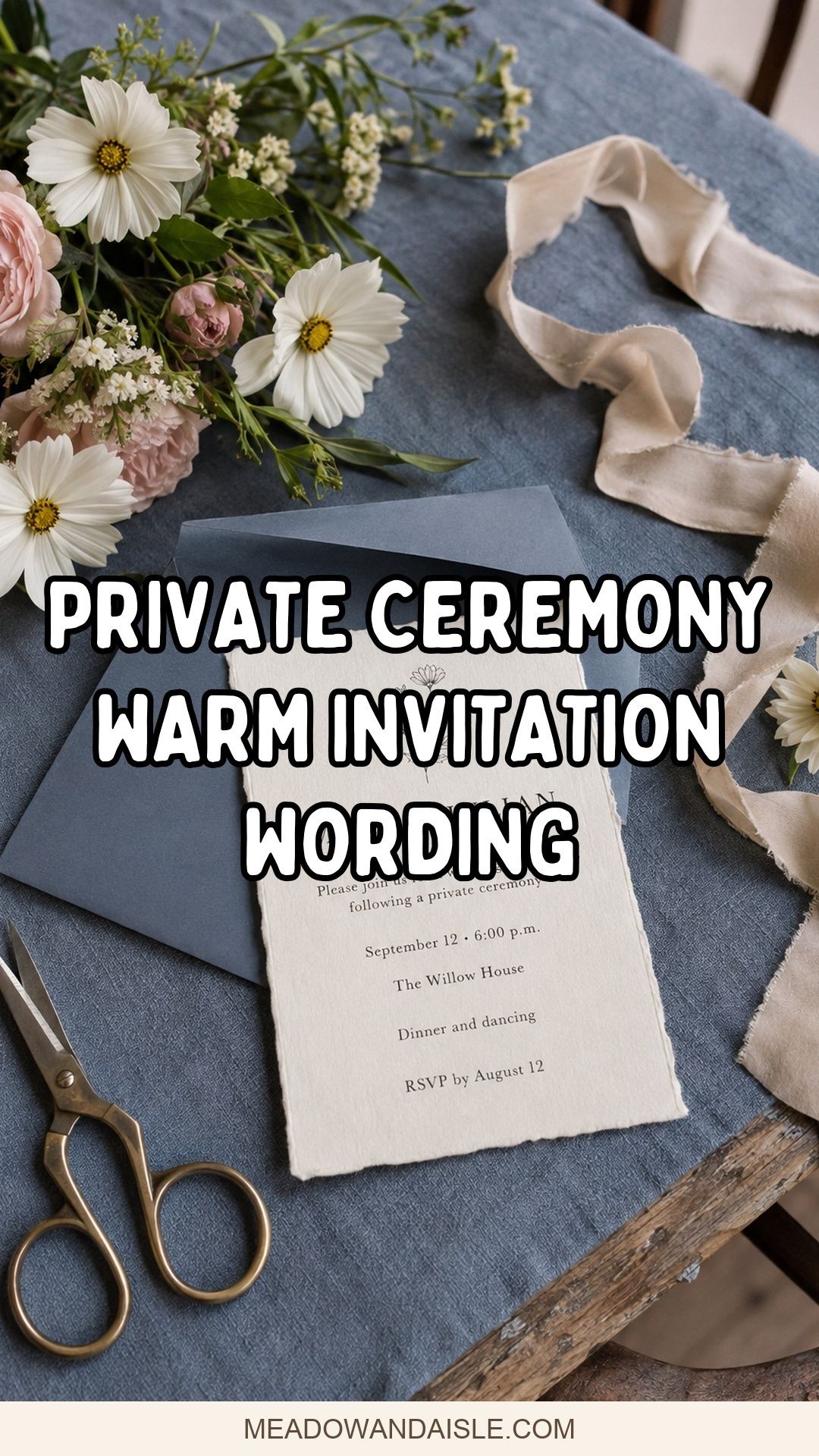
How to tell guests the ceremony is private comes down to inviting them to the exact event they are attending. Use warm reception-only wording, state that the ceremony is private or intimate, repeat the reception time clearly, and save any gentle explanation for your wedding website or close-family conversations.
A private ceremony with a larger reception is not rude by default. It becomes awkward when guests are left to infer what they are invited to, or when the reception sounds like a smaller consolation event after the “real” wedding happened elsewhere. The kinder path is direct language, steady etiquette, and a reception that feels fully hosted.
Couples choose private vows for all kinds of reasons: family size, venue limits, religion, courthouse timing, destination travel, grief, introversion, budget, health, or the desire to say vows without an audience. Guests do not need every private detail. They do need accurate invitation wording, a clear arrival time, and a gracious sense that their presence at the celebration matters.
Recommended Wedding Products


You Might Also Like These Blog Posts
- Reception After Private Ceremony Wording That Keeps Expectations Clear.
- Intimate Wedding Invitation Wording For Every Small Celebration
- How To Tell Family You Are Eloping
- Small Wedding Invitation Wording Ideas That Feel Clear And Personal
- How To Tell Coworkers They Are Not Invited To Wedding Without Office Drama
- How To Announce You Eloped Without Making It Feel Like An Apology
How To Tell Guests The Ceremony Is Private
The best way to tell guests the ceremony is private is to stop writing as though everyone is being invited to the full wedding day. Write the invitation around the reception. Then add one short phrase that explains the vows are private: “following a private ceremony,” “after an intimate ceremony,” or “after we exchange vows privately.” That single phrase answers the main question before anyone has time to feel confused.
This is invitation clarity first, hurt-feelings prevention second. The words should show guests where to go, when to arrive, what to expect, and what part of the wedding day includes them. When the copy is vague, guests fill in the blanks with assumptions. When the copy is exact and warm, most people understand the format and move on to the celebration.
Invite Guests To The Exact Event
Every guest invitation should match the event that guest is attending. If someone is invited to the reception only, the invitation should say reception, celebration, dinner, cocktail reception, brunch, or marriage celebration. It should not say “join us for our wedding ceremony and reception” or “reception to follow” when that person is not invited to the ceremony.
For a private ceremony public reception, a clean structure looks like this: the couple’s names, a private ceremony phrase, the reception invitation, the date, the start time, the venue, and RSVP details. Guests should not wonder whether there is a ceremony card missing from the envelope. They should see the reception as the event they are joyfully invited to attend.
Try wording such as: “After a private ceremony, we invite you to celebrate our marriage at a reception with dinner and dancing.” For a more formal tone: “Together with their families, Maya and Julian request the pleasure of your company at a reception celebrating their marriage following a private ceremony.” Both versions are clear. Neither turns the guest into an afterthought.
Use Reception-Only Wording On Invitations
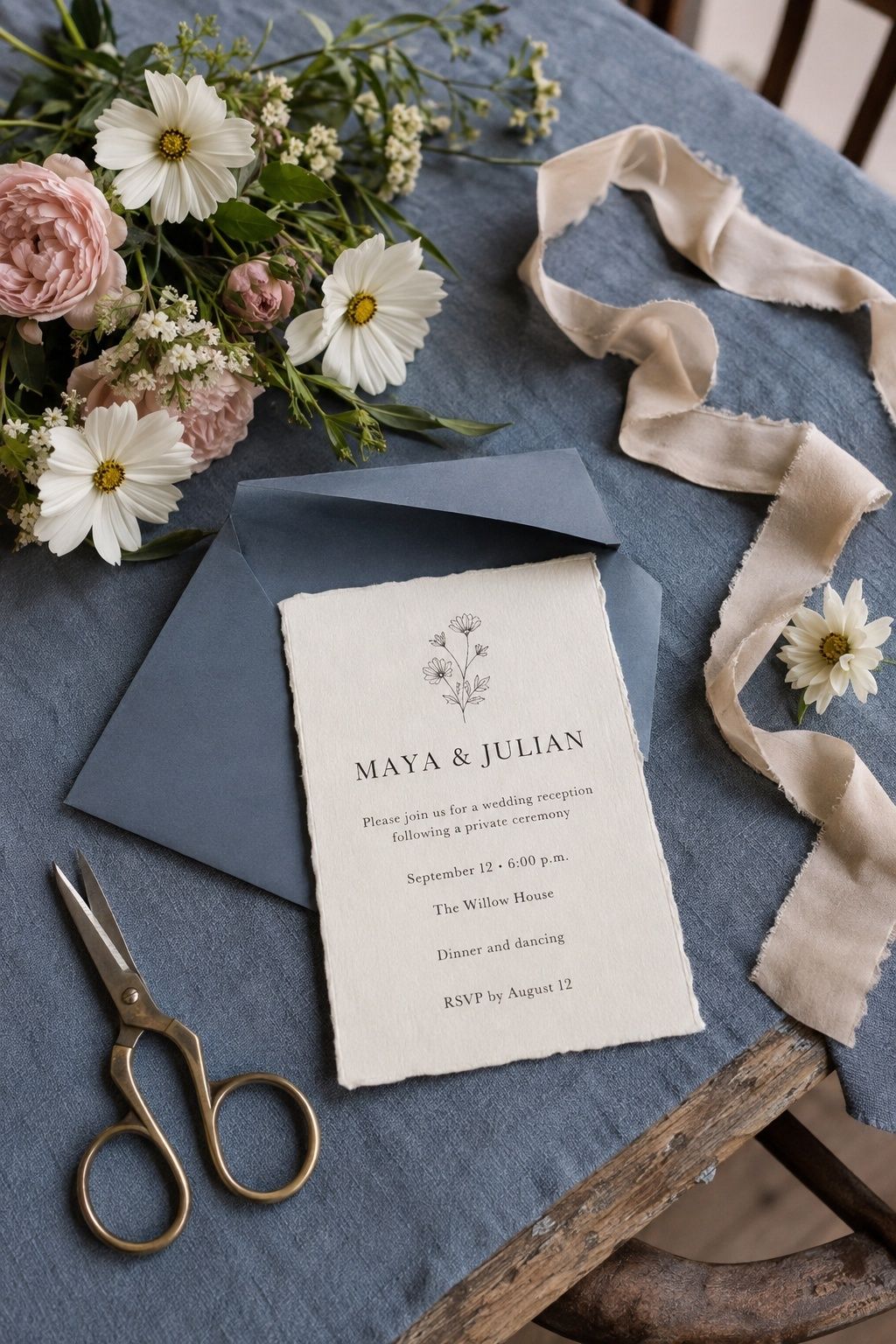
Reception only wedding invitation wording works best when the reception is named in the first invitation sentence. “Please join us for a wedding reception” is much clearer than “please join us for our wedding” when the ceremony is not open to every guest. Private ceremony reception wording should not hide the format in tiny print on the details card.
Short wording for a modern invitation: “We are exchanging vows in a private ceremony and would love to celebrate with you at our reception.” Formal private wedding ceremony wording: “Following a private ceremony, the families of Elise Morgan and Theo Carter invite you to a reception in honor of their marriage.” Casual reception only wedding invitation wording: “We said yes in a private ceremony. Now come eat, toast, and dance with us.”
The phrase “private ceremony” is not cold when it is wrapped in an invitation to celebrate. It is often warmer than evasive language because it respects guests enough to tell them the truth. If the ceremony is tiny but not secret, private ceremony invitation wording and intimate ceremony wording should be simple and confident.
Put The Gentle Explanation On The Wedding Website
Private ceremony wedding website wording gives you a little more room without overloading the invitation. The printed or digital invitation should stay focused on the event details. The website is the right place for a warm sentence that explains the ceremony boundary and points guests toward the celebration.
Try: “We will be exchanging vows privately with a very small group, then celebrating with family and friends at the reception. We are so excited to share the evening with you.” For a courthouse wedding: “We are having a private courthouse ceremony before gathering everyone for dinner, drinks, and dancing.” For a family-only ceremony: “Our ceremony will be limited to immediate family, and our reception will be our chance to celebrate with the people we love.”
Keep the website explanation short. Guests looking for directions, parking, dress code, menu, or RSVP information should not have to scroll through a long defense of the decision. A brief ceremony line, placed in the schedule or FAQ section, is usually enough.
Tell Close Family Privately Before Invitations Land

Some people deserve to hear the ceremony plan before a mailed invitation tells them. Parents, siblings, grandparents, adult children, close relatives, and friends who expected to witness the vows should get a calm private heads-up if the relationship calls for it. This is less about asking permission and more about preserving trust.
Use one steady sentence: “We have decided to keep the ceremony very private, then host everyone at the reception. We wanted you to hear that from us before invitations go out.” If there is a specific reason you want to share, share it once. Then return to the reception: “We truly want you with us for dinner and the celebration.”
Do not debate the guest list in that conversation. A private heads-up is not an opening for negotiation. If someone presses, repeat the boundary kindly: “We understand this is different from what you imagined. The ceremony list is set, and we are looking forward to celebrating with you at the reception.”
Keep The Message Warm And Short
Small private ceremony wording usually gets worse when couples keep adding softeners. Too much apology makes the decision sound shameful. Too much detail invites people to judge the reasons. Too much sentiment sometimes reads as nervousness. The strongest private ceremony wording is warm, brief, and settled.
A good formula is: “We are having a private ceremony, and we would love to celebrate with you at our reception.” That is enough for many invitations, texts, emails, and phone calls. If someone needs more information, the wedding website or a private conversation gives you space.
Avoid phrases that sound apologetic, such as “Unfortunately, you are only invited to the reception” or “Due to limitations, we regret that the ceremony is private.” Those lines put the guest in a losing position before they have even opened the calendar. Say what is happening, then make the reception invitation feel sincere.
Avoid Second-Tier Language
The fastest way to hurt feelings is to imply that ceremony guests are the real guests and reception guests are the overflow. Do not use “ceremony guests” and “reception-only guests” in public wording. Do not call the reception an “after-party” unless it truly is late-night and casual. Do not say “we wish we could invite everyone” on the invitation itself.
Replace second-tier language with celebration language. “Reception celebrating our marriage” sounds complete. “Dinner and dancing in honor of our marriage” sounds hosted. “Marriage celebration” works well when the ceremony already happened. The reception should feel like a full event with its own value, not a waiting room outside the private vows.
This matters even more when some guests attend the ceremony and others attend only the reception. The stationery, website, RSVP, and day-of signage should never make one group look chosen and the other group look added later. Give every guest-facing version of the event a gracious name.
Make The Reception Feel Fully Hosted

Wedding reception only etiquette depends on hospitality. Guests who are not witnessing the vows still need a real welcome, enough food, clear timing, easy RSVP instructions, and a celebration that feels intentional. A reception-only invitation lands better when the event behind it is generous.
Think through the experience from arrival to goodbye. Will there be a welcome drink? A seated meal, buffet, stations, brunch, or substantial appetizers? Will the couple greet guests early? Will there be toasts, first dance, cake, music, or photos from the private ceremony? The answer does not have to be formal. It just has to feel cared for.
If the reception begins at a mealtime, feed people like it is a mealtime. If it is a cocktail reception, say so. If it is cake and champagne, say that too. Clear hospitality is what keeps the reception from sounding like a gift-collecting event after private vows.
Clarify Arrival Time And Meal Expectations
Reception guests need a single arrival time, not a timeline that hints at an earlier ceremony. Write “Reception begins at 6:00 p.m.” or “Please arrive at 5:30 p.m. for cocktails, followed by dinner at 6:30 p.m.” If the private ceremony happens earlier the same day, do not list that time on the reception invitation for people who are not attending it.
The details card or website should tell guests what kind of food to expect. “Dinner and dancing,” “cocktails and heavy hors d’oeuvres,” “brunch reception,” “dessert and champagne,” and “open-house celebration” all set different expectations. Guests plan transportation, childcare, medication, and meals around those clues.
Also repeat the location carefully. If the ceremony and reception are at the same venue, guests attending only the reception need to know exactly when the doors open to them. If the ceremony is elsewhere, reception-only guests do not need that ceremony address on their card.
Explain Private Vows Only If It Adds Clarity
Should you explain why the ceremony is private? Usually, no. You are allowed to keep the why personal. The exception is when a small explanation removes confusion for people close to you. For example, “We are keeping the ceremony to parents and siblings because of the chapel size” is clear. “We need this moment to be quiet and private” is also clear.
Use explanation sparingly. Guests do not need a full family history, budget breakdown, venue contract, or emotional essay. A little explanation should reduce friction, not invite a new round of opinions. The invitation itself should still carry only the essential event wording.
When the private ceremony is tied to religious, cultural, legal, or family circumstances, decide which details fit each audience. Close family sometimes deserves a personal conversation. Most reception guests only need to know that they are warmly invited to celebrate the marriage.
Use Separate Invitations For Different Guest Groups
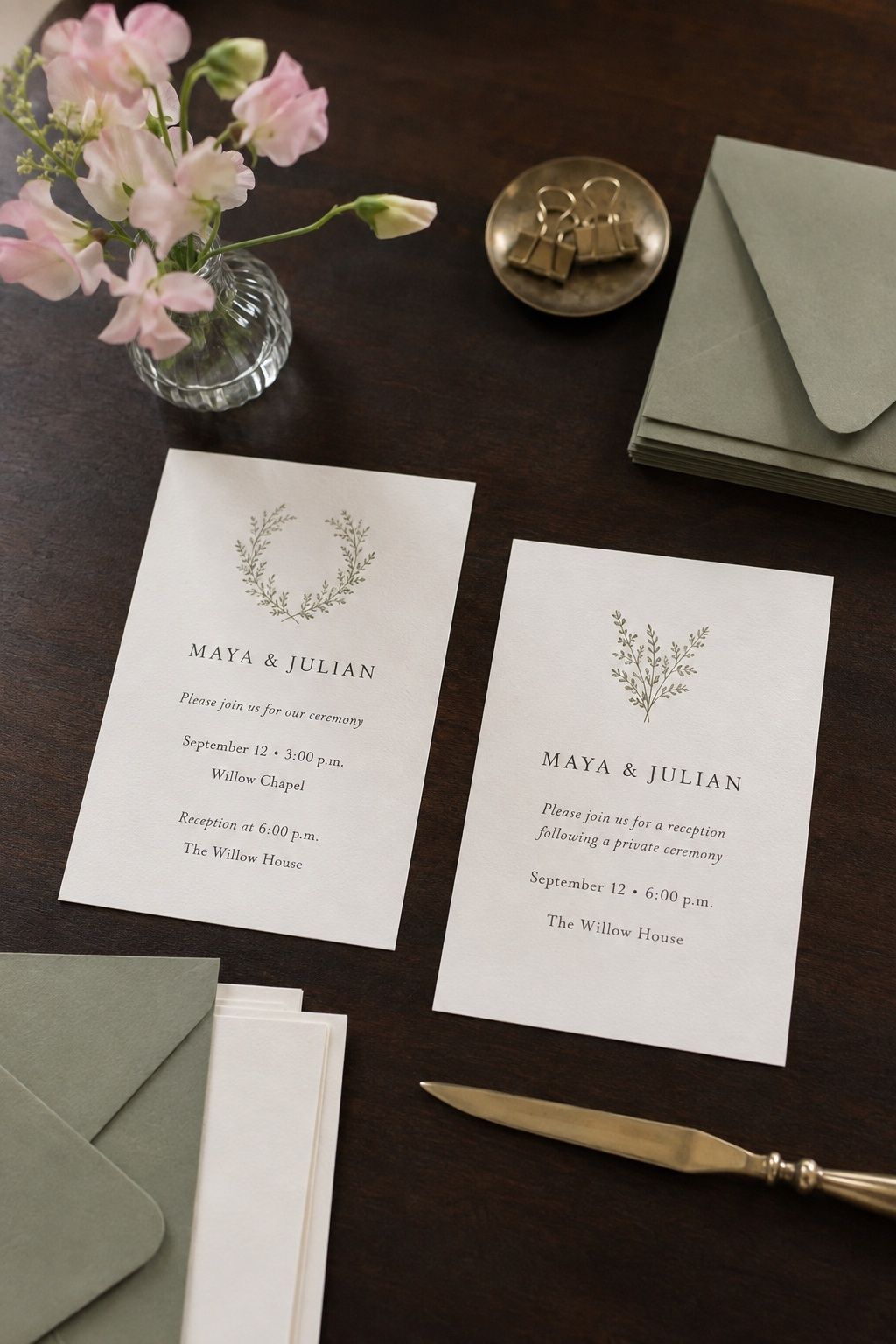
If some guests attend both the ceremony and reception while others attend the reception only, create separate invitation versions. Ceremony guests receive ceremony time, ceremony address, and reception details. Reception guests receive reception details only. This avoids awkward inserts, crossed-out information, and accidental confusion.
Separate invitation versions also protect your RSVP list. A guest invited only to the reception should not see a ceremony checkbox. A guest invited to both events should have a clear way to respond for both. Digital invitations need the same care as printed suites; make sure each guest group sees only the details intended for them.
For a private ceremony with larger reception, the cleanest approach is usually two invitation lists, two RSVP paths, and one shared wedding website with schedule information that changes based on guest group if your platform allows it. If not, keep the public schedule reception-focused and share ceremony details directly with ceremony guests.
Handle Questions Without Reopening The Guest List
Even with polished ceremony is private wording, a few people will ask whether they are invited to the vows. Answer kindly and briefly. “The ceremony will be private, and we are hosting everyone at the reception afterward.” If they ask why, offer your chosen one-sentence explanation or simply say, “We decided to keep that part very small.”
Do not turn every question into a guest-list debate. Once you start explaining every exception, people look for a loophole. If the ceremony list is set, say so with warmth. “We know this is not the traditional format, but the ceremony plans are final. We would be very happy to celebrate with you at the reception.”
Questions are easier to handle when both partners use the same language. Agree on the sentence before invitations go out. Share it with parents if they are likely to receive calls from relatives. Consistency keeps the message calm.
Avoid Vague Wording
Vague wording feels gentle in the draft stage and messy in real life. “Join us after the ceremony” does not tell reception guests whether the ceremony is open to them. “Celebrate our wedding day” suggests a full-day invitation. “Reception to follow” only works for guests who are also invited to the ceremony.
Use direct private ceremony wording instead. “Following a private ceremony” is clear. “After exchanging vows privately” is warm. “After a small family ceremony” is specific. “Reception celebrating our marriage” is reception-forward. Choose the phrase that fits your event and repeat it in the places guests will check.
Also avoid burying the private ceremony detail in a long paragraph. Guests skim invitations. Put the crucial wording where it is easy to see: the main invitation line, a details card, the RSVP page, or the website schedule.
Repeat Key Details On RSVP And Website Pages
Private ceremony reception wording should appear in more than one place. Put the reception start time on the invitation, RSVP page, website schedule, and any reminder email or text. If the ceremony is private, the RSVP should not imply that guests are choosing between ceremony and reception unless they are invited to both.
For the RSVP page, try: “Yes, I will attend the reception celebration” and “No, I will be unable to attend the reception.” For the website schedule, write: “Private ceremony, followed by reception for invited guests at 6:00 p.m.” If that sounds too blunt, shift it slightly: “We will exchange vows privately before welcoming guests for the reception at 6:00 p.m.”
Repetition prevents mistakes. It also saves you from answering the same question twenty times. Guests should see the same reception-only structure wherever they interact with the wedding details.
Hold Privacy And Hospitality Together
The emotional balance is simple: you have the right to a private ceremony, and guests deserve a clear, gracious invitation to the part they are attending. Privacy without hospitality feels dismissive. Hospitality without clarity feels confusing. Together, they make the plan feel intentional.
That balance should show up in every choice. Keep the ceremony list genuinely small. Make the reception feel complete. Tell guests what to expect. Avoid ranking language. Thank them warmly for celebrating with you. When those choices line up, reception-only wedding etiquette becomes less about defending the format and more about hosting well.
Private Ceremony Wording Situations
Different private ceremony plans call for different wording. The same core rule still applies: tell guests what they are invited to attend, mention the private vows briefly, and keep the invitation focused on the celebration.
Elopement Reception Wording
For an elopement, the ceremony has often already happened or will happen away from the reception location. Good wording does not pretend otherwise. Try: “We eloped in a private ceremony and would love to celebrate with you at a reception.” Or: “After exchanging vows privately, we are gathering our favorite people for dinner, drinks, and dancing.”
If the elopement was a surprise, announce the marriage before inviting guests to the party: “We are married! Please join us for a reception celebrating our marriage.” This keeps the joy at the center and avoids making guests feel as though they missed a hidden event by accident.
Courthouse Ceremony Wording
Courthouse ceremonies are often tiny by nature, so the wording should be direct. “After a private courthouse ceremony, we invite you to celebrate our marriage at a reception.” If the courthouse date is separate from the party date, write: “We were married in a private courthouse ceremony and are hosting a reception to celebrate with family and friends.”
Courthouse wording should not sound like an apology. A legal ceremony followed by a hosted reception is still a meaningful wedding plan. Give the reception enough detail, especially if it is a dinner party, brunch, or cocktail celebration rather than a traditional ballroom reception.
Family-Only Ceremony Wording
Family-only ceremonies are easiest to understand when the boundary is simple. “Following an intimate ceremony with immediate family, please join us for a reception celebrating our marriage.” If children are the only witnesses, use: “After a private ceremony with our children, we invite you to celebrate with us at dinner.”
Be careful with phrases like “family only” when the family structure is complicated. If cousins, aunts, uncles, or selected relatives are excluded, “private ceremony” is often cleaner than “family-only ceremony.” Choose the phrase that creates the least confusion for your actual guest list.
Destination Ceremony Wording
A destination ceremony often leads naturally into a local reception later. Try: “We will exchange vows privately in Italy, then celebrate with family and friends at home.” Or: “After a private destination ceremony, please join us for a reception in honor of our marriage.” This makes the travel boundary clear without making local guests feel like a backup plan.
If a few people are invited to the destination ceremony, avoid sharing the destination schedule broadly. Reception guests need the local reception details. Ceremony guests need travel details separately. Mixing both sets of information in one public place is where hurt feelings start to grow.
Reception-Only Wedding Wording
For a reception-only wedding, lead with the celebration. “Please join us for a reception celebrating the marriage of Nora and Sam.” Add the ceremony phrase only where needed: “following a private ceremony” or “after exchanging vows privately.” The title of the event should be reception, dinner reception, marriage celebration, or wedding reception.
Reception-only wording should always include the start time, location, dress code when relevant, food expectation, and RSVP deadline. The goal is not to make the invitation sound smaller. The goal is to make it accurate and welcoming.
Private Ceremony Invitation Scripts
Use these original scripts as starting points for how to word private ceremony invitation language across different formats. Replace names, dates, tone, and meal details so the wording fits your day.
Formal Invitation Script
“Together with their families, Clara James and Elliot Reed request the pleasure of your company at a reception celebrating their marriage following a private ceremony. Saturday, the twelfth of September, at six o’clock in the evening. The Willows House, Charleston. Dinner and dancing to follow.”
This works well when parents are hosting, the reception is seated, or the overall tone is traditional. The private ceremony language sits inside the invitation sentence without sounding like a separate warning.
Modern Invitation Script
“We are exchanging vows in a private ceremony, then celebrating with the people we love. Join us for cocktails, dinner, and dancing on Saturday, September 12, at 6:00 p.m.”
This version is conversational and clear. It names the private ceremony, then immediately makes the reception feel lively and hosted. It is a strong fit for digital invitations, restaurant receptions, gallery spaces, backyard dinners, and modern printed suites.
Wedding Website Script
“Our ceremony will be private, and we are looking forward to celebrating with everyone at the reception. Please arrive at 6:00 p.m. for cocktails, with dinner and dancing afterward.”
This fits the schedule page because it answers the arrival question directly. It also avoids a long explanation. Guests know where they fit into the day and what happens when they arrive.
Text Or Email Script
“We wanted to let you know before invitations go out that we are keeping the ceremony private. We would love to have you with us at the reception to celebrate afterward.”
This is the script to use for close family or friends who need a personal heads-up. It is affectionate without asking for approval. If the person is disappointed, acknowledge that once and keep the boundary steady.
Common Wording Mistakes To Avoid
Knowing how to tell guests the ceremony is private is partly about spotting the phrases that create unnecessary sting. Most mistakes come from trying to soften the news so much that the real invitation becomes unclear. Guests are less likely to feel hurt by the word private than by wording that makes them wonder whether they misunderstood their role.
Do Not Apologize On The Invitation
An invitation is not the place for regret language. “We regret that the ceremony is private” sounds heavier than the situation needs to be. “Unfortunately, due to space, the ceremony is limited” places the guest outside the meaningful part before inviting them to the reception. That tone makes the reception feel secondary even when you meant to be considerate.
Swap apology for warmth. “After a private ceremony, please join us for a reception celebrating our marriage” is calm and generous. If you need to explain a venue limit or family reason, do it on the website or in a private conversation with the few people who truly need that detail.
Do Not Hide The Reception-Only Detail
Some couples place the private ceremony wording at the bottom of a details card, hoping guests will notice without feeling confronted. That usually backfires. Guests skim invitations quickly. If the invitation looks like a standard wedding invitation, many people will assume there is a ceremony attached and only notice the difference after they start planning.
Make the reception-only structure visible in the main line. “Please join us for a wedding reception” sets the expectation immediately. “Following a private ceremony” adds the missing timeline. The wording does not need to shout. It does need to be easy to find.
Do Not Over-Explain Family Decisions
Family dynamics often sit behind private ceremony decisions, but the invitation should not carry that weight. Avoid writing that the ceremony is private because of complicated relatives, strained relationships, divorced parents, guest-count conflict, or anyone else’s behavior. Even if the reason is true, public wording should protect the dignity of the day.
A better approach is to choose one neutral phrase and use it everywhere. “We are keeping the ceremony private” covers most situations. “We are exchanging vows in an intimate ceremony” feels softer when the group is truly small. “The ceremony will be limited to immediate family” works when that statement is accurate and consistent.
Do Not Make The Reception Sound Optional
If the reception invitation says “drop by if you want” or “come by after,” guests often treat the celebration as casual overflow rather than a hosted wedding event. That is fine for an open house if that is the real plan. It is not ideal for a reception where you want people to RSVP, dress thoughtfully, arrive on time, and share a meal.
Give the reception a clear beginning and purpose. “Join us for cocktails, dinner, and dancing” sounds intentional. “Please celebrate our marriage with us at a reception” sounds complete. If the event is relaxed, still give it structure: “Open-house reception from 2:00 to 5:00 p.m., with champagne, dessert, and a toast at 3:00.”
Message Placement
One reason private ceremony wording gets messy is that couples try to make one sentence carry every detail. The invitation, wedding website, RSVP page, family text, and day-of signage each carry a different kind of information. When each message has a clear place, the wording feels calmer.
Invitation
The invitation should contain the polished public version: private ceremony phrase, reception invitation, date, time, place, and RSVP instruction. This is where private ceremony reception wording needs to be shortest. Guests should understand the format in one glance, without being asked to absorb the whole story.
Details Card
The details card is the right place for arrival instructions, dress code, parking, shuttle timing, adults-only wording, menu style, and website URL. If the ceremony and reception happen at the same venue, the details card should clarify that guests are invited to arrive for the reception start time. It should not list ceremony timing for reception-only guests.
Wedding Website
The website is the right home for private ceremony wedding website wording because it allows a softer explanation and repeated logistics. Add the ceremony line to the schedule page and, if needed, the FAQ page. Keep the tone matter-of-fact: “We will exchange vows privately before welcoming guests for the reception.”
Family Conversations
Family conversations are where a more personal tone fits. “We know you probably imagined being there for the vows, and we understand. We have chosen a very private ceremony, and we hope you will celebrate with us at the reception.” This is honest without reopening the decision.
If you feel tempted to send a long message to every guest, pause and sort the audience. Close family sometimes needs care. Most reception guests need clarity. Trying to give every guest the family version of the message often creates more emotional weight than the invitation needs.
Final Wording Checklist
Before sending anything, view the invitation from the guest’s point of view. Do you know whether you are invited to the ceremony? Do you know when to arrive? Do you know whether dinner is being served? Do you understand the RSVP? Do you feel invited to a real celebration rather than a lesser gathering?
If the answer to any of those questions is no, revise the wording before printing or sending. How to tell guests the ceremony is private is not about finding a perfect magic phrase. It is about aligning the guest list, invitation, website, RSVP, and reception plan so they all tell the same gracious truth.
FAQ
How Do You Tell Guests The Ceremony Is Private?
Tell guests the ceremony is private by writing the invitation around the reception they are attending. A simple line works: “After a private ceremony, please join us for a reception celebrating our marriage.” Put the reception start time, location, and RSVP details clearly on the invitation or details card.
Is It Rude To Invite Guests To The Reception But Not The Ceremony?
It is not rude when the ceremony is genuinely private, the reception is clearly presented, and guests are hosted well. It feels rude when guests are misled, ranked, underfed, or treated like they are attending a lesser event. Clear reception-only wording and generous hospitality make the difference.
What Do You Write On A Reception-Only Wedding Invitation?
Write that guests are invited to a reception celebrating your marriage. Include a brief private ceremony phrase if needed, such as “following a private ceremony” or “after exchanging vows privately.” Then list the reception date, start time, venue, dress code if relevant, meal expectation, and RSVP deadline.
Should You Explain Why The Ceremony Is Private?
You do not have to explain why the ceremony is private. Most guests only need to know what they are invited to attend. A short explanation suits close family or unusual logistics, but the invitation should not become a long defense of your decision.
How Do You Avoid Hurt Feelings With A Private Ceremony?
Avoid hurt feelings by keeping the ceremony boundary consistent, telling close family personally when appropriate, using warm private ceremony wording, and making the reception feel complete. Do not use second-tier language. Do not imply that reception guests are less important than ceremony guests.
Can Some Guests Attend The Ceremony And Others Only The Reception?
Yes. Some guests attend the ceremony while others attend only the reception, but the guest groups should be handled carefully. Send separate invitations, separate RSVP details, and consistent rules for who attends the ceremony. Keep the reception invitation reception-focused so guests understand the event clearly.
Final Thoughts
Private ceremonies work best when the words are honest and the reception is generous. You do not need to apologize for wanting quiet vows. You do need to invite people to the exact event they are attending, make the timing unmistakable, and give the reception enough warmth that guests feel welcomed into the marriage celebration.
If you remember only one rule, let it be this: clarity is kinder than cushioning. Ceremony is private wording should be short, calm, and paired with a real invitation to celebrate.
Last update on 2026-10-03 / Affiliate links / Images from Amazon Product Advertising API