

If you are deciding how to word no gifts at a wedding, start with warmth, clarity, and placement. Say that sharing the day is the gift you value most, place the message on your wedding website or a small details insert, and give a specific alternative only when you truly want donations, a cash fund, or cards instead.
Choosing no gifts sounds simple until the sentence has to sit in front of real guests. Some people already bought something. Some relatives see gifts as love. Some friends want to know whether “no gifts” means no boxed gifts, no registry, no cash, no charity donation, or simply no pressure.
That is why no-gifts wording for a wedding works best when it gives guests both permission and direction. The goal is not to scold anyone for being generous. It is to lower the pressure around giving while preserving the gracious feeling of the invitation. For small weddings, elopement parties, second weddings, destination weekends, and couples who already share a home, this wording protects the tone of the celebration before questions start multiplying.
Think of the sentence as hospitality before the wedding begins. Guests want to arrive feeling prepared, not corrected. The more gracefully you explain the preference before they buy, wrap, ship, or ask relatives, the less awkward the request feels for everyone involved.
This is especially true when the celebration is intentionally small. A guest who receives clear wording early does not have to wonder whether a missing registry is an oversight, whether cash is expected, or whether a physical present should travel to the venue. Clarity lets generosity turn into presence, conversation, calm participation, and the shared ease that makes a small wedding feel lovingly hosted from the first reply onward. This is one part of small wedding guest list etiquette, which covers the rest.
Recommended Wedding Products


You Might Also Like These Blog Posts
- Cash Fund Wording For Small Wedding Guests That Feels Thoughtful
- Should You Have A Registry After Eloping?
- Wedding Registry Mistakes That Make Gift-Giving Awkward
- Party After Eloping Etiquette For Sharing The Joy Without Rewriting The Day
- What To Put On A Small Wedding Website So Guests Stop Texting You
- How To Say No Kids At A Wedding Politely Without Making It Awkward
How To Word No Gifts At Wedding
The best wedding wording for no gifts sounds generous from the couple, not restrictive toward the guest. It says, in plain language, that the guest’s attendance matters more than anything wrapped, shipped, boxed, or transferred. From there, the wording changes according to meaning, placement, tone, and the one thing you do not want guests to misunderstand.
Before you choose a line, decide what the boundary actually means. A couple saying “your presence is present enough” often means no registry and no expected purchases. Another couple looking for no-boxed-gifts language often means no physical items at the venue, while cash or cards are still welcome. A couple asking guests to donate to charity instead has a different goal again. Clear meaning creates kind wording.
Use the sections below for the real situations couples face: what “no gifts” means, where the sentence should appear, how to set the tone, and what not to say when you want the message to land softly.
Meaning One: No Gifts Means No Expectation
This is the most guest-friendly meaning. You are not banning generosity. You are removing pressure. It works well for couples who already have household basics, couples hosting a small wedding, or couples who want the day to feel less transactional.
Try wording like: Your presence at our wedding is the gift we are most grateful for. Please do not feel any need to bring or send a gift.
The phrase “do not feel any need” matters because it leaves the guest’s kindness intact. It says the couple is not counting gifts, not expecting deliveries, and not measuring anyone’s affection by what arrives. This is a gentle way to say no gifts, please, because guests do not have to wonder whether a secret registry exists somewhere.
For a small guest list, this meaning also protects guests who are already spending money to attend. Travel, attire, lodging, childcare, and time away from work add up quickly. A no-expectation sentence quietly tells guests that showing up warmly is enough, even if they arrive empty-handed.
Meaning Two: No Boxed Gifts Means No Physical Presents
Wording around no boxed gifts needs extra care because guests interpret that phrase in more than one way. Some hear it as “cash only.” Others hear it as “nothing at all.” If you use the phrase, pair it with the real preference so guests do not have to decode it.
For a physical-gift boundary, try: We kindly ask for no boxed gifts at the celebration. Sharing the day with you is more than enough, and cards are warmly welcome if you wish to bring one.
For couples who truly want no objects at the venue, name the venue issue without overexplaining. A tiny restaurant reception, destination wedding, courthouse dinner, or private home celebration often has little storage. Guests are more likely to understand when the request feels practical rather than mysterious.
If cards are welcome, say cards. If cash is welcome, say there is an optional fund online. If nothing is welcome, do not use “no boxed gifts” at all. The phrase carries too much room for interpretation unless you pair it with one plain follow-up sentence.
Meaning Three: No Gifts Means A Donation Instead
When you are saying “in lieu of gifts” for a wedding, the charity should be framed as optional, not as a ticket price for attendance. Guests should feel invited into a cause, not redirected to a bill. Keep the wording sincere and short, with the organization named only where there is room for a clear explanation.
Try: We are grateful simply to celebrate with you. If you would like to honor the day with a gesture, a donation to our chosen charity would mean a great deal to us.
Charity donation wording for a wedding should give guests a path without turning generosity into a requirement. On a wedding website, add one sentence about why the organization matters. On a printed insert, keep the sentence brief and place the details online.
Donation wording is strongest when the cause clearly fits your life together. It could honor a loved one, reflect a shared value, or mark a community that shaped your relationship. Keep the explanation centered on gratitude, not moral pressure, so guests who choose only to attend still feel fully welcome.
Meaning Four: No Gifts Means A Cash Fund Instead
If you prefer a cash fund instead of gifts, the wording should be honest without sounding demanding. Do not pretend you want nothing if you are actually steering guests toward a honeymoon, home, dinner, adoption, moving, or experience fund. Guests appreciate knowing what the couple prefers, as long as attendance remains enough.
Try: We are not registering for physical gifts. Your presence is plenty, and anyone who wishes to give is welcome to contribute to our future fund through our wedding website.
This wording separates the emotional message from the practical link. It says no physical gifts, gives the optional alternative, and avoids blunt “cash only” phrasing. For small weddings, that softer structure keeps the conversation personal rather than awkward.
If family members worry that cash fund language sounds too direct, put the fund on the website and let the printed details card simply say that no physical gifts are requested. Guests who want to give will find the path. Guests who do not want to give will still feel invited without pressure.
Meaning Five: No Gifts Means Presence Only
Some couples mean the literal thing: no registry, no cash fund, no charity request, no physical gifts, no envelopes. In that case, the wording should be especially clear because guests will look for a backup option out of habit.
Try: We are not accepting wedding gifts. Celebrating with you is more than enough, and we ask only for your presence and good wishes.
That sentence is direct, but still warm. It avoids a joke, avoids a shopping instruction, and avoids mixed signals. It also gives guests something positive to offer: presence and good wishes. That small emotional landing point matters when you are replacing a tradition people already know.
Presence-only wording is easiest when every channel agrees. Do not leave an old registry live, mention a honeymoon fund in one place, and say no gifts in another. Mixed signals create more discomfort than a firm sentence ever would.
Placement One: Put The Full Message On The Wedding Website
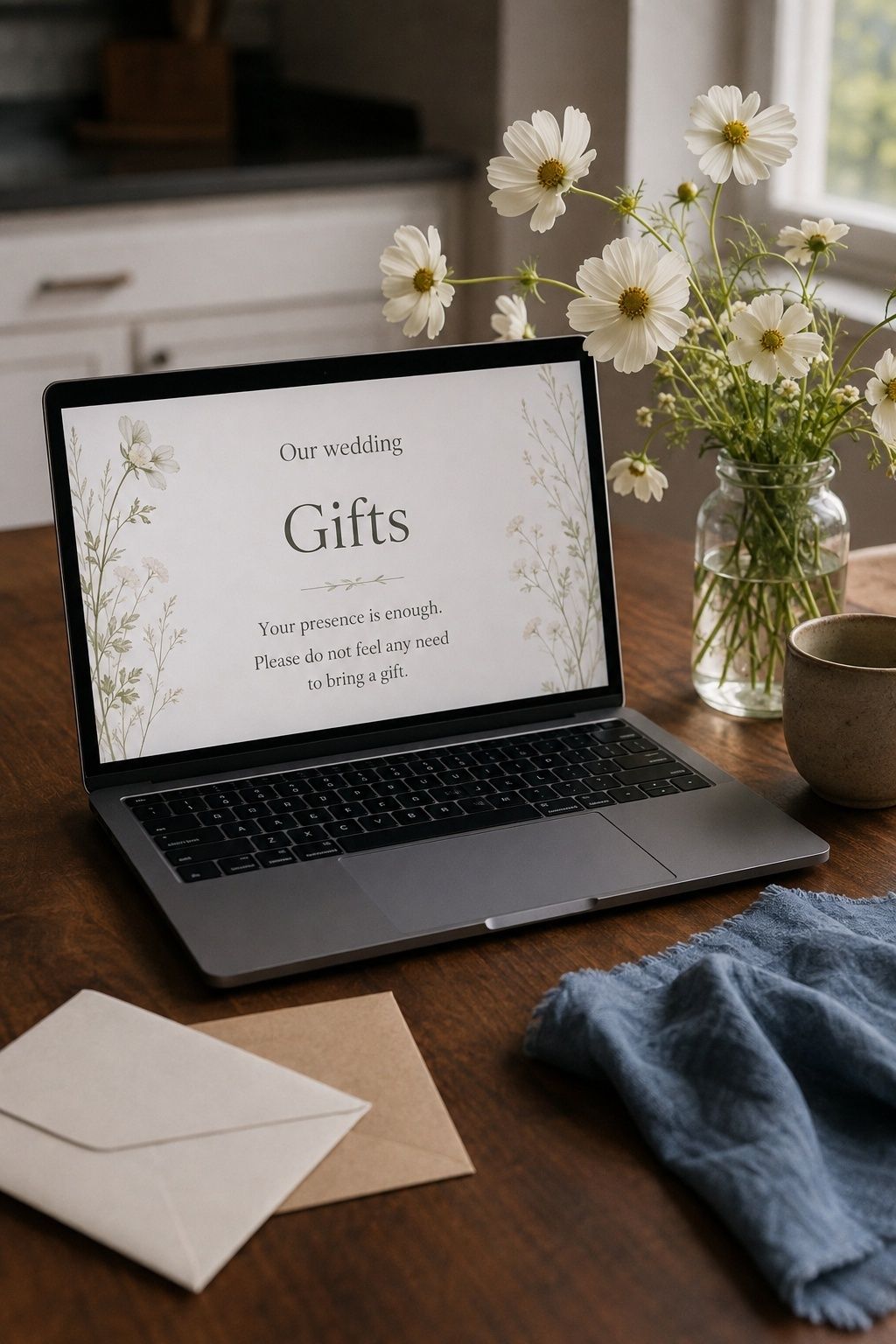
Your wedding website is the easiest place for no-gifts wording that is both clear and gracious. A website gives you room for the reason, the boundary, and any optional alternative. It also keeps gift language away from the main invitation, where etiquette often feels more formal.
Place the sentence under a registry, gifts, FAQ, or details section. A clean version would be: We are not creating a traditional registry. Having you with us is the gift we value most, so please feel no obligation to bring anything beyond yourselves.
If there is an alternative, add it in the next sentence rather than blending it into the first. For example: If you still wish to mark the occasion, our charity fund is linked below. This keeps the main message warm and the optional path clear.
A website also gives room for different guest habits. Some people search for a registry the moment the invitation arrives. Others look the week of the wedding. Put the no-gifts line wherever registry seekers will naturally land, then repeat a short version in the FAQ if your site has one.
Placement Two: Use A Details Card Instead Of The Main Invitation
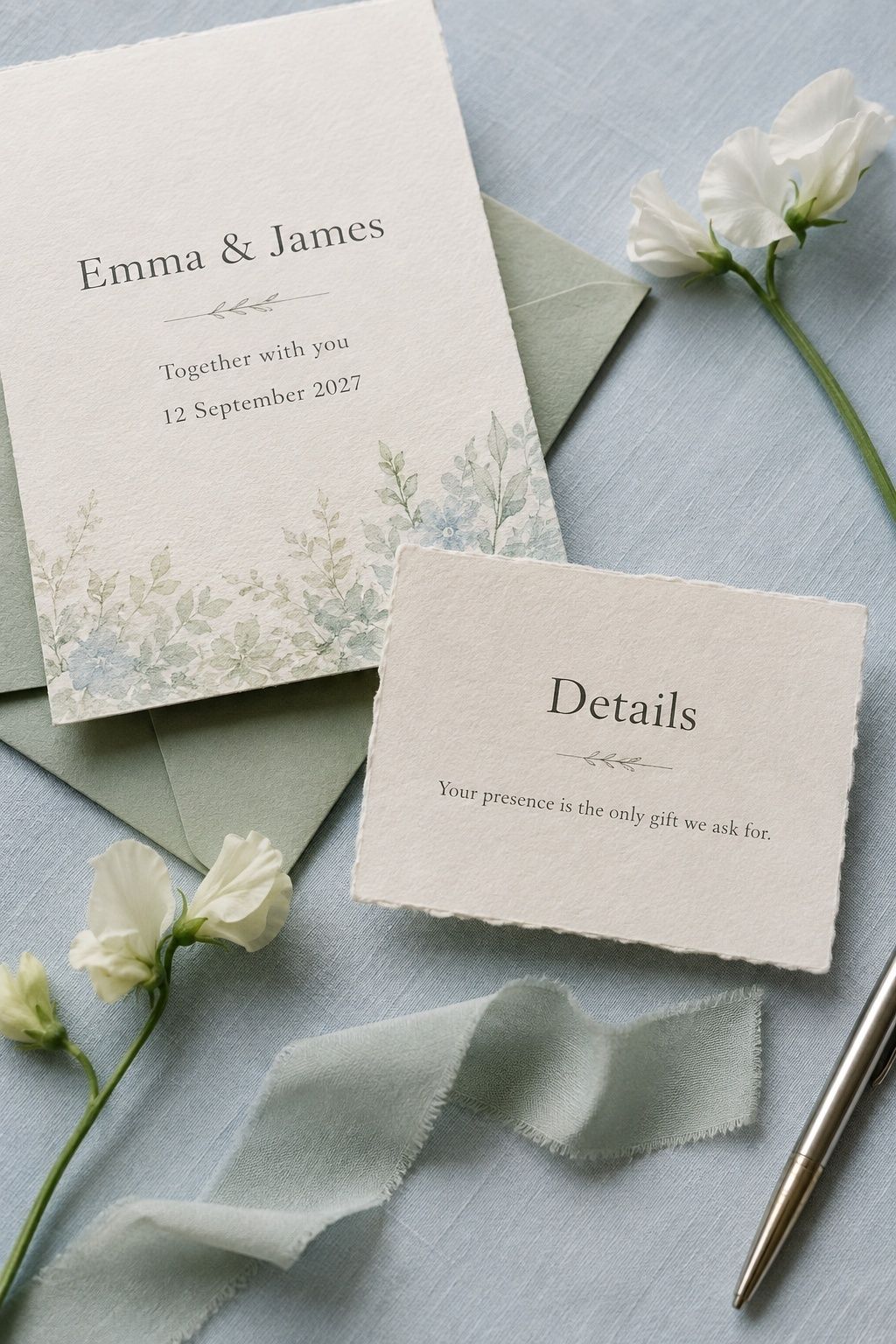
Questions about no-gifts invitation wording usually come from couples who want every guest to see the request. The main invitation is not the best place for it. The ceremony names, date, time, venue, and host line should stay focused on inviting people to the marriage celebration.
If printed wording is necessary, place it on a small details card or enclosure. Try: Your presence is the only gift we ask for. Please find celebration details and our no-gifts preference on our wedding website.
This keeps the invitation elegant while still giving guests a clear path. It also reduces the chance that the gift line feels like the headline of the event. The smaller the wedding, the more a separate details card keeps practical boundaries from taking over the emotional invitation.
A QR code card works well here because it sends guests to the longer wording without crowding the stationery. Pair the code with a neutral line such as: For travel details, RSVP, and gift preferences, please visit our wedding website. That lets the card carry more than one delicate update.
Placement Three: Let Word Of Mouth Handle Close Family
Close family often asks about gifts before they ever visit the website. Give parents, siblings, and wedding party members one simple answer to repeat. The wording should match the public version so guests hear the same message in every channel.
Try: They are keeping gifts very low-pressure. They are not registering, and they would truly rather have everyone there than receive things for the house.
Word of mouth matters for older relatives, guests who dislike wedding websites, and anyone likely to ask another family member first. It also lets your closest people soften the message with their own relationship warmth while keeping the boundary consistent.
Give those relatives permission to avoid debating the choice. A simple repeatable answer is kinder than a long defense. If someone presses, the answer remains the same: the couple is grateful, they are not registering, and attendance is the gift they value.
Placement Four: Add A Gentle Line To Shower Or Party Details
If someone hosts a shower, engagement party, welcome dinner, or post-elopement gathering, no gifts wording becomes more delicate. A shower traditionally centers on gifts, so declining gifts changes the event’s purpose. Make sure the host understands whether the gathering is still a shower or simply a celebration.
For a party, try: No gifts, please. We are gathering simply to celebrate, toast, and spend time together.
For a hosted family meal, try: The couple has asked for no gifts. Your company at the table is the whole point of the evening. For a small wedding, no-gifts wording like this keeps the focus on togetherness, which is often exactly what intimate wedding events need.
If a shower host truly wants to honor the couple without gifts, rename the event as a brunch, toast, tea, or gathering. The name sets guest expectations before the no-gifts line ever appears. That small adjustment prevents the wording from fighting the event itself.
Placement Five: Repeat The Preference In Thank-You Follow-Up
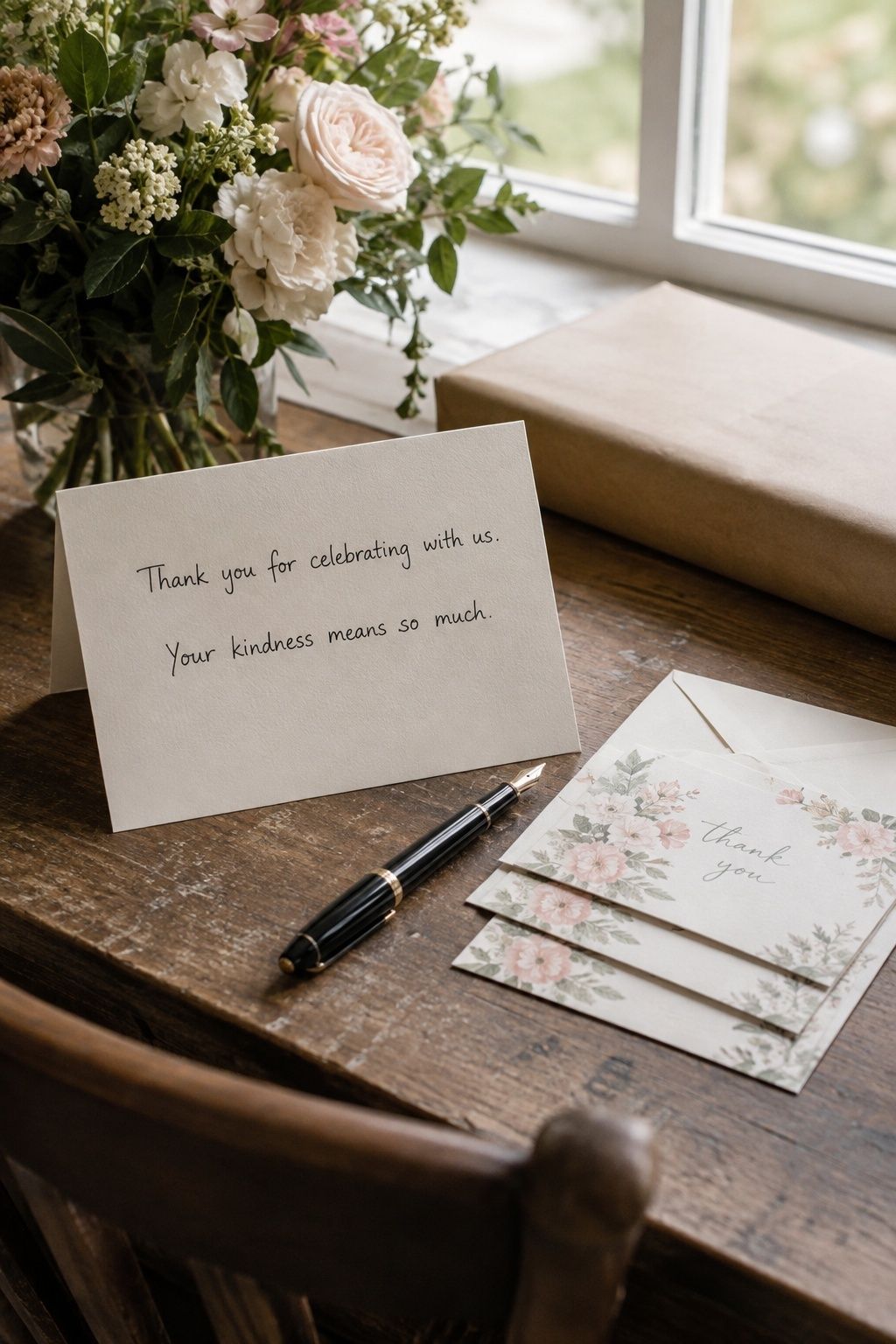
Even with perfect wording, some guests will bring gifts anyway. Plan the gracious follow-up before it happens. You do not need to correct them at the wedding or make them feel as if they did something wrong. Thank them sincerely and move on.
Try: Thank you for such a thoughtful gift and for celebrating with us. We truly meant it when we said your presence was enough, and we are touched by your kindness.
This is where thank-you cards earn their place. They let you honor the guest’s generosity without reopening the boundary. If you receive something you did not want, let the thank-you honor the relationship, not the item.
Keep a simple record of what arrived, who sent it, and whether it came before or after the wedding. That record is practical, not ceremonial. It lets you respond with care even when the original plan was to avoid gifts altogether.
Tone One: Make The Guest Feel Wanted First
The safest tone starts with gratitude for the guest, not the refusal of a gift. Lead with the celebration: We are so grateful to share this day with you. Then add the gift preference. That order keeps the emotional center in the right place.
Try: We are so grateful to celebrate with you. Your presence is gift enough, and we ask for no presents beyond the joy of having you there.
This version works because the guest is welcomed before the boundary appears. The pun is familiar, but the sentence still needs sincerity around it. If the phrase feels too cute for your wedding style, use “your presence is gift enough” or “being with us is gift enough” instead.
For intimate weddings, the guest-first order matters even more because every person invited knows they were chosen carefully. Let the wording reflect that closeness. Start with delight that they will be there, then explain that no present is expected.
Tone Two: Use Plain Words Instead Of A Formal Speech
Formal etiquette around saying no gifts, please, sometimes becomes stiff because couples try to sound extra polite. Long sentences about humble requests, gracious blessings, and abundant generosity start to feel like a plaque. Plain words usually feel kinder.
Try: We have everything we need and are not asking for gifts. Celebrating with you is what matters most to us.
That sentence is short, but it does the work. It gives the reason, states the request, and returns to the relationship. If your wedding style is formal, make the typography formal and keep the wording simple. Guests remember clarity more than ornament.
Plain wording also travels better between website, details card, and family conversation. A sentence that sounds natural when spoken aloud is usually the sentence that guests understand fastest. Test it by saying it once as if an aunt asked where you are registered.
Tone Three: Keep Humor Soft And Optional
A joke about having too much stuff or no cabinet space sometimes works for close friends. It does not always travel well across generations, cultures, or more formal family circles. Humor should soften the message, not make the guest wonder whether the couple is annoyed.
Try: Our cabinets are full, our hearts are fuller, and we ask for no gifts beyond celebrating with you.
That line gives a wink without sounding dismissive. Still, use humor sparingly. If the guest list includes people who treat wedding gifts as an important ritual, a warmer straightforward sentence will usually land better than cleverness.
Humor also changes when removed from your voice. A line that sounds charming in person sometimes feels cold on a printed card. If the wording needs facial expression to work, save it for conversation and use a simpler sentence in writing.
Tone Four: Give A Reason Without Overexplaining
Guests often accept a no-gifts request more easily when there is a gentle reason. The reason does not need to be a personal essay. It could be that you already have a home together, are traveling light, are keeping the wedding simple, or are prioritizing time with loved ones.
Try: Since we already have what we need for our home, we are not asking for wedding gifts. Spending the day with you is the part we will treasure.
Stop there. Do not list your square footage, moving stress, family politics, finances, or past gifts. Too much explanation makes the request feel defensive. One clear reason plus one gracious closing line is enough.
The right reason also protects privacy. “We have what we need” is easier to share than “we are moving overseas after the wedding” or “we do not have room in our apartment.” Guests do not need every detail to respect the preference.
Tone Five: Match The Wording To The Size Of The Wedding
A thirty-person dinner needs different language from a two-hundred-person ballroom reception. No-gifts wording for a small wedding has room to sound intimate because the guest list already signals closeness. Let the sentence reflect that smaller scale.
Try: Because our wedding is small and centered on time together, we are asking for no gifts. Being around one table with the people we love is the gift we hoped for.
That wording makes sense for private dining rooms, backyard receptions, courthouse dinners, destination micro weddings, and family-only celebrations. It also connects the gift choice to the wedding’s emotional design rather than presenting it as a random rule.
For a larger wedding, keep the sentence broader. For a tiny wedding, lean into the shared table, weekend, ceremony circle, or dinner-party feeling. The more specific the celebration feels, the less strange the no-gifts request sounds.
What Not To Say One: Do Not Sound Like Gifts Are A Burden
Avoid wording that makes guests feel their generosity is inconvenient. Lines about not wanting clutter, hating stuff, having no use for more things, or refusing junk create a sting even if you mean them lightly. Wedding gifts are emotional for many people.
Swap: We do not want more stuff. Use: We are fortunate to have what we need, so your presence is the gift we value most.
The second version protects the same boundary without insulting the tradition. It also works better for guests who have already chosen something thoughtful. Your wording should leave room for their good intent, even when you prefer a different outcome.
Also avoid jokes about returning gifts, donating unwanted items, or having nowhere to store them. Guests picture the gift they considered giving, and the line lands personally. Gratitude first, boundary second, dignity always.
What Not To Say Two: Do Not Make Cash Sound Required
If the real preference is money, avoid lines that sound like admission pricing. “Cash gifts only” is clear, but it is also harsh for a wedding invitation suite. A cash fund should be optional and tied to a shared future, not presented as the only acceptable way to give.
Swap: No boxed gifts, cash only. Use: We are not registering for physical gifts. If you wish to give, our future fund is available through our wedding website.
This version gives guests an option while preserving the no-pressure message. It also avoids the ambiguity around no boxed gifts by explaining exactly what is and is not being requested.
If you share a fund, name the purpose in one human phrase. Future home, honeymoon meals, moving expenses, garden project, or newlywed adventures all feel more personal than a blank request for money. Still, the wording should never imply that a contribution is expected.
What Not To Say Three: Do Not Bury The Real Alternative
If you prefer donations, cards, or a cash fund, say so in the right place. Do not hide the alternative in a long paragraph where guests miss it. Ambiguous wording leads to duplicate questions, surprise deliveries, and relatives trying to interpret your intent for everyone else.
Use a two-sentence structure: Your presence is the gift we value most. If you would still like to mark the occasion, we welcome donations to our chosen charity through the link below.
The first sentence removes pressure. The second sentence gives direction. Together, they answer both sides of the guest’s question: “Do I need to bring something?” and “What should I do if I still want to give?”
This two-sentence shape suits no-gifts wording on a wedding website because it separates the emotional answer from the practical one. Guests see the no-pressure message first, then the optional next step only if they are looking for it.
What Not To Say Four: Do Not Correct Guests Publicly

No wording prevents every gift. Some guests will bring a card with cash. Some will send a parcel because that is how they show love. Some will miss the wedding website entirely. Once the wedding day arrives, the gracious response is thank you.
Do not refuse a wrapped gift at the door or announce that the couple asked for no gifts. Set a small table somewhere discreet, ask a trusted person to gather cards and parcels, and write a sincere thank-you afterward.
Keep the boundary in the planning materials. Keep the wedding day focused on hospitality. That difference keeps a no-gifts request from becoming the most memorable part of the celebration. There’s more in our Wedding Guests & Etiquette collection.
Assign one trusted person to quietly move any gifts to a secure spot. That person does not need to explain the preference to guests. Their role is simply to protect the flow of the day while you keep greeting people, hugging relatives, and enjoying the room you planned. If you’re planning for under 50 guests, see the guide on how to plan a small wedding.
FAQ
How do you word no gifts at a wedding?
Word it by thanking guests first, stating that their presence is enough, and adding any optional alternative in a separate sentence. A strong version is: We are grateful simply to celebrate with you. Please do not feel any need to bring a gift; being with us is more than enough. If you like this, browse cash fund wording for small wedding next.
If you need a more formal version, use: Your presence at our wedding is the only gift we ask for. We are thankful for your love, your time, and your good wishes as we celebrate. For a casual version, use: Please skip the gifts and come ready to celebrate with us.
Is it rude to say no gifts on a wedding invitation?
It is usually better to keep gift language off the main invitation and place it on a details card or wedding website. That way the invitation stays focused on the celebration, while guests still receive clear direction before they shop, ship, or bring anything.
If your family circle expects gift information somewhere in the invitation suite, use a separate enclosure with one gracious sentence. The invitation itself should feel like a welcome, while the enclosure handles practical preferences with a lighter touch.
Where should no gifts wording go?
The wedding website is the best place for the full message. A details card, shower invitation, party invitation, or family word-of-mouth message also works when guests need the preference early. Keep the main invitation simple whenever possible.
Place the wording where guests already look for registry information. If your website has a registry tab, use that tab even if there is no registry. If it has an FAQ section, add the no-gifts answer there as well so the preference is easy to find.
What can you say instead of no gifts please?
You could say “your presence is the only gift we ask for,” “celebrating with you is gift enough,” or “we are fortunate to have what we need.” These phrases sound warmer than a bare no gifts please line because they give guests a positive role.
For a very small wedding, “being around one table with you is what we are most looking forward to” also works beautifully. It connects the no-gifts request to the scale and feeling of the event rather than making gifts the center of the sentence.
How do you ask for donations instead of wedding gifts?
Ask for donations by keeping them optional and explaining the meaning briefly. Try: If you would like to honor the day with a gesture, we would be grateful for a donation to our chosen charity in place of a traditional gift.
On the website, add the charity name, donation link, and a short reason it matters to you. On printed stationery, avoid long organization details. A single sentence keeps the card clean and lets guests choose privately.
What do you do if guests bring gifts anyway?
Thank them warmly, accept the gesture, and send a thoughtful thank-you card after the wedding. Do not correct the guest at the celebration. Their gift likely came from affection, even if it went against the stated preference.
If the gift creates a storage or travel issue, ask a trusted person to take it home, hold it safely, or arrange delivery after the event. The guest should remember your gratitude, not the logistics happening quietly in the background.
Final Thoughts
No gifts wording feels least awkward when it sounds like an invitation back to what matters: being together. Decide whether you mean no expectation, no boxed gifts, donations, a cash fund, or presence only. Then place the clearest version where guests will see it before they make plans.
For couples who want a low-pressure celebration, the kindest wording is steady rather than apologetic. It tells guests they are wanted, gives them a simple answer, and lets the wedding stay centered on the people in the room.
If relatives still expect traditional registry etiquette, you are allowed to keep the message gentle and direct, then return the conversation to how happy you are to celebrate with them.
Last update on 2026-11-29 / Affiliate links / Images from Amazon Product Advertising API