

Do you need a bridal party? No. A bridal party is optional, not required. Choose attendants only when the role adds steadiness, meaning, and clear wedding-day care; skip the titles when a smaller circle or assigned duties fits your relationships better.
Few wedding decisions reveal friendship expectations as quickly as bridesmaids, groomsmen, attendants, and honor titles. What begins as logistics becomes emotional: who stands closest, who gets asked, and who wonders whether the wedding has ranked the people you love.
The real question is whether formal attendants will make your wedding day calmer and more grounded. Once you separate the title from the practical care you need, the decision becomes easier to trust.
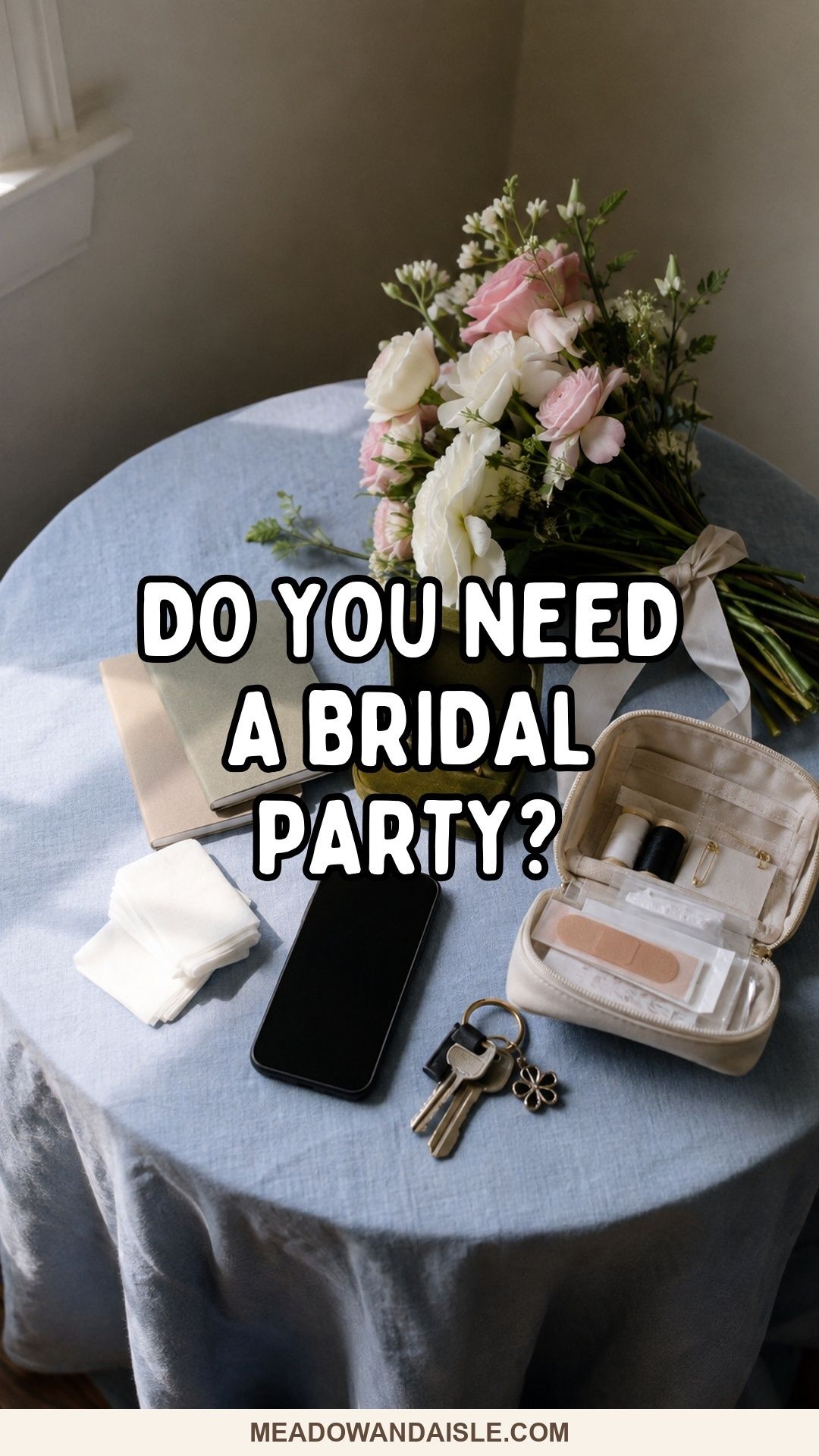
Recommended Wedding Products


You Might Also Like These Blog Posts
- Brown Bridal Party Wedding Ideas for a Warmly Polished Crew.
- How To Have No Wedding Party And Still Feel Fully Supported
- Do You Need A Wedding Planner For A Small Wedding Or Just Better Help
- Wedding Party Mistakes That Turn Support Into Stress
- Uneven Wedding Party Advice For Choosing People Over Perfect Symmetry
- Things Brides Forget On Wedding Day When The Morning Gets Real
Do You Need A Bridal Party
A bridal party is not a legal, ceremonial, or etiquette requirement. You need an officiant where required, witnesses in many locations, and a plan for rings, vows, paperwork, timing, and photos. If the private question is do you need bridesmaids and groomsmen standing with you, the answer is no.
The better question is whether attendants serve the wedding you are planning. For some couples, a bridal party brings comfort, shared memory, extra hands, and the joy of honoring lifelong people. For others, a no bridal party wedding feels calmer because there are fewer outfits, costs, opinions, and friendship politics orbiting the day.
A Bridal Party Is Optional, Not A Wedding Requirement
If you are asking, “is a bridal party necessary,” the simplest answer is no. Wedding attendant etiquette has softened because couples now host city-hall ceremonies, restaurant receptions, backyard dinners, destination weekends, private vows, and celebrations that do not follow one fixed script.
Skipping attendants does not make the day less formal. A black-tie wedding without attendants is still black-tie. An intimate wedding no bridesmaids plan is still a full wedding. The absence of a wedding party does not erase love, honor, or celebration.
Name The Real Wedding-Day Care You Need
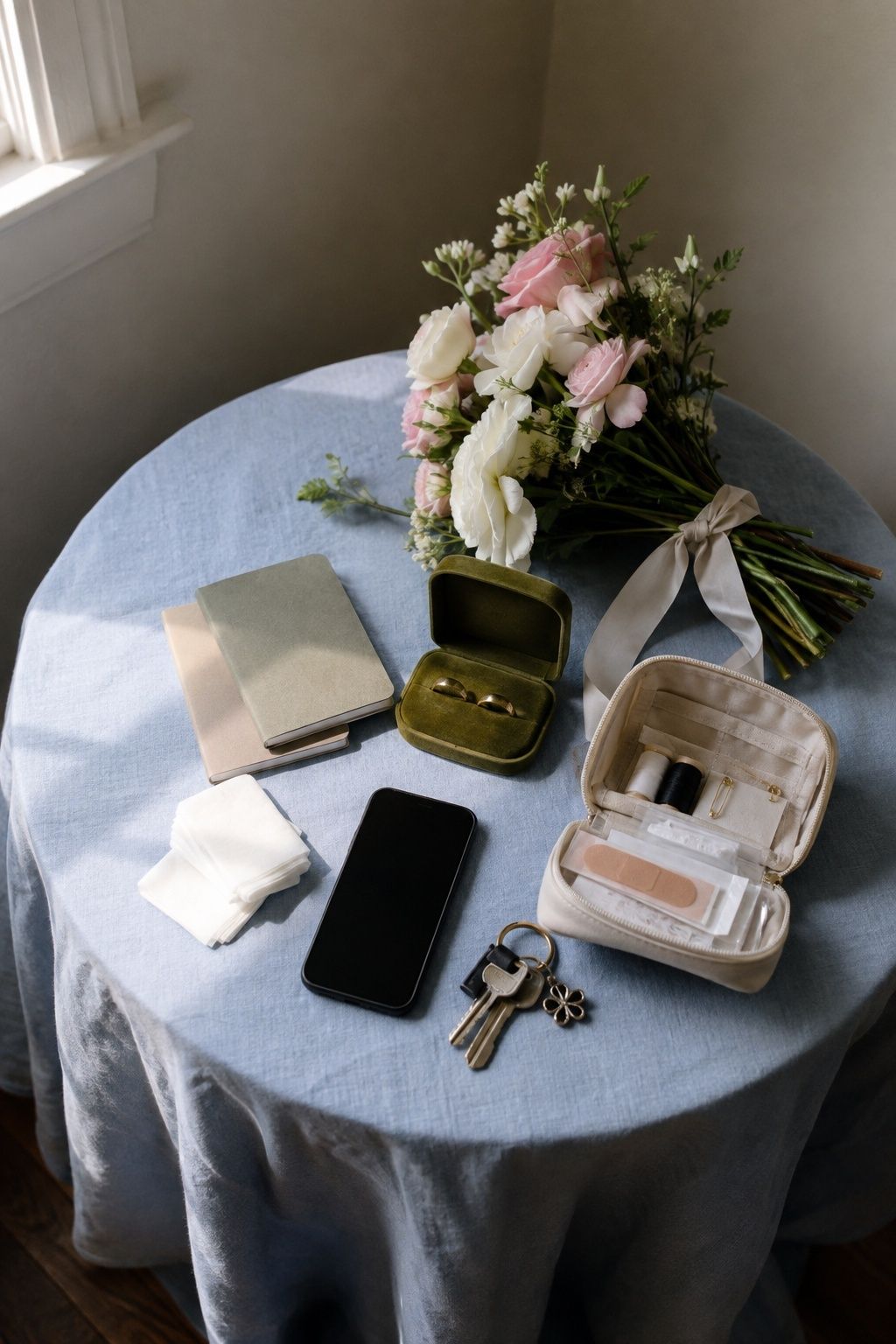
Before choosing people, list the practical care your wedding day requires. Someone should know where the rings are. Someone should hold vows, tissues, phones, keys, or an emergency kit. Someone should gather family for photos, cue grandparents for the aisle, bustle a dress, or keep the morning steady.
Those duties matter more than titles. If your closest people are organized and emotionally easy, a bridal party often feels lovely. If the title would pull everyone into expectation, expense, or old pressure, bridal party alternatives often serve the day with less strain.
Skip The Bridal Party When It Creates More Stress Than Care
Wedding party pros and cons become clearest when you imagine the months before the wedding, not only the aisle photo. Attendants often bring emotional closeness, errand coverage, getting-ready energy, and someone to text when plans feel heavy. They also bring attire coordination, group chats, party expectations, gifts, beauty decisions, and possible hurt feelings.
If the list of people feels impossible, uneven, expensive, or politically loaded, that is information worth taking seriously. Choosing a wedding without a bridal party is a refusal to turn friendship into a public sorting system when another form of care would feel kinder.
Match The Party Size To Your Guest Count
A small wedding bridal party should feel proportional to the room. Ten attendants at a thirty-person wedding changes the whole ceremony. Half the guests are suddenly part of the processional, and the reception begins to feel arranged around the wedding party rather than the couple.
For a guest count under fifty, one or two attendants each, a maid of honor only wedding, or no attendants at all often feels natural. For a larger wedding, a formal group often aids movement, photos, hospitality, and momentum.
Count The Cost For You And For Your Attendants
A bridal party costs money even when everyone tries to keep it simple. Couples often pay for bouquets, boutonnieres, gifts, transportation, beauty timing, rehearsal dinner seats, and sometimes attire contributions. Attendants face their own costs: outfits, alterations, travel, lodging, pre-wedding events, gifts, childcare, and time away from work.
If the people you would ask are already stretched, consider whether the honor comes with pressure they would never admit. A no bridal party wedding lets close friends arrive as beloved guests rather than people carrying a private invoice.
Separate Formal Roles From Quiet Care
If you are wondering do you have to have bridesmaids to receive care, the answer is still no. Formal roles are public: standing at the altar, wearing coordinated clothing, appearing in the processional, joining photos, and attending pre-wedding events. Quiet care is more flexible: one friend zips your dress, another keeps your phone, a sibling holds rings, and a cousin gathers people for portraits.
This distinction matters for non-traditional weddings, where the ceremony often centers personal meaning instead of inherited roles. You keep the tenderness and release the parts that feel performative.
Uneven Sides Are Fine If The People Are Right
If one partner has five obvious attendants and the other has one, do not let symmetry make the decision for you. Uneven sides are common. People notice warmth, not arithmetic. This uneven wedding party advice covers how to handle it gracefully.
Attendants walk alone, in mixed groups, or skip the processional entirely. They sit after they walk in instead of standing for the ceremony. If uneven numbers are the only issue, solve the movement rather than cutting people you genuinely want with you.
A Maid Of Honor And Best Man Only Works Beautifully
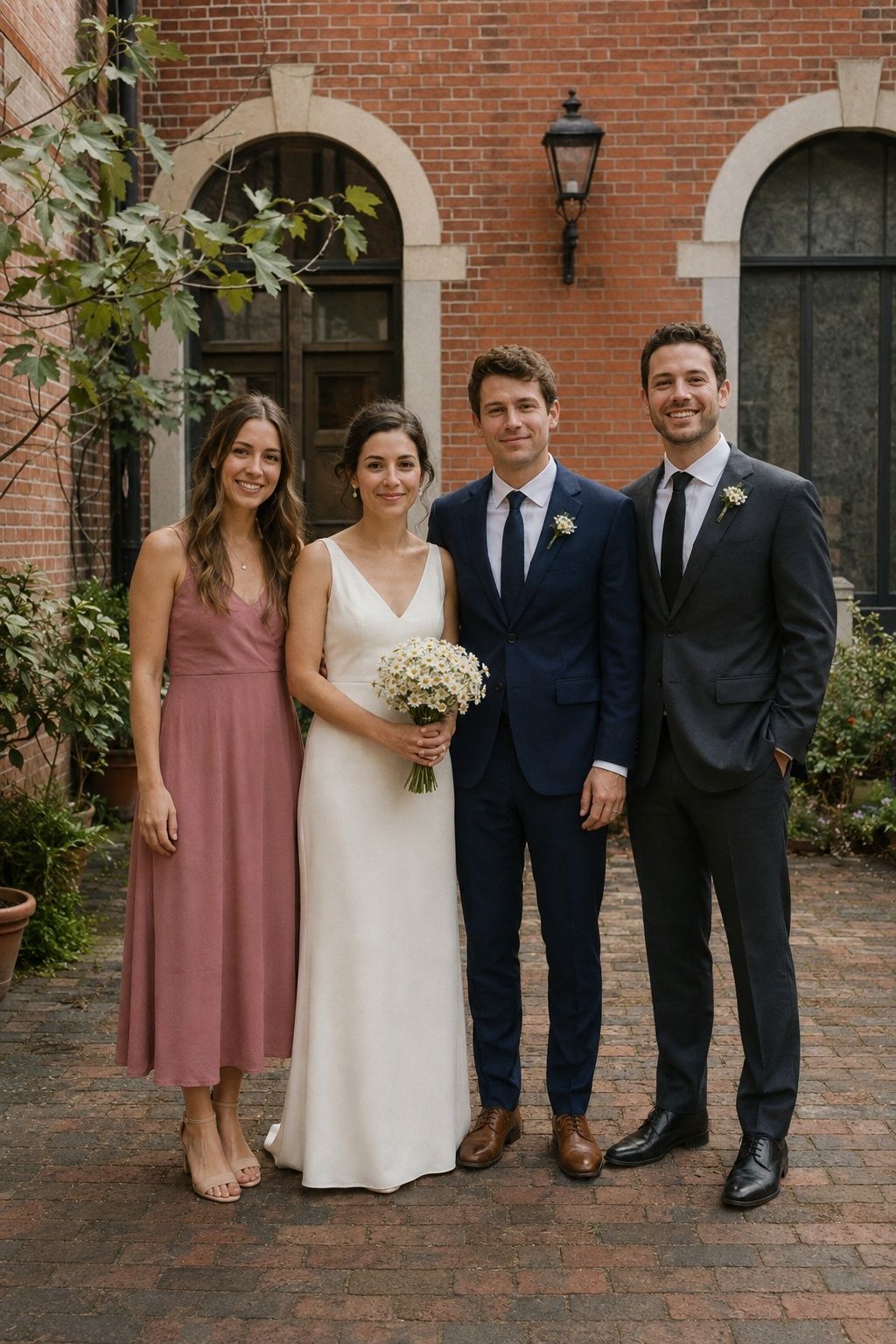
A maid of honor only wedding, or a plan with only a maid of honor and best man, is a graceful middle ground. It gives each partner one anchor person without creating a full group to dress, coordinate, photograph, and manage.
This works well when each of you has one person who feels unmistakable: a sibling, lifelong friend, parent, adult child, or chosen-family person. Their role should be clear and contained: stand with you, sign as witnesses if allowed, hold rings, give a toast, or sit in honored seats.
Choose Witnesses With Care If Your Location Requires Them
Witnesses are different from bridesmaids and groomsmen. They sign the marriage license where required, and that legal duty does not need to match the public ceremony structure. A parent, sibling, friend, grandparent, or honor attendant often serves as a witness.
If you are having a wedding without a bridal party, choose witnesses early and tell them exactly what to expect. Confirm identification, arrival time, and whether signing happens before the ceremony, immediately afterward, or at the reception.
Assign Rings, Bouquets, Phones, And Emergency Items
The strongest bridal party alternatives are practical. Name the person carrying the rings. Decide who takes your bouquet during vows, who keeps phones and keys, who has the emergency kit, who brings water, who carries vow books, and who knows where the marriage license is.
Put these duties in the timeline so no one has to improvise in formalwear. Without attendants, the work should be smaller and clearer: one responsibility per person whenever possible, with a coordinator, planner, or organized friend holding the master version.
Invite Close Friends Into The Morning Without Giving Titles
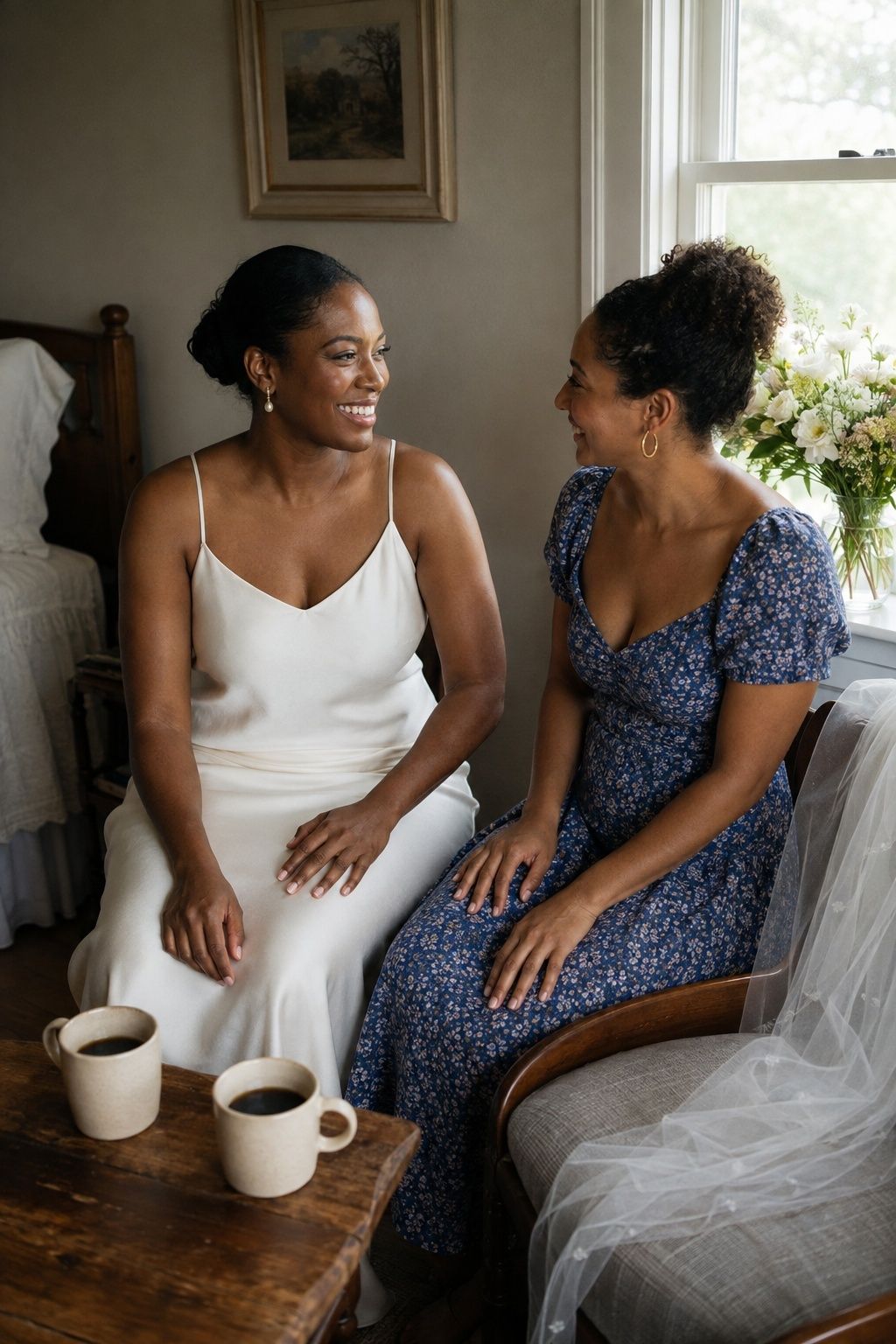
Close friends do not need a title to share the tenderness of the morning. Invite them for coffee, music, a first look, a toast, or a quiet ten minutes before you leave for the ceremony. Keep the invitation honest: you are not asking for attendant duties; you simply want them in the room.
This is one of the easiest ways to honor friendships in an intimate wedding no bridesmaids plan. It keeps the closeness without adding outfit rules, financial obligations, or the quiet hierarchy of who stands where.
Use Readings, Toasts, And Reserved Seats As Honors
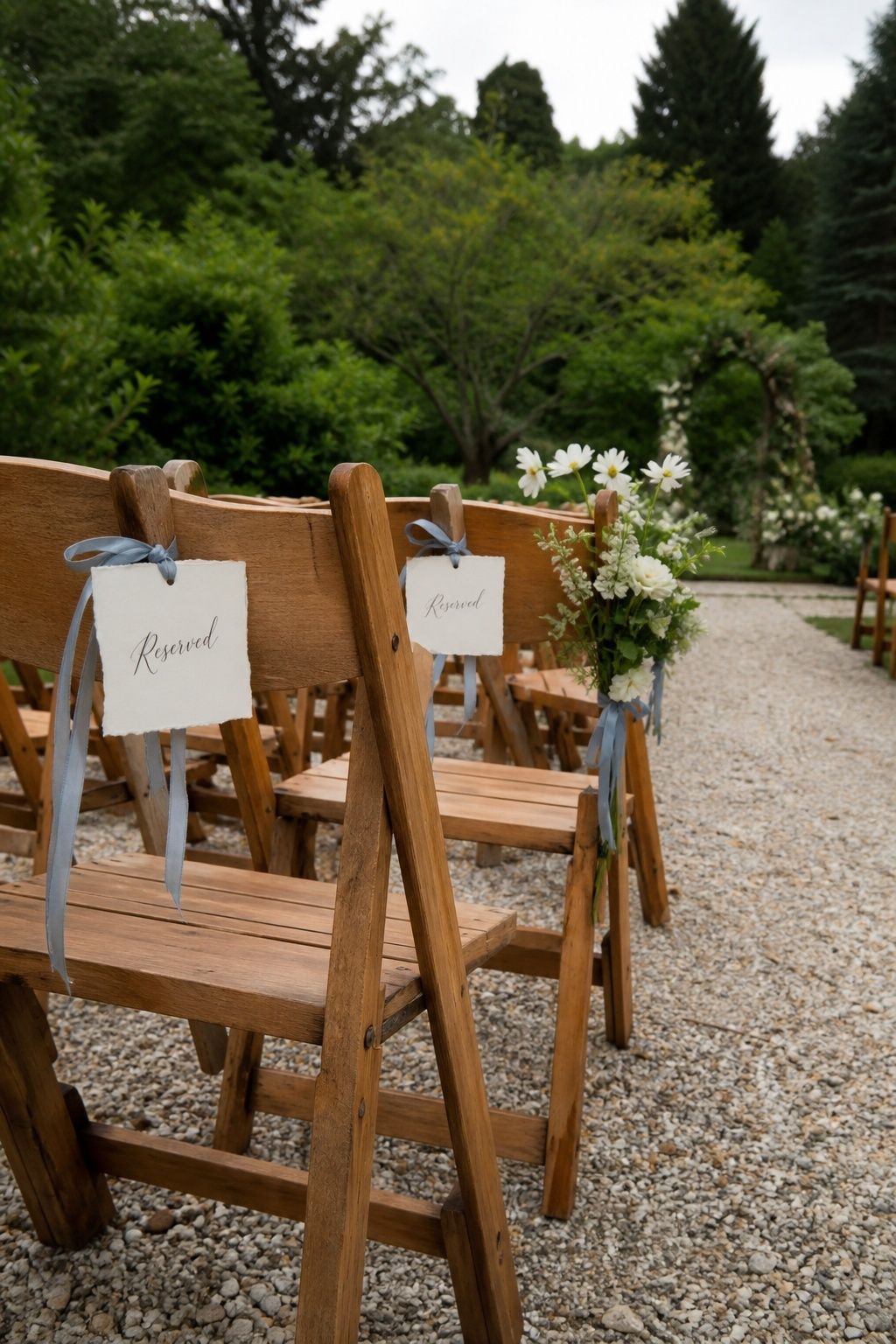
If you skip attendants, honor important people through moments that fit the wedding. A friend reads during the ceremony. A sibling gives a short toast. Parents or chosen-family guests have reserved aisle seats. A group of close friends joins one relaxed portrait after family photos.
These honors often feel more personal than matching attire. They also suit couples weighing which wedding traditions to skip, because each role has a reason.
Tell Friends Early And Kindly
Friends usually receive the decision better when they hear it early and directly. Try language that is warm but firm: “We are keeping the ceremony very simple and are not having a wedding party, but you are deeply important to us and we would love to have you with us that morning.”
If someone expected to be asked, acknowledge the relationship before defending the logistics. Make sure the person hears, clearly and generously, that the absence of a title is not the absence of love.
Avoid Overexplaining The Decision
Overexplaining invites negotiation. You do not owe every friend a full accounting of guest count, budget, or family dynamics. Give the real reason in one calm sentence and then move toward the way you hope to include them.
This boundary matters when a couple is trying to plan a wedding without pleasing everyone. The bridal party decision is one of the first places you practice being kind without surrendering the wedding to other people’s expectations.
When A Bridal Party Adds Real Ease
A bridal party adds ease when the people are emotionally steady, the expectations are affordable, and the roles match the wedding. It makes sense when you want a shared getting-ready room, ceremony presence, detail coverage, and a public way to honor the people who have carried you into this season.
It also makes sense when the wedding has many moving parts: a large venue, a long photo list, multiple family groupings, or a reception where speeches, entrances, and timeline cues need a few trusted people. In that case, attendants are not decoration. They are a visible circle of care.
When No Bridal Party Works Better
No bridal party works better when the wedding is small, the friendships are many and layered, the budget is tight, or the couple wants the ceremony to feel quiet and uncluttered. It works especially well for restaurant weddings, private ceremonies, destination elopement-style weekends, family-only gatherings, and intimate small wedding ideas built around closeness rather than processional formality.
If you choose this route, do not leave care to chance. Build a tiny wedding-day map: witnesses, rings, vows, bouquet, emergency kit, family photos, toasts, transportation, and getting-ready access. A no bridal party wedding should still feel held.
FAQ
Do You Need A Bridal Party For A Wedding?
No, you do not need a bridal party for a wedding. A bridal party is a tradition, not a requirement. You still need to handle legal witnesses where required, ceremony logistics, rings, vows, photos, and getting-ready care, but those duties do not require bridesmaids or groomsmen.
Is It Rude To Not Have Bridesmaids Or Groomsmen?
It is not rude to skip bridesmaids or groomsmen. It becomes rude only if you communicate carelessly, spring the news after implying someone would be included, or ask friends to do full attendant labor without acknowledgment. Be early, kind, and clear.
What Are The Pros And Cons Of Having A Bridal Party?
The pros are emotional steadiness, practical coverage, shared memories, easier photo organization, and a public way to honor close people. The cons are added cost, outfit coordination, group schedules, pre-wedding expectations, uneven friendship pressure, and possible conflict if the list feels political.
Who Helps You If You Do Not Have A Bridal Party?
A planner, coordinator, officiant, family member, sibling, close friend, or venue contact handles the necessary duties, depending on the moment. Assign rings, license, emergency kit, phone, bouquet, photo gathering, reserved seats, and any toasts or readings before the wedding.
Can You Have Only A Maid Of Honor And Best Man?
Yes. Having only a maid of honor and best man is a strong option when each partner has one obvious anchor person and a full group would feel too large, expensive, or complicated for the wedding you are planning.
How Do You Tell Friends You Are Not Having A Bridal Party?
Tell them early and warmly. Say that you are keeping the ceremony simple and are not having a wedding party, then affirm the relationship and offer another meaningful way to be involved if that feels right, such as joining the morning, giving a toast, or taking a photo together.
Final Thoughts
If you are still asking do you need a bridal party, return to the purpose of the role. Attendants should make the day feel calmer, not more crowded with obligation. Choose the people and titles that bring ease, or skip the titles and create care another way.
The loveliest answer lets you feel steady at the ceremony and generous with people you love. A wedding without a bridal party still has room for witnesses, rings, readings, reserved seats, morning hugs, and friends who show up with their whole hearts. The wedding is complete that way.
Last update on 2026-10-05 / Affiliate links / Images from Amazon Product Advertising API