

May wedding flowers are at their peak: peonies, lilac, sweet peas, lily of the valley, ranunculus, garden roses, iris, tulips and flowering branches are all likely in season. Pick one star flower (usually peonies), back it up with garden roses or ranunculus, and keep the strongly scented stems in the bouquet and at the entrance rather than on dinner tables.
If you have a May date, you’ve got the best flower month of the year. That’s my opinion, and I’ll stand by it. Peonies, lilac and lily of the valley all have short seasons, and May is when they overlap. You can do more with fewer stems than at any other time.
The risk in May is the opposite of scarcity. There’s so much to choose from that the order turns into a spring sampler with fifteen varieties and no point of view. A small wedding looks better with one or two star flowers repeated, a few supporting stems and some branches or foliage to give it shape.
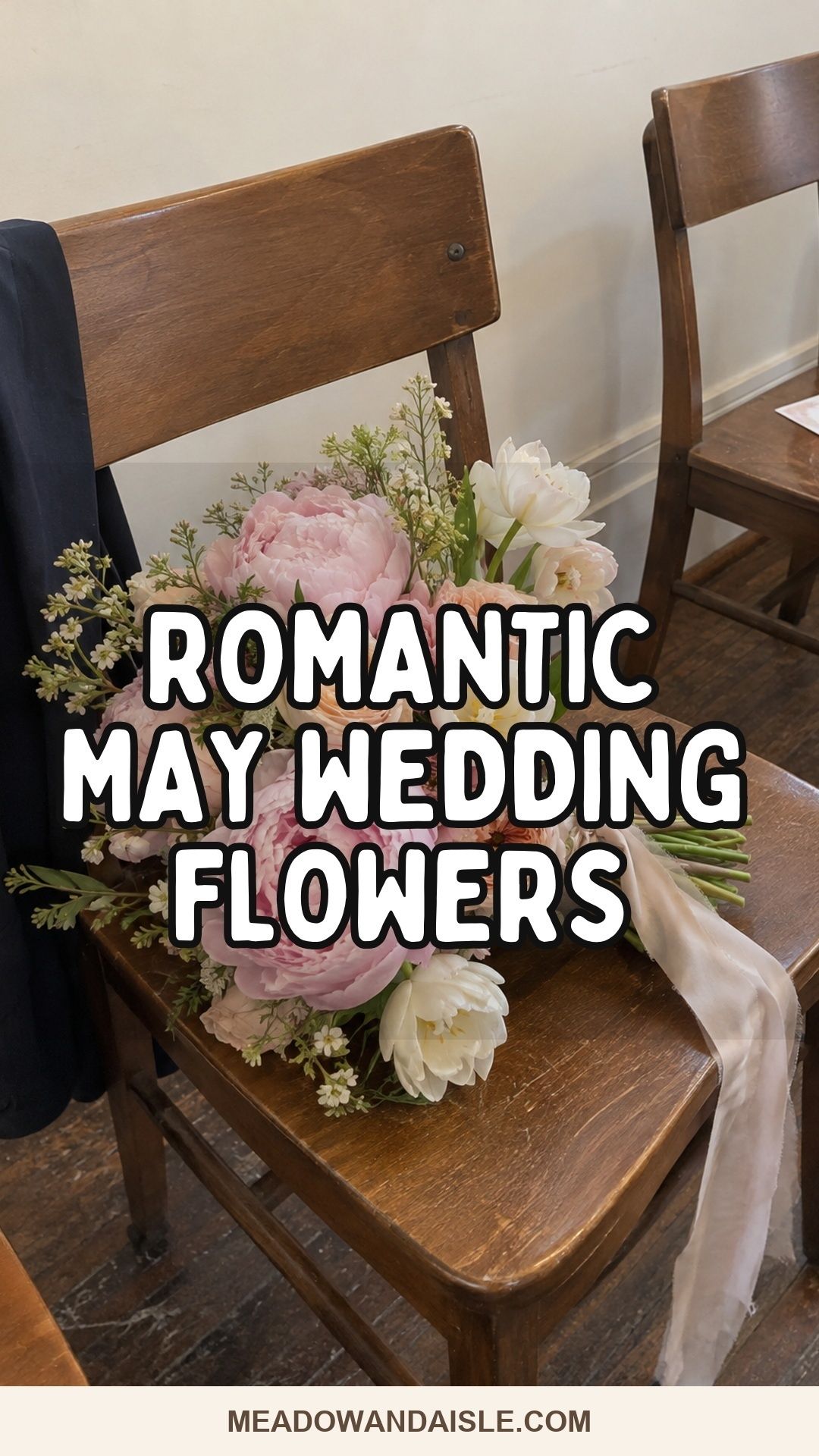
Before you buy a single stem
A few supplies help you test arrangements at home and keep flowers fresh on the day: bud vases, floral snips, ribbon and a way to keep stems cool.


Which May wedding flowers should be the star?
Peonies are the obvious star for May, and for good reason: May is when they’re most reliable in many regions. If peonies don’t suit your date or budget, garden roses or ranunculus can lead instead.
Peonies, with a written backup

Full petals, soft scent and a very short season. That’s what makes peonies feel special and what makes them risky. A cold snap delays them, a warm week finishes them early, and late May dates in warmer areas can miss them entirely.
Ask your florist which varieties are realistic for your exact week, then agree on a backup flower in writing. Let peonies lead the bouquet, repeat them once at the ceremony and use supporting blooms on the tables. That keeps the cost manageable.
Garden roses, the reliable stand-in
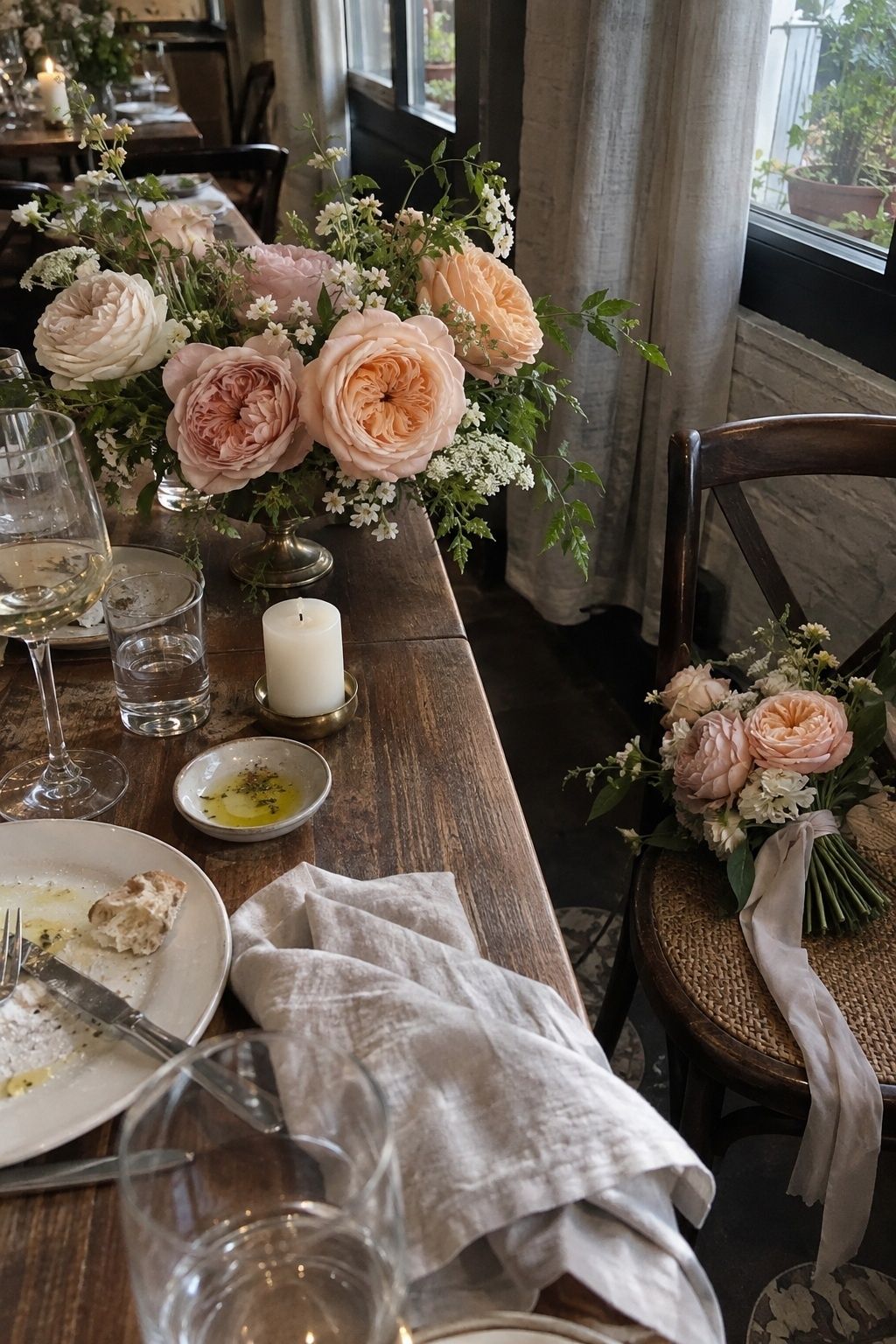
Garden roses give you most of the peony look with a longer season and wider color range. In some weddings they replace peonies so closely that guests can’t tell. They also repeat well: bouquet, low centerpieces and the cake.
Ranunculus for layered petals
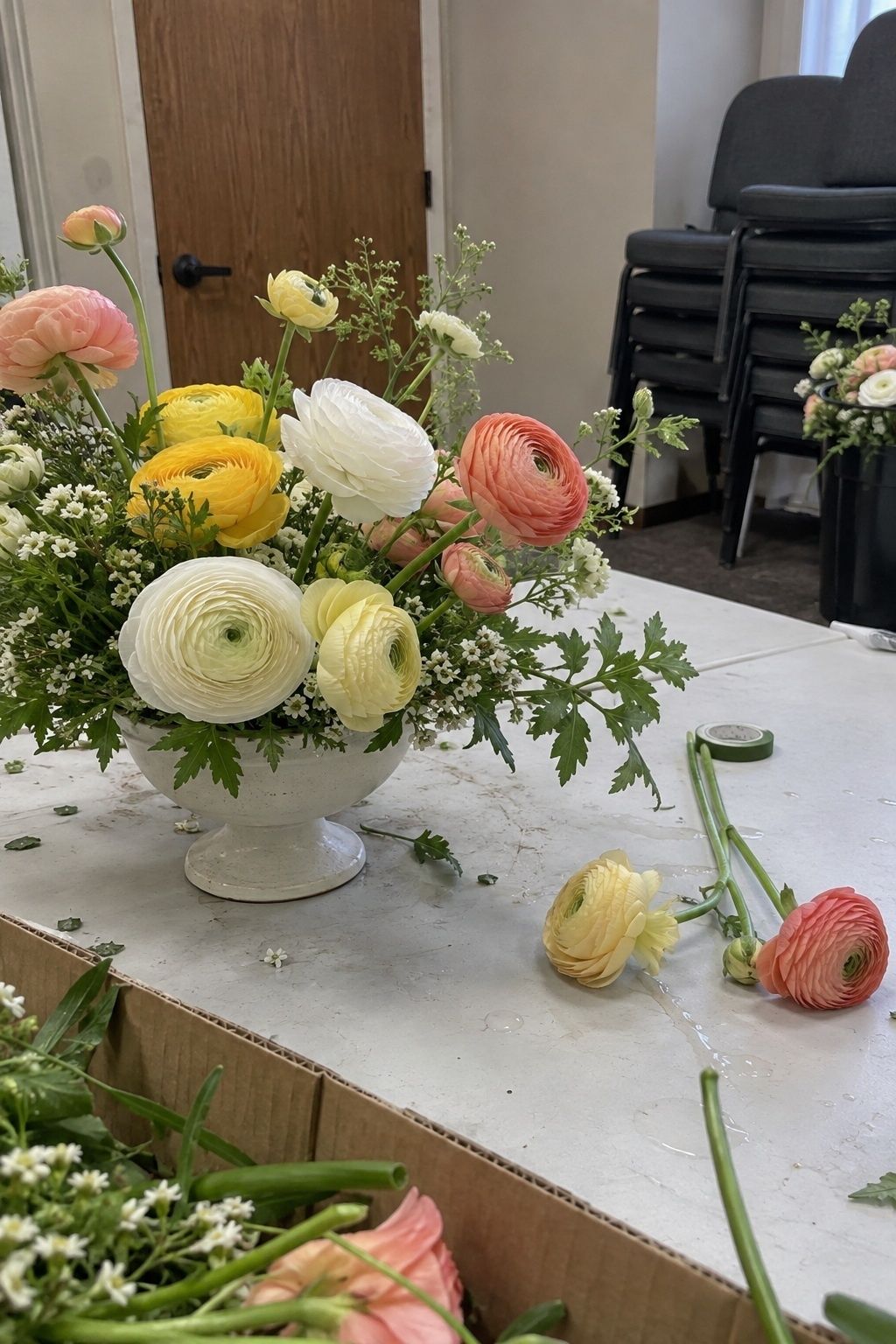
Ranunculus has papery, tightly layered petals and comes in cream, blush, butter yellow, coral, plum and soft orange. It’s smaller than a peony, so it breaks up a bouquet of big round flowers while still looking romantic.
Lisianthus to fill the gaps
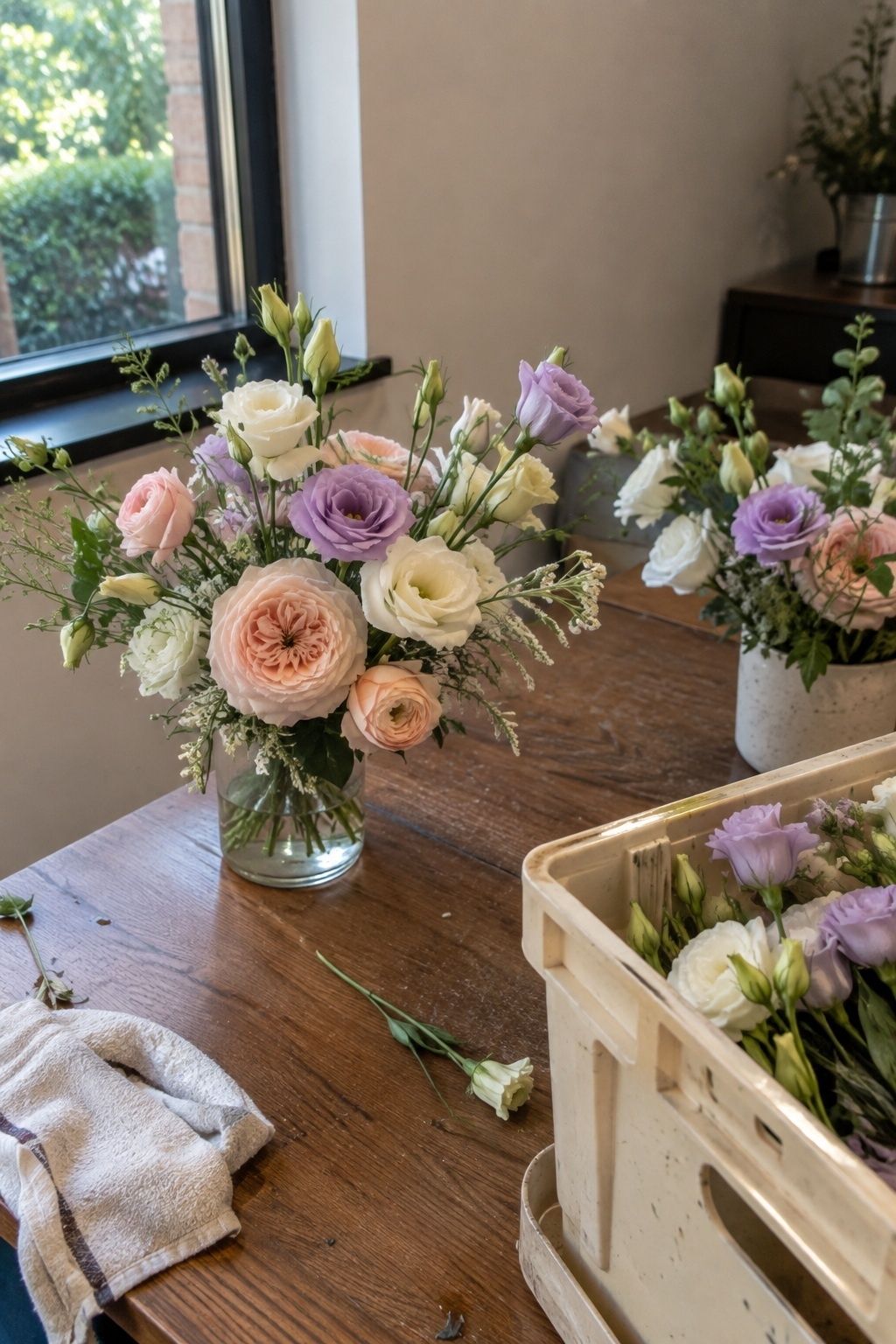
Lisianthus isn’t the flower anyone falls in love with first, but it’s the one that keeps the design together. It looks rose-like, blends with almost anything and makes substitutions less obvious if a fragile flower doesn’t arrive.
| If you want | Lead with | Backup | Support |
|---|---|---|---|
| Big, lush romance | Peonies | Garden roses | Lisianthus, foliage |
| Layered and refined | Ranunculus | Garden roses | Sweet peas, clematis |
| Classic and small | Lily of the valley | Sweet peas | Ranunculus |
| Garden and loose | Lilac | Larkspur | Tulips, branches |
Fragrant May flowers and where to put them
Sweet peas, lilac, lily of the valley and garden roses are the most fragrant May wedding flowers. Put them where people lean in, like the bouquet, boutonnieres and the entrance, and keep dinner tables lighter so scent doesn’t compete with the food.
Sweet peas
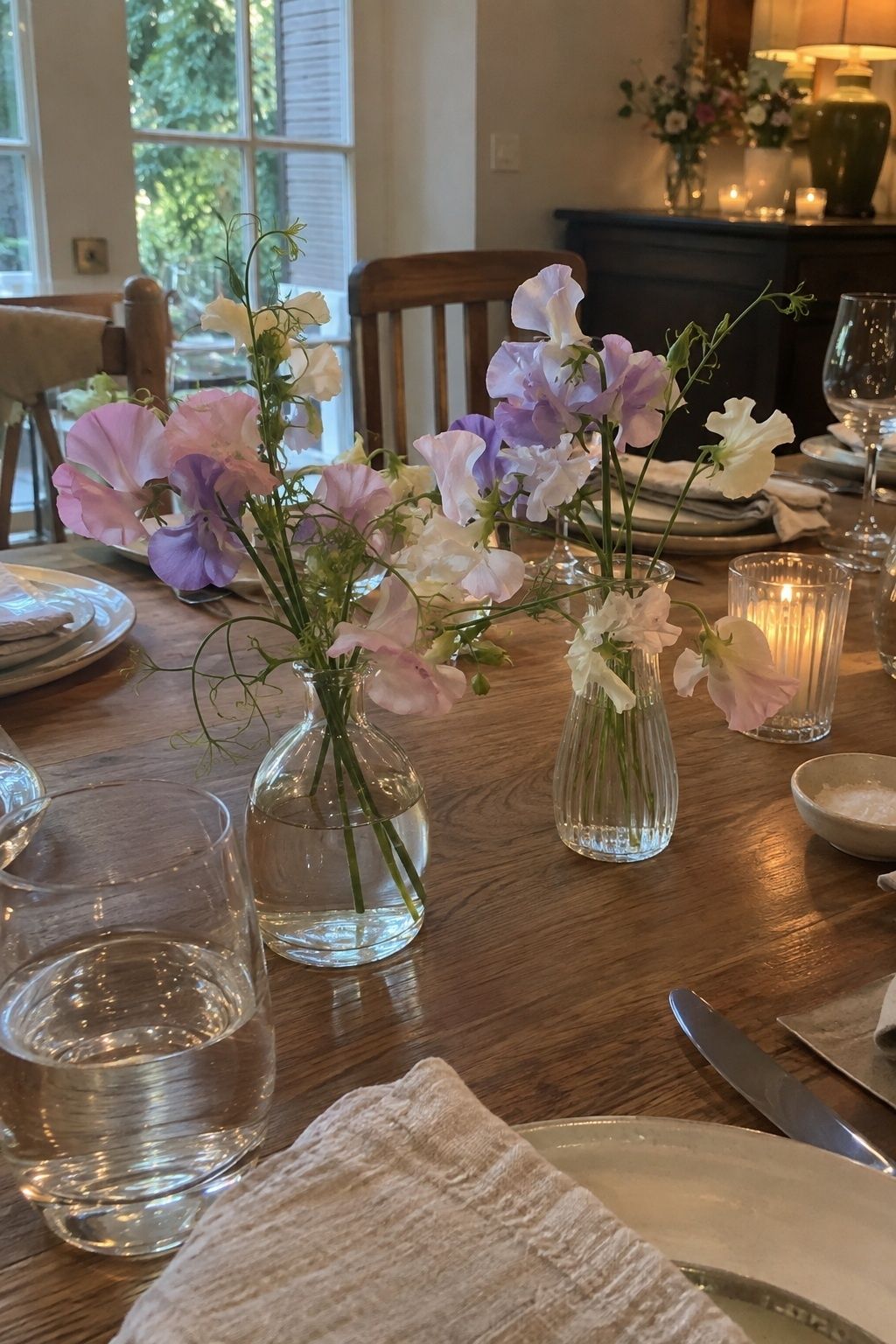
Ruffled petals, curling tendrils and a clear, sweet scent. They’re lovely in bud vases, escort-card flowers and the bouquet, where someone can actually smell them. Small doses also help if you’re keeping an eye on what wedding flowers cost.
Lily of the valley
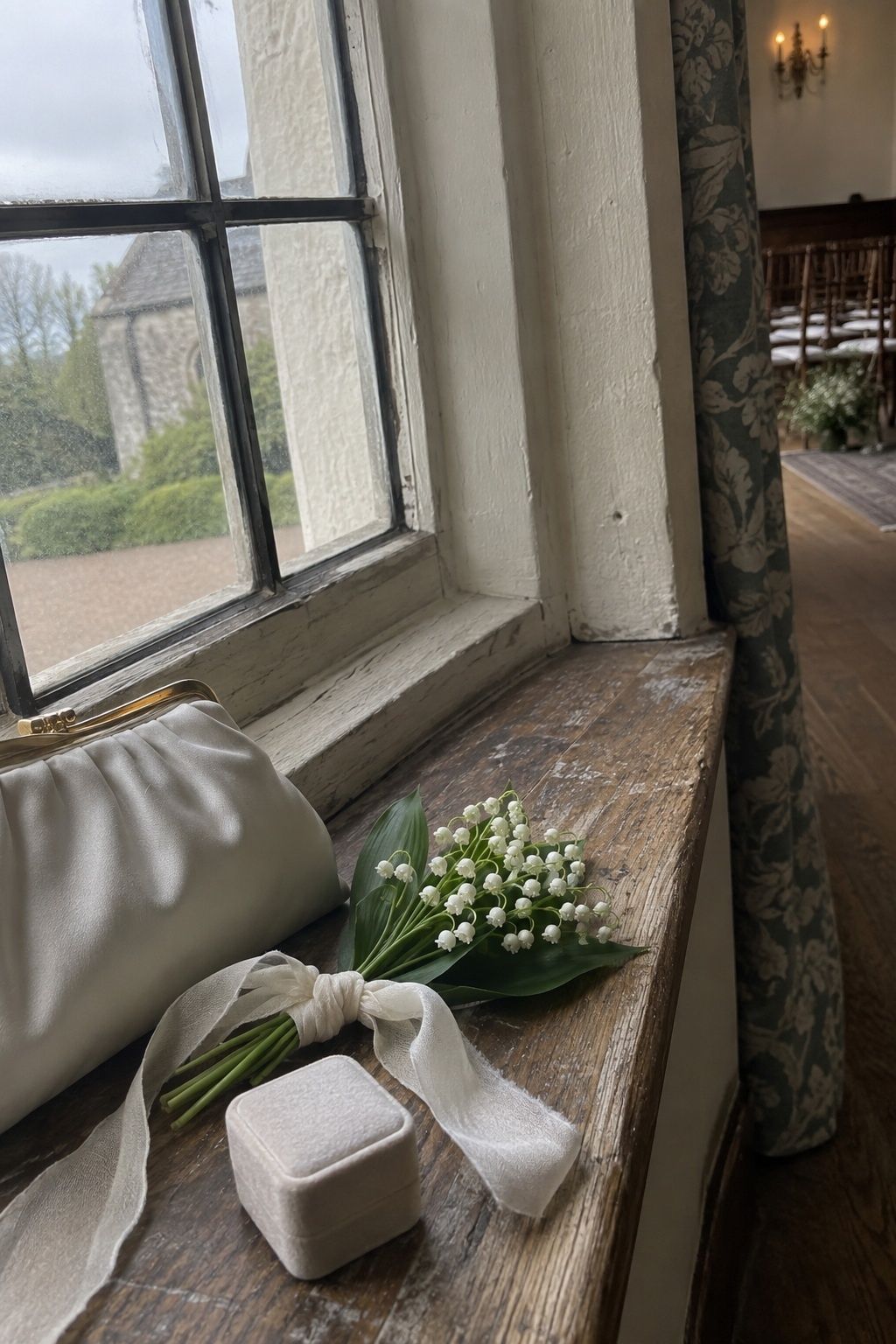
Tiny, bell-shaped and expensive by the stem, so treat it as a detail. A small cluster in the bouquet, a boutonniere or a stem tied around a keepsake ribbon is enough. It looks especially good in close-up ring and hand shots.
Lilac
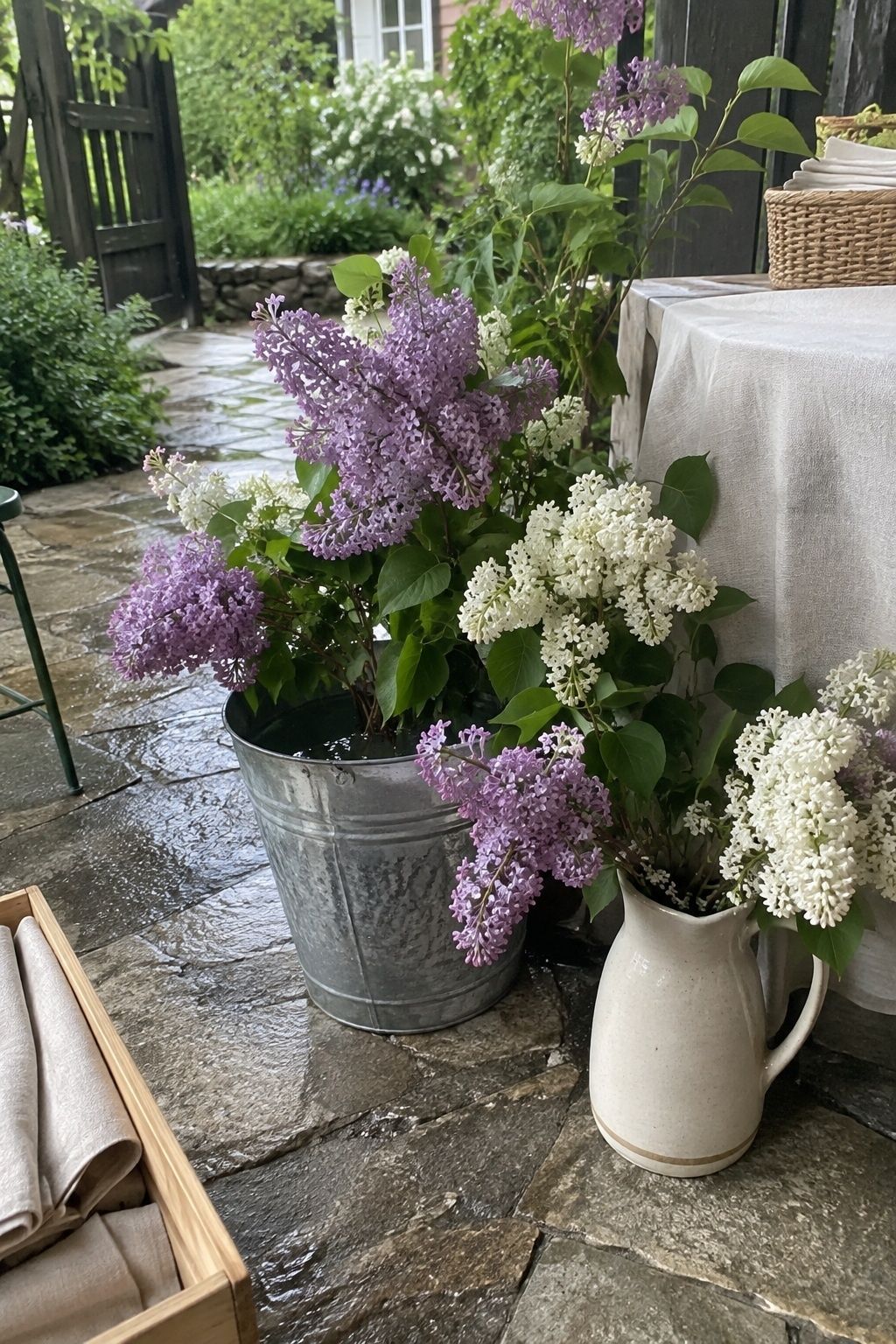
Lilac makes May smell like May. The window is short and the stems drink a lot of water, so use it in ceremony pieces, an entry arrangement or the welcome table where the scent can drift. Sturdier flowers should handle the long dinner hours.
Placing scent in a small room
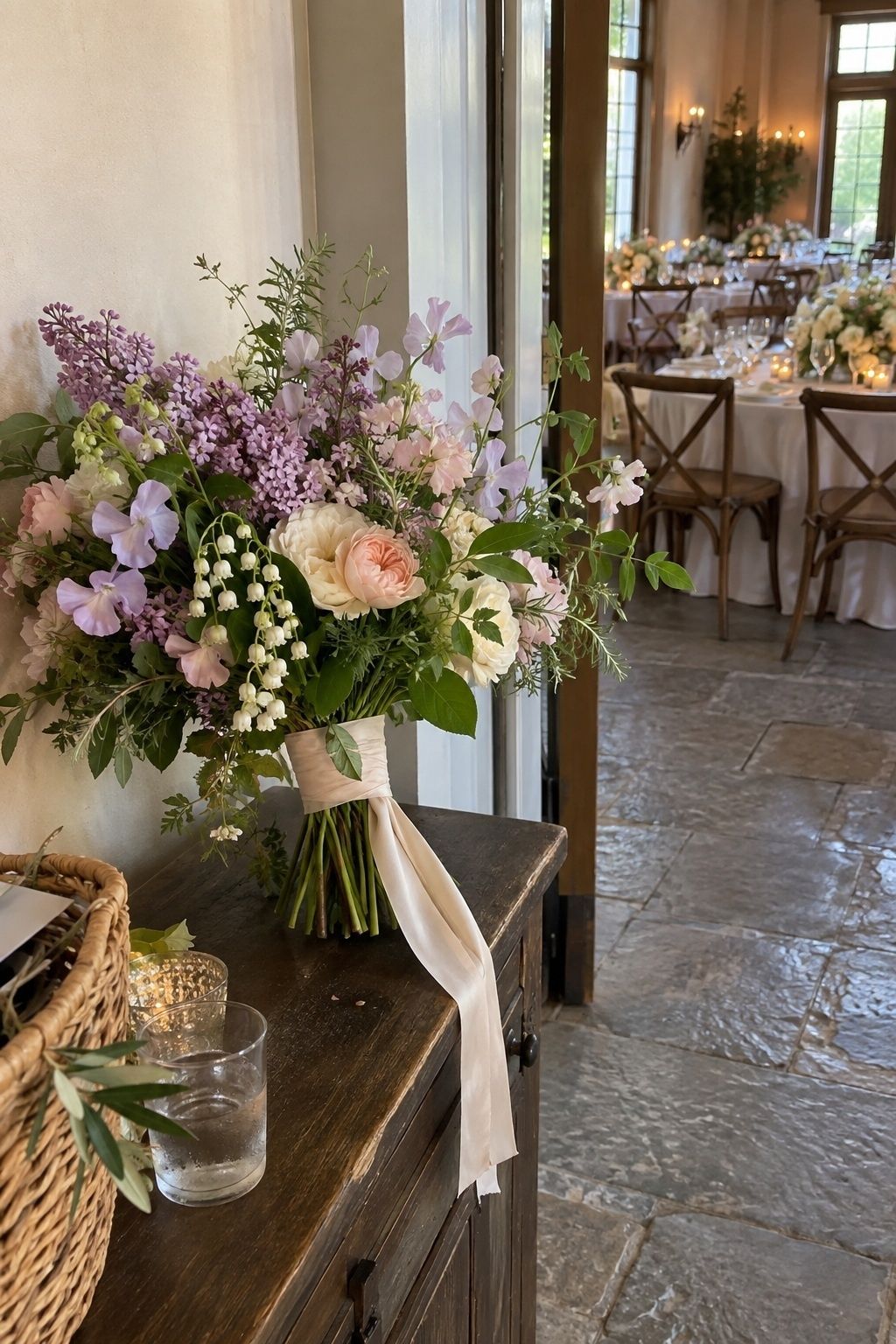
In a dining room for 25, every scent is closer than you’d think. Here’s how I’d place fragrance:
| Placement | Scent level | Good choices |
|---|---|---|
| Bouquet and boutonnieres | Strong | Sweet peas, lily of the valley, garden roses |
| Entrance or welcome table | Strong | Lilac, flowering branches |
| Ceremony | Medium | Garden roses, peonies |
| Dinner tables | Light | Ranunculus, tulips, lisianthus, foliage |
Flowers for height and structure
Delphinium, larkspur, iris and allium give May arrangements shape. Use them at the ceremony and in one or two statement pieces, then keep dinner tables low enough to talk across.
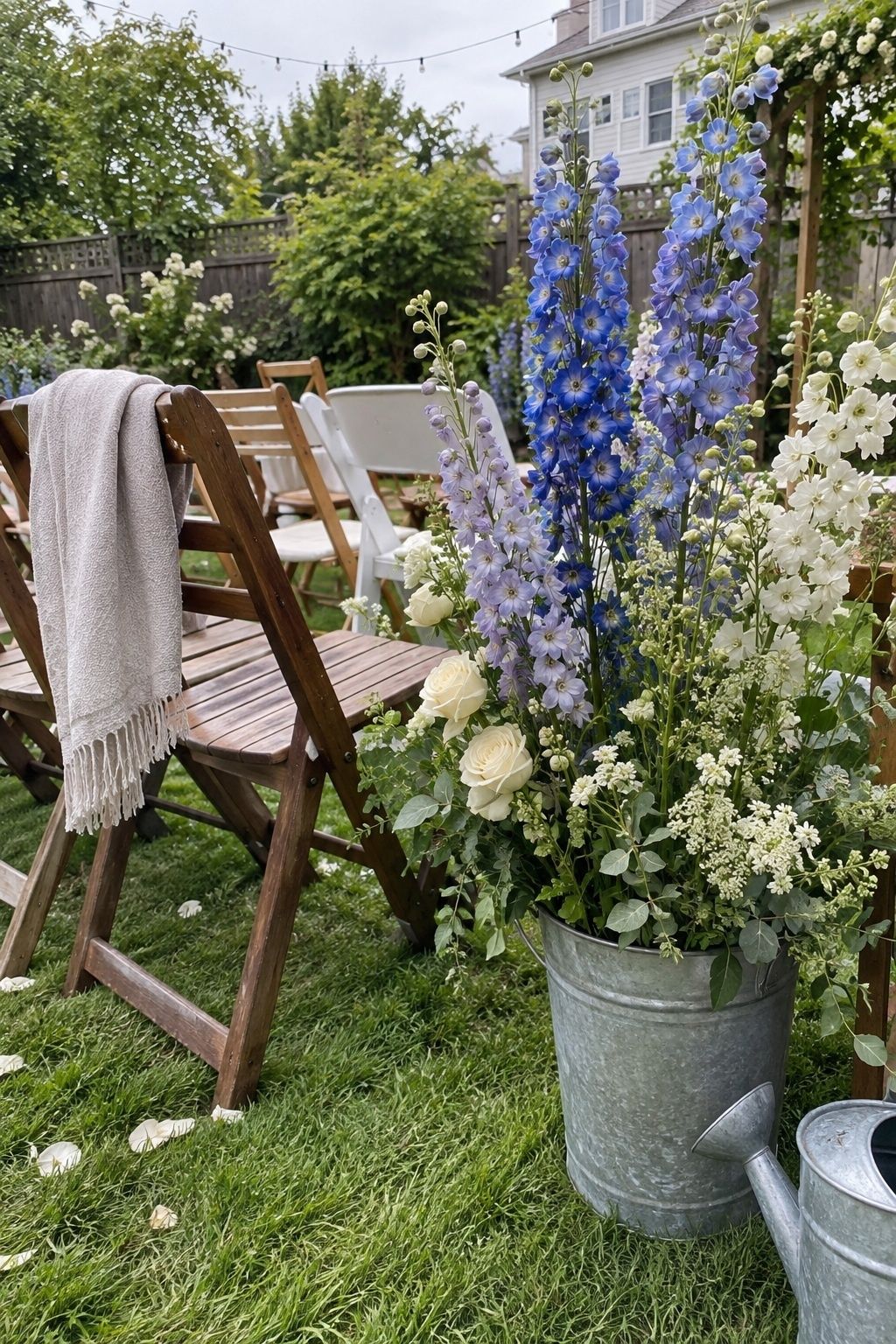
Delphinium brings long stems and blue, lavender or white florets. It’s the easiest way to add a cooler tone to a blush and ivory palette, and one statement urn at the ceremony is often enough.
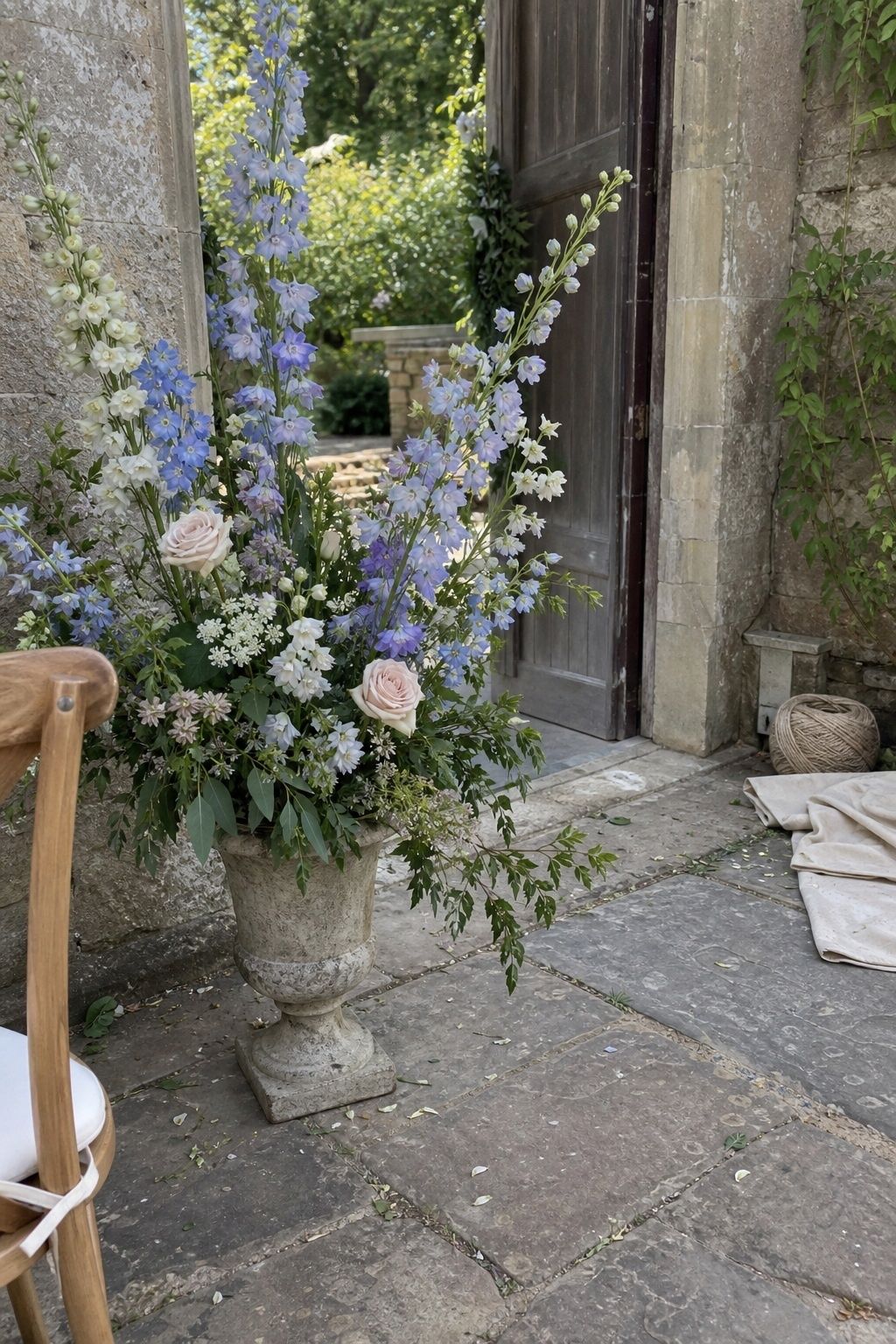
Larkspur is looser and more meadow-like. It works in aisle flowers, bar arrangements and doorways, and it adds a sense of abundance without covering every surface.
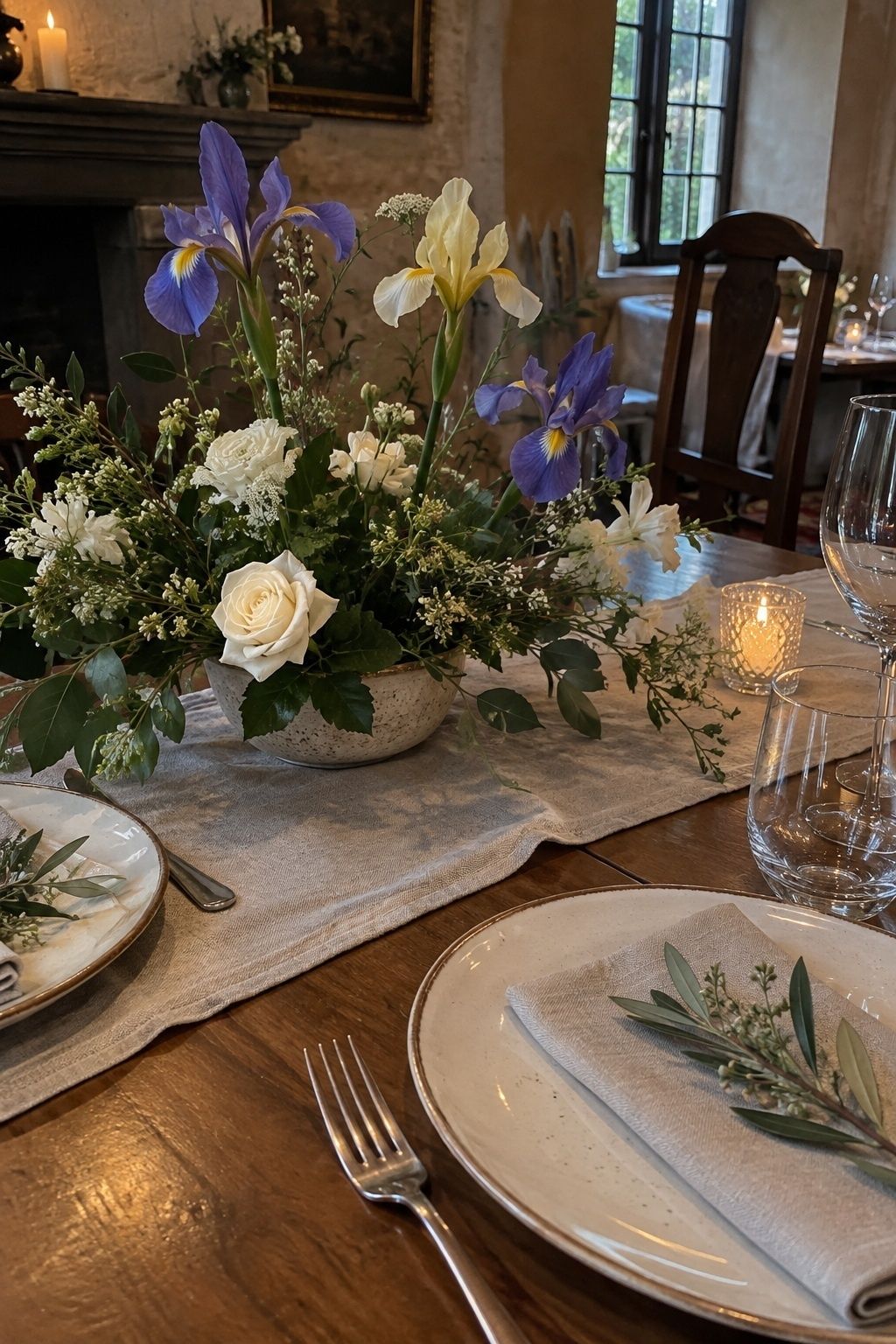
Iris has a painterly look, with line and color in one bloom. Blue, violet, yellow or white iris can become the color note in a low centerpiece, especially in a historic room or a restaurant with some character.
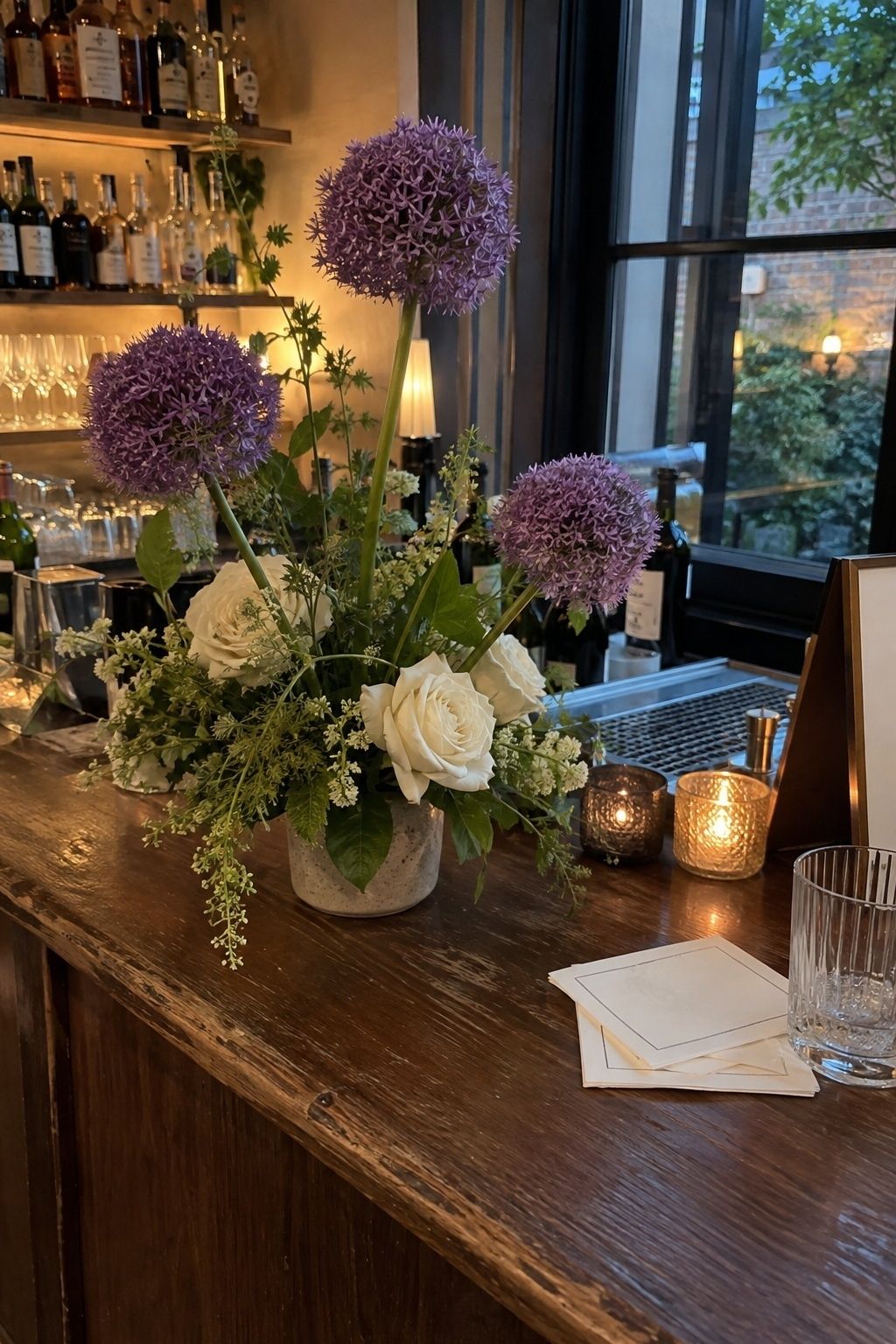
Allium adds round, sculptural heads in purple, white or green. A few stems keep a soft design from getting too sweet, which helps if one of you wants the flowers to look a little less traditionally bridal.
May flowers that add movement
Clematis, tulips and anemones loosen up an arrangement so it looks gathered from a garden. Foliage does the same job at a fraction of the cost.

Clematis has starry faces and trailing stems. One or two in a bouquet make it look less arranged. You need a florist who likes a looser shape for this one.
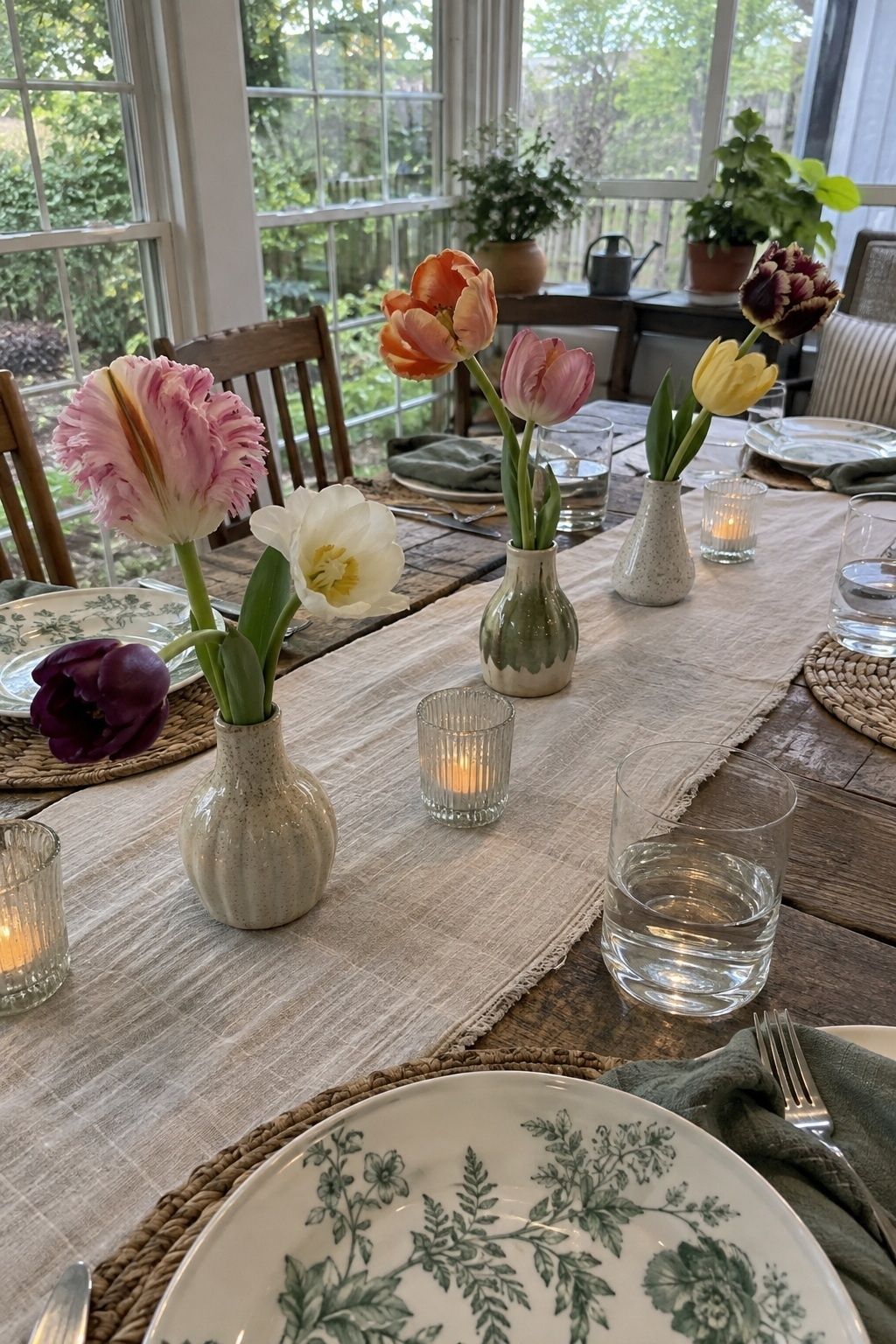
Tulips keep moving after they’re arranged, bending toward light. On a small table that curve is charming; in a tightly controlled design it needs planning. French, parrot and double tulips each give a different mood, and a few in a ceramic bud vase look very May.
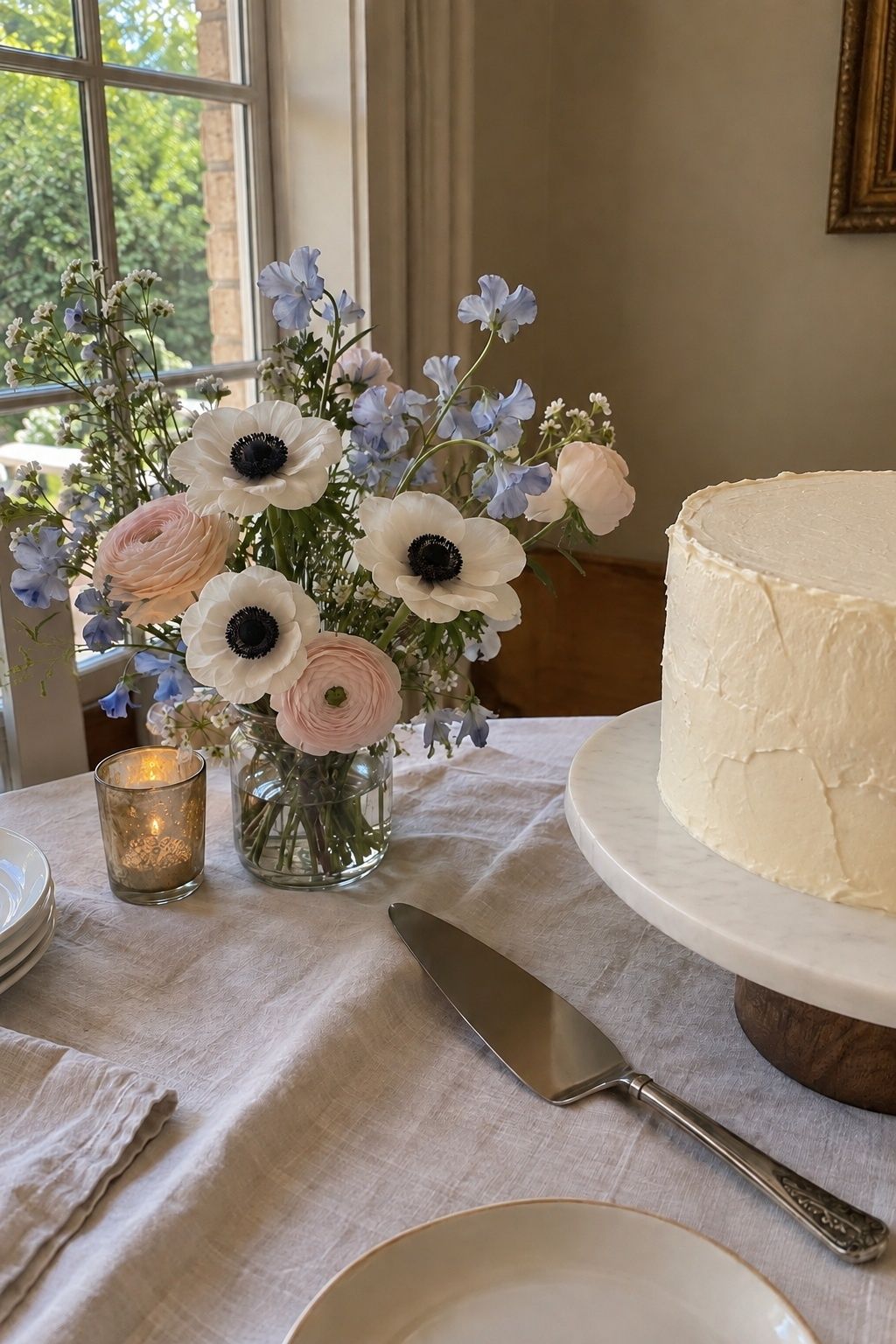
Anemones add contrast with their dark centers. Use them as punctuation: three in a centerpiece sharpen the whole thing, ten take it over.
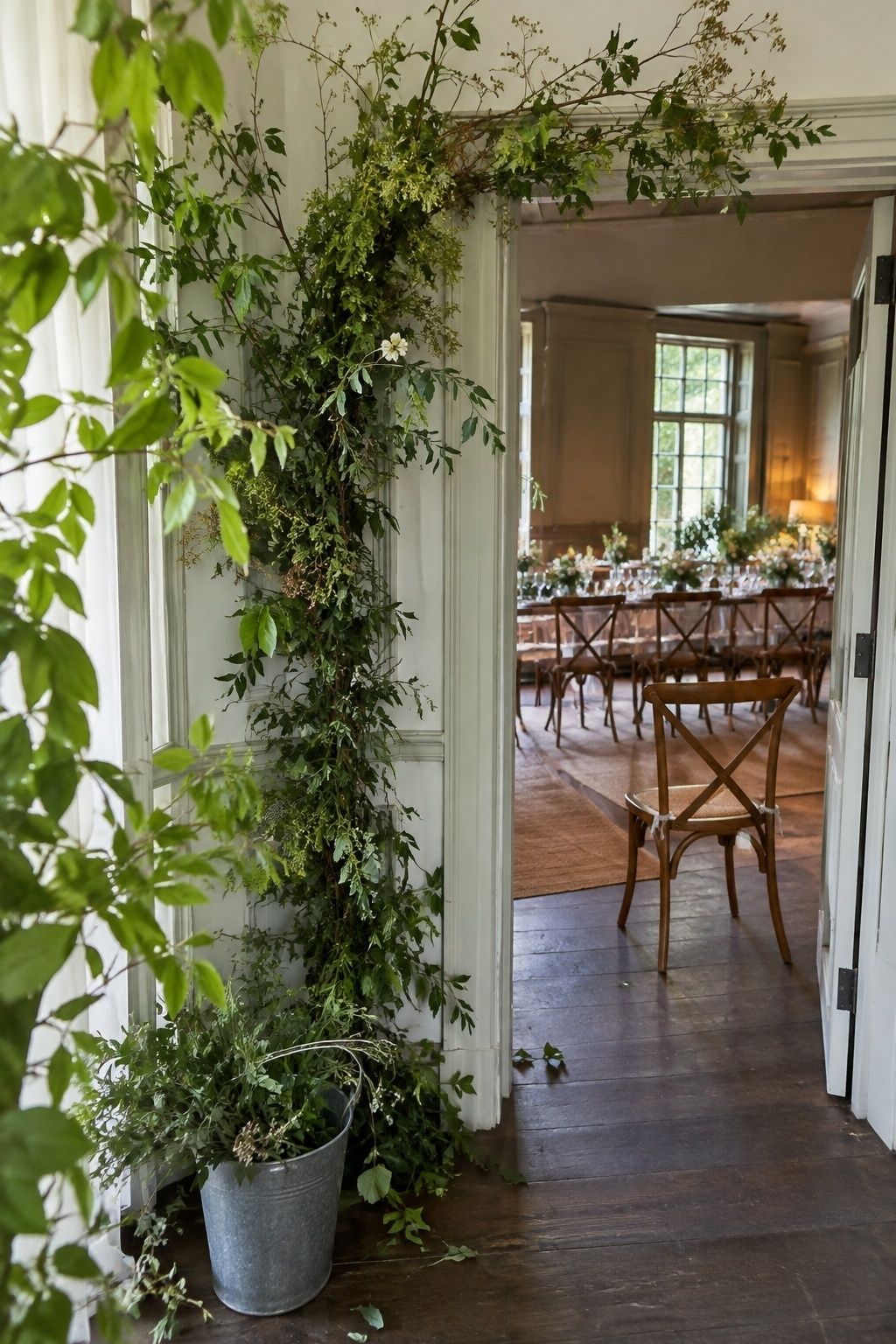
New-growth foliage, herbs and tender vines give May arrangements a living, fresh look. Ask which greens are local and fresh that week. The right green makes pale flowers look less flat, and it costs far less than more blooms.
Getting ceremony impact with fewer stems
Flowering branches are the most efficient way to frame a May ceremony. Two large urns of dogwood, apple, cherry or quince can do the work of a flower wall with a fraction of the stems.

Branches fill vertical space, soften a blank wall and make a backyard ceremony look designed. They also appear in your most important photos, so this is a good place to spend. After the vows, move the urns to the dining room entrance or behind your seats if the move is safe and quick.
How to spend a small May flower budget
Spend on the places guests see up close: the bouquet, the ceremony focal point and the dinner tables. Skip flowers in places nobody lingers.
For context, The Knot’s 2026 Real Weddings Study puts the average florist spend at $2,800 for weddings averaging 117 guests. With 25 to 40 guests, you’re filling three to five tables instead of twelve or more, so the table budget shrinks a lot even if the bouquet and ceremony stay generous.
My priority order for a small May wedding:
- Bouquet and personal flowers, where peak-season blooms matter most.
- One ceremony focal point, ideally branches plus a few star flowers.
- Low dinner arrangements or bud vase clusters.
- One extra spot guests will linger, such as the bar, cake or welcome table.
- Everything else only if money is left over.
Try a small flower bar
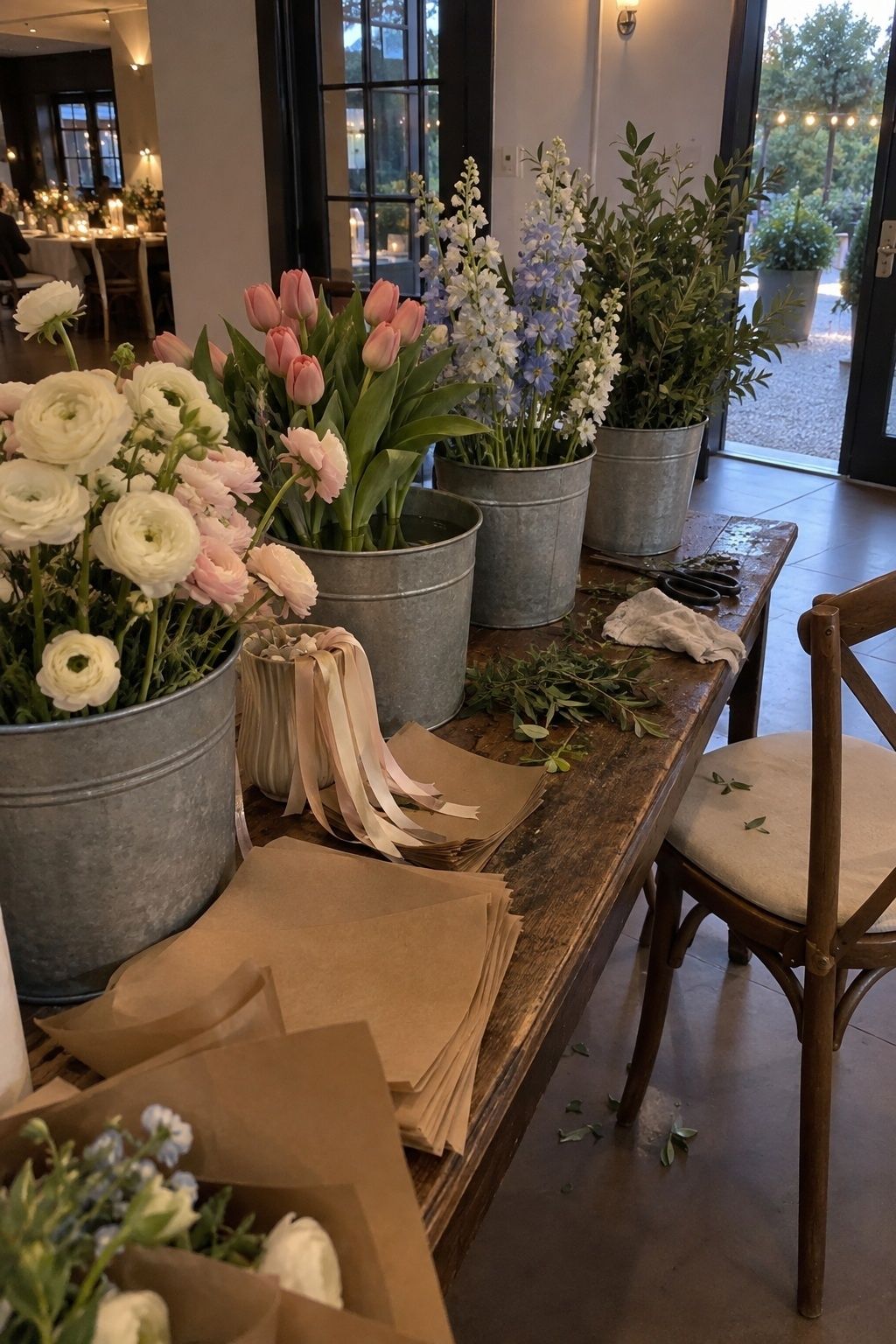
With a short guest list, a flower bar is a nice use of May abundance. Set out three to five sturdy stem types, ribbon and paper sleeves near the exit so guests can make a little bunch to take home. Have someone refresh the water and wrap stems at the end of the night.
Plan repurposing ahead
Moving ceremony flowers to the reception saves money, but decide where each piece goes before the day. Large urns fit near the bar or behind the couple. Smaller ones can move to the cake table or a lounge without crowding plates.
Key takeaways
- May is peak season for peonies, lilac, sweet peas and lily of the valley.
- Choose one star flower and write a backup into the florist order.
- Keep strong scents in the bouquet and entrance, lighter flowers on the tables.
- Flowering branches give ceremony impact with fewer stems.
- Spend on the bouquet, ceremony focal point and tables first.
FAQ
What flowers are in season for a May wedding?
Peonies, sweet peas, lily of the valley, lilac, garden roses, ranunculus, delphinium, clematis, allium, iris, larkspur, tulips, anemones, lisianthus and flowering branches are all commonly in season for May weddings. Exact timing depends on your region and the weather that spring.
Are peonies a good choice for a May wedding?
Yes, peonies are a great choice for May weddings because May often lines up with their peak season. Still, agree on a backup like garden roses or ranunculus, since a cold or warm spell can shift their timing.
What are the most fragrant May wedding flowers?
Sweet peas, lilac, lily of the valley and garden roses are the most fragrant May wedding flowers. Use them in bouquets, boutonnieres and entry arrangements, and keep dinner tables lighter.
What May flowers work for centerpieces?
Garden roses, ranunculus, tulips, lisianthus, iris and fresh foliage work well in May centerpieces. Low compotes or bud vase clusters suit small dinners better than tall arrangements that block conversation.
How can I save money on May wedding flowers?
Use flowering branches for ceremony height, choose one star flower instead of many, and fill tables with in-season tulips, ranunculus and foliage. Repurposing ceremony arrangements at the reception also cuts the order.
Your next step
Write down three things before you meet a florist: your date, your star flower and the one place you most want flowers to look generous. That gives them enough to quote a realistic order. Paperlust’s month-by-month flower guide and Teleflora’s list of seasonal spring wedding flowers are handy for checking timing. If your date is earlier or later, compare these May wedding flowers with April wedding flowers and June wedding flowers, and see May wedding colors for palettes that suit these blooms. For the rest of the season, spring wedding flowers has the full list.
Last update on 2026-10-03 / Affiliate links / Images from Amazon Product Advertising API