

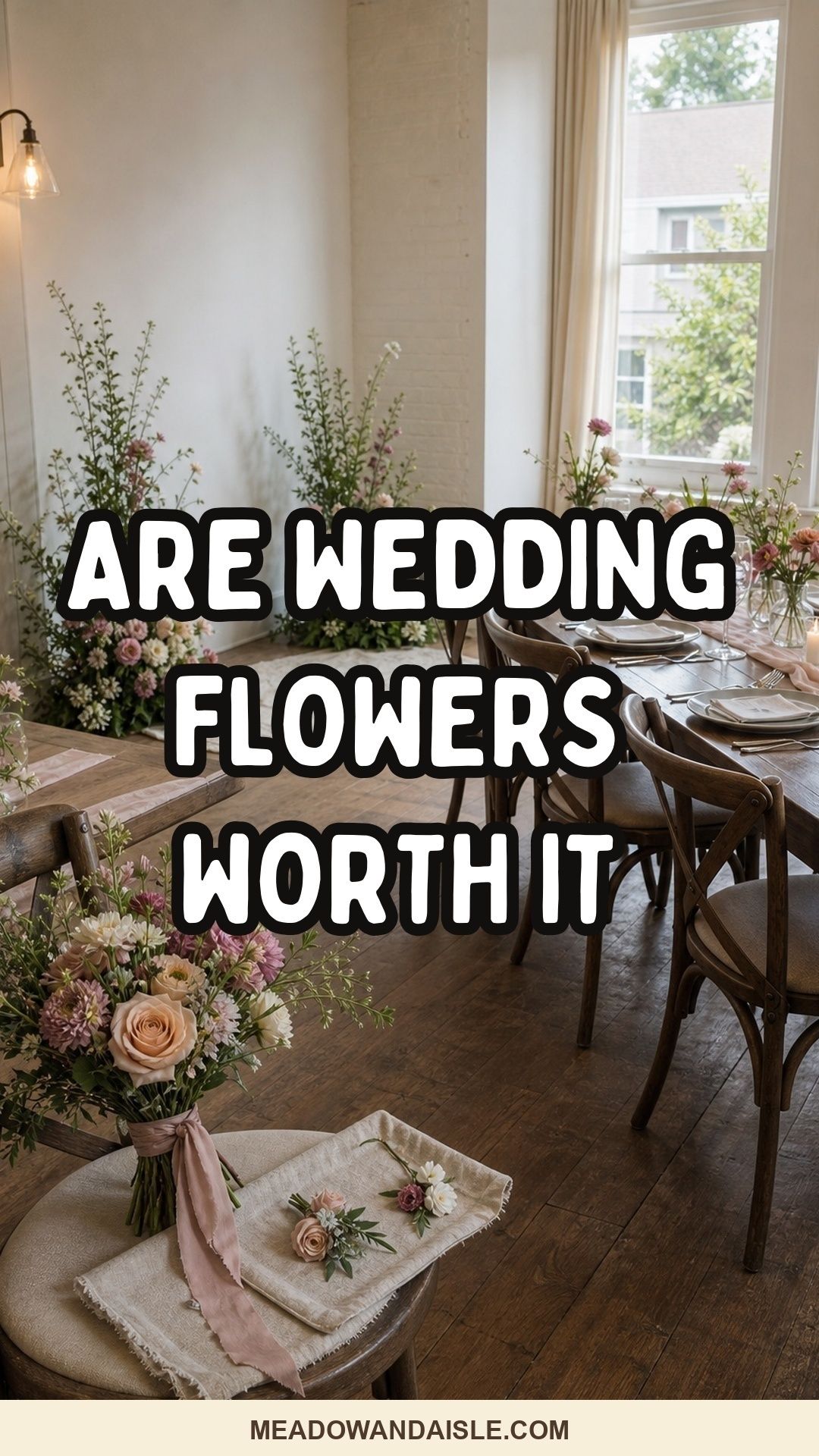
How much do wedding flowers cost and are they worth it? Many couples spend anywhere from a few hundred dollars for simple personal flowers to several thousand dollars for full florist design, with current national averages around the low thousands. Flowers are worth it when they shape the ceremony, portraits, tables, or meaning of the day, and easiest to simplify when they only fill spaces guests barely notice.
Wedding flowers have a way of making a quote feel both romantic and alarming. A bouquet sounds simple until it becomes ceremony flowers, centerpieces, delivery, setup, rented vessels, strike, taxes, and a minimum spend. For a small wedding, that tension is especially real because every floral choice competes with dinner, photography, guest comfort, and keeping the whole celebration financially calm.
The useful question is not whether flowers are beautiful. They are. The better question is where flowers will actually change the feeling of your wedding. Start with current wedding flower cost 2026 ranges, then weigh the florist quote against the pieces that deserve priority, the flowers worth skipping, and the small wedding flower budget that keeps the room intentional rather than bare.
Recommended Wedding Products


You Might Also Like These Blog Posts
- April Wedding Flowers for a Garden That Just Woke Up
- May Wedding Flowers at Their Most Romantic
- October Wedding Flowers With Texture, Drama, and Staying Power
- September Wedding Flowers for the First Hint of Fall
- Is A Wedding Worth The Money When You Want Meaning More Than Pressure
- August Wedding Flowers for the Last Golden Bloom of Summer
How Much Do Wedding Flowers Cost And Are They Worth It
The average wedding flowers cost number is useful only after you define the scope. One couple could be pricing a bouquet, boutonniere, and two bud-vase tables. Another couple could be pricing a ceremony arch, aisle arrangements, twelve centerpieces, wedding party flowers, cocktail-hour accents, cake flowers, delivery, setup, and late-night pickup. Those are not two versions of the same purchase. They are different floral events.
For a small wedding, the best answer usually sits between restraint and impact. You do not need flowers everywhere. You do need to decide whether flowers will help the room feel marked, soften the ceremony, give portraits texture, or make dinner feel hosted. When the answer is yes, flowers become one of the loveliest uses of money. When the answer is vague, the quote needs editing.
A practical flower budget starts with four questions: what will be held, what will be photographed, what will sit on guest tables, and what must be delivered or installed by a professional. If an arrangement does not answer one of those questions, it is optional. Optional does not mean wrong. It simply means it should not outrank food, timing, seating, weather comfort, or the photographs you will keep.
Why Flower Quotes Vary So Much
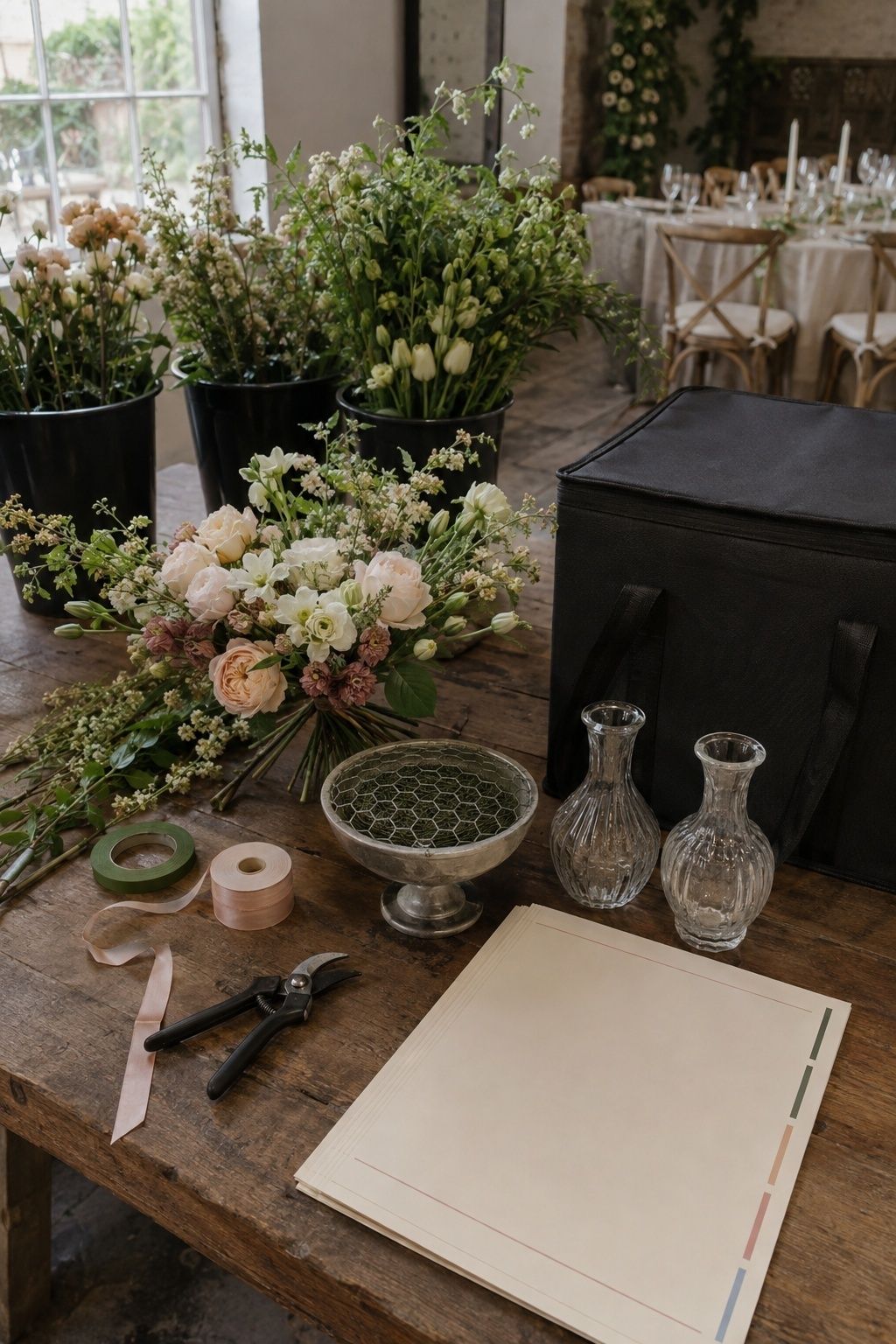
Flower quotes vary because a florist is pricing more than stems. The number often includes consultation time, recipe planning, ordering, conditioning, design labor, mechanics, vessels, rentals, transport, setup, repurposing, breakdown, disposal, insurance, staffing, and the risk of working with perishable materials on one exact date.
The florist cost wedding couples see also changes by location, season, bloom choice, guest count, venue access, and how many places need flowers at the same time. A lush spring bouquet using local tulips and ranunculus is different from a winter installation using imported orchids, heavy mechanics, and a separate team to take it down after the reception.
Before reacting to a quote, ask what it contains. A higher quote that includes delivery, setup, vessels, design, and strike is often more honest than a lower quote with add-ons waiting underneath. A small wedding deserves clear numbers, not a surprise list in the final week.
What Couples Usually Mean By Wedding Flowers
Wedding flowers include personal flowers, ceremony flowers, reception flowers, and small accent pieces. Personal flowers usually mean the bouquet, boutonniere, corsages, flower crowns, pocket squares, and any attendant flowers. Ceremony flowers often include an arch, ground arrangements, aisle pieces, altar flowers, entry arrangements, or petals.
Reception flowers are often where the budget grows. Centerpieces, bud vases, greenery, bar flowers, escort-table flowers, cake flowers, sweetheart-table flowers, lounge accents, and restroom flowers all sound small on their own. Together, they create a full floral plan with many touchpoints.
Make a list by location rather than by inspiration. Ceremony, cocktail hour, dinner table, cake, bar, welcome table, and portraits are easier to evaluate than “romantic garden feeling.” Once each floral location is visible, decide which places deserve real flowers, which work with candles or greenery, and which do not need anything at all.
Average Flower Cost Versus A Small-Wedding Flower Budget
Current wedding flower cost 2026 guidance often puts national averages around a few thousand dollars, but averages blend tiny weddings, large hotel receptions, destination celebrations, full-service designs, and couples who only bought personal flowers. That is why the average feels either shocking or strangely low, depending on the wedding you are planning.
For a small wedding, a thoughtful flower budget starts at several hundred dollars for grocery, DIY, or a la carte pieces; sits around $1,000 to $2,500 for personal flowers plus simple tables and one focal area; or reaches $3,000 and up when a florist is designing the full atmosphere. In a high-cost city, peak season, or complex venue, those numbers climb quickly.
The safest way to use the average is as a conversation starter, not a target. With 28 guests in a beautiful restaurant, spending far less than the national average still leaves room for flowers that feel complete. In a blank loft with a ceremony installation and long tables, the quote often looks closer to a larger wedding because the room needs more design help.
Bouquet, Boutonniere, And Personal Flower Costs
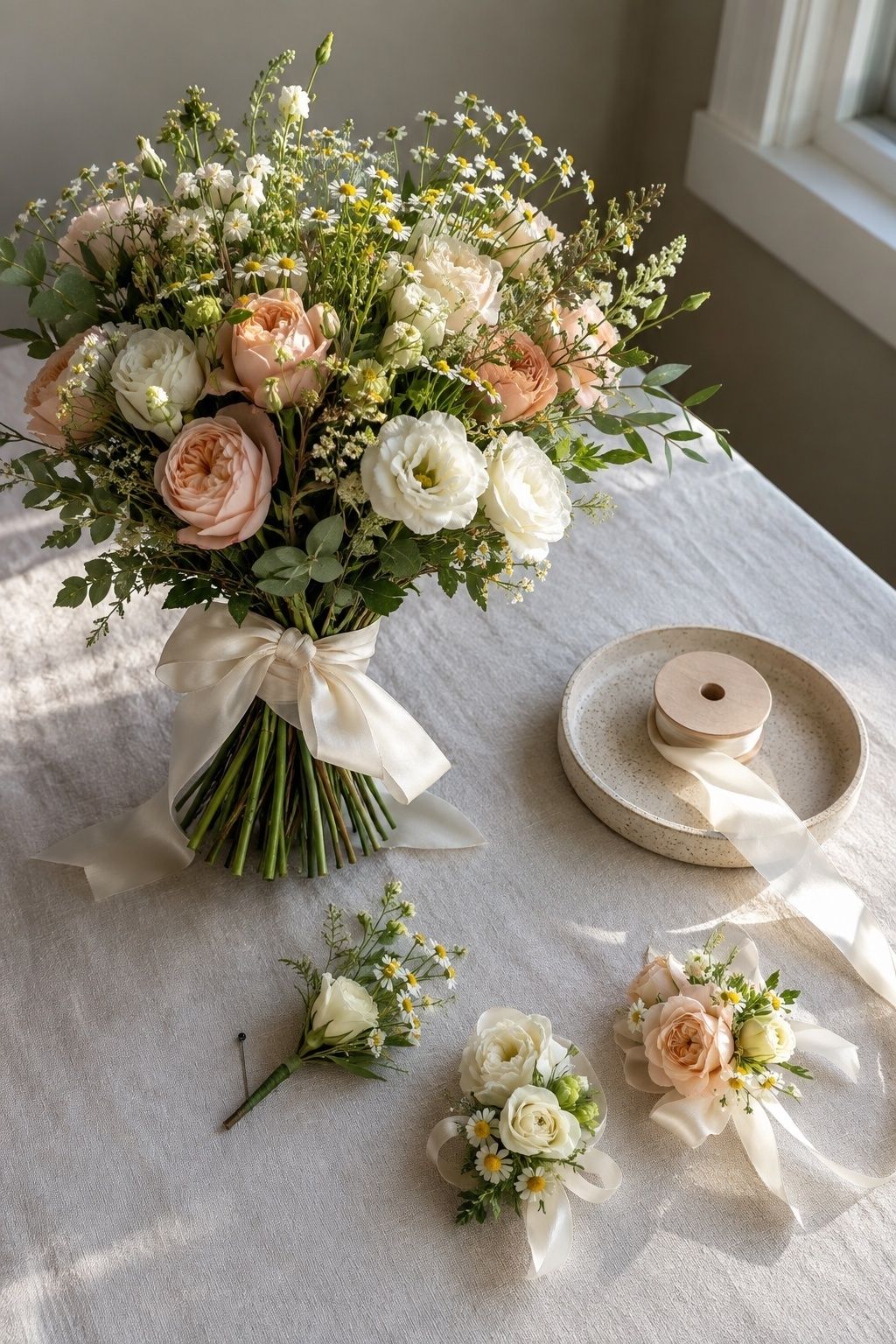
The wedding bouquet cost is often one of the most worthwhile floral lines because it appears in portraits, ceremony moments, detail photos, and the couple’s memory of walking into the day. Depending on size, flowers, region, and design style, a bridal bouquet ranges from a modest hand-tied arrangement to a custom piece with premium blooms and trailing texture.
Boutonnieres, corsages, and small family flowers cost less individually, but they multiply when the list grows. A small wedding gives you room to choose only the personal flowers that carry meaning. Include the couple, parents, grandparents, or a few honored people instead of automatically covering a large wedding party.
If you are not having attendants, personal flowers become much easier to control. One beautiful bouquet, one boutonniere, and a few family pieces often feel more intentional than a dozen smaller items ordered out of habit. The emotional value is in who receives them, not in filling a traditional category.
Centerpiece Costs And Why Table Count Matters
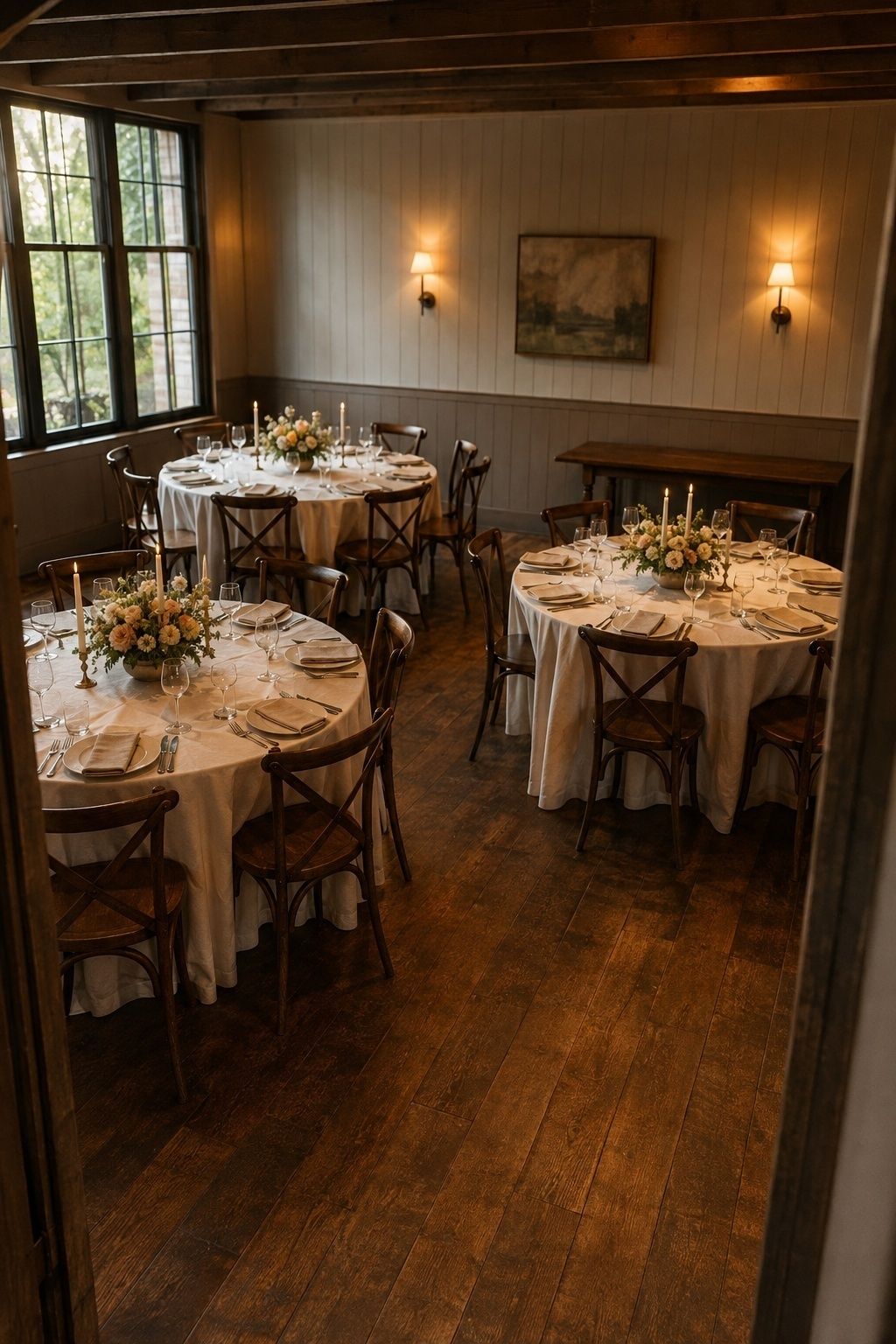
Wedding centerpiece cost depends on table count, arrangement size, vessel rentals, flower choice, and labor. A low bowl of seasonal flowers is different from a tall centerpiece with premium blooms and mechanics. Bud vases are different again, especially when the florist repeats a simple recipe across a few intimate tables.
Table count is the hidden lever. Six guest tables with flowers, candles, and menus require much less than eighteen guest tables needing the same treatment. This is one reason small weddings often look beautifully finished with fewer arrangements. Guests sit close to the details, so each vase does more work.
For a small dinner, consider one of three centerpiece approaches: low florist-designed bowls for a polished restaurant feel, bud vases mixed with taper candles for a relaxed garden mood, or candles with greenery when the venue already has visual warmth. The right choice is the one that looks good at eye level while leaving room for plates, glasses, elbows, and conversation.
Ceremony Flower Costs And Focal-Piece Tradeoffs
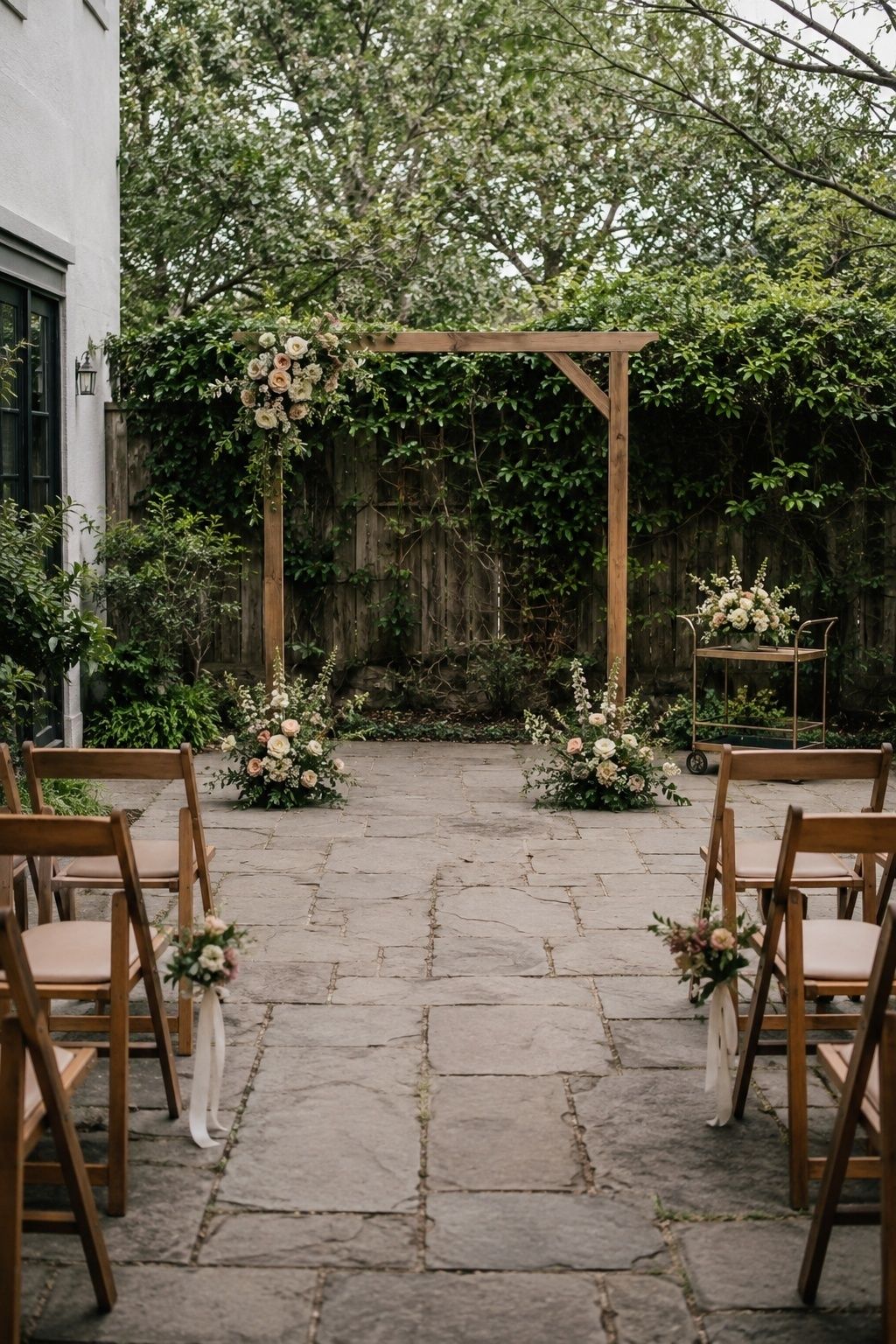
Ceremony flowers cost more when they need structure. An arch, chuppah, ground meadow, aisle pieces, floral columns, or staircase design often requires mechanics, installation time, transport, ladders, staff, and careful breakdown. The flowers are only part of the price; the engineering matters too.
For an intimate ceremony, one focal piece often works harder than scattered decoration. Two ground arrangements at the altar, a floral nest around a fireplace, or a small asymmetric piece on an existing arch frames vows without swallowing the budget. The goal is to make the ceremony feel held, not to decorate every chair.
Ask whether ceremony flowers are movable for the reception. Ground arrangements often frame the sweetheart table, bar, cake, or dinner entrance after vows. Repurposing is not always easy if the timing, distance, weather, or mechanics are difficult, but it is worth asking before you pay for separate designs in two places.
Delivery, Setup, Strike, And Florist Minimums
Delivery, setup, and strike are easy to forget because they do not show up in the inspiration photo. They are also the reason a quote jumps after the first conversation. Flowers need to arrive safely, sit in the right temperature, land in the right places, and leave the venue according to the contract.
Some florists have minimums for full-service weddings because the work requires a full design process and a wedding-day team. If your floral needs are small, ask whether the florist offers a la carte wedding flowers, pickup options, bud-vase sets, or personal-flowers-only service. That route is often a better fit than forcing a tiny scope into a full-service model.
Also ask about rentals. Vases, stands, candles, columns, arches, and compotes often need deposits, return rules, or pickup. A centerpiece price without the vessel rules is not the full number. Clear logistics protect both the budget and the wedding morning.
When Flowers Are Worth The Money
Flowers are most worth the money when they touch the parts of the day people will feel and remember. The bouquet, ceremony focal point, dinner tables, and a few portrait-visible details usually do the most emotional work. They make the day feel softened, marked, and different from an ordinary gathering.
They are also worth it when the venue needs warmth. A plain room with harsh lines, an empty ceremony corner, or a dinner table that feels too practical changes quickly with the right flowers. In that case, florals are not filler. They are atmosphere.
Spend more when flowers are one of your true priorities, when you care about portraits, when the venue is visually quiet, or when a loved one’s favorite bloom carries meaning. The best splurge has a job. It does not have to impress every guest, but it should clearly support the story of the day.
When Flowers Are Safe To Skip Or Simplify
Flowers are safe to simplify when the venue already has gardens, views, texture, candlelight, architecture, or a beautiful private room. They are also safe to skip in low-visibility places: bathroom counters, every cocktail table, extra signage corners, unused lounge areas, and ceremony rows that guests will pass for only a few seconds.
Bridal party flowers are another place small weddings reduce cost. If there is no wedding party, there are no extra bouquets or boutonnieres to order. If there are only one or two attendants, keep their flowers smaller or give them a ribbon, pocket square, corsage, or single-stem detail instead.
Skipping flowers should feel like editing, not apologizing. A candlelit dinner, linen napkins, handwritten place cards, good lighting, fruit, greenery, or a meaningful object on the table carries warmth. Guests rarely miss a floral line item they never knew existed.
How To Save Money Without Making The Room Feel Bare
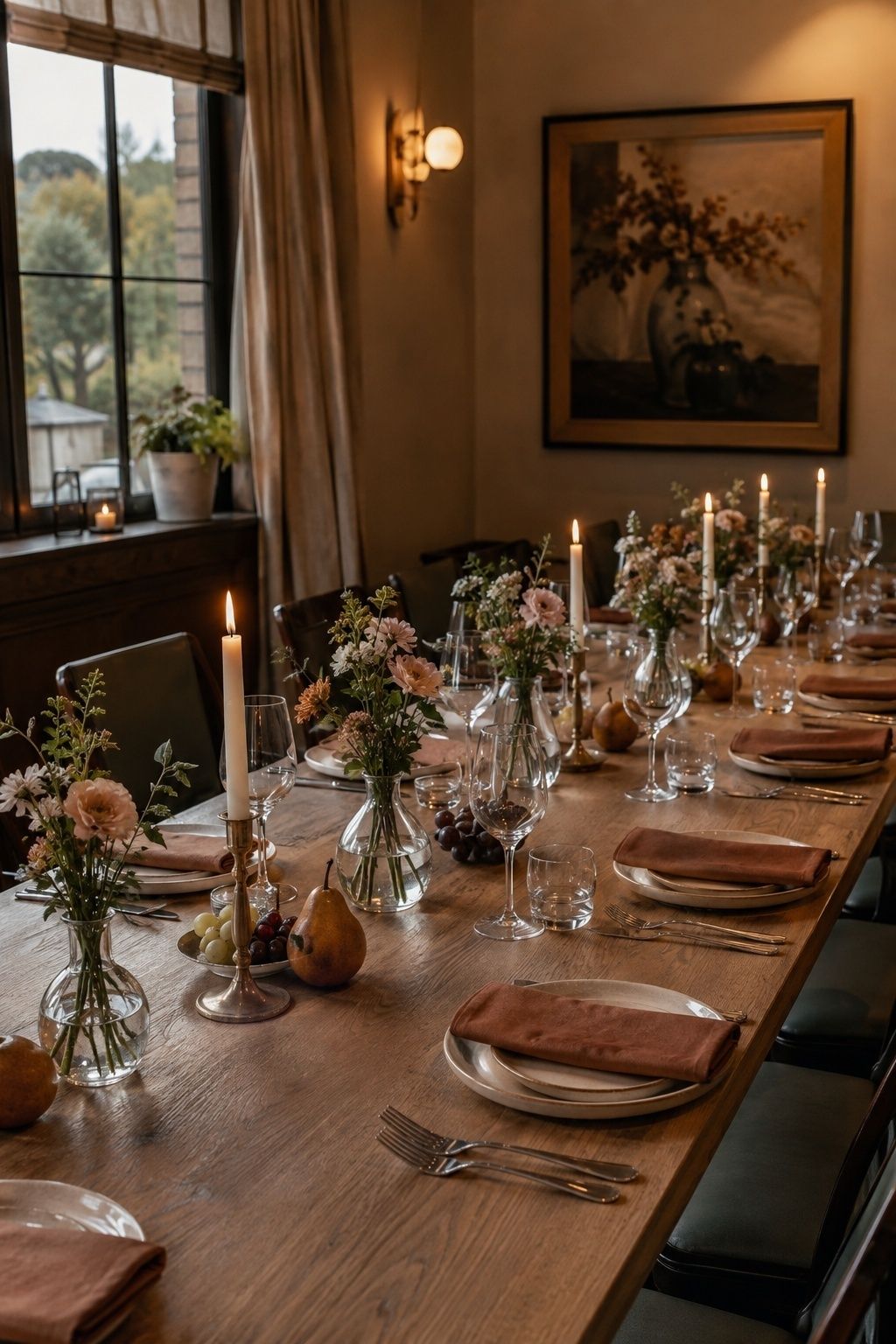
Wedding flowers on a budget look best when the plan is concentrated. Choose one floral statement, one table language, and one personal-flower plan. Repeating a small set of materials looks more polished than scattering tiny arrangements everywhere.
Use seasonal wedding flowers, local growers when available, greenery with shape, bud vases, candles, fruit, potted herbs, dried pieces, and faux wedding flowers only where the quality looks convincing up close. Avoid mixing too many bargain solutions in one room. The eye reads repetition as design and random variety as leftovers.
Repurpose carefully. Ceremony flowers become dinner flowers only when someone has time, a vehicle, and permission to move them without damaging the design. If repurposing creates chaos, simplify the original plan instead. Saving money should not create a wedding-day job for someone you love.
How To Talk To A Florist About A Realistic Budget
Bring the florist a real number, guest count, table count, venue photos, ceremony location, color direction, and three priorities. Then say what you are willing to simplify. A florist designs more effectively with honest boundaries than with a dreamy board and no budget.
Ask for an itemized quote or at least a quote organized by category: personal flowers, ceremony, reception tables, accents, rentals, labor, delivery, setup, and strike. If the total is high, edit by location. Reduce table flowers, remove low-impact accents, choose a smaller ceremony piece, or switch from premium blooms to seasonal texture.
Use plain language: “Our floral budget is $1,800 and we care most about the bouquet, ceremony corner, and dinner tables. What is the strongest version of that?” That question invites professional creativity while keeping the conversation grounded. It also prevents the florist from designing a wedding you never meant to buy.
The Best Flower Priorities For A Small Wedding
The best small-wedding flower priorities are the ones closest to people. Start with the bouquet or personal flowers because they appear in portraits and ceremony movement. Then choose the ceremony focal point because it frames the vows. After that, decide what guests will have on the dinner table.
If your wedding has one long table, flowers do not need to be huge. A chain of bud vases, taper candles, fruit, and small bowls often feels abundant because every guest shares the center of the design. If your dinner uses several round tables, choose a repeatable centerpiece that leaves room for plates, glasses, serving platters, elbows, water refills, bread baskets, shared wine, dessert plates, toasts, and easy conversation.
Photo-visible moments deserve more thought than background corners. A bouquet with the dress, flowers around vows, a vase on the dinner table, and one small cake detail will appear in the story of the day. Flowers on a distant bar, empty welcome table, or unused lounge do not earn the same place in a small wedding flower budget.
Think in zones: held, vowed, seated, and remembered. Held flowers travel with the couple. Vowed flowers shape the ceremony. Seated flowers affect the meal. Remembered flowers include a bloom chosen for family meaning, a preservation plan, or a bouquet ribbon that makes the detail personal. This keeps the floral plan tender and practical at the same time.
Floral Alternatives That Still Feel Thoughtful
Floral alternatives work best when they create atmosphere instead of pretending to be flowers. Candles, linen, warm lighting, greenery, fruit, herbs, ceramics, paper details, family photographs, ribbon, and a venue with natural character make a wedding feel complete with fewer blooms.
Dried flowers and high-quality faux flowers work beautifully for a destination wedding, allergy-sensitive celebration, very hot day, or keepsake detail. Use them where guests will not inspect every petal under harsh light, or mix them with candles and texture so they feel intentional. If the bouquet matters deeply, that is often the place to use the best fresh flowers and simplify elsewhere.
Greenery has limits too. It is not automatically cheap, especially when used in long garlands or heavy installations. Sometimes a few small fresh arrangements cost less and look more refined than yards of greenery that need labor, wire, and cleanup. Ask for the actual numbers before assuming greenery is the budget answer.
The most thoughtful alternative is a room that already carries beauty. A garden courtyard, candlelit restaurant, greenhouse, chapel, library, home dining room, or patio under trees needs only one floral gesture when the setting already feels alive. Let the venue do some of the visual work. Then the flowers you do buy feel chosen, not responsible for rescuing the entire setting.
A Simple Flower Budget Example For An Intimate Wedding

Imagine a 32-guest wedding with a short ceremony and a private dinner. The couple wants flowers, but they do not want the floral plan to push the celebration out of balance. A strong version includes one bridal bouquet, one boutonniere, two family corsages, two ceremony ground arrangements, and simple bud vases with candles down two long tables.
That plan gives flowers four clear jobs. The bouquet carries the couple through portraits. The boutonniere and family pieces honor the closest people. The ground arrangements frame the vows. The bud vases and candles make dinner feel hosted without requiring large centerpieces. Nothing is there only because a traditional checklist expected it.
If the first quote is too high, the couple has obvious edit points. They could remove family corsages, reduce ceremony flowers to one asymmetric arrangement, switch premium blooms to seasonal texture, use fewer bud vases, or ask whether the ceremony pieces should move to the dinner entrance afterward. Each cut protects the heart of the design instead of flattening everything equally.
For a lower-budget version, the couple orders one professional bouquet and boutonniere, then uses purchased bud vases, grocery flowers, and candles for the tables. For a higher-service version, they ask a florist to handle every piece, provide vessels, set the tables, move ceremony flowers, and return for strike. Both versions are beautiful. The difference is how much labor, design control, and wedding-day responsibility the couple is buying.
This is the clearest way to compare quotes. Do not ask whether one florist is simply cheaper than another. Ask what each quote removes from your plate, what each design adds to the room, and what each one leaves you responsible for on the wedding morning. A low number that requires you to buy vases, store flowers, arrange tables, transport leftovers, and return rentals is not always easier.
Questions To Ask Before You Approve The Flower Quote
Before approving a flower quote, ask whether the total includes tax, service fees, delivery, setup, breakdown, vessel rental, candles, floral mechanics, extra labor, venue access limits, and moving pieces from ceremony to reception. Ask what happens if a requested flower is unavailable, which substitutions fit the same mood, and whether the florist needs final guest or table counts by a certain date.
Ask to see the quote by priority. The florist should label must-have items, nice-to-have items, and easy cuts. This is especially useful when you are trying to keep wedding flowers on a budget without turning the design into a guessing game. If the bouquet, ceremony focal point, and dinner tables are the priority, the quote should make those pieces easy to protect.
Ask what the flowers will look like at your actual scale. A centerpiece that looks modest in a ballroom feels abundant on a narrow private-dining table. A full arch overwhelms a 20-person ceremony in a small garden. A single ground arrangement disappears in a wide hotel ballroom. Scale is where many flower budgets either become elegant or start working too hard.
Finally, ask who owns each wedding-day task. Who receives the flowers? Who places the candles? Who moves the ceremony pieces? Who gathers the vessels afterward? Who takes home the bouquet? Who handles flowers if the room flips from ceremony to dinner? The best floral plan does not only look good. It knows how it will actually happen.
FAQ
How Much Do Wedding Flowers Cost In 2026?
Wedding flowers in 2026 often cost several thousand dollars for full florist service, while simpler personal-flower or a la carte plans cost much less. The right next step is to define your scope before comparing averages: bouquet, ceremony, tables, delivery, setup, rentals, and strike should all be listed separately.
Are Wedding Flowers Worth The Money?
Wedding flowers are worth the money when they affect the ceremony, portraits, dinner atmosphere, or a detail with personal meaning. They are less worth it when they decorate places guests barely see. Choose the three floral moments that matter most, then cut or simplify the rest before reducing food, photos, comfort, or debt-free planning.
How Much Should You Spend On Flowers For A Small Wedding?
A small wedding flower budget ranges from a few hundred dollars for simple DIY or pickup flowers to a few thousand dollars for florist-designed personal flowers, tables, and one focal piece. Start with guest count and table count, then ask what flowers need to be held, photographed, installed, or experienced up close.
What Wedding Flowers Are Worth Paying For?
The wedding flowers most worth paying for are usually the bouquet, boutonniere or personal flowers, ceremony focal piece, and reception table flowers. These pieces appear in photos and shape how the room feels. With a tight budget, spend on one strong focal area instead of spreading small arrangements across every surface.
What Wedding Flowers Can You Skip?
It is often safe to skip flowers for bathrooms, every cocktail table, signage corners, large wedding parties, aisle ends, and spaces the venue already makes beautiful. For a small wedding, remove low-visibility florals first. Keep flowers with the couple, around the vows, on the dinner table, and in any place guests will linger.
How Do You Save Money On Wedding Flowers Without It Looking Bare?
Save money on wedding flowers by concentrating the design. Choose one bouquet, one ceremony focal point, simple table flowers, and candles or venue texture everywhere else. Choose seasonal blooms, repeat the same vase style, limit premium flowers, and ask for an itemized quote so the lowest-impact pieces are easy to remove first.
Final Thoughts
The answer to how much do wedding flowers cost and are they worth it is not hidden in a single average. It is in the shape of your wedding. A small restaurant dinner, backyard ceremony, courthouse celebration, garden party, and ballroom reception all ask flowers to do different work.
Let flowers earn their place with meaning, atmosphere, or photographs you will keep. Buy the bouquet that makes the walk feel real. Frame the vows if the ceremony corner needs softness. Put something beautiful where guests will sit and talk. Then release the floral pieces that exist only because weddings are expected to have them.
A thoughtful floral plan does not have to cover every surface. It has to support the parts of the day that matter most, fit the room you actually chose, and leave enough money for the people in it to feel cared for. Your best number is the one that makes the wedding feel beautiful without asking flowers to carry more than they should. National averages matter.
Last update on 2026-10-03 / Affiliate links / Images from Amazon Product Advertising API