

Invite by circle, not by person: pick one clear line (for example, grandparents, aunts and uncles, but no cousins) and apply it to both sides of the family. Address invitations and RSVPs to the exact names invited, tell parents the rule before invitations go out, and answer questions with one short, kind sentence instead of a long explanation.
There is no version of a smaller guest list that makes every relative happy, so stop aiming for that. Aim for a rule you can explain in one sentence, apply to everyone and still feel okay about when your aunt asks why her son wasn’t invited.
This guide covers how to invite some family but not all to a wedding without it looking personal: the cutoff rules couples use most, how to word envelopes and RSVPs so the rule holds, what to say when someone asks, and how to handle the tricky cases like blended families, a paying parent or a relative with a history of conflict.
Recommended Guest List Planning Essentials
A guest list planner and an RSVP tracker make it much easier to see your circles on paper and keep the rule consistent once replies come in.


Recommended blogs to read:
- Family Only Wedding Wording Lines That Feel Gracious
- How To Say No To Wedding Guest List Requests Without Starting A War
- How To Keep Your Wedding Guest List Small Before It Spirals
- How To Tell People You’re Having A Small Wedding With Kind, Clear Scripts
- How To Handle Family Pressure During Wedding Planning Without Losing Your Vision
- Adults Only Wedding Wording That Sounds Warm And Clear
How To Invite Some Family But Not All To Wedding: The Fair Rules
The fairest way to invite part of your family is to choose a category line and stick to it. Relatives can argue with a choice about a person. They have a much harder time arguing with a rule that applied to their own cousin and yours.
Here are the cutoff rules couples use most, and where each one tends to get pushback.
| Cutoff rule | Who is in | Works best when | Watch out for |
|---|---|---|---|
| Immediate family only | Parents, siblings, grandparents | Under 20 guests | Siblings’ partners and kids need a decision too |
| Aunts and uncles, no cousins | Immediate family plus parents’ siblings | 20 to 40 guests | Cousins you are close to |
| First cousins, no second cousins | Every first cousin on both sides | Families of similar size | One side with 30 first cousins |
| “Met us both” rule | Relatives who know you as a couple | Big or scattered families | Feels personal if explained badly |
| Household rule | Whole households or none | Families with kids or partners | Adult children still living at home |
| Adults only | Everyone 18 and over | Evening or formal weddings | Nursing babies and kids in the wedding party |
Start With Family Circles Before Names

The notebook in the photo has the simplest planning tool there is: three circles drawn inside each other, labeled immediate family, close relatives and wider family, next to a stack of sage envelopes and two cups of tea. Do this before you write a single name.
Decide which circles are fully in, which are fully out, and whether any circle is “in for one side means in for the other.” Then fill in names. It stops the list from growing one exception at a time.
Keep The Rules Consistent Where Relatives Compare
Relatives compare within the same tier. Cousins compare with cousins, aunts with aunts, and both sides of the family compare with each other. Once your mom’s siblings are on the list, your dad’s siblings go on it too, even if you see one side more.
Choose Real Closeness Over Family Tree Obligation
A rule can bend for real closeness, as long as the reason is visible. “We invited the cousins who were in our wedding party” or “the cousins we grew up with” is easy to understand. “We invited the cousins we like” is not, even if it’s true (we’ve all thought it).
Protect Immediate Family Equality When It Matters
Siblings, grandparents and parents’ partners are the circle where unequal treatment hurts the most. If one sibling gets a plus-one, the other usually should too, and if one grandmother is coming, both should be invited unless there is a serious reason.
Treat Cousins As A Visible Category
Cousins are where most selective guest lists break (there are always more of them than you remember). Decide on one rule (all first cousins, no cousins, only adult cousins, only cousins in the wedding party) and write it down. When a cousin asks, you can point to the category instead of to them.
Decide Whether Aunts And Uncles Are A Whole Circle
Either all aunts and uncles are invited or none are, and spouses come with them. If the budget only allows some, consider inviting all of them without their adult children before picking favorites among siblings of your parents.
Make Exceptions For Estranged Or Unsafe Relatives
Leaving out a relative who is estranged or unsafe is not a fairness problem, and you don’t owe anyone an explanation for it. Tell the people who need to know (usually parents and anyone helping on the day) and ask them not to discuss it with other guests.
Plan For Divorced, Blended, And Remarried Dynamics
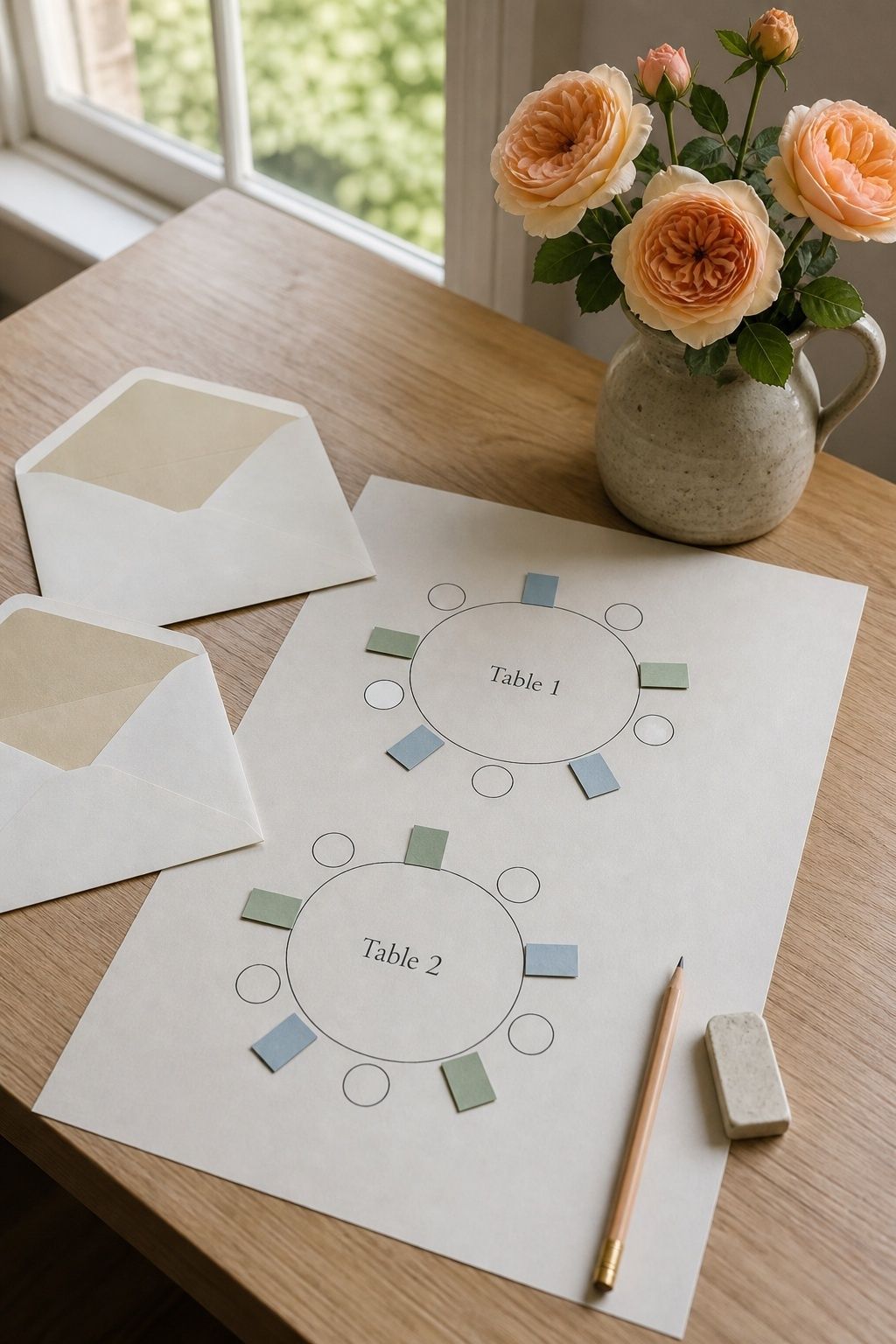
On the table are two seating plans, Table 1 and Table 2, with movable paper tabs around each circle, a couple of invitation envelopes, a jug of peach roses and a pencil with an eraser close by. That’s how blended family planning really looks: lots of moving pieces before anything is final.
Treat each parent’s household as its own unit, with its own partner and children. Step-siblings and half-siblings usually belong in the same circle as full siblings. Seat divorced parents at separate tables near the front if they don’t get along, and settle that plan before the invitations go out.
Tell Parents Not To Promise Invitations
Parents are often the first people relatives ask, usually at a birthday party, usually with a plate of cake in hand. Before you send anything, tell both sets of parents the rule and ask them not to promise invitations or hint that “there might be room.” A parent who has already said yes is the hardest leak to fix.
Prepare For Close Relatives Who Expected An Invite
Some relatives will assume they’re coming, especially those who invited you to their own wedding. If you know someone close will be left out by the rule, tell them yourself, kindly, before the invitations land. A phone call a week early lands far better than finding out through a cousin’s group chat.
Do Not Proactively Explain Every Exclusion
You don’t need to contact every relative who isn’t invited. Most distant family won’t expect an invitation to a small wedding. Explain only to people who will clearly notice, and keep it short when you do.
Use Venue, Budget, And Intimacy As Boundaries
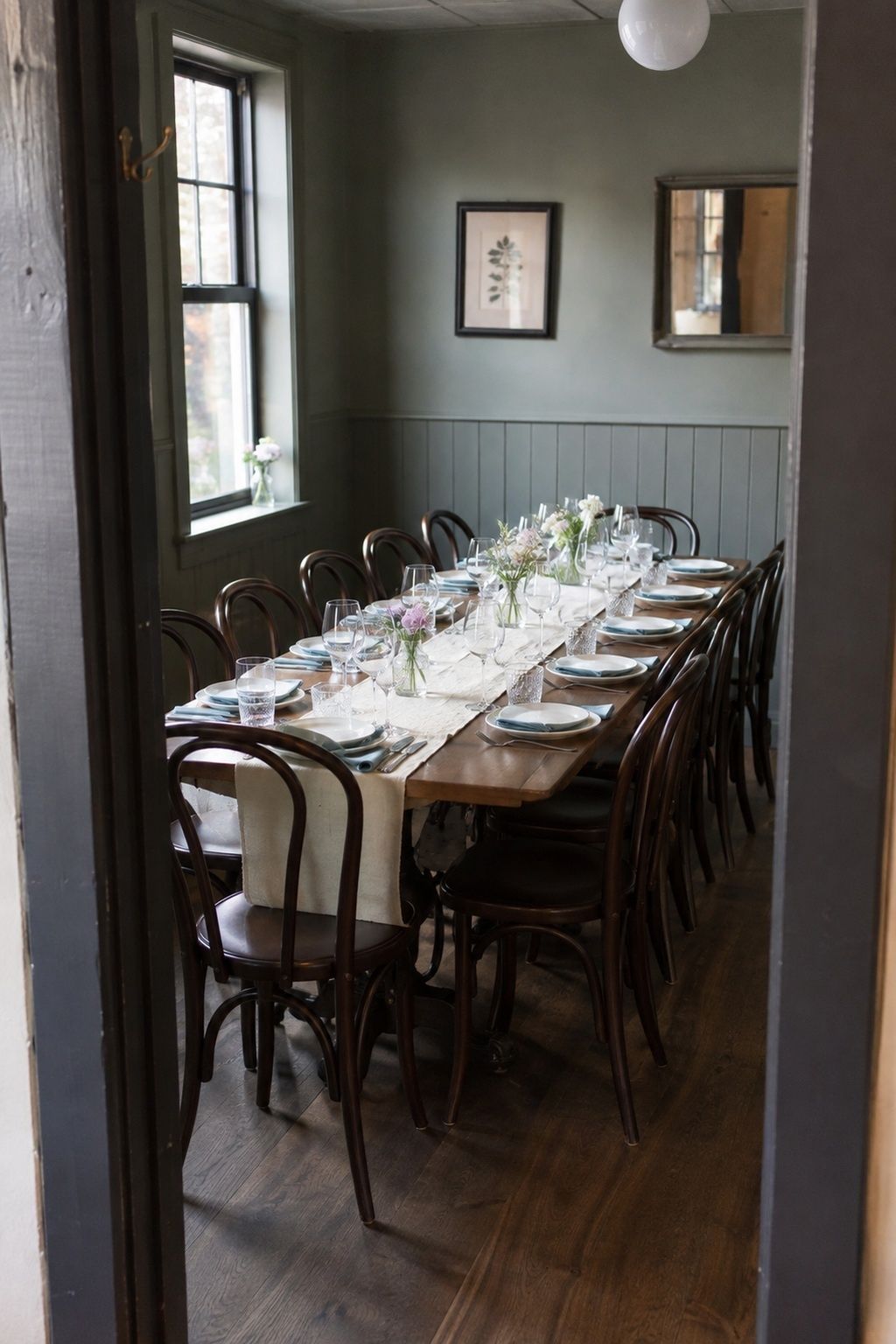
This small gray-green dining room has one long table, bentwood chairs, white place settings and a few low flower arrangements under a window. It’s obvious at a glance that it seats a set number of people, and that is exactly why venue size is the easiest boundary to explain.
“Our venue holds 30,” “we’re keeping it to the people we see most,” and “it’s a small dinner, not a big party” are all honest and hard to argue with. Pick the one that’s true for you and use the same words with everyone.
Never Make The Conversation About Worth
Don’t explain an exclusion by talking about the person (“we’re not that close,” “you never visit”). Talk about the rule or the size of the day instead, which keeps the conversation about the wedding and away from the person.
Keep Direct Answers Short
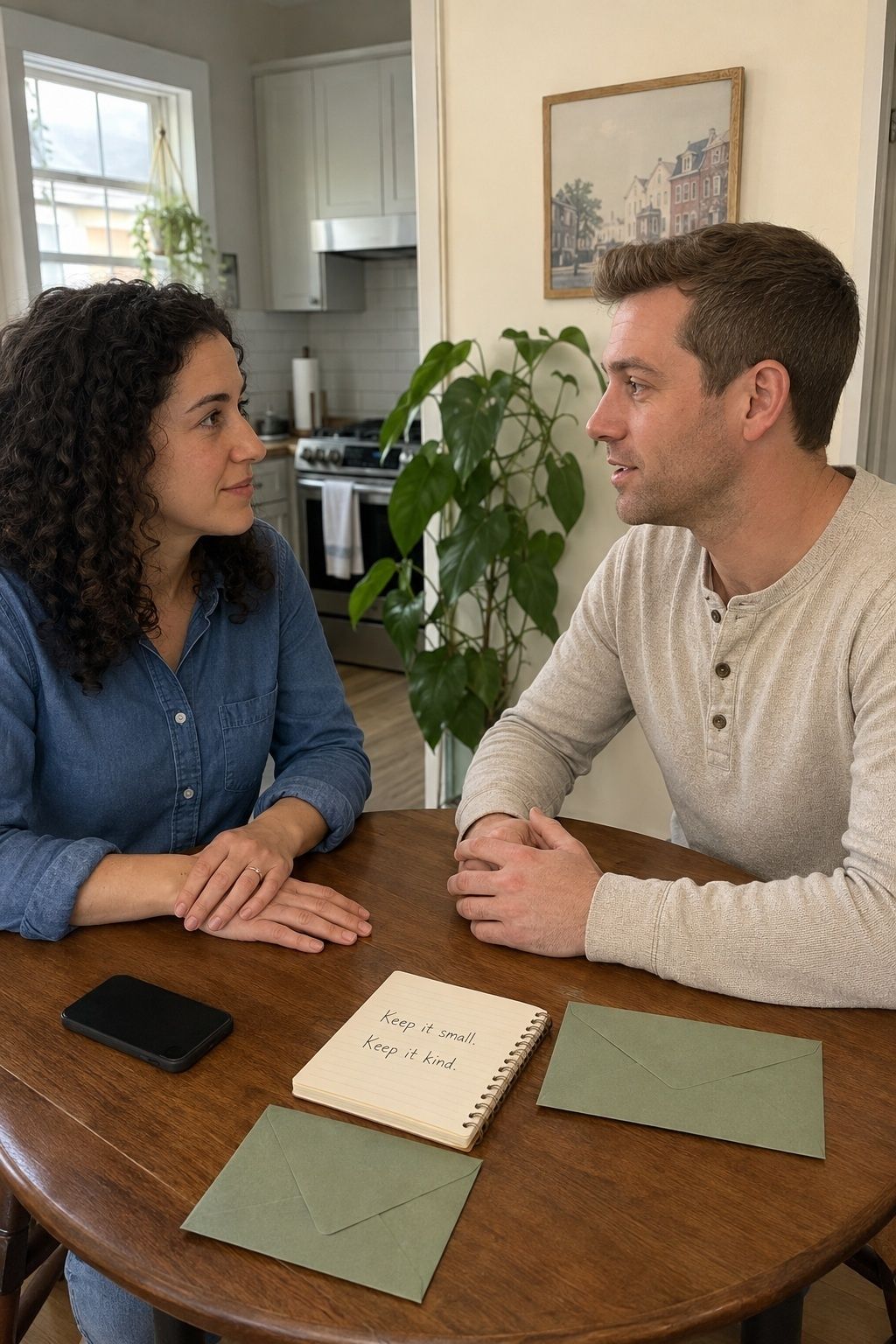
A couple sits at a round wooden kitchen table with a notebook, a phone and a few sage envelopes, clearly rehearsing what they’ll say. That rehearsal is worth five minutes of your time.
When someone asks, use one or two sentences and stop. Here are wording examples for the five conversations that come up most:
- A cousin who wasn’t invited: “We kept it to immediate family and aunts and uncles, so no cousins on either side. We’d love to see you soon and share photos.”
- An aunt asking about her adult kids: “We had to draw the line at aunts and uncles, and we applied it to both families. I hope you understand.”
- A parent pushing for more names: “We need to keep the same rule for both sides, so we can’t add anyone without opening the whole list.”
- Someone who invited you to their wedding: “We’re doing a really small dinner this time and couldn’t include everyone we love. Thank you for understanding.”
- A relative who asks why someone else got invited: “They’re in the wedding party, so they’re part of a different group for us.”
Offer Future Visits Or Photo Sharing Only If Genuine
Offering to visit, share photos or have a casual get-together later can soften a no, but only if you’ll actually do it. If you know you won’t, skip the offer. An empty promise turns a small disappointment into a bigger one.
Let Hurt Exist Without Changing The Whole Plan
Some relatives will be disappointed, and that’s allowed. You’re planning a wedding, not running for office. You can acknowledge it (“I understand, and I’m sorry it stings”) without reopening the list. Adding one person usually means adding five more to stay fair.
Think Through Social Media Before The Wedding
If relatives who weren’t invited follow you online, ask guests not to post until you’ve shared photos yourself. A same-day photo dump is how many people learn they weren’t on the list, and it hurts more than the invitation itself.
Avoid Guilt Invitations
Inviting someone because you feel bad usually creates the comparison problem you were trying to avoid. If guilt is the only reason, it’s a no. Would you be glad to see them? Then check whether they fit the rule after all.
Protect The Small Wedding Feeling
Remember why you chose a smaller wedding: more time with each guest and a budget that makes sense. Every exception makes that a little harder to keep. For more on holding the line, see how to keep your wedding guest list small.
Choose A Fair Rule, Not A Perfect Reaction
You can’t control how relatives feel. You can control whether the rule is consistent and kindly explained, and that’s what people remember once the wedding is over.
Read more: How To Say No To Wedding Guest List Requests Without Starting A War
How To Word Invitations So The Rule Holds
The invitation itself does most of the work. Address the outer and inner envelopes (or the email) to each invited person by name, not “The Smith Family.” On a printed or online RSVP, list the names you invited or the number of seats held, so nobody can add a person by accident.
On the wedding website, a short line is enough: “Our celebration is limited to immediate family and a few close relatives, and we’re so grateful for your understanding.” If you want ready-made lines, these family only wedding wording examples cover invitations, websites and texts.
One more etiquette rule worth following: the Emily Post Institute’s guidance is that anyone invited to a pre-wedding party should also be invited to the wedding, so keep showers and engagement parties to people on the final list.
Sensitive Family Scenarios
Most selective guest lists hit at least one of these situations. Each needs its own plan, decided before invitations go out.
When One Side Has A Much Larger Family
Use the same rule for both sides even if the numbers come out uneven. If one side has 40 first cousins and the other has six, “no cousins” is often fairer than “all cousins” for a small wedding.
When A Parent Is Paying And Wants More Relatives
Agree on the number before agreeing on the money if you can. If a parent asks for extra guests, ask them to pick from the circle the rule already allows, or explain that adding names breaks the rule for the other side. The family pressure guide has more on these conversations.
When A Relative Has A History Of Conflict
You can leave out a relative who causes scenes, as long as you’re clear with parents about why. If you do invite them, assign a calm family member to keep an eye on things and seat them away from the people they clash with.
When A Relative Asks Why Someone Else Was Invited
Point to the category: “She’s in the wedding party” or “We invited the cousins who live with my parents.” Don’t compare relationships, and don’t let the conversation turn into a list of who is closer to whom.
When You Regret The Rule After Reactions Start
If the rule was fair, don’t change it because of one upset person. If you realize the rule itself was wrong (for example, it left out a grandparent’s partner), fix it for everyone it affects, including the relatives who stayed quiet about it.
Frequently Asked Questions
How do you invite some family but not all to a wedding?
Pick a clear category rule, such as immediate family plus aunts and uncles, and apply it to both sides. Address invitations to named guests only, list invited names on the RSVP, tell parents the rule first and give short, kind answers when relatives ask.
Is it okay to not invite certain family members to a wedding?
Yes, it is okay to not invite certain family members to a wedding, especially for a small celebration. Keep the reason tied to a consistent rule or the venue size, and leave out estranged or unsafe relatives without explaining yourself to the wider family.
Is it rude to invite some relatives and not others?
Inviting some relatives and not others isn’t rude when the line is consistent, like all aunts and uncles but no cousins. It feels rude when the choice looks personal, such as inviting two cousins out of six from the same family with no visible reason.
How do you choose which family members to invite?
Start with family circles, decide which circles are fully included, then add names. Common lines are immediate family only, aunts and uncles but no cousins, first cousins only, or relatives who know you both as a couple. Use the same line for both families.
Do you have to explain why some family is not invited?
No, you don’t have to explain to every relative. Explain only to people who would clearly expect an invitation, and keep it to one sentence about the size or the rule, such as “We kept it to immediate family on both sides.”
How do you handle family members who ask about an invitation?
Answer warmly and briefly, point to the rule or venue size, and don’t apologize for the plan itself. Offer something you’ll really follow through on, like sharing photos or meeting up later, and don’t reopen the list during the conversation.
What rules make a selective family guest list feel fair?
Rules feel fair when they’re category-based, applied to both sides and easy to explain. Inviting whole households, keeping siblings equal, and using clear lines such as no cousins or adults only all help relatives see that nobody was singled out.
How to invite some kids but not all to a wedding?
To invite some kids but not all, use a clear age or role line, such as children in the wedding party only or immediate family’s children only. Address envelopes to the adults by name, and say it on the website. These adults only wedding wording examples help.
What can I say instead of “together with their families”?
Instead of “together with their families,” you can write “together with their parents,” name the hosts directly, or simply start with your two names, such as “Ana Reyes and Ben Ward invite you to celebrate their marriage.” It avoids implying the whole family is invited.
Key Takeaways
- Choose one category line and apply it to both sides of the family.
- Write exact names on envelopes and RSVPs so the rule enforces itself.
- Tell parents the rule early and ask them not to promise invitations.
- Answer questions with one kind sentence about the rule, never about the person.
- Plan blended-family, paying-parent and conflict situations before invitations go out.
Final Thoughts
Inviting some family but not all to a wedding gets easier the moment the decision stops being about individual people. Relatives accept a clear line drawn the same way on both sides much faster than a list full of exceptions, so write the rule down once and let it do the explaining.
Last update on 2026-10-04 / Affiliate links / Images from Amazon Product Advertising API