

Wedding transportation mistakes usually happen when couples book a vehicle but skip the real movement plan: who is riding, where they board, how long loading takes, what happens if one shuttle fills, who answers driver calls, and how guests get back safely at the end of the night.
Wedding transportation mistakes feel especially frustrating because they rarely look dramatic on paper. A hotel is ten minutes away, a ceremony starts at four, a shuttle has been booked, and everyone assumes the math will behave. Then guests board slowly, the driver reaches the wrong entrance, grandparents wait in the sun, and the couple hears about it while trying to take portraits.
For a small wedding, the answer is not always a giant shuttle fleet. It is a right-sized plan that protects the people who need help moving between hotels, ceremony spaces, reception venues, photo locations, parking areas, and late-night exits.

Recommended Wedding Products


You Might Also Like These Blog Posts
- Wedding Hotel Block Mistakes That Leave Guests Paying More
- New Years Eve Wedding Guest Transportation for a Safe Midnight Exit
- Day Of Coordinator Mistakes That Leave the Couple Running the Wedding
- Wedding Food And Bar Mistakes That Guests Feel Immediately
- Wedding Planning Mistakes That Quietly Make Everything Harder
- Wedding Day Stress Mistakes That Keep You From Feeling Present
Wedding Transportation Mistakes That Start In The Quiet Handoffs
The easiest way to avoid wedding guest transportation mistakes is to stop thinking about transportation as a vehicle decision. The vehicle matters, but the guest experience depends on instructions, timing, staging, passenger groups, backup options, and one calm person who owns the moving pieces while the couple is busy getting married.
Build the plan around real people instead of perfect routes. Guests need enough information to reach the right door at the right time. Drivers need names, addresses, phone numbers, load counts, and permission to call someone other than the couple. The wedding day transportation timeline should include the minutes that maps ignore.
Assuming A Small Wedding Does Not Need A Transportation Plan
A small wedding often makes transportation feel casual enough to solve by text. That works only when every guest knows the area, has easy parking, has a safe ride after the reception, and has a comfortable path from drop-off to seating. Once hotels, alcohol, older relatives, weather, remote venues, or multiple locations enter the day, the plan deserves more care.
Right-size the plan before booking anything. A 24-person dinner might need no shuttle, one accessible car, or a short hotel pickup window. A 50-person venue weekend might need staggered runs and a return plan. Sketch those moves alongside the day schedule so transportation supports the flow instead of surprising it.
Booking A Vehicle Before Mapping Every Passenger Group

The first transportation count should not be “How many seats fit the budget?” It should be “Who needs to move, and when?” The couple, immediate family, wedding party, grandparents, out-of-town guests, readers, ceremony musicians, photo VIPs, and guests staying at the hotel block often have different pickup times.
Make a simple passenger map with names or counts for each leg of the day. Separate people who need early arrival from people riding later. Mark anyone with mobility needs, formal attire that makes walking difficult, or a role that depends on arriving before the ceremony begins. Those details make vehicle size and pickup windows clearer.
Planning Around Drive Time Instead Of Loading, Waiting, Parking, And Walking Time

A twelve-minute drive is not a twelve-minute transportation plan. Guests need to finish getting ready, find the lobby, board the shuttle, settle bags and jackets, unload, cross a parking area, find the ceremony entrance, and take their seats. Add one wrong turn or a small traffic pocket and the ceremony buffer disappears.
Put every leg through a real-people timing check. Add boarding time, unloading time, parking or staging time, walking time, and a calm buffer. If portraits depend on early family arrivals, protect that window before the schedule gets printed.
Forgetting Shuttle Loops And Return Trips
Wedding shuttle mistakes often appear after the first successful pickup. The shuttle arrives once, everyone relaxes, and then the second group discovers the vehicle is full or the round trip takes longer than expected. Return rides get even messier because guests leave at different times and the final run is easy to understate.
Write the loop plan as a sequence, not a vague promise. List the first pickup, last ceremony-bound pickup, expected loop time, guest capacity per run, early return option, final return window, and what happens if the first return trip fills. Guests do not need the whole routing sheet, but they do need enough clarity to avoid waiting outside after dessert.
Giving Guests A Time But Not An Exact Pickup Spot
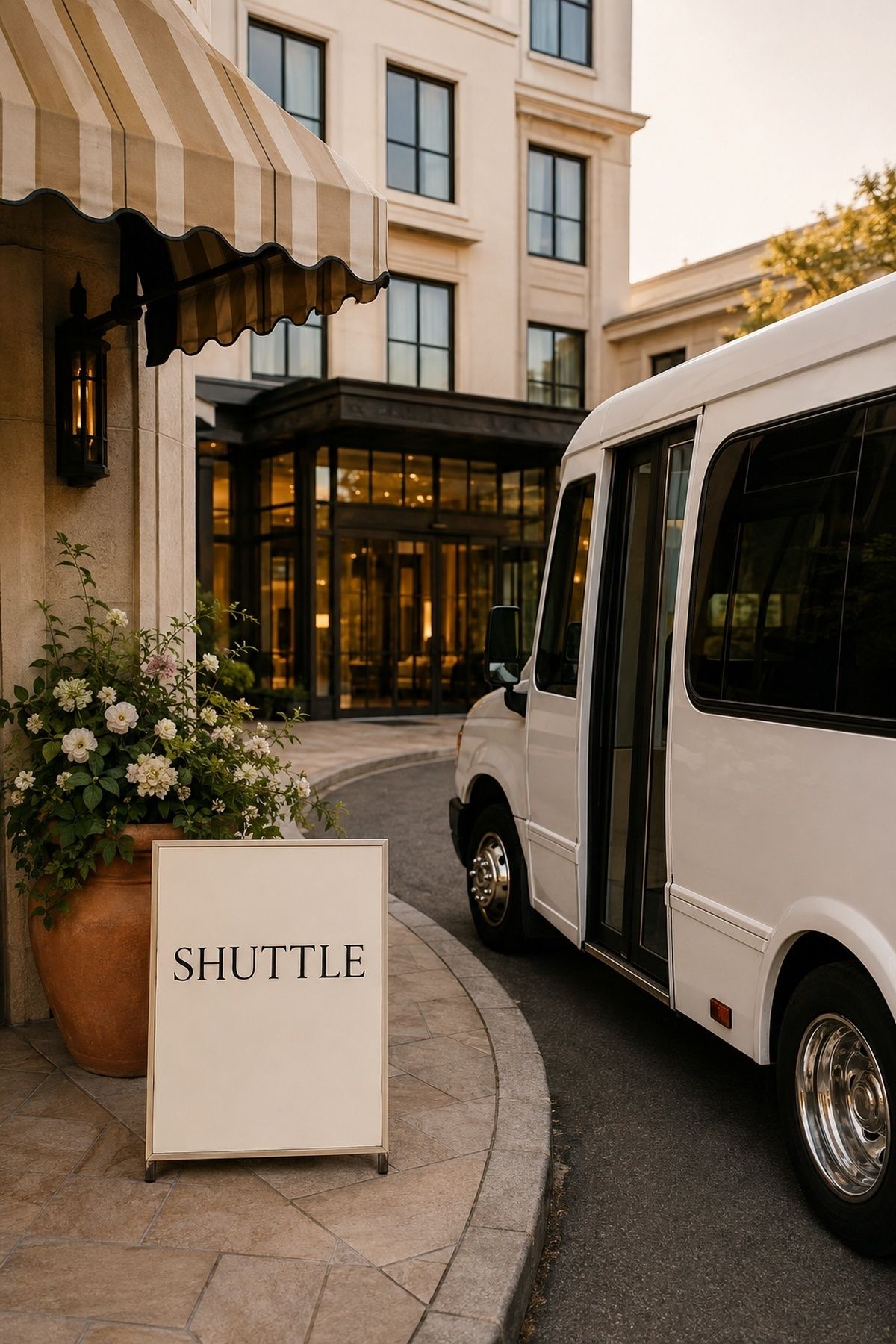
“Meet in the lobby” sounds clear until the hotel has two entrances, a conference wing, a valet circle, and a side door the driver prefers. Wedding pickup instructions need the exact door, the visible landmark, the boarding side of the building, and the time guests should be physically ready to board.
Use plain guest language: north entrance by valet, garden gate on Elm Street, or lobby doors facing the parking lot. Add a map pin or small sign if the location is confusing. When hotel instructions change, update the travel page, text the point person, and keep the public wording consistent.
Ignoring Traffic, Venue Access, Road Rules, And Local Events
Transportation plans sometimes break even when the vehicle is on time. Venue driveways, one-way streets, private roads, bus restrictions, loading zones, parade routes, graduation weekends, stadium traffic, and road construction all change the path. A route that looks simple at noon might feel different during ceremony arrival.
Ask the venue where shuttles actually stage, where large vehicles are allowed to turn, whether guest drop-off reaches the ceremony area, and whether any local events share the date. Send the driver the approved route and access details during the final handoff so nobody has to solve it from a curb.
Forgetting Older Guests, Accessibility Needs, And Weather Exposure
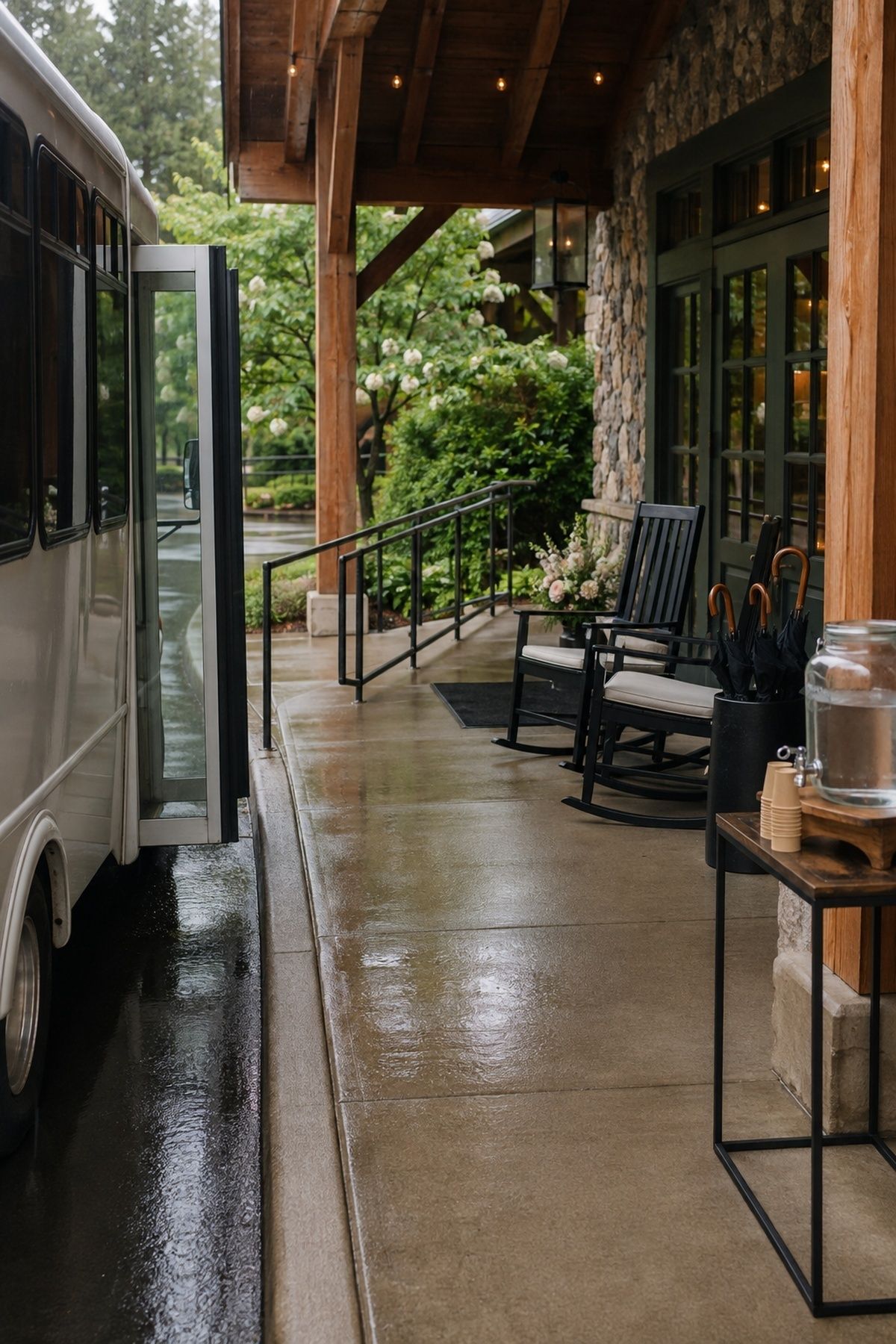
Wedding transportation etiquette is hospitality, especially for guests who should not stand in a long pickup line or walk far across gravel. Older relatives, pregnant guests, anyone using a cane or wheelchair, guests in formal shoes, and people sensitive to heat, cold, rain, or dark pathways need more than a general shuttle message.
Confirm the distance from drop-off to ceremony seating, whether the path is paved, where covered waiting is available, and who helps if someone needs a closer arrival. Add umbrellas, chairs, water, restroom access, or a separate car if the shuttle drop-off leaves vulnerable guests exposed.
Leaving The Wedding Party, Family, Or Photo Transportation Uncoordinated
The wedding party and family are often harder to move than general guests because their timing is layered. Getting-ready locations, first look travel, family portraits, ceremony arrival, reception entrance, and end-of-night belongings all create small handoffs. If nobody owns those handoffs, a parent, attendant, or reader might end up waiting in the wrong place.
Give VIP transportation its own brief. List who rides from hair and makeup, who needs to reach photo locations, who carries garment bags, where family gathers after portraits, and how everyone gets to the reception. A cleaner VIP movement plan keeps those guest-facing snags from becoming visible.
Choosing The Cheapest Option Without Checking Reliability And Backup Support
A low quote looks useful, but it should not be the whole decision. Transportation is time-sensitive, guest-facing, and hard to repair once the day starts. Vehicle condition, insurance, company communication, driver assignment, routing support, cancellation language, overtime charges, and backup availability matter because one late or broken vehicle affects everyone waiting for it.
Ask practical questions before signing: what vehicle is guaranteed, when the driver is assigned, how overtime is billed, who answers after hours, what backup support exists, and what details appear in writing. The price conversation should include reliability, not only seat count.
Making The Couple The Transportation Contact
The couple should not be the number drivers call when the first shuttle reaches the hotel or a guest misses the pickup door. On the wedding day, their phone might be tucked away, their makeup might be finishing, or they might be standing at the ceremony site. Transportation questions need a person who is available.
Assign one day-of contact for drivers and one guest-facing contact if needed. That might be a coordinator, trusted friend, hotel point person, venue manager, or family member who likes logistics. Give them the schedule, driver numbers, passenger counts, route details, and permission to make small decisions without interrupting the couple.
Forgetting Rideshare Limits, Remote Venues, And Cell Service
Rideshare works well in some cities and hotel areas, but it is not a complete plan everywhere. Remote venues, weak cell service, peak pricing, long wait times, limited drivers, private roads, and late-night demand leave guests assuming a car will appear when it will not.
Test rideshare availability at the times guests will travel, then ask the venue what usually happens after receptions. If coverage is weak, say so clearly and provide a safer return option. Guests who plan around reality make better decisions about rental cars, designated drivers, and hotel shuttles.
Skipping A Final Transportation Handoff The Week Of The Wedding
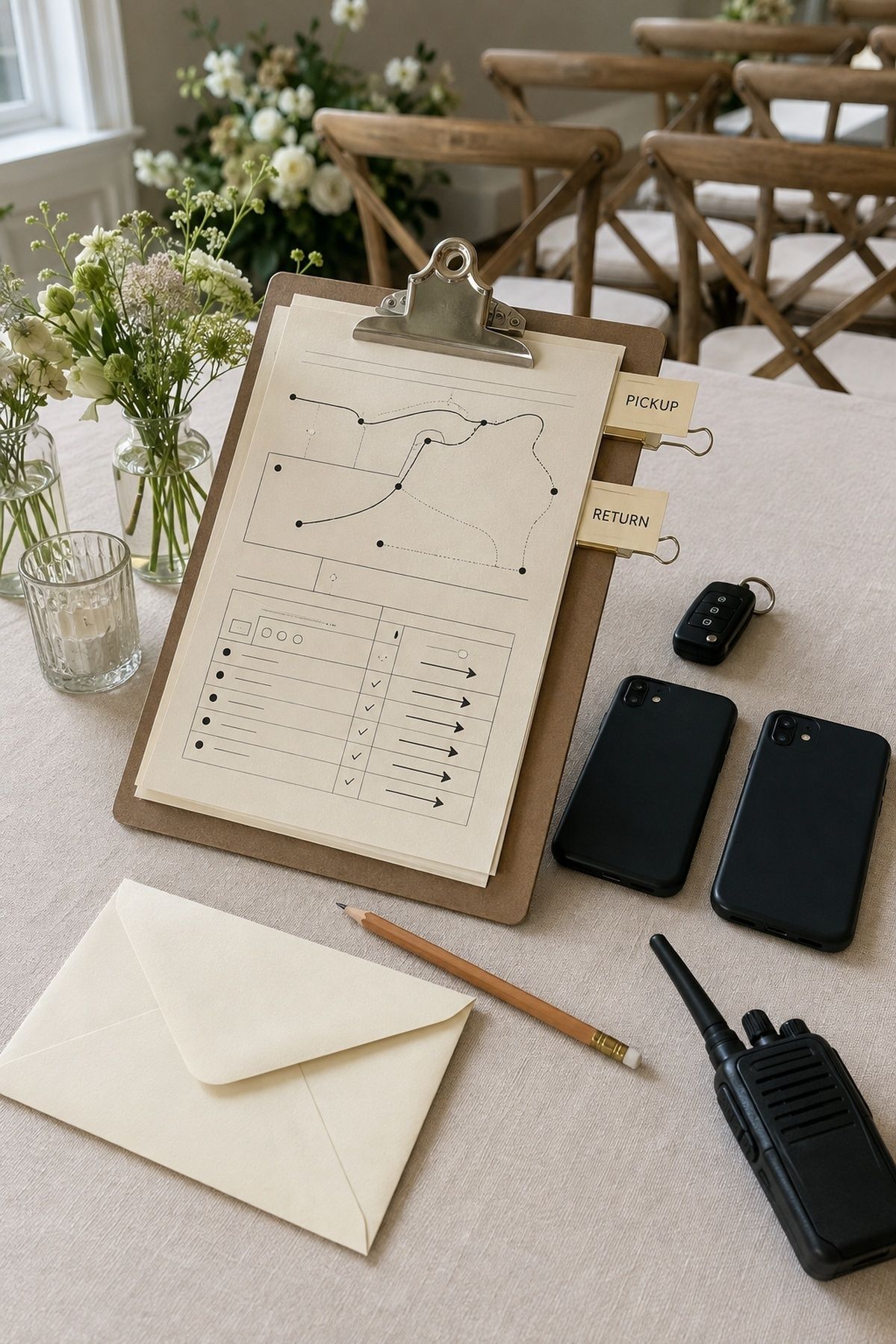
The final week is when transportation stops being theoretical. Guest counts change, hotel pickup numbers firm up, family portrait timing shifts, weather becomes clearer, and driver contacts are assigned. If the plan stays scattered across emails and texts, the handoff depends on memory at the exact moment everyone is busiest.
Create one final sheet or document with passenger groups, pickup doors, departure windows, route details, return trips, accessibility needs, driver names, direct phone numbers, backup contact, and the person who owns each move. In the final week, send that version to the coordinator, venue, hotel, family helper, and transportation provider.
Treating The Transportation Plan Like A Private Vendor Detail
Guests do not need vendor contracts, but they do need the practical parts of the plan. If the shuttle exists only in the couple’s inbox, guests might drive when they should not, miss the first departure, stand at the wrong door, or assume there is a late-night ride after the final shuttle has left.
Share the guest-facing version in a clean, skimmable format: pickup location, ready-to-board time, departure time, ceremony arrival expectation, return windows, and who to contact if plans change. Printed cards, welcome bag inserts, and a wedding website travel section all work when the wording is exact.
FAQ
These answers cover the transportation issues couples most often notice once guest movement, timing, and late-night returns become real.
What are common wedding transportation mistakes?
Common problems include booking a vehicle without mapping passengers, underestimating loading time, giving vague pickup locations, forgetting return trips, ignoring accessibility needs, relying on rideshare at remote venues, and making the couple the day-of transportation contact.
Do you need wedding guest transportation?
You need wedding guest transportation when guests are traveling from hotels, parking is limited, the venue is remote, alcohol is served, older guests need help, weather exposure is likely, or guests should not be expected to arrange a late-night ride on their own.
How many shuttles do you need for a wedding?
The number depends on passenger count, vehicle capacity, route length, boarding time, ceremony arrival needs, and return windows. Count likely riders first, then ask the provider how many loops fit without guests arriving too late or waiting too long after the reception.
When should guests leave the hotel for the ceremony?
Guests should leave early enough to board, travel, unload, walk to the ceremony area, and be seated before the processional begins. For many weddings, that means the first hotel departure is much earlier than the map drive time suggests.
How do you keep wedding guests from getting stranded?
Give guests exact pickup spots, departure times, return windows, and a contact name. Confirm shuttle loops, final rides, driver phone numbers, backup support, and rideshare limits before the wedding day so guests are not guessing at the end of the night.
Who needs transportation on the wedding day?
The couple, wedding party, immediate family, older guests, out-of-town guests, photo VIPs, readers, guests at the hotel block, and anyone who should not drive after the reception might need transportation. The exact list depends on venue layout, parking, timing, and guest needs.
What details should the wedding website transportation section include?
Include the pickup address, exact door, ready-to-board time, departure time, ceremony arrival message, return windows, parking guidance, rideshare warning if relevant, accessibility instructions, and the transportation contact. Keep the wording short enough for guests to scan on a phone.
Final Thoughts
Transportation is one of the clearest forms of wedding hospitality. Guests should know where to be, when to be there, how they are getting back, and who to ask if something changes. The calmer the movement plan feels, the less anyone notices the logistics working underneath the celebration.
As you close the schedule, confirm pickup doors, loading buffers, driver numbers, return windows, accessibility needs, and one day-of owner so wedding transportation mistakes stay out of the aisle.
Last update on 2026-10-03 / Affiliate links / Images from Amazon Product Advertising API