

Who to invite to a post elopement party depends on the purpose of the celebration, the room you are actually hosting, and the people who will honor the marriage as it happened. Start with your closest supporters, set a firm guest-count limit, then add relatives, friends, plus-ones, and coworkers only when they fit the tone, budget, and emotional size of the day.
Deciding who to invite to a post elopement party often feels more delicate than choosing the menu or the date. You already chose a private ceremony for a reason, and now the celebration is asking a different question: who should share this next room with you?
The answer is not everyone who would have expected a traditional wedding invitation. A thoughtful post elopement party guest list reflects closeness, support, budget, space, and the kind of memory you want to create after eloping. Keep the celebration anchored to guest-list decisions, family and friend filters, uneven invitation pressure, plus-one rules, coworkers, hurt feelings, and the people you are not required to host.
Recommended Wedding Products


You Might Also Like These Blog Posts
- How To Plan A Post Elopement Party Without Making It Awkward
- Post Elopement Party Invitation Wording For Every Kind Of Celebration
- Backyard Post Elopement Party Ideas With Real Hosting Comfort
- How To Plan An Elopement Party That Feels Like A Real Celebration
- Post Elopement Reception Ideas For A Celebration That Still Feels Personal
- What To Call A Party After Eloping So Guests Understand The Vibe
Who To Invite To A Post Elopement Party
The heart of the post elopement celebration guest list is not obligation. It is fit. A person fits when their presence makes the party warmer, clearer, and more like the marriage you are celebrating. A person does not fit simply because they heard about the elopement, expected a larger wedding, work with you, share a distant family branch, or once invited you to their own reception.
Before names go onto a spreadsheet, write the party purpose in one sentence. Are you hosting a quiet dinner for immediate family? A friends-first cocktail night? A backyard meal for thirty people? A post elopement reception guest list for a room with speeches and dancing? The purpose gives each invitation a reason beyond guilt.
Start With The People You Would Most Want At The Table

Begin with the smallest honest circle: the people you would choose for one dinner table if money, etiquette pressure, and family commentary fell quiet for an hour. These are usually the people who know your relationship well, make you feel settled, and would celebrate the elopement without turning the party into a trial about why they were not at the ceremony.
Write those names first, then pause. That first group is the emotional core of the room. For some couples it is parents, siblings, grandparents, and two best friends. For others it is chosen family, a few cousins, or the friends who steadied the relationship through hard seasons. Build outward only after that core feels right.
Decide Whether This Is Family-Only, Friends-Only, Or Mixed
A small post elopement party becomes easier to shape when you name the relationship category first. Family-only works well for a private dining room, brunch, or at-home dinner after a quiet ceremony. Friends-only works when relatives have already had a separate meal or when the couple wants a less formal celebration. A mixed list feels best when the two groups already mingle easily.
The tradeoff is emotional clarity. A family-only party excludes friends for a reason guests understand. A friends-only party needs a kind explanation for relatives who expected to gather. A mixed party gives more warmth across your life, but it also raises plus-one, coworker, and extended-family questions more quickly. Choose the category that protects the evening you meant to host.
Invite People Who Will Celebrate The Marriage As It Happened
The best guests for a reception after eloping are people who understand that the private ceremony was a real wedding, not a mistake to correct. They do not need to love every choice you made. They do need to arrive ready to honor the choice instead of spending the evening pressing for explanations.
This filter is especially useful when family feelings are complicated. If someone is disappointed but tender, loving, and able to celebrate, they still deserve consideration. If someone is likely to punish you in public, corner you during dinner, or make the party about their exclusion, the invitation is no longer an act of kindness. It becomes a risk to the whole room.
Avoid expanding the list out of apology.
Apology invitations are rarely peaceful. They sound generous at first, but they often create the exact event the couple eloped to avoid: a larger guest count, higher spend, more explanations, and a room shaped by fear rather than joy. If you want to apologize to someone, speak to them privately. Do not use a catered seat as the apology.
Use a clean test: would you still invite this person if they had never expressed hurt? If the answer is yes, keep them under consideration. If the answer is no, send a warm marriage announcement, a personal message, or a separate coffee date. Your post elopement party guest list should not become a ledger of every disappointed person.
Use Venue Capacity And Budget As Real Boundaries

Space and money are not excuses. They are planning facts. If the private room seats eighteen, the list is eighteen or fewer. If dinner for forty changes the event from comfortable to strained, the guest count should stay lower. Couples often feel guilty naming these limits, but limits make hospitality better.
Decide the maximum number before debating individual names. Then assign seats to categories: immediate family, closest friends, plus-ones, and any elders or special guests. When the count is full, stop adding. A smaller room with enough food, chairs, and emotional ease feels more generous than a crowded room where the couple is quietly worried about every extra plate.
Consider hurt guests only if you genuinely want them there.
Some people were hurt because they love you and imagined standing close to the ceremony. That does not automatically disqualify them. A disappointed parent, sibling, or friend who is willing to celebrate kindly is often a meaningful guest. The key is whether their presence adds repair and warmth, not whether their hurt creates pressure.
If you invite them, set the emotional tone before the party. A short conversation such as, “We know the private ceremony surprised people, and we are looking forward to celebrating with you now,” gives a graceful path forward. If the person continues to demand a different story, the party is not the right place for that relationship work.
Keep Plus-Ones Consistent With The Event Size
Plus-one rules should match the intimacy of the celebration. For a tiny dinner, invite spouses, engaged partners, and long-term partners by name, then skip open-ended guests. For a larger post elopement reception guest list, a broader partner policy often feels right, especially if many guests are traveling or will not know others in the room.
Consistency matters more than generosity. If one cousin receives a casual date invitation and another does not, family chatter grows quickly. Write the rule in plain language before addresses are collected. Then apply it evenly, with rare exceptions only for comfort, travel, caregiving, or a relationship that is clearly central to the invited guest’s life.
Decide whether coworkers fit the celebration.
Coworkers do not need invitations simply because they know you eloped. Invite coworkers only when they are real-life friends outside the office, partners in your everyday support system, or people you would host for dinner even if you changed jobs. Work proximity is not the same as personal closeness.
If office relationships are warm but not intimate, celebrate another way. Bring sweets to work, share a photo, or thank the team for their well wishes. That keeps professional kindness separate from a guest list built around family, friends, and people with a lasting place in your married life.
Handle parents’ invite requests before invitations go out.
Parent requests become harder after invitations are printed. Talk early, especially if parents are contributing to the party. Ask for their most important names, then compare those names to the purpose, capacity, and tone of the celebration. The conversation is easier when you are discussing a number, not judging individual relatives.
A clear boundary sounds calm: “We are keeping this to twenty-four people because the party is an intimate dinner after the elopement. We have room for immediate family and the closest relationships in our lives.” If parents need a social outlet, consider a separate family meal later rather than stretching this party beyond recognition.
Make the invitation list match the formality of the party.
A formal reception after eloping guests list often includes more family branches, family friends, and partners because the event resembles a traditional reception. A candlelit dinner for twelve should feel much more selective. A backyard open house sits between those worlds, depending on food, timing, seating, and whether guests are dropping by or staying for a full hosted meal.
When the invitation list and formality disagree, guests feel confused. A black-tie room with only casual friends feels odd unless that is truly your circle. A backyard taco night with every distant relative becomes logistically heavy fast. Let the event style tell you how wide the invitation net should be.
Accept that not everyone who knows about the elopement needs an invitation.
People knowing about your marriage is not the same as people being invited to the party. Announcements travel quickly through families, social media, friend groups, and workplaces. That does not mean every person who says congratulations now has a claim on the guest list.
Separate announcement circles from hosting circles. The announcement circle is often broad: relatives, old friends, coworkers, neighbors, and extended community. The hosting circle is smaller: people you are feeding, seating, and inviting into a personal celebration. That distinction lets you be generous with the news without opening the room wider than you want.
Party Purpose Filters That Shape The Guest List
Before asking who to invite after eloping, ask what the party is meant to do. Purpose is the cleanest guest-list filter because it shifts the conversation away from social ranking. You are not deciding who matters most in the entire world. You are deciding who fits this particular celebration.
If The Purpose Is A Family Blessing
A family blessing party usually centers parents, siblings, grandparents, children, and the relatives who have been close to the relationship. The guest list often stays very small because the purpose is emotional recognition, not a full social reception. This format works beautifully as a private room dinner, brunch, or at-home meal with a toast.
When you invite family after eloping, be clear that the gathering honors the marriage rather than recreating the ceremony. A short welcome, framed photo, family toast, or shared dessert gives relatives a way to participate without asking the private vows to become public after the fact.
If The Purpose Is A Friends-First Celebration
A friends-first party gives the couple room to celebrate with the people who know their day-to-day life best. This list often includes best friends, chosen family, close siblings if the group is mixed naturally, and the friends who supported the elopement instead of questioning it.
When you invite friends after eloping, resist the urge to include every social circle. College friends, work friends, neighborhood friends, and old friends do not all need to be present at the same event. Choose the group that makes the celebration feel most like your shared life now.
If The Purpose Is A Formal Reception
A formal reception after eloping carries more traditional expectations. Guests often anticipate a seated meal, dressier attire, toasts, music, dessert, and a clear hosted timeline. Because the formality is higher, the post elopement reception guest list often expands beyond the smallest circle, especially when parents are involved.
Expansion still needs limits. Decide whether extended family, family friends, coworkers, and plus-ones fit the actual room. If the formal reception starts to mirror the wedding you skipped, return to the question that matters: do you want this version, or are you drifting because the word reception feels bigger than your real desire?
If The Purpose Is A Casual Open House
An open house allows a slightly wider list because guests come and go during a window rather than sitting for one meal. It suits neighbors, cousins, family friends, and mixed circles when you want a welcoming feel without a traditional reception structure. The guest-list math still matters: food, parking, restrooms, and conversation space set the real upper limit.
For this format, invitations should name the exact window and food style. “Drop by for desserts and champagne” creates different expectations than “join us for dinner.” Clear wording protects the couple from hosting a full meal for a floating crowd that expected more.
If The Purpose Is Repairing Family Distance
Some couples host a post elopement celebration because they want to soften family disappointment. That is a valid purpose as long as it does not swallow the whole event. The list should include people with whom repair is actually possible: relatives who care, elders who need reassurance, or siblings who missed the chance to gather.
Do not invite people whose main role is judgment. A party built for repair still needs joy, food, and ease. If a person needs a hard conversation, schedule it outside the celebration. The event should not ask the couple to do public emotional labor while trying to host.
Likely Invitees For An Intimate Post Elopement Party
Once the purpose and size are set, names become easier. The following groups are common, but none are automatic. Think of them as invitation pools, not requirements. Each name still needs to pass the same test: does this person fit the celebration we are actually hosting?
Immediate Family Who Supports The Marriage
Immediate family is often the first pool because parents, siblings, grandparents, and children often feel deeply connected to the marriage even if they were not present for the vows. Invite them when their presence feels loving, stabilizing, or important to the story you want to share.
Immediate family does not erase boundaries. If a relative has been openly cruel, controlling, or dismissive of the relationship, closeness by blood alone does not require a seat. The most peaceful intimate lists treat family with care while still protecting the couple from behavior that would sour the celebration.
Closest Friends And Chosen Family
Closest friends and chosen family often understand the elopement better than anyone. They know why privacy mattered, what season of life shaped the decision, and what kind of celebration will feel most like you. These are the people who cheer without needing a perfect script.
For a very small party, choose friends who are active in your present life rather than every beloved person from the past. The friend you text every week often fits better than an old friend you still love but rarely speak with. An intimate party rewards current closeness, not nostalgia alone.
Relatives With Ongoing Relationships
Extended relatives deserve consideration when they have a real relationship with the couple. A cousin who visits often, an aunt who partly raised one partner, or an uncle who has been emotionally present often fits the post elopement celebration guest list better than relatives who are invited only to keep a family tree symmetrical.
Symmetry is tempting, but it is not always honest. If one side has ten genuinely close relatives and the other has three, the list does not need equal branches. It needs fairness in spirit: both partners should feel their most important people are represented within the limits of the event.
Mentors, Elders, Or People Who Shaped The Relationship
Some guests are not family or everyday friends, but they carry meaningful weight: a grandparent-like neighbor, a faith leader, a former teacher, a family friend who opened their home, or a mentor who supported the couple through a hard transition. These invitations should be chosen with intention, not used as a new category that expands endlessly.
If a person shaped your relationship and their presence would make the room feel more complete, they deserve serious consideration. If the reason is mainly reputation, expectation, or fear of offense, keep the list focused. Intimacy comes from meaning, not from honoring every social tie.
Partners Of Guests When The Relationship Is Established
Spouses, fiances, live-in partners, and long-term partners are often invited by name, especially when the party is more than a quick toast. Established partners affect guest comfort, travel plans, seating, and the emotional fairness of the room. They are not anonymous plus-ones; they are part of the guest’s life.
For a tiny dinner, you still need a firm partner rule. The cleanest approach is to name invited partners and skip open-ended “and guest” language. That keeps the room personal and prevents the list from doubling before you have chosen the people who matter most.
Children Only If The Party Is Built For Them

Children are a guest-list choice, not a default. A family brunch, backyard afternoon, or early dinner includes nieces, nephews, and the couple’s own children beautifully when the format supports them. A late cocktail party, restaurant tasting menu, or tiny candlelit dinner often feels smoother as adults-only.
Decide by format, not guilt. If children are invited, plan food, seating, timing, and space that respects them. If they are not invited, keep the wording kind and consistent: “We are keeping the evening adults-only.” A clear boundary is more gracious than vague language that forces parents to guess.
Who Not To Invite To A Post Elopement Party
Knowing who not to invite to post elopement party plans is just as important as naming the yes list. A limited celebration needs protected edges. When every maybe becomes a yes, the party stops reflecting the elopement and starts reflecting pressure from everyone around it.
People Invited Only Because They Expected A Wedding
An expected invitation is not the same as a meaningful invitation. Some relatives, friends, or family acquaintances assumed they would attend a traditional wedding. That assumption does not obligate you to host them after eloping, especially if the whole point was a smaller, more private marriage start.
If the relationship is distant, send a warm announcement instead of a party invitation. You are still sharing the news. You are simply not expanding the hosted celebration beyond the circle that fits. That distinction keeps generosity from turning into a full-scale reception by accident.
Guests Who Would Turn The Party Into An Interrogation
Some people are curious in a loving way. Others arrive with a list of grievances. If a guest is likely to ask why they were excluded, criticize the elopement, compare your choice to someone else’s wedding, or repeatedly ask for private details, think carefully before sending an invitation.
Elopement party etiquette does not require you to host conflict. If you want to maintain the relationship, talk privately before or after the party. The celebration itself should be a place where the couple is greeted, fed, toasted, and allowed to enjoy the marriage without defending the ceremony all night.
Distant Plus-Ones Who Change The Scale
Open plus-ones change an intimate room quickly. Ten single guests become twenty seats, and suddenly the couple has less space for grandparents, close friends, or the relatives they truly wanted. For a small post elopement party, unnamed guests should be rare.
This is not about being cold. It is about matching hospitality to the event. If the party is a seated dinner built around personal stories, guests who have no relationship to the couple often feel out of place. Save open plus-ones for larger celebrations where mingling, dancing, and a broader social feel are part of the plan.
Coworkers Who Are Not Part Of Your Personal Life
A workplace celebrates with you without becoming part of your marriage celebration. Unless coworkers are true friends, they do not need to appear on the reception after eloping guests list. Inviting one or two office friends is fine when the relationship exists outside work; inviting the whole team usually shifts the party away from intimacy.
If you worry about office awkwardness, keep the explanation simple: “We are keeping the celebration very small with family and close friends.” Then share a photo or bring treats later. Professional warmth does not require a seat at a personal dinner.
Anyone Added Only To Make The List Look Fair
Fair does not always mean equal. One partner often has a large close family while the other has a few intimate friendships. One side has supportive parents while the other needs firmer boundaries. The goal is a room both partners feel good entering, not a guest count that looks mathematically balanced on paper.
Talk through the emotional weight of each group instead of matching numbers line by line. If both partners feel seen, protected, and represented, the list is doing its job. Adding filler guests for optics usually makes the event bigger without making it kinder.
Guest List Examples For Different Party Types
How many people to invite to post elopement party plans depends on the shape of the event. A twelve-person dinner and a seventy-person reception are both valid, but they should not use the same invitation logic. The examples below show how the purpose changes the list.
A twelve-person dinner party.
For a twelve-person dinner, invite the couple, parents or parent figures, siblings, and perhaps one or two closest friends. Skip coworkers, distant relatives, open plus-ones, and family friends unless they are central to your life. This list works best when the goal is closeness, conversation, and a single table where everyone hears the toasts.
A backyard reception for thirty.
For a backyard reception around thirty guests, start with immediate family, closest friends, established partners, and a few relatives or elders who matter deeply. Children fit if the afternoon is designed for them. This guest count allows warmth without forcing the couple into a full reception plan with a large rental order and complicated seating.
A restaurant room for forty-five.
A restaurant room for forty-five guests suits a mixed post elopement reception guest list. Invite immediate family, close extended family, dear friends, named partners, and perhaps a few family friends if parents are hosting or contributing. Keep the list tied to the room. Once the private dining capacity is full, the list is complete.
A larger celebration for seventy or more.
A larger celebration often includes more cousins, family friends, broader friend groups, and coworkers who are also real friends. At this size, the party starts to feel closer to a traditional reception, so invitations, RSVP tracking, seating, and food expectations need sharper organization. The guest list is wider, but it should still reflect intention rather than obligation.
Invitation Clarity For A Limited Guest List
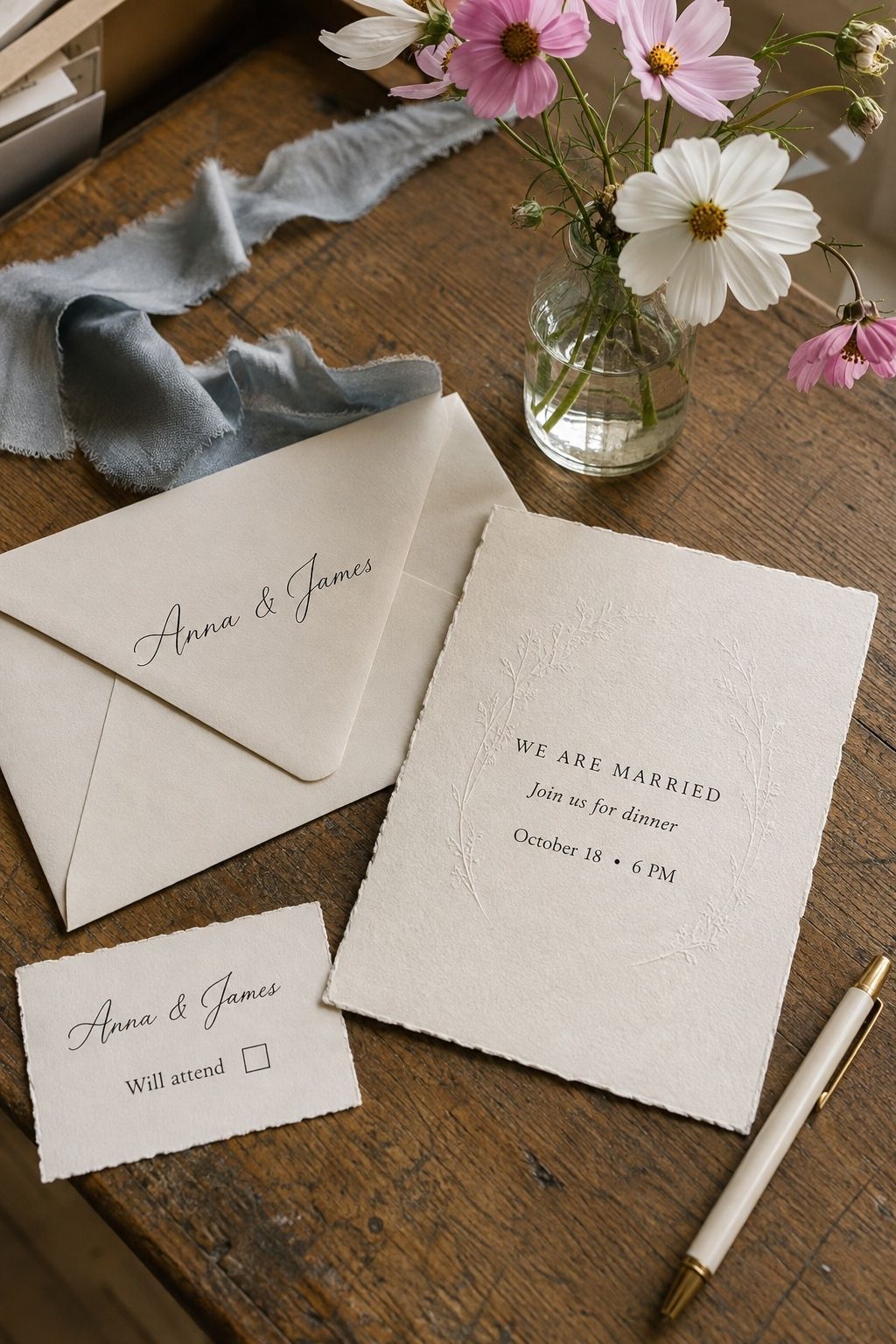
Post elopement party invitations should tell guests three things quickly: the couple is already married, the event is the celebration, and attendance is limited to the people named. Clear wording prevents guests from expecting a ceremony, adding extra guests, or assuming the invitation extends to a full household.
Use named invitations for intimate events. Address the envelope or digital invitation to the exact guests invited. On the RSVP form, list the invited names rather than leaving a blank guest-count field. If the celebration is adults-only or partner-limited, state that calmly in the details area. Short, precise wording protects the small guest list more gracefully than a long explanation.
When someone asks for an extra invitation, reply with warmth and finality. “We wish we had room to include everyone, but we are keeping the party very small” is enough. Do not over-explain the venue, budget, family politics, or elopement decision. The more reasons you offer, the more points people have to negotiate.
FAQ
Who should you invite to a post elopement party?
Invite the people who fit the purpose, size, and emotional tone of the celebration. Start with immediate family, closest friends, chosen family, and supportive loved ones, then add partners or extended relatives only if the room and budget allow. Write your guest-count limit first so the list stays connected to the party you actually want.
Do you have to invite everyone to a post elopement party?
No, you do not have to invite everyone to a post elopement party. The celebration does not need to mirror a traditional wedding guest list. Choose the people you are truly prepared to host, then send broader marriage announcements to others. Keep the invitation wording clear so guests understand the party is intentionally small.
Should you invite people who were upset about the elopement?
Invite upset people only when you genuinely want them there and trust them to celebrate kindly. Disappointment alone does not require exclusion, but pressure, criticism, or public resentment changes the room. Speak privately before invitations go out, set the tone gently, and keep the party list focused on people ready to honor the marriage.
Can a post elopement party be only close family and friends?
Yes, a post elopement party can be only close family and friends. That is often the best fit for couples who eloped to protect intimacy, budget, privacy, or emotional ease. Choose a dinner, brunch, or backyard format that supports a smaller guest count, then address invitations by name to avoid accidental extras.
Do you invite coworkers to a post elopement party?
Invite coworkers only if they are also close personal friends. A colleague who knows about the elopement or celebrates with you at work does not automatically need a party invitation. If the office is excited, share a photo or bring a small treat later, while keeping the hosted guest list for family and personal relationships.
Should the party guest list match a traditional wedding guest list?
No, the party guest list does not need to match a traditional wedding guest list. A post elopement celebration is shaped by the event you are hosting now, not the wedding you chose not to have. Set the format, guest-count limit, partner rule, and family boundaries first, then invite the people who fit that plan.
Final Thoughts
The loveliest answer to who to invite to a post elopement party is the one that protects the reason you eloped in the first place. Invite the people who will sit down, lift a glass, ask about the day with tenderness, and make the celebration feel like a natural extension of your marriage rather than a correction of it.
Choose a guest list that gives you enough space to eat well, speak honestly, thank the people closest to you, and walk away feeling glad you gathered at all; the party should honor the private ceremony and protect your peace.
Last update on 2026-10-04 / Affiliate links / Images from Amazon Product Advertising API