

A destination elopement party when you get home works best as a relaxed homecoming: give yourselves travel recovery, tell close family first, invite guests to a clearly named celebration, and share the trip through food, photos, and a short toast instead of staging a second ceremony.
If you are planning a destination elopement party when you get home, the point is not to make up for the wedding people missed. The point is to bring your closest people into the joy after travel in a way that feels honest, rested, and easy to understand.
A faraway elopement has its own emotional shape. You had the vows, the scenery, the quiet decision, the trip, and probably a few travel surprises that only the two of you fully understand. The home celebration should give family and friends a warm place to cheer for the marriage without turning your private ceremony into a replay.
Think of the party as a bridge. One side is the destination elopement you already chose. The other side is the local circle that wants to hug you, hear a few stories, see a handful of favorite photos, and feel included in this new chapter. That bridge needs clear timing, a clean guest list, simple wording, and a party format that fits your energy after travel.
Recommended Wedding Products


You Might Also Like These Blog Posts
- How To Plan A Post Elopement Party Without Making It Awkward
- Who To Invite To A Post Elopement Party When You Want It Intimate
- Post Elopement Party Invitation Wording For Every Kind Of Celebration
- Backyard Post Elopement Party Ideas With Real Hosting Comfort
- Destination Wedding Mistakes That Follow Guests Home
- How To Plan An Elopement Party That Feels Like A Real Celebration
destination elopement party when you get home
The main decision is whether your home celebration should feel like an easy gathering, a true reception, or something in the middle. Once you choose that lane, every detail gets simpler: timing, guest list, food, wording, clothing, photos, music, and the outside support your plans require.
A post destination elopement celebration should not ask you to relive the whole ceremony for an audience. Let the destination stay special. Let the home party do a different job: welcome you back, gather your people, and give everyone a gracious way to celebrate the marriage that already began.
Start with a one-page plan before you book anything: date range, guest count, rough spend, meal format, and the one feeling you want guests to carry home. That small planning frame keeps the celebration focused. It also gives you language for refusing details that look pretty online but do not serve the people in the room.
Think about what guests actually missed. They did not miss your whole relationship. They missed the moment of public witnessing. A local celebration answers that with presence, gratitude, and a few chosen stories rather than a second vow exchange. That shift removes pressure from everyone.
Tell Close Family Before Sending Party Invitations
Start with the people who would feel genuinely hurt if they learned about the marriage from a card or group message. Parents, siblings, grandparents, and a few closest friends often deserve a call before the wider invitation goes out. That call does not need to defend the elopement. It simply gives the news with tenderness and lets them hear your voice.
Keep the wording steady: you got married privately during the trip, you are happy, and you are planning a local celebration so everyone gets time together. This order keeps the party from feeling like a surprise correction. It also lets the invitation arrive as good news instead of damage control.
If a parent or sibling reacts strongly, resist solving the whole feeling in that first conversation. Acknowledge that the news is big, repeat that the marriage was chosen with love, and share one concrete way they will be included at the home party. A clear next moment gives the relationship somewhere warmer to go.
Wait Until You Have Recovered From The Trip
Travel recovery is part of the plan, not an afterthought. Give yourselves enough time to unpack, sleep, handle legal documents, return rentals, collect photos, and settle back into ordinary life before becoming hosts again. A party the weekend after a long flight often sounds efficient on paper and exhausting in real life.
For many couples, three to eight weeks after returning home feels comfortable. That window keeps the excitement fresh while giving you breathing room. If work schedules, weather, family travel, or photo delivery require more time, choose the date that lets you welcome guests calmly instead of arriving at your own party depleted.
Build this pause into your budget too. Last-minute hosting after flights often leads to rushed rentals, expensive convenience orders, and decisions made from fatigue. Waiting a little lets you compare simple options, gather addresses, pick favorite photos, and decide what the celebration actually needs.
If your photographer needs several weeks, plan around a small preview gallery instead of delaying until every final image arrives. A dozen favorite photos are enough for a table display or short screen moment. Guests usually want to see your faces, the setting, and the feeling of the day more than the full album.
Choose A Date That Fits Local Guests
Once you are rested, look at the people you most want in the room. A destination elopement reception at home usually matters most to family and friends who could not travel, so their practical needs deserve weight. Avoid major local holidays, school conflicts, and weeks when key guests already have large commitments.
You do not have to plan around everyone. You do need to protect the emotional center of the room. Pick the handful of people whose presence would make the celebration feel complete, check their availability, then set a date before the planning sprawls.
A home reception after destination wedding travel also has a seasonal rhythm. A backyard meal needs daylight and weather cover. A restaurant dinner needs availability. A brunch needs enough notice for families. Choose the date that supports the type of party you want instead of forcing the party into the first open weekend.
Leave Space Between The Announcement And The Party
The announcement and the invitation do different jobs. The announcement tells people you are married. The invitation asks them to gather. When those arrive together, some guests process the news and the logistics at the same time, which creates confusion or a bigger emotional reaction than needed.
A cleaner sequence is to tell close family, share the marriage news, then send party details after the first wave of responses has settled. Even a short pause lets the post destination elopement celebration feel intentional rather than rushed.
This gap also protects the invitation from doing emotional labor it was never meant to do. Once people know you are married, the party details feel easier to receive. The invite becomes a warm request for their presence, not the first place they discover a major family event already happened.
Host A Restaurant Dinner

A restaurant dinner is often the simplest party after destination elopement travel because the space, food, staff, restrooms, cleanup, and atmosphere already exist. It works especially well for twenty to forty guests, immediate family, and a circle that values conversation over dancing.
Ask for a private room or semi-private area, a concise menu, and a clear minimum. Add one small travel detail, such as a signature drink inspired by the destination or printed menu cards with the elopement location. The room then feels connected to the trip without asking you to produce a full reception.
The best restaurant dinners have a clear beginning and end. Ask whether you will have a welcome drink, plated meal, shared dishes, dessert, and time for one toast. That small timeline keeps the evening from drifting while still leaving space for everyone to talk with you.
For a destination elopement reception at home, restaurant service also reduces decision fatigue. You are not choosing every fork, linen, chair, and trash plan. You are choosing the room, menu, timing, and tone. That simplicity is valuable after a trip that already carried wedding emotion.
Ask the restaurant how speeches, music, cake, and photos work in the room before you sign. Some spaces have sound limits, service timing rules, or dessert fees that affect the feel of the night. It is easier to adjust the format early than to fight the room later.
Plan A Backyard Homecoming

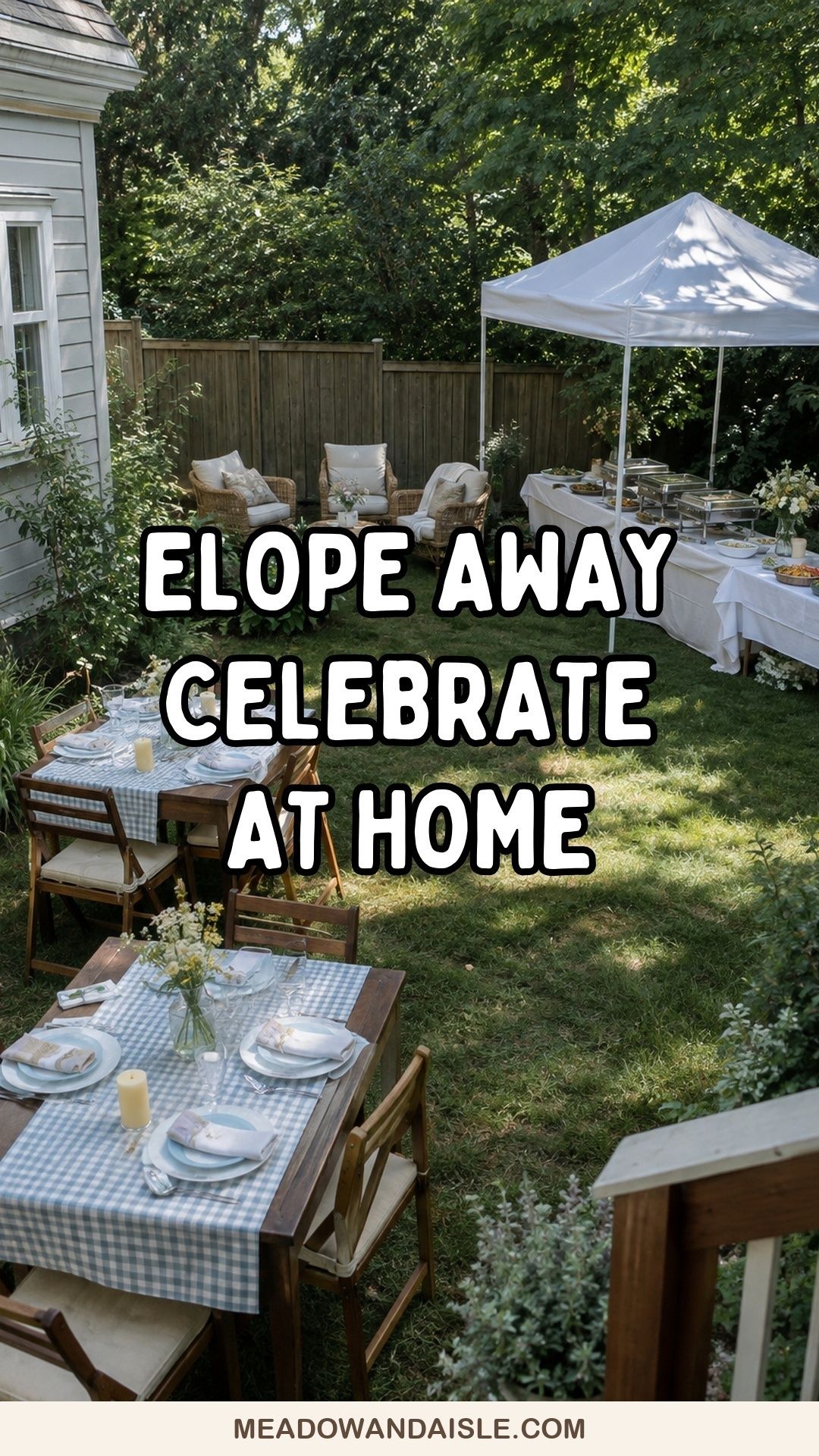
A backyard elopement homecoming party feels personal when the guest list is close and the weather is dependable. It gives you freedom with music, photo displays, casual seating, and family-style food. It also asks more from the host, so be honest about rentals, parking, bathrooms, lighting, trash, weather cover, and cleanup.
If you choose a home setting, keep the format generous but contained. A catered buffet, a few comfortable seating zones, a dessert table, and a short toast often create enough structure. Trying to add ceremony seating, aisle decor, a full first dance, and formal entrances quickly turns the backyard into a second wedding set.
Think through sound and flow before decor. Guests need to hear the toast, find drinks, move through food without crowding the kitchen, and sit if the evening runs long. A few practical rentals often matter more than extra flowers because comfort is what lets people stay present.
If the party is at a family home, name one person who is not you as the point of contact for setup questions. The couple should not spend the first hour answering where to put ice, trash bags, dessert trays, and extra chairs. A clear point person lets you arrive as newlyweds, not event staff.
Serve Brunch Instead Of Dinner

Brunch gives a small party after destination elopement travel a lighter mood. It works well for families with children, older relatives, budget-conscious couples, and guests who prefer daytime driving. The menu feels celebratory without demanding late-night entertainment.
Choose a start time that lets the morning feel easy: late morning coffee, a simple meal, a mimosa or sparkling juice station, and a short photo moment. Brunch also reduces pressure around dress code. Guests understand that they are coming to celebrate, not attend a black-tie reprise.
Brunch also gives you a gentle way to include destination details. Serve pastries, fruit, coffee, or one dish inspired by the place you eloped, then place a few photos where guests naturally gather. The event feels personal without needing a dramatic reveal.
Create A Photo Reveal Gathering

A photo reveal gathering centers the story without stretching the evening. This format works well when the destination was visually meaningful and guests are excited to see where the vows happened. Keep the display edited: one short slideshow, a few framed prints, and a small album invite curiosity better than hundreds of images on a loop.
Introduce the photos with a brief welcome. Share what the place meant, one funny travel moment, and one tender memory from the vows. Then let guests mingle. People came to celebrate you, not sit through a full travel presentation.
Give guests permission to ask questions without making the whole party about the trip. Place captions with names of the location, date, and one-line memories. That lets shy guests enter the story easily while close family still gets the emotional texture they came hoping to feel.
Consider printing a small set of photos before the party rather than relying only on screens. Printed images slow guests down in a good way. A framed ceremony portrait, a candid travel image, and one landscape photo often tell the story more gracefully than a long digital sequence.
That calm center keeps the post destination elopement celebration personal, even when the room includes several family circles.
Use A Cocktail And Dessert Format
A cocktail and dessert party suits couples who want a polished but low-pressure after destination wedding reception. It works after dinner, in a lounge, private room, gallery, family home, or small venue. The shorter format lets you host more people without building a full seated meal.
Be very clear about timing and food. If the party begins at seven-thirty, guests understand they should eat dinner first. If it overlaps dinner hours, provide enough savory food to count. Hospitality matters more than formality here.
This format benefits from strong hosting signals. Have trays or stations ready when guests arrive, mark the bar clearly, and choose music at conversation volume. A compact party still needs care; it just spends that care on movement, warmth, and good pacing instead of a seated dinner.
Because the party is shorter, the welcome matters. Greet guests with something in hand, whether that is sparkling wine, lemonade, coffee, or a small dessert bite. The first five minutes tell people whether this is a polished celebration or a vague gathering.
Invite Guests To An Open-House Celebration
An open-house celebration works when the guest list includes several family circles that do not need to arrive at the same moment. It feels relaxed, especially for a home reception after destination wedding travel, and it reduces the pressure of a formal timeline. For a destination with music built in, see these jazz club wedding destination ideas.
Set a clear window, such as two to five in the afternoon, and plan one small anchor moment in the middle: a toast, cake cutting, or photo story. Without that anchor, the party risks feeling like a drop-in errand. With it, guests get both flexibility and meaning.
Open-house timing works best when the invitation names the central moment. For example, guests are welcome any time during the window, with a toast at three. That one sentence prevents important people from arriving after the emotional center has passed.
Food planning needs extra clarity for this format. Replenish small batches instead of placing everything out at once, and save a little dessert for later arrivals. Guests who come toward the end should still feel hosted, not like they reached the leftovers after the real party ended.
Keep One Reception Tradition If It Matters
You are allowed to keep one tradition from a reception if it feels sincere. A first dance in the living room, a cake cutting, a parent toast, or a guest book all work when chosen intentionally. The key is restraint.
Pick the tradition that carries real emotion and let the rest go. A single meaningful ritual gives guests a shared moment. A full list of reception cues turns the celebration into something you were trying to avoid.
If you are unsure which tradition to keep, ask what you would miss years from now. If the answer is hearing a parent speak, make room for a toast. If the answer is dancing together, choose one song. If the answer is neither, skip the tradition and spend that time with guests.
A toast is often the easiest tradition to keep because it honors the guests who gathered without restaging the vows. Keep it under three minutes. Thank people for celebrating at home, share one sentence about the destination, and invite everyone back into the party.
Skip traditions that require guests to pretend they are at the destination ceremony. A bouquet toss, formal processional, or repeated vows often feels confusing when the marriage already happened. A cake cutting, toast, guest book, or first dance usually translates more naturally to a local celebration.
Invite The People You Truly Want To Host
The guest list should start with the people you would happily feed, hug, and talk with after the trip. A local party is not an obligation to include everyone who was absent from the destination elopement. It is still your celebration, and the size should match your energy, space, and budget.
Write the first list without politics: immediate family, closest friends, mentors, and anyone whose support has been steady. Then add practical limits. If the number jumps from thirty to ninety, choose a different format or return to the core circle.
A destination wedding reception back home often tempts couples to widen the list because the ceremony was private. Pause before doing that. A guest who barely knows the relationship will not feel more included by a crowded room. The people who matter most usually need attention more than scale.
If coworkers, extended relatives, or parents friends enter the conversation, ask whether you would spend ten unrushed minutes with each person at the party. If the honest answer is no, the event is probably growing past its purpose.
If the list still feels tense, split it into must-host, would-love, and pressure-only groups. The pressure-only group is where most unwanted growth happens. Seeing those names separately makes the decision less emotional and keeps your home celebration aligned with the marriage you actually chose.
Separate Family Expectations From Party Capacity
Family expectations often surface after a destination elopement because loved ones are proud, surprised, disappointed, or all three. Listen with care, then separate feelings from logistics. Someone wanting a large gathering does not mean you have the money, space, or stamina to host one.
Use a calm boundary: you are excited to celebrate, and you are keeping the event intimate so it feels personal. Offer a specific role if that softens the conversation, such as bringing a favorite dessert, making a toast, or choosing a song for dinner. A role often feels better than a bigger guest list.
If relatives offer to pay for a larger event, decide whether the offer changes the emotional shape you want. Extra money sometimes solves space or catering limits, but it does not automatically solve stress, hosting energy, or the wish for intimacy. Accept support only when the celebration still feels like yours.
Write down the maximum number before discussing extras with family. A number chosen in private gives you steadier language later. Without it, every suggestion sounds negotiable, and the guest list expands one exception at a time.
Include Guests Who Could Not Travel Without Apologizing
Many guests understand that a destination elopement was never designed for a full crowd. Include them with warmth, not guilt. Your invitation, welcome, and toast should make them feel wanted at this celebration rather than reminded that they missed the ceremony.
A simple line during the party works well: you are grateful to be home with the people who have loved you through this season. That sentence includes guests without opening a courtroom around the elopement choice.
This matters most with older relatives, close friends with small children, and loved ones who could not afford destination travel. Give them dignity. Share joy rather than explanations. The home party should feel like a real welcome, not a consolation prize for people who stayed behind.
The same principle applies to guests who were invited to the destination but declined. Welcome them warmly. Do not revisit why they could not come unless they bring it up gently. The home party should close distance, not reopen travel math. Guest guilt is one of those destination wedding mistakes worth sidestepping.
Plan For Children, Elders, And Travel-Weary Relatives
Local guests have needs too. Children need food they recognize, elders need seating and easy parking, and relatives who already traveled for other family events need a reasonable schedule. A thoughtful guest list includes comfort, not only names.
Before finalizing the party, walk through arrival, seating, noise, bathrooms, food timing, and goodbye flow. Small celebrations feel beautiful when guests know where to go, what to eat, and when the main moment is happening.
Guest comfort also shapes timing. A noon brunch often suits grandparents and families better than a late cocktail party. A restaurant private room often suits mobility needs better than a lawn. The most loving format is often the one that lets your actual people participate with ease.
Name The Event Honestly
The name sets expectations before guests move into the details. Use language such as marriage celebration, homecoming party, celebration dinner, or reception after our elopement. Avoid wording that sounds like guests are being invited to witness vows unless you truly plan a ceremony.
This is especially important for an elopement party back home. Guests should arrive knowing the marriage already happened and the gathering is for celebration, photos, food, and connection. Clear naming prevents awkward questions at the door.
Avoid clever wording if it hides the truth. Guests should not have to decode whether they are attending a ceremony, reception, anniversary party, or casual dinner. A plain event name lowers anxiety and keeps questions from piling up in your inbox.
Say The Ceremony Already Happened
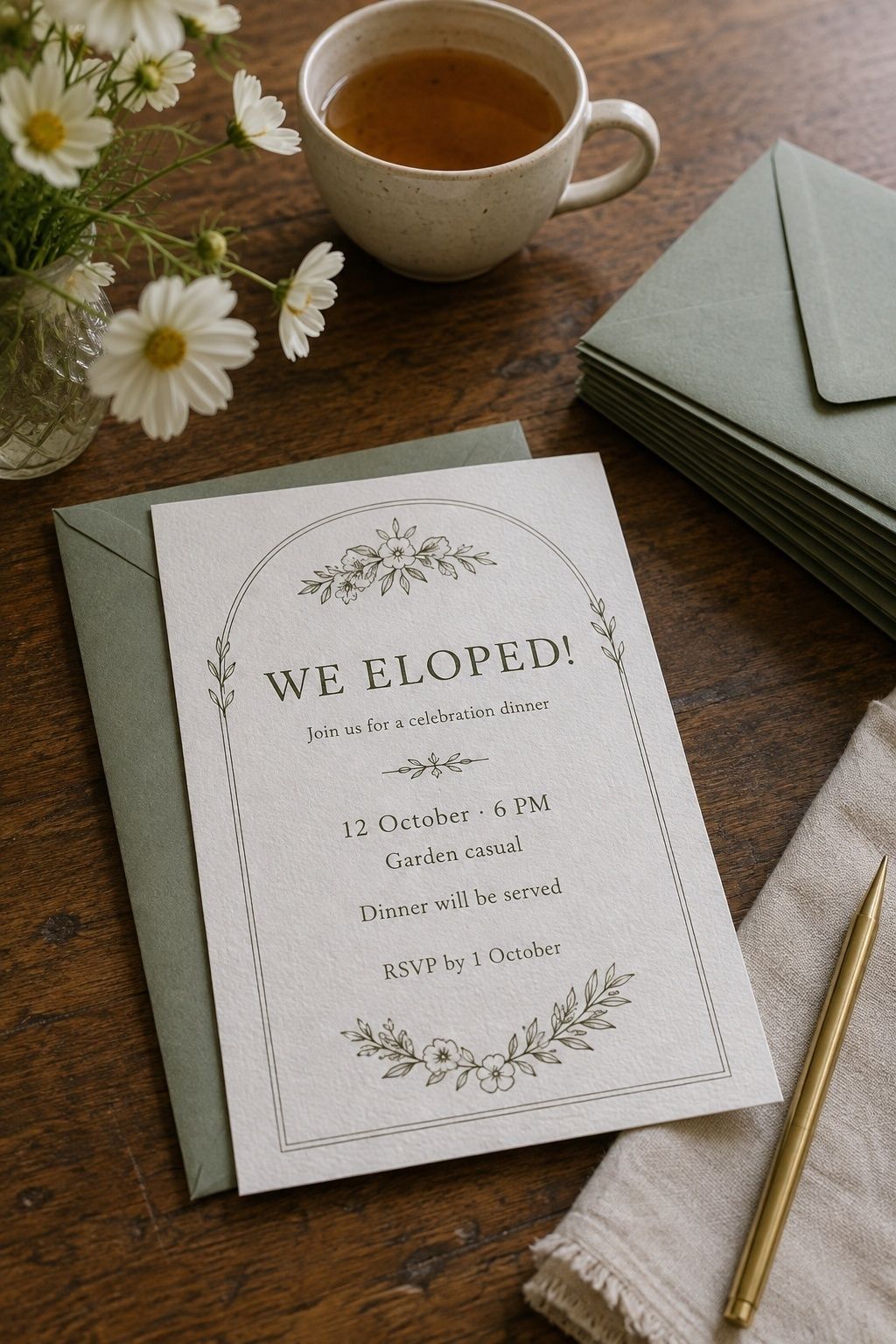
Your invitation should say the ceremony already happened in the first few lines. Do not hide that detail at the bottom. Guests need the emotional frame before the address, dress code, and RSVP date make sense.
Keep it joyful and plain: you were married privately during your destination trip, and you would love to celebrate at home. That single idea removes most confusion around gifts, attire, speeches, and whether there will be vows.
This does not require a long explanation. One sentence is enough. The details that follow should then point toward the new event: where to arrive, when to RSVP, what to wear, and what kind of food or gathering to expect.
Send the invitation after the closest people know. That order makes the wording feel clean. Guests receive a clear celebration invite, and the people most emotionally connected to the elopement do not feel grouped with everyone else.
Explain The Dress Code And Meal Clearly
Invitation clarity is kindness. Tell guests the dress code, meal shape, start time, end time if useful, and whether the event is dinner, brunch, cocktails, dessert, or open house. People relax when they know how to dress and whether they should arrive hungry.
For a post elopement party after travel, clarity also gives the event its own shape apart from the destination ceremony. The invitation should point guests toward the home celebration in front of them, not the wedding they did not attend.
Dress code language should match the room. Garden casual, cocktail attire, Sunday brunch, or festive dinner attire all give guests a better picture than vague formality. Meal language should be just as direct: full dinner, light bites, dessert, brunch, or drinks and appetizers.
RSVP wording should also match the meal. A plated dinner needs firm counts and dietary details. A casual open house needs a simpler yes-or-no reply. A cocktail event needs a final number for drinks and bites. Clear RSVP language protects your budget and prompts guests to answer quickly.
Handle Gifts And Registry Questions Lightly
Gift language needs extra care after an elopement because some guests worry reception-only parties are built around presents. If you have a registry, keep it quiet and share it only when asked or on a wedding site that guests choose to visit. If you prefer no gifts, say that their presence is enough.
Always plan thank-you cards for anyone who gives a gift, hosts, travels, or contributes. Gratitude closes the loop and keeps the celebration from feeling transactional.
If a relative asks where to send something, answer graciously and privately. If no one asks, leave the registry out of the main invitation. A reception-only celebration feels more generous when the first message guests receive is about presence, not presents.
For thank-you cards, keep a simple tracker from the beginning. Record gifts, practical support, hosted moments, and travel efforts as they happen. Gratitude feels easier when you capture it during the celebration season instead of reconstructing it later.
FAQ
How Do You Host A Destination Elopement Party When You Get Home?
Host it as a homecoming celebration, not a second ceremony. Give yourselves time to recover, tell close family first, choose a simple local format, and make the invitation clear that you are already married. Then build the party around food, favorite photos, a short toast, and enough unstructured time for guests to congratulate you.
When Should You Have A Party After A Destination Elopement?
Most couples do best with a few weeks of space after travel. Three to eight weeks usually gives enough time for rest, photo delivery, invitations, and practical planning while the elopement still feels fresh. If family schedules or seasons matter, choose the date that lets key guests attend without forcing you back into hosting mode too quickly.
What Do You Call A Party After A Destination Elopement?
Call it a marriage celebration, homecoming party, celebration dinner, or reception after our elopement. The best name depends on the formality of the event, but it should make clear that the ceremony already happened. Choose wording that matches the party guests will actually attend, then repeat that language on the invitation and RSVP details.
Who Should You Invite To A Destination Elopement Party At Home?
Invite the people you genuinely want to host and thank in person. Start with immediate family, closest friends, and loved ones who supported the relationship, then adjust for budget, space, and energy. You do not owe a local party to everyone who was not at the destination. A smaller guest list often keeps the celebration warmer.
How Do You Share Destination Elopement Photos At A Home Party?
Share photos in a tightly edited way. Choose a short slideshow, framed prints, a small album, or a display table with a few travel details. Add a short welcome that tells guests where you went and what felt meaningful. Then let people look at their own pace so the party still feels social.
Do You Need A Reception After A Destination Elopement?
No, you do not need a reception after a destination elopement. Host one only if it feels joyful, useful, and realistic for your budget and energy. If a full party feels too much, choose a smaller dinner, brunch, announcement card, or family visit instead. The marriage is complete without a second event.
Final Thoughts
A destination elopement party when you get home becomes easier when you stop treating it as proof that the elopement was enough. It was enough. The local celebration is simply another expression of the same marriage, shaped for the people and place waiting for you at home.
The most memorable home parties usually have one clear center. It could be a shared meal, a photo table, a toast, a favorite song, or a dessert from the destination. Choose that center early, then let the rest of the evening support it quietly.
Choose the timing that protects your energy, the format that fits your guest list, and the wording that tells the truth kindly. Let the celebration feel complete on its own terms.
Last update on 2026-10-05 / Affiliate links / Images from Amazon Product Advertising API