

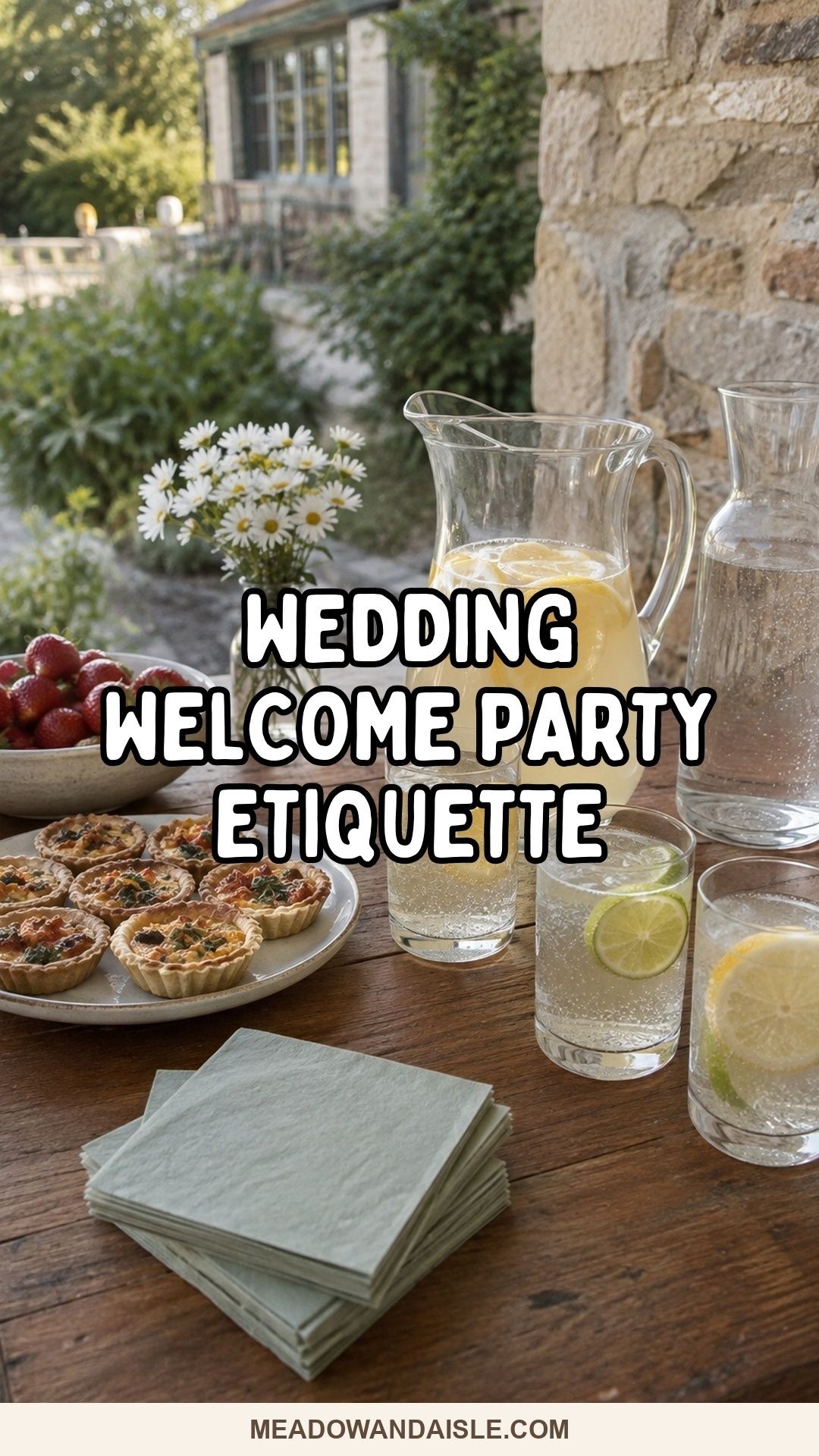
Wedding welcome party etiquette is about offering guests a warm first gathering without creating another full wedding event. Decide whether the party is truly needed, invite by a clear group such as all guests or all out-of-town guests, explain the plan on the invitation or wedding website, serve simple food and drinks, collect RSVPs, and set an end time that protects the wedding day.
A welcome party sounds easy until the guest list starts asking hard questions. Is it for everyone, only travelers, only family, or only the people who would have been at the rehearsal dinner anyway? Once you add food, drinks, invitations, and a second outfit, the night before the wedding starts to feel suspiciously close to another reception.
The best welcome parties are generous without being oversized. They give guests a place to arrive, hug, meet the other side, and settle into the weekend. They do not ask the couple to host a second wedding meal, make another round of speeches, or spend the next morning exhausted.
That balance matters most for small weddings. When the actual wedding is intimate, every extra event feels personal. A casual welcome drink for travelers feels lovely. A formal dinner that accidentally excludes half the guest list feels confusing. Use the etiquette below to make the invitation logic, budget, and tone easy for guests to understand.
Recommended Wedding Products


You Might Also Like These Blog Posts
- Post Wedding Brunch Etiquette For One Last Goodbye Without One More Obligation
- Party After Eloping Etiquette For Sharing The Joy Without Rewriting The Day
- Small Wedding Plus One Etiquette For A Gracious Guest List
- Small Wedding Etiquette Rules That Keep Things Kind And Clear
- Small Wedding Guest List Etiquette For A Guest List That Feels Fair
- Backyard Post Elopement Party Ideas With Real Hosting Comfort
Wedding Welcome Party Etiquette
Wedding welcome party etiquette starts with one question: what does this event need to do for your guests? If people are flying in, checking into hotels, and meeting each other for the first time, a short welcome gathering makes the wedding weekend feel calmer. If most guests live nearby and the wedding itself is already intimate, the kindest choice could be skipping it and saving everyone time, money, and energy.
A welcome party is optional. It is not a required payment guests receive for traveling, and it is not a sign that the wedding is incomplete without a pre-event. Think of it as a hospitality layer. If it gives guests clarity and ease, host it. If it creates budget stress or social confusion, let the wedding day carry the celebration.
The etiquette gets easier when you pick a rule before you pick a menu. Common rules include all wedding guests, all out-of-town guests, immediate family and wedding party, or a tiny rehearsal-dinner-only group with no separate welcome party. The messiest version is inviting people based on vibes, hoping nobody compares plans. Guests do compare plans, especially when they are staying at the same hotel.
For small weddings, the cleanest public wording is usually brief and specific. Say who is invited, where to go, what time it starts, what kind of food or drinks to expect, and whether an RSVP is needed. Avoid making the event sound more formal than it is. Welcome drinks, dessert, light bites, and open-house wording all set different expectations than welcome dinner.
A strong test is whether a guest could make a plan from the invitation alone. If the card says casual welcome drinks, guests should know they have time to eat first. If it says dinner, they should be able to arrive hungry. If the location is outdoors, they should know the surface, weather plan, and dress level. The more travel involved, the more practical the details should be.
It is also acceptable to make the welcome party less polished than the wedding. In fact, that is usually better. Guests are not looking for another aisle moment. They are looking for a low-pressure place to say hello before the formal day begins. When the party feels intentionally simple, the wedding day still feels special.
The night should also have an ending. A warm start loses its charm when it becomes a late night that drains the wedding morning. Choose a finish time, share it when needed, and build the event around mingling rather than a long program. Guests rarely need another schedule. They need to know they are welcomed and when they should head back to rest.
Welcome Party Vs Rehearsal Dinner
The rehearsal dinner and welcome party often happen close together, which is why guests confuse them. They are not the same event. The rehearsal dinner follows the ceremony rehearsal and usually includes the people involved in the ceremony plus very close family. The welcome party is broader and more relaxed, designed to greet people who have arrived for the wedding weekend.
Some couples combine them. That works well when the wedding is small enough for one casual meal, or when the budget is simpler with one event instead of two. If you combine them, name the event carefully so nobody expects a private rehearsal dinner followed by a second gathering.
Guest List Difference
The rehearsal dinner guest list is usually smaller: couple, parents, immediate family, wedding party, officiant, readers, ushers, and sometimes partners. The welcome party guest list is usually wider: all wedding guests, all travelers, or everyone staying at the main hotel. This guest-list difference is the heart of welcome party vs rehearsal dinner etiquette.
If you invite only some travelers, be ready for hurt feelings. Two guests who both booked flights and hotel rooms will not understand why one was welcomed and one was left out unless the rule is obvious. For that reason, all out-of-town guests is easier to explain than handpicked out-of-town friends.
When the wedding itself is very small, all wedding guests is often easier than all travelers. With twenty-five guests total, the cost gap between travelers and everyone else is often small, while the social gap created by excluding locals feels larger. For a one-hundred-person wedding, the math and the social logic could be different. Etiquette should meet the size of the room.
Purpose Difference
A rehearsal dinner thanks the people who took part in the rehearsal and gives the closest circle a quiet meal before the wedding. A welcome party gives the broader guest group an arrival point. It introduces families, gives travelers a place to gather, and keeps the wedding day from becoming the first moment everyone meets.
This difference affects the tone. Rehearsal dinners often include toasts, assigned seating, and a meal. Welcome parties work best with movement: standing tables, passed snacks, a short greeting, or a casual drink ticket system. Guests should feel free to arrive, mingle, and leave without disrupting a formal program.
That freedom is part of the welcome. Travelers often arrive tired, delayed, or balancing kids, parents, luggage, and rental cars. A flexible gathering lets them participate without feeling trapped. A rehearsal dinner, by contrast, usually asks people to be present for the full meal because it honors a specific inner circle.
Formality Difference
A rehearsal dinner is formal, casual, or anything in between, but it is still usually a hosted meal. A welcome party is often lighter: cocktails, coffee and dessert, wood-fired pizza, local pastries, a hotel terrace gathering, or a simple backyard toast.
Do not let the decor turn the welcome party into a preview reception unless that is truly your budget plan. Save the floral budget, custom stationery, elaborate place settings, and long entertainment lineup for the wedding day. A few thoughtful details are enough: clear signage, good lighting, comfortable temperature, and something easy to eat or sip.
Guest attire follows the same rule. If the wedding is formal, the welcome party still works as smart casual. If the wedding is outdoors and relaxed, the welcome party works even softer. Give guests permission to dress for arrival comfort, especially when they are coming from airports, long drives, or hotel check-in.
Timing Difference
The rehearsal dinner usually happens after the ceremony rehearsal, often the evening before the wedding. The welcome party fits after that dinner, in place of it, or on a different evening for destination weddings. The right time depends on travel arrivals and how much stamina the couple has before the wedding day.
For a small wedding, a ninety-minute or two-hour window is often plenty. Guests get the benefit of arrival hospitality without losing the next morning. If many guests arrive late, an open-house style welcome drink from 7:30 to 9:00 feels more realistic than a seated meal at 6:00.
Build the start time around real arrival patterns, not an ideal itinerary. A party that begins before half the room has checked in creates rushed guests and awkward empty space. A slightly later, shorter gathering is often kinder than an early dinner people have to chase.
Invitation Difference
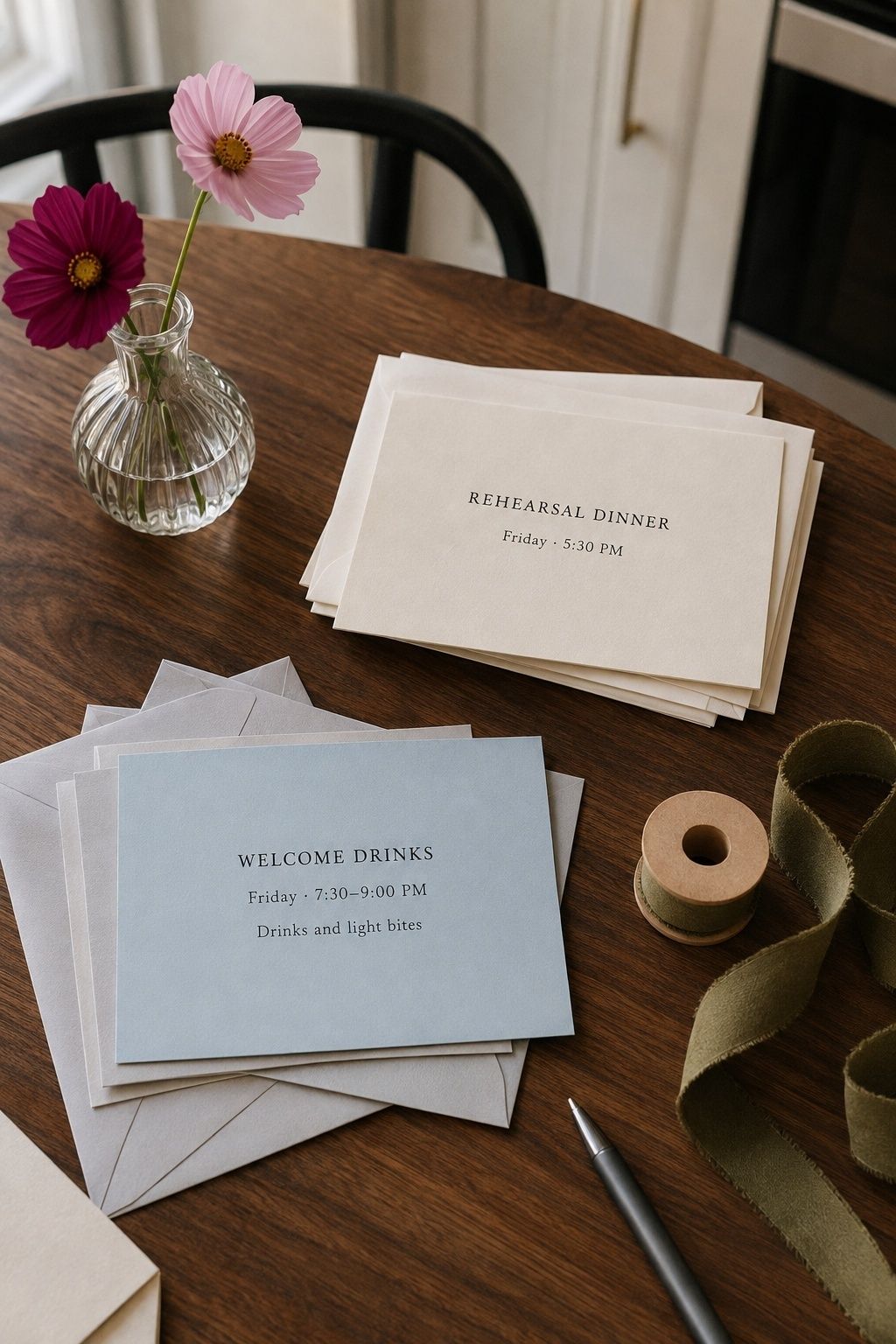
Rehearsal dinner invitations go only to the smaller group attending that dinner. Welcome party invitations go to the broader welcome group. Keep those communications separate if the guest lists are different. A wedding website section explains the weekend events, but the RSVP flow should show each guest only the events they are actually invited to attend.
The wording should also match the event. Use welcome drinks, welcome gathering, casual dessert, or welcome dinner only when that description is accurate. Guests use those words to plan dinner, childcare, clothing, and arrival time.
If you are hosting both events on the same night, the invitation sequence matters. The rehearsal dinner group should receive that dinner invitation privately. The broader welcome party invitation should begin at a later time or name the separate gathering clearly. Nobody outside the rehearsal dinner needs to see language that makes them feel like the second wave.
Who To Invite
The welcome party guest list is where most etiquette tension appears. A couple often wants to thank travelers, parents often want a larger family gathering, and the venue often prices food by head count. The solution is a guest-list rule that sounds fair in one sentence.
Before you send anything, decide whether the event is part of the full wedding weekend or a smaller hospitality gesture. Then make sure the invitation, wedding website, and RSVP all reflect the same group. Mixed signals create more discomfort than a smaller event ever would.
All Wedding Guests
Inviting all wedding guests is the cleanest option for a destination wedding, a wedding with many travelers, or a very small guest list. Nobody has to wonder whether they made the inner circle. Everyone who is celebrating the wedding is also welcomed into the weekend.
This does not mean the event needs to be expensive. Invite all guests to a low-cost gathering with dessert, a cash bar clearly stated by the venue when appropriate, coffee, welcome drinks for the first hour, or light bites. The fairness comes from the guest list, not from making the party lavish.
All guests is especially strong when the wedding is in a private estate, inn, camp, restaurant buyout, or destination location where everyone is effectively part of the same house-party feeling. In those settings, excluding a few people from the first-night gathering makes the weekend feel oddly divided before it begins.
Out-Of-Town Guests
Inviting out-of-town guests is common when local guests do not need arrival hospitality. This rule works best when the definition is obvious: anyone traveling from outside the wedding city, everyone staying in the room block, or everyone who booked travel for the wedding weekend.
Be careful with couples and households. If one partner is from out of town and the other lives locally, invite the household. If a local friend booked a hotel to make the weekend easier, decide ahead of time whether hotel guests count. A clear rule protects you from making one-off emotional decisions.
Out-of-town also needs a geographic definition. Across the country is obvious. The next suburb is not. Some couples draw the line at anyone who needs overnight lodging. Others use a distance such as guests traveling more than a certain number of miles. You do not need to state the rule out loud, but you should apply it consistently.
Immediate Family And Wedding Party
Immediate family and wedding party is really a rehearsal dinner guest list, not a broad welcome party guest list. It is perfectly fine to host that smaller meal and skip the separate welcome event. What gets tricky is calling it a welcome party while excluding most people who traveled for the wedding.
If this is your plan, label it accurately. Rehearsal dinner, family dinner, or wedding party dinner tells guests what the event is. A smaller dinner feels warm and gracious without pretending to be a welcome party for the entire weekend.
This is also the right place to protect family tenderness. A rehearsal dinner gives parents, siblings, and attendants the quieter time they want before the larger celebration. That private time does not have to be sacrificed just because travelers are arriving. Host the small dinner first, then add an optional short welcome drink afterward only if the couple has the energy and budget.
A Clear Rule Worth Explaining
A good guest-list rule is one you are able to explain without sounding defensive. For example: We are inviting all wedding guests to casual welcome drinks. We are hosting a small rehearsal dinner for immediate family and the wedding party. We are inviting guests staying in the room block to a short hotel welcome gathering.
The wording does not need a long apology. In fact, too much explanation often makes the boundary sound negotiable. Give the event details to the people invited, keep the website clear, and let the rule stand quietly.
If someone asks why they were not invited to the welcome party, answer with the same calm rule. We kept Friday to guests staying in the room block. We kept the night before to immediate family. We are keeping the weekend simple so we stay present on Saturday. Short answers feel steadier than a list of reasons.
When Not To Host One

Do not host a welcome party if it makes the wedding weekend harder. If the budget is already tight, the guest list is already sensitive, the couple needs a quiet evening, or the venue options are inconvenient, skipping the event is often the most thoughtful choice.
There are smaller ways to welcome guests. Put clear hotel information on the wedding website, send a short arrival email, place a simple card in welcome bags, or invite close family for coffee in the morning. Hospitality does not have to be a party.
Skipping the welcome party is also kinder for some guests. Some people want a free evening after travel. Some want dinner with their own family. Some need early sleep before the wedding day. A quiet arrival night does not mean the weekend lacks warmth. It means the wedding itself gets the focus.
Hosting And Budget Etiquette
Budget etiquette is less about tradition and more about expectation. Guests need to know whether they are being hosted for dinner, invited for a drink, or simply given a casual meeting spot. The host needs to choose a level that is financially comfortable enough to enjoy.
A welcome party should not compete with the wedding. It should fit around it. If paying for another full meal would force cuts to the ceremony, reception, photography, transportation, or guest comfort, choose a lighter format.
Who Pays
The person or people hosting the welcome party usually pay for the hosted portion of the event. That could be the couple, one set of parents, both families together, or another relative who offered. Modern etiquette is flexible, but clarity still matters. If parents offer to host, agree on the guest count, spending range, and tone before invitations go out.
If the event is at a bar or restaurant where guests buy their own drinks, say that plainly and choose language that does not imply hosted service. A casual meet-up is different from a hosted welcome party. Guests should never arrive expecting dinner and discover they are covering a surprise tab.
When another person offers to pay, talk through control before accepting. Money for a welcome party sometimes comes with guest-list requests, menu upgrades, or pressure to make the event bigger. A gracious offer is easiest to accept when everyone agrees on the ceiling: who is invited, how long it lasts, what is served, and what decisions stay with the couple.
What Guests Expect
Guests expect the invitation words to be accurate. Welcome dinner means enough food for dinner. Cocktails and light bites means snacks, not a full meal. Dessert and drinks means they should eat before arriving. Open house means guests are free to arrive and leave inside the stated window.
This is where small weddings benefit from plain language. You do not need fancy wording. You need honest wording. A line like Please join us for casual welcome drinks and small bites from 7:00 to 9:00 gives guests more comfort than a poetic invitation that hides the practical details.
Guests also expect accessibility and convenience. Choose a location close to the hotel block when possible, especially if drinking is involved. If the venue requires taxis, parking, stairs, a shuttle, or a walk on grass, say so on the website. Good etiquette is often just removing small surprises before guests encounter them.
Food And Drink Level

The food and drink level should match the time of day. If the event begins at dinner time, either serve dinner or call it drinks after dinner. If it starts later, dessert, snacks, or a first-round drink is enough. If it starts midafternoon, coffee, lemonade, pastries, or a grazing table feels generous without becoming a full event.
For alcohol, keep the plan simple. Host beer and wine, offer one signature drink, provide drink tickets, or set a limited tab with the venue. Full open bar service is lovely when the budget allows, but it is not required for good wedding welcome party etiquette.
Nonalcoholic options deserve the same attention. Sparkling water, lemonade, iced tea, zero-proof cocktails, coffee, or a warm seasonal drink make the event feel hosted for everyone. A welcome party should not make guests who do not drink feel like afterthoughts.
RSVP Expectations
Collect RSVPs for any welcome party that involves food, reserved space, staffing, or a meaningful cost per guest. Even a casual event needs a head count if the venue is planning service. Put the RSVP question on the wedding website or include it with the event card.
The RSVP should be event-specific. Guests invited to the wedding and welcome party should see both options. Guests invited only to the wedding should not see a welcome party response. This avoids awkward questions and keeps your counts clean.
Set the RSVP deadline early enough to confirm food and space without chasing guests during the final wedding week. If the welcome party is very casual, a simple yes-or-no question is enough. If meal counts matter, ask for the response in the same place as the wedding RSVP so guests do not miss it.
End Time
The end time is part of the etiquette. Guests do not always know when to leave a pre-wedding event, especially when they have not seen family in years. A posted or communicated finish time gives everyone permission to enjoy the evening and then rest.
Two hours is often enough for a welcome party. If you want a longer open-house feel, keep the couple’s attendance limited. Greet guests for the main window, then leave while the venue stays open for anyone who wants to linger. Protecting your wedding-day energy is not rude. It is wise hosting.
Tell a trusted person your exit plan. A planner, sibling, or friend should gently move the couple toward goodbye when the window ends. Without that small bit of backup, the couple often becomes the last to leave because every guest wants one more hug.
Small-Wedding Welcome Party Ideas

Small-wedding welcome party ideas work best when they feel connected to place and scale. Think less about staging a second reception and more about creating an easy landing point. A tiny guest list does not need a ballroom warm-up. It needs comfort, conversation, and a plan people understand.
A hotel lobby drink hour works well when most guests are staying in one place. Reserve a corner, set a simple tab, and add a small welcome sign so people know they found the right group. This is especially practical when guests are arriving at different times and do not need a seated meal.
A backyard dessert gathering is sweet for local weddings. Serve cake slices, cookies, coffee, tea, or sparkling water after dinner. Keep seating loose, lighting warm, and speeches minimal. The event feels personal without asking the hosts to cook a full dinner the night before the wedding.
A pizza-and-wine night is practical for intimate destination weddings. It feeds people clearly, keeps the menu simple, and avoids the stiffness of another formal dinner. Add salad, nonalcoholic drinks, and a firm end time, and the whole event becomes relaxed instead of sprawling.
A welcome picnic works for a daytime wedding weekend when weather is dependable. Choose a park, winery lawn, inn garden, or beach pavilion with restrooms and shade. Pre-packed boxes make the head count easier. The invitation should say exactly what is provided so guests arrive dressed and fed correctly.
A coffee-and-pastry welcome is a gentle option when evening schedules are already full. This is especially nice for a Friday arrival before a Saturday wedding or for a tiny city wedding where guests stop by before exploring. It keeps the budget low and the energy calm.
A local tasting table gives travelers a sense of the location without requiring a tour. Serve regional snacks, one local drink, or favorite family desserts. The key is restraint. A thoughtful nod to place feels charming. A full themed production starts moving toward second-wedding territory.
A family-style restaurant room is a strong choice when you truly want dinner. Pick a place close to the hotel, use a limited menu, and keep seating flexible if mingling matters. If the room requires minimum spending, compare that total against your actual wedding priorities before committing.
A game-free mingle hour is underrated. You do not have to plan icebreakers, trivia, speeches, or a packed activity list. A small wedding usually brings people who are already connected through the couple. Give them a drink, a little food, and enough space to talk, and the party will do what it came to do.
A rehearsal-dinner-afterparty format works when you want both intimacy and inclusion. Host the private rehearsal dinner first, then invite the broader group for dessert or drinks at the same location afterward. The key is timing. The welcome portion should have its own start time so guests do not walk into the end of a private meal.
A Sunday-style welcome brunch before a Sunday wedding works when the ceremony is later in the day. Keep it very light and very close to where guests are staying. This is not the time for a long plated meal. Think coffee, fruit, pastries, and quick greetings before everyone gets ready.
Mistakes To Avoid
The first mistake is using the phrase welcome party for an event that is not really welcoming the broader guest group. If only the wedding party and immediate family are invited, call it the rehearsal dinner. Guests understand private family meals. They feel confused by a welcome event they were not welcomed into.
The second mistake is making the event too formal by accident. A welcome sign, matching napkins, printed menu cards, florals, favors, a custom bar, and a photographer all sound small alone. Together, they create another reception. Choose the few details that improve guest comfort and skip the rest.
The third mistake is hiding the food level. Guests are practical. They need to know whether to eat before they come. Vague wording like join us to celebrate creates hunger, late arrivals, and budget confusion. Be direct without overexplaining.
The fourth mistake is inviting by invisible closeness. If guests have to guess why their hotel friends were invited and they were not, the event will create more tension than warmth. Use a category that feels fair from the outside.
The fifth mistake is skipping RSVPs. Even casual events need realistic numbers. Without a count, you risk under-ordering food, overpaying for guests who do not attend, or crowding a space that looked fine on paper.
The sixth mistake is letting parents or relatives expand the welcome party after wedding invitations are already out. If someone offers to pay, that is generous, but the couple still needs final say on event size and tone. A bigger guest list is not automatically kinder if it changes the whole weekend.
The seventh mistake is hosting too late. Guests will often keep going as long as the couple stays. If the wedding day starts early, a welcome party that ends at midnight costs more than money. It costs sleep, calm, and the version of yourselves you wanted to bring to the ceremony.
The eighth mistake is treating the welcome party as a chance to fix wedding-day guilt. If you feel bad that the wedding is small, do not build a second event to soothe everyone. A clear, warm wedding day is better than an overextended weekend built from apology.
The ninth mistake is forgetting the couple’s real capacity. Some people love a full weekend. Others feel socially spent after one hour of greeting everyone. There is no etiquette rule that requires the couple to become event hosts for three straight days. A welcome party should fit the people getting married, not just the imagined weekend schedule.
FAQ
What Is Wedding Welcome Party Etiquette?
Wedding welcome party etiquette means hosting a pre-wedding gathering with clear expectations, a fair guest-list rule, accurate wording, and a scale that fits the wedding. The event should greet guests and make the weekend easier, not become a second wedding reception.
Who Do You Invite To A Wedding Welcome Party?
Couples usually invite all wedding guests, all out-of-town guests, or everyone staying in the main hotel block. For very small weddings, inviting all guests is often the simplest and fairest option. If the list is limited to immediate family and the wedding party, it is closer to a rehearsal dinner than a welcome party.
Is A Welcome Party The Same As A Rehearsal Dinner?
No. A rehearsal dinner usually follows the ceremony rehearsal and includes the wedding party, immediate family, officiant, and ceremony participants. A welcome party is broader, more casual, and designed to greet guests as they arrive for the wedding weekend.
Who Pays For The Wedding Welcome Party?
The host pays for the hosted portion. That could be the couple, parents, both families, or another relative. If guests are expected to buy their own drinks or meals, the event should be worded as a casual meet-up rather than a fully hosted welcome party.
Do You Need To Invite All Wedding Guests To A Welcome Party?
You do not always need to invite all wedding guests, but the rule should be clear. All guests is best for destination weddings and very small weddings. All out-of-town guests works for local weddings. Avoid inviting a random mix that guests do not understand.
What Do You Serve At A Wedding Welcome Party?
Serve food and drinks that match the time and wording. Dinner-time events need dinner or very clear after-dinner language. Later events work well with dessert, cocktails, coffee, or light bites. A limited bar, drink tickets, or one hosted drink is acceptable when the invitation sets the expectation.
Final Thoughts
A welcome party should make the wedding weekend feel easier, not heavier. The most gracious version is not always the biggest one. It is the one with a fair invitation rule, honest wording, simple hosting, and enough breathing room for the couple to enjoy the wedding day.
If the party gives guests warmth and clarity on arrival, host it proudly. If it stretches the budget, complicates the guest list, or turns the night before into a second wedding, let it go. A small wedding does not need a crowded weekend to feel generous.
Couples planning a broader weekend gathering should keep that balance in mind.
Last update on 2026-10-04 / Affiliate links / Images from Amazon Product Advertising API