

Vegetable centerpieces work at a wedding when the produce is whole, firm, in season and tied to the menu: heirloom tomatoes in summer, artichokes in spring, mini squash in fall. Plan one low bowl or tray per round table, or a cluster every 60 to 90 cm along a long table, and keep anything food-safe away from floral foam so it can be eaten or donated afterwards.
I like vegetable centerpieces more than most florists do, and I’ll tell you why: produce looks like dinner. It sets up the meal before anyone sits down, and at a small wedding where the food is the main event, that matters.
The catch is that a few too many vegetables turns a reception into a farmers market stall. This guide sorts the best vegetable centerpieces for a wedding by season, then covers the practical side: spacing, food safety, the caterer conversation and the end-of-night plan nobody thinks about until 11pm.

Tools and pieces that help
Low bowls, trays and taper holders do most of the work in a produce table. A few of the pieces I would start with:


Why vegetable centerpieces suit a small wedding
With four to six tables, you can afford to choose each piece by hand, and guests sit close enough to see the shine on a tomato or the veining on a cabbage leaf. That closeness cuts both ways: a bruised pepper or a wet ring on the linen gets noticed too.
My rule is clusters, not piles. One sculptural artichoke reads better than six. Repeat the vessels, linen and candle holders across the room, and let each table carry a slightly different produce grouping. That keeps the look connected without every table being a copy.
Price is a fair question. The Knot’s 2026 Real Weddings Study puts the average florist spend at $2,800. A bowl of tomatoes and herbs can replace a lot of floral volume at a small wedding, but if a florist builds produce into full arrangements, expect labor to bring the cost close to flowers.
Summer: tomatoes, peppers and herbs
Summer is the easiest season for vegetable centerpieces because the produce is already colorful and shiny.

Heirloom tomatoes come in yellow, green, blush, brick red and deep wine. Pile five to seven whole, firm ones in a low ceramic bowl, tuck in basil, oregano or thyme, add a few small white flowers and a candle or two. Never cut them. A cut tomato leaks onto linen and your centerpiece becomes a cleanup job.

Sweet peppers bring curve and gloss. Yellow peppers with lemons look coastal. Red peppers with oranges, basil and olive branches lean Mediterranean. Keep them whole in a terracotta tray with plenty of table around them; this citrus wedding tablescape guide covers how far to push the fruit side before it tips into fruit bowl.

On cocktail tables, scale it down: a small bowl of cherry tomatoes, one basil stem in a bud vase and a votive. Guests crowd around high-tops, so keep anything there low and weighted.
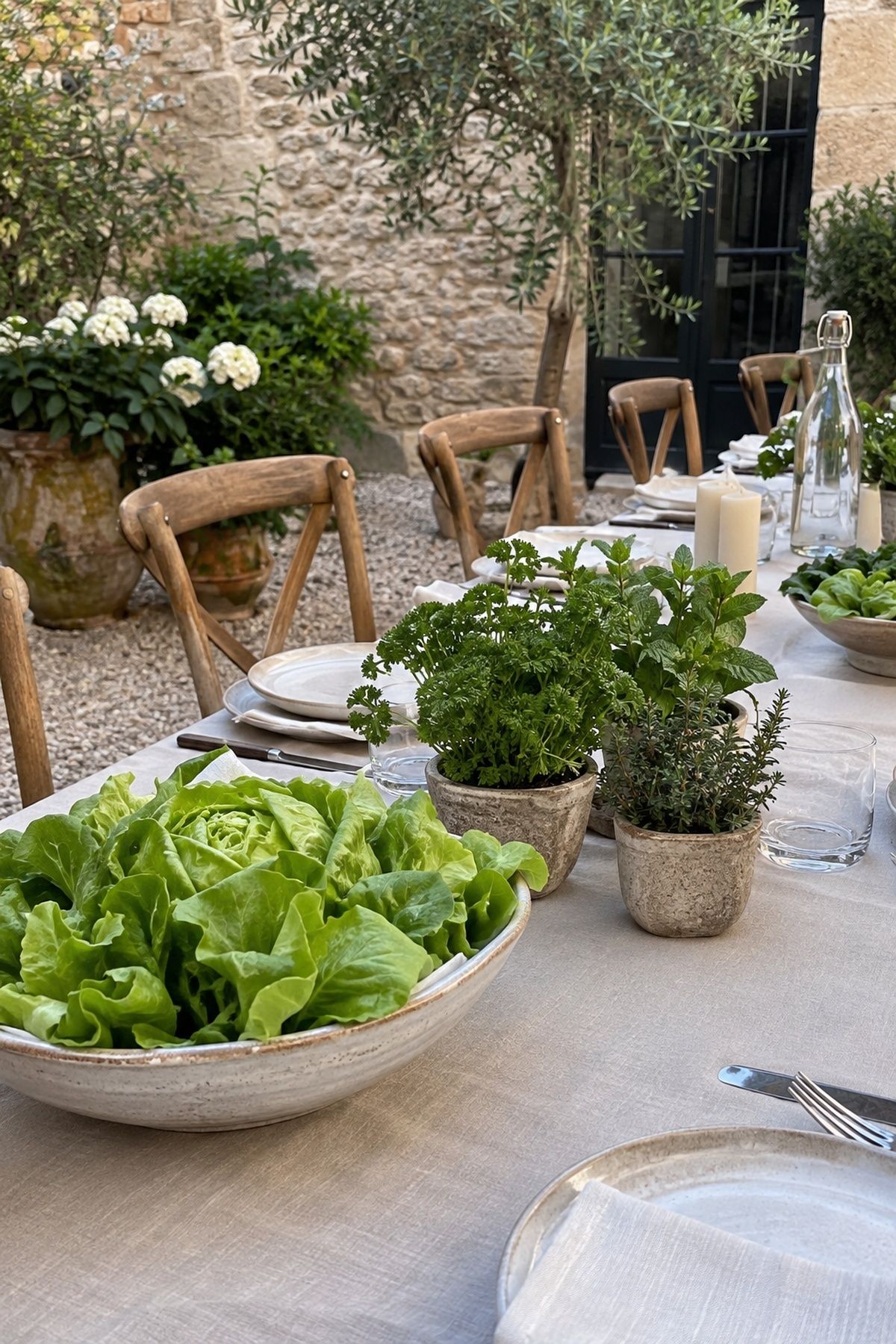
Lettuce, parsley, mint and tender greens in lined ceramic bowls look fresh for about as long as a short reception, and only in shade or cool weather. Add them last, close to guest arrival. For more on keeping greenery upright in heat, see these summer wedding centerpieces.
Spring: artichokes, radishes and carrots
Spring produce is smaller and softer, so it leans toward place settings and mixed arrangements rather than big bowls.
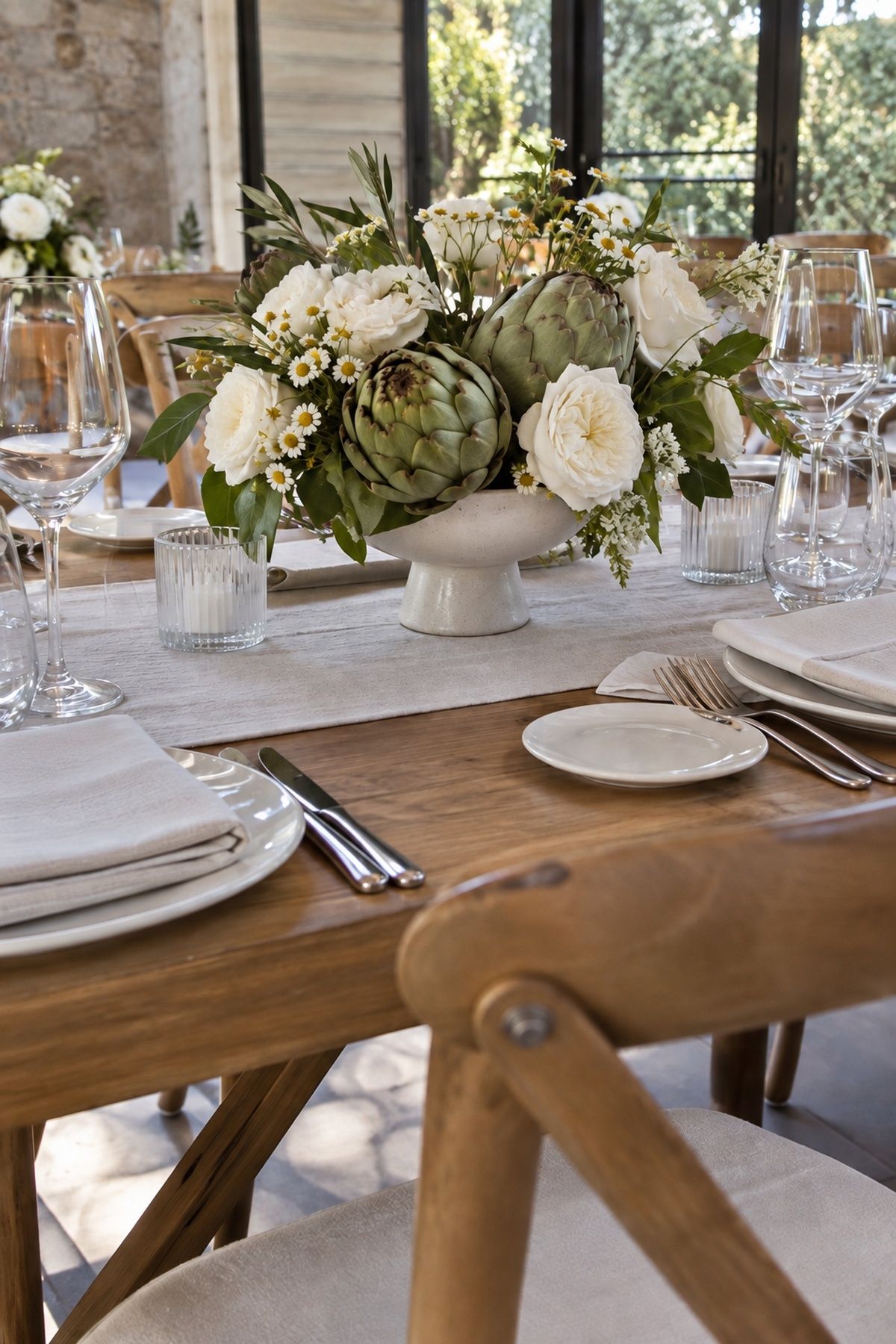
Artichokes are the stars. One or two in a low compote with white roses, ranunculus, chamomile or olive branches look sculptural and grown-up. Their gray-green tone sits well with pale stoneware. Wedge them so they cannot roll into a wine glass.

Radishes are a small, cheerful detail. A tiny ribbon-tied bunch above the plate, or a single clean radish beside a name card, works for lunches, rehearsal dinners and courtyard meals. Dry them well; damp leaves on a napkin look tired fast.
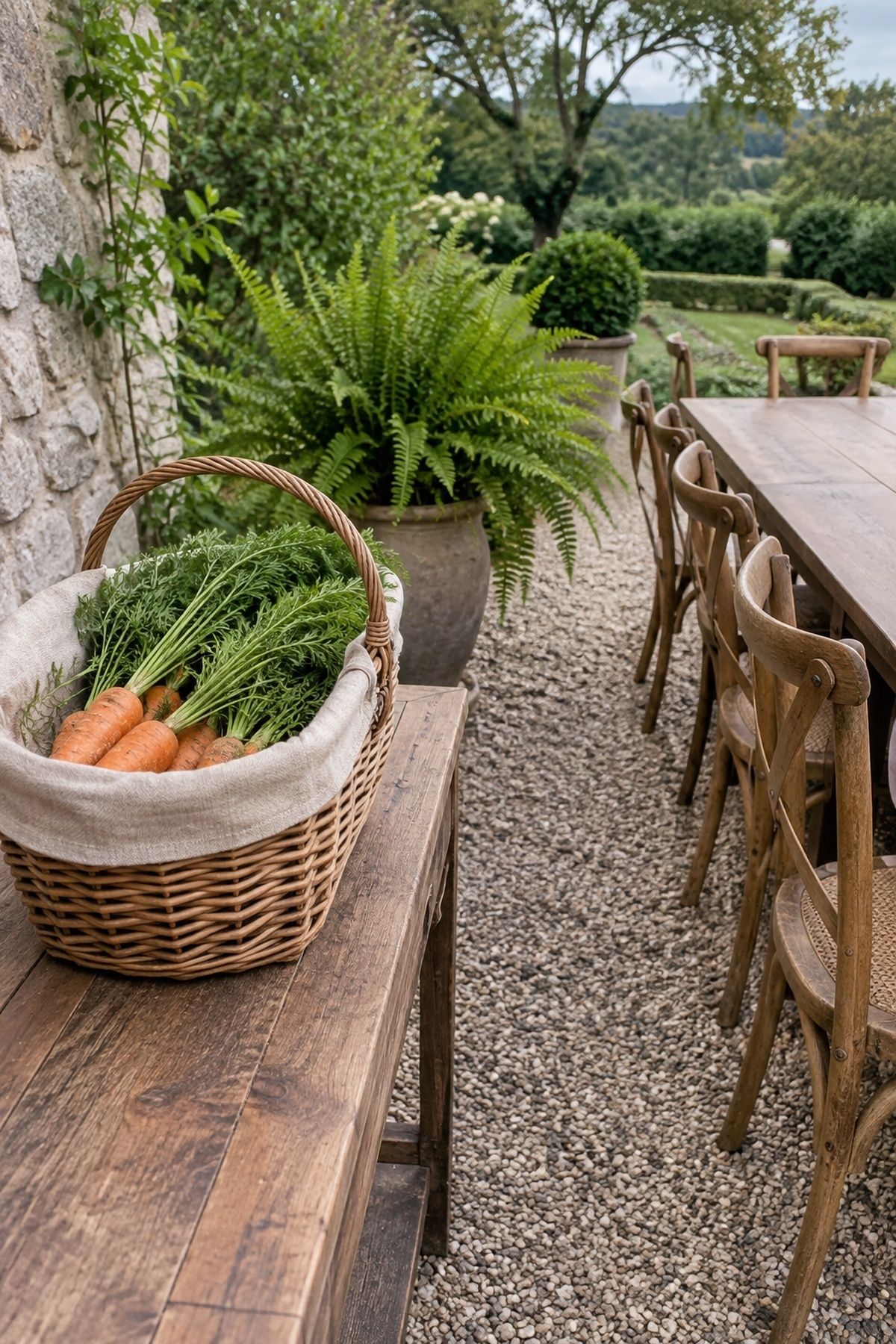
Carrots with their feathery tops pair with ferns, Queen Anne’s lace and linen napkins at a garden wedding. A few in a lined basket look styled. A full line of carrots down the table looks like a theme party. If you are building a whole spring table, these spring wedding centerpieces give more flower pairings.
Fall: squash, gourds and a moody still life
Autumn produce is the sturdiest of the year, which makes it the most forgiving for DIY centerpieces.

Mini squash and pale pumpkins in butternut, cream, sage and muted green look calmer than a full orange harvest display. Set small groups of three along a linen runner with tapers and votives, and leave real gaps between them for food.
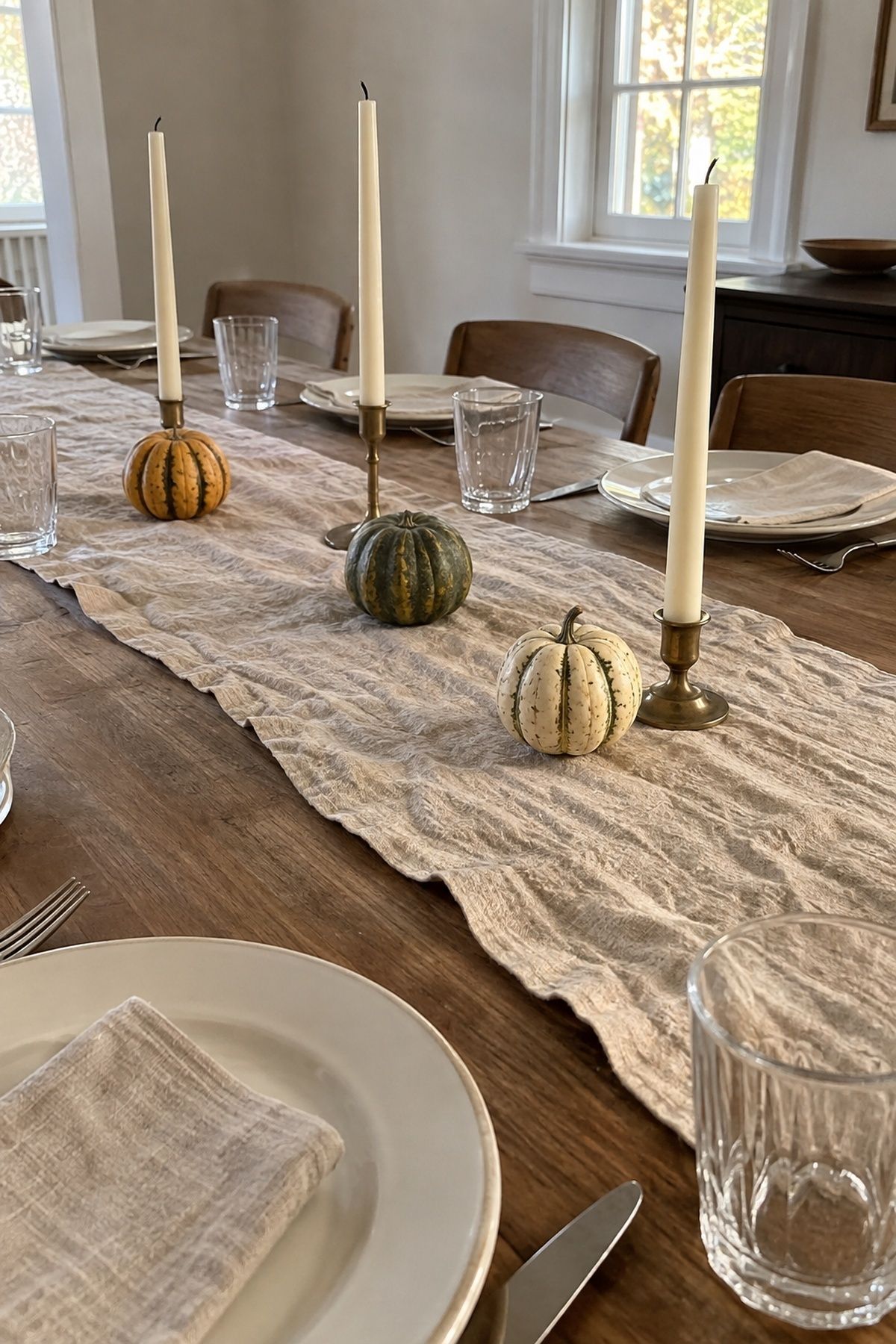
Gourds look polished when you limit yourself to three related shapes and colors. Pair them with slim ivory tapers in brass, ceramic or smoked-glass holders. The candles do as much work as the produce.
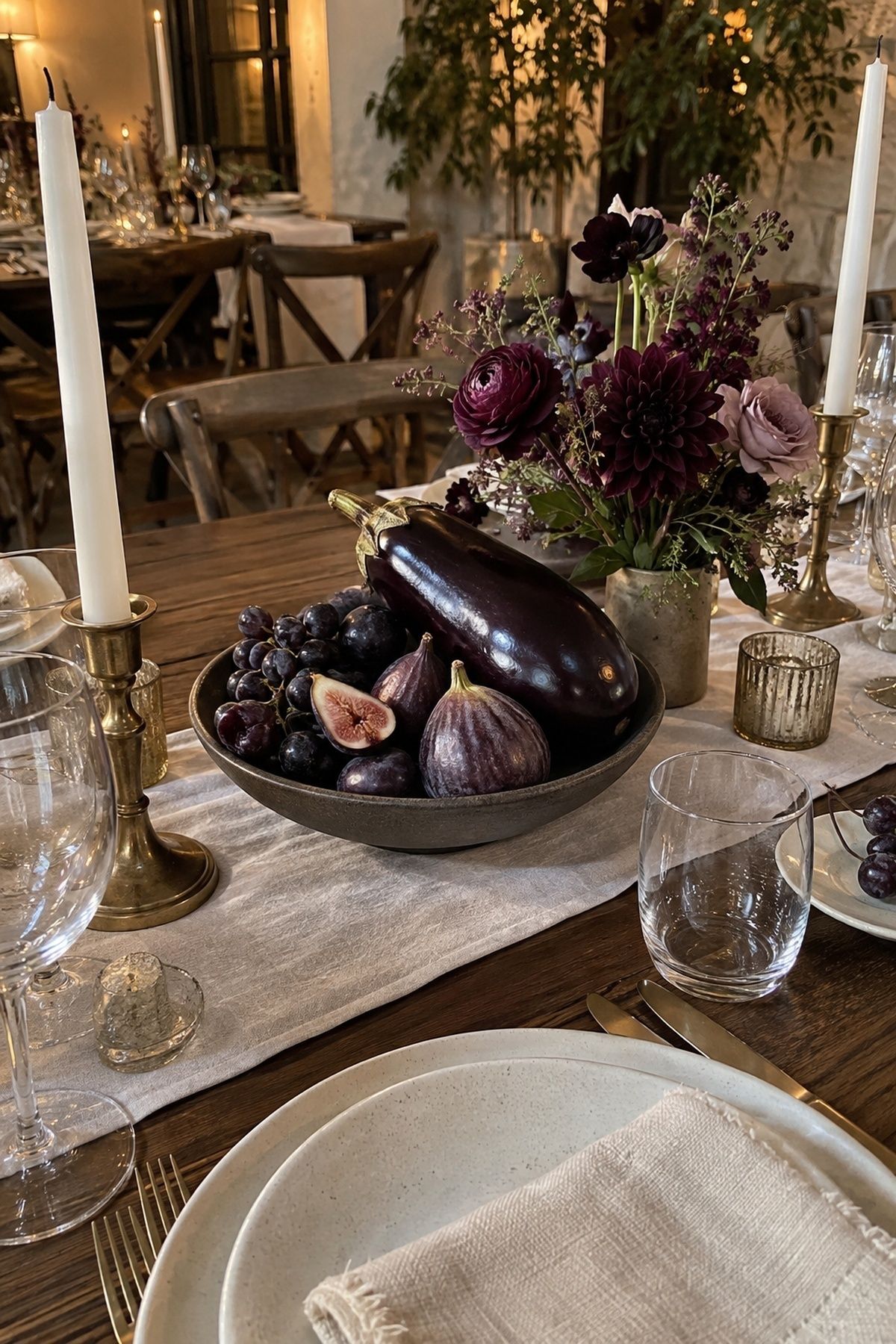
For a darker palette, try eggplant, purple basil, deep grapes, figs and plum-toned flowers. One glossy eggplant in a shallow bowl is enough for a table of eight. Balance it with ivory plates and clear glass so the table does not go muddy under candlelight.
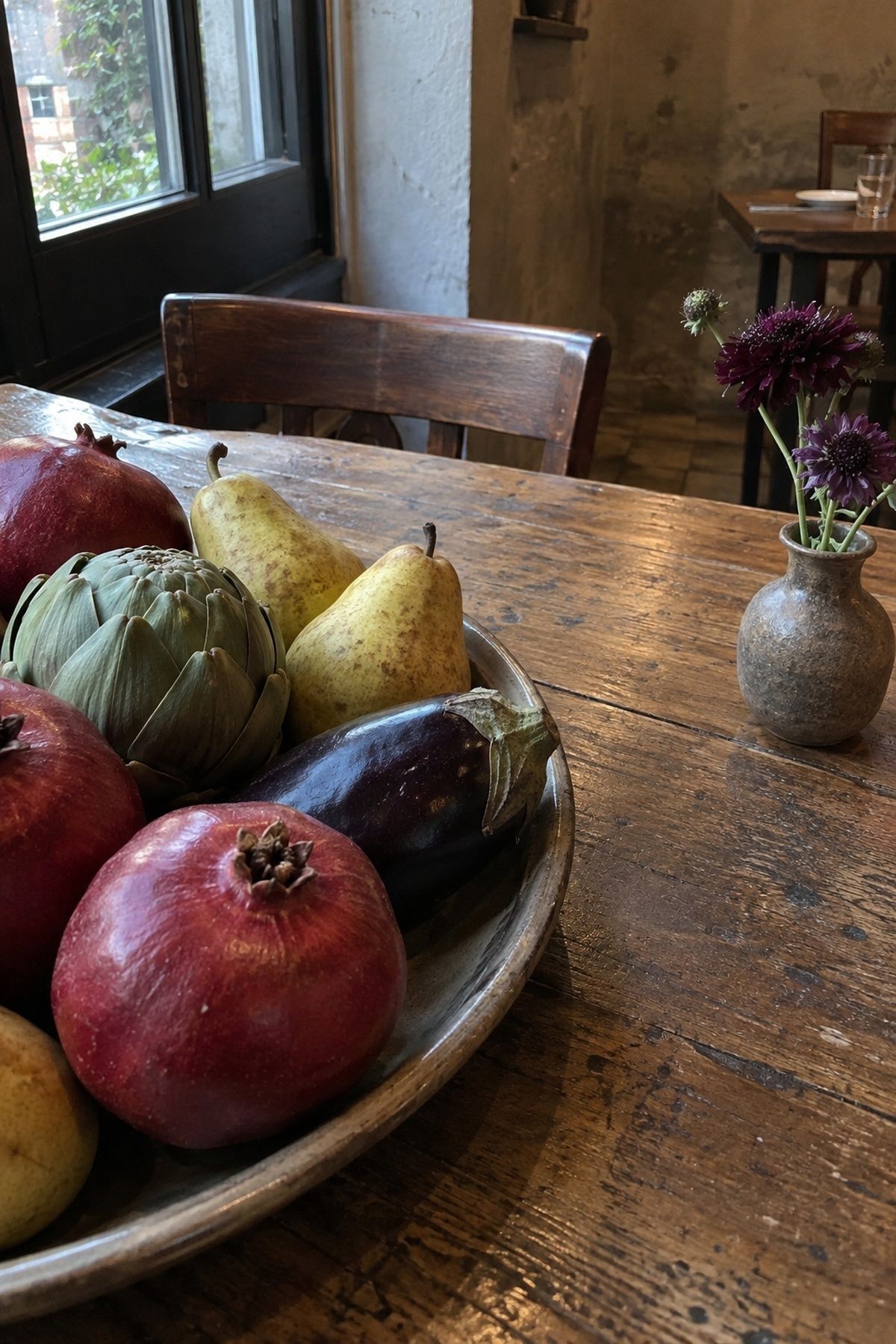
The still-life approach mixes pomegranates, artichokes, pears and dark flowers in an uneven arrangement that looks like an old painting. It suits candlelit dinners and historic dining rooms. Give every piece a bit of space and shadow. These October wedding tablescape ideas go further into the moody fall palette.
Leafy texture: chard and cabbage with flowers
Some vegetables work best as texture inside a floral arrangement rather than as the centerpiece itself.
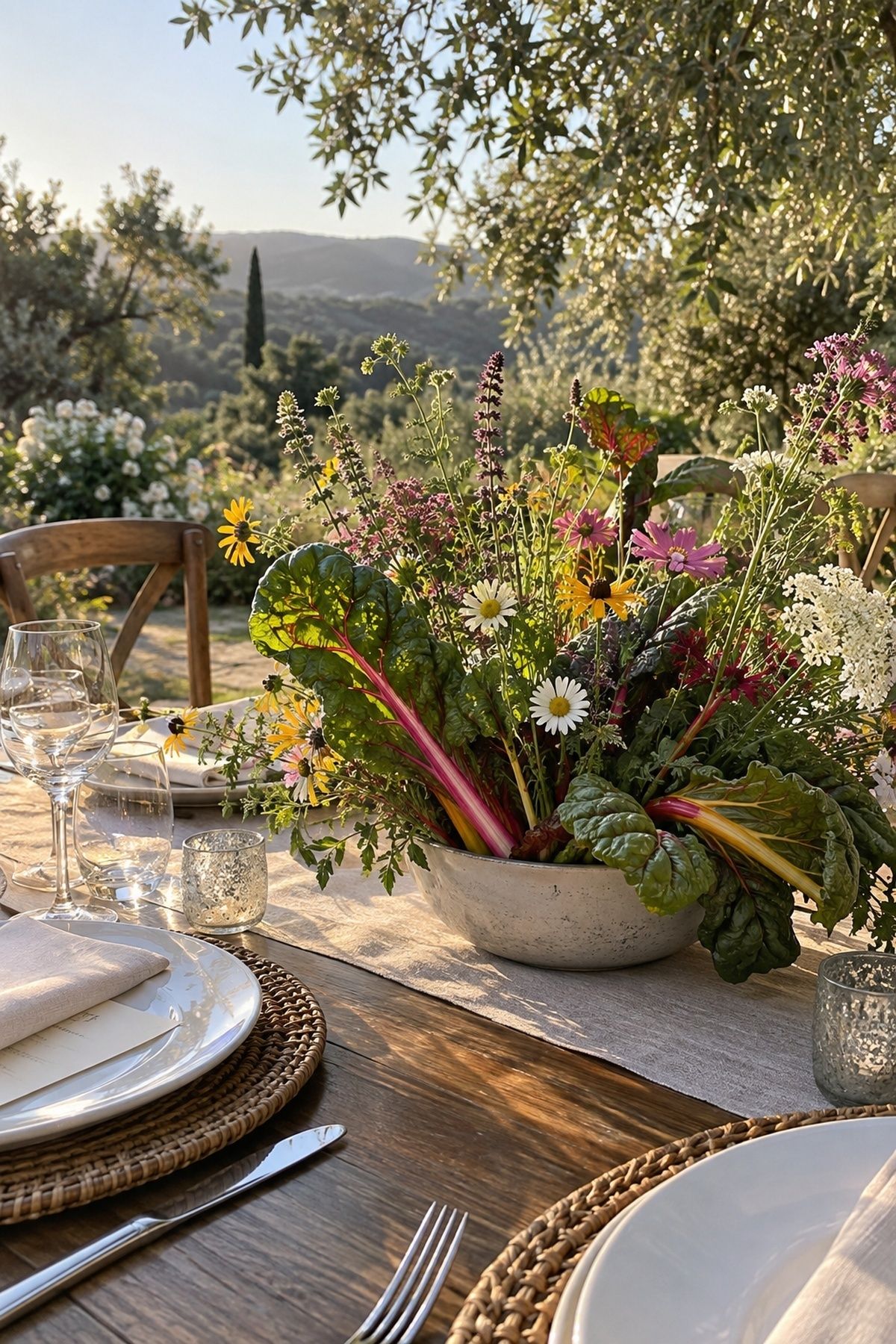
Swiss chard has pink, yellow, red and white stems with ruffled leaves, and it mixes well with wildflowers and herbs. It wilts quickly, so it needs water, shade and late placement. Use it as an accent, not the base of the arrangement.

Cabbage leaves add ruffle and volume. Pale green cabbage suits white florals; purple cabbage deepens plum and berry palettes. A few leaves tucked into the arrangement read as seasonal. A whole head on the table reads as salad.

The easiest way to mix flowers and vegetables is to keep them in separate vessels. Alternate low produce bowls with bud vases: cosmos beside tomatoes, ranunculus beside artichokes, sweet peas beside fennel. The flowers stay hydrated, the produce stays dry, and breakdown is simpler.
How much produce does each table need?
Less than you would buy for the kitchen. A round table for 8 needs one low bowl or tray plus candles. A long table needs a cluster every 60 to 90 cm, broken up by open zones for platters and bottles.
| Table | Produce per table | Example |
|---|---|---|
| Round for 8 | 1 low bowl, 5 to 9 pieces | 7 heirloom tomatoes plus herbs |
| Long table for 20 | 6 to 8 small clusters | 3 mini squash per cluster with tapers |
| Cocktail high-top | 1 tiny bowl | 10 to 12 cherry tomatoes and a votive |
| Escort display | 2 to 3 shallow baskets | Tomatoes or citrus with raised cards |

So a 36-guest dinner on one long table and a cocktail hour with four high-tops might need around 8 clusters and 4 small bowls. Mark the platter spots before you style anything if dinner is family style.
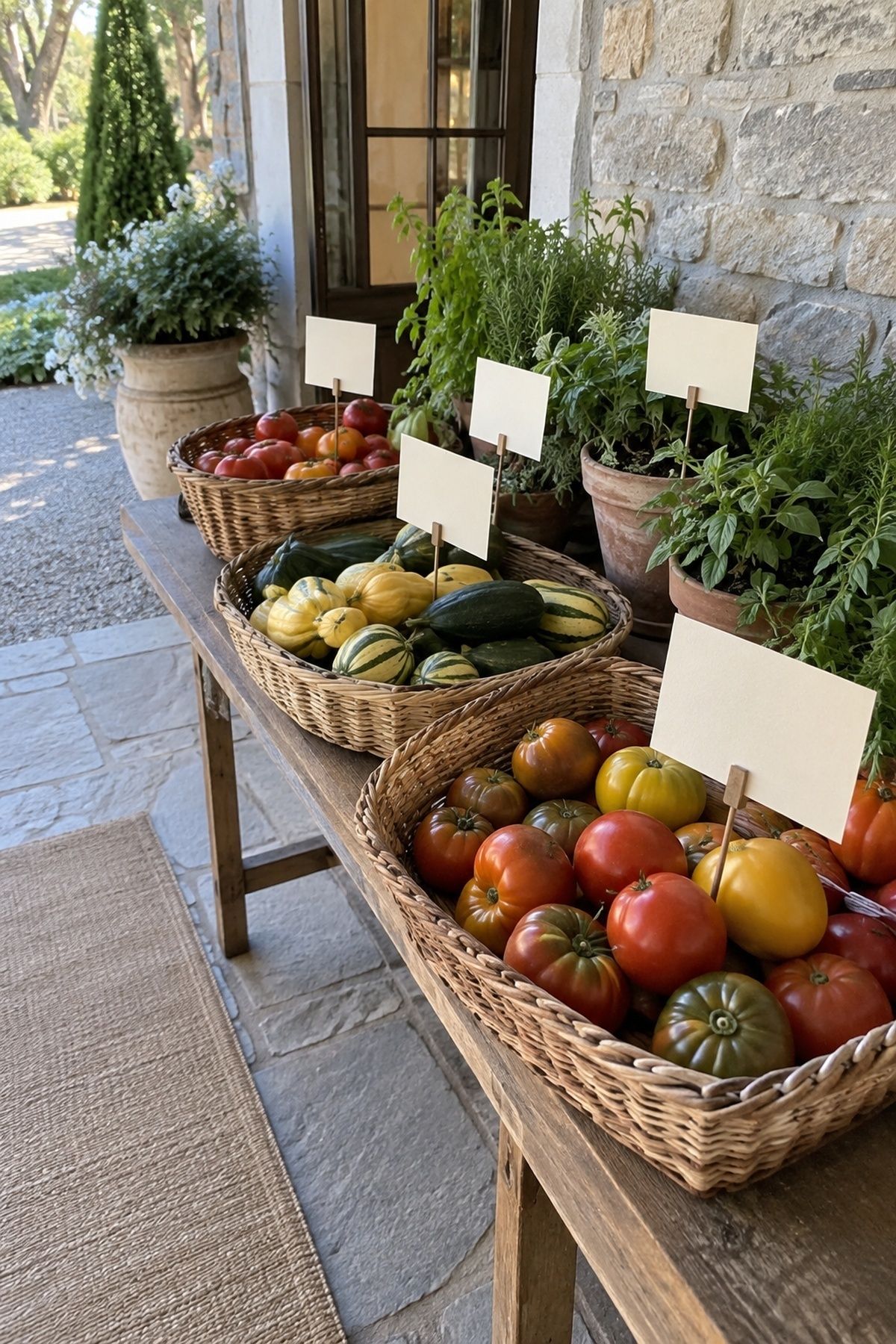
Market baskets at the entrance make a good escort display. Fill shallow baskets with produce and clip the cards on stakes above it, so guests find their names fast without fishing through tomatoes.
Talk to the caterer before you buy produce
Start with the menu. Tomatoes suit summer pasta, artichokes suit Mediterranean plates, citrus brightens seafood or roast chicken, squash belongs at an autumn supper. When the centerpiece previews the food, it looks planned rather than novelty.

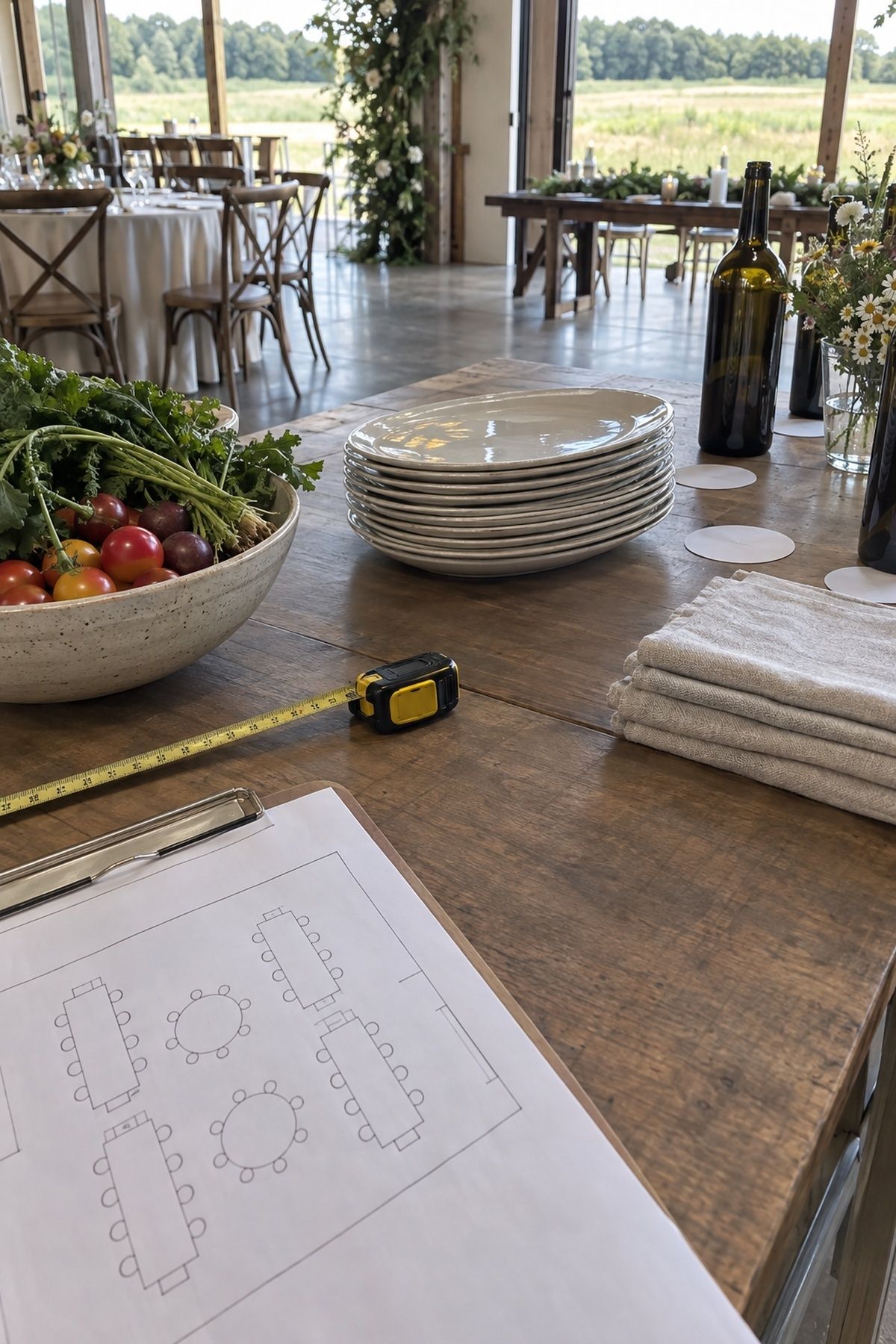
After fourteen years cooking professionally, finishing as a banquet chef, I can tell you caterers want this conversation early. Ask them:
- Where do platters, wine and water land during service?
- Can any of the centerpiece produce come back to the kitchen afterwards?
- Where can produce be stored cool on the day, and from what time?
- Are there allergies or strong scents to avoid near the food?
Their answers will narrow your produce list better than any mood board.
Keep food-safe produce separate
Anything that touches floral foam, wire, glue, spray paint, wax or a dirty surface is decor only. It should not go to a kitchen, a guest’s bag or a food bank.
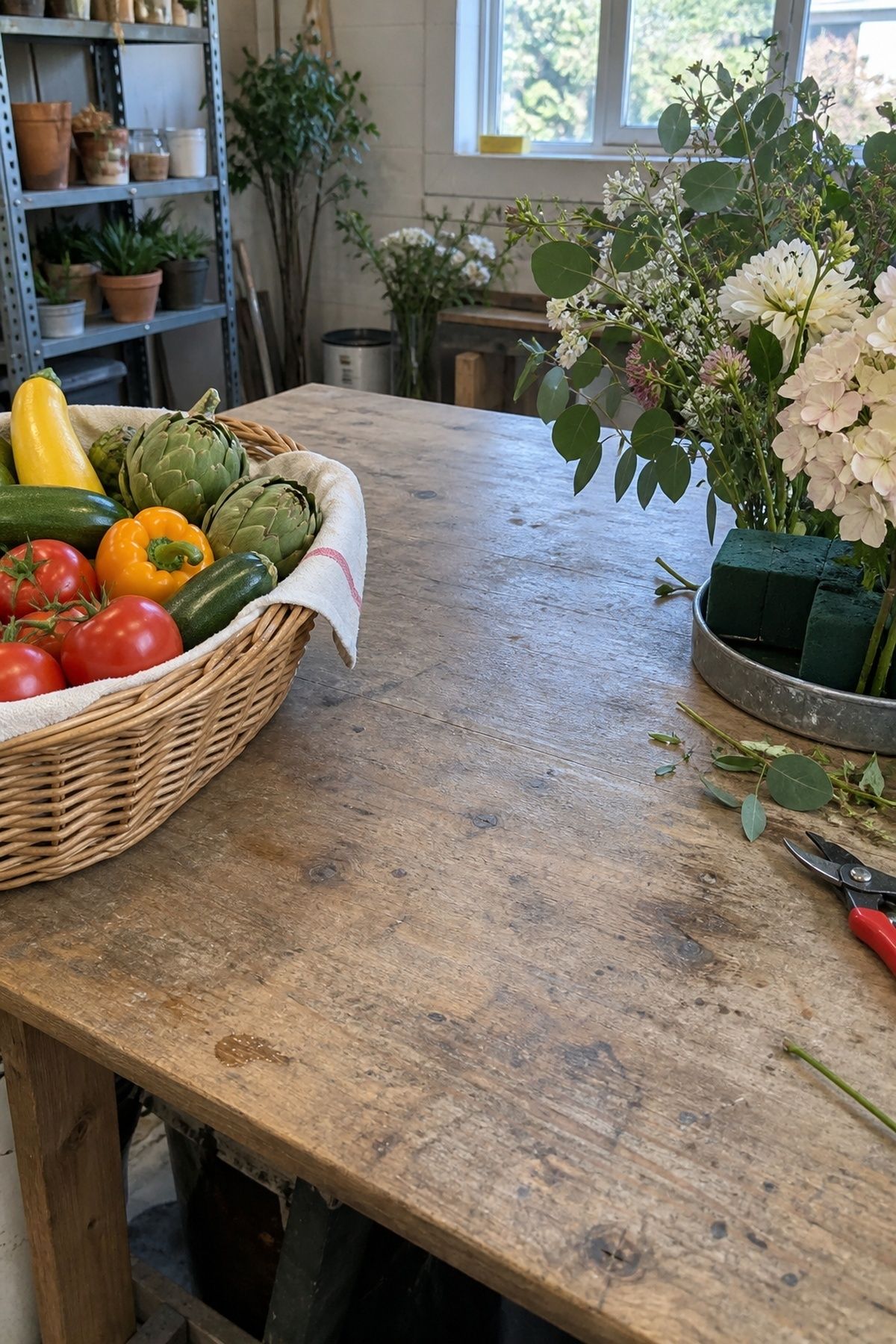
Food-safe produce needs clean bowls or lined baskets, little handling and a label so the florist, caterer and cleanup crew all know which is which. Decide this before setup, because once a tomato goes into a foam-based arrangement, it cannot come back out as food.

At the table, keep everything low and narrow. Nobody should be lifting a glass around an artichoke or leaning past basil during a toast. Martha Stewart has a good set of fruit and vegetable centerpiece examples if you want to see how low they keep the arrangements.
What happens to the vegetables after dinner?
Decide before the wedding and name one person to handle it. Options are packing for the couple, take-home bags for family, compost, donation (arranged and approved ahead), or disposal.
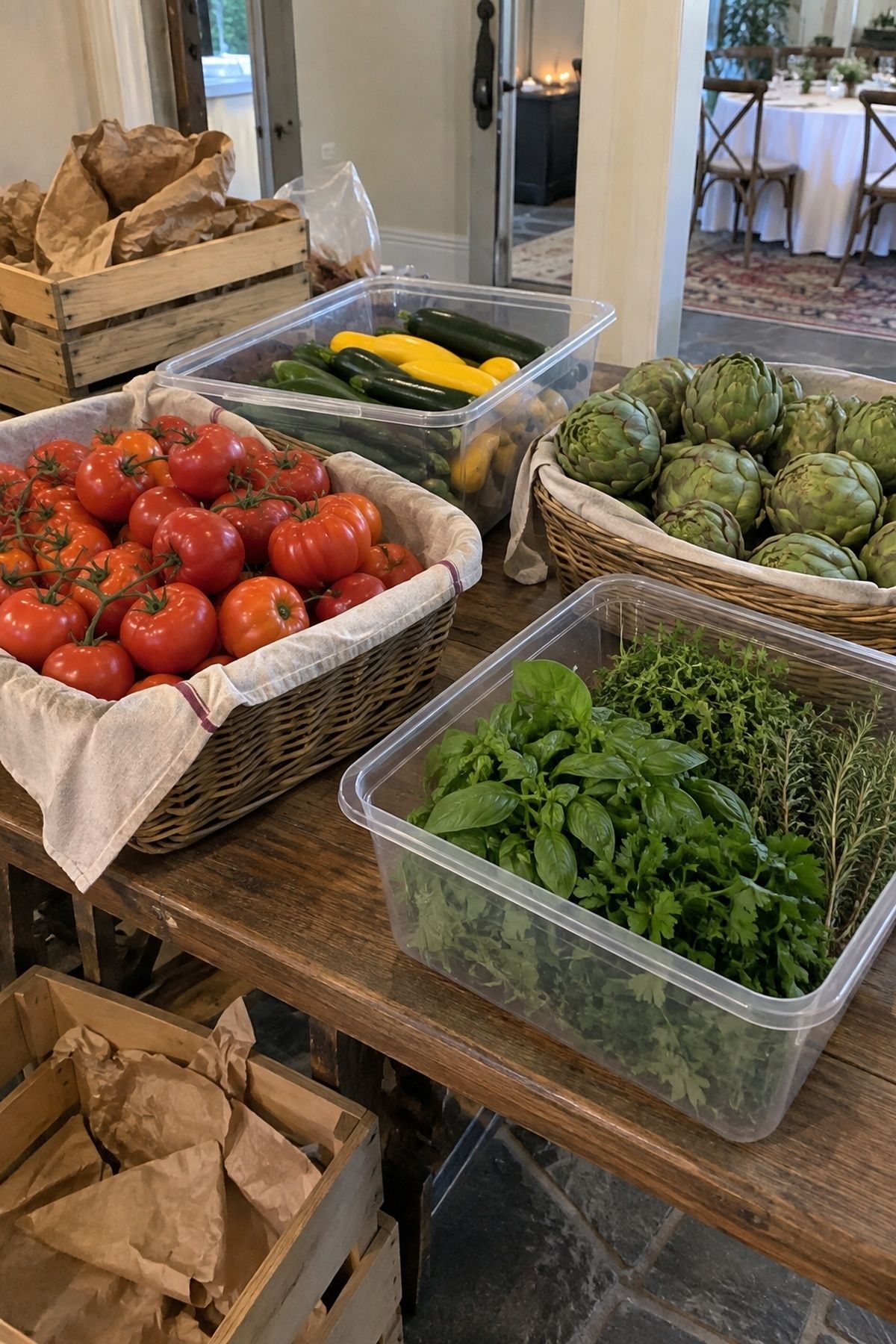
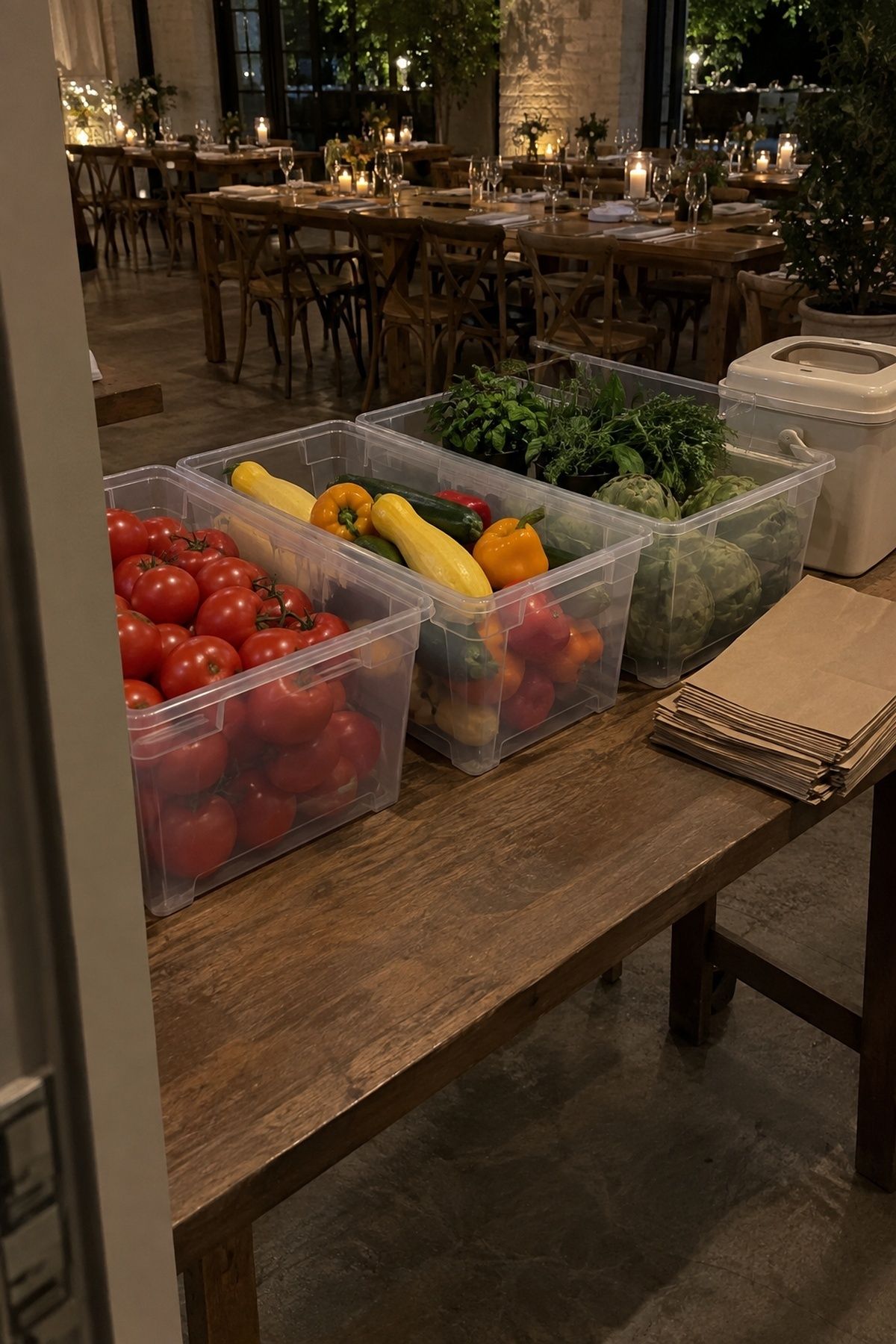
Bring clean bins and a short written note for the cleanup crew. Seasonal produce left in a hot venue overnight is not a good final memory. If you are hosting a smaller meal like an elopement dinner party, the leftovers often just go home with you, which is the nicest ending of all.
Key takeaways
- Pick whole, firm, in-season produce that links to the menu.
- Use one low bowl per round table or a cluster every 60 to 90 cm on long tables.
- Keep flowers in separate bud vases so produce stays dry and reusable.
- Anything near floral foam, wire or spray is decor only.
- Name one person to pack, compost or donate produce at the end of the night.
FAQ
What vegetables work best for wedding centerpieces?
Firm vegetables that last at room temperature work best: heirloom tomatoes, artichokes, peppers, mini squash, gourds, fennel and eggplant. Leafy greens, chard and herbs look lovely but wilt quickly, so add them late and keep them in shade.
Are vegetable centerpieces cheaper than flowers?
Vegetable centerpieces can cost less than all-floral arrangements if you style simple bowls of produce yourself. If a florist builds produce into full arrangements, labor and containers can bring the price close to traditional flowers.
How do you keep vegetable centerpieces from looking like a market stall?
Limit each table to one or two kinds of produce, use clean matching vessels, and add candles or a few flowers. Leave open space around each grouping so it reads as a centerpiece rather than a pile.
Can you eat or donate vegetable centerpieces after the wedding?
You can eat or donate vegetable centerpieces only if they stayed food-safe, meaning clean containers, light handling and no contact with floral foam, wire, sprays or wax. Agree on donation with the receiving organization before the wedding.
How far ahead can you set up vegetable centerpieces?
Sturdy produce like squash, gourds and artichokes can go out a few hours ahead. Tomatoes and peppers are fine for an afternoon in a cool room, while lettuce, chard and soft herbs should go on the table close to guest arrival.
The short version
Choose produce the way a cook would: in season, whole and connected to what is on the plate. Keep it low, give it room, and have a plan for every last tomato. Do that, and vegetable centerpieces at your wedding will look like the start of a good dinner rather than a grocery run.
Last update on 2026-10-04 / Affiliate links / Images from Amazon Product Advertising API