
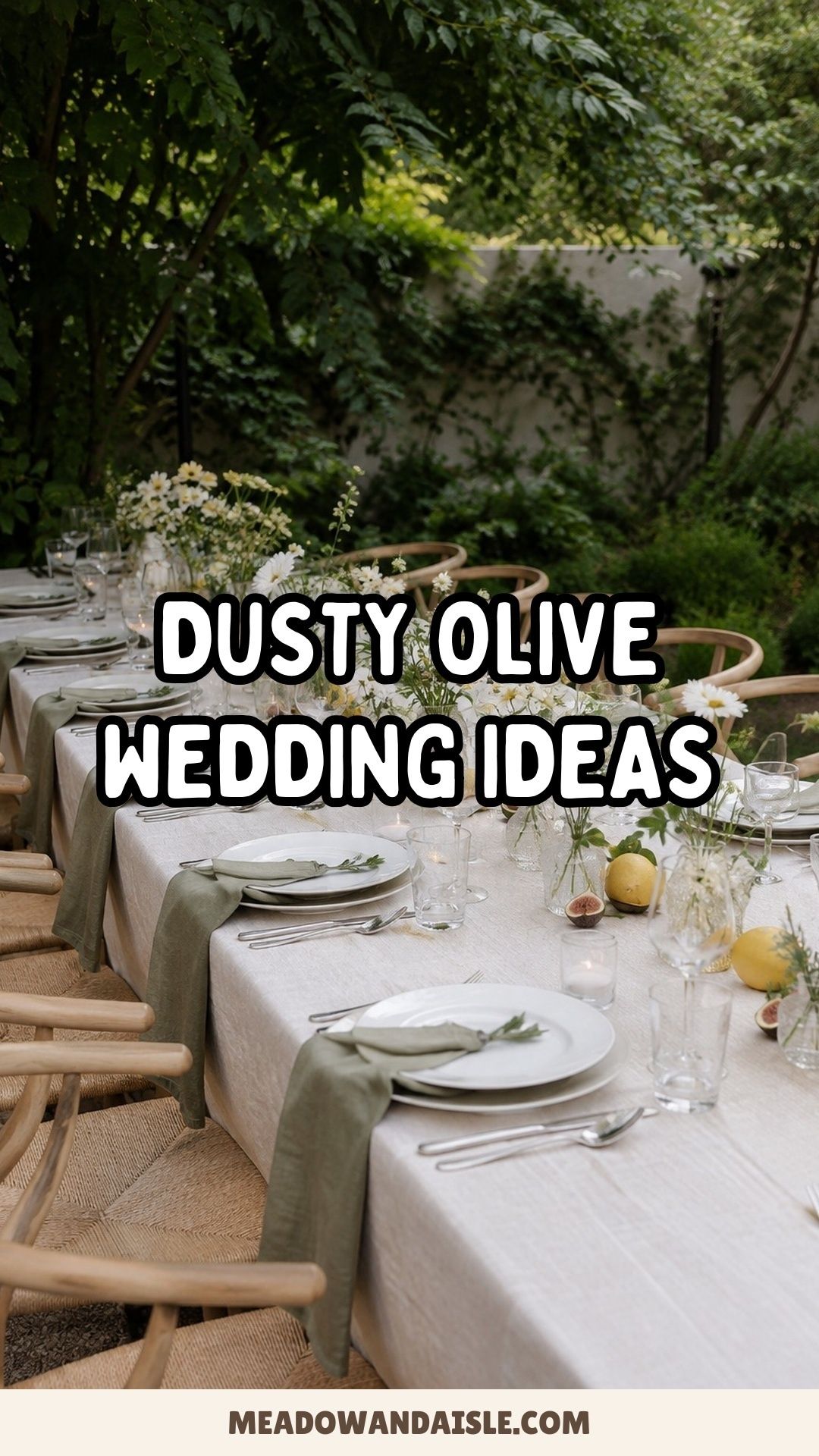
Dusty olive wedding ideas work best when olive is treated as a soft grounding thread, not the whole mood of the day. Pair it with cream, ivory, blush, taupe, clay, champagne, natural wood, or warm candlelight, then repeat it through foliage, napkins, paper, attire accents, and intimate table details.
Olive can be beautiful at a wedding, but it asks for a little editing. Too much dark green can feel flat, and too many muddy neutrals can make even a lovely room look tired. The softer version begins with undertone, light, and texture, then builds toward a palette that feels calm, earthy, and genuinely romantic up close.
Recommended Wedding Products


You Might Also Like These Blog Posts
- Dusty Olive Wedding Decor for a Quietly Rich Celebration That Never Looks Flat
- Plum and Olive Wedding Ideas With Room to Breathe
- Muted Terracotta Wedding Ideas Without The Pumpkin Problem
- Dusty Rose Suit Wedding Ideas for a Soft Groom Statement
- Dusty Rose Nails Wedding Ideas for the Softest Hint of Color
- Merlot Wedding Ideas For A Wine-Warm Celebration
Dusty Olive Wedding Ideas That Stay Soft, Warm, And Intentional
The loveliest dusty olive wedding ideas usually come from restraint. Instead of asking the color to decorate every surface, let it hold the room together quietly while lighter tones, flowers, food, and faces bring the warmth. That approach is especially kind to a small wedding, where guests notice every napkin fold, candle color, menu card, and flower choice from just a few feet away.
Choose A Dusty Olive With The Right Undertone
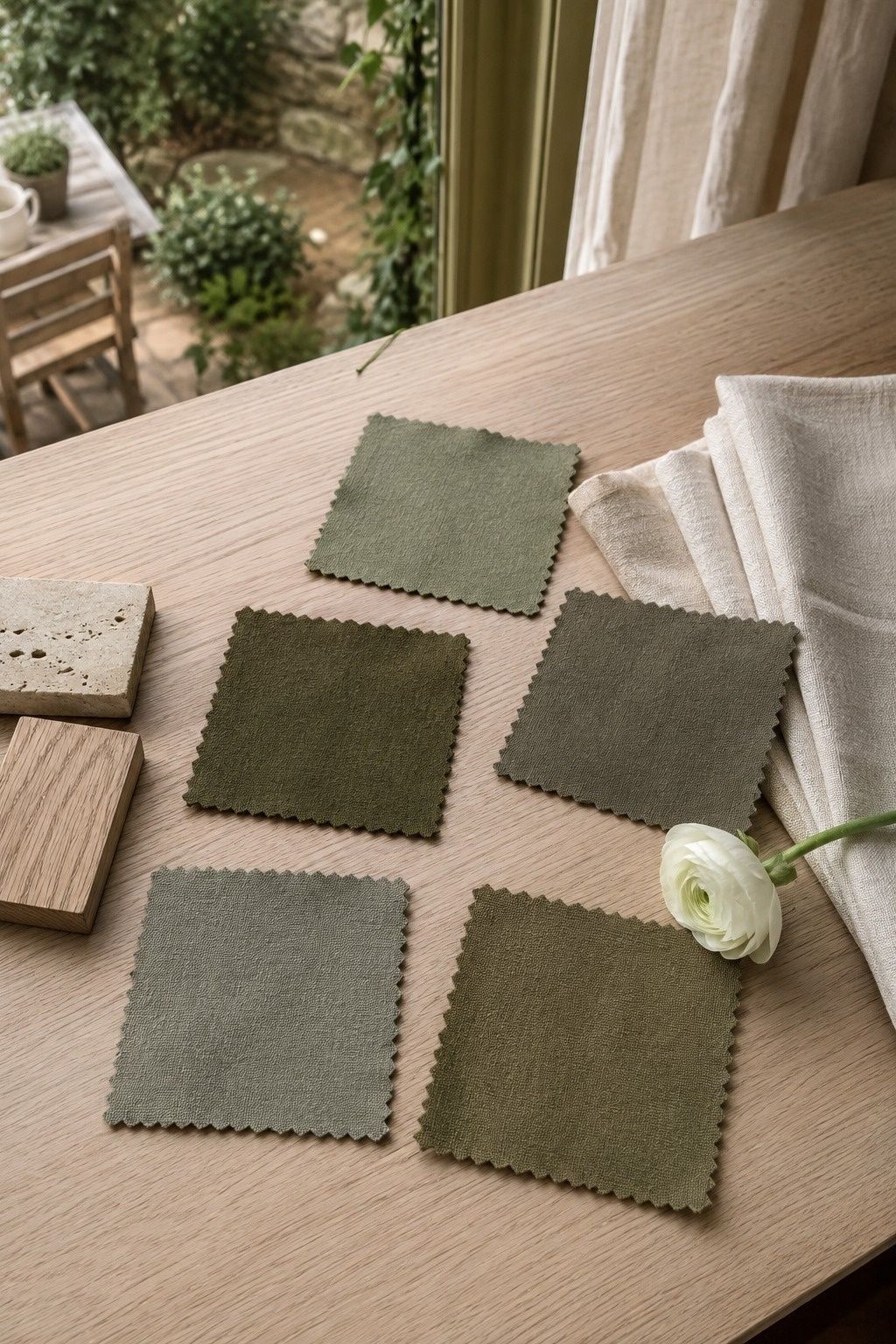
Dusty olive is not one single color. Some olives lean yellow and herbal, some lean gray and smoky, some feel mossy, and some look almost brown once the light drops. Before you order linens, dresses, or envelopes, gather real swatches and hold them beside your venue floor, walls, dinnerware, and flowers. A shade that looks soft online can become army green under warm bulbs or too gray in a shaded courtyard.
For most intimate weddings, the safest olive lives in the middle: muted enough to feel elegant, warm enough to sit near cream, and clear enough that it still reads green in photos. If your venue already has stone, timber, or garden foliage, test the swatch there instead of judging it against a blank white screen.
Give Olive A Light Partner
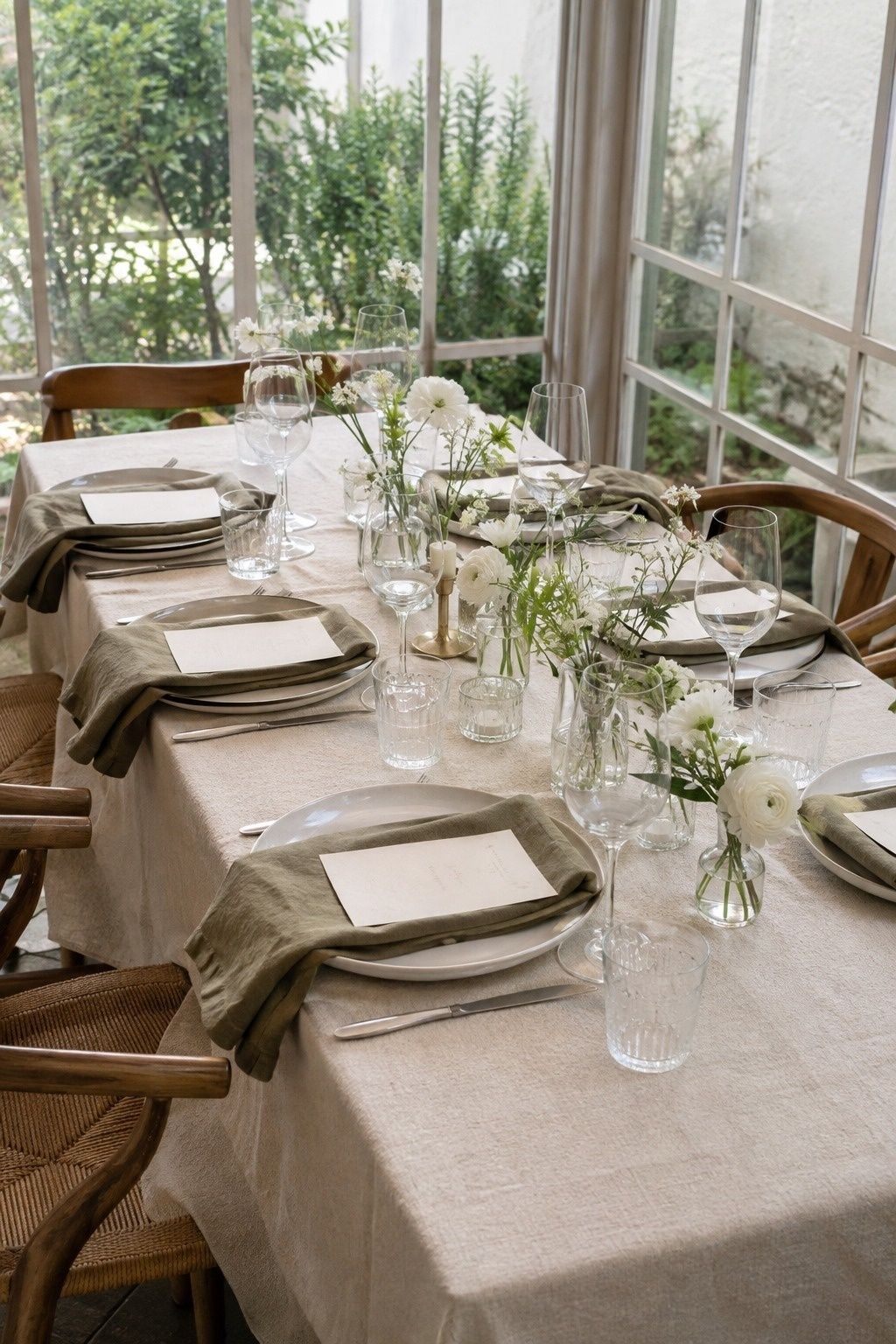
Olive needs air around it. Cream, ivory, warm white, oatmeal, champagne, and pale blush all keep the palette from becoming heavy, especially in a restaurant room or chapel where the guest count is small and the tables are close together. In practical terms, let the biggest surfaces stay light: tablecloths, plates, menus, ceremony fabric, and sometimes the wedding party shirts or wraps.
When olive sits beside cream, the green feels intentional instead of dim. If you are still building the larger color story, a neutral palette with depth gives the room enough quiet contrast for olive to feel like a chosen accent rather than a shadow.
Add Warmth Where Olive Feels Cool
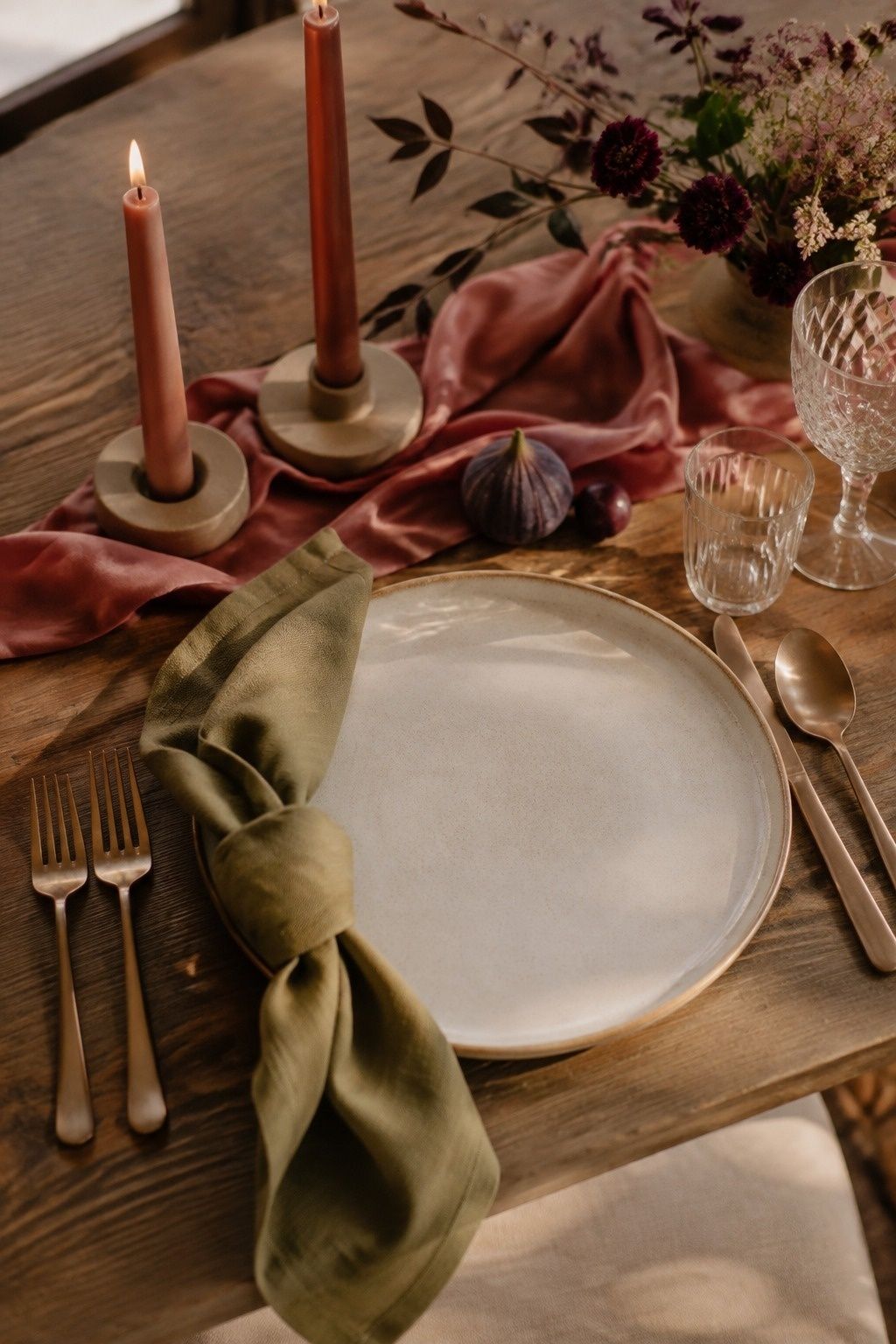
A dusty olive green wedding palette can turn chilly when it is paired only with gray, black, silver, or very pale white. Warmth brings it back to wedding softness. Think clay taper candles, champagne flatware, wooden charger plates, caramel leather menus, dusty rose ribbon, fig-colored fruit, or a small amount of plum in the flowers.
You do not need every warm accent at once. Choose one or two, then repeat them gently. Olive and clay feels earthy, olive and blush feels tender, olive and brass feels candlelit, and olive with fig or plum feels moodier without going dark. Couples drawn to deeper color can let plum and olive wedding details show up in one small floral or table moment rather than the whole reception.
Use Olive Where It Feels Natural
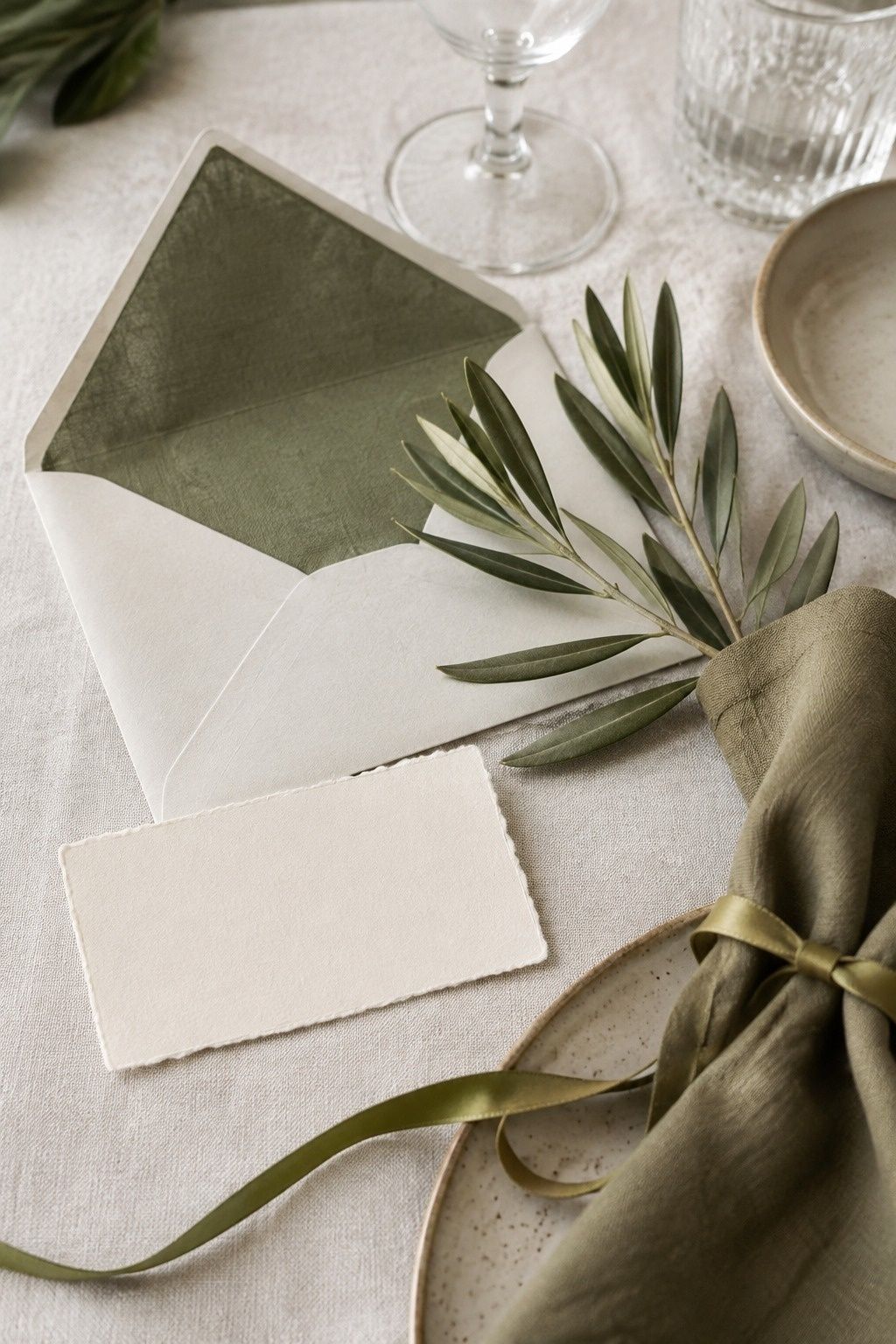
Dusty olive is most believable when it appears in materials that already make sense in green. Foliage, ribbon, napkins, envelopes, linen texture, suit fabric, menu ink, chair ties, and table runners all carry the color with ease. It becomes less graceful when every sign, flower, favor, and backdrop is forced into the exact same green.
At a small wedding, natural placement matters because guests are close enough to notice quality. A real olive-toned napkin beside a cream plate will usually look softer than a large artificial greenery wall, and a single olive envelope liner can feel more refined than oversized matching signage.
Choose Flowers That Soften The Green
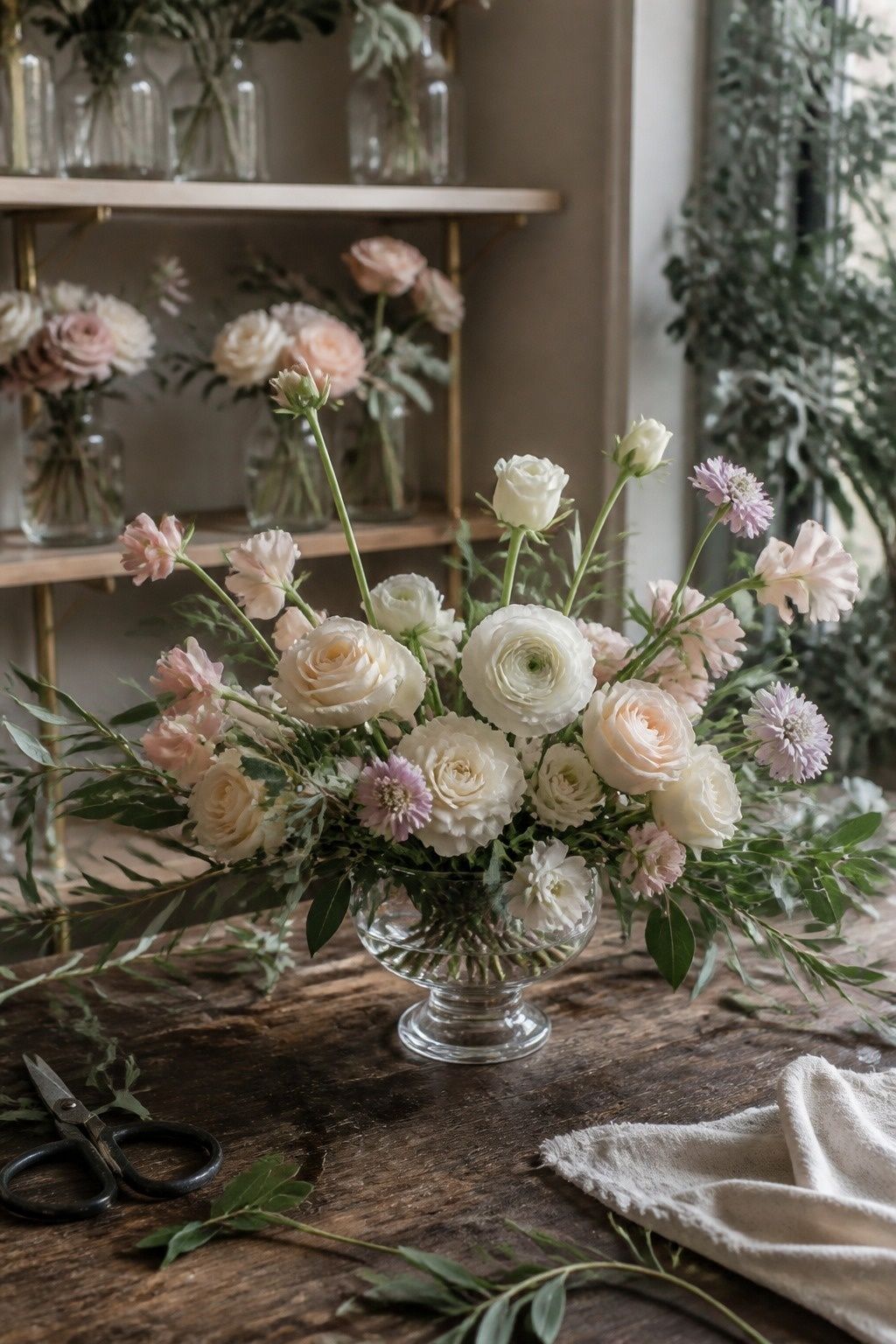
Olive wedding flowers should not become one dark green mass. Ask for cream, white, blush, mauve, dusty rose, soft peach, or muted plum blooms, then let varied greenery support them. Garden roses, ranunculus, lisianthus, hellebores, scabiosa, sweet peas, anemones, and seasonal branches can all keep the arrangements delicate when the greens are edited. If you want warmer clay tones beside the green, these muted terracotta wedding ideas show that direction.
If your florist uses olive branches, eucalyptus, or ruscus, balance them with lighter flower faces and negative space. Dense greenery garlands can look beautiful from far away but dark and bulky on an intimate table. Bud vases, loose compotes, and smaller clusters often make muted green wedding decor feel more personal.
Make The Table Feel Grounded And Bright
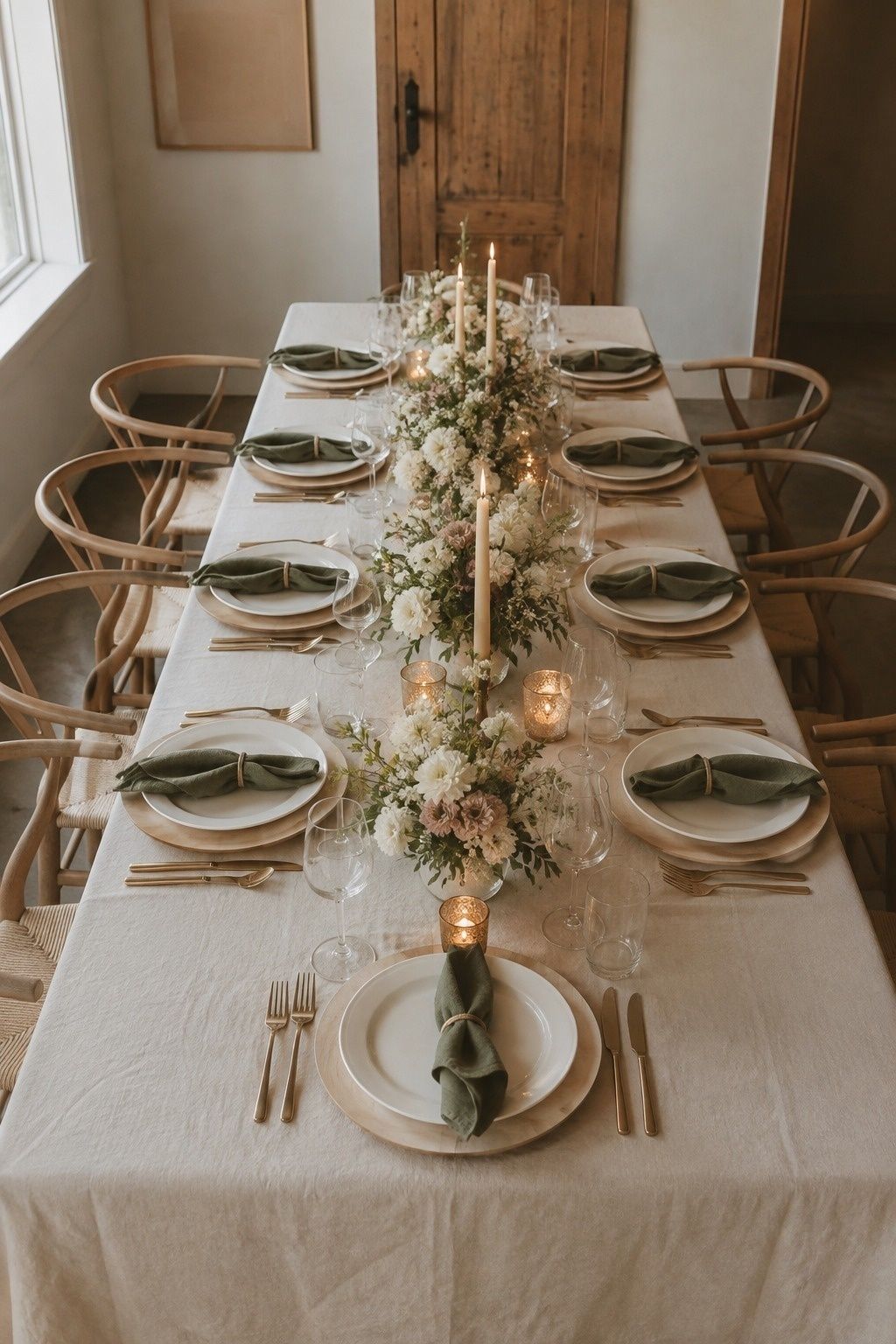
The table is where olive can shine. Try olive napkins with ivory linens, wooden chargers, cream taper candles, clear glass, low flowers, and gold votive holders. The green grounds each place setting, while the pale and reflective details keep dinner from feeling visually heavy.
For a restaurant dinner or backyard supper, avoid stacking too many dark pieces together. Olive tablecloths, dark plates, brown chargers, amber glass, and burgundy flowers may feel rich in a flat lay but crowded once food arrives. A small guest table needs breathing room, and neutral palettes often work because they leave space for conversation and candlelight.
Let Napkins Carry The Color
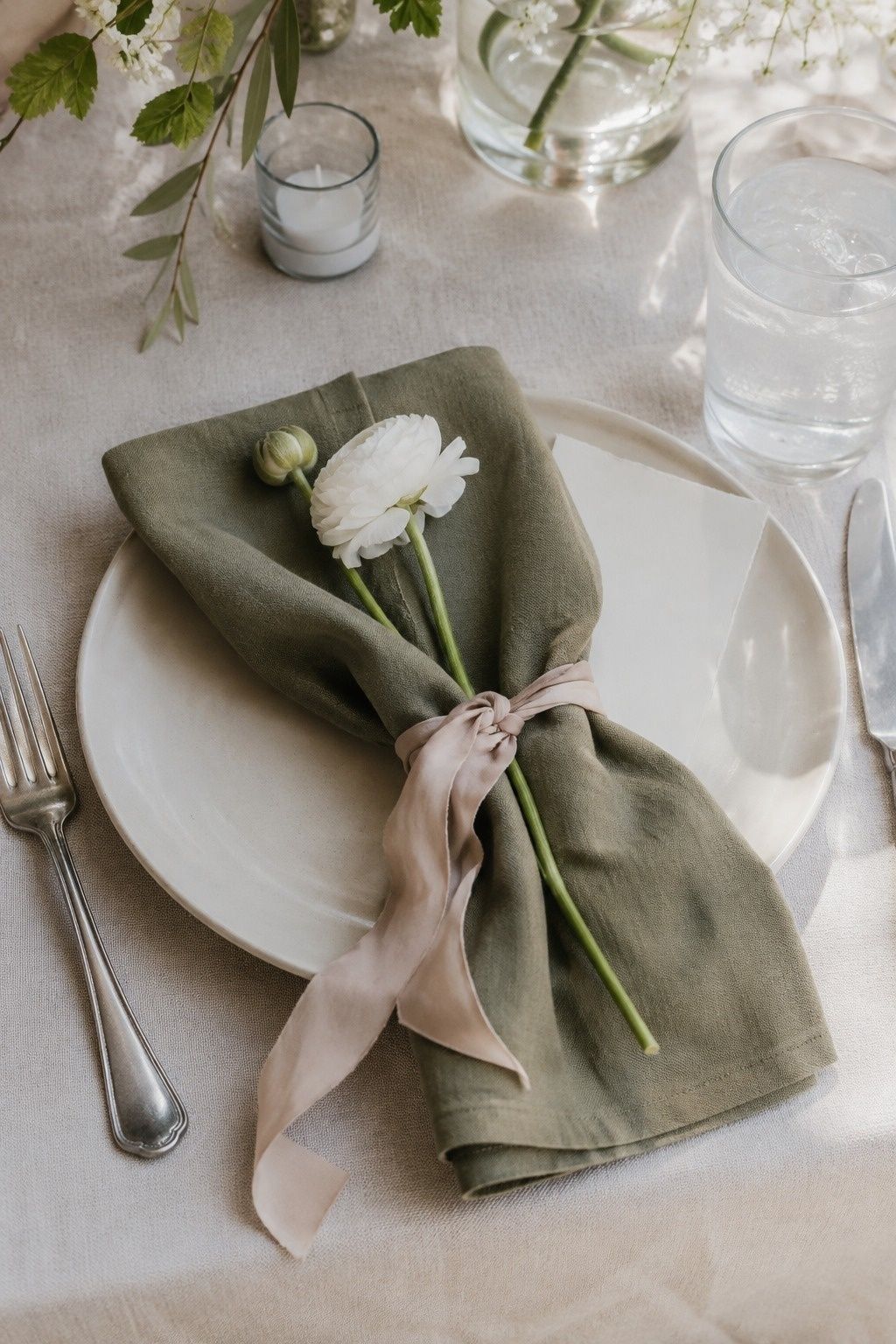
If you only choose one olive table detail, make it the napkin. Napkins are visible, tactile, easy to repeat, and close enough to feel intentional without taking over the entire room. Fold them loosely over plates, knot them with blush silk ribbon, tuck a menu beneath them, or let them sit under a single stem at each setting.
This is also a useful budget move. A rented or purchased olive napkin can change the table more than several small decor pieces, especially when the venue already provides neutral plates and glassware.
Use Candles To Keep Olive From Looking Flat
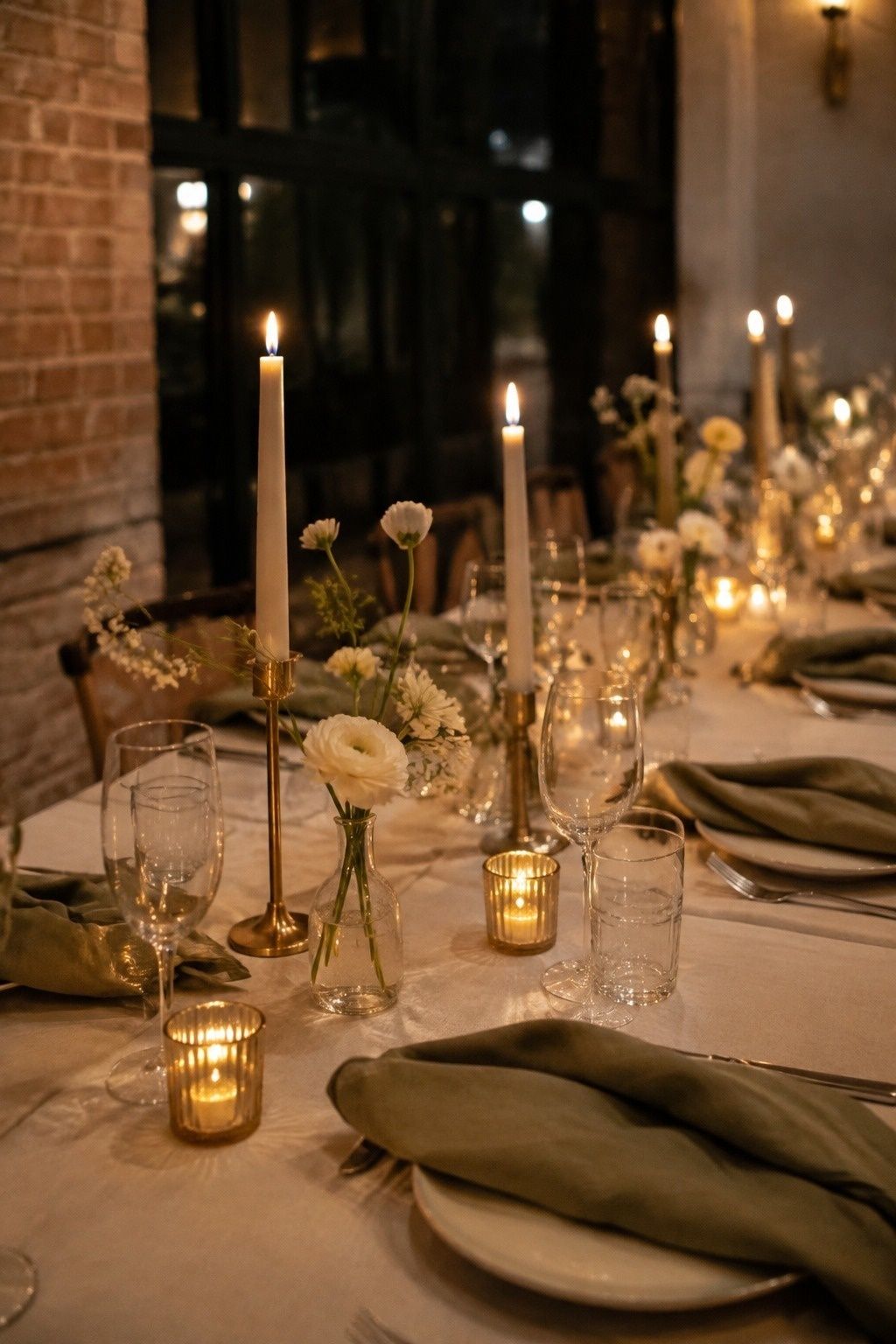
Candlelight is one of the easiest ways to soften dusty olive. Cream taper candles make the palette feel warmer and more wedding-ready, while gold votives add tiny reflected points of light. If the venue does not allow open flame, choose warm LED candles and test them beside the olive pieces before the wedding week.
Keep the candle colors edited. Cream, ivory, champagne, clay, or a very pale blush usually flatter olive more than dark green candles on an already green table. In a close dining room, the goal is glow, not a forest of tall color.
Style Attire Without Making Olive Feel Military
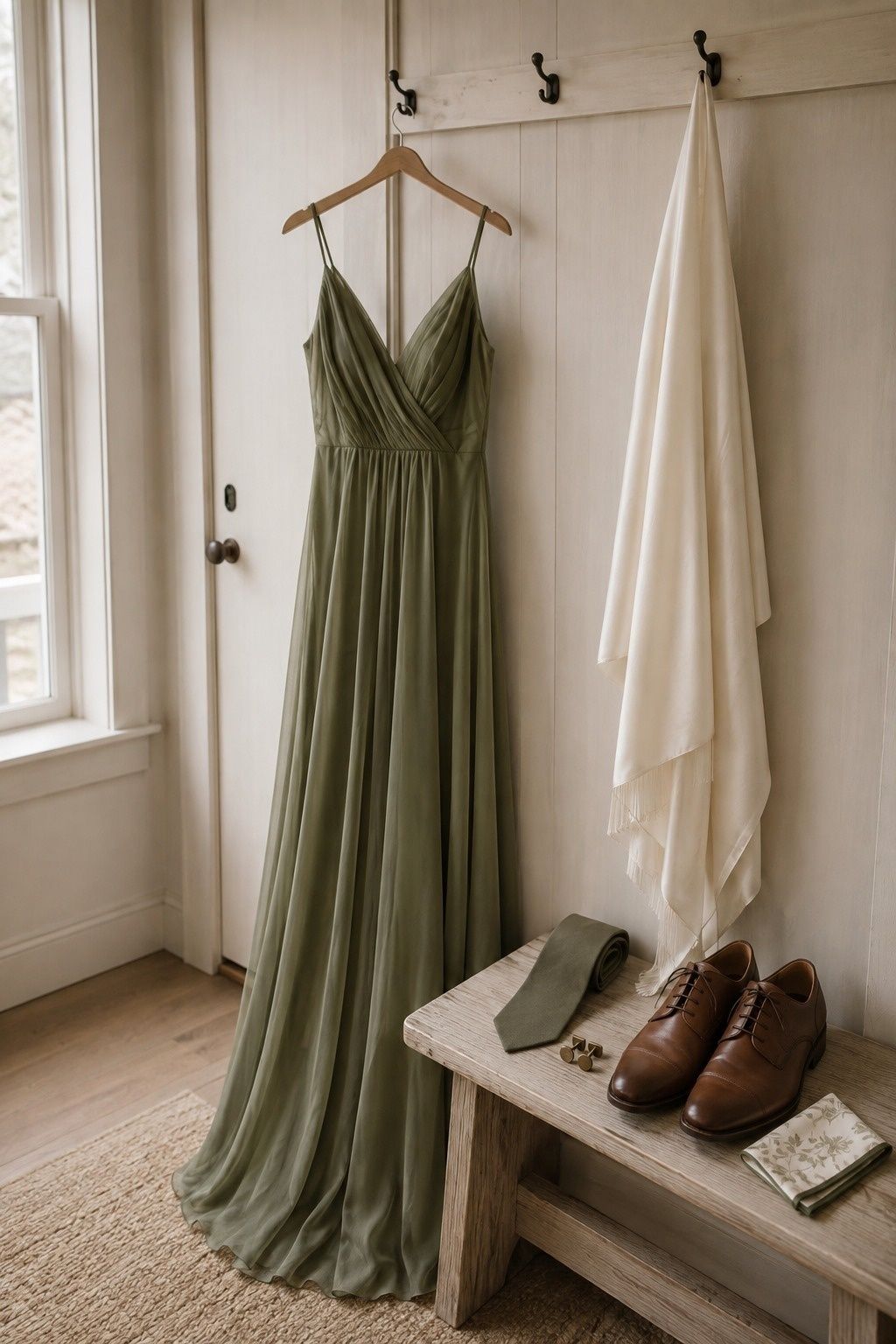
Olive attire needs softness in fabric and styling. For suits, consider lighter shirts, brown or tan shoes, warm metal accessories, and a floral pocket square instead of black styling from head to toe. For bridesmaids or attendants, chiffon, satin, crepe, or silk-like textures can make olive feel romantic rather than uniform-like.
If a full olive dress lineup feels too heavy, use olive in ties, shawls, hair ribbons, shoes, or bouquet ribbon. Intimate olive wedding style often works best when the couple lets guests and attendants feel like people first, with the color acting as a quiet visual connection.
Match Dusty Olive To The Venue
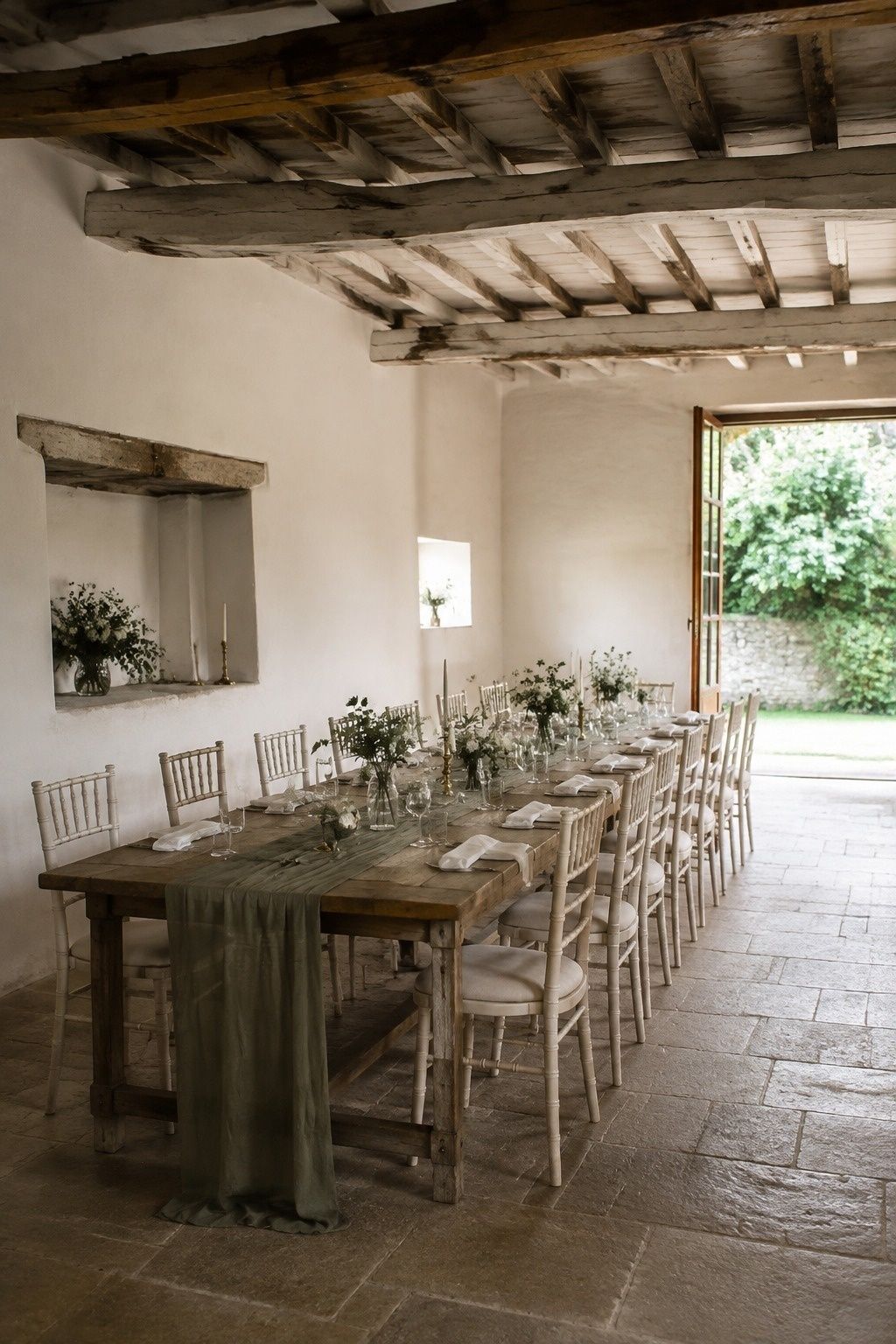
Dusty olive behaves differently in every setting. In a garden, it can echo real greenery and feel effortless. In a vineyard, it pairs beautifully with wood, stone, and candlelight. In a white chapel, it can soften the room. In a barn, it needs cream and refined flowers so it does not become too rustic. In a restaurant, it should appear in close-up details rather than large dark surfaces.
If your celebration leans outdoor or rural, keep the styling polished enough that the wedding still feels chosen. A countryside aesthetic feels strongest when natural textures are edited, comfortable, and guest-aware instead of costume-like.
Use Paper And Signage To Clarify The Palette
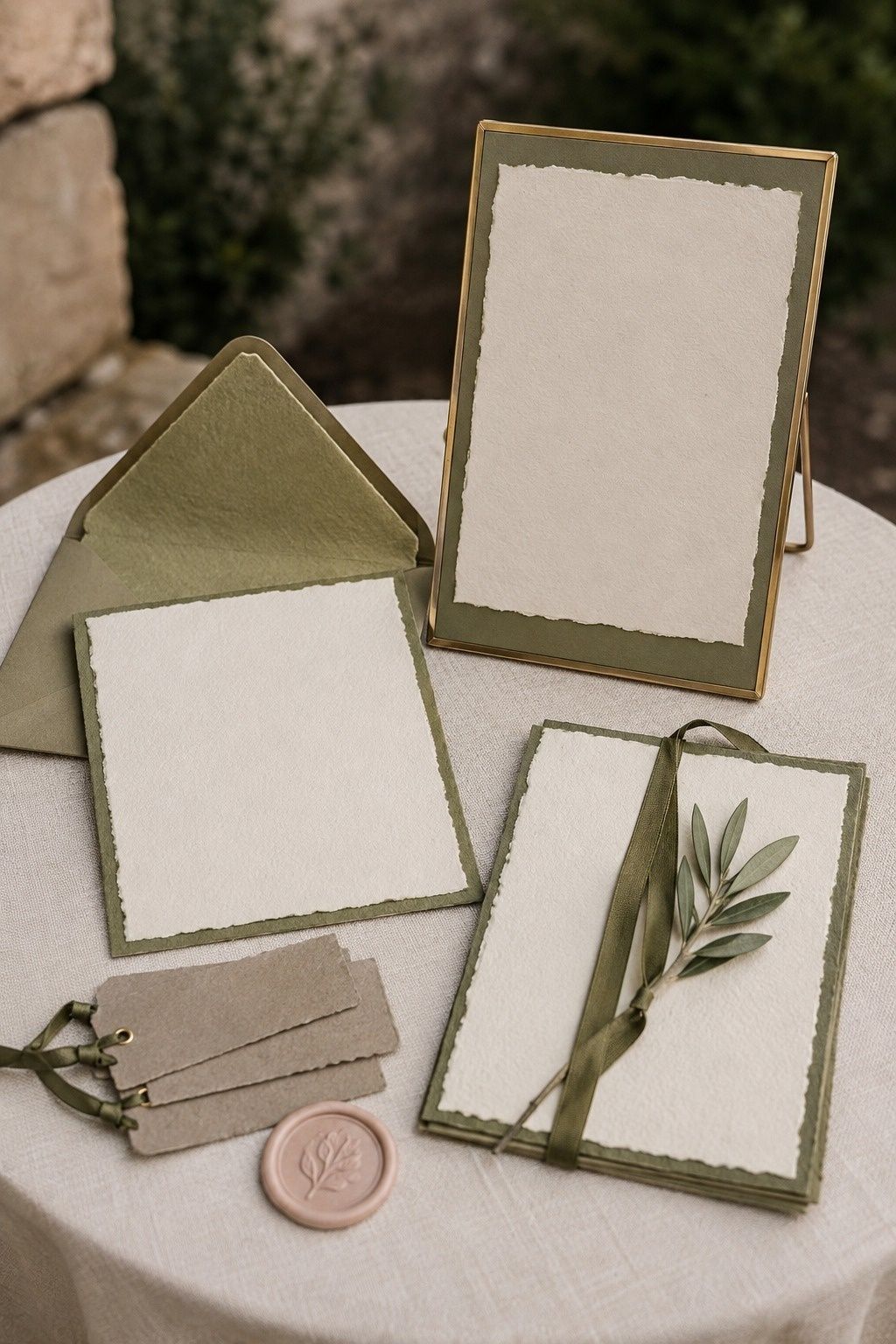
Stationery is a graceful place for dusty olive because it lets the color appear before guests ever enter the venue. Try cream paper with olive ink, olive envelope liners, taupe place cards, blush wax seals, clay details, or a thin olive border around a simple menu. Always order a physical proof if the piece will be printed; olive can shift darker or browner than expected.
For signage, readability comes first. Olive backgrounds with pale lettering can be lovely, but only if the contrast is strong in real light. A small wedding does not need many signs, so make the few you have feel useful: welcome, seating, bar menu, dinner menu, or a short ceremony note.
Bring In Terracotta Without Turning The Wedding Orange
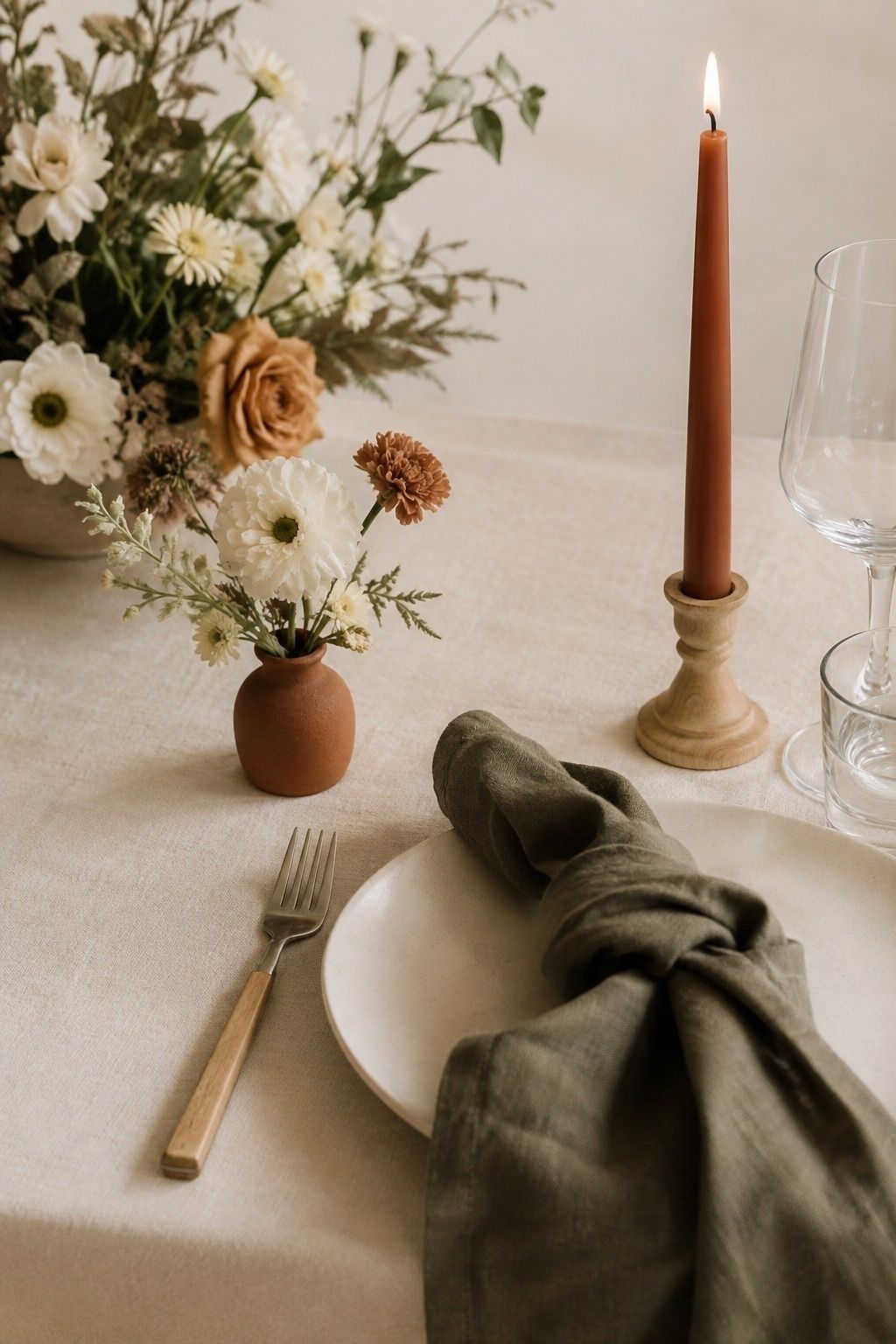
Clay and terracotta can rescue olive from looking cold, but they need a light hand. A terracotta taper, tiny clay vase, rust silk ribbon, or warm-toned floral accent may be enough. When the orange tones get too saturated, the palette starts to feel more autumn-theme than soft olive.
If you love that warmer direction, muted terracotta wedding details can sit beside olive through flowers, candles, or paper accents while cream keeps both colors from competing.
Keep The Palette From Looking Muddy
Muddiness usually happens when every color has the same low, muted value. Dusty olive plus taupe, brown, gray, mauve, rust, and dim lighting can blur together, even if each piece is pretty on its own. Add contrast through cream plates, white flower faces, clear glass, polished metal, brighter candlelight, or a pale paper layer.
Texture also matters. Linen, wood, paper, glass, velvet, silk ribbon, ceramic, and fresh petals all reflect light differently. When the color palette is quiet, those surface changes keep the wedding from reading flat.
Avoid Exact-Match Pressure
Do not chase the exact same olive across napkins, dresses, ribbon, candles, ink, greenery, and signage. Real weddings look more elegant when related tones live together naturally. Let the napkin be a little warmer, the envelope a little softer, the foliage more varied, and the suit slightly deeper.
The key is intention, not identical color. Build a small swatch group with one light neutral, one dusty olive, one warm accent, one metal, and one flower color. If those five pieces look harmonious in your venue light, the wedding will feel more relaxed than a palette built around exact matching.
Know What To Avoid
Skip black-heavy styling unless the wedding is deliberately formal and moody. Avoid cheap artificial greenery where guests can touch it. Be careful with dark green linens in dim rooms, olive signage with low contrast, and too many muted colors without one pale anchor. Also avoid calling every green detail olive; sage, forest, moss, eucalyptus, and khaki all create different moods.
The goal is not to make olive disappear. It is to keep it from doing too much work. Let olive ground the wedding, then let flowers, light, food, and people bring the day to life.
Try An Olive And Cream Garden Lunch
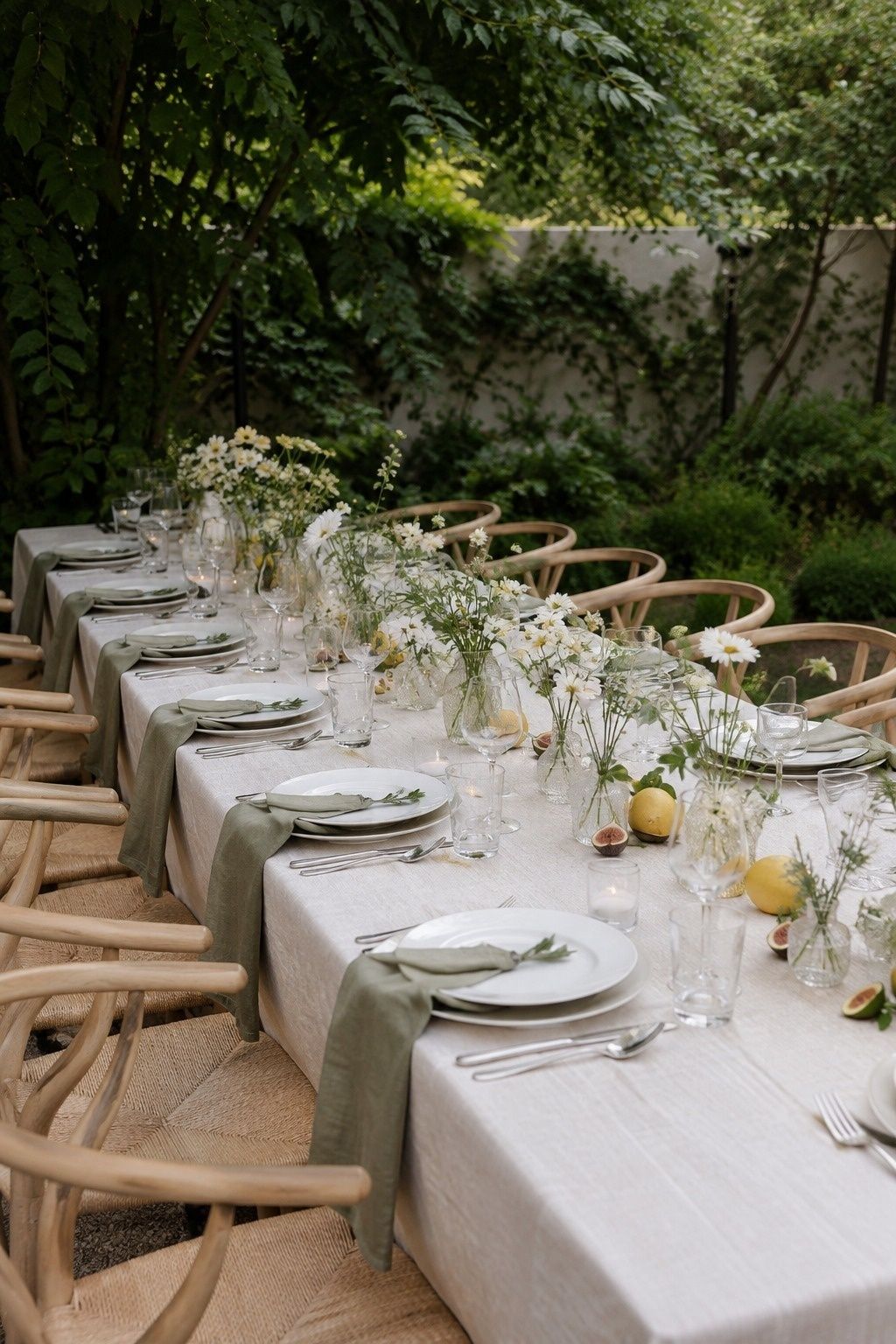
For a daytime garden lunch, keep the palette fresh: ivory linens, olive napkins, cream flowers, pale wood chairs, lemon or fig details, and a few warm votives if the meal stretches toward evening. This path is soft, guest-friendly, and easy to adapt for 12 to 40 people.
Try A Dusty Olive Restaurant Dinner
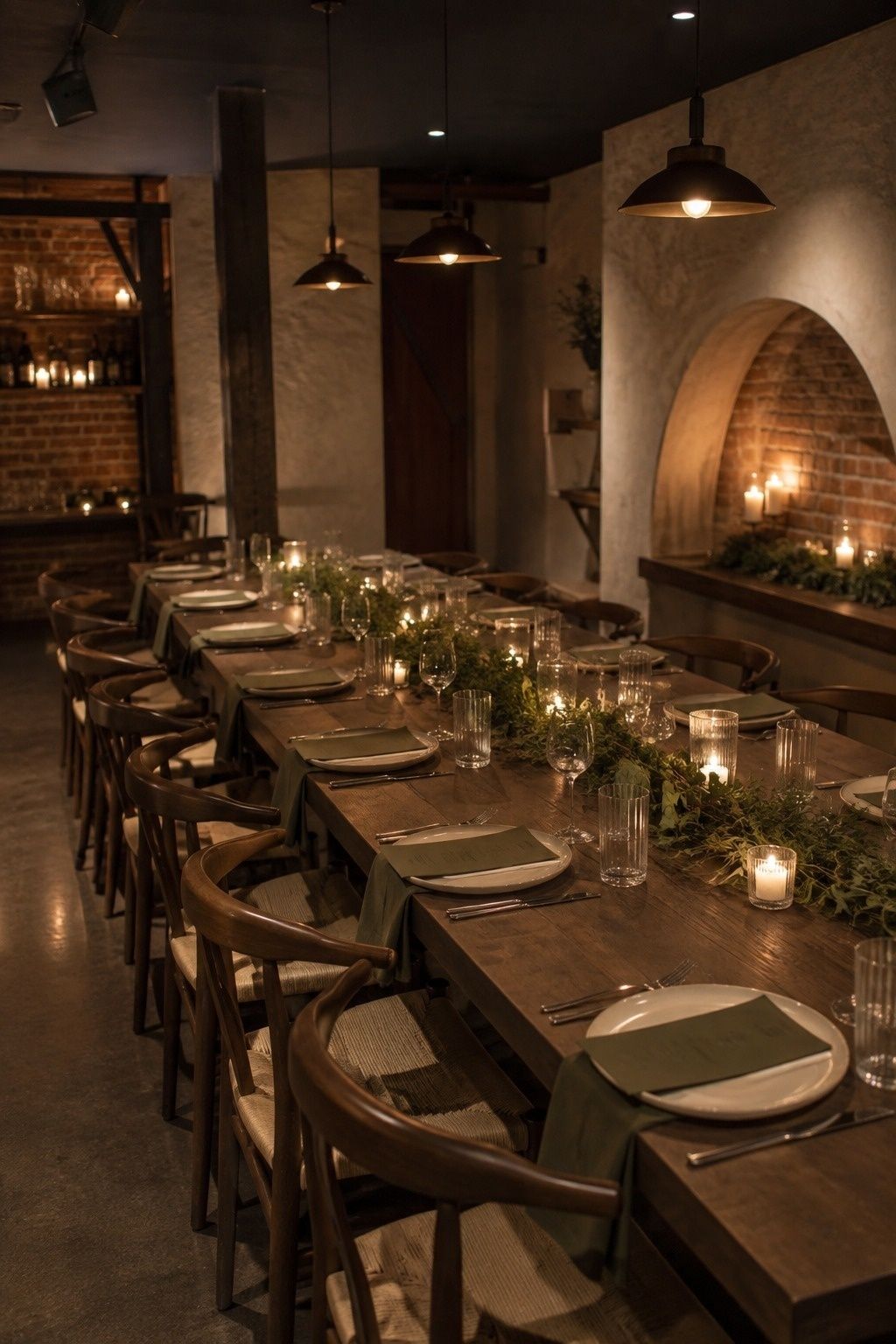
For a private dining room, use olive close to each guest rather than on the walls. Olive menus, napkins, place cards, and low greenery can tie the room together while the restaurant’s existing chairs, plates, and lighting do the heavy lifting. Ask the venue about candle rules, table width, and whether low flowers will leave enough room for shared plates.
Try Olive, Blush, And Chapel Light
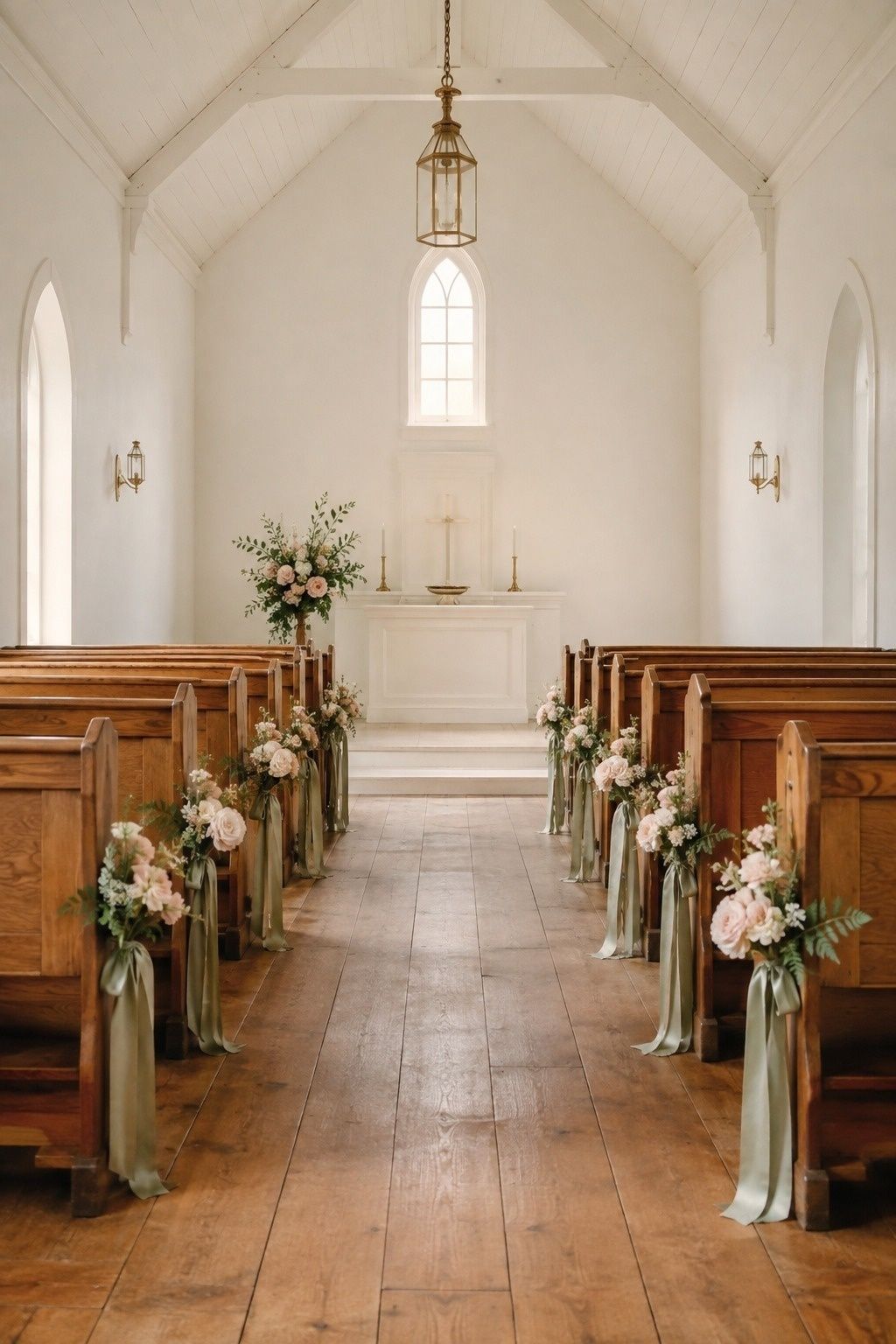
In a chapel or ceremony room, dusty olive can be quiet and romantic with blush flowers, cream aisle markers, olive ribbon, and a few wooden or brass accents. Keep the aisle simple so the ceremony still feels sacred rather than styled. A small cluster at the entry and a bouquet ribbon may be more beautiful than filling every pew.
Try A Fig And Olive Fall Table

For a moodier autumn table, pair olive with fig, plum, cream, and candlelight, then stop before the palette becomes dense. A few dark fruit tones in flowers, menus, or dessert styling can make olive feel seasonal without burying the table in brown. This version pairs naturally with plum and olive wedding ideas that keep warmth and breathing room in balance.
Try An Olive Courtyard Supper
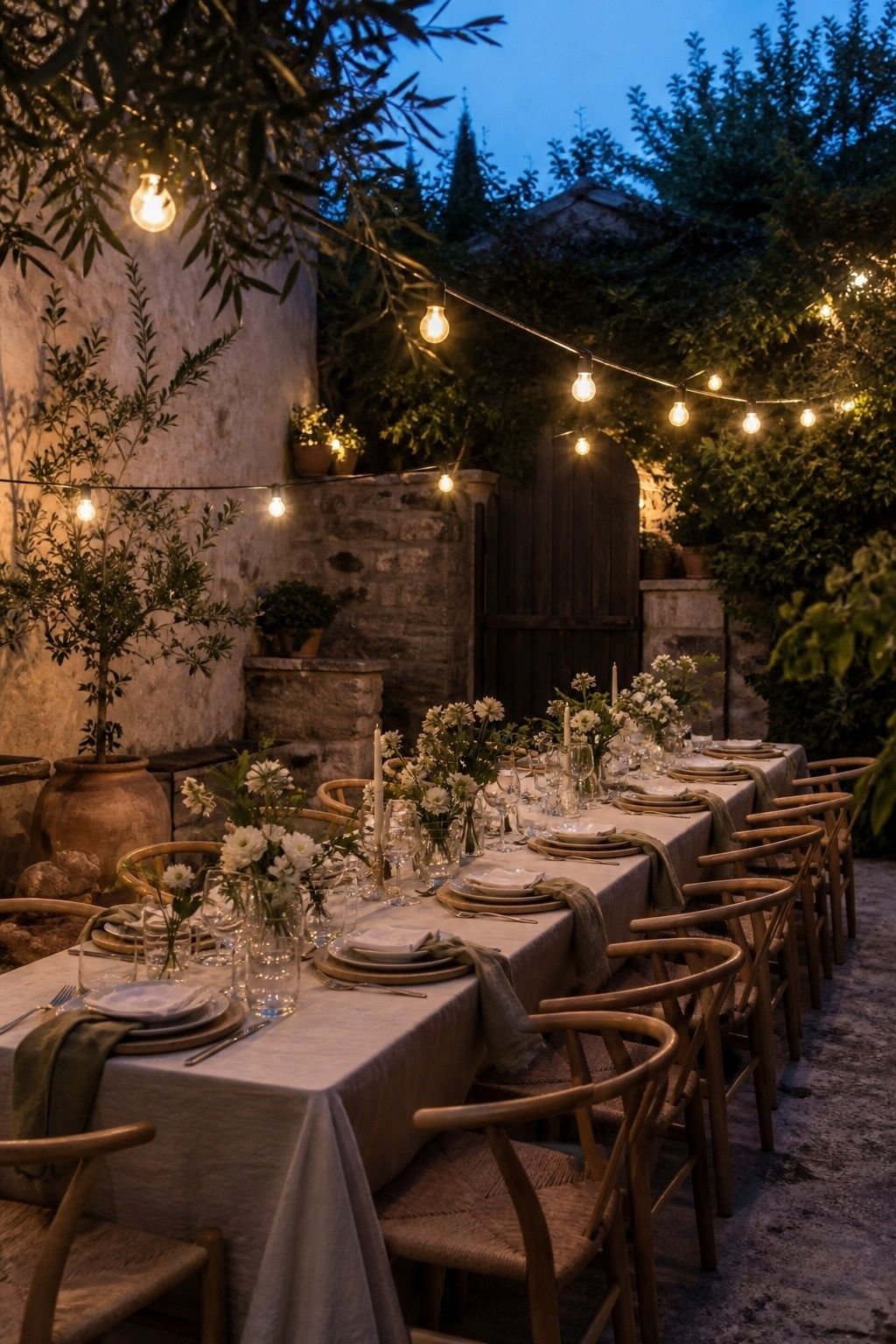
For a courtyard, terrace, or backyard supper, let olive echo the surrounding leaves while cream linens and warm bulbs brighten the scene. Use wooden chargers, simple white plates, olive napkins, and garden-style flowers that look gathered rather than oversized. The effect should feel like a long dinner under soft light, not a theme installed over the space.
FAQ
What Colors Go With Dusty Olive For A Wedding?
Cream, ivory, champagne, taupe, blush, clay, caramel, wood, brass, fig, plum, dusty rose, and soft peach all pair well with dusty olive. The easiest formula is one light neutral, one warm accent, and one floral color. That gives olive enough contrast to feel soft instead of muddy.
Is Dusty Olive A Good Wedding Color?
Yes, dusty olive is a good wedding color when you want something earthy, refined, and less expected than sage. It works especially well for garden weddings, restaurant dinners, vineyards, courtyards, and intimate receptions. The trick is pairing it with light tones and warm texture so it feels romantic, not dull.
How Do You Style Dusty Olive Wedding Decor?
Style dusty olive wedding decor in repeatable, useful places: napkins, foliage, ribbon, menus, envelope liners, suits, ties, candles, or table linens. Then balance it with cream plates, lighter flowers, clear glass, wood, brass, and candlelight. Avoid making every visible detail the same green.
What Flowers Work With Dusty Olive Wedding Ideas?
Cream roses, white ranunculus, blush lisianthus, mauve scabiosa, soft peach blooms, dusty rose garden roses, hellebores, sweet peas, anemones, and seasonal branches all work beautifully. Ask for airy greenery and varied flower shapes so the olive notes frame the blooms instead of turning arrangements into a dark green block.
Can Dusty Olive Work For A Small Wedding?
Dusty olive works very well for a small wedding because it can appear in close-up, tactile details guests actually notice. Olive napkins, ribbon, menus, flowers, ties, and candlelit table accents can make a small room feel cohesive without requiring large installations or heavy decor.
How Do You Keep Olive Wedding Decor From Looking Muddy?
Keep olive wedding decor from looking muddy by adding contrast, light, and warmth. Use cream or ivory near the olive, choose one warm accent, include white or blush flowers, and test everything in venue lighting. Too many brown, gray, and dark green pieces together can make the palette feel flat.
Final Thoughts
Dusty olive wedding ideas are most beautiful when they feel gathered, softened, and lived with rather than matched into submission. Let olive ground the wedding in the places that make sense, then give it cream, flowers, warm light, and enough texture to breathe.
If you are deciding whether this softer green belongs in your season, dusty olive sits naturally inside the current wave of moody, nature-driven wedding color palettes.
Last update on 2026-10-03 / Affiliate links / Images from Amazon Product Advertising API