

A summer outdoor wedding comes down to five things: shade for the ceremony, a start time in the last two or three hours before sunset, cold water at arrival, decor that stays put in wind, and a backup space with a named person and a fixed deadline for calling it. Get those right and the flowers and tables are the easy part.
Five decisions make or break summer outdoor wedding ideas, and none of them is the color of the napkins. Shade, timing, water, wind and the backup plan decide whether your guests have a lovely evening on a lawn or spend 25 minutes squinting and sweating through the vows.
A small guest list helps here. Shading 30 chairs is a very different job from shading 150, and a one-table dinner fits under a tent that wouldn’t hold a big reception. Here’s how I’d plan it, in the order I’d do it.
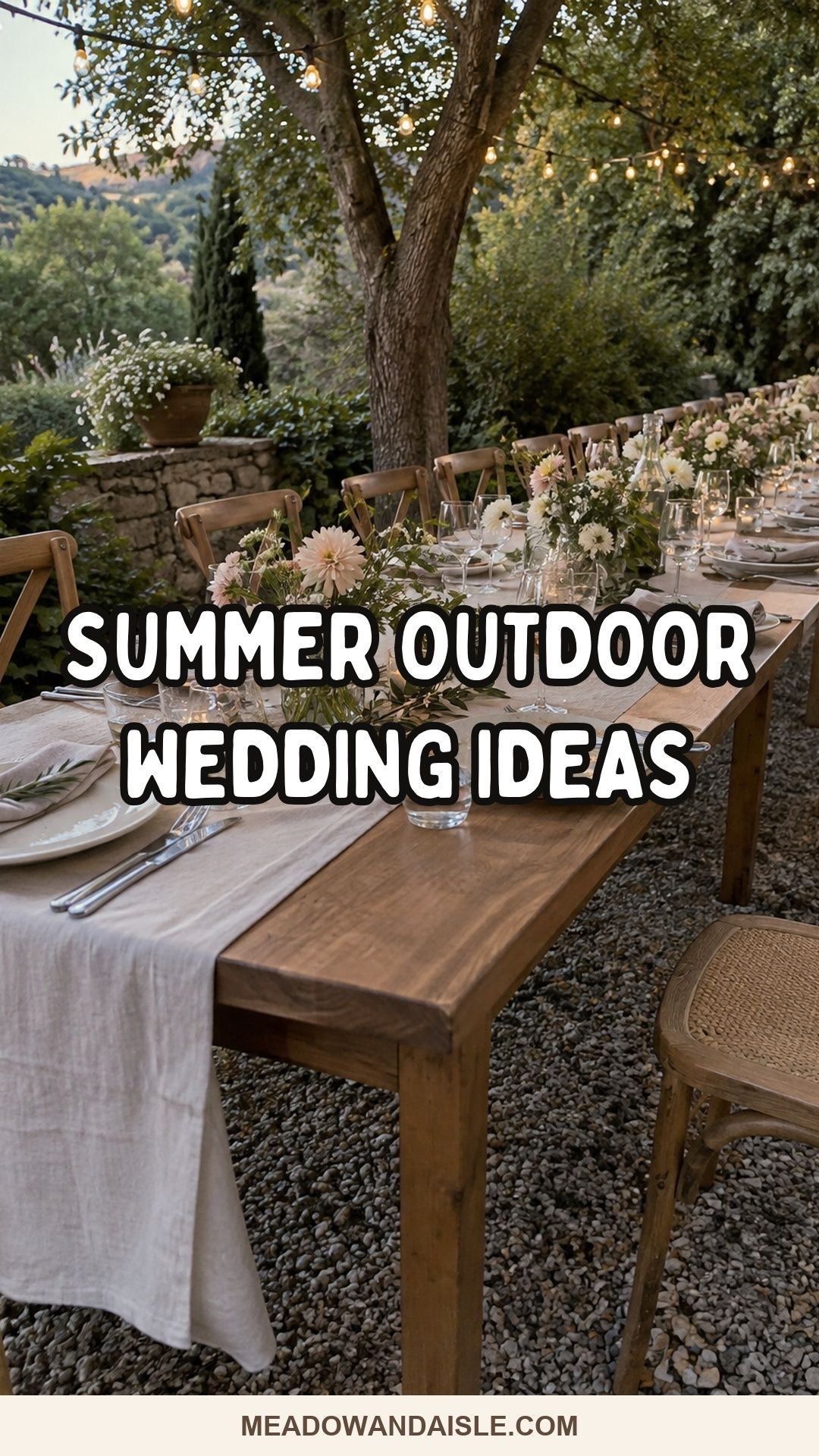
Useful things for an outdoor day
A short list of pieces that make an outdoor summer wedding easier on guests: fans, drink dispensers and lighting that runs without a socket.


Where should the ceremony go?
Put the ceremony wherever the shade is at the time you’ll be standing there, then pick the view. Trees, covered terraces, pergolas and the long shadow of a building do more for guests than any arch.
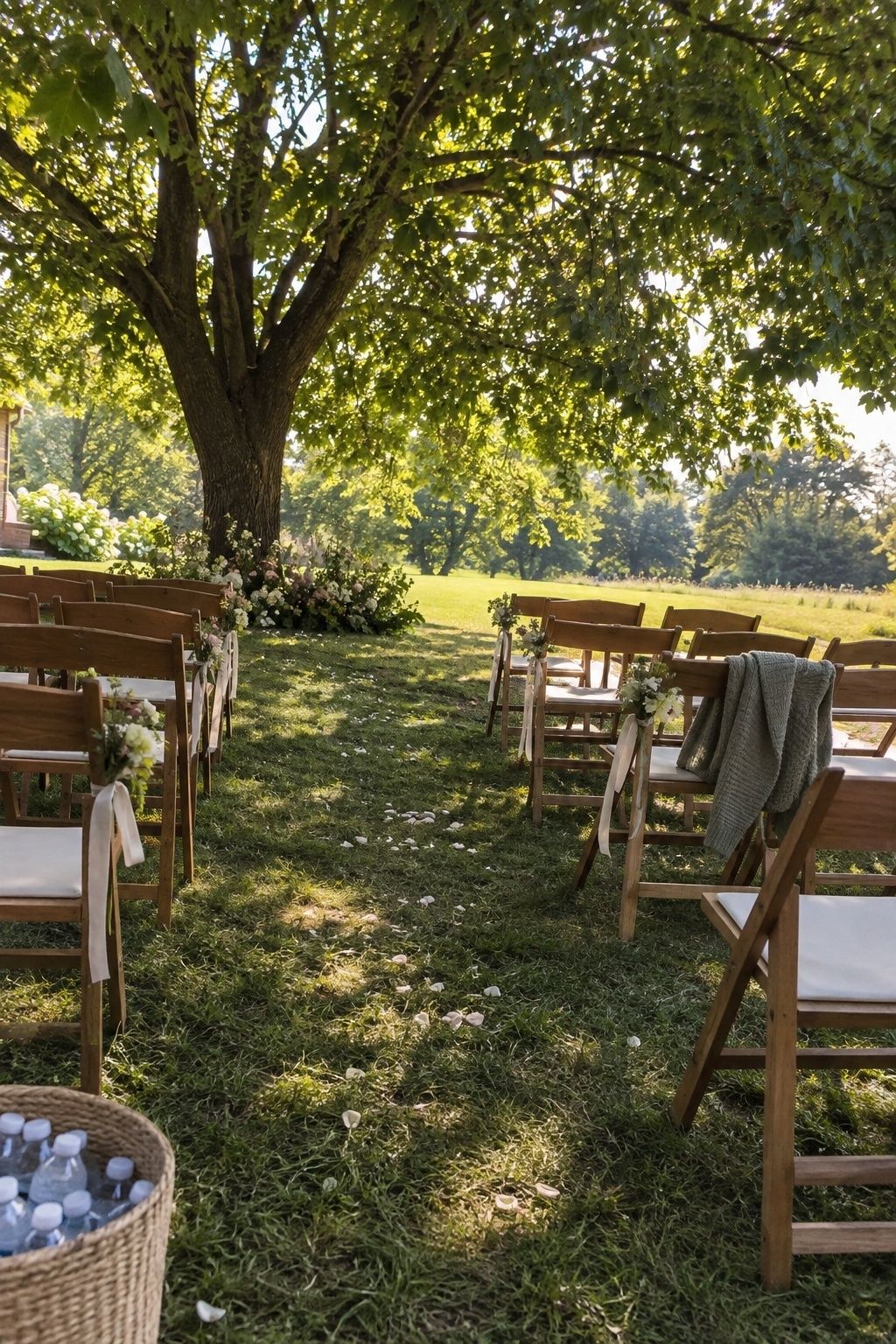
Visit the venue at the exact hour of your ceremony, on a sunny day, and sit where your guests will sit. If the best view faces straight into the sun, turn the setup, shorten the aisle or move closer to natural cover. You’ll find more options in my outdoor summer wedding shade ideas, from sailcloth to rented umbrellas.
Keep the ceremony itself short. Around 20 minutes is plenty in heat. Pick readings carefully, put a microphone where every seat can hear, and ask your officiant to skip long pauses. My guide to outdoor summer wedding ceremony ideas goes into seating, sound and aisle decor.
What time should a summer outdoor wedding start?
Start the ceremony two to three hours before sunset. The air is cooler, the light is softer for photos, flowers hold longer and makeup survives.
Build the day backward from sunset. Here’s an example for a July wedding with sunset at 8:30 p.m.:
| Time | What happens |
|---|---|
| 5:45 p.m. | Guests arrive, cold drinks at the entrance |
| 6:00 p.m. | Ceremony in shade (about 20 minutes) |
| 6:30 p.m. | Cocktail hour and family photos |
| 7:30 p.m. | Dinner |
| 8:00 p.m. | Couple portraits at golden hour (10 to 15 minutes) |
| 8:30 p.m. onward | Toasts, cake, dancing under lights |
If you want to fine-tune around golden hour, my sunset summer wedding timeline has a few more versions.
Tents, weather calls and the backup plan
A tent is both shade and rain cover, so treat it as part of the design rather than a nervous rental. Then decide in advance who calls the backup, by when, and based on what.
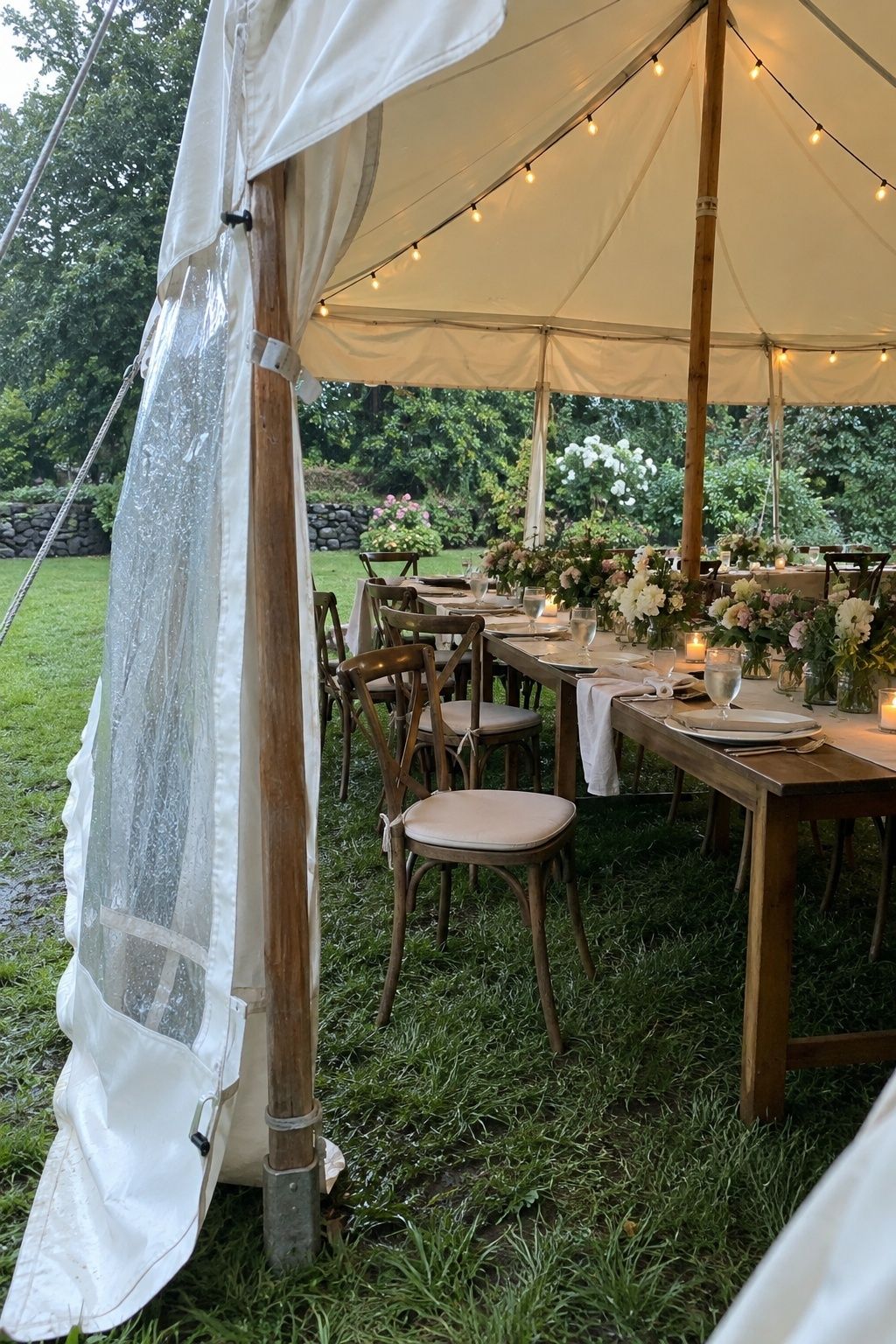
For a small wedding, a compact sailcloth or frame tent with one long table looks like a dinner party. Leave the sides open when the weather is good, so the tent frames the landscape. Keep a clear side panel or two on hand for wind or rain. Rentals add up, so get the tent quote early: The Knot’s 2026 Real Weddings Study puts the average spend on rentals at $2,000 across all wedding sizes.
Write the weather call down
The worst time to make a weather decision is the morning of, with everyone anxious. Instead, agree on this with your planner or venue weeks ahead:
- Who makes the final call (one person, not a group chat).
- When they make it, for example 10 a.m. the day before or 8 a.m. the day of.
- What triggers plan B, such as a rain chance above a set percentage, steady wind, or a heat advisory.
- Which vendors get told, and how.
The National Weather Service has a clear page on heat safety and heat advisories that’s worth reading if your date falls in a hot month. The Knot also has a good piece on building an outdoor wedding backup plan. For a full breakdown of heat, storms and wind, see my summer wedding weather plan.
Design plan B as properly as plan A
The backup space should look like your wedding, not a consolation prize. Decide where the ceremony faces, where the tables go and how the lighting works in the covered patio, barn or indoor room. Walk it with the venue before wedding week. If plan B has its own layout, switching to it is a calm 30-minute job.
How do you keep guests comfortable at an outdoor summer wedding?
Water at arrival, something to fan themselves with, a shady place to sit down, and clear advice on shoes. These cost little and guests notice every one of them.
Water before the ceremony
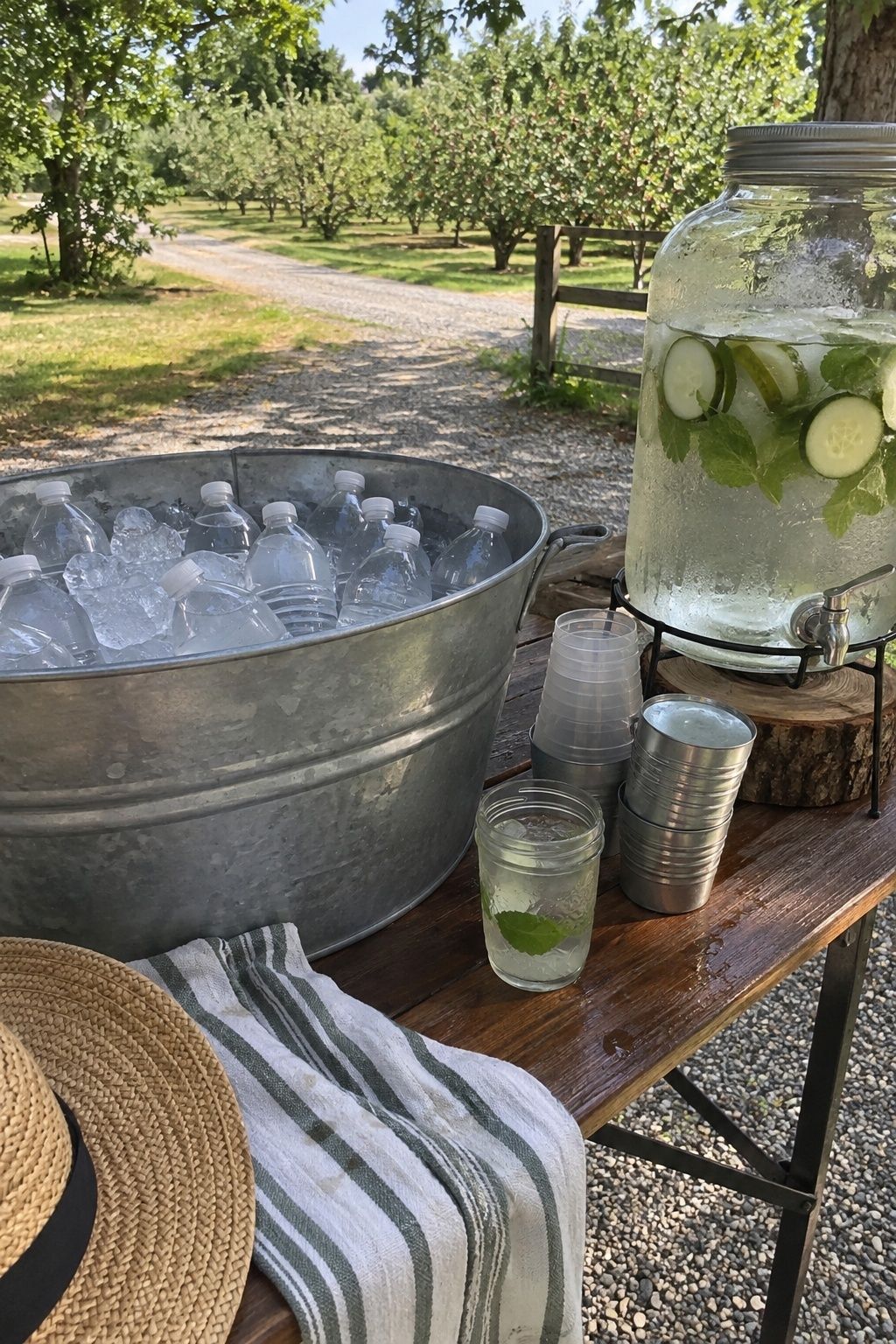
Put chilled water, citrus water or iced tea right at the entrance, so guests don’t sit down already overheated. A dispenser with cups or a tub of bottles on ice is enough. Keep it topped up through cocktail hour.
Fans and parasols
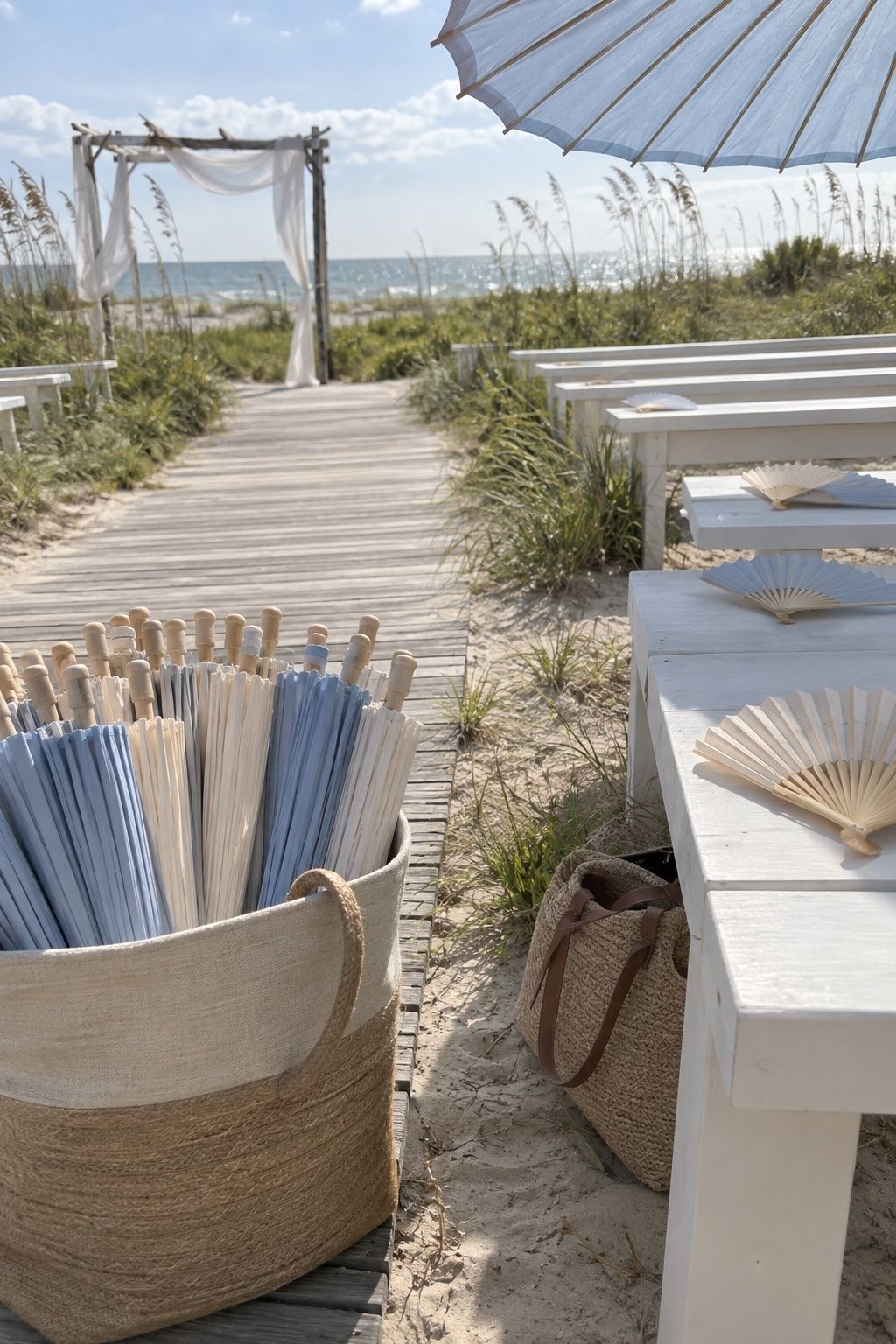
Program fans on each ceremony chair and a basket of parasols by the aisle. Choose calm colors like cream, pale blue or natural paper so they look like part of the decor. Fans also make a good favor; my post on summer wedding favors has more ideas that guests will use on the day.
A shaded lounge

Set up a lounge in the coolest corner of the venue with chairs, a rug, a fan and a jug of lemonade. Older guests and anyone in uncomfortable shoes will use it all evening. Keep it in view of the party so it doesn’t feel like exile.
Shoes, clothes and bugs
Tell guests on the wedding website if they’ll be on grass, gravel or sand, and suggest block heels, breathable fabrics and sunglasses. A small group makes this easy, since you can just text people.
For bugs, ask the venue about treatment timing, keep bright lights a little away from the dinner table, cover food between courses, and put out a basket of unscented bug spray. Lake and garden venues need this most.
Decor that survives wind
Assume there will be a breeze. Weight everything, clip anything paper, and keep flowers low.
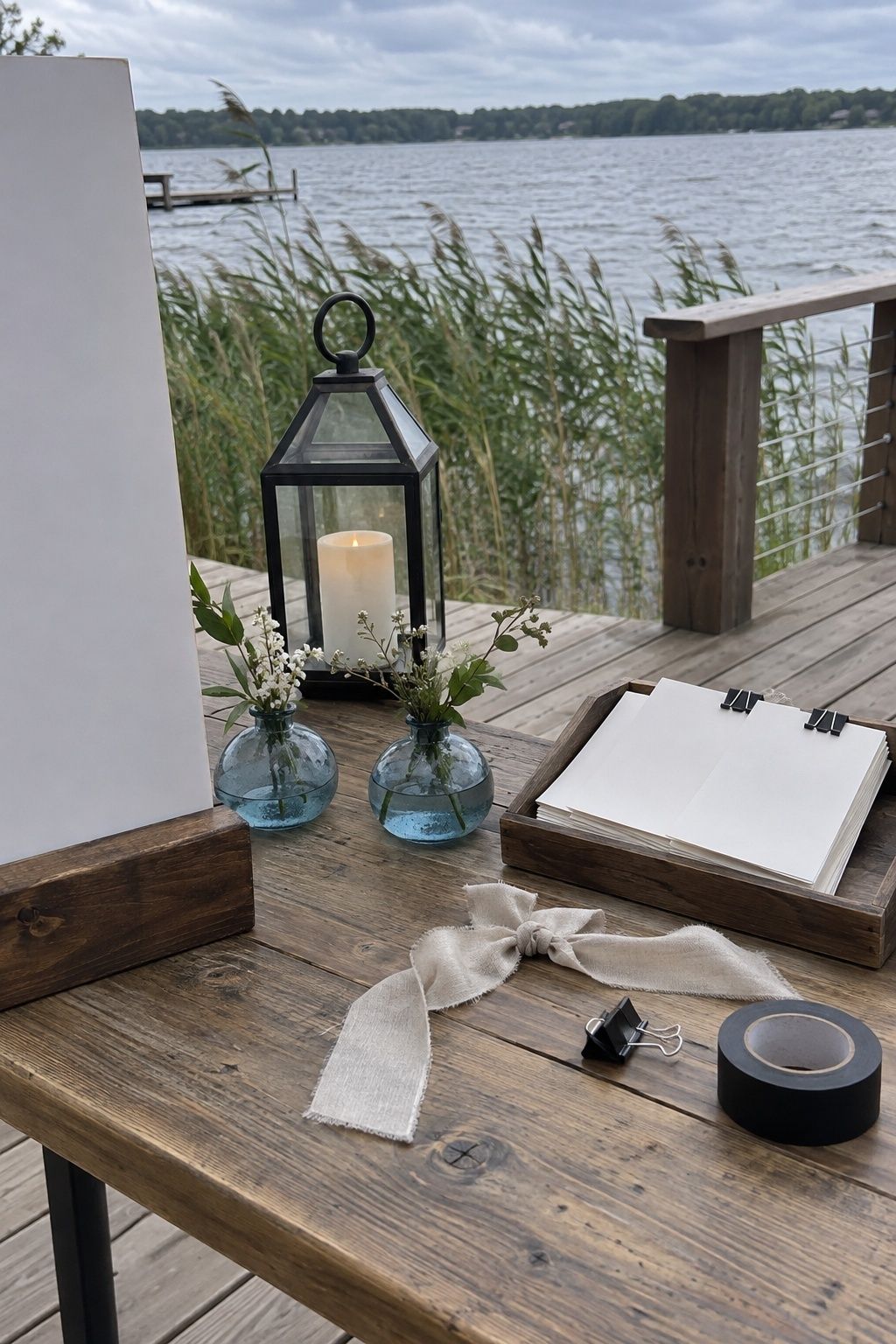
Use weighted sign stands, table clips, heavy vessels and enclosed candles. Anchor the arch properly. Tall, top-heavy centerpieces and loose paper programs are the first things to go over. Think about veils, hair and microphones too, especially by water or on an open field. These are some of the most common outdoor wedding mistakes, and they’re all easy to avoid.
Flowers that handle heat
Ask your florist which blooms will survive your venue’s sun and humidity. Orchids, anthuriums, calla lilies, zinnias, protea and sturdy garden roses hold up well. Ask what the florist would swap in if a heat wave hits the week of the wedding, so you’re not deciding in a panic. Keep ceremony arrangements in shade until the last possible minute, and put the delicate blooms on covered tables.
Dinner, dessert and lighting after sunset
A small outdoor wedding is made for one long table. It’s easier to light, easier to shade and much better for conversation.
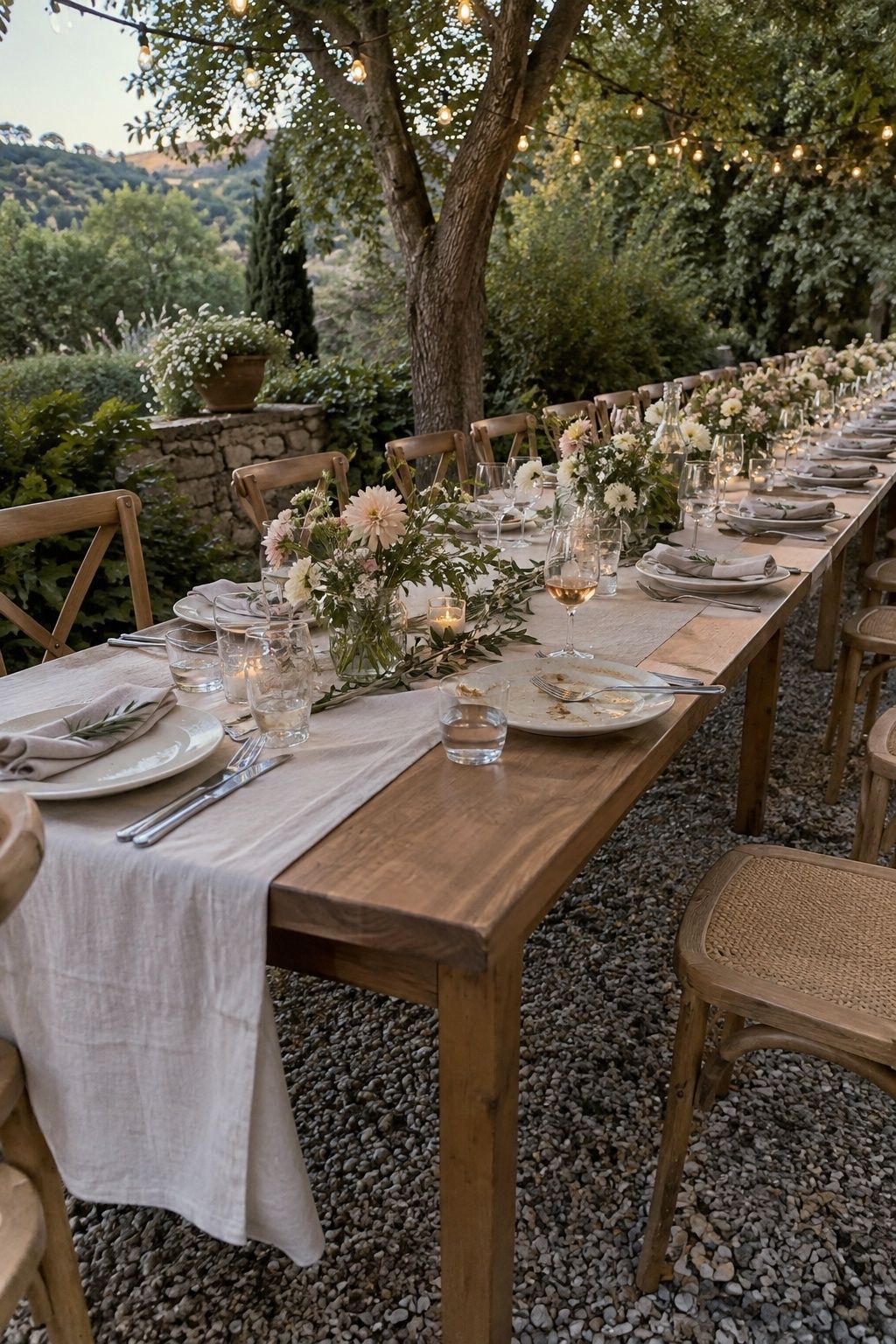
Keep the table breathable: low flowers, plenty of water glasses, napkins that won’t blow away and enough room for plates. For 20 guests, a table of roughly 20 to 24 feet gives everyone elbow room.
Choose a light menu, such as grilled fish or chicken, seasonal vegetables, salads that hold safely, and fruit. Ask your caterer where food will be staged and how long each dish can sit out. My summer wedding menu ideas cover what holds up in heat. Keep the cake in shade and bring it out close to cutting time, or display a small cutting cake while the rest stays cool.

Once the sun goes down, lighting has two jobs: mood and safety. String lights over the table, lanterns along paths and rechargeable lamps on the bar. Then walk the route from parking to ceremony, bar, restrooms and dance floor in the dark. If you need your phone flashlight anywhere, add a light there.
Make the outdoor setting yours
Pick one or two personal touches that use the setting: herbs from the garden at each place, a family recipe on the menu, a couple of lawn games, or one portrait at the view that sold you on the venue. Keep it to a few, because comfort comes first. If the wedding is at home, my backyard summer wedding ideas cover power, restrooms and parking.
Key takeaways
- The best summer outdoor wedding ideas start with shade, timing, water, wind and a backup plan.
- Start the ceremony two to three hours before sunset and keep it to about 20 minutes.
- Name one person and one deadline for the weather call, and design plan B properly.
- Put cold water at the entrance and fans on the chairs.
- Weight every sign, clip every paper and keep flowers low.
- Walk the venue after dark to find spots that need light.
FAQ
What is the best time for a summer outdoor wedding?
The best time is two to three hours before sunset. The heat has eased, the light is better for photos and guests are comfortable for dinner as it cools down.
How do you keep guests cool at an outdoor summer wedding?
Seat the ceremony in shade, put cold water at the entrance and leave a fan on every chair. A shaded lounge and a short ceremony help even more.
Do I need a tent for a summer outdoor wedding?
You don’t always need one, but a tent gives you shade and rain cover in one rental. For a small guest list, a compact tent over one long table is often the simplest backup.
When should you decide on the weather backup plan?
Decide by a fixed deadline agreed in advance, usually the morning before or early on the wedding day. One named person should make the call, based on rain, wind or heat thresholds you set ahead of time.
What decor works for a windy outdoor wedding?
Low flowers, heavy vessels, weighted signs, clipped linens and enclosed candles all handle wind. Avoid tall centerpieces and loose paper programs.
Your next step
Book a visit to your venue at the time of day your ceremony will start, and bring a notepad. Note where the shade falls, which way the wind blows, and where guests will walk after dark. Every other summer outdoor wedding idea in this post gets easier once you’ve stood in that spot at that hour.
Last update on 2026-10-03 / Affiliate links / Images from Amazon Product Advertising API