
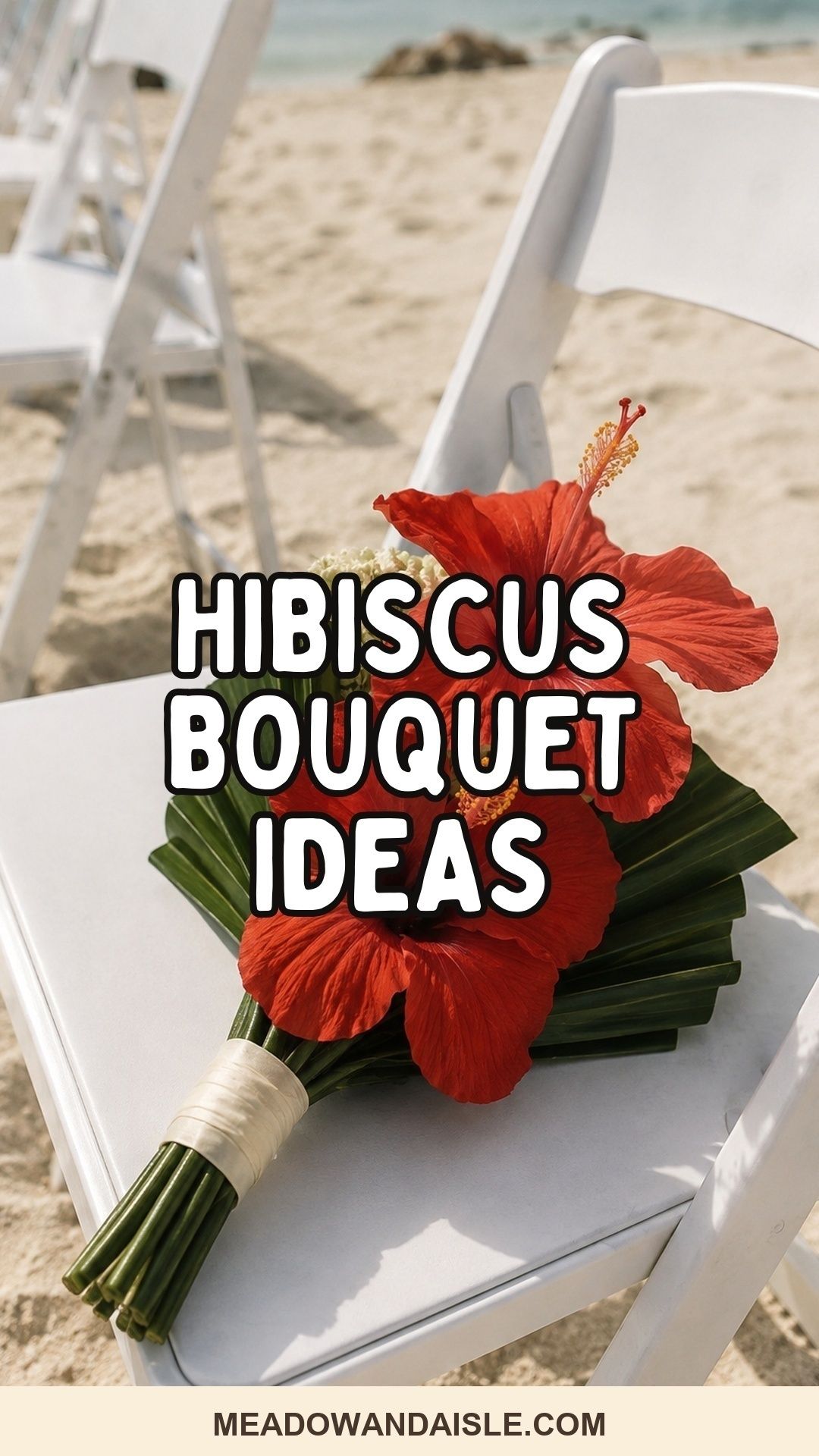
Hibiscus wedding bouquet ideas feel tropical and bridal when the flower is treated as a focal point, not a theme-party shortcut. Choose one dominant hibiscus color, soften it with supporting flowers, and keep the bouquet scale comfortable for the dress, aisle, weather, and ceremony size.
Hibiscus has a confident shape. That is exactly why it can be so beautiful for an intimate wedding, and exactly why it needs restraint. A few clear choices around color, flower size, greenery, and travel handling can turn a bold tropical bloom into something polished, romantic, and deeply bridal.
Recommended Wedding Products
No products found.
No products found.


No products found.
You Might Also Like These Blog Posts
- Anthurium Wedding Bouquet Ideas for a Modern Bloom With Real Softness
- Summer Wedding Bouquet Ideas for Sun, Heat, and Holding Close
- Lilies Wedding Bouquet Ideas With Elegance, Fragrance, and a Few Smart Warnings
- Paper Flower Wedding Bouquet Ideas That Look Thoughtful, Not Crafty
- Dahlia Wedding Bouquet Ideas With Shape, Drama, and Just Enough Restraint
- Peonies and Hydrangeas Wedding Bouquet Ideas for Lush Romance That Still Feels Light
Hibiscus Wedding Bouquet Ideas With Tropical Restraint
The best hibiscus wedding bouquet ideas start with editing. Hibiscus blooms are wide, open, and unmistakably tropical, so they do not need a dozen competing gestures around them. One bloom can become the emotional center of a small hibiscus wedding bouquet. Three blooms can feel lush. A full armful can become heavy and visually loud unless the dress, venue, and ceremony setting truly have room for it.
Think about the bouquet as something guests will see from only a few feet away. At a beach elopement, garden dinner, villa ceremony, or family-only vow exchange, color appears quickly and scale feels honest. Coral, white, peach, pink, and red hibiscus can all feel bridal, but each one needs the right supporting flowers, enough negative space, and a handle that feels good in your hand.
Compare petal fullness first, then decide which bloom gets the lead. Hibiscus is flatter and more graphic while dahlias add dense texture, so schedule separate dahlia wedding bouquet flower trials only after the hibiscus role is clear.
| Hibiscus style | Best wedding mood | Small-wedding tip |
|---|---|---|
| One focal hibiscus | Modern, minimalist, courthouse, beach | Keep the bouquet compact and comfortable |
| White hibiscus with greenery | Polished tropical garden | Use glossy leaves sparingly so the flower stays bridal |
| Coral or peach hibiscus | Warm coastal romance | Soften with roses, hydrangeas, or cream filler |
| Red hibiscus | Bold tropical statement | Limit the palette so it does not feel like resort decor |
| Silk hibiscus bouquet | Destination travel and hot weather | Choose realistic texture and pack it in a floral transport box |
Coral Hibiscus Bouquet With Soft Roses

A coral hibiscus bouquet with soft roses gives you tropical warmth without losing bridal softness. Let the coral hibiscus be the largest bloom, then surround it with garden roses, spray roses, or ranunculus in cream, blush, or pale apricot. The roses round out the hibiscus shape and make the bouquet feel romantic instead of strictly beachy.
Keep the greenery airy. A few slender leaves are enough, especially if the ceremony is small and the bouquet will sit close to your dress in every photo. Coral hibiscus already brings color and shape, so the supporting flowers should quiet the bouquet rather than compete for attention.
White Hibiscus Bouquet With Tropical Greenery
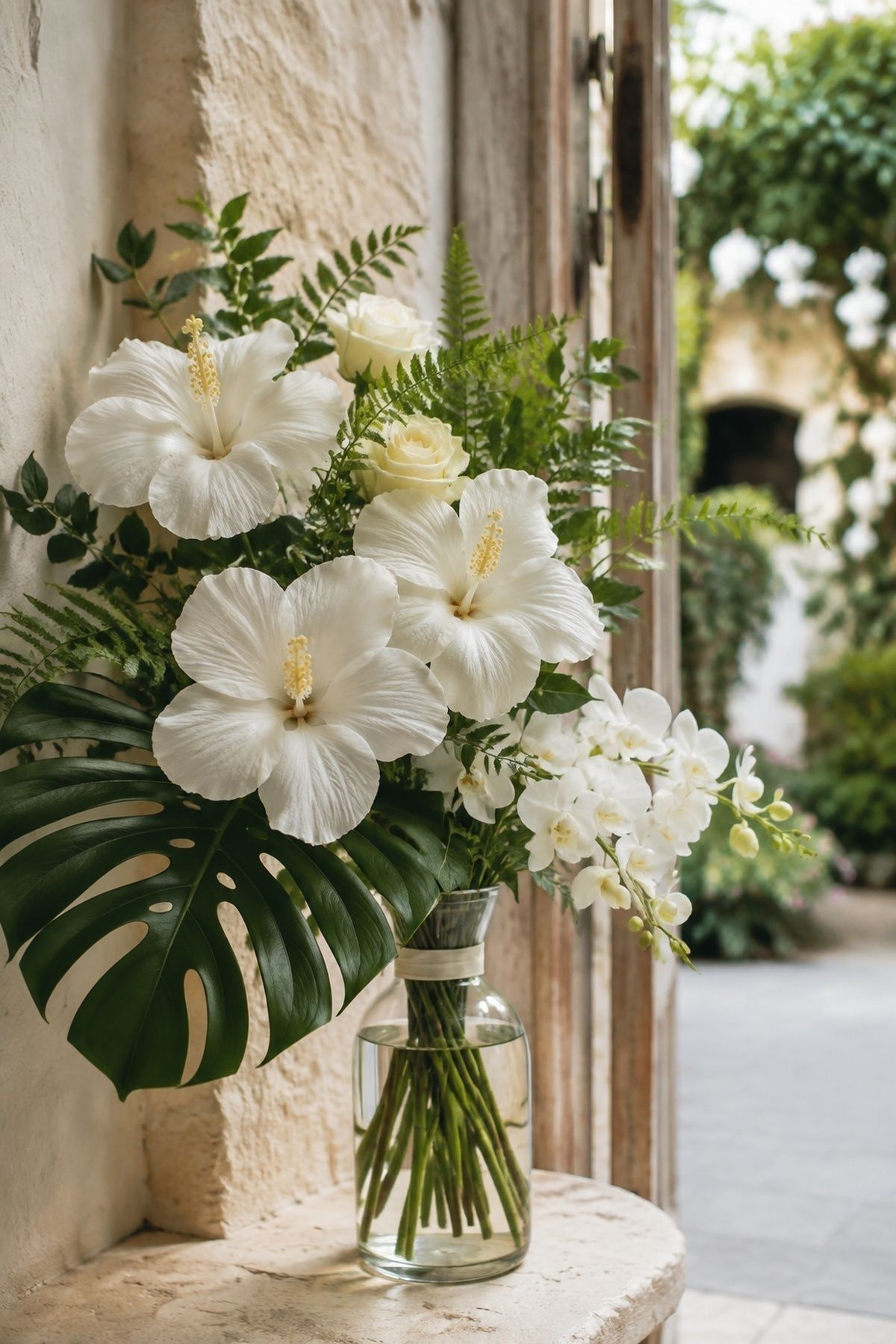
A white hibiscus bridal bouquet can feel clean, elegant, and quietly tropical. White hibiscus looks especially beautiful with dark green monstera cuts, ruscus, fern, or glossy tropical greenery, but the leaves need discipline. One oversized palm or monstera leaf can be striking. Too many can pull the bouquet toward decor prop instead of bridal flowers.
Use texture to keep the white bloom visible. Cream roses, white orchids, or soft hydrangeas can add depth while still letting the hibiscus lead. Check fragrance and bloom size first, then make one large flower quieter for close ceremony spaces before requesting separate lilies wedding bouquet stem samples.
Red Hibiscus Bouquet With Palm Leaves
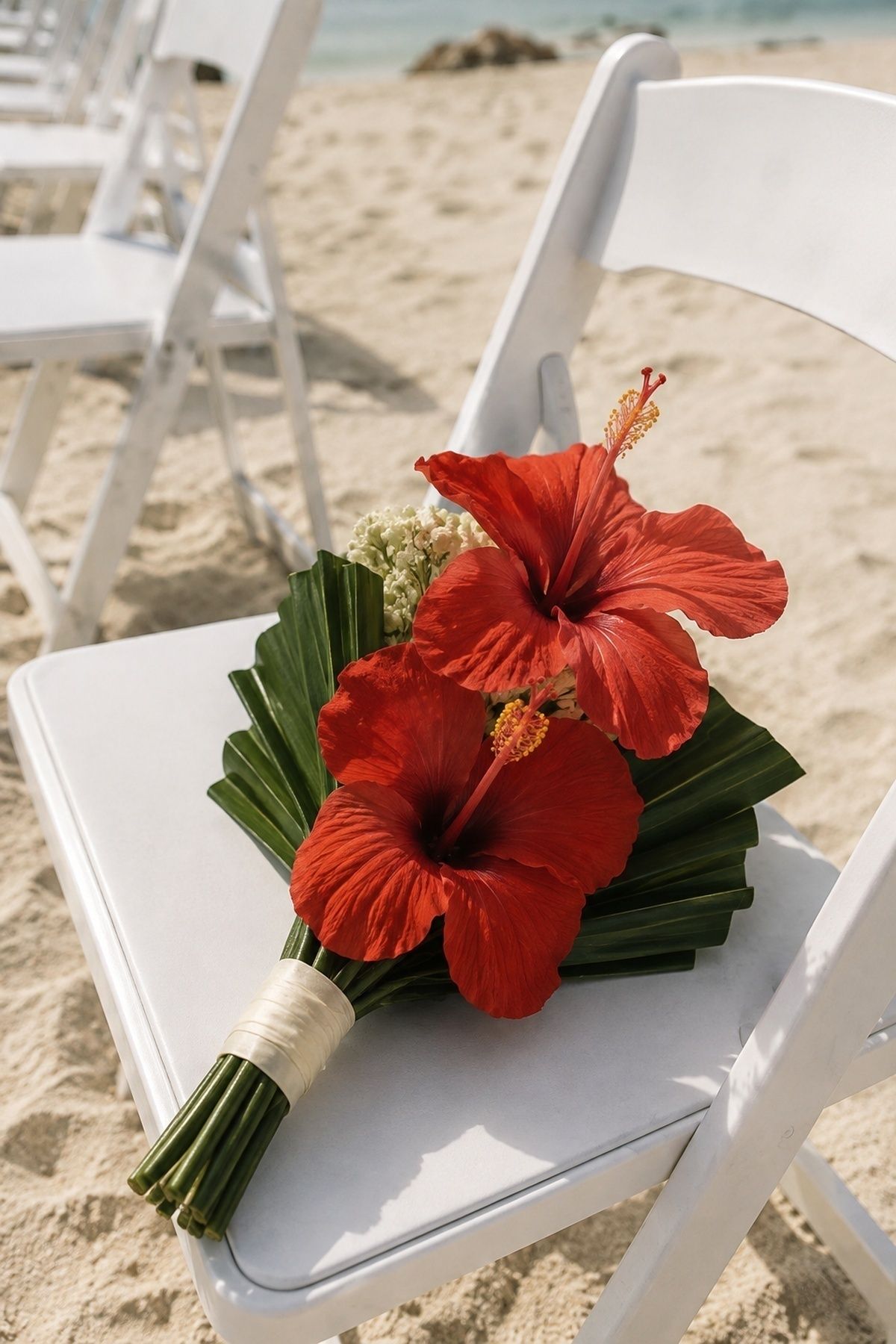
A red hibiscus wedding bouquet is dramatic, romantic, and instantly tropical. It works best when the palette is narrow: red hibiscus, deep green palm leaves, perhaps a little cream or white to give the eye somewhere to rest. This is not the bouquet for every tropical flower at once.
Ask the florist to keep palm leaves trimmed, folded, or placed lower than the hibiscus. Long leaves can look gorgeous in motion, but they can also overwhelm a petite dress or a short aisle. A small wedding needs the bouquet to feel alive in the hand, not like it is carrying the whole venue theme by itself.
Pink Hibiscus Bouquet With Baby’s Breath
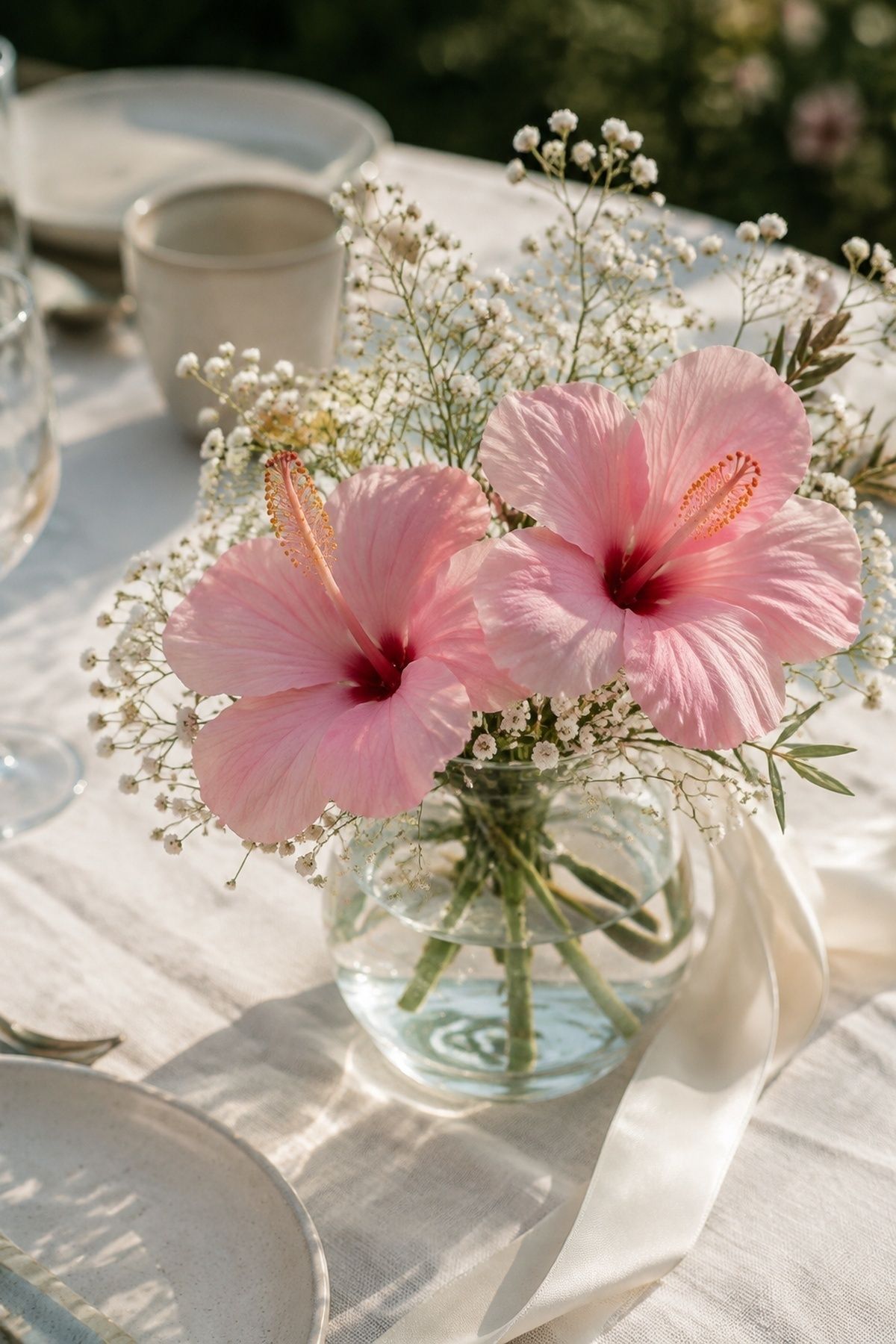
A pink hibiscus bouquet becomes sweeter and more delicate with baby’s breath. The tiny white flowers soften the bold hibiscus face and give the arrangement a clouded edge, which is helpful if you want tropical color without a heavy bouquet silhouette. Pale pink hibiscus feels especially pretty with ivory ribbon and simple jewelry.
Keep the baby’s breath loose rather than packed. A dense ring of filler may leave the hibiscus looking staged, while airy sprigs make the bouquet feel lighter. This is a lovely option for garden elopements, beach chapels, and brunch receptions where the flowers should feel fresh and tender.
Hibiscus And Orchid Bouquet
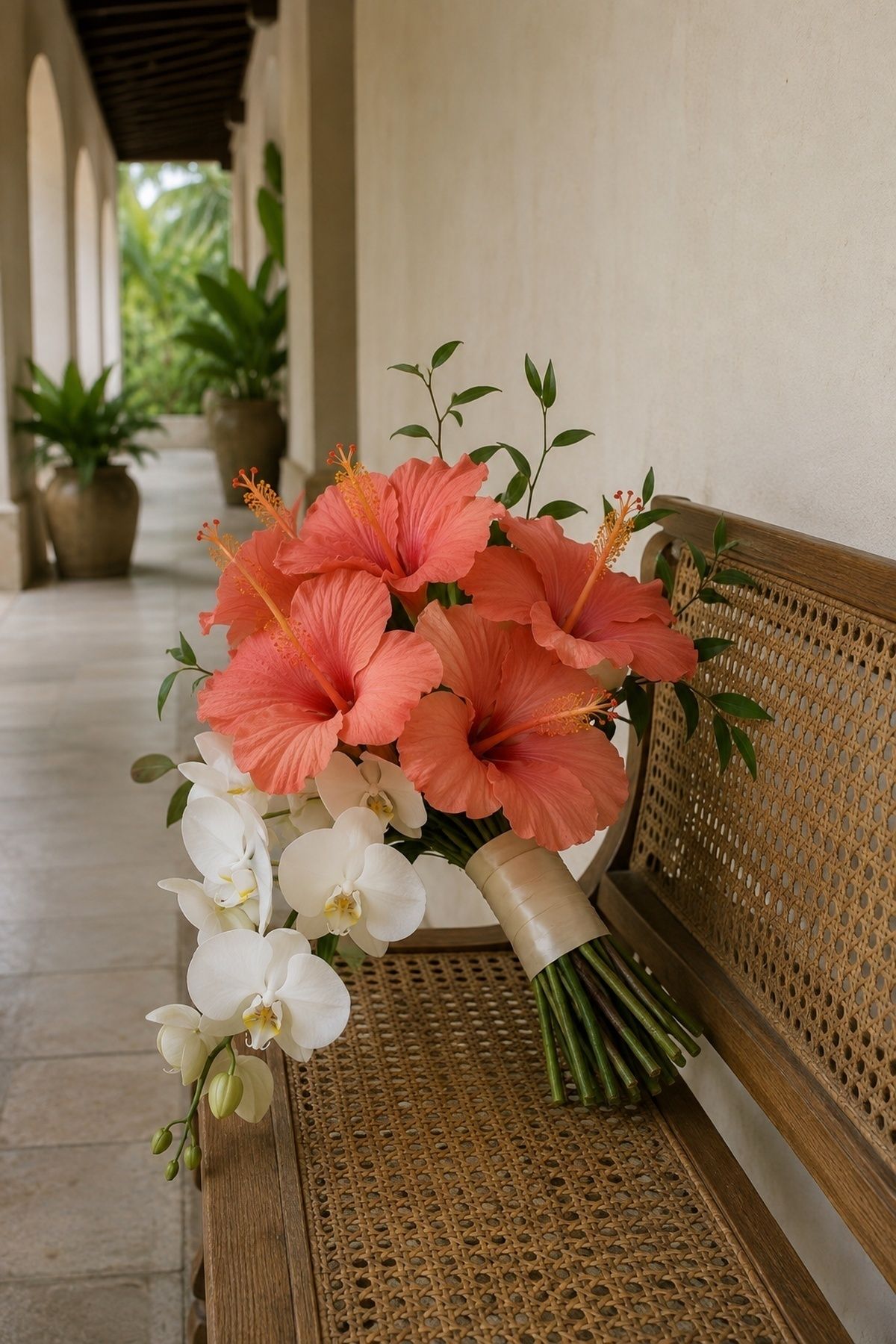
A hibiscus and orchid bouquet is one of the most polished tropical pairings. Orchids add refinement, curve, and movement, while hibiscus brings the bold focal shape. White orchids with coral hibiscus feel fresh and resort-soft. Purple orchids with red hibiscus feel more dramatic and evening-ready.
Do not let both flowers fight for the center. Ask for hibiscus blooms as the focal flowers and orchids as trailing or clustered accents, or reverse the order with one hibiscus tucked into an orchid-led bouquet. Either way, the bouquet should have a clear hierarchy.
Peach Hibiscus Bouquet With Hydrangeas
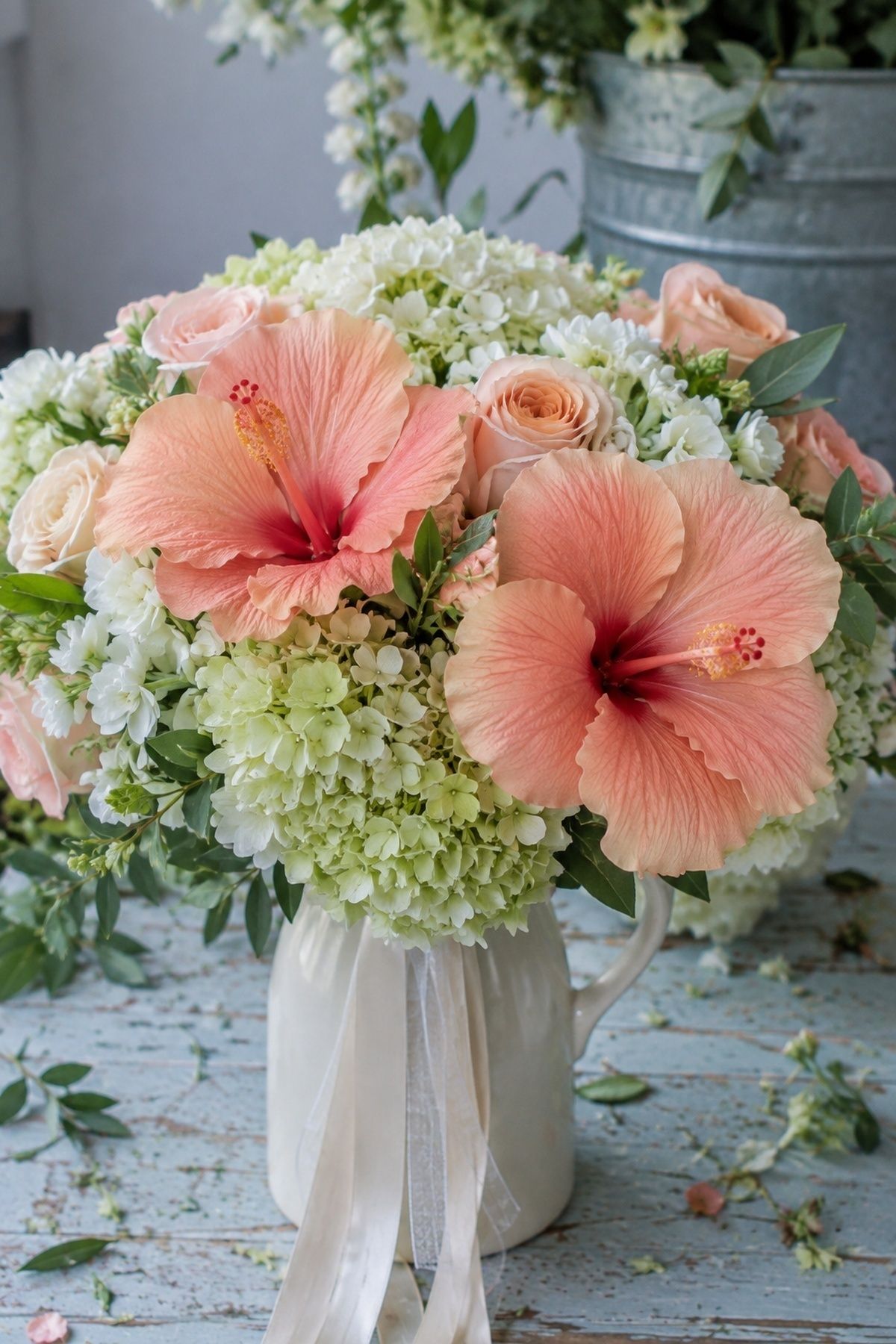
Peach hibiscus with hydrangeas feels soft, full, and wedding-forward. Hydrangeas create a pillowy base that can hold the hibiscus visually, especially when the bouquet needs to feel more garden than beach. Choose cream, pale blue, blush, or soft green hydrangeas depending on the season and dress tone.
Hydrangeas need water and care, so this pairing is best when the florist can prep it close to the ceremony. Plan hydration, timing, roundness, and weight early, then keep the hibiscus count low before approving any fuller peonies and hydrangeas wedding bouquet shape.
Hibiscus And Bird Of Paradise Bouquet

Hibiscus and bird of paradise can be spectacular, but this pairing needs the most restraint. Bird of paradise has a sculptural, directional shape, while hibiscus is broad and open. Together, they can look editorial and modern, or they can become too much very quickly.
Use bird of paradise as one sharp accent, not a repeated pattern. Keep the hibiscus color simple, choose one supporting green, and let negative space do some of the work. This bouquet suits a sleek beach ceremony, a modern rooftop wedding, or a destination welcome dinner more than a lace-heavy chapel look.
One Statement Hibiscus Bouquet
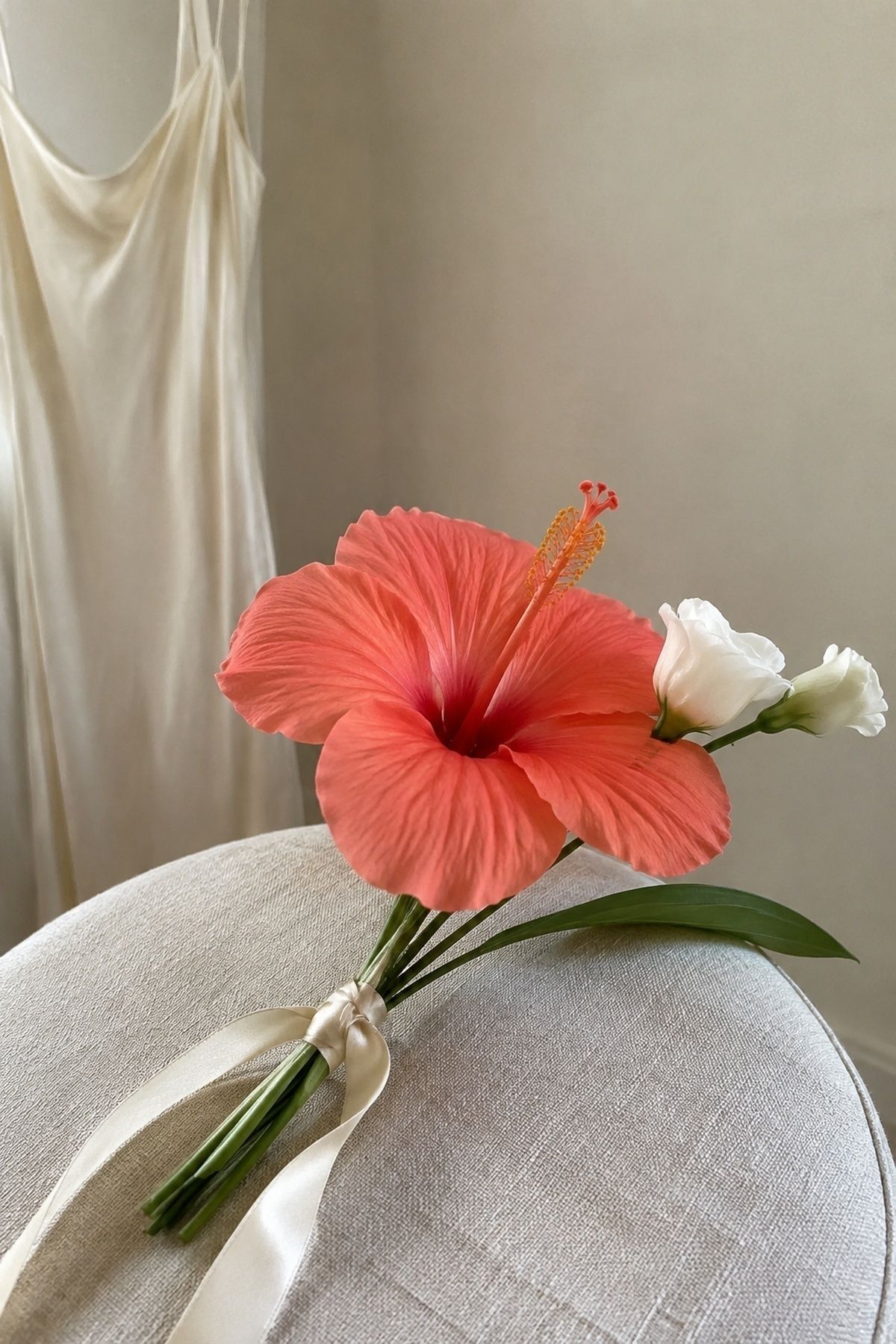
One statement hibiscus bouquet is the most intimate way to use the flower. A single large bloom, a few small supporting stems, and a beautiful ribbon can feel personal, modern, and quietly confident. This works especially well with a slip dress, linen suit, short dress, courthouse outfit, or simple beach gown. For a keepsake version that lasts, these embroidery flower wedding bouquet ideas are worth a look.
Choose a bloom that looks perfect from the front and side. One-flower bouquets have no place to hide damage, bruising, or awkward angles. Ask for a backup stem if the flower is fresh, especially in heat or wind.
Boho Hibiscus Bouquet With Pampas Grass
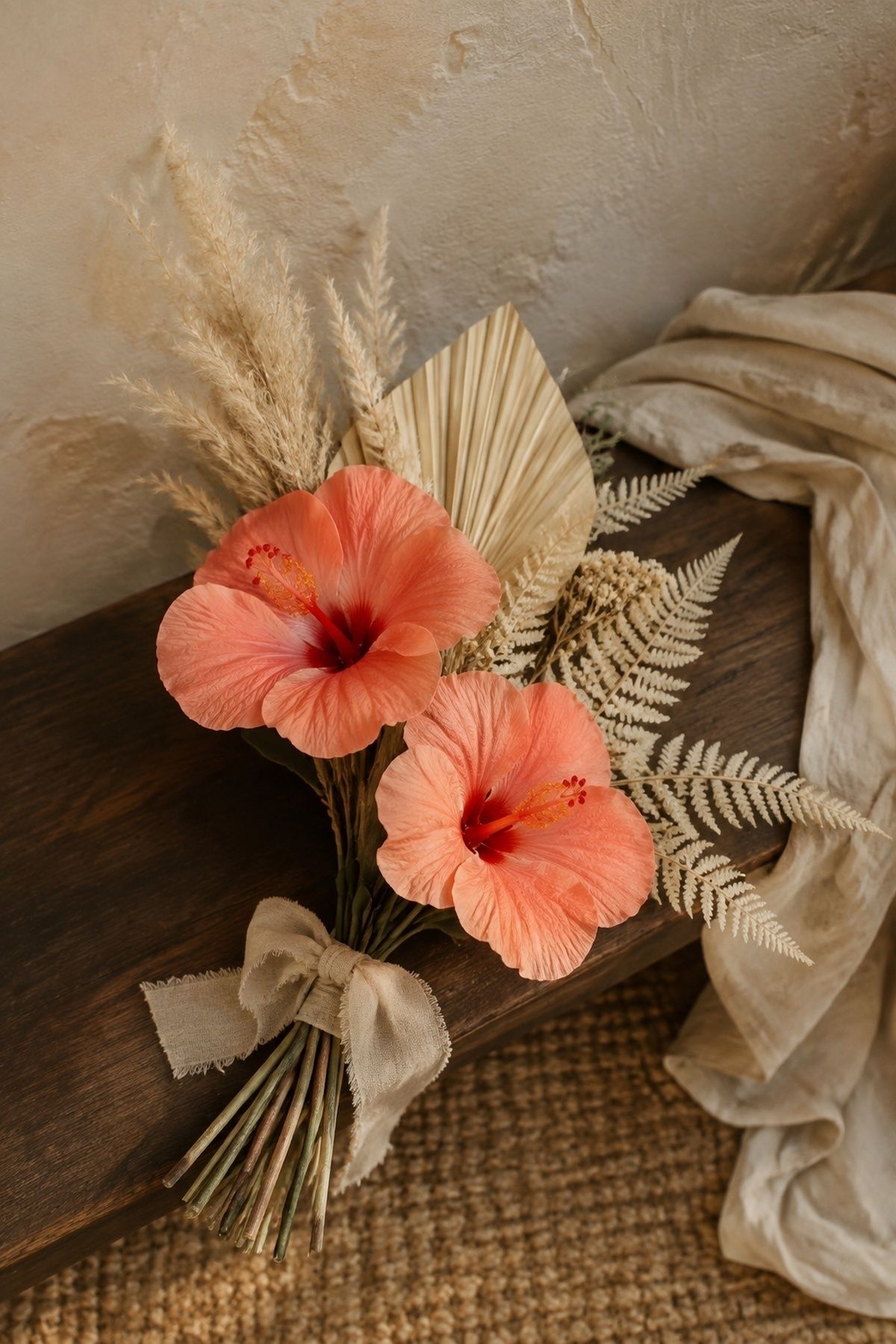
A boho hibiscus bouquet with pampas grass can feel warm and relaxed when the palette is edited. Try peach, coral, or white hibiscus with beige pampas, dried palms, preserved fern, and a little cream floral texture. The goal is movement, not a giant dried fan.
Ask for pampas to sit behind or below the hibiscus rather than covering the bloom. If the ceremony is windy, keep the grass shorter and secure the handle tightly. Pampas can shed and move unpredictably, so a small version often feels more refined.
Sunset Hibiscus Bouquet
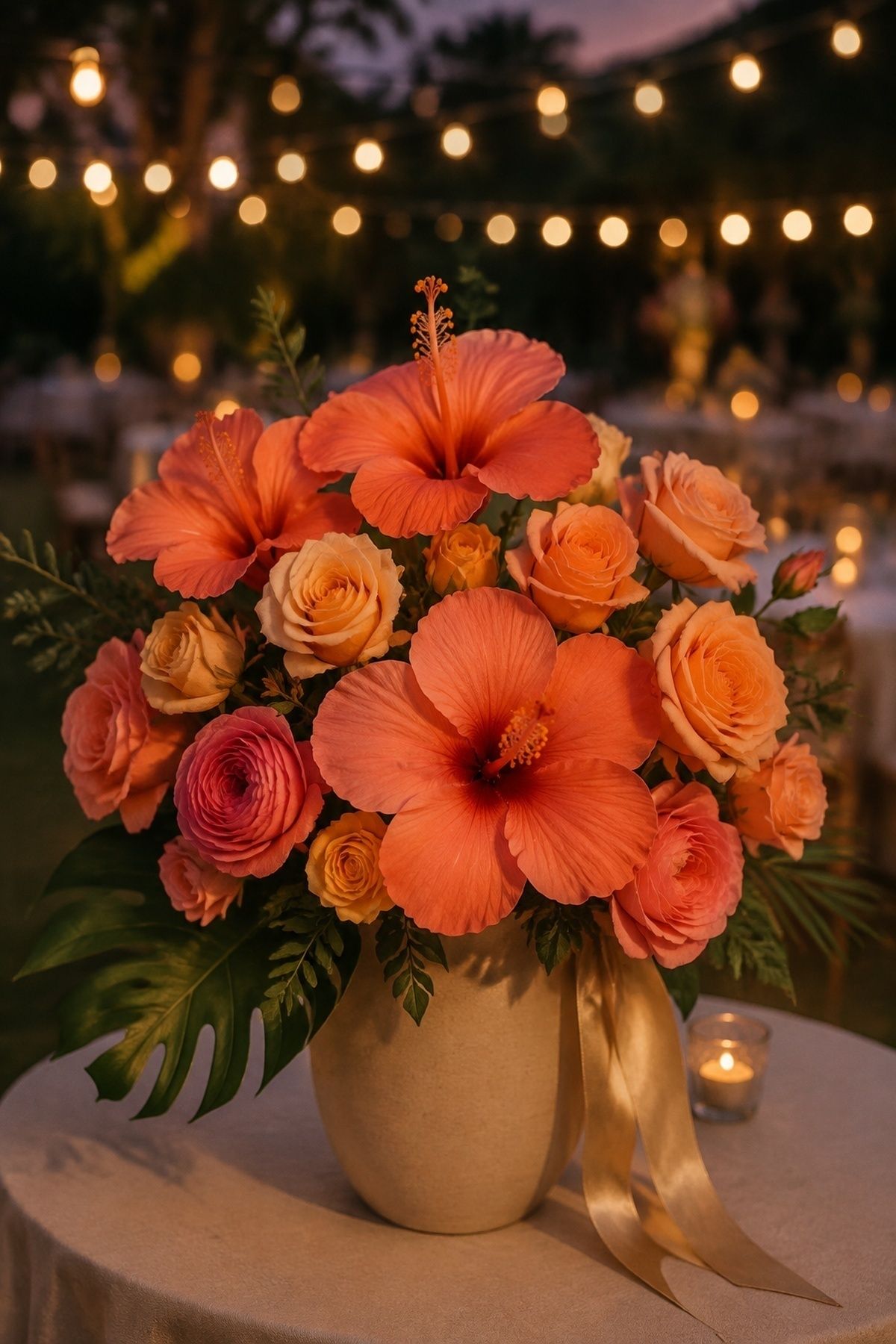
A sunset hibiscus bouquet layers coral, peach, apricot, soft yellow, and warm pink in a way that feels tropical without becoming neon. The trick is choosing one dominant color and letting the other tones appear in smaller flowers. Hibiscus can hold the sunset color while roses, orchids, or ranunculus soften the transitions.
Use a muted ribbon if the flowers are bright. Ivory, sand, pale gold, or soft blush ribbon can settle the palette and keep the bouquet bridal. For evening portraits, ask the photographer to capture the bouquet before the light drops so the warmer colors still appear clearly.
White Hibiscus And Lily Bouquet
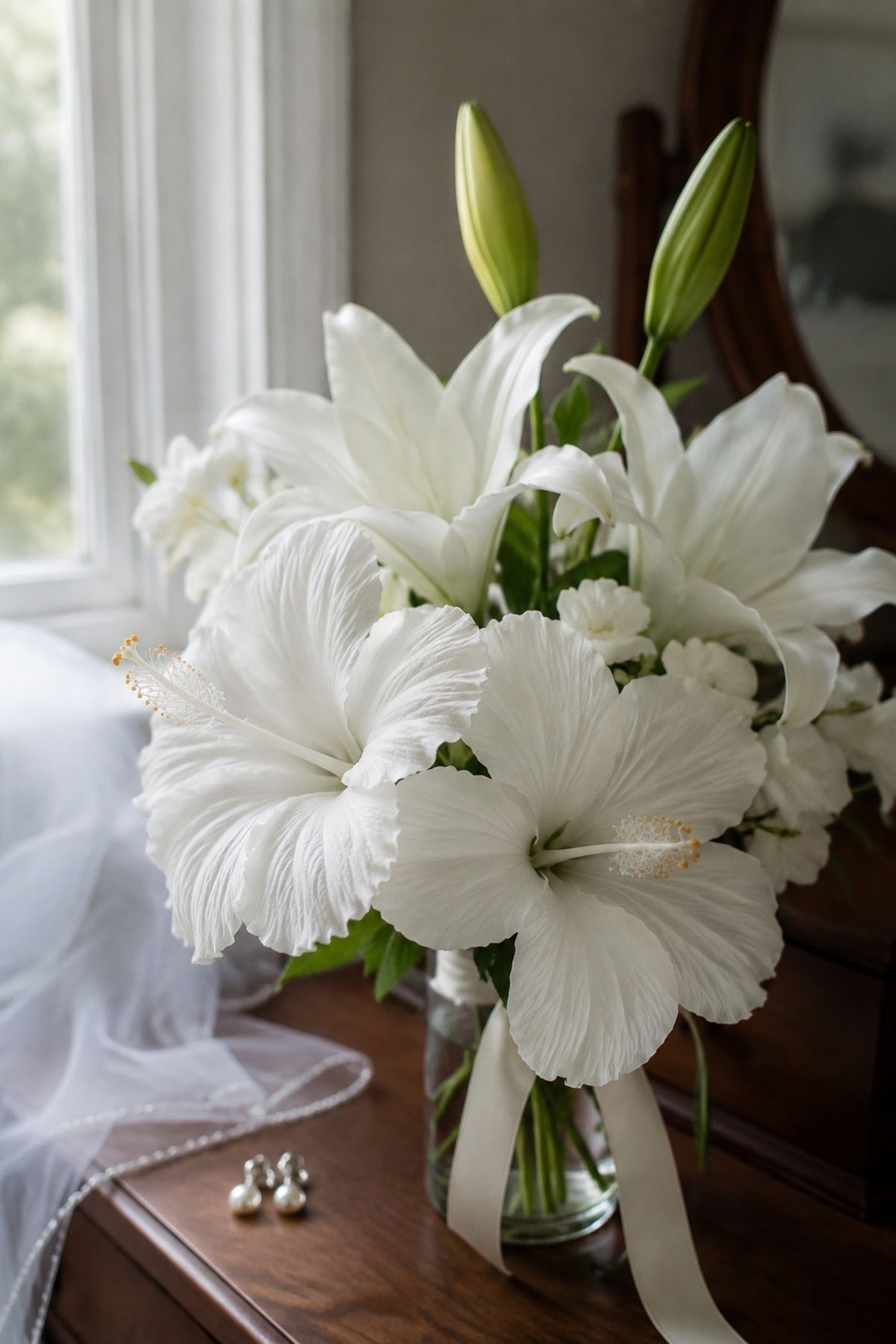
White hibiscus and lilies can create a striking all-white tropical bouquet. The pairing feels clean and ceremonial, especially with a simple gown, pearl earrings, or a sleek bun. Choose lilies carefully, though, because their shape and fragrance can become powerful in a small room.
Ask your florist to remove pollen and balance the bloom sizes. A few unopened lily buds can give height without adding too many large faces. Keep the hibiscus visible at the front so the bouquet does not become only lily-driven.
Tropical Hibiscus Cascade
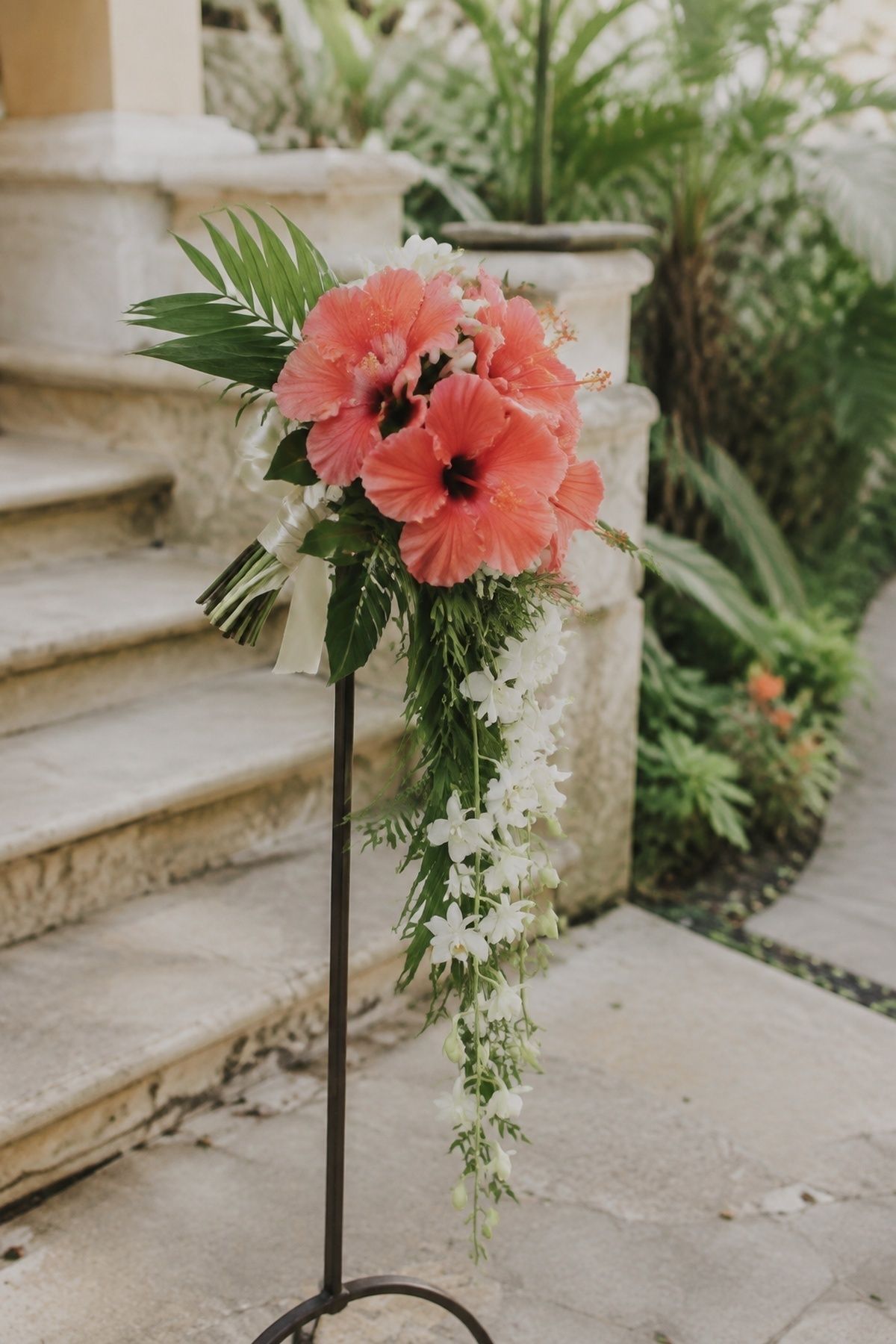
A tropical hibiscus cascade can be gorgeous for a beach aisle or villa ceremony, but the cascade should be controlled. Use hibiscus near the hand, orchids or vines for movement, and palm or fern pieces that taper instead of flaring out. The bouquet should fall gracefully, not swing like a heavy arrangement.
Test the cascade against the dress length and aisle surface. A long cascade may look dramatic in a florist photo and awkward on stairs, sand, or a narrow garden path. For intimate weddings, a shorter cascade often gives the same romance with less fuss.
Garden-Style Hibiscus Bouquet
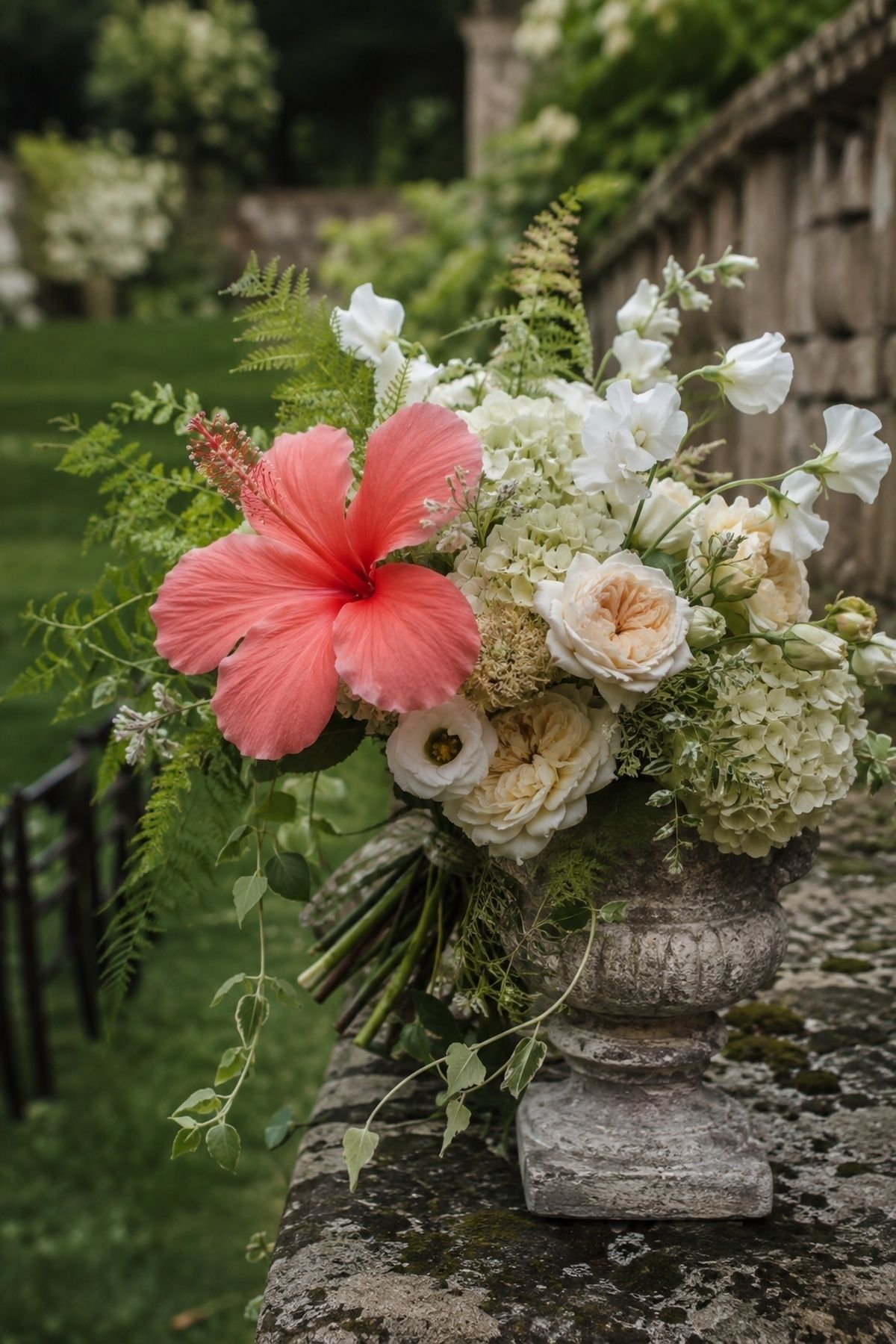
A garden-style hibiscus bouquet blends the tropical bloom into a softer, more gathered arrangement. Add roses, hydrangeas, sweet peas, lisianthus, fern, and a little trailing greenery so the bouquet feels grown rather than assembled. Hibiscus gives the garden flowers one memorable focal point.
This is a good direction when the wedding is outdoors but not strictly beachy. Keep the hibiscus to one color, then let the garden flowers vary gently. Control sculptural silhouettes first, choose one main shape, and sketch separate calla lily bridal bouquet proportions only after the hibiscus outline is calm.
Small Hand-Tied Hibiscus Bouquet

A small hand-tied hibiscus bouquet is often the most wearable choice. Two or three hibiscus blooms, a few roses or orchids, and trimmed greenery can feel romantic without covering the bodice or tiring your wrist. The hand-tied shape also suits civil ceremonies, restaurant receptions, and barefoot beach vows.
Ask for a handle that is narrow enough to hold naturally. Tropical stems can be thick, and extra ribbon cannot fix a bouquet that feels awkward in the hand. Have someone photograph you holding the mockup from the front and side before final approval.
Silk Hibiscus Bouquet For Destination Travel

A silk hibiscus bouquet can be the smartest option for destination travel, hot climates, multi-day celebrations, or couples who want to pack flowers before leaving home. Look for silk hibiscus stems with realistic veining, soft petal movement, and centers that do not look plastic in close photos.
Pack the bouquet in a floral transport box with tissue around the petals and a firm stem support. A silk option also lets you test color against the dress weeks ahead of time. Weigh keepsake value, dress-test color, and petal realism early so silk hibiscus stays convincing before comparing separate paper flower wedding bouquet samples.
Planning A Hibiscus Bouquet That Still Feels Bridal
Balance Large Blooms With Softer Flowers
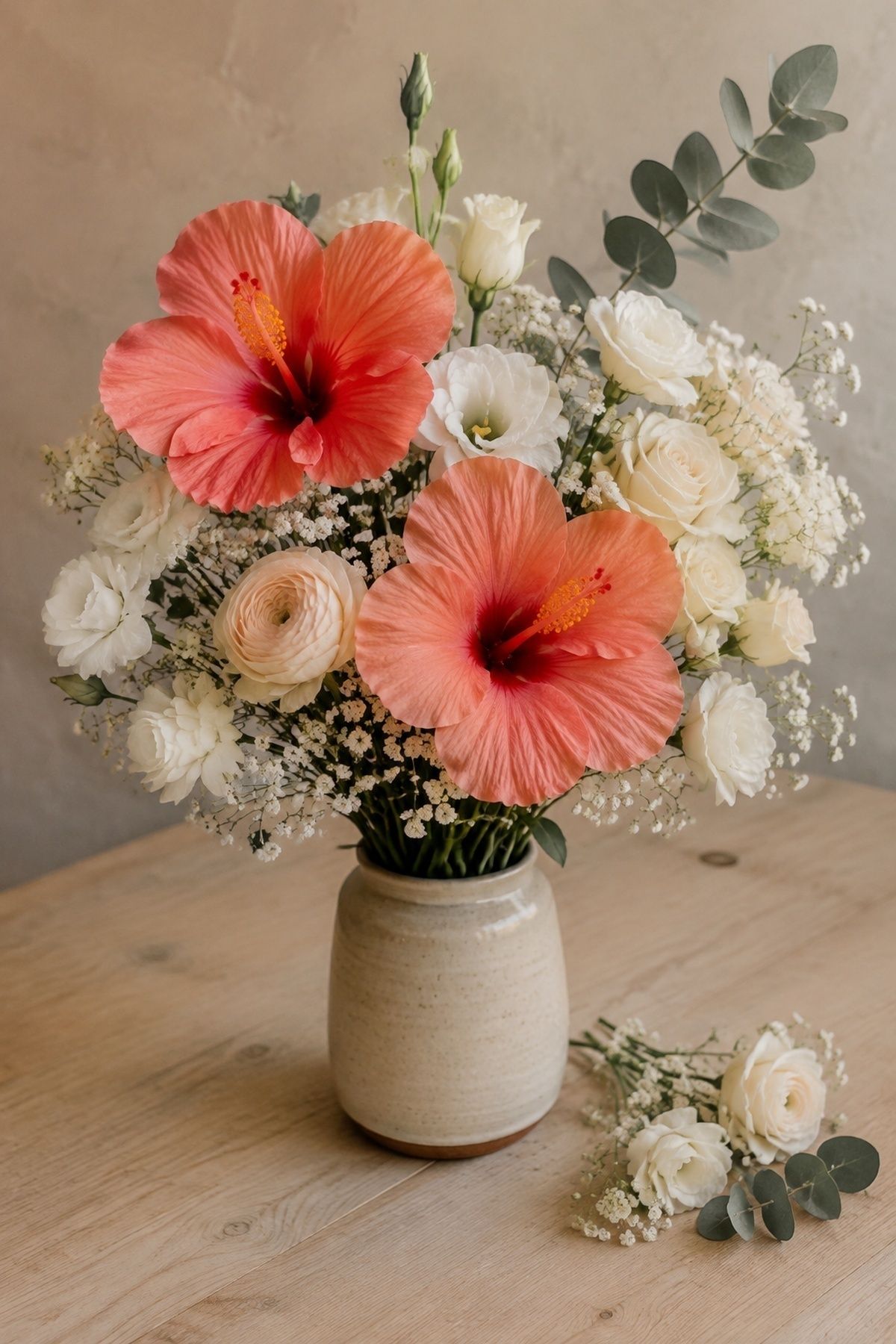
Hibiscus is bold because the bloom face is open and graphic. Soften it with flowers that have smaller petals, rounded volume, or gentle texture. Roses, hydrangeas, orchids, ranunculus, lisianthus, and baby’s breath can all make a hibiscus bridal bouquet feel more romantic.
Do not soften by adding every flower you like. Choose one focal hibiscus color, one or two supporting flower types, and one greenery direction. Large bouquets can look impressive in a studio, but a small ceremony usually rewards the bouquet that feels easy to hold and emotionally clear.
Keep Tropical Leaves Under Control
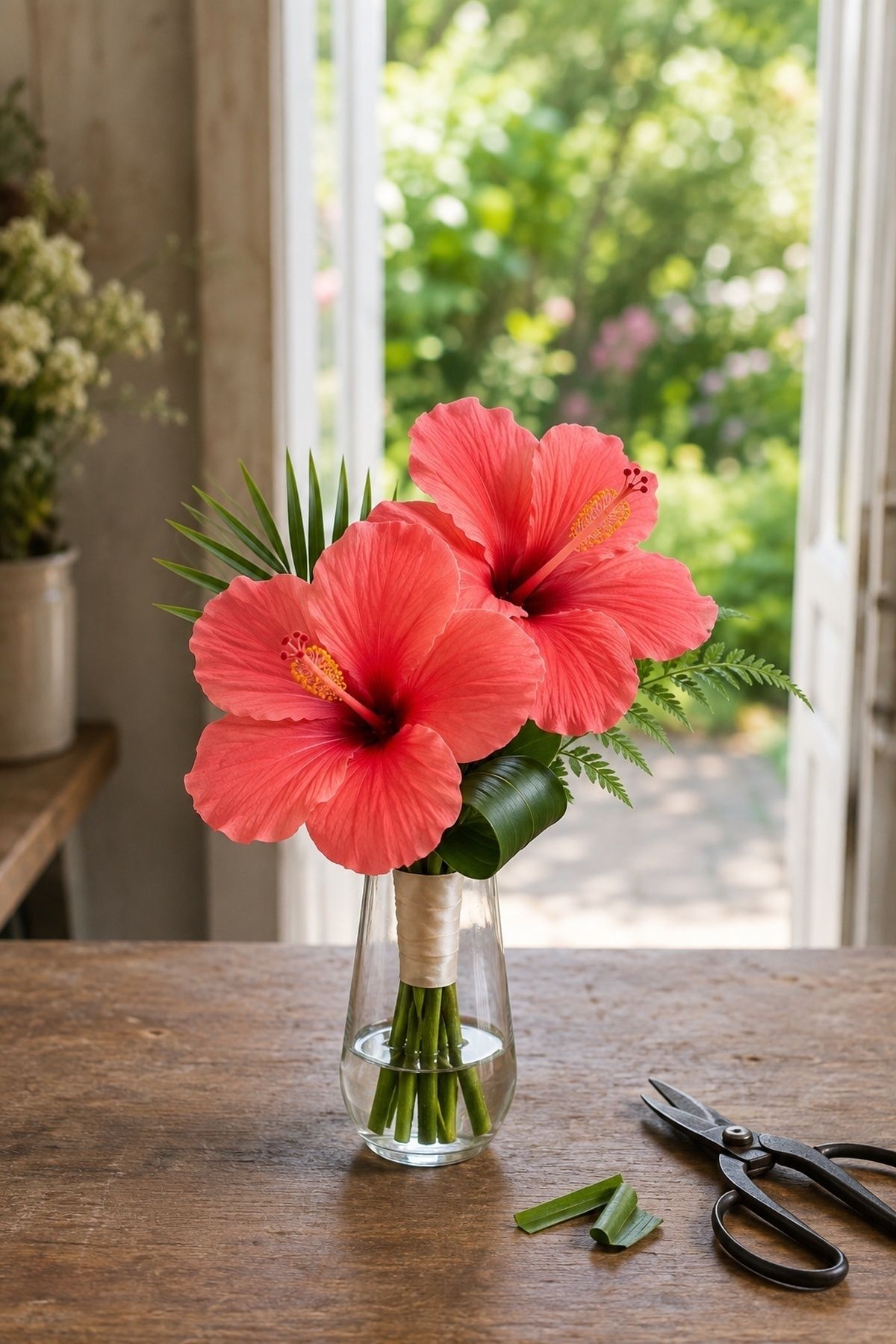
Palm leaves, monstera, fern, and tropical greenery give hibiscus a more intentional setting, but they should frame the bloom rather than swallow it. Ask for leaves to be trimmed, folded, layered low, or used asymmetrically so they add movement without hiding your hands or dress.
Carry the leaf shape into the ceremony only when it improves the setting. Set bouquet scale first, then let aisle greenery decide how much suspended texture the ceremony needs before pricing separate floral hanging wedding decor installation work.
FAQ
Can hibiscus be used in a wedding bouquet?
Yes, hibiscus can be used in a wedding bouquet, especially as a focal flower. It works best when the florist controls the bloom count, supports the stems well, and pairs the hibiscus with softer flowers or edited greenery.
What flowers go well with hibiscus in a bridal bouquet?
Roses, orchids, hydrangeas, ranunculus, lisianthus, lilies, and baby’s breath can all work with hibiscus. Choose supporting flowers based on the mood you want: roses for romance, orchids for polish, hydrangeas for softness, and lilies for a clean tropical-white look.
Are hibiscus bouquets good for beach weddings?
Hibiscus bouquets are excellent for beach weddings when the bouquet is not oversized. Wind, heat, and travel can affect fresh blooms, so ask about hardy stems, backup flowers, a shorter carry time, or realistic silk hibiscus for destination events.
How do you make a hibiscus bouquet look elegant?
Make a hibiscus bouquet elegant by limiting the color palette, using hibiscus as the focal flower, trimming tropical leaves carefully, and adding refined supporting flowers such as roses, orchids, or hydrangeas. A clean ribbon wrap also helps the bouquet feel finished.
What colors work best for hibiscus wedding bouquets?
White, coral, peach, pink, and red are the most useful hibiscus wedding bouquet colors. White feels polished, coral and peach feel warm, pink feels romantic, and red feels bold. For a small wedding, choose one dominant hibiscus color and let the rest of the bouquet support it.
Are hibiscus wedding bouquets hard to carry?
They can be hard to carry if the bouquet is too large, too wet, or packed with heavy tropical stems. A small hand-tied hibiscus bouquet, one statement bloom, or a controlled cascade is usually easier to hold than an oversized tropical arrangement.
Final Thoughts
Hibiscus can bring a wedding bouquet that rare feeling of warmth, place, and confidence. The secret is not making the flower quieter than it is. The secret is giving it enough space, softness, and structure to feel chosen. For a final bouquet decision, ask the florist to test color, size, heat, travel handling, ceremony length, structure, and softness; confirm delivery timing, backup stems, and early travel timing with the florist, before travel begins.
Last update on 2026-10-03 / Affiliate links / Images from Amazon Product Advertising API