

Start an outdoor fall wedding ceremony 90 minutes to 2 hours before sunset, keep it to about 20 minutes, and build blankets, a wireless mic and a booked indoor backup into the plan from day one. For a small wedding of 10 to 50 guests, that usually means two or three short rows or a semicircle, low decor that won’t blow over, and a 5-minute walk to somewhere warm afterward.
The most common mistake with fall ceremonies outside is planning them like summer ones. The view gets all the attention, the start time gets picked for “golden hour,” and then the sun drops behind the trees ten minutes into the vows, the grass is still damp from the morning, and the oldest guests are sitting on cold metal chairs in a breeze nobody tested.
None of that is hard to fix. It just has to be decided early. Below are the outdoor fall wedding ceremony ideas I’d actually use, grouped by the decision they belong to: when to start, where to stand, how to keep people warm, what decor survives wind, and what happens when it rains. For the rest of the day (cocktail hour, dinner, the dance floor), the fall outdoor wedding ideas guide picks up where this one stops.
A few things for the ceremony kit


What time should an outdoor fall ceremony start?
Start the ceremony roughly 90 minutes to 2 hours before sunset. That covers about 20 minutes of vows, 30 to 45 minutes of family photos and portraits in good light, and a buffer for the late start that almost every wedding has.
Fall sunsets move fast. Across much of the US and Europe, the sun sets more than an hour earlier at the end of October than it did in early September, and the clock change pulls it earlier again. So look up the sunset for your exact date and town, not “fall” in general, and work backward:
- Sunset time, for example 6:10 pm.
- Minus 30 minutes of portrait light you want to keep: 5:40 pm.
- Minus 30 to 40 minutes of family photos: about 5:00 pm.
- Minus a 20-minute ceremony and 10 minutes of slippage: a 4:30 pm start.
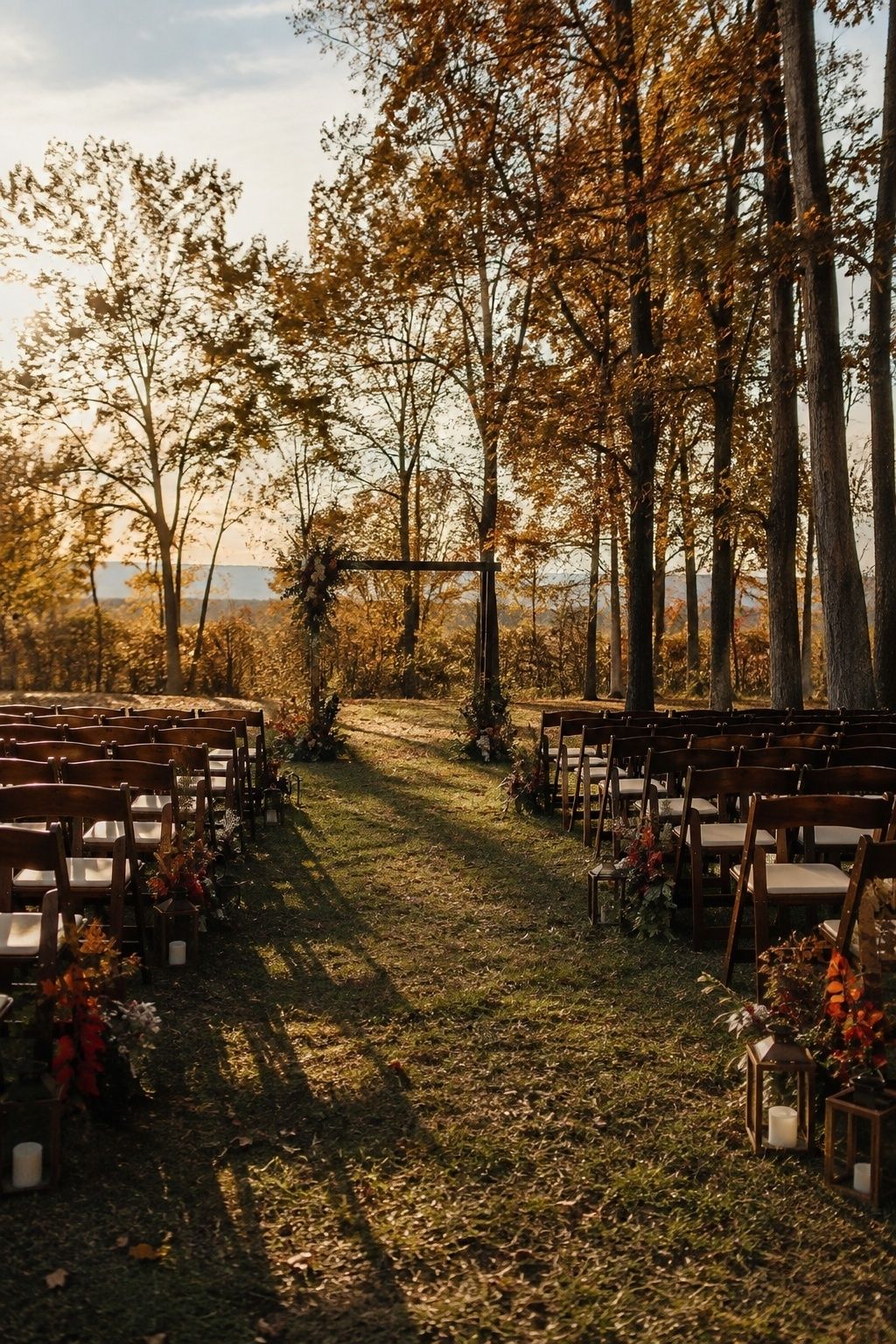
That 4:30 start sounds early when you’re picturing backlit vows. The glow still happens. It just lands during your portraits instead of halfway through the readings. If you’re doing a first look, take most family photos before the ceremony and you can push the start 20 or 30 minutes later.
Ask your photographer to check the timeline once you have a site. Trees or hills to the west can steal the last half hour of direct light, and a site visit will show it. The October outdoor wedding planning guide has a month-specific version of this math.
Choosing the spot: backdrop, sun angle and ground
The best ceremony spot is level, firm, sheltered from wind, and has the sun beside or behind your guests rather than in their eyes. A pretty view comes after those three.
Use a tree line instead of building a backdrop
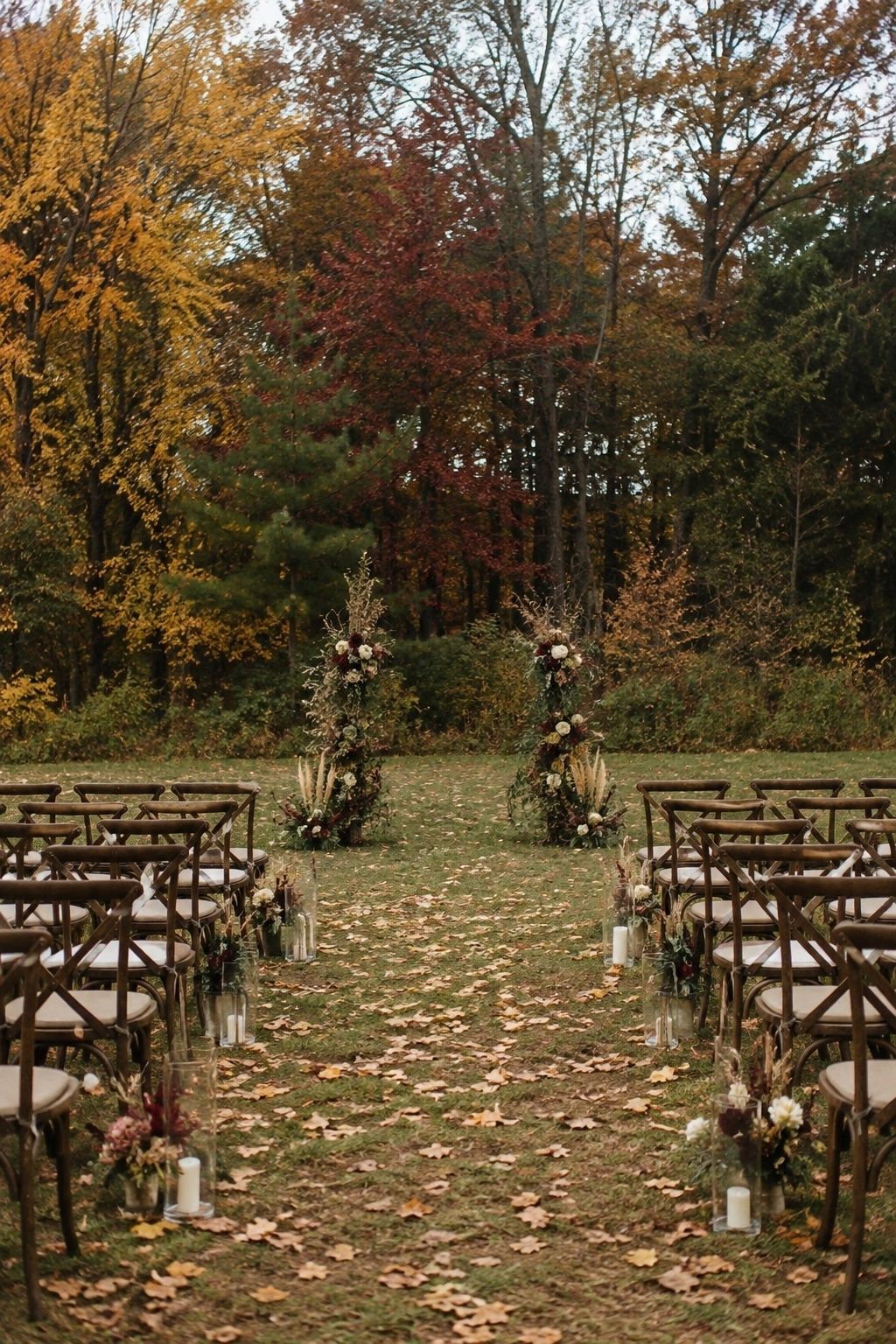
A line of trees in full color does more than any installation you could rent. Look for depth (layers of trunks and foliage rather than one flat hedge) and stand the couple and officiant 3 or 4 meters in front of it, not tucked under the branches. That gap gives the photographer room, keeps falling leaves out of the mic and the bouquet, and stops the trees from swallowing the two of you in photos.
Check where the sun will be at your start time
Low autumn sun is bright and comes in at a flat angle. Do your walkthrough at the same time of day as the ceremony, sit in a guest chair and look at where the couple will stand. If you’re squinting, turn the whole layout 30 or 40 degrees, or shift into filtered light along the edge of the trees. It’s a free fix that changes every photo.
Walk the ground after it rains

Grass that felt solid in August gets soft in October. Narrow chair legs sink, one end of a row tilts, and heels punch holes all the way down the aisle. Ask the venue what that lawn is like after a wet week, or go and see it. If it’s questionable, ask the rental company about chairs with wider feet or flooring under the seating, or move the ceremony to a terrace, gravel courtyard or deck. Roots and slopes matter even more if anyone in your family uses a cane or a wheelchair.
How do you keep guests warm at an outdoor fall wedding?
Put warmth where guests meet it before they sit down: blankets on chairs, something hot to hold, a short ceremony, and a quick walk inside afterward. People sitting still get cold far faster than people moving around at a reception.
Blankets and pashminas on the chairs
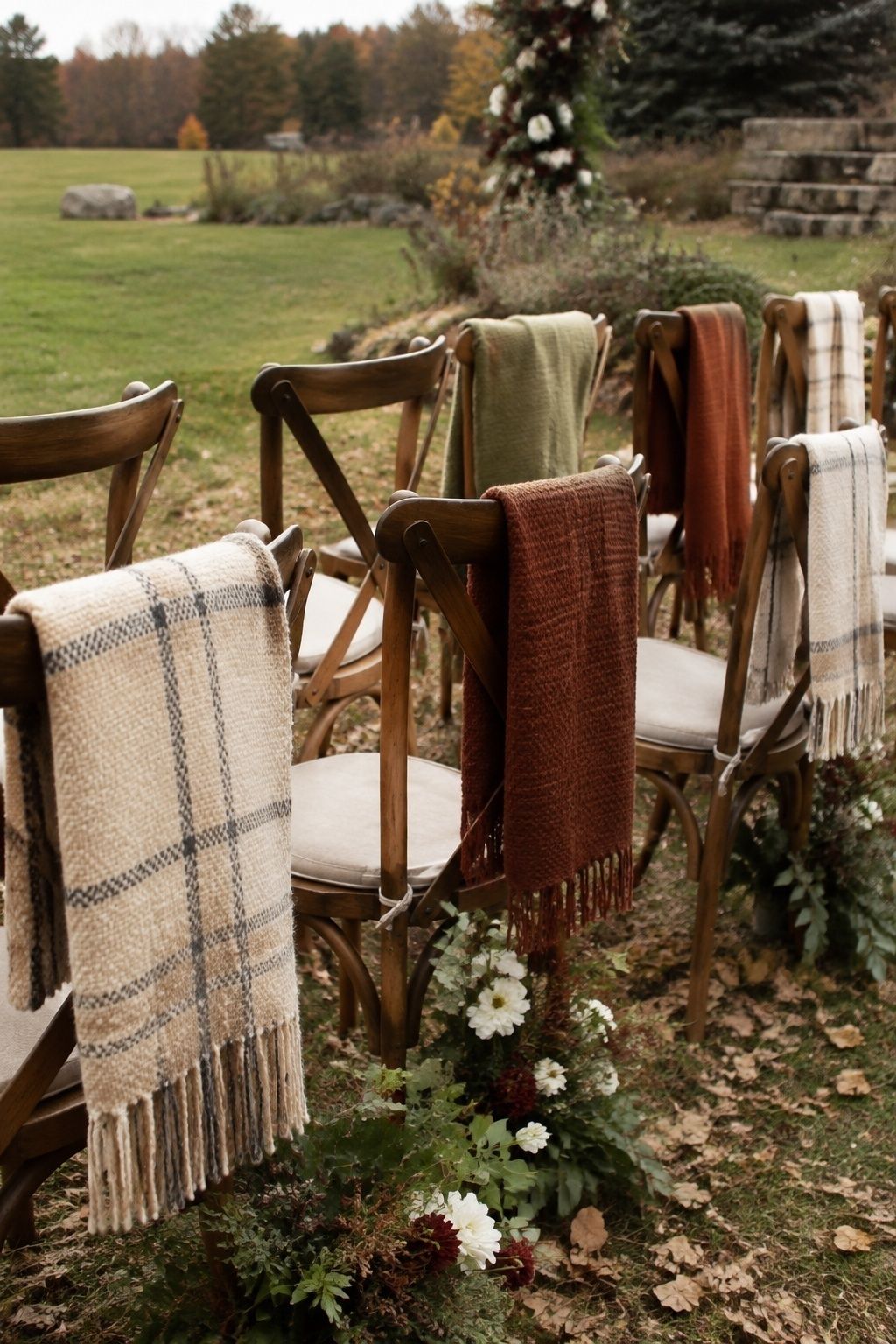
Fold a blanket over every other chair, or every chair if the forecast is under about 12°C (54°F). For 30 guests, that’s 15 to 30 blankets. Neutral colors like cream, olive, rust, charcoal or a soft plaid look like part of the design rather than a last-minute rescue.
For a more formal crowd, swap some of them for pashminas in a basket at the entrance with a small sign. Guests in suits and cocktail dresses reach for a wrap faster than a picnic blanket. Hand warmers in a tray next to the programs are cheap and get used more than you’d expect, especially in mountain, forest or vineyard settings where the air turns once the sun goes behind a ridge.
Something hot before the processional
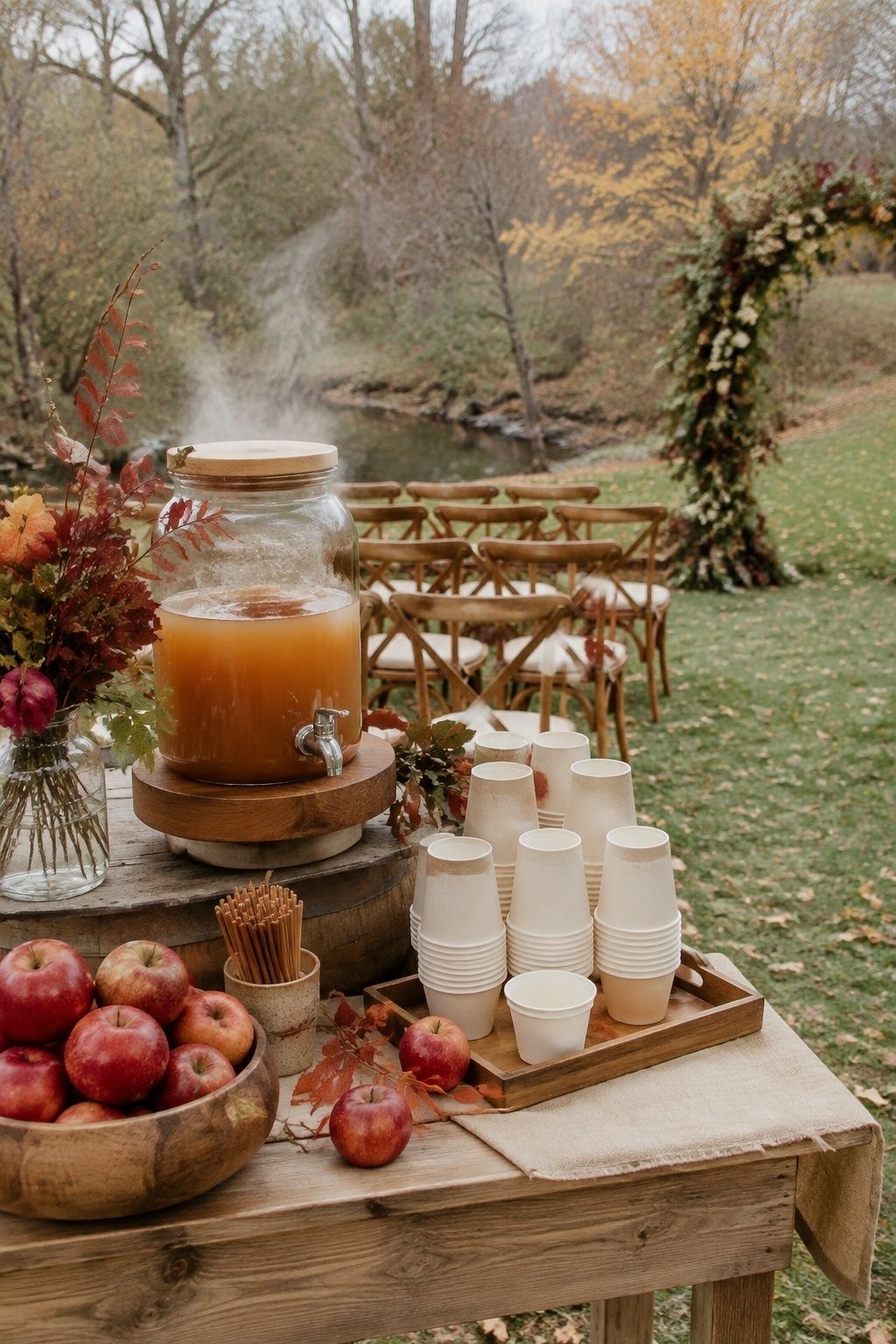
A small cider station near arrival (not near the aisle) gives people something warm to hold while they find seats. Serve it before the ceremony, not during it, and make the default nonalcoholic so nobody has to ask. For a guest list of 20, two insulated dispensers and a tray of cups is plenty. Put a bin next to it, or you’ll find cups under chairs in every recessional photo.
Keep the ceremony around 20 minutes
My rule for cool weather: a 20-minute ceremony feels romantic, a 40-minute one feels long. Pick the readings and rituals that mean the most and move the rest indoors, where people can hear them with a drink in hand. Rehearse the transitions so the minutes you do have aren’t lost to shuffling.
Plan the walk inside
Tell guests exactly where to go after the recessional, ideally somewhere within a 5-minute walk: a heated tent, a barn, a dining room. A sign or a person pointing the way beats an announcement nobody hears. The November guest comfort ideas cover warming a crowd up once they’re inside.
Seating and layout for a small outdoor ceremony
For a small wedding, a gentle semicircle of two or three rows usually beats long straight rows. Everyone can see the couple and each other, and the back row stays close enough to hear.
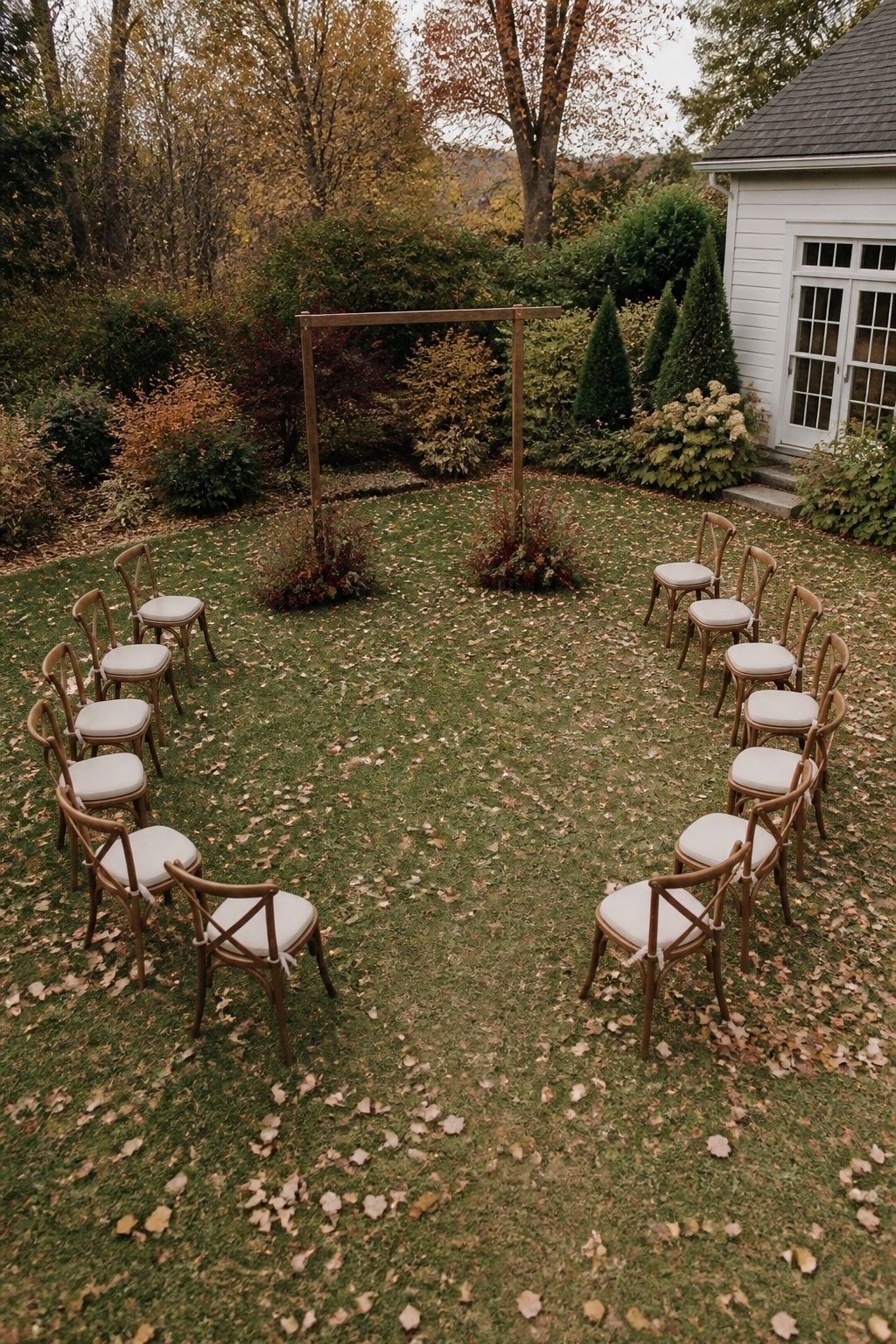
Here’s roughly how the layout scales with your guest count:
| Guests | Layout | Rows | Mic needed? |
|---|---|---|---|
| 10 to 15 | Single semicircle or standing circle | 1 | Usually not |
| 16 to 30 | Semicircle with a center aisle | 2 | Helpful in wind |
| 31 to 50 | Straight or curved rows on two sides | 3 to 5 | Yes |
Leave an aisle at least 1.2 meters (4 feet) wide and a gap at each end so the photographer can move without walking through the middle of your vows. Reserve the first row, and put grandparents on the aisle end where they can see and get out easily.
Outdoor fall ceremony decor that stays put in wind
Outdoor fall decor should be low, weighted, and either battery-lit or unlit. Wind ruins more ceremony setups than rain does, so design for a gusty day and treat a calm one as a bonus.
A wood arch with loose seasonal flowers
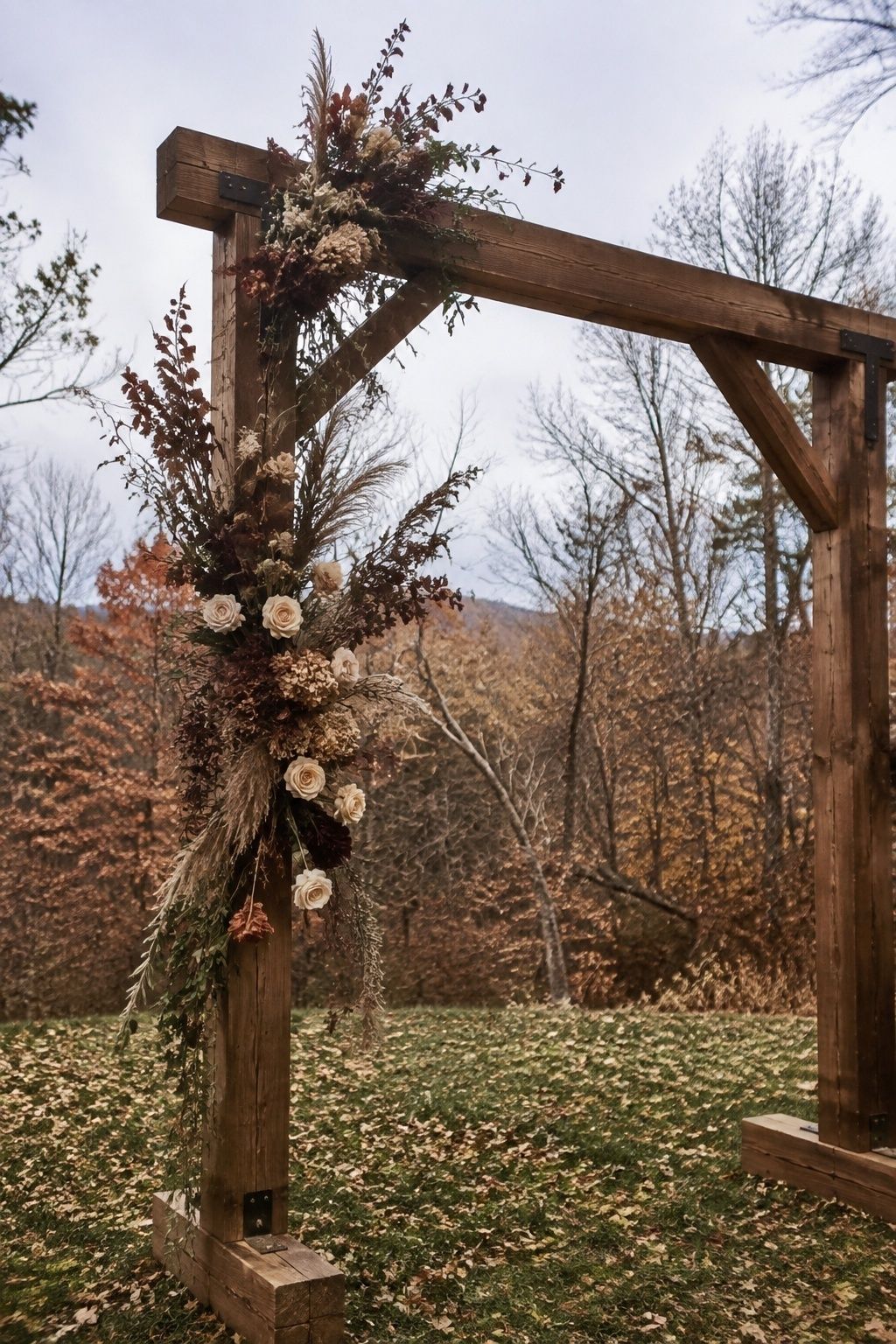
A natural wood arch with grasses, branches and a few clusters of seasonal flowers fits a fall landscape better than a dense floral wall. Keep the heavy parts low and let your florist or rental team anchor it with sandbags or stakes. A simple frame that stands still looks better than an elaborate one rocking in the breeze. For more shapes and materials, see these fall wedding arch ideas.
Low aisle florals and lanterns
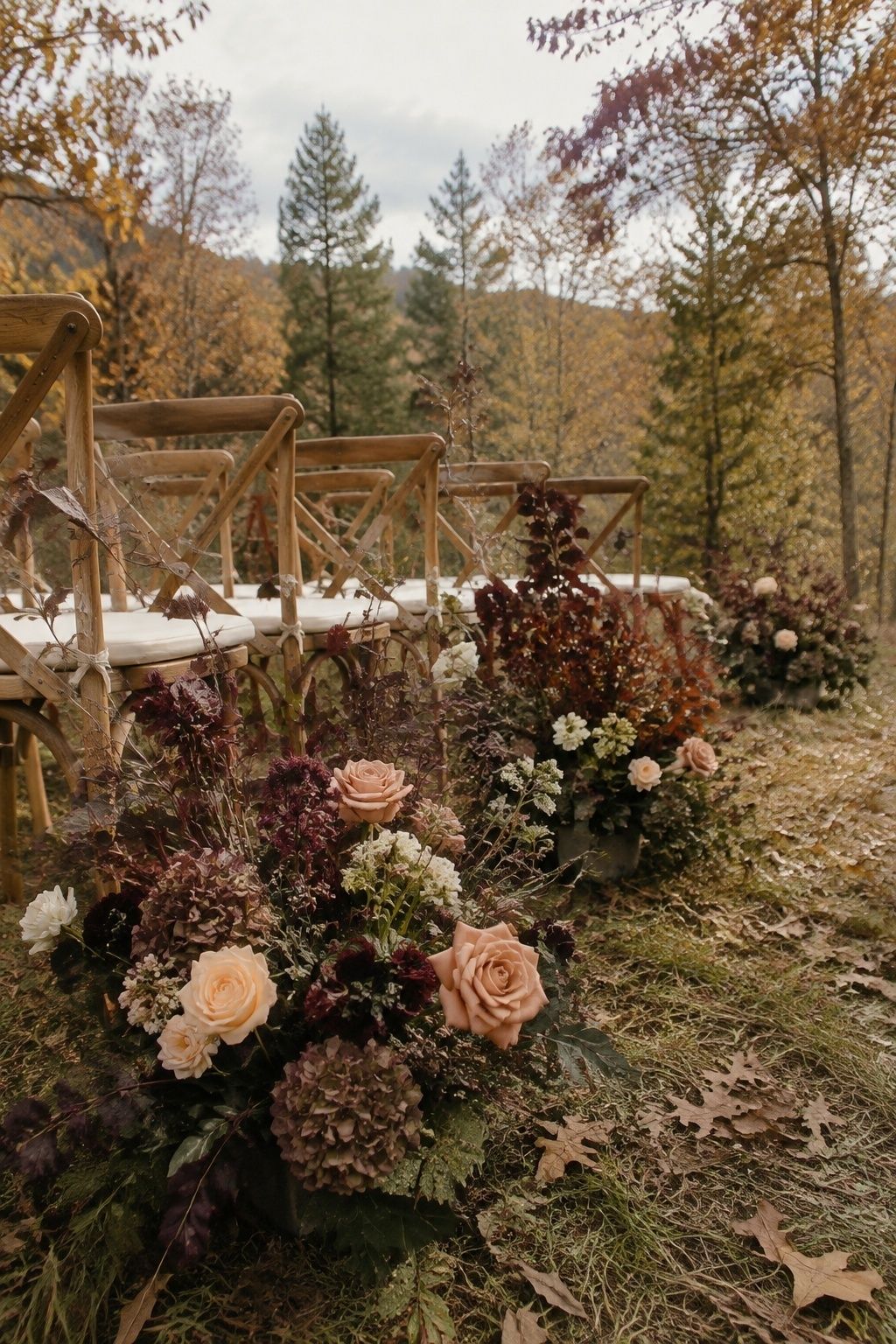
Ground-level arrangements at the ends of rows add color without blocking anyone’s view. Use heavy vessels, skip tall stands unless a professional is anchoring them, and leave loose petals off the aisle if the ground is damp, because they turn slippery fast. For blooms that hold up in cooler air, start with the fall wedding flowers guide.
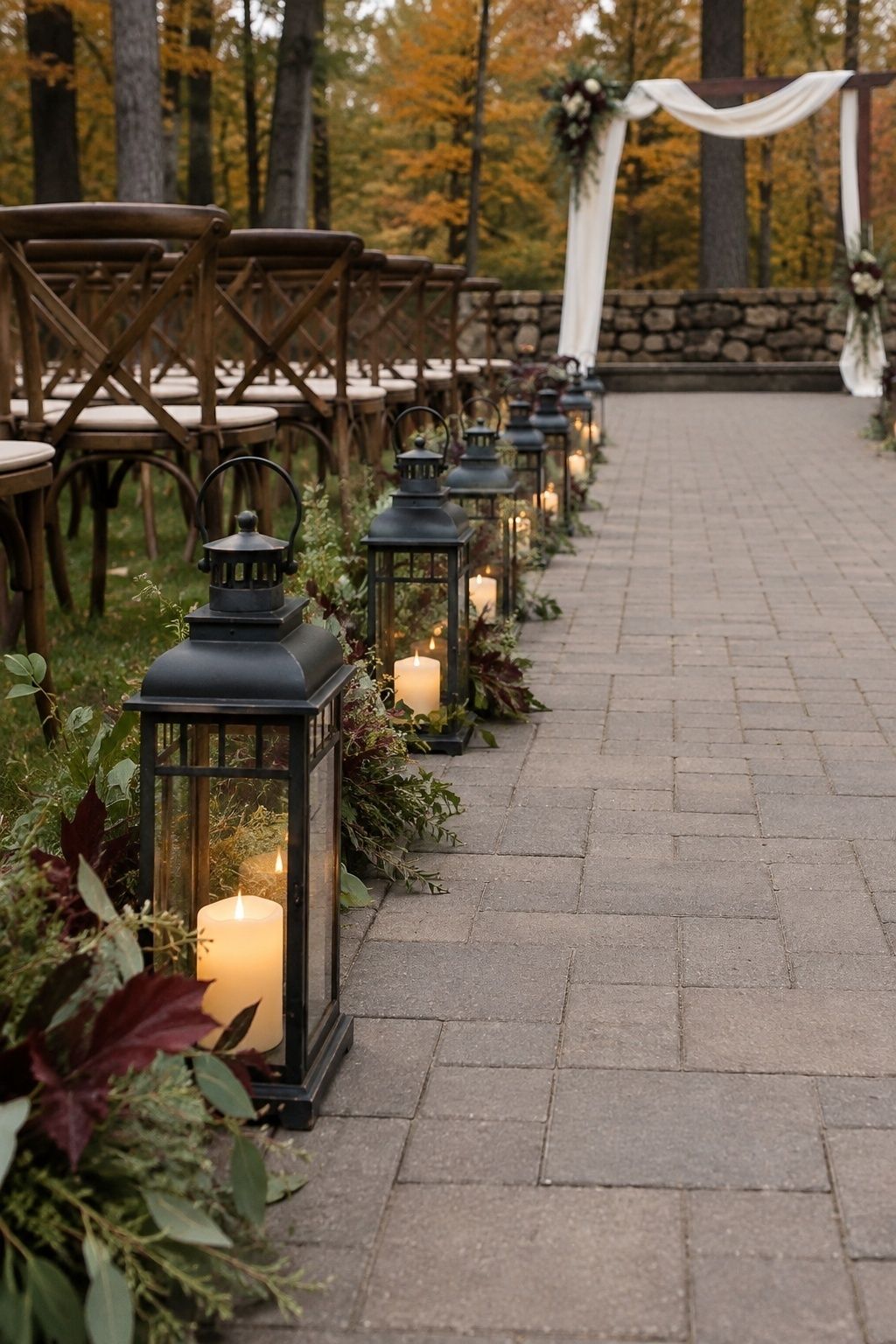
Lanterns along the aisle add warm light if the ceremony runs close to dusk. Use battery candles. Dry leaves, wind and an open flame next to a long dress is a combination no venue wants, and many won’t allow open flames outdoors anyway. Set the lanterns at the outer edge so they don’t narrow the walkway.
Rugs only on firm, flat ground
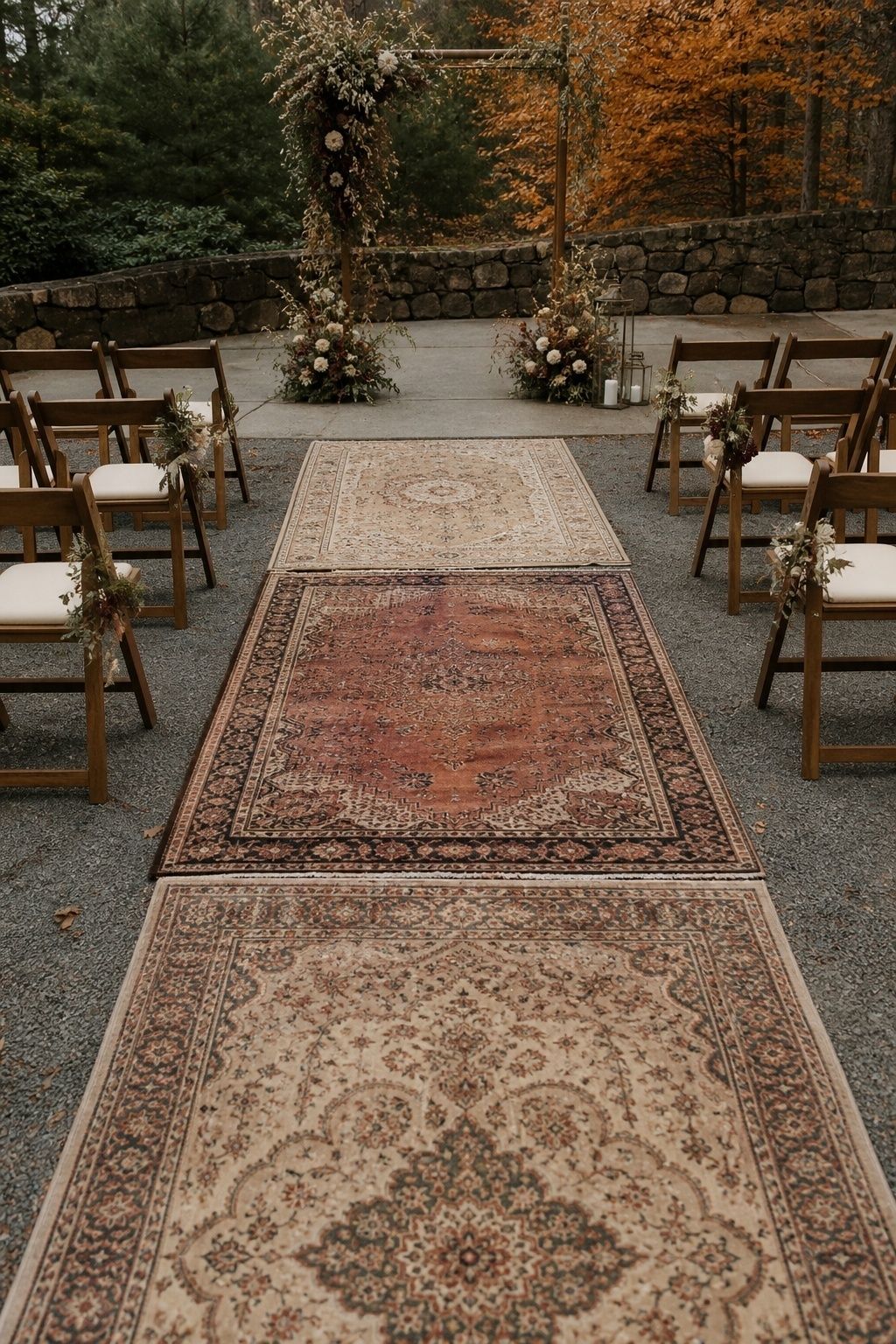
Layered aisle rugs look cozy, but only lay them on level, dry ground and secure the edges with rental-approved tape or weights. A rug edge that lifts in the wind is a trip hazard for everyone walking the aisle, you included. On soft grass, skip them and let the aisle be grass.
Sound and a weather backup
A wireless mic and a booked indoor alternative are the two things guests only notice when they’re missing. Confirm both weeks ahead, not on the morning.
Test the mic where you’ll actually stand
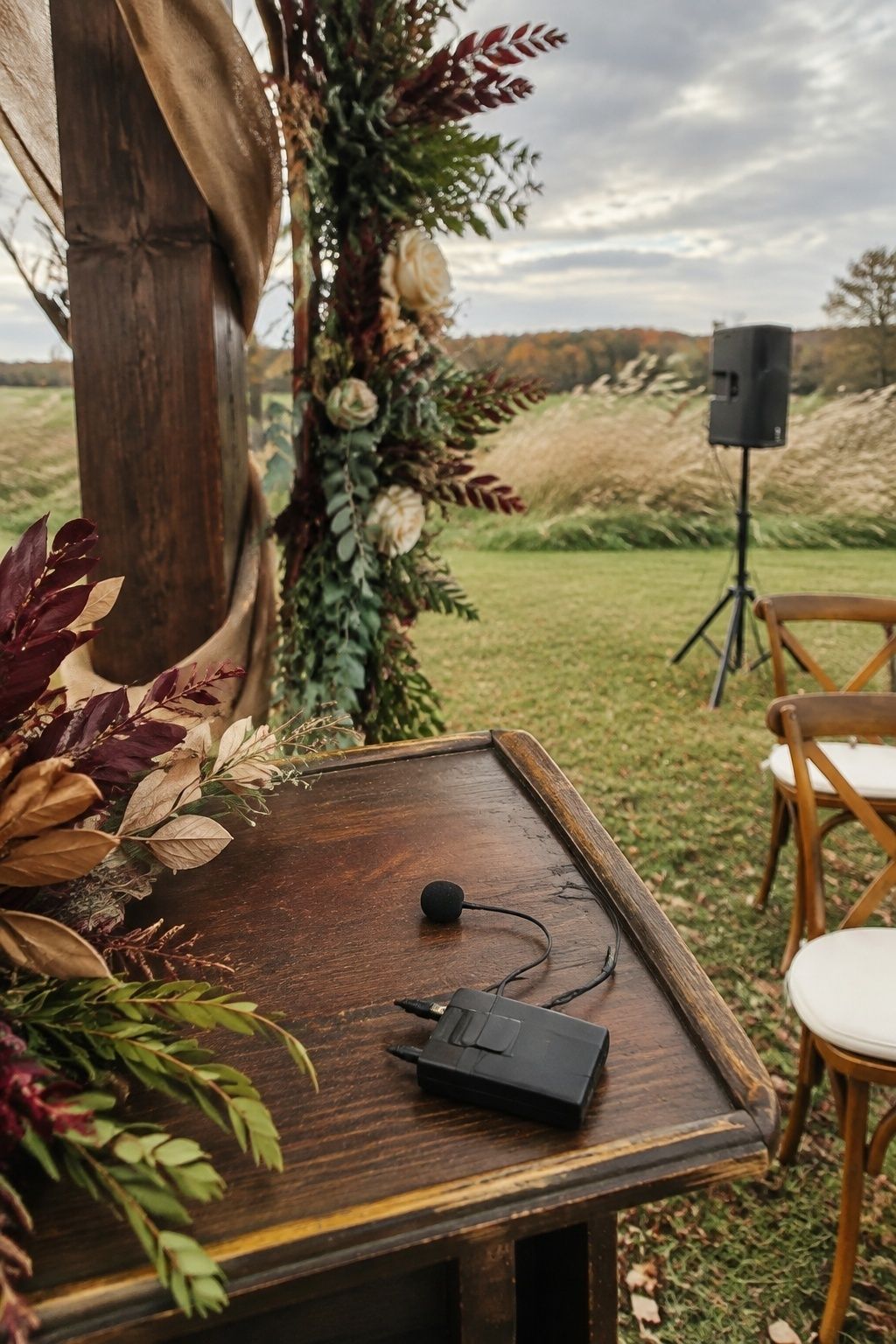
Wind, trees and a road 200 meters away all eat sound. Give the officiant a wireless clip mic, decide whether you’ll share a handheld for vows, and test it at the ceremony spot rather than next to the building. Settle who brings spare batteries and who runs the sound check before guests arrive. With 30 or more guests outside, I’d treat a mic as non-negotiable.
Umbrellas for drizzle, a room for real rain
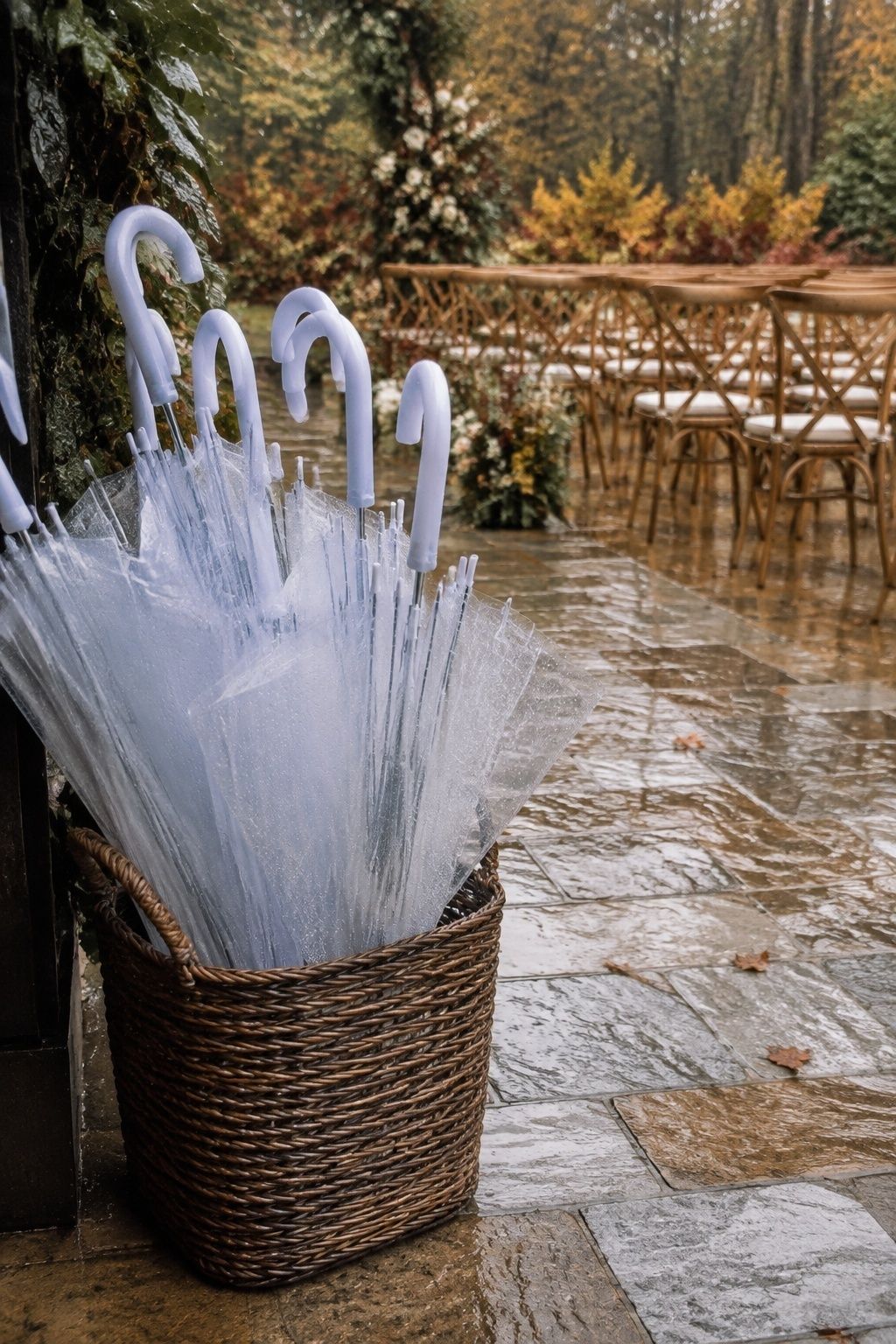
A basket of clear umbrellas at the entrance handles mist and a passing shower, and they photograph better than whatever guests grab from their cars. They won’t handle steady rain. For that you need a backup location chosen before invitations go out: a tent, covered patio, barn, chapel or restaurant room. The Knot’s advice on an outdoor wedding backup plan walks through setting the decision deadline with your venue.
Make the backup good enough that moving there doesn’t feel like a loss. Agree on a call time (often 24 hours out, or the morning of) and who makes the call, so you’re not refreshing a forecast during hair and makeup. If you’re still comparing places, look at small wedding ceremony venues that come with a covered option built in.
The final-month checklist
Confirm these four things about two weeks before the wedding, and give one person (a planner, a day-of coordinator, a calm friend) the job of owning them on the day:
- The exact sunset time, and the start time you worked back from it with your photographer.
- The backup location, the call time and who decides.
- Ground conditions, chair style and any flooring, with the rental company.
- Power, mic, batteries and who tests sound before guests arrive.
Pin down the family photo list too. Keep it to 8 to 10 groups and assign someone who knows the family to round up each one. Cold, hungry relatives disappear fast.
Key takeaways
- Start an outdoor fall ceremony about 90 minutes to 2 hours before sunset so portraits still get good light.
- Keep the ceremony near 20 minutes and move longer speeches indoors.
- Put blankets, wraps and something hot at arrival, before anyone sits.
- Choose low, weighted decor and battery candles, and assume it will be windy.
- Book a real indoor or tented backup and agree on who calls it and when.
FAQ
What time should an outdoor fall wedding ceremony start?
Most outdoor fall ceremonies should start 90 minutes to 2 hours before sunset. That leaves time for a 20-minute ceremony, family photos and portraits before the light goes, so check the sunset for your exact date and work backward.
How do you keep guests warm at an outdoor fall ceremony?
Offer warmth before guests sit down: blankets or pashminas on the chairs, hand warmers at the entrance and a hot drink at arrival. Then keep the ceremony short and move everyone indoors right after the recessional.
What decor works for an outdoor autumn ceremony?
Low, heavy decor works best outdoors in fall. A secured wood arch, ground-level florals in weighted vessels, battery lanterns and a natural tree line hold up in wind, while tall stands and loose petals on damp grass cause problems.
Do outdoor fall wedding ceremonies need a rain plan?
Yes, every outdoor fall ceremony needs a booked backup. Clear umbrellas cover drizzle, but steady rain needs a tent, barn, covered patio or indoor room, plus an agreed call time and one person who makes the decision.
How many blankets do I need for an outdoor fall ceremony?
Plan on one blanket for every two guests, or one per guest if the forecast is below about 12°C (54°F). For a 30-person ceremony that means 15 to 30 blankets, placed on chairs or in baskets at the entrance.
How long should an outdoor fall wedding ceremony be?
Aim for about 20 minutes. A seated crowd gets cold quickly once the sun drops, so keep the vows and the readings that matter most and save extra speeches for the reception.
Before you lock in the plan
If you only take one thing from these outdoor fall wedding ceremony ideas, make it the timing. Pick your start from the sunset, not from a mood board, and most of the other problems (cold guests, rushed portraits, dark photos) shrink on their own. Then go stand on the spot at that hour, sit in a guest chair, and see how it feels.
Last update on 2026-10-03 / Affiliate links / Images from Amazon Product Advertising API