

Fall outdoor wedding ideas feel strongest when weather, fading light, and guest comfort shape the plan before decor. For a small or intimate wedding, that usually means fewer transitions, one scenic focal point, clear backup space, warm arrivals, and details sturdy enough for soft ground, wind, or a chilly evening.
An outdoor fall wedding looks beautiful when the plan respects autumn instead of treating the season like a styled photo. The ceremony often starts in golden light and ends in a chill; the lawn often looks perfect and still feels damp under heels; the tent often seems optional until one cold front changes the whole mood.
That is why the best outdoor fall wedding ideas are practical first. Think short ceremony, warm welcome drink, protected food and music, close dinner tables, safe walking paths, and a real indoor or tent backup that feels clear before guests arrive.

Recommended Wedding Products


You Might Also Like These Blog Posts
- Summer Outdoor Wedding Ideas That Feel Planned, Not Exposed
- Fall Wedding Ideas For A Warm, Intimate Autumn Celebration
- Spring Outdoor Wedding Ideas for Rain, Shine, and Everything Between
- Fall Wedding Reception Ideas for a Dinner Everyone Lingers Over
- October Outdoor Wedding Planning for Crisp Air and Calm Guests
- Winter Outdoor Wedding Ideas That Keep Guests Warm and the Setting Beautiful
Fall Outdoor Wedding Ideas For A Cozy, Weather-Ready Celebration
The prettiest outdoor fall wedding planning starts with comfort. A good autumn layout gives guests clear movement, warmth, visible paths, and confidence in the rain plan. These fall outdoor wedding ideas suit real lawns, cool evenings, small guest lists, family backyards, orchard ceremonies, tented dinners, and outdoor spaces where beauty deserves practical backup.
Choose A Setting With A Real Backup Space
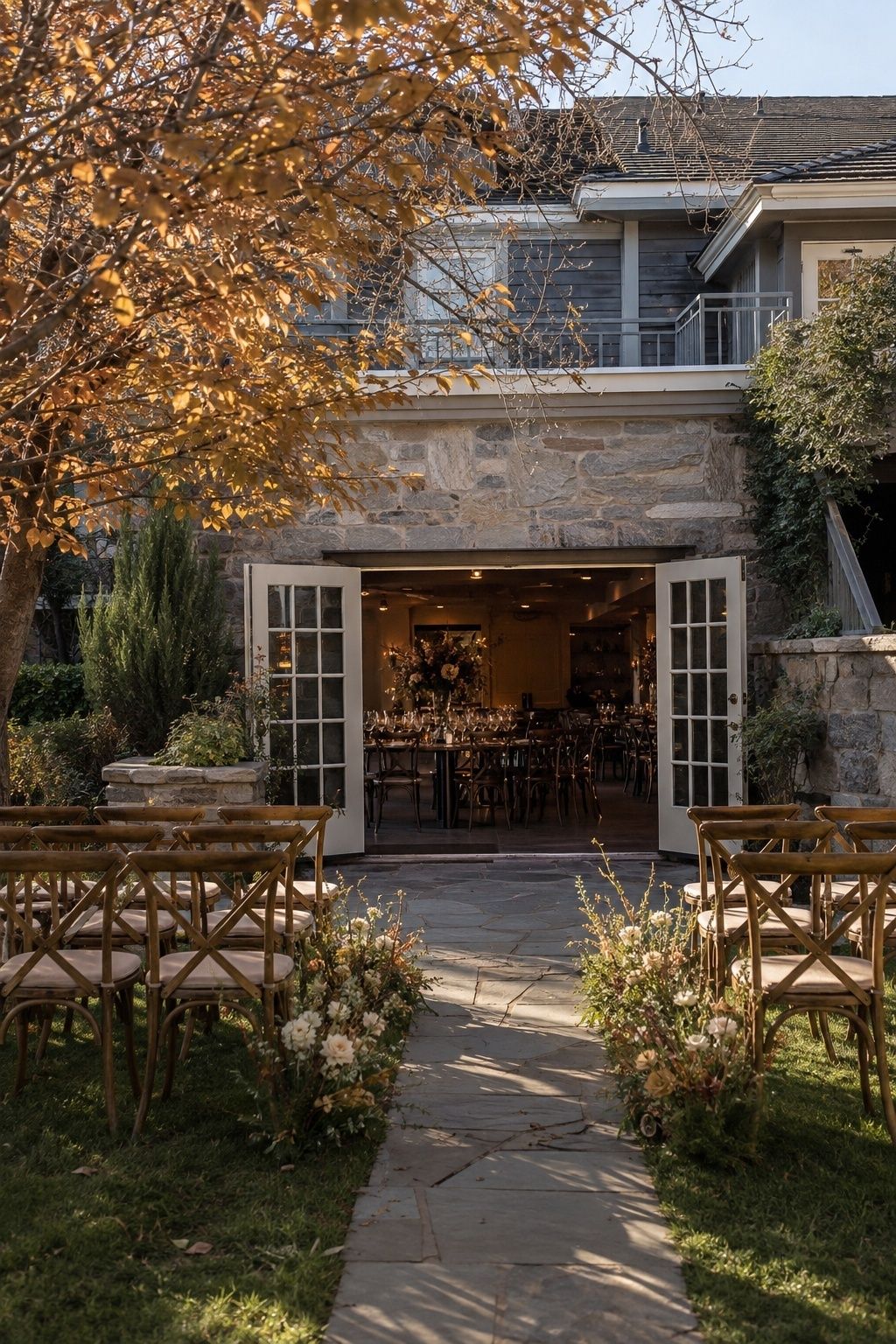
A fall outdoor wedding begins with the backup plan, not the ceremony arch. Choose a venue, backyard, inn, restaurant garden, estate lawn, or rental property with a true indoor room or a tented option close enough for guests to reach quickly. A backup requiring a long drive, a muddy walk, or a last-minute room flip feels stressful when weather changes.
For a small outdoor fall wedding, the backup space stays simple: a covered porch, dining room, barn, clear-span tent, or heated patio. What matters is full guest-count capacity, power, protection for food and music, and a feeling of celebration instead of an emergency corner.
Work Backward From Sunset Before Setting The Timeline
Autumn light drops fast, and the perfect ceremony time depends on sunset more than the clock on the invitation. Build the schedule from sunset with your photographer, planner, and venue before choosing the ceremony start. Daylight matters for guest arrival, vows, family portraits, couple portraits, and any uneven path guests travel after the ceremony.
Most outdoor fall ceremony ideas feel better when the ceremony starts early enough to finish before the coldest part of the evening. If golden hour matters, schedule portraits around it instead of leaving guests seated outside in dropping temperatures while everyone waits for the light.
Keep The Outdoor Ceremony Short And Warm
A chilly outdoor ceremony deserves editing rather than rushing. Keep vows and selected passages intentional, avoid long pauses between processional groups, and make sure the officiant understands the weather plan. Fifteen to twenty minutes feels beautiful and generous when guests are seated outdoors in fall.
Place older relatives, children, and anyone with mobility concerns away from wind exposure where possible. If the ceremony site is open, consider lap blankets on the first few rows, a short printed program, and a clear transition toward warmth afterward.
Give Guests Clear Dress And Shoe Guidance
Fall wedding guest comfort outdoor plans start before guests get dressed. Use the invitation details card or wedding website to describe grass, gravel, garden path, hillside, patio, or wooded terrain. Guests choose better shoes and layers with clear ground and temperature details.
Keep the wording kind and direct: ceremony on lawn, reception under tent, layers encouraged, block heels or flats recommended. This protects guests from cold shoulders, sinking stilettos, muddy hems, and confusion at arrival.
Serve A Warm Drink As Guests Arrive
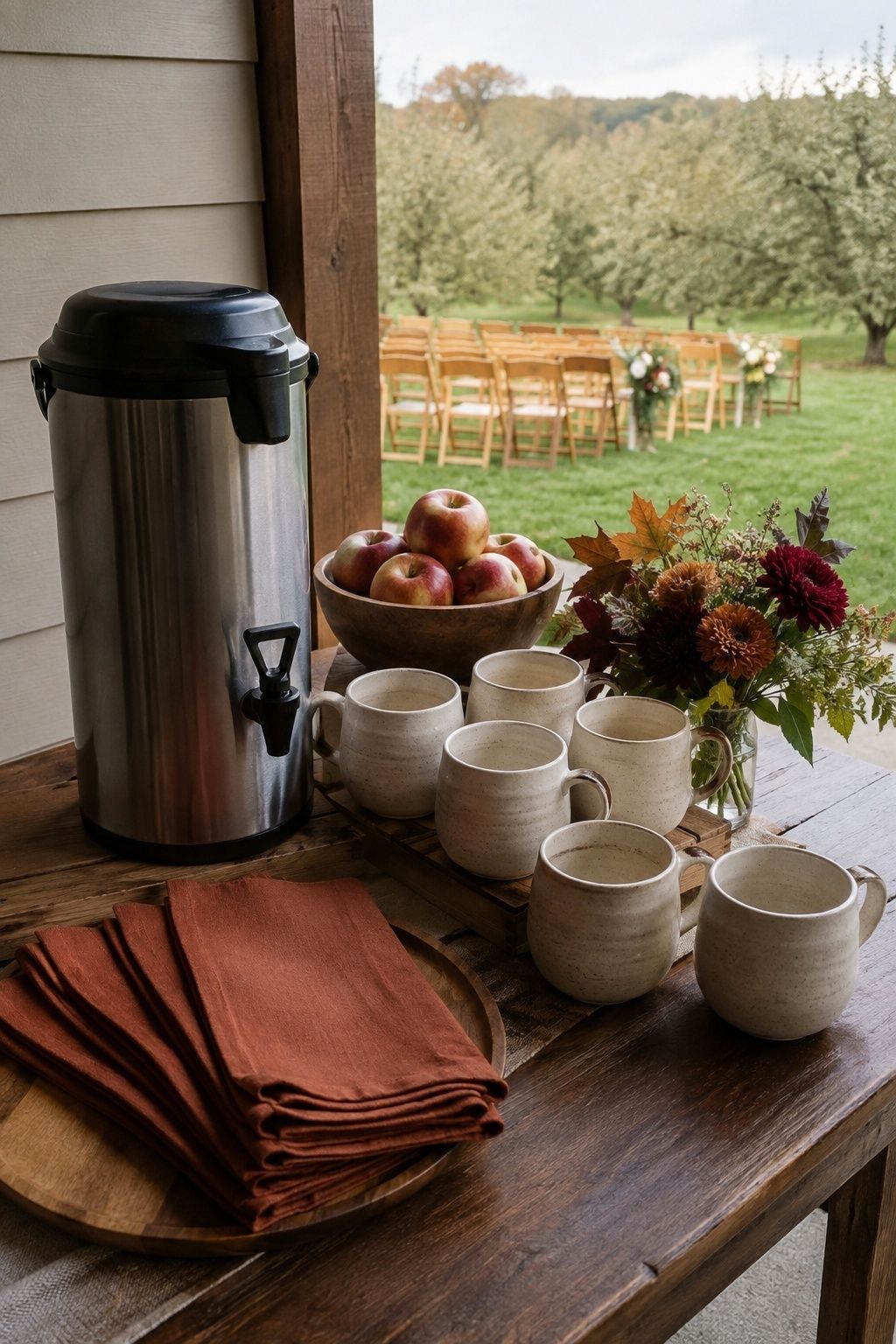
A warm welcome drink makes autumn outdoor wedding ideas feel hospitable right away. Hot cider, tea, coffee, cocoa, or a low-proof toddy eases the temperature shift as guests move from cars to ceremony seating. Use handled mugs, lidded cups, or a staffed station so the drink stays neat around formal clothes.
For intimate weddings, one hot cider dispenser or insulated beverage server is often enough. Place it where guests naturally pause, not at the far edge of the property, and offer a nonalcoholic version for everyone.
Add Blankets Or Wraps Where People Will Actually Use Them
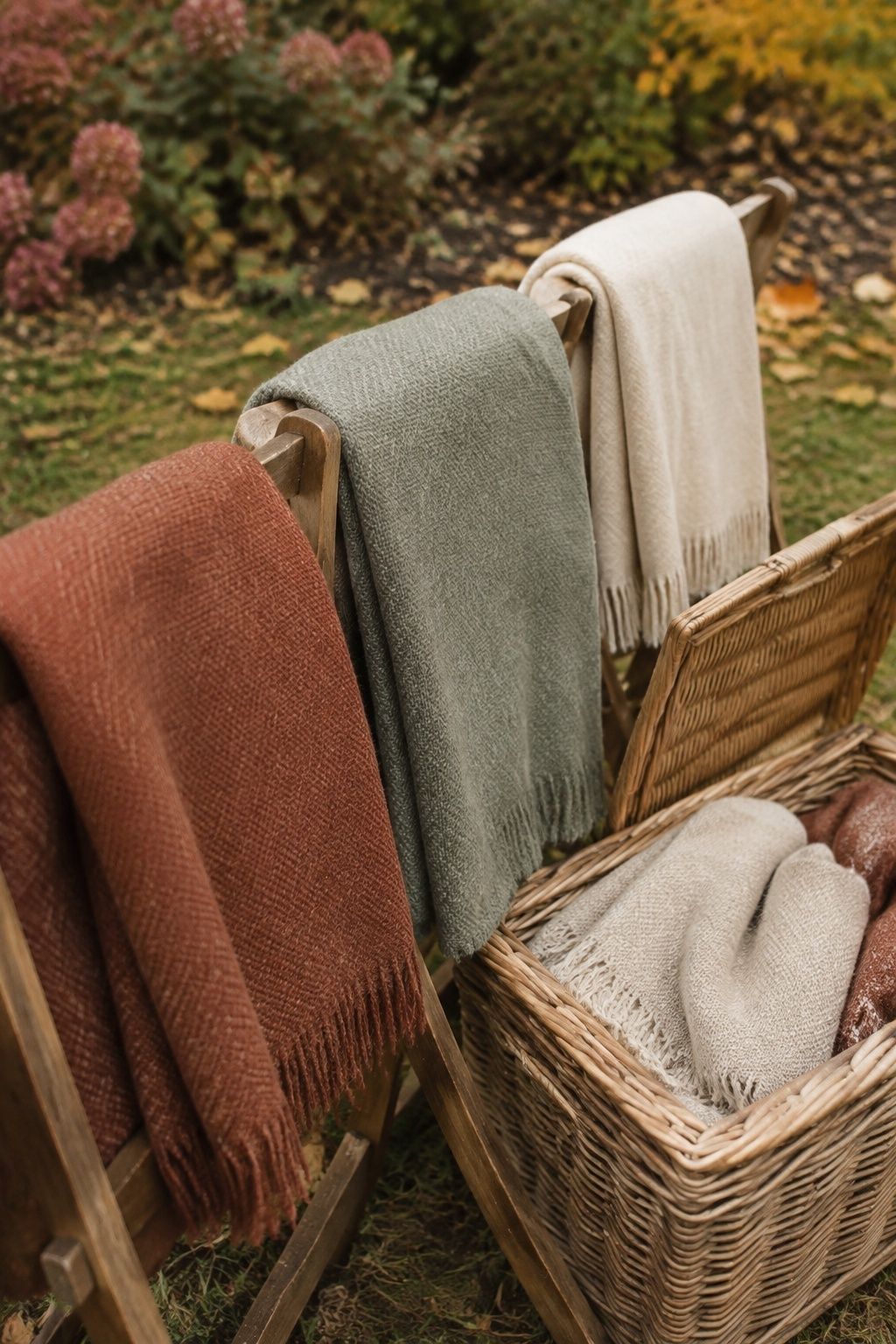
Blankets matter only when they are easy to see, clean, and close to the coldest seats. Instead of hiding wool guest blankets in a decorative basket at the entrance, place them by ceremony rows, lounge seating, or dinner chairs. A small sign invites guests to take one without making the setup feel fussy.
Wraps suit a small outdoor fall wedding because the palette stays tighter and the quantity stays manageable. Keep extras dry in a covered bin or basket, and assign someone to move them indoors if rain starts.
Rent Heaters For Gathering Areas, Not Empty Corners
Outdoor patio heaters serve guests best where people actually stand or sit: welcome drink station, cocktail tables, dinner tent edge, lounge area, bar line, and after-dinner conversation spots. A heater tucked into an empty corner looks tidy, but it rarely changes the guest experience.
Ask the rental team about fuel, placement, clearance, supervision, and safety under your tent style. For fall backyard wedding ideas, this detail deserves early confirmation because heater availability tightens quickly during peak autumn weekends.
Use A Tent Plan With Sidewalls And Lighting
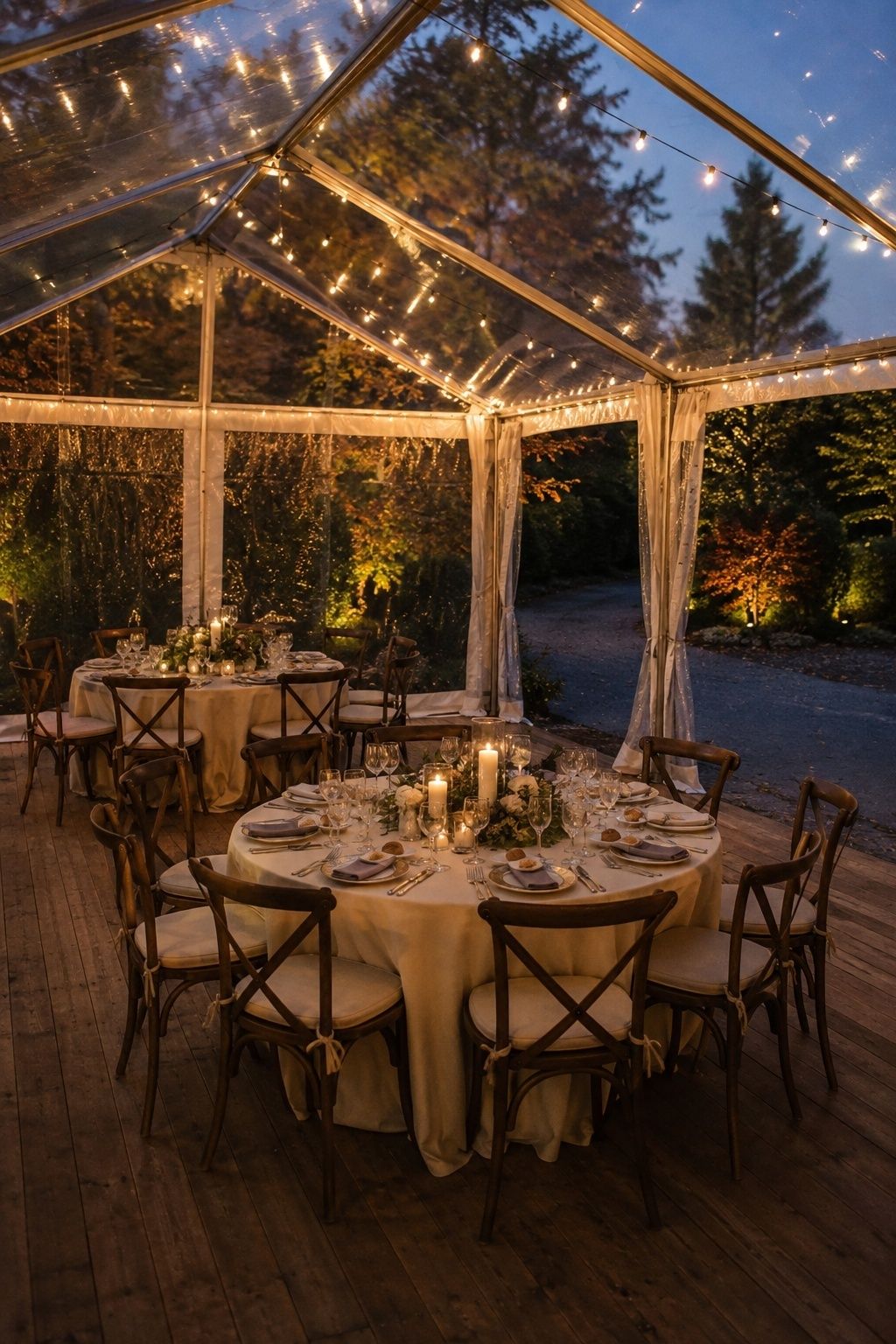
A tent without sidewalls offers limited shelter during light drizzle, but it will not solve wind, sideways rain, or a cold evening. Ask about wedding tent sidewalls, clear panels, entrances, flooring, heating, and movement between the ceremony, bar, restrooms, and dinner. A tent plan includes comfort and flow, not just a roof.
Outdoor string lights, uplights, and lanterns make the tent feel finished after dark. Confirm power requirements before the rental order is final, and route every cord path away from guest traffic or cover it securely.
Keep Aisles Safe From Wet Leaves And Soft Ground
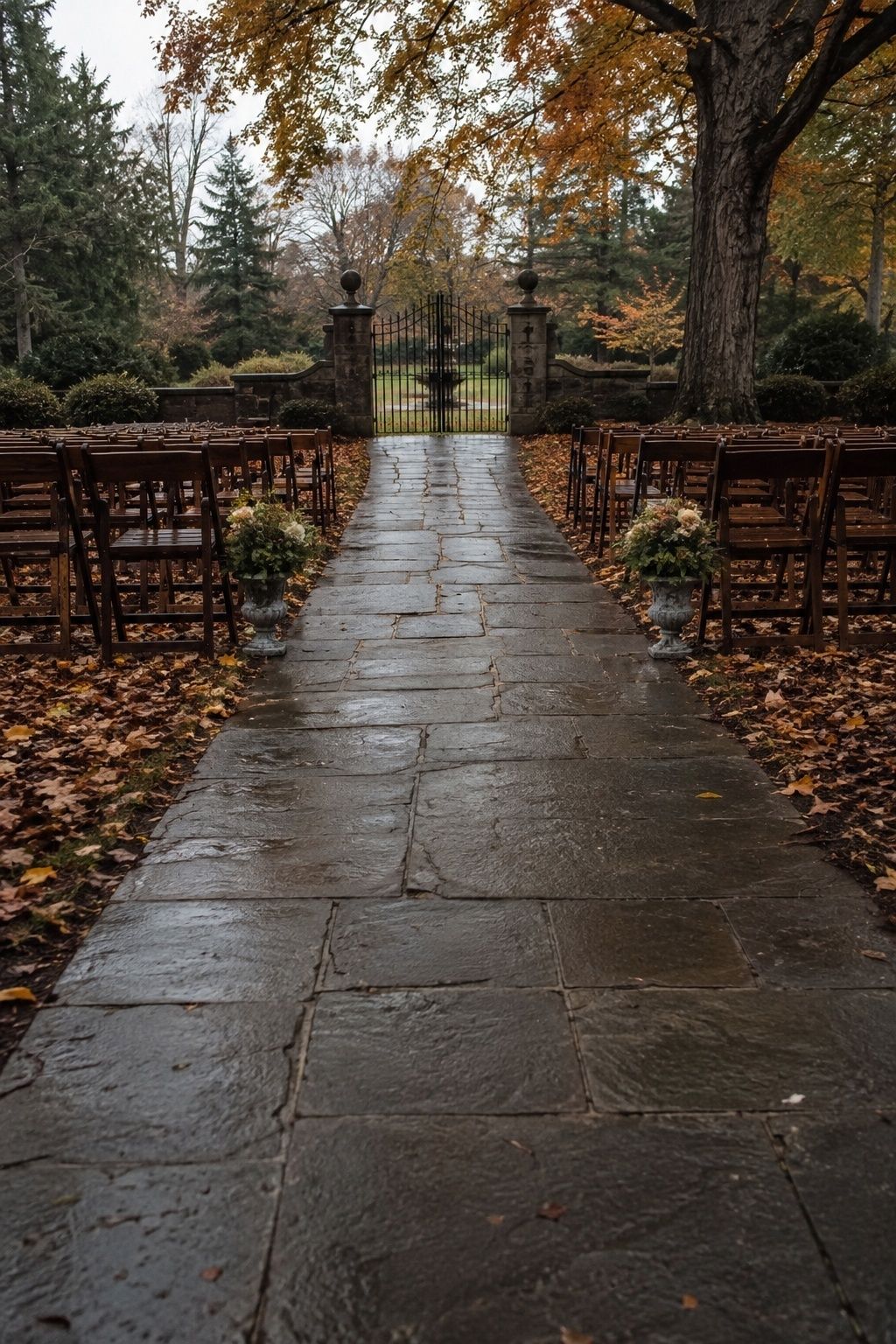
Wet leaves are pretty in photos and slippery under dress shoes. Before guests arrive, clear the aisle, steps, patio edges, and paths between major spaces. If the ground is soft, non slip aisle mats, temporary flooring, flat rugs, or a firm walkway make the ceremony safer without taking away the outdoor feeling.
Check the route from parking to seating, not just the aisle. A beautiful ceremony site still feels poorly planned when guests guess their way across wet grass in formal shoes.
Choose Wind-Safe Lanterns Over Open Candles
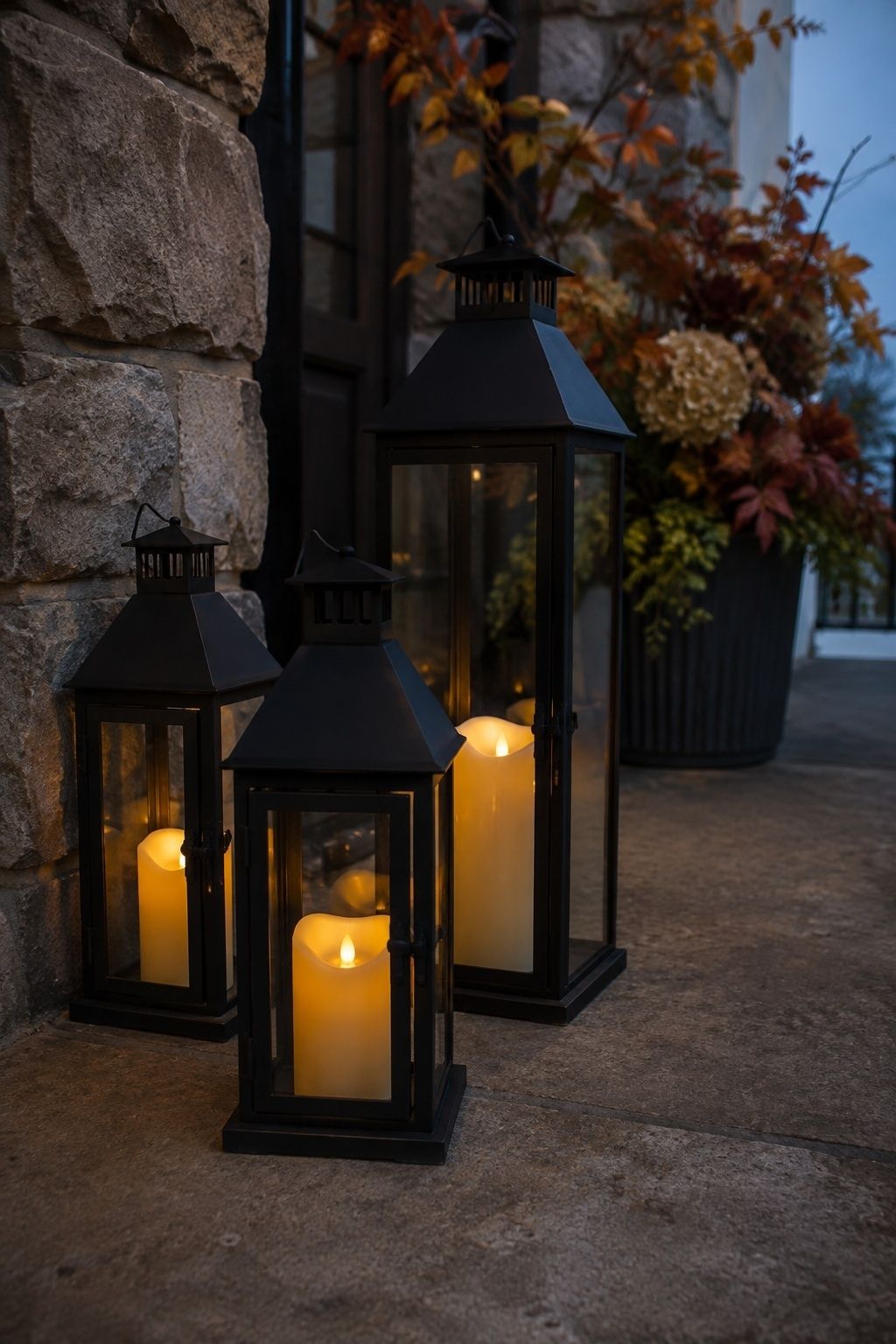
Open candles are not always practical outdoors in fall. Wind blows them out, scatters wax, or creates safety issues around dry leaves, linens, and ceremony florals. Flameless lanterns, enclosed hurricane candles where allowed, battery taper candles, and warm LED votives give a similar glow with less worry.
Use lanterns along paths, at dinner entrances, by lounge furniture, and around the ceremony focal point. They look strongest in intentional groups rather than tiny numbers sprinkled everywhere.
Weight Every Sign, Easel, And Paper Detail
Fall wind turns pretty paper into a mess fast. Use a weighted easel sign for the welcome display, secure escort cards, clip menus if necessary, and avoid lightweight ceremony programs on exposed chairs. Anything standing upright outdoors deserves weights, stakes, clips, or sturdy backing.
This is especially important for fall backyard wedding ideas, where a charming lawn often has uneven ground and unexpected gusts. Test signs and paper details at the actual site before the wedding day if possible.
Build A Simple Scenic Ceremony Focal Point
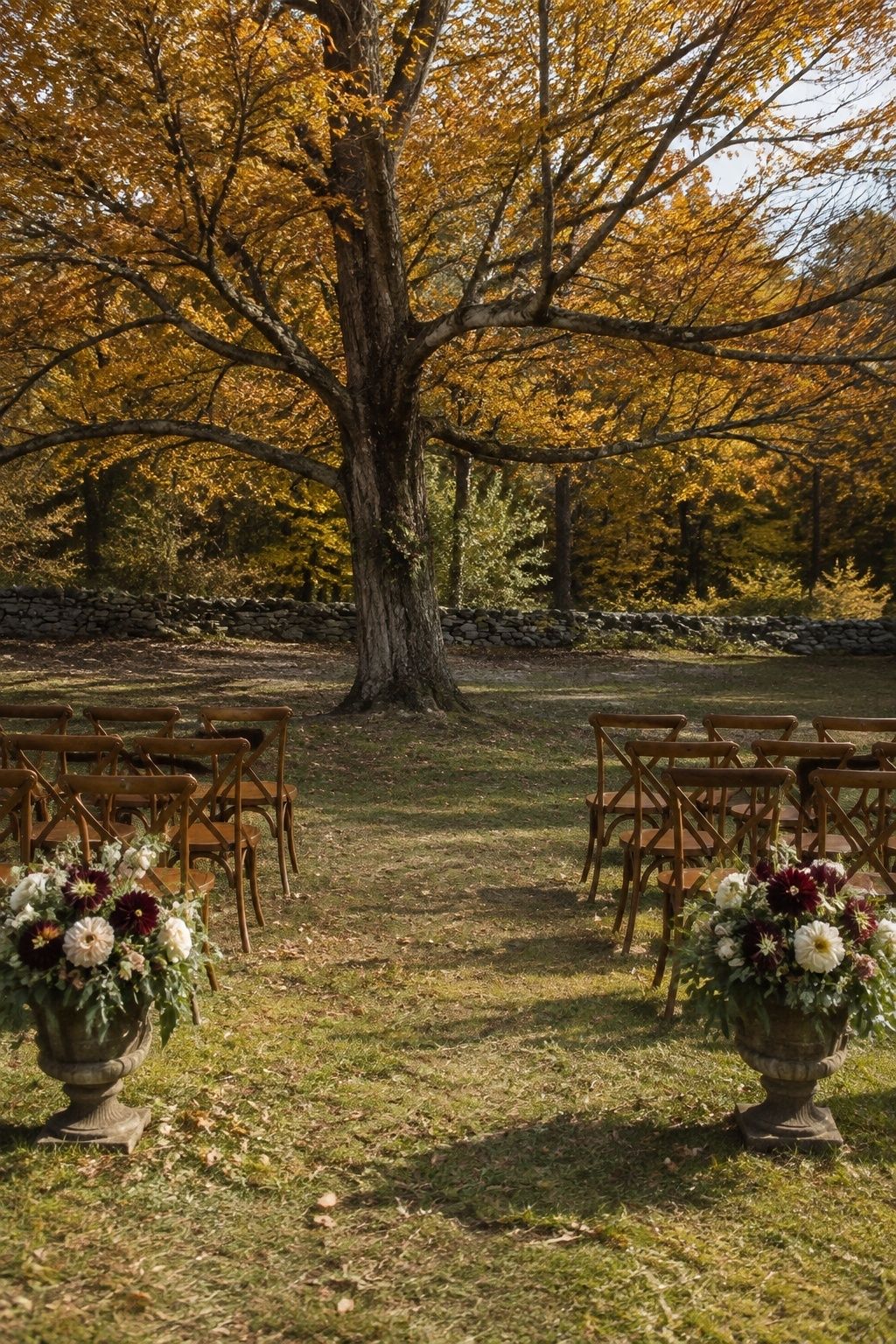
Small outdoor weddings do not require a huge decor build. Choose one scenic focal point: a tree, garden entrance, stone wall, mountain view, orchard row, pond edge, tent entrance, or simple floral frame. Let the landscape carry visual weight while the ceremony design stays stable enough for wind.
If you use an arch, make sure it is weighted and scaled to the site. A grounded floral arrangement, paired urns, lantern clusters, or a fabric-free frame feels more secure than a tall lightweight structure covered in moving material.
Move Cocktail Hour Indoors Before The Temperature Drops
Cocktail hour is often where fall outdoor wedding planning goes wrong. Guests enjoy the ceremony outside, then get cold while standing with drinks and no clear place to settle. If temperatures drop quickly in your area, move cocktail hour indoors, under a heated tent, or onto a protected patio.
For a small wedding, this feels intimate instead of crowded. Put the bar, passed appetizers, coat area, and seating close together so guests are not spread across a chilly property waiting for dinner.
Keep Food, Music, And Power Protected From Weather
Outdoor fall wedding ideas rely on vendor logistics behind them. Catering stations, musicians, speakers, lighting controls, generators, and extension cords all require dry, level, protected locations. Rain does not have to be dramatic to cause problems; damp ground and mist create enough risk for an unsafe or unreliable setup.
Ask each vendor for written requirements. The caterer often requests a covered prep area. The band or DJ often requests a tented platform and dedicated power. The photographer often requests dry portrait options. Early confirmation gives the day a calmer rhythm.
Create A Cozy Dinner Layout With Fewer Transitions
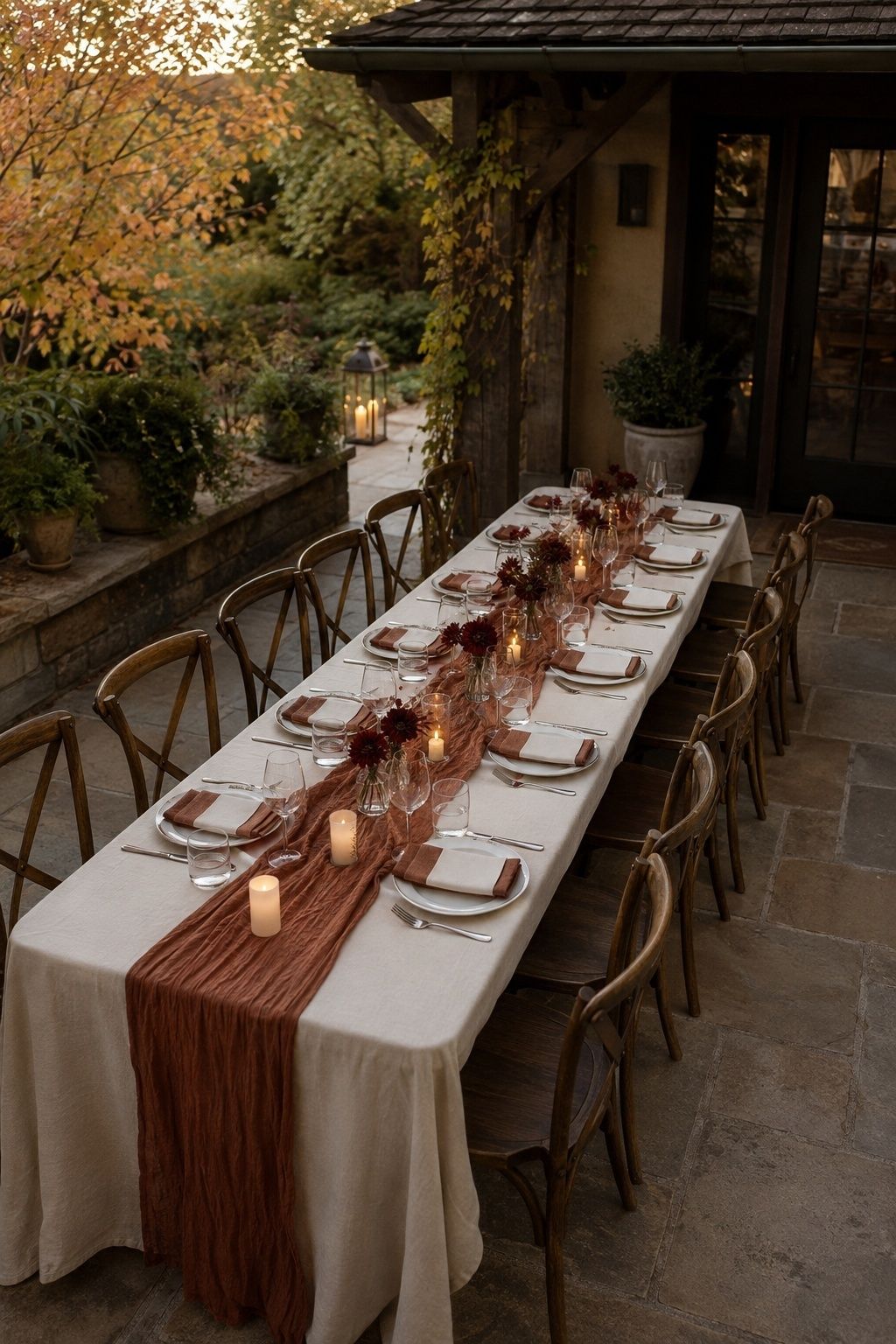
A cozy dinner layout matters more than a complicated floor plan. For intimate outdoor weddings, place guests at one long table, two close parallel tables, or a compact cluster where conversation feels warm and servers move easily. Fewer transitions mean fewer cold walks between spaces.
Use candle-like lighting, low florals, layered linens, and chairs that sit securely on the surface below. If the reception is tented, keep the dinner area close enough to heaters and sidewalls that guests feel protected without losing the outdoor atmosphere.
Use Outdoor Photos Early And Evening Glow Later
Plan outdoor portraits while daylight is still generous, especially if the property has uneven paths, tall grass, woods, or water close to the photo route. Family photos and wedding party photos usually rely on clarity more than mood, so schedule them before the light becomes too dim.
Save the softer evening glow for couple portraits, lantern moments, tent entrances, and dinner atmosphere. That way guests are not left waiting outside while the best light disappears and the temperature drops.
Decide The Rain Plan Before Guests Arrive
A good rain plan is not a vague hope that the forecast improves. Decide who makes the weather decision, the deadline for that decision, where the ceremony moves, where guests enter, how chairs transfer, where vendors reset, and how guests hear the update. Put that decision tree in writing before the wedding weekend.
Clear wedding umbrellas protect short walks and portraits, but they are not a full rain plan. Guests deserve dry seating, safe paths, protected food, and a layout that still feels intentional if the celebration shifts indoors or under a tent.
FAQ
How do you plan an outdoor fall wedding?
Plan an outdoor fall wedding by choosing a venue with a real backup space, setting the timeline around sunset, protecting the ceremony and dinner areas from cold or rain, and confirming vendor requirements for power, shelter, and ground conditions. Then communicate dress, shoe, parking, and weather details clearly on the invitation insert or wedding website.
What do guests need at an outdoor fall wedding?
Guests benefit from clear clothing guidance, safe walking paths, warm drinks, access to blankets or wraps, close restrooms, comfortable seating, and a dry place to gather if the weather turns. They also benefit from knowing whether the route crosses grass, gravel, dirt, or uneven ground.
What time should an outdoor fall wedding start?
An outdoor fall wedding usually starts early enough for the ceremony and key portraits to finish before sunset and before temperatures drop sharply. The exact time depends on location, month, ceremony length, and photo plan, so build the schedule from the local sunset time with your photographer and venue.
How do you make an outdoor fall wedding warm and comfortable?
Make an outdoor fall wedding warm and comfortable with patio heaters in active gathering areas, tent sidewalls, blankets or wraps, warm welcome drinks, shorter outdoor segments, protected cocktail hour space, and a dinner layout that keeps guests close together. Comfort deserves a place in the timeline from the start instead of appearing as a late addition.
What is a good rain plan for an outdoor fall wedding?
A good rain plan gives the ceremony, cocktail hour, dinner, vendors, power, and guest flow a dry alternative before guests arrive. Include a decision deadline, one responsible decision-maker, a covered setup that fits the full guest count, and clear communication so guests know where to go.
Final Thoughts
Outdoor fall weddings feel best when the plan respects the season instead of pretending the weather will stay perfect. Build the day around warmth, light, safe paths, protected vendors, and one beautiful focal point, and the celebration feels intimate, graceful, and genuinely comfortable even when autumn has its own ideas. Keep the timeline weather-aware. Keep the rain layout guest-friendly.
Last update on 2026-10-03 / Affiliate links / Images from Amazon Product Advertising API