

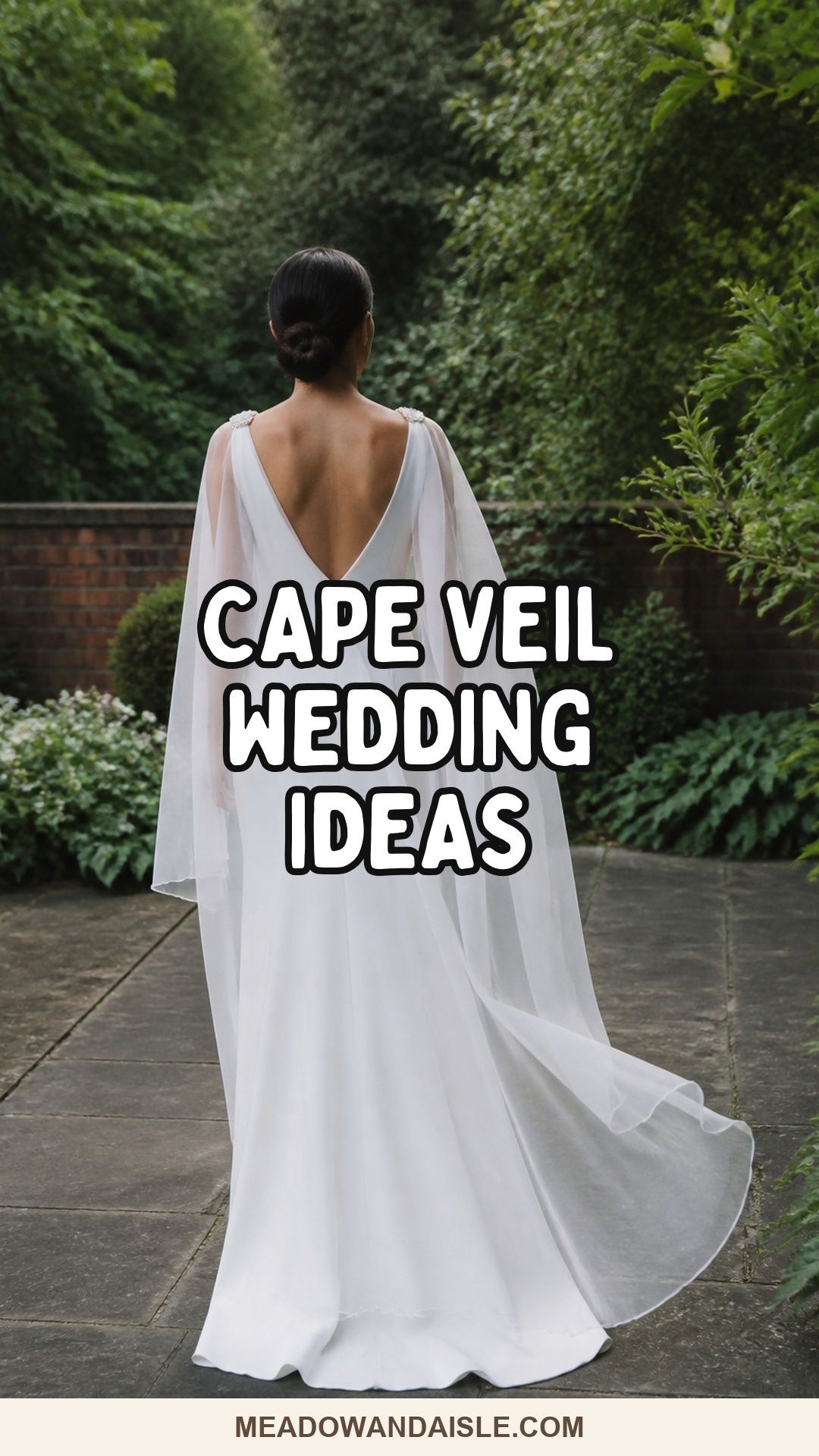
Cape veil wedding ideas feel strongest when the veil is planned as a soft shoulder layer, not a full dress feature: choose where it attaches, how wide it falls, how long it trails, and how easily it comes off before you commit. The right cape veil gives you veil movement without pulling on your hair, covering your face, or crowding a small aisle.
A cape veil has a lovely kind of restraint. It gives the ceremony that floating bridal softness people love in a veil, but the weight starts at the shoulders, straps, neckline, or upper back instead of the head. That one shift changes everything: your hairstyle stays freer, your face stays open, and your dress gains a little atmosphere without becoming a full cape gown.
The most successful versions are chosen with movement in mind. A chapel-length tulle cape veil feels different from a fingertip lace capelet, and a narrow shoulder veil behaves differently from a wide cowl back. Think about the room, the aisle, the chair spacing, the hugs after vows, the portrait angles, and the dinner chair before choosing the most dramatic length.
Recommended Wedding Products


You Might Also Like These Blog Posts
- Drape Veil Wedding Ideas With Soft Ceremony Drama
- Statement Veil Wedding Ideas That Make the Entrance
- Wildflower Veil Wedding Ideas for a Soft Garden Statement
- Wedding Cape Dress Ideas for a Cinematic Walk Down the Aisle
- Cape Town Honeymoon Ideas for a Soft Landing After the Wedding
- Mantilla Veil Wedding Spanish Style Ideas With Lace and Grace
Cape Veil Wedding Ideas
The beauty of a cape veil is that it gives you a veil moment without asking your hair to hold the weight. Instead of anchoring a comb under a bun or pinning layers into soft waves, the fabric begins at the shoulders, straps, sleeves, or back neckline. That makes it graceful for low buns, short hair, slicked styles, natural curls, ponytails, pixie cuts, and loose hair that would collapse under a heavy comb.
It is also a smart choice when the dress already has a strong back. A shoulder veil frames an open back, a low cowl, a halter neckline, or a simple column gown without hiding the detail. The key is editing the cape veil so it acts like a transparent layer over the dress, not a second garment fighting for attention.
| Cape veil choice | Best dress pairing | Planning detail to settle early |
|---|---|---|
| Shoulder clip cape veil | Strap gowns, cap sleeves, square necklines | Test the clip grip on real dress fabric |
| Cowl back cape veil | Low-back gowns, silk slips, open-back dresses | Check the drape while standing, walking, and sitting |
| Watteau-style veil layer | Clean columns, sheaths, dramatic trains | Confirm hidden loops for the attachment |
| Short capelet veil | Minis, courthouse dresses, reception looks | Keep the edge above the elbow for easy movement |
| Cathedral cape veil | Formal gowns, wide aisles, outdoor entrances | Assign someone to lift and spread it before portraits |
Start With the Attachment Point
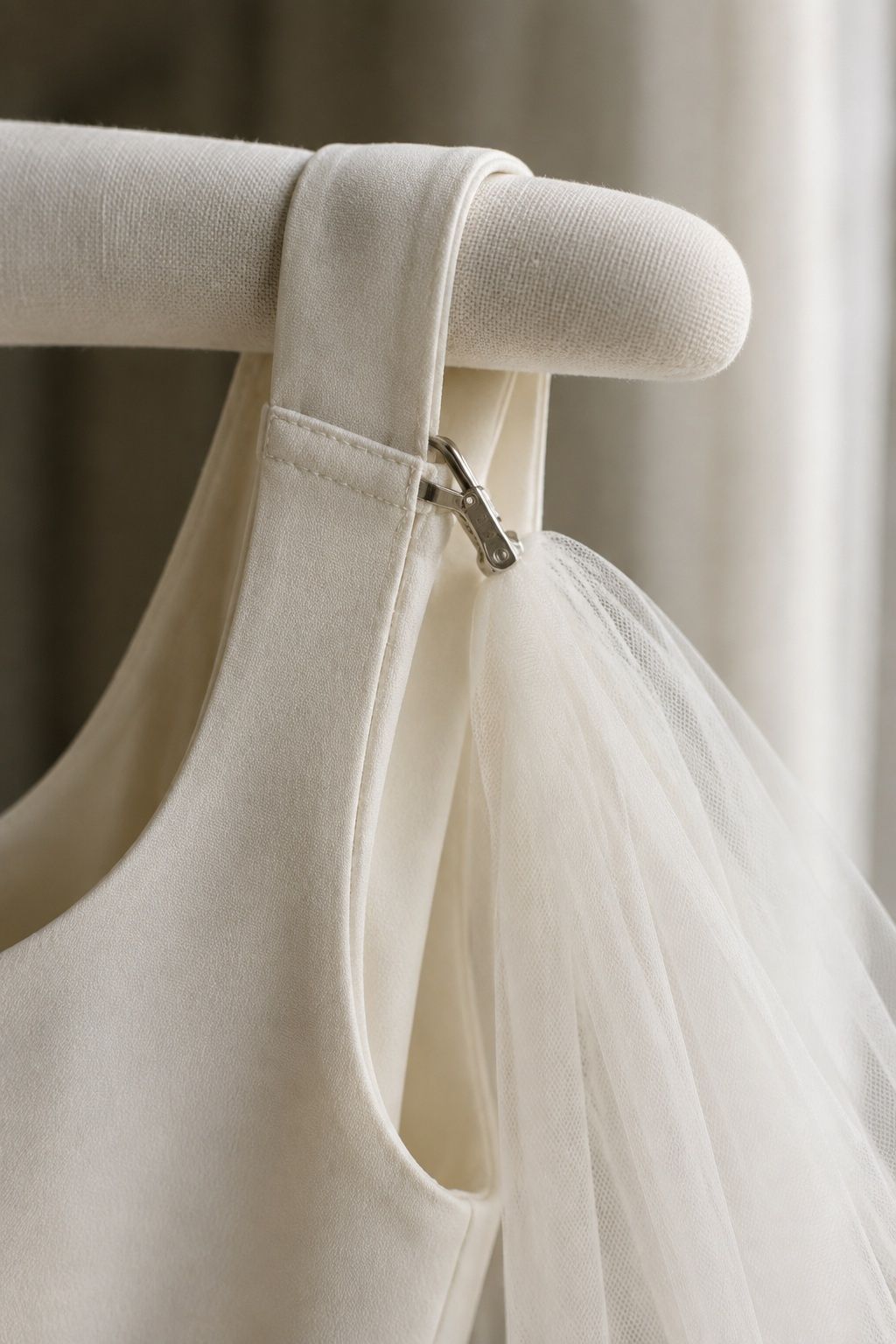
The attachment point decides how the whole cape veil behaves. Shoulder clips create a clean winged shape. Tiny loops sewn inside straps give a more secure finish. Hidden snaps sit well on stronger bodices. Ribbon ties feel romantic, but the bow deserves a tidy shape for close portraits.
Ask your tailor where the dress carries tension safely. Fine spaghetti straps, delicate lace, or beaded mesh deserve reinforcement before a long veil hangs from them. A structured strap, cap sleeve, or firm back neckline usually gives the cape veil a calmer anchor. Try the attachment during alterations, then walk, turn, hug, sit, and lift your arms before calling it finished.
Choose a Length That Suits the Aisle
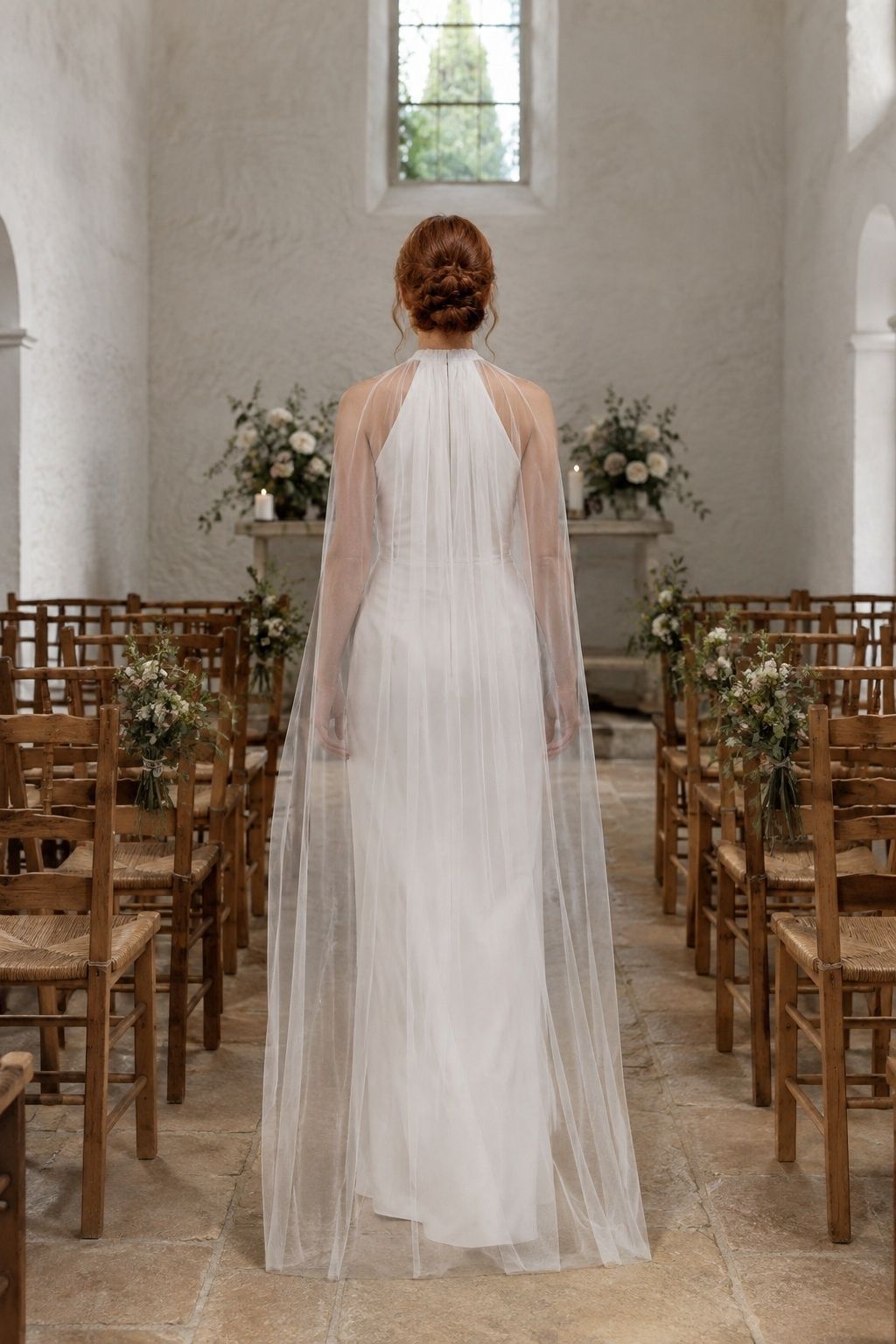
Length starts with the setting, not only the fantasy. A fingertip cape veil adds softness without collecting on stairs. A floor-length veil gives a gentle bridal outline for a restaurant ceremony or small chapel. Chapel length adds a little sweep behind the dress. Cathedral length is beautiful, but it asks for space, clear handling, and a reason.
For a narrow aisle, measure the walking path with chairs in place. If guests will sit close, a slim floor-length cape often feels more graceful than a wide cathedral panel. For outdoor vows, consider wind, grass, gravel, damp stone, and how the fabric will look after a few minutes of real movement.
Let Width Create the Mood
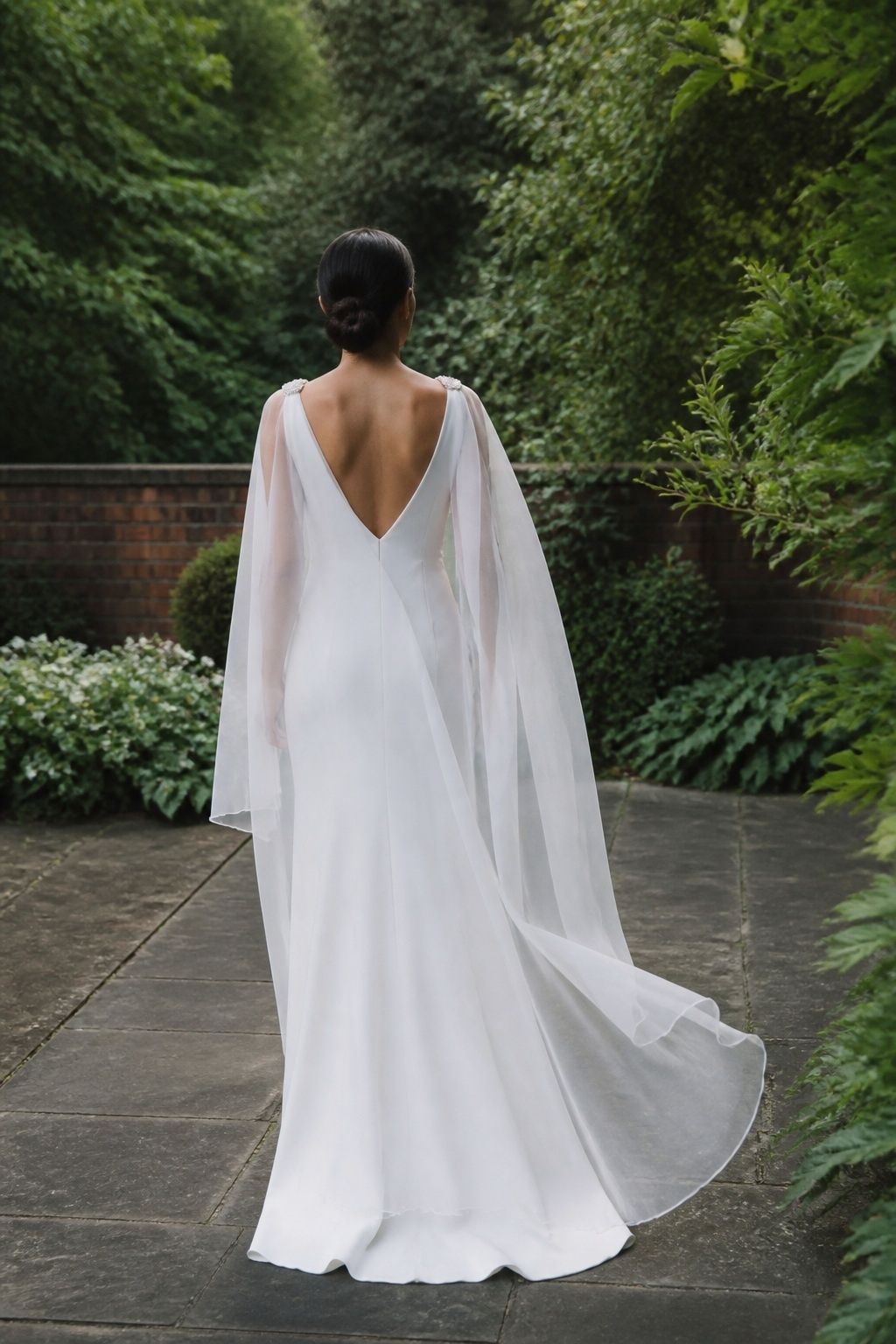
Width is what turns a cape veil from quiet to theatrical. A narrow panel falls straight down the back and keeps the body line visible. A medium width gives soft wings from shoulder to shoulder. A wide panel creates a cowl or train effect, which looks stunning in photos but sometimes brushes chairs, candles, aisle flowers, or dinner glassware.
Stand in your dress and look at the cape veil from the front, side, and back. The front view matters more than couples expect. Fabric that spills too far forward hides the neckline, bouquet, earrings, or sleeve detail. Fabric that starts too far back disappears in ceremony photos until you turn around.
Pick Fabric for Drape, Not Just Sheerness
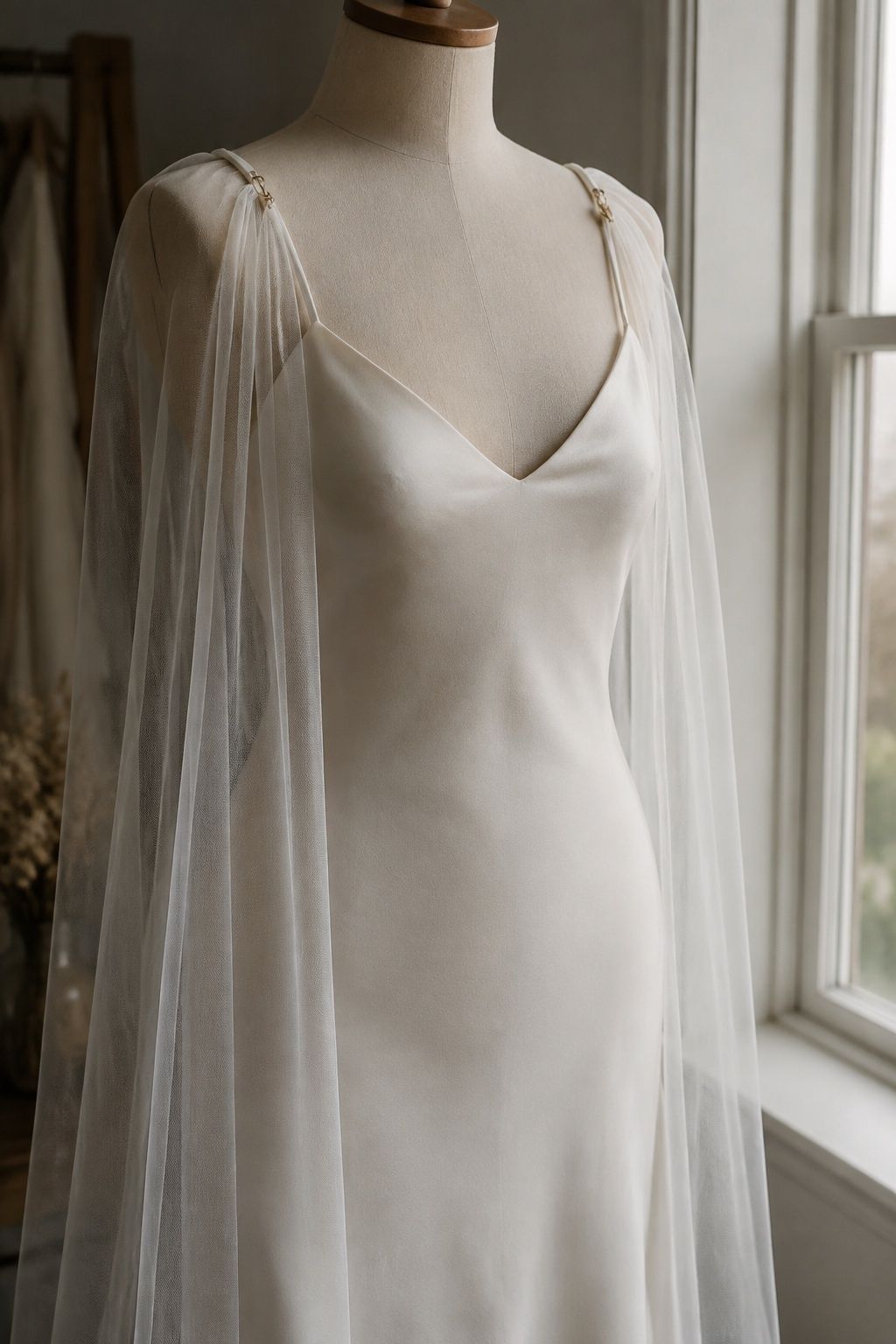
Tulle is the classic cape veil fabric because it gives volume with little weight. Soft English net has a gentler fall and suits modern slip dresses. Chiffon creates a more opaque, dress-like layer, so it feels best against a very simple gown. Lace edges add romance, but too much border weight pulls the veil backward or curls at the hem.
Fabric echoes the dress without copying every detail. A silk gown often looks best with barely-there tulle. A crepe gown has enough structure for a clean chiffon fall. A beaded dress usually looks calmer with plain net so the sparkle stays edited. Steam the cape veil separately and hang it high before dressing so the hem has time to relax.
Protect the Hairstyle Freedom
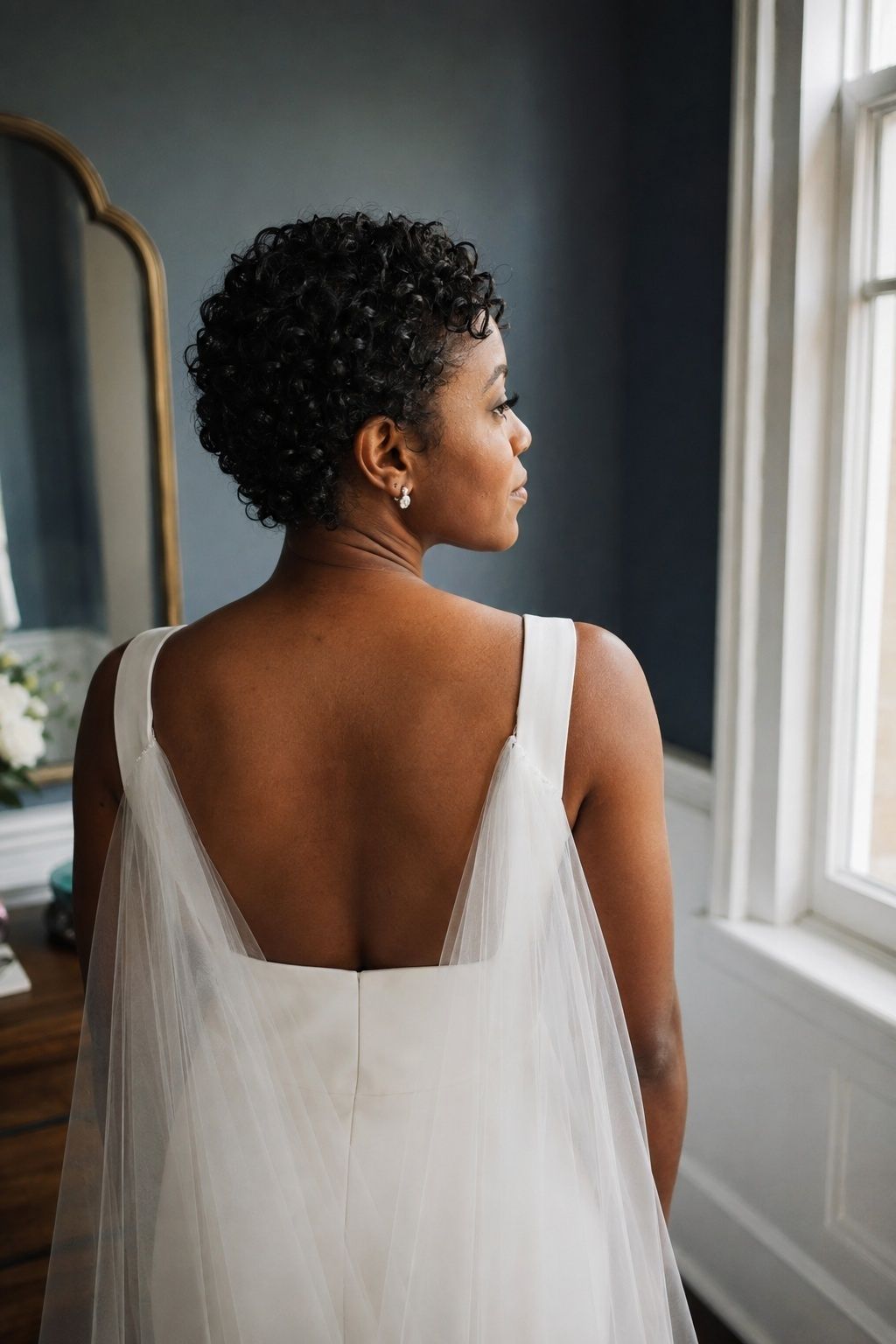
One of the best reasons to choose a cape veil is hair freedom. A sleek bun, loose waves, a bob, a braided ponytail, or a floral pin all stay possible without designing the whole style around a comb. Still, plan the hair and veil in the same trial. Long hair sometimes catches under shoulder fabric, and textured waves often ask for the veil to sit a little farther out on the straps.
Bring the cape veil to the hair trial if you have it in time. If not, bring a similar sheer scarf so your stylist tests volume around the shoulders. The goal is not to make the cape veil hold the hair. The goal is clean hair movement without snags, flattening, or a hidden veil fall.
Match the Cape Veil to the Dress Back
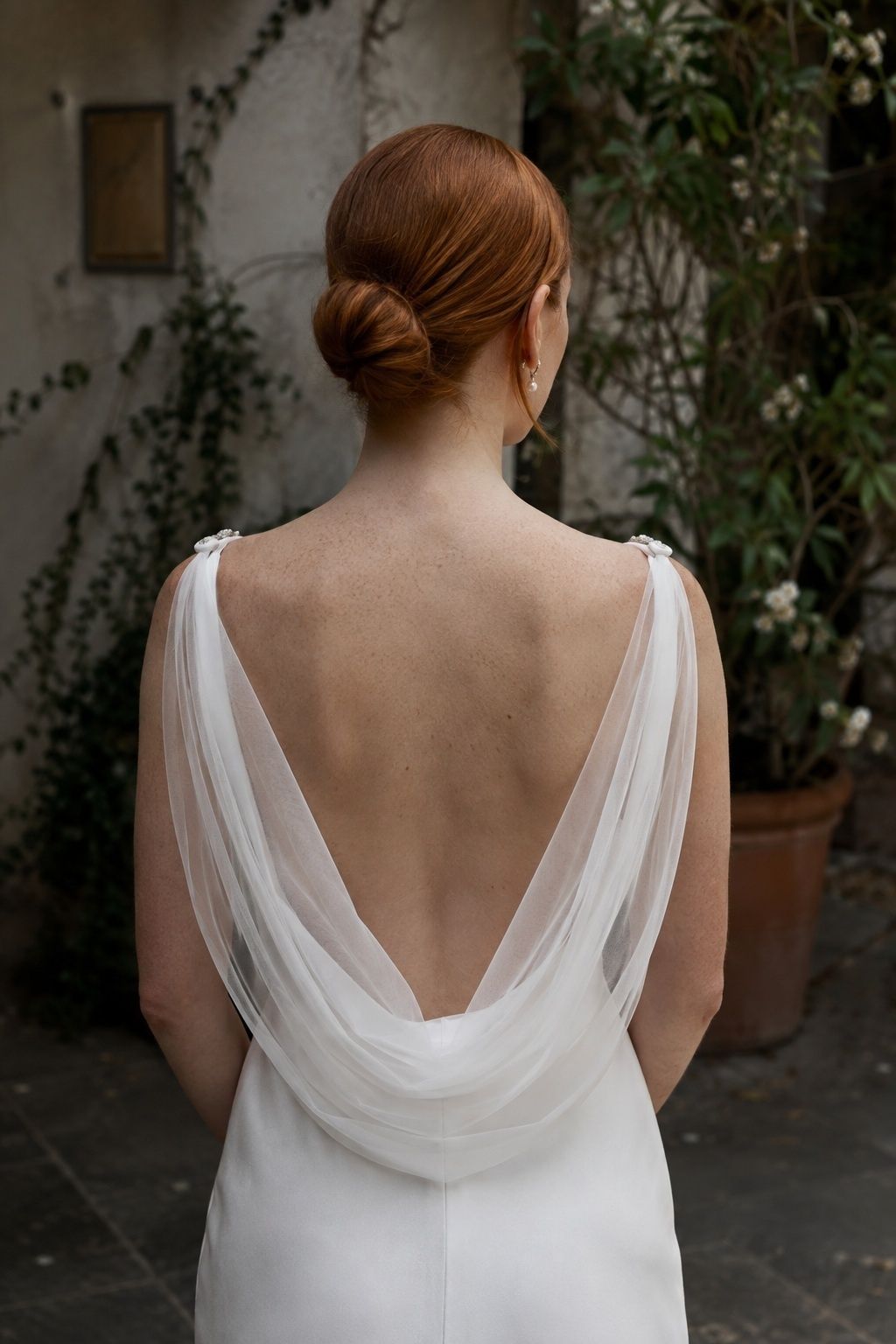
A cape veil is most flattering when it reveals the dress back rather than covering it completely. Low backs look beautiful with a cowl shape that dips gently between the shoulders. Button-back gowns often look better with a narrower panel so the buttons still show through. Halter dresses require careful placement because shoulder clips sometimes interfere with the neckline tension.
If the dress has lace, embroidery, pearls, or dramatic seaming, choose a cape veil edge that frames the feature instead of repeating it too loudly. A plain raw edge often feels more expensive than a heavy lace trim when the gown already has detail. For a plain gown, a pearl scatter, lace border, or barely sparkling shoulder clasp supplies the ceremony accent.
Plan the Removal Before the Reception
A removable cape veil deserves a calm exit. Decide who removes it, where they stand, and what happens to the veil afterward. Clips are easiest with both shoulders reached at once. Loops and tiny buttons look seamless, but they take more time. Snaps require enough strength for walking and enough ease for release without tugging at the bodice.
Practice removal in the actual dress if possible. The transition leaves hair, makeup, earrings, straps, and the back closure undisturbed. After removal, the dress deserves to look complete on its own. That is the difference between a cape veil that feels like a ceremony layer and a missing layer once dinner begins.
Think About Dinner Comfort
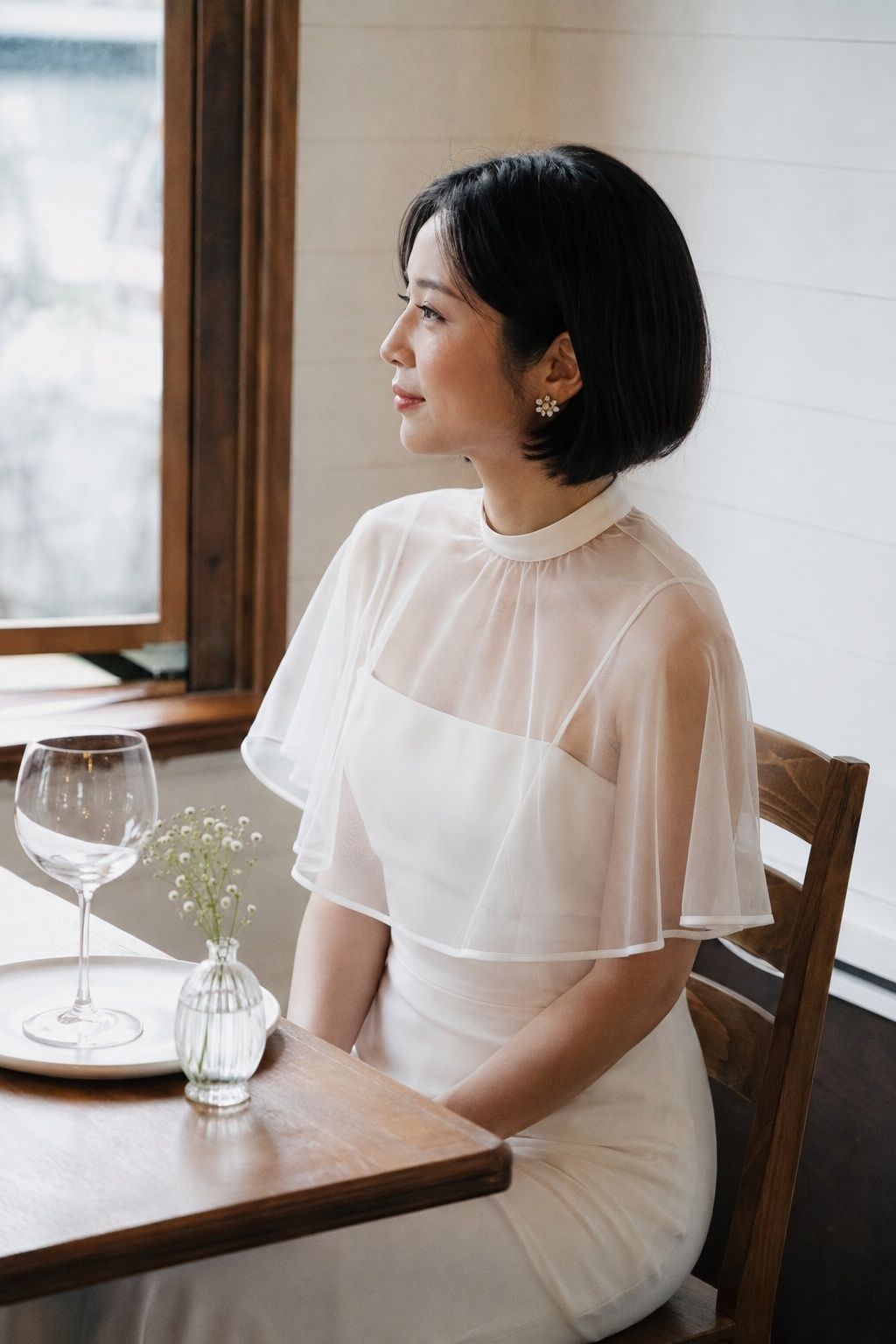
Dinner is where very beautiful cape veils become practical questions. A long veil catches on chair backs, puddles by candles, brushes against table corners, or makes hugs awkward during a small reception. For dinner wear, choose a shorter capelet or a narrow floor-length layer that does not trail behind the chair.
For most couples, the best rhythm is ceremony, portraits, a few entrance photos, then removal before seated dinner. That gives the cape veil its most romantic moments while keeping the rest of the evening easy. Store it on a hanger, not folded in a tote, so it remains clean if you want a few late-night portraits.
Use Close Portraits to Show the Softness
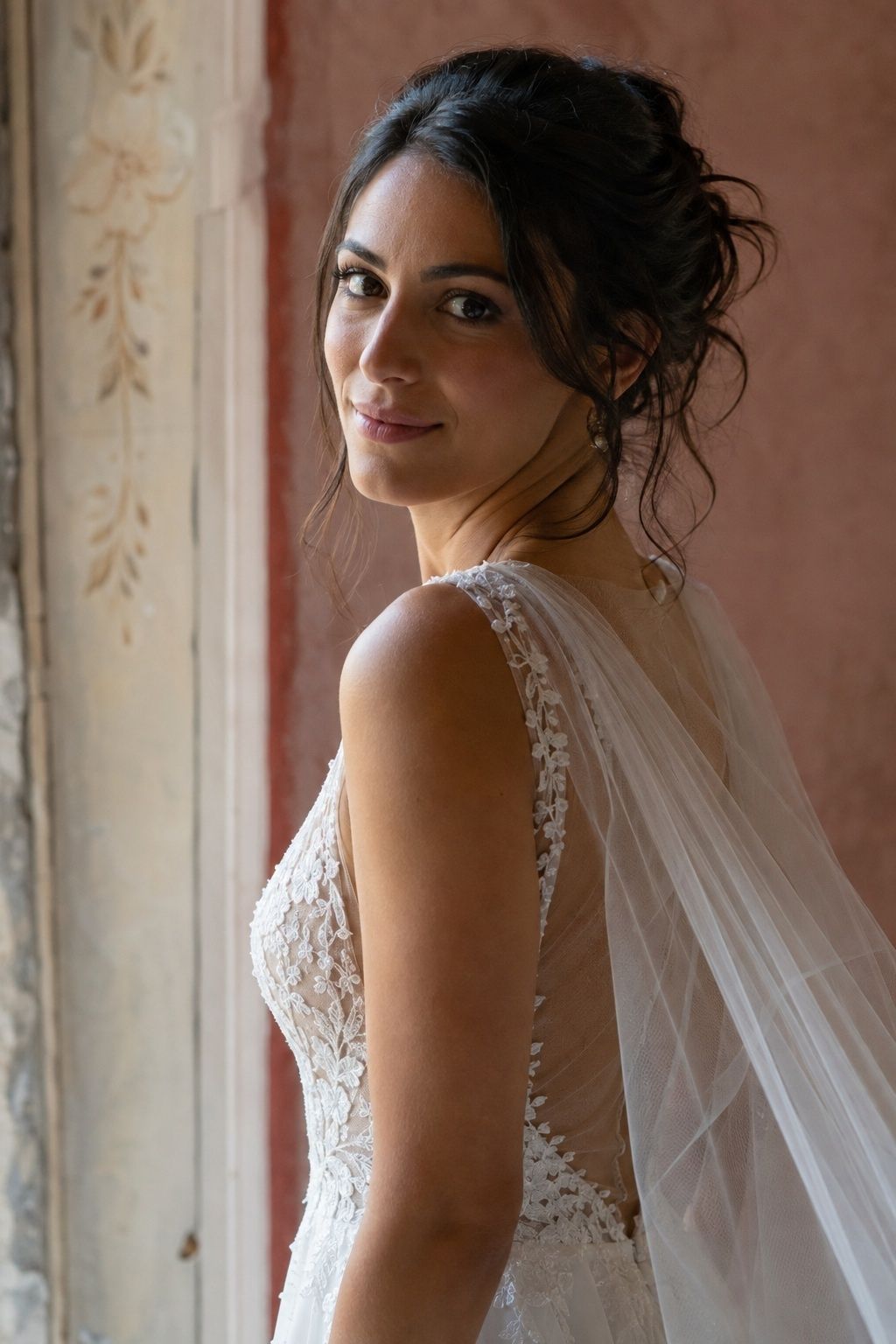
Cape veils reward close photography. Ask for back portraits that show the shoulder attachment, side portraits that catch the fabric floating behind the arm, and seated portraits that show how the veil pools around the dress. The best photos often happen in quiet movement: one step, one turn, one hand at the waist, one shoulder angled toward the light.
Tell your photographer whether the cape veil is delicate, heavy, detachable, or easily wrinkled. Ask one attendant to spread the train before full-length portraits and lift it away from rough ground between shots. The veil deserves to look soft in the frame, not tired from being dragged through the whole timeline.
Keep the Cape Veil Distinct From a Cape Dress
A cape dress builds the cape into the garment. A cape veil is a separate veil alternative for attachment, removal, adjustment, and dress-specific styling. That distinction matters because it changes tailoring, timing, budget, and comfort. For transformation, choose a detachable cape veil. For one permanent silhouette all day, a cape dress often makes more sense.
The softest version sits between fashion and tradition. It gives you the emotional language of a veil, the open-face feeling of a modern bridal accessory, and the flexibility to remove the layer when the party gets close and warm. That is why cape veil wedding ideas feel so right for intimate celebrations: they create a ceremony moment without taking over the whole day.
FAQ
What is a cape veil for a wedding?
A cape veil is a veil alternative that attaches around the shoulders, straps, sleeves, or upper back instead of fastening into the hair. It usually uses tulle, net, lace, organza, or chiffon for soft movement behind the bride while leaving the face and hairstyle open.
Is a cape veil different from a wedding cape dress?
Yes. A cape veil is usually a detachable accessory, while a wedding cape dress has the cape built into the gown or designed as part of the dress silhouette. A cape veil removes more easily after the ceremony and pairs beautifully with simple gowns, backless dresses, halter styles, and strap dresses.
How does a bridal cape veil attach?
A bridal cape veil attaches with hidden clips, sewn loops, tiny buttons, snaps, ribbons, brooches, or clasps placed at the shoulders or back neckline. The safest method depends on the dress fabric, strap strength, veil length, and the amount of movement planned for the ceremony.
Does a cape veil replace a traditional veil?
A cape veil replaces a traditional veil beautifully when you want softness and movement without a comb, blusher, or hair-anchored veil. It is elegant for short hair, loose hairstyles, low buns, open backs, and brides who want the veil effect to begin at the shoulders.
What length is best for a cape veil?
The best cape veil length depends on the aisle, dress train, and reception plan. Fingertip and floor-length cape veils are easiest for small weddings, while chapel and cathedral lengths ask for extra space, an assigned attendant for portraits, and a clear removal plan before dinner.
What dress styles pair best with cape veils?
Cape veils pair beautifully with strap gowns, cap sleeves, square necklines, halter dresses, backless silk gowns, clean column dresses, sheath gowns, and simple A-line dresses. Strapless gowns ask for a secure neckline, bolero structure, or tailor-approved hidden attachment before the veil feels stable.
Final Thoughts
A cape veil makes the dress feel softer, not busier. Choose the attachment first, then the fabric, width, length, removal method, and portrait plan. When those details are settled, the veil becomes less like an extra accessory and more like the quiet breath around the ceremony.
Before you approve the final version, wear the cape veil with your real shoes, turn toward the light, sit as you will at dinner, and notice whether the fabric stays calm at the shoulders.
Last update on 2026-10-05 / Affiliate links / Images from Amazon Product Advertising API